
CAA News Today
Wireless Internet at the 2012 Conference
posted by Emmanuel Lemakis — February 14, 2012
Please visit the website for the 100th Annual Conference in Los Angeles for complete details about obtaining access to wireless-internet connections at the Los Angeles Convention Center and the four conference hotels.
Design-Related Sessions and Events at the Annual Conference
posted by Christopher Howard — February 13, 2012
Rosanne Gibel, a professor of graphic design at the Art Institute of Fort Lauderdale in Florida and chair of CAA’s Education Committee, has catalogued all design-related sessions and events taking place at next week’s 100th Annual Conference in Los Angeles. Below is a chronological list by day.
Wednesday, February 22
Deconstructing Costume Histories: Rereading Identities in Fashion Collections and Exhibitions
Wednesday, February 22, 9:30 AM–12:00 NOON
Concourse Meeting Room 409AB, Level 2, Los Angeles Convention Center
Chairs: Ian McDermott, ARTstor; Consuelo Gutierrez, independent scholar
ARTspace
Citizen Designer: Authoring a Definition
Wednesday, February 22, 9:30 AM–12:00 NOON
West Hall Meeting Room 515A, Level 2, Los Angeles Convention Center
Chairs: Gary Rozanc, Columbia College Chicago; Alyson Beaton, Columbia College Chicago
Design Studies Forum Business Meeting
Wednesday, February 22, 12:30–2:00 PM
West Hall Meeting Room 515B, Level 2, Los Angeles Convention Center
CAA Education Committee
Who Do We Teach? Challenges and Strategies in Recognizing Our Students, and Developing and Supporting Curriculum for Multiple Constituencies
Wednesday, February 22, 12:30–2:00 PM
Concourse Meeting Room 403A, Level 2, Los Angeles Convention Center
Chairs: Joan Giroux, Columbia College Chicago; Cindy Maguire, Adelphi University
Design, from “California Dreamin’” to “Designed in California,” ca. 1965–2012
Wednesday, February 22, 2:30–5:00 PM
Concourse Meeting Room 406AB, Level 2, Los Angeles Convention Center
Chairs: James Housefield, University of California, Davis; Stuart Kendall, California College of the Arts
Art History Open Session: Renaissance Art
Form and Function: Art and Design?
Wednesday, February 22, 2:30–5:00 PM
Concourse Meeting Room 405, Level 2, Los Angeles Convention Center
Chair: Antonia Madeleine Boström, J. Paul Getty Museum
Thursday, February 23
SPEAKOUT! CAA’s Strategic Plan for the Annual Conference and You
Thursday, February 23, 8:00–9:00 AM
Concourse Meeting Room 402AB, Level 2, Los Angeles Convention Center
Foundations in Art: Theory and Education
Foundations in Literature: Developing a Culture of Reading within the Art and Design Foundations Program
Thursday, February 23, 12:30–2:00 PM
Concourse Meeting Room 404A, Level 2, Los Angeles Convention Center
Chair: Sara Dismukes, Troy University
Critical Craft Forum
What Is Contemporary about Craft?
Thursday, February 23, 5:30–7:00 PM
Concourse Meeting Room 408A, Level 2, Los Angeles Convention Center
Chairs: Namita Gupta Wiggers, Museum of Contemporary Craft; Elizabeth Agro, Philadelphia Museum of Art
Friday, February 24
Design Education 2.0: Teaching in a Techno-Cultural Reality
Friday, February 24, 9:30 AM–12:00 NOON
Concourse Meeting Room 404A, Level 2, Los Angeles Convention Center
Chair: Ashley John Pigford, University of Delaware
Centennial Session
Yesterday, Today, and Tomorrow: CAA Town Hall Meeting
Friday, February 24, 9:30 AM–12:00 NOON
West Hall Meeting Room 515B, Level 2, Los Angeles Convention Center
Chair: Margaret Lazzari, University of Southern California
AIGA Business Meeting
Friday, February 24, 12:30–2:00 PM
West Hall Meeting Room 502A, Los Angeles Convention Center
Center for Craft, Creativity, and Design
Windgate Fellowship Program: A Case for Funding Professional Development Opportunities for Graduating Seniors
Friday, February 24, 12:30–2:00 PM
Concourse Meeting Room 408A, Level 2, Los Angeles Convention Center
Chair: Stephanie Moore, Center for Craft, Creativity, and Design, University of North Carolina, Asheville
Is It Time to Question the “Privileging” of Visual Art?
Friday, February 24, 2:30–5:00 PM
Concourse Meeting Room 409AB, Level 2, Los Angeles Convention Center
Chairs: Greta Berman, Juilliard School; Ellen K. Levy, independent artist, New York
Centennial Session
Connections: Architecture and Design in Los Angeles at Midcentury
Friday, February 24, 2:30–5:00 PM
Bing Theater, Plaza Level, Bing Center, Los Angeles Times Central Court entrance, Los Angeles County Museum of Art
Chair: Ruth Weisberg, University of Southern California
CAA Annual Members’ Business Meeting and Reception
Friday, February 24, 5:30–7:00 PM
West Hall Meeting Room 503, Level 2, Los Angeles Convention Center
Keynote address: April Greiman
New Media Caucus
Code as Craft: Programming in the Art and Design Curriculum
Friday, February 24, 5:30–7:00 PM
Concourse Meeting Room 402AB, Level 2, Los Angeles Convention Center
Chair: Michael Salmond, Florida Gulf Coast University
Saturday, February 25
Design Studies Forum
Design, Thing Theory, and the Lives of Objects
Saturday, February 25, 12:30–2:00 PM
West Hall Meeting Room 503, Level 2, Los Angeles Convention Center
Chair: Leslie Atzmon, Eastern Michigan University
CAA Committee on Intellectual Property
Give and Take: Copyright’s Balancing Act
Saturday, February 25, 12:30–2:00 PM
West Hall Meeting Room 515B, Level 2, Los Angeles Convention Center
Chairs: Christine L. Sundt, Visual Resources; Doralynn Pines, Metropolitan Museum of Art, emerita
Sheryl Oring’s 100 Possibilities at the Los Angeles Conference
posted by Christopher Howard — February 10, 2012
In honor of CAA’s Centennial, the artist Sheryl Oring will ask 2012 Annual Conference attendees a single question: What is the role of the artist? Over the course of a two-day performance in Los Angeles, Oring will pose the question to her visitors and transcribe their answers verbatim onto note cards using a manual typewriter, with a goal of collecting one hundred answers. Hence the title of her work, 100 Possibilities. Collectively, these answers will paint a portrait of academic views about the role of the artist as CAA enters its second century as a professional organization. After the performance, Oring will collect and organize the cards into an archive that may be used to create an artist’s book and an exhibition. In addition, digital scans of the cards may eventually be published on the CAA website.
Oring’s performance will take place 1:00–5:00 PM on Wednesday, February 22, and Thursday, February 23, 2012—or until she receives her one hundred answers. CAA will set up a table for the artist in the registration area, located in Concourse Foyer, Level 1, Los Angeles Convention Center.
Oring is an interdisciplinary artist whose work explores technology and its role in society through projects that incorporate both old and new media to tell stories, examine public opinion, and foster open exchange. She received a CAA Professional-Development Fellowship in the Visual Arts in 2010–11 as she completed her MFA at the University of California, San Diego.
CAA Names the Recipients of the Getty-Funded International Travel Grants
posted by Christopher Howard — January 23, 2012
CAA has awarded travel grants to twenty art historians and artists from around the world who will convene in Los Angeles to attend and participate in the 100th Annual Conference, taking place February 22–25, 2012. The CAA International Travel Grant Program was made possible by a generous grant from the Getty Foundation.
At the conference, the twenty recipients will participate in mentoring activities and other events planned in connection with the grant. Members of CAA’s International Committee have agreed to host the participants, and the National Committee for the History of Art will also lend support to the program.
This travel-grant program is intended to familiarize international professionals with the Annual Conference program, including the session participation process. CAA accepted applications from art historians, artists who teach art history, and art historians who are museum curators; those from developing countries or from nations not well represented in CAA’s membership were especially encouraged to apply. In late 2011, a jury of CAA members selected the final twenty awardees, whose names, home institutions, and primary areas of scholarly and professional interest are as follows:
- Salam Atta Sabri, Director, National Museum of Modern Art, Baghdad, Iraq. Atta Sabri conducts research on missing works of art from Iraq and is also a ceramic artist
- Parul Pandya Dhar, Associate Professor, Department of History, University of Delhi, Delhi, India. Dhar focuses on the history of Indian art and architecture to 1300 CE, cultural interactions in South and Southeast Asia, the visual arts and visual archives as sources of history, performing arts, and the historiography of Indian art
- Federico Freschi, Associate Professor, History of Art, Wits School of Arts, University of Witwatersrand, Johannesburg, South Africa. Freschi’s work explores South African modern art and architecture and postcolonial identity politics
- Rosa Gabriella de Castro Gonçalves, Professor of Art Theory and Aesthetics, Universidade Federal da Bahia, Salvador, Brazil. Gonçalves is interested in the role of modernism in recent debates in art theory
- Angela Harutyunyan, Assistant Professor, Department of Fine Arts and Art History, American University of Beirut, Beirut, Lebanon. Harutyunyan is interested in methodologies of reading and historicizing contemporary art and studies the political aesthetics of the Armenian avant-garde
- Gyöngyvér Horváth, Assistant Professor of Art History, Moholy-Nagy University of Art and Design, Budapest, Hungary. Horváth studies the historiography of narrative painting
- Didier Houenoude, Assistant Professor, Université d’Abomey-Calavi, Cotonou, Benin. Houenoude teaches art history and drawing and closely follows contemporary art in Benin
- Nadhra Shahbaz Naeem Khan, Visiting Faculty, Department of Humanities and Social Sciences, Lahore University of Management Sciences, Lahore, Pakistan. Khan’s work focuses on Sikh art and architecture
- Irena Kossowska, Professor of Art History, Nicolaus Copernicus University, Toruń, Poland. Kossowska works on national identity in Central Europe as reflected in the visual arts and also researches nineteenth- and twentieth-century European art
- Jean Celestin Ky, Professor of Art History, University of Ouagadougou, Ouagadougou, Burkina Faso. Celestin researches African art and works with the National Museum of Burkina Faso in conserving and promoting contemporary art
- Pavlína Morganová, Researcher and Professor, Academy of Fine Arts, Prague, Czech Republic. Morganová works on contemporary art
- Cristian Nae, PhD Lecturer, Department of Art History and Theory, Faculty of Fine Arts, George Enescu University of Arts, Iaşi, Romania. Nae examines post–World War II art history, critical theory, hermeneutics, and cultural studies
- Judy Peter, Lecturer, Faculty of Art, Design, and Architecture, and Head, Department of Jewellery Design and Manufacture, University of Johannesburg, Johannesburg, South Africa. Peter works in art history, theory, cultural and postcolonial studies, the history of jewellery. She is also interested in curriculum development in the context of a neoliberal South Africa
- Daniel Premerl, Research Associate, Institute of Art History, Zagreb, Croatia. Premerl is interested in Renaissance and Baroque art and art-historical methodology
- Malvina Rousseva, Professor, Institute of Art Studies, Bulgarian Academy of Sciences, Sofia, Bulgaria. Rousseva pursues research in archaeology, Thracian tombs and temples, interdisciplinary studies, architectural history, cultural and visual studies, and philosophy
- Ganna Rudyk, Deputy Director General of Research, Bohdan and Varvara Khanenko Museum of Arts, Kyiv, Ukraine. Rudyk is a specialist in Islamic art who presents Islamic and generally non-Western art to broad publics
- Dóra Sallay, Curator of Italian Painting, Museum of Fine Arts, Budapest, Hungary. Sallay works with thirteenth- to sixteenth-century Italian art, in particular Sienese painting, the history of collecting and museums, and the history of the reception of Gothic and Renaissance painting
- Olabisi Silva, Director, Centre for Contemporary Art, Lagos, Nigeria. Silva is working on the first roaming African art academy, placing equal emphasis on artistic practice, art history, critical thinking, and curatorial practice
- Shao-Chien Tseng, Associate Professor of Art History, Graduate Institute of Art Studies, National Central University, Jhongli City, Taiwan. A specialist in nineteenth-century French art, Tseng is interested in modern art and natural history, landscape painting and photography, and postcolonialism and Taiwanese art
- Jagath Weerasinghe, Director and Professor, Postgraduate Institute of Archaeology, Colombo, Sri Lanka. Trained in fine arts, archeology, and conservation, Weerasinghe recently established his country’s first graduate program in art history, which will offer postgraduate diplomas and master of arts degrees in art history, focusing primarily on Asian art
CAA hopes that this travel grant will not only increase international participation in the organization’s activities, but will also expand international networking and the exchange of ideas. The Getty Foundation grant allows CAA to expand greatly the participation of international colleagues beyond its regular program of Annual Conference Travel Grants for graduate students and international artists and scholars.
Registration Deadline Extended for CAA’s 100th Annual Conference
posted by Christopher Howard — January 23, 2012
Advance registration for CAA’s 100th Annual Conference, taking place February 22–25, 2012, at the Los Angeles Convention Center, has been extended to Monday, January 30, 2012. This is also your last chance to purchase advance tickets for special events and workshops.
Registration
Advance registration ends on Monday, January 30, 2012.
- Members: $235
- Student and retired members: $135
- Nonmembers: $365
Special Events
Join us for a variety of special events including CAA’s Centennial Reception at the Los Angeles County Museum of Art, Tours to the Getty Villa and the Getty Center, An Evening at UCLA, as well as the Santa Monica and Venice Art Tour!
Workshops
Looking to advance your career? This year’s conference will include a bevy of professional-development workshops designed specifically for artists, art historians, and professionals in the visual arts. Workshops address topics such securing tenure, job hunting, and much more! Workshop space is limited, so book your place today! Each workshop costs $45.
Hotel Discounts
Have you booked your accommodation yet? Conference attendees can also take advantage of substantial discounts on rooms at the JW Marriott Los Angeles LA Live, just steps away from the Los Angeles Convention Center. The Westin Bonaventure, the Millennium Biltmore, and the Figueroa Hotel also offer discounts to conference attendees.
Recipients of the 2012 Awards for Distinction
posted by Christopher Howard — January 18, 2012
CAA has announced the recipients of the 2012 Awards for Distinction, which honor the outstanding achievements and accomplishments of individual artists, art historians, authors, conservators, curators, and critics whose efforts transcend their individual disciplines and contribute to the profession as a whole and to the world at large.
CAA will formally recognize the recipients at a special awards ceremony during the 100th Annual Conference in Los Angeles, on Thursday afternoon, February 23, 2012, 12:30–2:00 PM, at the Los Angeles Convention Center. Led by Barbara Nesin, president of the CAA Board of Directors, the awards ceremony will take place in West Hall Meeting Room 502AB, Level 2; it is free and open to the public. The Los Angeles Convention Center is located downtown, at 1201 South Figueroa Street adjacent to the Staples Center.
The 2012 Annual Conference—presenting scholarly sessions, panel discussions, professional-development workshops, a Book and Trade Fair, and more—is the largest gathering of artists, art historians, students, and arts professionals in the United States.
David Hammons, Distinguished Artist Award for Lifetime Achievement
The innovative, far-ranging work of David Hammons is central to the history of postwar art in all its complexities. For the past five decades, Hammons has ingeniously blurred boundaries separating sculpture, Conceptual art, performance, and installation. Through a restless hybridization of practices, he has explored many timely and urgent contemporary issues, commenting on the civil rights movement, racial stereotyping, institutional exclusion, and the commodification of artistic identity. Hammons is not only one of the great political artists of our time, but also a crafter of careful assemblage and canny composition, creating irreverent, sometimes scathing works that are as formally riveting as they are incisive.
 Adrian Piper, Artist Award for Distinguished Body of Work
Since the late 1960s, the provocative and often challenging work of Adrian Piper has profoundly influenced the language and form of Conceptual art. Her 2010 exhibition Past Time: Selected Works 1973–1995, presented at Elizabeth Dee Gallery in New York, showcased several bodies of work that dealt with dissent in varying forms and represented a period of time widely considered as her most influential. Piper’s artistic practice flirts with the syntax of Minimalism and infuses it with explicitly political content, addressing issues of race, gender, and identity politics. Additionally, her work has been shaped by studies in philosophy, a subject on which she has lectured since earning a doctorate in the discipline thirty years ago. A keen interlocutor of mass culture, Piper has produced art and writing that makes us question our constantly shifting contemporary social landscape.
 Lucy R. Lippard, Distinguished Feminist Award
For more than five decades, the critic, activist, and curator Lucy R. Lippard has been a consistent, passionate, and influential advocate of feminist art. A prolific author first honored by CAA in 1975 with the Frank Jewett Mather Award, she is known for her concise, accessible, and lucid prose that brings feminist perspectives to bear on a wide scope of art and activism—from Eva Hesse (1976) to The Pink Glass Swan: Selected Essays on Feminist Art (1995). Lippard’s curatorial efforts—such as c. 7,500 (1973), the groundbreaking all-woman exhibition of Conceptual art—have also been vital to the feminist art movement and offered some of the earliest considerations of global feminisms. Throughout her life, she has modeled a complex, ever-changing point of view as it intersects with progressive notions of art and politics.
Allan Sekula, Distinguished Lifetime Achievement Award for Writing on Art
Allan Sekula has devoted his life as an artist to writing, photography, installation, and film. While his multidisciplinary approach to problems of representation and politics has earned him accolades as an artist, his writings have helped students, scholars, and the public to think critically about interventions in the political and social realities of our world. The essays collected in his first book, Photography against the Grain: Essays and Photo Works 1973–83 (1984), significantly altered the way in which the documentary function of photography was conceptualized. His more recent volumes—such as Fish Story (1995), Titanic’s Wake (2003), and Performance under Working Conditions (2003)—mobilize us through his vision and words to carefully consider the effects of capitalism, globalization, information formats, and the dematerialization of image and word.
David Antin, Frank Jewett Mather Award
David Antin has been a singular, combative voice in art criticism since the mid 1960s. His Radical Coherency: Selected Essays on Art and Literature 1966 to 2005 (Chicago: University of Chicago Press, 2011) demonstrates his sustained critical commitment, constant formal experimentation, and a style of thought and expression that is unique to both the visual arts and poetry. The essays and “talking poems” in Radical Coherency display a no-nonsense, skeptical intelligence squaring off firsthand with the work of artists—many of them his contemporaries—who were bent on radically transforming art, from Marcel Duchamp and Andy Warhol to the artists of the Los Angeles County Museum of Art’s 1971 exhibition Art and Technology.
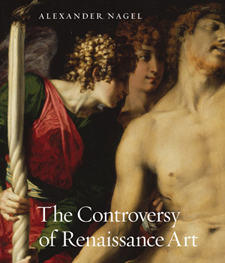 Alexander Nagel, Charles Rufus Morey Book Award
Alexander Nagel’s The Controversy of Renaissance Art (Chicago: University of Chicago Press, 2011) is a compelling reexamination of the key paradoxes that define this era and the works associated with it. Guided in part by sixteenth-century religious history and the writings of historians of that era, Nagel positions sixteenth-century art making in the realm of the experimental, a vantage also in concert with the efforts of the religious reformers concerned with ritual and devotional practices usually associated with the Middle Ages. A breakthrough volume that makes significant contributions to scholarship on sixteenth-century Italian art, Nagel’s book compels art historians more generally to reconsider “standard” interpretations of many canonical monuments of the periods in which they are working.
Maryan W. Ainsworth, Stijn Alsteens, and Nadine M. Orenstein, Alfred H. Barr Jr. Award
Man, Myth, and Sensual Pleasures: Jan Gossart’s Renaissance (New York: Metropolitan Museum of Art, in association with Yale University Press, 2010) is a “summa” of Maryan Ainsworth’s decades-long exploration of the artistic legacy of this place and time. Using a variety of methods—technical analysis, connoisseurship, archival research, biography, iconography, and sustained attention to each object—she and the other authors place Gossart at the center of a rich world of intertwined relationships. Together they reveal the artist’s groundbreaking engagement with Rome and antiquity, his intent study of architecture and sculpture, his carefully crafted experimentation in a variety of media, and his amazing versatility as a painter of religious scenes, mythological subjects, and innovative portraits over a long career. The book is also significant for the insightful way in which it situates Gossart among his contemporaries, including the painters Albrecht Dürer and Lucas Cranach, the sculptor Conrad Meit, and the patron and connoisseur Philip of Burgundy.
 Roy Flukinger, Alfred H. Barr Jr. Award for Smaller Museums, Libraries, Collections, and Exhibitions
With The Gernsheim Collection (Austin: Harry Ransom Center, University of Texas Press, 2010), Roy Flukinger has crafted an exceptional catalogue of the Helmut and Alison Gernsheim Collection, one of the earliest and most comprehensive collections of photography in the world. One hundred and twenty-six items are beautifully illustrated and analyzed in readable, absorbing prose that traces the story of the couple’s achievements as sleuths, gatherers, connoisseurs, photographers, devotees, and champions, while at the same time recognizing and examining their (sometimes controversial) role as architects of the study of photography. Contributions by Alison Nordstrom and Mark Haworth-Booth illuminate the role this collection has played in the history of photography as well as the Gernsheims’ commitment to the medium as a form of fine art. In this way, the book considers the process (in addition to the underlying principles, assumptions, and implications) of canon formulation in an emerging discipline.
Jacki Apple, Distinguished Teaching of Art Award
For the past twenty-eight years, Jacki Apple has provided students at the Art Center College of Design in Pasadena, California, with a dynamic, inspiring, and evolving model of the possibilities and rewards of an interdisciplinary practice. An artist, writer, and producer, she has produced work in multiple modes—performance, installation, drawing, book art, photography, film, radio, text, and audio—and presciently engages the opportunities afforded by new technologies. Praised by students and colleagues alike for her intelligence, generosity, enthusiasm, and critical discernment, Apple adeptly bridges various disciplines using a wide scope of knowledge about contemporary culture and technology and a depth of understanding about the history and practice of the visual and performing arts. A gifted communicator, Apple is exceptionally effective in encouraging students to think for themselves.
Gabriel P. Weisberg, Distinguished Teaching of Art History Award
Gabriel P. Weisberg’s distinguished teaching record—which includes faculty positions at the University of New Mexico, the University of Cincinnati, the University of Pittsburgh, Case Western Reserve University, and the University of Minnesota, where he is currently a professor in the Department of Art History—spans nearly half a century. His students, both graduate and undergraduate, praise his presentation of art as a dynamic interplay among culture, aesthetics, and human experience, revealed through direct examination of works of art in the context of primary historical documentation. Weisberg’s varied and distinguished background as a historian, curator, and administrator seamlessly integrates academic and museum realms, and his scholarship has shaped the discipline of nineteenth-century art history in a profound way.
 Francesca G. Bewer, CAA/Heritage Preservation Award for Distinction in Scholarship and Conservation
Francesca G. Bewer, research curator in the Harvard Art Museums’ Straus Center for Conservation and Technical Studies, is an exemplary technical art historian. An expert in the materials and techniques of European Renaissance and Baroque bronze sculpture, she trained as both an art historian, at University College London, and as a conservator, at Palazzo Spinelli in Florence. A highly valued teacher and lecturer, Bewer has published a steady stream of superb texts in conservation and art-historical journals, exhibition catalogues, and monographs. She also recently authored a book on the history of conservation, A Laboratory for Art: Harvard’s Fogg Museum and the Emergence of Conservation in America, 1900–1950 (Cambridge, MA: Harvard Art Museum; New Haven: Yale University Press, 2010).
Rebecca Molholt, Arthur Kingsley Porter Prize
Rebecca Molholt’s article “Roman Labyrinth Mosaics and the Experience of Motion,” published in the September 2011 issue of The Art Bulletin, is an imaginative study of seven North African mosaics that were once floors in Roman bathhouses. She introduces a fresh methodology for their assessment, building on a distinction that Walter Benjamin drew between “vertical and horizontal forms of viewing.” Moholt argues that mosaics have long been read as if they were vertical easel paintings rather than understood as “materials underfoot,” which are experienced while kinetically moving over their horizontal surfaces. She uncovers a metaphoric reading of these mosaics that relates the labyrinths, their subject matter, and architectural context—the Roman bath—to athleticism and heroism.
Art Journal Award
An article by the online journal Triple Canopy, authored primarily by Colby Chamberlain of Columbia University, has won the 2012 Art Journal Award. The text, called “The Binder and the Server,” appears in the Winter 2011 issue.
Contact
For more information on the 2012 Awards for Distinction, please contact Lauren Stark, CAA manager of programs. Visit the Awards section of the CAA website to read about all past recipients.
CAA announced the shortlists for the 2012 Charles Rufus Morey Book Award and the two Alfred H. Barr Jr. Awards on December 2, 2011.
April Greiman Will Speak at the Annual Members’ Business Meeting
posted by Christopher Howard — December 13, 2011
 April Greiman, an innovative designer whose work with digital technology freed graphic design and typography from its reliance on the modernist grid, helping push an analogue profession into the digital realm, will speak at CAA’s upcoming Annual Members’ Business Meeting.
Born and raised in New York, Greiman attended the Kansas City Art Institute in Missouri. She completed graduate studies with the designers Armin Hoffman and Wolfgang Weingart at the Allgemeine Kunstgewerbeschule (General Arts Trade School) in Basel, Switzerland, an early 1970s hotbed for the emerging “new wave” aesthetic. Greiman’s early visual identity and publication projects—especially her experimental issue of Design Quarterly in 1986—were notable for their pioneering use of early Apple Macintosh computers and software, and for their radical combination of video and print technologies.
As head of the design studio Made in Space, Greiman consults in transmedia identity and architectural branding, and with color, surfaces, and materials. In the academic sphere, she has taught at the Southern California Institute of Architecture and the California Institute of the Arts, where she led the design program in the 1980s and served as chair of Visual Communications in the 1990s. She is the author of several books on design, including Hybrid Imagery: The Fusion of Technology and Graphic Design (1990) and Something from Nothing: Design Process (2001).
As a practicing fine artist, Greiman has produced work encompassing digital photography, video, installation design, and architecture. Her public projects in Los Angeles, where she has lived since 1976, include Poet’s Walk for Citicorp Plaza and the seven-story mural Hand Holding a Bowl of Rice at the entrance to the Wilshire Vermont Metro Station in Koreatown. Greiman’s digital photography and transmedia work has been the subject of solo exhibitions at the School of Visual Arts in New York and the Pasadena Museum of California Art. Most recently, her work was included in the exhibition elles@centrepompidou at the Centre Pompidou in Paris.
Greiman has received numerous local, state, and national design awards, including a Hall Chair Fellowship from the Hallmark Corporation, a Gold Medal from the American Institute of Graphic Arts, a Chrysler Award for Innovation from the Chrysler Corporation, an AIGA Fellowship, and an American Institute of Architects Award.
CAA’s Annual Members’ Business Meeting will take place during the 100th Annual Conference on Friday, February 24, 2012, from 5:30 to 7:00 PM at Los Angeles Convention Center.
Deadline Extended for ARTexchange in Los Angeles
posted by Lauren Stark — December 08, 2011
 CAA’s Services to Artists Committee has extended the deadline for membership participation in ARTexchange, an open forum for sharing work at the 2012 Annual Conference. The new deadline is February 10, 2012. Free and open to the public, ARTexchange will be held on Friday, February 24, 5:30–7:30 PM, in a central location at the Los Angeles Convention Center. A cash bar will be available.
ARTexchange is an annual event showcasing the art of CAA members, who can exhibit their paintings, drawings, prints, photographs, sculptures, and digital works using the space on, above, and beneath a six-foot folding table. Artists may also construct temporary mini-installations and conduct performance, sound, and spoken-word pieces in their space. In the past, many ARTexchange participants found the event to be their favorite part of the conference, with the table parameter sparking creative displays.
To be considered for ARTexchange in Los Angeles, please send your full name, your CAA member number, a brief description of the work you want to exhibit (no more than 150 words), and a link to your website to Lauren Stark, CAA manager of programs. Artists presenting performance or sound art, spoken word, or technology-based work, including laptop presentations, must add a few sentences about their plans. Accepted participants will receive an email confirmation. Because ARTexchange is a popular venue with limited space, early applicants will be given preference. Deadline extended: January 6, 2012.
 Participants are responsible for their work; CAA is not liable for losses or damages. The sale of work is not permitted. Participants may not hang their artworks on walls or run their power cords from laptops or other electronic devices to outlets—please bring fully charged batteries. For the first time, CAA will provide wireless internet to ARTexchange participants free of charge.
Top image: Participants in the 2011 ARTexchange (photograph by Bradley Marks)
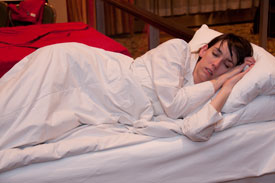
Bottom image: The interdisciplinary artist Rachel Hines performs a work called Interview during the 2011 ARTexchange in New York (photograph by Bradley Marks)
Career Services Guide for the Los Angeles Conference
posted by Christopher Howard — December 07, 2011
 CAA has designed the Career Services Guide to inform job seekers and employers about placement activities at the 2012 Annual Conference in Los Angeles. The publication, available as a PDF, will help you navigate Career Services events and provides answers to frequently asked questions. Study this guide carefully so that you will know what to expect from conference interviewing and how best to prepare for a successful experience.
Job candidates can review the basics of the conference employment search. Read about the Candidate Center, your home base at the conference, as well as Orientation, an introduction to Career Services where you can ask questions. In addition, learn more about the Online Career Center, where you can search for position listings, post application materials, and arrange interviews. The publication includes tips for improving your CV, portfolio, and supplemental application materials.
Employers will find details in the guide for renting interview booths and tables as well as recommendations for posting jobs and conducting interviews at the conference. You can begin preparations now for Career Services through the Online Career Center or onsite at the Interviewer Center.
Printed copies of the Career Services Guide will be distributed onsite at Orientation and in the Candidate Center. All conference Career Services will take place at the Los Angeles Convention Center. For more information about job searching, professional-development workshops, and more, visit the Career Services section of the conference website.
Finalists for the 2012 Morey and Barr Awards
posted by Christopher Howard — December 02, 2011
CAA is pleased to announce the finalists for the 2012 Charles Rufus Morey Book Award and the Alfred H. Barr Jr. Award. The winners of both prizes, along with the recipients of ten other Awards for Distinction, will be announced in January and presented during a special ceremony in Los Angeles, in conjunction with the 100th Annual Conference and Centennial Celebration.
The Charles Rufus Morey Book Award honors an especially distinguished book in the history of art, published in any language between September 1, 2010, and August 31, 2011. The four finalists are:
- Michael W. Cole, Ambitious Form: Giambologna, Ammanati, and Danti in Florence (Princeton: Princeton University Press, 2011)
- Rebecca Messbarger, The Lady Anatomist: The Life and Work of Anna Morandi Manzolini (Chicago: University of Chicago Press, 2010)
- Alexander Nagel, The Controversy of Renaissance Art (Chicago: University of Chicago Press, 2011)
- Nina Rowe, The Jew, The Cathedral, and the Medieval City: Synagoga and Ecclesia in the Thirteenth Century (New York: Cambridge University Press, 2011)
The Alfred H. Barr Jr. Award for museum scholarship is presented to the author(s) of an especially distinguished catalogue in the history of art, published between September 1, 2010, and August 31, 2011, under the auspices of a museum, library, or collection. The three finalists are:
- Maryan W. Ainsworth, ed., Man, Myth, and Sensual Pleasures: Jan Gossart’s Renaissance; The Complete Works (New York: Metropolitan Museum of Art, in association with Yale University Press, 2010)
- Suzanne Glover Lindsay, Daphne S. Barbour, and Shelley G. Sturman, Edgar Degas Sculpture (Washington, DC: National Gallery of Art, 2010)
- Elizabeth Morrison and Anne D. Hedeman, Imagining the Past in France: History in Manuscript Painting, 1250–1500(Los Angeles: J. Paul Getty Museum, 2010)
The Barr jury has also shortlisted two catalogues for the second Barr Award for Smaller Museums, Libraries, or Collections. The titles are:
- Roy Flukinger, The Gernsheim Collection (Austin: Harry Ransom Center, University of Texas Press, 2010)
- James T. Tice and James G. Harper, Giuseppe Vasi’s Rome: Lasting Impressions from the Age of the Grand Tour (Eugene: Jordan Schnitzer Museum of Art, University of Oregon, 2010)
The presentation of the 2012 Awards for Distinction will take place on Thursday afternoon, February 23, 12:30–2:00 PM, in West Hall Meeting Room 502AB, Level 2, Los Angeles Convention Center. The event is free and open to the public. For more information about CAA’s Awards for Distinction, please contact Lauren Stark, CAA manager of programs, at 212-392-4405.