CAA News Today
Call For Applications: CAA-Getty International Program 2027
posted by CAA — March 20, 2026
Thanks to generous support from Getty, the program—now in its sixteenth year—enables scholars from around the world to travel to New York to participate in the CAA 115th Annual Conference, February 3–6, 2027. The program features a preconference colloquium on international issues in art history, followed by a week of sessions, workshops, events, museum visits, and professional development opportunities.
To date, the program has gathered 189 scholars from sixty-three countries and continues to have significant global impact on the field. These annual convenings have yielded collaboration, community, and lasting connections while also serving to diversify CAA membership, increase international presence at CAA conferences, and foster greater cross-cultural discourse around international art scholarship and practice.
We also invite program alumni to apply to return and support first-time participants, take part in program events, and present at the Annual Conference.
The individuals selected for the 2027 program will receive a one-year CAA membership, have their conference registration fee, travel expenses, and accommodation costs covered, and will receive per diems for meals and incidentals.
International art historians, curators, and other visual arts professionals are encouraged to apply!
Visit our CAA-Getty page for eligibility and application requirements. All interested Getty applicants, whether new scholars or alumni, will need to submit a general conference application (individual presentation proposal) and indicate their interest in participating in the CAA-Getty International Program.
Deadline: April 25
This program is made possible with support from Getty.

Announcing the CAA-Getty International Program 2026 Participants!
posted by CAA — November 20, 2025
The CAA-Getty International Program will welcome ten new scholars and four program alumni to the CAA 114th Annual Conference! CAA114 will mark the fifteenth year of this invaluable program, which brings a cohort of art historians, museum curators, visual arts professionals, and select program alumni from around the globe to the CAA Annual Conference each year. Grantees participate in a preconference colloquium and alumni session, examining pressing topics in the field, ranging from historiography, interdisciplinary/transnational methodology, and the decolonization of our arts institutions. Read “A Global Vision: The CAA-Getty International Program” to learn more, and register now for CAA114!
2026 CAA-GETTY PARTICIPANTS
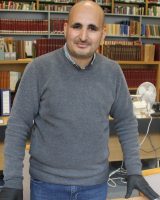 |
Hesham A. Abdel Kader is an Egyptian archaeologist and Roman archaeology specialist at the Egypt’s Ministry of Tourism and Antiquities. He recently earned his PhD from Ain Shams University with a dissertation titled “Public Baths and Water Management in Hermopolis Magna during the Roman Period.” His fieldwork experience spans over a decade and includes key roles in excavations at Hermopolis, Amarna, Tuna el-Gebel, and Deir el-Barsha, in collaboration with national and international missions. He is also a co-founder of the Egyptian Heritage Network and is actively engaged in public outreach and training initiatives in Middle Egypt. His work has been recognized with awards such as the Prof. Dr. Zahi Hawass Prize for Best Archaeologist (2023), and he has published extensively on Roman-era urbanism and infrastructure. He is passionate about integrating the field of archaeology with community heritage awareness and international collaboration. |
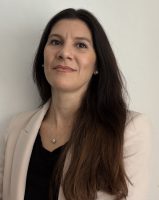 |
Ornela Barisone holds a PhD in humanities and arts and currently works as a Research Assistant at the National Scientific and Technical Research Council of Argentina (CONICET), based at the Centro de Investigaciones en Arte y Patrimonio (CIAP, EAyP, UNSAM-CONICET). As part of this position, she is developing a research project on transnational networks, artistic participation, and mid-twentieth-century avant-gardes in Argentina, Brazil, and France (1949–69). She is also a professor and researcher at the Universidad Autónoma de Entre Ríos (Argentina), where she serves as adjunct professor in History of Art and Associate Professor in Comparative Literatures. She directs the institutional research project “Avant-garde Archives and Magazines as Transnational Platforms,” focused on Edgardo Antonio Vigo and Latin American–European exchanges in the 1960s. Barisone has been awarded, among others, fellowships from CONICET, a UNL–CEAL–UAM–Banco Santander mobility scholarship, a Fulbright Visiting Scholar grant (UCLA), and a postdoctoral research fellowship at EHESS–Paris. She is the author of Experimentos poéticos opacos. Biopsias malditas: del invencionismo argentino a la poesía visual (1944–1969) (Ed. Corregidor, 2017). |
 |
Tuuda Haitula is a heritage professional and curator from Namibia, who is the curator of the Oranjemund Shipwreck under the National Museum of Namibia. His work centers on postcolonial restitution, ethical museum practices, and capacity-building in African museums. Tuuda has contributed to grant management, heritage assessments, and national exhibition development. He is passionate about using museums as tools for healing, knowledge recovery, and social transformation |
 |
Mu He is a contemporary expressionist artist and cross-cultural art researcher. She holds both bachelor’s and master’s degrees in painting from the Rome Academy of Fine Arts, Italy, and is currently pursuing her PhD at the De Institute of Creative Arts and Design, UCSI University, Malaysia. Her doctoral research, “East–West Fusion: A Comparative Study of Gustav Klimt and Pang Xunqin’s Decorative Language in 20th-Century Figure Painting,” examines the transcultural negotiation of decorative vocabularies in modern painting, with a particular focus on the dialogue between Eastern and Western traditions. From 2018 to 2023, she served as a lecturer in oil painting at Hebei Minzu Normal University, China. In 2024, she received the Ernst Mach Grant to conduct research at the University of Applied Arts Vienna. Dedicated to bridging theory and practice and fostering intercultural dialogue, her works have been exhibited in China, Italy, and Malaysia. She continues to publish scholarly articles and is currently preparing a monograph on the comparative study of decorative language in East–West fusion painting. |
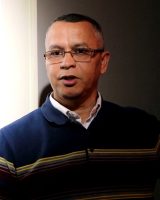 |
Omar ID Tnaine is a scholar and curator based in Agadir, Morocco, dedicated to preserving and promoting cultural heritage. As a curator at prominent Moroccan museums, he designs educational programs and exhibitions that connect diverse audiences with the richness of national and global heritage. Omar has contributed to significant research programs, including the 2025 Open Restitution Africa (ORA) Cohort, where he conducts case studies on North African restitution, focusing on Morocco, to document and share data on cultural heritage repatriation. He also participated in the Museum Lab, refining innovative museum practices, and the SAWA Museum Studies Program, enhancing his expertise in cultural heritage management. These experiences strengthen his commitment to cross-cultural dialogue and education. |
 |
Eve Loh-Kazuhara is an art historian specializing in Japanese art, focusing on the history and historiography of nihonga (Japanese-style painting) from the postwar to contemporary period. Her scholarship also explores the transnational narratives and connections of nihonga across Asia. Eve’s current book manuscript is on post-war Japanese painting through the examination of nihonga artist, Tanaka Isson’s landscapes of Amami Ōshima, an island in Southern Japan. She is the 2025–26 Robert and Lisa Sainsbury Fellow at the Sainsbury Institute for the study of Japanese Arts and Cultures in East Anglia, England. Previously, Eve taught at the National University of Singapore and the University of the Arts, Singapore, and has worked in museum interpretation. |
 |
Éva Lovra is an associate professor in the Department of Civil Engineering at the University of Debrecen. She is an urban planner and civil engineer, her work is distinguished by its interdisciplinary focus on the protection of built heritage. Her scholarship examines architectural and urban history, with a specialization in urban morphology and the art history of the urban. She is the author of five monographs and has presented her research at numerous international venues, including New York University. Her contributions to the field were recognized with a Fulbright Visiting Professorship at the University of Pittsburgh in 2023. In addition to her academic roles, she is a curator of architectural exhibitions, with a forthcoming on the art and architecture of 1930s Miskolc. She is an active member of leading professional and academic bodies, including the Hungarian National Committee of ICOMOS and the Hungarian Academy of Sciences. |
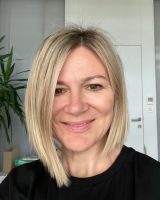 |
Martina Munivrana is a curator and art historian based at the Museum of Contemporary Art, Zagreb (MSU), where she currently serves as head of collections. Her curatorial and research focus centers on contemporary women artists, feminist and postcolonial theory, identity construction, and new media. She is particularly dedicated to increasing the visibility of women artists and developing new interpretations of their practices within institutional and exhibition contexts. She holds an MA in art history and philosophy and completed her PhD in 2023 at the University of Zagreb with a dissertation on the work of artist Breda Beban. At MSU, she has curated numerous research-based projects that challenge established narratives and highlight overlooked or marginalized artistic voices, with a strong emphasis on collaboration and inter-institutional exchange. Munivrana has participated in international conferences and programs, including the Getty Foundation’s Museum Studies Summer Institute (NYU), and has served on national expert councils focused on contemporary and innovative artistic practices. |
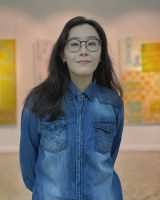 |
Irmuun Unubaatar (Yiri Muen) is a Mongolian artist and PhD candidate in art studies at the National University of Mongolia, specializing in fourteenth-century portraits of Yuan dynasty (1271–1368) emperors and empresses. Her research integrates the study of historical painting techniques with contemporary artistic practice, reflecting her dual role as scholar and practitioner. She has presented her work at international conferences in the United States, Austria, Italy, and Estonia, including the European Conference of Mongolian Studies (Venice, 2024) and the Second International Mongolian Studies Symposium (Vienna, 2024). As an artist, Irmuun focuses on Mongolian traditional scripts and cultural symbols, reinterpreted through modern visual language. She has held solo exhibitions at the Zanabazar Museum of Fine Arts (2023), the National Art Gallery of Mongolia (2016), and participated in international exhibitions such as the Krakow Centrum Sztuki Solvay Biennale in Poland (2025). |
 |
Rodolfo Ward de Oliveira is a Brazilian transdisciplinary artist, cultural producer, and researcher with a PhD in visual arts from the University of Brasília (UnB), including a funded research residency at UCLA’s Department of World Arts and Cultures/Dance (2022–23). He is currently a postdoctoral researcher at the Federal University of Amazonas (UFAM), focusing on the Tukano people and their epistemologies. Ward is the founder of HORI and CerrAmazon, hybrid platforms exploring decolonial aesthetics, anthropophagic theory, and cultural innovation. His practice bridges Indigenous art—especially among the Xerente and Tukano peoples—with immersive media, digital humanities, and social theory. From a Latin American perspective, he challenges binary oppositions and connects academic, artistic, and ancestral knowledge to forge a visionary cartography of Brazilian identity through ritual, resistance, and intercultural pedagogy. |
ALUMNI PARTICIPANTS
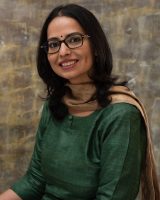 |
Savita Kumari is associate professor and head in the Department of History of Art, Indian Institute of Heritage. With over fifteen years of academic and curatorial experience, she specializes in South and Southeast Asian art. Prior to joining the Institute, she worked with renowned cultural institutions such as the National Gallery of Modern Art and the Indira Gandhi National Centre for the Arts. She has curated significant exhibitions and coordinated numerous national and international seminars, workshops, and collaborative initiatives. Deeply committed to outreach, Dr. Kumari leads art history enrichment programs for educators and students in rural areas. She has been involved in several prominent research and heritage documentation projects of national and international importance. She is a regular speaker at leading institutions in India and abroad. Her scholarly work includes books, articles, and exhibition catalogs, and she has received multiple prestigious fellowships and international travel grants. |
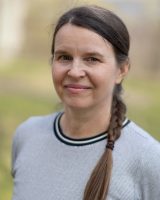 |
Pavlína Morganová is an art historian and curator, based in Prague, Czech Republic. She currently works as a director of the VVP AVU Research Center at the Academy of Fine Arts in Prague. She specializes on the Central and Eastern European art history, performance art and exhibition histories, lectures on Czech Art after 1945. She has participated in several international conferences and takes active part in the representative bodies of Czech art education and research. She recently conducted research concentrated on the medium of exhibition and she is the co-author of the book Exhibition as a Medium. Czech Art 1957−1999 (2020). She is also the author of the books A Walk Through Prague: Actions, Performances, Happenings 1949−1989 (2017) and Czech Action Art / Happenings, Actions, Events, Land Art, Body Art and Performance Art Behind the Iron Curtain (2015). She is a 2019 CAA-Getty International Program alumna. |
 |
Tatiana Muñoz-Brenes is an art historian, curator, museologist, and activist. She holds a BS in psychology and a BA in art history from the University of Costa Rica, and an MA in museum studies from New York University, where she was a Fulbright scholar. Her work critically examines the intersections of gender, sexuality, class struggle, race, coloniality, and institutional power within the fields of art and museums. Grounded in feminist and queer theory, her research exposes the systemic oppression of marginalized subjects within canonical art history and museum practices. She has curated exhibitions and conducted research in Latin America and the United States that closely examines the unequal dynamics between center and periphery. Her practice seeks to challenge white, male-dominated epistemologies and to promote more caring, affective, and community-based approaches to cultural production and display. |
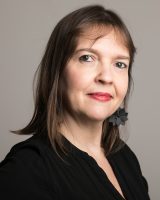 |
Viviana Usubiaga is a researcher at the Research Center in Art and Heritage (CIAP), Universidad Nacional de San Martín (UNSAM) and the National Scientific and Technical Research Council (CONICET), Argentina. She is currently director of the master’s program in Latin American art history at the School of Interdisciplinary Advanced Social Studies, UNSAM, where she is also a professor of contemporary art. She is assistant lecturer in modern and contemporary art at the University of Buenos Aires. From 2019 to 2023, she served as director of the National Division of Heritage Management at the Ministry of Culture of Argentina, and she has worked as a curator and editor. She holds a PhD in art theory and history from the Universidad de Buenos Aires. Her publications explore how art contributes to shaping systems of value and how culture and museums participate in the social construction of historical memory during the post-dictatorship period in South America. She is a 2019 CAA-Getty International Program alumna. |
This program is made possible with support from Getty through its Connecting Art Histories initiative.

Call for Applications: CAA-Getty International Program 2026
posted by CAA — March 12, 2025
CAA will begin accepting applications for the CAA-Getty International Program on March 15! Thanks to generous support from Getty, the program—now in its fifteenth year—enables scholars from around the world to travel to Chicago to participate in the CAA 114th Annual Conference, February 18–21, 2026. The program features a preconference colloquium on international issues in art history, followed by a week of sessions, workshops, events, museum visits, and professional development opportunities.
To date, the program has gathered 179 scholars from sixty-one countries, and continues to have significant global impact on the field. These annual convenings have yielded collaboration, community, and lasting connections while also serving to diversify CAA membership, increase international presence at CAA conferences, and foster greater cross-cultural discourse around international art scholarship and practice.
We also invite alumni of the program to apply to return and support first-time participants, take part in program events, and present new scholarship at the Annual Conference in our dedicated CAA-Getty International Program Alumni Session.
The individuals selected for the 2026 program will receive a one-year CAA membership, have their conference registration fee, travel expenses, and accommodation costs covered, and will receive per diems for meals and incidentals.
International art historians, curators, and other visual arts professionals are encouraged to apply!
Visit our CAA-Getty page for eligibility and application requirements. All interested Getty applicants, whether new scholars or alumni, will need to submit a general conference application (individual presentation proposal) and indicate their interest in participating in the CAA-Getty International Program.
Deadline: April 25
This program is made possible with support from Getty.
CAA113 CAA-Getty International Program Participants Announced!
posted by CAA — December 11, 2024
The CAA-Getty International Program will welcome eight new scholars and four program alumni to the CAA 113th Annual Conference!
Now in its thirteenth year, this program brings a cohort of art historians, museum curators, and other visual arts professionals from around the globe to the CAA Annual Conference to connect with a selection of former participants at a preconference colloquium and alumni session, which examine topics such as historiographies, interdisciplinary and transnational methodologies, decolonizing museums, and other pressing issues in the field.
The 2025 preconference colloquium will be led by special guest Clement Akpang.
Read more about the 2025 program participants below, visit our website to learn more about the first ten years of the CAA-Getty International Program, and register for CAA113!
2025 PARTICIPANTS
 |
Aida Bičakčić obtained her degree in art history from the Faculty of Philosophy at the University of Sarajevo in 2008. From 2009 to 2023 she has held the positions of advisor for movable heritage, and later advisor for art history at the Commission to Preserve National Monuments of Bosnia and Herzegovina, for which she was involved in numerous research projects that resulted in designating cultural assets as National Monuments of Bosnia and Herzegovina. Starting in April 2023 she continued her career as the head of the collection at Ars Aevi, Sarajevo, curating a traveling exhibition of the collection, Sol LeWitt at KRAK Center for Contemporary Culture, and the Ars Aevi Video Art project, while also acting as jury member for a competition for young artists. In 2022, she began her PhD at Faculty of Humanities, Zagreb University, with a focus on history of conservation with the thesis “Protection of Architectural Heritage in the People’s Republic of Bosnia and Herzegovina between 1945 and 1960.” |
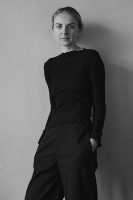 |
Inesa Brašiškė is a Vilnius-based art historian and curator. She holds an MA from the Modern and Contemporary Art: Critical and Curatorial Studies program (MODA) at Columbia University. Her curatorial practice spans multiple institutions including the National Gallery of Art (Vilnius), Contemporary Art Centre (CAC, Vilnius), e-flux screening room, and Art in General. Following a decade of independent curatorial work, she now serves as head of research at the Sapieha Palace, a CAC branch, where she curates contemporary art exhibitions, directs a monthly artists’ film program, and organizes an annual symposium. Brašiškė’s academic research focuses on conceptual art and displacement, artistic labor, feminist art history writing in Eastern Europe, and avant-garde cinema and feminist screen cultures since the 1960s. Brašiškė’s recent scholarship reconsiders abstract painting through feminist histories of making, examines the critical potential of blurring, and explores artistic and curatorial engagements with archives in the Baltics.Her writing has appeared in MoMA’s C-MAP and Mousse as well as in numerous exhibition catalogs and books. Brašiškė was nominated for the ICI Curatorial Award in 2014. Her research has been supported by the Getty Library Research Grant, the Paul Mellon Centre Grant, and the AWARE Research Residency. |
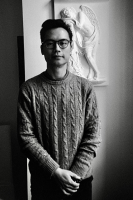 |
Conan Cheong is a PhD candidate in art history and archaeology at SOAS University of London, holding an MA from the same department. His doctoral research, centering on the personal collections of Buddhist monks in Laos of historical photographs and objects. investigates how Buddhist communities conceptualize the self through material practices of memory, memorialization, and representation. He is curatorial advisor for the Museum of Buddhist Art in Vat Saen Sukharam, Luang Prabang (opening in 2026). As curator at the Asian Civilizations Museum, Singapore, from 2016–23, he worked to develop collaborative relationships with source and use communities, and in the exhibition Body and Spirit: The Human Body in Thought and Practice (2022–23). He is a member of Circumambulating Objects: On Paradigms of Restitution of Southeast Asian Art (CO-OP). |
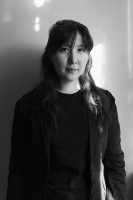 |
Goomaral Dalkh-Ochir is an art historian at the Fine Arts Zanabazar Museum in Ulan Bator, where her research focuses on the history of Mongolian fine art and the study of Mongolian Buddhist art. She completed her bachelor’s and master’s programs in art studies at the National University of Mongolia, focusing on the topic of Zanabazar art, and she is currently pursuing a doctoral program. From 2014–16, she served as a lecturer in medieval art history at the Mongolian National University of Arts and Culture. Since 2014, she has compiled five catalogs that explore the history of Mongolian Buddhist art. She was a coauthor of the book Unique Masterpieces (2018). Since 2017, she has been a member of the Museum and Collection of fine Arts Committee of the International Council of Museums. |
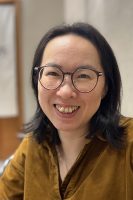 |
Jing Liu is an assistant professor at the Sichuan Fine Arts Institute, China. She received her PhD in art history from Peking University with a dissertation on religious art in southwest China from the tenth to thirteenth centuries. Building on this work, she published The Transformation and Creation of Images: A Study of Guardian Deities of the Song Dynasty in Dazu and Anyue, Sichuan (2024). She is currently working on a new book about natural aesthetics in Chinese landscape painting. Recently, her academic focus has expanded to explore the relationship between cultural heritage and community, including a project examining how patrons, tourists, and pilgrims have interacted with Buddhist carvings over time. As a curator at the Ptolemy Museum in Hong Kong, she is also interested in the spread of Western astronomical imagery in modern China, drawing insights from the museum’s collections. |
 |
Nadia Martin is an assistant researcher at the National Scientific and Technical Research Council of Argentina (CONICET), currently on a postdoctoral fellowship granted by the same institution until her appointment is formalized. She holds a PhD in comparative theory of the arts (CONICET-UNTREF), a master’s degree in visual arts curating (UNTREF), and a bachelor’s degree in communication sciences (UBA). Her research focuses on body, territorial, and techno-scientific imaginaries in contemporary artistic practices, with an emphasis on Latin America. It is framed by perspectives at the intersections of feminisms, new materialisms, and critical posthumanisms. She is involved in the PIP-CONICET and PICT-AGENCIA research projects. Among other distinctions, she is the recipient of the Goethe-Fellowshipat documenta Archiv, the ZUKOnnect Fellowship, and support from the Casa de Velázquez (Madrid). She teaches undergraduate and graduate courses at UNTREF and undergraduate courses at UBA. She is founder and manager of the ENROQUE art-in-territory project. |
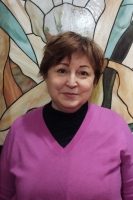 |
Oksana Remeniaka is a chief of department of sociocultural art studies at the Modern Art Research Institute of the National Academy of Arts of Ukraine (Kyiv). She is the author of books and numerous articles on art history and culture. Dr. Remeniaka was a Fulbright Research Scholar, conducting research at Columbia University’s Harriman Institute with the project (2019–20). Dr. Remeniaka is an expert in cultural processes of Polish-Ukrainian borderland, Ukrainian culture at the turn of the nineteenth century, diaspora visual arts of the interwar and postwar periods, and wartime Ukrainian modern art. She is the author of of numerous texts for modern art exhibits and projects in various Ukrainian museums and galleries, including A Chronicle of Inspiration in a Fierce Time (2023), Art in Times of Plague with a virtual catalog of artists’ works from Ukraine, Poland, the United States, Italy, and Georgia (2020). |
 |
Lucía Stubrin holds a PhD in history and theory of the arts from the Universidad de Buenos Aires and is a research professor at the Universidad Nacional de Entre Ríos (Argentina). She directs research projects within the framework of the Grupo de Estudio Biosemiótica, Arte y Técnica (GEBAT), and is an independent curator specialized in technopoetics. She is the author ofBioarte. Poéticas de lo viviente (2020, Eudeba/Ediciones UNL). Since 2010, she has received national (CONICET) and international (Getty Foundation, European Commission Erasmus Mundus, Fundación Carolina, AUGM) doctoral and postdoctoral grants for her research in the field of art-science-technology with emphasis on life sciences and bioart. Since 2023 she has been a research fellow at the Universidad de Barcelona. |
ALUMNI PARTICIPANTS
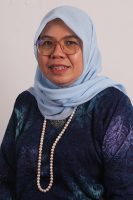 |
Sarena Abdullah, PhD, is an associate professor of art history at Universiti Sains Malaysia. She received the prestigious London, Asia research award in 2017. Additionally, she participated in the CAA-Getty International Program in 2016 and was part of alumni panels in 2017 and 2019. Abdullah is the author ofMalaysian Art since the 1990s: Postmodern Situation (2018) andSeni Lukis di Malaysia sejak Tahun 1990–an: Situasi Pascamoden (2023) and coedited Ambitious Alignments: New Histories of Southeast Asian Art 1945–1990 (2018). Her extensive writings on Malaysian art are featured in renowned academic journals including TRaNS, Southeast of Now, and Wacana Seni, among others. She was the editor of Berita, a bulletin affiliated with the Malaysia, Singapore, Brunei (MSB) Studies group under the Association of Asian Studies (AAS) (2022–24). She is the current Chair of CAA’s International Committee. |
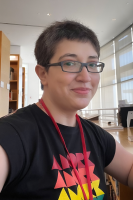 |
Georgina G. Gluzman is a researcher at the Consejo Nacional de Investigaciones Científicas y Técnicas in Argentina. She is also an assistant professor of art history and gender studies at the Universidad de San Andrés in Buenos Aires. She received her PhD from the Universidad de Buenos Aires in 2015, having previously received an undergraduate degree in art history and a teaching certification. Her work focuses mainly on the art of nineteenth- and early twentieth-century Argentine women artists. She is the author of Trazos invisibles: Mujeres artistas en Buenos Aires (1890–1923) (2016). She has served as a guest curator and curatorial adviser at various institutions. Her research has been supported by the Getty Foundation and the Institut National d’Histoire de l’Art, among others. In 2023, she was a fellow at the Madrid Institute of Advanced Studies and the German Center for Art History (DFK) in France, undertaking a project on world’s fairs. |
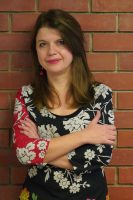 |
Iro Katsaridou is an art historian and museum studies scholar, and assistant professor at the School of Visual and Applied Arts, Aristotle University of Thessaloniki, Greece. Previously she was director of the MOMus-Thessaloniki Museum of Photography (2021–24), and curator at the Museum of Byzantine Culture of Thessaloniki (2005–21). Iro has curated exhibitions of historical and contemporary photography, coordinated the international photography festival Thessaloniki PhotoBiennale 2023 at MOMus, and was a member of the Organizing Committee for the 5th Fast Forward Women in Photography conference (Thessaloniki, 2024). Currently she serves as a coinvestigator in the UK’s Arts and Humanities Research Council (AHRC) funded Museum Dialogues program (2004–25) of the University of Sunderland. Iro has published on photography, socially engaged art history, and curatorial practices. Recently, she coedited with Eve Kalyva and Pamela Bianchi the collective volume Museums and Entrepreneurship. The Effects of Capitalising on Culture in the 21st Century (2024). |
 |
Ali Mahfouz is a Cultural Heritage Consultant at FalconViz, King Abdullah University for Science and Technology (KAUST). He began his career in 2012 as an archaeologist with Egypt’s Ministry of Antiquities and later served as director of the Mansoura Storage Museum from 2018–23. His expertise includes heritage and museum management, cultural heritage documentation, and the impact of conflict on art and heritage. Ali holds bachelor’s, postgraduate, and master’s degrees in archaeology and is pursuing a PhD. Throughout his career, Ali has contributed to the field with four published articles and a book. He has served as a jury member for international conferences such as ICOM-ICME in Azerbaijan, Prague, and Mexico. In 2021, he cofounded the Egypt Heritage Association and is a board member of the Egyptian National Committee of ICOM (2021–5). His research focuses on archaeology, decolonization, heritage conservation, and documentation technologies. |
This program is made possible with support from Getty through its Connecting Art Histories initiative.

Call for Applications: CAA-Getty International Program 2025
posted by CAA — July 10, 2024
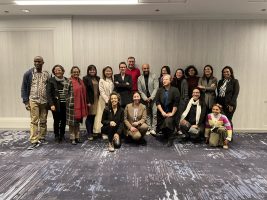
CAA is currently accepting applications for the CAA-Getty International Program! Thanks to generous support from Getty, the program—now in its thirteenth year—will enable scholars from all over the world to travel to New York to participate in the CAA 113th Annual Conference, February 12–15, 2025. The program features a preconference colloquium on international issues in art history, followed by a week of sessions, workshops, events, museum visits, and professional development opportunities.
The CAA-Getty International Program was established to diversify CAA membership, increase international presence at CAA conferences, and foster greater cross-cultural understanding of different contexts and methodologies of art scholarship and practice. Rigorous dialogue between international scholars and their North American peers has yielded collaboration, community, and lasting connections: CAA-Getty alumni have worked together on publications, exhibitions, convenings, and many other projects. To date, the program has gathered over 150 scholars from sixty countries and continues to have significant global impact on the field. Many participants become CAA ambassadors in their respective countries by sharing knowledge acquired during the program with their colleagues at home.
The individuals selected for the 2025 program will receive a one-year CAA membership, conference registration, travel expenses, hotel accommodations, and per diems for meals and incidentals. International art historians, curators, and other visual arts professionals are encouraged to apply.
Visit our website for detailed guidelines and to apply.
Deadline: August 15
This program is made possible with support from Getty.

Meet the 2024 CAA-Getty International Program Participants
posted by CAA — November 29, 2023
CAA is pleased to announce this year’s participants in the CAA-Getty International Program. Now in its thirteenth year, this international program, supported by the Getty Foundation, welcomes twelve new participants and four alumni to attend the 2024 Annual Conference in Chicago, IL. The goal of the CAA-Getty International Program is to increase international participation in CAA’s activities and the field of visual arts in academia, thereby expanding international networks and the exchange of ideas both during and after the conference. We look forward to welcoming this year’s participants!
At a preconference colloquium, the new participants will discuss key issues in the international study of art history together with CAA-Getty alumni and US hosts. The program will delve into topics such as postcolonial and Eurocentric legacies, decolonization of museums, scholarship and pedagogy, interdisciplinary and transnational methodologies, and the intersection of politics and art history. Learn more about the first ten years of the program in our online publication.
Program participants—art historians, curators, and artists—hail from multiple countries, expanding CAA’s international membership and contributing to an increasingly diverse community of scholars and ideas. Selected by a jury of CAA members from a highly competitive group of applicants, each participant will receive funding for travel, hotel accommodation, conference registration, CAA membership, and a per diem.
Alumni invited back to the 2024 conference will present at the Art, Authenticity, Migration, and Global Climate Change session while also connecting our new participants to our burgeoning group of nearly 160 CAA-Getty International Program alumni.
2024 PARTICIPANTS IN THE CAA-GETTY INTERNATIONAL PROGRAM

Mariela Cantú is a researcher, audiovisual preservationist, artist, and curator. She is a PhD candidate in Art History at the University of San Martín (CIAP-UNSAM CONICET) and holds a master’s degree in Preservation and Presentation of the Moving Image (University of Amsterdam). She is a member of RAPA—Argentinian Network of Audiovisual Preservationists, and the creator of Arca VIDEO, a collaborative archive of Argentinian video art. She has undergone specific training on video preservation at Associação Cultural Videobrasil (Brazil), La Camera Ottica (Italy), Media Burn Archive and Video Data Bank (USA), and Cinemateca Boliviana (Bolivia), while also attending the Film Preservation and Restoration School Latin America (CINAIN, Cineteca de Bologna, L’Immagine Ritrovatta and FIAF). She has been a professor at Universidad de Buenos Aires, Universidad del Cine, Universidad Nacional del Arte, and Universidad Nacional de La Plata, among others.
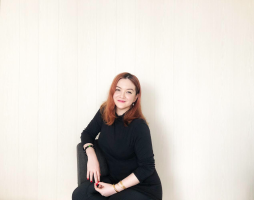
Kathleen Ditzig is a curator at National Gallery Singapore. She received a PhD from Nanyang Technological University in 2023 with a dissertation titled “Exhibiting Southeast Asia in the Cultural Cold War: Geopolitics of Regional Art Exhibitions (1940s–1980s).” She obtained an MA from the Center for Curatorial Studies, Bard College, in 2015. Inspired by her experience in cultural policy, Ditzig studies modern and contemporary Southeast Asian art in relation to global histories of capitalism, technology, and international relations. As a curator and researcher, she is invested in advancing and interrogating art as an exceptional site and system of speaking to power. She won an IMPART Curatorial Award in 2021. Her writing has been published by Southeast of Now, Journal of Social Issues in Southeast Asia, Afterall, post: notes on art in a global context, Art Agenda, and Artforum, among others.
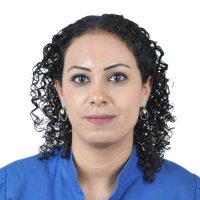
Marzouka Hanna Ibrahim Gaied has a bachelor’s degree in Egyptology from El Minya University, Egypt. Their research has focused primarily on the art of Middle Kingdom (about 2000 BCE) in the Beni Hasan al-Shuruq area of Middle Egypt, and they have wide-ranging experience working on many archaeological sites across Egypt. In their current position as Inspector of Antiquities at the Central Department for Seized Antiquities, they are on the front lines of addressing the trade in looted artifacts, which drains Egypt of its cultural resources. Their experiences have provided them with a deep knowledge of excavation techniques, collection management, and a passion for local community engagement.
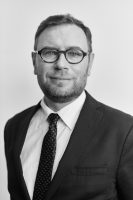
Paweł Ignaczak graduated in art history at the Adam Mickiewicz University in Poznań, where he earned a PhD for his thesis on etchings of Jean Pierre Norblin de la Gourdaine (1745–1830) in 2013. Between 2003–15 he worked in the Print Room of the National Museum in Poznań and in the print collection of the Polish Library in Paris. From 2015–22 he worked at the Museum of Warsaw. Since 2015, he has been lecturing at the Academy of Fine Arts in Warsaw, and since 2020 he has been vice-dean at the Faculty of Artistic Research and Curatorial Studies. Currently, he’s been conducting research on amateur artistic work in Poland in the second half of the eighteenth and early nineteenth centuries.

Eyitayo Tolulope Ijisakin is an associate professor in the Department of Fine and Applied Arts, Obafemi Awolowo University, Ile-Ife, Nigeria. His doctoral research focuses on printmaking and the developmental history and contributions of printmaking to contemporary Nigerian art. He has written for Critical Arts and African Arts. Dr Ijisakin is a Fellow of the American Council of Learned Society in the African Humanities Program. He was a Postdoctoral Fellow with the Arts of Africa and the Global South, Rhodes University, South Africa (2017–18). He also received the Carnegie Corporation of New York Fellowship for the 63rd Annual Meeting of the African Studies Association (2020). He has served as a reviewer for several international journals. He is listed among the artists whose works engage social change by the Denver Art Museum, in 2022. He is a member of the Society of Nigerian Artists and the Nigerian Field Society.

Agnieszka Patala is an assistant professor in the Institute of Art History, University of Wroclaw. The area of her academic focus is medieval art in Europe, with particular reference to panel painting and sculpture—the (multisensorial) relations of artworks with the viewer and space, their use in devotional practices, extra-religious realities of their functioning, including afterlives in the nineteenth totwenty-first centuries. In 2015 she wrote her dissertation on the impact of Nuremberg art and artists on late Gothic panel painting in Silesia. It was published in 2018 and served as a foundation for exhibition, Migrations: Late Gothic Art in Silesia (National Museum in Wroclaw). Currently, she is at work on her postdoctoral project determining the origins, functions, and agency of early altarpieces in Central Europe. She is also a co-investigator in the project, Residua of Premodern Relations with Art in Selected Contemporary Convents in Poland.
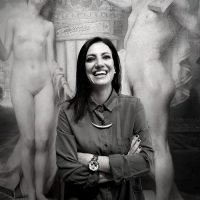
Elena Stylianou researches, writes, and curates at the intersection of the history and theory of photography, modern and contemporary art, critical studies, and museum and curatorial practices. She is currently associate professor at European University Cyprus and president of the International Association of Photography and Theory (IAPT). Her scholarship has been published in peer-reviewed journals and edited volumes, and she is co-editor of Museums and Photography: The Display of Death (Routledge, 2018), Ar(t)chaeology: Intersections of Photography and Archaeology (IAPT Press, 2019), and Contemporary Art in Cyprus: Politics, Identity and Culture Across Borders (Bloomsbury, Spring 2021). She is currently working on a special issue on processes of decolonization and the photographic archive. Elena earned her doctoral degree from Columbia University Teachers College, is a recipient of numerous awards and grants, including a Fulbright and an ArtTable fellowship, and she held a postdoctoral position at UCL, London. She has curated international art exhibitions in Cyprus, and is the lead researcher of several funded projects dealing with arts and heritage.
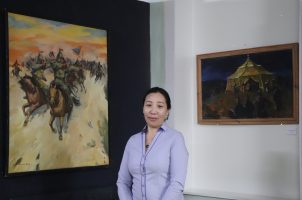
Suvdaa Sampil is a curator at the History and Local Museum of Tuv province, Mongolia, and has been working as a museum curator since 2011. They have written academic articles on cultural heritage research, art history, and interethnic relations that have been published in national and international journals. Moreover, they wrote the books Cultural Heritage of the Central Region and The Settlement of Ethnic Groups in the Tuv Province: Some Cultures and Traditions. After receiving a master’s from the University of Mongolia in 2007, their research concentrated mainly on Mongolian and local cultural heritage and art history. Sampil is in charge of the cultural heritage and collections at the museum and curates permanent temporary exhibitions. In 2016, they were a member of the International Committee for Museums and Collections of Modern Art (CIMAM), an Affiliated Organization of ICOM, and became a member of the International Committee of Museums (ICOM) in 2018.
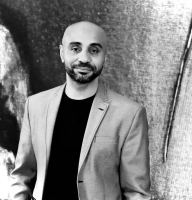
Igor Simões has a PhD in Visual Arts—History, Theory, and Criticism of Art at the Programa de Pós-Graduação em Artes Visuais da Universidade Federal do Rio Grande do Sul (PPGAV-UFRGS) and is the adjunct professor of History, Theory, and Criticism of Art and Methodology and Practice of Art Teaching (UERGS). He was assistant curator of the 12th Mercosur Biennial, member of the curatorial committee of the National Association of Fine Arts Researchers (ANPAP). He works with the links between exhibitions, film editing, art history, and racialization in Brazilian art and the visibility of Black subjects in the visual arts and is the author of the thesis “Film Editing and Exhibition: Black Voices in the White Cube of Brazilian Art.” He is also a member of the curatorial committee of the Museum of Contemporary Art at the University of São Paulo/USP. Curator of the exhibition “Presença Negra no Museu de Arte do Rio Grande do Sul” (2022). He is a member of the curatorial boards of the exhibitions Social Fabric and Enpowerment and a member of the board of AWARE—Archives of Women Artists, Research and Exhibitions and Fractured Times. In 2023 he was general curator of Dos Brasis: Arte e pensamento negro, the most comprehensive exhibition of Black Brazilian artists (Brazil- São Paulo). That same year he was guest curator at the Inhotim Institute for the 2023 season, curating the exhibitions Mestre Didi: The Initiates in Mystery Don’t Die and Doing the Modern, Building the Contemporary: Rubem Valentim and the Right to Form. In 2024, he will co-curate Rosana Paulino: Atlântica e Amefricana at Museo de Arte Latinoamericano de Buenos Aires (MALBA).
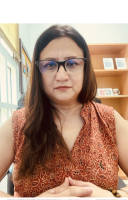
Trained as a studio artist with a major in sculpture, Kanwal Syed earned her PhD in art history from Concordia University as the 2023 Graduate Valedictorian. During her candidacy, she earned the prestigious FQRSC doctoral grant and numerous internal grants, published three journal articles, co-chaired two panels at the annual College Art Association conference, and presented papers at academic conferences in Vancouver, Brighton, Rome, and Chicago. Her dissertation titled “ھم گنہاگار عورتیں (We Sinful Women): Urban Feminist Visuality in Contemporary Art and Feminist Movements in Pakistan After 9/11,” garnered an Honorable Mention in the UC Berkeley South Asia Art & Architecture Dissertation Prize 2023 and has been nominated for NAGS Dissertation Award 2023–24. Before joining American University in Dubai as an Assistant Professor of Art history, she worked as an adjunct faculty at the University of British Columbia and as a part-time faculty at Concordia University. Her research interests encompass non-Western art, decoloniality and cultural feminist visuality in contemporary art.
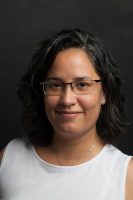
Carolina Vanegas Carrasco researches the processes of creation and reception of nineteenth-century monuments in Latin America. She is the current director of Centro de Estudios Espigas at the Universidad Nacional de San Martín, Argentina, and researcher of the Centro de Investigaciones en Arte y Patrimonio (CONICET-UNSAM). Vanegas is General Coordinator of the Group of Public Art Studies in Latin America based on the Universidad de Buenos Aires. She is the author of Disputas monumentales: escultura y política en el Centenario de la Independencia en Colombia (Bogotá, 1910) (2019, Instituto Distrital de Patrimonio Cultural of Bogotá).
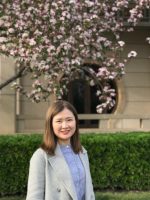
Fanying Zhang, an Assistant Professor in the Department of Arts Administration, Education, and Policy at the China Academy of Art, earned her Ph.D. in Art History in 2021. Her research focuses on unraveling how the Western world shaped its perceptions of Chinese art in the 20th century. She places particular emphasis on analyzing exhibitions, conferences, publications, and the contributions of scholars, artists, and curators to the global dissemination of Chinese art. Zhang’s academic career commenced with a graduate program centered on Osvald Sirén who had already been an accomplished scholar in the study of Trecento painting before getting involved in the study of Chinese art. After that, she expanded her interests in transcultural art history, particularly the role of Chinese art in constructing global art history. She has incorporated this interest into her teaching and is engaged in international collaborations. She is also involved in a project on Professor James Cahill’s archive initiated by the China Academy of Art, further enriching her experience in the field.
PARTICIPATING ALUMNI
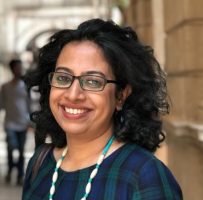
Amrita Gupta is an art historian, writer, administrator, and editor involved in arts education and cultural management. With over two decades in the nonprofit cultural sector in India, she has contributed through art historical research, teaching, published writing, arts programming, and institution building. In 2002, she joined the Mohile Parikh Center (MPC), Mumbai, and became its Program Director in 2005, a responsibility she served till early 2023. In this capacity, she facilitated critical thinking by curating a wide range of innovative art education programs, initiating public art projects, and co-creating short art videos for diverse audiences, and remains associated with the MPC in an honorary capacity. She is Founding Member and Co-director at the Council for Arts and Social Practice (CASP), established in 2013 as a transdisciplinary platform to facilitate critical dialogues on cultural sustainability. Her practice at CASP focuses on the interplay of social history, fieldwork, community-based art, and collective experience. She serves as a jury member for the Arthur Kingsley Porter Prize for Art Bulletin articles and the SAIL Mentorship Program (Edition III) at Sunaparanta Goa Center for the Arts. In 2019, she co-founded and edits the e-journal, Partition Studies Quarterly (PSQ), which focuses on partition narratives of Northeast India, and other less-remembered partition stories in the subcontinent. Her ongoing and independent research focuses on the art practices of Northeast India, and an essay on this topic has been published in the edited book 20th Century Indian Art (Thames & Hudson and Art Alive, 2022). Her art writings for anthologies, journals, exhibition catalogs, and magazines have been published widely in leading print and digital platforms; she has edited art books for children and continues to write on Indian modern and contemporary art.
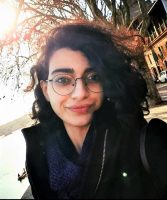
Delaram Hosseinioun received her first MA in literary criticism from the University of Exeter and her second MA in cultural studies from KU Leuven University. In her PhD project at Utrecht University, titled “Unveiling the Other: The Metamorphosis of Voices of Iranian Female Artists from the Mid-Twentieth Century to the Present Day,” Delaram draws from gender theories in poststructuralist psychoanalysis, such as in the works of Butler and Cixous, along with theories regarding self and forms of othering in continental philosophy, namely works of Bakhtin and Derrida. Her goal is to trace the trajectories and endeavors of Iranian female artists in reclaiming their identities. Working along with the artists Delaram explores the artworks as a pictorial form of dialogue and artists’ attempts in surpassing sociocultural restraints. Delaram’s focus rests on the revelation and universality of women’s voices in creative platforms, art journalism and interviewing artists beyond borders.
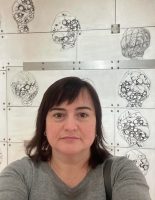
Mariana Levytska is an associate professor in the Department of Graphic Design and Artbooks of the Ukraine Academy of Printing. She works as a part-time senior research associate in the Department of Art Studies of the Ethnology Institute at the national Academy of Ukraine in Lviv. She received her PhD in the history of art from the Lviv National Academy of Arts in 2023. She specializes in Ukrainian art of the long nineteenth century through social art history optics. In 2022 she began a research project focused on artists’ response to the warfare in Ukraine, after the full-scale Russian invasion.
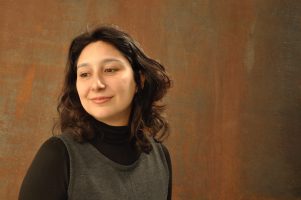
Ana Mannarino is an art historian and professor of Art History at School of Fine Arts at Federal University of Rio de Janeiro (EBA-UFRJ) and at Visual Arts Postgraduate Program at Federal University of Rio de Janeiro (PPGAV-UFRJ). She received her PhD in Art History/Visual Arts at PPGAV-UFRJ and participated in a yearlong collaborative study program at Université Sorbonne Nouvelle-Paris 3. Her doctoral thesis, “Word in Brazilian Art: Mira Schendel and Waltercio Caldas,” focuses on the relationship between text and image in Brazilian contemporary art, especially in the work of these two artists. Her research also considers modern art and historiography of art in Brazil, the connections between art and poetry, Concrete art, and the production of artists’ books.
This program is made possible with support from Getty through its Connecting Art Histories initiative.

CAA-Getty International Program 2024: Applications now open!
posted by CAA — July 06, 2023
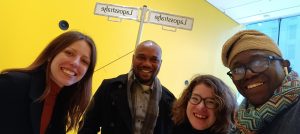
Photo: Stephen Fọlárànmí
Getty has awarded College Art Association (CAA) a grant to fund the CAA-Getty International Program for a thirteenth consecutive year. The Getty Foundation’s support will enable CAA to bring twelve international visual-arts professionals to the 112th Annual Conference, taking place in Chicago, February 14–17, 2024. These individuals will be first-time participants in the program and will be accompanied by alumni of the program returning to present papers during the conference.
Participants will receive funds for travel expenses, hotel accommodations, per diems, conference registrations, and one-year CAA memberships. We encourage all international art historians, art history educators, and museum curators to apply. The program will also include a one-day preconference colloquium on international issues in art history on Tuesday, February 14, as well as ongoing engagement with other alumni from the program online and at future conferences. The deadline for applications is August 15, 2023. Guidelines and application can be found here.
In 2021, CAA organized a publication to celebrate ten successful years of the CAA-Getty International Program. The publication, entitled Global Conversations: 10 Years of the CAA-Getty International Program features in-depth accounts of the program, a timeline of important events and milestones, and directories of past papers, members, and meetings.
The CAA-Getty International Program was established to increase international participation in CAA and the CAA Annual Conference. The program fosters collaborations between North American art historians, artists, and curators and their international colleagues and introduces visual arts professionals to the unique environments and contexts of practices in different countries.
Since it began in 2012, the program has brought 159 scholars to the conferences, from over 50 countries located in Central and Eastern Europe, Asia, Southeast Asia, Africa, the Caribbean, and Central and South America. Each year, a preconference colloquium on international topics in art history inaugurates the week, kicking off four days of conference sessions, meetings with new colleagues, and visits to museums and galleries. Subsequent to these events, the program has generated many scholarly collaborations, including publications, conferences, and exhibitions.
Most of all, former grant recipients have become ambassadors of CAA in their countries, sharing knowledge gained at the Annual Conference with their colleagues at home. Past recipients have said that “variety of topics presented also exposed me to the realization that there is so much to be done to unearth the hidden treasures of global art history, which hitherto I have overlooked in my discipline and nation but which will now form the basis of my future projects,” and “the direct contact with other global south researchers is an unique occasion, rarely possible and extremely enriching.”

Meet the 2023 CAA-Getty International Program Participants
posted by CAA — November 29, 2022
CAA is pleased to announce this year’s participants in the CAA-Getty International Program. Now in its twelfth year, this international program, supported by the Getty Foundation, welcomes twelve new participants and four alumni to attend the 2023 Annual Conference in New York City. The goal of the CAA-Getty International Program is to increase international participation in CAA’s activities and the field of visual arts in academia, thereby expanding international networks and the exchange of ideas both during and after the conference. We look forward to welcoming this year’s participants!
At a pre-conference colloquium, the new participants will discuss key issues in the international study of art history together with CAA-Getty alumni and US hosts. The program will delve into topics such as postcolonial and Eurocentric legacies, decolonization of museums, scholarship and pedagogy, interdisciplinary and transnational methodologies, and the intersection of politics and art history. Learn more about the first ten years of the program in our online publication.
Program participants—art historians, curators, and artists—hail from multiple countries, expanding CAA’s international membership and contributing to an increasingly diverse community of scholars and ideas. Selected by a jury of CAA members from a highly competitive group of applicants, each participant will receive funding for travel, hotel accommodation, conference registration, CAA membership, and a per diem.
Alumni invited back to the 2023 conference will present at the Global Change, Crisis, and the State of the Visual Arts session while also connecting our new participants with our burgeoning group of nearly 150 CAA-Getty International Program alumni.
2023 PARTICIPANTS IN THE CAA-GETTY INTERNATIONAL PROGRAM
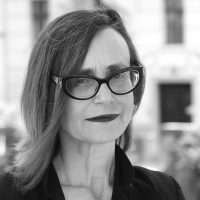
Marina Grzinic is a principal research associate at the Research Centre of the Slovenian Academy of Sciences and Arts (ZRC SAZU) in Ljubljana, Slovenia, where she is affiliated with the Institute of Philosophy. She holds a PhD in philosophy and is an artist with a forty-year career. She has been a professor at the Academy of Fine Arts Vienna, Austria, since 2003, in charge of the Studio of Conceptual Art (Post-Conceptual Art Practices) at the Institute of Fine Arts. Grzinic is the principal investigator of the Austrian Science Fund and Programm zur Entwicklung und Erschließung der Künste (FWF-PEEK) project “Conviviality as Potentiality” (2021–25). She was also the principal investigator of the FWF-PEEK project “Genealogy of Amnesia (Opposing Colonialism, Antisemitism and Turbo-Nationalism)” (2018–21). Her areas of expertise include contemporary philosophy, contemporary art, the study of coloniality and decoloniality, transfeminism, the analysis of racism, antisemitism, nationalism, and the study of memory and history in the context of resistance.
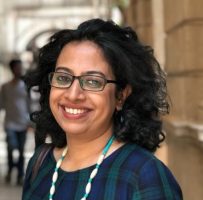
Amrita Gupta is an art historian, writer, educator, and editor who works across art education and cultural management. In 2002, she joined the Mohile Parikh Center (MPC), Mumbai, and became its program director in 2005, facilitating critical thinking by curating a wide range of innovative art education programs. She runs the website V-IDEO: Ideas worth Sharing, an archive of short videos on Indian artists for which MPC is the knowledge partner. She received an MFA in art history from Viswabharati University, Santiniketan 2002.
Her writings on modern and contemporary art have been published in anthologies, journals, and websites in India and internationally, and she has authored and edited art books for children. She was a visiting lecturer in art history at the Sir J. J. School of Art, Mumbai; a fellow at ARThink South Asia (ATSA); a research grantee from the India Foundation for the Arts, and curatorial advisor for Art1st Foundation, Mumbai. Her current art historical research is on Northeast India, framing the region as a “critical art geography” where one can attend to meanings that engage with global modernism and heterodox contemporaneity drawn through one’s own historical position. An essay from this research has been published in the book 20th Century Indian Art (Thames & Hudson, 2022). She is cofounder and executive editor of the independent e-journal, Partition Studies Quarterly which focuses on partition stories of Northeast India within the larger discourse of the partition in the subcontinent.
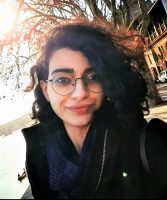
Delaram Hosseinioun was born and reared in Tehran, Iran, and seeks to reflect the voice of Persian women in creative and comparative narratives in spite of borders and restrictions. Delaram received an MA in literary criticism from the University of Exeter and another in cultural studies from KU Leuven University. Through her PhD project at Utrecht University, titled “Unveiling the Other: The Metamorphosis of Feminist Persian Art from the Mid-Twentieth Century to the Present Day,” Delaram draws from gender theories in French psychoanalysis, such as in the works of Hélène Cixous and Judith Butler, and continental philosophy, namely in the work of Mikhail Bakhtin and Jacques Derrida. Working with artists and scholars around the world, Delaram deciphers artworks as pictorial dialogues and as artists’ attempts to surpass sociocultural restrictions. The revelation and universality of the feminine voice frame her core vision. Delaram’s other passion is art journalism and interviewing artists beyond borders.

Brigitta Isabella is a researcher of art history, critical theories, and cultural studies. Her research trajectory revolves around the (im)mobility of artists and the (im)mobilization of art within the geopolitical and geoaesthetic terrains of transnational solidarity. By looking into the transnational traffic of artists, objects, and ideas, she reexamines the reciprocity between nationalism and internationalism and how artistic traces of Third World solidarity can play a discursive part in decentralizing global art history. She studied philosophy at Gadjah Mada University, Yogyakarta, Indonesia, and gained her MA in critical methodologies at King’s College, London. She is also a part of a research-action group called Kunci Study Forum & Collective and serves as the coeditor of Southeast of Now: Directions in Contemporary and Modern Art in Asia, a peer-reviewed journal published by NUS Press. She is a lecturer at the Faculty of Visual Arts in Indonesian Institute of the Arts, Yogyakarta.
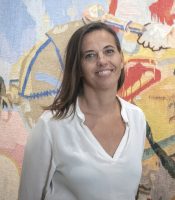
Żanna Komar, PhD, was born in Ukraine, lives in Poland, and is an art historian, theoretician of architecture, and exhibitions curator. She is a member of the academic staff at the Institute of European Heritage, part of the International Cultural Centre, Kraków, where she works as a content specialist. She specializes in urban studies, social and art history, and the theory and protection of cultural heritage. She is the author of numerous publications on the history of architecture and art, including the book Trzecie miasto Galicji. Stanisławów i jego architektura w okresie autonomii galicyjskiej (The third city of Galicia. Stanisławów and its architecture in the period of Galician autonomy, 2008). She writes about Art Nouveau, historicism, modernism, and contemporary art, and about totalitarian and modern architecture in present‑day Poland and Ukraine.
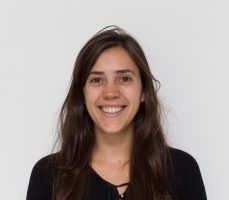
Larisa Mantovani holds a PhD in history from the Escuela Interdisciplinaria de Altos Estudios Sociales, Universidad Nacional de San Martín, Buenos Aires. She has a BA in art history and a teacher training degree in art history from Universidad de Buenos Aires. She is a postdoctoral fellow at the Research Center in Art and Heritage of the National Scientific and Technical Research Council (CIAP/UNSAM-CONICET). She works as an assistant professor of history of decorative arts I and II at the Universidad del Salvador. Both her dissertation and current postdoctoral research focus on applied arts and the links between art, education, and industry in Argentina in the first half of the twentieth century.
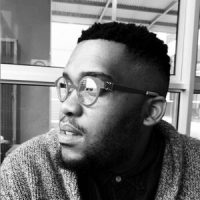
Thabang Monoa’s research interests involve art history, art criticism, visual culture, curatorial practice, and cultural studies. He completed his undergraduate studies at the Tshwane University of Technology and then went on to do a master’s degree in visual art at the Faculty of Art, Design and Architecture, University of Johannesburg. He later worked as an art historian in the faculty’s department of visual art. His doctoral study, which he undertook with the SARChI Chair in South African Art and Visual Culture, focused on the notion of Blackness in Afrofuturist aesthetics. Monoa is a member of the College Art Association (CAA) in the USA; a former council member of the South African Visual Art Historians (SAVAH); and is coconvenor of the Gerard Sekoto Winter/Summer School, which is administered through the Johannesburg Art Gallery. In his current capacity as a lecturer in Art History at the University of Cape Town’s Michealis School of Fine Art, Monoa continues to generate scholarly output concerning racial aesthetics, notions of futurity, and Black radical thought.

Haoxue Nie is an assistant professor at the School of Art and Humanities, Guangzhou Academy of Fine Arts. She holds a PhD in Western modern art history and theory from the China Academy of Art (2018). Her dissertation was published as a monograph in 2019 titled Beyond Boundaries: George Ault and Early Modern American Art. She was a recipient of the Getty Foundation grant for the 35th CIHA Congress (2019) and the international Travel Grant by Terra Foundation for American Art (2016).
Her research covers the first half of twentieth-century American art history, especially from the 1920s to the 1950s. Recently, she has been focusing on the visual ideology of cityscapes within this period and how they remained minor artworks in the mainstream of art history, as well as the concept of time, space, and subjectivity as formal, ideological, and psychological manifestations. The intertextuality among easel painting, modern photography, and films with urban themes in American modernism is also a part of her scholarly explorations.

Zuzanna Sarnecka is an assistant professor of art history at the University of Warsaw (Poland). She earned her PhD in history of art at the University of Cambridge (2017). She is the author of The Allure of Glazed Terracotta in Renaissance Italy (Brepols, 2021) and coeditor of The Agency of Things in Medieval and Early Modern Art. Materials, Power and Manipulation (Routledge, 2017) and The Materiality of Terracotta Sculpture in Early Modern Europe (Routledge, 2023). Her current research focuses on the adaptation of technique of tin-glazed earthenware from the Italian peninsula across Central Europe. In her work, she aims to construct more inclusive narratives through close investigation of microhistories that have long remained ignored, not because of the lack of sources, but because of the cult of masterpieces. She promotes multisensory perspective in studies of the arts of the past, as more immediately significant for the twenty-first-century beholder, than stylistic attributions and dating.
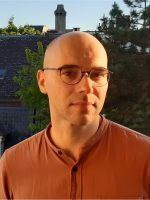
Jakub Stejskal is a MASH junior research group leader at the Department of Art History, Masaryk University, Brno, where he heads the research group Remote Access: Understanding Art from the Distant Past. He has held fellowship positions at eikones (University of Basel) and Freie Universität Berlin. He holds a PhD in aesthetics from Charles University, Prague. His research interests lie at the intersection of archaeology, art history, anthropology, and philosophical aesthetics. He is the author of Objects of Authority: A Postformalist Aesthetics (Routledge, 2022) and his work has appeared in Critical Inquiry, World Art, Journal of Aesthetics and Art Criticism, and RES: Anthropology and Aesthetics.

Cheryl Chelliah Thiruchelvam holds a PhD in art history and is currently attached to the Advertising Department, Faculty of Arts and Social Science at Universiti Tunku Abdul Rahman (UTAR), Malaysia. Her research interests are Hindu-Buddhist visual arts of the Southeast Asian region and to a lesser extent feminist studies. Her latest publication is a book chapter on the prevalence of the Ramayana epic in Malaysian visual arts for the book The Multivalence of an Epic: Retelling the Ramayana in South India and Southeast Asia (Manipal Universal Press, 2021). She also has a forthcoming coauthored essay entitled, “Tracing Indian Cultural Connections in Malaysia and Brunei: From Early Candis to Modern Art,” for the book Connected Histories of India and Southeast Asia: Icons, Narratives, Monuments that will be published by SAGE Publications India. Besides that, she is also interested in writing criticism, reviews, and commentary within the Malaysian art scene.
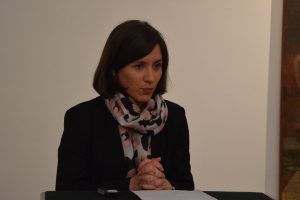
Tanja Trška is assistant professor at the Department of Art History, Faculty of Humanities and Social Sciences, University of Zagreb, Croatia, where she teaches courses on early modern art in Europe and present-day Croatia. She received her PhD in art history from the Scuola Normale Superiore in Pisa, Italy (joint supervision with the Faculty of Humanities and Social Sciences, University of Zagreb) in 2014. Her research interests center on early modern art and architecture, the exchange of cultural and artistic experiences between Italy and the eastern Adriatic coast, art patronage, and history of collections. She has collaborated on Croatian Science Foundation’s research project “Visualizing Nationhood: The Schiavoni/Illyrian Confraternities and Colleges in Italy and the Artistic Exchange with South East Europe (15th–18th centuries)” (2015–18) and is currently a team member of the research project “Provenance Research on Artwork in Zagreb Collections” (2020–24).
PARTICIPATING ALUMNI
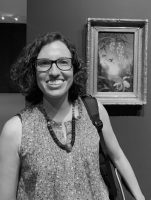
Patricia D. Meneses is an assistant professor of art history at the University of Campinas (Brazil). She earned her PhD in history of the visual arts at the University of Pisa (2009). She is the author of Baccio Pontelli a Roma. L’attività dell’architetto per Giuliano Della Rovere (Felici Editore, 2010) and editor of several books, such as Arte Não-Europeia: Conexões historiográficas a partir do Brasil (Estação Liberdade, 2020) and A imagen como experimento. Debates contemporâneos sobre o olhar (Milfontes, 2021). In 2019, she was Hans Jonas visiting professor at the University of Siegen, where she taught a course on “exotic” materials in art history. She is currently part of a Connecting Art Histories project sponsored by the Getty Foundation (“Teaching and Researching Non-European Art at Brazilian Universities”). Her research focuses on the connections between art, science, and ecology in the nineteenth century.

Natalia Moussienko is a leading research fellow at the Modern Art Research Institute of the National Academy of Arts of Ukraine (Kyiv). She is the author of numerous books and articles on art history, cultural diplomacy, cinema, and urbanism, including Art of Maidan (2016), Kyiv Art Space (2013), and Arts and Politics (2002). In 2016 the National Academy of Arts of Ukraine awarded Dr. Moussienko a gold medal for her achievements in cultural diplomacy. She was also awarded a Fulbright scholarship to conduct research at the Kennan Institute, Wilson Center, in Washington, DC (2011–12), and a Thesaurus Polonia Fellowship to study at the International Cultural Center in Krakow (2017 and 2022). Dr. Moussienko is an initiator and curator of Art of Maidan, a continuing project begun in 2014 to document the explosion of artistic creativity during the Revolution of Dignity in 2013–14 and a Russo-Ukrainian war premonition in it. Central to the project is a book and exhibition that has already been presented in nineteen locations in Ukraine, the United States, and Europe.

Shenouda Rizkalla Fahim Youssef is a trained archaeologist with extensive experience in archaeological fieldwork, database and collections management, and community outreach. His current research focus is on the museum practices in the Egyptian provinces, using the Akhenaton Museum in Minya, Egypt, as a case study. The museum, opening in 2023, will focus on the site of Tell el-Amarna, where the famous bust of Nefertiti, currently exhibited in the Egyptian Museum in Berlin, was found. The aims of the presentation are to analyze the archival resources for the history of the museum, develop community outreach programs by engaging the local population with the collection, and using this to develop avenues for future outreach activities. The results will be related to wider discussions of repatriation and postcolonial heritage management in Egypt.
Rizkalla received a PhD in Egyptology from Helwan University, Egypt. His research has been diverse, working on recording and translating Ptolemaic Period hieroglyphics, creating and executing site management strategies, and addressing the looting of archaeological sites. He has been a member of many excavations and site management missions in Egypt since 2012, has given numerous presentations and invited talks, and has written a number of academic reports and publications.

J. Kelechi Ugwuanyi is a senior lecturer in the department of archaeology and tourism, University of Nigeria, Nsukka. He is currently a postdoctoral research fellow at the Global Heritage Lab, Transdisciplinary Research Area: Present Pasts, University of Bonn, Germany. Kelechi has a PhD in heritage studies from the University of York, UK, and MA and BA in archaeology and tourism as well as a diploma in tourism and museum studies from the University of Nigeria. He is a coeditor of the Journal of African Cultural Heritage Studies and sits on the editorial board of the Studies in Contemporary and Historical Archaeology in Theory book series published by the Archaeopress. Kelechi’s research interests are critical heritage studies, museum, Indigenous knowledge systems, tourism, and contemporary archaeology. His current research revisits the originating communities of ethnographic archives collected from Africa during colonialism to reengage members of the descendant communities to understand their changing significance in the present.
Register for Global Conversations: Materiality and Mediation
posted by CAA — August 08, 2022
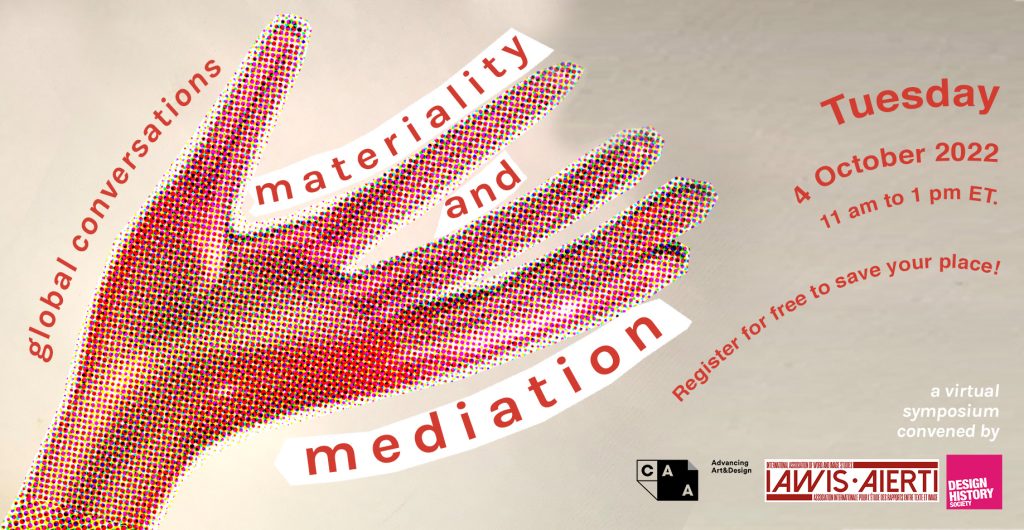
Join us this fall for the virtual symposium, Global Conversations: Materiality and Mediation, on October 4, 2022, organized by CAA and two of its international affiliated societies, the Design History Society and the International Association of Word and Image Studies.
To register for the event, visit this page. The event will take place from 11 am to 1 pm Eastern time.
This global collaborative project brings together three intersecting constituencies—art and design, design history, and word and image studies—to examine how materiality and mediation intersect.
Six participating scholars will present on the following topics, followed by Q&A and discussion. The event will be recorded and shared online following the event.
- “Tavolino di gioie”: The Mediation of Material Techniques in Late Cinquecento Hardstone Inlaid Tables – Wenyi Qian, Ph.D. Candidate in Art History, University of Toronto, Toronto
- Mediating the Meaning of Textiles through Exhibition Displays in Israel, 1950s-1970s – Noga Bernstein, Marie-Sklodowska Curie Visiting Researcher, Hebrew University of Jerusalem
- Made in Japan: Development of the Poster Medium in Japanese Commercial Art and Design – Nozomi Naoi, Associate Professor of Humanities, Yale-NUS College, Singapore Erin Schoneveld, Associate Professor of East Asian Languages and Cultures and Director of Visual Studies, Haverford College, Haverford, Pennsylvania
- Mine Craft: Design Histories of Mining – Ellen Huang, Associate Professor of Art and Design History, ArtCenter College of Design, Pasadena, California Arden Stern, Assistant Professor of Humanities and Sciences, ArtCenter College of Design, Pasadena, CA
This no-cost event is open to the public. Please consider donating to support no-cost programming and providing access to new and emerging scholarship.
CAA’s membership program connects you to the largest community of individuals and organizations working together and advocating to advance research, practice, and the impact of the visual arts. Visit our website for more information and to join our organization.
Arts organizations interested in joining CAA as an affiliated society can do so by visiting our website.
To join the Design History Society, please visit this page.
To join the International Association of Word and Image Studies, please visit this page.

CAA-Getty International Program 2023: Applications now open!
posted by CAA — July 06, 2022
The Getty Foundation has awarded the College Art Association (CAA) a grant to fund the CAA-Getty International Program for a twelfth consecutive year. The Foundation’s support will enable CAA to bring twelve international visual-arts professionals to the 111th Annual Conference, taking place New York, NY, February 15–18, 2023. These individuals will be first-time participants in the program and will be accompanied by alumni of the program returning to present papers during the conference.
Participants will receive funds for travel expenses, hotel accommodations, per diems, conference registrations, and one-year CAA memberships. We encourage all international art historians, art history educators, and museum curators to apply. The program will also include a one-day preconference colloquium on international issues in art history on Tuesday, February 14, as well as ongoing engagement with other alumni from the program online and at future conferences. The deadline for applications is August 15, 2022. Guidelines and application can be found here.
Last year, CAA organized a publication to celebrate ten successful years of the CAA-Getty International Program. The publication, entitled Global Conversations: 10 Years of the CAA-Getty International Program features in-depth accounts of the program, a timeline of important events and milestones, and directories of past papers, members, and meetings.
The CAA-Getty International Program was established to increase international participation in CAA and the CAA Annual Conference. The program fosters collaborations between North American art historians, artists, and curators and their international colleagues and introduces visual arts professionals to the unique environments and contexts of practices in different countries.
Since it began in 2012, the program has brought 147 scholars to the conferences, from over 50 countries located in Central and Eastern Europe, Asia, Southeast Asia, Africa, the Caribbean, and Central and South America. Each year, a preconference colloquium on international topics in art history inaugurates the week, kicking off four days of conference sessions, meetings with new colleagues, and visits to museums and galleries. Subsequent to these events, the program has generated many scholarly collaborations, including publications, conferences, and exhibitions.
Most of all, former grant recipients have become ambassadors of CAA in their countries, sharing knowledge gained at the Annual Conference with their colleagues at home. Past recipients have said that “variety of topics presented also exposed me to the realization that there is so much to be done to unearth the hidden treasures of global art history, which hitherto I have overlooked in my discipline and nation but which will now form the basis of my future projects,” and “the direct contact with other global south researchers is an unique occasion, rarely possible and extremely enriching.”