
CAA News Today
Become a Mentor or Reviewer for the 2017 Conference
posted by CAA — September 13, 2016
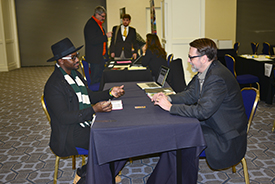 An interview at the 2016 Annual Conference in Washington, DC (photograph by Bradley Marks)
For the 2017 Annual Conference in New York, CAA seeks established professionals in the visual arts to volunteer as mentors for two Career Services programs: Artists’ Portfolio Review and Career Development Mentoring. Participating as a mentor is an excellent way to serve the field and to assist the professional growth of the next generation of artists and scholars. Art historians, studio artists, critics, museum educators, and curators are especially requested by mentees. All mentors and reviewers must demonstrate significant experience in their fields.
Artists’ Portfolio Reviewers
CAA seeks artists, critics, curators, and educators to serve as reviewers for the Artists’ Portfolio Review. In this program, mentors review and provide feedback on digital images of work by artist members in personal twenty-minute consultations. Whenever possible, CAA matches artists and mentors based on medium or discipline. Mentors provide an important service to artists, enabling them to receive professional criticism of their work.
Interested candidates must be current CAA members with experience mentoring or advising and be prepared to give between four and nine successive twenty-minute critiques in a three-hour period. Reviewing shifts may occur between Wednesday, February 15, and Saturday, February 18, 2017, from 8:30 AM to noon and from 1:30 to 5:00 PM each day. Conference registration, while encouraged, is not required to be a reviewer. Preference will be given to reviewers who can serve multiple shifts or multiple days
Please send your CV and a brief letter of interest (outlining your specialty or field and your scheduling availability during the conference) to Katie Apsey, CAA manager of programs. Deadline: December 2, 2016.
Career Development Mentors
CAA seeks mentors from all areas of studio art, art history, art education, film and video, graphic design, the museum professions, and other related fields to serve as mentors for Career Development Mentoring. In this program, mentors give valuable advice to emerging and midcareer professionals, reviewing cover letters, CVs, digital images, and other pertinent job-search materials in personal twenty-minute consultations. Whenever possible, CAA matches participants and mentors based on medium or discipline.
Interested candidates must be current CAA members with experience mentoring or advising and be prepared to give between four and nine successive twenty-minute critiques in a three-hour period. Reviewing shifts may occur between Wednesday, February 15, and Saturday, February 18, 2017, from 8:30 AM to noon and from 1:30 to 5:00 PM each day. Conference registration, while encouraged, is not required to be a mentor. Preference will be given to mentors able to serve multiple shifts or multiple days.
Please send your CV and a brief letter of interest (outlining your specialty or field and your scheduling availability during the conference) to Katie Apsey, CAA manager of programs. Deadline: December 2, 2016.
Career Development Mentoring is not intended as a screening process by institutions seeking new hires. CAA does not accept applications from individuals whose departments are conducting a faculty search in the field in which they are mentoring. Mentors should not be attending the conference as candidates for positions in the same field in which mentees may be applying.
New and Forthcoming in CAA’s Journals
posted by CAA — September 12, 2016
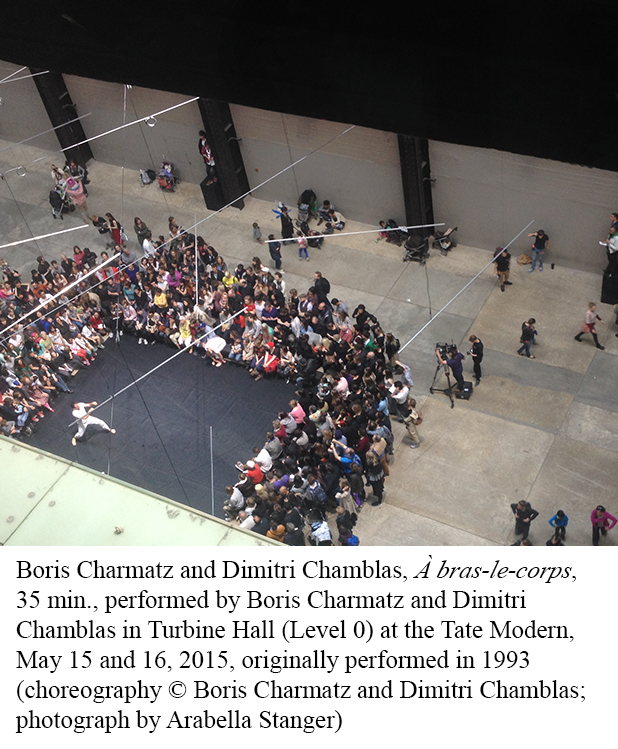 caa.reviews
Boris Charmatz’s If Tate Modern Was Musée de la Danse? (May 15–16, 2015) is the focus of a new multimedia review on the Scalar platform, If caa.reviews were performance.reviews?. Organized by Juliet Bellow, the project includes an introduction by Bellow, and three reviews of the performances at the Tate Modern by Arabella Stanger, Nicole Zee, and Tamara Tomic-Vajagic. The review presents the complexities of Charmatz’s transformation of the Tate Modern into a museum of dance for two days and features an interactive map showing where the performances occurred in the Tate Modern, in addition to videos and still images. Charmatz’s project challenges conceptions of museums as institutional spaces and incorporates audience participation and “unauthorized” performances. This review is part of a new caa.reviews initiative to review time-based media works.
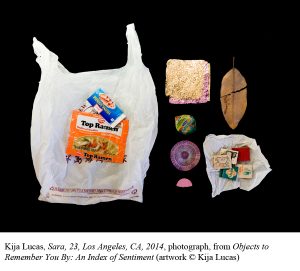 Art Journal Open
Art Journal Open this summer launched a new cluster of conversations featuring artist residencies, with artists who have participated in residencies interviewed by those who organize these programs. Through the conversations, Art Journal Open examines how residencies operate logistically and conceptually, and how they contribute to creative production. Conversations published in the series include Caitlin Masley-Chalet of Guttenberg Arts (Guttenberg, NJ) with artist Diana Shpungin, Vanessa Kauffman of Headlands Center for the Arts (Sausalito, CA) with artist Patricia Fernández Carcedo, and Amy Cancelmo of Root Division (San Francisco, CA) with artist Kija Lucas.
Earlier this summer, Art Journal Open published the third of a three-part series on appropriation as an artistic strategy: “Knight’s Heritage: Karl Haendel and the Legacy of Appropriation, Episode Three, 2013” by Natilee Harren, with a response by Nate Harrison. Recent features also include a review of Wetware: Art, Agency, Animation (Beall Center for Art + Technology, University of California, Irvine, February 6–May 7, 2016) by Charissa Terranova, and “Humans Have Been Human for So Long,” a dialogue between artist Shana Lutker and curator Mika Yoshitake on Lutker’s exhibition Shana Lutker: Le “NEW” Monocle, Chapters 1–3 at the Hirshhorn Museum and Sculpture Garden in Washington, DC (October 27, 2015–February 16, 2016).
Art Journal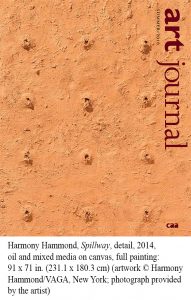
The forthcoming Fall 2016 Art Journal features a project by the artist Penelope Vlassopoulou, whose source material is the phrases and drawings carved in underground cells by detainees during the Nazi occupation of Greece. In other feature articles, Mario Merz’s fascination with the Fibonacci series is the cruz of Elizabeth Mangini’s examination of works created within the intellectual and political ferment of 1960s Italy, and Emily Hage rethinks Romare Bearden’s historical and political position in relation to the dense collages he made for the covers of Time and Fortune. The Reviews section includes Eve Meltzer’s account of the film Eva Hesse and reviews of books by Thomas Crow, Claire Robins, and Joan Kee. An annotated bibliography by Roger F. Malina, the astrophysicist who also serves as executive editor of Leonardo Publications/MIT Press, explores the highly productive intersections of art and science.
Recently published in the Summer 2016 Art Journal is a project by the renowned artist Harmony Hammond. The covers of the journal were given a waxy coating to convey the nature of her intensely tactile paintings and prints, featured in a twenty-page portfolio. In the features, Amanda Jane Graham takes a close look at the interweaving of domestic and performing spaces in Trisha Brown’s 1975 dance Locus; Mechtild Widrich investigates the effects on the urban fabric of the new/old National Gallery of Singapore, created from a colonial-era court building; and Dan Adler traces the idea of an all-pervasive Apparatus in 1980s and 1990s works by the German photographer Thomas Ruff. The Reviews section begins with Chris Taylor’s examination of the film Troublemakers: The Story of Land Art. Other reviews examine a new book by Chika Okeke-Agulu and the exhibition and catalogue Hippie Modernism. An annotated bibliography by Audra Wolowiec explores the poetics of sound and language.
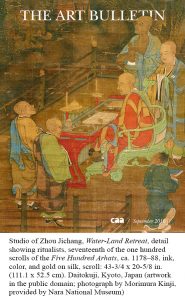 The Art Bulletin
The cover of the September 2016 issue of The Art Bulletin depicts Buddhist monks evoking ghosts in a nocturnal ceremony; the large detail from a polychrome silk scroll accompanies Phillip E. Bloom’s essay on twelfth-century Chinese paintings of Buddhist rituals. In other essays featured in the September issue, Judy Sund reconsiders nineteenth-century perceptions of Watteau’s Pierrot character as forlorn, Christine I. Ho contextualizes a brush-and-ink painting created by a collective in the early People’s Republic of China, and James Nisbet surveys intersections of global politics and imaging in the site-specific art of Walter De Maria. In his “Whither Art History?” essay, Bárbaro Martínez-Ruiz explores Kongo visual and cultural practices in contemporary art.
The Reviews section, with a theme of “Urban Images, Memories, and Fragments,” includes four reviews of recent books on the cultures of fifth-century BCE Athens, seven Dutch cities from 1200 to 1700, early modern Rome, and Mexico City in light of Aztec civilization.
Taylor & Francis Online
In addition to their print subscription(s), CAA members receive online access to current and back issues of Art Journal and The Art Bulletin. Taylor & Francis, CAA’s publishing partner, also provides complimentary online access to Word and Image, Digital Creativity, and Public Art Dialogue for CAA members. To access these journals, please log into your account at collegeart.org and click the link to the CAA Online Publications Platform on Taylor & Francis Online.
CAA Connect is Live
posted by CAA — September 12, 2016
 We are pleased to announce the launch of CAA Connect, our new digital discussion platform and resource library. CAA Connect is a user-friendly social hub offering discussion communities with topic threads, the ability to post and share many forms of media, and the opportunity for collaboration across disciplines. We hope that many of the cross-disciplinary and scholarly conversations that occur at the Annual Conference each year continue on CAA Connect. Registration will open next week for the 105th Annual Conference in New York, February 15-18, 2017.
We are launching CAA Connect with a series of starter communities that address important issues for visual arts professionals. Below is a list of the starter communities that are accessible for all CAA members and the names of those who have offered to facilitate discussion in the communities.
To contribute to community discussions, please log in to CAA Connect (click “Log In” in upper right of home page) using your existing CAA Account credentials. If this is your first time logging in to CAA Connect, you will be prompted to accept CAA Connect’s Community Guidelines before continuing. Please review the CAA Connect tutorials for a quick overview of the platform. Once you have signed in to CAA Connect or your CAA account, you will automatically be logged in to both sites and you will be able to switch back and forth without logging in again. The CAA member directory will now reside on CAA Connect. By default all members are included in the searchable directory. To learn more about how to be excluded from the directory, read the “Logging in and Profile Setup” tutorial in the Welcome to CAA Connect community.
Starter Communities
Museums
Anuradha Vikram, Director of Residency Programs at 18th Street Arts Center, Santa Monica, California
Anne Goodyear, Co-Director of the Bowdoin College Museum of Art
CAA Annual Conference
Tiffany Dugan, Director of Programs at College Art Association
Judith Rodenbeck, Annual Conference Program Chair and Associate Professor at University of California at Riverside
Fair Use
Patricia Aufderheide, University Professor, School of Communication, American University and Co-Principal Investigator on the CAA Fair Use Initiative
Peter Jaszi, Professor of Law, Washington College of Law, American University, and Co-Principal Investigator on the CAA Fair Use Initiative
Janet Landay, Program Manager, Fair Use Initiative and Project Director, CAA-Getty International Program
Latin American Art
Michele Greet, Associate Professor of Art History at George Mason University
Elisa Mandell, Associate Professor of Art History at California State University, Fullerton
Most importantly, we want CAA Connect to grow with our members, to be influenced by the work and focus of our members. Look for a survey in early October asking you what communities and types of content you’d like to see on CAA Connect. We can only build the right kind of platform to push forward the visual arts with your help.
Please contact us if you have any questions at all.
We look forward to the discussions!
New in caa.reviews
posted by CAA — September 09, 2016
Boris Charmatz’s If Tate Modern Was Musée de la Danse? (May 15–16, 2015) is the focus of a new multimedia review on the Scalar platform, If caa.reviews were performance.reviews. Organized by Juliet Bellow, the project includes an introduction by Bellow, and three reviews of the performances at the Tate Modern by Arabella Stanger, Nicole Zee, and Tamara Tomic-Vajagic. The review presents the complexities of Charmatz’s transformation of the Tate Modern into a museum of dance for two days and features an interactive map showing where the performances occurred in the Tate Modern, in addition to videos and still images. Charmatz’s project challenges conceptions of museums as institutional spaces and incorporates audience participation and “unauthorized” performances. This review is part of a new caa.reviews initiative to review time-based media works.
caa.reviews publishes over 150 reviews each year. Founded in 1998, the site publishes timely scholarly and critical reviews of studies and projects in all areas and periods of art history, visual studies, and the fine arts, providing peer review for the disciplines served by the College Art Association. Publications and projects reviewed include books, articles, exhibitions, conferences, digital scholarship, and other works as appropriate. Read more reviews at caa.reviews.
A New Look for Your CAA Account
posted by CAA — September 09, 2016
September is a busy month for CAA and its members. Classes start again. Campuses buzz with activity. Registration opens for the 2017 Annual Conference in New York, February 15-18, 2017, and we will launch CAA Connect (stay tuned for that announcement). Before these announcements, we wanted to let you know we have updated and streamlined your CAA account experience.
Effective immediately, the web pages for your CAA Account will look and navigate a little differently. In addition to a more contemporary look, the pages are designed to work with devices of any screen size (smart phone, tablet, desktop/laptop) and use familiar web page techniques on smaller devices that you may see elsewhere.
Please take a moment to log in to your CAA Account and familiarize yourself with where to find content including:
- Contact information
- Membership status
- Member benefits with specific codes for redemption
- Payment receipts, printable as PDF files
- Communication preferences
You may log in using your user ID# or primary email address and your password. If you do not remember your password, you may reset it using your primary email address. If you have any comments or questions regarding the new CAA Account web pages, please contact Member Services.
Participate in ARTexchange at the 2017 Annual Conference
posted by CAA — September 08, 2016
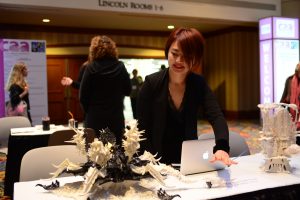 The artist Young Suk Lee participates in ARTexchange at the 2016 Annual Conference in Washington, DC (photograph by Bradley Marks)
The Services to Artists Committee invites artist members to participate in ARTexchange, CAA’s unique pop-up exhibition and annual meet-up for artists and curators. This social event provides an opportunity for artists to share their work and build affinities with other artists, historians, curators, and cultural producers. ARTexchange will take place at the 105th Annual Conference in New York on Friday evening, February 17, 2017, from 5:30 to 7:30 PM.
Each artist is given the space on, above, and beneath a six-foot table to exhibit their work: prints, paintings, drawings, photographs, sculptures, and small installations; performance, process-based, interactive, and participatory works are especially encouraged. Previous ARTexchange participants have found that this parameter sparked many creative display options. Please note that artwork cannot be hung on walls, and it is not possible to run power cords from laptops or other electronic devices to outlets.
To participate as an exhibiting artist in 2017, contact Katie Apsey, CAA manager of programs, by December 2, 2016, with the following information: (1) a short description of what you will exhibit and how you will use the six-foot table space (provide details regarding performance, sound, spoken word, or technology-based work, including laptop presentations); (2) your CAA member number (memberships must be active through February 18, 2017); and (3) your website or a link to a digital portfolio.
Because ARTexchange is a popular venue and participation is based on available space, early applicants are given preference. Participants are responsible for their work; CAA is not liable for losses or damages. Sales of work are not permitted. Deadline extended: January 6, 2017.
CAA Membership Benefits
posted by CAA — September 07, 2016
 As a member of CAA, you already know you can get a discount to our Annual Conference – taking place in New York, February 15-18, 2017 – receive subscriptions to CAA publications like The Art Bulletin and Art Journal, access to our online career center, and also receive benefits through our member partners to everything from discounts on web development services, print subscriptions rates, health insurance and car rentals, to exclusive member-only access to art fair previews and events.
In addition to connecting you to a vital network of professionals in the visual arts, we want your CAA membership benefits to match your needs.
What new membership benefits or partners would you like to see develop?
Please email Vivian Woo, CAA Marketing and Development Manager vwoo@collegeart.org by September 30th and tell us what membership benefits would be meaningful to you. Contact us today!
News from the Art and Academic Worlds
posted by Christopher Howard — September 07, 2016
Each week CAA News summarizes eight articles, published around the web, that CAA members may find interesting and useful in their professional and creative lives.
Know Your Rights: A Tool for Artists
Creative Capital spoke with Joy Garnett from the Arts Advocacy Project at the National Coalition against Censorship about a new educational tool, Artist Rights, which was created to address questions that artists may have about their rights under the First Amendment. (Read more from Creative Capital.)
Is Getting an MFA Worth the Price?
In the 2000s, the MFA was pitched as a Golden Ticket, with an ever more youth-oriented art market generating rumors of dealers snapping up artists right out of school. A degree that was originally designed to allow you to teach became seen as the pathway to a gallery career. In more recent years, angst about art school has become entangled with the political debate about student debt’s crushing toll. (Read more from Artnet News.)
Notes for a New Faculty Member
When I first started teaching more than twenty years ago, I was a TA, nervous, excited, and preoccupied by technical details that suddenly seemed important. There were assignments to draft, grading techniques to practice, readings to master, departmental policies to incorporate into syllabi, and training sessions to attend. It was easy, in those overwhelming days, to forget why I wanted to be in the classroom to begin with. (Read more from the Chronicle of Higher Education.)
How Men Benefit from Family-Friendly Tenure Policies
Academics are well aware that gender gaps continue to exist on American campuses. It is true that female students now outnumber male students, and also that more women earn professional degrees compared to men. But it is also true that only 28 percent of tenured faculty are women. (Read more from the Conversation.)
Fair Use and the Future of Art
Twenty-five years ago, in a seminal article in the Harvard Law Review, Judge Pierre Leval changed the course of copyright jurisprudence by introducing the concept of “transformativeness” into fair-use law. Soon thereafter, the Supreme Court embraced Leval’s new creation, calling the transformative inquiry the “heart of the fair use” doctrine. Yet the transformative test has failed art, and this article shows why and what to do about it. (Read more from the New York University Law Review.)
Organizations with Staying Power
As we strive to ensure that our arts organizations have a sustainable future, management teams across the UK are focusing on income and diversifying business models as key drivers for resilience. Resilience is the buzzword at the moment and was the subject of a session at the Arts Fundraising Summer School at the University of Leeds. (Read more from Art Professional.)
A Brief Guide to the Battle over Trigger Warnings
The University of Chicago’s dean of students recently sent a strongly worded letter to incoming freshmen declaring that the institution didn’t endorse “trigger warnings” or “intellectual safe spaces.” The message touched off a debate both inside and outside academe about the use of such terms on college campuses. Here’s a look at how professors view the warnings—and at how widespread they really are. (Read more from the Chronicle of Higher Education.)
How Trigger Warnings Silence Religious Students
Last week, the University of Chicago’s dean of students sent a welcome letter to freshmen decrying trigger warnings and safe spaces—ways for students to be warned about and opt out of exposure to potentially challenging material. While some supported the school’s actions, arguing that these practices threaten free speech and the purpose of higher education, the note also led to widespread outrage. (Read more from the Atlantic.)
New in caa.reviews
posted by CAA — September 02, 2016
Mickey Abel and Karlyn Griffith discuss The Crusader Bible: A Gothic Masterpiece at the Blanton Museum of Art. Devoted to a single manuscript, the exhibition “represents an extraordinary opportunity to see a significant treasure of the Middle Ages.” Through “historical didactics, innovative technology, and the spatial layout,” the curator demonstrates the “contemporary relevancy of cross-cultural exchange.” Read the full review at caa.reviews.
David B. Brownlee reviews Michael Hall’s George Frederick Bodley and the Later Gothic Revival in Britain and America, an “enormous and enormously rich biography of one of the greatest High Victorians.” Although the immense volume “slightly exasperates even an avid reader,” “it is worth persisting” to read this “compelling account of his multifaceted and path-breaking creativity.” Read the full review at caa.reviews.
Robert E. Harrist Jr. reviews The Efficacious Landscape: On the Authorities of Painting at the Northern Song Court by Foong Ping. “Brimming with new findings,” the book provides “original interpretations of the role ink landscape painting played at the Northern Song imperial court” and “the most extensive account in a Western language” of the artist Guo Xi’s career. Read the full review at caa.reviews.
Caa.reviews publishes over 150 reviews each year. Founded in 1998, the site publishes timely scholarly and critical reviews of studies and projects in all areas and periods of art history, visual studies, and the fine arts, providing peer review for the disciplines served by the College Art Association. Publications and projects reviewed include books, articles, exhibitions, conferences, digital scholarship, and other works as appropriate. Read more reviews at caa.reviews.
News from the Art and Academic Worlds
posted by Christopher Howard — August 31, 2016
Each week CAA News summarizes eight articles, published around the web, that CAA members may find interesting and useful in their professional and creative lives.
Academic Work Is Labor, Not Romance
The National Labor Relations Board delivered a win for labor this month, ruling that graduate students at private colleges are also employees. The action overturned a 2004 decision involving Brown University that until now allowed administrations to insist that collective bargaining would imperil students’ academic pursuits. (Read more from the Chronicle of Higher Education.)
You Can Be a Mother and Still Be a Successful Artist
“There’s an old-fashioned myth that having a baby is going to make it impossible to work,” says the painter Nikki Maloof. “I had just started gaining a lot of momentum in my career when I found out I was pregnant, so it was scary.” Maloof’s fear could apply to any number of career-oriented women across numerous industries. (Read more from Artsy.)
Does Advertising Make Sense for Artists?
Investing in one’s career is often touted as a sound business move, an act of confidence in the future, the cost of doing business, and taking responsibility. But which career investments actually give you a return? Many artists would agree that school tuition was a vital expense, as are art supplies, a studio rental, and the cost of creating a website. Other forms of investment are more debatable. (Read more from the Huffington Post.)
University of Chicago Strikes Back against Campus Political Correctness
The anodyne welcome letter to incoming freshmen is a college staple, but the University of Chicago took a different approach: it sent new students a blunt statement opposing some hallmarks of campus political correctness, drawing thousands of impassioned responses, for and against, as it caromed around cyberspace. (Read more from the New York Times.)
Computers and Robots Don’t Count
Copyright has a weird relationship with computers. Sometimes it completely freaks out about them; sometimes it pretends it can’t see them at all. The contrast tells us a lot about copyright—and even more about how we relate to new technologies. (Read more from Slate.)
Finding Your Footing in a New Position
Particularly for faculty moving into administration—or for administrators moving into a new position—it really pays to “start smart” and to be as strategic as possible in your first days and weeks on the job. Although it is tempting to put the stresses of the search entirely behind you, I urge people to extend that heightened inner zeitgeist as long as possible. (Read more from Vitae.)
Judge Rules Famous Artist Did Not Paint Landscape at Center of Lawsuit
Stamping an emphatic end to a legal case that drew the attention of the international art world, a federal judge ruled that a painting owned by a Canadian man was not made by Peter Doig, whose works sell for millions of dollars. Doig “absolutely did not paint the disputed work,” said a US district judge, adding that the testimony and documents presented at a seven-day trial “conclusively” show the artist did not create the desert scene in 1976. (Read more from the Chicago Tribune.)
Five Ways Artists and Creatives Can Get Over Their Fear of Selling
If I had the opportunity to meet you face to face and ask you how selling makes you feel, what would your response be? Would you want to run and hide from the conversation, or would you gladly jump in? If you are like most artists I know, selling is not your forte. (Read more from the Huffington Post.)