CAA News Today
News about Fractured Atlas
posted Jun 26, 2017
 After nearly a decade of partnership with CAA to offer our members access to their professional resources, Fractured Atlas has decided to discontinue their Open Arts Network as of August 31, 2017.
Through their Open Arts Network program, Fractured Atlas artists and arts organizations access to funding, healthcare, education, and more, to help them function more effectively as businesses. However, due to the changing landscape for the arts community and much reflection, the organization has decided to end the Open Arts Network.
What does this mean for you?
- If you are currently enrolled in the Open Arts Network program (or do so before August 31, 2017), you will get to keep your discount as long as you maintain an active, paid membership.
- After August 31, 2017, you will not longer be able to access the special Open Arts Network subsidized rate.
- Additional questions? Please refer to Fractured Atlas’s help article for more information.
We understand that this is an important resource for many of our members and CAA is actively searching for another healthcare solution to meet our members’ needs. We will keep everyone informed of any updates. If you have any additional questions or wish to share ideas on how our organization can best serve you, please reach out to Membership at membership@collegeart.org. Additionally, you can email support@fracturedatlas.org with any questions or concerns.
New in caa.reviews
posted Jun 23, 2017
Antonella Fenech Kroke reviews Maniera: Pontormo, Bronzino and Medici Florence, an exhibition at the Städel Museum, Frankfurt. “The most substantial exhibition on Mannerism staged in Germany,” the show, with “intellectual exuberance,” “provided a unique opportunity to see the disquieting emergence and flourishing of multiples creative perspectives that the term Mannerism has attempted to unify.” Read the full review at caa.reviews.
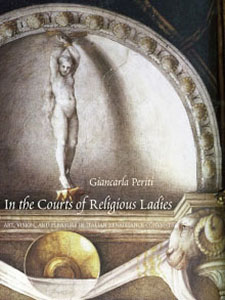 Sally Hickson reads In the Courts of Religious Ladies: Art, Vision, and Pleasure in Italian Renaissance Convents by Giancarla Periti. This volume “about aristocratic nuns and convent patronage offers an interesting characterization of a resulting corpus of ‘seductive images,’” providing “a touchstone for investigations into patrician nuns, their motivations, their artists, and the visual and perhaps didactic functions of such imagery.” Read the full review at caa.reviews.
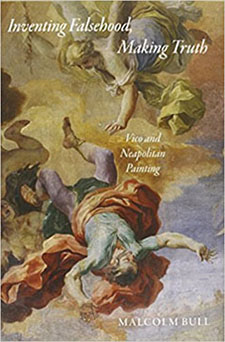 Maria Fabricius Hansen discusses Malcolm Bull’s Inventing Falsehood, Making Truth: Vico and Neapolitan Painting. With the aim of seeing Giambattista Vico “through the painting of his time in order to present and discuss a series of major themes within art history,” this “accomplished, concise, and intelligently focused” book is “a strong proponent for the relevance of rhetoric as a kind of art theory of its present moment.” Read the full review at caa.reviews.
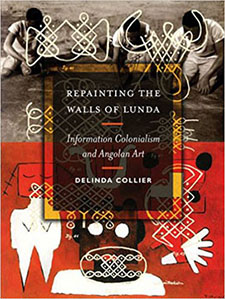 David Riep examines Repainting the Walls of Lunda: Information Colonialism and Angolan Art by Delinda Collier. Centered on a “discussion of the varied intricacies of analog and digital media by tracking Chokwe mural and sand (sona) arts and symbolism,” the text “successfully engages broad theoretical concepts linking art, cybernetics, and media theory, while maintaining its focus on the shifting iterations of Chokwe iconography. Read the full review at caa.reviews.
News from the Art and Academic Worlds
posted Jun 21, 2017
Each week CAA News summarizes eight articles, published around the web, that CAA members may find interesting and useful in their professional and creative lives.
Artist Sam Durant Was Pressured into Taking Down His Scaffold. Why Doesn’t He Feel Censored?
Sam Durant’s sculpture Scaffold had been exhibited in Europe three times, but upon landing in Minneapolis for the reopening of the Walker Art Center’s Sculpture Garden, it sparked a media firestorm. Native American activists said it trivialized one of the ghastliest episodes in Dakota indigenous history. (Read more from the Los Angeles Times.)
NCAC Statement Criticizing Decision to Destroy Controversial Sculpture
As a coalition of national and international organizations devoted to promoting creative freedom, we strongly oppose the Walker Art Center’s decision to dismantle and destroy a controversial public sculpture. Scaffold, a 2012 work by Sam Durant, was intended to comment on capital punishment and its disproportionate effect on people of color. (Read more from the National Coalition against Censorship.)
Classicist Receives Death Threats from Alt-Right over Art-Historical Essay
Sarah E. Bond, a historian of Rome and an assistant professor in the Classics Department at the University of Iowa, has received death threats and is being targeted by the alt-right for publishing an article on polychromy in the ancient world. “They viewed the piece as ‘liberal professor says that all white statues are racist,’” Bond said. “And that is clearly not what the piece is about.” (Read more from Artforum.)
Threats for What She Didn’t Say
Scholars vary in how and to what extent they engage with the public. Sarah Bond from the University of Iowa works at the high end of the engagement spectrum, via a blog, social media, and a column in Forbes. She’s described her efforts as a way of making antiquities accessible to all, but recent threats she’s received demonstrate the potential perils of that outreach. (Read more from Inside Higher Ed.)
As the 1 Percent Washes Their Money through Arts Funding, Artists Respond
At the 2017 Whitney Biennial, visitors were greeted by a not usually seen in museums: “The two greatest stores of wealth internationally today [are] contemporary art [… and] apartments in Manhattan.” The words, from Larry Fink, a member of President Trump’s Strategic and Policy Forum and the CEO of BlackRock, were written over a craggy graph carved into the wall that tracked the rising value of the debt levels owned by the firm. (Read more from Salon.)
How Artists, Scientists, and Entrepreneurs Get Their Creative Juices Flowing
It takes imagination to be creative, and it takes creativity to innovate. Pentagram’s legendary graphic designer Paula Scher gets her best ideas when she is in boring situations: “I realize that when I’m sitting in a taxicab in traffic, or on my way to the airport, or waiting to get on a plane, or trapped in some other boring situation, that’s when I get the best ideas, because I’ve got nothing else interfering with it….” (Read more from Inc.)
The Ten Essays That Changed Art Criticism Forever
There has never been a time when art critics held more power than during the second half of the twentieth century. As part of the larger midcentury “culture wars,” art critics began to take on greater influence than before. For a time, two writers in particular—who began as friends and remained in the same social circles for much of their lives—set the stakes of the debates surrounding the maturation of American art that would continue for decades. (Read more from Artspace Magazine.)
How A $165 Million Painting Is Funding Criminal Justice Reform
Agnes Gund recently sold a $165 million painting to benefit social justice and is challenging others in the art world to follow suit. Proceeds from the sale of Roy Lichtenstein’s 1962 Masterpiece, which once hung over her mantel, will go toward the new Art for Justice Fund, an initiative designed to support criminal justice reform at state and local levels throughout the country, primarily through the sale of art. (Read more from the Huffington Post.)
New in caa.reviews
posted Jun 16, 2017
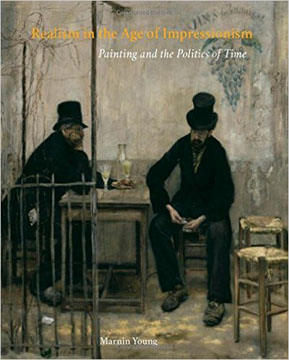 Mary Hunter reviews Realism in the Age of Impressionism: Painting and the Politics of Time by Marnin Young. The author “provides an original, compelling argument about how transformations in the perception of temporality fueled a reengagement with Realist painting in France.” A “smart, engaging” volume, it “will make a lasting mark … on the central role of temporality in the history of modern art.” Read the full review at caa.reviews.
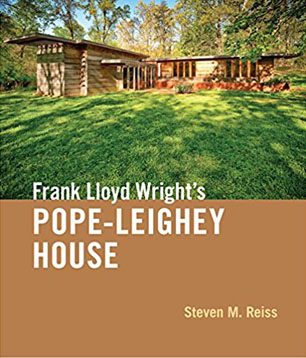 Jane King Hession discusses Steven M. Reiss’s Frank Lloyd Wright’s Pope-Leighey House. This “skillful retelling of the complex history of a 1,200-square foot Usonian house” both “rigorously analyzes site issues” and “reflects on broader topics including changing social attitudes toward housing in the postwar years” and “the nascent yet evolving preservation movement in the United States in the early 1960s.” Read the full review at caa.reviews.
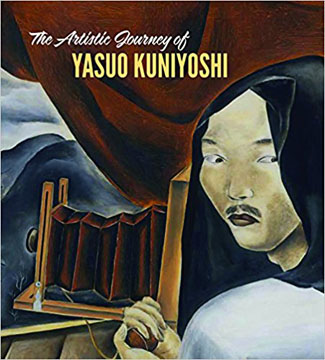 Sybil E. Gohari discusses The Artistic Journey of Yasuo Kuniyoshi, an exhibition and catalogue organized by the Smithsonian American Art Museum. The show “chronicles this important mid-century artist” whose work “combines American folk and Surrealist art with dreamlike perspectives,” highlighting “the figurative dimension” of his art and enhancing “an understanding of the period by presenting its diversity.” Read the full review at caa.reviews.
Institutional News
posted Jun 14, 2017
Read about the latest news from CAA’s institutional members.
Institutional News is published every two months: in February, April, June, August, October, and December. To learn more about submitting a listing, please follow the instructions on the main Member News page.
June 2017

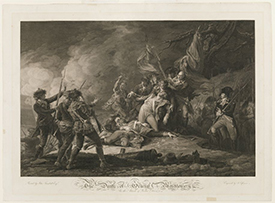 Johan Frederik Clemens, Death of General Montgomery, 1798, engraving on cream antique laid paper, 25½ x 34½ in. (artwork in the public domain)
The Harvard Art Museums in Cambridge, Massachusetts, have been awarded a $250,000 grant from the Terra Foundation for American Art to support the upcoming special exhibition The Philosophy Chamber: Art and Science in Harvard’s Teaching Cabinet, 1766–1820.

The National Gallery of Art in Washington, DC, has accepted a $1 million gift from the Edmond J. Safra Foundation to support the Edmond J. Safra Visiting Professorship at the Center for Advanced Study in the Visual Arts. Matching funds will permit the professorship to be fully endowed.
The Newark Museum in Newark, New Jersey, has received a $750,000 grant from the Henry Luce Foundation to expand and reinterpret its permanent galleries of American art and to document the collections through two new publications.
News from the Art and Academic Worlds
posted Jun 14, 2017
Each week CAA News summarizes eight articles, published around the web, that CAA members may find interesting and useful in their professional and creative lives.
Cultural Appropriation: A Roundtable
In a roundtable, the artists Salome Asega, Ajay Kurian, and Jacolby Satterwhite; scholars Homi K. Bhabha and Joan Kee; Artforum editor Michelle Kuo; and writer, artist, and activist Gregg Bordowitz examine the urgent and omnipresent politics of representation, appropriation, and power. (Read more from Artforum.)
Andrea Fraser Tracks Down Museum Trustees’ Political Donations
The artist Andrea Fraser is mapping the connections between major American museums and the political elite to expose institutions’ ties to the White House. Using publicly available information, she is documenting all political donations made in 2016 by museum patrons and trustees, many of whom contributed to Donald Trump’s election campaign. (Read more from the Art Newspaper.)
Anti-Intellectualism and the “Dumbing Down” of America
There is a growing and disturbing trend of anti-intellectual elitism in American culture. It’s the dismissal of science, the arts, and humanities and their replacement by entertainment, self-righteousness, ignorance, and deliberate gullibility. (Read more from Signs of the Times.)
If Google Teaches an AI to Draw, Will That Help It Think?
The point of SketchRNN is not only to learn how to draw pictures, but to “generalize abstract concepts in a manner similar to humans.” They don’t want to create a machine that can sketch pigs. They want to create a machine that can recognize and output “pigness.” (Read more from the Atlantic.)
The Unseen Labor of Mentoring
It’s extremely flattering that students recommend me to peers who need extra support. However, it can also be frustrating to continuously manage unscheduled drop-ins when I’m trying to grade papers, prep for class, respond to emails, write letters of recommendations, and prepare for meetings. (Read more from Vitae.)
Law and Order
Plagiarism, cheating, tampering, and submitting false records all threaten the integrity of your class and diminish other students’ honest work and effort. Given that misconduct is both disturbingly pervasive and potentially ruinous, how should teaching assistants proceed if they are concerned a student may be running afoul of the rules? (Read more from GradHacker.)
Drinking and Conferencing
At the International Congress on Medieval Studies, as at most academic gatherings, socializing typically unfolds in the presence of alcohol: at the daily wine hour, at large dinners with plentiful cocktails, at champagne celebrations of prizes awarded or careers coming to a close, at casual meetings with friends anytime between sessions when we can gather for a drink. (Read more from the Chronicle of Higher Education.)
How Are Funders Boosting Engagement across Diverse Communities?
We occasionally stumble across a news item that compels us to step back and take stock of the larger arts philanthropy landscape. Such is the case with news from New York City, where an impressive cadre of funders joined forces earlier this spring to engage diverse audiences. (Read more from Inside Philanthropy.)
Grants, Awards, and Honors
posted Jun 13, 2017
CAA recognizes its members for their professional achievements, be it a grant, fellowship, residency, book prize, honorary degree, or related award.
Grants, Awards, and Honors is published every two months: in February, April, June, August, October, and December. To learn more about submitting a listing, please follow the instructions on the main Member News page.
June 2017
Marina Berio, chair of the general studies in photography program at the International Center of Photography in New York, has won a 2017 fellowship in photography from the John Simon Guggenheim Memorial Foundation.

Noga Bernstein, a doctoral student in art history at Stony Brook University, State University of New York, has received a 2017 Henry Luce Foundation/ACLS Dissertation Fellowship in American Art from the American Council of Learned Societies. Her dissertation topic is “Global Age Design: Ruth Reeves and Cross-Cultural Practice.”
Elizabeth Buhe, a doctoral candidate in art history at New York University’s Institute of Fine Arts, has been awarded a 2017 Henry Luce Foundation/ACLS Dissertation Fellowship in American Art from the American Council of Learned Societies for her dissertation examining Sam Francis and midcentury abstract painting, titled “Sam Francis: Functional Abstraction.”
Jennifer Chuong, a PhD student in the history of art and architecture at Harvard University in Cambridge, Massachusetts, has received a 2017 Henry Luce Foundation/ACLS Dissertation Fellowship in American Art from the American Council of Learned Societies. She will continue work on “Surface Experiments in Early America.”

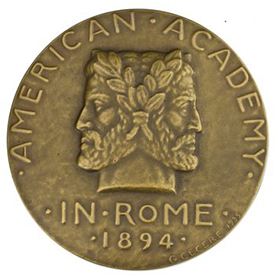
Leslie Cozzi, curatorial associate for the Hammer Museum at the University of California, Los Angeles, has won the 2017–18 Andrew W. Mellon Foundation/National Endowment for the Humanities Post-Doctoral Rome Prize in modern Italian studies. During her time at the American Academy in Rome, she will work on “Fra: Relation and Collaboration in Contemporary Italian Art.”
Lisa Deleonardis, Austen-Stokes Professor in the Department of the History of Art at Johns Hopkins University in Baltimore, Maryland, has received the 2017–18 Charles K. Williams II Rome Prize in historic preservation and conservation. At the American Academy in Rome, she will continue work on “A Transatlantic Response to Worlds That Shake: Jesuit Contributions to Anti-Seismic Building Design in Early Modern Italy and Peru.”
Cécile Fromont, assistant professor in the Department of Art History at the University of Chicago in Illinois, has won a 2017–18 Rome Prize in Renaissance and early modern studies from the American Academy in Rome. Her project is titled “Images on a Mission: Cross-Cultural Encounters and Visual Mediation in Early Modern Kongo and Angola.”


Jennifer Germann, associate professor in the Department of Art History at Ithaca College in Ithaca, New York, has received a 2017 Summer Stipend of $6,000 from the National Endowment for the Humanities. The funds will support “A Study of the Portrait of Dido Elizabeth Belle and Lady Elizabeth Murray, an Eighteenth-Century British Artwork.”

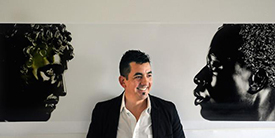 Ken Gonzales-Day
Ken Gonzales-Day, professor of art at Scripps College in Claremont, California, has been awarded the 2017 fellowship in the category of photography by the John Simon Guggenheim Memorial Foundation.
Saisha M. Grayson, a PhD candidate in art history at the Graduate Center, City University of New York, has been awarded a 2017 Henry Luce Foundation/ACLS Dissertation Fellowship in American Art by the American Council of Learned Societies. She will continue researching “Cellist, Catalyst, Collaborator: The Work of Charlotte Moorman, 1963–1980.”
Sarah B. H. Hamill, assistant professor of art history at Sarah Lawrence College in Bronxville, New York, has received a 2017 ACLS Fellowship from the American Council of Learned Societies. She will continue work on “Surface Matters: Contemporary Photography and the Metaphor of Sculpture.”
Adam Herring, professor of art history in the Meadows School of the Arts at Southern Methodist University in Dallas, Texas, has received a 2017 fellowship in fine-arts research from the John Simon Guggenheim Memorial Foundation.
Margaret Grace Innes, a doctoral candidate in the history of art and architecture at Harvard University in Cambridge, Massachusetts, has earned a 2017 Henry Luce Foundation/ACLS Dissertation Fellowship in American Art from the American Council of Learned Societies. Her study is titled “Signs of Labor in the American Photographic Press, 1926–1951.”
Margarita Karasoulas, a doctoral student in art history at the University of Delaware in Newark, has accepted a 2017 Henry Luce Foundation/ACLS Dissertation Fellowship in American Art from the American Council of Learned Societies. The award will help with “Mapping Immigrant New York: Race and Place in Ashcan Visual Culture.”
Marci Kwon, assistant professor in the Department of Art and Art History at Stanford University in Stanford, California, has received the McNeil Center’s 2017 Zuckerman Prize for best dissertation connecting American history with literature and/or art. The title of her study is “Vernacular Modernism: Joseph Cornell and the Art of Populism.”

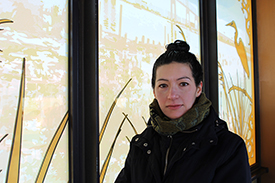 Jenna Lucente
Jenna Lucente, assistant professor of visual and performing arts at Salem Community College in Carneys Point, New Jersey, has been commissioned by New York’s Metropolitan Transportation Authority to design twenty-eight large-scale laminated glass panels at the newly opened Arthur Kill Station on the Staten Island Railway. The works, to be permanently installed, will feature a mix of wildlife and landscape scenes that are unique to the area’s geography and community.
Allison Joan Martino, a doctoral student in the history of art at the University of Michigan in Ann Arbor, has earned a 2017 Mellon/ACLS Dissertation Completion Fellowships from the American Council of Learned Societies. She is completing a study called “Stamping History: Stories of Social Change in Ghana’s Adinkra Cloth.”
Christina Michelon, a doctoral candidate in art history at the University of Minnesota, Twin Cities, has received a 2017 Henry Luce Foundation/ACLS Dissertation Fellowship in American Art from the American Council of Learned Societies. The funds will support her research project, “Interior Impressions: Printed Material in the Nineteenth-Century American Home.”
Laura Morowitz, professor in the Department of Art, Art History, and Film at Wagner College in Staten Island, New York, has received a 2017 National Endowment for the Humanities Summer Stipend. With the $6,000 funds, she will continue researching “Art Exhibitions in Vienna, Austria, during the Nazi Occupation.”
Christopher J. Nygren, assistant professor of history of art and architecture at the University of Pittsburgh in Pennsylvania, has won a 2017 ACLS Fellowship from the American Council of Learned Societies. His project is titled “Matter and Similitude in Italian Painting and the Transatlantic Renaissance.”
Sun-Young Park, assistant professor of history and art history at George Mason University in Fairfax, Virginia, has won a 2017 Summer Stipend from the National Endowment for the Humanities. She will use the $6,000 award to develop “A History of French Disability Architecture and Design, 1750–1975.”
Bissera V. Pentcheva, professor in the Department of Art History at Stanford University in Stanford, California, has accepted a 2017 fellowship in fine-arts research from the John Simon Guggenheim Memorial Foundation. Pentcheva has also won the 2017–18 Millicent Mercer Johnsen Post-Doctoral Rome Prize in medieval studies from the American Academy in Rome for “Animation in Medieval Art.”
Aviva Rahmani has earned a 2017 fellowship for socially engaged art from A Blade of Grass. She will become the inaugural ABOG Fellow for Contemplative Practice and create Blued Trees Symphony in prospective pipeline locations across the United States, in collaboration with scientists and attorneys involved in copyright, environmental policy, and real estate.
Valerie Rousseau, curator of self-taught art and art brut at the American Folk Art Museum in New York, has received a $50,000 grant from the National Endowment for the Humanities to digitize and create broad online access to the Henry Darger Papers.

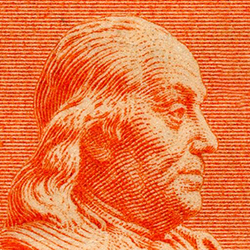
Margaret Samu, an art historian based in New York, has been awarded a 2017 Franklin Research Grant from the American Philosophical Society. She will use the grant to conduct research in Saint Petersburg and Moscow on art collecting in eighteenth- and nineteenth-century Russia.
Carolee Schneemann , an artist based in Hudson Valley, New York, has won the Golden Lion for Lifetime Achievement at the fifty-seventh international art exhibition of La Biennale di Venezia – Viva Arte Viva.
Allie Terry-Fritsch, associate professor of art history at Bowling Green State University in Bowling Green, Ohio, has received a $6,000 Summer Stipend for 2017 from the National Endowment for the Humanities. Her research project is titled “Cosimo de’Medici, Fra Angelico, and the Public Library of San Marco.”
Anne Verplanck, associate professor of American studies at Pennsylvania State University in Harrisburg, has won a 2017 Summer Stipend from the National Endowment for the Humanities. With a $6,000 grant, she will develop “The Business of Art: Transforming the Graphic Arts in an Age of Mechanical Reproduction.”
Oliver M. Wunsch, a PhD student in the history of art and architecture at Harvard University in Cambridge, Massachusetts, has won a 2017 Mellon/ACLS Dissertation Completion Fellowships from the American Council of Learned Societies. His research project is titled “Painting against Time: The Decaying Image in the French Enlightenment.”
CAA 2018 Professional Development Workshop Proposal
posted Jun 13, 2017
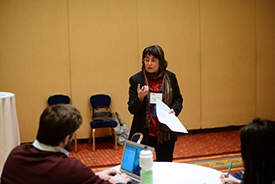 Ends on July 9, 2017
CAA seeks Professional Development Workshop leaders for the 2018 Annual Conference taking place at the Los Angeles Convention Center from February 21–24. The Association seeks active members who are well-established in their respective fields to serve as leaders for ninety-minute Professional Development Workshop offerings at the conference. The Annual Conference Committee and Programs Department have provided sample titles and/or subjects below, but welcome innovative topics and formats.
Requirements:
- Completed Submission form (see below) with related attachments and a succinct description of workshop
- Detailed syllabus for the workshop that outlines both activities and a proposed timeline for the ninety minutes (the selection committee encourages workshops that have active components such as guided discussions, writing exercises, and hands-on activities; the committee discourages lecture formats)
- List of required materials workshop participants should bring (laptops, resumes, etc.)
- An active CAA Membership ID number (All workshop leader(s) must be current individual CAA members through February 24, 2018.)
Compensation:
- Complimentary Full-Conference Registration
- 1 year of Premium Level Membership (renewal or upgrade to commence upon current membership’s expiration date)
Please visit CAA’s page on the Submittable website for more information and to apply. Questions regarding submission? Contact Katie Apsey at kapsey@collegeart.org or 212-392-4405.
List of Sample Topics, Subjects, or Titles:
Activating Audiences and Cultivating Engagement
Assessing and Comparing Citation Management Systems: Scrivner, Refworks, Retero
Basic Finance for Artists and Academics
Business Strategies and Negotiation for the Arts
Creating an Online Presence: Using Social Media Professionally
Creating Online Exhibitions
Finding Grants and Fellowships
Freelance Lecturing: A Guide
Fundraising Fundamentals for Academics
Get Out of the Office/Studio!: A Public Speaking Workshop
Getting a Job in the Arts in the Current Economic Climate
Getting into the Digital Humanities…
Interdisciplinary Practice: Successful Collaboration across Disciplines
International Post-Doctoral/Post-MFA Funding Opportunities
Legal Issue Primer for Artists and Art Historians
Marketing 101 for the Arts
Post-Doc Position: Right or Wrong Choice for You?
Record Keeping and Archiving: Importance and Efficiency
Researcher and Artist: How They Can Collaborate
Strategies for Teaching Assistants
Syllabus Development
Technologies for Teaching: Canvas, Piazza, M+Box, Google Suite
The Great Divide(s): Bridging the Museum, Gallery, and Academic Worlds
Thinking Outside or Beyond the Tenure Track
Working with Images: Copyright and Digitization
People in the News
posted Jun 12, 2017
People in the News lists new hires, positions, and promotions in three sections: Academe, Museums and Galleries, and Organizations and Publications.
The section is published every two months: in February, April, June, August, October, and December. To learn more about submitting a listing, please follow the instructions on the main Member News page.
June 2017
Academe

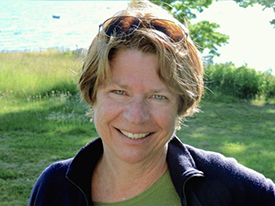 Christine Poggi
Christine Poggi, formerly professor of art history at the University of Pennsylvania in Philadelphia, has been named Judy and Michael Steinhardt Director of the Institute of Fine Arts at New York University.
Charles Wright, professor and chair of art at Western Illinois University in Macomb, has become dean of academic affairs at Ferris State University’s Kendall College of Art and Design in Grand Rapids, Michigan.
Museums and Galleries
Wassan Al-Khudhairi, presently curator of modern and contemporary art at the Birmingham Museum of Art in Alabama, has become chief curator of the Contemporary Art Museum Saint Louis in Missouri.
Brooke Davis Anderson has been named Edna S. Tuttleman Director of the museum at the Pennsylvania Academy of the Fine Arts in Philadelphia.
Virginia Brilliant, formerly Ulla R. Searing Curator of Collections at the John and Mable Ringling Museum of Art in Sarasota, Florida, has been appointed curator-in-charge of European paintings at the Fine Arts Museums of San Francisco in California.

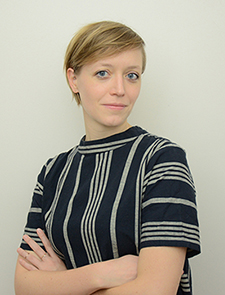 Emma Imbrie Chubb
Emma Imbrie Chubb, a doctoral student and presidential fellow in the Department of Art History at Northwestern University in Evanston, Illinois, has been named the inaugural Charlotte Feng Ford ’83 Curator of Contemporary Art at the Smith College Museum of Art in Northampton, Massachusetts.

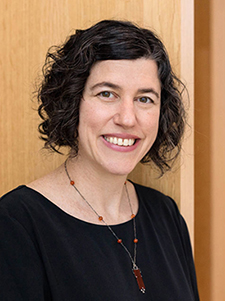 Sarah Guernsey
Sarah Guernsey, formerly vice president for publishing and design at the Art Institute of Chicago in Illinois, has been appointed deputy director for curatorial affairs at the museum.
Anna Katz, curatorial fellow at the Museum of Contemporary Art, Los Angeles, in California since 2015, has joined the museum as assistant curator.

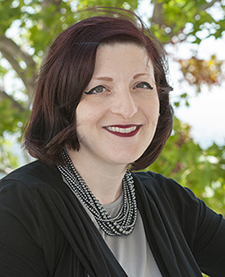 Christine Sciacca
Christine Sciacca has become associate curator of European art, 300–1400 CE, at the Walters Art Museum in Baltimore, Maryland. She was previously assistant curator in the Manuscripts Department at the J. Paul Getty Museum in Los Angeles, California.
Organizations and Publications
Yolanda Sánchez has retired from her position in the Fine Arts and Cultural Affairs Division of the Miami-Dade Aviation Department and the art program at Miami International Airport in Florida.
Roger Thorp has left Tate Publishing in London, England, for the position of editorial director at Thames and Hudson, also in London.
New Nominating Committee Members
posted Jun 12, 2017
CAA is pleased to announce the members of the 2017–2018 Nominating Committee, which is charged with identifying and interviewing potential candidates for the Board of Directors and selecting the final slate of candidates for the membership’s vote. The committee members, their institutional affiliations, and their positions are:
- Jim Hopfensperger, Western Michigan University, Vice President for Committees, and Chair
- Hunter O’Hanian, CAA Executive Director and CEO
- Helen C. Frederick, Professor, School of Art & Design, George Mason University
- Sarah A. Lichtman, Asst. Professor, Director, Design-Curatorial Studies, Parsons School of Design
- Gunalan Nadarajan, Dean/Professor, Stamps School of Art & Design, University of Michigan
- Steven Nelson, Director, UCLA African Studies Center, UCLA Department of Art History
- Steve A. Prince, Assistant Professor of Art, Artist-in-Residence, Black Studies, Allegheny College
- Alison Syme, Associate Professor, Chair, Department of Visual Studies, University of Toronto
- David C. Terry, Director of Programs, Curator, New York Foundation for the Arts
The 2016–2017 Nominating Committee chose the new members of the committee at its business meeting held during the 2017 Annual Conference in New York in February. The Board of Directors also appointed four liaisons. CAA publishes a call for nominations and self-nominations for Nominating Committee service on the website in late fall of every year and publicizes it in CAA News. Please direct all queries regarding the committee to Vanessa Jalet, CAA Executive Liaison.