
CAA News Today
CAA 2017 Convocation, President’s Address: “Art Matters”
posted Feb 24, 2017
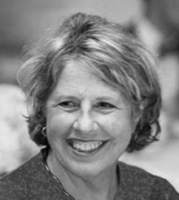 Art Matters. Art has always mattered. Whether we are art scholars or artists, critics or designers, gallery goers or museum professionals, art matters to all of us a great deal. Equally importantly, art matters – critically – to the societies in which we live and work. Fifty years ago this week (February 14,1967) as Aretha Franklin recorded her soon to become hit song, Respect, and Martin Luther King, Jr. prepared to denounce the Vietnam War in an April 4th New York city religious service, Faith Ringgold was creating her celebrated Black Light series, addressing the impact of race riots and other issues of the era. More recently, in 1990 when South African Apartheid finally ended, and Nelson Mandela and other political prisoners were released from incarceration, the important work of South African artists – black and white, men and women –in bringing inequality and racism into public view began to be broadly acknowledged. Within the last few weeks, the Museum of Modern Art began a project to rehang works by artists from majority-Muslim nations facing travel bans to this country. Art matters.
As the one hundred and fifth College Art Association’s Annual Conference gets underway, it is imperative that we reflect on these and related art issues, on the close connections between art making and activism and the vital roles that artists, art scholars and other professionals play in tackling critical issues of the day, whether it be war, racism, sexism, or other forms of discrimination and ethical derogation. Art Matters. It serves as a vital site not only of engagement and resistance, advocacy and education, problem solving and invention, but also as a vital means of opening up and re-envisioning the world around us. Art matters to us both as individuals and as part of the societies in which we live and work. In an era of increasing attacks not only on the humanities, social sciences, and sciences, but also on the arts, the importance of CAA as the leading organization that brings together practitioners and scholars within the same broad umbrella is all the more important. CAA offers a unique platform to reengage at the local, national, and international level. The so-called STEM fields (science, technology, engineering and math) are important, but they do not overshadow the arts and humanities. Indeed, throughout history, each has often enhanced the other.
Arts Matter. Yet I have a confession: there was a key moment in my life when I did not feel this. It was the summer after my Freshman year in college at the University of Vermont. I was working in the Senate when one bleak morning I found myself in tears standing in Dupont Circle watching as Bobby Kennedy’s body arrived here in the hearse after his assassination. Martin Luther King Jr. had been shot a few months earlier. I returned to college that Fall but concluded soon after that art history and studio art were simply not enough. I quit college at the end of that year to join the Peace Corps. It was here, in Africa, where I first realized politics and art were integrally co-joined. Every book I read on African art was worse than the last. The field needed a correction, art history needed a correction, and after my two-year term ended, I returned home to finish my degree and make plans to attend graduate school with a focus on African art.
CAA then, as today, was a big deal. Elation and genuine fear were my initial emotions when my first CAA paper proposal was accepted– on a politically fraught panel addressing Semiotics and Art chaired by Henri Zerner. Much later we would become colleagues. These kinds of connections are part of what makes CAA so important. For me, a timely Art Bulletin article no doubt helped with tenure. But well before then I felt it was important to engage more formally with CAA – as much for African Art as anything else. It was for that reason that I ran for the CAA Board of Directors – and years later ran a second time. When I was a graduate student, many still believed that Africa had no arts outside of Egypt, and Egypt itself was part of a strange exo-African nether world somewhere between Mesopotamia and Greece. African art, if it was considered art at all, was assumed to be primitive. CAA for me was where the real political work began, through CAA board connections, I and others persuaded the editor at Abrams to drop the “Primitive Art” chapter from Janson’s best-selling History of Art textbook. In due course, African and African diaspora arts, and those who made and studied them, began reshaping not only art departments around the country, but also exhibitions, major journals, book publications and key prizes within CAA and other organizations. It was CAA that played a central and ongoing role in this.
What had begun for me at CAA as an engagement about my field, soon blossomed into other issues – open access to museum collections in publishing for example. When I was a board member initially, one of our group began to work with the Metropolitan Museum to make their art photographs accessible on the web. This effort continued and on February 7th, one week ago, the Metropolitan announced that all images of public-domain works in the Met collection will now be available under Creative Commons. This is a huge step forward that will benefit us all. So too has been CAA’s path-forging efforts on Fair Use one of our most important and indeed revolutionary undertakings, for which I and others already are seeing considerable savings in terms of finances and time.
Art Matters. CAA members working together have achieved important ends. But we can and must do more. Art access inequality is not the only issue to attend to. Access to quality higher education is a vital concern for both us and our students, as are questions of student loan fees and affordability, along with the ability of professionals in our field to gain a viable living and secure employment in educational and art-linked institutions. I benefitted from my undergraduate training at a then inexpensive public university; my graduate school education would not have been possible without affordable student loans. I could not have written my Ph.D. without a government funded Fulbright fellowship. For me and many others, book projects would not have been completed without an NEH grant or others at tax supported institutions such as CASVA, the Clark, and the Getty. Museum exhibitions funded by both NEA and NEH are critical to what we do, and these same museums bring in billions of dollars in revenue to local cities and towns.
Art matters. And this is where CAA is critical as an organization, focusing with a new sense of urgency not only on the longstanding programs where we have excelled but also speaking out on core issues that are important to all of us – such as diversity, equal access, and sustainability. Social Activism is a key part of CAA’s Strategic Plan now. As we move forward, changes in CAA that are already underway and will become more evident shortly will help make our organization even stronger and more engaged – from the reenergized annual conference, to a far more dynamic web presence, from larger roles for our affiliated societies, to added benefits that will help members in their professional and personal loves. Art Matters. It matters to us. It matters to the communities and broader societies in which we live and work.
Suzanne Preston Blier

New in caa.reviews
posted Feb 24, 2017
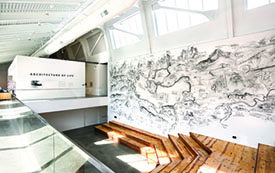 Danny Smith visits Architecture of Life, the inaugural exhibition in the new building of the University of California, Berkeley Art Museum and Pacific Film Archive. Presenting a “sweeping, cacophonous vision,” the show conceives “of architecture as the organizing principle of everything from reality to society and human relationships,” making it “a compelling examination in homemaking.” Read the full review at caa.reviews.
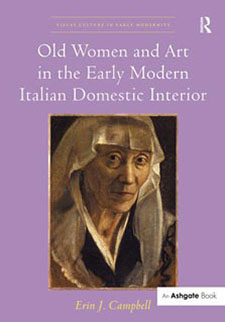 Kimberly L. Dennis reads Old Women and Art in the Early Modern Italian Domestic Interior by Erin J. Campbell. The author “describes a proliferation of portraits of old women in the second half of the sixteenth century in northern Italy,” arguing “that these portraits served to remind viewers of the duty of old women to model familial and civic virtue.” Read the full review at caa.reviews.
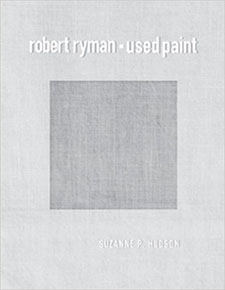 Dustin London reviews Suzanne P. Hudson’s Robert Ryman: Used Paint. The volume “documents the development of Ryman’s art from the early 1950s to the turn of the century” and “provides a thorough description and analysis of the variety of his approaches to painting.” Hudson “writes with eloquence and perspicuity to bring Ryman’s work to a wider audience on its own terms.” Read the full review at caa.reviews.
News from the Art and Academic Worlds
posted Feb 22, 2017
Each week CAA News summarizes eight articles, published around the web, that CAA members may find interesting and useful in their professional and creative lives.
Popular Domestic Programs Face Ax under First Trump Budget
The White House budget office has drafted a hit list of programs that President Trump could eliminate to trim domestic spending, including longstanding conservative targets like the Corporation for Public Broadcasting, the Legal Services Corporation, AmeriCorps, and the National Endowments for the Arts and the Humanities. (Read more from the New York Times.)
Can Only Rich Kids Afford to Work in the Art World?
Two years ago, Naiomy Guerrero left her job in the art world. She hasn’t lost her passion for art and still blogs about it at GalleryGirl.nyc, but as the daughter of two immigrant parents she chose financial stability. Guerrero now works as a financial aid counselor, earning over 50 percent more than she did at her most recent art-related job. (Read more from Artsy.)
Habitat: Moonlighting—Artists’ Side Jobs
Most artists, unless they are selling a lot of work, need a good side job. For some, it’s just a way to pay the rent; for others, it’s a parallel passion. But whether they consider it a temporary solution or a career, a boon to their art or something entirely separate from it, the artists ARTnews interviewed all seem to find satisfaction in what they do for money. (Read more from ARTnews.)
“Our Women Have Always Carved”
On the West Coast, in the rich and diverse world of First Nations art, the master carvers responsible for the totem poles and myriad other monumental works are usually men. There are exceptions. And two exceptional women—trailblazing female First Nations artists who have carved their way into Canadian cultural history—are getting their due in two new exhibitions. (Read more from the Globe and Mail.)
The Red of Painters
For the most part, painters have always loved red, from the Paleolithic period to the most contemporary. Red’s palette offers a variety of shades and favors more diverse and subtle chromatic play than any other color. In red, artists found a means to construct pictorial space, distinguish areas and planes, create accents, produce effects of rhythm and movement, and highlight one figure or another. (Read more from the Paris Review.)
Academic Ethics: Rethinking the Justification of Tenure
Tenure for professors has been under pressure, and even the subject of outright attacks, for a long time. But the pace of the assault has accelerated lately, and there is no more significant canary in the coal mine than events in Wisconsin over the past two years. (Read more from Vitae.)
The Changing Monograph Market
The market for original humanities monographs may be shrinking, according to a report on the output of university presses. After remaining stable from 2009 to 2011, the number of original works in the humanities published by university presses fell both in 2012 and 2013, according to estimates from the two publishing consultants who wrote the report. (Read more from Inside Higher Ed.)
An Activity That Promotes Engagement with Required Readings, Even in Large Classes
Encouraging students to complete the course readings is an age-old problem. On the first day of class, I often say something like this to my students: “Nothing floats my boat more than great discussion. Nothing promotes great discussion like having completed the readings. And nothing promotes completing the readings like having points attached to it.” (Read more from Faculty Focus.)
Thank You For CAA2017
posted Feb 21, 2017
Thank you everyone who made this 2017 Annual Conference in New York a lively and vibrant event. The CAA staff, board, and myCAA helpers spoke with as many attendees as we could and attended as many sessions as we could. From what we heard at the conference, through official feedback channels and informal hallway conversations, people had a good time and learned. Attendees felt challenged and invigorated by the discussions. That is all we can ask. We received positive responses to our themes of inclusion, problem solving, and feedback. The shortened ninety-minute sessions were welcomed and attendees shared that the addition of more sessions on diversity and current politics gave the conference a much-needed vitality. For our attendees, we hope that myCAA collectively felt like ourCAA.
We look forward to carrying this energy and momentum into the 2018 Annual Conference in Los Angeles, February 21-24, 2018.
There will be many, many more images to come in the next few weeks. But here are a few that we wanted to share right away.
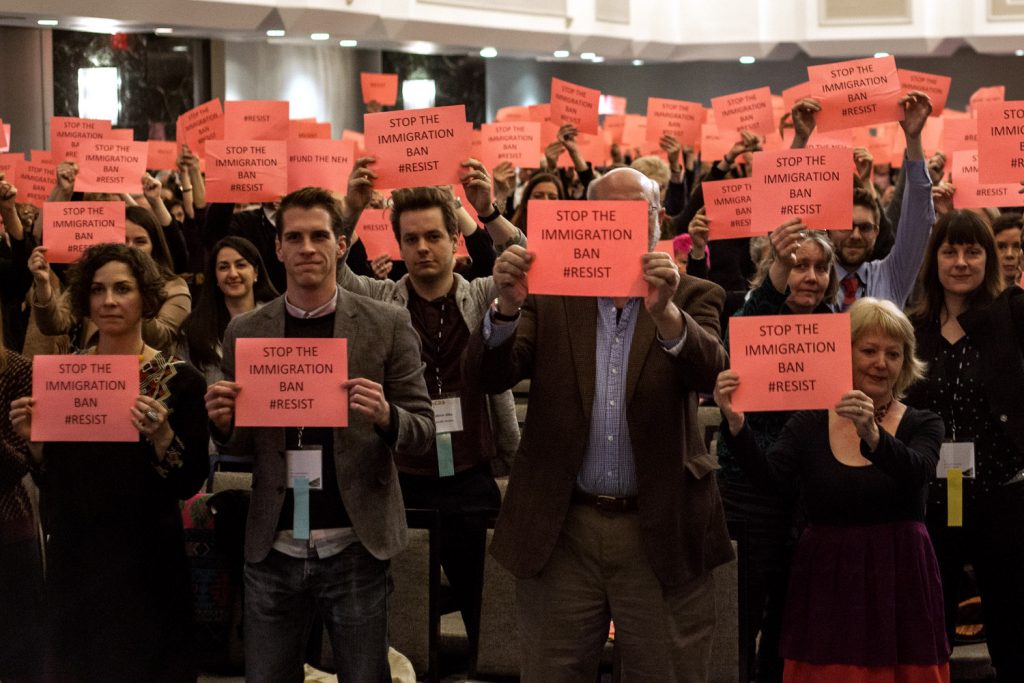
Convocation as an Act of Protest
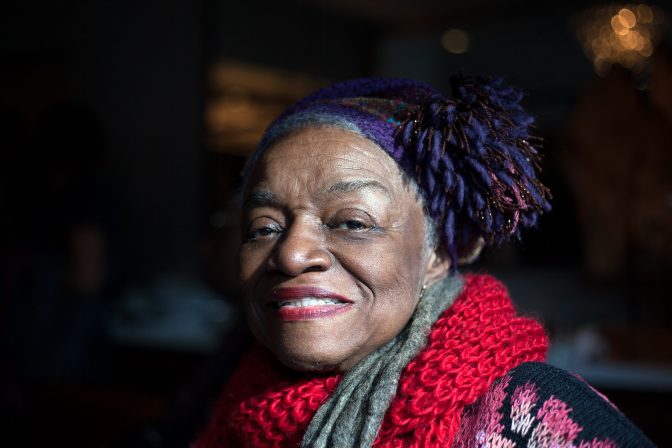
Distinguished Artist for Lifetime Achievement, Faith Ringgold
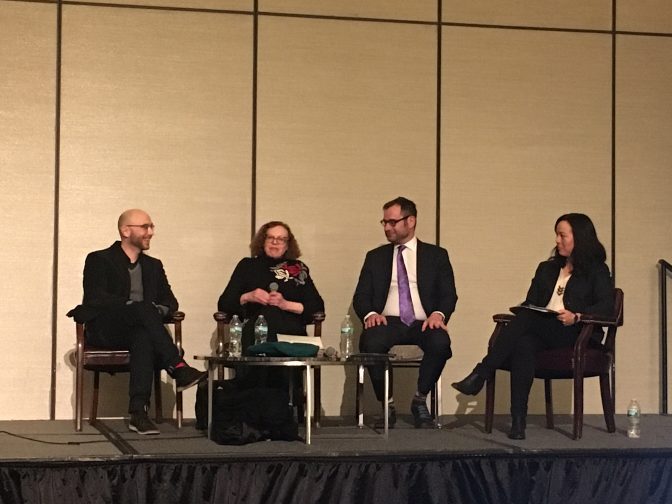
Distinguished Scholar, Kaja Silverman
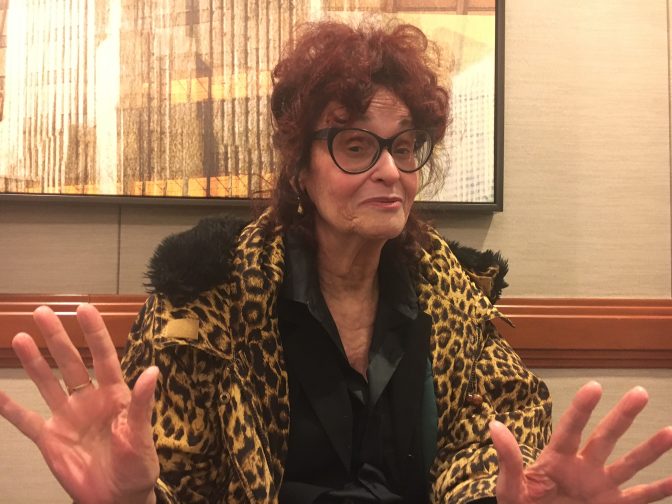
Artist Judith Bernstein, a discussant in the Distinguished Artist Interviews
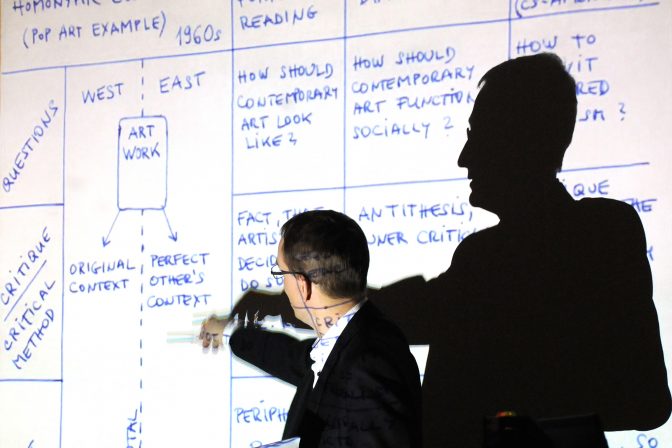
CAA-Getty International Fellow, Richard Gregor
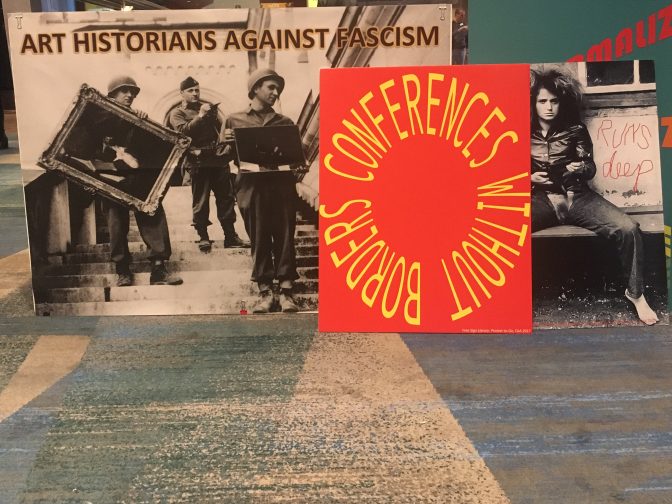
Impromptu Protest Posters
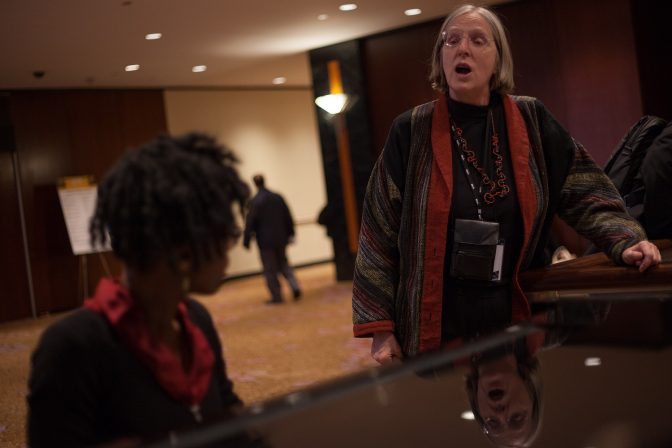
Attendees Singing “We Shall Overcome” Together
Results from the 2017 Board Election
posted Feb 17, 2017
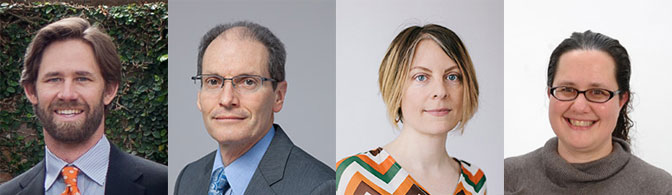 CAA announced the results of the 2017 Board of Directors election on Friday, February 17, 2017, during the second half of the Annual Business Meeting. The four new directors are:
They will take office at the next board meeting, in May 2017, and serve four-year terms. Thank you for voting!
Committee on Women in the Arts Picks for February 2017
posted Feb 16, 2017
Each month, CAA’s Committee on Women in the Arts selects the best in feminist art and scholarship. The following exhibitions and events should not be missed. Check the archive of CWA Picks at the bottom of the page, as several museum and gallery shows listed in previous months may still be on view or touring.
February 2017
Susan Hiller: Lost and Found
Pérez Art Museum, Miami
1103 Biscayne Blvd., Miami, FL
October 14, 2016–June 4, 2017
Commissioned by the Pérez Art Museum and making its debut, Lost and Found, by the London-based artist Susan Hiller, features an audio collage of voices speaking in twenty-three different languages, including Aramaic, Comanche, Livonian, and other extinct or endangered idioms. A pioneer in video installations, Hiller creates immersive, psychologically charged environments. In Lost and Found a translation appears as subtitles to the anecdotes, songs, arguments, memories, and conversations. Oftentimes the themes revolve around language itself.
“A constantly shifting oscilloscopic line gives visual form to the work’s soundtrack, suggesting the poignant idea that individuals separated by time, geography, and worldview remain linked by the physical experience of sound as it resonates through the human body during verbal communication.”
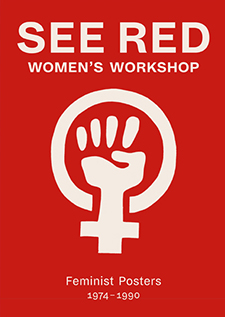
See Red Women’s Workshop Feminist Posters 1974–1990
Published by Four Corners Books
ISBN 978-1-909-82907-7
Released in September 2016, See Red Women’s Workshop Feminist Posters 1974–1990 collects sixteen years of posters, calendars, silkscreens, and more from the See Red Women’s Workshop. Founded in 1974, the group “grew out of a shared desire to combat sexist images of women and to create positive and challenging alternatives. With humor and bold graphics, they expressed the personal experiences of women as well as their role in wider struggles for change.” The 184-page book is written by See Red members and features the history of the group, including all of their original screenprints and posters commissioned for radical groups and campaigns.
“Ambitiously, See Red were not about selling a product or even getting over a party political message,” writes the British socialist feminist Sheila Rowbotham in the book’s foreword. “They were up to something far more complex and far more difficult. They aimed to convey ideas about a transformed society in which relations of gender, race and class would no longer be marked by inequality and subordination.”
Ambreen Butt: I Need a Hero
Isabella Stewart Gardner Museum
25 Evans Way, Boston, Massachusetts 02115
January 11–June 26, 2017
Ambreen Butt is the ninth artist in residence at the Isabella Stewart Gardner Museum, invited to create a temporary site-specific work for the museum’s façade. Throughout this project, Butt explores the ways in which women struggle to find and make use of their own power. Paying tribute to a fellow young Pakistani woman, I Need a Hero is inspired by the story of Mukhtar Mai, who was brutally raped in 2002 by order of her village tribal council as punishment for speaking out against archaic codes of justice. Refusing to be silenced, Mai not only became a spokesperson for women’s rights in Pakistan, but she also created two schools for girls and a crisis center for abused women.
In the Gardner façade piece, the heroine fights a dragon and a monkeylike creature (her inner and outer demons?). The wrestle is set against the background of a dollar bill as a reminder of today’s global economy, while other young women look at her from below and above, expectant on the results of the battle and a possible emergence of their hero(ine).
Butt was born in 1969, in Lahore, Pakistan, where she trained as a miniature painter. As a storyteller, the artist makes use of dramatic imagery from this traditional art form to comment on contemporary issues.
Tschabalala Self
Parasol unit foundation for contemporary art
14 Wharf Road,London N1 7RW
January 17–March 12, 2017
Parasol unit foundation for contemporary art presents the first solo exhibition in the United Kingdom by the New Haven–based artist Tschabalala Self. Curated by Ziba Ardalan, the exhibition brings together paintings, prints, collage, and sculptures drawn from the first five years of Self’s artistic career. The young artist (born New York, 1990) is concerned with the study of the black female body within contemporary culture. Self examines the confluence of race, gender, and sexuality through a variety of forms and narratives, in which each of her “characters,” as she calls them, explores the emotional, physical, and psychological impact of the black female body as icon.
Self’s paintings play boldly with figuration, deconstructing and reconstructing the black female body, sewing together pieces of African or African-inspired cloth, given to her by her mother, with fragments of unresolved pieces of work. Self’s fractured figure seems to assert its own self-defined identity, while mixed media allows her to explore how the black female body functions as a social and political symbol.
In addition to painting, collage, and sculpture, Self presents at Parasol unit her most recent animation work, My Black Ass (2016). Through a series of GIF portraits of abstractly drawn black female figures in a motion that suggests they are twerking, the black female character comes to life, displaying her buttocks and genitals in an energetic dance. Although based on a particular ethnicity, Self’s innovative works nonetheless speak universally of all humanity and its collective concerns.
Elena Dorfman: Syria’s Lost Generation
Mills College Art Museum
5000 MacArthur Blvd., Oakland, CA 94613
January 18–March 12, 2017
The Mills College Art Museum presents the Los Angeles–based artist Elena Dorfman’s Syria’s Lost Generation, a humanistic perspective to the ongoing Syrian conflict that has claimed more than 470,000 lives and forced the displacement of 6.5 million people.
Dorfman (born Boston, 1965) was on assignment with the United Nations High Commissioner for Refugees in 2013. While documenting exiled Syrians in Egypt, Jordan, Turkey, and Lebanon, she was drawn most strongly to Syrian teenagers, a small fraction of a population that has been disproportionately affected by the war. As Dorfman explains, “They seemed particularly shell-shocked and bereft…. [T]hey spoke to me of powerful longing and frustration.”
Dorfman has specialized in documenting extreme circumstances and unusual subjects. Syria’s Lost Generation builds on her previous work as a documentarian—in particular, The C-Word (1998), a series of photographs of teenagers living with cancer. Through visual and audio portraiture, Dorfman brings into exposure their voices, the physical and psychological ills suffered, their uncertain futures, and the fearful of retaliation. Displaced teenagers spoke about the powerful longing and frustration, where the dispossession seems absolute, and the future, lost.
Solo Exhibitions by Artist Members
posted Feb 15, 2017
See when and where CAA members are exhibiting their art, and view images of their work.
Solo Exhibitions by Artist Members is published every two months: in February, April, June, August, October, and December. To learn more about submitting a listing, please follow the instructions on the main Member News page.
February 2017
Midwest

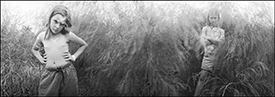 Jane Alden Stevens, Asparagus Patch, 1998, archival pigment print, 7 x 21 in. (artwork © Jane Alden Stevens)
Jane Alden Stevens. Alice F. and Harris K. Weston Art Gallery, Cincinnati, Ohio, February 10–April 2, 2017. The Thread in the River. Photography.
West

Alfred J. Quiroz. University of Arizona Museum of Art, Tucson, Arizona, October 22, 2016–January 22, 2017. The Presidential Series. Painting.
People in the News
posted Feb 15, 2017
People in the News lists new hires, positions, and promotions in three sections: Academe, Museums and Galleries, and Organizations and Publications.
The section is published every two months: in February, April, June, August, October, and December. To learn more about submitting a listing, please follow the instructions on the main Member News page.
February 2017
Academe

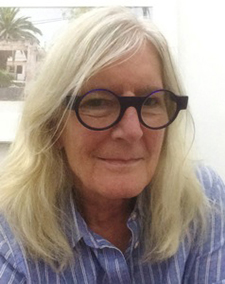 Deborah Bright
Deborah Bright has retired from her position as chair of the Department of Fine Arts at Pratt Institute in Brooklyn, New York, to pursue her art practice. Bright previously served as interim dean of fine arts at the Rhode Island School of Design in Providence, where she also chaired the Photography Department and was a tenured professor.
Museums and Galleries

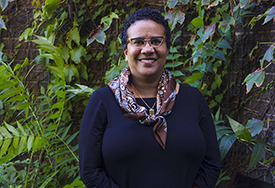 Camille Ann Brewer
Camille Ann Brewer, formerly executive director of the Black Metropolis Research Consortium at the University of Chicago in Illinois, has been appointed curator of contemporary textile art at the George Washington University Museum and the Textile Museum, both in Washington, DC.

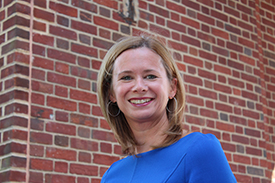 Heather Campbell Coyle
Heather Campbell Coyle, curator of American art for the Delaware Art Museum in Wilmington, has been promoted to chief curator at her institution.
Betsy Fahlman has become adjunct curator of American art at the Phoenix Art Museum in Arizona. She will divide her time between the museum and Arizona State University’s Herberger Institute for Design and the Arts in Tempe, where she has served as a professor of art history for more than twenty-eight years.
Organizations and Publications

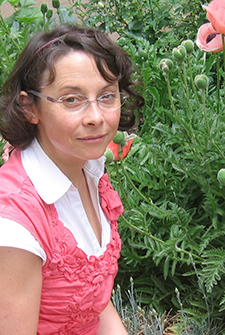 Robin Veder
Robin Veder, formerly associate professor of humanities, art history, and visual culture at Pennsylvania State University in Harrisburg, has been appointed executive editor of American Art, the journal of the Smithsonian American Art Museum in Washington, DC.
Institutional News
posted Feb 15, 2017
Read about the latest news from institutional members.
Institutional News is published every two months: in February, April, June, August, October, and December. To learn more about submitting a listing, please follow the instructions on the main Member News page.
February 2017
The Getty Research Institute in Los Angeles, California, has acquired the archive of the artist, writer, curator, and scholar Harmony Hammond. The donation includes correspondence, photographs, original source material for her art, professional papers, publication drafts, editioned prints, original artwork, files, and a slide registry devoted to lesbian artists.

The Harvard Art Museums in Cambridge, Massachusetts, have been awarded a $506,000 grant from the Andrew W. Mellon Foundation to establish a new Summer Institute for Technical Studies in Art. The program, designed for graduate students from art-history programs across North America who are interested in broadening their experience with object-focused technical inquiry, methodologies, and instruction, will begin in June 2017.
The Harvard Art Museums in Cambridge, Massachusetts, have received a $1 million gift from a Harvard Business School alumnus, Ken Hakuta, to establish the Hakuta Family Endowment Fund, enabling the creation of the Nam June Paik Fellowship at the Harvard Art Museums. Hakuta is the nephew of the pioneering artist Nam June Paik.
John Cabot University in Rome, Italy, has inaugurated a new MA program in art history to begin in fall 2017. Accredited by the Middle States Commission on Higher Education, the degree is the first US-accredited master’s degree in the history of art based entirely in Rome. The program can be completed in approximately fifteen months of full-time study.

The Pennsylvania Academy of the Fine Arts in Philadelphia has received a generous $500,000 gift from Julie Jensen Bryan and Robert Bryan to name the PAFA Printmaking Shop. This transformative commitment ensures that printmaking will remain one of the school’s core artistic disciplines.

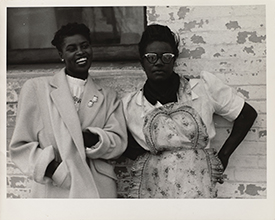
The Princeton University Art Museum in Princeton, New Jersey, has posted to its website more than five thousand images and related photographic material by the seminal American modernist Minor White. The two-year digitization and cataloging project, funded in part by the Institute of Museum and Library Services, provides online access for the first time to the most significant photographic content of the Minor White Archive, which includes finished prints, artist’s proof cards, and bibliographic history.

The Smithsonian American Art Museum in Washington, DC, has surpassed its campaign goals for both financial gifts and significant art gifts, amassing a combined total of $105 million with more than one year remaining in the campaign. The $65 million cash goal was exceeded by $3 million, funds supporting the Renwick Gallery renovation, an education center for the museum’s National Historic Landmark building, and the museum’s endowments. The campaign will continue through 2017 with a focus on additional artworks and endowments to support curatorial, technology, and education initiatives.
Grants, Awards, and Honors
posted Feb 15, 2017
CAA recognizes its members for their professional achievements, be it a grant, fellowship, residency, book prize, honorary degree, or related award.
Grants, Awards, and Honors is published every two months: in February, April, June, August, October, and December. To learn more about submitting a listing, please follow the instructions on the main Member News page.
February 2017
Tatiana Flores, associate professor in the Department of Art History at Rutgers University in New Brunswick, New Jersey, with a joint appointment in the Department of Latino and Caribbean Studies, has won a 2016 award from the Arts Writers Grant Program, coordinated by Creative Capital and the Andy Warhol Foundation for the Visual Arts. Her grant will support a book, titled Art and Visual Culture under Chávez.
Marina Kassianidou, an artist and writer based in Boulder, Colorado, has received a $25,000 award from the Joan Mitchell Foundation’s 2016 Painters and Sculptors Grant Program.
Beili Liu, an artist based in Austin, Texas, has accepted a $25,000 grant from the Joan Mitchell Foundation through the 2016 Painters and Sculptors Grant Program.
Christina Michelon, a doctoral candidate in art history at the University of Minnesota, Twin Cities, has received a $8,500 project grant via the 2016–17 Craft Research Fund, supervised by the Center for Craft, Creativity, and Design. The funds will support a dissertation focused on print’s relationship to domestic craft and interior design from 1830 to 1890.
Anya Montiel, a PhD student in American studies at Yale University in New Haven, Connecticut, has accepted a $4,500 project grant from the Center for Craft, Creativity, and Design through the 2016–17 Craft Research Fund. The funds will support dissertation research on government-funded basketry, pottery, and woodworking craft workshops in the 1960s and 1970s among the Florida Seminole, Mississippi Choctaw, and North Carolina Cherokee.
Klaus Ottmann, deputy director for curatorial and academic affairs at the Phillips Collection in Washington, DC, has been conferred the insignia of chevalier of the Order of Arts and Letters by Bénédicte de Montlaur, cultural counselor of the French Embassy in New York, on behalf of the French government.
Betsy Redelman, a student pursuing an MFA in craft studies at the Oregon College of Art and Craft in Portland, has received a $3,705 graduate research grant from the Center for Craft, Creativity, and Design through the 2016–17 Craft Research Fund. The award will support thesis research on the neglected history of indigenous women potters in San Marcos Tlapaola, a small pueblo in Oaxaca, Mexico.

Margaret Samu, a freelance art historian based in New York, has been awarded the 2016 Mary Zirin Prize for independent scholarship from the Association for Women in Slavic Studies.

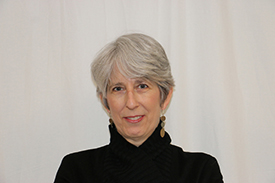
Maureen G. Shanahan, professor of history of art for the School of Art, Design, and Art History at James Madison University in Harrisonburg, Virginia, has received a Fulbright Award for research in France from March to June 2017. The grant, entitled “World War I and the Colonial Legacy: Sites of Memory, Traces of Forgetting,” will support two projects: planning for a conference on the representation of the colonial subject during and after WWI; and archival research on a monograph, tentatively entitled Silence, Surveillance, and Psychiatry: Gaëtan Gatian de Clérambault and the French Colonial Subject (1914–34).
Andrew Uroskie, director of graduate studies for the MA/PhD program in art history and criticism at Stony Brook University in Stony Brook, New York, has won a 2016 award from the Arts Writers Grant Program, administered by Creative Capital and the Andy Warhol Foundation for the Visual Arts. The grant will support his book, titled The Kinetic Imaginary: Robert Breer and the Animation of Postwar Art.
Laura A. L. Wellen, a writer and curator based in Houston, Texas, has earned a 2016 award from the Arts Writers Grant Program, coordinated by Creative Capital and the Andy Warhol Foundation for the Visual Arts. The grant will support a blog called Piedrín.
Soyoung Yoon, program director and assistant professor of art history and visual studies in the Department of the Arts at the New School’s Eugene Lang College of Liberal Arts in New York, has received a 2016 awards via the Arts Writers Grant Program, supervised by Creative Capital and the Andy Warhol Foundation for the Visual Arts. The funds will support an article titled “The Evidence of Things Not Heard: On Mendi + Keith Obadike’s Numbers Station.”