CAA News Today
News from the Art and Academic Worlds
posted Dec 24, 2014
Each week CAA News publishes summaries of eight articles, published around the web, that CAA members may find interesting and useful in their professional and creative lives.
The Art of Healing
Over the last few decades, a growing body of studies and anecdotal evidence that suggests art facilitates healing has driven the incorporation of art into medical settings. Nearly half of the healthcare institutions in the United States reported including arts in their programming, ranging from art and music therapy to featuring visual art in hospitals. (Read more from the University of California, San Francisco.)
Framing Tips: The Hard(ware) Facts
Framing tips on hardware may not seem exciting, but understanding the function and limitations of various types of screws, hangers, and wires will ensure that your framed drawings and paintings are properly supported when displayed. Take a little time to tackle the terminology and technicalities. Your art deserves nothing less. (Read more from the Artist’s Magazine.)
In Defense of Art School Graduates
What’s wrong with our industry that we are so quick to belittle formal education? Whenever the topic of an art degree arises, there’s an angry mob that amasses, collectively chanting how “useless” a degree is in photography and that the best school to learn from is the University of Hard Knocks. To really understand this issue, we have to first step back and look at the value of art and why photographers are so polarized on the term. (Read more from Fstoppers.)
Why You (Yes, You!) Should Write Book Reviews
The conventional wisdom is that graduate students shouldn’t take time to write academic book reviews. There’s just not enough in it for them, the thinking goes. As a sociologist who has studied the publishing industry, I disagree with the dismissive attitude many have toward book reviewing. (Read more from Inside Higher Ed.)
Want to Be Taken Seriously as a Scholar in the Humanities? Publish a Monograph
A decade ago, in my first year as lecturer in a humanities department, an eminent professor helped me secure a book contract with a top university press for my recently completed doctoral thesis. Another senior colleague stopped me in the corridor: “This is very rare,” she said. “And this is what gets you ahead in this game.” (Read more from the Guardian.)
Best Way for Professors to Get Good Student Evaluations? Be Male
Many in academia have long known about how the practice of student evaluations of professors is inherently biased against women. Just as polling data continues to show that a majority of Americans think being a man automatically makes you better in the boss department, many professors worry that students automatically rate male professors as smarter, more authoritative, and more awesome overall because they are men. Now, a new study shows that there is good reason for that concern. (Read more from Slate.)
What You Need to Know before Donating Art
For investors thinking about donating art, the most important thing to know is this: It isn’t as simple as … donating art. The benefits of a donation are clear. The owners may have a fondness for a particular museum or university they have in mind as a recipient, for instance. And the ego gratification is powerful. But ego aside, donors have a lot of factors to consider before making a decision. (Read more from the Wall Street Journal.)
Acrylics on Plastics
When a liquid comes into contact with any solid, new interfaces or boundaries are generated between these dissimilar materials. Although many factors exist which will promote or inhibit adhesion of the acrylic paint onto solid plastic, the most important element is the ability of the liquid to “wet-out” the solid onto which it is painted. (Read more from Just Paint.)
Solo Exhibitions by Artist Members
posted Dec 22, 2014
See when and where CAA members are exhibiting their art, and view images of their work.
Solo Exhibitions by Artist Members is published every two months: in February, April, June, August, October, and December. To learn more about submitting a listing, please follow the instructions on the main Member News page.
December 2014
Mid-Atlantic

Terence Hannum. Guest Spot at the Reinstitute, Baltimore, Maryland, November 15, 2014–January 17, 2015. Decay. Sound collage, zines, and handmade artist’s books.
Northeast
Richard Barlow, Michael Stolzer Fine Art, Oneonta, New York, September 18–October 1, 2014. Recognition Study Cards. Letterpress prints.

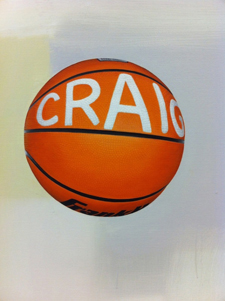 Craig Drennen, detail of HELLO CRAIG, 2014, oil and alkyd on canvas, 52 x 40 in. (artwork © Craig Drennen)
Craig Drennen. Samsøñ Projects, Boston, Massachusetts, October 31–December 24, 2014. Poet & Awful. Painting.

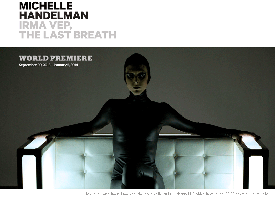 Michelle Handelman, Irma Vep, the last breath, 2013, 4-channel HD video installation, 33:00 min. (artwork © Michelle Handelman; photograph by Laure Leber)
Michelle Handelman. Soho House New York in partnership with the Film-Makers’ Cooperative, New York, November 7, 2014. Irma Vep, the Last Breath. Single-channel video.
South
Veronica Ceci. 02 Gallery, Austin, Texas, November 7–December 3, 2014. QR/PR. Printmaking.
Janet Kaplan: In Memoriam
posted Dec 19, 2014
The following obituary for Janet Kaplan was published by the Moore College of Art and Design in Philadelphia, Pennsylvania, on December 15, 2014. CAA will follow up with its own text in the new year.
It is with deepest sorrow that we share with you the news that on Friday, December 12, Art History Faculty Professor and Curatorial Studies Director, Dr. Janet Kaplan passed away.
We will honor Professor Kaplan by hosting a remembrance to honor her here at Moore in the spring semester at a date to be determined. Dr. Kaplan was beloved and respected by many artists and scholars in the Philadelphia community and beyond. She will be deeply missed by the students and those who teach and work at Moore.
Dr. Kaplan had a long and fruitful career at Moore College of Art & Design. She began teaching at Moore in 1980 as an Assistant Professor, promoted to Associate Professor in 1987 and to full Professor in 1993. Dr. Kaplan received tenure in 1987 and served as the Chair of Liberal Arts from 1989 to 2003. Professor Kaplan served as the Executive Editor of the Art Journal for the College Art Association in New York City from 1995 to 2002. The Art Journal was the winner of the Utne Award for Independent Magazine Publishing in 2002. Dr. Kaplan was instrumental in the planning and development for the Curatorial Studies major, working in collaboration with Dr. Maureen Pelta, Chair of the Liberal Arts department, the Liberal Arts faculty and Academic Dean to develop curriculum for the nation’s first undergraduate Curatorial Studies program that successfully launched in fall 2006.
Throughout her teaching career Dr. Kaplan also taught at NYU, Institute of Fine Arts as a Visiting Professor and Graduate Colloquium; Vermont College as a graduate faculty in the MFA in Visual Arts program; and at the University of New Hampshire. She served as a moderator, panelist and speaker at regional, national and international conferences and symposia on a wide range of topics related to art criticism, artist responses to social issues, women and surrealism, media spectacle and the politics of representation. She was a leader in generating dialogue about women in the arts, organizing symposia including a 2000 symposium at The National Museum of Women in the Arts and 3 Curatorial Conversations here at Moore including “Curating and Activism: An International Panel and Conversation” in 2009. These Curatorial Conversations were supported by The Pew Center for Arts & Heritage and through the support from Frances and Bayard Storey. Dr. Kaplan published widely on modern and contemporary art. Her essays and interviews have been published in numerous national and international art journals. She frequently wrote book reviews for art journals including one on Whitney Chadwick’s book on Women Artists and the Surrealist Movement. She is the author of Remedios Varo: Unexpected Journeys, an important internationally known scholarly work, published in multiple languages.
In 2001, Dr. Kaplan received a Fellowship in Arts Criticism from the Pennsylvania Council for Humanities and in 2003 she received a Special Opportunities Stipend from the Pennsylvania Council for Humanities. Professor Kaplan served on the advisory board, consultant and/or review panelist for numerous organizations and institutions including the School of Art at Carnegie-Mellon University; the Arts Advisory Board of the Philadelphia Redevelopment Authority; the Rosenbach Museum and Library; NEA grants panel in 2001 for Visual Arts Creativity and Organizational Capacity; review panelist for the Philadelphia Cultural Fund in 1998; the Advisory Board for the Pew Fellowships in the Arts, 1997–99; and the United States Holocaust Memorial Museum – Varian Fry Project. In 2012, she co-curated an exhibition fo the work of artist Ashley Hune in Sinop, Turkey.
Dr. Kaplan gave back to the Moore community through her extensive service to the College and to the community. In addition to the institutions and organizations where she served in an ongoing capacity, she frequently participated in citywide and College organized events. She moderated panels organized by The Galleries at Moore in conjunction with the City of Philadelphia Mural Arts Program and served as a panelist at the Free Library of Philadelphia for one film/one book events. Recently, Dr. Kaplan had an essay published in 70 x 7 The Meal, act XXXIV, Lucy + Jorge Orta, City of Philadelphia Mural Arts Program, 2013. Moore College of Art & Design is proud to have had the honor of Dr. Kaplan’s service, teaching and scholarship; she will be missed by her colleagues, her students and the staff at Moore.
Announcing Candidates for CAA’s Board – Vote in Early January 2015
posted Dec 19, 2014
The 2014 Nominating Committee has selected the following slate of six candidates for election to the CAA Board of Directors for the 2015–2019 term. Voting begins in early January 2015. Please go to CAA’s website to read each candidate’s statement, biography, and endorsement – and watch their video comments – before casting your vote. The candidates are:
- Derrick R. Cartwright, University of San Diego
- Jawshing Arthur Liou, Indiana University
- Chika Okeke-Agulu, Princeton University
- Katerina Ruedi Ray, Bowling Green State University
- Rachel Weiss, School of the Art Institute of Chicago
- Andrés Zervigón, Rutgers University
About the Board
The Board of Directors is charged with CAA’s long-term financial stability and strategic direction; it is also the Association’s governing body. The Board sets policy regarding all aspects of CAA’s activities, including publishing, the Annual Conference, awards and fellowships, advocacy, and committee procedures.
About the Election
CAA members may vote for no more than four (4) candidates (may include one write-in candidate who must be a CAA member). The four candidates receiving the most votes will be elected to the Board. CAA members may cast their votes and submit their proxies online only. CAA holds the Board election on its own website. To vote, members will need only to log into their CAA member account.
All voting must take place prior to 5:00 p. m. EST on Friday, February 13, 2015. During CAA’s 103rd Annual Conference, a computer for voting will be available in the conference registration area at the Hilton New York Midtown Hotel.
The results of the Board election will be announced at the close of CAA’s Annual Business Meeting to be held on Friday, February 13, 2015 from 5:30 to 7:00 p.m. (EST) in the Rendezvous Trianon Ballroom, 3rd Floor, Hilton New York Midtown Hotel, 1335 Avenue of the Americas, NY, NY 10010. CAA’s President, DeWitt Godfrey, will preside.
Questions? Contact Vanessa Jalet, executive liaison, at (212) 392-4434 or vjalet@collegeart.org
Khan Academy Seeks Applicants for Smarthistory Fellowships
posted Dec 19, 2014
Smarthistory at Khan Academy recently received a generous grant from the Andrew W. Mellon Foundation to accelerate the creation of content for the Smarthistory website. The grant funds three types of fellows:
Smarthistory is looking to fill these positions quickly—hopefully in advance of the CAA Annual Conference in New York. Deadline: January 5, 2015.
Imprinting Agnes Martin Now Online
posted Dec 18, 2014
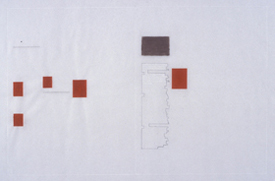 Art Journal Open is pleased to announce the publication of Imprinting Agnes Martin, an artist’s project by Karen L. Schiff. This project presents work from Schiff’s ongoing series the Agnes Martin Obituary Project. For each work, Schiff creates a drawing using the shape of the text in an obituary of the artist Agnes Martin (1912–2004) as published in news sources from around the globe. For Imprinting Agnes Martin, Schiff, who works frequently with text in her practice, selected eight drawings from the series and wrote an introductory text.
The contemporary projects at Art Journal Open present artist’s works adapted specifically for the website’s platform. Art Journal Open welcomes texts and project proposals from artists, scholars, critics, curators, and others who share an interest in modern and contemporary art, design, pedagogy, and visual culture. For information on submitting a project or proposal, please visit the Art Journal Open submission guidelines. Send inquires to art.journal.website@gmail.com.
Image: Karen L. Schiff, Agnes Martin, College Art Association News, March 2005, opening, 2005, graphite, pastel, ruby lith, and stylus on vellum, 12 x 18 inches. Collection of Sally and Wynn Kramarsky, New York (artwork © Karen L. Schiff)
People in the News
posted Dec 17, 2014
People in the News lists new hires, positions, and promotions in three sections: Academe, Museums and Galleries, and Organizations and Publications.
The section is published every two months: in February, April, June, August, October, and December. To learn more about submitting a listing, please follow the instructions on the main Member News page.
December 2014
Academe
Edith Balas has retired after thirty-five years of teaching art history at Carnegie Mellon University in Pittsburgh, Pennsylvania.

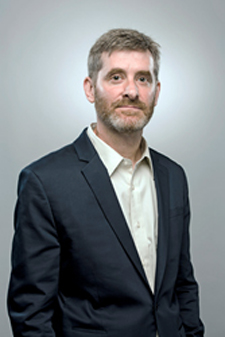 Jeff Bellantoni (photograph by Peter Tannenbaum)
Jeff Bellantoni, formerly chairperson and professor of the Graduate Communications Design Department at Pratt Institute in Brooklyn, New York, has been appointed vice president for academic affairs at Ringling College of Art and Design in Sarasota, Florida.
Lori Cole, formerly the Charlotte Zysman Postdoctoral Fellow in the Humanities and Lecturer in Fine Arts at Brandeis University in Waltham, Massachusetts, has become assistant professor and faculty fellow at the John W. Draper Interdisciplinary Master’s Program in Humanities and Social Thought at New York University.
Ryan Hoover has been appointed a 2014–15 full-time faculty member in the Interdisciplinary Sculpture Department at Maryland Institute College of Art in Baltimore.
Christian Luczanits, senior curator at the Rubin Museum of Art in New York, has been named David L. Snellgrove Senior Lecturer in Tibetan and Buddhist Art at the University of London’s School of Oriental and African Studies in England.
Kiel Mutschelknaus has joined Maryland Institute College of Art in Baltimore as a full-time faculty member in graphic design for the 2014–15 academic year.

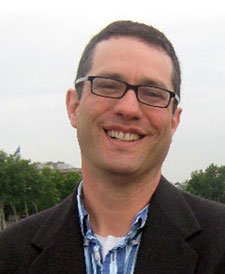 David Raskin
David Raskin has been named Mohn Family Professor of Contemporary Art History at the School of the Art Institute of Chicago in Illinois, thanks to a recent $2.5 million gift from the Mohn Family Foundation.
Daniel Tucker has been appointed graduate-program manager in social and studio practice at the Moore College of Art and Design in Philadelphia, Pennsylvania.
Museums and Galleries
Carol Damian has stepped down as director and chief curator of the Patricia and Phillip Frost Art Museum at Florida International University in Miami. She will serve as a professor in the school’s Art and Art History Department.
Tracy Fitzpatrick, chief curator of the Neuberger Museum of Art at Purchase College, State University of New York, has been appointed director of the museum.
Meredith Fluke has been appointed Kemper Curator of Academic Programs at the Davis Museum at Wellesley College in Wellesley, Massachusetts.
Aimeé E. Froom, an independent scholar based in Paris, France, has become curator of Islamic art at the Museum of Fine Arts, Houston, in Texas.

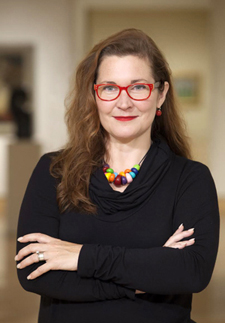 Erika Holmquist-Wall
Erika Holmquist-Wall, formerly of the Minneapolis Institute of Arts in Minnesota, has been hired by the Speed Art Museum in Louisville, Kentucky, as curator of European and American painting and sculpture.
Monica Obniski, formerly assistant curator of American decorative arts at the Art Institute of Chicago in Illinois, has been hired by the Milwaukee Art Museum in Wisconsin as curator of design and decorative arts.
Amy L. Powell, previously a Cynthia Woods Mitchell Curatorial Fellow at the University of Houston’s in Texas, has become curator of modern and contemporary art at the Krannert Art Museum, part of the University of Illinois, Urbana-Champaign.

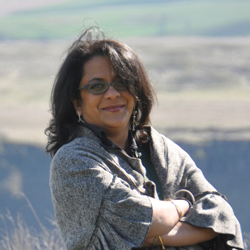 Namita Gupta Wiggers
Namita Gupta Wiggers has resigned from being director and chief curator for the Museum of Contemporary Craft in Portland, Oregon. She will continue working with the museum as an adjunct curator and with Pacific Northwest College of Art as an adjunct instructor in the MFA Applied Craft and Design Program.
Scott Wilcox, chief curator of art collections and senior curator of prints and drawings at the Yale Center for British Art in New Haven, Connecticut, has been promoted to deputy director for collections.
Organizations and Publications
Richard Brettell has been chosen to lead the newly created Edith O’Donnell Institute of Art History in Dallas, Texas, as director and Edith O’Donnell Distinguished Chair.
Paul Catanese, associate professor and director of the Interdisciplinary Arts and Media MFA Program at Columbia College Chicago in Illinois, has joined the ISEA International Foundation Board.
Institutional News
posted Dec 17, 2014
Read about the latest news from institutional members.
Institutional News is published every two months: in February, April, June, August, October, and December. To learn more about submitting a listing, please follow the instructions on the main Member News page.
December 2014
The Archives of American Art, part of the Smithsonian Institution in Washington, DC, has received a $413,000 award from the Terra Foundation for American Art to support a survey of archival collections related to American art that are located in the Chicago area, as well as a few other initiatives on Chicagoan art, artists, and archives.
The Mary and Leigh Block Museum of Art at Northwestern University in Evanston, Illinois, has accepted a $85,000 award from the Terra Foundation for American Art to support the exhibition The Left Front: Radical Artists in the “Red Decade,” 1929–1940.
The College of the Holy Cross in Worcester, Massachusetts, has developed a three-day conference called “Global Encounters in Early America” with support from a $25,000 grant from the Terra Foundation for American Art.
The Delaware Art Museum in Wilmington has received three generous gifts totaling $1.7 million to fully endow the museum’s Curator of the Bancroft Collection of Pre-Raphaelite Art. Two donations were given anonymously, and a third came from Peggy and Ed Woolard. The endowment will be named the Annette Woolard-Provine Endowed Curator of the Bancroft Collection, in honor of the Woolards’ daughter.
The Maine College of Art in Portland has received accreditation for its ten-month master of art in teaching program by the National Association of Schools of Art and Design and the state of Maine. The college has also accepted funding from the Bob Crewe Foundation to initiate a program that explores the intersection of music and art.
The Pennsylvania Academy of the Fine Arts in Philadelphia has received a three-year $150,000 grant from the Institute of Museum and Library Services to support the new School and Community Partnership Program, which will unite the academy’s existing resources for schools, families, and community outreach into a single initiative.
The Philadelphia Museum of Art in Pennsylvania has been awarded a $165,000 grant from the Terra Foundation for American Art to help fund the exhibition Paul Strand: Photography and Film for the Twentieth Century.
The Princeton University Art Museum in Princeton, New Jersey, has accepted a $99,493 grant from the Institute of Museum and Library Services to help complete the cataloguing and digitization of the Minor White Archive.
The School of the Art Institute of Chicago in Illinois has received a $2.5 million gift from the Mohn Family Foundation to advance the school’s leadership in the history of contemporary art. The funds will support a professorship and graduate-student fellowship within the Department of Art History, Theory, and Criticism.
Stanford University in California has accepted a $30,780 grant from the Terra Foundation for American Art to help the Department of Art and Art History fund a two-day conference called “The Ends of American Art.”
The University of California, Santa Barbara, has accepted a $136,479 grant from the Terra Foundation for American Art to support an academic exchange symposium and a publication associated with “Modernism in the United States and China,” a project organized by the university and the China Art Academy in Hangzhou.
The University of Texas at Dallas has partnered with the Dallas Museum of Art to create the Edith O’Donnell Institute of Art History, which will offer master’s and doctoral degrees. The institute is funded by a $17 million gift from Edith O’Donnell.
The Yale Center for British Art in New Haven, Connecticut, has received a $25,000 grant from the Terra Foundation for American Art to support the borrowing of Hiram Power’s statue The Greek Slave (1844), along with an attendant two-day colloquium, in conjunction with the exhibition Sculpture Victorious: Art in an Age of Invention, 1837–1901.
Yale University Press in New Haven, Connecticut, has accepted an $80,000 grant from the Terra Foundation for American Art to support a translation prize for a book-length publication by a non-US author that contributes to scholarship on historical American art.
News from the Art and Academic Worlds
posted Dec 17, 2014
Each week CAA News publishes summaries of eight articles, published around the web, that CAA members may find interesting and useful in their professional and creative lives.
Smithsonian’s Asian Art Collection Goes Online
The Smithsonian Institution’s museums of Asian art are due to release their entire collections online on January 1, 2015. More than forty thousand works, from ancient Chinese jades to thirteenth-century Syrian metalwork and nineteenth-century Korans, will be accessible through high-resolution images without copyright restrictions for noncommercial use. The Freer Gallery of Art and the Arthur M. Sackler Gallery are the first Smithsonian museums—and the only Asian art museums—to complete the labor-intensive process of digitizing and releasing their entire collections online. (Read more from the Art Newspaper.)
Balling off Painting: MoMA Opens The Forever Now
At the Museum of Modern Art’s opening for The Forever Now: Contemporary Painting in an Atemporal World, most people had a hard time remembering when the last group show of young painters had happened at the museum. (Technically, the last full-on contemporary painting survey was in 1984.) With that in mind, no matter what anyone thinks about the show—or even the current state of painting in general—it could be argued that an exhibition of this nature was somewhat overdue. (Read more from ArtNews.)
New Art Now
At first glance, the three words “new,” “art,” and “now” might be considered synonyms. In order to be counted as art, an object or expression must be new, and its newness is strictly defined by the temporal limits of the present moment, now. But this is where the synonymy of the three terms starts to look like a contradiction. If contemporary art is art always happening “now,” can we ever really make sense of the present? (Read more from ArtReview.)
Unsustainable Postdocs
Postdoctoral fellowships make sense in theory: they offer recent PhDs, especially those aspiring to careers in academic research, a place to develop professionally and build a research profile before or while hitting the job market. But too often, these fellowships are underpaid, undermentored positions in which young academics languish during what are potentially their most creative, productive years. That’s the upshot of a new report that is highly critical of the structural factors driving the growth of postdoctoral ranks. (Read more from Inside Higher Ed.)
The State of Professional Development in Higher Education
Earlier this year, Academic Impressions surveyed higher-education professionals to learn if institutions, on the whole, regard professional development as mission-critical, if investments in professional development is proactive or reactive, and if professional development is tied to performance appraisal. This report shares the findings. (Read more from Academic Impressions.)
Storming the Ivory Tower
All manner of treasure accumulates in the Ivory Tower, but too often that’s where valuable scholarship stays locked up, obscure and inaccessible. “Free the knowledge!” might be the rallying cry behind a creative new plan from the National Endowment for the Humanities. The federal agency, which bills itself as one of the largest funders of humanities programs in the country recently announced the Public Scholar program. Its goal is to motivate scholars to publish nonfiction books for general readers rather than for each other. (Read more from the Washington Post.)
Is a Museum a Database? Institutional Conditions in Net Utopia
The museum is pressured into adapting to the logic of the database from all sides, and we begin to entertain questions of absurd technological determinism. Is a museum a database? While this may be a ridiculous provocation on its face, we have seen that anxious cultural institutions are among the first to uncritically adopt the metabolism of database, to transform the institution into an indexed site of transmission. (Read more from e-flux journal.)
Can We Create a Culture That Values Good Teaching?
How might we create a culture that esteems effective teaching? The value of such a thing ought to be clear, if only because it would blunt some of the frequent public criticisms of universities for a too-narrow focus on research. But creating a teaching culture hasn’t proved so easy. It’s not that campuses don’t harbor great teachers—even the most research-intensive universities do. But those professors usually tend their personal classroom gardens on their own. (Read more from Art History Teaching Resources.)
Recipients of the 2015 Awards for Distinction
posted Dec 16, 2014
CAA has announced the recipients of the 2015 Awards for Distinction, which honor the outstanding achievements and accomplishments of individual artists, art historians, authors, conservators, curators, and critics whose efforts transcend their individual disciplines and contribute to the profession as a whole and to the world at large.
CAA will formally recognize the eleven honorees at a special awards ceremony to be held during Convocation at the 103rd Annual Conference in New York, on Wednesday evening, February 11, 2015, 5:30–7:00 PM. Led by DeWitt Godfrey, president of the CAA Board of Directors, the awards ceremony will take place in the Hilton New York Midtown’s East Ballroom. Convocation and the awards ceremony are free and open to the public. The Hilton New York Midtown is located at 1335 Avenue of the Americas (Sixth Avenue), New York, NY 10010.
The 2015 Annual Conference—presenting scholarly sessions, panel discussions, career-development workshops, a Book and Trade Fair, and more—is the largest gathering of artists, scholars, students, and arts professionals in the United States.
Charles Rufus Morey Book Award
Megan Holmes
The Miraculous Image in Renaissance Florence
Yale University Press, 2013
Alfred H. Barr Jr. Award
Susan Weber, ed.
William Kent: Designing Georgian Britain
Bard Graduate Center and Yale University Press, 2013
Alfred H. Barr Jr. Award for Smaller Museums, Libraries, Collections, and Exhibitions
Lynn Boland, et al.
Cercle et Carré and the International Spirit of Abstract Art
Georgia Museum of Art, University of Georgia, 2013
Arthur Kingsley Porter Prize
Douglas Brine
“Jan van Eyck, Canon Joris van der Paele, and the Art of Commemoration”
The Art Bulletin, September 2014
Art Journal Award
Anna Chave
Art Journal, Winter 2014
Distinguished Feminist Award
Amelia Jones, University of Southern California
Distinguished Teaching of Art Award
Richard Brown, Massachusetts College of Art and Design
Distinguished Teaching of Art History Award
Petra Ten-Doesschate Chu, Seton Hall University
Artist Award for Distinguished Body of Work
Charles Gaines
Charles Gaines: Gridwork 1974–1989
Studio Museum in Harlem
Distinguished Artist Award for Lifetime Achievement
Keith Sonnier
CAA/Heritage Preservation Award for Distinction in Scholarship and Conservation
Melanie Gifford, National Gallery of Art
Distinguished Lifetime Achievement Award for Writing on Art
Lucy R. Lippard
Morey and Barr Award Finalists
CAA recognizes the 2015 finalists for the Charles Rufus Morey Book Award and the Alfred H. Barr Jr. Award for their distinctive achievements:
Charles Rufus Morey Book Award
- Matthew C. Hunter, Wicked Intelligence: Visual Art and the Science of Experiment in Restoration London (Chicago: University of Chicago Press, 2013)
- Karl Whittington, Body-Worlds: Opicinus de Canistris and the Medieval Cartographic Imagination (Toronto: Pontifical Institute of Medieval Studies, 2014)
- Catherine Zuromskis, Snapshot Photography: The Lives of Images (Cambridge, MA: MIT Press, 2013)
Alfred H. Barr Jr. Award
- Kimberly A. Jones, et al., Degas/Cassatt (Washington, DC: National Gallery of Art and DelMonico Books, 2014)
Contact
For more information on the 2015 Awards for Distinction, please contact Emmanuel Lemakis, CAA director of programs. Visit the Awards section of the CAA website to read about past recipients.