
CAA News Today
Grants, Awards, and Honors
posted Jun 15, 2014
CAA recognizes its members for their professional achievements, be it a grant, fellowship, residency, book prize, honorary degree, or related award.
Grants, Awards, and Honors is published every two months: in February, April, June, August, October, and December. To learn more about submitting a listing, please follow the instructions on the main Member News page.
June 2014

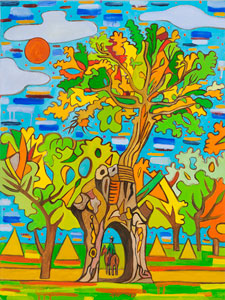 Susan Bee, Autumn Fantasy, 2011, oil on linen, 18 x 14 in. Collection of Leslee Smoke (artwork © Susan Bee)
Susan Bee, a painter and writer based in New York, has received a 2014 fellowship in fine arts from the John Simon Guggenheim Memorial Foundation.


Doris Chon, a lecturer in the Department of Art at the University of California, Los Angeles, has been named Harald Szeemann Research Project Postdoctoral Fellow by the Getty Research Institute in Los Angeles. From September 2014 to June 2016 she will work on “Museum Mythologies: Harald Szeemann’s Museums by Artists, the Museum of Obsessions, and the Legacy of Institutional Critique.”

Denise Rae Costanzo, assistant professor in the H. Campbell and Eleanor R. Stuckeman
School of Architecture and Landscape Architecture at Pennsylvania State University in University Park, has been awarded the 2014–15 Marian and Andrew Heiskell Postdoctoral Rome Prize in modern Italian studies.
Michelle H. Craig, an independent scholar of African and Islamic art who is based in Mansfield Center, Connecticut, has received a National Endowment for the Humanities Fellowship via the Getty Research Institute in Los Angeles, California. From September 2014 to July 2015, she will work on “Across Desert Sands: Trans-Saharan Visual Culture.”
Nathan S. Dennis, a PhD candidate in the history of art at Johns Hopkins University in Baltimore, Maryland, has won the 2014–15 Paul Mellon/Samuel H. Kress Foundation Predoctoral Rome Prize in ancient studies.
Yvonne Elet, an assistant professor of art history at Vassar College in Poughkeepsie, New York, has earned a 2013–14 fellowship from the American Council of Learned Societies for her project, “Materiality and Metamorphosis: Stucco in the Architecture and Decoration of Early Modern Europe.”

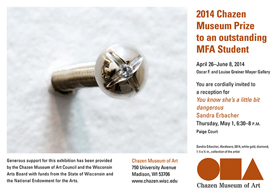
Sandra Erbacher, an MFA student at the University of Wisconsin, Madison, has accepted the 2014 Chazen Museum Prize, offered annually by the Chazen Museum of Art in collaboration with the University of Wisconsin’s Art Department.
Wayne Franits, professor of art history at Syracuse University in Syracuse, New York, has received a grant from the American Philosophical Society that will enable him to conduct research in London for his current project concerning Godfried Schalcken’s English period.
John Craig Freeman has been awarded an Art +Technology grant from the Los Angeles County Museum of Art in California. Freeman will draw on crowdsourcing, augmented reality, and electroencephalography (EEG) technology for a project titled Things We Have Lost.

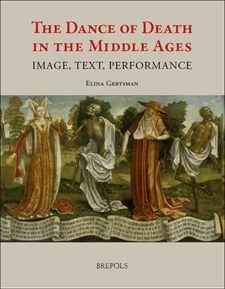
Elina Gertsman has won the 2014 John Nicholas Brown Prize from the Medieval Academy of America for her book, The Dance of Death in the Middle Ages: Image, Text, Performance (Turnhout, Belgium: Brepols, 2010). Established in 1978, the prize is awarded annually for a first book or monograph on a medieval subject judged by the selection committee to be of outstanding quality.
Christopher H. Hallett, professor and chair of the Department of History of Art at the University of California, Berkeley, has been selected as a 2014–15 Getty Scholar at the Getty Research Institute in Los Angeles, California. He will be in residence at the Getty Villa in Malibu from September to December 2014 to work on “The ‘Archaic Revival’ of Augustan Rome: Primitivism in the Art and Monuments of Rome, 30–20 BCE.”
Gregory Halpern, a photographer and assistant professor at the Rochester Institute of Technology in Rochester, New York, has earned a 2014 fellowship in photography from the John Simon Guggenheim Memorial Foundation.
Taro Hattori, an artist and lecturer based in San Francisco, California, has been awarded a 2014 residency from Omi International Arts Center, based in Ghent, New York.
Pablo Helguera, an artist and director of adult and academic education at the Museum of Modern Art in New York, has been named a 2014 ABOG Fellow for Socially Engaged Art by the Manhattan-based organization A Blade of Grass.

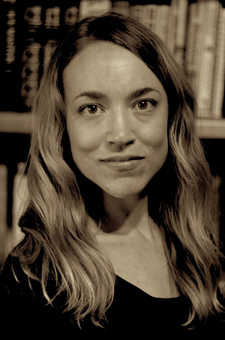 Jessica L. Horton
Jessica L. Horton has been recognized as a 2014–15 National Endowment for the Humanities Postdoctoral Fellow by the Getty Research Institute in Los Angeles, California. She will be in residence at the Smithsonian American Art Museum and the National Museum of the American Indian, both in Washington, DC, to work on “Global Histories of Native American Art” from September 2014 to July 2015.
Jeanette Kohl, associate professor of art history at the University of California, Riverside, has become a 2014–15 Getty Scholar. While at the Getty Research Institute in Los Angeles from September to December 2014, she will work on “Global Faces: Heteronomies and the Afterlife of Renaissance Portraiture.”
Jason Lazarus, an artist, curator, writer, and educator based in Chicago, Illinois, has received a 2014 grant from the Samuel I. Newhouse Foundation. As part of the award, he participated in the Wynn Newhouse Awards Exhibition this past spring.
Sean Villareal Leatherbury, a specialist in Roman, late antique, and Byzantine art and archaeology who earned a PhD from the University of Oxford in Oxford, England, has accepted a 2014–15 Postdoctoral Fellowship from the Getty Research Institute in Los Angeles, California. He will work on “The Arts of Votive Dedication from Rome to Byzantium” at the Getty Villa in Malibu from September 2014 to June 2015.
Julia Orell from the Section for East Asian Art History in the Department of Art History at the University of Zurich in Switzerland, has been named a 2014–15 Postdoctoral Fellow by the Getty Research Institute, based in Los Angeles, California. Her project, “Shifting the Boundaries of Art History: East Asian Art History in Germany, Austria, and Switzerland ca. 1840–1940,” will be worked on from September 2014 to June 2015.
John K. Papadopoulos, professor and chair of the Interdepartmental Archaeology Program at the University of California, Los Angeles, has been selected to be a 2014–15 Guest Scholar and Consortium Professor at the Getty Research Institute in Los Angeles, California, from January to June 2015. His research, currently taking the form of a project titled “The Archaeological Context of Value,” focuses on Aegean prehistory and Greek and Italian archaeology, as well as the history and culture of the Classical and later periods.

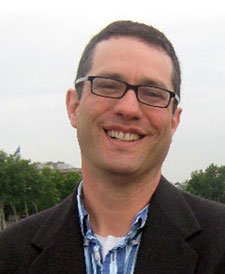 David Raskin
David Raskin, chair of Department of Sculpture and professor in the Department of Art History, Theory, and Criticism at the School of the Art Institute of Chicago in Illinois, has been appointed a fellow in the United States Study Centre at the University of Sydney in Australia for spring 2015.
Kristin E. Romberg, assistant professor in the Department of Art History at the University of Illinois, Urbana-Champaign, has been selected for a 2014–15 Postdoctoral Fellowship at the Getty Research Institute in Los Angeles, California. She will work on “Radical Constructivism: Aleksei Gan’s Grass-Roots Modernism” from September 2014 to June 2015.
Susan Sidlauskas, professor of art history at Rutgers University in New Brunswick, New Jersey, has been named a 2014 fellow in fine arts research by the John Simon Guggenheim Memorial Foundation.
Larry A. Silver, Farquhar Professor of Art History in the Department of the History of Art at the University of Pennsylvania in Philadelphia, has been appointed a 2014–15 Guest Scholar by the Getty Research Institute in Los Angeles, California. From January to June 2015, Silver will work on “Jewish Art as Marked.”
Joanna S. Smith, associate professional specialist in the Department of Art and Archaeology at Princeton University in Princeton, New Jersey, has become a 2014–15 Getty Scholar, thanks to the Getty Research Institute in Los Angeles, California. She will work on her project, “Seal Stratigraphies from Enkomi, Cyprus,” at the Getty Villa in Malibu from April to June 2015.
Jenni Sorkin, assistant professor of history of art and architecture at the University of California, Santa Barbara, has received a 2013–14 fellowship from the American Council of Learned Societies for her project, “Live Form: Women, Ceramics, and Community, 1945–1975.”
Allison Nicole Stielau, a PhD candidate in the Department of History of Art at Yale University in New Haven, Connecticut, has accepted a 2014–15 Predoctoral Fellowship from the Getty Research Institute in Los Angeles, California. She will research “The Unmaking of Metalwork in Early Modern Europe” while at the Getty from September 2014 to June 2015.
Kathleen Tahk, a graduate student in art history at Northwestern University in Evanston, Illinois, has earned a Mellon Fellowship for Dissertation Research in Original Sources from the Council on Library and Information Resources. Tahk’s project is called “A Revolution beyond Borders: The Soviet Art of the Latvian Rifleman, 1917–1938.”
Exhibitions Curated by CAA Members
posted Jun 15, 2014
Check out details on recent shows organized by CAA members who are also curators.
Exhibitions Curated by CAA Members is published every two months: in February, April, June, August, October, and December. To learn more about submitting a listing, please follow the instructions on the main Member News page.
June 2014
Mary Forbes. This Is the Life. Art Car Museum, Houston, Texas, March 15–June 8, 2014.

 Peter Demos, Untitled, 2014, acrylic on dyed canvas, 60 x 30 in. (artwork © Peter Demos)
Katarina Lanfranco. Elusive Abstraction. Rhombus Space, Brooklyn, New York, May 2–25, 2014.

 Don Fritz, Ground Zero, mixed media on paper, 36 x 24 in. (artwork © Don Fritz)
Katarina Lanfranco. Thought Bubbles. Rhombus Space, Brooklyn, New York, March 28–April 27, 2014.

 Future Buddha Maitreya Flanked by the Eighth Dalai Lama and His Tutor, Tibet, 1793–94. Norton Simon Art Foundation (artwork in the public domain)
Melody Rod-ari. In the Land of Snow: Buddhist Art of the Himalayas. Norton Simon Museum, Pasadena, California, March 28–August 25, 2014.
Books Published by CAA Members
posted Jun 15, 2014
Publishing a book is a major milestone for artists and scholars—browse a list of recent titles below.
Books Published by CAA Members appears every two months: in February, April, June, August, October, and December. To learn more about submitting a listing, please follow the instructions on the main Member News page.
June 2014

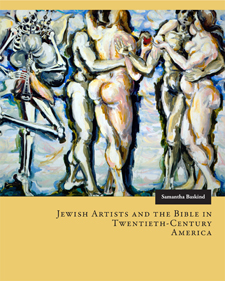
Samantha Baskind. Jewish Artists and the Bible in Twentieth-Century America (University Park: Pennsylvania State University Press, 2014).

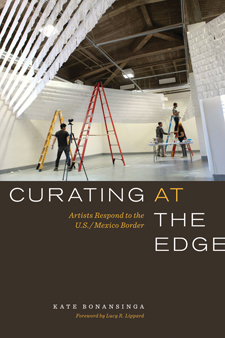
Kate Bonansinga. Curating at the Edge: Artists Respond to the U.S./Mexico Border (Austin: University of Texas Press, 2014).

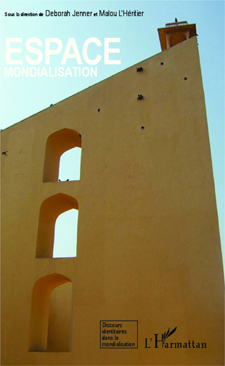
Deborah Jenner and Malou L’Héritier, eds. Espace mondialisation (Paris: l’Harmattan, 2013).

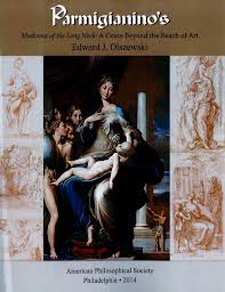
Edward J. Olszewski. Parmigiano’s “Madonna of the Long Neck”: A Grace beyond the Reach of Art (Philadelphia: American Philosophical Society, 2014).

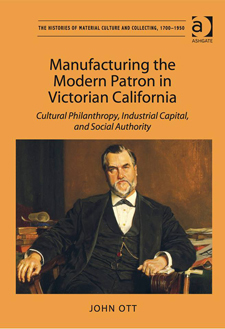
John Ott. Manufacturing the Modern Patron in Victorian California: Cultural Philanthropy, Industrial Capital, and Social Authority (Burlington, VT: Ashgate, 2014).

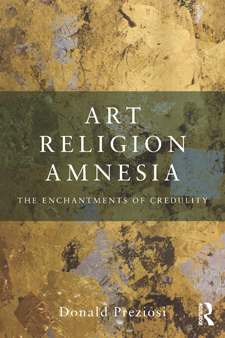
Donald Preziosi. Art, Religion, Amnesia: The Enchantments of Credulity (New York: Routledge, 2013).

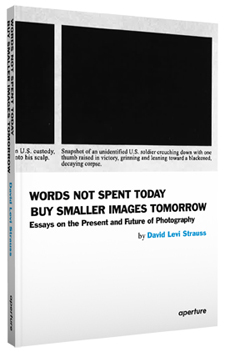
David Levi Strauss. Words Not Spent Today Buy Smaller Images Tomorrow: Essays on the Present and Future of Photography (New York: Aperture, 2014).
Jane Chu Confirmed as Chairman of the National Endowment for the Arts
posted Jun 12, 2014
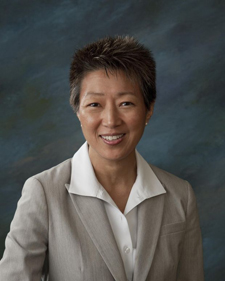 This afternoon, the United States Senate voted to confirm Jane Chu as the 11th chairman of the National Endowment for the Arts. The White House is expected to make the official appointment in the coming days and Chu will begin her appointment shortly thereafter.
Senior Deputy Chairman Joan Shigekawa has served as the agency’s acting chairman and executive since Rocco Landesman left the NEA in December 2012.
Jane Chu said, “I’m honored to receive the Senate’s vote of confirmation, and I look forward to serving our nation as chairman of the National Endowment for the Arts. Together, we have the opportunity to show the value of connecting the arts to all Americans, and the importance of the arts in bringing communities together.”
United States Senator Claire McCaskill (Mo.) said, “I have no doubt that Jane will make Missouri proud. She’s spent years enriching the culture and strengthening the business community in Kansas City, and I’m looking forward to seeing her bring that same leadership to the national stage.”
“I’m glad the Senate confirmed Dr. Chu’s nomination as chairman of the National Endowment for the Arts today,” said United States Senator Roy Blunt (Mo.). “I was impressed by her successful oversight of the more than $400 million Kauffman Center for the Performing Arts project and I enjoyed visiting with her in Kansas City several weeks ago. I have no doubt Dr. Chu will serve as a valuable asset to the NEA.”
Jane Chu will be available for media interviews following her appointment and arrival at the NEA. Those interested in scheduling an interview should send an email to publicaffairs@arts.gov or call 202-682-5570.
Please join the conversation and offer your congratulations to Jane Chu with #NEAJaneChu.
About Jane Chu
Since 2006, Jane Chu served as the president and CEO of the Kauffman Center for the Performing Arts in Kansas City, Missouri, overseeing a $413-million campaign to build the center. As the performance home of the Kansas City Ballet, Kansas City Symphony, and Lyric Opera of Kansas City, the Kauffman Center has hosted more than one million people from all 50 states and countries throughout the world since its grand opening in September 2011.
She was a fund executive at the Kauffman Fund for Kansas City from 2004 to 2006, and vice president of external relations for Union Station Kansas City from 2002 to 2004. Previously, she was vice president of community investment for the Greater Kansas City Community Foundation from 1997 to 2002. Chu also served as a trustee at William Jewell College and on the board of directors of the Ewing Marion Kauffman School and the Greater Kansas City Chamber of Commerce.
Chu was born in Shawnee, Oklahoma, but was raised in Arkadelphia, Arkansas, the daughter of Chinese immigrants. She studied music growing up, eventually receiving bachelor’s degrees in piano performance and music education from Ouachita Baptist University and master’s degrees in music and piano pedagogy from Southern Methodist University. Additionally, Chu holds a master’s degree in business administration from Rockhurst University and a PhD in philanthropic studies from Indiana University, as well as an honorary doctorate in music from the University of Missouri-Kansas City Conservatory of Music and Dance.
News from the Art and Academic Worlds
posted Jun 11, 2014
Each week CAA News publishes summaries of eight articles, published around the web, that CAA members may find interesting and useful in their professional and creative lives.
Ten of the Most Influential MFA Programs in the World
Artspace Magazine has tallied up the top ten master of fine arts programs in the world. While they may not be the cheapest avenues into the art world, these are, without a doubt, the top-ranked MFA programs for art students looking to add a gold star to the top of their CVs—and to build a ladder into the gallery sphere. Of course, there’s no “silver bullet” for instant postgraduate success. But there are certain programs that tend to spark the interest of curators, critics, and collectors alike. (Read more from Artspace Magazine.)
A Community of Artists: Radical Pedagogy at CalArts, 1969–72
A painter, a composer, a drama scholar, two directors, and two radical social scientists sat down at a table in 1969 to plot the future of the California Institute of the Arts. These were CalArts’ first administrators, and the challenge before them—and before the faculty they’d recruited for each of their departments or “schools” of art, film, theater/dance, music, design, and critical studies—was to actualize Walt Disney’s vision of bringing all of the arts together in one institution of higher learning, resulting in “a kind of cross-pollination that [would] bring out the best in its students.” (Read more from East of Borneo.)
Five-Year Plan
Criticizing humanities doctoral programs is easy. They take too long, they continue to emphasize training for tenure-track faculty positions in an era when such positions are scarce, they encourage the book model of dissertation at a time when books are hard to publish, even full funding isn’t always “full”—the list goes on. Solving the PhD predicament is much harder, but that’s what the Modern Language Association is attempting to do, or at least start to do, in a new report. (Read more from Inside Higher Ed.)
Are Lectures on the Way Out? Harvard Professor Proposes a Better Way to Teach
A teacher standing lecturing before a group of students is a form of human interaction that stretches back at least a millennium and a half. The roles are clear: the teacher with the knowledge tells the students who lack it everything they need to know. The teacher projects, the students absorb. The teacher speaks, the students listen. But just because it’s been that way for a long time doesn’t mean it’s the best way to teach. (Read more from Radio Boston.)
The Case for Banning Laptops in the Classroom
A colleague of mine in the Department of Computer Science at Dartmouth College recently sent an email to all of us on the faculty. The subject line read: “Ban computers in the classroom?” The note that followed was one sentence long: “I finally saw the light today and propose we ban the use of laptops in class.” While the sentiment in my colleague’s email was familiar, the source was surprising: it came from someone teaching a programming class, where computers are absolutely integral to learning and teaching. Surprise turned to something approaching shock when, in successive emails, I saw that his opinion was shared by many others in the department. (Read more from the New Yorker.)
New Legislation Would Protect Art Authenticators against “Nuisance” Lawsuits
Following decisions by the Keith Haring Foundation, the Pollock-Krasner Foundation, and the estates of Pablo Picasso and Jean-Michel Basquiat to disband their authentication boards, the New York State legislature has introduced a bill to make lawsuits against art authenticators more difficult to win and to punish “nuisance” lawsuits. (Read more from Gallerist.)
The Case for Old-Fashioned Connoisseurship
Suddenly, connoisseurship seems to matter again. It always mattered to me personally, as someone who earns a living sniffing out misattributed pictures. But now interest is growing on a wider level and, amazingly, even among academic art historians. I’m asked to speak about it often, most recently at a conference at the Paul Mellon Centre in London. The pendulum is at last swinging away from the “authorship doesn’t matter” brigade. (Read more from the Art Newspaper.)
We Don’t Need the “New” Connoisseurs
There has lately been some dark talk in certain corners of the British art world about a crisis in connoisseurship and the need to revive traditional scholarship. The debate at the Paul Mellon Centre last month was, I imagine, intended to expose such murmurings to greater scrutiny and test their merits and demerits in a reasoned and open way. (Read more from the Art Newspaper.)
Why Connoisseurship Matters
I recently went to speak at a Paul Mellon Centre conference on connoisseurship, called “Connoisseurship Now.” I was asked to be polemical—not usually a problem for me—and was paired in a session with Tate Britain’s lead curator for British art pre-1800, Martin Myrone, which was good fun, as I like him, and he’s decidedly skeptical about the point of connoisseurship, and even more so about those who practice it. (Read more from Art History News.)
CAA Receives Getty Foundation Grant to Foster Collaboration and Diversity through Travel
posted Jun 11, 2014
CAA has received a grant from the Getty Foundation to fund the CAA-Getty International Program for the fourth consecutive year. The Foundation’s support will enable CAA to bring fifteen international visual-arts professionals to the 103rd Annual Conference, taking place February 11–14, 2015, in New York City.
The CAA-Getty International Program provides funds for travel expenses, hotel accommodations, per diems, conference registrations, and one-year CAA memberships to art historians, artists who teach art history, and museum curators. The program will include a one-day preconference colloquium on international issues in art history on February 10, at which grant recipients will present and discuss their common professional interests and issues.
The goal of the International Program is to increase international participation in CAA, to diversify the organization’s membership, and to foster collaborations between American art historians, artists, and curators and their international colleagues. CAA also strives to familiarize international participants with the submission process for conference sessions to encourage ongoing involvement with the association. As they did in previous years, members of CAA’s International Committee have agreed to host the program participants at the 2015 conference in New York City.
Grant guidelines and the 2015 application can be found on the CAA website at www.collegeart.org/CAA-GettyInternationalProgram. Only professionals who have not attended a CAA conference previously, and who are from countries underrepresented in CAA’s membership are eligible to apply. Applicants do not need to be CAA members. This grant program is not open to graduate students or to those participating in the 2015 conference as chairs, speakers, or discussants. The deadline for applications is August 18, 2014.
Historically, the majority of international registrants to CAA’s Annual Conferences have come from North America (United States, Canada, and Mexico), the United Kingdom, and Western European countries. In the first three years of the CAA-Getty International Program, CAA has added sixty attendees from Central and Eastern Europe, Russia, Africa, Asia, Southeast Asia, Caribbean countries, and South America. As this alumni group grows, so too does international participation in CAA. Former grant recipients have become ambassadors of CAA in their countries, sharing knowledge gained at the Annual Conference with their colleagues and encouraging them to submit applications to the international travel grant program. A number of scholarly collaborations have also ensued among grant recipients and CAA members.
A 2014 grant recipient from Pakistan, Kanwal Khalid, exemplified the experiences of program participants when she wrote: “CAA 2014 was an event that has changed me. Now I’m more confident about my research and teaching methodology because the comparison was a great way of improving my own system. I’m so very much looking forward to attending the conference next year. After returning to Pakistan, I have been able to communicate to my students about the potential and scope of this organization and encourage them to become members. This will give them an exposure to a world of dedicated art historians, enthusiastic academicians, and talented artists, with opportunities all around for those who have the judgment and ability to take advantage of it.”
About CAA
The College Art Association is dedicated to providing professional services and resources for artists, art historians, and students in the visual arts. CAA serves as an advocate and a resource for individuals and institutions nationally and internationally by offering forums to discuss the latest developments in the visual arts and art history through its Annual Conference, publications, exhibitions, website, and other programs, services, and events. CAA focuses on a wide range of advocacy issues, including education in the arts, freedom of expression, intellectual-property rights, cultural heritage and preservation, workforce topics in universities and museums, and access to networked information technologies. Representing its members’ professional needs since 1911, CAA is committed to the highest professional and ethical standards of scholarship, creativity, criticism, and teaching.
For information on applying to the CAA-Getty International Program, please contact project director Janet Landay at jlanday@collegeart.org or 212-392-4420.
Committee on Women in the Arts Picks for June 2014
posted Jun 10, 2014
Each month, CAA’s Committee on Women in the Arts selects the best in feminist art and scholarship. The following exhibitions and events should not be missed. Check the archive of CWA Picks at the bottom of the page, as several museum and gallery shows listed in previous months may still be on view or touring.
June 2014
Swoon: Submerged Motherlands
Brooklyn Museum
Iris and B. Gerald Cantor Gallery, Fifth Floor, 200 Eastern Parkway, Brooklyn, NY 11238
April 11–August 24, 2014
Submerged Motherlands, a solo exhibition by the Brooklyn-based artist Swoon, is a collaborative inhabitable shelter that explores social and environmental issues. Born in Florida in 1977 as Caledonia Dance Curry, Swoon is best known for her large, intricate linocut prints that are wheat pasted onto industrial buildings in Brooklyn and Manhattan. In this occasion Swoon leaves the streets to appropriate the Brooklyn Museum as a temporary home for transforming the rotunda gallery into a “submerged motherland,” an inhabitable installation that includes previous traveling boats and rafts, figurative prints, drawings, and painting, dyed fabrics, and cut-paper foliage that grew around a monumental sculptural tree.
Swoon’s practice is rooted in collaboration, community, experimentation, and discovery. From conceptualization through production, her practice means an immersive, provocative, and transformative experience for both participants and visitors. She has translated her projects to both galleries and museums, but also to socially rooted arts activism in places such as Konbit Shelter Project in Haiti and Transformazium in Braddock, Pennsylvania, among others.
A meditation on humanity, climate change, and the artist’s own mother passing away during the ideation stage for the installation, Submerged Motherlands reflects on the notion of home—and the loss of it. In the artists’ words, the creative process of this inhabitable installation follows an “impulse to build a safe space in the world for herself and her community; some place to be a little bit different from the norm.” Swoon’s fantastic installation transformed the Iris and B. Gerald Cantor Rotunda Gallery in a temporary and yet memorable shelter for many.
Judith Shea
Kent Fine Art
210 Eleventh Avenue, Second Floor, New York, NY 10001
May 9–June 28, 2014
Judith Shea’s solo exhibition is a sculptural homage to the role of women in the arts. For decades, Shea studied the representation of the human figure through a constant observation of people and the exploration of materials. In absence or presence of the body, from her late 1970s clothes-based series to the present sculptures that honors the role of women in the arts, powerful human emotions are evident in Shea’s work.
Shea reflects on the origin of her sculptural approach to the human form to different and yet meaningful experiences of her educational upbringing. Being raised as a Catholic, she was a constant witness of the representation of religious statues in church. While being trained as a ballet dancer as a child, she grew connected with her own body.
Graduated with a fashion-design degree from Parsons in 1969, Shea continues pursuing her interests in visual art, earning her BFA at Parsons in 1975. Based on “her own style”—as titled the successful exhibition she curated on women self-portraits at National Academy Museum in 2012—“the artist who makes clothes” was invited to collaborate with Trisha Brown and the Eye and Ear Theater Company—working with artists such as Red Grooms and Elizabeth Murray.
At Kent Fine Arts, Shea presents seven new sculptures that pay tribute to the role of women in the arts. Through these sculptural portraits, Shea demonstrates her unique sense of observation and virtuosity with materials. A fully illustrated monograph documenting Shea’s work from 1976 to the present accompanies the exhibition.
Nalini Malani: Transgressions
Asia Society and Museum
725 Park Avenue, New York, NY 10021
February 19–August 3, 2014
Transgressions is a solo exhibition by Nalini Malani. Born in Karachi in 1946, Malani is considered one of the foremost artists from India today. Her work is influenced by her experiences as a refugee of the Partition of India in 1947. Trained as a painter at the Sir Jamsetjee Jeejebhoy School of Art in Mumbai, Malani has created work gradually evolved toward new media and international collaboration, expanding the pictorial surface into the surrounding environment, such as ephemeral wall drawing, installation, shadow play, and theater. In the 1980s, she became a pioneer in India for her attention to feminist issues. In the early 1990s, her innovative theater, installations, and multimedia projects featured recurring themes on gender, memory, race, and transnational politics, especially in reference to India’s postcolonial history after independence and partition.
Her current exhibition at the Asia Society and Museum includes Trangressions II (2009), a video that draws from the museum’s collection, exploring the nuances of Western postcolonial dominance in India, integrating the folk sensibility of traditional shadow plays with new technology. Using projections through transparent Lexan cylinders, painted by the artist in a fashion that references the nineteenth- and early-twentieth-century Bengal Kalighat style and inspired by the genre of reverse glass painting, brought to the subcontinent in the eighteenth century by the Chinese, Malani examines the power dynamics of transnational commerce in our increasingly globalized world. Through a mesmerizing projection of colors and imagery inspired by Edward Said’s book Orientalism, an ever-shifting tableau including wrathful female deity, boxers, and animals is accompanied by a recording of a poem written by the artist. The exhibition includes a selection of artist’s books that highlight the relevance of drawing and painting in Malani’s practice.
Zilia Sánchez: Heróicas Eróticas en Nueva York
Galerie Lelong
528 West 26th Street, New York, NY 10001
May 3–June 21, 2014
Heróicas Eróticas en Nueva York, Zilia Sánchez’s first solo exhibition at Galerie Lelong, offers a delightful opportunity to experience masterpieces of sensuous and haptic minimalism, while timely questioning the canonic premises of Minimalism as being reconstituted at the Jewish Museum. Spanning fifty years of her production, including recent works such as the monumental diptych Conversation (from the Eros and Communication series), the exhibition brings together “paintings” rarely seen outside Puerto Rico, made in the artist’s signature technique of stretching canvas over hand-molded wooden armatures—often in modular configurations or reworked as parts of ongoing series—that was developed during the period she lived in New York (1964–72). Heroically erotic, Sánchez’s curvy and soft minimalist hybrid objects “queer” hard-edge minimalism differently evoking the body in a manner that does not adhere to fixed categories of gender.
Born in Cuba in 1926, Sánchez studied at the Escuela Nacional de Bellas Artes San Alejandro and became associated with the group Sociedad Cultural Nuestro Tiempo. Under the influence of Victor Manuel, she developed her own modernist approach to formal abstraction through paintings and drawings, while also designing furniture and theater sets (especially for the anti-Batista guerilla theater group Los Yesistas). Several grants allowed her to travel in Europe, and in 1964 she settled in New York, where she first begun experimenting with shaped canvases. In 1972, Sánchez moved to Puerto Rico, where she became inspirational through her teaching at the Escuela de Artes Plásticas de Puerto Rico. From 1972 to 1975 she designed the influential experimental literary journal Zona de Carga y Descarga, while in the 1980s she renewed her signature style by including line drawing or drawing transfer of semaphores and sign language on her canvases.
Sharon Lockhart: Milena, Milena
Bonniers Konsthall
Torsgatan 19
SE-11390, Stockholm, Sweden
April 16–June 29, 2014
Bonniers Konsthall hosts the second iteration of the exhibition trilogy Sharon Lockhart: Milena Milena that begun in Warsaw in 2013 at the Center for Contemporary Art and will be concluded in Switzerland in 2015 at the Kunstmuseum Luzern. This exhibition is the first large-scale survey of the work of the renowned American photographer and filmmaker in Scandinavia, where Lockhart has been particularly influential. Drawing inspiration from filmmaking and documentary photography, as well as from ethnography and anthropology, she has distinguished herself since the 1990s for her fascinating portrayals of individuals and communities, and a minimalist attention to the everyday, the subjective, and the human.
As a cross-sectional presentation of both her photographic and filmic work in the past twenty years, the exhibition explores the middle ground between the filmic and the photographic that is inhabited by her meticulously staged photographs and almost still films, emphasizing the relationship they both maintain to time and space, while also claiming the biographical dimension of her work. As such, the exhibition opens with the cinematic Double Tide (2009)—filmed in Maine, where Lockhart spent her childhood—and concludes with the rarely exhibited series Untitled Studies (1993–ongoing), Lockhart’s photographic diary, composed of rephotographed snapshots found in her own family album.
At the center of the exhibition’s narrative is Milena, an enigmatic figure who remains disquietly absent, distilling different threads of identification in her very nonpresence. Lockhart first met Milena when nine years old in 2009 in Łódź, Poland, while filming Podwórka, also a centerpiece of the exhibition. Literally translated as “courtyard” from Polish, Podwórka displays six different courtyards in Łódź and the children that live and play there. Lockhart and Milena developed a friendship through the act of play. Upon the rekindling of their friendship when staging the show for Warsaw, Lockhart discovered Milena’s desire to write an autobiography about her life, which provided the impetus through which the two have explored artistic expression together. The exhibition at Bonniers Konsthall features a specially commissioned, monumental stained-glass portrait of the Polish master glass painter Piotr Ostrowski as a personal and culturally specific tribute.
Kalliopi Lemos: I Am I Between Worlds and Between Shadows
Ioakimion School for Girls
Fener, Istanbul
September 11, 2013–December 14, 2014
Curated by Beral Madra as a parallel event of the thirteenth Istanbul Biennale but now extended to December 2014, I Am I Between Worlds and Between Shadows is a major site-specific installation of new work by the London-based Greek artist Kalliopi Lemos. A painter, sculptor, and installation artist, Lemos has become internationally known for a series of public installations that make poignant commentaries about the hopes and tragedies that underpin illegal migration by using the abandoned relics of successful or failed illegal migration typical of the Aegean coasts—small wooden boats (such as Crossing, Eleusis, Greece [2006/9]; Round Voyage, Istanbul [2007]; At Crossroads, Brandenburg Gate, Berlin [2009]; and Pledges for a Safe Passage, Canakkale, Turkey [2012]). Complementing Lemos’s concern with the dispossessed from a transnational feminist perspective that links the injustices against the racial, classed, and religious underdogs of global capital—best represented by the illegal migrant—with those against the gendered others of patriarchal societies—women—I Am I Between Worlds and Between Shadows tackles the issue of violence against women in a poetic, multidisciplinary, and site-specific way.
I Am I Between Worlds and Between Shadows consists of a series of seven sculptures depicting variously violated hybrid creatures, a sound installation, and a constantly renewed archive of women’s abuse, comprised of world news print outs, all evocatively installed in the abandoned yet intact rooms of the Ioakimion Greek High School for Girls. A gem of the once booming Greek Orthodox minority in Fener, the latter was founded in nineteenth century but closed in the 1980s when its attendance dropped to six students. The sound collage of joyful schoolchildren playing and singing affectively evokes the lively atmosphere of the past of the school as a breeding ground of dreams for the girls who attended it. Yet the injustices awaiting women, even in Western societies, are hinted by the evocations of gendered violation and sacrifice embedded in the Greek folk songs and international fairy tales narrated by children (also part of the sound installation), echoing the monstrosity of contemporary actuality that marks the news’ readings of the absent schoolgirls with transcultural staples of patriarchal myth. Hung from a butcher’s hook, on crutches or on gigantic prosthetic devices or confined by rails—and more often than not mutilated, amputated, and violently dismembered—these sculptural bodies most poignantly hint at various kinds of bodily, psychic, and gendered abuse, both through their imaginative bodily articulations and their manner of installation. Masterfully cast in stonelike steel with embedded resin, these half-animal, half-human creatures evoke familiar mythological and Surrealist creatures that suggestively cut across a wide spectrum of cultural and artistic references. Melancholically posed in the place of the teacher, the beheaded mermaid, the multibreasted hung rabbit, and the decapitated hen with the splayed vulva hovering on crutches, for instance, become protagonists of a tale from a children’s book that keeps going wrong in the world of the adults, raising awareness of all kinds of abuse that, whether explicitly or implicitly, threatens not only the egalitarian realization of women in various societies, but also their unencumbered expression of difference, and above all their human dignity. A two-faced chicken, clumsily balancing on two bases—itself a metaphor of unstable youth, according to the artist—looms also as an evocative stand-in for liminal creatures of exile. With its gaze fixed here and there, it aids the artist by bringing in full circle her concerns by perhaps planting a metaphor for the modern transnational, subject—forced migrant or cosmopolitan—and its vulnerability in the heart of a charged site of convoluted transcultural and imperial histories—an abandoned stronghold of Greek and Christian culture in Istanbul in the era of globalization and yet renewed and bloody nationalisms and religious fundamentalisms that, like all kinds of violence, make children and women their primary victims.
Kara Walker: A Subtlety
Domino Sugar Factory
316 Kent Avenue, Brooklyn, NY 11249
May 10–July 6, 2014
Commissioned by Creative Time as a public-art farewell to a loaded site—the Domino Sugar Factory—where American industrial capitalism, consumerism, and racism have variously intersected and will be perhaps redefined through its upcoming neoliberal gentrification, Kara Walker’s A Subtlety is a both moving and canning, sugar-coated, monumental memorial to chief confectioners of the American Dream, black slaves and laborers, as well as the artist’s first large scale sculptural public work. The subtitle of the work tellingly summarizes its poignant agenda: Marvelous Sugar Baby, an Homage to the unpaid and overworked Artisans who have refined our Sweet tastes from the cane fields to the Kitchens of the New World on the Occasion of the demolition of the Domino Sugar Refining Plan.
A Subtlety comprises a gigantic sphinx whose hybrid body combines cliché apparitions of the black woman as domestic slave and sex object and a series of black boys cast in molasses. The latter are cast after contemporary giftware made in China but reference the original “subtleties”: sugar-made, edible sculptures and dinner emblems of power and wealth that decorated the tables of Middle Eastern sultans and European nobility.
“In Greek mythology the sphinx is a guardian of the city, a devourer of heroes and the possessor of a riddle that maybe can’t be answered,” says the artist, explaining its conception: “the factory is a modern-day ruin, and I think the sphinx contains the various readings of history that the place represents.” Exchanging her signature black for the site-specific whiteness of sugar, a material central to the slave trade and in effect of the American way, Walker has thus unsubtly “refined” the black body of her mighty benign monster, mixing references to the labor of sugar production and trade and white’s classical and sanctifying purity, in effect both honoring black bodies’ unsung contribution to Western pleasures while foregrounding the lasting whiteness of power in America. Moreover half a century after Niki de Saint Phalle’s Hon in the Moderna Museet in Stockholm, the temporary gigantic Nana that exorcised the riddles surrounding the female body, Sugar Baby toys with them yet also from the radical, even though controversial, perspective of a woman of color: “she’s a woman, a bootylicious figure with something paradoxical about her pose. She’s both a supplicant and an emblem of power. From the front, she seems to hold her ground. But what you see from behind is what happens when a nude woman bends over, raising a question of whether it’s a gesture of sexual passivity or not.”
As put by the project’s curator, Nato Thompson, A Subtlety speaks “of power, race, bodies, women, sexuality, slavery, sugar refining, sugar consumption, wealth inequity, and industrial might that uses the human body to get what it needs no matter the cost to life and limb. Looming over a plant whose entire history was one of sweetening tastes and aggregating wealth, of refining sweetness from dark to white, she stands mute, a riddle so wrapped up in the history of power and its sensual appeal that one can only stare stupefied, unable to answer.”
News from the Art and Academic Worlds
posted Jun 04, 2014
Each week CAA News publishes summaries of eight articles, published around the web, that CAA members may find interesting and useful in their professional and creative lives.
New Appraisal of Detroit Institute Art Collection Is Underway
Officials handling Detroit’s federal bankruptcy proceedings, who have been accused by creditors in recent months of underestimating the value of works held by the city-owned Detroit Institute of Arts, told a judge last week that a comprehensive appraisal of the value of the collection is now underway. (Read more from the New York Times).
Can We Create a Culture That Values Good Teaching?
How do you change academic culture? One reason that question gets asked a lot is that it’s so hard to answer. Another reason is that so much of academic culture needs changing. How might we create a culture that actually esteems effective teaching? The value of such a thing ought to be clear, if only because it would blunt some of the frequent public criticisms of universities for a too-narrow focus on research. But creating a teaching culture hasn’t proved so easy. (Read more from the Chronicle of Higher Education).
The Story behind the Yams’ Whitney Biennial Protest
I am on record as supporting the Yams collective’s decision to quit the Whitney Biennial. The art world clearly has a problem of institutionalized racism: it is shockingly white. When a group of dozens of African American artists pull out of an important art show, it is important to listen even if—or especially if—that conversation is difficult. The cause of the Yams exodus, as originally reported, was their objection to a work by Joe Scanlan, a white male artist who creates artwork in the guise of a fictional black female artist, Donelle Woolford. (Read more from Artnet News).
How to Restore a Rothko (without Ruining a Rothko)
In the 1980s, the art conservator Raymond Lafontaine developed a new way to preserve paintings: he used light from slide projects to augment works that had faded. The technique came from “thinking about color perception,” Jens Stenger, a former conservation scientist in Harvard’s Straus Center for Conservation and Technical Studies, explains. “In human color perception you have a light source, a surface, and a viewer, and the three interact. If you can’t change the surface, you can change the light source to change the color.” (Read more from the Atlantic).
Faculty Salaries Are Not the Problem
I’ve been deeply gratified lately to see increasing noise in the media about administrative salaries—and particularly presidential salaries—in higher education. What is coming to light now is what many faculty have known for years: universities don’t have more overhead these days because of growth in the faculty ranks, but because of explosive growth of administrations and administrator salaries. Given their spending priorities, it seems like these new administrative behemoths are badly out of step with the mission and purpose of the university—at the expense of those most vital to the university’s existence: faculty and students. (Read more from the Adjunct Project).
Nazi-Era Auction Catalogues Published Online
The annotated catalogues of the Nazi-era auction house Weinmüller were released online on the database lostart.de. The ninety-three volumes detail the sales made between 1936 and 1945 by Adolf Weinmüller, whose auction house flourished during the Second World War thanks to the forced sale of Jewish collectors’ personal property and the liquidation of Jewish art dealerships. The annotations in the catalogues include the names of consigners and buyers as well as the prices paid for the works. (Read more from the Art Newspaper).
Why Drawing Needs to Be a Curriculum Essential
Drawing has seen something of a renaissance in the last twenty years in the United Kingdom. From the Campaign for Drawing to the Drawing Research Network, and from the Drawing Room to the Rabley Drawing Centre, we’ve witnessed a proliferation of passion, effort, and energy matched by increased museum exhibitions, dedicated degree courses, professors, publications, and conferences. All of the above have been established in pursuit of understanding, developing, and promoting drawing, and many inside and outside the sector endure to evidence drawing as the most sophisticated means of thinking and communicating as well as an activity for everyone. (Read more from the Guardian).
On Screen and on the Block
Is digital art the next big thing in the contemporary art world? At the moment, the market for art that’s created and displayed on a screen—as distinct from paintings, prints, and photos that are generated digitally and then printed—is small. Phillips’s inaugural “Paddles ON!” sale of twenty digital and digitally related works in New York last October, held in association with the image-posting site Tumblr, was the first such event to be held at an international auction house. (Read more from the New York Times).
News from the Art and Academic Worlds
posted May 28, 2014
Each week CAA News publishes summaries of eight articles, published around the web, that CAA members may find interesting and useful in their professional and creative lives.
By Paying Artists Nothing, We Risk Severing the Pipeline of UK Talent
Contrary to public expectation, but not the experience of many in the sector, most galleries in the United Kingdom do not pay exhibiting artists. In the past three years, 71 percent of artists didn’t get a fee for contributions to publicly funded exhibitions. And this culture of nonpayment is actually stopping artists from accepting offers from galleries, with 63 percent forced to reject gallery offers because they can’t afford to work for nothing. (Read more from the Guardian.)
Looking beyond the Tenured
An interesting dilemma lies ahead: where will all the academic administrators come from? Historically most administrators in academic affairs—whether they be department chairs, program directors, deans, or provosts—have come from the ranks of tenured faculty. But with faculty increasingly being contingent and off the tenure track (70 percent), there has not been much consideration of where administrators within academic affairs will come from. (Read more from Inside Higher Ed.)
Let’s All Stop Worrying about Grade Inflation
This month, all over the country, thousands upon thousands of college instructors are losing sleep over grade inflation. They’ve worked hard all semester to make their students better thinkers and writers with a wider base of knowledge. They’ve done their level best to assess their students’ performance in class fairly and accurately. They’ve devoted many hours to choosing the most appropriate assessment criteria for the their classes’ objectives. And yet, staring at a long list of As, A-minuses, and B-pluses, these otherwise confident and self-assured teachers feel real guilt at adding to what is surely the scourge of American education. (Read more from Vitae.)
“Empathetically Correct” Is the New Politically Correct
When I was attending graduate school in the late 1980s and early 1990s, political correctness reigned supreme. Lassoing the powers of language, literature, and the law, the movement dubbed PC initially worked toward the good goal of greater inclusiveness for marginalized communities. Eventually, it morphed into a tyranny of speech codes, sensitivity training, and book banning. But it seems political correctness is being replaced by a new trend—one that might be called “empathetic correctness.” (Read more from the Atlantic.)
Prehistoric Hunting Scenes Unearthed in Spanish Cave
A series of hunting scenes dating from seven thousand years ago have been found by archaeologists on the six-meter long wall of a small cave in the region of Vilafranca in Castellón, eastern Spain—but it is being kept a secret for now. A layer of dust and dirt covered ten figures, including bulls, two archers, and a goat. The murals were exposed to harsh weather, but the paintings pigments have not seriously deteriorated. (Read more from the Art Newspaper.)
Impressionists with Benefits? The Painting Partnership of Degas and Cassatt
In her novel I Always Loved You, Robin Oliveira imagines a passionate scene between Edgar Degas—a French artist known for his paintings of dancers—and Mary Cassatt—an American painter known for her scenes of family life. The kiss in the novel is pure fiction, but then again, “nobody knows what goes on in their neighbor’s house, let alone what happened between two artists 130 years ago,” the author says. (Read more from National Public Radio.)
Glasgow School of Art Archivists Begin Fire Salvage Effort
Specialist archivists from the Glasgow School of Art have begun the operation to conserve items damaged by the fire that ripped through the Charles Rennie Mackintosh building in the city center last week. The salvage effort will also retrieve the work of students who were preparing for their final-year degree show in the building at the time of the fire, which is believed to have started in the basement. (Read more from the Guardian.)
Faculty Refuse to See Themselves as Workers. Why?
Many academics, especially those in the tenure track, just resist seeing themselves as laborers. Academics, even many adjuncts, continue to think they belong to a loosely meritocratic system in which the best work rises to the top, peer review remains the optimal way to judge the quality of work, and if you work hard enough, you’ll be fine. (Read more from Vitae.)
Independent and Part-Time Faculty Memberships
posted May 21, 2014
Last month CAA restructured its membership program and added exciting new benefits, including: online access to The Art Bulletin and Art Journal; online access to additional journals in the Taylor & Francis collection; and access to JPASS, JSTOR’s expansive selection of more than 1,500 journals, at a 50 percent discount. As part of this restructuring, CAA included a new category for Part-Time Faculty among its discounted memberships. And now, based on thoughtful feedback CAA received from supportive members, we have expanded this category to include “Independents” to help support independent artists, scholars, designers, and the like.
The creation of these new membership categories is part of CAA’s response to changing conditions in the workplace for many professionals in the visual arts. CAA is committed to supporting part-time, non-tenure-track faculty, and those in transition, who receive limited institutional support, as well as independent professionals with no institutional affiliation.
Visit the Individual Membership section of the CAA website to learn more about all the new categories.