
CAA News Today
Gift Giving That Supports CAA
posted Nov 30, 2011
For over one hundred years, CAA has served the needs of a diverse community of professionals and students in the visual arts. You can contribute to the organization’s invaluable work this holiday season by purchasing a gift membership or by making a year-end, tax-deductible gift. Here are several gift-giving options:
- Buy an annual Gift Membership for a friend or colleague
- Purchase a Gift Registration to CAA’s 100th Annual Conference in Los Angeles, February 22–25, 2012
- Contribute to CAA’s Centennial Campaign or Publications Fund in honor of friends, colleagues, or family members. Gifts are prominently acknowledged in each publication and online; donations are 100 percent tax deductible
- Collect one of four Artists’ Projects, which are CAA signed, limited editions, available at a special price individually or as a complete set
- To purchase a gift membership or conference registration, please contact Member Services at 212-691-1051, ext. 1. To purchase an honorary gift or Artists’ Projects, please contact Hannah O’Reilly Malyn at 212-392-4435.
Your generosity will go a long way for both the recipient of your gift and for CAA. Thank you for your consideration and your ongoing support. Best wishes for a happy holiday season!
NEA Chairman Rocco Landesman Is Convocation Speaker
posted Nov 29, 2011
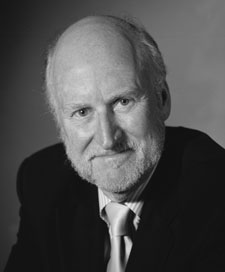 Rocco Landesman, chairman of the National Endowment for the Arts (NEA) since 2009, will deliver the keynote address at Convocation during CAA’s 100th Annual Conference and Centennial Celebration. Convocation takes place on Wednesday evening, February 22, 2012, at the Los Angeles Convention Center, West Hall Meeting Room 502AB, Level 2. Scheduled from 5:30 to 7:00 PM, Convocation also includes a welcome from Linda Downs; CAA executive director, an address from Barbara Nesin, president of the CAA Board of Directors; remarks from Susan Hildreth of the Institute of Museum and Library Services; and the presentation of the CAA Centennial Awards.
Born and raised in Saint Louis, Missouri, Landesman pursued his undergraduate education at Colby College and the University of Wisconsin, Madison, before earning a doctorate in dramatic literature at the Yale School of Drama. After completing his coursework, he stayed at the school for four years, working as an assistant professor.
Landesman’s ensuing career has been a hybrid of commercial and artistic enterprises. He left Yale in 1977 to start a private investment fund, which he ran until his appointment ten years later as president of Jujamcyn, a company that owns and operates five Broadway theaters. Before and after joining Jujamcyn, He produced Broadway shows, the most notable of which are Big River, Angels in America: Millenium Approaches, Angels in America: Perestroika, and The Producers, all of which won Tony Awards. In 2005, he purchased Jujamcyn and operated it until President Barack Obama announced his intention to nominate him to lead the NEA. The United States Senate confirmed Landesman as the tenth NEA chairman on August 7, 2009.
Landesman has been active on numerous boards, including the Municipal Arts Society, the Times Square Alliance, the Actor’s Fund, and the Educational Foundation of America. He has also vigorously engaged the ongoing debate about arts policy, speaking at forums and writing numerous articles, focusing mainly on the relationship between the commercial and nonprofit sectors of the American theater. Over the years, he returned to the Yale School of Drama and the Yale Repertory Theatre to teach.
Join the 2012 Nominating Committee
posted Nov 28, 2011
CAA invites you to help shape the future of the organization by serving on the 2012 Nominating Committee. Each year, this committee nominates and interviews potential candidates for the CAA Board of Directors and selects the final slate for the membership’s vote. The candidates for the 2012–16 board election will be announced in early December 2011.
The current Nominating Committee will choose the new members of its own committee at its business meeting, to be held at the 2012 Annual Conference in Los Angeles in February. Once selected, all committee members must propose, in the spring, a minimum of five and a maximum of ten people for the board. Service on the committee also involves conducting telephone interviews with candidates during the summer and meeting in September 2012 to select the final board slate. Finally, all Nominating Committee members attend their business meeting, at the New York conference in 2013, to select that year’s committee.
Nominations and self-nominations should include a brief statement of interest and a two-page CV. Please send all materials to: Maria Ann Conelli, Vice President for Committees, c/o Vanessa Jalet, College Art Association, 50 Broadway, 21st Floor, New York, NY 10004. Materials may also be sent as Microsoft Word attachments to Vanessa Jalet. Deadline: January 9, 2012.
December 2011 Issue of The Art Bulletin
posted Nov 22, 2011
 The December 2011 issue of The Art Bulletin, the leading publication of international art-historical scholarship, features essays on the portraiture of nuns in colonial Mexico, the sociological context of Katsushika Hokusai’s famous print Under the Wave off Kanagawa, and Federico Zuccari’s painting The Encounter of Christ and Veronica on the Way to Calvary.
The December issue publishes four essays on diverse topics. For “Inventing the Exegetical Stained-Glass Window,” Conrad Rudolph studies the reintroduction of allegory in an art program established by Abbot Suger in the twelfth century for St-Denis in France, finding that it culminated in the construction of a new elite art for the literate layperson. In “Ancient Prototypes Reinstated,” Livia Stoenescu demonstrates the self-conscious medievialism in Zuccari’s painting The Encounter of Christ and Veronica on the Way to Calvary (1594) and the artist’s intention of inscribing its narrative within a Christocentric image. In “Clad in Flowers: Indigenous Arts and Knowledge in Colonial Mexican Convents,” James M. Córdova examines the flowery trappings depicted in seventeenth- and eighteenth-century portraits of nuns in New Spain. For her essay, Christine M. E. Guth explores the sociocultural context of Hokusai’s Under the Wave off Kanagawa (ca. 1830–33) to reveal it as a site for Japan’s shifting geopolitical circumstances between the 1790s and the 1860s.
In the Reviews section, two writers consider three books on the history of Asian art. Douglas Osto explores Buddhist visual culture through Andy Rotman’s Thus Have I Seen: Visualizing Faith in Early Indian Buddhism and Cynthea J. Bogel’s With a Single Glance: Buddhist Icon and Early Mikkyō Vison, and Melanie Trede evaluates Alicia Volk’s In Pursuit of Universalism: Yorozu Tetsugorō and Japanese Modern Art. Bissera V. Pentcheva considers acoustics and architecture in Deborah Howard and Laura Moretti’s Sound and Space in Renaissance Venice: Architecture, Music, Acoustics, while Étienne P. H. Jollet reviews Frank Fehrenbach’s study of Roman Baroque fountains, Compendia Mundi: Gianlorenzo Berninis “Fontana dei Quattro Fiumi” (1648–51) und Nicola Salvis “Fontana di Trevi” (1732–62). Gregory Batchen offers a take on national histories of photography through two recent books: Maria Golia’s Photography and Egypt and Karen Strassler’s Refracted Visions: Popular Photography and National Modernity in Java.
Please see the full table of contents for December to learn more. CAA sends The Art Bulletin to all institutional members and to those individuals who choose to receive the journal as a benefit of their membership.
The next issue of The Art Bulletin, to be published in March 2012, will include essays on the Zen monk painter Sesshū Tōyō, the art of Henri Fuseli, the “biography” of a statute sculpted in or near the Lagoon region of Ivory Coast. The issue also inaugurates a new feature, “Regarding Art and Art History,” comprising field notes on the topic of anthropomorphism by various authors and a critical essay on the interview format, followed by a conversation between Hans Ulrich Obrist and Philip Ursprung.
FIELD REPORT
posted Nov 16, 2011
Notes on the Panel “The Reluctant Doctorate: PhD Programs for Artists?”
Debates about PhD programs for artists should be welcomed, the artist and educator Ellen K. Levy declared, as a way of addressing several pressing professional considerations that artists face in academia. To help advance the discussion, she moderated a panel called “The Reluctant Doctorate: PhD Programs for Artists?” and hosted by the School of Visual Arts in New York. Held on November 3, 2011, “The Reluctant Doctorate” was not organized to debate the pros and cons of such programs, though the participants did bring up several of each. Instead, the event focused on how such programs can expand opportunities for artists, from the intellectual advantages of philosophical explorations of their own work (and that of others) to the practical concerns of academic status.
Levy, who is completing doctoral work on the art and neuroscience of attention at Z-Node in Zurich, Switzerland, in collaboration with the University of Plymouth in England, spoke first. She believes that the development of PhD programs in the visual arts is inevitable. She also noted the recent discussions at the CAA Annual Conference on the topic, such as an Education Committee session in New York earlier this year and an upcoming panel at the 2012 conference in Los Angeles, as evidence of increasing urgency to validate the academic credentials of the artist’s doctorate. Levy cited CAA’s MFA Standards, last revised in 2008, noting that the organization continues to endorse the MFA as the terminal degree for artists. As to whether the MFA should retain this status, she said that a change will likely be decided not by a vote but by the momentum that PhD programs in the United States for studio artists might gather in forming a critical mass. Other panelists concurred.
Levy clearly stated that an artist does not need a PhD to make art, nor is a PhD program appropriate for many artists. For some—and here she included herself—advanced study has offered numerous benefits. Because of their art, some practitioners have been able to develop special skills and gain access to expertise and to equipment that grants cannot cover. Another benefit is the validation of artists’ writings.
George Smith, founder and president of the Institute for Doctoral Studies in the Visual Arts, based in Portland, Maine, described his program as a philosophy degree that does not challenge the MFA. Students carry out research and write dissertations on a broad spectrum of philosophical concerns that inform contemporary art.
Mary Anne Staniszewski, a cultural historian and associate professor at Rensselaer Polytechnic Institute in Troy, New York, described the ten-year process of developing the PhD program in the Department of the Arts at her school, which provides artists with similarly broad academic resources enjoyed by students in other fields. She compared the development of the PhD in music, established in 1945, and how many other institutions now offer doctoral degrees in music composition and practice in addition to history and theory. Staniszewski also addressed the degree’s practical advantages to artists. She recalled a study carried out in 1972 in which 59 percent of artists with MFAs who wanted to apply for the position of dean, or for comparable jobs in higher administrative, were barred from doing so because they lacked a doctorate. She believes that the PhD will bring greater heft as artists move into important decision-making positions in the academy.
Ute Meta Bauer described her European academic history at the New Bauhaus (now the Institute of Design at the Illinois Institute of Technology in Chicago) and at the University of Vienna in Austria, where she taught before becoming an associate professor and head of the Program in Art, Culture, and Technology in the School of Architecture and Planning at the Massachusetts Institute of Technology in Cambridge. Since academies in Europe perceive the arts and artists more positively, the need for PhD programs to help advance artists’ careers has not been pressing. Artists are free to take postgraduate courses, and the academy supports an interdisciplinary approach reaching into many fields as well as the practical application of artistic production. Another major difference between American and European institutions for artists is the price of education: European students pay little for their undergraduate degrees, but tuition increases dramatically for graduate school. The opposite, Bauer noted, can be true in the US. She views MFA coursework as leading to a PhD, with the curriculum for each being complementary, not necessarily in competition.
Tim Gilman-Sevcik characterized the PhD program at the European Graduate School in Switzerland, where he is a doctoral candidate, as the most inexpensive and expansive program he could find. The goal of the PhD there, he explained, is to be a catalyst for creative work. The dissertation is a philosophical thesis that adds to the intellectual disorientation, risk, and eventual potency of an artist’s future work. At the same time, this research is a discourse based in text and situated in extensive research, as opposed to a studio practice.
After the presentation, Levy engaged the panelists in a Q&A, asking “What are the most valuable reasons for artists to pursue a PhD?” Smith responded by saying that a doctoral program provides a rigorous study of philosophy, sharpens the eye and mind, and eventually contributes to the visual dynamism of the arts in the US. Staniszewski underscored the value of artists collaborating with scholars in diverse fields and providing an alternative to the drive to create work for galleries and the market. Bauer countered with her own question, “Why not? Why wouldn’t artists want to pursue research and have the opportunity to expand their investigations in an academic setting?” Gilman-Sevcik agreed that programs for artists expand the limited opportunities currently available to artists: teaching in the academy, showing in galleries, or designing practical applications.
Levy posed two more questions to the panelists: “Does an artist perusing a PhD need the MFA? What will the PhD do to the status of the MFA?” Smith asserted that no MFA is required for the PhD at IDSVA, since his program offers a degree in philosophy. The other speakers, though, confirmed that the MFA is a precondition for all other PhD programs for artists.
The panelists dispelled the concern that artists generally have less ability to carry out research and write. While the speakers acknowledged that the MFA has fewer research and writing requirements than other master’s level graduate programs in the visual arts, they indicated that PhD programs provide just that opportunity, for artists to better develop these skills.
The last question from Levy was, “What utility is given to the institution with a PhD program for artists?” Staniszewski emphasized the value of the PhD to reposition the visual arts as a valuable intellectual endeavor. In the past few years, some groups have promoted the economic impact and service function of the arts to gain higher esteem by the public and governmental entities. She also claimed that the PhD in the visual arts will restore academic and public standing without placing art in service to the economy or commercial design. Bauer stressed the relatively small size of PhD programs in the US and abroad, in which the average number of admissions is one student at a time. The panelists generally agreed that the PhD program was not for everyone, but those who wish to enroll in one and are qualified to do so should be given the chance to pursue this degree. Institutions that offer PhDs are highly selective in admitting students and have an obligation to help to place them in positions once students complete the degree.
Committee on Women in the Arts Picks for November 2011
posted Nov 10, 2011
Each month, CAA’s Committee on Women in the Arts selects the best in feminist art and scholarship. The following exhibitions and events should not be missed. Check the archive of CWA Picks at the bottom of the page, as several museum and gallery shows listed in previous months may still be on view or touring.
November 2011

Patti Smith, Walt Whitman’s Tomb, Camden, NJ, 2007, unique Polaroid, 4¼ x 3¼ in. (artwork © Patti Smith; photograph provided by the artist, Robert Miller Gallery, and the Wadsworth Atheneum)
Patti Smith: Camera Solo
Wadsworth Atheneum Museum of Art
600 Main Street, Hartford, CT 06103
October 21, 2011–February 19, 2012
With seventy photographs, one multimedia installation, and a video, Patti Smith: Camera Solo is the largest presentation of this artist, poet, and performer’s visual work in the United States in nearly ten years. The exhibition highlights the connection between Smith’s photography and her interest in poetry and literature. Actual objects that appear in the many black-and-white Polaroids will also be on view.
Patti Smith: 9.11 Babelogue
Bertha and Karl Leubsdorf Art Gallery
Hunter College, City University of New York, East 68th Street at Lexington Avenue, New York, NY 10065
September 8–December 3, 2011
Mounted in conjunction with the tenth anniversary of the destruction of the World Trade Center, Patti Smith: 9.11 Babelogue comprises twenty-six works on paper created between 2001 and 2002 as a response to the tragic event in New York. Organized by Michelle Yun, curator of the Hunter College Art Galleries, the exhibition is the first presentation of the entire series.
Second Annual Feminist Art History Conference
Katzen Arts Center
American University, 4400 Massachusetts Avenue NW, Washington, DC 20016
November 4–6, 2011
Following the success of last year’s inaugural event, the Art History Program in the Department of Art at American University has organized the second annual Feminist Art History Conference. Speakers in twelve sessions will deliver fifty-one papers that span a broad range of topics and time periods, from the medieval era to contemporary art. The presentations will also demonstrate the ways in which feminist research and interpretation have spread across the spectrum of art-historical analysis and scholarship. In her keynote address, Mary D. Sheriff, a distinguished professor of art history at the University of North Carolina in Chapel Hill who specializes in eighteenth and nineteenth-century French art and culture, will speak on “The Future of Feminist Art History: Where Have We Come From, Where Are We Going?” The conference is free and open to the public; online registration (by October 28) is recommended.

Francesca Woodman, Untitled, New York, 1979–80, chromogenic print, 3⅜ x 3½ in. (photograph © George and Betty Woodman)
Francesca Woodman
San Francisco Museum of Modern Art
151 Third Street, San Francisco, CA 94103
November 5, 2011–February 20, 2012
This survey of works by the photographer Francesca Woodman, known for her black-and-white self-portraits from the late 1970s, is the first in more than two decades and comes thirty years after her death at age twenty-two. Organized by Corey Keller, associate curator of photography at the San Francisco Museum of Modern Art, the exhibition includes prints, artist’s books, and videos.
Sherrie Levine: Mayhem
Whitney Museum of American Art
945 Madison Avenue, New York, NY 10021
November 10, 2011–January 29, 2012
Sherrie Levine has been the subject of much critical discourse for the past thirty years. This exhibition, developed as a project by the artist, includes works ranging from her well-known 1981 photograph, After Walker Evans: 1-22, to recently created objects, such as Crystal Skull: 1-12, from 2010. Levine and the curators—Johanna Burton, Elisabeth Sussman, and Carrie Springer—will juxtapose old and new works in order to provoke fresh associations and responses.
Affiliated Society News for November 2011
posted Nov 09, 2011
American Institute for Conservation
The American Institute for Conservation Collections Emergency Response Team (AIC-CERT) has begun receiving calls for assistance from those affected by Hurricane Irene. The team’s efforts follow several years of specially trained members responding to local and national emergencies across the United States. In partnership with the Smithsonian Institution and the US Committee of the Blue Shield, AIC-CERT and other AIC members have been working in Haiti over the past year and a half to help preserve art damaged by the January 2010 earthquake—AIC’s first international response effort. If you know of institutions in need of advice or onsite assistance following a disaster—with collections affected by everything from a broken water pipe to roof damage—encourage them to contact AIC-CERT at its twenty-four-hour assistance line, 202-661-8068.
Art Historians Interested in Pedagogy and Technology
Art Historians Interested in Pedagogy and Technology (AHPT) is sponsoring two workshops in the near future. The first event, taking place on November 9, 2011, at the annual meeting of the Southeastern College Art Conference in Savannah, Georgia, is called “Reflections on Where We Are and Where We Are Going with Technology in the Art History Classroom,” chaired by Marjorie Och of the University of Mary Washington. The second workshop, titled “Constructive Use of Technology in the Art History Classroom: A Hands-on Learning Workshop” and led by Sarah Scott of Wagner College, is scheduled for the 2012 CAA Annual Conference in Los Angeles, California. The workshop format will allow attendees to circulate among the presenters during the session or concentrate on one topic. Please bring your questions and ideas.
AHPT also announces its new website, with membership information, announcements, and resources.
Association of Art Historians

The Association of Art Historians (AAH) formed in England in 1974, born from a need to professionalize a rapidly growing subject. What prompted its formation? How did it take shape? What of its impact on the discipline, nationally and internationally, both then and now? Voices in Art History: AAH Oral Histories explores these questions through a series of audio interviews conducted with art historians involved with the organization during its early days. Participants include Francis Ames-Lewis, Charles Avery, Alan Bowness, Andrew Causey, Luke Herrmann, Martin Kemp, John Onians, Marcia Pointon, Flavia Swann, Lisa Tickner, and John White. The audio interviews offer commentary on the changing nature of higher education, and on art and culture since the 1950s. They address the interviewees’ educational background and professional lives, while reflecting on scholarly influences, debates, and practical concerns that had an impact on networks of academic art historians, educators and museum professionals. The complete recordings are accessible to researchers through the Archive of Art and Design at the Victoria and Albert Museum in London, where the organization’s written records are held. The interviews form the basis of the Voices in Art History podcast, currently in development. For further details, please write to oralhistory@aah.org.uk.
Association of Historians of American Art
The Association of Historians of American Art (AHAA) is offering a travel grant covering expenses (up to $500) for an ABD student of historical art of the United States who is participating in the 2012 CAA Annual Conference in Los Angeles. The recipient must be an active AHAA member enrolled in a graduate program. To enter, please submit the name of the session you plan to participate in and your paper title to Melissa Dabakis, AHAA secretary, using the online form. Deadline: February 1, 2012.
AHAA seeks to sponsor a one-and-a-half hour professional session at the 2013 CAA Annual Conference, taking place in New York. Please review the guidelines for submitting proposals. Deadline: March 1, 2012.
Coalition of Women in the Arts Organization
The Coalition of Women in the Arts Organization (CWAO) seeks proposals of papers for “Eco-Feminist Issues in the Arts of US Women,” a combination studio-art and art-history panel, for CAA’s 2013 Annual Conference in New York. CWAO encourages women artists interested in ecological or ecofeminist issues to apply for this panel. Art-historian presenters must concentrate on US women artists engaging these issues. Artists could be experimenting with one or more ecological and social issues while also innovating in their mediums and techniques; works may include one or more new-media technologies. Please send your current CV, an abstract of your paper (150 words max), JPEGs of works, and/or your website address showing works representative of the proposal to kyrabelan@hotmail.com; or mail your CD to: Kyra Belan, PO Box 275, Matlacha, FL 33993.
Historians of Netherlandish Art
The Historians of Netherlandish Art (HNA) has received a generous donation from the Paul and Anne van Buren Fund of the Maine Community Foundation. The grant was awarded in memory of Anne Hagopian van Buren (1927–2008), an internationally recognized scholar of medieval art and a founding member of HNA. Her husband, the noted theologian Paul van Buren, died in 1998. The funds will be used to support HNA’s Fellowships for Scholarly Research, Publication, and Travel, and for related activities of the organization.
Historians of Islamic Art Association

The Historians of Islamic Art Association (HIAA) is sponsoring two sessions that pay tribute to the late art historian Oleg Grabar (1929–2011) at the annual meeting of the Middle East Studies Association, to be held December 2–3, 2011, in Washington, DC.
In addition, the HIAA board and members congratulate their colleagues in the Department of Islamic Art at the Metropolitan Museum of Art in New York on the reopening of the museum’s splendid new galleries for Art of the Arab Lands, Turkey, Iran, Central Asia, and Later South Asia.
International Association of Art Critics

Marek Bartelik, president of the United States chapter of the International Association of Art Critics (AICA-USA), delivered the keynote speech during the forty-fourth AICA International Congress, which took place October 17–20, 2011, in Asunción, Paraguay. The theme of the congress was “Art and Criticism in Times of Crisis.” During the event, the Cuban artist Tania Bruguera presented AICA International’s first Distinguished Critics Prize to Ticio Escobar, a former president of AICA Paraguay and the current minister of culture in that country. Participants on a postcongress trip traveled to Curitiba and Porto Alegre, Brazil, during the following week, October 21–26. The group visited the Curitiba and Mercosul biennials and toured the Iberê Camargo Foundation.
International Sculpture Center
The International Sculpture Center (ISC) will hold its twenty-third International Sculpture Conference, titled “Process, Patron, and Public,” in Chicago, Illinois, from October 4 to 6, 2012. This culturally vibrant city will be the perfect backdrop for ISC’s multifaceted biannual event, which brings together artists, administrators, students, collectors, and sculpture lovers for three days of education, conversation, and networking. Conference highlights will include an exciting array of keynotes, panels, workshops, and optional evening networking events throughout the city. The Chicago Cultural Center and the School of the Art Institute of Chicago will host programs by day; attendees may enjoy gallery hops, studio visits, and cocktail receptions by night. For more information, tickets, and the schedule, please visit ISC’s website or contact the Conference and Events Department at 608-689-1051, ext. 302.
Italian Art Society
The Italian Art Society (IAS) seeks papers for the third annual IAS–Kress Lecture Series, taking place in Venice, Italy, in late May or early June 2012. This series enthusiastically promotes intellectual exchanges between art historians of North America and the international community of scholars living or working in Italy. Papers should present a topic related to the host city from any period. One distinguished scholar, necessarily an active IAS member, will receive an honorarium of $700 and an additional $500 allowance for travel and other conference-related expenses. Deadline: January 4, 2012.
IAS also welcomes exhibition reviews, short articles, and announcements related to Italian art and architecture for its winter newsletter. Please send your contributions to the newsletter editor. Deadline: January 15, 2011.
Mid-America College Art Association
The James Pearson Duffy Department of Art and Art History at Wayne State University will host the next Mid-America College Art Association conference, to be held October 3–6, 2012, in downtown Detroit, Michigan. Programming will include three featured speakers and numerous panels on art, design, art history, and visual resources, as well as studio workshops, MACAA member exhibitions, and museum visits. The conference will have two areas: “Meaning and Making” and “Community and Collaboration.” The call for session proposals, and for the MACAA membership exhibition, has been announced online.
National Council of Arts Administrators

The 2011 annual meeting of the National Council of Arts Administrators (NCAA), called “Push/Pull: The Artistic Engine of Innovation,” will convene November 2–5, 2011, at the AVIA Hotel in Savannah, Georgia. The conference will spotlight current trends in arts administration; offer forums, speakers, and workshops; and create opportunities to network within a diverse community of arts professionals in higher education. You can expect top-notch speakers, timely and forward-looking sessions, an engaging administrators’ workshop, and much more. As always, NCAA gladly welcomes all current and/or aspiring academic leaders to attend. The annual meeting brings together a community of arts administrators dedicated to cultivating leadership and sharing solutions across higher education. For nearly forty years NCAA has promoted, enhanced, and maximized communication among administrators from all types of arts institutions to support each member in becoming better prepared to lead, more skilled and strategic at managing resources, knowledgeable about current practices, and adaptable, flexible, and connected.
Society for Photographic Education

The Society for Photographic Education (SPE) seeks curators, professors, gallerists, art historians, and scholars to review student and/or professional member portfolios at SPE’s forty-ninth annual conference in San Francisco, California, taking place March 22–25, 2012. Portfolio reviewers receive discounted admission in exchange for their participation. To express interest in serving as a portfolio viewer, please write to info@spenational.org.
Society of Architectural Historians
The Humanities, Arts, Science, and Technology Collaboratory (HASTAC) recently published an article, “Learned Society 2.0,” by Dianne Harris, president of the Society of Architectural Historians (SAH). Her article reflects on fundamental changes in SAH that resulted from Mellon Foundation funding to develop two online academic resources: JSAH Online, a multimedia scholarly journal; and SAHARA, a shared, member-contributed online image archive for teaching and research. SAH continues to strategize about how to empower its members to produce innovative humanities research, publications, and nontraditional projects in the digital age.
Society of North American Goldsmiths

The forty-first annual conference of the Society of North American Goldsmiths (SNAG), titled “The Heat is On!” will be held May 23–26, 2012, in Phoenix, Arizona. Hosted by Arizona Designer Craftsmen, the event will take place at the Westin Kierland Resort and Spa Registration in Scottsdale. Registration will open on January 17, 2012. The conference cochairs are Becky McDonah, Tedd McDonah, and Lynette Andreasen.
Southeastern College Arts Conference
The Southeastern College Arts Conference (SECAC) will hold its sixty-eighth annual meeting October 18–20, 2012, hosted by Meredith College in Durham, North Carolina. Headquartered at the Durham Marriott City Center, in the heart of historic city, the conference will feature extensive sessions and panels facilitating the exchange of ideas and concerns relevant to the practice and study of art. Activities will include the annual awards luncheon, the SECAC 2012 Juried Exhibition, and a rich array of tours, workshops, and evening events. The deadline for the call for sessions and panels is January 1, 2012. For more information, please write to secac@secollegeart.org or secac2012@meredith.edu.
Visual Resources Association

It was a pleasure to return this past June to the beautiful University of New Mexico campus in Albuquerque for the Summer Educational Institute 2011 (SEI), sponsored by the Art Libraries Society of North America (ARLIS/NA) and the Visual Resources Association Foundation (VRAF). The local chair, Cindy Abel Morris, graciously hosted a diverse group of participants from museums, colleges and universities, research institutes, commercial enterprises, and art and design schools for an intense three-day program. In response to feedback from SEI 2010 participants and in concert with the SEI Implementation Team, newly appointed curriculum specialists Sarah Falls and Beth Wodnick developed a comprehensive program that for the first time included tracked, hands-on sessions on beginning and advanced digitization. Participants were placed in one or the other course depending on their level of experience. Modules that have been well received in the past, such as the intellectual property and metadata sessions, were also offered. The next SEI will be held in June 2012 at the University of Michigan in Ann Arbor. Information about SEI 2012 is forthcoming.
Members of the 2011 SEI Implementation Team included: Kathe Hicks Albrecht, American University, VRA senior cochair and acting VRAF board liaison; Elizabeth Schaub, University of Texas at Austin, ARLIS/NA junior cochair; Betha Whitlow, Washington University in Saint Louis, incoming VRA cochair and faculty liaison; Cindy Abel Morris, University of New Mexico, local chair; Sarah Falls, New York School of Interior Design, ARLIS/NA-appointed curriculum specialist; Chris Hilker, University of Arkansas, webmaster; Trudy Jacoby, Princeton University, development; Tony White, Indiana University, ARLIS/NA board liaison (Sarah Carter, Ringling Museum of Art, as of March 2011); Beth Wodnick, Princeton University, VRAF-appointed curriculum specialist.
Recent Deaths in the Arts
posted Nov 09, 2011
In its semimonthly roundup of obituaries, CAA recognizes the lives and achievements of the following artists, scholars, curators, collectors, and other men and women whose work has had a significant impact on the visual arts. Of special note is a text from Patricia Mainardi on Filiz Burhan for CAA.
- Julie Apap, a ceramicist who lived, worked, and taught art in Malta, died on March 16, 2011. She was 62 years old
- Martha Brincklow, the founder of the International Studies Program at Saint Petersburg College in Florida who led students on tours of the Louvre, the Sistine Chapel, and Tate Gallery, died on January 14, 2011. She was 95
- Filiz Burhan, a long-time professor of art history at the American University in Paris whose work opened new directions in the study of Symbolism, died on May 23, 2011, at 60 years of age. Patricia Mainardi has written a special text on her for CAA
- Robert Fluhr, an artist who taught for thirty years in the Philadelphian high schools and led sculpture classes for the blind and visually impaired at the Allens Lane Art Center, died on June 20, 2011. He was 84
- Hoda Garnett, an Egyptian-born news photographer who began her career in the US Navy in the 1950s and whose work appeared in Life magazine, died on October 13, 2011. She was 84 years old
- Beatrice Gersh, an arts patron in Los Angeles who was instrumental in founding the Museum of Contemporary Art in her city, died on October 9, 2011, at age 87
- Frank B. Gettings, who spent thirty years as a curator at the Hirshhorn Museum and Sculpture Garden in Washington, DC, died on August 4, 2011. He was 80 years old
- Shifra Goldman, a political activist and a pioneering scholar of Latin American and Chicano art who taught for twenty years in southern Californian institutions, died on September 11, 2011. She was 85
- Addie James, a folk artist based in North Carolina who created colorful paintings of family life in the South, died on July 17, 2011. She was 67
- Szeto Keung, a Chinese American artist based in New York who showed his mixed-media work extensively in Taiwan and Hong Kong, died on September 5, 2011. He was 62
- Friedrich Kittler, a German media theorist who taught internationally, most recently at the European Graduate School in Switzerland, died on October 18, 2011, at age 68
- Mathieu Lefèvre, a Canadian artist who lived and worked in Brooklyn, died on October 18, 2011. He was 30
- Robert Loughlin, an artist and scavenger who advised collectors in modern design and furniture, including Andy Warhol, died on September 27, 2011. He was 62 years old
- Ruth Mellinkoff, a historian of medieval art and an author of cookbooks, died on Febuary 26, 2011. She was 86 years old
- James More, a Scottish design-studio manager and an emeritus professor of design at Northumbria University in England, died on September 27, 2011, at age 65
- William Mostyn-Owen, an artist historian who specialized in the Italian Renaissance and served as Bernard Berenson’s bibliographer, died on May 2, 2011. He was 81 years old
- Sadamasa Motonaga, a Japanese painter who began his career in the Gutai movement, died on October 3, 2011. He was 88
- Werner Muensterberger, a psychoanalyst, art historian, and collector of African art, died on March 6, 2011. He had reached the age of 98
- John Neuhart, an American designer who taught at the University of California, Los Angeles, and who, with his wife Marilyn, was a colleague of Ray and Charles Eames, died on September 19, 2011. He was 82
- Malcolm H. Preston, an art critic and historian who taught for many years at Hofstra University, died on July 10, 2011, at age 91. He was also a figurative and landscape painter
- Richard Randell, a sculptor and filmmaker who taught art at Stanford University, died on May 25, 2011, at the age of 81. He also helped found the World of Languages, which preserved and studied disappearing Kenyan and Tanzanian song, poetry, and dance
- Jehangir Sabavala, a pioneering artist in postcolonial India whose work was always at odds with popular contemporaneous styles, died on September 2, 2011. He was 89
- Pamela Hemenway Simpson, a historian of art and architecture at Washington and Lee University who served as president of the Southeastern College Art Conference, died on October 4, 2011, at the age of 65
- Bernard Smith, a renowned Australian intellectual and author whose academic leadership helped form the discipline of art history in his country, died on September 2, 2011. He was 94 years old
- Ronald Thomason, a Texan sculptor, designer, and teacher, died on August 4, 2011, on his 80th birthday
- Jacques Vilain, a French curator at the Musée Rodin in Paris who later became its director, died on September 23, 2011
- Richard DeLos Wells, a professor of art, art history, and American studies at Brigham Young University in Hawai‘i, died on July 26, 2011, at the age of 63
Read all past obituaries in the arts in CAA News, which include special texts written for CAA. Please send links to published obituaries to Christopher Howard, CAA managing editor, for the December listing.
Anne Collins Goodyear Is CAA President Elect
posted Nov 08, 2011
 Anne Collins Goodyear, associate curator of prints and drawings at the National Portrait Gallery, Smithsonian Institution, has been elected president of the CAA Board of Directors for a two-year term, beginning May 2012. A member of the board since 2006, Goodyear has served as vice president for external affairs (2007–9), vice president for publications (2009–11) and vice president for Annual Conference (2011–12). She succeeds Barbara Nesin of the Art Institute of Atlanta, who has led the board since May 2010.
Goodyear writes, “CAA sets a standard for professional excellence and best practices that is not only enjoyed by our membership, but which resonates far beyond. In an era of increasing financial constraints and expanding channels for outreach, the association must continue to aspire to balancing nimbleness with the reflection that goes along with responsible judgment. These are challenges I would enjoy addressing in tandem with CAA staff, fellow board members, and the membership at large.”
Goodyear began work at the National Portrait Gallery in Washington, DC, in 2001 and was promoted from assistant to associate curator in 2009. Her recent exhibitions include Inventing Marcel Duchamp: The Dynamics of Portraiture, organized with James W. McManus (2009), and Reflections/Refractions: Self-Portraiture in the Twentieth Century, collaborating with Wendy Wick Reaves (2009). Both exhibitions were accompanied by scholarly catalogues of the same title. Goodyear has also helped organize six installations for the museum’s ongoing Portraiture Now series, initiated in 2006. Additionally, she has taught a graduate seminar in American art at George Washington University since 2008.
Goodyear earned her MA and PhD in art history from the University of Texas at Austin, after receiving a BA in the history of art and architecture and French civilization at Brown University in Providence, Rhode Island. She has published essays in the scholarly journals American Art and Leonardo and contributed chapters to several exhibition catalogues and edited volumes, including Unexpected Reflections (2010), The Political Economy of Art: Creating the Modern Nation of Culture (2008), Cold War Modern: Art and Design in a Divided World (2008), and Photography Theory (2007).
Within CAA, Goodyear served on the Museum Committee, chaired the Education Committee, and participated on the Task Force on Practical Publications, the Task Force on Editorial Safeguards, the Strategic Plan Steering Committee, and the Centennial Task Force, among other groups. Equally active outside the organization, she has chaired the Washington, DC, chapter of ArtTable since 2010 and currently leads the Smithsonian Network Review Committee, which oversees programming for the institution’s documentaries and other videos. As chair of the Smithsonian’s Material Culture Forum, she facilitated interdisciplinary programing for scholars in the nation’s capital.
Goodyear continues, “I have been a member of CAA since my years as a graduate student. During that time, I had the opportunity to see firsthand John Clarke’s clear passion for and enjoyment of his service on the CAA board and his role as president. Dr. Clarke’s enthusiasm for CAA touched each of the students with whom he worked. I would ultimately seek to bring a similar level of engagement and commitment to the role of president, and would seek to inspire future leaders to become further engaged with the organization to render it as adaptive and responsive as possible to the diverse emerging needs of emerging and established professionals in the visual arts.”
The CAA board chooses its next president from among the elected directors in the fall of the current president’s final year of service, providing a period in which the next president can learn the responsibilities of the office and prepare for his or her term. For more information on CAA and the Board of Directors, please contact Vanessa Jalet, CAA executive assistant.
A full report on the October board meeting is forthcoming later this month.
CAA Welcomes New Staff Members
posted Nov 07, 2011
CAA warmly welcomes three full-time and one part-time employees who have joined CAA since summer 2011. Two new staffers work in the Publications Department, and two more in the Membership, Development, and Marketing Department.
Hannah O’Reilly Malyn became CAA development associate, a new position, in October. Previously, she assisted the development and marketing associate at Hester Street Collaborative while completing her master’s degree in visual arts administration at New York University, where her thesis explored the advent of populist audience development tactics in art museums. Before attending NYU, she earned a dual BA in economics/business and studio art from Kalamazoo College in Michigan. As an artist, Malyn is mostly interested in the human form; her undergraduate senior solo exhibition, Re-Conceptions: Women in Art, explored the role of women in the art world through a series of watercolor figure studies. She also works in oil and charcoal.
Nancy Nguyen is CAA’s new institutional membership assistant, where she is the primary contact for all institutional members. She succeeds Helen Bayer, who was promoted to marketing and communications associate. Nguyen recently graduated from the University of Texas at Austin with a BA in history. Prior to joining CAA in October, she worked at the Museum of Modern Art in New York as a visitor assistant. During her undergraduate career, she was the public programs assistant at the Harry Ransom Center while interning in the departments of marketing and public relations at several Austin museums and arts organizations, such as the Jack S. Blanton Museum of Art, Arthouse at the Jones Center, Mexic-Arte Museum, and Landmarks Public Art Program.
Joining CAA as editorial assistant is Alyssa Pavley, who graduated with a BA from New York University this past May, majoring in art history with a minor in creative writing, concentrating in fiction. Before coming to CAA in August, Pavley served as an intern at two magazines, Art in America and Art + Auction, and at the Judd Foundation and Nicole Klagsbrun Gallery, all in New York. Her writings and reviews have been published at thefanzine.com and Artinfo.com and in Art + Auction.
Erika Nelson has been directories data collections coordinator since June, succeeding Cecilia Juan, who departed in the spring. Nelson earned a BA in art history and communication at the College of Saint Benedict in Saint Joseph, Minnesota, and will receive her MA in art history from Brooklyn College, City University of New York, in February. Her thesis, “You Are What You Eat: Catholic Cannibalism and Cultural Consumption in the Codex Espangliensis.” examines the influence of both martyrs and Mickey Mouse on contemporary Mexican society. Nelson hopes to pursue her PhD in modern Latin American art in the coming year. Previously, Nelson perfected her data-entry skills through positions at Fordham University and Mutualart.com and developed her communication skills through a teaching assistantship at Brooklyn College and an internship at the Hill Museum and Manuscript Library in Collegeville, Minnesota.