
CAA News Today
Mentors Needed for Los Angeles Conference
posted Nov 25, 2008
Participating as a mentor in CAA’s two Career Services mentoring programs—the Artists’ Portfolio Review and Career Development Mentoring—is an excellent way to serve the field while assisting the professional growth of the next generation of artists and scholars.
Artists’ Portfolio Review
CAA seeks curators and critics to participate in the Artists’ Portfolio Review during the 2009 Annual Conference in Los Angeles. This program provides an opportunity for artists to have slides, VHS videos, digital images, or DVDs of their work critiqued by professionals; member artists are paired with a critic, curator, or educator for twenty-minute appointments. Whenever possible, artists are matched with mentors based on medium or discipline. Volunteer mentors provide an important service to artists, enabling them to receive professional criticism of their work. Art historians and studio artists must be tenured; critics, museum educators, and curators must have five years’ experience. Curators and educators must have current employment with a museum or university gallery.
Interested candidates must be current CAA members, register for the conference, and be willing to provide at least five successive twenty-minute critiques in a two-hour period on one of the two days of the review: Thursday, February 26, and Friday, February 27, 8:00 AM–NOON and 1:00–5:00 PM each day.
Send your CV and a brief letter of interest to: Lauren Stark, Artists’ Portfolio Review, CAA, 275 Seventh Ave., 18th Floor, New York, NY 10001; or email them to lstark@collegeart.org. Deadline: December 12, 2008.
Career Development Mentoring
CAA seeks mentors from all areas of art history, studio art, art education, film and video, graphic design, the museum professions, and other related fields to serve in CAA’s Career Development Mentoring. Mentors give valuable advice to emerging and midcareer professionals, reviewing cover letters, CVs, slides, and other pertinent job-search materials in twenty-minute sessions.
Interested candidates must be current CAA members, register for the conference, and be prepared to give five successive twenty-minute critiques in a two-hour period on one of the two days of the session: Thursday, February 26, and Friday, February 27, 8:00 AM–NOON and 1:00–5:00 PM each day. Art historians and studio artists must be tenured; critics, museum educators, and curators must have five years’ experience. Curators and educators must have current employment with a museum or university gallery.
This mentoring session is not intended as a screening process by institutions seeking new hires. Applications are not accepted from individuals whose departments are conducting a faculty search in the field in which they are mentoring. Mentors should not attend as candidates for positions in the same field in which workshop candidates may be applying.
Please send your CV and a brief letter of interest to: Lauren Stark, Career Development Mentoring, CAA, 275 Seventh Ave., 18th Floor, New York, NY 10001; or email them to lstark@collegeart.org. Deadline: December 12, 2008.
Continental Rifts: Contemporary Time-Based Works of Africa
posted Nov 24, 2008
Curated by Mary Nooter Roberts, Continental Rifts: Contemporary Time-Based Works of Africa is the 2009 CAA Annual Exhibition, to be held at the Fowler Museum at the University of California, Los Angeles (UCLA). Opening on February 22, Continental Rifts will be presented in the Getty Gallery, the Fowler Museum’s largest space for temporary exhibitions. On view during the CAA Annual Conference, the show continues to June 14, 2009.
For more on the Continental Rifts, please read the article from the November 2008 CAA News.
Recent Deaths in the Arts
posted Nov 24, 2008
CAA recognizes the lifetime professional and personal achievements of the following artists, art historians, curators, educators, and critics, who recently passed away.
- Tracey Baran, a contemporary art photographer, died on November 18, 2008, at the age of 33
- Don Baum, a Chicago artist, teacher, and curator who exhibited early work by the Hairy Who, died on October 28, 2008. He was 86
- Cundo Bermudez, a second-generation modern artist from Cuba, died on October 30, 2008. He was 94
- Terry Fox, an American conceptual artist, died on October 14, 2008, in Cologne, Germany, at the age of 65
- Walter Gabrielson, a California-based artist and teacher, died on November 12, 2008, at age 73
- Ludger Gerdes, a German painter and sculptor, died in October 2008 at the age of 54
- Grace Hartigan, an Abstract Expressionist painter, died on November 16, 2008. She was 86
- James Johnson, an art historian, curator, and former dean of the School of Fine Arts at the University of Connecticut, died on October 8, 2008, at the age of 92
- Jan Krugier, a Swiss art dealer who displayed and sold old-master drawings, African art, and modern and contemporary art, died on November 15, 2008. He was 80
- Bill Martin, a landscape painter based in Mendocino, California, died on October 28, 2008, at age 65
- Muriel Oxenberg Murphy, who cofounded the American painting and sculpture department at the Metropolitan Museum of Art, died in October 2008. She was 82
- Ben Schaafsma, program director for the Elizabeth Foundation for the Arts in New York, died on October 25, 2008, in New York. He was 26
- Joel Weinstein, an art critic and publisher of the magazine Mississippi Mud, died on October 31, 2008, at age 62.
Read all past obituaries in the arts on the CAA website.
Projectionists and Room Monitors Needed
posted Nov 21, 2008
CAA seeks applications for projectionists at the 2009 Annual Conference in Los Angeles. Successful applicants are paid $10 per hour and receive complimentary conference registration. Projectionists are required to work a minimum of four 2½-hour program sessions, from Wednesday, February 25, to Saturday, February 28, and attend a training meeting Wednesday morning at 7:30 AM. Projectionists must be able to operate a 35mm slide projector; familiarity with digital projectors is preferred.
Room monitors are needed for CAA’s two Career Services mentoring programs, the Artists’ Portfolio Review and Career Development Mentoring, and for several offsite conference sessions. Successful candidates are paid $10 per hour and receive complimentary conference registration. Room monitors are required to work a minimum of eight hours, checking in participants and facilitating the work of the mentors.
All projectionist and room-monitor candidates must be US citizens or permanent US residents. Please send a brief letter of interest to: Lauren Stark, CAA Manager of Programs, CAA, 275 Seventh Ave., 18th Floor, New York, NY 10001; or write to lstark@collegeart.org. Deadline: December 12, 2008.
2009 Annual Conference Sessions Posted
posted Nov 20, 2008
The titles of papers and names of presenters at the 2009 Annual Conference in Los Angeles have been published on the conference website. Arranged by day and time, session listings also give the chronological order of speakers, session locations, and names of session chairs.
Information about poster sessions and sessions and events taking place at the Getty Center, Getty Villa, and J. Paul Getty Museum are also published.
Notice of the 97th Annual Members’ Business Meeting
posted Nov 17, 2008
Notice is hereby given that a meeting of the members of the College Art Association, Inc., will be held on Friday, February 27, 2009, 5:00–6:00 PM (PST) in West Hall Meeting Room 502A, Level 2, Los Angeles Convention Center, 1201 South Figueroa Street, Los Angeles, California. CAA President Paul Jaskot will preside.
By-Law and Resolution Information
In accordance with the By-laws, Article IV, Sections 1, 2, 3, and 4:
- The Association shall hold an annual business meeting in conjunction with the Annual Conference at a place and on a date and time fixed by the Board of Directors. The purpose of the Annual Meeting is to transact such business as may come before the Meeting and to elect new Directors to the Board
- Active Members may propose resolutions for consideration at the Annual Meeting. Any such proposals must (i) be received by the office of the Executive Director no later than eighty (80) days prior to the Annual Meeting; (ii) be in proper parliamentary form; (iii) be signed by at least twenty-five (25) Active Members of the Association in good standing; (iv) be no more than three hundred (300) words in length; and (v) deal with matters relating to the purposes of the Association as set forth in Article II. The Board may also propose matters for consideration at the Annual Meeting
- The Notice of the Annual Meeting shall give notice of the date, time, and place of the Annual Meeting, the names of and other information regarding candidates for the Board of Directors, and of any resolutions or other matters to be considered at the Annual Meeting. The Notice shall be served personally, by mail or by electronic mail, to all members entitled to notice at least sixty (60) days prior to the date designated for the Annual Meeting
- At the Annual Meeting, the President shall determine the order in which resolutions or other matters may be considered. As the President may deem appropriate, resolutions from the floor may be considered at the Annual Meeting
The complete by-laws can be found online. Any proposed resolutions should be sent to: Linda Downs, c/o CAA Executive Assistant, CAA, 275 Seventh Ave., 18th Floor, New York, NY 10001, with a copy, in Microsoft Word, sent to vjalet@collegeart.org. The deadline for receipt of any proposed resolutions to be considered at the Annual Meeting is December 8, 2008.
Agenda
- Call to Order: Paul Jaskot
- Approval of Minutes of February 22, 2008, Annual Meeting
- President’s Report: Paul Jaskot
- Financial Report: John Hyland, Jr., Treasurer
- Strategic Planning Discussion
- Governance Task Force
- Old Business
- New Business
- Results of Election of New Directors: Paul Jaskot
If you are unable to attend the Annual Meeting, please complete a proxy to appoint the individuals named thereon to: (i) vote, in their discretion, on such matters as may properly come before the Annual Meeting; and (ii) to vote in any and all adjournments thereof. In early January, CAA will either mail you a proxy and a postage-paid reply envelope (along with a ballot), or email you instructions for completing your proxy (and casting your vote) online. Your proxy must be received by no later than 5:00 PM (PST) on February 27, 2009.
Barbara Nesin, Secretary
College Art Association
November 1, 2008
MFA Standards Updated
posted Nov 13, 2008
Last month, the CAA Board of Directors approved revisions to the MFA Standards, one of the organization’s many Standards and Guidelines for visual-art professionals. The revised document, prepared by a subcommittee of the Professional Practices Committee (PPC), is now published to the CAA website.
During summer and fall 2008, Jean Miller, chair of the PPC-MFA Standards Review Committee, and Charles Wright, a PPC member who is also leading a discussion about the doctorate in studio art, worked on a draft of a revised MFA Standards. Last revised and approved in 1991, the document was submitted to the board by Maxine Payne, PPC chair.
The PPC-MFA Committee contacted art and design colleagues across the nation throughout the revision process to gather ideas for changes. The response was very good, with certain themes or points reoccurring. Many of those queried thought that the idea of the MFA as the terminal degree in art and design needed to be reinforced. Others found the language in the 1991 standards to be dated, so it was rewritten throughout to reflect present-day issues and concerns.
Contemporary and evolving studio practices, interpretation of ideas, and the role of art and design in innovation were all thought to be important concepts. Information about technology and experimental media, collaborative works, and interdisciplinary applications of art and design were also considered to be critical to current art practices for students in MFA programs.
Some respondents advocated for robust and comprehensive educational curricula that include critical studies, art history, and visual culture. The inclusion of statements about diversity and how curriculum must support non-Western and Western cultures was important to all.
The PPC thanks everyone who helped in the revision, in particular, Carmon Colangelo, Patricia Olynyk, Nora Sturges, Judith Thorpe, and Jim Hopfensperger.
MFA Standards Updated
posted Nov 13, 2008
Last month, the CAA Board of Directors approved revisions to the MFA Standards, one of the organization’s many Standards and Guidelines for visual-art professionals. The revised document, prepared by a subcommittee of the Professional Practices Committee (PPC), is now published to the CAA website.
During summer and fall 2008, Jean Miller, chair of the PPC-MFA Standards Review Committee, and Charles Wright, a PPC member who is also leading a discussion about the doctorate in studio art, worked on a draft of a revised MFA Standards. Last revised and approved in 1991, the document was submitted to the board by Maxine Payne, PPC chair.
The PPC-MFA Committee contacted art and design colleagues across the nation throughout the revision process to gather ideas for changes. The response was very good, with certain themes or points reoccurring. Many of those queried thought that the idea of the MFA as the terminal degree in art and design needed to be reinforced. Others found the language in the 1991 standards to be dated, so it was rewritten throughout to reflect present-day issues and concerns.
Contemporary and evolving studio practices, interpretation of ideas, and the role of art and design in innovation were all thought to be important concepts. Information about technology and experimental media, collaborative works, and interdisciplinary applications of art and design were also considered to be critical to current art practices for students in MFA programs.
Some respondents advocated for robust and comprehensive educational curricula that include critical studies, art history, and visual culture. The inclusion of statements about diversity and how curriculum must support non-Western and Western cultures was important to all.
The PPC thanks everyone who helped in the revision, in particular, Carmon Colangelo, Patricia Olynyk, Nora Sturges, Judith Thorpe, and Jim Hopfensperger.
Bruce Cole to Leave the NEH
posted Nov 12, 2008
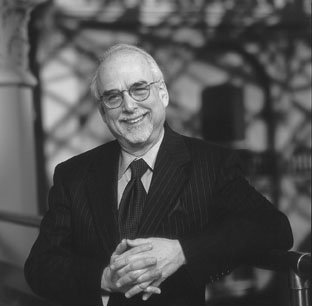
The National Endowment for the Humanities has announced that Chairman Bruce Cole will leave the endowment to join the American Revolution Center as its president and chief executive officer, effective January 2009.
Appointed NEH chairman by President George W. Bush, Cole was confirmed by the Senate in 2001 and reconfirmed in 2005 for a second term. Cole is the longest serving chairman in NEH history. During his tenure, the NEH launched innovative humanities programs, including We the People and Picturing America. Under his leadership, the NEH led the application of digital technology to the humanities through its Office of Digital Humanities. The office established innovative new grant programs and formed ground-breaking partnerships with the Department of Energy and the National Science Foundation. Cole has also worked to broaden the international reach of NEH.
Bruce Cole to Leave the NEH
posted Nov 12, 2008

The National Endowment for the Humanities has announced that Chairman Bruce Cole will leave the endowment to join the American Revolution Center as its president and chief executive officer, effective January 2009.
Appointed NEH chairman by President George W. Bush, Cole was confirmed by the Senate in 2001 and reconfirmed in 2005 for a second term. Cole is the longest serving chairman in NEH history. During his tenure, the NEH launched innovative humanities programs, including We the People and Picturing America. Under his leadership, the NEH led the application of digital technology to the humanities through its Office of Digital Humanities. The office established innovative new grant programs and formed ground-breaking partnerships with the Department of Energy and the National Science Foundation. Cole has also worked to broaden the international reach of NEH.