
CAA News Today
A Word to the Wise
posted Nov 14, 2018
We want to remind everyone that CAA DOES NOT sell its lists of members, conference attendees or participants in our Book and Trade Fair. If you see someone offering those items for sale or rent, they are trying to scam you. This time of year, we see more of these scams and want you to know to stay away from them.
If you receive a solicitation, please forward it to us at NYOFFICE@collegeart.org and we will get in touch with the scofflaws.
News from the Art and Academic Worlds
posted Nov 14, 2018
Want articles like these in your inbox? Sign up: collegeart.org/newsletter
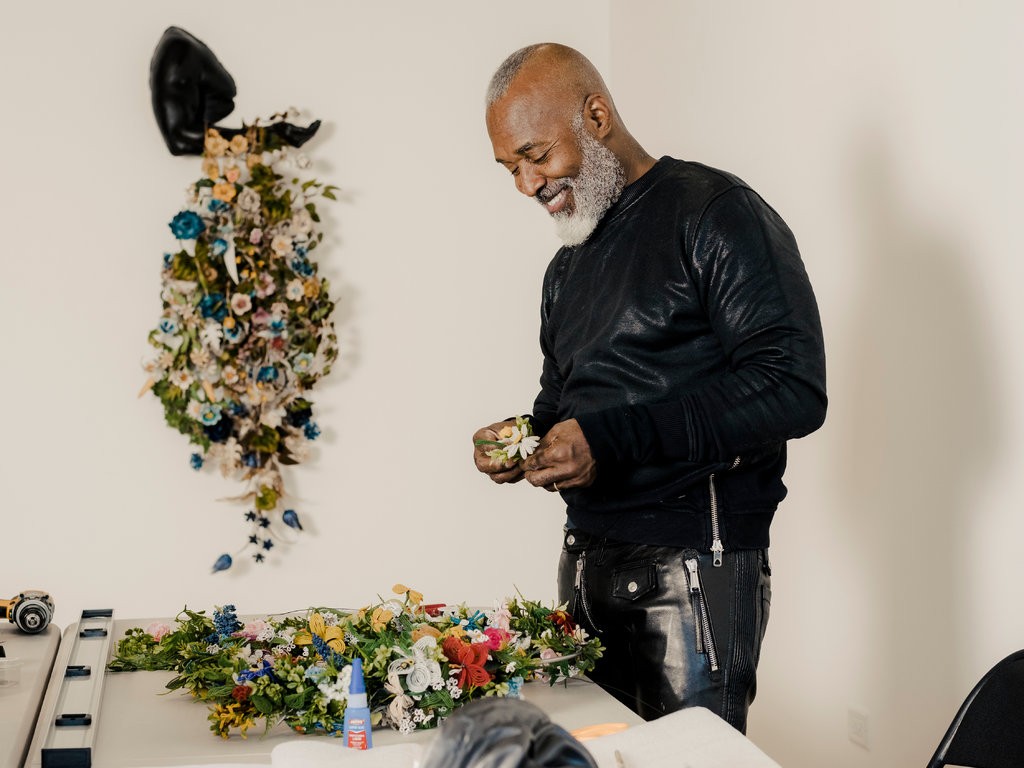
Nick Cave in his studio at Facility, his new multidisciplinary art space in Chicago. Photo: Whitten Sabbatini for New York Times
Artist Covertly Hangs #MeToo-Inspired Wall Labels at the Met Museum
Michelle Hartney posted the guerrilla wall labels next to the artwork of Paul Gaugin and Pablo Picasso. (Hyperallergic)
How Ideas Go Viral in Academia
Can great thinking still catch fire in academia? (CU Boulder)
Nick Cave Uses His Capital to Help Aspiring Creators
Nick Cave and partner Bob Faust have created a new 20,000-square-foot multidisciplinary art space in Chicago. (New York Times)
Still a Problem: Images and Art History in 2018
“Too often we are still using poor quality, lifeless images that we project in the classroom with Powerpoint. We think we can do better.” (Smarthistory)
Countering Myths and Misperceptions of Participating in the Arts
The first in a three-post series examining people’s questions about arts experiences and how organizations can help answer them. (Wallace Blog)
CAA Announces Guidelines for Addressing Proposed Cuts to Arts and Humanities Programs and Departments
posted Nov 12, 2018
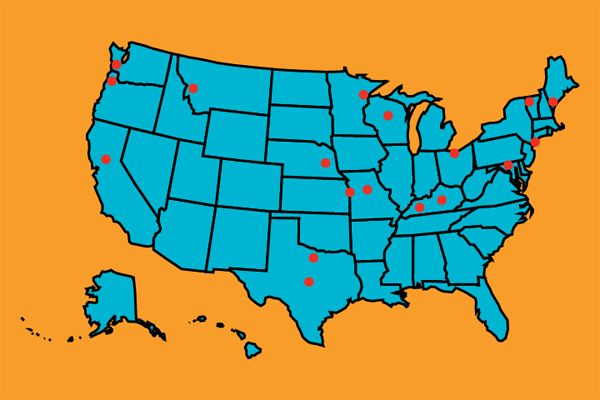
Campuses across the country have been affected by cuts to the arts and humanities. See the full list here. Graphic: Allison Walters
By any number of metrics, the arts and humanities are experiencing challenging times. Funding is under threat from the Federal government. Student enrollment is dropping in higher education classes focusing on the arts and humanities. The number of tenure-track faculty positions are diminishing in arts and humanities departments. The wide support of STEM-centered education has placed an emphasis on career paths with measurable and immediate financial outcomes. Yet, we know the importance of an arts and humanities education, not just for those looking to have careers in the arts and humanities but those across the entire professional spectrum.
In response to the challenges in the arts and humanities, some universities and colleges in the United States have cut programs, collapsed libraries, or shuttered entire departments. These steps, taken as cost-saving measures, only increase the uphill battle for the arts and humanities. Over the past years, CAA has tracked these changes in higher education through the organization’s own research efforts and through narratives relayed directly from our members. These actions taken by administrations are in no way secret. In article after article, the alarm has been sounded. We believe there is a better way to resolve these issues and protect the arts and humanities at the same time.
To bridge this divide, CAA is pleased to release “Guidelines for Addressing Proposed Substantive Changes to an Art, Art History or Design Unit, or Program at Colleges and Universities.”
“These guidelines provide a path for open communication between faculty and administration,” says Hunter O’Hanian, executive director of CAA. “With this new tool to be used by both administrations and faculty equally, CAA builds a resource that is vital to strengthening the arts and humanities on campuses. The guidelines create clearly definable steps and parameters for a process that when handled badly leads to fissures between faculty, students, and administrations.”
The “Guidelines for Addressing Proposed Substantive Changes to an Art, Art History or Design Unit or Program at Colleges and Universities” call for a deeper understanding of the factors and issues that have precipitated the action to close a department or program. The guidelines outline two clear paths: they encourage constituencies to communicate about the potential changes, and they pave the way to resolution without having to eliminate or downsize the program or department.
If those conversations fail to reach a satisfactory outcome with the educational institution, the guidelines emphasize that the institutional administration must do everything it can to see that the program continues. And, as is the case with all scholastic endeavors, the administrations must show their work—they must provide documentation that the department has been adequately resourced and funded. It must demonstrate that growth has been encouraged rather than to allowing it to lay fallow.
“CAA remains convinced that students and society derive lasting benefit when institutions offer a diverse range of academic resources to support different learning styles,” says Jim Hopfensperger, president of the CAA Board of Directors. “These new CAA guidelines outline best practices toward sustaining this essential diversity of academic programs and operational assets.”
Hopfensperger adds that “CAA believes that students, staff, faculty, and institutional leadership teams are all well served by inclusive processes, open lines of communication, engagement across constituencies, and empathetic deliberations.”
IMPACT OF ARTS AND HUMANITIES TOOLKIT
COLLEGES FACING CUTS TO ARTS AND HUMANITIES PROGRAMS
Authors and Contributors for the “Guidelines for Addressing Proposed Substantive Changes to an Art, Art History or Design Unit or Program at Colleges and Universities”:
CAA Working Group for Guidelines for Addressing Proposed Substantive Changes to an Art, Art History or Design Unit or Program at Colleges and Universities: Tom Berding, Michigan State University; Brian Bishop, Framingham State University (Chair, CAA Professional Practices Committee); James Hopfensperger, Western Michigan University (CAA Board President); Charles Kanwischer, Bowling Green State University; Karen Leader, Florida Atlantic University; Richard Lubben, College of the Sequoias; Paul Jaskot, Duke University; Hunter O’Hanian, CAA Executive Director.
Elaine Bezold and Sidney Stretz
posted Nov 12, 2018
The weekly CAA Conversations Podcast continues the vibrant discussions initiated at our Annual Conference. Listen in each week as educators explore arts and pedagogy, tackling everything from the day-to-day grind to the big, universal questions of the field.
CAA podcasts are now on iTunes. Click here to subscribe.
This week, Elaine Bezold and Sidney Stretz discuss failure in the classroom.
Elaine Bezold (Stephen F. Austin State University) is a photographer and educator living in Dover, New Hampshire. She makes work about human-animal interactions, rebirth, loss, and instinct.
Sidney Stretz (University of North Carolina Greensboro) is an artist and educator living and working in Greensboro, North Carolina. She makes work about everyday life and its challenges, strange social situations, and failure.
New in caa.reviews
posted Nov 09, 2018
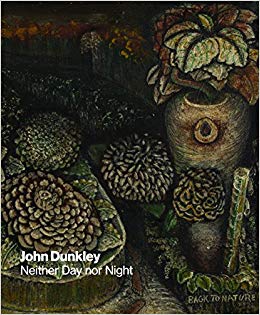
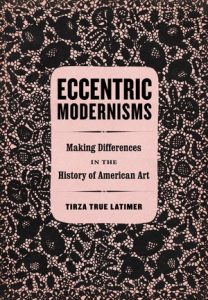
Petrona Morrison writes about John Dunkley: Neither Day nor Night by Diana Nawi, John Dunkley, David Boxer, Olive Senior, and Nicole Smythe-Johnson. Read the full review at caa.reviews.
Daria Kostina discusses the 4th Ural Industrial Biennial of Contemporary Art. Read the full review at caa.reviews.
John H. P. Semlitsch reviews Eccentric Modernisms: Making Differences in the History of American Art by Tirza True Latimer. Read the full review at caa.reviews.
Affiliated Society News for November 2018
posted Nov 07, 2018
Affiliated Society News shares the new and exciting things CAA’s affiliated organizations are working on including activities, awards, publications, conferences, and exhibitions.
We’re seeking new organizations to join CAA’s Affiliated Societies. Click here to learn more.
Association for Latin American Art (ALAA)
Save the Date: The World Turned Upside Down
The Fifth Triennial Conference of the Association for Latin American Art (ALAA) will take place next year in Chicago, 7-9 March, 2019. Sponsored by DePaul University and the Art Institute of Chicago with support from the National Museum of Mexican Art and the Thoma Foundation, the conference will include a variety of papers around the theme of “Arts of Oppression and Resistance in the American Hemisphere,” as well as additional activities in and around area institutions. For more information, please visit https://associationlatinamericanart.org/triennial/.
The Feminist Art Project (TFAP)
Call for Contributions to Rejoinder, an online journal featuring work at the intersection of scholarship and activism that reflects feminist/queer and social justice perspectives.
me too
The “me too” movement, founded in 2006 by activist Tarana Burke to help young American women of color heal from sexual assault, has gone global. Survivors around the world are giving unprecedented voice to stories of violence and abuse. The next issue of Rejoinder will explore the history, present, and future of “me too” as it relates to contemporary feminist mobilization and theorizing. We welcome contributions that explore any aspects of “me too,” such as how the movement travels across different contexts (such as the home, the academy, the workplace), through different forms of media and face-to-face interactions. What are the most pronounced effects of “me too?” And what difference does adding the hashtag make? Submissions (including essays, commentary, criticism, fiction, poetry, and artwork) should address this theme from feminist, queer, social and racial justice-inspired perspectives. We particularly welcome contributions at the intersection of scholarship and activism. For manuscript preparation details, please see our website at: http://irw.rutgers.edu/about-rejoinder. Rejoinder is published by the Institute for Research on Women at Rutgers University in partnership with The Feminist Art Project. Please send completed written work (2,000-2,500 words max), jpegs of artwork, and short bios to the editor, Sarah Tobias (stobias@rutgers.edu) by December 19, 2018.
Midwest Art History Society (MAHS)
The 46th Annual Conference of the Midwest Art History Society will be held from March 21–23, 2019, in Cincinnati, Ohio. Join us for thought-provoking sessions at the renowned Cincinnati Art Museum (CAM) on Thursday and Friday, March 21 and 22, and at the Taft Museum of Art on Saturday, March 23. On Thursday evening, the keynote lecture will be delivered by S. Hollis Clayson, Bergen Evans Professor in the Humanities at Northwestern University, in association with CAM’s exhibition Paris 1900: City of Entertainment featuring works drawn from the collections of the City of Paris museums. After sessions conclude on Friday, the Contemporary Arts Center in downtown Cincinnati will host an evening reception. Special behind-the-scenes programs at our partner museums will make this conference a particularly memorable experience. For more information and the conference’s call for papers, please visit the organization’s website http://www.mahsonline.org.
Visual Resources Association (VRA)
The next VRA international conference for image media professionals will take place at the Doubletree Hotel in the Little Tokyo area of downtown Los Angeles on March 26-29, 2019 (see: http://www.vraweb.org/conferences/vra2019/). We welcome CAA members as well as any intensive image users and like-minded information professionals to join in on what will be an exciting schedule of workshops, sessions, meetings, tours, and social events in Southern California. The conference schedule can be found at https://vra2019.sched.com/ and registration will open in December 2018.
The VRA offers several awards to assist with attendance at the VRA Annual Conference. The Travel Awards Committee especially encourages applications from new members/first time conference attendees; veteran members who have not been able to attend conferences for several years; international members; solo, isolated, and part-time VR professionals; students considering careers in visual resources; and any member actively participating in the conference who lacks sufficient funding to attend. You do not need to be a member of the VRA to apply for a travel award, but please note that to receive an award an applicant must become a member of VRA and must attend the 2019 Conference. The deadline for receipt of applications is Friday, November 16, 2018, 11:59pm EST. For more information about the types of travel awards, guidelines, and application information, see: http://vraweb.org/apply-for-a-vra-la-2019-travel-award/.
The Visual Resources Association is a multidisciplinary organization dedicated to furthering research and education in the field of image management within the educational, cultural heritage, and commercial environments affiliated with CAA (http://vraweb.org/). For more information about the important work and professional development activities sponsored by the Visual Resources Association or the VRA Foundation, please contact Maureen Burns, VRA’s CAA Affiliate Representative at moaburns@gmail.com or 310-489-3792.
Society of Architectural Historians (SAH)
The Society of Architectural Historians is accepting session proposals for the SAH 2020 Annual International Conference in Seattle, Washington (April 29–May 3). The Society invites its members, including graduate students, independent scholars and representatives of SAH chapters and partner organizations, to chair a session at the conference. Session proposals covering every time period and all aspects of the built environment, including landscape and urban history, are encouraged. View the Call for Sessions and submit a proposal online at sah.org/2020/call-for-sessions. The submission deadline is January 15, 2019.
In a joint program with the Athenaeum of Philadelphia, SAH is pleased to offer the Charles E. Peterson Fellowship to support the participation of a graduate student in the research and writing for a volume in the Buildings of the United States (BUS) series and/or SAH Archipedia, the Society’s online architectural resource. The recipient will research some aspect of American architecture prior to 1860, which they may choose from a list of topics provided by authors of forthcoming BUS books. Applications are due by January 2, 2019.
The Sally Kress Tompkins Fellowship, a joint program of SAH and the National Park Service’s Historic American Buildings Survey (HABS), permits a graduate student in architectural history or a related field the opportunity to work on a 12-week HABS history project during the summer of 2019. The Fellow will prepare a written history that focuses on a significant U.S. building or site for the permanent HABS collection at the Library of Congress. The award consists of a $12,000 stipend and includes travel, hotel accommodation, and registration for the SAH 2019 annual conference up to $1,000. Applications are due by December 31, 2018.
Association of Art Museum Curators & AAMC Foundation
The Association of Art Museum Curators & AAMC Foundation is currently seeking nominations for the 2019 Awards for Excellence, its annual award dedicated to recognizing curators whose work offers new methodologies, considers the public’s understanding, and advances the field. Since their launch in 2004, nearly 170 curators have received this award from AAMC. Click here to view past recipients.
Only affiliated and independent curator(s) working in the nonprofit sector can receive an award. All nominations must be submitted by AAMC members in good standing, and we encourage self-nominations. Nominated curators do not need to be AAMC members but must be eligible for membership and become a member should they be selected as an Awardee. Those in other fields and in for-profit settings cannot be nominated. Self-nominations are encouraged and welcomed.
A nominator may submit more than one nomination in one or more of the following categories for work on view or published between January 1 and December 31, 2018:
- Outstanding Printed Exhibition or Permanent Collection Catalogue (awarded by art organization operating budget category)
- Outstanding Exhibition or Installation (awarded by art organization operating budget category)
- Outstanding Article or Essay (digital or print)
- Outstanding Digital Publication
Awardees are kept confidential until they are announced at the Annual Conference & Meeting during an Awards for Excellence reception on Sunday, May 5, 2019, in New York City. We hope that all Awardees will be able to join us at the event. Ability to attend the event does not influence the award selection process.
All nominations must be submitted through our online portal by 12PM ET on Friday, December 14. The deadline is fast approaching, so click here to submit your nomination today!
International Sculpture Center (ISC)
The International Sculpture Center, publisher of Sculpture magazine is a non-profit member supported organization promoting sculptors internationally. For the 2018 holiday season, the ISC is offering great gift deals. This includes 1 subscription for $35 or 2 for $60, 30% off ISC Memberships, All 5 ISC Press Publications for just $75, and the ISC Art Sale Project: Sculptors Supporting Sculpture. For more information, please visit: http://www.sculpture.org/holiday/
The ISC will host the 29th International Sculpture Conference in Portland, Oregon in Fall 2019. The Call for Panels will open this winter. For updates, visit: www.sculpture.org/portland19
Pacific Arts Association (PAA)
Pacific Arts Association XIII International Symposium March 25-28, 2019, Brisbane , Australia. Hosted by Queensland Museum, State Library of Queensland, Queensland Art Gallery/Gallery of Modern Art and Queensland Performing Arts Centre. Call for papers is now closed. Please join us in March. The theme of this symposium is RESILIENCE: sustaining, re-activating and connecting culture.
For more information contact paa.2019@qm.qld.au
Conference: Making Connections: ni-Vanuatu Artists, Objects and Histories, 2- – 22nd March 2019 at the national Library and Archives, Port Vila, Vanuau. Hosted by the Pacific Chapter of the Pacific Arts Association.
For more information contact ks-kf@xtra.co.nz
Symposium: Recent Advances in Barkcloth Conservation: at the Royal Botanic Gardens, Kew, UK. December 7th, 2018. This one-day meeting presents diverse approaches to understanding the making, conservation and display of barkcloth in several tropical regions. It will be of interest to conservators, curators, anthropologists, art historians, makers, and all who value this beautiful material
For more information contact m.nesbitt@kew.org
Foundations in Art: Theory and Education (FATE)
http://www.foundations-art.org/
Early Bird Registration Deadline Extended: November 15 for FATE’s 17th Biennial Conference, “Foundations in Flux,” will be hosted by Columbus College of Art & Design in Columbus, Ohio on April 4th-6th, 2019.
Call for Artwork Deadline: December 15: FATE 2019 National Juried Members Exhibition
More info: http://www.foundations-art.org/conferences
Positive Space is FATE’s bi-monthly podcast providing opportunities for those passionate about art foundations to discuss and promote excellence in the development and teaching of college level foundations in art & design studio and history classes. To check out the latest episodes, featuring Libby McFalls and Michael Arrigo, visit: https://www.foundations-art.org/positive-space
If you have podcast ideas, contact us! Positive Space has a phone number: 904-990-FATE. Give us a call & record a message today!
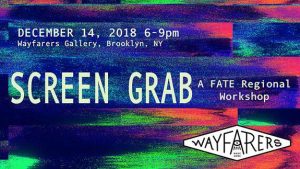 Join us December 14th, for a “Screen Grab,” a FATE Regional Workshop at Wayfarers Gallery, 1109 Dekalb Ave, Brooklyn, 11221. How are institutions using “the screen” in their visual art and design curriculum? The workshop will include hands-on screen-printing demos, innovative ways to incorporate screen printing even without formal facilities, introducing technological screen time into the studio classroom, and creating collaborative art work. Register with Meredith Starr at starrm@sunysuffolk.edu
More info: https://www.foundations-art.org/regional-events
Also join us during CAA 2019 for FATE’s Affiliate session, “Get Up, Stand Up: Contingent Faculty and the Future of Higher Education in the Visual Arts,” Friday, Feb 15, 2019, from 6 – 7:30pm in the Bryant Suite at the New York Hilton Midtown. Chaired by Naomi J. Falk and Richard Moninski, with panelists Christopher Williams, Mark Stemwedel, and Laura Rodman Huaracha. Increasingly, tenure-track positions disappear, contingent faculty numbers swell, and those who are left standing teach more classes. Is this sustainable and how do we support each other? https://caa.confex.com/caa/2019/meetingapp.cgi/Session/2304
Association for Textual Scholarship of Art History (ATSAH)
Karen Hope Goodchild, “Masaccio, Andrea del Sarto, Il Lasca, and the Sausage School of Florence,” Publication: Source. Volume 36, number 3/4 (Spring/Summer 2017), Seite [178]-187. Publisher: [2017]
Liana De Girolami Cheney, “The Symbolism of the Skull in Vanitas: Homo bulla est,” Journal of Cultural and Religious Studies (Fall 2018), Vol. 6. No. 5 (May 2018); 267-284.
Award invitation: ASSOCIATION FOR TEXTUAL SCHOLARSHIP IN ART HISTORY –AWARDS for Students and Scholars
In commemoration of our 30th anniversary, ATSAH plans to offer two awards: one prize for the best article by an emerging scholar (no higher than Associate level). The topic may range from classical to Pre-Raphaelite art, reflecting the aims of ATSAH. The second is a small travel grant for junior scholar presenting a paper an ATSAH session.The board of ATSAH selects these awards.
For further data, contact: Liana Cheney, PhD, President of ATSAH, lianacheney@earthlink.net
New Media Caucus
Media-N Journal of the New Media Caucus announces publication of Vol 14 No 1 (2018): CAA Conference Edition 2018 https://iopn.library.illinois.edu/journals/median/issue/view/4
This collection of essays and reports documents many of the activities of the New Media Caucus at the 2018 College Art Association Conference in Los Angeles, California, which took place February 22–24, 2018. More information about these gatherings can be found at http://www.newmediacaucus.org/2018-caa-los-angeles-events/
News from the Art and Academic Worlds
posted Nov 07, 2018
Want articles like these in your inbox? Sign up: collegeart.org/newsletter
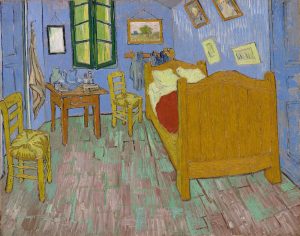
Vincent van Gogh, The Bedroom, 1889. Helen Birch Bartlett Memorial Collection. Courtesy of the Art Institute of Chicago.
The Art Institute of Chicago Is the Latest Museum to Offer Open Access to Thousands of Images in Its Archive
The museum has made 44,313 images available under Creative Commons license. (artnet News)
Remembering an Egyptian Artist Who Was Always Looking East
CAA board member Dahlia Elsayed remembers artist Chant Avedissian, who passed away this week at the age of 67. (Hyperallergic)
Graduate Students’ ‘Fight for $15’
Graduate student assistants across the US are pushing for a minimum living wage. (Inside Higher Ed)
Perspective: Academia Is a Cult
“I escaped a fringe Christian sect when I went to college. Going to grad school felt like joining again.” (Washington Post)
This New Database Aims to Become the World’s Best Resource on the History of Overlooked Women Artists
A Space of Their Own aims to compile the most comprehensive resource to date. (artnet News)
Responding to Misconceptions of Being a Graduate Student
“As a first-generation college student, explaining my day-to-day life as a student was challenging.” (Diverse Education)
Support the Arts and Humanities
posted Nov 05, 2018

Curator and anthropologist Niama Safia Sandy at the 2017 CAA Annual Conference in New York. Photo: Ben Fractenberg
CAA needs your help to advance the programs and support we provide to the individuals and institutions that comprise the world’s largest international professional community in the visual arts. Bringing innovative new ideas and meaningful experiences to artists, designers, crafters, curators, art historians, critics, students and faculty members is always on the forefront of our minds, but we cannot do it alone.
We have over 9,000 members, but did you know that approximately half of our members are artists, students, retirees, and part-time faculty, who have subsidized memberships and conference registrations?
These members, and all members, have full access to CAA programs such as:
- Professional Development Fellowships and Publishing Grants
- Awards of Distinction
- Professional Development Podcasts
- Online Career Center
- Advocacy, Fair Use, and Standards & Guidelines
- Resources for Academic Art Museum Professionals (RAAMP)
We advocate and design programs for all our members, regardless of how much they pay in membership, and we hope that as in all strong communities, those that can help will.
A donation to the Annual Fund allows CAA to provide the much-needed support for the field at the individual level and to institutions. A contribution gives CAA more power to advocate and serve the ever-changing needs of our members.
Our Travel Fund assists ten students and scholars from across the country and around the world to attend the Annual Conference each year, but gifts directed towards this category will increase that number exponentially.
A contribution to the Publication Fund helps offset the cost to produce the print and online scholarly publications of The Art Bulletin, Art Journal, Art Journal Open, and caa.reviews.
Please consider a tax-deductible donation in either fund category that will help us better serve the visual arts community. No matter what fund category you choose, your support will go a long way in making a difference.
On behalf of the Board of Directors and staff of CAA, I thank you for your generosity.
Best regards,

Hunter O’Hanian
Executive Director and CEO
Natasha Hovey and Steve Hilton
posted Nov 05, 2018
The weekly CAA Conversations Podcast continues the vibrant discussions initiated at our Annual Conference. Listen in each week as educators explore arts and pedagogy, tackling everything from the day-to-day grind to the big, universal questions of the field.
CAA podcasts are now on iTunes. Click here to subscribe.
This week, Natasha Hovey and Steve Hilton discuss a yearlong artist residency model at Midwestern State University.
Natasha Hovey is currently an assistant professor at Texas A&M International University in Laredo, Texas, where she teaches: Ceramics 1, Intermediate and Advanced Ceramics, Sculpture 1, Intermediate and Advanced Sculpture, and Practicum Course for Seniors. She never thought she would miss it, but she longs for the Midwest’s subzero temps and feet of snow.
Steve Hilton is a professor of art at the Lamar D. Fain College of Fine Arts at Midwestern State University in Wichita Falls, Texas, teaching both Ceramics and Art Education. He just found out that the current MSU ceramics resident has been offered a full-time position, which means the MSU residency program is 6 for 6 in placing residents.
CAA Announces 2019 CAA-Getty International Program Participants
posted Nov 02, 2018
CAA is pleased to announce this year’s participants in the CAA-Getty International Program. Now in its eighth year, this international program supported by the Getty Foundation will bring fifteen new participants and five alumni to the 2019 Annual Conference in New York City. The participants—professors of art history, curators, and artists who teach art history—hail from countries throughout the world, expanding CAA’s growing international membership and contributing to an increasingly diverse community of scholars and ideas. Selected by a jury of CAA members from a highly competitive group of applicants, participants will receive funding for travel expenses, hotel accommodations, conference registration, CAA membership, and per diems for out-of-pocket expenditures.
At a one-day preconference colloquium, to be held this year at Parsons School of Design, the fifteen new participants will discuss key issues in the international study of art history together with five CAA-Getty alumni and several CAA members from the United States, who also will serve as hosts throughout the conference. The preconference program will delve deeper into subjects discussed during last year’s program, including such topics as postcolonial and Eurocentric legacies, interdisciplinary and transnational methodologies, and the intersection of politics and art history.
This is the second year that the program includes five alumni, who provide an intellectual link between previous convenings of the international program and this year’s events. They also serve as liaisons between CAA and the growing community of CAA-Getty alumni. In addition to serving as moderators for the preconference colloquium, the five alumni will present a new Global Conversation during the 2019 conference titled Creative Pedagogy: Mapping In-between Spaces Across Cultures.
The goal of the CAA-Getty International Program is to increase international participation in the organization’s activities, thereby expanding international networks and the exchange of ideas both during and after the conference. CAA currently includes members from over 50 countries around the world. We look forward to welcoming the following participants at the next Annual Conference in New York City.
2019 PARTICIPANTS IN THE CAA-GETTY INTERNATIONAL PROGRAM
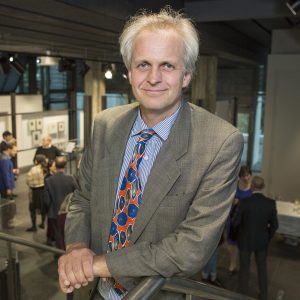
Richard Bullen is associate professor of art history at the University of Canterbury, New Zealand. He graduated with a PhD from the University of Otago in 2003. Bullen’s principal areas of research are Japanese aesthetics and East Asian art collections in New Zealand. During his years living in Japan, he studied tea ceremony and calligraphy and has since published on aspects of tea ceremony aesthetics. With James Beattie he recently completed a major publicly-funded project to document New Zealand’s largest collection of Chinese art, the Rewi Alley Collection at Canterbury Museum. Their website catalogues all 1400 objects in the collection: http://www.rewialleyart.nz. Together, they also have produced a number of publications, including New China Eyewitness: Roger Duff, Rewi Alley and the Art of Museum Diplomacy (2017) and co-curated three exhibitions. Bullen is currently working on art made in World War II by Japanese POWs held in Australasia.
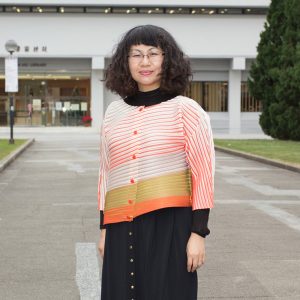
Pedith Chan is an assistant professor of Cultural Management in the Faculty of Arts at the Chinese University of Hong Kong. She received her PhD in Art and Archaeology from SOAS, University of London. Before joining the Chinese University of Hong Kong Chan was an assistant curator at the Hong Kong Museum of Art, and an assistant professor at the City University of Hong Kong. Her research interests focus on the production and consumption of art and cultural heritage in modern and contemporary China. Recent publications include The Making of a Modern Art World: Institutionalization and Legitimization of Guohua in Republican Shanghai (Leiden: Brill, 2017), “Representation of Chinese Civilization: Exhibiting Chinese Art in Republican China,” in The Future of Museum and Gallery Design (London: Routledge, 2018), and “In Search of the Southeast: Tourism, Nationalism, Scenic Landscape in Republican China,” (Twentieth-Century China, 2018). She is currently researching the making of scenic sites in modern China.
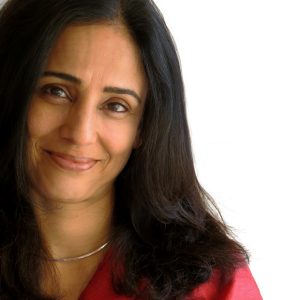
Swati Chemburkar is an architectural historian who lectures and directs a diploma course on Southeast Asian Art and Architecture at Jnanapravaha, a center for the arts in Mumbai, India. In addition, she is a visiting lecturer at the School of Oriental and African Studies (SOAS), London, and SOAS’s summer schools in Southeast Asian countries. Chemburkar’s work focuses on eighth- through twelfth-century Southeast Asia, particularly the relationship between texts, rituals, art, architecture, and cross-cultural exchanges in maritime Asia. Her ongoing research explores the spread of the ancient Śaiva sect of Pāśupatas in this region. She has edited Art of Cambodia: Interactions with India (Marg Magazine, Volume 67 Number 2, December 2015-March 2016) and contributed papers to several journals and publications, including the recent “Visualising the Buddhist Mandala: Kesariya, Borobudur and Tabo” in India and Southeast Asia: Cultural Discourse (K. R. Cama Oriental Institute, Mumbai, 2017) and “Pāśupata Sect in Ancient Cambodia and Champa” (co-authored with Shivani Kapoor) in Vibrancy in Stone: Masterpieces of the Đà Nẵng Museum of Cham Sculpture (River Books, 2017).
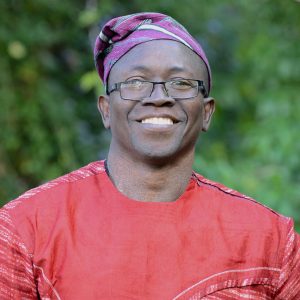
Stephen Fọlárànmí is a senior lecturer in the Department of Fine & Applied Arts, Ọbáfémi Awólọ́wọ̀ University, Ilé-Ifè, Nigeria. His research focuses on Yoruba art and African mural art and architecture. In particular, Fọlárànmí’s extensive research on the art and architecture of the Òyó and Iléṣà palaces has been published in journals, conference proceedings, and as book chapters. A recent example, “Palace Courtyards in Iléṣà: A Melting Point ofTraditional Yorùbá Architecture,” co-authored with Adémúlẹ̀yá, B.A., was published in Yoruba Studies Review 2, no. 2 (Spring 2018): 51-76. Fọlárànmí was a recipient of the first Höffmann-Dozentur für Interkulturelle Kompetenz at University of Vechta, Germany (2008-09). As an artist Fọlárànmí has exhibited his work in Nigeria, London, Germany, and the United States. He was the chair of the Department of Fine and Applied Arts, Obafemi Awólọ́wọ̀ University, Ile-Ife, between August 2016 and January 2018. Currently, he is a research fellow in the Fine Arts Department, Rhodes University, Grahamstown, South Africa.
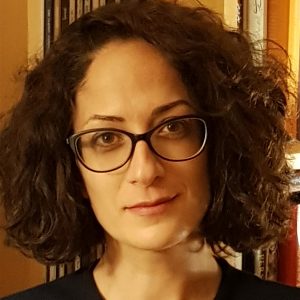
Negar Habibi is a Persian art historian and lecturer in Islamic art history at the University of Geneva, Switzerland, where she teaches history of Persian painting from early Islamic times until the modern era. She completed a PhD in 2014 in art history at the Aix-Marseille University in France with a dissertation titled “The Farangi sāzi and Paintings of Ali Qoli Jebādār: an Artistic Syncretism under Shah Soleymān (1666-1694).” Habibi conducts research on paintings from early modern Iran. Adopting a multidisciplinary approach, her work focuses on the career and life of the artist, especially issues of signature authenticity, gender, and artistic patronage in early modern Iranian society. She has published several articles on the art and artists of late-seventeenth-century Iran, and her book titled Ali Qoli Jebādār et l’occidentalisme safavide: une étude sur les peintures dites farangi sāzi, leurs milieux et commanditaires sous Shah Soleimān (1666-94) was published in January 2018 by Brill.
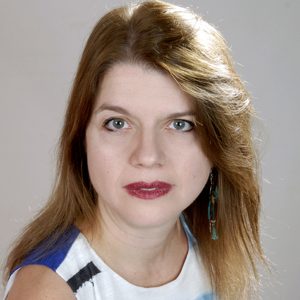
Iro Katsaridou has been the curator of modern and contemporary art at the Museum of Byzantine Culture in Thessaloniki, Greece since 2005. She studied art history at the Aristotle University of Thessaloniki and the Université Paris I-Sorbonne, and also pursued museum studies at the City University of New York. Her doctoral dissertation (Aristotle University, 2010) focused on contemporary Greek photography from 1970-2000. For the past five years Katsaridou has been researching historical photography in Greece, seeking to unravel the role of politics in the formation of photographic representations. In this particular field she also has curated exhibitions of photography and art in wartime (World War I and II) and edited related catalogues. She has co-edited a book about photography during the Nazi Occupation of Greece (1941-1944) and written articles and book chapters on photography (both historical and contemporary), exhibition display policies, as well as the relationship between contemporary Greek art and politics.
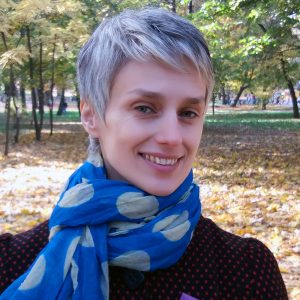
Halyna Kohut is an associate professor in the Faculty of Culture and Arts at the Ivan Franko National University of Lviv, Ukraine, where she teaches history of art, contemporary art, and history of theatrical costume. Originally educated as a textile artist, she received a PhD from the Lviv National Academy of Arts with a dissertation on seventeenth- and eighteenth-century Ukrainian kilims. She is the recipient of scholarships and grants from the Austrian Agency for International Mobility and Cooperation in Education, Science and Research, the Canadian Institute of Ukrainian Studies at the University of Alberta, and the Queen Jadwiga Foundation at the Jagiellonian University in Cracow. Kohut studies Ukrainian kilims as an intermediate zone between Oriental and Western design traditions formed on the so-called Great cultural frontier between the Christian West and Islamic East. She is especially interested in the migration of ornamental patterns as well as the articulation of textile’s social and political meanings in the historical context.
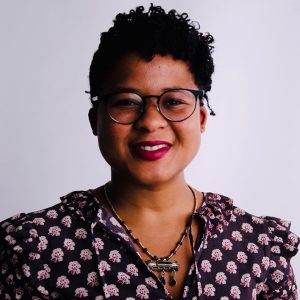
Zamansele Nsele is an art historian and a lecturer in design studies in the Faculty of Art, Design and Architecture at the University of Johannesburg, South Africa. She recently submitted her doctoral thesis in Art History & Visual Culture, titled Post-Apartheid Nostalgia and the Future of the Black Visual Archive. In 2018, Nsele was included in the Mail & Guardian’s prestigious list of Top 200 Young South Africans. She has presented her PhD research at Vanderbilt University and Rutgers University (USA), the University of East Anglia (UK), the University of Ghana in Accra (Ghana), and Rhodes University and the University of Cape Town (South Africa). In July 2018, she was a guest speaker at the Museum Conversations Conference hosted by the University of Namibia and the Goethe-Institut Namibia. Her research interests include post-Apartheid nostalgias, contemporary African art, blackface minstrelsy in South African visual culture and Africana studies.
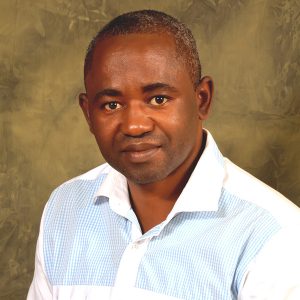
Chukwuemeka Nwigwe is a Nigerian artist and art historian who teaches fashion/textile design and art history at the University of Nigeria Nsukka. He holds a PhD in art history, MFA in textile design, and BA in fine and applied arts from the same university. Nwigwe’s current research is on identity, exemplified in two recent publications: “Fashioning Terror: The Boko Haram Dress Code and the Politics of Identity” (Journal of Fashion Theory, January 2018) and “Breaking the Code: Interrogating Female Cross Dressing in Southeastern Nigeria” (posted online as part of a 2018 ACLS African Humanities Program Postdoctoral Fellowship). Nwigwe also practices as a studio artist. His recent studio experiments with waste plastic, synthetic bags, and foil wrappers, usually woven arbitrarily, have been influenced largely by his research on bird nests begun during his MFA studies.
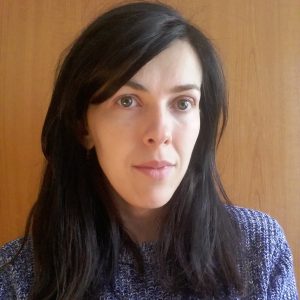
Oana Maria Nicuță Nae is an assistant professor in the Department of Art History and Theory, Faculty of Visual Arts and Design, George Enescu National University of Arts, Iasi, Romania. She received a PhD in art history from the same university, where she currently teaches courses on the history of modern European art, the history of design, and art and society in modern Europe. Most recently she published “The Materialization of Light in the Art of the (Neo-) Avant-Gardes,” in Objects and Their Traces: Historical Gazes, Anthropological Narratives, Cristina Bogdan, Silvia Marin Barutcieff (coord.), Bucharest University Press (Bucharest, 2018). Nicuță Nae’s current research focuses on the representation of women in Romanian modern art. She also studies multiple modernities, taking into account the particular position of Romanian art narratives in regional and global attempts to construct encompassing ones. Recently she has started parallel research on the notion of influence in nineteenth-century Romanian and European art.
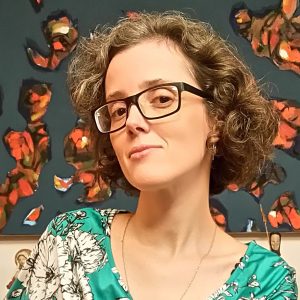
Tamara Quírico is an associate professor in the Art Institute of the Universidade do Estado do Rio de Janeiro (State University of Rio de Janeiro, UERJ, Brazil), where she teaches courses to undergraduate students majoring in art history and visual arts and art history courses to graduate students pursuing MA and PhD degrees. She earned her PhD in social history from the Universidade Federal do Rio de Janeiro, in a joint supervision program with the Università di Pisa (Italy), in which she studied changes in the iconography of the Last Judgment in fourteenth-century Tuscan painting. Her dissertation, “Inferno and Paradiso: Representations of the Last Judgment in Fourteenth-Century Tuscan Painting,” was published in Portuguese in 2014. Quírico studies Italian paintings from the thirteenth and fifteenth centuries, focusing in particular on the uses and functions of Christian images, as well as devotional practices and exchanges between Christian images from Europe and Spanish America.
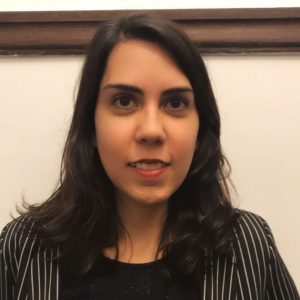
Juliana Ribeiro da Silva Bevilacqua is a specialist in African and Afro-Brazilian art. She studied at the University of São Paulo, where her PhD dissertation was on the Museu do Dundo in Angola (1936–61). From 2004–14 she worked as a researcher at the Museu Afro Brasil in São Paulo. She collaborates with different museums in Brazil researching African art and Afro-Brazilian art collections, including the Museu de Arte de São Paulo and the Museu de Arqueologia e Etnologia at the University of São Paulo. In 2015 she was a guest editor of Critical Interventions: Journal of African Art History and Visual Culture in an issue dedicated to Afro-Brazilian Art. Since 2017 she has been a professor collaborating with the graduate program in Art History at the University of Campinas (Unicamp). Recently she was a visiting professor at the Universidad de Los Andes, Bogota, Colombia, in the Connecting Art Histories program sponsored by the Getty Foundation.
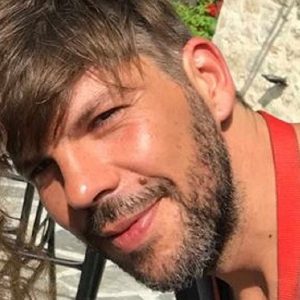
Marko Stamenkovic, born in the former Yugoslavia, is an associate curator of ZETA Contemporary Art Center in Tirana, Albania. He is an art historian and transcultural theorist with a strong interest in the decolonial politics of race, ethnicity, and sexuality. Over the past decade, he has been working primarily in the field of contemporary visual arts as a freelance curator, critic, and writer focused on the intersection of visual thinking and social theories, political philosophies, and cultural practices of the marginalized and the oppressed. He holds a PhD in philosophy from Ghent University (Belgium) where he worked on questions of sacrifice, self-sacrifice in protest, and suicide to explore the relationship between human mortality and politico-economic powers on the darker side of democracy, from a perspective of the global South. He is a member of AICA (International Association of Art Critics) and IKT (International Association of Curators of Contemporary Art).
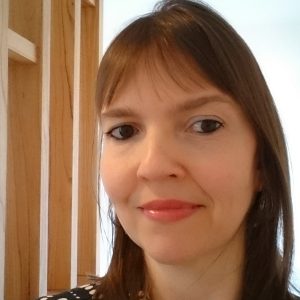
Viviana Usubiaga holds a PhD in art history from the Universidad de Buenos Aires (UBA) in Argentina. She is an associate professor of contemporary art at the Universidad Nacional de San Martín and an assistant professor of modern and contemporary art history at UBA. Usubiaga is also an adjunct researcher of the Consejo Nacional de Investigaciones Científicas y Técnicas (CONICET) and a board member of the Centro Argentino de Investigadores de Arte (CAIA). Her fields of interest include visual arts, literature, and museum studies, focusing on the political impact of transnational circulation of artistic images and texts during socially traumatic periods, including dictatorships and post-dictatorships in South America. Being a specialist in resistance art practices and institutional cultural politics, Usubiaga is the author of Imágenes inestables. Artes visuales, dictadura y democracia en Buenos Aires (2012). She also organizes independent curatorial projects in which she experiments with using scholarly methodologies in non-academic or non-specialist settings.
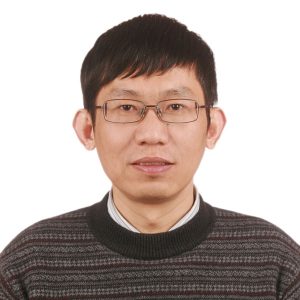
Jian Zhang was born in Hangzhou, China, and earned his PhD in art theory and history from the China Academy of Art, Hangzhou. He is a professor of art history at the School of Art and Humanities as well as the chief librarian of the Academy Library at the same university. His present research focuses on expressionism (formalism) in modern art historiography as well as the problem of its modernity. He is the author of Life of the Visual Form of Art, The History of the Western Modern Art, and An Alternative Story: Expressionism in the Western Modern Art Historiography, and also the translator of the Chinese edition of Wilhelm Worringer’s Form in Gothic, Heinrich Wolfflin’s The Sense of Form in Art: A Comparative Psychological Study (Italien und das deutsche Formgefühl) and Conrad Fiedler’s On Judging Works of Visual Art.
PARTICIPATING ALUMNI
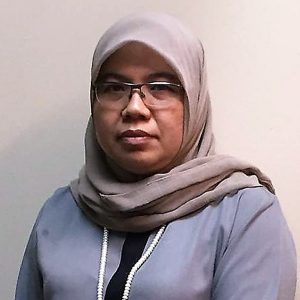
Sarena Abdullah is a senior lecturer in the School of the Arts at the Universiti Sains Malaysia in Penang, where she teaches art history to undergraduate and graduate students. She received an MA in art history from the University at Buffalo, State University of New York, and a PhD in art history from the University of Sydney in Australia. Specializing in contemporary Malaysian art with a broader interest in Southeast Asian art, Abdullah was the inaugural recipient of the London, Asia Research award given by Paul Mellon Center (London) and Asia Art Archive (Hong Kong). Her book Malaysian Art since the 1990s: Postmodern Situation was published in 2018, as was Ambitious Alignments: New Histories of Southeast Asian Art, for which she was a co-editor, published by the Power Institute and National Gallery Singapore. She first participated in the CAA-Getty International Program in 2016 and presented a paper as part of the program’s reunion during the 2017 conference.
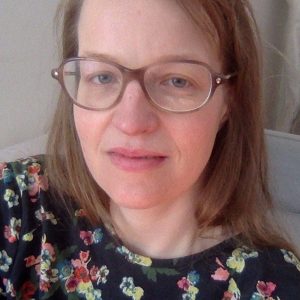
Katarzyna Cytlak is a Polish art historian based in Buenos Aires, Argentina, whose research focuses on Central European and Latin American artistic creations in the second half of the twentieth century. She studies conceptual art, radical and utopian architecture, socially engaged art, and art theory in relation to post-socialist countries from a transmodern and transnational perspective. In 2012, she received a PhD from the University Paris 1 Panthéon-Sorbonne, France. Cytlak was a postdoctoral fellow at the CONICET – National Scientific and Technical Research Council, Argentina (2015-2017). She is currently working as a researcher and professor at the Center for Slavic and Chinese Studies, University of San Martín, Argentina. Selected publications include articles in Umění/Art, Eadem Utraque Europa, Third Text, and the RIHA Journal. Cytlak is a grantee of the University Paris 4 Sorbonne (Paris), the Terra Foundation for American Art (Chicago, Paris) and the Institut National d’Histoire de l’Art (INHA, Paris). In 2018, she participated in the CAA-Getty International Program.
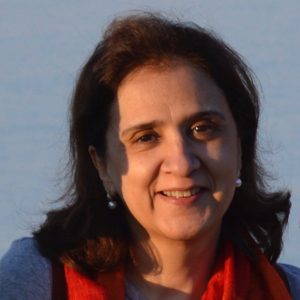
Nadhra Khan is a specialist in the history of art and architecture of the Punjab from the sixteenth to the early twentieth century. She received a PhD from the University College of Art & Design, University of the Punjab, Lahore, and teaches art history at Lahore University of Management Sciences, Lahore, Pakistan. Khan’s research focuses on the visual and material culture of the Punjab region during the Mughal, Sikh, and colonial periods. Her publications address several misconceptions and misrepresentations of Mughal and Sikh art and architecture as well as the state of art and craft in the Punjab under the British Raj and reflect the wide range of her interests and expertise.
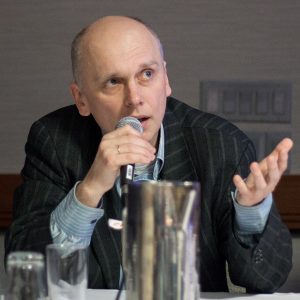
Nazar Kozak is a senior research scholar in the Department of Art Studies in the Ethnology Institute at the National Academy of Sciences of Ukraine. Previously he also taught the history of art at the Ivan Franko National University of Lviv. Kozak has received scholarships and grants from the Fulbright Scholar Program, State Scholarships Foundation of Greece, the American Council of Learned Societies, the Austrian Agency for International Mobility, and the Shevchenko Scientific Society in the United States. Kozak’s primary research is on Byzantine and post-Byzantine art in Eastern Europe. He is the author of Obraz i vlada: Kniazhi portrety u mystetstvi Kyïvskoï Rusi XI stolittia (Image and authority: Royal portraits in the art of Kyivan Rus’ of the eleventh century, Lviv, 2007). More recently, he has begun to work on contemporary activist art. His article on the art interventions during the Ukrainian Maidan revolution was published in the Spring 2017 issue of the Art Journal; it received an honorable mention as a finalist for that year’s Art Journal Award. Kozak participated in the CAA-Getty International Program in 2015 and presented a paper as part of the program’s reunion during the 2017 conference.
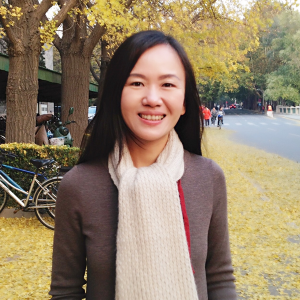
Chen Liu teaches art history and architecture at Tsinghua University in Beijing, China, where she received a bachelor’s degree in architecture with honors. After receiving a master’s in architecture and urban planning from the University of Maryland in 2000, she practiced as an architect in Washington DC until 2005. In 2011, she received a PhD in art history from Princeton University, specializing in Renaissance and Baroque art and architecture. In 2012, funded by an Andrew W. Mellow Fellowship, she helped create and direct the first Villa I Tatti summer research seminar designed specifically for Chinese scholars. “The Unity of the Arts in Renaissance Italy” provided participants with the opportunity to study firsthand the art and architecture of Renaissance Italy. Liu also teaches courses on the visual arts at Beijing Film Academy and Tongji University (Shanghai). She publishes widely on early modern art and architecture, as well as on the response of Chinese scholars to the Italian Renaissance. For the academic year 2018-2019 Liu is a Harvard-Yenching Institute Visiting Scholar at Harvard University.