CAA News Today
Amy K. Hamlin and Karen J. Leader
posted Sep 25, 2018
The weekly CAA Conversations Podcast continues the vibrant discussions initiated at our Annual Conference. Listen in each week as educators explore arts and pedagogy, tackling everything from the day-to-day grind to the big, universal questions of the field.
CAA podcasts are now on iTunes. Click here to subscribe.
This week, Amy K. Hamlin and Karen J. Leader discuss Art History That, a project they launched in 2014 to curate, crowdsource, and collaborate on the future of art history.
Amy K. Hamlin is Associate Professor of Art History at St. Catherine University. Karen J. Leader is Associate Professor of Art History at Florida Atlantic University. They are the co-founders of Art History That, and are co-authoring the book Art History That: Initiatives for the Future of a Discipline.
CAA Announces Campus Ambassador Program
posted Sep 24, 2018
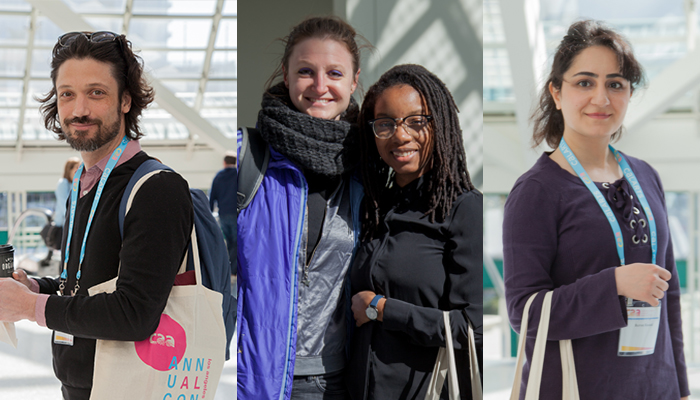
CAA 2018 Annual Conference attendees. Photography by Rafael Cardenas
Students have always been vital to CAA. Our student membership, which is nearly one quarter of our entire membership, has always been vocal, engaged, and eager. This fall we are looking to our students to help carry CAA into the future with the launch of the CAA Ambassador Program.
CAA is seeking Ambassadors in the New York, Boston, and Chicago areas to represent CAA and give short talks about the organization to their fellow classmates and students in nearby schools. The six selected Ambassadors will be compensated for each talk and given a complimentary CAA Annual Conference registration and one-year CAA membership at the student level. Ambassadors will collect feedback at their talks and have check-ins with CAA staff leading the project.
To be considered for the CAA Ambassador role, applicants must be currently enrolled in a visual arts-focused program at a university or college in the New York, Boston, or Chicago area. Applicants should be in their junior year or higher. Master’s degree, Master of Fine Arts, and PhD candidates are encouraged to apply. Familiarity with CAA and its programs is necessary for this role. Candidates should feel enthusiastic about spreading the word about CAA and feel comfortable speaking in front of groups. The Ambassador role is a two-semester commitment (fall and spring) with a maximum of five talks given on campuses each semester.
To be considered for the CAA Ambassador Program, please submit your resume or CV, cover letter expressing your interest, and one reference to Alison Chang at achang@collegeart.org.
Applications will be accepted until the positions are filled.
New in caa.reviews
posted Sep 21, 2018
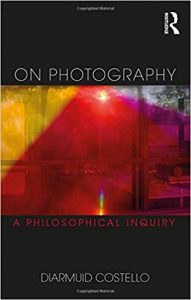
S. A. (Ali) Shobeiri reviews On Photography: A Philosophical Inquiry by Diarmuid Costello. Read the full review at caa.reviews.
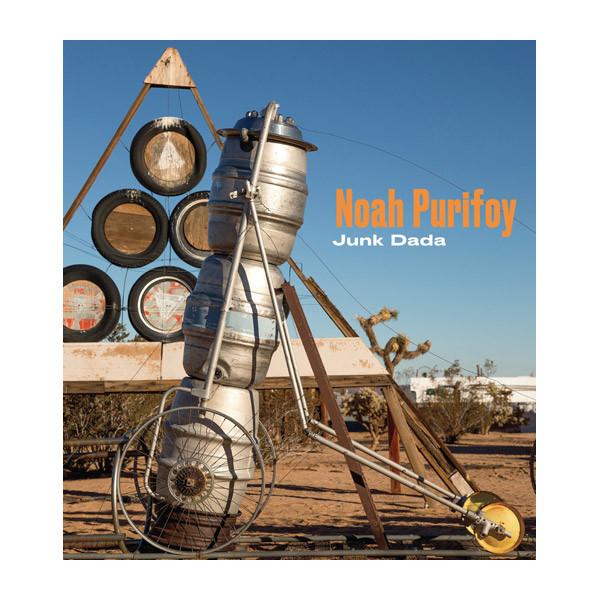
Leisa Rundquist discusses Noah Purifoy: Junk Dada, edited by Franklin Sirmans and Yael Lipschutz. Read the full review at caa.reviews.
News from the Art and Academic Worlds
posted Sep 19, 2018
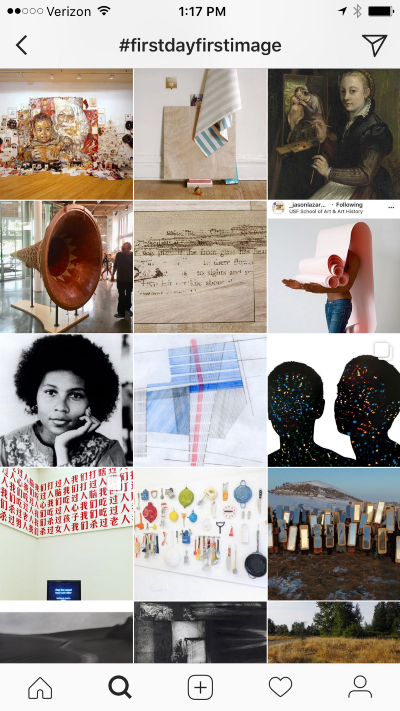
A collection of #FirstDayFirstImage posts, via Exposure
The Pervasive Power of Male Privilege at America’s Elite Universities
Institutions have hired men with predatory reputations and retained them, despite complaints from women students and faculty. (Hyperallergic)
How to Create a Syllabus
And get your students to actually read it. (Chronicle of Higher Education)
Souls Grown Deep Foundation Launches a New Paid Internship Program for Students of Color
New Orleans Museum of Art, Philadelphia Museum of Art, and Virginia Museum of Fine Arts will also participate. (artnet News)
Colleges Face Pressure to Answer a Basic Question: What Are Students Learning?
Measuring learning in college, and reporting the results, is surprisingly hard to do. (PBS News Hour)
Nothing Changes If Nothing Changes: #FirstDayFirstImage
“What if we set the tone on the very first day of class, with the very first image we show our students, by discussing one work from a historically underrepresented artist? And so #firstdayfirstimage was born.” (Exposure)
Eight Ways to Tackle Diversity and Inclusion in Peer Review
Practical suggestions from recent studies on diversity and bias in peer review. (Scholarly Kitchen)
CAA to Issue Guidelines for Addressing Changes to Visual Arts Programs at Colleges and Universities
posted Sep 17, 2018
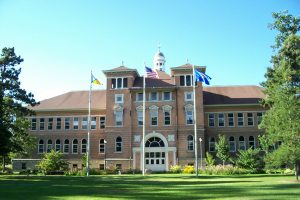
University of Wisconsin-Stevens Point (Royal Broil/Flickr)
Over the past few months there have been an alarming number of colleges and universities throughout the nation—from University of Wisconsin-Stevens Point to University of Texas at Austin—taking actions we perceive as detrimental to the education of future generations in the arts and humanities, particularly in the fields of art history, studio art, and design.
From our perspective, in many instances, it appears that decisions to merge departments, eliminate degrees, or reduce libraries are largely transactional in nature, designed to balance present-day budgets.
We worry that when focusing narrowly on fiscal realities of the day, institutions risk undervaluing the impact humanities programs have on preparing students for careers over their lifetimes. We believe that serving students of diverse racial, social, and economic backgrounds involves offering academic programs that allow them to fully explore themselves and their cultures, precisely the benefits from strong programs in the humanities, art history, studio art, and design.
We recognize that institutions must embrace structural changes, make adjustments in evolving physical and technological environments, and face pressures to demonstrate direct connections between academic studies and successful professions. Yet, we remain convinced, and research confirms, that students as individuals, and society as a whole, benefit from strong programs in the arts and humanities and a diverse range of academic resources to support different learning styles.
A CAA working group, co-chaired by Brian Bishop, Chair of the Professional Practices Committee and executive director Hunter O’Hanian, recently formed to propose Best Practices for Addressing Proposed Changes to an Art/Design Academic Unit, Library, or Degree at Colleges and Universities. It is hoped that these Best Practices will be approved by the CAA Board of Directors for dissemination by October 31, 2018.
We invite you to share with us specific situations that can help inform these guidelines. Please contact either Brian Bishop (bbishop@framingham.edu) or Hunter O’Hanian (Hohanian@collegeart.org) directly.
New in caa.reviews
posted Sep 14, 2018
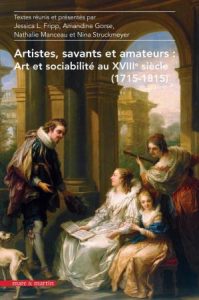
Daniel Harkett reviews Artistes, savants et amateurs: Art et sociabilité au XVIIIe siècle (1715–1815), edited by Jessica L. Fripp, Amandine Gorse, Nathalie Manceau, and Nina Struckmeyer. Read the full review at caa.reviews.
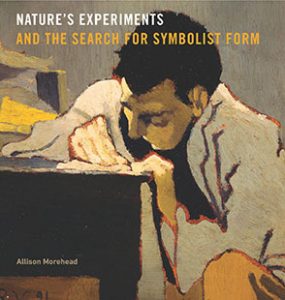
Serena Keshavjee writes about Nature’s Experiments and the Search for Symbolist Form by Allison Morehead. Read the full review at caa.reviews.
Sarah Louise Cowan examines Outliers and American Vanguard Art by Lynne Cooke. Read the full review at caa.reviews.
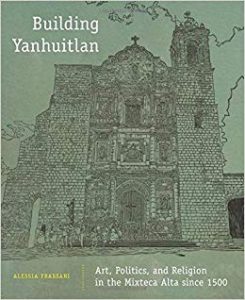
Jeanette Favrot Peterson discusses Building Yanhuitlan: Art, Politics, and Religion in the Mixteca Alta since 1500 by Alessia Frassani. Read the full review at caa.reviews.
Intimacy, Distance, and Disavowal in Art Publishing: Conversations with Dushko Petrovich
posted Sep 12, 2018

Hyperallergic‘s original piece included these graphics in lieu of reproducing contested images. Image via Hyperallergic.
In June of 2018, Hyperallergic published a two-part essay by the art historian and critic Steven Nelson about the rejection of his essay about artist Deana Lawson by both Aperture and frieze. In “Intimacy, Distance, and Disavowal in Art Publishing: Conversations with Dushko Petrovich,” arts journalist Dushko Petrovich dissects the situation piece by piece, interviewing representatives from Hyperallergic, frieze, Deana Lawson’s gallery, and Nelson himself. What emerges is a document of the processes that generally don’t get recorded when pieces of arts journalism are rejected or shelved, and what factors into these editorial decisions. Read more on Art Journal Open.
News from the Art and Academic Worlds
posted Sep 12, 2018

Codex Forster II , Leonardo da Vinci, late 15th – early 16th century, Italy. Museum no. Forster MS.141. © Victoria and Albert Museum, London, via Colossal
Here’s How You Can Help Document Rio’s National Museum Collections after the Catastrophic Fire
Museum officials are asking the public for help. (Forbes)
Can You Train Your PhDs for Diverse Careers When You Don’t Have One?
“Being a professor is the only job I ever tried to get. How can I teach my students about something I don’t know?” (Chronicle Vitae)
How to Teach Ancient Art in the Age of #MeToo
Misogynist imagery in ancient art raises questions that demand addressing today. (Hyperallergic)
These Cultural Treasures Are Made of Plastic. Now They’re Falling Apart.
Museum conservators are racing to figure out how to preserve these artworks. (New York Times)
More High School Grads Than Ever Are Going to College, but One in Five Will Quit
New data re-emphasizes the importance of student retention efforts. (The Hechinger Report)
Recently Digitized Journals Grant Visitors Access to Leonardo da Vinci’s Detailed Engineering Schematics and Musings
The Victoria and Albert Museum in London has made in-depth scans of da Vinci’s notebooks available online. (Colossal)
Affiliated Society News for September 2018
posted Sep 11, 2018
Affiliated Society News shares the new and exciting things CAA’s affiliated organizations are working on including activities, awards, publications, conferences, and exhibitions.
We’re seeking new organizations to join CAA’s Affiliated Societies. Click here to learn more.
Mid-America College Art Association (MACAA)
Upcoming MACAA Conference: Oct 4—6, 2018: Techne Expanding New / Tensions New / Terrains New / Tools @ The University of Nebraska-Lincoln
The 2018 MACAA Conference will explore wide-ranging interpretations of technology and its use and impact on the teaching, making, and performing art as well as the broader human experience. Recognizing that technology has art and craft at its root (techne) and isn’t limited just to bigger, better, or faster tools and products, we will examine how we embrace or resist technology, how we celebrate or critique it, and consider its promise as well as its limits.
Reserve your room for the conference at the Embassy Suites by Hilton Lincoln. Tickets for the conference can be purchased through Eventbrite. Inquiries about the conference can be sent to Sandra Williams, Associate Professor and Conference Chair, swilliams2@unl.edu.
Get your MACAA membership registration here.
Upcoming MACAA Members’ Exhibition will be held at the Eisentrager-Howard Gallery at the University of Nebraska-Lincoln, October 3-19, 2018.
Upcoming for CAA 2019: MACAA’s CAA Affiliate Session
“Respond and Adapt: A Fuse of Art and the Other”
Co-chairs: Julie Marcelle Abijanac, Columbus College of Art & Design; Chung-Fan Chang, Stockton University
Wed, February 13, 2:00—3:30 PM, Room: Concourse G
A2RU
a2ru Circuits Webinar: Navigating Your Educational Path Toward an Interdisciplinary Career
Thursday, October 4, 2018
2:00-3:00pm ET
Register HERE
What might be needed to create an interdisciplinary career guide or toolkit for students who are looking toward a modern work life? This webinar will include alum from the a2ru Emerging Creatives Student Summits discussing both their interdisciplinary paths and experiences and what they would like to have known or had in support of their educational goals as an undergraduate student.
a2ru Annual National Conference: Arts Environments: Design, Resilience, and Sustainability
November 1-3, 2018
Hosted by University of Georgia (Athens, GA)
Registration now open!
The 2018 theme, Arts Environments: Design, Resilience, and Sustainability, is an invitation to explore the relationship between creativity and diverse cultural locations, by framing discussions about design, resilience, and sustainability in the context of interdisciplinary artistic and environmental practice. The theme offers an opportunity to think broadly about the ecology of the arts and their environments, in terms of performance, design, and engineering. A land and sea grant institution inextricable from the town of Athens and the broader ecologies of Georgia and the Southeast, the University of Georgia will provide a rich context for thinking creatively about Arts Environments globally. The 2018 conference will also include exhibits, installations, performances, and events throughout.
Historians of Islamic Art Association
The Historians of Islamic Art Association is delighted to annoucene that it’s sixth biennial symposium, “Border Crossing,” will be held at Yale University from October 25-27, 2018. Professor Zainab Bahrani will deliver the keynote lecture,“Ascent of Images: Mapping Time at the Amadiya Akropolis.” The symposium will bring together an international group of established and emerging scholars of Islamic art and architecture to present new research on the theme of “Border Crossing.” Very often the field has been defined as one centered on select regions of the Middle East, South Asia, and Central Asia, and focusing on traditional media and categories, such as the decorative arts, manuscript studies, and architecture. Less attention has been paid to regions on the so-called peripheries, including, for example, Southeast Asia and sub-Saharan Africa, or to disciplines that are not often associated with the field, such as film and anthropology.
“Border Crossing” will rethink the field of Islamic art and architecture by interrogating the ideas of translation, transmission, and transgression. Among the questions that will be asked are: How can this lens help us rethink works that form the “canon” of Islamic art? What is at stake in crossing disciplinary borders? What is lost and what is gained in abandoning traditional academic parameters? What may be learned through literal border crossings, whether they are by conservation authorities or refugees? As the works of several contemporary artists show, border crossings are ultimately ethical positions taken to evince the human condition itself. They thus provide potential to rethink the arts and cultures of the Islamic world, as well as the ways in which we study them today.
For more information, and to register, visit: hiaa2018.yale.edu
Association for Textual Scholarship of Art History (ATSAH)
William R. Levin (Centre College, emeritus) authored “The Bigallo Triptych: A Document of Confraternal Charity in Fourteenth-Century Florence” in Confraternitas, vol. 29, no. 1 (Spring 2018), pp. 55-101, with eight reproductions. The article considers the style, form, content, commission, and purpose of a long-recognized masterpiece of early Italian painting within the theological climate of its time, and is also available online at https://jps.library.utoronto.ca/index.php/confrat/article/view/29895. The journal is published by the Centre for Reformation and Renaissance Studies on behalf of the Society for Confraternity Studies, both headquartered at the University of Toronto.
Liana De Girolami Cheney (UMASS Lowell emerita), Visiting Researcher in Art History at SIELAE, Universidad de Coruña, Spain and Universittà di Aldo Moro, Bari, Italy
“Lavinia Fontana’s Cleopatra the Alchemist,” Journal of Literature and Art Studies (August 2018), Vol. 8. No. 8, pp. 1-22.
AICA-USA
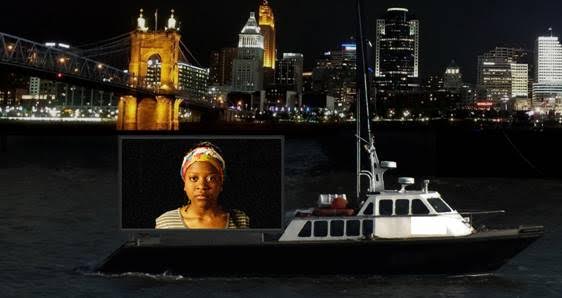
AICA-USA is excited to participate in a members-only viewing of Shimon Attie’s public installation Night Watch. More Art, in collaboration with organizational partner, Immigration Equality, will host a VIP cocktail reception for AICA-USA members on the evening of Monday, September 24. This exclusive reception will include a walk as a group to the waterfront to view the work as well as the opportunity to meet with the artist, project participants, and More Art organizers. AICA-USA thanks More Art, Immigration Equality, and Shimon Attie for this special opportunity.
SECAC
The 74th Annual SECAC Conference, hosted by the University of Alabama at Birmingham, will be held October 17 through 20, 2018. More than 450 papers—on studio art, art history, art education, and graphic design—will be presented in 120 sessions. Offsite events include a keynote address by Andrew Freear of Auburn University’s Rural Studio and a reception to view the exhibition Third Space/Shifting Conversations about Contemporary Art at the Birmingham Museum of Art. The annual SECAC Artist’s Fellowship and Juried Exhibitions’ reception at will be held at UAB’s Abroms-Engel Institute for the Visual Arts. More information and conference registration are available at https://www.secacart.org.
Society of Historians of Eastern European, Eurasian, and Russian Art and Architecture (SHERA)
Society of Historians of Eastern European, Eurasian, and Russian Art and Architecture (SHERA) is pleased to announce the SHERA-sponsored session Looking East: Russian Orientalism in a Global Context, chaired by Dr. Maria Taroutina (Yale-NUS College) and Dr. Allison Leigh (University of Louisiana at Lafayette) at the College Art Association 2019 Annual Conference in New York City, New York Hilton Midtown, February 13-16, 2019. SHERA Business Meeting at the CAA Conference will take place on February 15, Madison Suite 12:30 to 1:30 pm, New York Hilton Midtown.
SHERA Business Meeting at the ASEEES 50th Annual Convention, 6-9 December, Boston, MA 2018, is scheduled on December 7, 8:00 to 9:30pm, 3 Brandeis, Boston Marriott Copley Place. The SHERA Travel Grant to the ASEEES Convention, in the amount of $ 1,500 made possible by a generous anonymous donation, has been awarded to Denis Stolyarov, a PhD student at The Courtauld Institute of Art, London UK, presenting his paper “Contested Spaces: Radical Potential in the Post-Soviet Art Gallery.”
Midwest Art History Society
The Midwest Art History Society (MAHS) Fall Board Meeting will take place October 12 and 13, 2018 in Chicago. Plans are well underway for the 2019 annual conference which will be held in Cincinnati. Look for the conference call for papers to be distributed in the member’s newsletter appearing soon. In the meantime, you can check for updates, find membership information, and locate documentation of previous conferences at our website www.mahsonline.org.
At MAHS’s recent conference in Indianapolis (April 5-7, 2018) Lauren DeLand, Assistant Professor Art History, Indiana University Northwest, received the MAHS Emerging Scholar Distinguished Presentation Award for her paper “A Fig Leaf for Jeff Koons: Pornography, Privacy, and Made in Heaven.” The award is granted to an outstanding paper presented at the MAHS annual conference by an art historian who received his or her PhD within the last five years.
Pacific Arts Association (PAA)
Pacific Arts Association XIII International Symposium, RESILIENCE: sustaining, re-activating and connecting culutre. March 25-28, 2019, Brisbane, Australia. Call for Full Sessions and Curated Panels, Demonstrations, Activations, Performances and Workshops. Hosted by Queensland Museum, State Library of Queensland, Queensland Art Gallery, Gallery of Modern ARt and Queensland Performing Arts Centre. For more information see: www.pacificarts.org
Curatorial Research Fellowship at MARKK, Museum am Rothenbaum World Cultures and Arts. Applications due September 30th 2018 – Fellowship should start in January 2019. The application materials should be written in English and sent in a single pdf file. They should include a research proposal specifying the thematic focus (max. 3000 words), a bibliography, a curriculum vitae, 3 references, and a cover letter explaining the motivation for the application. Please address inquiries to Johanna Wild Museum am Rothenbaum
Phone: +49 (40) 428 879 -635
Email: johanna.wild@markk-hamburg.de
A new Scholarship in Oceanic Studies has been launched. The Anthony JP Meyer Fellowship is intended for students and non-statutory researchers, with proven competence in the processing and analysis of non-Western art or with significant experience in the fields of history, art, ethnography or archeology. The successful applicant will undertake a study in the collections of the Quai Branly Museum or in anoth French museum on objects of art and ethnography of Oceania. Further information: http://www.meyeroceanic.art/
Association of Art Museum Curators Foundation
The AAMC Foundation Engagement Program for International Curators, made possible by major support from the Terra Foundation for American Art, will open its application portal on Tuesday, September 11. Through fostering international relationships between curators, AAMC aims to not only provide opportunities for professional development and exchange, but also expand and strengthen the international curatorial community and amplify the curatorial voice in the global dialogue between museum professionals.
The 12-month Program provides a framework for two curator pairings to interact regularly, reflecting on and developing their self-identified areas of advancement with each other. The Program includes travel funding for International Awardees, a participant stipend for US Liaisons, networking, and more, which are outlined in greater detail in the Program Components area of the application.
At the core of this Program is a year-long partnership between a non-US based curator (International Awardee) and a US-based curator (US Liaison) dedicated to professional development and exchange in areas including but not limited to research, project management, leadership development, cross-border exhibitions, loans, fundraising, marketing, dealer and donor relationships.
All applicants must be art curators working on or having worked within exhibitions and projects that explore historic American Art (c. 1500-1980), including painting; sculpture; works on paper, including prints, drawing and photography; decorative arts; and excluding architecture; design; and performance. Additional requirements include a minimum of 50% of the time for/with non-profit organizations will be considered. Please note that curators working in four-wall collecting and non-collecting, community based, and non-four wall organizations, at any location in the globe are eligible.
Visit the Program page to learn more about the Program’s components: https://www.artcurators.org/page/GrantsTerra
The online application for International Awardees and US Liaisons opens on Tuesday, September 11, 2018, and are due by Monday, November 5, 2018 at 12pm ET.
Association of Print Scholars
The Association of Print Scholars is pleased to announce the scholars and papers selected for inclusion in its affiliated society panel at the College Art Association conference taking place February 13-16, 2019 in New York.
Chaired by Christina Michelon (University of Minnesota, Twin Cities), the APS panel Coloring Print: Reproducing Race Through Material, Process, and Language investigates the racialized dimensions of print and printmaking. The medium has played a central role in the ideological founding of “race” and its hierarchies through visual representation. However, print’s materials, processes, and the language we use to describe them interface with conceptions of race in ways that require further study. For example, the term “stereotype” originated in the printing trade but has since evolved to mean an oversimplified general idea, often with pejorative racial connotations; the invention of chromolithography in the nineteenth century offered a more nuanced way of representing skin tones but simultaneously enabled the increased circulation of racist imagery; the rabid appreciation and collection of Japanese prints in the West altered artistic production globally while idealizing Eastern cultures; anthropological sketches and watercolor studies of native peoples were routinely translated to print, widely reproduced, and used as tools of imperialism and colonialism.
Coloring Print examines global printmaking traditions that advance our understanding of the role of the medium in the social construction of race. The papers chosen include “Red Ink: Ethnographic Prints and the Colonization of Dakota Homelands” by Annika Johnson (University of Pittsburgh); “Sites of Contest and Commemoration: The Printed Life of Richard Allen, America’s Early Race Leader” by Melanee C. Harvey (Howard University); “A Franco-Indian Album: Firmin Didot’s Indian Paintings and Le Costume Historique’s Chromolithography (1888)” by Holly Shaffer (Brown University); and “The White Native Body in Asia: Woodcut Engraving and the Creation of Ainu Stereotypes” by Christina M. Spiker (St. Catherine University).
Save the date: APS will be holding a members’ meeting and reception at C.G. Boerner Gallery, 526 West 26th Street, Rm 304, New York, on Friday, October 26, 2018 from 5:30-7 PM, with a tour of their new exhibition featuring the work of the early 20th century French printmaker J.E. Laboureur. Please feel free to join us if you are a current member of APS, or are interested in learning more about the organization!
Visual Resources Association (VRA)
The Visual Resources Association is a multidisciplinary organization dedicated to furthering research and education in the field of image management within the educational, cultural heritage, and commercial environments that has been affiliated with CAA for many years (http://vraweb.org/).
The next VRA international conference for image media professionals will take place at the Doubletree Hotel in the Little Tokyo area of downtown Los Angeles on March 26-29, 2019. We welcome CAA members as well as any intensive image users and like-minded information professionals to join in on what will be an exciting schedule of workshops, sessions, meetings, tours, and social events in Southern California.
At the LA conference, the organization’s highest awards will be conferred and a call for nominations for both the Distinguished Service Award and the Nancy DeLaurier Award–is now open with a deadline of November 2, 2018. The Distinguished Service Award honors an individual who has made an outstanding career contribution to the field of visual resources and image management. The Nancy DeLaurier Award, named for one of the pioneers of the visual resources profession, honors either a single individual or a group of visual resources professionals for distinguished achievement in the field. “Achievement” is measured by immediate impact, and may take the form of published work, oral presentation, project management, software development, technology application, web site creation, or other outstanding effort or project. Although nominations for the awards are initiated by Visual Resources Association members, the nominees need not be members of the Association. (http://vraweb.org/call-for-2019-nominations-distinguished-service-award-nancy-delaurier-award/)
For more information about the important work and professional development activities sponsored by the Visual Resources Association or the VRA Foundation, please contact Maureen Burns, VRA’s CAA Affiliate Representative at moaburns@gmail.com or 310-489-3792.
Design Incubation
Portfolio Success: Strategies for Professional Development
Saturday, September 22, 2018.
2pm–5pm.
Type Directors Club
347 W 36th St., #603,
New York, NY 10018
Join industry professionals and design educators for a panel discussion on creating effective design portfolios. We will explore the role portfolios play in a successful design career now and in the future and will ask, are traditional portfolios still relevant? If so, what does a successful portfolio look like and what kind of projects should be included? Panelist will discuss what clients and employers want to see and which abilities industry leaders consider most important? You are invited to join the discussion as we look at new ways of teaching and explore emerging trends in effective portfolio development.
PANELISTS
Christina Black
Vice President, Creative Director
Showtime Networks Inc.
Michael McCaughley
Lead Designer at OCD
Holly Tienken
Assistant Professor
Communication Design
Kutztown University of Pennsylvania
Peter Lusch
Assistant Professor
Dept of Art, Architecture & Design
Lehigh University
Event details: https://designincubation.com/design-events/portfolio-success-strategies-for-professional-development/
Event Registration: https://www.eventbrite.com/e/portfolio-success-strategies-for-professional-development-tickets-48564564921
Society of Architectural Historians (SAH)
The Society of Architectural Historians has announced the recipients of the 2018 SAH/Mellon Author Awards. These awards are granted to scholars publishing their first monograph on the history of the built environment and help defray the expenses of image licensing, reproduction, and creation of original drawings and maps. SAH awarded a total of $17,498 to the following forthcoming book projects: Irit Katz, The Common Camp: Instruments of Power and Resistance on the Edge of Architecture (University of Minnesota Press), Conrad Kickert, Dream City: Creation, Destruction and Reinvention in Downtown Detroit (The MIT Press), Mariana Mogilevich, The Invention of Public Space: Design and Politics in Lindsay’s New York (University of Minnesota Press), and Ünver Rüstem, Ottoman Baroque: The Architectural Refashioning of Eighteenth-Century Istanbul (Princeton University Press).
SAH is accepting applications for the H. Allen Brooks Travelling Fellowship, which allows a recent graduate or emerging scholar to study by travel for one year. The fellowship is designed to provide an opportunity for a recent graduate with an advanced degree or an emerging scholar to see and experience architecture and landscapes firsthand, think about their profession deeply, and acquire knowledge useful for their future work. The application deadline is September 30, 2018.
SAH has announced the recipients of the 2018 SAH Awards for Architectural Excellence. Established in 2010, these awards recognize individuals for outstanding achievements in architectural practice and academic study. The 2018 winners include architects Cynthia Weese, FAIA, Robert A.M. Stern, FAIA, Harry Hunderman, FAIA, and Deborah Slaton. The recipients will be recognized at the 9th annual SAH Awards Gala on Friday, November 2, 2018, at The Arts Club of Chicago. Tickets are on sale now.
Community College Professors of Art and Art History
The Community College Professors of Art and Art History is looking for submissions for our panel at the upcoming FATE (Foundations in Art Theory and Education) Conference in April 2019. Our session, Professional Practice/Professional Foundations will be accepting submissions until September 25 on the Fate website (we are session number 42). We look forward to seeing everyone at our session and business meeting at the CAA Conference in February 2019 in New York. Need more information? Questions? Contact: Susan Altman saltman@middlesexcc.edu
Foundations in Art: Theory and Education (FATE)
Deadline: September 25: Submit your paper proposals for panels and workshops! FATE’s 17th Biennial Conference, “Foundations in Flux,” will be hosted by Columbus College of Art & Design in Columbus, Ohio on April 4th-6th, 2019. http://www.foundations-art.org/conferences
Submissions: https://www.foundations-art.org/conference-registration
Join us September 14-15, 2018, for a Regional FATE Conference at the University of Central Florida in Orlando, Florida for a symposium to share your new and developing pedagogical approaches, curriculum, and projects. This will provide the unique opportunity to hear fellow art colleagues share their experiments, successes, and failures and how they will continue to change in the future. https://www.foundations-art.org/regional-events
September 22: FATE Regional Forum: FREE: Creating the right foundations program sometimes feels like a moving target based on changing technology and theory in upper level programs. Stevenson University will host this regional forum and it will include a presentation and discussion by Catherine Behrent on the recent overhaul of MICA’s foundation program. Lori Rubeling, from Stevenson, will be discussing strategies for introducing practice-led research in foundations. To attend, please RSVP by Monday, September 10th. Please contact Lori Rubeling, LRubeling@stevenson.edu or Heidi Neff, hneff@harford.edu to RSVP.
CWA Picks for September 2018
posted Sep 10, 2018
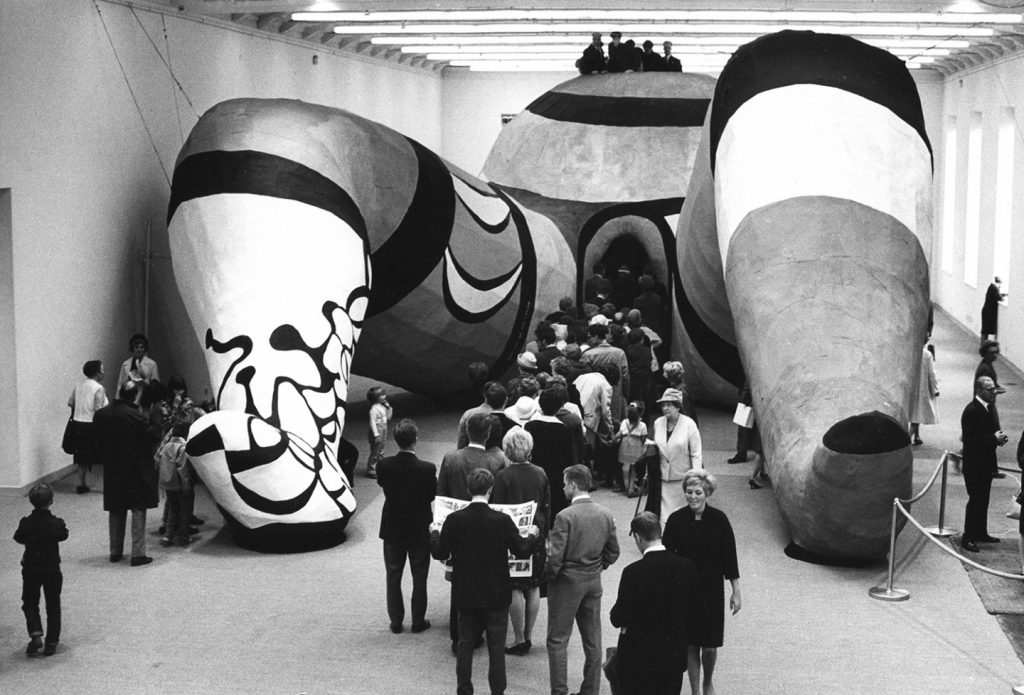
From the exhibition She – A Cathedral, Moderna Museet, 1966 Photo: Hans Hammarskiöld / Moderna Museet © Niki de Saint Phalle, Jean Tinguely, Per Olof Ultvedt / Bildupphovsrätt 2018
CAA’s Committee on Women in the Arts selects the best in feminist art and scholarship to share with CAA members on a monthly basis. See the picks for September below.
THE UN-HEROIC ACT: Representations of Rape in Contemporary Women’s Art in the US
September 4 – November 2, 2018
Shiva Gallery (New York)
The representation of women’s rape by women artists in the US is the theme of this groundbreaking exhibition curated by independent curator Monika Fabijanska. The exhibition’s title, THE UN-HEROIC ACT, is an ironic evocation of Susan Brownmiller’s characterization of the rape scenes underpinning historic masterpieces by male artists as “heroic acts.” The exhibition puts the subject under a different feminist art-historical lens, while its subtitle redresses the lasting avoidance of the word rape in favor of all kinds of euphemisms, the most prominent being “sexual abuse.”
Fabijanska claims rape as an understudied but central theme in women’s art. With this exhibition she seems to only begin sharing the results of her extensive research by illustrating and analyzing its rich iconography in light of works by a select roster of three generations of artists: Yoko Ono, Ana Mendieta, Senga Nengudi, Suzanne Lacy, Lynn Hershman Leeson, Carolee Thea, Guerrilla Girls, Jenny Holzer, Kathleen Gilje, Angela Fraleigh, Natalie Frank, Jennifer Karady, Sonya Kelliher-Combs, Andrea Bowers, Ada Trillo, Kara Walker, Roya Amigh, Naima Ramos-Chapman, Bang Geul Han, and Guerrilla Girls Broadband.
What makes women’s works radically different, says the curator, is the focus not on the action but on the lasting psychological devastation of the victim: her suffering, silence, shame, loneliness, as well as regaining control over the victim’s sexuality and psyche, thereby reclaiming the cultural narrative manifested in the most recent works. The exhibition presents subjects specific to American culture, rather than the artists’ countries of origin, and explores key themes underpinning their representation of rape, such as fairy tales, art history, war, military culture, slavery, gendered violence in Indian reservations, trafficking, college rape culture, domestic violence, criminal trials, the role of social media, etc. While its focus is on iconography, THE UN-HEROIC ACT showcases the variety of media and visual languages employed by artists addressing rape and their different effects. Redressing an art historical gap, it also timely advances a much-needed conversation about one of the most detrimental threats and traumas of women’s lives across time and space.
For details on the upcoming symposium scheduled on October 3, and other educational events see the exhibition’s website.
Hayv Kahraman: Silence is Gold
September 8 – October 27, 2018
Susanne Vielmetter Gallery (Los Angeles)
In 1991, in response to a sequence of uprisings by Kurdish nationalists within Iraq, Saddam Hussein began a brutal bombing and chemical weapons campaign of majority Kurdish towns and settlements within his country. Almost a year after the atrocities began, Human Rights Watch issued a report that reported the deaths of tens of thousands of civilians, “as security forces crushed the most serious internal threat of Saddam’s 12-year rule, and thousands more subsequently perished during one of the largest and most precipitous flights of refugees in modern times.” Hayv Kahraman was one of those refugees.
In Kahraman’s large canvases she grapples with the profoundly counterproductive ways in which rape and sexual violence survivorship is scripted into international appeals for asylum-seekers. What they reveal are the continuing violences of white colonial narratives concerning saving brown women from brown men (as per Gayatri Chakravorty Spivak and miriam cooke) and the need for verifiable, “reliable” data so central to NGO human rights operations. The paintings in Silence is Gold deliver a scathing critique of such do-gooderism that nevertheless reinscribes these fundamental inequalities.
As Dr. Miriam Ticktin writes of Kahraman’s work: “Is there a way to represent suffering respectfully, to call people into solidarity with those in need on the basis of equality? The United States government clearly does not think so, as they refuse to allow their soldiers to be photographed dead or dying: there is no dignity in this. To me, Kahraman’s haunting work confirms this; she suggests that humanitarian imagery requires commodification, sexualization, hierarchy. But thanks to her, we can see this directly, stare it in the face; she exposes humanitarianism as both compelling and corrupt, beautiful in theory and dependent on racialized, non-innocent desires. But in so doing, she creates an opening, giving us a chance to take a different type of responsibility.”
Sondra Perry: Typhoon coming on
July 13 – November 4, 2018
Miami Institute of Contemporary Art
Sondra Perry (b. 1986, Perth Amboy, New Jersey) is an interdisciplinary artist who works with video, computer-based media, and performance. Her innovative work foregrounds the tools of digital production to critically reflect on new technologies of representation and remobilize their potential. She is known for multifaceted narratives that explore the imagining and imaging of blackness, black femininity, and African American experience as well as the ways in which technology and identities are entangled. “I’m interested in thinking about how blackness shifts, morphs, and embodies technology to combat oppression and surveillance throughout the diaspora. Blackness is agile,” as put by the artist.
All the above surface in this exhibition—the first solo Museum exhibition of the artist in the US—initially installed at the Serpentine Gallery in London. The title work Typhoon coming on, 2018, is an immersive large-scale video and sound installation visually referencing the J. M. W. Turner painting The Slave Ship, 1840, which depicts the drowning of 133 slaves by the captain of the British slave ship, Zong, to claim compensation for these ‘goods’ under the salvage clause of the ship’s insurance policy. The exhibition also includes great examples of Perry’s idiosyncratic approach to sculpture, such as Graft and Ash for a Three-Monitor Workstation (2016), an interactive exercise machine mounted with monitors displaying renderings of the artist’s 3-D avatar as she questions the current productivity and efficiency culture. The video installation TK (Suspicious Glorious Absence), 2018, features Perry’s iconic Chroma key blue walls along a large video projection of an extreme close-up of the artist’s skin. Found footage of the artist’s family, protests, and body cams mingle in the accompanying video, interlacing the artists’ sources and concerns.
Remembering “She—A Cathedral”
June 3, 2018 – February 3, 2019
Moderna Museet (Stockholm)
In 1966 Niki de Saint Phalle, along with her collaborators Jean Tinguely, P.O. Ultvedt, and Pontus Hultén (the director of the still-young Moderna Museet), installed a colossal, architecturally-scaled sculpture of a reclining female figure. Viewers were invited to enter the body of the woman through her vagina—collapsing reproductive birth and recreational penetration. Inside viewers could watch a Greta Garbo movie, sidle up to a bar, view a small exhibition of paintings, and enjoy a panoramic view from the top of the figure’s pregnant belly. Hon–Kathedraal (trans. “She—a Cathedral”) remains an icon of de Saint Phalle’s output, and an enduring touchstone for the institution that showed it. Now, a little over fifty years after its original installation, the Moderna Museet dedicates an exhibition to the archival materials related to the installation’s making and reception.
All that remains of Hon is her head, and this is the exhibition’s point of departure, which explores collaboration, experience, and labor. Models, artifacts, film footage, and original works are brought to bear on one another to evince a critical-visual history of an iconic work.
Monir Shahroudy Farmanfarmaian: Sunset, Sunrise
August 10 – November 25, 2018
Irish Museum of Modern Art (Dublin)
Titled after the eponymous first and last work of the show, Sunset, 2015 and Sunrise, 2015—in a poetic curatorial evocation of the sky that conjoins and separates West and East, the two cultures bridged through the artist’s life and career—this is the first major retrospective of Monir Shahroudy Farmanfarmaian in Ireland. Bringing together great examples of the nonagenarian artist’s practice ranging from painting, sculpture, jewelry, and embroidery to collages and works on paper, some previously unseen, it tracks a multifaceted multi-decade course punctuated by volunteer and forced exile in the US and several returns to Iran, including the loss of many of her works confiscated and destroyed during the country’s 1979 Islamic Revolution. It is presided over by Farmanfarmaian’s signature mirror-mosaic pieces that best encapsulate the idiosyncratic merging of traditional Persian techniques with Western geometric abstraction that characterizes her work, eloquently contextualized and framed by the diverse sources that have inspired her practice in the show and accompanying catalogue. While her early involvement with graphic design and experimental modern abstraction in New York City gave way to a period of intense research into traditional craftsmanship and folk art in Iran’s more remote regions, Western avant-garde principles were maintained when she delved into Persian mysticism, the socio-political Islamic landscape and the signature geometry of Iran’s artistic and architectural heritage.
Farmanfarmaian was born in Qazvin, Iran in 1924. One of the first Iranians to study in the US after the Second World War, she went to Cornel University and Parsons School of Design, joined the Art Students League of New York and befriended artists including Jackson Pollock, Willem de Kooning, Frank Stella, and Andy Warhol whom she met during her early career as a fashion illustrator. In 1957 she returned to Iran, only to be forced leave during the 1979 revolution. While one of the most important living artists today in Iran, where she returned in 2004, acknowledged with a museum dedicated to her in Tehran last year, Farmanfarmaian has remained an understudied female pioneer and contributor to global modernism, and only in 2015 she had her first US museum exhibition at the Guggenheim.
Walls Turned Sideways: Artists Confront the Justice System
August 25, 2018 – January 6, 2019
Contemporary Arts Museum Houston
Evincing its title from the sage words of author and activist Angela Davis—“walls turned sideways are bridges”—the work in this wide-ranging exhibition addresses the justice system and its support and continuance of racist and classist ideologies. The artists included in the exhibition leverage strategies of institutional critique and social practice to illuminate, critique, and offer alternatives to a judicial system that inscribes those it contains as inhuman and unworthy. As guest curator Risa Puleo puts it, “Walls Turned Sideways asks if the museum is the repository for all that society values, how is the prison the repository for all society seeks to disown?”
Artists included: Andrea Robbins and Max Becher, Josh Begley, Zach Blas, Chandra McCormick and Keith Calhoun, Luis Camnitzer, Jamal Cyrus, James Drake, The Estate of Chris Burden, The Estate of Martin Wong, Tirtza Even, Andrea Fraser, Maria Gaspar, Danny Giles, Sam Gould, Michelle Handelman, Coco Fusco and Paula Heredia, Suzanne Lacy with Julio Morales and Unique Holland, Alexa Hoyer, Ashley Hunt, Improvers, Richard Kamler, Titus Kaphar, Kapwani Kiwanga, Autumn Knight, Deana Lawson, Shaun Leonardo, Glenn Ligon, Sarah Ross and Damon Locks, Lucky Pierre, Mark Menjivar, Trevor Paglen, Anthony Papa, Mary Patten, Jenny Polak, Carl Pope, Jr., Laurie Jo Reynolds, Sherrill Roland, Gregory Sale, Dread Scott, Sable Elyse Smith, and Rodrigo Valenzuela.