
CAA News Today
New in caa.reviews
posted Feb 16, 2018
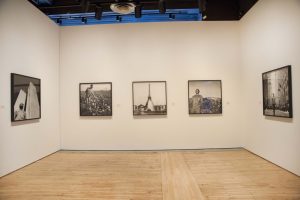


Ellen Handy writes about Indecent Exposures: Eadweard Muybridge’s “Animal Locomotion” Nudes by Sarah Gordon. Read the full review at caa.reviews.
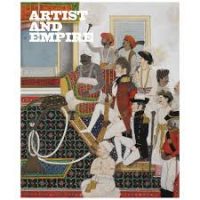
Alice Correia reviews Artist and Empire: Facing Britain’s Imperial Past, edited by Alison Smith, David Blayney Brown, and Carol Jacobi. Read the full review at caa.reviews.
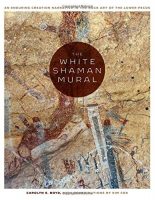
James Farmer discusses The White Shaman Mural: An Enduring Creation Narrative in the Rock Art of the Lower Pecos by Carolyn E. Boyd and Kim Cox. Read the full review at caa.reviews.
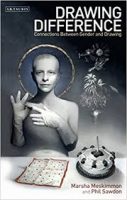
Katve-Kaisa Kontturi explores Drawing Difference: Connections between Gender and Drawing by Marsha Meskimmon and Phil Sawdon. Read the full review at caa.reviews.
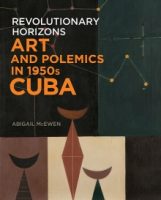
Megan Sullivan examines Revolutionary Horizons: Art and Polemics in 1950s Cuba by Abigail McEwan. Read the full review at caa.reviews.
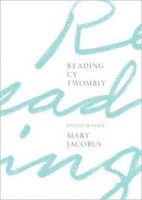
Richard Fletcher writes about Reading Cy Twombly: Poetry in Paint by Mary Jacobus. Read the full review at caa.reviews.
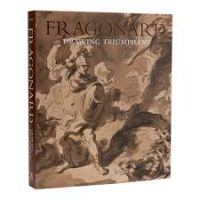
Daniella Berman reviews Fragonard: Drawing Triumphant by Perrin Stein. Read the full review at caa.reviews.
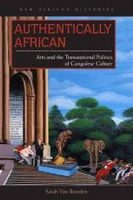
Ikem Stanley Ifejika Okoye writes about Authentically African: Arts and the Transnational Politics of Congolese Culture by Sarah Van Beurden. Read the full review at caa.reviews.
Jacquelyn Coutré explores Jan Lievens: Friend and Rival of the Young Rembrandt by Bernhard Schnackenburg. Read the full review at caa.reviews.
Lauren Whitnah discusses The Cult of St Edmund in Medieval East Anglia by Rebecca Pinner. Read the full review at caa.reviews.
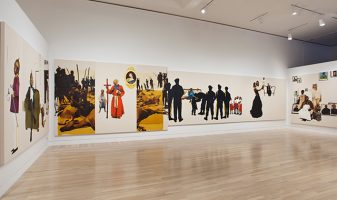
Heather Layton examines the exhibition catalogue Meleko Mokgosi: Pax Kaffraria by Jonathan P. Binstock and Malick Gaines. Read the full review at caa.reviews.
Viêt Lệ looks at the exhibition catalogue Tseng Kwong Chi: Performing for the Camera, edited by Amy Brandt. Read the full review at caa.reviews.
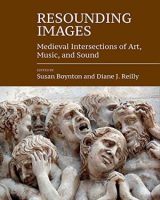
Corine Schleif reviews Resounding Images: Medieval Intersections of Art, Music, and Sound, edited by Susan Boynton and Diane J. Reilly. Read the full review at caa.reviews.
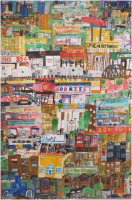
Anne Hilker writes about The City and the Young Imagination: Art from Studio in a School, an exhibition at The Museum of the City of New York. Read the full review at caa.reviews.
Heather McCune Bruhn explores Textile Bildwerke im Kirchenraum: Leinenstickereien im Kontext mittelalterlicher Raumausstattungen aus dem Prämonstratenserinnenkloster Altenberg/Lahn by Stefanie Seeberg. Read the full review at caa.reviews.
Wendy Castenell examines Painting the Gospel: Black Public Art and Religion in Chicago by Kymberly N. Pinder. Read the full review at caa.reviews.
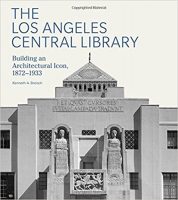
Richard Wittman reviews The Los Angeles Central Library: Building an Architectural Icon, 1872-1933 by Kenneth A. Breisch. Read the full review at caa.reviews.
Danielle Joyner discusses the exhibition catalogue Art and Nature in the Middle Ages, edited by Nicole R. Myers. Read the full review at caa.reviews.
Gunnar Swanson reviews The Philosophy of Design by Glenn Parsons. Read the full review at caa.reviews.
Amelia Jones and David J. Getsy present Abstract Bodies and Otherwise: A Conversation with Amelia Jones and David Getsy on Gender and Sexuality in the Writing of Art History. Read the full conversation at caa.reviews.
Call for CAA Member Feedback: Measuring College Learning in Art History
posted Feb 16, 2018
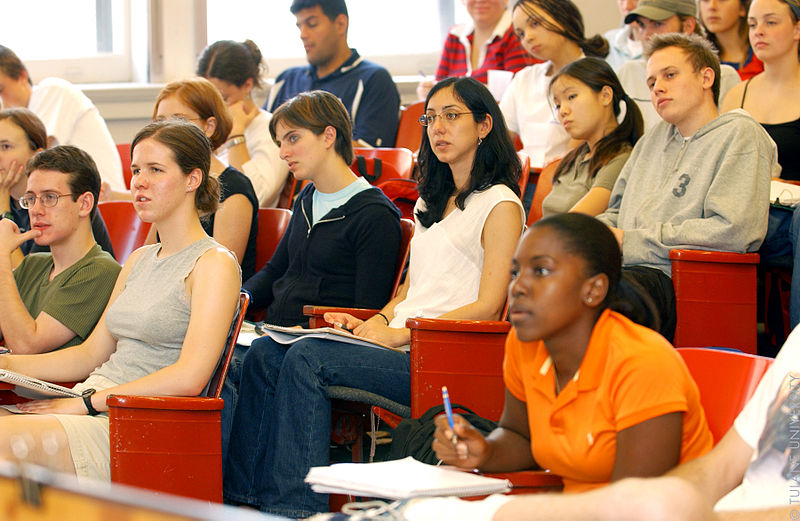
Students in class at Tulane University. Photo: Wikimedia Commons
In 2013 the Social Science Research Council (SSRC) launched the Measuring College Learning (MCL) project as a way to engage faculty in the effort to understand and improve student learning in their discipline through development of better tools for assessment in higher education. CAA recently partnered with the SSRC to create an MCL-Art History panel that would outline learning objectives for introductory art history courses, including identifying essential concepts and competencies that demonstrate foundational knowledge of the discipline. The MCL-AH panel convened in July and December 2017 to produce a draft document.
The MCL-Art History panel will host an open forum at the CAA Annual Conference from 2:00-3:30 PM on Friday, February 23rd in Room 511A of the Los Angeles Convention Center to collect CAA member feedback on its initial draft of core learning goals. The panel plans to share the draft document, solicit input and observations, and respond to questions from the community. CAA members are also invited to review the draft document and share observations before, during, and after the annual conference (until March 31, 2018).
Link to MCL-AH Document: http://highered.ssrc.org/wp-content/uploads/2018.02-MCL-in-Art-History-Report-for-CAA.pdf
CAA Member Feedback to: edick@ssrc.org
Background on the Measuring College Learning Project
In MCL projects faculty and other experts come together to consider what students should learn in their majors and how that learning should be measured. Panels of experts from six disciplines participated in the first iteration: biology, business, communication, economics, history, and sociology. Several national disciplinary associations—including the American History Association, the American Sociology Association, and the National Communication Association—were actively involved in this project. The culmination of this work was the publication of Improving Quality in American Higher Education: Learning Outcomes & Assessments for the 21st Century (Jossey Bass, 2016). More information and resources from this project are available on-line for free download at: http://highered.ssrc.org/projects/measuring-college-learning-project/.
MCL-Art History Panel Members:
Richard Arum, University of California-Irvine, SSRC Senior Academic Advisor
Cole Edick, SSRC Program Assistant
Christine Havice, Kent State University
Richard Lubben, Lane Community College, CAA Education Committee
Elisa Mandell, California State University Fullerton, CAA International Committee
Walter Meyer, Santa Monica College, CAA Professional Practices Committee
Chika Okeke-Agulu, Princeton University, CAA Board of Directors
Stephanie Smith, Youngstown State University
MCL-Art History Co-Chairs:
Virginia Spivey, Independent Scholar and Consultant, CAA Education Committee
Andy Schulz, Penn State University, CAA Board of Directors
Jim Hopfensperger, Western Michigan University, CAA Board of Directors
What to Know for First Time Visitors to a CAA Annual Conference
posted Feb 15, 2018
The 2018 Annual Conference kicks off next week in Los Angeles! Here are some tips for first-time attendees:
- We expect between 3,500 and 4,000 in attendance.
- Wear comfortable shoes. The Convention Center is large and there is a lot of walking. Most people dress business casual.
- Be sure to talk to other conference attendees. Making connections is one of the most important things about the Annual Conference.
- 300 ninety-minute sessions on art making and art history topics – many have Q+A sessions at the end. You don’t need to reserve a space for a particular session, however, space may be limited in due to popularity.
Session times are: 8:30 AM, 10:30 AM, 2:00 PM, 4:00 PM, and 6:00 PM
- Use the Annual Conference App or the printed program to make your selection as to which sessions you want to attend. Select sessions in your own field, but also attend a session that interests you but you don’t know that much about.
- Key Conversation sessions- 12:30 to 1:30PM each day. These cover more topical and current art topics.
- Printed programs are $10. The mobile App for phone is free. There is Wi-Fi throughout the convention center.
- Book and Trade Fair: Approximately 90 exhibitors by publishers and art supply makers
- Cultural and Academic Network Hall: Booths by 52 colleges and cultural orgs
- Interviews between colleges and attendees
- Idea Exchange
- Candidate Center
- Poster sessions
- There are many off-site events, some of which are free and some of which have a fee. Check the conference website for the list and see if they are sold out.
- There are professional development workshops and mentoring sessions. Check the conference website or the App for details.
- Be sure to check out the Media Lounge and ArtSpace, where the Annual Distinguished Artist Interviews take place.
- If you are a presenter, there is a Speaker Ready Room for you to prep.
- The CAA Annual Meeting takes place on Friday at 2:00 PM. All are welcome to attend.
- Other services available include a Business Center, Quiet Room, and Lactation Room.
- General CAA questions can be answered at the Welcome Booth in the Registration area in Concourse Foyer.
- Bus service will run between the hotels and the Westin, Biltmore JW Marriott and the Convention Center – mostly in the morning and end of day. Check the Shuttle Bus Schedule icon in the App for service hours.
106th CAA Annual Conference Schedule Highlights
Tuesday, February 20, 2018
- Meet and Greet for early arrivals at the Convention Center
Wednesday, February 21, 2018
- Registration open 8:00AM to 7:00PM
- Sessions run at Convention Center
- 6:00 – 7:30PM – Convocation, Awards for Distinction, and keynote speech by Charles Gaines. Reception will follow in the Registration Area.
- Tour of the Broad Museum – Jasper Johns exhibition (sold out)
- Hauser & Wirth after party (sold out)
Thursday, February 22, 2018
- Registration open 8:00AM to 7:00PM
- Book and Trade Fair opens, 9:00AM-6:00PM
- Cultural and Academic Network Hall opens, 9:00AM-6:00PM
- Sessions run at the Convention Center
- Distinguished Scholar Award and Conversation, 4:00-5:30PM
- Board of Directors Voting ends, 6:00PM
- Getty Center Reception at 7:00PM – buses will be provided
Friday, February 23, 2018
- Registration open 8:00AM to 7:00PM
- Sessions run at Convention Center
- Distinguished Artist Interviews, 3:30-5:30PM
- CAA Annual Business Meeting 2:00PM at Convention Center
- Receptions run at night at hotels for reunions
Saturday, February 24, 2018
- Registration open 8:30AM to 2:30PM
- Sessions run at Convention Center
News from the Art and Academic Worlds
posted Feb 14, 2018
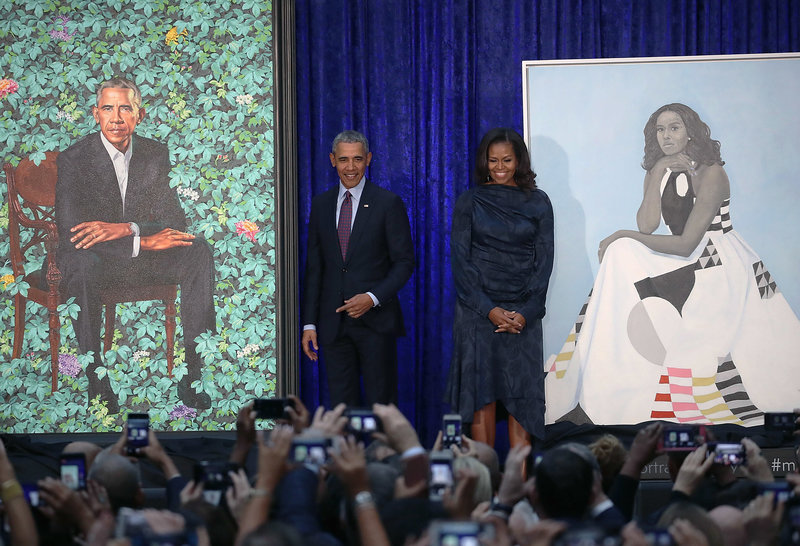
Former President Barack Obama and former first lady Michelle Obama stand next to their newly unveiled portraits during a ceremony Monday at the Smithsonian’s National Portrait Gallery in Washington, D.C. Photo: Mark Wilson/Getty Images
Trump’s Budget Plan Again Calls for Slashing Arts, Public Media Funding
For a second year, President Trump has proposed the elimination of federal funding for public media and the arts. (Billboard)
Paintings of Barack and Michelle Obama Unveiled at Portrait Gallery
The paintings, by Kehinde Wiley and Amy Sherald respectively, are a historic first. (NPR)
Werner’s Nomenclature of Colours: a Pre-Photographic Guide for Artists and Naturalists
A look at the preeminent guide to color for artists, scientists, naturalists, and anthropologists in the 19th-century. (Colossal)
The Greatest Lovers in Art History, from Frida Kahlo and Auguste Rodin to Nan Goldin
Love it or hate it, get in the Valentine’s Day spirit with these artworks. (Artsy)
One of the Earliest Illustrated Medical Books Offers a Lens Into Medieval Health
Originally published in 1491, Fasciculus medicinae quickly proved popular, and dozens of editions followed until 1522. (Hyperallergic)
Meet the Brooklyn Puppet Designer Behind the Fantastical Olympics Opening Ceremony
A five-minute performance represented a year of hard work for artist Nicholas Mahon. (artnet News)
Maybe the Pay Isn’t Great, But the Satisfaction Is High
posted Feb 13, 2018
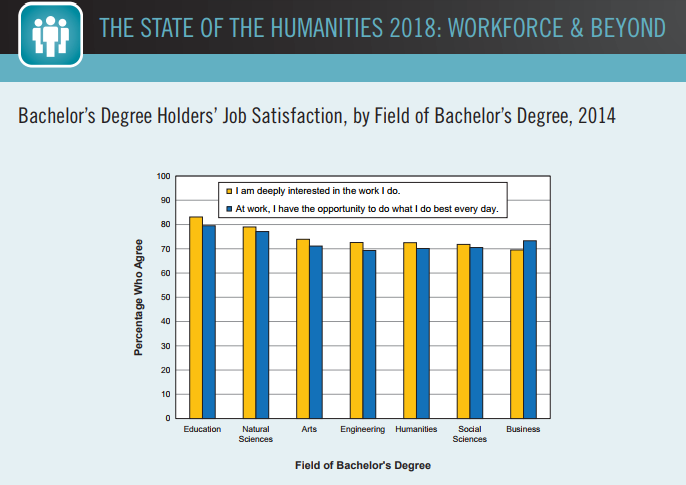
The Humanities Indicators project, an Andrew E. Mellon Foundation-funded initiative, just released the most recent numbers on salaries for those entering the the humanities professions. CAA has been an active participant in the initiative for the past few years.
Their survey shows that as of 2015, for arts graduates in the workforce, the median earnings for art history majors in the workforce with just a bachelor’s degree were $45,000, while those who had gone on to earn an advanced degree (which could be in any discipline) had median earning of $65,000. Graduates who majored in the arts had median earnings of $48,000 (with just a bachelor’s degree) and $60,000 (with an advanced degree). In all cases, these were slightly below the average for all fields.
These updates about earnings are tied to a new report on humanities majors in the workforce, which tries to look beyond earnings, and finds that when it comes to job satisfaction and perceived well-being, humanities majors are pretty much the same as graduates from every other field (including art majors).
Among the key findings in the new report:
- Almost 87% of workers with a bachelor’s degree in the humanities reported they were satisfied with their jobs in 2015, comparable to graduates from almost every other field.
- Over three-quarters of humanities graduates saw themselves at or approaching “the best possible life,” which was similar to the shares among engineering and natural science graduates. Education majors had the highest level on this measure.
- The academic fields were quite similar with respect to their graduates’ level of satisfaction with their personal financial situations in 2014. Among graduates from engineering, barely 50% reported “I have enough money,” while among humanities and education graduates, the share was 42%. (Arts majors had the lowest share on this question.)
- More than a million graduates with bachelor’s degrees in the humanities were employed as managers in 2015, and almost 60% of humanities graduates report managing or supervising employees as part of their job (which was equal to the share of all graduates).
- While much of the report points to similarities, there was one notable difference: only 30% of graduates with a bachelors in humanities perceived a close relationship between their job and their degree in 2014, while more than a third saw no relationship. Fine and performing arts majors were similar on this score. This differed substantially from graduates with science and professional degrees.
CAA Statement on the 2019 White House Budget Proposal
posted Feb 12, 2018
Earlier this afternoon, the White House released its 2019 Budget Proposal. The $4.4 trillion budget outlines deep cuts in domestic programs that fund education, arts, and humanities initiatives, while increasing military spending.
“By zeroing out the budgets for the NEH, NEA and similar agencies that support the arts, humanities and education, the President has shown again that he cares more about tax cuts for the wealthy than supporting an American cultural heritage, funded though these agencies,” said Hunter O’Hanian, CAA’s executive director. “Thankfully, a bipartisan group of Congressional members, those with the real financial authority, have Americans interests at heart and they will reject the President’s draconian proposals.”
The entire budget proposal adds $984 billion to the federal deficit in the next year and in total adds $7 trillion to the deficit over the next 10 years.
Partial list of programs slated for elimination:
- NEA
- NEH
- IMLS
- CPB
- Corporation for Travel Promotion (Brand USA)
- Delta Regional Authority
- Denali Commission
- Northern Border Regional Commission
- Woodrow Wilson Center
- S. Interagency Council on Homelessness
- S. Trade and Development Agency
- Chemical Safety and Hazard Inspection Board
- Under SNAP: “Proposals are also included to eliminate funding for State performance bonuses and for SNAP nutrition education grants…”
- Economic Development Administration
- Contingency Fund
We call on our members and those who believe in the importance of the arts, humanities, and education to act now. The most effective way to make your voice heard is through your local representatives. Call. Email. Write letters.
Congress has this budget in their hands and now is the time to let them know you support the programs it seeks to eliminate.
Click here to access the CAA Arts and Humanities Advocacy Toolkit.
We look forward to discussing budget advocacy at our Annual Conference in Los Angeles, February 21-24.
Do You Know a CAA-Friendly Person Who Knows Numbers?
posted Feb 12, 2018
As you know, CAA is a non-profit organization. Last fall, our beloved Treasurer Jack Hyland passed away after more than twenty years of service to the Association. Board Member Peter Lukehart has agreed to serve as Interim Treasurer until a permanent new treasurer is found.
If you know someone, perhaps a spouse or friend of an existing CAA member, who knows their away around numbers (i.e., budgets, annual financial statements, etc.) who would be willing to serve the Association as its Treasurer, please contact Executive Director Hunter O’Hanian (HOHanian@collegeart.org). Elected by the Board of Directors, the Treasurer is a non-paid position and sits on the Board of Directors. He or she works closely with the Association’s CFO to review financial statements. It is estimated that this role takes approximately 5 hours of volunteer time per quarter, in addition to attendance at the Board of Directors meetings which are usually in February, May and October.
Joe Lupo and Carmon Colangelo
posted Feb 12, 2018
The weekly CAA Conversations Podcast continues the vibrant discussions initiated at our Annual Conference. Listen in each week as educators explore arts and pedagogy, tackling everything from the day-to-day grind to the big, universal questions of the field.
This week, Joe Lupo, associate professor and graduate coordinator at West Virginia University, and Carmon Colangelo, dean of the Sam Fox School of Design and Visual Arts at Washington University at St. Louis, discuss what makes a successful educator from the perspective of an administrator.
New in caa.reviews
posted Feb 09, 2018
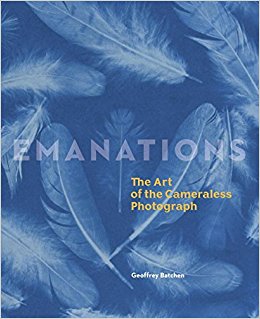
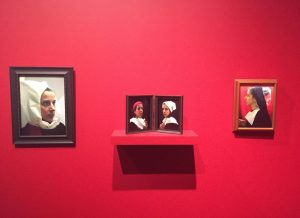
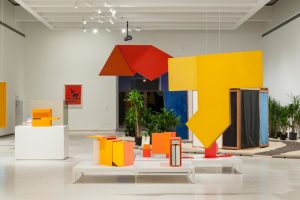
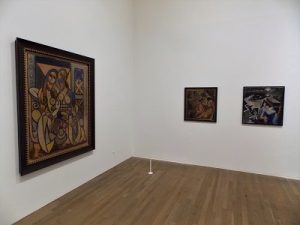
Geoffrey Batchen reviews Emanations: The Art of the Cameraless Photograph edited by Philomena Mariani. Read the full review at caa.reviews.
Daniel R. Quiles discusses the exhibition catalogue Hélio Oiticica: To Organize Delirium, with contributions by Lynne Zelevansky, Elizabeth Sussman, James Rondeau, Donna De Salvo, and Anna Katherine Brodbeck. Read the full review at caa.reviews.
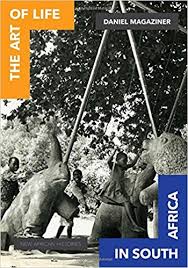
Victoria Rovine writes about The Art of Life in South Africa by Daniel Magaziner. Read the full review at caa.reviews.
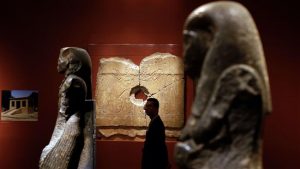
Patrick Salland explores the exhibition catalogue Ancient Egypt Transformed: The Middle Kingdom edited by Adela Oppenheim, Dorothea Arnold, Dieter Arnold, and Kei Yamamoto. Read the full review at caa.reviews.
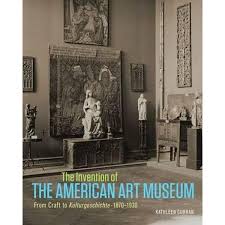
Jeffrey Abt examines The Invention of the American Art Museum: From Craft to Kulturgeschichte, 1870–1930 by Kathleen Curran. Read the full review at caa.reviews.
Francesca Balboni reviews Social Medium: Artists Writing, 2000–2015 edited by Jennifer Liese. Read the full review at caa.reviews.
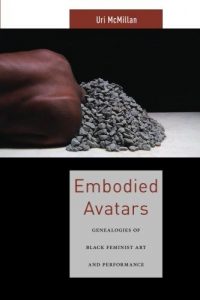
Saisha Grayson discusses Embodied Avatars: Genealogies of Black Feminist Art and Performance by Uri McMillian. Read the full review at caa.reviews.
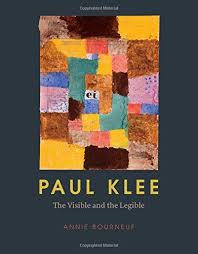
Johanna Függer-Vagts writes about Paul Klee: The Visible and the Legible by Annie Bourneuf. Read the full review at caa.reviews.
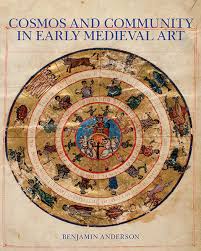
Dorothy Hoogland Verkerk evaluates Cosmos and Community in Early Medieval Art by Benjamin Anderson. Read the full review at caa.reviews.
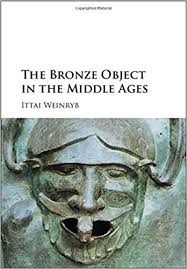
Joseph Salvatore Ackley reviews The Bronze Object in the Middle Ages by Ittai Weinryb. Read the full review at caa.reviews.
Carol Ann Dixon discusses the exhibition catalogue Wifredo Lam: The EY Exhibition, edited by Catherine David. Read the full review at caa.reviews.
Anna Tahinci writes about the exhibition catalogue Nina Katchadourian: Curioser, edited by Veronica Roberts. Read the full review at caa.reviews.
CWA Picks for February 2018
posted Feb 08, 2018
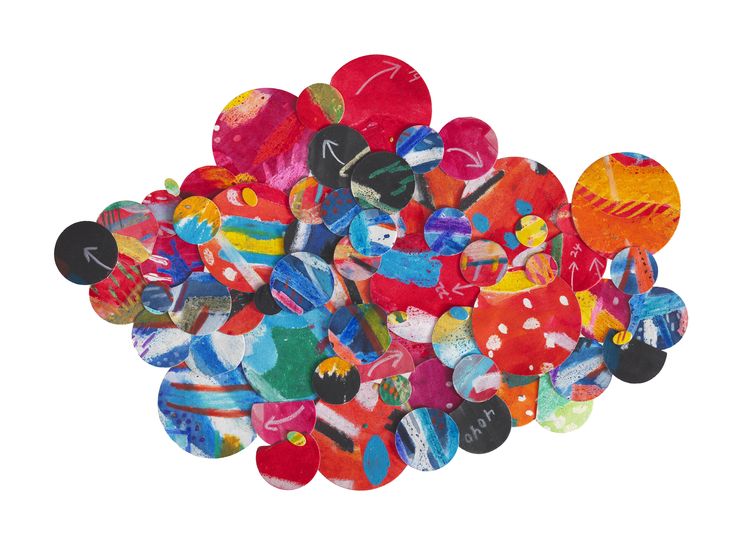
Howardena Pindell, Untitled #4D, 2009. Mixed media on paper collage; 7 × 10 in. Courtesy of the artist and Garth Greenan Gallery, New York.
CAA’s Committee on Women in the Arts selects the best in feminist art and scholarship to share with CAA members on a monthly basis. See February’s picks below.
Soul of a Nation
February 3–April 23, 2018
Crystal Bridges Museum of American Art
600 Museum Way
Bentonville AR, 72712
In this exhibition featuring the work of 60 artists, Soul of Nation, brings together painting, sculpture, photography, and more in an exhibition of “era-defining artworks that changed the face of art in American.”
The exhibition originated at the Tate Modern in London and will debut in the United States at Crystal Bridges. Artists Alice Neal, Faith Ringgold, Betye Saar, Ming Smith, Alma Thomas are joined by Romare Bearden, Barkley Hendricks, Noa Purifoy, Martin Puryear, and William T. Williams, among many others.
With over 150 works spanning 1963-1983 the exhibition explores a time when “Black Art” was being defined and debated across the country in vibrant paintings, photographs, prints and sculptures.”
Crystal Bridges is one of only two United States venues to host this important exhibition, described as both powerful, and at times, challenging. Following its debut in Bentonville, the exhibition travels to the Brooklyn Museum in New York.
On starting another conversation about comparative feminism
December 2, 2017–April 2018
WhyWhyArt Art Center
Nanjing City, Pukou District
Zijin Special Creative Zone
88 Pubin RD, 2F
In the exhibition On starting another conversation about comparative feminism at WhyWhyArt, 17 artists from China and internationally “explore the nature of comparative feminism, the existence of differing perceptions and trajectories of feminist identification that coexist as a result of a world that is globally connected, yet widely disparate regarding other influential factors, such as social mobility and economic development.”
Artists include: Abby Robinson (USA), Alexandre Ouairy (France), Daniele Mattioli (Italy), Guanyi Ming (China), Hazal Firat (Turkey), Inga Bruvere (Latvia), Island6 Arts Collective (International), MATE (China), Monika Lin (USA), Panos Dimitropoulos (Greece), Steven An (China), Susanne Junker (France), Cao Tongliang (China), Virginie Lerouge Knight (France), WeAre (International), Zane Mellupe-Goutard (LV/FRA), and Zhu Ye (China).
Hazel Meyer: Muscle Panic objects
January 26, 2018—March 10, 2018
Art League Houston
1953 Montrose Blvd.
Houston, TX 77006
Toronto-based performance and installation artist Hazel Meyer has been exploring the intersection of sports and gender since 2001 (with her bombastic Unnecessary Roughness—an audio-intestinal sports opera), and this exhibition represents the latest iteration of the artist’s locker room shenanigans. For opening night, Meyer, and a group of “local women, trans, and/or non-binary artists, athletes and activists” will end a five kilometer run to the gallery, depositing their sweaty garments in and amongst an immersive installation.
From the press release: “Leading the viewer through the space, the works offer an extended consideration regarding the performative nature of the athletic as it intersects with queerness. The exhibition instigates an arena of sweat and queer desire, evoking the imagery of momentous sports history, the bodily gestures and actions of a drill or warm-up and the aesthetics of the gymnasium. Simultaneously an installation and a performance, the exhibition transforms the banal and austere white cube into a hot physically charged site for emotional and physical exchange.”
Howardena Pindell: What Remains to Be Seen
February 24, 2018—May 20, 2018
Museum of Contemporary Art
220 E Chicago Ave
Chicago, IL 60611
For over fifty years Howardena Pindell has been pressurizing process and politics in her wide-ranging work. Best known, perhaps, for her video Free, White, and 21 (1980) in which the artist performs the daily racial aggressions she experienced as a person of color working in the artworld, all while wrapping her head in gauze, Pindell’s output also encompasses painting, collage, print-making, and photography. Throughout her career Pindell has explored the possibilities of abstraction, often collaging tiny pieces of paper (hole punches) onto fields of subtly undulating color, and sometimes adding perfume or talcum powder, engaging a viewer’s olfactory sense alongside the visual. The exhibition includes work from the past two years—large biomorphically-shaped canvases in bright, bold colors, evoking snails, whirlpools, and galaxies.
Victoria Gitman: Taktisch
January 11, 2018—February 17, 2018-01-23
Garth Greenan Gallery
545 W. 20th Street
New York, NY 10011
From the exhibition’s press release:
“The exhibition focuses on Gitman’s recent paintings—meticulously rendered abstractions based on the supple fur surfaces of vintage handbags. Gitman works in oils, hair by hair, creating surfaces that are delicately painted from close, direct observation. Many of the paintings feature abstract patterns evocative of early and mid-twentieth-century stylistic traditions. Evoking modernist compositional techniques, Gitman’s new works are resolutely frontal, their imagery extending edge-to-edge. Each composition is tightly cropped, further intensifying both the haptic quality and the inherent sensuousness of the artist’s chosen subjects.
“The title of the exhibition is a neologism introduced by Vienna School art historian Aloïs Riegl to describe a kind of close-up perception or “visual touching.” Taktisch can at once signify “tactile,” “tangible,” “palpable,” or “textural,” as well as “tactical.” It implies an intimate exchange with art objects, an intermingling of the experiences of seeing, feeling, and knowing through sensory perception.”
Kentucky Foundation for Women Artist Enrichment Grant
2017 Winners
With grants totaling $105,000 the Kentucky Foundation for Women has awarded 32 artists and arts organizations in the state enrichment grants, allowing them to “further their own artistic development while creating art for positive social change throughout the state.” Artistic mediums include photography, book projects, painting, sculpture, films, performances, and poetry among others.
Individual grants range from $1,000 to $7,500, and include assisting an artist with class fees to further her metal-working skills and “help normalize welding as an art form practiced by women,” to funding an independent film to increase the “acceptance of lesbians and all women who love women romantically.
“The foundation is pleased to support the work of these talented artists. Their projects show a commitment to expanding the scope of feminist art in Kentucky, through their innovative approaches and thought-provoking subject matter,” said Judi Jennings, director of the Foundation for Women. Read more here.
The artists include: Sylvia Ahrens (Lexington), Leslie Anglin (Louisville), Carrie Billett (Harlan), Tasha Cotter (Lexington), Shannon Davis-Roberts (Murray), Rachel Grimes (Milton), Vanessa Grossl (Lexington), Aaisha Hamid (Louisville), Julie Hensley (Richmond), DaMaris B. Hill (Lexington), Jenny Hobson (Berea), Rebecca Gayle Howell(Hindman), Trish Lindsey Jaggers (Smiths Grove), Karen Jones (Lexington), Karen Lanier of KALA Creative (Lexington), Amira Karaoud (Louisville), Lori Larusso (Lexington), Jaqui Linder (Versailles), Looking for Lilith Theatre Company (Louisville), George Ella Lyon (Lexington), Kristen Renee Miller (Louisville), Marie Mitchell (Richmond), Mary K. Morgan (Chappell), Jill Robertson (Hazard), Savannah Sipple (Lexington), Rainbow Star (Berea), Jamey Temple (Williamsburg), The Local Honeys (Linda Jean Stokley & Montana Hobbs) (Versailles), Tanya Torp (Lexington), Tucky Williams (Lexington), Lindsey Windland and Meg Wilson (Berea), and Whitney Withington (Big Hill).