CAA News Today
Frederick Horowitz: In Memoriam
posted by CAA — April 23, 2014
Elaine Wilson is an artist and a former colleague of the deceased at Washtenaw Community College in Ann Arbor, Michigan.
Frederick Horowitz, an artist, art educator, writer, and passionate champion of the work and teaching philosophy of Josef Albers, died on September 12, 2013, in Ann Arbor, Michigan. He was 75 years old.
Horowitz was born and raised in New Haven, Connecticut, and attended Yale University, earning a BA in English in 1960 and a BFA in painting in 1962. His life was forever changed when he enrolled in Albers’s drawing class. Although Horowitz later received an MFA in painting at the University of Michigan in 1964, his contact with Albers at Yale was defining. In the book Josef Albers: To Open Eyes (New York: Phaidon, 2006), coauthored with Brenda Danilowitz, Horowitz recounts the comment Albers made about one of his drawings of the textural quality of a log of wood:
In his crit of one day’s results, Albers singled out a drawing in which repeated black strokes of a soft pencil had jabbed a hole in the newsprint. “Yah,” he exclaimed with delight, and only half ironically, “this boy is getting into it!”
The 12 x 18 inch newsprint pad in which Horowitz did many of the exercises for this class is preserved today, signaling the importance he placed on his experience in this course.
Horowitz spent thirty-five years teaching drawing, design, color, and art appreciation at Washtenaw Community College in Ann Arbor. He was widely respected in southeast Michigan as a teacher with authority and integrity. He mentored countless students who went on to become artists, transferring to four-year art programs around the country. Many of his students were older individuals whose lives were deeply enriched by his courses.
At Washtenaw Horowitz taught the art-appreciation course and wrote More Than You See: A Guide to Art (San Diego: Harcourt Brace Jovanovich, 1985) for use in it, while also widening the book’s scope for a broader audience. More Than You See departs from many textbooks for art appreciation and art history: instead of presenting artworks in a chronological order or grouping them by “ism,” it presents a series of questions about looking at a wide range of paintings and objects without necessarily providing the answers. These questions continually challenge readers to think for themselves.
One chapter, titled “Looking over the Artist’s Shoulder,” compares and contrasts an Italian Renaissance painting, Guercino’s Esther before Ahasuerus (1639) and the preparatory drawings for it, with a miniature painting from India and its preparatory drawing. Another chapter, “Reading Paintings,” examines the formal characteristics of several works of art. Horowitz was especially interested in process and in the artist’s choices. By including works from the museums and galleries close to his school, such as the University of Michigan Museum of Art and the Detroit Institute of Arts, he tied the book to the experience of his students whom he regularly took to these institutions to see the real thing.
In 1992 Horowitz began thinking about writing a book on Albers’s teaching. Brenda Danilowitz, chief curator at the Josef and Anni Albers Foundation in Bethany, Connecticut, worked with him and coauthored the book. Horowitz interviewed numerous artists who had studied with Albers, asking them about the teacher’s presence in the classroom and studio and about the impact and import of the particular projects he assigned. Research at the archives of the Bauhaus, Black Mountain College, Yale University, and the Albers Foundation yielded a rich trove of material, which Horowitz and Danilowitz eventually worked into Josef Albers: To Open Eyes. This groundbreaking book has already changed the teaching of numerous younger artists and art professors, reinvigorating their work in the studio classroom.
While writing To Open Eyes, Horowitz began two courses—on design and on color—at Washtenaw Community College, putting into practice the ideas he was acquiring from his research. His own experience taking the color class at Yale with Albers’s own student, Sewell “Si” Sillman, meant that he was well prepared.
As a teacher Horowitz was disciplined and demanding, a tough but kind critic and grader. He required a great deal from his students, but when he saw a need to mentor and foster the talent of particular individuals he went above and beyond his regular duties to help them. This approach led to developing personal relationships that would last well beyond their time at Washtenaw.
Horowitz’s mentoring did not stop with students. He routinely worked with the part-time faculty that he recruited to teach many sections of the studio-art and art-appreciation classes, discussing with them course assignments and curricula, student behavior, grading policy, and even their students’ artwork. He created an atmosphere of cooperation and collegiality within the college’s art area that made it a laboratory for good teaching, a unique place for the overworked and underpaid instructors to work in. He was honest and generous with everyone, while holding all to his own high standards.
After retiring from Washtenaw Community College in 2003, Horowitz continued to lecture around the country and give workshops on Albers and on color and design (including presentations at the Foundations in Art: Theory and Education conference in 1997 and 2003 and at Black Mountain College Museum and Art Center in Asheville, North Carolina.) Abroad he taught workshops at art schools in Mexico City and Jerusalem.
Horowitz’s recent research at the Albers Foundation included close examinations of several Homage to the Square paintings. He developed his thoughts into a manuscript, now awaiting publication. This text—unlike any other of which I know about this body of work—looks closely at how Albers’s color choices interact with each other in specific ways; it also describes poetically their effect after extended looking. Most people don’t spend the amount of time in front of these works to have the experience Horowitz recounts, but hopefully more of them will. In addition, Horowitz speaks about Albers’s color course in the new digital format of the artist’s influential book Interaction of Color (New Haven: Yale University Press, 2013. He was also part of a new online art-appreciation course being developed at Washtenaw Community College.
At a memorial celebration of Horowitz’s life at Washtenaw in late October 2013, family, friends, and colleagues remembered him as deeply humane, curious, warm, devoted to his family, funny, and generous with his time, intellect, and heart. He leaves behind a trail of people who loved him and a host of younger artists who, thanks to his inspiration, are devoted to teaching well.
Recent Deaths in the Arts
posted by Christopher Howard — April 23, 2014
In its periodic list of obituaries, CAA recognizes the lives and achievements of the following artists, historians, teachers, curators, dealers, philanthropists, and others whose work has significantly influenced the visual arts.
- Molly Lamb Bobak, an artist, teacher and the first Canadian woman to be sent overseas as a war artist, died on March 2, 2014. She was 95
- Markus Brüderlin, a Swiss curator, art historian, and director of the Kunstmuseum Wolfsburg, died on March 16, 2014, at age 55
- Chu Teh-Chun, a Chinese painter also known as Zhu Dequn who was celebrated for integrating traditional Chinese painting with Western abstraction, died on March 26, 2014. He was 94 years old
- Derek Clarke, a painter inspired by Scottish and Irish landscapes, died on February 10, 2014, at the age of 101. He had taught for many years at the Edinburgh College of Art
- Margaret Crow, a Texan philanthropist and matriarch of a family of real-estate developers, died on April 11, at age 94. The Trammell and Margaret Crow Collection of Asian Art in Dallas is named for her and her husband
- Alan Davie, a Scottish painter of colorful abstractions, passed away on April 5, 2014. He was 93 years old
- Lucia Eames, a designer, the daughter of Charles Eames, and the owner of the Eames Office for twenty-six years, died on April 1, 2014. She was 83
- Joseph Anthony “Joe” Gatto, a noted jewelry artist and the founding visual-art dean of the Los Angeles County High School for the Arts, died on November 13, 2013. He was 78 years old. CAA has published a special obituary for Gatto
- John Heskett, a writer, professor, and lecturer on industrial design who greatly expanded the theorization of his subject, died on February 25, 2014. He was 76
- Frederick Horowitz, an artist, educator, author, and advocate of Josef Albers’s teaching, died on September 12, 2013, at age 75. CAA has published a special text on Horowitz
- Alexis Hunter, a feminist and conceptualist photographer who based in London, died on February 24, 2014. She was 65
- Charlotte Jirousek, associate professor of textiles and apparel at Cornell University, passed away on February 12, 2014. She was 75 years old
- Peter Kalkhof, a German artist based in London known for his colorful linear abstractions, died on February 24, 2014, at the age of 80. He also taught art for many years at Reading University
- Monika Kinley, a British curator, collector, and dealer who specialized in outsider art, passed away on March 9, 2014, at age 88
- Donald F. McCallum, an art historian, professor, and scholar of Japanese art, died on October 23, 2013. He was 74 years old. CAA has published a special obituary for McCallum
- Kenneth W. Prescott, an art historian, curator, and ornithologist whose last position was chairman of the Department of Art at the University of Texas at Austin, died on August 20, 2013. He was 93
- Ernest Silva, a painter, sculptor, and professor at the University of California, San Diego, from 1979 to 2013, died on February 24, 2014. He was 65
- Edward Sozanski, an art critic for the Philadelphia Inquirer for three decades, died on April 14, 2014. He was 77 years old
- Martin Sullivan, the former director of the Smithsonian Institution’s National Portrait Gallery from 2008 to 2012, died on February 25, 2014. He was 70
- Theo Wujcik, an artist, professor, and master printmaker who worked with Jasper Johns and Robert Morris, died on March 29, 2014, at age 78
Read all past obituaries in the arts in CAA News, which include special texts written for CAA. Please send links to published obituaries, or your completed texts, to Christopher Howard, CAA managing editor, for the next list.
Solo Exhibitions by Artist Members
posted by CAA — April 22, 2014
See when and where CAA members are exhibiting their art, and view images of their work.
Solo Exhibitions by Artist Members is published every two months: in February, April, June, August, October, and December. To learn more about submitting a listing, please follow the instructions on the main Member News page.
April 2014
Mid-Atlantic

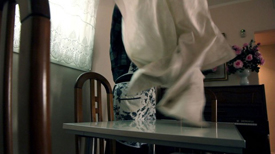 Ira Eduardovna, Mother, 2013, single-channel HD video (artwork © Ira Eduardovna)
Ira Eduardovna. Vox Populi, Philadelphia, Pennsylvania, January 3–26, 2014. Mother. Video.
Midwest

Stacy Leeman. Sharon Weiss Gallery, Columbus, Ohio, March 2–30, 2014. Hidden Presences. Painting.
Northeast
Blane De St. Croix. Fredericks and Freiser, New York, May 1–June 14, 2014. Dead Ice. Sculpture.

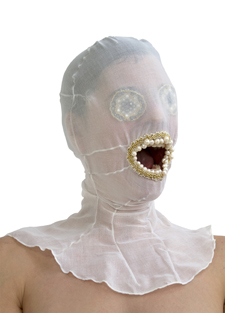 Laura Kalman, Hood (5), 2014, inkjet print, 20 x 28 in. (artwork © Laura Kalman)
Lauren Kalman. Sienna Patti Contemporary, Lenox, Massachusetts, February 8–April 6, 2014. But if the Crime is Beautiful … Part 1, Composition with Ornament and Object. Fine art and contemporary craft.
South

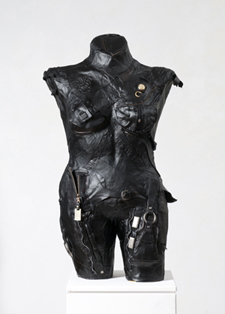 Linda Stein, Defender 696, 2010, leather, metal, and mixed media, 38 x 22 x 14 in. (artwork © Linda Stein)
Linda Stein. Rebecca Randall Bryan Art Gallery, Coastal Carolina University, Conway, South Carolina, January 15–February 28, 2014. The Fluidity of Gender: Sculpture by Linda Stein. Sculpture.
West
Kent Hayward. 7 Dudley Cinema, Beyond Baroque Arts Center, Venice, California, April 27, 2014. Retrospective of Filmmaker Kent Hayward’s Work. Experimental and documentary film.

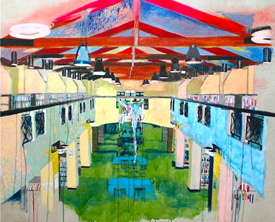 Katie Herzog, painting from Altered State Library (artwork © Katie Herzog)
 Katie Herzog. Monte Vista Projects, Los Angeles, California, February 15–March 9, 2014. Altered State Library. Painting.
Kanwal Khalid: 2014 International Travel Grant Recipient
posted by Janet Landay, Program Manager, Fair Use Initiative — April 21, 2014
Kanwal Khalid was a participant in the 2014 CAA-Getty International Travel Grant Program. A professor of fine arts at University of the Punjab in Pakistan, she specializes in the history of South Asian art and design with a particular focus on miniature painting in nineteenth-century Lahore. Khalid is also a practicing miniature painter and former curator of paintings at the Lahore Museum. Below she describes her experiences at the 102nd Annual Conference in Chicago.
 Just when you think you have seen it all, something turns up and surprises you with its novelty and magnitude. The College Art Association did just that when I attended its Annual Conference in Chicago last February. For me, it became more than attending a conference; it was the experience of a lifetime that changed many of my perspectives.
In Pakistan, art history has always been part of the academic study of fine arts, but now it has become an independent discipline in its own right. This is a relatively recent development, of which I have been a part, and art history is enjoying a high status for the first time in the history of Pakistan. But still it is a comparatively new field. When I came to the Chicago conference, it was a complete surprise to realize that thousands of people share the same passion. CAA and the Getty Foundation have caught a tiger by the tail that is growing fast and expanding everywhere.
The chill of Chicago and the layers of snow couldn’t mar the fiery passion of the scholars, students, artists, and art historians participating in the conference. Interactive sessions, exhibitions, bookstalls, art-supply booths—this was a completely magic world for me. To breathe in thoughts and objects that are the passion of my life was a real treat.
Another dimension of knowledge was listening to presentations by the other nineteen recipients of CAA’s International Travel Grant Program and realizing what wonderful work was going on in their countries regardless of all the challenges they face on daily basis, very similar to the situation in my own country.
Outside the grandeur of the Hilton Hotel, it was the world of museums and modern architecture. I really liked the friendly size of museums in Chicago, which were not as overwhelming as other institutions I have visited, where there’s always a sense of missing a lot even after seeing so much. In all the museums that I visited in Chicago, I was able to return to many of my favorite galleries more than once during the week.
And then a bad snowstorm hit just as we were departing Chicago for New York. Our destination was the Sterling and Francine Clark Art Institute in Williamstown, Massachusetts, and I will not be exaggerating if I call it a researcher’s paradise. The library was a dream-come-true. The best part for me was being surrounded by mountains—the Berkshires were an enchanted land containing everything I could desire. Here, we raised questions, made suggestions, and challenged old concepts in a true scholarly approach.
The time passed too quickly, and we were saying goodbye to each other at Penn Station in New York City, with a hope that someday we will meet again. I traveled south to give a lecture in Delaware and then attend a meeting in Washington, DC. My experience at CAA turned out to be a great asset for these events, where I imparted my knowledge of South Asian art and culture with more confidence and vigor, especially during a briefing to the South Asian desk at the US State Department about the contemporary educational and cultural situation of Pakistan.
CAA’s 2014 Annual Conference was a life-changing event. Now I’m more confident about my research and teaching methodology because a comparison with other approaches helped me improve my own ways of doing things. I’m so very much looking forward to attending the conference next year.
After returning to Pakistan, I have talked with my students about the potential and scope of CAA and to encourage them to become members. This will give them an exposure to a world of dedicated art historians, enthusiastic academicians, and talented artists, with endless opportunities for those who have the judgment and ability to take advantage of them.
Image Caption
Kanwal Khalid in Chicago.
People in the News
posted by CAA — April 17, 2014
People in the News lists new hires, positions, and promotions in three sections: Academe, Museums and Galleries, and Organizations and Publications.
The section is published every two months: in February, April, June, August, October, and December. To learn more about submitting a listing, please follow the instructions on the main Member News page.
April 2014
Academe
Christine Hahn has earned tenure in the Department of Art and Art History at Kalamazoo College in Kalamazoo, Michigan.
David Joselit has left Yale University in New Haven, Connecticut, for a new post as Distinguished Professor of Art History at the Graduate Center, City University of New York.
Museums and Galleries
Darby English, director of research and academic programming at the Sterling and Francine Clark Art Institute in Williamstown, Massachusetts, has been appointed consulting curator in the Department of Painting and Sculpture at the Museum of Modern Art in New York. He will retain his position at the Clark.
Sandra Q. Firmin, curator of the UB Art Galleries at the University at Buffalo, State University of New York, has accepted the directorship of the CU Art Museum at the University of Colorado in Boulder.
David Rubin has left his curatorial position at the San Antonio Museum of Art in San Antonio, Texas.
Organizations and Publications
Jill Deupi has joined the board of directors of the Association of Art Museums and Galleries as its New England representative.
Jessi DiTillio has been appointed interim administrative director of the Association of Art Museums and Galleries.
Reni Gower of Virginia Commonwealth University in Richmond has been reelected to the Southeastern College Art Conference’s board of directors for a three-year term.
Sandra Reed of the Savannah College of Art and Design in Savannah, Georgia, has been reelected to the Southeastern College Art Conference’s board of directors for a three-year term.
Institutional News
posted by CAA — April 17, 2014
Read about the latest news from institutional members.
Institutional News is published every two months: in February, April, June, August, October, and December. To learn more about submitting a listing, please follow the instructions on the main Member News page.
April 2014
The Arkansas Arts Center in Little Rock has received a spectacular gift of 290 watercolors and drawings by the American artist John Marin (1870–1953) from Norma B. Marin, the widow of the artist’s son.

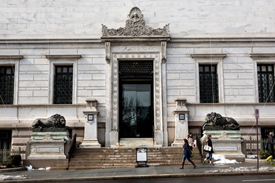 The Corcoran Gallery of Art and Corcoran College of Art and Design (photograph by William Atkins/George Washington University and © George Washington University Photography)
The Corcoran Gallery of Art and Corcoran College of Art and Design, both in Washington, DC, have announced a merger with the National Gallery of Art and George Washington University, also located in the nation’s capital.
The Courtauld Institute of Art in London, England, and the Iran Heritage Foundation have announced funding for a postgraduate and research-assistant post with a focus on Persian arts.
The Frick Art Reference Library and the William Randolph Hearst Archive at Long Island University (LIU) Post have completed a collaborative digitization project, Gilding the Gilded Age: Interior Decoration Tastes and Trends in New York City. With funding from the New York State Regional Bibliographic Databases Program, this project brings together a group of late-nineteenth and early-twentieth-century auction catalogues held by the library and the archive.
The Los Angeles County Museum of Art in California is one of five major American museums to have received funding for the Andrew W. Mellon Undergraduate Curatorial Fellowship Program, which provides specialized training in the curatorial field for students across the United States with diverse backgrounds.
The Metropolitan Museum of Art in New York has received a gift from Daniel Brodsky, the museum’s chairman, and his wife Estrellita B. Brodsky, an art historian, to endow two new curatorial positions in the museum’s Department of Modern and Contemporary Art. The two positions will be called the Estrellita B. Brodsky Curator of Latin American Art and the Daniel Brodsky Associate Curator of Architecture and Design.
The Museum of Fine Arts, Houston, is one of five major American museums to have received funding for the Andrew W. Mellon Undergraduate Curatorial Fellowship Program, which provides specialized training in the curatorial field for students across the United States with diverse backgrounds.

 Ann Hamilton
Ohio State University in Columbus has initiated the Ann Hamilton Project Archive, which contains more than one thousand downloadable, high-resolution images from thirty-five installation by Hamilton, an internationally acclaimed artist and Distinguished University Professor in the university’s Department of Art.
The Yale Center for British Art in New Haven, Connecticut, has reopened its Study Room after completing the first phase of a major building-conservation project.
The Yale School of Art in New Haven, Connecticut, has accepted a $5 million contribution from the Stavros Niarchos Foundation to create a permanent, unrestricted endowment to support the core priorities of the school, while naming in perpetuity the Stavros Niarchos Foundation Dean. A second gift of $900,000 will supplement three existing endowments, created by the foundation in 2010, to establish an artist’s residency, scholarships for international students, and a dean’s resource fund.

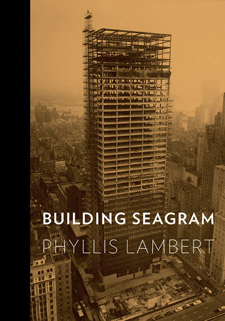
Yale University Press in New Haven, Connecticut, has accepted the 2013 Design Book of the Year Award by the editors of Designers & Books for Phyllis Lambert’s volume Building Seagram (2013). The press also received an honorable mention for another book, The Houses of Louis Kahn (2013) by George H. Marcus and William Whitaker.
News from the Art and Academic Worlds
posted by Christopher Howard — April 16, 2014
Each week CAA News publishes summaries of eight articles, published around the web, that CAA members may find interesting and useful in their professional and creative lives.
Dealing Direct: Do Artists Really Need Galleries?
When Haunch of Venison closed in 2013, the Portuguese artist Joana Vasconcelos was left without a gallery in London or New York—the two cities where Haunch, which was bought by Christie’s in 2007, had spaces. Since her gallery closed, Vasconcelos’s career has been on an upward trajectory: she has represented Portugal at the Venice Biennale, unveiled public sculptures in Porto and Lisbon, and produced several new works for a retrospective at the Manchester Art Gallery. (Read more from the Art Newspaper.)
Value/Labor/Arts: A Primer
“When is it okay to work for free? Is it acceptable as long as you’re working with—or for—another artist? What is an artistic service?” These are some of the questions raised by Shannon Jackson, director of the Arts Research Center at the University of California, Berkeley, in her introduction to Art Practical’s latest issue, Valuing Labor. (Read more from Daily Serving.)
The Best Prospective Law Students Read Homer (and Study Art History)
Several years ago, Michael Nieswiadomy released a paper on the LSAT scores of economics majors. I thought I’d make some inquiries with LSAC for some data on this subject to follow up. Applicants to law schools who have degrees in classics placed first, and art-history majors came fourth. (Read more from Excess of Democracy.)
Low Expectations, High Stakes
More than half the nation’s most vulnerable college students are in courses taught by part-time, adjunct faculty members who lack the job security, credentials, and experience of full-time professors—as well as the campus support their full-time peers receive. Community colleges rely on part-time, “contingent” instructors to teach 58 percent of their courses, according to a new report. (Read more from Inside Higher Ed.)
Team-Based Learning for Art Historians
Recently two professors participated in a workshop on team-based learning at Brooklyn College, a process in which students are divided into permanent teams for the semester and work during class on activities based on readings. Team-based learning was developed by professors working with business and marketing majors in large lecture classes. While claims that students reportedly read and engage more are attractive, can this model be applied to an art-history class? (Read more from Art History Teaching Resources.)
Precocious Professionalism: An Academic Epidemic?
The job crisis facing young American PhDs today has an analogue in one earlier historical period: the situation of newly minted lawyers and physicians in early-nineteenth-century France. After the French Revolution abolished the guilds, regulation of recruitment ceased in not only artisanal crafts and mercantile trades but also faculties of law and medicine. As the number of law and medical students soared, employment prospects correspondingly diminished. (Read more from Perspectives on History.)
Insurer Solicits Offers for DIA Artwork; Several Billion-Dollar Bids Received
A group of major Detroit creditors said four investors have made tentative billion-dollar bids for the Detroit Institute of Arts—or key portions of its collection—in a move aimed at undercutting the city’s competing proposal to give the museum to a nonprofit in exchange for $816 million in outside funding that would help reduce pension cuts. (Read more from the Detroit Free Press.)
How to Avoid a Digital Boom and Bust
The Microsoft Corporation donated more than $1.5 million worth of software to the Museum of Fine Arts, Boston, to upgrade its computer systems and help the museum put more of its collection online. Meanwhile, the Art Institute of Chicago will soon launch an app that transforms visitors’ smartphones into pocket-sized curators. Like many digital projects, the Art Institute’s app and the MFA Boston’s upgrades received a green light only because of external funding. But some experts worry about what will happen if and when grants for digital development diminish. (Read more from the Art Newspaper.)
Call for Peer Reviewers
posted by CAA — April 16, 2014
2014 Arts in Education Model Development and Dissemination & Professional Development for Arts Educators
CALL FOR PEER REVIEWERS
The U.S. Department of Education, Office of Innovation and Improvement (OII), is seeking individuals to review grant applications for the FY 2014 Arts in Education Model Development and Dissemination (AEMDD) and Professional Development for Arts Educators (PDAE) grant competitions. The AEMDD program supports research and evaluation, sustainability, documentation and dissemination of innovative models that demonstrate effectiveness for student improvement and performance in the elementary and middle school curricula. The PDAE program supports the implementation of a high-quality model for professional development of educators and instructional staff working with kindergarten through 12 grade students (K-12) in high-poverty schools. Integration of art disciplines for both programs includes: music, dance, drama, media arts, visual arts, and folk arts.
WHO: We are seeking peer reviewers from various backgrounds and professions including:
- Arts or Arts Education,
- Elementary through High School Education,
- College and University Educators
- Professional Development,
- Special Populations,
- Research and Evaluation,
- Curriculum Development,
- Model Development,
- Educational Partnerships,
- Non-Profit Organizations, and
- School Administration.
Peer reviewers may have expertise in various geographies, including urban, suburban, rural, and tribal communities.
REQUIRED AREAS OF EXPERTISE: The selected peer reviewers should have expertise in at least one of the following areas: professional and/or curriculum development, applied research and evaluation, arts based program management and design. Selected reviewers may choose to review applications for the AEMDD competition, the PDAE competition or both.
- Professional and Curriculum Development: Experience designing, evaluating, or implementing effective lesson plans and methods to learning for K-12, that focuses on teaching strategies and student engagement inside and outside of the classroom
- Experience integrating the arts into other core academic subjects
- Experience developing model in-service professional development programs for arts educators and other instructional staff
- Experience transferring or adapting projects/organizations to new settings
- Fluency in reviewing organizational assessment tools for project effectiveness
Applied Research and Evaluation:
- Extensive knowledge about current research findings in the What Works Clearinghouse (WWC) and comprehensive school reform models, with knowledge of how to apply those strategies in a variety of settings
- Knowledge of arts in education data sources and measures of program implementation and outcomes
- Knowledge and experience in developing logic models
- Expertise with experimental and quasi-experimental art based research designs
- Understanding of and experience with proven research methods successful in integrating effective practices
Arts Program Management and Design:
- Knowledge and understanding of effective operational and organizational/management infrastructures (e.g. people, processes, accountability structures, technology systems, program and grant management)
- Knowledge of or experience with building effective partnerships in a variety of sectors (education, legislative, private sectors, etc.) and successfully engaging diverse groups of stakeholders
- Experience using one or more of the following arts disciplines in program design: music, dance, drama, media arts, visual arts, and/or folk arts
- Experience building capacity and financial sustainability in organizations
- Experience developing policy to support adaptation of organizational change
- Expertise in recognizing and developing effective arts models in program implementation, particularly those for underserved students in high-poverty communities
- Experience reviewing grant applications
PEER REVIEWER EXPECTATIONS:
Application Review: Selected peer reviewers will independently read, score, and provide written comments for approximately 10 grant applications submitted to the U.S. Department of Education under the AEMDD and/or the PDAE grant programs.
Availability: Peer reviewers must generally be available for a 4 week time period and will work remotely and via teleconference. The peer review will devote time reading, scoring, developing comments, and discussing assigned applications. In addition, all reviewers will be required to participate in an online orientation webinar prior to reviewing applications.
AEMDD will require peer reviewers from May 12 until June 20, 2014.
PDAE will require peer reviewers from June 24 until July 31, 2014.
*These dates are estimates and will be confirmed upon peer reviewer selection*
Tools: Each reviewer must have access to the Internet, a phone, a computer, a printer and have the ability to access and navigate the G5 web-based system.
Quality of review: Each reviewer must provide detailed, objective, constructive, and timely written reviews for each assigned application. These reviews will be used to recommend applications for funding. They will also be shared with each applicant and the comments regarding winning applicants will be made available to the general public following the reviews.
Completion of review: Reviewers will receive an honorarium for the satisfactory completion of the above requirements during the grant review schedule. A satisfactory review requires that each application is read, scored, and discussed. The final, high-quality comments and corresponding scores will be reviewed and approved by a panel moderator prior to their final submission in the G5 system.
IF INTERESTED: If you would like to be considered as a peer reviewer, please click here and complete the Peer Reviewer Application Form. Even if you applied to be a peer reviewer for either the AEMDD and/or the PDAE grant competitions in the years prior, you must complete the Peer Reviewer Application Form. Please only submit one Peer Reviewer Application Form via the link provided above. Please also send your resume to the email address provided below no later than April 25, 2014.
Please do not exceed the three-page limit for resumes.
If you have any questions about the peer review process, please contact us by email: artspeerreviewcall@ed.gov
PROGRAM INFORMATION:
For more information about the AEMDD program, go to:
http://www2.ed.gov/programs/artsedmodel/index.html
For more information about the PDAE program, go to:
CAA Salutes Its Fifty-Year Members
posted by Christopher Howard — April 15, 2014
CAA warmly thanks the many contributions of the following dedicated members who joined CAA in 1964 or earlier. This year, the annually published list welcomes thirteen artists, scholars, and curators whose distinguished exhibitions, publications, and teaching practices have shaped the direction and history of art over the last fifty years.
1964: Richard J. Betts; Ruth Bowman; Vivian P. Cameron; Kathleen R. Cohen; Paula Gerson; Ronald W. Johnson; Jim M. Jordan; William M. Kloss; Rose-Carol Washton Long; Phyllis Anina Moriarty; Annie Shaver-Crandell; Judith B. Sobre; and Alan Wallach.
1963: Lilian Armstrong; Richard Brilliant; Eric G. Carlson; Dean Carter; Vivian L. Ebersman; Francoise Forster-Hahn; Walter S. Gibson; Caroline M. Houser; Susan Koslow; E. Solomon; Lauren Soth; Richard E. Spear; Roxanna A. Sway; Athena Tacha; and Roger A. Welchans.
1962: Jo Anne Bernstein; Phyllis Braff; Jacquelyn C. Clinton; Shirley S. Crosman; Frances D. Fergusson; Gloria K. Fiero; Jaroslav Folda; Rosalind R. Grippi; Harlan H. Holladay; Seymour Howard; Alfonz Lengyel; Mary L. Maughelli; David Merrill; Francis V. O’Connor; John T. Paoletti; Nancy P. Sevcenko; Thomas L. Sloan; Elisabeth Stevens; Anne Betty J. Weinshenker; and William D. Wixom.
1961: Matthew Baigell; Margaret Diane David; W. Bowdoin Davis Jr.; David Farmer; J. D. Forbes; Isabelle Hyman; Henry A. Millon; Clifton C. Olds; Marion E. Roberts; David Rosand; and Conrad H. Ross.
1960: Shirley N. Blum; Kathleen Weil-Garris Brandt; Dan F. Howard; Eugene Kleinbauer; Edward W. Navone; Linda Nochlin; J. J. Pollitt; and Claire R. Sherman.
1959: Adele M. Ernstrom; Geraldine Fowle; Carol H. Krinsky; James F. O’Gorman; and Ann K. Warren.
1958: Samuel Y. Edgerton Jr.; Damie Stillman; and Clare Vincent.
1957: Marcel M. Franciscono; Bruce Glaser; Jane Campbell Hutchison; and John F. Omelia.
1956: Svetlana L. Alpers; Norman W. Canedy; David C. Driskell; John Goelet; Joel Isaacson; Jack J. Spector; and John M. Schnorrenberg.
1955: Lola B. Gellman; Irving Lavin; Marilyn A. Lavin; and Suzanne Lewis.
1954: Franklin Hamilton Hazlehurst; Patricia C. Loud; Thomas J. McCormick; Jules D. Prown; Jane E. Rosenthal; Irving Sandler; Lucy Freeman Sandler; and Harold Edwin Spencer.
1953: Dorathea K. Beard; Margaret McCormick; Seymour Slive; and Jack Wasserman.
1951: Wen C. Fong.
1950: Marilyn J. Stokstad.
1949: Dario A. Covi; and Ann-Sofi Lindsten.
1948: William S. Dale.
1947: Dericksen M. Brinkerhoff; David G. Carter; Ellen P. Conant; Ilene H. Forsyth; and J. Edward Kidder Jr.
1945: James S. Ackerman.
Grants, Awards, and Honors
posted by CAA — April 15, 2014
CAA recognizes its members for their professional achievements, be it a grant, fellowship, residency, book prize, honorary degree, or related award.
Grants, Awards, and Honors is published every two months: in February, April, June, August, October, and December. To learn more about submitting a listing, please follow the instructions on the main Member News page.
April 2014
Molly Emma Aitken, associate professor of art at City College, City University of New York, has accepted a Collaborative Research Grant from the American Council of Learned Societies for her project with Allison Renée Busch, called “Aesthetic Worlds of the Indian Heroine.”
Elizabeth Athens, an independent scholar based in Providence, Rhode Island, was named a Clark Graduate Summer Fellow for July–August 2013 by the Sterling and Francine Clark Art Institute in Williamstown, Massachusetts.

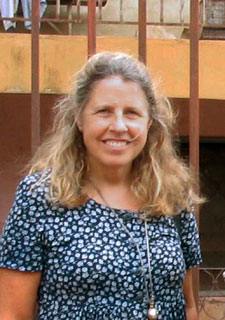 Suzanne Preston Blier
Suzanne Preston Blier, Allen Whitehill Clowes Professor of Fine Arts and of African and African American Studies in Cambridge, Massachusetts, received a Beinecke Fellowship from the Sterling and Francine Clark Art Institute in Williamstown, Massachusetts, for September–December 2013.
William L. Coleman, a PhD candidate in history of art at the University of California, Berkeley, has been awarded the 2014 Dora Wiebenson Prize by the Historians of Eighteenth-Century Art and Architecture. The paper honored as the best of the year by a graduate student was “‘Both instructive and pleasant’: The Country House Garden in Vitruvius Britannicus,” given at CAA Chicago.
Romy Golan, professor of art history at and Lehman College and the Graduate Center, City University of New York, won a fellowship from the Sterling and Francine Clark Art Institute in Williamstown, Massachusetts, for September–December 2013.
Michael Ann Holly, Starr director emeritus of research and academic programs at the Sterling and Francine Clark Art Institute in Williamstown, Massachusetts, has been awarded a fellowship from her institution for February–June 2014.
Simon Leung, an artist and professor of art for the University of California, Irvine, has earned a fellowship from the Sterling and Francine Clark Art Institute in Williamstown, Massachusetts, for February–June 2014.
Judith Rodenbeck, professor of modern and contemporary art at Sarah Lawrence College in Bronxville, New York, was named a fellow by the Sterling and Francine Clark Art Institute in Williamstown, Massachusetts, for September–December 2013.

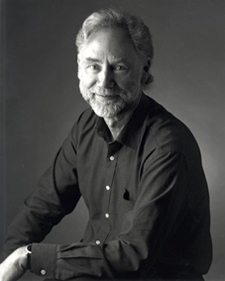 Terry Smith (photograph by John Williams)
Terence Smith, Andrew W. Mellon Professor of Contemporary Art History and Theory in the Department of the History of Art and Architecture at the University of Pittsburgh in Pennsylvania, has received a fellowship for February–June 2014 from the Sterling and Francine Clark Art Institute in Williamstown, Massachusetts.
Roberto Tejada, professor of art history in the Meadows School of the Arts at Southern Methodist University in Dallas, Texas, was named Clark/Oakley Humanities Fellow and Clark Mellon Curatorial Fellow by the Sterling and Francine Clark Art Institute in Williamstown, Massachusetts, for September–December 2013.