
CAA News Today
News from the Art and Academic Worlds
posted by Christopher Howard — February 19, 2014
Each week CAA News publishes summaries of eight articles, published around the web, that CAA members may find interesting and useful in their professional and creative lives.
Obama Picks Low-Profile Arts Center Executive to Chair the NEA
Opting for arts-administration and fundraising credentials over star power, the White House announced last week that President Obama will nominate Jane Chu, president and chief executive of the Kauffman Center for the Performing Arts in Kansas City, Missouri, as the next chairman of the National Endowment for the Arts. (Read more from the Los Angeles Times.)
The Monuments Men Did More Than Rescue Nazi-Looted Art
The greatest Rubens altarpiece in America is in Ohio, at the Toledo Museum of Art. We have the Monuments Men to thank for that. George Clooney’s galumphing all-star movie The Monuments Men did not impress the critics—“inert,” lamented the Los Angeles Times movie critic Kenneth Turan—but the real-life story of soldiers sent to protect and rescue Europe’s great artworks during and after World War II is impressive. So was its aftermath. (Read more from the Los Angeles Times.)
How American Museums Protected Their Art from the Nazis
Last weekend, George Clooney’s newest film, The Monuments Men, arrived in theaters, highlighting a fascinating chapter in World War II. Beginning in 1943, the Monuments Men dutifully retrieved canvases and confiscated heirlooms stashed in salt mines and inconspicuous locations across the continent (and later Japan). Given the inconceivable scope of the cultural upheaval, it’s understandable that one element of the story remains largely overlooked: the precautions taken to protect artworks on American soil. (Read more from the Atlantic.)
Who Owns This Image?
CAA, an organization of about fourteen thousand artists, scholars, and curators, recently released a report on the state of fair use in the visual arts. The association commissioned Patricia Aufderheide and Peter Jaszi, a law professor at American, to be the principal investigators, who found that most professionals have no idea how to employ fair use. As a result, they wrote: “Their work is constrained and censored, most powerfully by themselves, because of that confusion and the resulting fear and anxiety.” (Read more from the New Yorker.)
When Cost Cutting and Staff Costs Are Passed Off as Reductions in Administrative Bloat
At the end of December, the Wall Street Journal published an article by Steve Herbert titled “Colleges Trim Staffing Bloat.” So, if you did not read any further than the title, you might think that all of the attention to administrative bloat as a cost-driver in American higher education was finally producing some results. Think again. (Read more from Academe Blog.)
Great Art Needs an Audience
As the virtual replaces the physical and the world gets globalized, we’ve been hearing that art galleries, settled in a single place, are bound to be on their way out. Collectors are now more likely to buy at a fair than from a dealer’s home base; some may do their art shopping online. A few midrange dealers, especially, are already closing their galleries, to conduct all their business in private, at fairs, or by JPEG. I believe that these changes put art itself at risk. (Read more from the Art Newspaper.)
Art at Arm’s Length: A History of the Selfie
We live in the age of the selfie. A fast self-portrait, made with a smartphone’s camera and immediately distributed and inscribed into a network, is an instant visual communication of where we are, what we’re doing, who we think we are, and who we think is watching. Selfies have changed aspects of social interaction, body language, self-awareness, privacy, and humor, altering temporality, irony, and public behavior. (Read more from Vulture.)
Creativity Becomes an Academic Discipline
The world may be full of problems, but students presenting projects for Introduction to Creative Studies have uncovered a bunch you probably haven’t thought of. Elie Fortune, a freshman, revealed his Sneaks ’n Geeks app to identify the brand of killer sneakers you spot on the street. Jason Cathcart, a senior, sported a bulky martial-arts uniform with sparring pads he had sewn in. No more forgetting them at home. (Read more from the New York Times.)
Serve on a CAA Award Jury
posted by Lauren Stark — February 18, 2014
CAA invites nominations and self-nominations for individuals to serve on eight of the twelve juries for the annual Awards for Distinction for three years (2014–17). Terms begin in May 2014; award years are 2015–17. CAA’s twelve awards honor artists, art historians, authors, curators, critics, and teachers whose accomplishments transcend their individual disciplines and contribute to the profession as a whole and to the world at large.
Candidates must possess expertise appropriate to the jury’s work and be current CAA members. They should not be serving on another CAA committee or editorial board. CAA’s president and vice president for committees appoint jury members for service.
The following jury vacancies will be filled this spring:
- Alfred H. Barr Jr. Award: two members
- Arthur Kingsley Porter Prize: one member
- Frank Jewett Mather Award: two members
- Distinguished Teaching of Art History Award: one member
- Distinguished Feminist Award: two members
- Artist Award for Distinguished Body of Work: two members
- Distinguished Artist Award for Lifetime Achievement: one member
- Distinguished Lifetime Achievement Award for Writing on Art: one member
Nominations and self-nominations should include a brief statement (no more than 150 words) outlining the individual’s qualifications and experience and an abbreviated CV (no more than two pages). Please send all materials by email to Lauren Stark, CAA manager of programs; submissions must be sent as Microsoft Word attachments. Deadline: April 25, 2014.
People in the News
posted by CAA — February 17, 2014
People in the News lists new hires, positions, and promotions in three sections: Academe, Museums and Galleries, and Organizations and Publications.
The section is published every two months: in February, April, June, August, October, and December. To learn more about submitting a listing, please follow the instructions on the main Member News page.
February 2014
Museums and Galleries

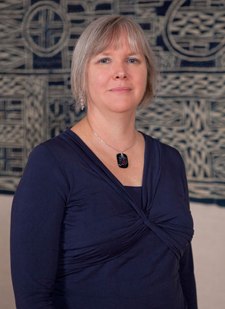 Kathleen Bickford Berzock
Kathleen Bickford Berzock, previously curator of African art at the Art Institute of Chicago, has been appointed associate director of curatorial affairs for the Mary and Leigh Block Museum of Art at Northwestern University in Evanston, Illinois.

Michael Brown, a researcher, lecturer, and formerly Mayer Curatorial Fellow for Spanish Colonial Art at the Denver Art Museum in Colorado, has become an associate curator of European art at the San Diego Museum of Art in California.

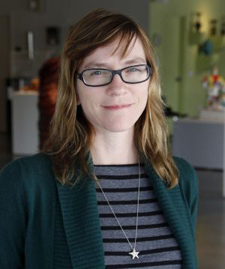 Elizabeth Kozlowski
Elizabeth Kozlowski, formerly Windgate Curatorial Fellow at the Arizona State University Museum in Tempe, has become a new curator for the Houston Center for Contemporary Craft in Texas.
Institutional News
posted by CAA — February 17, 2014
Read about the latest news from institutional members.
Institutional News is published every two months: in February, April, June, August, October, and December. To learn more about submitting a listing, please follow the instructions on the main Member News page.
February 2014
The Brooklyn Museum, the Museum of Modern Art, and the Frick Collection, whose institutional libraries formed the New York Art Resources Consortium (NYARC), have been awarded a $340,000 grant from the Andrew W. Mellon Foundation to initiate a program of web archiving for specialist art-historical resources. The two-year program will follow a 2012 pilot study, Reframing Collections for the Digital Age, also funded by the Mellon Foundation.
The Fralin Museum of Art at the University of Virginia in Charlottesville has accepted a $20,000 grant from the National Endowment for the Arts to support an upcoming exhibition, Joseph Cornell and Surrealism, organized by the museum and the Musee des Beaux-Arts in Lyon, France.
The J. Paul Getty Trust, based in Los Angeles, California, and the British Museum in London, England, have announce a three-year collaboration with the National Cultural Fund and the Archaeological Survey of India (ASI), under the aegis of the Indian government’s Ministry of Culture, to build the capacities of ASI’s site-museum and site-management professionals. Nearly one hundred ASI professionals—among them archaeologists, site-museum professionals, site managers, directors, and caretakers—will participate in workshops, trainings, conferences, and working-group meetings in India, Los Angeles, London, and other Asian sites to help reimagine Indian site-museums with enhanced narratives, better collection management, and conservation.
The Herron School of Art and Design, part of Indiana University–Purdue University Indianapolis, has received a $2 million gift from Cindy Simon Skjodt, a philanthropist and advocate for mental health, to endow a chair for the school’s program in art therapy.
The Philadelphia Museum of Art in Pennsylvania has met the goal of a major five-year initiative, the Lenfest Challenge, having raised a total of $54 million to endow twenty-nine staff positions in its curatorial, conservation, library, archive, education, publishing, and digital-technology departments. H. F. (Gerry) Lenfest, chairman emeritus of the museum’s board of trustees, and his wife, Marguerite, offered a $27 million grant in September 2008, challenging donors to match this gift on a one-to-one basis to endow and name these positions.
The University of Southern California (USC) in Los Angeles and the Pacific Asia Museum of Pasadena, one of the few American museums dedicated to the arts and culture of Asia and the Pacific Islands, have announced a new partnership that will preserve the museum’s 1924 Chinese Qing Dynasty–inspired mansion in downtown Pasadena as an art museum. The partnership will also enhance the scholarship of the creative faculty and students at USC’s six arts schools and those in the departments of art history, East Asian language and cultures, religion, and archaeology. In addition, the alliance will provide a foundation for a renewed museum-studies and curatorial-training program at USC.
The University of Texas at Dallas has announced the new home for the Arts and Technology (ATEC) program: the Edith O’Donnell Arts and Technology Building. This new 155,000-square-foot facility will host programs and promote advancements in visual art, emerging media technology, and multimedia communications.
The Wadsworth Atheneum Museum of Art in Hartford, Connecticut, has received a $9.6 million bequest from the estate of Charles H. Schwartz to establish an endowment to expand and enhance the museum’s collection of English and European works of art from the eighteenth century.
Grants, Awards, and Honors
posted by CAA — February 15, 2014
CAA recognizes its members for their professional achievements, be it a grant, fellowship, residency, book prize, honorary degree, or related award.
Grants, Awards, and Honors is published every two months: in February, April, June, August, October, and December. To learn more about submitting a listing, please follow the instructions on the main Member News page.
February 2014

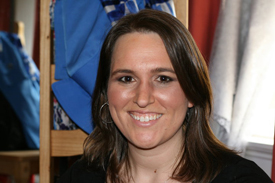 Amy Bryzgel
Amy Bryzgel, lecturer in history of art at the University of Aberdeen in Scotland, has been awarded a Leverhulme Research Fellowship for 2014 to support work on a book project titled “Performance Art in Central and Eastern Europe,” which will be a comprehensive study of performance art practices in the region.
Sharon L. Butler, an artist and writer based in New York and southeastern Connecticut, has accepted a 2013 award from the Arts Writers Grant Program for her blog, Two Coats of Paint.
Stephanie Cardon of Jamaica Plain, Massachusetts, has been accepted into the 2013 Art Writing Workshop, a partnership between the International Association of Art Critics, the Arts Writers Grant Program (supported by Creative Capital), and the Andy Warhol Foundation for the Visual Arts.
Carolyn Castaño, an artist based in Los Angeles, California, has received a $25,000 award from the 2013 Painters and Sculptors Grant Program, administered by the Joan Mitchell Foundation.
Victoria Fu, an artist based in San Diego and Los Angeles, California, has earned a 2013 grant from Art Matters to support her ongoing work.
Gregory Halpern, a photographer who lives and works in Rochester, New York, has been accepted into Light Work’s Artist-in-Residence Program for 2014.
Steve Kurtz, professor of art and chair of the Department of Visual Studies at the State University of New York’s University at Buffalo, has earned a 2013 grant from Art Matters to support travel to Argentina for Critical Art Ensemble’s work with the art and environmental organization Ala Plástica in Río de la Plata, toward the second part of the project Basins.
Jessica Labatte, a photographer based in Chicago, Illinois, has been accepted into Light Work’s Artist-in-Residence Program for 2014.
Saloni Mathur of the Department of Art History at the University of California, Los Angeles, has earned a 2013 award from the Arts Writers Grant Program for her book project, “A Fragile Inheritance: Radical Stakes in Contemporary Indian Art.”
Allison Miller, an artist who lives and works in Baltimore, Maryland, has been named a 2014 Artist in Residence by the Sam and Adele Golden Foundation for the Arts, based in New Berlin, New York.
Sarah Pollman of Allston, Massachusetts, has been accepted into the 2013 Art Writing Workshop, a partnership between the International Association of Art Critics, the Arts Writers Grant Program (supported by Creative Capital), and the Andy Warhol Foundation for the Visual Arts.
Gregory Sale has won a 2013 Art Matters grant to support the first iteration of Sleepover, a series of activities with diverse constituents exploring reentering society after incarceration, in Phoenix, Arizona.
Krista Thompson, associate professor in the Department of Art History at Northwestern University in Evanston, Illinois, has received a 2013 award from the Arts Writers Grant Program for her book project, “The Visual Economy of Light in African Diasporic Aesthetic Practice.”
Exhibitions Curated by CAA Members
posted by CAA — February 15, 2014
Check out details on recent shows organized by CAA members who are also curators.
Exhibitions Curated by CAA Members is published every two months: in February, April, June, August, October, and December. To learn more about submitting a listing, please follow the instructions on the main Member News page.
February 2014

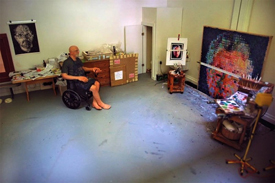 Joe Fig, Chuck Close: Summer 2004 #1, 2007, Cibachrome print, 16 x 20 in. (artwork © Joe Fig)
Susan Ball. Inside the Artists’ Studios: Small-Scale Views. Bruce Museum, Greenwich, Connecticut, December 14, 2013–March 16, 2014.
Tabitha Barber and Stacy Boldrick. Art under Attack: Histories of British Iconoclasm. Tate Britain, London, England, October 2, 2013–January 5, 2014.

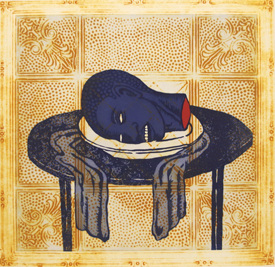 Alison Saar, Blue Plate Special, 1993, etching, lithograph, and chine collé, 29 x 28¾ in. (artwork © Alison Saar)
 Tyrus Clutter. [in]justice: art and atrocity in the 20th century. Appleton Museum of Art, Ocala, Florida, February 8–May 11, 2014.
Laura Knott. 5000 Moving Parts. MIT Museum, Massachusetts Institute of Technology, Cambridge, Massachusetts, November 21, 2013–November 20, 2014.
Books Published by CAA Members
posted by CAA — February 15, 2014
Publishing a book is a major milestone for artists and scholars—browse a list of recent titles below.
Books Published by CAA Members appears every two months: in February, April, June, August, October, and December. To learn more about submitting a listing, please follow the instructions on the main Member News page.
February 2014

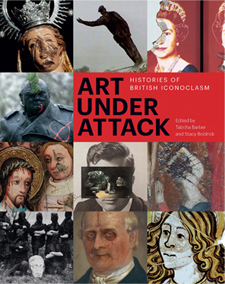
Tabitha Barber and Stacy Boldrick, eds. Art under Attack: Histories of British Iconoclasm (London: Tate Publishing, 2013).

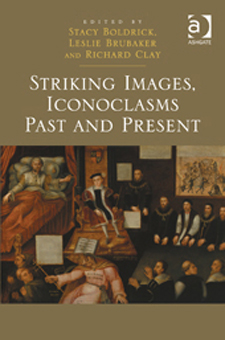
Stacy Boldrick, Leslie Brubaker, and Richard Clay, eds. Striking Images: Iconoclasms Past and Present (Burlington, VT: Ashgate, 2013).

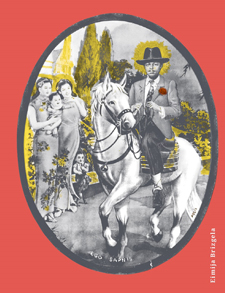
Amy Bryzgel. Performing the East: Performance Art in Russia, Latvia, and Poland since 1980 (London: I. B. Tauris, 2013).

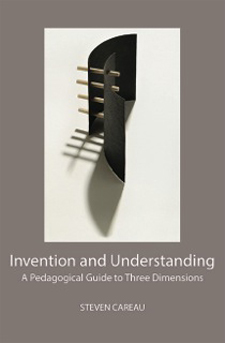
Steven Careau. Invention and Understanding: A Pedagogical Guide to Three Dimensions (Washington, DC: New Academia Publishing, 2013).

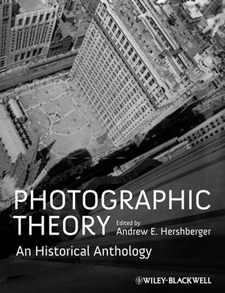
Andrew E. Hershberger, ed. Photographic Theory: An Historical Anthology (Boston: Wiley-Blackwell, 2014).

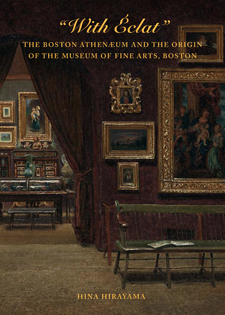
Hina Hirayama. “With Éclat”: The Boston Athenæum and the Origin of the Museum of Fine Arts, Boston (Boston: Boston Athenæum, 2013).


Rosina Neginsky. Salome: The Image of a Woman Who Never Was (Newcastle upon Tyne, UK: Cambridge Scholars Publishing, 2013).

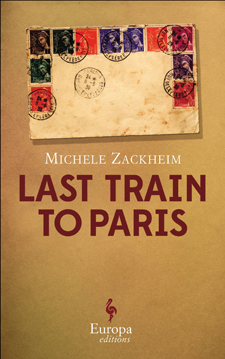
Michele Zackheim. Last Train to Paris (New York: Europa Editions, 2014).
Results of the 2014–18 Board of Directors Election
posted by Vanessa Jalet — February 14, 2014
The CAA Board of Directors welcomes four newly elected members, who will serve from 2014 to 2018:
- Helen C. Frederick, Professor, School of Art and Design, George Mason University
- Gunalan Nadarajan, Professor and Dean, Stamps School of Art and Design, University of Michigan
- Dannielle Tegeder, Associate Professor of Art, Art Department, Lehman College, City University of New York
- David C. Terry, Director of Programs and Curator, New York Foundation for the Arts
Anne Collins Goodyear, CAA board president, announced the election results during the Annual Members’ Business Meeting, held on Friday, February 14, at the 102nd Annual Conference in Chicago.
The Board of Directors is charged with CAA’s long-term financial stability and strategic direction; it is also the association’s governing body. The board sets policy regarding all aspects of CAA’s activities, including publishing, the Annual Conference, awards and fellowships, advocacy, and committee procedures.
For the annual board election, CAA members vote for no more than four candidates; they also cast votes for write-in candidates (who must be CAA members). The four candidates receiving the most votes are elected to the board.
Art Journal Editorial Board Seeks Two Members
posted by Alyssa Pavley — February 13, 2014
 CAA invites nominations and self-nominations for two individuals to serve on the Art Journal Editorial Board for a four-year term, July 1, 2014–June 30, 2018. Candidates may be artists, art historians, art critics, art educators, curators, or other professionals in the visual arts; institutional affiliation is not required. Art Journal, published quarterly by CAA, is devoted to twentieth- and twenty-first-century art and visual culture.
The editorial board advises the Art Journal editor-in-chief and assists him or her in seeking authors, articles, artists’ projects, and other content. The group also guides the journal’s editorial program and may propose new initiatives for it, performs peer review and recommends peer reviewers, and may support fundraising efforts on the journal’s behalf. Members also assist the editor-in-chief to keep abreast of trends and issues in the field by attending and reporting on sessions at the CAA Annual Conference and at other academic conferences, symposia, and events.
The Art Journal Editorial Board meets three times a year: twice in New York in the spring and fall and once at the CAA Annual Conference in February. CAA reimburses members for travel and lodging expenses for the two New York meetings in accordance with its travel policy, but members pay these expenses to attend the conference. Members of all editorial boards volunteer their services to CAA without compensation.
Candidates must be current CAA members and should not be serving on the editorial board of a competitive journal or on another CAA editorial board or committee. Members may not publish their own work in the journal during the term of service. Nominators should ascertain their nominee’s willingness to serve before submitting a name; self-nominations are also welcome. Please send a statement describing your interest in and qualifications for appointment, a CV, and your contact information to: Chair, Art Journal Editorial Board, College Art Association, 50 Broadway, 21st Floor, New York, NY 10004; or email the documents to Alyssa Pavley, CAA editorial assistant. Deadline: April 15, 2014.
News from the Art and Academic Worlds
posted by Christopher Howard — February 12, 2014
Each week CAA News publishes summaries of eight articles, published around the web, that CAA members may find interesting and useful in their professional and creative lives.
Art vs. Endowment
More than six years after announcing plans to sell a masterpiece of American painting—the 1912 work Men of the Docks by George Bellows—Randolph College has done so, gaining $25.5 million for its endowment. In selling the painting, the college disregarded the policies of several art and museum groups, which state that museums (including those run by colleges) should sell art only to buy more art, not to improve their finances. (Read more from Inside Higher Ed.)
Lessons of California’s Droit de Suite Debacle
The debate over a national droit de suite in the United States is back, as Congressman Jerrold Nadler from New York is advancing a revised version of his Equity for Visual Artists Act of 2011, which failed to become law the first time around. When American supporters of resale royalties seek to advance their arguments, they usually look to other countries for supporting evidence, such as France, while overlooking the California act. (Read more from the Art Newspaper.)
To Improve Adjuncts’ Plight, “Step One Is to Acknowledge the Problem”
Maria C. Maisto, president of New Faculty Majority, answered via email select questions submitted by viewers of the Chronicle’s online chat about adjunct issues. The questions and her responses have been edited for brevity and clarity. (Read more from the Chronicle of Higher Education.)
Women Really Don’t Ask
Like many research centers, my center offers travel awards to graduate students and postdocs to help cover their expenses when presenting at conferences. The typical award is $500, which is often enough to cover travel to conferences in the region. Because my center is very well funded, we don’t really have an official limit to how much someone can request or be awarded. Yet the only people who had requested the full amount to cover their expensive trips were male graduate students. (Read more from Research Centered.)
Help Desk: Performance Anxiety
I am not trained as a visual artist—I hold my graduate degree in dance choreography and before that worked primarily in live theatrical concert dance. However, my focus shifted in grad school, where I started developing work in performance that should live in a gallery space. Now that I am out of school, I have a great new project in the works but no idea how to make it happen. What are the unspoken rules for approaching art spaces and museums with performance work? (Read more from Daily Serving.)
NEA Funds Benefits Both Rich and Poor, Study Finds
Ever since the late 1980s, when the performance artist Karen Finley started playing with yams and chocolate, the NEA has come under fire from some conservative lawmakers. Now House Republicans charge that the endowment supports programming primarily attended by the rich, causing “a wealth transfer from poorer to wealthier citizens.” A recent study challenges that assertion, concluding that federally supported arts programs attract people across the income spectrum. (Read more from the New York Times.)
Academics Launch Torrent Site to Share Papers and Data Sets
Researchers from the University of Massachusetts have launched a torrent site that allows academics to share papers and data sets. AcademicTorrents provides researchers with a reliable and decentralized platform to share their work with not only peers, but also the rest of the world. The site currently indexes over 1.5 petabytes of data, including NASA’s map of Mars. (Read more from TorrentFreak.)
Contagion: Jack Hyland on The Moses Virus
The author of The Moses Virus, Jack Hyland is also a founding partner of Media Advisory Partners. In addition to his career in investment banking, he has served on the boards of several nonprofit institutions, including those of CAA, the American Academy in Rome, Teachers College at Columbia University, and the Sterling and Francine Clark Art Institute. (Read more from the Hartford Books Examiner.)