CAA News Today
CAA 2018: Los Angeles Travelogue
posted by CAA — May 03, 2017
Director of Programs Tiffany Dugan and I just returned from a week in Los Angeles to make plans for CAA’s Annual Conference in 2018.
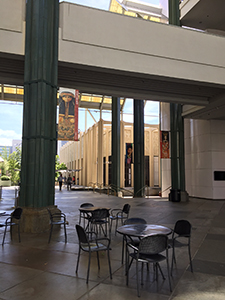
Los Angeles County Museum of Art
Scheduled for February 21-24 at the LA Convention Center, the 106th CAA Annual Conference promises to be one of the strongest ever. When the online session submissions portal closed last week, we had more than 800 submissions – one of the largest numbers in recent years. The Annual Conference Committee is reviewing the submissions this month and will be making final selections.
Based on past conference attendance, we anticipate more than 4,000 conference attendees in Los Angeles. We expect to schedule more than 250 sessions and over 200 events, including meetings, receptions, and tours. To house everyone, we secured three principal hotels, all within walking distance of the Convention Center, guaranteeing 6,000 guest nights.
We visited with the staffs and toured the Westin Bonaventure, Millennium Biltmore LA, and JW Marriott. Hotel rooms for the conference will range from $139 to $269 a night, depending on which hotel you select and the type of room you want. The John Portman designed Westin Bonaventure will be our host hotel and has the cool elegance reflecting the beginning of LA’s downtown revival in the mid-1970s. The Biltmore, which opened in 1923, reflects the opulence and beaux-arts style from LA’s golden age as the film industry was in its burgeoning stage. The new, swank JW Marriot is closest to the Convention Center and at the door of all the urban excitement of L.A. Live. All three hotels are within walking distance of the Convention Center. And the Westin even has a good cup of coffee below $2 in the lobby!
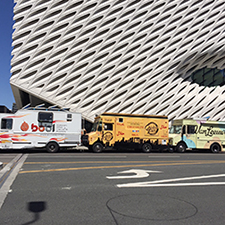
Food trucks in front of the Broad
Near the hotels, we found lots of great restaurants – everything from a hearty breakfast at the Original Pantry Café (which is open 24 hours) to the Blue Cow Kitchen & Bar, Bunker Hill Bar & Grill, Bottega Louie, Eat.Drink.Americano, and Water Grill. Food trucks are on virtually every corner (you have to try the sushi burrito). And there are plenty of artisanal coffee shops as well. In the coming months we will be working on setting up discounts at local restaurants and businesses for our attendees. Our hosts at the LA Convention Center gave us a great tour and we were able to see where the registration area, book and trade fair, and sessions rooms will be. We were able to secure more creature comforts like additional seating between sessions for impromptu conversations, charging stations for phone and laptops, and a quiet room to decompress from the hustle and bustle of the conference.
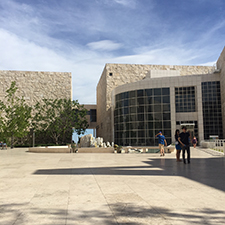
Getty Center
The Getty Museum, LACMA, and MOCA all opened their doors to us and we had great meetings. Each institution is looking forward to CAA 2018 and is making plans to ensure that your visit is meaningful. We met with leaders at UCLA and USC. In upcoming trips, we will be meeting with leaders at the Norton Simon Museum, The Huntington Library, Hammer Museum, Fisher Museum, and The Broad, as well as Otis College of Art and Design, Pasadena City College, Santa Monica College, and many others.
We also toured other cultural organizations including REDCAT, The Brewery Artist Lofts, Japanese American Museum, Chinese American Museum, 18th Street Arts Center, A+D Architecture and Design Museum, Craft and Folk Art Museum and many others. They are looking forward to welcoming CAA members to visit during the conference. We are planning on a day of programing for local LA area artists at the Annual Conference similar to what we did in NYC this year.
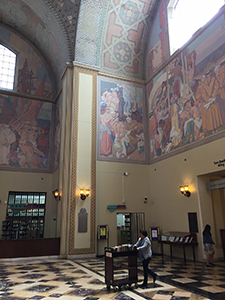
Los Angeles Public Library
Colleges and universities interested in holding reunions and receptions at the Annual Conference will also be able to find great spaces for their events. While there are some beautiful rooms available at the CAA hotels, we saw great spaces at the Hilton Checkers (check out the roof top terrace), the LA Public Library (check out the rotunda and courtyards), the gallery district in Chinatown (check out the Charlie James Gallery and A.G. Geiger Fine Art Books), and Hauser & Wirth. There are plenty of galleries in Hollywood and the Arts District, which will be available as well. We will keep adding to this list to create alternative reception options. Since the weather will be mild, there will be plenty of opportunities to sneak away from the Conference Center and check out what LA has to offer.
If you have not been to LA in a while, you will be happy to discover that getting around is easier than ever. While your CAA membership can get you a discount on an Avis rental car, ride sharing programs such as Uber and Lyft are popular and often cost less than $5 per trip between key cultural locations. LA has also been making great progress on its public transportation system as Metro stations are popping up everywhere.
Many thanks to Annual Conference Chair Judith Rodenbeck and CAA Regional Reps John Tain and Neha Choksi, who, along with Anu Vikram and Niku Kashef, made lots of great recommendations. If you have any more ideas of places you would like to see, just let Tiffany or me know.
Finally, we’ve pulled together all the details for the Getty sponsored Pacific Standard Time and will be offering that information in the months to come. You may want to arrive earlier to make sure that you take in as much as you can. President’s Day weekend is just before the Annual Conference. Be sure to watch CAA News for more updates about the conference as we solidify our planning.
Hunter O’Hanian
Executive Director
CWA Picks for May 2017
posted by CAA — May 01, 2017
Each month, CAA’s Committee on Women in the Arts selects the best in feminist art and scholarship. The following exhibitions and events should not be missed.
Louise Lawler: A Movie Will Be Shown Without a Picture
Museum of Modern Art
11 W 53 Street, New York, NY
May 2 and 10, 2017
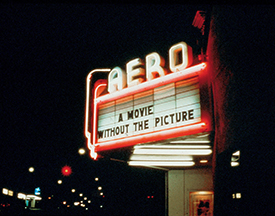
Marquee for A Movie Will Be Shown Without the Picture, Aero Theatre, Santa Monica, California, December 7, 1979 (photograph by Louise Lawler)
An appropriately deadpan announcement, now in the collection of the Metropolitan Museum of Art, for Louise Lawler’s cinematic event A Movie Will Be Shown Without A Picture (1979), reproduced the work’s title on a flat black card. Indeed, this is what viewers to the Aeron Theater in Santa Monica would have encountered on the night of Lawler’s event: a film shown without its flickering image. We might understand Lawler’s gesture as a riposte to Laura Mulvey’s influential text “Visual Pleasure and Narrative Cinema,” published five years before in the British film journal Screen. The filmic performance deprives audiences of the picture of the chosen film (the film changes with each iteration), instead asking them to rely on sound and soundtrack. Thus viewers are left to imagine and project their own fantasies (if they haven’t seen the film) or cobble together their memories of the film (if they have). As an arm of the programming for Louise Lawler’s retrospective at the Museum of Modern Art in New York, A Movie Will Be Shown Without a Picture will be screened two times.
Black Women Artists for Black Lives Matter
Project Row Houses
2521 Holman St., Houston, TX
March 25–June 4, 2017
Usually the curatorial and programming staff at Project Row Houses determine a theme and invite a series of artists to make installations and public programming inside the block of row houses in Houston’s Third Ward. This time Public Art Director Ryan Dennis and artist Simone Leigh cocurated the round to be exclusively for Black Women Artists for Black Lives Matter, a collective group that Leigh founded during her residency at the New Museum last year, and which now has chapters in London, Los Angeles, and Chicago. Performances, installations, platforms for dialogue and activation—these are the things that tie Project Row Houses and Black Women Artists for Black Lives Matter together. What began with an incubation period to get Houston’s chapter of BWA for BLM started, and was inaugurated with a processional performance, is now a full-tilt community platform for building generative ideas and actions for entering into the movement. As if to sum up the sentiments of the current round, one of the row houses is emblazoned with a supergraphic of the following sentiment: “YOU’VE GOTTA LOVE US OR LEAVE US ALONE.”
Katharina Fritsch: Multiples
Walker Art Museum
725 Vineland Place, Minneapolis, Minnesota
May 11–October 15, 2017
Katharina Fritsch’s sculpture, which seeks to defamiliarize the familiar and query the boundaries between the natural and the symbolic, will be on view at the Walker Art Museum for the next several months. Animals, religious figurines, body parts, and other objects drawn from the history and fairy tales of her native Germany take one new meanings when color, scale, and materials of everyday objects are altered. The show will include some forty objects, ranging from her early work as a student to her more recent pieces, drawn from the museum’s permanent collection. Katharina Fritsch: Multiples is a companion exhibition to the installation of her monumental, ultramarine blue Hahn/Cock in the Minneapolis Sculpture Garden in June. Described by the artist as “a feminist sculpture,” this work was first displayed on the fourth plinth in Trafalgar Square in the summer of 2013.
Musée Camille Claudel
Musée Camille Claudel
10, rue Gustave Flaubert, 10 400 Nogent-sur-Seine, France
Opened March 26, 2017
At long last, the beloved nineteenth-century French sculptor and feminist art icon Camille Claudel is receiving her due with a museum devoted to her work. Located in the small town of Nogent-sur-Seine, the Musée Camille Claudel is built around the family home where she spent her early adolescence. After a temporary exhibition of her work in 2003 brought over forty thousand visitors to Nogent-sur-Seine (pop. 6,000), it was determined that a museum dedicated to its most famous resident was in order. The Musée Camille Claudel now houses the world’s largest collection of the sculptor’s work. Visitors, who will be gratified to see such well-known pieces as The Waltz and The Gossips, will also be able to discover similarly remarkable works such as Abandon and Fortune. It takes under an hour by train to reach Nogent-sur-Seine from Paris.
Power: Work by African American Women from the Nineteenth Century to Now
Sprüth Magers
5900 Wilshire Blvd, Los Angeles, CA
March 29–June 10, 2017
The exhibition Power at Sprüth Magers features thirty-seven African American women artists from the nineteenth century until now. Works span fine-art and folk-art traditions covering multiple mediums, including painting, photography, video, sculpture, and installation. The title of the exhibition takes its name from a 1970 gospel song by Sister Gertrude Morgan, a self-taught, musician, poet, artist, and preacher. The works, engaging in issues of race, gender, and class, trace the threads of the craft-based folk traditions to a newer, academically trained generation of artists, depicting the “struggle to establish themselves as equal players on the uneven field of the American republic.”
In a review of the show published in the Los Angeles Times on April 11, 2017, the author Leah Ollman writes, “Artists here treat the physical body and the emblematic body of the nation as contested sites. Historical trauma persists within both, and both serve as ready—if not always willing—vehicles for self-determination.”
Artists in the exhibition, which was curated by Todd Levin, include: Beverly Buchanan, Elizabeth Catlett, Sonya Clark, Renee Cox, Njideka Akunyili Crosby, Karon Davis, Minnie Evans, Nona Faustine, LaToya Ruby Frazier, Ellen Gallagher, Leslie Hewitt, Clementine Hunter, Steffani Jemison, Jennie C. Jones, Simone Leigh, Julie Mehretu, Sister Gertrude Morgan, Senga Nengudi, Lorraine O’Grady, Sondra Perry, Howardena Pindell, Faith Ringgold, Betye Saar, Joyce J. Scott, Emmer Sewell, Ntozake Shange, Xaviera Simmons, Lorna Simpson, Shinique Smith, Renee Stout, Mickalene Thomas, Alma Woodsey Thomas, Rosie Lee Tompkins, Kara Walker, Meta Vaux Warrick Fuller, Carrie Mae Weems, and Brenna Youngblood.
Power will also include an installation of over one hundred African American vernacular photographs from the early twentieth century on loan from the Ralph DeLuca Collection. They offer a diverse view into everyday lives of African American women, from images of positive change to difficult scenes of negative stereotyping and violence. Offered as an exhibition-within-an-exhibition, these images from a century ago encourage reflection upon the continued struggles of black lives in America today.
We Wanted a Revolution: Black Radical Women, 1965–85
Brooklyn Museum
Elizabeth A. Sackler Center for Feminist Art and Stephanie and Tim Ingrassia Gallery of Contemporary Art, Fourth Floor, 200 Eastern Parkway, Brooklyn, New York
April 21–September 17, 2017
The exhibition We Wanted a Revolution: Black Radical Women, 1965–85 explores the intersections of avant-garde art worlds, radical political movements, and profound social change through photography, sculpture, printmaking, photography, performance, film, and video. Examining the political, social, cultural, and aesthetic priorities of women of color during the emergence of second-wave feminism, this exhibition is the first “to highlight the voices and experiences of women of color—distinct from the primarily white, middle-class mainstream feminist movement—in order to reorient conversations around race, feminism, political action, art production, and art history in this significant historical period.”
The artists represented in the exhibition include: Emma Amos, Camille Billops, Kay Brown, Vivian E. Browne, Linda Goode Bryant, Beverly Buchanan, Carole Byard, Elizabeth Catlett, Barbara Chase-Riboud, Ayoka Chenzira, Christine Choy and Susan Robeson, Blondell Cummings, Julie Dash, Pat Davis, Jeff Donaldson, Maren Hassinger, Janet Henry, Virginia Jaramillo, Jae Jarrell, Wadsworth Jarrell, Lisa Jones, Loïs Mailou Jones, Barbara Jones-Hogu, Carolyn Lawrence, Samella Lewis, Dindga McCannon, Barbara McCullough, Ana Mendieta, Senga Nengudi, Lorraine O’Grady, Howardena Pindell, Faith Ringgold, Alva Rogers, Alison Saar, Betye Saar, Coreen Simpson, Lorna Simpson, Ming Smith, and Carrie Mae Weems.
A host of events accompanied the exhibition. In addition to the DJ reception on April 20, which paid tribute to the revolutionary music of black women, the week-long opening celebration also included a symposium on April 21, a Julie Dash film marathon on April 22, and a Black Lunch Table on April 23.
We Wanted a Revolution, organized by Catherine Morris, Sackler Family Senior Curator for the Elizabeth A. Sackler Center for Feminist Art, and Rujeko Hockley, former assistant curator of contemporary art at the Brooklyn Museum, is part of A Year of Yes: Reimagining Feminism at the Brooklyn Museum, a yearlong series of exhibitions celebrating the tenth anniversary of the Elizabeth A. Sackler Center for Feminist Art.
CAA Members among the 2017–18 Rome Prize Winners
posted by CAA — April 28, 2017
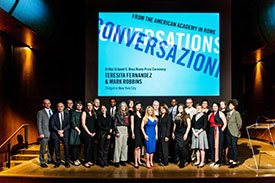 The American Academy in Rome has announced the recipients of its 2017–18 fellowships. The following CAA members are among the newest group of talented artists, scholars, writers, and composers chosen by the academy.
- Charles K. Williams II Rome Prize: Lisa Deleonardis, Austen-Stokes Professor, Department of the History of Art, Johns Hopkins University, “A Transatlantic Response to Worlds That Shake: Jesuit Contributions to Anti-Seismic Building Design in Early Modern Italy and Peru”
- Millicent Mercer Johnsen Post-Doctoral Rome Prize: Bissera V. Pentcheva, Professor, Department of Art History, Stanford University, “Animation in Medieval Art”
- Phyllis W. G. Gordan/Lily Auchincloss/Samuel H. Kress Foundation Pre-Doctoral Rome Prize: Joseph Williams, PhD Candidate, Department of Art, Art History, and Visual Studies, Duke University, “The Practice and Production of Architecture during the Mediterranean Commercial Revolution: The Church of S. Corrado in Moletta (ca. 1185–1303)”
- Andrew W. Mellon Foundation/National Endowment for the Humanities Post-Doctoral Rome Prize: Leslie Cozzi, Curatorial Associate, Hammer Museum, “Fra: Relation and Collaboration in Contemporary Italian Art”
- American Academy in Rome—Rome Prize: Cécile Fromont, Assistant Professor, Department of Art History, University of Chicago, “Images on a Mission: Cross-Cultural Encounters and Visual Mediation in Early Modern Kongo and Angola”
For over a century, the American Academy in Rome has awarded the Rome Prize to support innovative and cross-disciplinary work in the arts and humanities. Rome Prize fellowships include a stipend, room and board, and an individual work space at the institute’s eleven-acre campus in Rome.
New in caa.reviews
posted by CAA — April 28, 2017
Alise Tifentale reviews Anri Sala: Answer Me, an exhibition and catalogue organized by the New Museum. As the Albanian artist’s “first comprehensive survey exhibition in the United States,” the show primarily features video and sound works and “introduces Sala’s artistic strategies that often are aimed at multisensory confusion and a questioning of temporal and spatial coherence.” Read the full review at caa.reviews.
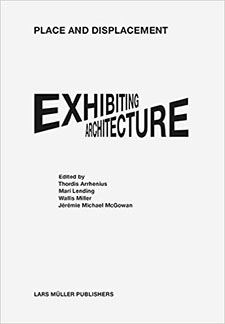 Nikolas Drosos reads Place and Displacement: Exhibiting Architecture, an edited collection of fifteen essays. Focusing on “the institutional structures that underpin architectural practice, theoretical discourse and its dissemination, as well as architecture’s relationship to its publics and to mass media,” the volume “reflects a greater tendency in scholarship to focus less on individual buildings.” Read the full review at caa.reviews.
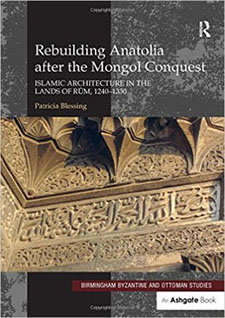 Christiana Maranci discusses Rebuilding Anatolia after the Mongol Conquest: Islamic Architecture in the Lands of Rūm by Patricia Blessing. The author “emphasizes the local circumstances in which the monuments were produced” and “argues that the lack of centralized control in Anatolia led … to a diverse and dynamic tradition best understood on its own terms.” Read the full review at caa.reviews.
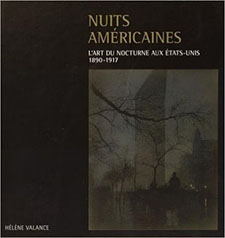 William Sharpe examines Hélène Valance’s Nuits américaines: L’art du nocturne aux États-Unis, 1890–1917. This “much-needed history” shows “how image makers reacted to the ways in which the American night was lit, exploited, and commercialized from the turn of the twentieth-century until the U.S. entry into World War I,” often in relation to “aesthetic, racial, imperial, and economic interests.” Read the full review at caa.reviews.
Communing with Dore Ashton
posted by CAA — April 28, 2017
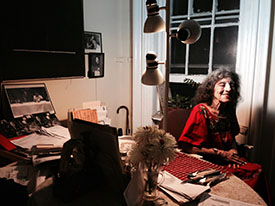
Dore Ashton at the kitchen table in her home on East Eleventh Street, New York, New York, 2011 (photograph © Madeline Djerejian)
“Communing with Dore Ashton” by Michael Corris has just been published at the open-access Art Journal Open. Corris, an artist and author based in Dallas, writes that Ashton, who died on January 30, was “one of the most energetic, widely published, and politicized American writers on art, and one of the chief proponents of the artists of the New York School (she decried the label Abstract Expressionism).” In addition to Corris’s personal memories of Ashton and their friendship, the project includes the audio and transcribed text of their 2011 conversation about Ashton’s experiences in New York art world during the 1950s and 1960s. Also included is a 2015 film by the artist Alfredo Jaar, Dore Ashton, you know, which features Ashton speaking candidly about her life, writing career, politics, and relationships with artists and writers, among them Harold Rosenberg, Philip Guston, and Louise Bourgeois. Recent photographs by Madeline Djerejian and Polly Bradford-Corris portray Ashton in her working and living spaces in New York City and Springs, Long Island.
Staff Interview: Fernando Zelaya
posted by CAA — April 24, 2017
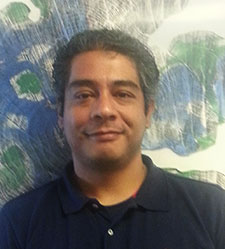 The next in a series of interviews with staff members is a conversation with Fernando Zelaya, CAA controller.
How long have you worked at CAA?
I have been at CAA since December 2012—four years, four months.
What do you do at CAA?
I am the controller, in the Finance Department.
What does CAA mean to you?
CAA to me is a medium for all art scholars to come together and be a part of a community. It’s also a place to share with each other, and to teach each other.
Can you talk about one of your favorite member moments?
Since I interact with members mostly at the conference, I’ll tell one story here and add another in the conference question later on. My favorite member moment was when I helped an elderly member who reminded me of my grandmother. She had such vigor and enthusiasm and seemed genuinely happy to be at the conference. That made my day.
What do you like best about the arts and working in the arts?
What I like best is meeting and working with artists. In my daily life and my earlier years, I had never interacted with artists. Now, having worked for the Dia Art Foundation as well as CAA, I have learned to appreciate art more than I used to, because now I better understand the meaning behind the art.
Do you have a favorite moment from the Annual Conference?
Once at registration I was berated by a flustered member who was late to a session and wanted to get his ticket quicker than was possible. The nice moment came when he returned to my booth after the session was over and gave me a sincere apology.
People interested in art can sometimes rebuff things like sports. But you’re interested in sports like soccer and baseball. Do you see a conflict?
I think that art and sports have more in common than people think. Both require years of hard work to perfect, and both need a combination of grace and power to achieve the objective of the piece (in art) or to score (in a game). It takes grace to stop a soccer ball or save a shot coming toward you at fifty to sixty miles per hour, or to hit a baseball with a bat when both objects are about three inches wide. That kind of skill, to me, is just as beautiful as a stroke of a brush or a poem that can draw a tear or bring about a smile.
You’re also interested in science fiction. Are there any new television shows or movies that have piqued your interest?
Science fiction is my favorite type of television show or movie. My favorite is Doctor Who, because of its sheer brilliance and how it has evolved over the last fifty-three years. The series even survived being off the air, only living in print and audio for almost ten years. The best new show I have seen this year is The Man in the High Castle, which takes us to a world where the Axis powers won WWII and have divided the United States among them. I am also a big fan of the Marvel and DC movies. I love these types of shows or movies because it is fun to immerse myself for a couple of hours—okay, maybe more than a couple—and go somewhere magical or even quite insane.
New in caa.reviews
posted by CAA — April 21, 2017
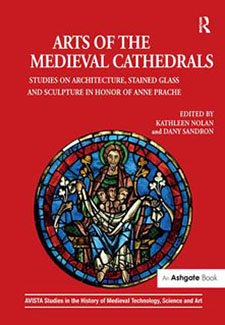 Evelyn Staudinger reviews Arts of the Medieval Cathedrals: Studies on Architecture, Stained Glass and Sculpture in Honor of Anne Prache, edited by Kathleen Nolan and Dany Sandron. The essays “honor the Sorbonne professor’s rich contributions to medieval art and architecture.” Covering a wide variety of topics, “the editors and authors have done a fine job celebrating Prache’s great intellectual acumen, diplomatic gifts, and warmth as a human being, while leaving behind erudite ‘memories’ and a wealth of new ideas.” Read the full review at caa.reviews.
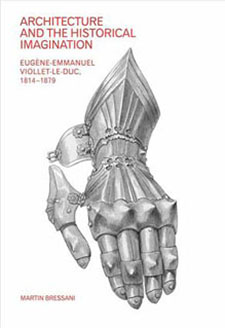 Jessica Basciano examines Architecture and the Historical Imagination: Eugène-Emmanuel Viollet-le-Duc, 1814–1879 by Martin Bressani. Viollet-le-Duc is “the nineteenth-century French architect, restorer, and theorist whose numerous and diverse activities continue to enthrall and perplex historians.” Although the “book’s complex arguments could be made clearer by offering more straightforward exposition,” “Bressani’s intellectual biography stands out in the landscape of Viollet-le-Duc studies because it offers a unified narrative based on the distinctive premise that the architect was motivated consistently by a form of pathological mourning.” Read the full review at caa.reviews.
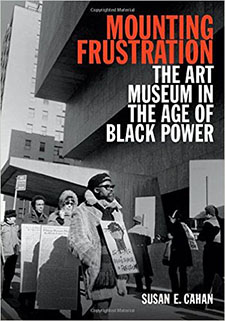 Anne Monahan reads Mounting Frustration: The Art Museum in the Age of Black Power by Susan E. Cahan. Framing her review with a discussion of recent police shootings of unarmed African American males and subsequent artists’ responses, Monahan presents Cahan’s “finely grained history of the New York art establishment’s attempts circa 1970 to reckon with African American representation.” Utilizing “close readings of archival documents, interviews, and secondary sources,” Cahan shows how demands by activists “conditioned the museums’ exhibition and hiring practices for decades thereafter.” Read the full review at caa.reviews.
Presentation on Fair Use at UCLA
posted by CAA — April 19, 2017
CAA is hosting “Fair Use and the Visual Arts,” a presentation and panel discussion led by Peter Jaszi, Professor, Washington College of Law, American University, on Friday, May 5, 2017. The event will focus on the College Art Association’s Code of Best Practices in Fair Use for the Visual Arts and will take place at the UCLA Library from 10:00 AM to 2:00 PM. Lunch will be served.
Come join the conversation! Please RSVP to give us your lunch preferences, and when you do, please share your specific Fair Use questions so our presenters can break it down for you.
For more information: https://www.library.ucla.edu/events/code-best-practices-fair-use-visual-arts.
This event is made possible by a grant from the Andrew W. Mellon Foundation.
New in caa.reviews
posted by CAA — April 14, 2017
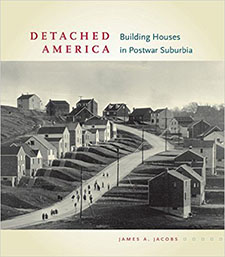 Ryan Donovan Purcell reviews Houses for a New World: Builders and Buyers in American Suburbs, 1945–1965 by Barbara Miller Lane and Detached America: Building Houses in Postwar Suburbia by James A. Jacobs. These two studies “examine the development of suburban communities through the lens of architectural history, and yield fresh insight into the origins of ubiquitous suburban housing forms.” Read the full review at caa.reviews.
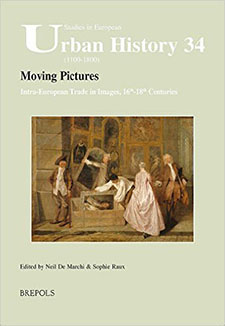 Thijs Weststeijn reads Moving Pictures: Intra-European Trade in Images, 16th–18th Centuries, edited by Neil De Marchi and Sophie Raux, and European within Reach: Netherlandish Travellers on the Grant Tour and Beyond (1585–1750) by Gerrit Verhoeven. The two books “happily complement each other in mapping different dimensions of early modern artistic exchange, mostly from the Low Countries to Italy.” Read the full review at caa.reviews.
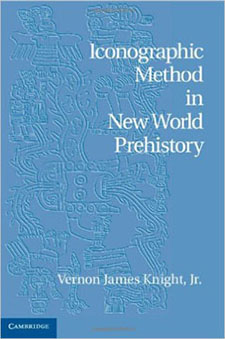 Amanda V. Gannaway examines Vernon James Knight Jr.’s Iconographic Method in New World Prehistory. Addressing a “lack of methodological rigor” in the study of the ancient Americas, the author “proposes a method for iconographic analysis.” The book is “novel not by reinvention but by taking on the daunting task of bringing relevant literature from two disciplines into dialogue with each other.” Read the full review at caa.reviews.
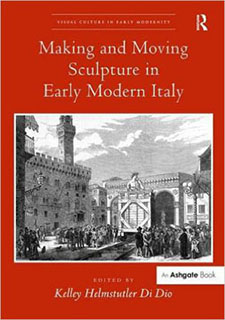 Francesco Freddolini discusses Making and Moving Sculpture in Early Modern Italy, edited by Kelley Helmstutler Di Dio. The collection of ten essays marks “an important addition to the growing field of studies on the mobility and materiality of sculpture,” focusing on the “process, techniques, and technologies” that shed “light on the many decisions made by sculptors during their creative process.” Read the full review at caa.reviews.
The Art Bulletin Redesign
posted by CAA — April 13, 2017
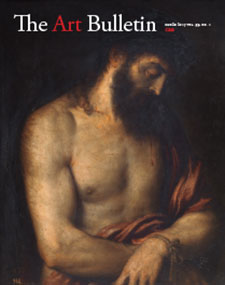 A few weeks ago we unveiled a new website design at CAA and today we present another new change. This time, it’s arriving to your mailbox. If you are a subscriber of The Art Bulletin, you may notice that the March 2017 issue looks different. Thanks to the hard work of Nina Athanassoglou-Kallmyer, editor-in-chief of the publication; designer Katy Homans; the Art Bulletin Editorial Board; copublisher Taylor & Francis; and CAA publications staff, the newly redesigned Art Bulletin has arrived. It was a project almost two years in the making and we owe a great thanks to the Samuel H. Kress Foundation for financially supporting the project.
Founded in 1913, The Art Bulletin remains one of the most respected publications for peer-reviewed scholarly articles and critical reviews in all areas and periods of the history of art. The redesign updates the publication for contemporary readers with a full-bleed cover, single-column page layout that emphasizes legibility, and a more flexible format for featuring larger article images.
We hope you enjoy the new look of The Art Bulletin.
To read digital issues of The Art Bulletin or Art Journal, visit Taylor & Francis online.