CAA News Today
2017 TERRA FOUNDATION FOR AMERICAN ART INTERNATIONAL PUBLICATION GRANT WINNERS
posted by CAA — April 03, 2017
 CAA is pleased to announce the 2017 recipients of the Terra Foundation for American Art International Publication Grant. This program, which provides financial support for the publication of book-length scholarly manuscripts in the history of American art, is made possible by a generous grant from the Terra Foundation for American Art. For this grant, “American art” is defined as art (circa 1500–1980) of what is now the geographic United States.
“This year’s publication grant recipients demonstrate once again how this program serves the mission of advancing and internationalizing scholarship on American art,” says Francesca Rose, Program Director for Publications at the Terra Foundation for American Art. “Whether by funding translations or supporting original research in languages other than English and publications by early-career U.S. scholars, the 2017 publication grants allow for the dissemination of important scholarship to the global Americanist community. In addition, providing for travel to the CAA Annual Conference facilitates participation by non-U.S. authors in U.S. professional networks.”
The six Terra Foundation grantees for 2017 are:
- Philippe Artières, Attica, USA, 1971, Le Point du Jour
- Emily Burns, Transnational Frontiers: The Visual Culture of the American West in the French Imagination, 1867–1914, University of Oklahoma Press
- Sophie Cras, The Artist as Economist: Art and Capitalism in the 1960s, Yale University Press
- Kenji Kajiya, Formless Modernism: Color Field Painting and 20th-Century American Culture, University of Tokyo Press
- Kate Lemay, Triumph of the Dead: The American War Cemeteries in France, University of Alabama Press
- ShiPu Wang, The Other American Moderns, Pennsylvania State University Press
Two non-US authors of top-ranked books have also been awarded travel funds and complimentary registration for CAA’s 2018 Annual Conference in Los Angeles; they also received one-year CAA memberships.
The two author awardees for 2017 are:
- Sophie Cras
- Kenji Kajiya
“The Terra Foundation award is unique in that it supports publishers in the United States and abroad and also provides funds for authors of award-winning books to attend the CAA Annual Conference,” says Betty Leigh Hutcheson, Director of Publications at CAA. “Scholars outside the United States who receive travel grants can expand their networks, gain exposure to new ideas, meet publishers at the Book and Trade Fair, and apply to present papers at the conference. The success of the Terra Foundation program is grounded in the high quality of manuscripts CAA receives each year and our ability to financially support these projects. CAA has played a vital role in this process for the past three years, which is particularly gratifying as we see awarded projects reach completion.”
About CAA
The College Art Association is the world’s largest professional association for artists, art historians, designers, arts professionals, and arts organizations. CAA serves as an advocate and a resource for individuals and institutions nationally and internationally by offering forums to discuss the latest developments in the visual arts and art history through its Annual Conference, publications, exhibitions, website, and other programs, services, and events. CAA focuses on a wide range of advocacy issues, including education in the arts, freedom of expression, intellectual-property rights, cultural heritage and preservation, workforce topics in universities and museums, and access to networked information technologies. Representing its members’ professional needs since 1911, CAA is committed to the highest professional and ethical standards of scholarship, creativity, criticism, and teaching.
About the Terra Foundation for American Art
Established in 1978, the Terra Foundation for American Art is dedicated to fostering the exploration, understanding, and enjoyment of the visual arts of the United States. With financial resources of more than $350 million, an exceptional collection of American art from the colonial period to 1945, and an expansive grant program, it is one of the leading foundations focused on American art, supporting exhibitions, academic programs, and research worldwide.
We’ve Got Your Back, We Want You Back
posted by CAA — April 01, 2017
Dear Friends,
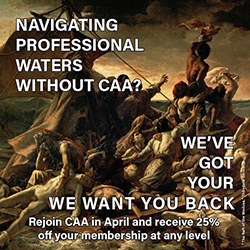 We want to get as many former members to rejoin in the month of April as we can. We’ve heard you, through surveys and our Annual Conference, through emails and phone calls. We know that the economy of higher education is changing. We know it can be hard to find a department position or a museum gig or publish your groundbreaking work. Rejoining the largest professional organization supporting art historians and visual artists is one step you can make to help you thrive in the field. Our impact as an organization and as a profession depends on our membership.
Rejoin during the month of April and we will take 25% off your CAA membership (offer excludes Life Membership level). That means you will be able to attend our next Annual Conference in Los Angeles in February 2018 for a reduced rate. You will receive our publications (Art Journal or The Art Bulletin) delivered to your home. You will have access to the online career center, with over 430 jobs and opportunities listed. You will get discounts on car rentals, health insurance, magazine subscriptions, and more.
But most importantly, you will be a member of the professional organization setting the lead on issues of fair hiring practices, academic freedoms, publishing standards, and connecting visual arts professionals across subjects, practice, and geography regions.
Offer valid from April 1-April 30, 2017 to individuals whose membership has lapsed in the past five years. Log in to your CAA account to view the discount code. Code will be visible after log in from April 1-April 30, 2017.
New in caa.reviews
posted by CAA — March 31, 2017
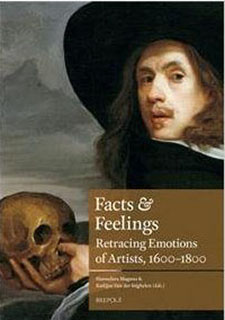 Stephanie S. Dickey reads Facts and Feelings: Retracing Emotions of Artists, 1600–1800, edited by Hannelore Magnus and Katlijne Van der Stighelen. The book’s goal “is not to gauge the expression of emotion in art, but instead to plumb the emotions of artists themselves.” Interestingly, “the visual record is mostly avoided in favor of documentary sources that find artists in emotionally charged situations.” Read the full review at caa.reviews.
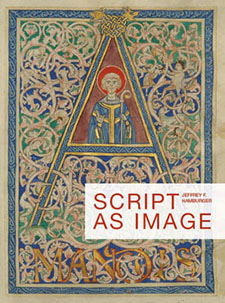 Eric Palazzo discusses Jeffrey F. Hamburger’s Script as Image, “a deeply engaging book, or rather a lengthy essay, on the ‘double page’ in the illuminated manuscripts of the Middle Ages.” The author starts “by exploring the possibility of considering writing as an image,” and “his approach focuses on a new exploration of the common nature of the written word and image” in visual culture. Read the full review at caa.reviews.
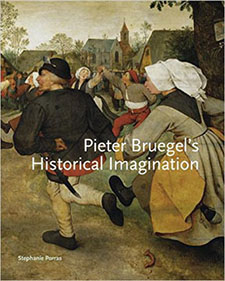 Arthur J. DiFuria reviews Pieter Bruegel’s Historical Imagination by Stephanie Porras. The “well-written, beautifully produced book” brings “a supremely important aspect of Bruegel’s art” to light, offering “a carefully considered take on his notion of the Netherlandish past” and portraying him “as an erudite artist who formulated a Netherlandish antiquarian vernacular.” Read the full review at caa.reviews.
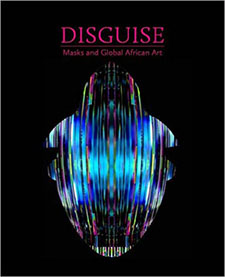 John P. Bowles examines the exhibition Disguise: Masks and Global African Art, curated by Pamela McClusky and Erika Dalya Massoquoi. The show and catalogue question “how African cultural traditions circulate and influence global contemporary art,” arguing that “the artists of ‘global Africa’ have begun to address this issue, changing how we understand African art.” Read the full review at caa.reviews.
CWA Picks for April 2017
posted by CAA — March 30, 2017
Each month, CAA’s Committee on Women in the Arts selects the best in feminist art and scholarship. The following exhibitions and events should not be missed. Check the archive of CWA Picks at the bottom of the page, as several museum and gallery shows listed in previous months may still be on view or touring.
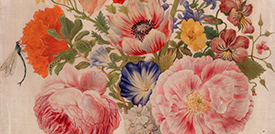
Maria Sibylla Merian, Chinese Vase with Roses, Poppies and Carnations, ca. 1670–1680 (photograph © Staatliche Museen zu Berlin, Kupferstichkabinett / Dietmar Katz)
Maria Sibylla Merian and the Tradition of Flower Illustration
Kupferstichkabinett, Berlin
Matthäikirchplatz, 10785 Berlin, Germany
April 7–July 3, 2017
Städel Museum in Frankfurt
Schaumainkai 63, 60596 Frankfurt am Main, Germany
October 11, 2017–January 14, 2018
Academic conference
University of Amsterdam
ARTIS Library, Plantage Middenlaan 45-45A, 1018 DC Amsterdam, Netherlands
June 7–9, 2017
In commemoration of the three hundredth anniversary of the death of the German-born illustrator and naturalist Maria Sibylla Merian, the Kupferstichkabinett in Berlin (April 7–July 2, 2017) and Städel Museum in Frankfurt (October 11–January 14, 2018) are sponsoring a joint show of approximately 150 of her works on paper and vellum. Known for her exquisite depictions of flowers and insects, Merian had an international reputation in her lifetime. Her illustrated texts include a volume of engravings of flora and fauna she produced while on a scientific expedition to the Dutch colony of Surinam in 1699. As a complement to this exhibition, the University of Amsterdam is sponsoring an academic conference titled “Changing the Nature of Art and Science: Intersections with Maria Sibylla Merian” (June 7–9, 2017), where her contributions to the history of printmaking, natural history, and botanical art will be honored.
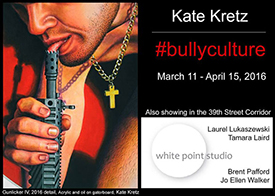
Invitation for Kate Kretz’s #bullyculture
Kate Kretz: #bullyculture
39th Street Gallery and Corridor Exhibition Space
Gateway Arts Center, 3901 Rhode Island Ave, Brentwood, Maryland
March 11–April 15, 2017
#bullyculture represents the first phase of an ambitious in-progress series that Kate Kretz commenced in 2011 and will conclude later this year. In her quest to find the common denominator to all the crimes against women, children, “minorities,” animals, and the earth, she has produced a large corpus of works on paper, sculpture, paintings, textiles, and mixed media. Some of the themes she explores in this series include “trophy hunting, VIP culture and ‘the 1%’, corporate destruction of the earth, rape culture and sexual entitlement, the fetishization of guns and their use for intimidation.” The artist, who has received numerous awards and grants, including the Southeastern College Art Conference’s 2016 award for Outstanding Artistic Achievement and a position on the Fulbright Specialist Roster through 2021, will be giving a lecture on April 1.
Shagha Ariannia: Who Sings the Nation-State?
Vincent Price Art Museum
East Los Angeles College, 1301 Avenida Cesar Chavez, Monterey Park, CA
March 18–June 10, 2017
A little over fifteen years ago, and one week after 9/11, Shagha Ariannia and her family arrived to Los Angeles as migrants from Iran. Ariannia has mined this particularly potent history of travel, place-finding, and identity-in-transit throughout her artistic career by, for example, annotating her family’s photographic archives in a series called What would America/Iran do without Iran/America? (2012). This solo exhibition focuses on a series of works Ariannia has been creating using national anthems from various countries (Iran and the United States included, among many others). In this way she takes seriously the titular question posed by Gayatri Spivak and Judith Butler in their 2007 dialogue Who Sings the Nation-State? As Butler says in that text, in regard to hearing the US national anthem sung in Spanish in the streets of Los Angeles, “The monolingual requirement of the nation surely surfaces in the refusal to hear the anthem sung in Spanish, but it does not make the anthem any less sing-able in that or any other language” (60).
Nina Katchadourian: Curiouser
Blanton Museum of Art
200 E. Martin Luther King Jr. Blvd., Austin, TX
March 12 – June 11, 2017
A few years ago I recall seeing a dozen or so clickbait-y articles written about Nina Katchadourian’s Lavatory Self-Portraits in the Flemish Style, a series in which the artist constructed toilet-paper and neck-pillow costumes during long-haul flights and photographed herself wearing them in the tiny, and poorly lit, spaces of onboard lavatories. This midcareer survey—the artist’s first touring museum exhibition—promises to flesh out Katchadourian’s wide-ranging work. The Flemish lavatory portraits, for example, are only one piece of a larger series of works using the airplane as studio space (Seat Assignment, 2010–ongoing). One of the works on display, and one of her most well-known, is the video Accent Elimination, wherein the artist hired a speech coach to teach her parents (both foreign born) to speak in a “standard” American accent, and, in turn, to teach her how to speak with her parents’ accent. Her collaborations with her family, other artists, international agencies, and even animals are potent reminders that the activity of art is almost never a solitary endeavor, and her interest in quotidian acts of creativity suggests that art can be found anywhere. One just has to know how to look.
May Stevens: Alice in the Garden
Ryan Lee Gallery
515 West 26th Street, New York, New York
February 23–April 8, 2017
May Stevens, a celebrated activist committed to the civil rights, antiwar, and feminist movements, used painting to combat social injustice and to revise women’s history throughout her seventy-year career. The exhibition Alice in the Garden comprises several large-scale paintings depicting Alice Dick Stevens, her elderly mother, during the final years of her life.
From 1983 and 1990, Stevens turned her attention to her mother and producing the five-panel painting Alice in the Garden (1988–89). “The mural-like images confront the viewer with the massive figure of Alice—fleshy, fragile, and vulnerable. In her hands, Alice manipulates flowers—dandelions Stevens had playfully thrown at her during an afternoon visit.”
In a conversation with the art historian Patricia Hills, Stevens explained the importance of Alice as a subject: “For me I think it means I want her [Alice] to be known, even for the individual person that she is, but it also means that I want people like that not to be forgotten. For me she’s not just a single person, because we all know this person. We all know her and we may become her. She’s a problem. As aging is a problem, as illness is a problem, as being a woman who does not fulfill herself is a problem.” (Patricia Hills, May Stevens [San Francisco: Pomegranate, 2005], 45.)
Today May Stevens, now 92, lives with Alzheimer’s disease in a memory-loss facility in New Mexico. She has received numerous awards including ten MacDowell Colony residencies, the Women’s Caucus for Art Lifetime Achievement Award (1990), a Guggenheim fellowship in painting (1986), a National Endowment for the Arts Fellowship in painting (1983), an Andy Warhol Foundation residency (2001), and CAA’s own Distinguished Artist Award for Lifetime Achievement (2001).
Terrains of the Body: Photography from the National Museum of Women in the Arts
Whitechapel Gallery
77-82 Whitechapel High St, London
January 18–April 16, 2017
Featuring over seventeen contemporary artists working across mediums, Terrains of the Body: Photography from the National Museum of Women in the Arts assembles an impressive collection from Washington, DC, for display across the water in London. “By turning their camera to women, including themselves, these artists embrace the female body as a vital medium for storytelling, expressing identity and reflecting individual and collective experience.”
Many works in the display extend the scope of 1970s feminist art, including performance and video. This display celebrates their legacy today. Moving between photography’s ability to document and tell stories, these works present women as creator and subject of their work. Several artists in the exhibition, including Nan Goldin and Daniela Rossell, photograph women in expansive series that appear documentary in nature. Other artists include Marina Abramović, Rineke Dijkstra, Anna Gaskell, Charlotte Gyllenhammar, Candida Höfer, Icelandic Love Corporation, Mwangi Hutter, Kirsten Justesen, Justine Kurland, Nikki S. Lee, Hellen van Meene, Shirin Neshat, Eve Sussman and the Rufus Corporation, Janaina Tschäpe, and Adriana Varejão.
Laura Weigert Reviews Anne Teresa De Keersmaeker’s Work/Travail/Arbeid
posted by CAA — March 27, 2017
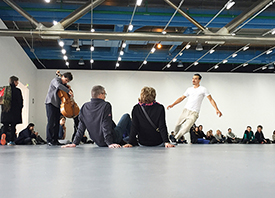
Anne Teresa De Keersmaeker, Work/Travail/Arbeid, performed by Rosas at the Centre Georges Pompidou, Paris, February 26–March 6, 2016 (choreography © Anne Teresa De Keersmaeker; photograph © Laura Weigert)
caa.reviews is pleased to announce the publication of a new multimedia reviews project on the Scalar platform: Anne Teresa De Keersmaeker’s Work/Travail/Arbeid by Laura Weigert. Weigert’s review of Work/Travail/Arbeid’s ten-day performance at the Centre Georges Pompidou in Paris from February 26 to March 6, 2016, is the starting point for this project, which also includes a conversation between De Keersmaeker and Weigert. The project features media explorations of the performances of Work/Travail/Arbeid at WIELS Contemporary Art Centre in Brussels and Tate Modern in London. The site will present additional media following Work/Travail/Arbeid performances at the Museum of Modern Art in New York from March 29 through April 2, 2017.
New in caa.reviews
posted by CAA — March 24, 2017
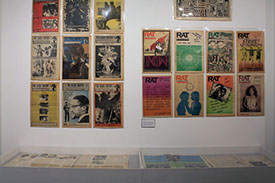 Katharine J. Wright reviews Realize Your Desires: Underground Press from the Library of Stefan Brecht, an exhibition at Printed Matter. It “brings to light an expansive private collection of underground newspapers dating from the mid-1960s through the early 1970s” and “proves both timely and enlightening” by providing “a rare glimpse into America’s troubled past.” Read the full review at caa.reviews.
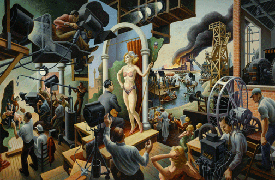 Stephen Caffey discusses the exhibition American Epics: Thomas Hart Benton and Hollywood, organized by the Peabody Essex Museum and Amon Carter Museum of American Art, and its catalogue. Featuring the artist’s best-known works “along with less familiar paintings,” the show “situates Benton’s artistic practice within the trajectories of two venerable traditions: the literary epic and the cinematic blockbuster.” Read the full review at caa.reviews.
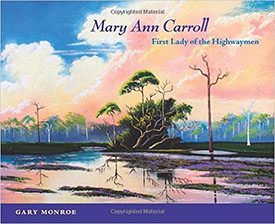 Betty J. Crouther reads Mary Ann Carroll: First Lady of the Highwaymen by Gary Monroe. The author “builds Carroll’s story around her Highwaymen associations as well as quotations sprinkled generously throughout the text.” Although “readers will be grateful to Monroe for bringing attention to Carroll, they will also be frustrated that he documents so little.” Read the full review at caa.reviews.
Exclusive Promotional Offer from Frieze
posted by CAA — March 20, 2017
 CAA is pleased to extend an exclusive promotional offer from frieze, one of our partner organizations.
As a special offer to institutional members of the College Art Association, frieze is offering a free trial issue of the magazine for your institution or library!
Founded in 1991, frieze is the leading international magazine on contemporary art and culture. Including essays, reviews and columns by today’s most forward-thinking writers, artists and curators, including amongst others, Michael Bracewell, Brian Dillon, Olivia Laing, Lynne Tillman, Jan Verwoert and Maria Warner.
Recently redesigned for 2017, frieze has a new look, comprising of a new suite of typefaces, additional room for images and more commissioned photography. This visual rethink reflects frieze’s ongoing commitment to both providing fresh perspectives on more established artists and highlighting new trends.
Published 8 times a year and with offices in London, New York and Berlin. frieze is essential reading for anyone interested in visual arts and culture.
We are offering our upcoming April issue as a free trial to institutional members of CAA. This issue focuses on whether art can be used as an effective form of protest and includes a roundtable on the theme of protest including contribution from, amongst others, Tania Bruguera, Okwui Enwezor and Slavs and Tatars.
There are a limited number of free copies on a first-come-first served basis. To register to receive your free issue, please click here.
- Orders are limited to one copy per institution
- The offer is for libraries/institutions only
- The free trial copy applies to the April issue only
- Orders must be placed by 1 April
- Subscription offer is for new subscribers only
New in caa.reviews
posted by CAA — March 17, 2017
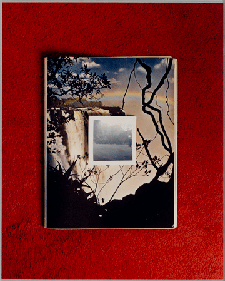 Vanessa Rocco visits Photo-Poetics: An Anthology at the Solomon R. Guggenheim Museum. The “exhibition of ten contemporary photographers” is grounded in the “passionate advocacy of investing time in looking closely at photographs.” As a whole, the works on display were “striking,” though “some individuals and groups were more compelling than others.” Read the full review at caa.reviews.
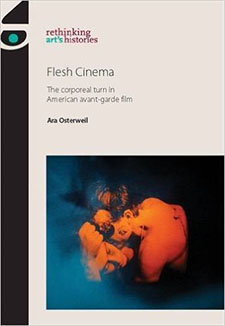 Nicholas C. Morgan reviews the book Flesh Cinema: The Corporeal Turn in American Avant-Garde Film by Ara Osterweil. In “one of the most compelling studies of the body’s relation to avant-garde art and film,” the author “articulate[s] ‘flesh cinema’ as a coherent, if shifting, category of postwar film” and insists “on the impossibility of divorcing ‘flesh cinema’ from the flesh of the world.” Read the full review at caa.reviews.
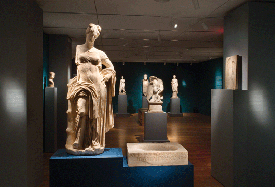 Anne Hrychuck Kontokosta discusses Gods and Mortals at Olympus: Ancient Dion, City of Zeus at the Onassis Cultural Center. The exhibition “delighted viewers with a carefully curated collection” of objects” and “focused on archeological research,” facilitating “a comprehensive and contextualized understanding of the ancient city of Dion.” Read the full review at caa.reviews.
 Gülru Çakmak reads Gustave Moreau: History Painting, Spirituality, and Symbolism by Peter Cooke. The author traces the artist’s “lifelong endeavor to revitalize le grand art in France … and to combat the endemic materialism of the age,” showing how “the antinaturalist and antidemocratic aesthetic” of Moreau’s work “countered the dominant naturalist paradigm in French art.” Read the full review at caa.reviews.
Statement on the US President’s FY2018 Budget Proposal
posted by CAA — March 16, 2017
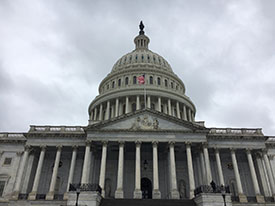 Today the US President released his proposal for 2018 federal budget – it envisions transferring additional billions of dollars to the Department of Defense, Veterans Affairs, and Homeland Security from many important domestic programs such as the Environmental Protection Agency, education, and legal services. As expected, the budget also calls for the complete elimination of the Corporation for Public Broadcasting, National Endowment for the Arts, National Endowment for the Humanities, and 16 other federal agencies. CAA was one of the first national organizations to speak against these cuts.
Read the statement against these cuts that CAA released on January 23, 2017.
As educators, art historians, artists, curators, museum directors, designers, scholars, and other members of the visual arts community we must act to defend the role of arts and humanities in our society. The budget process is long and ultimately controlled by the US House and Senate. Earlier this week, CAA traveled to Washington for Humanities Advocacy Day to meet with many congressional offices to discuss the importance of continued NEA and NEH funding. We will return again next week to do the same for Arts Advocacy Day.
In addition, CAA assembled an Arts and Humanities Advocacy Toolkit with information on how to contact your representatives in Congress to voice your support for the NEA and NEH and the many quality programs they fund. Call their offices. Email them. Attend Town Halls. You can learn how these agencies support activities in your area here: funded by the NEA and funded by the NEH. Be sure to let your representatives know of the impact of the arts and humanities in your districts. Spread the word to your colleagues and friends.
Despite the White House’s opposition to continued funding for the NEA and NEH, there is sufficient reason to believe that many members of the US House and Senate will support a budget that includes continued funding for these agencies. I ask our members to join in the effort to make sure all members of Congress knows the importance of the work done by these agencies.
Hunter O’Hanian
Executive Director
Chief Executive Officer
Thanks to 2017 Career Services Mentors and Workshop Leaders
posted by CAA — March 14, 2017
CAA extends a warm thank-you to all of the artists, scholars, curators, critics, educators, and other visual-arts professionals who served as Career Services mentors during the 2017 Annual Conference. Your knowledge and expertise helped to enrich the Artists’ Portfolio Review, Career Development Mentoring, and Mock Interviews. We also appreciate the efforts of the members who created and led Professional Development Workshops and Brown Bag Sessions based on members’ needs.
Artist’s Portfolio Review
Susan Canning, Sculpture; Jill Conner, Artists Studios; Carrie Ida Edinger, Independent Artist; Nancy Hart, Artist/263 Gallery; Richard Heipp, University of Florida; David Howarth, Zayed University; Paul Hunter, Artist/Painter; Jason Lahr, University of Notre Dame; Suzanne Lemakis, Citibank, retired; Sharon Lippman, Art Without Walls; Craig Lloyd, Mount St. Joseph University; Yelena McLane, Florida State University; Dinah Ryan, Principia College; Paul Bernard Ryan, Mary Baldwin University, Emeritus; and Greg Shelnutt, Clemson University.
Career Development Mentoring
Susan Altman, Middlesex County College; Michael Aurbach, Vanderbilt University, Emeritus; Roann Barris, Radford University; Colin Blakely, University of Arizona; Leda Cempellin, South Dakota State University; Crista Cloutier, The Working Artist; Rebecca J. DeRoo, Rochester Institute of Technology; James Farmer, Virginia Commonwealth University; Reni Gower, Virginia Commonwealth University; Antoniette (Toni) Guglielmo, Getty Leadership Institute; Dennis Ichiyama, Purdue University; Zach Kaiser, Michigan State University; Ann B. Kim, University East; Carol Herselle Krinsky, New York University; Emmanuel Lemakis, CAA, retired; Jeffery Cote de Luna, Dominican University; Heather McPherson, University of Alabama, Birmingham; Liliana Milkova, Oberlin College; Mark O’Grady, Pratt Institute; Doralynn Pines, CAA; Thomas Post, Ferris State University; Heather Snyder Quinn, DePaul University; Jack Risley, University of Texas at Austin; Andrew Svedlow, University of Northern Colorado; Joe A. Thomas, Kennesaw State University; Ann Tsubota, Raritan Valley Community College; and Barbara Yontz, St. Thomas Aquinas College.
Mock Interview Sessions
Megan Koza Mitchell (Student and Emerging Professionals Committee Chair), Prospect New Orleans; Amanda Wainwright (Student and Emerging Professionals Committee), University of South Carolina; Tamryn Mcdermott, Temple University; Annie Storr, Brandeis University; Lauren Puzier, Sotheby’s; Abbey Hepner, University of Colorado; Rachel Kreiter, Spelman College; Nathan Manuel (Student and Emerging Professionals Committee); Lauren O’Neal, Lamont Gallery, Phillips Exeter Academy; DeWitt Godfrey, Colgate University; Dennis Ichiyama, Purdue University; Rachel Stephens, University of Alabama; Matt King, VCU School of the Arts; Carol Garmon, University of Mary, Washington; Craig Lloyd, Mount St. Joseph University; Maile S. Hutterer, University of Oregon; Mark O’Grady, Pratt Institute; Thomas Post, Kendall College of Art and Design; Greg Shelnutt, Clemson University; Maria Ann Conelli, Brooklyn College, City University of New York; Rebekah Beaulieu, Bowdoin College Museum of Art ; David LaPalombara, Ohio University; Arthur Blake Pierce, Valdosta State University; Michael Lobel, Hunter College; Susan Altman, Middlesex County College; David Howarth, Zayed University; and Colin Blakely, University of Arizona.
Brown Bag Lunches and Sessions
Megan Koza Mitchell (Student and Emerging Professionals Committee Chair), Prospect New Orleans; Amanda Wainwright (Student and Emerging Professionals Committee), University of South Carolina; Tamryn Mcdermott, Temple University; Annie Storr, Brandeis University; Lauren Puzier, Sotheby’s; Abbey Hepner, University of Colorado; Rachel Kreiter, Spelman College; Nathan Manuel, SEPC; Andrea Kirsch, Rutgers University; and Mattie M. Schloetzer, National Gallery of Art.
Professional Development Workshops
Maria Michails, Rensselaer Polytechnic Institute; Susana Sevilla Aho, Modern Language Association; Susan Altman, Middlesex County College; Michael Aurbach, Vanderbilt University, Emeritus; Emily Pugh, Getty Research Institute; Elizabeth Buhe, Institute of Fine Arts, New York University; Petra ten–Doesschate Chu, Seton Hall University; Kate Kramer, University of Pennsylvania; Shannon Connelly, Lebanese American University; Craig Dietrich, The Claremont Colleges; Jon Ippolito, University of Maine; John Bell, Dartmouth College; Molly Fox, Indiana University; Rebekah Beaulieu, Bowdoin College Museum of Art; Deborah Lutz, Pamela Lawton, Annie Leist, and Emilie Gossiaux, all from the Metropolitan Museum of Art; Alexa Sand, Utah State University; Sara Orel, Truman State University; Jenn Karson, University of Vermont FabLab; Martha Schwendener, New York Times/New York University; Jack Henrie Fisher, University of Illinois, Chicago; and Alan Smart, University of Illinois, Chicago.