
CAA News Today
Solo Exhibitions by Artist Members
posted by CAA — June 15, 2016
See when and where CAA members are exhibiting their art, and view images of their work.
Solo Exhibitions by Artist Members is published every two months: in February, April, June, August, October, and December. To learn more about submitting a listing, please follow the instructions on the main Member News page.
June 2016
Midwest

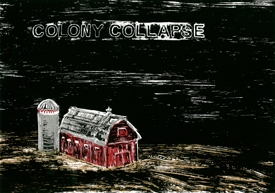 Work included in Ruthann Godollei’s exhibition Dissent (artwork © Ruthann Godollei)
Ruthann Godollei. Concordia University Gallery, Saint Paul, Minnesota, February 29–April 1, 2016. Dissent. Prints and installation.

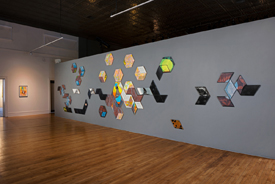 Installation view of Jen P. Harris’s exhibition Ghost Prairie (artworks © Jen P. Harris)
Jen P. Harris. Legion Arts CSPS Hall, Cedar Rapids, Iowa, April 7–July 3, 2016. Ghost Prairie. Painting installation.
Northeast

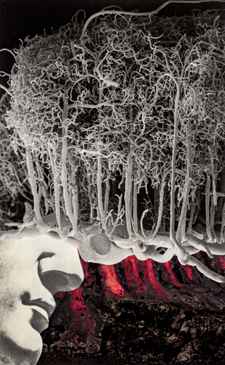 Gail Gregg, Brainstem, 2014, photocollage, dimensions variable (artwork © Gail Gregg)
 Gail Gregg. Luise Ross Gallery, New York, April 14–May 27, 2016. All That Glitters. Mixed media.

 Poster for Joe Lewis’s exhibition Mutant Monkey Business
Joe Lewis. The Phatory, New York, May 1–22, 2016. Mutant Monkey Business. Installation.

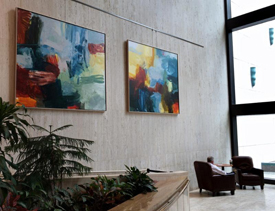 Installation view of Michael Rich’s exhibition (artworks © Michael Rich)
Michael Rich. Atrium Gallery, Providence Art Club, One Financial Plaza, Providence, Rhode Island, April 15–July 15, 2016. Painting.

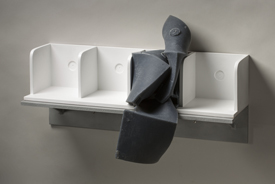 John Richardson, Case Study No. 31, 2013, aluminum, wood, rubber, and paint, 21 x 32 x 14 in. (artwork © John Richardson)
John Richardson. Causey Contemporary Gallery, New York, June 9–July 10, 2016. Fragments. Drawing, prints, and sculpture.

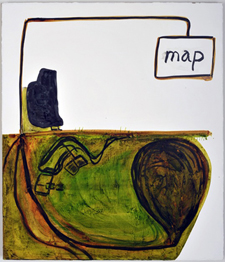 Mira Schor, “Power” Figure #11: Are You?, 2015, ink and Flashe on tracing paper, 45 x 24 in. (artwork © Mira Schor)
Mira Schor. Lyles & King, New York, March 18–April 24, 2016. Death Is a Conceptual Artist. Painting and drawing.

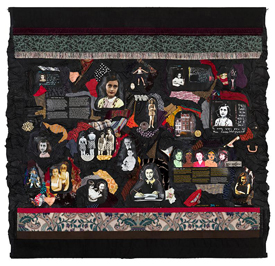 Linda Stein, Anne Frank 839, 2015, fabric, archival pigment on canvas, paints, leather, metal, and zippers, 59 x 59 in. (artwork © Linda Stein)
Linda Stein. Flomenhaft Gallery, New York, April 28–July 14, 2016. Holocaust Heroes: Fierce Females. Tapestry and sculpture.
South

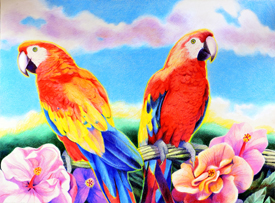 Kyra Belán, Two Macaws in Paradise, colored pencil on paper (artwork © Kyra Belán)
Kyra Belán. Art Gallery, Broadway Palm Dinner Theatre, Fort Myers, Florida, April 6–May 14, 2016. Magical Paradise. Painting.
West
Linda Stein. Bronfman Family Jewish Community Center, Santa Barbara, California, March 3–29, 2016. Holocaust Heroes: Fierce Females. Tapestry and sculpture.
People in the News
posted by CAA — June 15, 2016
People in the News lists new hires, positions, and promotions in three sections: Academe, Museums and Galleries, and Organizations and Publications.
The section is published every two months: in February, April, June, August, October, and December. To learn more about submitting a listing, please follow the instructions on the main Member News page.
June 2016
Academe

Susan Cohen has left her position as director of the Council for the Arts at the Massachusetts Institute of Technology in Cambridge, which she led for ten years.
Kris Ebeling, formerly assistant director of enrollment management for the Art Academy of Cincinnati in Ohio, has joined the exhibit crew at the Cincinnati Museum Center.
Alison Hardie, senior lecturer in Chinese studies at the University of Leeds in England, has retired.
Larry Hinz has stepped down from his position as president of the Santa Fe University of Art and Design in Santa Fe, New Mexico.
Mark Hoversten, currently dean of the College of Art and Architecture at the University of Idaho in Moscow, has been appointed dean of the College of Design at North Carolina State University in Raleigh. Hoversten will start his new job on July 1.

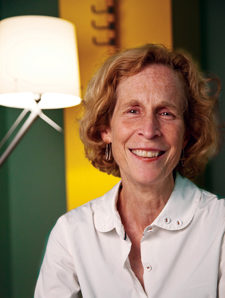 Patricia C. Phillips
Patricia C. Phillips, dean of graduate studies at the Rhode Island School of Design in Providence, has been appointed chief academic officer and academic dean of the Moore College of Art and Design in Philadelphia, Pennsylvania. She will begin her new position on July 1.
Charlie White, professor of fine art in the Roski School of Art and Design at the University of Southern California in Los Angeles, has become head of the School of Art at Carnegie Mellon University in Pittsburgh, Pennsylvania.
Museums and Galleries

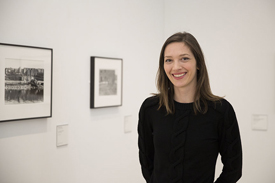 Judy Ditner
Judy Ditner has been appointed Richard Benson Assistant Curator of Photography and Digital Media at the Yale University Art Gallery in New Haven, Connecticut.

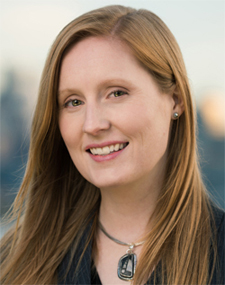 Laura Fry
Laura Fry, the inaugural Haub Curator of Western American Art for the Tacoma Museum of Art in Tacoma, Washington, has joined the Gilcrease Museum in Tulsa, Oklahoma, as curator of art.

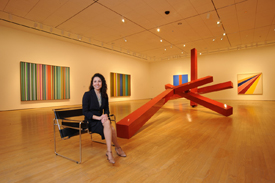 Francesca Giani
Francesca Giani, guest curator for the University of Oklahoma’s Fred Jones Jr. Museum of Art in Norman, has been named curator of modern and contemporary art at the Oklahoma City Museum of Art.
Christine Giviskos, associate curator for the Zimmerli Art Museum at Rutgers University in New Brunswick, New Jersey, has been promoted to curator of prints, drawings, and European art.

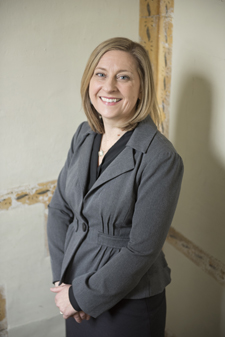 Sarah Johnson (photograph by Sarah Murray)
Sarah Johnson has been appointed director of the Cahoon Museum of American Art in Cotuit, Massachusetts.

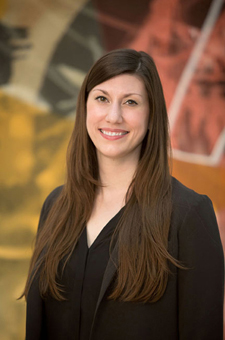 Hannah Klemm
Hannah Klemm, formerly Fisher Collection Graduate Curatorial Fellow at the San Francisco Museum of Modern Art in California, has joined the Saint Louis Art Museum in Missouri as assistant curator of modern and contemporary art.
Brett Knappe, formerly associate professor of art history at Baker University in Baldwin City, Kansas, has been appointed executive director of the Albrecht-Kemper Museum of Art in Saint Joseph, Missouri.

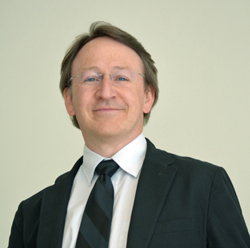 Robert Mintz
Robert Mintz, previously chief curator and curator of Asian art at the Walters Art Museum in Baltimore, Maryland, has joined the Asian Art Museum of San Francisco in California as deputy director of art and programs.

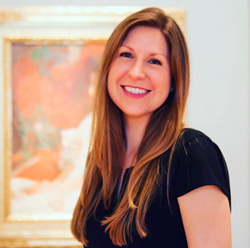 Jennifer Stettler Parsons
Jennifer Stettler Parsons has become the new assistant curator at the Florence Griswold Museum in Old Lyme, Connecticut.

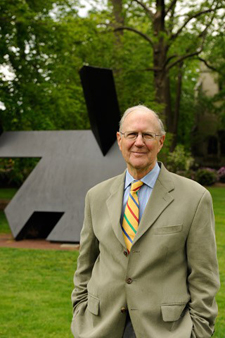 John R. Stomberg (photograph by Gary Westcott)
John R. Stomberg, formerly Florence Finch Abbott Director of the Mount Holyoke College Art Museum in South Hadley, Massachusetts, has become director for Dartmouth College’s Hood Museum of Art in Hanover, New Hampshire.

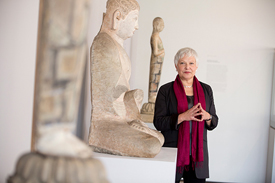 Martha Tedeschi
Martha Tedeschi, previously deputy director for art and research at the Art Institute of Chicago in Illinois, has been appointed Elizabeth and John Moors Cabot Director of the Harvard Art Museums in Cambridge, Massachusetts.

 Jacqueline Terrassa (photograph by Rachel Herman)
Jacqueline Terrassa, managing museum educator for gallery and studio programs at the Metropolitan Museum of Art in New York since 2011, has become the new Woman’s Board Endowed Chair of Museum Education at the Art Institute of Chicago in Illinois.
Julia Tulovsky, associate curator for Rutgers University’s Zimmerli Art Museum in New Brunswick, New Jersey, has been promoted to curator of Russian and Soviet Nonconformist Art.
Jonathan Frederick Walz has left his position as curator of American art at the University of Nebraska’s Sheldon Museum of Art in Lincoln.

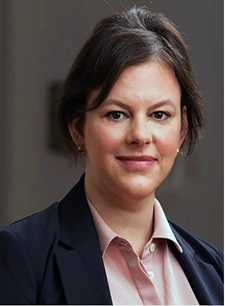 Claire Whitner
Claire Whitner has been promoted to assistant director of curatorial affairs and senior curator of collections at Wellesley College’s Davis Museum in Wellesley, Massachusetts.
Organizations and Publications
Jenny Norton-Wright has left her position at the Islamic Manuscript Association, based in Cambridge, England.
Institutional News
posted by CAA — June 15, 2016
Read about the latest news from institutional members.
Institutional News is published every two months: in February, April, June, August, October, and December. To learn more about submitting a listing, please follow the instructions on the main Member News page.
June 2016
The Bruce Museum of Arts and Science in Greenwich, Connecticut, has announced that its Education Department has won the Cultural Alliance of Fairfield County’s 2016 Arts and Culture Empowerment (ACE) Award for Education. The award celebrates individuals and organizations that have made significant contributions to the Fairfield County community through arts and culture.
The Cincinnati Art Museum in Cincinnati, Ohio, has launched a newly redesigned website that makes digital images of nearly sixty thousand artworks from its collection, accompanied by over four thousand high-quality photographs, accessible online for the first time. In addition, the museum’s upcoming contribution to the Artstor Digital Library will increase access to the collection for universities and educational partners.
The Sterling and Francine Clark Art Institute in Williamstown, Massachusetts, has received a grant of $600,000 from the Andrew W. Mellon Foundation that provides three years of programmatic support for the Institute’s Research and Academic Program to strengthen scholarship in art history and visual studies. The funding specifically enables the program to pursue new initiatives while also continuing support for key programs established with earlier support from the foundation.
The Maryland Institute College of Art in Baltimore has been awarded a three-year, $600,000 grant from the Philip E. and Carole R. Ratcliffe Foundation to launch the development of Up/Start MICA, a college-wide entrepreneurship initiative that will capitalize on the unique talents of the college’s students and recent graduates.
The National Gallery of Art in Washington, DC, has debuted the second release in its Online Editions series, Italian Paintings of the Thirteenth and Fourteenth Centuries by the late Miklós Boskovits, one of the leading scholars of early Italian art. This online catalogue—more than a decade in the making—offers a fresh examination of this collection and made possible through the generous support of the Samuel H. Kress Foundation. Additional funding is provided by the Andrew W. Mellon Foundation through a special endowment for scholarly publications supported by the Getty Foundation.
The National Gallery of Art in Washington, DC, has accepted a $10 million grant from the Walton Family Foundation to establish the John Wilmerding Fund for Education in American Art. The John Wilmerding Fund—named for the museum’s retired curator, deputy director, trustee, and chairman—will support programs with a broad focus on American art, celebrating Wilmerding’s immeasurable contributions to the field.
The Yale University Art Gallery in New Haven, Connecticut, along with Yale’s Beinecke Rare Book and Manuscript Library and the Addison Gallery of American Art at Phillips Academy in Andover, Massachusetts, have jointly acquired the Lucien Aigner Collection, an extraordinary archive of photographs, negatives, recordings, film, books, magazine clippings, letters, and journalistic writings. A pioneer of 1930s photojournalism, Lucien Aigner (1901–1999) belonged to the generation of photographers that included Robert Capa, Henri Cartier-Bresson, Alfred Eisenstaedt, and Erich Salomon.
Grants, Awards, and Honors
posted by CAA — June 15, 2016
CAA recognizes its members for their professional achievements, be it a grant, fellowship, residency, book prize, honorary degree, or related award.
Grants, Awards, and Honors is published every two months: in February, April, June, August, October, and December. To learn more about submitting a listing, please follow the instructions on the main Member News page.
June 2016


Kim Bobier, a doctoral candidate in art history at the University of North Carolina, Chapel Hill, has won a 2016 Henry Luce Foundation/ACLS Dissertation Fellowship in American Art from the American Council of Learned Societies. Her research project is titled “Representing and Refracting the Civil Rights Movement in Late Twentieth-Century Art.”
Judith K. Brodsky, distinguished professor emerita of the Visual Arts Department at Rutgers University in New Brunswick, New Jersey, has received an honorary doctor of fine arts degree from Rider University in Lawrence Township, New Jersey.
Sinem Arcak Casale, assistant professor of art history at the University of Minnesota, Twin Cities, has been named a 2016 ACLS Fellow by the American Council of Learned Societies. Her project is titled “Courtly Encounters in War and Peace: Ottoman-Safavid Gift Exchange, 1501–1660.”


Zirwat Chowdhury, visiting faculty member in art history at Bennington College in Bennington, Vermont, has been named a 2016–17 National Endowment for the Humanities Fellow by the Getty Research Institute in Los Angeles, California. Chowdhury will work on “The Vociferant Image: Sound and the Ethics of Empire in 18th-Century British Art and Visual Culture” from September 2016 to April 2017.
Carolyn Dean, professor of history of art and visual culture at the University of California, Santa Cruz, has been named a 2016–17 Getty Scholar by the Getty Research Institute in Los Angeles. Dean will work on her project, “The Non-Image Challenge to Art History and Anthropology,” between September 2016 and June 2017.
Elisa Dainese, an architect and lecturer in the University of Pennsylvania’s History of Art Department in Philadelphia, has won a 2016 Membership Grant from the Society of Architectural Historians.
Nancy Demerdash of Princeton University in Princeton, New Jersey, has accepted the 2016 Spiro Kostof Fellowship from the Society of Architectural Historians.
Yvonne Elet has earned a 2016 SAH/Mellon Author Award from the Society of Architectural Historians.
Savannah Esquivel of Northwestern University in Evanston, Illinois, has won the the 2016 Edila and Francois-Auguste de Montequin Junior Fellowship from the Society of Architectural Historians.
Keith Garubba, a faculty member of the Baum School of Art in Allentown, Pennsylvania, has won a 2016 Arts Ovation Award in the emerging-artist category from the Allentown Arts Commission and the city of Allentown.
Dale Allen Gyure, professor of architecture at Lawrence Technological University in Southfield, Michigan, and adjunct assistant professor of historic preservation at Goucher College in Baltimore, Maryland, has been awarded a 2016 publication grant from the Graham Foundation for his book Serenity and Delight: The Architecture of Minoru Yamasaki, to be published by Yale University Press.
Patrick Thomas Hajovsky, associate professor in the Sarofim School of Fine Arts at Southwestern University in Georgetown, Texas, has been named a 2016–17 Getty Scholar by the Getty Research Institute in Los Angeles, California. He will work on “Currencies of Wealth and Fame: The Social Lives of Luxury Objects in Aztec Mexico” from April to June 2017.
Grace T. Harpster, a PhD candidate in the History of Art Department at the University of California, Berkeley, has been named a 2016–17 Getty Predoctoral Fellow by the Getty Research Institute in Los Angeles, California. She will work on “Carlo Borromeo’s Itineraries” between September 2016 and June 2017.
Leslie Hewitt, an artist based in New York, has won a publication grant from the Graham Foundation for Untitled (Structures), a book to be produced with Bradford Young and published by Dancing Foxes Press.
Michael Ann Holly, consulting director and Starr Director Emeritus of the Research and Academic Program at the Sterling and Francine Clark Art Institute in Williamstown, Massachusetts, has been named a 2016–17 Guest Scholar by the Getty Research Institute in Los Angeles, California. She will research “At the Back of the Painted Beyond / At the Still Point of the Painted World” from January to March 2017.
Shih-shan Susan Huang, associate professor of art history at Rice University in Houston, Texas, has won a 2016 Frederick Burkhardt Residential Fellowship from the American Council of Learned Societies. She will be in residence at the Huntington Library, Art Collection, and Botanical Gardens in San Marino, Califorina, during academic year 2017–18, working on “First Impressions: Chinese Religious Woodcuts and Cultural Transformation.”
H. H. Joyce of the University of Oxford in England has accepted the 2016 Scott Opler Emerging Scholar Fellowship from the Society of Architectural Historians.
Kate M. Kocyba has won a 2016 Membership Grant from the Society of Architectural Historians.


Lauren Kroiz, assistant professor in the History of Art Department at the University of California, Berkeley, has won the Smithsonian American Art Museum’s 2015 Patricia and Phillip Frost Essay Award. Kroiz’s article, “‘A Jolly Lark for Amateurs’: John Steuart Curry’s Pedagogy of Painting,” appeared in the spring 2015 issue of American Art.
Anneka Lenssen, assistant professor of global modern art in the History of Art Department at the University of California, Berkeley, has been named a 2016–17 Getty Postdoctoral Fellow by the Getty Research Institute in Los Angeles. She will continue work on “Being Mobilized: The Vitality of Arab Art, 1930–1960” between September 2016 and June 2017.
Michael Lobel, professor of art history at Hunter College, City University of New York, has been awarded the twenty-eighth Charles C. Eldridge Prize for Distinguished Scholarship in American Art for his book John Sloan: Drawing on Illustration (New Haven: Yale University Press, 2014).
Maura Lucking, an architectural historian pursuing a PhD in critical studies from the Department of Architecture and Urban Design at the University of California, Los Angeles, has won a 2016 film grant from the Graham Foundation for Church of Schindler, a project in collaboration with the Los Angeles–based documentary filmmaker Andrea Lewis.
Ellen Macfarlane, a doctoral candidate in art and archaeology at Princeton University in Princeton, New Jersey, has won a 2016 Henry Luce Foundation/ACLS Dissertation Fellowship in American Art from the American Council of Learned Societies for her study, “Group f.64 Photography and the Object World.”

 Luciana Martins
Luciana Martins, reader in Latin American visual studies at Birkbeck, University of London, in England, has been awarded a 2016 Leverhulme Research Fellowship for two years for a project entitled “Drawing Together: The Visual Archive of Expeditionary Fieldwork.”
Jeffrey A. Miller has won a 2016 Membership Grant from the Society of Architectural Historians.
Kimberly Minor, a doctoral candidate in art and art history at the University of Oklahoma in Norman, has won a 2016 Henry Luce Foundation/ACLS Dissertation Fellowship in American Art from the American Council of Learned Societies. Her project is titled “Pictographic Motifs: Memory and Masculinity on the Upper Missouri.”
Keith Moxey, Barbara Novak Professor in the Department of Art History at Barnard College in New York, has been named a 2016–17 Guest Scholar by the Getty Research Institute in Los Angeles, California. Moxey will research “Temporalities of Art History” between September and December 2016.

 John Murphy
John Murphy has been awarded the 2016 Amy P. Goldman Foundational Fellowship in Pre-Raphaelite Studies from the Delaware Art Museum and the University of Delaware Library, both in Wilmington.
Stella Nair, associate professor in the Department of Art History at the University of California, Los Angeles, has won the Charles K. Williams II Rome Prize from the American Academy of Rome. She will continue work on “Rome in the Andes: The Impact of the Classical World on Inca Architectural History.”
Elisabeth Narkin, a PhD candidate in the Department of Art, Art History, and Visual Studies at Duke University in Durham, North Carolina, has received the 2016 Carter Manny Award for doctoral dissertation research from the Graham Foundation. Her project is called “Rearing the Royals: Architecture and the Spatialization of Royal Childhood in France, 1499–1610.”
Lawrence Nees, professor in the Department of Art History at the University of Delaware in Newark, has been named a 2016–17 Museum Guest Scholar by the Getty Research Institute in Los Angeles, California. Research for his project, “Host Department: Manuscripts,” will take place between April and June 2017.
Christina Neilson, assistant professor of Renaissance and Baroque art history at Oberlin College in Oberlin, Ohio, has been named a 2016 ACLS Fellow by the American Council of Learned Societies. She will continue research on “Living Devotion: Animating Sculpture in Early Modern Europe.”
Fernando Martínez Nespral from the University of Buenos Aires in Argentina has accepted a place in the 2016 SAH-Getty International Program by the Society of Architectural Historians.
Emily Neumeier of the University of Pennsylvania in Philadelphia has won the 2016 Keepers Preservation Education Fund Fellowship from the Society of Architectural Historians.

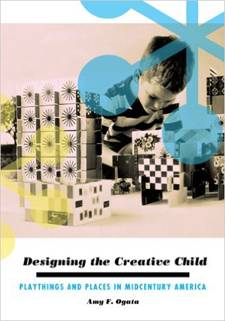
Amy F. Ogata, associate professor at the Bard Graduate Center: Decorative Arts, Design History, Material Culture in New York, has won the 2016 Alice Davis Hitchcock Book Award from the Society of Architectural Historians for Designing the Creative Child: Playthings and Places in Midcentury America (Minneapolis: University of Minnesota Press, 2013).
Pauline Ayumi Ota, associate professor of art and art history at DePauw University in Greencastle, Indiana, has accepted a 2016 Frederick Burkhardt Residential Fellowship from the American Council of Learned Societies. She will work on “Seeing Is Knowing: Visual Perception, Painting, and Cityscapes in Mid-Eighteenth Century Japan” at the Asian Studies Program at the University of Hawai‘i in Manoa during academic year 2016–17.
John Ott, professor of art history at James Madison University in Harrisonburg, Virginia, has received a 2016 Summer Stipend from the National Endowment for the Humanities to work on his book project, “Mixed Media: The Visual Culture of Racial Integration, 1931–1954.”
Nina Rowe, associate professor of art history and music at Fordham University in Bronx, New York, has been named a 2016 ACLS Fellow by the American Council of Learned Societies. She will work on “The World in a Book: Weltchroniken and Society at the End of the Middle Ages.”

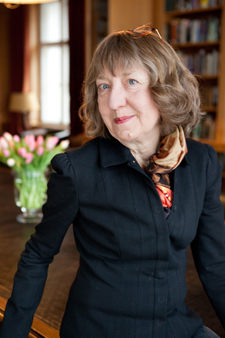 Corine Schleif (photograph by Annette Hornischer)
Corine Schleif, a professor for the Herberger Institute for Design and the Arts at Arizona State University in Tempe, has received the 2015–16 Berlin Prize and is currently John P. Birkelund Fellow in the Humanities at the American Academy in Berlin, where she is completing the book Bending Stone: Adam Kraft and the Sculpting of Art’s History.
Emma Rose Silverman, a doctoral candidate in history of art at the University of California, Berkeley, has won a 2016 Henry Luce Foundation/ACLS Dissertation Fellowship in American Art from the American Council of Learned Societies for her research project, “From Eyesore to Icon: Outsider Art, Racial Politics, and the Watts Towers.”
Kristel Smentek, associate professor of architecture for the Massachusetts Institute of Technology in Cambridge, Massachusetts, has been named a 2016 ACLS Fellow by the American Council of Learned Societies. Her research project is called “Objects of Encounter: China in Eighteenth-Century France.”
Giulia S. Smith, a PhD candidate in the History of Art Department at University College London, England, has been named a 2016–17 Getty Predoctoral Fellow by the Getty Research Institute in Los Angeles, California. She will work on her project, titled “An Anthropology of Ourselves: The Independent Group from Urban Fieldwork to Global Ecology, 1929–1973,” from September 2016 to June 2017.
Joseph Williams, a PhD candidate in the Department of Art, Art History, and Visual Studies at Duke University in Durham, North Carolina, has won the Phyllis W. G. Gordan/Lily Auchincloss/Samuel H. Kress Foundation Pre-Doctoral Rome Prize from the American Academy in Rome. He will continue researching “The Practice and Production of Architecture during the Mediterranean Commercial Revolution: The Church of S. Corrado in Molfetta (ca. 1185–1303).”
Fo Wilson, an artist and associate professor at Columbia College Chicago in Illinois, has won a 2016 exhibition grant from the Graham Foundation. He will use the funds to produce Eliza’s Peculiar Cabinet of Curiosities, on view at the Lynden Sculpture Garden in Milwaukee, Wisconsin, from June 26 to October 30, 2016.
Mary N. Woods, Michael A. McCarthy Professor of Architectural Theory at Cornell University in Ithaca, New York, has been awarded a publication grant from the Graham Foundation for her book Women Architects in India: Histories of Practice in Mumbai and Delhi, to be published by Routledge.
Daniel M. Zolli, a PhD candidate in the History of Art and Architecture Department at Harvard University in Cambridge, Massachusetts, has been named a 2016–17 Getty Predoctoral Fellow by the Getty Research Institute in Los Angeles, California. He will work on “Voices in the Workshop: Donatello and Theories of Making in Fifteenth-Century Oral Culture” from September 2016 to June 2017.
Exhibitions Curated by CAA Members
posted by CAA — June 15, 2016
Check out details on recent shows organized by CAA members who are also curators.
Exhibitions Curated by CAA Members is published every two months: in February, April, June, August, October, and December. To learn more about submitting a listing, please follow the instructions on the main Member News page.
June 2016

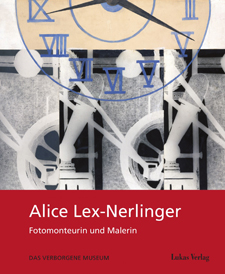
Rachel Epp Buller. Alice Lex-Nerlinger 1893–1975: Fotomonteurin und Malerin. Das Verborgene Museum, Berlin, Germany, April 14–August 7, 2016.

 Imogen Cunningham, Double Image of Joseph Sheridan, 1931, gelatin silver print, 10 x 7½ in. (artwork © Imogen Cunningham Trust)
Rachel Epp Buller. Transition and Turmoil: Human Expressions 1900–1945. Ulrich Museum of Art, Wichita State University, Wichita, Kansas, January 16–May 8, 2016.

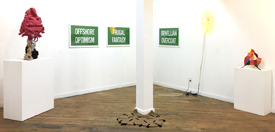 Installation view of Laughing Out Loud
Rhia Hurt and Katerina Lanfranco. Laughing Out Loud. Trestle Gallery, Brooklyn, New York, April 15–June 3, 2016.

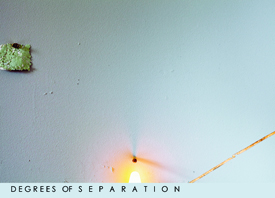 Barbara Weissberger, “Night Light,” 2014, digital photograph/archival pigment print (artwork © Barbara Weissberger)
Kristen Letts Kovak. Degrees of Separation. SPACE, Pittsburgh, Pennsylvania, April 15–June 5, 2016.
Books Published by CAA Members
posted by CAA — June 15, 2016
Publishing a book is a major milestone for artists and scholars—browse a list of recent titles below.
Books Published by CAA Members appears every two months: in February, April, June, August, October, and December. To learn more about submitting a listing, please follow the instructions on the main Member News page.
June 2016

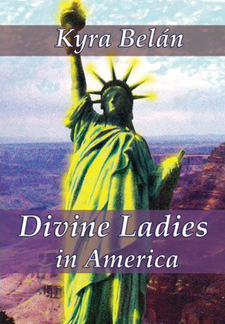
Kyra Belán. Divine Ladies in America: Cultural Icons of the New Millennium (Cape Coral, FL: Astarte Books, 2016).
Rachel Epp Buller. Alice Lex-Nerlinger 1893–1975: Fotomonteurin und Malerin / Photomontage Artist and Painter (Berlin: Lukas Verlag and Das Verborgene Museum, in cooperation with Akademie der Künste, 2016).

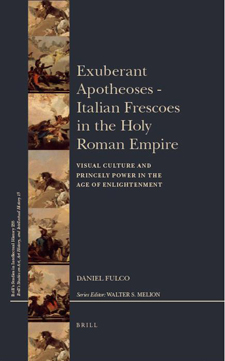
Daniel Fulco. Exuberant Apotheoses – Italian Frescoes in the Holy Roman Empire; Visual Culture and Princely Power in the Age of Enlightenment (Leiden, the Netherlands: Brill, 2016).
New Faces for CAA’s Publications
posted by CAA — June 15, 2016
The president of the CAA Board of Directors, Suzanne Preston Blier, has confirmed new appointments to the editorial boards of CAA’s three scholarly journals and to the Publications Committee, in consultation with the vice president for publications, Gail Feigenbaum.
The Art Bulletin
A new member-at-large has joined the Art Bulletin Editorial Board. Laura Weigert is an associate professor at Rutgers University in New Brunswick, New Jersey, whose area of specialization is Northern European art of the late Middle Ages and Renaissance. Her term on the editorial board runs through June 2020.
Art Journal
Three new at-large members have joined the Art Journal Editorial Board. Tatiana E. Flores, associate professor at Rutgers University in New Brunswick, New Jersey, with a joint appointment in the Department of Art History and the Department of Latino and Caribbean Studies, specializes in Latin American and contemporary art. She is also active as an independent curator. Amelia G. Jones, a historian and theorist of contemporary art and performance studies, is Robert A. Day Professor of Art and Design and vice dean of critical studies at the University of Southern California’s Roski School of Art and Design in California. Derek Conrad Murray, associate professor of contemporary art and visual culture at the University of California, Santa Cruz, focuses on the junctures of African American and African diasporic art, postblack art and aesthetics, cultural theory, and identity and representation. The term for each new editorial-board member goes through June 2020.
In addition, Tirza T. Latimer, chair of the graduate program in visual and critical studies at California College of the Arts in San Francisco and a member of the Art Journal Editorial Board since 2014, will now serve as its chair. Her term extends through June 2018.
caa.reviews
The caa.reviews Editorial Board welcomes Juliet Bellow, associate professor of art history at American University in Washington, DC, as editor designate for the journal. She will begin a three-year term as editor-in-chief on July 1, 2017. Bellow has been a field editor for books on nineteenth-century art and served on the journal’s editorial board for the past four years. Andrei Pop, associate professor for the Department of Art History and the John U. Nef Committee on Social Thought at the University of Chicago in Illinois, has joined the caa.reviews Editorial Board after serving as field editor for books on theory and historiography.
caa.reviews recently added design history as a subject area, and Karen Carter, an associate professor from the Kendall College of Art and Design at Ferris State University in Grand Rapids, Michigan, will be the first editor to commission books on the subject. In addition, Iris Moon, visiting assistant professor of architecture at Pratt Institute in Brooklyn, New York, has joined the journal’s Council of Field Editors to commission reviews for books on eighteenth-century art. Alpesh Kantilal Patel, assistant professor and director of the MFA program in visual arts at Florida International University in Miami, currently serves as field editor for books on contemporary art.
Publications Committee
Emily Shapiro has joined CAA’s Publications Committee as member-at-large for a term of three years. Shapiro is managing editor of the Archives of American Art Journal, after serving as executive editor for American Art.
Lead a Professional Development Workshop at CAA 2017
posted by CAA — June 14, 2016
Do you have a knack for sharing your knowledge with others and are enthusiastic about doing so? CAA seeks active members who are well established in their fields to serve as leaders for 90-minute Professional Development Workshop offerings at the 2017 Annual Conference at the New York Hilton Midtown from February 15-18.
The Annual Conference Committee and Programs Department aims to provide CAA members with re-vamped, affordable, and relevant professional development opportunities for 2017. But we need your help to do it! We encourage your collaboration and we welcome your proposals! Sample titles and/or subjects could run from, “Creating Online Exhibitions” to “Thinking Outside the Tenure Track.”
For more details, requirements, and submissions please visit the submissions page.
Workshop leaders will receive complimentary conference registration, a complimentary ticket to the 2017 Opening Reception, and one year of Premium Level Membership (renewal or upgrade to commence upon current membership’s expiration date) in exchange for their work as a leader.
Deadline for submissions: Monday, July 18, 2016.
For questions and more information please contact Katie Apsey at kapsey@collegeart.org
This Week in caa.reviews
posted by CAA — June 10, 2016
James M. Córdova on sixteenth-century murals in Mexico: Penny Morrill, The Casa del Deán: New World Imagery in a Sixteenth-Century Mexican Mural Cycle.
Lynne Ellsworth Larsen on the relationship between art and language in Yoruba art: Rowland Abiodun, Yoruba Art and Language: Seeking the African in African Art.
Terri Weissman reviews the inaugural exhibition at the new Whitney Museum of American Art, America Is Hard to See.
James Merle Thomas on collaborations between artists and corporations at the Los Angeles County Museum of Art: From the Archives: Art and Technology at LACMA, 1967–1971.
BOOKFORUM IS CAA’S FEATURED MEMBER PARTNER FOR JUNE
posted by CAA — June 08, 2016
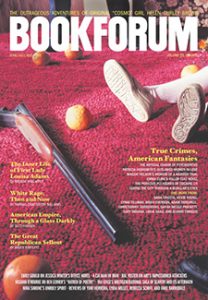 For over 20 years, Bookforum has showcased daring writing about the important ideas of our time, with incisive essays on politics, pop culture, literature, and the arts. Bookforum follows in the rich tradition of Artforum, its sister magazine, featuring reviews and criticism by both distinguished figures and exciting new voices.
Bookforum’s Summer issue on “True Crimes, American Fantasies” with writing from Gary Indiana, Terry Castle, Dana Spiotta, and more is on newsstands now.
As a CAA member, subscribe today and take advantage of the CAA member rate, PLUS get the True Crimes Summer issue free! Subscribe to Bookforum, and receive six issues of the best in literature and cultural affairs for just $15.
If you live in the US, you can also receive Bookforum at no additional cost with your subscription to Artforum. Subscribe to Artforum at the member rate of $45 per year. CAA members, please log into your account to access the special discount code and unlock both offers.