CAA News Today
Affiliated Society News for November 2015
posted by CAA — November 09, 2015
Association of Research Institutes in Art History (ARIAH)
The Association of Research Institutes in Art History (ARIAH) is very pleased to announce the establishment of a new program that will strengthen intellectual connections among art history disciplines in different regions of the world. With generous support from the Andrew W. Mellon Foundation, the Getty Foundation, and the Terra Foundation for American Art, ARIAH’s East Asia Fellowship program will enable twelve scholars from countries in East Asia to conduct research at ARIAH member institutes on any topic in the visual arts. The project is funded for a three-year period, beginning in 2016, with four fellowships offered each year.
The East Asia Fellowship program is open to art history scholars from Japan, Mongolia, the People’s Republic of China (including Hong Kong and Macau), the Republic of China (Taiwan), and South Korea. Each East Asia Fellow will be hosted by an ARIAH member institute, and will also have the opportunity to travel to other research centers during the fellowship period, which will last three to four months. Fellowships will be awarded through an open, competitive application process. The deadline for the first of three rounds of fellowships is December 31, 2015. Candidates can find more information about the program, including application instructions, at www.ariah.info/east_asia_fellowship.html.
More information about ARIAH, including a complete list of member institutes, can be found at www.ariah.info.
Association of Academic Museums and Galleries (AAMG) Annual Conference: Call for Proposals
Communities in Dialog: Models of Best Practices for Academic Museums, Galleries, and Collections
When: Tuesday and Wednesday, May 24-25, 2016
Where: Katzen Arts Center, American University, Washington DC
Deadline for Submissions: Monday, November 30th, 2015
The AAMG conference committee requests proposals on topics that address and can help establish guidelines, benchmarks, and best practices in all areas of academic museum and galleries, including, but not limited to: collections care and registration, governance, assessment, community engagement, teaching and museum education, exhibitions, public programming, fundraising, and professional development. Topics may address systemic challenges and present model programs that could become “templates” for the field.
AAMG seeks proposals that are representative of a cross-section of the academic field, including anthropology, art, history, science, and natural history museums, galleries, and collections. AAMG particularly encourages students and faculty to submit.
Submission Guidelines: A one-page outline of presentation proposal plus a contact list and CVs of each participant should be sent electronically to Vice President of Programs Leonie Bradbury, vp-programs@aamg-us.org If multiple presenters please add a one paragraph abstract for each paper or subtopic.
More details online at AAMG Annual Conferences.
The Historians of German and Central European Art and Architecture (HGCEA)
The Historians of German and Central European Art and Architecture (HGCEA) recently changed its name to Historians of German, Scandinavian, and Central European Art and Architecture (HGSCEA).
Northern California Art Historians
Call for Papers: “Zones of Representation: Photographing Contested Landscapes, Contemporary West Coast Perspectives on Photography and Photograph-Based Media,” symposium organized by Makeda Best (California College of the Arts), Bridget Gilman (Santa Clara University), and Kathy Zarur (California College of the Arts), at SF Camerawork, San Francisco, CA, on Saturday, April 23, 2016.
Contemporary global events and phenomena continue to shape visual interpretations of economic, social, environmental, and political geographies, and to disrupt conceptions of region, nation, citizenship, and community. “Zones of Representation” will consider how photographers and time-based media artists have responded to transformations in the global landscape through new ideas about the function of photographic media, and the shifting roles of makers and audiences. We want to know: how can novel visual practices disrupt traditional narratives of spatial representation?; in what unique ways do artists in time-based media acknowledge and respond to the historical contribution of their medium in defining, producing, and perpetuating these same narratives?; what new connections do these practices demonstrate and reveal?; and, in what ways do contemporary technologies, modes of distribution, and access impact interactions with the land?
We invite papers that address the expanded role of photography and time-based media in global landscape discourses and social fabrics. Proposals on contemporary topics or new perspectives on historic materials are encouraged. Proposals from image makers are also welcome. Please send a 300-word proposal, a one-paragraph biographical statement, and full contact information to zonesofrepresentation@gmail.com by January 8, 2015.
“Zones of Representation” aims to connect artists, historians, curators and arts professionals, and students in Northern California, facilitating a regional network for the latest art historical scholarship. The symposium is presented in collaboration with SF Camerawork and is co-sponsored by the Northern California Art Historians (NCAH), a College Art Association affiliated society.
American Society of Appraisers
The American Society of Appraisers will offer Signs and Symbols in the Visual Arts, a 2-day course, on January 15-16, 2016, at The Huntington Library, Art Collections and Botanical Gardens in San Marino, CA.
Since the beginning of history, human beings have used visual images to signify concepts, beliefs, and ideas. This class will explore visual vocabularies and how they are used in material culture. We will look at images of the cosmos, the earth, geometric forms, animals, plants and the human body and how they are used in art, architecture and design. The focus will be on imagery of the European tradition, though examples from India, China, Japan and indigenous American cultures will also be considered. Because painting, sculpture, books, furniture, decorative arts, buildings, coins, and other objects will be used as sources, the course will be quite useful for those interested in visual studies and anyone wishing to deepen their appreciation of the rich vocabulary of art, architecture and design.
For more information, visit http://www.appraisers.org/Education/View-Course?CourseID=528
Art Libraries Society of North America (ARLIS/NA) and Visual Resources Association (VRA)
Join the Art Libraries Society of North America (ARLIS/NA) and the Visual Resources Association (VRA) March 8-12, 2016 in Seattle, Washington for the third joint conference of the two organizations. The beautiful and technology-driven city of Seattle was proposed by a coalition of members from the VRA Pacific Rim Chapter and the Northwest Chapter of ARLIS/NA. Both chapters have proposed a theme of “Natural Connections” to highlight both the shared values of ARLIS and VRA as well as the close relationship in the Puget Sound area between its people and nature.
In addition to inspirational speakers, information-packed sessions, a preconference THATcamp, marquis events at the city’s hallmark art and library institutions, and many terrific opportunities for making “Natural Connections” with colleagues and friends old and new, the conference schedule allows a free weekend at either end. Come early, stay late, and check out what Seattle has to offer: stunning natural landscapes, unique architecture, fabulous food & drink, and a huge variety of cultural activities. There is no other place like Seattle to visit in March when it offers cherry blossoms as a cure to your late-winter doldrums.
The Italian Art Society (IAS)
The Italian Art Society (IAS) is delighted to announce the success of its “Campaign for 500.” In early November we reached and surpassed our goal of 500 members, an historic high. Thanks to the generosity of one of our patron members, Mr. Peter Folgliano, next year we will be able to offer two new research and publication grants of up to $1000.00 each. One will be for graduate students, and the other for PhD holders, whose projects concern art and architecture in Italy between 1250 and 1600.
The next IAS/Kress lecture will take place at Villa I Tatti, the Harvard University Center for Italian Renaissance Studies, on Wednesday, June 1, 2016 in Florence, Italy. The speaker will be a senior or established scholar working on a topic related to Florence or its environs (application deadline January 8, 2015, please see our website, www.italianartsociety.org, for more information).
The IAS is pleased to announce the recipients of the extra research and publication grants we offered this summer: Dr. Allison Levy (Independent Scholar), for her book, Misfits, Monstrosities, and Madness at the Villa Ambrogiana and Dr. Johanna Heinrichs (Dominican University) for her book, Mobile Lives, Stable Homes: The Palladian Villa between City and Country.
Mid America College Art Association (MACAA)
Building on the success of the 2014 conference, the 2016 MACAA conference will be held in Cincinnati, Ohio and hosted by the University of Cincinnati’s College of Design, Architecture, Art, and Planning (DAAP), with School of Art Director Kate Bonansinga and Kris Holland serving as Conference Co-Chairs. Numerous regional institutions and their faculty have been taking part in planning the conference including Ball State University, Miami University, Thomas Moore College, University of Dayton, University of Toledo, Wayne State University, and Western Michigan University. DAAP is also collaborating with FotoFocus 2016 on inviting and sponsoring keynote speakers.
The title of the conference, Studio Shift: MACAA2016 @ DAAP, was selected to underscore the constantly evolving character of art and design. During the last several decades there has been an escalating interest in socially engaged art and design. In this post-studio context, creative practitioners release control to the audience. While this conference will focus on past, present, and future kinds of creative research space for artists, designers, historians, curators, and critics, other presentation topics are also welcome. We welcome student participation in MACAA 2016 as well. The deadline for session proposals is December 1, 2015. The conference hotel is the Kingsgate Marriott on the campus of the University of Cincinnati.
MACAA continues to contract Eastern Illinois University continuing education for conference and membership support services. In 2014, MACAA was established as a non-profit registered in the State of Michigan and retained the services of a CPA to streamline its accounting and business practices. Since the last conference, we have elected Christopher Olszewski (Savannah College of Art and Design) as President of the organization, Barbara Giorgio (Ball State University) as Secretary, and welcome nine new board members. In addition to Kate Bonansinga (DAAP) and Kris Holland (DAAP), we are happy to welcome Mary Eisendrath (Virginia Commonwealth University), Heather Hertel (Slippery Rock University of Pennsylvania), Jennifer Murray (Loyola University Chicago), Rod Northcutt (Miami University), Elizabeth Olton (University of New Mexico), and Scott Thorp (Georgia Regents University). Our new representative to Foundations in Art: Theory and Education (FATE) is Guen Montgomery (University of Illinois at Urbana-Champaign).
The 2014 MACAA conference, “Mash-Up: Navigating Art and Academia in This Millennium,” was held October 22-25, 2014 in San Antonio, Texas. The Department of Art and Art History at the University of Texas at San Antonio (UTSA) was the conference host, with Dr. Scott A. Sherer serving as MACAA Conference Chair and Professor Greg Elliott serving as UTSA institutional coordinator. The city of San Antonio, with its well-known cultural history, provided a great foundation for camaraderie.
The conference featured 41 panels and presentations regarding diverse topics in studio disciplines, art history, and museum practices. Conference participants enjoyed a cabaret-style Hometown Artist’s Rodeo, organized by Ken Little (UTSA) and hosted by the Southwest School of Art; a keynote performance by The Art Guys hosted by the McNay Art Museum; and a keynote talk by Joseph Seipel (Virginia Commonwealth University) hosted by the San Antonio Museum of Art. Participants enjoyed presentations and extended discussions regarding research and creative endeavors.
The Members Meeting featured door prizes supplied by the University of Texas Press and Routledge/Taylor and Francis. The Green Bag Lady — Teresa VanHatten-Granath (Denver, CO) — contributed beautiful eco-friendly hand-made bags for all participants. Paula Owen, President of the Southwest School of Art, juried the Members’ Exhibition, held at the UTSA Art Gallery. Ellen Mueller (West Virginia Wesleyan College, Buckhannon, WV) won Best in Show and Rosemary Meza-DesPlas (El Centro College, Dallas, TX) was awarded Honorable Mention.
Society of Historians of Eastern European, Eurasian and Russian Art and Architecture, Inc. (SHERA)
The Society of Historians of Eastern European, Eurasian and Russian Art and Architecture, Inc. (SHERA) is actively participating in the yearly convention of the Association of Slavic, East European, and Eurasian Studies (ASEEES), which took place in Philadelphia, Pennsylvania on November 19-22, 2015. SHERA members organized multiple sessions and roundtables on a wide range of topics covering history of art, theory of aesthetics, architecture, textile design, film, photography, and fashion among others. A roundtable discussion devoted to the state of the discipline and new research in histories of art in Russia and the countries of East and Central Europe also took place at this convention.
SHERA has successfully launched its visiting scholar program to Russia by arranging visa invitations this summer for two British scholars, members of SHERA, as part of the visiting scholar program with the Russian State University of Humanities in Moscow (RGGU). The visiting scholar program enables scholars to conduct individual research while being involved in educational activities with a partner institution. Apart from RGGU, SHERA has established working relationship with the Department of Art History of the European University in St. Petersburg. Inquiries about the application process should be directed to: shera.artarchitecture@gmail.com.
Association of Textual Scholarship in Art History (ATSAH)
Association of Textual Scholarship in Art History (ATSAH) cosponsored with The Università of Aldo Moro, Bari, Italy an international conference on Arts and Politics, November 4-8, 2015.
Members of ATSAH who presented inlcude Profs. Maureen Pelta, Moore College of Arts and Design, PA; Tina Bizzarro, Rosemont College, PA; Sarah Lippert, University of Michigan-Flint; Emilie Passignat, University of Florence, Italy; Brian Steel, Texas Tech University; Debra Murphy, University of North Florida; Liesbeth Grotenhuis, Hanze University, Groningen, Netherlands; and Liana De Girolami Cheney, President of ATSAH.
Liana De Girolami Cheney, PhD, President of the Association for Textual Scholarship in Art History (ATSAH), recently published articles in the following publications:
“Lavinia Fontana’s Two Minervas,” Woman’s Art Journal (Fall/Winter 2015), 30-40.
“Sofonisba Anguissola’s Ponce Portrait of a Young Man,” SOURCE: Notes in the History of Art Vol. 34, No. 4 (Summer 2015), 39-47.
“Giorgio Vasari’s Saint Michael: A Symbol of Neoplatonic Light,” Journal of Religious Studies, Davis Publishing Company, Vol. 3, No. 3 (May-June 2015), 152-66.
“Giorgio Vasari’s Saint Francis: Aretine Fervor,” Journal of Literature and Art Studies, David Publishing Company, Vol. 5, No. 8 (October 2015), 859-73.
“Giorgio Vasari’s “Sala degli Elementi” in Palazzo Vecchio, Florence: The Symbolism of Saturn as Heavenly Air,” in Heavenly Discourses, ed. Nicholas Campion (Bristol, UK: Sophia Centre Press, 2015), 14-24.
“Edward Burne-Jones’ Heavenly Conception: The Days of Creation,” in Brian Abbott, ed. City of Stars: New York: The Inspiration of Astronomical Phenomena (2015), 75-86.
Committee on Diversity Practices highlights for November/December 2015
posted by CAA — November 09, 2015
The CAA Committee on Diversity Practices highlights exhibitions, events, and activities that support the development of global perspectives on art and visual culture and deepen our appreciation of political and cultural heterogeneity as educational and professional values. Current highlights are listed below; browse past highlights through links at the bottom of this page.
November/December 2015
Flawlessly Feminine: Women Who Graced the Cover of JET Magazine and Works by Willie Cole
Golden Lady: Works by Mario Moore
Diggs Gallery, Winston-Salem State University
Winston-Salem, North Carolina
July 9–December 2, 2015
“The pairing of two innovative exhibitions honoring women who graced the cover of JET Magazine, and drawings of young women with their favorite literature, is on display at Winston-Salem State University’s Diggs Gallery through December 2. The exhibits feature works by renowned artist Willie Cole and emerging artist Mario Moore.”
Deana Lawson: Ruttenberg Contemporary Photography Series
Art Institute of Chicago
Chicago, Illinois
September 5, 2015–January 10, 2016
“The first installment of the biennial Ruttenberg Contemporary Photography Series features the work of New York–based photographer Deana Lawson. For nearly a decade, Lawson has been investigating the visual expression of global black culture and how individuals claim their identities within it. Her staged portraits, carefully composed scenes, and found images speak to the ways in which personal and social histories, familial legacies, sexuality, social status, and religious-spiritual ideas may be drawn upon the body.
Lawson began her work in and around her Brooklyn neighborhood but has recently branched out nationally and internationally to places such as Louisiana, Haiti, Jamaica, Ethiopia, and the Democratic Republic of the Congo. While her themes have remained consistent, her landscapes have shifted and broadened—the global scope of the pictures, in her words, “concern and affirm the sacred black body” and speak to a collective psychic memory of shared experiences.
Lawson starts her process by researching communities she has chosen for their cultural histories. Once on site, strangers met through chance encounters become her subjects, selected for a particular expression, mannerism, style of dress, or cultural or religious affiliation. The resulting images are often inspired by multiple trips or planned well in advance. They draw upon Western and African diasporic conventions of self-presentation, popular culture, mythology, and religious rituals and beliefs—emphasizing dialogues among the past, present, and future of black culture.”
Transmissions: Art in Eastern Europe and Latin America, 1960–1980
Museum of Modern Art
New York, New York
September 5, 2015–January 3, 2016
“Transmissions: Art in Eastern Europe and Latin America, 1960–1980 focuses on the parallels and connections among an international scene of artists working in—and in reference to—Latin America and Eastern Europe during the 1960s and 1970s. The radical experimentation, expansion, and dissemination of ideas that marked the cultural production of these decades (which flanked the widespread student protests of 1968) challenge established art-historical narratives in the West. Artists from Prague to Mexico City developed alternative and ever-expanding networks of distribution and organization, via Paris, Vienna, and Venice, to circumvent the borders established after World War II, local forms of state and military repression, and Western accounts of artistic mastery and individualism. One major transformation across Latin American and Eastern European art scenes was the embrace of institutional critique and an emphasis on the creation of art outside a market context.
The exhibition brings together landmark works from MoMA’s collection by Eastern European artists including Geta Brặtescu, Tomislav Gotovac, Ion Grigorescu, Sanja Iveković, Dóra Maurer, and the anti-art collectives Gorgona, OHO, Aktual, and Fluxus East, as well as Latin American artists such as Beatriz González, Antonio Dias, Lea Lublin, and Ana Mendieta. Particular attention is paid to the group of Argentine artists clustered around the influential Instituto Torcuato Di Tella, including Oscar Bony, David Lamelas, and Marta Minujín, who confronted the aesthetic and political implications of mass media communication—including film, television, and the telex—during a vibrant, experimental period of technological innovation and political tension.
Featuring series of works and major installations, several of which are on view for the first time, Transmissions: Art in Eastern Europe and Latin America, 1960–1980 highlights multiple points of contact, often initiated and sustained through collective actions and personal exchanges between artists. The exhibition suggests possible counter-geographies, realignments, alternative models of solidarity, and new ways of thinking about art produced internationally in relation to the frameworks dictated by the Cold War.”
Philippine Gold: Treasures of Forgotten Kingdoms
The Asia Society
New York, New York
September 11, 2015–January 3, 2016
“This exhibition of more than 100 gold objects focuses on the wealth of the golden age of Butuan (pronounced boot’ wan), a polity on the southern Philippine island of Mindanao that rose to commercial prominence in the tenth century and declined in the thirteenth century. Works from ancient polities beyond Butuan, such as those on the islands of the Visayas and Luzon, bear witness to the early use of gold throughout the Philippines. A selection of the most extraordinary objects from a 1981 discovery—now in the collection of the Ayala Museum in Makati City and on view in the United States for the first time—forms the core of “Philippine Gold: Treasures of Forgotten Kingdoms.” The exhibition also includes a few important loans from public and private collections including the Central Bank of the Philippines. Featuring spectacular gold necklaces, chains, waistbands, bangles, ritual bowls, implements, and ceremonial weapons, the exhibition showcases the rich artistry and material wealth of Butuan and related island polities.”
Gates of the Lord: The Tradition of Krishna Paintings
Art Institute of Chicago
Chicago, Illinois
September 13, 2015–January 3, 2016
“This fall, the Art Institute of Chicago offers a glimpse into one of the world’s most intimate religious traditions. Bringing together over 100 artworks from private and public collections in India and the United States, Gates of the Lord: The Tradition of Krishna Paintings is the first major U.S. exhibition to explore the unique visual culture of the Pushtimarg, a Hindu denomination from Western India.
Founded in the 16th century by the saint and philosopher Shri Vallabhacharya (1479–1531), the Pushtimarg is a religious community dedicated to the devotion of Shrinathji, a divine image of the Hindu god Krishna as a seven-year-old child. The religious and artistic center of the sect is based in the temple town of Nathdwara (literally, “The Gates of the Lord”), near Udaipur in the state of Rajasthan, India. Scholars and artists have long been fascinated by the distinctive and highly aestheticized manner in which members of this group venerate Shrinathji, as well as by the legacy of miniature paintings created as a record of such worship. This exhibition showcases centuries of pichvais (textile hangings) and miniature paintings that have been created by and for the Pushtimarg in devotion of Shrinathji.
The exhibition takes visitors through a year in Nathdwara, where the daily worship of Shrinathji is characterized by the changing seasons and a bustling festival calendar. Gallery by gallery, visitors are introduced to the pichvais used as backdrops for Shrinathji in his shrine, each uniquely suited to a particular season or festival. The accompanying miniature paintings offer further insight into the Pushtimarg sect: its mode of veneration, history, and important priests and patron families. Enhancing the experience of the sect’s rich culture are festival and devotional music, a shrine reconstruction, and touchscreen kiosks that allow visitors to page through religious manuscripts, an artist’s sketchbook, and a historic photo album. The exhibition concludes with an exploration of the works, sketches, and observations of prominent 20th- and 21st-century Nathdwara artists who have kept the painting tradition flourishing through the present day.
Gates of the Lord comprises drawings, pichvais, paintings, and historic photographs borrowed chiefly from two major private collections in India, the Amit Ambalal Collection (Ahmedabad, India) and the TAPI Collection (Surat, India). These rare loans are augmented by important objects from a number of public and private collections within the United States, including the Art Institute’s own permanent collection, in order to present the richest possible story of Pushtimarg art and tradition.”
Kongo: Power and Majesty
The Metropolitan Museum of Art
New York, New York
September 18, 2015–January 3, 2016
“Central Africa’s Kongo civilization is responsible for one of the world’s greatest artistic traditions. This international loan exhibition will explore the region’s history and culture through 134 of the most inspired creations of Kongo masters from the sixteenth through the early twentieth century.
The earliest of these creations were diplomatic missives sent by Kongo sovereigns to their European counterparts during the Age of Exploration; they took the form of delicately carved ivories and finely woven raffia cloths embellished with abstract geometric patterns. Admired as marvels of human ingenuity, such Kongo works were preserved in princely European Kunstkammer, or cabinets of curiosities, alongside other precious and exotic creations from across the globe.
Kongo luxury arts from the sixteenth through the eighteenth century—many of which have never been exhibited before—will give an unprecedented historical backdrop to the outstanding work produced by master sculptors active in the same region during the nineteenth century. The array of figurative representations they produced range from miniature ivory finials for the staffs of office of Kongo leaders to the carved-wood commemorative shrine figures positioned above their burial sites.
The presentation will culminate with a gathering of fifteen monumental Mangaaka power figures produced in the Chiloango River region during the second half of the nineteenth century; these will include the celebrated example acquired by the Met in 2008, the original catalyst for the exhibition. For the first time, this electrifying form of expression will be understood as a defensive measure conceived by Kongo leaders to deflect Western incursions into this region of Central Africa.
With works drawn from sixty institutional and private lenders across Europe and the United States, Kongo: Power and Majesty will relate the objects on view to specific historical developments and will challenge misconceptions of Africa’s relationship with the West. In doing so, it will offer a radical, new understanding of Kongo art over the last five hundred years.”
Impressionism and the Caribbean: Francisco Oller and His Transatlantic World
Brooklyn Museum of Art
Brooklyn, New York
October 2, 2015–January 3, 2016
“The painter Francisco Oller contributed greatly to the development of modern art in both Europe and the Caribbean and revolutionized the school of painting in his native Puerto Rico.
Oller emerged from the small art world of San Juan in the 1840s, spending twenty years in Madrid and Paris, where he was inspired by the art of Gustave Courbet and joined the avant-garde circles of such artists as Paul Cézanne, Camille Pissarro, and Claude Monet. While European Romanticism, Realism, and Impressionism formed a critical jumping-off point for Oller’s aesthetic, his most important source of inspiration was Puerto Rico, where he painted tropical landscapes, still lifes with indigenous fruits and vegetables, and portraits of distinguished artists and intellectuals.
This is the first U.S. exhibition to present Oller’s work within both its New and Old World contexts.”
Walid Raad
Museum of Modern Art
New York, New York
October 12, 2015–January 31, 2016
“MoMA presents the first comprehensive American survey of the leading contemporary artist Walid Raad (b. 1967, Lebanon), featuring his work in photography, video, sculpture, and performance from the last 25 years. Dedicated to exploring the veracity of photographic and video documents in the public realm, the role of memory and narrative within discourses of conflict, and the construction of histories of art in the Arab world, Raad’s work is informed by his upbringing in Lebanon during the civil war (1975–90), and by the socioeconomic and military policies that have shaped the Middle East in the past few decades.
The exhibition focuses on two of the artist’s long-term projects: The Atlas Group (1989–2004) and Scratching on things I could disavow (2007–ongoing). Under the rubric of The Atlas Group, a 15-year project exploring the contemporary history of Lebanon, Raad produced fictionalized photographs, videotapes, notebooks, and lectures that related to real events and authentic research in audio, film, and photographic archives in Lebanon and elsewhere. Raad’s recent work has expanded to address the Middle East region at large. His current ongoing project, Scratching on things I could disavow, examines the recent emergence in the Arab world of new infrastructure for the visual arts—art fairs, biennials, museums, and galleries—alongside the geopolitical, economic, and military conflicts that have consumed the region. The exhibition emphasizes the importance of performance, narrative, and storytelling in Raad’s oeuvre. The artist will give lecture-performances in MoMA’s Donald B. and Catherine C. Marron Atrium multiple times a week for the duration of the exhibition.”
Joaquín Torres-García: The Arcadian Modern
Museum of Modern Art
New York, New York
October 25, 2015–February 15, 2016
“This major retrospective of Joaquín Torres-García (Uruguayan, 1874–1949) features works ranging from the late 19th century to the 1940s, including drawings, paintings, objects, sculptures, and original artist notebooks and rare publications. The exhibition combines a chronological display with a thematic approach, structured in a series of major chapters in the artist’s career, with emphasis on two key moments: the period from 1923 to 1933, when Torres-García participated in various European early modern avant-garde movements while establishing his own signature pictographic/Constructivist style; and 1935 to 1943, when, having returned to Uruguay, he produced one of the most striking repertoires of synthetic abstraction.
Torres-García is one of the most complex and important artists of the first half of the 20th century, and his work opened up transformational paths for modern art on both sides of the Atlantic. His personal involvement with a significant number of early avant-garde movements—from Catalan Noucentismo to Cubism, Ultraism-Vibrationism, and Neo-Plasticism—makes him an unparalleled figure whose work is ripe for a fresh critical reappraisal in the U.S.”
Laurie Schneider Adams: In Memoriam
posted by CAA — October 23, 2015
Laurie Schneider Adams, a scholar of Italian Renaissance art and in the application of psychoanalytic theory to art history, died on June 19, 2015, at the age of 73.
Adams, who earned her PhD at Columbia University, joined the faculty of the newly established John Jay College, City University of New York, in 1966. She taught there and at the Graduate Center until 2011. Adams was the author of many books, including A History of Western Art, Art across Time, The Methodologies of Art, Art and Psychoanalysis, and Italian Renaissance Art. She was the editor-in-chief of the journal Source: Notes in the History of Art from 1984 until earlier this year.
The East Hampton Star has also published an obituary for Adams.
Pamela Z. Blum: In Memoriam
posted by CAA — October 23, 2015
Pamela Z. Blum, a historian of medieval art noted for her innovative iconographical and archeological work distinguishing original from restored sculpture at the Royal Abbey Church of Saint-Denis in Paris, and for her contributions to studies of the provenance of limestone used in medieval sculpture, died on August 6, 2015, in North Branford, Connecticut. She was 92. The cause of death was a sudden, undefined cardiovascular event.
Blum became an art historian relatively late in life. She was a homemaker for twenty-four years before she discovered her calling in the churches of East Anglia while spending a year in Cambridge. Her interest in medieval art grew from making rubbings of the commemorative brass plaques in the surrounding churches into a serious intellectual pursuit inspired by the medieval art-history lectures of Nikolaus Pevsner at Cambridge University. Blum enrolled in Yale University Graduate School in 1968 at the age of 45, obtained an MA and an MPhil, and was awarded a PhD in history of art in 1978.
Blum established her reputation at the Royal Abbey Church of Saint-Denis in France. Using a toothbrush and camera, she worked high up on scaffolding erected along the abbey’s façades to reveal, distinguish, and document the original from the restored elements of the sculpture there. She continued to study and publish her findings on the Royal Abby throughout her career, including codirected studies sponsored by the Metropolitan Museum of Art in New York on the provenance of limestone used in medieval sculpture. These studies were noted for their intellectually stimulating collaborations among scientists, archeologists, and art historians.
She edited and contributed to the book The Royal Abbey of Saint-Denis: From Its Beginning to the Death of Suger, 475–1151 and authored Early Gothic Saint-Denis: Restorations and Survivals. She wrote or cowrote articles such as “Fingerprinting the Stone at Saint-Denis: A Pilot Study” (Gesta) and“The Sculptures of the Salisbury Chapter-house” (Salisbury Cathedral Medieval Publications Art and Architecture),among many other articles that appeared in Gesta and CAA’s Art Journal, and in commemorative compendiums honoring her mentor, Sumner McKnight Crosby.
Blum taught at many institutions throughout her career, among them Columbia University, the International Center for Medieval Art at the Cloisters, Wesleyan University, and Yale University. Other positions included Miriam Sacher Visiting Fellow at St. Hilda’s College in Oxford, England.
Throughout her life Blum supported significant numbers of environmental and humanitarian causes. Kent Place School awarded her the Barbara Wright Biddison Distinguished Alumna Award in 2010. She was also an active alumna of Smith College and a vital member of New Haven’s intellectual community.
Blum was born in 1923 in Jersey City, New Jersery, to William A. Zink and the former Marjorie Powell. She attended Kent Place School in Summit, New Jersery, and graduated cum laude from Smith College in 1943, on an accelerated wartime program, with a BA in economics. She married John M. Blum in 1944. They were married for sixty-seven years when he died in 2011. She is survived by three children—Ann of Arlington, Massachusetts; Pamela of Kingston, New York; and Thomas of Dobbs Ferry, New York—and three grandchildren.
Published on October 23, 2015.
Solo Exhibitions by Artist Members
posted by CAA — October 22, 2015
See when and where CAA members are exhibiting their art, and view images of their work.
Solo Exhibitions by Artist Members is published every two months: in February, April, June, August, October, and December. To learn more about submitting a listing, please follow the instructions on the main Member News page.
October 2015
Abroad

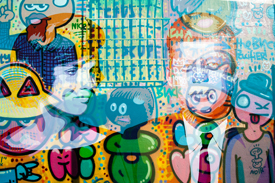 David Bethune, Basquiat Does the Kennedys, 2014, digital photograph, dimensions variable (artwork © David Bethune)
David Bethune. Stara Kopalnia Museum, Wałbrzych, Poland, September 4–November 1, 2015. The Magic City @ Stara Kopalnia. In-camera multiple-exposure photography.
Northeast

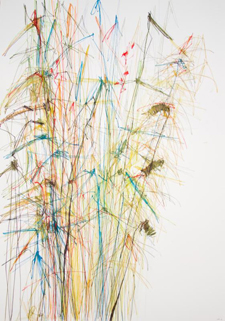 Michael Rich, Reeds and Whispers, 2015, mixed media on paper, 39 x 28 in. (artwork © Michael Rich)
Michael Rich. Old Spouter Gallery, Nantucket, Massachusetts, August 14–28, 2015. To Paint a Flower: New Paintings, Drawings, and Prints.

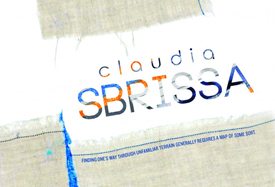 Invitation card for Claudia Sbrissa’s Finding One’s Way through Unfamiliar Terrain Generally Requires a Map of Some Sort (2015)
Claudia Sbrissa. Shed Space, Brooklyn, New York, September 5–15, 2015. Finding One’s Way through Unfamiliar Terrain Generally Requires a Map of Some Sort. Fabric drawing, paper weaving, woven sculpture, and outdoor site-specific installation.

Claudia Sbrissa. Dinter Fine Art, New York, September 1–October 31, 2015. Le Quattro Stagioni: Project Room #73.
Mary Ting. 4567 Gallery, Chinese American Arts Council, New York, August 12–September 27, 2015. Compassion: For the Animals Great and Small. Drawing and installation.
South
Joelle Dietrick. Project Atrium, Museum of Contemporary Art, Jacksonville, Florida, July 18–October 25, 2015. Cargomobilities (Jacksonville). Site-specific installation.
West
Joelle Dietrick. Hutto Patterson Exhibition Hall, Art Center College of Design, Pasadena, California, June 1–September 25, 2015. Cargomobilities (Los Angeles). Site-specific installation.

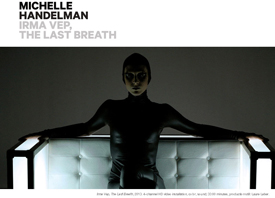 Invitation card for Michelle Handelman’s Irma Vep, the Last Breath (2013)
Michelle Handelman. Henry Art Gallery, University of Washington, Seattle, Washington, July 11–October 11, 2015. Irma Vep, the Last Breath. Multichannel video installation.

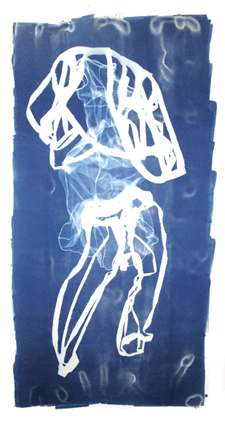 Mary Beth Heffernan, Blue 5, 2011, cyanotype photogram, 96 x 51 in. (artwork © Mary Beth Heffernan)
Mary Beth Heffernan. Sloan Projects, Santa Monica, California, September 12–October 17, 2015. Blue. Cyanotype photograms.
Ruth Weisberg. Jack Rutberg Fine Arts, Los Angeles, California, June 13–September 30, 2015. Ruth Weisberg: Reflections through Time.
People in the News
posted by CAA — October 17, 2015
People in the News lists new hires, positions, and promotions in three sections: Academe, Museums and Galleries, and Organizations and Publications.
The section is published every two months: in February, April, June, August, October, and December. To learn more about submitting a listing, please follow the instructions on the main Member News page.
October 2015
Academe

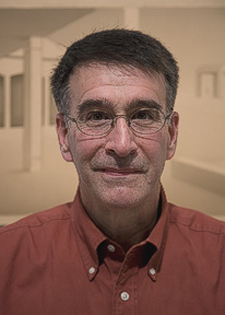 Jeffrey Abt
Jeffrey Abt has been appointed fellow and visiting professor in the Frankel Institute for Advanced Judaic Studies at the University of Michigan in Ann Arbor for the 2015–16 academic year.
Nicole Awai has joined the Department of Art and Art History at the University of Texas at Austin as assistant professor in painting and drawing.
Douglas Brine, assistant professor in the Department of Art and Art History at Trinity University in San Antonio, Texas, has received tenure.

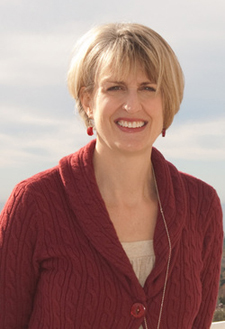 Anne Helmreich
Anne Helmreich, formerly senior program officer for the Getty Foundation in Los Angeles, California, has been named dean of the College of Fine Arts at Texas Christian University in Fort Worth.

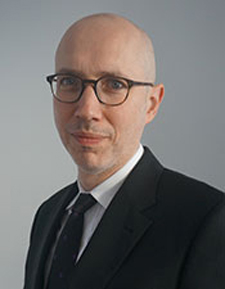 Adrian Randolph
Adrian Randolph, Leon E. Williams Professor of Art History and associate dean of the faculty for the arts and humanities at Dartmouth College in Hanover, New Hampshire, has been appointed dean of the Weinberg College of Arts and Sciences at Northwestern University in Evanston, Illinois.
Marissa Vigneault has left the University of Nebraska in Lincoln to become assistant professor of art history at Utah State University in Logan.
Greg Watts, formerly professor and chair of the Art Department and executive director of the Center for Visual Art at Metropolitan State University in Denver, Colorado, has become dean of the College of Visual Arts and Design at the University of North Texas in Denton.
Catherine Zuromskis has become assistant professor of photographic arts and sciences in the College of Imaging Arts and Sciences at Rochester Institute of Technology in Henrietta, New York.
Museums and Galleries

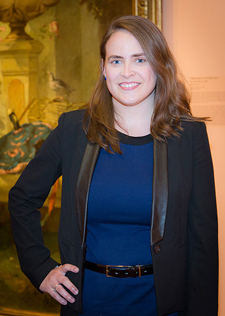 Leslie Anderson-Perkins
Leslie Anderson-Perkins has joined the Utah Museum of Fine Arts at the University of Utah in Salt Lake City as curator of European, American, and regional art. Previously she was curatorial assistant for European and American painting, sculpture, and works on paper at the Indianapolis Museum of Art in Indiana.

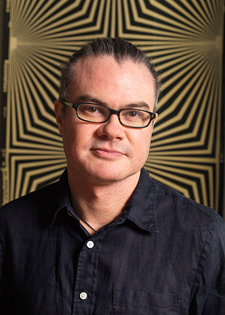 Seb Chan (photograph by Matt Flynn)
Seb Chan, director of digital and emerging media at the Cooper Hewitt Smithsonian Design Museum in New York, has become the inaugural chief experience officer at the Australian Centre for the Moving Image in Melbourne.

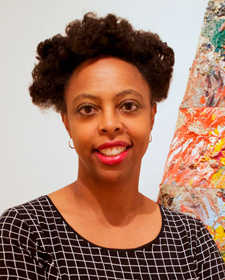 Shawnya L. Harris
Shawnya L. Harris has become the first Larry D. and Brenda A. Thompson Curator of African American and African Diasporic Art for the Georgia Museum of Art at the University of Georgia in Athens. Previously Harris taught at the Elizabeth City State University in Elizabeth City, North Carolina.
Claire Henry, senior curatorial assistant of the Andy Warhol Film Project at the Whitney Museum of American Art in New York, has been promoted to assistant curator at the museum.

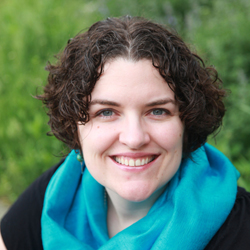 Maureen Warren (photograph by Yvonne Carns)
Maureen Warren has been appointed curator of European and American art at the University of Illinois’s Krannert Art Museum in Champaign. She was previously Andrew W. Mellon Curatorial Research Fellow in the Department of Prints and Drawings at the Art Institute of Chicago.
Institutional News
posted by CAA — October 17, 2015
Read about the latest news from institutional members.
Institutional News is published every two months: in February, April, June, August, October, and December. To learn more about submitting a listing, please follow the instructions on the main Member News page.
October 2015

The Kansas City Art Institute in Missouri has accepted a $25 million gift from an anonymous donor. The funds will go toward the school’s general endowment, campus improvements, and, in the form of a challenge grant, student scholarships, endowed professorships, and visiting professors.

The Pennsylvania Academy of Fine Arts in Philadelphia has received a major $300,000 grant from the National Endowment for the Humanities. The award, a Sustaining Cultural Heritage Collections Implementation Grant, will support the construction of a collections storage expansion project.

The Terra Foundation for American Art, based in Chicago, Illinois, has opened the new location of its expanded Paris Center in the historic hôtel Lévis-Mirepoix. The facility includes a larger and improved event and library facilities and a collaborative exhibition space with the Fondation Custodia.
Grants, Awards, and Honors
posted by CAA — October 15, 2015
CAA recognizes its members for their professional achievements, be it a grant, fellowship, residency, book prize, honorary degree, or related award.
Grants, Awards, and Honors is published every two months: in February, April, June, August, October, and December. To learn more about submitting a listing, please follow the instructions on the main Member News page.
October 2015


Lauren Applebaum, a doctoral candidate in art history at the University of Illinois in Urbana-Champaign, has won a Henry Luce Foundation/ACLS Dissertation Fellowship from the American Council of Learned Societies. Her project examines “Elusive Matter, Material Bodies: American Art in the Age of Electronic Mediation, 1865–1918.”


S. Elise Archias, assistant professor in the School of Art and Art History at the University of Illinois in Chicago, has been named George Gurney Senior Fellow at the Smithsonian American Art Museum in Washington, DC. Her project is called “Armatures—Joan Mitchell, Lygia Clark, and Melvin Edwards circa 1960.”
Nadya Bair, a PhD student in art history at the University of Southern California in Los Angeles, has won a Mellon/ACLS Dissertation Completion Fellowship from the American Council of Learned Societies. Her project is titled “The Decisive Network: Magnum Photos and the Art of Collaboration in Postwar Photojournalism.”
Nicole Bass, a PhD student in the history of art at Yale University in New Haven, Connecticut, has received a Henry Luce Foundation/ACLS Dissertation Fellowship from the American Council of Learned Societies. She will research “The Shade of Private Life: Privacy and the Press in Turn-of-the-Century American Art.”
David Brownlee, Frances Shapiro-Weitzenhoffer Professor of 19th Century European Art and chair of the Graduate Group in the History of Art at the University of Pennsylvania in Philadelphia, has been inducted as a Fellow of the Society of Architectural Historians.
Emily Casey, a PhD candidate in the Department of Art History at the University of Delaware in Newark, has been appointed Terra Foundation Predoctoral Fellow in American Art at the Smithsonian American Art Museum in Washington, DC. Her project is called “Waterscapes: Representing the Sea in the American Imagination, 1760–1815.”
Petra ten-Doesschate Chu, professor of communications and arts at Seton Hall University in Seton Hall, New Jersey, has accepted an ACLS Comparative Perspectives on Chinese Culture and Society Grant from the American Council of Learned Societies for her project, “Artistic Exchanges between China and the West during the Late Qing Dynasty (ca. 1795–1911).”

Michael Cloud, an artist based in Brooklyn, New York, has received a 2015 fellowship for painting by the New York Foundation for the Arts.

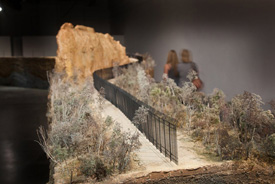 Blane De St. Croix, Broken Landscapes III, 2013 (artwork © Blane De St. Croix)
Blane De St. Croix, an artist based in Brooklyn, New York, who is also associate professor and head of sculpture at Indiana University in Bloomington, has received an artist’s residency at the Joan Mitchell Center in New Orleans, Louisiana.
R. Ruth Dibble, a doctoral student in the Department of the History of Art at Yale University in New Haven, Connecticut, has been named James Renwick Predoctoral Fellow in American Craft at the Smithsonian American Art Museum in Washington, DC. She will work on “‘Strike Home to the Minds of Men’: Crafting Domesticity in the Civil War Era.”
Erica DiBenedetto, a graduate student in art history at Princeton University in Princeton, New Jersey, has become Patricia and Phillip Frost Predoctoral Fellow at the Smithsonian American Art Museum in Washington, DC. Her project is called “Drawing from Architecture: The Conceptual Methods of Sol LeWitt’s Art, 1965–1980.”
Randall Edwards, a PhD student in art history at the Graduate Center, City University of New York, has accepted a Henry Luce Foundation/ACLS Dissertation Fellowship from the American Council of Learned Societies. He is researching “Dennis Oppenheim: Sites, 1967–75.”
George F. Flaherty, assistant professor in the Department of Art and Art History at the University of Texas at Austin, has won the Founders’ JSAH Article Award from the Society of Architectural Historians for his essay, “Responsive Eyes: Urban Logistics and Kinetic Environments for the 1968 Mexico City Olympics,” published in the September 2014 issue of the Journal of Architectural Historians.
Kate Flint, professor of English and art history at the University of Southern California in Los Angeles, has earned an ACLS Fellowship from the American Council of Learned Societies for “Flash! Photography, Writing, and Surprising Illumination.”
Finbarr Barry Flood, William R. Kenan Jr. Professor of the Humanities in the Institute of Fine Art at New York University, has received an ACLS Collaborative Research Fellowship from the American Council of Learned Societies to work on “Object Histories—Flotsam as Early Globalism.”
Emily Ann Francisco, an MA student in art history and museum studies at Syracuse University in Syracuse, New York, has completed the summer internship program at the National Gallery of Art in Washington, DC. This program provides opportunities for graduate and postgraduate students to work on projects directed by a museum department head or curator.

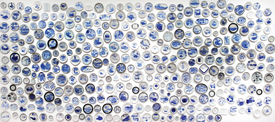 Julie Green, The Last Supper, 2000–2015, ongoing, 600 plates completed to date, dimensions variable (artwork © Julie Green)
Julie Green, professor of fine arts at Oregon State University in Corvallis, has received an artist’s residency at the Joan Mitchell Center in New Orleans, Louisiana.
Rachel Haidu, associate professor of art and art history and of visual and cultural studies at the University of Rochester in Rochester, New York, has earned an ACLS Fellowship from the American Council of Learned Societies. Her project is called “The Knot of Influence.”
Taro Hattori, an installation artist based in Oakland, California, has accepted a fall 2015 residency at the Luminary in Saint Louis, Missouri.

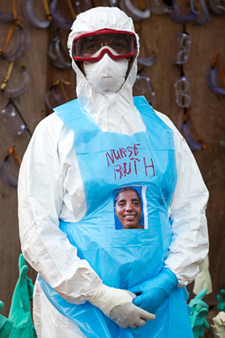 Mary Beth Heffernan’s Personal Protective Equipment Portrait Project (photograph by Marc Campos)
Mary Beth Heffernan, associate professor of sculpture and photography at Occidental College in Los Angeles, California, was awarded the Presidential Grant from the Arnold P. Gold Foundation for her Personal Protective Equipment Portrait Project, a social-practice art intervention in the Ebola epidemic.
Ellie Irons, an artist based in Brooklyn, New York, has been awarded a 2015 fellowship for interdisciplinary work by the New York Foundation for the Arts.
Saisha Grayson, assistant curator for the Brooklyn Museum’s Elizabeth A. Sackler Center for Feminist Art and a doctoral candidate in art history at the Graduate Center, City University of New York, has been awarded a Predoctoral Fellowship at the Smithsonian American Art Museum in Washington, DC. Her research project is “Cellist, Catalyst, Collaborator: The Work of Charlotte Moorman, 1963–1980.”
Christopher Ketcham, a doctoral student in the history, theory, and criticism of architecture and art at the Massachusetts Institute of Technology in Cambridge, has been awarded a Henry Luce Foundation/ACLS Dissertation Fellowship by the American Council of Learned Societies. His project is called “Minimal Art and Body Politics in New York City, 1961–75.”
Yuko Kikuchi, a professor at University of the Arts London in the United Kingdom, has been appointed Terra Foundation Senior Fellow in American Art at the Smithsonian American Art Museum in Washington, DC. Her project is titled “Russel Wright and Asia: Studies on the American Design Aid and Transnational Design History during the Cold War.”
Marci Kwon, a PhD student at the Institute of Fine Arts, New York University, has accepted a Predoctoral Fellowship at the Smithsonian American Art Museum in Washington, DC. She will work on “Vernacular Modernism: Joseph Cornell and the Art of Populism.”
Lex Morgan Lancaster, a doctoral student in art history at the University of Wisconsin in Madison, has completed the summer internship program at the National Gallery of Art in Washington, DC. This program provides opportunities for graduate and postgraduate students to work on projects directed by a museum department head or curator.
Solveig Nelson, a doctoral candidate in art history at the University of Chicago in Illinois, has received a Henry Luce Foundation/ACLS Dissertation Fellowship from the American Council of Learned Societies. Her project is titled “Direct Action, Mediated Bodies: How Early Video Changed Art.”
Alexander Potts, Max Loehr Collegiate Professor of History of Art at the University of Michigan in Ann Arbor, has been elected to the British Academy as a corresponding fellow.
John Paul Ricco has accepted a faculty research fellowship at the University of Toronto’s Jackman Humanities Institute in Ontario for 2015–16.
Kristine K. Ronan, a PhD candidate in the history of art at the University of Michigan in Ann Arbor, has earned a Henry Luce Foundation/ACLS Dissertation Fellowship from the American Council of Learned Societies. Her research examines “Buffalo Dancer: The Biography of an Image.”
Julia B. Rosenbaum, associate professor of art history at Bard College in Annandale-on-Hudson, New York, has become a senior fellow at the Smithsonian American Art Museum in Washington, DC. Her project explores “Curated Bodies: The Display of Science and Citizenry in Post–Civil War America.”

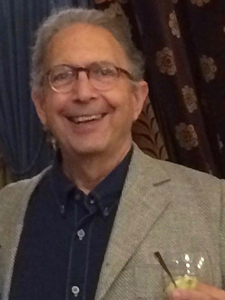 James H. Rubin
James H. Rubin, professor of art history at Stony Brook University in Stony Brook, New York, has been awarded a National Endowment for the Humanities Public Scholar Grant for calendar year 2016.
Wenhua Shi, assistant professor of art and art history at Colgate University in Hamilton, New York, has been awarded a 2015 fellowship by the New York Foundation for the Arts in the category of interdisciplinary work.
Mark Van Proyen, associate professor of painting at the San Francisco Art Institute in California, has received the Kenneth J. Botto Research Fellowship from the Center for Creative Photography at the University of Arizona in Tucson. His project examines “Kenneth J. Botto and the Tradition of Surrealist Photography.”
Alicia W. Walker, assistant professor of history of art at Bryn Mawr College in Bryn Mawr, Pennsylvania, has received a Charles A. Ryskamp Research Fellowship from the American Council of Learned Societies for “Christian Bodies, Pagan Images: Women, Beauty, and Morality in Medieval Byzantium.”
Julie Warchol, formerly Brown Post-Baccalaureate Curatorial Fellow at the Smith College Museum of Art in Northampton, Massachusetts, has completed the summer internship program at the National Gallery of Art in Washington, DC. This program provides opportunities for graduate and postgraduate students to work on projects directed by a museum department head or curator.
Allison Wiese, associate professor of sculpture in the Department of Art and Architecture at the University of San Diego in California, has completed a July 2015 residency at the Montello Foundation near Montello, Nevada.
Tobias Wofford, assistant professor in the Department of Art and Art History at Santa Clara University in Santa Clara, California, has been named Terra Foundation Postdoctoral Fellow in American Art at the Smithsonian American Art Museum in Washington, DC. He will work on “Visualizing Diaspora: Africa in African American Art.”
Elaine Y. Yau, a graduate student in art history at the University of California, Berkeley, has become the William H. Truettner Postdoctoral Fellow at the Smithsonian American Art Museum in Washington, DC. She will research “Acts of Conversion: Sister Gertrude Morgan and the Sensation of Black Folk Art, 1960–1983.”
Alice Pixley Young, an artist based in Cincinnati, Ohio, has finished an artist’s residency at the Hambidge Center for the Creative Arts and Sciences in Rabun Gap, Georgia.
Catherine Zuromskis, associate professor in the Department of Art and Art at the University of New Mexico in Albuquerque, has accepted an Ansel Adams Research Fellowship from the Center for Creative Photography at the University of Arizona in Tucson. Her project will investigate “The Crime Scene and the Archive: Reframing Evidence.”
Exhibitions Curated by CAA Members
posted by CAA — October 15, 2015
Check out details on recent shows organized by CAA members who are also curators.
Exhibitions Curated by CAA Members is published every two months: in February, April, June, August, October, and December. To learn more about submitting a listing, please follow the instructions on the main Member News page.
October 2015

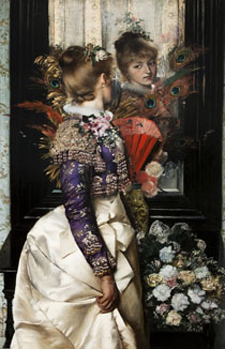 Gabriel Schachinger, Sweet Reflections, 1886, oil on canvas, 51 x 31 in. (photograph by Rick Echelmeyer; artwork in the public domain)
Susan Ball. The Seven Deadly Sins: Pride. Bruce Museum, Greenwich, Connecticut, June 27–October 18, 2015.
Myroslava M. Mudrak. Staging the Ukrainian Avant-Garde of the 1910s and 1920s. Ukrainian Museum, New York, February 15–October 4, 2015.
Tatiana Reinoza and Luis Vargas-Santiago. Counter-Archives to the Narco-City. Snite Museum of Art, University of Notre Dame, South Bend, Indiana, August 16–December 13, 2015.
Books Published by CAA Members
posted by CAA — October 15, 2015
Publishing a book is a major milestone for artists and scholars—browse a list of recent titles below.
Books Published by CAA Members appears every two months: in February, April, June, August, October, and December. To learn more about submitting a listing, please follow the instructions on the main Member News page.
October 2015

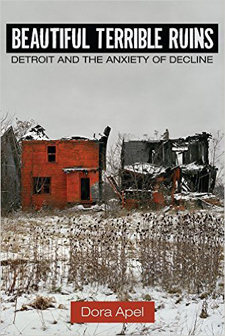
Dora Apel. Beautiful Terrible Ruins: Detroit and the Anxiety of Decline (New Brunswick, NJ: Rutgers University Press, 2015).

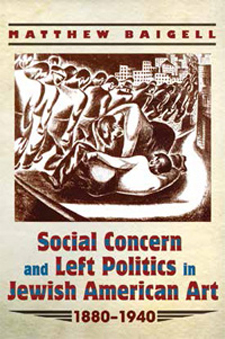
Matthew Baigell. Social Concern and Left Politics in Jewish American Art, 1880–1940 (Syracuse, NY: Syracuse University Press, 2015).

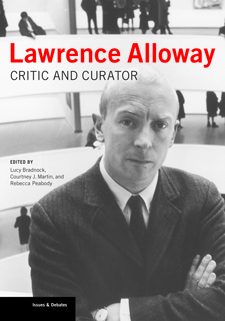
Lucy Bradnock, Courtney J. Martin, and Rebecca Peabody, eds. Lawrence Alloway: Critic and Curator (Los Angeles: Getty Publications, 2015).

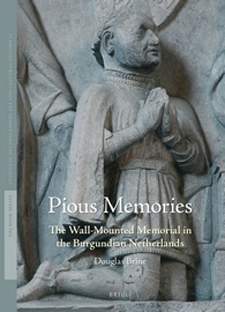
Douglas Brine. Pious Memories: The Wall-Mounted Memorial in the Burgundian Netherlands (Boston: Brill, 2015).

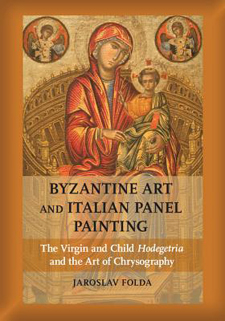
Jaroslav Folda. Byzantine Art and Italian Panel Painting: The Virgin and Child “Hodegetria” and the Art of Chrysography (New York: Cambridge University Press, 2015).

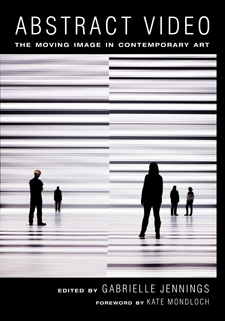
Gabrielle Jennings, ed. Abstract Video: The Moving Image in Contemporary Art (Oakland: University of California Press, 2015).

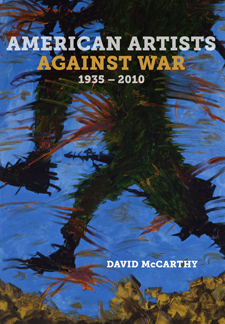
David McCarthy. American Artists against War, 1935–2010 (Oakland: University of California Press, 2015).

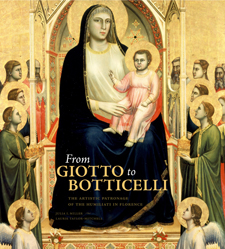
Julia I. Miller and Laurie Taylor-Mitchell. From Giotto to Botticelli: The Artistic Patronage of the Humiliati in Florence (University Park: Pennsylvania State University Press, 2015).

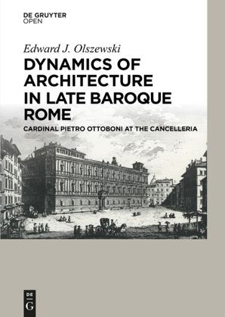
Edward J. Olszewski. Dynamics of Architecture in Late Baroque Rome: Cardinal Pietro Ottoboni at the Cancelleria (Berlin: De Gruyter Open, 2015).

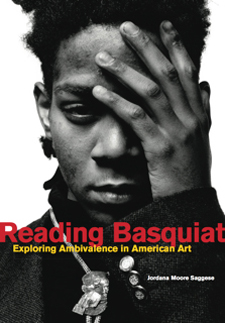
Jordana Moore Saggese. Reading Basquiat: Exploring Ambivalence in American Art (Berkeley: University of California Press, 2014).

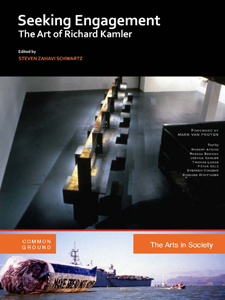
Steven Zahavi Schwartz, ed. Seeking Engagement: The Art of Richard Kamler (Champaign, IL: Common Ground Publishing, 2015).

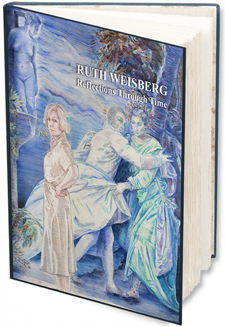
Ruth Weisberg. Ruth Weisberg: Reflections through Time (Los Angeles: Jack Rutberg Fine Arts, 2015).