CAA News Today
Committee on Women in the Arts Picks for February 2015
posted by CAA — February 10, 2015
Each month, CAA’s Committee on Women in the Arts selects the best in feminist art and scholarship. The following exhibitions and events should not be missed. Check the archive of CWA Picks at the bottom of the page, as several museum and gallery shows listed in previous months may still be on view or touring.
February 2015
The February CWA Picks are dedicated to Kalliopi Minioudaki for her tremendous efforts in working on the Picks during her tenure on the CWA (2012–15). You will be missed!
Poetry and Exile
British Museum
Gallery 34, Great Russell Street, London
WC1B 3DG United Kingdom
October 1, 2014–March 1, 2015
Housed within the Islamic World Galleries, Poetry and Exile displays a series of works by artists of the Middle East and North Africa recently acquired by the British Museum. This small but powerful exhibition explores the effects of exile through the eyes of four women artists:Ipek Duben, Mireille Kassar, Mona Saudi, and Canan Tolon.
Tolon’s series ofink and graphite drawings, titled Futur Imparfait, is a memoir fromher exile from Istanbul to France, where she spent a decade in hospital as a result of contracting polio as a child. In the series Tolon portrays an exile not only from home, but also from her own body. Duben’s book Refugee belies the helplessness and terror suffered by people forced to flee their homeland with images on delicate gauze pages and using childlike embroidery that depicts the crossing of borders. The Istanbul-born Duben has been making books and installations that focus on identity, domestic violence, and the worldwide forced migration of the twentieth century.
The Jordanian artist Saudi combines the evocative verses of the Palestinian poet Mahmoud Darwish with drawings, while the Lebanese-born Kassar developed a series of drawings inspired by the Persian poem The Conference of the Birds. Here, Kassar conjures a story of exile from her own family history. Originally from Mosul and Mardin—present day Iraq and Turkey—her ancestors fled the Ottoman massacres of minorities during the late-nineteenth and early twentieth century.

Zoe Strauss, Drying Money, Mississippi Gulf Coast, Mid September, 2005 (artwork © Zoe Strauss)
Zoe Strauss: Sea Change
Cantor Fitzgerald Gallery
Haverford College, Whitehead Campus Center, 370 Lancaster Avenue, Haverford, PA 19041
January 23–March 6, 2015
Cantor Fitzgerald Gallery presents Sea Change, an exhibition of photographs, vinyl prints, and projected images by Zoe Strauss. Throughout this project, the celebrated Philadelphia photographer traces the aftermath of Hurricane Katrina in 2005, the BP Deepwater Horizon oil spill in southern Louisiana in 2010, and Hurricane Sandy in 2012: three ecological disasters that have changed America’s landscape.
With little formal training as a photographer or artist, Strauss (b. Philadelphia, 1970) uses photography as the most direct means of representing her chosen subjects. Her images, often both disturbing and touching, are focused mainly on American working-class experience. She founded the Philadelphia Public Art Project in 1995 with the aim of exhibiting art in nontraditional venues in order to give the citizens of Philadelphia access to art in their everyday lives. She now refers to this initiative as an “epic narrative” of her own neighborhood that reflects the beauty and struggle of everyday life.
True to her creative statement, Strauss captures the fast and slow tragedies of global warming through the portrayal of an irreparable damage and the hope of mending. Flattened sceneries and architectural remains stand alongside graffiti and signs including encouraging pleas, words that express the despair of a sudden displacement as much as the hope to return and belong, again. Sea Change is accompanied by a publication designed by Random Embassy.
Otobong Nkanga: Tracing Confessions
Museum Folkwang
Museumsplatz 1, 45128 Essen, Germany
January 23–May 18, 2015
Museum Folkwang presents Tracing Confessions, a two-part project created by Otobong Nkanga (born Nigeria, 1974). Based in the museum collection, Nkanga explores issues of identity and relationships between objects and people. As part of the Kunststiftung NRW’s project 25/25/25, Nkanga invited members of the museum’s staff to be photographed with selected pieces from this collection. During the month of January, the resulting photographs will be distributed as billboards throughout the city. Bringing the museum to the public space, the piece aims to connect with Essen residents in their everyday lives. This public intervention is presented along an installation designed specifically for the museum. Unveiling shared stories between objects and people, Tracing Confessions interrogates the origin of the museum artifacts, and in that their potential of shaping identities.
Trained in the converging traditions of performance and live arts, Nkanga leads an intensive research-based artistic practice. Her heterogeneous and multidisciplinary practice includes drawing, photography, installation, and performance art. Her sensitive observation on social and topographical changes in the environment, and on the concept of diaspora, examines the regional and cultural complexities that are embedded in these experiences. Using her own and others’ body and voice, Nkanga proves that the subjects of her projects are to be a lived and truly embodied experience. Through language and visual and physical narratives, her work invites viewers to engage in a dialogue that reflects on identity, memory, and perception.
Carolee Schneemann: Infinity Kisses
Merchant House
Herengracht 254, 1016BV, Amsterdam, the Netherlands
January 22–April 12 2015
The Merchant House in Amsterdam presents Carolee Schneemann: Infinity Kisses, an exhibition of works on paper, photographs, and a video by the renowned American multimedia artist. The exhibition pivots on a site-specific installation of the video Infinity Kisses-The Movie (2008), first shown in Amsterdam. The show is also accompanied with a fully illustrated catalogue with an essay by Kalliopi Minioudaki.
The experiential body—yet not only her own naked one, as this exhibition argues—has been paramount in Carolee Schneemann’s multifariously radical politics and idiosyncratic poetics. Focusing on the photographic series (2004) and video (2008) that sensually portray the morning kisses given to Schneemann by her cats, Cluny and Vesper, this exhibition foregrounds the radical centrality of the cat in her work—as lifelong companion and a symbol of what patriarchal culture represses and dismisses, namely female sexuality. Returning Schneemann’s legendary yet controversial interspecies “kisses” to a house that variously evokes her own—due to the fact that the Merchant House is located in a historic canal house that reminds the artist of her home in Springtown, New York, itself central in her production—this exhibition highlights the domesticity that characterizes the poetics of intimacy inherent in a great part of her work.
In contrast to the ecstatic bodies of Infinity Kisses, the accompanying works in the exhibition juxtapose gruesomely violated or caged feline bodies with news images of global atrocities. Sampling the gestural painterliness and collage aesthetics that underpin much of her work, these prints hint at the darker role the body plays in Schneemann’s sorrowful diagnosis of the malaises of modernity and patriarchy, of Western civilization, and of the current stage of the society of spectacle. An extraordinary example of her conceptual feminist poetics, Unexpectedly Research (1992) illuminates the research and “double knowledge” that underpin not only Schneemann’s feminist critique of the suppression of the sacred feminine, but also its radical bodily retrieval by the artist.

Janet Biggs, production still from Can’t Find My Way Home, 2015, four-channel video, high-definition video installation with sound, 8:35 min. (artwork © Janet Biggs)
Janet Biggs: Echo of the Unknown
Blaffer Art Museum
University of Houston,
120 Fine Arts Building, Houston, TX 77204-4018
January 17–March 21, 2015
Janet Biggs: Echo of the Unknown is part of the Science Spring at the Blaffer Art Museum. Organized by the independent curator Janet Phelps, this multidisciplinary exhibition combines video, sound, and objects to explore the role of memory in the construction of identity. Drawing from the artist’s personal memories of the effects of Alzheimer’s on various family members, stories of public figures coping with the disease, and research conducted with neurologists and geoscientists, Echo of the Unknown raises fundamental questions about how we become—and how we lose our sense of—who we are.
Works in the exhibition include Can’t Find My Way Home, a four-channel video installation inspired by memories of the artist’s grandfather, an avid mineral collector who could recall the most difficult names of mineral species yet not his own as he succumbed to the disease. This piece juxtaposes documentation of neurological research conducted in New York and Houston laboratories with footage shot in the crystal cavern below the Merkers salt mine in Germany, itself a potent metaphor for the brain and its sites of memory.
The video installation The Persistence of Hope focuses on the solace Biggs’s uncle found in his residual memory of birds. Only after his death Biggs discovered her uncle’s peculiar ritualized attempt to sustain beauty and hold onto life as he felt it fade away by gathering hummingbirds and placing them in his freezer. Alternating imagery of gravity-defying hummingbirds with footage shot in the Arctic and in laboratories where human brain cells are preserved in freezers for neurological research, The Persistence of Hope paints a tender picture of life caught between hope and futility.
Breathing without Air follows an aging mineral collector as he searches for the perfect specimen at a trade show, where he eventually loses his way among the many aisles of vendors and displays. All three pieces share a soundscape based on Glen Campbell’s 1968 song “Wichita Lineman.” Comprising scores based loosely on Campbell’s tune by various composers, Biggs’s Wichita Lineman is a haunting sonic homage to the tenacity of Campbell who, upon his diagnosis with Alzheimer’s, decided to continue to tour for as long as he could.
An ambitious series of lectures, gallery talks and panel discussions accompanies the exhibition throughout its duration, enhancing the exhibition’s role as a catalyst for cross-disciplinary learning.
Lynn Hershman Leeson: Civic Radar
ZKM | Karlsruhe
Lorenzstraße 19, 76135 Karlsruhe, Germany
December 13, 2014–April 6, 2015
Lynn Hershman Leeson has been mining body art and new media for more than forty years. Her cutting-edge work has run a broad gamut that ranges from the feminist performance Roberta Breitmore, for which she lived a double life as herself and an alter ego for most of the 1970s, to a series of science-fiction films starring Tilda Swinton. Acknowledged for her feminist politics, Hershman Leeson chronicled the feminist movement in the 2011 documentary Women Art Revolution. Yet her contributions to technologically sophisticated art have been widely understudied. Conversely, Lynn Hershman Leeson: Civic Radar, the first comprehensive retrospective of her work in a museum and especially in Germany, not only overviews all the creative phases of her work, bringing together rarely shown early works like her 1960s wax and burned sculptures along with masterful highlights, but it also strives to acknowledge her pioneering role as an innovative and influential new-media artist.
As such Civic Radar brings together works that exemplify Hershman Leeson’s multimedia investigation of identity and various modes of surveillance, such as Lorna (1983/84), one of the first interactive projects on videodisc, and Teknolust (2002), which addresses cyberidentity, artificial intelligence, cloning, and the decoupling of sexuality and human reproduction. The exhibition also include recent works that use robots, mass-communication media such as smart-phones, and the latest scientific developments in the field of genetics and regenerative medicine, including three-dimensional bioprinters that create human body parts.
Hershman Leeson received a bachelor of science in museum administration and art at Case Western Reserve University in Cleveland and a master of arts in art criticism at San Francisco State University. From 1993 through 2004 she was professor of electronic arts at the University of California, Davis. From 2004 through 2010 Hershman Leeson held the Andrew D. White Chair at Cornell University in Ithaca. In 2007 the artist assumed charge of the San Francisco Art Institute’s Film Department. Over the years, she has received numerous awards, including the Siemens Medienkunst Preis in 1995 and the Prix Ars Electronica (Golden Nica) in 1995.
CAA Announces Publication of Code of Best Practices in Fair Use for the Visual Arts
posted by CAA — February 09, 2015
 The College Art Association (CAA) has published the Code of Best Practices in Fair Use for the Visual Arts, a set of principles addressing best practices in the fair use of copyrighted materials based on a consensus of opinion developed through discussions with visual-arts professionals. It will be a vital resource for everyone working in the field, including artists, art historians, museum professionals, and editors. Initiated by CAA in 2012, the multi-year effort has been led by the Code’s authors, Peter Jaszi and Patricia Aufderheide, professors of law and communication studies respectively at American University and the leading experts on the development of codes for communities that make use of copyrighted materials in their professional practices.
Linda Downs, CAA executive director, said, “The Code is a crucial contribution to the field as a clear statement on best practices in the fair use of copyrighted materials that directly reflects a consensus from the visual-arts community. CAA is grateful to all of the artists, art historians, museum professionals, and editors, among others, who participated in the project so generously with their time and collective knowledge.”
The Code describes the relevance of fair use in five broad areas of the visual arts field:
- Analytic Writing: When may scholars and other writers about art invoke fair use to quote, excerpt, or reproduce copyrighted works?
- Teaching about Art: When may teachers invoke fair use in using copyrighted works to support formal instruction in a range of settings, including online and distance teaching?
- Making Art: Under what circumstances may artists exercise fair use to incorporate copyrighted material into new artworks in any medium?
- Museum Uses: When may museums and their staffs invoke fair use in using copyrighted works—such as images, text, and time-based and born-digital material—when organizing exhibitions, developing educational materials (within the museum and online), publishing catalogues, and other related activities?
- Online Access to Archival and Special Collections: When may such institutions and their staffs claim fair use to create digital preservation copies and/or enable digital access to copyrighted materials in their collections?
DeWitt Godfrey, CAA president and professor of art and art history at Colgate University, said, “The research undertaken in this project demonstrated that a significant amount of creative and scholarly work has been stunted by a lack of understanding or clear consensus on fair use. This Code provides a straightforward set of principles that will allow those working in the visual arts to determine when they can assert fair use in their work with confidence.”
In January 2014, CAA published Copyright, Permissions, and Fair Use among Visual Artists and the Academic and Museum Visual Arts Communities: An Issues Report, a summary of one hundred interviews with art historians, artists, museum curators, editors, and publishers describing issues related to the use of third-party images in creative and scholarly work. The Issues Report—which revealed significant challenges to creating and disseminating new work because of actual and perceived limitations of copyright—was the subject of ten discussion groups held last summer throughout the country with visual-arts professionals who deal with fair use and copyright issues on a daily basis. The Code is a result of this extensive research.
Peter Jaszi, professor of law in the Program on Information Justice and Intellectual Property at American University’s Washington College of Law, explained that “Although the visual-arts community is impressively diverse, including art-makers, individual scholars, and institutional users, its members came together determined to reach a useful consensus. The Code reflects the range of perspectives and expertise the participants brought to the process.”
Coauthor Patricia Aufderheide, university professor in the School of Communication at American University and director of the Center for Media & Social Impact, said, “Codes of best practices have proven enormously successful in enabling members of other creative communities to do their work well and effectively. They allow individuals to make judgments knowing where they fall in relation to the thinking of their peers—and that lowers risk. Further, codes give museums, broadcasters, insurers, publishers, educational institutions, and their lawyers a new and valuable tool to use in making better, more reasonable assessments of risk.”
During CAA’s 103rd Annual Conference in New York (February 11–14, 2015), the principal investigators of this project and authors of the Code, Patricia Aufderheide and Peter Jaszi, will speak publicly with Judy Metro, editor-in-chief at the National Gallery of Art and chair of CAA’s Committee on Intellectual Property; Jeffrey Cunard, cochair of CAA’s Task Force on Fair Use; and Christine Sundt, editor of Visual Resources: An International Journal of Documentation and former CAA board member. The session, which will take place on Friday, February 13, from 12:30 to 2:00 PM at the New York Hilton Midtown, is free and open to the public.
CAA’s Code of Best Practices in Fair Use for the Visual Arts is funded by the Andrew W. Mellon Foundation with additional support provided by the Samuel H. Kress Foundation.
About CAA
The College Art Association is dedicated to providing professional services and resources for artists, art historians, and students in the visual arts. CAA serves as an advocate and a resource for individuals and institutions nationally and internationally by offering forums to discuss the latest developments in the visual arts and art history through its Annual Conference, publications, exhibitions, website, and other programs, services, and events. CAA focuses on a wide range of advocacy issues, including education in the arts, freedom of expression, intellectual-property rights, cultural heritage and preservation, workforce topics in universities and museums, and access to networked information technologies. Representing its members’ professional needs since 1911, CAA is committed to the highest professional and ethical standards of scholarship, creativity, criticism, and teaching.
For more information please contact Janet Landay, CAA fair use initiative project manager, at 212-392-4420. To contact Patricia Aufderheide or Peter Jaszi, please contact Kelly L. Alexander, director of public relations, American University, at 202-885-5952.
Help the NEH Celebrate Its Fiftieth Anniversary
posted by CAA — January 29, 2015
 The National Endowment for the Humanities (NEH), an independent federal agency created in 1965 and one of the largest funders of humanities programs in the United States, is celebrating its fiftieth anniversary in 2015–16. To mark this historic event, we would like you to tell us about an NEH grant or grant product that has made a difference in your life, career, community, or academic field. To contribute stories about NEH’s past or for more information, send an email to NEH50@neh.gov. Please include your name and telephone number in your message.
Because democracy demands wisdom, the NEH serves and strengthens our republic by promoting excellence in the humanities and conveying the lessons of history to all Americans. The endowment accomplishes this mission by awarding grants for top-rated proposals examined by panels of independent, external reviewers. NEH grants typically go to cultural institutions, such as museums, archives, libraries, colleges, universities, public television, and radio stations, and to individual scholars. The grants:
- strengthen teaching and learning in schools and colleges
- facilitate research and original scholarship
- provide opportunities for lifelong learning
- preserve and provide access to cultural and educational resources
- strengthen the institutional base of the humanities
Since 1965, the endowment has opened new worlds of learning for the American public with noteworthy projects such as:
- Seven thousand books, 16 of which have won Pulitzer Prizes and 20 of which have received the Bancroft Prize
- The Civil War, the landmark documentary by Ken Burns viewed by 38 million Americans
- The Library of America editions of novels, essays, and poems celebrating America’s literary heritage
- The United States Newspaper Project, which catalogued and microfilmed 63.3 million pages of historic newspapers and paved the way for the National Digital Newspaper Program and its digital repository, Chronicling America
- Annual support for 56 states and territories to help support some 56,000 lectures, discussions, exhibitions, and other programs each year
We look forward to hearing from you!
Committee on Women in the Arts Picks for January 2015
posted by CAA — January 10, 2015
Each month, CAA’s Committee on Women in the Arts selects the best in feminist art and scholarship. The following exhibitions and events should not be missed. Check the archive of CWA Picks at the bottom of the page, as several museum and gallery shows listed in previous months may still be on view or touring.
January 2015
Nicole Miller at Artists’ Film International
Ballroom Marfa
108 East San Antonio Street, Marfa, TX 79843
November 22, 2014–February 22, 2015
Ballroom Marfa is presenting two recent videos by Nicole Miller, as a highlighted artist participating at the Artists’ Film International. This project means a collection of artists’ film, video and animation from around the world that has been coorganized with Whitechapel Gallery in London.
Miller (b. 1982; Tucson, Arizona) lives and works in Los Angeles. Her films and installations explore the transformative capabilities of the moving image to reconstruct interpretations of self and culture. Through storytelling, self-representation and self-presentation become a narrative in search for the reconstitution of physical and psychic manifestations of loss. Her videos often focus on the interplay between preconception and reality in terms of African American identity, as in the case of The Conductor (2009), presented earlier this year at the High Line Art Program.
In this occasion, Ballroom Marfa is presenting two recent projects by Miller. In David (2012) we can observe the fragmented image of the profile of a man that the artist encountered by chance on the street. Here, he narrates the events that lead to the amputation of his left arm whilst his right limb is reflected in a mirror—a rehabilitation technique that helps patients deal with the painful symptoms of a phantom limb. Death of a School (2014) is a predominantly silent four-channel video that meditates on the events of a soon to be shutdown school in Tucson, which is Miller’s hometown. Presented together, Miller’s films become powerful narratives that carry the possibility of reconstitution of lost histories and identities.
Johanna Calle: Indicios
Casas Reigner
Calle 70A # 7-41, Bogotá, Colombia
October 2, 2014–January 30, 2015
Casas Riegner presents Indicios (Signs), an exhibition that gathers Johanna Calle’s most representative works produced between 1990 and 2014. Seeking to examine closely the visual language that has characterized her work for more than two decades, the exhibition includes a selection of projects in which different processes developed by the artist are juxtaposed. In each series of work, Calle exposes her approach to the creative process, where she also unveils a sense of unsettledness and curiosity.
Featuring her conceptual research and creative use of unconventional materials, the display includes Calle’s assemblages, signs, and phonetic representations of indigenous languages, photographic drawings made on vintage analogue photographs, and the intervention of archives and documents that are part of different research projects. For the documentation-based installation Hermanas Figueiredo (2013–14), Calle reconstructed a story as a gesture of redemption to the Brazilian sisters that devoted their life to a scientific research around the life of butterflies in the first half of the twentieth century. However, they have lost the legal battle with a recognized Brazilian professor who was hired to catalogue their collection and had deliberately chosen to wrongly assign its authorship and ownership. The case was dismissed and labeled as exhaustive and rigorous maniac women’s work.
Calle holds a BFA from Universidad de Los Andes en Bogotá and an MFA from Chelsea College of Arts in London, England. Her projects Perímetros I and Perímetros II were included at the thirty-first Bienal de São Paulo, Brazil in 2014.
Donna Sharrett: Love Songs
Pavel Zoubok Gallery
531 West 26th Street, New York, NY 10001
January 8–February 7, 2015
Pavel Zoubok Gallery presents Love Songs, a solo exhibition of new work by Donna Sharrett, including two of her largest—yet humanly scaled—works to date, framed by Sampling, a related group show curated by Dara Meyers-Kingsley.
With a variety of needlework techniques, Sharrett creates painstakingly wrought concentric assemblages sewn together from a potent and personal material lexicon consisting of donated or inherited jewelry, clothing, and buttons; hair, bone beads, dirt, and guitar strings. Passed down from a congenial and ancestral sorority of craftswomen and fiber artists, Sharrett’s techniques instill in each piece cross-cultural references to life, death, and rebirth. Addressing the shared human ability and desire to remember, her works transcend the confines of economic, religious and cultural boundaries.They instead evoke “life as it is lived and remembered—a notion of lineage that is not always linear and narrative but sometimes acts more like a spiral—a growing flower that rises from the earth and whose seeds scatter to become the next crop.”
Sharrett (b. Philadelphia, 1958) is the recipient of two fellowships from the New York Foundation for the Arts as well as notable residencies and grants from Smack Mellon, the Bronx Museum and the Millay Colony for the Arts Residency. Her work has been widely exhibited, including a solo exhibition at the Everson Museum in Syracuse, New York, and group exhibitions at the Museum of Arts and Design in New York; the Bellevue Arts Museum in Bellevue, Washington; the University of Rochester in Rochester, New York; and Marianne Boesky Gallery in New York. Her work is represented in the collections of the Museum of Contemporary Arts and Design in New York; the United States Embassy in Valletta, Malta; the Hebrew Home for the Aged in New York; and J. P. Morgan Chase in New York. A full-color catalogue will accompany the exhibition.
Cameron: Songs for the Witch Woman
MOCA Pacific Design Center
8687 Melrose Avenue, West Hollywood, CA 90069
October 11, 2014–January 18, 2015
Cameron: Songs for the Witch Woman is the first survey of Cameron’s work since 1989 and explores the artist’s role as a seminal figure within Los Angeles’s midcentury counterculture, her unique melding of surrealism and mysticism, and her unwavering commitment to live her life as art. “Navigating between disciplines and traditions of poetry, cinema, visual arts, and spirituality; Cameron has opened many doors that continue to intrigue and inspire generations of artists,” while “her hallucinated vision … embodies an aspect of modernity that deeply doubts and defies cartesian logic at a moment in history when these values have shown their own limitations,” as stated by MOCA’s director, Philippe Vergne.
Born in Belle Plaine, Iowa, Cameron (Marjorie Cameron Parsons Kimmel) (1922–1995) emerged as an artist, performer, poet, and occult practitioner in Los Angeles, uniquely bridging the city’s flourishing spiritual and art worlds at midcentury. She arrived in Los Angeles by way of the Second World War, where she drew maps and labored in a photographic unit for the United States Navy. A visionary painter and unparalleled draftsman best known today for her paintings and drawings of human and fantastical figures, she spend her last days in West Hollywood largely unrecognized. Cameron’s frenetic, delicate renderings of mythological figures reveal a singular attention to line and the idea of spiritual metamorphosis, evoking the surrealism and symbolism of the French poets. She is closely associated with Beat artists such as Wallace Berman, George Herms, and Dennis Hopper, the filmmakers Kenneth Anger and Curtis Harrington, and the occultist Aleister Crowley, while she was mentor to younger artists and poets such as David Meltzer and Aya (Tarlow). Cameron’s artwork appeared in the first issue of Berman’s celebrated journal Semina (1955–64) and has also been included in group exhibitions at the Whitney Museum of American Art in New York, the J. Paul Getty Museum in Los Angeles, the Martin-Gropius Bau in Berlin, the Pasadena Museum of California Art, the Centre Pompidou in Paris, and the Los Angeles Municipal Art Gallery in 1989.
Comprised of nearly one hundred artworks and ephemeral artifacts, the exhibition includes pieces formerly thought to be lost, ranging from early paintings to drawings, sketchbooks, and poetry from her late years, as well as ephemera and correspondence with individuals such as her husband Jack Parsons (1914–1952), a rocket pioneer and a founder of the Jet Propulsion Laboratory, and the renowned mythologist Joseph Campbell. The exhibition brings to life the recently published book titled Songs for the Witch Woman that features a series of poems written by Parsons alongside illustrations drawn by Cameron that echo the intimate themes of their turbulent love story.
In conjunction with the exhibition, the Cameron Parsons Foundation is producing an eighty-eight-page catalogue with approximately seventy-five full-color illustrations.
Sylvie Blocher: S’inventeur autrement
Mudam Luxemburg
Musée d’Art Moderne Grand-Duc Jean 3, Park Dräi Eechelen L-1499 Luxembourg-Kirchberg
August 11, 2014–May 25, 2015
Since the early 1990s, the French artist Sylvie Blocher has built up a body of video work that takes the human as its material, in all its fragility, unpredictability, and yet full presence. She engages with a poetics of relation, emancipation, the questioning of identities, the writing of history, the permeability of the masculine/feminine border, and codes of representation in a world under control. Created in different geographic regions, her works are based on exchange: they often involve the participation of lay people, who are invited to present themselves in a completely new fashion before the camera, as the artist “shares her authority with her models” to create what she calls Living Pictures.
This solo exhibition at Mudam Luxembourg revolves around an ambitious project titled Dreams Have a Language, which combines a participative work, a video installation, and the production of a movie. As envisioned by the artist, the show was meant to be “the story of an event at a museum in Luxembourg in which the visitors will not be content to look politely at the works, but decide impulsively to experience leaving the world for a few minutes, in a journey filmed and broadcast, a story of fragmented, floating bodies. Then a movie, the start of another story.”
During the first weeks of the exhibition, the museum’s Grand Hall became a fully active film studio that centered on the operation of a flying machine twelve meters tall. Through the placement of an ad in various media, Blocher invited the public to visit the museum, to leave the ground for a few minutes, and to “rethink the world.” “Shooting conditions: allow one hour and present yourself at Mudam with an idea to change the world. It might be poetic, political, aesthetic, emotional, revolutionary, scientific, architectural, educational, financial, culinary, sonic, etc.” Forming the content for a video installation at the center of the exhibition, the pictures of the suspended bodies will be the starting point for a movie created with the Luxembourg director Donato Rotunno, to be released in spring 2015. By combining a documentary approach with fictional writing, the movie will offer “an assemblage of words, gestures and moments that will open up an imaginary universe, an expectancy, a suspense.”
A survey of the artist’s work is also presented in two of the museum’s galleries, where video installations and drawings sample key themes of Blocher’s work: the sharing of responsibility, the question of politics, identity, dreams, and utopia. By using music to give new life to important speeches and manifestos made in contemporary history (by Angela Davis, Édouard Glissant, and Barack Obama, among others), the five videos that form the series Speeches (2009–12), which are part of the Mudam Collection, engage with the political dimension of the imagination, individual and collective. Other works, such as the diptych Change the Scenario (Conversation with Bruce Nauman) (2013) and the three videos recently created by Blocher in Texas, tackle historic and racial aspects in the construction of the individual. Placed at the entrance to each gallery, a series of drawings that the artist has made every day for a year, based on the front page of the newspaper Libération, emphasizes the passages between the personal and the political initiated by her practice.
Affiliated Society News for January 2015
posted by CAA — January 09, 2015
American Society of Appraisers
The American Society of Appraisers (ASA) will host the upcoming 2015 Personal Property Conference, titled “Issues in Determining the Authenticity in Visual Art and Objects, the Catalogue Raisonné, Art Scholarship, and Value in the Marketplace.” The conference will be held at the prestigious Yale Club in New York from March 25 to 27, 2015. World renown and highly regarded experts in art law, art, and antiques will gather together for discussion on relevant and timely issues facing art-industry professionals, collectors, museum curators, dealers, auctioneers, insurance underwriters, estate attorneys, and appraisers. Individuals practicing in any of these areas of fine art and decorative arts will not want to miss this important gathering of respected scholars and authorities. Topics of discussion include connoisseurship, authentication, conservation, research, provenance, and value in the markets. In addition, a representative from the Internal Revenue Service will cover issues of compliance regarding appraisals for estates and charitable contributions, and an FBI agent will discuss fraud and art crime as they affect the global marketplace. For registration and more information, please visit www.appraisers.org or call 800-272-8258.
Association of Academic Museums and Galleries
The Association of Academic Museums and Galleries (AAMG) has appointed Christopher Bedford, director of the Rose Art Museum at Brandeis University, to be the keynote speaker for the organization’s next annual conference, taking place April 24–26, 2015, in Atlanta, Georgia. In 2009, the Rose became infamous for Brandeis’ attempt to sell significant objects from its collection. Bedford was hired in 2012 to turn this situation around and has been building staff and acquiring new works. He also recently commissioned a work by Chris Burden that highlights the university’s renewed commitment to the museum and its collection.
For a limited time, AAMG is offering free student memberships. Student membership is an important way to explore the field while preparing informed professionals. In addition, student membership provides access to scholarship funds to help attend educational programs such as the AAMG’s annual conference, which offers a résumé workshop and the opportunity to connect first-hand with over two hundred attendees.
Whether you are a student, new to the field, or a seasoned professional, AAMG’s listserv connects more than four thousand museum professionals and those in related fields, from across the country and the world, who can provide assistance and mentoring on a wide range of issues facing museums today.
Historians of Islamic Art Association
The Historian of Islamic Art Association (HIAA) held its fourth biennial symposium at the Aga Khan Museum in Toronto, Ontario, from October 16 to 18, 2014. The HIAA conference is the biennial forum for the presentation and discussion of papers on various aspects of Islamic art history, and is open to all, regardless of nationality or academic affiliation. The overarching theme of the symposium was “Forms of Knowledge and Cultures of Learning in Islamic Art.”
International Association of Art Critics
The International Association of Art Critics (AICA-USA) welcomed the return of Judith Stein to its board in fall 2014. The organization will hold its session at the CAA Annual Conference in New York on Wednesday, February 11, 2015, 12:30–2:00 PM in the Beekman Parlor, 2nd Floor, New York Hilton Midtown, 1335 Avenue of the Americas. The title of the session is “How Dare We Criticize: Contemporary Art Critics on the State of Their Art.”
International Association of Word and Image Studies
Over 150 scholars met this summer for the tenth international conference of the International Association of Word and Image Studies (IAWIS/AIERTI), held August 11–15, 2014, in in Dundee, New Zealand. Focusing on the theme of “Riddles of Form: Exploration and Discovery in Word and Image,” the conference was hosted by the Scottish Word and Image Group at the University of Dundee. Over fifty panels were presented around thirty-two themed sessions, ranging from “Exploring Neuroscience” and “Science in the Twentieth-Century Avant Gardes” to “Charting Interior Spaces” and “Spirals in Nature and Art.” Anchoring the themes in locality, influential ideas from two of Dundee’s renowned visual thinkers and polymaths, D’Arcy Thompson and Patrick Geddes, served as springboards into global debates. Keynotes addressed the themes from complementary perspectives: in “Real Unicorns and Other Strange Tales,” Martin Kemp (emeritus professor, University of Oxford) explored the topic of truth claims in evolving forms of mediated knowledge; while in “Burnsiana,” professor of photography Calum Colvin Duncan (of Jordanstone College of Art and Design, Dundee) raised fundamental questions about processes of perceiving and discovering though his own multimedia artworks about Scotland’s national bard. A highlight was the excursion to Little Sparta, retreat of the “avant-gardener” and word/image artist Ian Hamilton Finlay.
International Center of Medieval Art
The International Center of Medieval Art (ICMA) is pleased to announce that it was recently awarded a renewal of its grant from the Samuel H. Kress Foundation—$10,000 a year for the next three years—to support travel costs for members participating in conference sessions sponsored by ICMA. ICMA regularly sponsors sessions at such major conferences as the CAA Annual Conference and the ICMA at Western Michigan University, as well as at a number of smaller conferences here and abroad. For the next three years, ICMA members who deliver papers in these sponsored sessions will be eligible for funding that can be used to defer the costs of travel and lodging at these conferences. To learn more about ICMA funding opportunities for scholars working in the field of medieval art or to become a member, please visit www.medievalart.org. For information about proposing an ICMA-sponsored session, please contact Janis Elliott.
International Sculpture Center
Each year the International Sculpture Center (ISC) presents an award competition to its member colleges and universities as a means of supporting, encouraging, and recognizing the work of young sculptors and their supporting schools’ faculty and art program. The Student Award winners participate in an exhibition at Grounds for Sculpture, as well as in a traveling exhibition hosted by arts organizations across the country. Winners’ work is also featured in Sculpture magazine. Each winner receives a one-year ISC membership; all winners are eligible to apply for a fully sponsored residency to study in Switzerland. To nominate a student for this competition, a nominee’s university must first be an ISC university-level member. University membership costs $200 for universities in the United States, Canada, and Mexico or $220 for international universities; this level includes a number of benefits. Interested students should talk to their professors about getting involved. To find out more about the program, please visit http://www.sculpture.org/StudentAwards/2015 or email studentawards@sculpture.org. Deadlines: Nominations open: January 1, 2015; university membership registration: March 16, 2015; online student nomination form: March 23, 2015; online student submission form: April 13, 2015.
ISC seeks proposals for panels for the twenty-fifth “International Sculpture Conference: New Frontiers in Sculpture in Central Arizona.” Taking place in fall 2015, the conference will feature keynote speakers, panels, and breakout sessions. The conference will explore: Creative Placemaking; Multi-Disciplinary Artist Led Investigations; Desert as Site: New Earthworks; and other topics in contemporary sculpture. The panel proposal submission deadline is March 1, 2015. All accepted submissions will be notified in May 2015. To learn more about topics, guidelines, and deadlines and to submit a proposal, please visit www.sculpture.org/az2015.
Italian Art Society
The Italian Art Society (IAS) will sponsor a session, entitled “Di politica: Intersections of Italian Art and Politics since WWII” and organized by Christopher Bennett and Elizabeth Mangini, at the upcoming CAA Annual Conference in New York on Wednesday, February 11, 2015, 12:30–2:00 PM. Current and prospective members are invited to attend the IAS business breakfast meeting on Thursday, February 11, at 7:30–9:00 AM, Madison Suite, 2nd Floor, New York Hilton Midtown. IAS will cosponsor two related study days entitled “Untying the Knot: The State of Postwar Italian Art History Today” at the Center for Italian Modern Art in New York, February 9–10, 2015. Additionally, the IAS will sponsor five sessions at the meeting of the Renaissance Society of America in Berlin, Germany, in March 2015.
IAS seeks member applicants for its annual research and publication grant (deadline: January 10, 2015) and for the sixth annual 2015 IAS/Kress Lecture by an established scholar on a Neapolitan topic in Naples, Italy, on May 20, 2015 (deadline: January 4, 2015). IAS welcomes all interested in Italian art to join the society.
National Council of Arts Administrators
The National Council of Arts Administrators (NCAA) convened its forty-second annual meeting on September 24–26, 2014, in Nashville, Tennessee. The organization owes a debt of gratitude to Mel Ziegler of Vanderbilt University for organizing a provocative and compelling conference. Speakers included: Pablo Helguera, an artist and the director of the Museum of Modern Art’s Education Department; Steven Tepper, a sociologist and dean of the Herberger Institute at Arizona State University; and Ruby Lerner, executive director of Creative Capital.
Three new board members were elected: Lynne Allen, Boston University; Elissa Armstrong, Virginia Commonwealth University; and Cathy Pagani, University of Alabama. They join these returning directors: Leslie Belavance, Alfred University (secretary); Tom Berding, Michigan State University; Steve Bliss, Savannah College of Art and Design; Cora Lynn Deibler, University of Connecticut, Storrs; Andrea Eis, Oakland University (treasurer); Nan Goggin, University of Illinois, Urbana-Champaign; Amy Hauft, University of Texas at Austin (president); Jim Hopfensperger, Western Michigan University (past president); Lydia Thompson, Texas Tech University; and Mel Ziegler, Vanderbilt University.
Activities at the 2015 CAA Annual Conference in New York include the annual NCAA reception (Thursday, February 12, 5:00–8:00 PM) and an NCAA–CAA affiliate session, “Yes Is a World: Creativity in an Expanding Field,” which will be a fast-paced series of five-minute presentations (Thursday, February 12, 12:30–2:00 PM). NCAA enthusiastically welcomes new members, current members, and all interested parties.
Pacific Arts Association
The Pacific Arts Association (PAA) will hold a session at the 2015 CAA Annual Conference in New York called “Early Missionary Activity on Erromango and Its Impact on Local Material Culture.” Four panelists will examine the interplay between imposed change and local innovation in objects past and present.
An event titled “Trading Traditions: The Role of Art in the Pacific’s Traditional Trading Networks” will be organized by PAA (Pacific) in Tonga on September 28, 2015. For further information, please contact Karen Stevenson, vice president of PAA (Pacific).
Society of Historians of Eastern European, Eurasian, and Russian Art and Architecture
The Society of Historians of Eastern European, Eurasian, and Russian Art and Architecture (SHERA) made a strong showing at the annual convention of the Association for Slavic, East European, and Eurasian Studies from November 20 to 23, 2014, in San Antonio, Texas. Members participated in numerous panels ranging from eighteenth-century prints to twentieth-century art and architecture, as well as film and contemporary art, in Eastern Europe and Russia.
At CAA’s Annual Conference in February, SHERA will sponsor two sessions: “Infiltrating the Pedagogical Canon,” chaired by Marie Gasper-Hulvat; and a double session led by Galina Mardilovich and Maria Taroutina, titled “Reconsidering Art and Politics: Toward New Narratives of Russian and Eastern European Art.”
In January 2015, Natasha Kurchanova became president of SHERA, as Margaret Samu’s term ended. Elections are planned for early January for the next vice president/president elect.
SHERA is delighted to welcome ARTINRUSSIA as a new institutional member. A division of the School of Russian and Asian Studies, ARTINRUSSIA creates study abroad programs, organizes faculty-led tours, and offers travel-assistance services. The organization’s website serves as a platform for publishing student writing about art in Russia and Eurasia.
Society for Photographic Education
Registration is open for the fifty-second national conference of the Society for Photographic Education (SPE), titled “Atmospheres: Climate, Equity, and Community in Photography” and taking place March 12–15, 2015, in New Orleans, Louisiana. Connect with 1,600 artists, educators, and photographers from around the world for programming that will fuel your creativity—four days of presentations, industry seminars, and critiques to engage you! Explore an exhibits fair featuring the latest equipment, processes, publications, and photography/media schools. Participate in one-on-one portfolio critiques and informal portfolio sharing and take advantage of student volunteer opportunities to receive a full rebate on admission. Other highlights include a print raffle, a silent auction, mentoring sessions, film screenings, exhibitions, receptions, a dance party, and more. The guest speakers are Rebecca Solnit, Chris Jordan, and Hank Willis Thomas. Preview the conference schedule and register at www.spenational.org/conference. Preregistration ends on February 20, 2015.
Southeastern College Art Conference
The seventieth annual meeting of the Southeastern College Art Conference (SECAC) was held October 8–11, 2014, in Sarasota, Florida, and hosted by the Ringling College of Art and Design. Jeff Schwartz served as conference director. Five hundred thirty people attended 122 sessions and workshops. Brandon Oldenburg, a Ringling alumnus, an Academy Award winner, and the founder of Moonbot Studios, delivered the keynote lecture.
Notable awards presented:
- $5000 Artist’s Fellowship: Derek Larson, Georgia Southern University
- $5000 William R. Levin Award for Research in the History of Art: Michelle Moseley-Christian, Virginia Tech
- Achievement in Graphic Design: Doug Barrett, University of Alabama, Birmingham
- Outstanding Exhibition and Catalogue of Contemporary Materials: Ron Meyers: A Potter’s Menagerie (Stephen Driver)
- Excellence in Scholarly Research and Publication: The New Encyclopedia of Southern Culture: Folk Art vol. 23 (Carol Crown, University of Memphis)
- Excellence in Teaching: Jeff Schwartz, Ringling College of Art and Design
- Certificates of Merit: Jane Hetherington Brown, University of Arkansas, Little Rock; Carol Mattusch, George Mason University; and Cheryl Goldsleger, University of Georgia
- Awards of Distinction: Peter Scott Brown, University of North Florida; and Jenny Hager, University of North Florida
- Annual Juried Exhibition: juror’s choice: Rob Tarbell, New College; honorable mention: Hye Young Kim, Winston-Salem State University; Margy Rich, State College of Florida; and Jennifer Brickey, Pellissippi State Community College
Visual Resources Association
The Visual Resources Association is pleased to present its thirty-third annual conference, to be held March 11–14, 2015, in Denver, Colorado. Attendees will converge in Colorado to exchange information about the latest developments in image and media management within the educational, cultural heritage, and commercial environments. The top-notch conference program includes representation from a broad range of perspectives, with sessions and workshops addressing digital humanities, visual literacy, mapping and geospatial projects, image rights and reproductions, usability testing, new technologies, digital asset management, crowdsourcing, cataloging, embedded metadata, sharing collections, professional advancement, archives, research data management, and visualization. The plenary speakers will frame the conference with inspiring talks on image and media management in two unique contexts. The opening speaker, Aaron Straup Cope, head of engineering at the Cooper Hewitt Smithsonian National Design Museum and also an artist, will discuss how the New Cooper Hewitt Experience engages visitors with interactive and immersive creative technologies. The closing speaker, Emily Gore, director for content for the Digital Public Library of America, will discuss the strategic vision for DPLA content and oversight of the DPLA Hubs program. Online registration is available through February 20, 2015 (with discounted registration offered until February 6). Onsite registration will be available in Denver.
Women’s Caucus for Art
The Women’s Caucus for Art (WCA) has announced three recipients of the 2015 WCA Lifetime Achievement Awards: Sue Coe, Kiki Smith, and Martha Wilson. The recipient for the 2015 President’s Art and Activism Award is Petra Kuppers. The WCA Lifetime Achievement Awards were first presented in 1979 in President Jimmy Carter’s Oval Office to Isabel Bishop, Selma Burke, Alice Neel, Louise Nevelson, and Georgia O’Keeffe. The awards were the first awards recognizing the contribution of women to the arts and their profound effect on society.
Join WCA for the awards celebration on Thursday, February 12, 2015, in New York. The event will be held at the New York Institute of Technology Auditorium at 1871 Broadway. The evening will kickoff with a ticketed cocktail reception from 5:30 to 7:00 PM. The reception will include food, open bar, and the opportunity to congratulate the awardees. The awards ceremony (free and open to the public) will take place from 7:30 to 9:00 PM; coffee and desserts will follow from 9:00 to 10:00 PM. The celebration is held during the annual WCA and CAA conferences. For more information on the event or to purchase tickets (which includes a special rate for CAA members) please visit www.nationalwca.org.
Committee on Diversity Practices highlights for January/February 2014
posted by CAA — January 09, 2015
The CAA Committee on Diversity Practices highlights exhibitions, events, and activities that support the development of global perspectives on art and visual culture and deepen our appreciation of political and cultural heterogeneity as educational and professional values. Current highlights are listed below; browse past highlights through links at the bottom of this page.
January/February 2015
Chitra Ganesh: Eyes of Time
Brooklyn Museum, New York
December 12, 2014–July 12, 2015
“Exploring ideas of femininity, empowerment, and multiplicity, Brooklyn-based artist Chitra Ganesh draws inspiration from the Museum’s encyclopedic collection, including representations of the goddess Kali, to create a site-specific multimedia installation for the Herstory Gallery. Chitra Ganesh: Eyes of Time centers on a monumental mural that takes Kali, the Hindu goddess of destruction and rebirth, and other figures from Judy’s Chicago’s The Dinner Party as starting points for portraying female power and plurality. The artist expands on this theme by showcasing works from our Egyptian, Indian, and Contemporary collections. For more than a decade, Ganesh has used the iconography of mythology, literature, and popular culture to bring to light feminist and queer narratives. One of her first major works, Tales of Amnesia (2002)—a zine inspired by Indian comic books that the Museum acquired out of our 2004 exhibition Open House: Working in Brooklyn—is also on view. Chitra Ganesh: Eyes of Time is organized by Saisha Grayson, Assistant Curator, Elizabeth A. Sackler Center for Feminist Art, Brooklyn Museum. This exhibition is made possible by the Elizabeth A. Sackler Foundation.” (http://www.brooklynmuseum.org/exhibitions/chitra_ganesh/)
More information:
http://www.brooklynmuseum.org/home.php
Judith Scott–Bound and Unbound
Brooklyn Museum, New York
October 24, 2014–March 29, 2015
“Judith Scott’s work is celebrated for its astonishing visual complexity. In a career spanning just seventeen years, Scott developed a unique and idiosyncratic method to produce a body of work of remarkable originality. Often working for weeks or months on individual pieces, she used yarn, thread, fabric, and other fibers to envelop found objects into fastidiously woven, wrapped, and bundled structures. Born in Columbus, Ohio, with Down syndrome, Scott (1943–2005) was also largely deaf and did not speak. After thirty-five years living within an institutional setting for people with disabilities, she was introduced in 1987 to Creative Growth Art Center—a visionary studio art program founded more than forty years ago in Oakland, California, to foster and serve a community of artists with developmental and physical disabilities. As the first comprehensive U.S. survey of Scott’s work, this retrospective exhibition includes an overview of three-dimensional objects spanning the artist’s career as well as a selection of works on paper Judith Scott—Bound and Unbound is organized by Catherine J. Morris, Sackler Family Curator for the Elizabeth A. Sackler Center for Feminist Art, Brooklyn Museum, and Matthew Higgs, artist and Director/Chief Curator of White Columns, New York. The accompanying catalogue is published by the Brooklyn Museum and Prestel. This exhibition is made possible by the Elizabeth A. Sackler Foundation. Additional generous support has been provided by the Helene Zucker Seeman Memorial Exhibition Fund and Deedie Rose.” (http://www.brooklynmuseum.org/exhibitions/judith_scott/)
More information:
http://www.brooklynmuseum.org/home.php
LOUD silence
gallery@Calit2
University of California San Diego
January 22–March 13, 2015
“LOUD silence is an exhibition that offers the opportunity for viewers to consider definitions of sound, voice, and notions of silence at the intersection of both deaf and hearing cultures. The exhibition displays prints, drawings, sculptures, videos, and a film installation, and features work by four artists who have different relationships to deafness and hearing, including Shary Boyle, Christine Sun Kim, Darrin Martin and Alison O’Daniel. These four artists explore how the binary of loudness and silence might be transformed in politicized ways through their own specificities, similarities and differences in relationship to communication and language. The stereotypical view of the deaf experience is that they live a life of total silence, where they retain little to no concept of sound. But on the contrary, deaf people actually know a lot about sound, and sound informs and inhabits their world just as much as the next person. Through these artworks, the artists aim to loudly explode the myth of a silent deaf world, and they seek to trouble just how “inaudible” sound really is through their own visceral experiences of it. The distinction between the deaf person and the hearing person in their relationship to sound is the extent to which deaf people use senses other than the auditory to understand what they are hearing. Sound is felt and sound is seen. Indeed, some of the artists’ “deaf hearing” in this exhibition often involves sensory input from a variety of sources, and is not simply confined to the ears. Ultimately, the work in LOUD silence offers an avenue for eradicating deaf oppression, where new ways of listening and thinking about sound and silence might be developed. A full-color catalogue will accompany this exhibition produced in partnership with the Grand Central Art Center at California State University Fullerton, with essays written by the exhibition curator, Amanda Cachia, alongside Dr. Zeynep Bulut, Lecturer in Music, Kings College, London, and Michael Davidson, Professor of American Literature in the Literature Department, UCSD.” (http://www.calit2.net/events/popup.php?id=2444)
Solo Exhibitions by Artist Members
posted by CAA — December 22, 2014
See when and where CAA members are exhibiting their art, and view images of their work.
Solo Exhibitions by Artist Members is published every two months: in February, April, June, August, October, and December. To learn more about submitting a listing, please follow the instructions on the main Member News page.
December 2014
Mid-Atlantic

Terence Hannum. Guest Spot at the Reinstitute, Baltimore, Maryland, November 15, 2014–January 17, 2015. Decay. Sound collage, zines, and handmade artist’s books.
Northeast
Richard Barlow, Michael Stolzer Fine Art, Oneonta, New York, September 18–October 1, 2014. Recognition Study Cards. Letterpress prints.

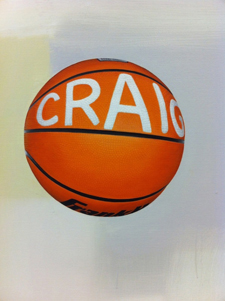 Craig Drennen, detail of HELLO CRAIG, 2014, oil and alkyd on canvas, 52 x 40 in. (artwork © Craig Drennen)
Craig Drennen. Samsøñ Projects, Boston, Massachusetts, October 31–December 24, 2014. Poet & Awful. Painting.

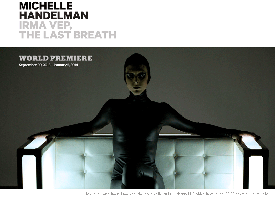 Michelle Handelman, Irma Vep, the last breath, 2013, 4-channel HD video installation, 33:00 min. (artwork © Michelle Handelman; photograph by Laure Leber)
Michelle Handelman. Soho House New York in partnership with the Film-Makers’ Cooperative, New York, November 7, 2014. Irma Vep, the Last Breath. Single-channel video.
South
Veronica Ceci. 02 Gallery, Austin, Texas, November 7–December 3, 2014. QR/PR. Printmaking.
Janet Kaplan: In Memoriam
posted by CAA — December 19, 2014
The following obituary for Janet Kaplan was published by the Moore College of Art and Design in Philadelphia, Pennsylvania, on December 15, 2014. CAA will follow up with its own text in the new year.
It is with deepest sorrow that we share with you the news that on Friday, December 12, Art History Faculty Professor and Curatorial Studies Director, Dr. Janet Kaplan passed away.
We will honor Professor Kaplan by hosting a remembrance to honor her here at Moore in the spring semester at a date to be determined. Dr. Kaplan was beloved and respected by many artists and scholars in the Philadelphia community and beyond. She will be deeply missed by the students and those who teach and work at Moore.
Dr. Kaplan had a long and fruitful career at Moore College of Art & Design. She began teaching at Moore in 1980 as an Assistant Professor, promoted to Associate Professor in 1987 and to full Professor in 1993. Dr. Kaplan received tenure in 1987 and served as the Chair of Liberal Arts from 1989 to 2003. Professor Kaplan served as the Executive Editor of the Art Journal for the College Art Association in New York City from 1995 to 2002. The Art Journal was the winner of the Utne Award for Independent Magazine Publishing in 2002. Dr. Kaplan was instrumental in the planning and development for the Curatorial Studies major, working in collaboration with Dr. Maureen Pelta, Chair of the Liberal Arts department, the Liberal Arts faculty and Academic Dean to develop curriculum for the nation’s first undergraduate Curatorial Studies program that successfully launched in fall 2006.
Throughout her teaching career Dr. Kaplan also taught at NYU, Institute of Fine Arts as a Visiting Professor and Graduate Colloquium; Vermont College as a graduate faculty in the MFA in Visual Arts program; and at the University of New Hampshire. She served as a moderator, panelist and speaker at regional, national and international conferences and symposia on a wide range of topics related to art criticism, artist responses to social issues, women and surrealism, media spectacle and the politics of representation. She was a leader in generating dialogue about women in the arts, organizing symposia including a 2000 symposium at The National Museum of Women in the Arts and 3 Curatorial Conversations here at Moore including “Curating and Activism: An International Panel and Conversation” in 2009. These Curatorial Conversations were supported by The Pew Center for Arts & Heritage and through the support from Frances and Bayard Storey. Dr. Kaplan published widely on modern and contemporary art. Her essays and interviews have been published in numerous national and international art journals. She frequently wrote book reviews for art journals including one on Whitney Chadwick’s book on Women Artists and the Surrealist Movement. She is the author of Remedios Varo: Unexpected Journeys, an important internationally known scholarly work, published in multiple languages.
In 2001, Dr. Kaplan received a Fellowship in Arts Criticism from the Pennsylvania Council for Humanities and in 2003 she received a Special Opportunities Stipend from the Pennsylvania Council for Humanities. Professor Kaplan served on the advisory board, consultant and/or review panelist for numerous organizations and institutions including the School of Art at Carnegie-Mellon University; the Arts Advisory Board of the Philadelphia Redevelopment Authority; the Rosenbach Museum and Library; NEA grants panel in 2001 for Visual Arts Creativity and Organizational Capacity; review panelist for the Philadelphia Cultural Fund in 1998; the Advisory Board for the Pew Fellowships in the Arts, 1997–99; and the United States Holocaust Memorial Museum – Varian Fry Project. In 2012, she co-curated an exhibition fo the work of artist Ashley Hune in Sinop, Turkey.
Dr. Kaplan gave back to the Moore community through her extensive service to the College and to the community. In addition to the institutions and organizations where she served in an ongoing capacity, she frequently participated in citywide and College organized events. She moderated panels organized by The Galleries at Moore in conjunction with the City of Philadelphia Mural Arts Program and served as a panelist at the Free Library of Philadelphia for one film/one book events. Recently, Dr. Kaplan had an essay published in 70 x 7 The Meal, act XXXIV, Lucy + Jorge Orta, City of Philadelphia Mural Arts Program, 2013. Moore College of Art & Design is proud to have had the honor of Dr. Kaplan’s service, teaching and scholarship; she will be missed by her colleagues, her students and the staff at Moore.
People in the News
posted by CAA — December 17, 2014
People in the News lists new hires, positions, and promotions in three sections: Academe, Museums and Galleries, and Organizations and Publications.
The section is published every two months: in February, April, June, August, October, and December. To learn more about submitting a listing, please follow the instructions on the main Member News page.
December 2014
Academe
Edith Balas has retired after thirty-five years of teaching art history at Carnegie Mellon University in Pittsburgh, Pennsylvania.

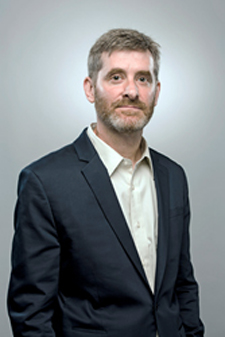 Jeff Bellantoni (photograph by Peter Tannenbaum)
Jeff Bellantoni, formerly chairperson and professor of the Graduate Communications Design Department at Pratt Institute in Brooklyn, New York, has been appointed vice president for academic affairs at Ringling College of Art and Design in Sarasota, Florida.
Lori Cole, formerly the Charlotte Zysman Postdoctoral Fellow in the Humanities and Lecturer in Fine Arts at Brandeis University in Waltham, Massachusetts, has become assistant professor and faculty fellow at the John W. Draper Interdisciplinary Master’s Program in Humanities and Social Thought at New York University.
Ryan Hoover has been appointed a 2014–15 full-time faculty member in the Interdisciplinary Sculpture Department at Maryland Institute College of Art in Baltimore.
Christian Luczanits, senior curator at the Rubin Museum of Art in New York, has been named David L. Snellgrove Senior Lecturer in Tibetan and Buddhist Art at the University of London’s School of Oriental and African Studies in England.
Kiel Mutschelknaus has joined Maryland Institute College of Art in Baltimore as a full-time faculty member in graphic design for the 2014–15 academic year.

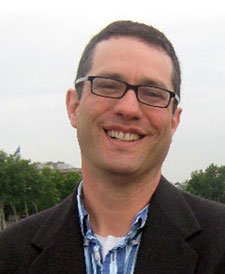 David Raskin
David Raskin has been named Mohn Family Professor of Contemporary Art History at the School of the Art Institute of Chicago in Illinois, thanks to a recent $2.5 million gift from the Mohn Family Foundation.
Daniel Tucker has been appointed graduate-program manager in social and studio practice at the Moore College of Art and Design in Philadelphia, Pennsylvania.
Museums and Galleries
Carol Damian has stepped down as director and chief curator of the Patricia and Phillip Frost Art Museum at Florida International University in Miami. She will serve as a professor in the school’s Art and Art History Department.
Tracy Fitzpatrick, chief curator of the Neuberger Museum of Art at Purchase College, State University of New York, has been appointed director of the museum.
Meredith Fluke has been appointed Kemper Curator of Academic Programs at the Davis Museum at Wellesley College in Wellesley, Massachusetts.
Aimeé E. Froom, an independent scholar based in Paris, France, has become curator of Islamic art at the Museum of Fine Arts, Houston, in Texas.

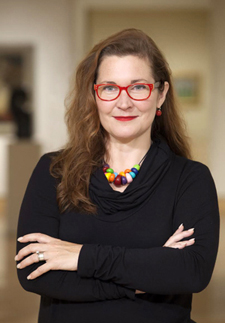 Erika Holmquist-Wall
Erika Holmquist-Wall, formerly of the Minneapolis Institute of Arts in Minnesota, has been hired by the Speed Art Museum in Louisville, Kentucky, as curator of European and American painting and sculpture.
Monica Obniski, formerly assistant curator of American decorative arts at the Art Institute of Chicago in Illinois, has been hired by the Milwaukee Art Museum in Wisconsin as curator of design and decorative arts.
Amy L. Powell, previously a Cynthia Woods Mitchell Curatorial Fellow at the University of Houston’s in Texas, has become curator of modern and contemporary art at the Krannert Art Museum, part of the University of Illinois, Urbana-Champaign.

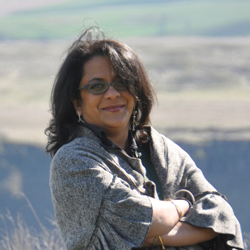 Namita Gupta Wiggers
Namita Gupta Wiggers has resigned from being director and chief curator for the Museum of Contemporary Craft in Portland, Oregon. She will continue working with the museum as an adjunct curator and with Pacific Northwest College of Art as an adjunct instructor in the MFA Applied Craft and Design Program.
Scott Wilcox, chief curator of art collections and senior curator of prints and drawings at the Yale Center for British Art in New Haven, Connecticut, has been promoted to deputy director for collections.
Organizations and Publications
Richard Brettell has been chosen to lead the newly created Edith O’Donnell Institute of Art History in Dallas, Texas, as director and Edith O’Donnell Distinguished Chair.
Paul Catanese, associate professor and director of the Interdisciplinary Arts and Media MFA Program at Columbia College Chicago in Illinois, has joined the ISEA International Foundation Board.
Institutional News
posted by CAA — December 17, 2014
Read about the latest news from institutional members.
Institutional News is published every two months: in February, April, June, August, October, and December. To learn more about submitting a listing, please follow the instructions on the main Member News page.
December 2014
The Archives of American Art, part of the Smithsonian Institution in Washington, DC, has received a $413,000 award from the Terra Foundation for American Art to support a survey of archival collections related to American art that are located in the Chicago area, as well as a few other initiatives on Chicagoan art, artists, and archives.
The Mary and Leigh Block Museum of Art at Northwestern University in Evanston, Illinois, has accepted a $85,000 award from the Terra Foundation for American Art to support the exhibition The Left Front: Radical Artists in the “Red Decade,” 1929–1940.
The College of the Holy Cross in Worcester, Massachusetts, has developed a three-day conference called “Global Encounters in Early America” with support from a $25,000 grant from the Terra Foundation for American Art.
The Delaware Art Museum in Wilmington has received three generous gifts totaling $1.7 million to fully endow the museum’s Curator of the Bancroft Collection of Pre-Raphaelite Art. Two donations were given anonymously, and a third came from Peggy and Ed Woolard. The endowment will be named the Annette Woolard-Provine Endowed Curator of the Bancroft Collection, in honor of the Woolards’ daughter.
The Maine College of Art in Portland has received accreditation for its ten-month master of art in teaching program by the National Association of Schools of Art and Design and the state of Maine. The college has also accepted funding from the Bob Crewe Foundation to initiate a program that explores the intersection of music and art.
The Pennsylvania Academy of the Fine Arts in Philadelphia has received a three-year $150,000 grant from the Institute of Museum and Library Services to support the new School and Community Partnership Program, which will unite the academy’s existing resources for schools, families, and community outreach into a single initiative.
The Philadelphia Museum of Art in Pennsylvania has been awarded a $165,000 grant from the Terra Foundation for American Art to help fund the exhibition Paul Strand: Photography and Film for the Twentieth Century.
The Princeton University Art Museum in Princeton, New Jersey, has accepted a $99,493 grant from the Institute of Museum and Library Services to help complete the cataloguing and digitization of the Minor White Archive.
The School of the Art Institute of Chicago in Illinois has received a $2.5 million gift from the Mohn Family Foundation to advance the school’s leadership in the history of contemporary art. The funds will support a professorship and graduate-student fellowship within the Department of Art History, Theory, and Criticism.
Stanford University in California has accepted a $30,780 grant from the Terra Foundation for American Art to help the Department of Art and Art History fund a two-day conference called “The Ends of American Art.”
The University of California, Santa Barbara, has accepted a $136,479 grant from the Terra Foundation for American Art to support an academic exchange symposium and a publication associated with “Modernism in the United States and China,” a project organized by the university and the China Art Academy in Hangzhou.
The University of Texas at Dallas has partnered with the Dallas Museum of Art to create the Edith O’Donnell Institute of Art History, which will offer master’s and doctoral degrees. The institute is funded by a $17 million gift from Edith O’Donnell.
The Yale Center for British Art in New Haven, Connecticut, has received a $25,000 grant from the Terra Foundation for American Art to support the borrowing of Hiram Power’s statue The Greek Slave (1844), along with an attendant two-day colloquium, in conjunction with the exhibition Sculpture Victorious: Art in an Age of Invention, 1837–1901.
Yale University Press in New Haven, Connecticut, has accepted an $80,000 grant from the Terra Foundation for American Art to support a translation prize for a book-length publication by a non-US author that contributes to scholarship on historical American art.