CAA News Today
Committee on Diversity Practices highlights for January/February 2014
posted by CAA — January 09, 2015
The CAA Committee on Diversity Practices highlights exhibitions, events, and activities that support the development of global perspectives on art and visual culture and deepen our appreciation of political and cultural heterogeneity as educational and professional values. Current highlights are listed below; browse past highlights through links at the bottom of this page.
January/February 2015
Chitra Ganesh: Eyes of Time
Brooklyn Museum, New York
December 12, 2014–July 12, 2015
“Exploring ideas of femininity, empowerment, and multiplicity, Brooklyn-based artist Chitra Ganesh draws inspiration from the Museum’s encyclopedic collection, including representations of the goddess Kali, to create a site-specific multimedia installation for the Herstory Gallery. Chitra Ganesh: Eyes of Time centers on a monumental mural that takes Kali, the Hindu goddess of destruction and rebirth, and other figures from Judy’s Chicago’s The Dinner Party as starting points for portraying female power and plurality. The artist expands on this theme by showcasing works from our Egyptian, Indian, and Contemporary collections. For more than a decade, Ganesh has used the iconography of mythology, literature, and popular culture to bring to light feminist and queer narratives. One of her first major works, Tales of Amnesia (2002)—a zine inspired by Indian comic books that the Museum acquired out of our 2004 exhibition Open House: Working in Brooklyn—is also on view. Chitra Ganesh: Eyes of Time is organized by Saisha Grayson, Assistant Curator, Elizabeth A. Sackler Center for Feminist Art, Brooklyn Museum. This exhibition is made possible by the Elizabeth A. Sackler Foundation.” (http://www.brooklynmuseum.org/exhibitions/chitra_ganesh/)
More information:
http://www.brooklynmuseum.org/home.php
Judith Scott–Bound and Unbound
Brooklyn Museum, New York
October 24, 2014–March 29, 2015
“Judith Scott’s work is celebrated for its astonishing visual complexity. In a career spanning just seventeen years, Scott developed a unique and idiosyncratic method to produce a body of work of remarkable originality. Often working for weeks or months on individual pieces, she used yarn, thread, fabric, and other fibers to envelop found objects into fastidiously woven, wrapped, and bundled structures. Born in Columbus, Ohio, with Down syndrome, Scott (1943–2005) was also largely deaf and did not speak. After thirty-five years living within an institutional setting for people with disabilities, she was introduced in 1987 to Creative Growth Art Center—a visionary studio art program founded more than forty years ago in Oakland, California, to foster and serve a community of artists with developmental and physical disabilities. As the first comprehensive U.S. survey of Scott’s work, this retrospective exhibition includes an overview of three-dimensional objects spanning the artist’s career as well as a selection of works on paper Judith Scott—Bound and Unbound is organized by Catherine J. Morris, Sackler Family Curator for the Elizabeth A. Sackler Center for Feminist Art, Brooklyn Museum, and Matthew Higgs, artist and Director/Chief Curator of White Columns, New York. The accompanying catalogue is published by the Brooklyn Museum and Prestel. This exhibition is made possible by the Elizabeth A. Sackler Foundation. Additional generous support has been provided by the Helene Zucker Seeman Memorial Exhibition Fund and Deedie Rose.” (http://www.brooklynmuseum.org/exhibitions/judith_scott/)
More information:
http://www.brooklynmuseum.org/home.php
LOUD silence
gallery@Calit2
University of California San Diego
January 22–March 13, 2015
“LOUD silence is an exhibition that offers the opportunity for viewers to consider definitions of sound, voice, and notions of silence at the intersection of both deaf and hearing cultures. The exhibition displays prints, drawings, sculptures, videos, and a film installation, and features work by four artists who have different relationships to deafness and hearing, including Shary Boyle, Christine Sun Kim, Darrin Martin and Alison O’Daniel. These four artists explore how the binary of loudness and silence might be transformed in politicized ways through their own specificities, similarities and differences in relationship to communication and language. The stereotypical view of the deaf experience is that they live a life of total silence, where they retain little to no concept of sound. But on the contrary, deaf people actually know a lot about sound, and sound informs and inhabits their world just as much as the next person. Through these artworks, the artists aim to loudly explode the myth of a silent deaf world, and they seek to trouble just how “inaudible” sound really is through their own visceral experiences of it. The distinction between the deaf person and the hearing person in their relationship to sound is the extent to which deaf people use senses other than the auditory to understand what they are hearing. Sound is felt and sound is seen. Indeed, some of the artists’ “deaf hearing” in this exhibition often involves sensory input from a variety of sources, and is not simply confined to the ears. Ultimately, the work in LOUD silence offers an avenue for eradicating deaf oppression, where new ways of listening and thinking about sound and silence might be developed. A full-color catalogue will accompany this exhibition produced in partnership with the Grand Central Art Center at California State University Fullerton, with essays written by the exhibition curator, Amanda Cachia, alongside Dr. Zeynep Bulut, Lecturer in Music, Kings College, London, and Michael Davidson, Professor of American Literature in the Literature Department, UCSD.” (http://www.calit2.net/events/popup.php?id=2444)
Solo Exhibitions by Artist Members
posted by CAA — December 22, 2014
See when and where CAA members are exhibiting their art, and view images of their work.
Solo Exhibitions by Artist Members is published every two months: in February, April, June, August, October, and December. To learn more about submitting a listing, please follow the instructions on the main Member News page.
December 2014
Mid-Atlantic

Terence Hannum. Guest Spot at the Reinstitute, Baltimore, Maryland, November 15, 2014–January 17, 2015. Decay. Sound collage, zines, and handmade artist’s books.
Northeast
Richard Barlow, Michael Stolzer Fine Art, Oneonta, New York, September 18–October 1, 2014. Recognition Study Cards. Letterpress prints.

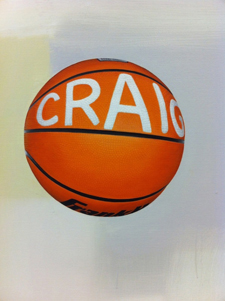 Craig Drennen, detail of HELLO CRAIG, 2014, oil and alkyd on canvas, 52 x 40 in. (artwork © Craig Drennen)
Craig Drennen. Samsøñ Projects, Boston, Massachusetts, October 31–December 24, 2014. Poet & Awful. Painting.

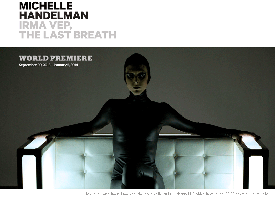 Michelle Handelman, Irma Vep, the last breath, 2013, 4-channel HD video installation, 33:00 min. (artwork © Michelle Handelman; photograph by Laure Leber)
Michelle Handelman. Soho House New York in partnership with the Film-Makers’ Cooperative, New York, November 7, 2014. Irma Vep, the Last Breath. Single-channel video.
South
Veronica Ceci. 02 Gallery, Austin, Texas, November 7–December 3, 2014. QR/PR. Printmaking.
Janet Kaplan: In Memoriam
posted by CAA — December 19, 2014
The following obituary for Janet Kaplan was published by the Moore College of Art and Design in Philadelphia, Pennsylvania, on December 15, 2014. CAA will follow up with its own text in the new year.
It is with deepest sorrow that we share with you the news that on Friday, December 12, Art History Faculty Professor and Curatorial Studies Director, Dr. Janet Kaplan passed away.
We will honor Professor Kaplan by hosting a remembrance to honor her here at Moore in the spring semester at a date to be determined. Dr. Kaplan was beloved and respected by many artists and scholars in the Philadelphia community and beyond. She will be deeply missed by the students and those who teach and work at Moore.
Dr. Kaplan had a long and fruitful career at Moore College of Art & Design. She began teaching at Moore in 1980 as an Assistant Professor, promoted to Associate Professor in 1987 and to full Professor in 1993. Dr. Kaplan received tenure in 1987 and served as the Chair of Liberal Arts from 1989 to 2003. Professor Kaplan served as the Executive Editor of the Art Journal for the College Art Association in New York City from 1995 to 2002. The Art Journal was the winner of the Utne Award for Independent Magazine Publishing in 2002. Dr. Kaplan was instrumental in the planning and development for the Curatorial Studies major, working in collaboration with Dr. Maureen Pelta, Chair of the Liberal Arts department, the Liberal Arts faculty and Academic Dean to develop curriculum for the nation’s first undergraduate Curatorial Studies program that successfully launched in fall 2006.
Throughout her teaching career Dr. Kaplan also taught at NYU, Institute of Fine Arts as a Visiting Professor and Graduate Colloquium; Vermont College as a graduate faculty in the MFA in Visual Arts program; and at the University of New Hampshire. She served as a moderator, panelist and speaker at regional, national and international conferences and symposia on a wide range of topics related to art criticism, artist responses to social issues, women and surrealism, media spectacle and the politics of representation. She was a leader in generating dialogue about women in the arts, organizing symposia including a 2000 symposium at The National Museum of Women in the Arts and 3 Curatorial Conversations here at Moore including “Curating and Activism: An International Panel and Conversation” in 2009. These Curatorial Conversations were supported by The Pew Center for Arts & Heritage and through the support from Frances and Bayard Storey. Dr. Kaplan published widely on modern and contemporary art. Her essays and interviews have been published in numerous national and international art journals. She frequently wrote book reviews for art journals including one on Whitney Chadwick’s book on Women Artists and the Surrealist Movement. She is the author of Remedios Varo: Unexpected Journeys, an important internationally known scholarly work, published in multiple languages.
In 2001, Dr. Kaplan received a Fellowship in Arts Criticism from the Pennsylvania Council for Humanities and in 2003 she received a Special Opportunities Stipend from the Pennsylvania Council for Humanities. Professor Kaplan served on the advisory board, consultant and/or review panelist for numerous organizations and institutions including the School of Art at Carnegie-Mellon University; the Arts Advisory Board of the Philadelphia Redevelopment Authority; the Rosenbach Museum and Library; NEA grants panel in 2001 for Visual Arts Creativity and Organizational Capacity; review panelist for the Philadelphia Cultural Fund in 1998; the Advisory Board for the Pew Fellowships in the Arts, 1997–99; and the United States Holocaust Memorial Museum – Varian Fry Project. In 2012, she co-curated an exhibition fo the work of artist Ashley Hune in Sinop, Turkey.
Dr. Kaplan gave back to the Moore community through her extensive service to the College and to the community. In addition to the institutions and organizations where she served in an ongoing capacity, she frequently participated in citywide and College organized events. She moderated panels organized by The Galleries at Moore in conjunction with the City of Philadelphia Mural Arts Program and served as a panelist at the Free Library of Philadelphia for one film/one book events. Recently, Dr. Kaplan had an essay published in 70 x 7 The Meal, act XXXIV, Lucy + Jorge Orta, City of Philadelphia Mural Arts Program, 2013. Moore College of Art & Design is proud to have had the honor of Dr. Kaplan’s service, teaching and scholarship; she will be missed by her colleagues, her students and the staff at Moore.
People in the News
posted by CAA — December 17, 2014
People in the News lists new hires, positions, and promotions in three sections: Academe, Museums and Galleries, and Organizations and Publications.
The section is published every two months: in February, April, June, August, October, and December. To learn more about submitting a listing, please follow the instructions on the main Member News page.
December 2014
Academe
Edith Balas has retired after thirty-five years of teaching art history at Carnegie Mellon University in Pittsburgh, Pennsylvania.

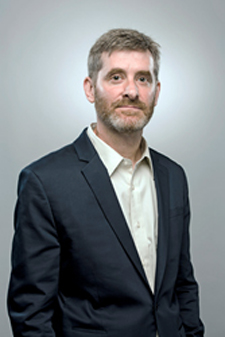 Jeff Bellantoni (photograph by Peter Tannenbaum)
Jeff Bellantoni, formerly chairperson and professor of the Graduate Communications Design Department at Pratt Institute in Brooklyn, New York, has been appointed vice president for academic affairs at Ringling College of Art and Design in Sarasota, Florida.
Lori Cole, formerly the Charlotte Zysman Postdoctoral Fellow in the Humanities and Lecturer in Fine Arts at Brandeis University in Waltham, Massachusetts, has become assistant professor and faculty fellow at the John W. Draper Interdisciplinary Master’s Program in Humanities and Social Thought at New York University.
Ryan Hoover has been appointed a 2014–15 full-time faculty member in the Interdisciplinary Sculpture Department at Maryland Institute College of Art in Baltimore.
Christian Luczanits, senior curator at the Rubin Museum of Art in New York, has been named David L. Snellgrove Senior Lecturer in Tibetan and Buddhist Art at the University of London’s School of Oriental and African Studies in England.
Kiel Mutschelknaus has joined Maryland Institute College of Art in Baltimore as a full-time faculty member in graphic design for the 2014–15 academic year.

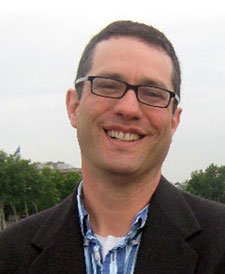 David Raskin
David Raskin has been named Mohn Family Professor of Contemporary Art History at the School of the Art Institute of Chicago in Illinois, thanks to a recent $2.5 million gift from the Mohn Family Foundation.
Daniel Tucker has been appointed graduate-program manager in social and studio practice at the Moore College of Art and Design in Philadelphia, Pennsylvania.
Museums and Galleries
Carol Damian has stepped down as director and chief curator of the Patricia and Phillip Frost Art Museum at Florida International University in Miami. She will serve as a professor in the school’s Art and Art History Department.
Tracy Fitzpatrick, chief curator of the Neuberger Museum of Art at Purchase College, State University of New York, has been appointed director of the museum.
Meredith Fluke has been appointed Kemper Curator of Academic Programs at the Davis Museum at Wellesley College in Wellesley, Massachusetts.
Aimeé E. Froom, an independent scholar based in Paris, France, has become curator of Islamic art at the Museum of Fine Arts, Houston, in Texas.

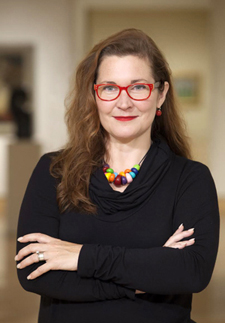 Erika Holmquist-Wall
Erika Holmquist-Wall, formerly of the Minneapolis Institute of Arts in Minnesota, has been hired by the Speed Art Museum in Louisville, Kentucky, as curator of European and American painting and sculpture.
Monica Obniski, formerly assistant curator of American decorative arts at the Art Institute of Chicago in Illinois, has been hired by the Milwaukee Art Museum in Wisconsin as curator of design and decorative arts.
Amy L. Powell, previously a Cynthia Woods Mitchell Curatorial Fellow at the University of Houston’s in Texas, has become curator of modern and contemporary art at the Krannert Art Museum, part of the University of Illinois, Urbana-Champaign.

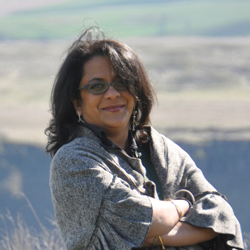 Namita Gupta Wiggers
Namita Gupta Wiggers has resigned from being director and chief curator for the Museum of Contemporary Craft in Portland, Oregon. She will continue working with the museum as an adjunct curator and with Pacific Northwest College of Art as an adjunct instructor in the MFA Applied Craft and Design Program.
Scott Wilcox, chief curator of art collections and senior curator of prints and drawings at the Yale Center for British Art in New Haven, Connecticut, has been promoted to deputy director for collections.
Organizations and Publications
Richard Brettell has been chosen to lead the newly created Edith O’Donnell Institute of Art History in Dallas, Texas, as director and Edith O’Donnell Distinguished Chair.
Paul Catanese, associate professor and director of the Interdisciplinary Arts and Media MFA Program at Columbia College Chicago in Illinois, has joined the ISEA International Foundation Board.
Institutional News
posted by CAA — December 17, 2014
Read about the latest news from institutional members.
Institutional News is published every two months: in February, April, June, August, October, and December. To learn more about submitting a listing, please follow the instructions on the main Member News page.
December 2014
The Archives of American Art, part of the Smithsonian Institution in Washington, DC, has received a $413,000 award from the Terra Foundation for American Art to support a survey of archival collections related to American art that are located in the Chicago area, as well as a few other initiatives on Chicagoan art, artists, and archives.
The Mary and Leigh Block Museum of Art at Northwestern University in Evanston, Illinois, has accepted a $85,000 award from the Terra Foundation for American Art to support the exhibition The Left Front: Radical Artists in the “Red Decade,” 1929–1940.
The College of the Holy Cross in Worcester, Massachusetts, has developed a three-day conference called “Global Encounters in Early America” with support from a $25,000 grant from the Terra Foundation for American Art.
The Delaware Art Museum in Wilmington has received three generous gifts totaling $1.7 million to fully endow the museum’s Curator of the Bancroft Collection of Pre-Raphaelite Art. Two donations were given anonymously, and a third came from Peggy and Ed Woolard. The endowment will be named the Annette Woolard-Provine Endowed Curator of the Bancroft Collection, in honor of the Woolards’ daughter.
The Maine College of Art in Portland has received accreditation for its ten-month master of art in teaching program by the National Association of Schools of Art and Design and the state of Maine. The college has also accepted funding from the Bob Crewe Foundation to initiate a program that explores the intersection of music and art.
The Pennsylvania Academy of the Fine Arts in Philadelphia has received a three-year $150,000 grant from the Institute of Museum and Library Services to support the new School and Community Partnership Program, which will unite the academy’s existing resources for schools, families, and community outreach into a single initiative.
The Philadelphia Museum of Art in Pennsylvania has been awarded a $165,000 grant from the Terra Foundation for American Art to help fund the exhibition Paul Strand: Photography and Film for the Twentieth Century.
The Princeton University Art Museum in Princeton, New Jersey, has accepted a $99,493 grant from the Institute of Museum and Library Services to help complete the cataloguing and digitization of the Minor White Archive.
The School of the Art Institute of Chicago in Illinois has received a $2.5 million gift from the Mohn Family Foundation to advance the school’s leadership in the history of contemporary art. The funds will support a professorship and graduate-student fellowship within the Department of Art History, Theory, and Criticism.
Stanford University in California has accepted a $30,780 grant from the Terra Foundation for American Art to help the Department of Art and Art History fund a two-day conference called “The Ends of American Art.”
The University of California, Santa Barbara, has accepted a $136,479 grant from the Terra Foundation for American Art to support an academic exchange symposium and a publication associated with “Modernism in the United States and China,” a project organized by the university and the China Art Academy in Hangzhou.
The University of Texas at Dallas has partnered with the Dallas Museum of Art to create the Edith O’Donnell Institute of Art History, which will offer master’s and doctoral degrees. The institute is funded by a $17 million gift from Edith O’Donnell.
The Yale Center for British Art in New Haven, Connecticut, has received a $25,000 grant from the Terra Foundation for American Art to support the borrowing of Hiram Power’s statue The Greek Slave (1844), along with an attendant two-day colloquium, in conjunction with the exhibition Sculpture Victorious: Art in an Age of Invention, 1837–1901.
Yale University Press in New Haven, Connecticut, has accepted an $80,000 grant from the Terra Foundation for American Art to support a translation prize for a book-length publication by a non-US author that contributes to scholarship on historical American art.
Grants, Awards, and Honors
posted by CAA — December 15, 2014
CAA recognizes its members for their professional achievements, be it a grant, fellowship, residency, book prize, honorary degree, or related award.
Grants, Awards, and Honors is published every two months: in February, April, June, August, October, and December. To learn more about submitting a listing, please follow the instructions on the main Member News page.
December 2014

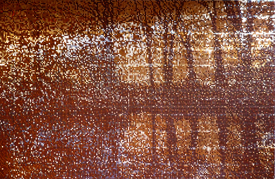 Richard Barlow, Pixelated Bromide, plastic sequins and latex paint, 132 x 204 in. (artwork © Richard Barlow)
Richard Barlow, an artist, musician, and assistant professor of art at Hartwick College in Oneonta, New York, has received the 2014 Jerome Foundation Travel and Study Grant and the 2014 Hartwick College Faculty Development Grant.

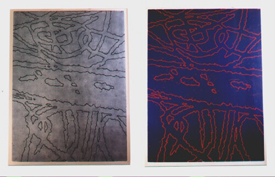 Two podographs by Mark Staff Brandl, 2012 (artwork © Mark Staff Brandl)
Mark Staff Brandl, an artist and art historian based in Trogen, Switzerland, has completed an artist residency in the Italian village of Portico di Romagna, where he made drawings and had a small exhibition.
Abigail DeVille, an artist based in Bronx, New York, has won a 2014 emerging-artist grant of $10,000 from the Rema Hort Mann Foundation, based in New York.

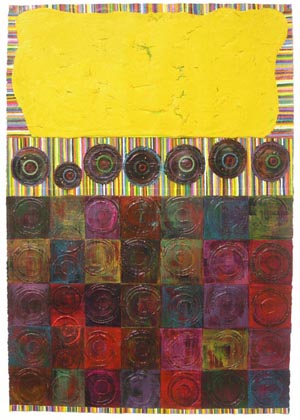 Reni Gower, Pivot.6, 2010, acrylic on paper, mounted on canvas-covered panel, 38 1/2 x 27 in. Collection of Harry L. Davis, Leesburg, VA (artwork © Reni Gower)
Reni Gower, an artist and professor of painting and printmaking at Virginia Commonwealth University in Richmond, has completed an artist residency at the Center for Book and Paper Arts at Columbia College Chicago, where she worked with the center’s team to explore pulp painting, blow-outs, and watermarks.
James Herring, exhibitions manager and designer for the Patricia and Phillip Frost Museum of Science in Miami, Florida, has received a $10,000 exhibition research grant from the Center for Craft, Creativity, and Design, based in Asheville, North Carolina.

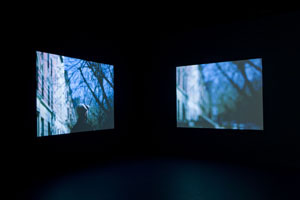 Leslie Hewitt in collaboration with Bradford Young, Untitled (Level), 2010, dual-channel video projection, 35mm film transferred to digital video, 1:00 min. loop. Studio Museum in Harlem, Museum Purchase with funds provided by the Acquisition Committee 10.8.1 (artwork © Leslie Hewitt)
Leslie Hewitt, an artist based in New York and Houston, Texas, has been named a USA Francie Bishop Good and David Horvits Fellow in Visual Arts by United States Artists. The award comes with an unrestricted $50,000 prize.
Faheem Majeed, associate director and faculty in the School of Art and Art History at the University of Illinois in Chicago, and Jeremiah Hulsebos-Spofford, a teacher of sculpture at the Chicago High School for the Arts and in the Contemporary Practices Department of the School of the Art Institute of Chicago, have earned a 2014–15 DCASE Studio Artist Residency Award from their city’s Department of Cultural Affairs and Special Events and the Joyce Foundation.
Norie Sato, an artist based in Seattle, Washington, has been recognized twice this year: the 2014 Public Art Network Leadership Award from Americans for the Arts, awarded in June at that organization’s conference in Nashville, Tennessee; and the 2014 Governor’s Art and Heritage Award for an Independent Artist, conferred by her state’s government at the end of October.
Alex J. Taylor, an Australian art historian of modern American art and visual culture, has been appointed to a three-year position at Tate as the Terra Foundation Research Fellow in American Art by the London–based museum and Chicago’s Terra Foundation for American Art.
Hilary Wilder has accepted a 2014–15 artist’s residency from the Galveston Artist Residency in Texas.
Exhibitions Curated by CAA Members
posted by CAA — December 15, 2014
Exhibitions Curated by CAA Members
Check out details on recent shows organized by CAA members who are also curators.
Exhibitions Curated by CAA Members is published every two months: in February, April, June, August, October, and December. To learn more about submitting a listing, please follow the instructions on the main Member News page.
December 2014
Katerina Lanfranco. PostPartumParty. Rhombus Space, Brooklyn, New York, November 21–December 14, 2014.
Katerina Lanfranco. Funkdafied. Rhombus Space, Brooklyn, New York, October 17–November 9, 2014.
Melody Rod-ari. Home and Away: The Printed Works of Ruth Asawa. Norton Simon Museum, Pasadena, California, September 19, 2014–January 19, 2015.
Jan Wurm. Closely Considered: Diebenkorn in Berkeley. Richmond Art Center. Richmond, California, September 14–November 16, 2014.
Books Published by CAA Members
posted by CAA — December 15, 2014
Publishing a book is a major milestone for artists and scholars—browse a list of recent titles below.
Books Published by CAA Members appears every two months: in February, April, June, August, October, and December. To learn more about submitting a listing, please follow the instructions on the main Member News page.
December 2014

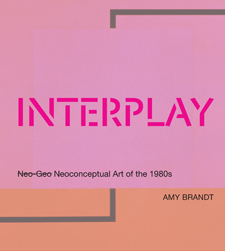
Amy Brandt. Interplay: Neo-Geo Neo-Conceptual Art of the 1980s (Cambridge, MA: MIT Press, 2014).

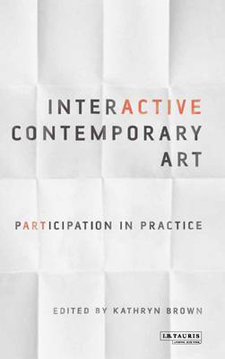
Kathryn Brown, ed. Interactive Contemporary Art: Participation in Practice (London: I. B. Tauris, 2014).

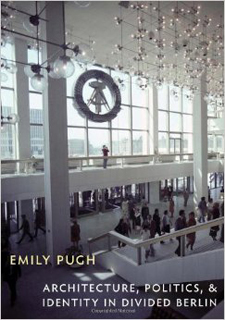
Emily Pugh. Architecture, Politics, and Identity in Divided Berlin (Pittsburgh: University of Pittsburgh Press, 2014).

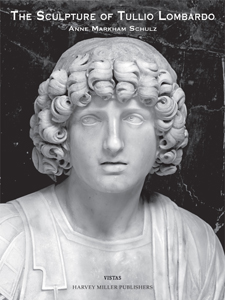
Anne Markham Schulz. The Sculpture of Tullio Lombardo (Turnhout, Belgium: Harvey Miller, 2014).
Committee on Women in the Arts Picks for December 2014
posted by CAA — December 10, 2014
Each month, CAA’s Committee on Women in the Arts selects the best in feminist art and scholarship. The following exhibitions and events should not be missed. Check the archive of CWA Picks at the bottom of the page, as several museum and gallery shows listed in previous months may still be on view or touring.
December 2014
Suzanne Lacy: Gender Agendas
Museo Pecci Milano
Ripa di Porta Ticinese 113, Milan, Italy
November 14, 2014–January 6, 2015
The Milan Pecci Museum is presenting a Suzanne Lacy’s Gender Agendas. This retrospective exhibition launches a whole new line of investigation at the the Centre for Contemporary Art Luigi Pecci that has been dedicated to the pioneering work in the arts developed internationally in the sixties, seventies, and eighties. Born in California in 1945 and based in Los Angeles, Lacy is an influential artist, educator, and writer. She is known as one of the pioneer artists blending Conceptual and Performance art with social commitment in the early seventies in Los Angeles. Her approach to researching and making follows her questioning the relationship of “service” to “activism,” and of both to “art practice.” Her diverse approach to this investigation stretches from explorations of the body and intimate reflections to the production of large and lengthy public demonstrations involving dozens of artists and thousands of spectators.
Gender Agendas presents, for the first time in Europe, a large series of Lacy’s projects that follow a constant of her artistic development: the investigation of the female condition. From a more intimately approach to a strong political and civic one, Lacy explores the power of art as a useful and effective tool for social struggle and for the promotion of progressive ideas, digging in this way into the meanings of the hundreds of anonymous female and working-class performers who would have no access to the communication systems otherwise. Sexual exploitation, violence, media representation of the aging woman, and social issues ranging from racism to the conditions of labor and class may have been provocative and avant-garde in the seventies and eighties, but are still deeply relevant today.
Through the curatorial approach of Lacy’s retrospective exhibition, Fabio Cavallucci and Megan Steinman, propose a readaptation of some of her most important works, including Prostitution Notes (1974); Three Weeks in May (1977); In Mourning and In Rage (1977); The Crystal Quilt (1985–87); and Full Circle (1994); as well as one of her most recent projects, Storying Rape (2012), a discussion among significant personalities in the media, activists, and politicians in an attempt to find a new cultural narrative that describes sexual violence.
Birgit Jurgenssen
Fergus McCaffrey
514 West 26th Street, New York, NY 10001
November 6–December 20 2014
For the second exhibition of Birgit Jurgenssen, Fergus McCaffrey brings together a large group of her photographic works in combination with a number of sculptures in order to underscore the variety and complexity of her work.
Highly experimental, Jurgenssen’s photographic work is exemplified by her Stoff-arbeiten (Fabric Works), which were created from the late 1980s to the early 1990s. The “fabric works” consist of photographic prints mounted on canvases that have been screwed to iron frames made by the artist, giving a highly sculptural character to their combinations. Thin, translucent fabrics such as gauze are stretched over the surface, veiling and slightly obscuring the images. The photographs themselves are created through a range of processes, including photograms, solarization, and multiple exposures. The juxtaposition of hard-welded iron frames and delicate textile emphasizes their materiality and draws a direct relationship to Jürgenssen’s sculptural works.
The exhibition also includes works that Jurgenssen referred to as “painted” photography. These large format photograms were created by manipulating sheets of photo paper in developer and fixing baths and by pouring photo chemicals directly over the paper. The resulting marbled and dripped images were then exposed to light and fixed, after which the surfaces were scratched, creating gestural drawings over the “painted” photographic surfaces.
Born and educated in Vienna, Jürgenssen (1949–2003) died prematurely at the age of 54. Her studio practice encompassed drawing, performance, photography, and sculpture, through which she compellingly combined classically refined draftsmanship, mixed media, and experimental photo techniques. She is best known for her connection to the Austrian feminist movement of the 1970s. Equally important is her engagement with Surrealism and her concern for materials and processes.
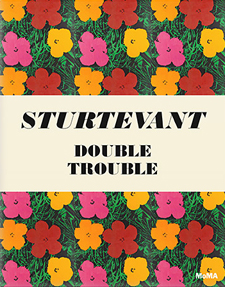
Cover of the catalogue for Sturtevant: Double Trouble
Sturtevant: Double Trouble
Museum of Modern Art
Special Exhibitions Gallery, Third Floor; and Sue and Edgar Wachenheim III Painting and Sculpture Gallery, Gallery 5, Fifth Floor, 11 West 53rd Street, New York, NY 10009
November 9, 2014–February 22, 2015
Elaine Sturtevant (American, 1924–2014) began “repeating” the works of her contemporaries in 1964, using some of the most iconic artworks of her generation as a source and catalyst for the exploration of originality, authorship, and the interior structures of art and image culture. Beginning with her versions of works by Jasper Johns and Andy Warhol, she initially turned the visual logic of Pop art back on itself, probing uncomfortably at the workings of art history in real time. Yet her chameleonlike embrace of other artists’ art has also resulted in her being largely overlooked in the history of postwar American art. As a woman making versions of the work of better-known male artists, she has passed almost unnoticed through the hierarchies of midcentury modernism and postmodernism, at once absent from these histories while nevertheless articulating their structures.
Far more than copies, her versions, for instance, of Johns’s flags, Warhol’s flowers, and Joseph Beuys’s fat chairs are studies in the action of art that expose aspects of its making, circulation, and canonization. Working primarily in video since 2000, the artist remained deeply engaged with the politics of image production and reception, using stock footage from Hollywood films, television, and advertising to point to the exhaustion built into much of postwar cultural production.
This exhibition is the first comprehensive survey in America of Sturtevant’s fifty-year career and the only institutional presentation of her work organized in the United States since her solo show at the Everson Museum of Art in 1973. Rather than taking the form of a traditional retrospective, the exhibition offers a historical overview of her work from a contemporary vantage point, interspersing more recent video pieces among key artworks from all periods of her career.
Michelle Stuart: Silent Movies
Leslie Tonkonow: Art Works and Projects
535 West 22nd Street, Sixth Floor, New York, NY 10011
November 1–December 20, 2014
Michelle Stuart (American, b. 1933) became internationally known in the 1970s for innovative works that synthesize Land art, drawing, and sculpture, as well as her pioneering use of natural materials in sculpture, painting, and drawing. Since 2011 photography has been her primary medium, although present in her work both literally and conceptually since the 1970s. Devising a highly personal and original method of photographic manipulation, Stuart conveys the impression of deeply felt images seen through time and layers of consciousness. It is “a combination of fact and fiction, truth and lies—and lies that tell the truth,” as put by the artist.
The exhibition at Leslie Tonkonow comprises photographs drawn from Stuart’s vast archive of analogue and digital photographs taken for almost half a century. Stuart activates their aesthetic and storytelling potential by arranging them in gridlike groups or occasionally altering them. Each work is composed of between seven and seventy separate images, digitally printed on 8½ x 11 inch sheets of archival paper. Both painterly and cinematic in their rhythmic visual arrangement, the works in this exhibition amount to meditations on the nature of memory.
As dreamlike recollections of her past, these works continue her lifelong artistic engagement with specific locations, while affirming the significance of place as a unique source of memory. “Memories are silent until we either articulate them in words on paper or depict them visually,” as put by the artist herself. Two years ago, in Palimpsests, her first solo show of exclusively photographic works, Stuart expressed thoughts on war, the cosmos, the passing of time, and on form itself. The compositions in Silent Movies, all created since then, present universal themes with deeply personal associations that contain keys to momentous events and evoke times and places in a manner that is both specific and archetypical. With abundant literary, cinematic, and historical references, these works do not merely address memories, but, as put in the press release, the very process of recall itself.
Teaching Evaluation Survey
posted by CAA — November 13, 2014
The following message came from Craig Vasey, chair of the Committee on Teaching, Research, and Publications for the American Association of University Professors (AAUP).
Teaching Evaluation Survey
The Committee on Teaching, Research, and Publications is interested in determining to what degree there is consistency nationally in attitudes toward faculty teaching evaluations, in methods used for it, and in institutional practices surrounding it. We have developed a survey, and urge you to provide us information about your institution and your experience.
The survey can be taken at https://www.surveymonkey.com/s/teaching-evaluation.
Without your input, we cannot effectively bring these issues into the national conversation on the quality and the future of higher education. This is not intended to be a survey only of AAUP members, but of as many faculty in higher education in the USA as we can reach. Please share this with colleagues and encourage them to participate.