CAA News Today
CAA’s 110th Annual Conference Museum-Related Sessions
posted by CAA — December 14, 2021
See below for information on CAA’s virtual Resources for Academic Art Museum Professionals (RAAMP) session and a list of other sessions with museum topics, organized by the two conference components, the first from February 17-19 and the second March 3-5.
Note: As of January 7, all in-person sessions and activities scheduled for February 16-19 in Chicago are now virtual on the same dates. Virtual sessions and activities scheduled for March 3-5 will remain the same. This change will allow for more access and engagement, regardless of location.
CAA’s RAAMP Session and Talks
New and Improved: Using Recent Experiences to Inform the Future of Museums
Thursday, March 3, 2022, 11:00 AM – 12:30 PM CST (12:00 PM – 1:30 PM EST)
Walking the Talk: New Low Carbon Curatorial and Educational Structures that Amplify Impact and Reduce Costs
Natalie Marsh, ViVA Virtual Visiting Artists
Amanda Potter, Zimmerli Art Museum at Rutgers University
Jennifer Reynolds-Kaye, ViVA Virtual Visiting Artists
Lessons Learned from a Year of Virtual Teaching
Ellen M. Alvord and Kendra Weisbin
Speculative Annotation at the Library of Congress: A Web-Based Annotation Tool that Invites Virtual Engagement with the Library’s Collection
Courtney Lynn McClellan and Jaime Mears, Library of Congress
Museum Sessions, February 17-19
Canonizing the Intangible: Aromatic Strategies in the Making of the U.A.E.’s National Identity
Friday, February 18, 2022, 9:00 AM – 10:30 AM CST
Francesca Bacci, Zayed University
Economies of Discipline and Display: Curating Conflict in Israel/Palestine
Friday, February 18, 2022, 9:00 AM – 10:30 AM CST
Michelle Facos, Indiana University
Instrumentalizing Memory and the Politics of Commemoration
Friday, February 18, 2022, 9:00 AM – 10:30 AM CST
Iro Katsaridou, Museum of Byzantine Culture, Thessaloniki, Greece
Eve Kalyva, University of Kent
Reassessing the Art Biennial
Friday, February 18, 2022, 11:00 AM – 12:30 PM CST
Paloma Checa-Gismero, Swarthmore College
Recent Perspectives in the Philosophy of Curatorial Practice
Friday, February 18, 2022, 11:00 AM – 12:30 PM CST
Rossen Ventzislavov
The Mary H. Dana Women Artists Series at Rutgers University’s Douglass College: A 50 Year History of Exhibition and Space Making for Woman-Identifying Artists through the Voices of the Artists Themselves
Friday, February 18, 2022. 2:30 PM – 4:00 PM CST
Julia E. Marsh, Cedar Crest College
The Practice of Care: Trauma Informed Pedagogy
Education Committee
Saturday, February 19, 2022, 11:00 AM – 12:30 PM CST
Jenna Ann Altomonte, Mississippi State University
TFAP Feminist Solidarities and Kinships, Panel 3 – Exhibitions and Curatorial Spaces
The Feminist Art Project (TFAP)
Saturday, February 19, 2022, 12:30 PM – 2:00 PM CST
Erina Duganne, Texas State University
Susan E. Richmond, Georgia State University – School of Art and Design
Tatiana E. Flores, Rutgers University
New Frontiers: Creating, Collecting, Preserving and Displaying Digital Based Art of Russia and Eastern Europe
Saturday, February 19, 2022, 4:30 PM – 6:00 PM CST
Natalia Kolodzei. Kolodzei Art Foundation
Museum Sessions, March 3-5
Curatorial Care: Feminist and Queer Practices
Friday, March 4, 2022, 9:00 AM – 10:30 AM CST (10:00 AM – 11:30 AM EST)
Nomusa Makhubu, University of Cape Town
The Global Rise of Traveling Exhibitions at Mid-Century
Friday, March 4, 2022, 9:00 AM – 10:30 AM CST (10:00 AM – 11:30 AM EST)
Agata Justyna Pietrasik
Magdalena Moskalewicz, School of the Art Institute of Chicago
Activist Exhibitions
Friday, March 4, 2022, 4:30 PM – 6:00 PM CST (5:30 PM – 7:00 PM EST)
Rebecca J. DeRoo, Rochester Institute of Technology
New Age of Teaching the Art of the Islamic World
Museum Committee
Saturday, March 5, 2022, 9:00 AM – 10:30 AM CST (10:00 AM – 11:30 AM EST)
Xenia Gazi, School of the Art Institute of Chicago
Reconsidering Art History Through Access
Saturday, March 5, 2022, 9:00 AM – 10:30 AM CST (10:00 AM – 11:30 AM EST)
Sara Catherine Woodbury, College of William and Mary
Curating Craft: Contemporary Making in Global Museums of Islamic Art
Saturday, March 5, 2022, 11:00 AM – 12:30 PM CST (12:00 PM – 1:30 PM EST)
Leslee Michelsen, Doris Duke Foundation for Islamic Art at Shangri La
New Perspectives in Art, Design, and Art History: Supporting and Showcasing Emerging Voices from Marginalized Communities
Committee on Diversity Practices
Saturday, March 5, 2022, 2:30 PM – 4:00 PM CST (3:30 PM – 5:00 PM EST)
Stefanie Snider, Kendall College of Art and Design
Rachel Lynn de Cuba, Clemson University
Announcing CAA’s 110th Annual Conference Keynote Speaker: Juan Salgado
posted by CAA — December 13, 2021
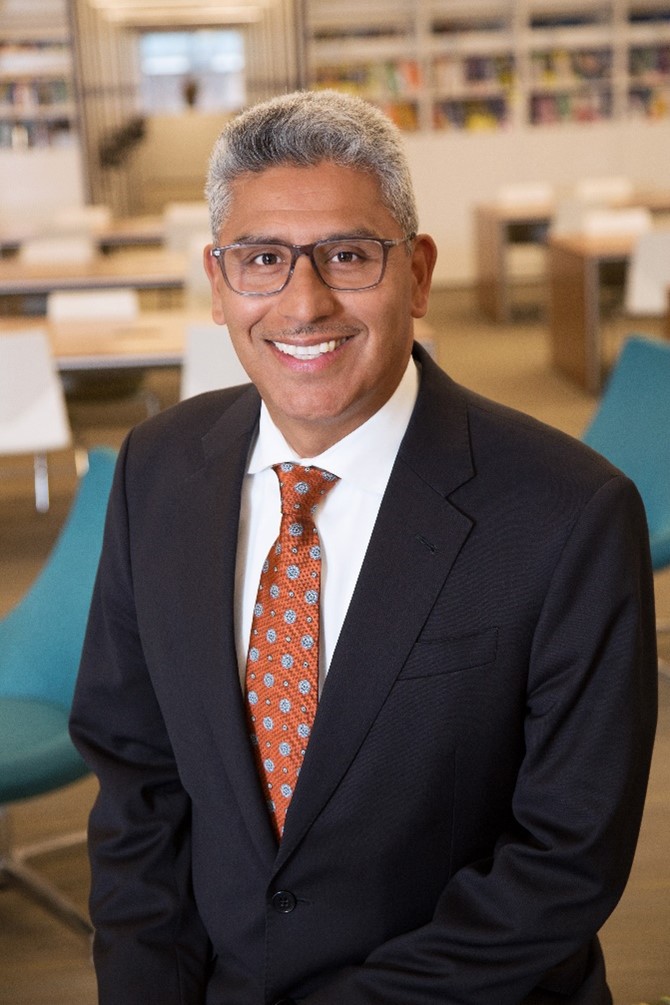
Please join us February 16th at CAA’s Annual Conference Convocation for a keynote speech by Chancellor Juan Salgado. As Chancellor of City Colleges of Chicago, Salgado oversees Chicago’s community college system, serving 68,000 students across seven colleges. Seventy-four percent of credit students are Black and Latinx students. His initiatives have helped to stress the importance of the arts and the humanities to these audiences, such as the development of City Colleges’ partnership with the Joffrey Ballet Company, securing free access to Chicago’s cultural gems, including the Art Institute of Chicago, for City Colleges students and faculty, and supporting a Center of Equity in the Creative Arts at Kennedy-King College, one of the seven City Colleges of Chicago.
Under Salgado’s leadership, City Colleges of Chicago has seen an increase in student graduation rates to the highest level on record, an unprecedented systems-level partnership with the Chicago Public Schools, the launch of Fresh Start, a first-ever debt forgiveness program, the creation of Future Ready, which offers short-term programs at no cost, the completion of two new major state-of-the-art facilities, a re-energizing of fundraising for student supports, and campus specific plans focused on equity in student outcomes, among other efforts.
Salgado’s career has focused on improving education and economic opportunities for residents in low-income communities. Chancellor Salgado is a community college graduate himself, earning an associate degree from Moraine Valley Community College, prior to earning a Bachelor’s degree from Illinois Wesleyan University, and a Master’s degree in Urban Planning from the University of Illinois at Urbana-Champaign.
From 2001 to 2017, Salgado served as CEO of Instituto del Progreso Latino, where he worked to empower residents of Chicago’s Southwest Side through education, citizenship, and skill-building programs that led to sustainable employment and economic stability. He has been nationally recognized for his work, including as a 2015 MacArthur Fellow. Among his civic commitments, he serves as a board member of the Obama Foundation.
Register for CAA’s upcoming conference and learn more at our registration and program schedule pages.
Note: As of January 7, all in-person sessions and activities scheduled for February 16-19 in Chicago are now virtual on the same dates. Virtual sessions and activities scheduled for March 3-5 will remain the same. The virtual Book and Trade Fair will be accessible from February 16 to April 14. Registrants can view recorded content until April 14, 2022. This change will allow for more access and engagement, regardless of location.
110th Annual Conference Designs
posted by CAA — December 13, 2021
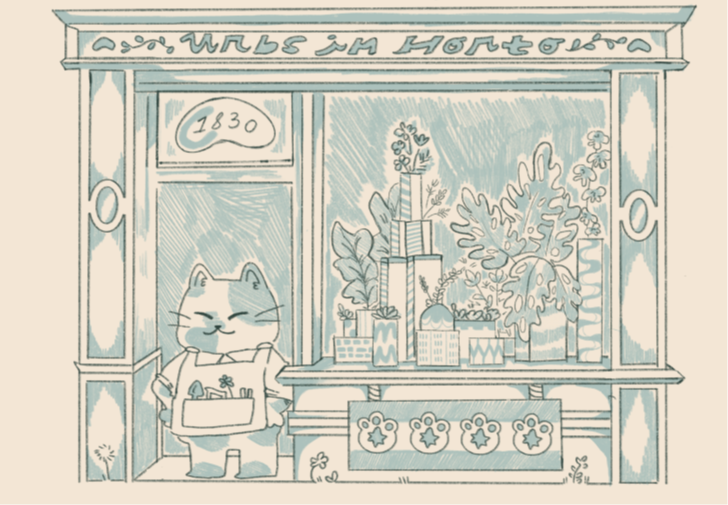
This year, CAA partnered with The School of the Art Institute of Chicago’s (SAIC) College Arts Access Program (CAAP), which held a design competition for CAA’s upcoming Annual Conference. This three-year college bridge program provides Chicago Public Schools students who are dedicated to studying art and design with the skills and preparation needed for admission to and success at SAIC, art and design schools, or post-secondary institutions. Eight CAAP students participated in a graphic design workshop to produce designs for the CAA Annual Conference. Led by SAIC Alum Jenna Russo, students designed work based on the prompt “Chicago: City in a Garden.”
We are excited to share the winning design for the conference’s tote bag by Betty Leisen. It will be available at the Annual Conference, made possible by SAIC.

This second design was created by Ethan Rodriguez and will be presented at the conference digitally.
In Memoriam: Robert Farris Thompson
posted by CAA — December 10, 2021
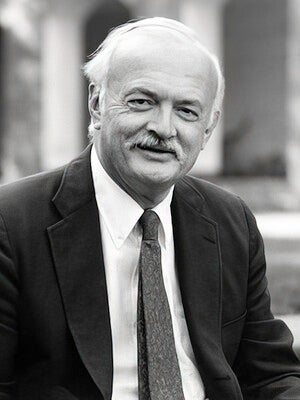
Robert Farris Thompson, an eminent art historian recognized for his field-leading research and writing on the art, history, culture, dance, and music of Africa and the Afro-Atlantic world, and who was the longest serving head of college in Yale’s history, died on Nov. 29. He was 88.
Thompson was professor emeritus of African American studies and the former Colonel John Trumbull Professor of the History of Art at Yale. For more than a half-century on Yale’s faculty, and during his 32 years as “Master T” at the helm of Timothy Dwight College, he secured his place in the pantheon of beloved professors and university leaders.
In recognizing Thompson with its inaugural Distinguished Lifetime Achievement Award for Writing on Art in 2003, the College Art Association described him as a “towering figure in the history of art, whose voice for diversity and cultural openness has made him a public intellectual of resounding importance.” In May 2021 he was honored with an honorary degree from Yale celebrating his lifetime of academic achievement.
Above excerpts and image from, “Robert Farris Thompson, pioneer in study of African and Afro-Atlantic art,” YaleNews (December 1, 2021). Please click this link to read the full article.
Craig Houser, author of Chapter 5: “The Changing Face of Scholarly Publishing: CAA’s Publication Program.”
posted by CAA — December 09, 2021
As part of CAA’s 10-year anniversary celebration of its publication The Eye, the Hand, the Mind: 100 Years of the College Art Association, chapter authors reflect on their contributions and how their impressions of the field have changed. Our second video in the series features Craig Houser, who wrote Chapter 5, “The Changing Face of Scholarly Publishing: CAA’s Publication Program.”
Craig Houser is the director of the MA in Art History and its concentration in Art Museum Studies at the City College of New York. His scholarship has addressed institutional politics related to studio art and art history, as well as issues in gender and sexuality in modern and contemporary art.
Vote for CAA’s 2022 Board of Directors!
posted by CAA — December 06, 2021
As a CAA member, voting is one of the best ways to shape the future of your professional organization. Thank you for taking the time to vote! Scroll down to meet this year’s candidates and submit your online voting form.
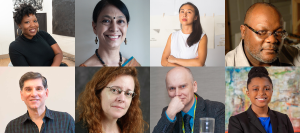
2021 CAA Board of Directors candidates, from left to right, top to bottom: Ashanté Kindle, Adity Saxena, Tiffany Lin, Alex Bostic, Gregory Gilbert, Karen J. Leader, Nazar Kozak, and Victoria McCraven.
2022 CAA BOARD OF DIRECTORS ELECTION
The CAA Board of Directors is comprised of professionals in the visual arts who are elected annually by the membership to serve four-year terms (or, in the case of the Emerging Professional Board members, two-year terms). The Board is charged with CAA’s long-term financial stability and strategic direction; it is also the Association’s governing body. The board sets policy regarding all aspects of CAA’s activities, including publishing, the Annual Conference, awards and fellowships, advocacy, and committee procedures. For more information, please read the CAA By-laws on Nominations, Elections, and Appointments.
MEET THE CANDIDATES
The 2021–22 Nominating Committee has selected the following candidates for election to the CAA Board of Directors. Click the names of the candidates below to read their statements and resumes before casting your vote.
BOARD OF DIRECTOR CANDIDATES (FOUR-YEAR TERM, 2022-2026)
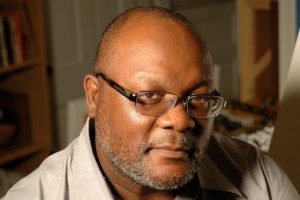
Associate Professor of Painting, Department of Art
Mississippi State University (Starkville, MS)
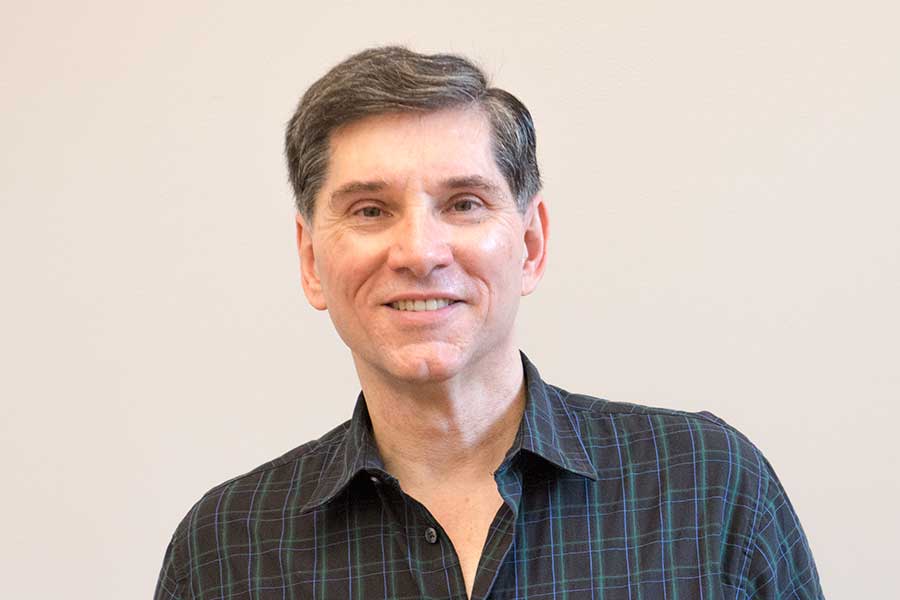
Director of Art History Program
Knox College (Galesburg, IL)

Senior Research Scholar, Department of Art History, Ethnology Institute
National Academy of Sciences of Ukraine
Associate Professor of Art History
Florida Atlantic University (Boca Raton, FL)
Visiting Assistant Professor, Department of Art & Design
University of Nevada (Las Vegas)
Dean, School of Arts & Design
Woxsen University (India)
EMERGING PROFESSIONALS BOARD OF DIRECTOR CANDIDATES (TWO-YEAR TERM, 2022-2024)
MFA Candidate in Art
University of Connecticut (Storrs)
Programs Manager, NXTHVN
CAA members must cast their votes for board members online using the link below; no paper ballots will be mailed. The deadline for voting is 6 p.m. EST on February 17, 2022.
The elected individuals will be announced at CAA’s Annual Business Meeting to be held from 1–2 p.m. (Central) on Friday, February 18, 2022.
Questions? Contact Maeghan Donohue, Manager, Strategic Planning, Diversity & Governance, at mdonohue@collegeart.org.
In Conversation: Coffee talk on the Annual Conference, Part II
posted by CAA — December 06, 2021
Our series of coffee talk conversations continues with a follow up chat between Meme Omogbai, our executive director and CEO, and Theresa Avila, the Program Chair of the 110th Annual Conference. In this video, they address questions from international participants, safety protocols and more details. Check it out and send us your thoughts for the next installment! Please send us your questions: programs@collegeart.org .
SPEAKER BIOGRAPHIES
Theresa Avila is a curator and an Assistant Professor of non-Western Art History at California State University, Channel Islands. She earned a Ph.D. in Art History from the University of New Mexico with a focus on Modern Latin American and Latin@x art. As a scholar and curator her work focuses on the intersections between the visual and political, as she interrogates historiography, empire and nation building, and systems of differentiation. Published works include “Echoing the Call for Revolution: Emiliano Zapata in Chican@x Art” for the exhibition catalogue Emiliano Zapata despues de Zapata (2019), the book Making and Being Made: Contemporary Citizenship, Art, and Visual Culture (2017), as well as the forthcoming “The History of the Barrio Mobile Art Studio, a vehicle for creative transformations” for the fifty-year anthology of Self Help Graphics (2023) and the project “Dialogos: on Landscapes of the Americas” for Latin American and Latinx Visual Culture Journal. (2023). As the Director of the Broome Library Gallery at CSUCI she curated Magnetic Currents: Art charged by the U.S. and Mexico Border (2020); Colecion de Lucha, Desde Santa Paula a las Americas: The Personal Archive of Luzma Espinosa (2019); and Tracing History: Mapping California (2018). Dr. Avila firmly believes we must activate art in meaningful and engage art as a tool for change.
Meme Omogbai, CAA Executive Director and CEO: Before joining CAA, Meme Omogbai served as a member and past board chair of the New Jersey Historic Trust, one of four landmark entities dedicated to preservation of the state’s historic and cultural heritage, and Montclair State University’s Advisory Board. Named one of 25 Influential Black Women in Business by The Network Journal, Meme has over twenty-five years of experience in corporate, government, higher education, and museum sectors. As the first American of African descent to chair the American Alliance of Museums (AAM), Omogbai led an initiative to rebrand the AAM as a global, inclusive alliance. While COO and trustee, she spearheaded a major transformation in operating performance at the Newark Museum. During her time as deputy assistant chancellor of New Jersey’s Department of Higher Education, Omogbai received legislative acknowledgment and was recognized with the New Jersey Meritorious Service award for her work on college affordability initiatives for families. Omogbai received her MBA from Rutgers University and holds a CPA. She did postgraduate work at Harvard University’s executive management program and has earned the designation of Chartered Global Management Accountant. She studied global museum executive leadership at the J. Paul Getty Trust Museum Leadership Institute, where she also served on the faculty.
Victoria McCraven
posted by CAA — December 03, 2021
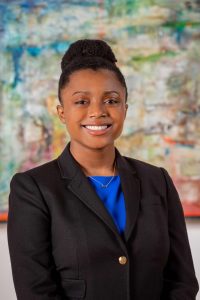 Statement
I would be honored to serve on the board of an organization, such as the College Art Association, which aligns with my professional and personal interests. My love for the arts stemmed from an interest in expanding historical narratives around race through visual storytelling. This passion has led me around the world, particularly with my graduate studies at the School of Oriental and African Studies as a Fulbright Scholar in London. As an emerging arts professional I bring an international and interdisciplinary perspective to all of my work. If selected to serve on the board, I would not only be a voice for the rising generation of diverse arts professionals, but also an ear to differing perspectives and viewpoints. In my recent role as the Romare Bearden Graduate Museum Fellow at the Saint Louis Art Museum, I worked closely with the department of Diversity, Equity, and Inclusion to organize the recent virtual summit Advancing Change: The Future of Museum Leadership which gathered diverse museum professionals from around the country to ask pressing questions in the arts field. In my current role as Programs Manager at NXTHVN, I offer insight on how to merge direct community engagement with nationally recognized arts programming. Working with emerging curators and artists daily, I also have a unique perspective on the types of support rising arts professionals need. If given the opportunity, I hope to continue to strengthen CAA’s commitment to intellectual engagement and diverse perspectives. I greatly respect CAA’s continued excellence in its publications and conferences, and thank the selection committee for considering me for this opportunity.
Ashanté Kindle
posted by CAA — December 03, 2021
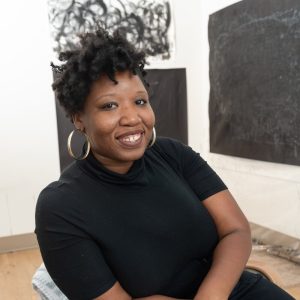 Statement
My name is Ashanté Kindle and I am a current MFA candidate at the University of Connecticut. I am writing to share my interest in an opportunity to serve on the Student and Emerging Professionals Committee. I recently had the opportunity to serve on the Diversity Equity and Inclusion Task Force for the School of Fine Arts at my university with a focus on students for my specific committee. Serving on the Student and Emerging Professionals Committee with CAA would allow me an opportunity to continue to serve other students and be surrounded by like-minded peers as well.
Adity Saxena
posted by CAA — December 03, 2021
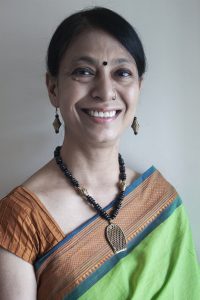 Statement
In the past 18 years of my professional journey, I have progressed from a design educator of a vocational training institution to a Dean of Woxsen School of Arts and Design, India. This journey created opportunities for me to understand several art forms in India and global, design communities and their challenges, design students from local communities, society’s perception about art education, and art as a profession are the areas I would like to bring to the Board.
I am a certified design thinker, and I would like to share my knowledge in the implication of the design process and how we can combine strategy and creativity to innovate and add value to society. The social role of art is one of the areas, interests me more.
My KRA as a Dean of Woxsen School of Arts and Design allows me to develop goals and strategic planning for the different committees of the university includes, lead and drive the research publications of the entire school. Contribute and regularly participate in IQAC activities to maintain the quality of the university’s external and internal stakeholders. This role involves understanding and implementation policies and monitors the progress. I am also responsible for leading many innovative initiatives to increase students’ employability by connecting academia and industry.
One of my significant roles is to initiate international collaborations with global universities. The Woxsen University has thirty partner universities across the globe. The main keywords of my role in internationalization are coordination, understanding the policy aspects of the universities in the context of diverse cultures and countries, and set goals. I have constantly been working on creating systems and processes in coordination with senior management. Inclusion of diversity in the school is another lead role required to understand the culture, people, policies, gender, race, politics in a local and global context.
Apart from my academic leadership and administration roles, I am also associated with the national and international Association. My role as an RJED India representative (Restorative Justice Education, a nonprofit, 501(c)(3) corporation) is to promote the practice of Restorative
Justice in Indian schools and colleges. This role challenges me to understand the global perspective of RJED and the implementation challenges in the Indian context (https://www.restorativejustice.com/team.html). In addition, I am responsible for resolving the conflict between the shared meaning of local people and international concepts. So, I feel that qualifies me to set policy as well as determine and monitor programs at CAA.
I found the essential duty of the board members is to provide a strategic direction to the inclusion of diversity in art. The inclusion and diversity vision of the association is one of the essential aspects that inspired me to show my interest in joining CAA. Thus, promoting CAA’s vision and mission in India motivates more art educators, artists, and critics to join the community. Promoting awareness to increase the diversity in the art and design industry includes educational institutions, people, parents, and groups with different cultures and ethnicities. To increase diversity, I propose that the Association recruit its members from different places with varied skills, experience, gender, and socio-economical levels.