CAA News Today
Meet the 2020 CAA-Getty International Program Participants
posted by CAA — November 14, 2019
We’re pleased to announce this year’s participants in the CAA-Getty International Program. Now in its ninth year, this international program supported by the Getty Foundation will bring fifteen new participants and five alumni to the 2020 Annual Conference in Chicago, Illinois.
The participants—professors of art history, curators, and artists who teach art history—hail from countries throughout the world, expanding CAA’s growing international membership and contributing to an increasingly diverse community of scholars and ideas. This year we are adding participants from four countries not included previously—Bolivia, Saudi Arabia, Côte d’Ivoire, and Singapore—bringing the total number of countries represented by the program to fifty. Selected by a jury of CAA members from a highly competitive group of applicants, the participants will receive funding for travel expenses, hotel accommodations, conference registration, CAA membership, and per diems for out-of-pocket expenditures.
At a one-day preconference colloquium, to be held this year at the School of the Art Institute of Chicago, the fifteen new participants will discuss key issues in the international study of art history together with five CAA-Getty alumni and several CAA members from the United States, who also will serve as hosts throughout the conference. The preconference program will delve deeper into subjects discussed during last year’s program, including such topics as postcolonial and Eurocentric legacies, interdisciplinary and transnational methodologies, and the intersection of politics and art history.
This is the third year that the program includes five alumni, who provide an intellectual link between previous convenings of the international program and this year’s events. They also serve as liaisons between CAA and the growing community of CAA-Getty alumni. In addition to serving as moderators for the preconference colloquium, the five alumni will present a new Global Conversation during the 2020 conference titled Things Aren’t Always as they Seem: Art History and the Politics of Vision.
The goal of the CAA-Getty International Program is to increase international participation in the organization’s activities, thereby expanding international networks and the exchange of ideas both during and after the conference. CAA currently includes members from sixty countries around the world. We look forward to welcoming the following participants at the next Annual Conference in Chicago.
2020 Participants in the CAA-Getty International Program
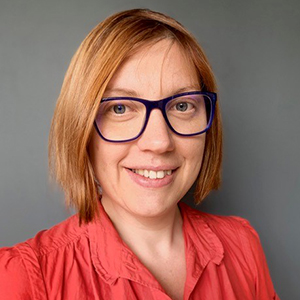
Irene Bronner is a senior lecturer with the South African Research Chair in South African Art History and Visual Culture, Faculty of Art, Design and Architecture, University of Johannesburg, South Africa. Her doctorate (DLitt et Phil), titled “Representations of Domestic Workers in Post-apartheid South African Art Practice,” was conferred by the University of Johannesburg in 2016. She then held a three-year postdoctoral research fellowship with the same institution, during which time she received a Postdoctoral Research Fellows’ Excellence Award. Her research interests center on feminist studies in the visual arts, with a focus on contemporary southern Africa. She works principally with feminist, queer and postcolonial cultural theory as well as issues of memory, affect, gender, and the aftermath of trauma. She has published in local and international journals, recently in Woman’s Art Journal and Textile: Journal of Cloth and Culture.
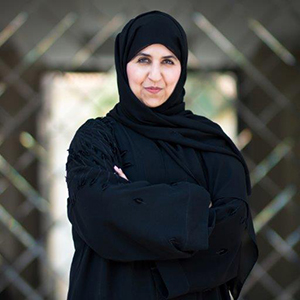
Eiman Elgibreen is an artist and an assistant professor of art history at the Princess Nourah bint Abdulrahman University in Riyadh, Saudi Arabia. She obtained a PhD in art history from the University of Sussex (UK) for her research on “Image Making: Representations of Women in the Art and Career of Safeya Binzagr 1968-2000.” Since 2011 Elgibreen has also been a freelance writer for Al-Riyadh Daily Newspaper and Al-Jazirah Daily Newspaper, and an art consultant for organizations that are concerned with preserving the legacy of Saudi pioneer artists such as Darat Safeya Binzagr (a museum devoted to the artist’s work), and Saudi Arts House (a family foundation devoted to the work of Mohammed Alsaleem). In addition, she has curated a number of art exhibitions, including the Saudi National Pavilion at the 58th Venice Biennale, 2019. Elgibreen is interested in exploring the forgotten and/or misrepresented aspects of Saudi and Arab culture through her research and her art. A goal of her work is to encourage acceptance of cultural differences.
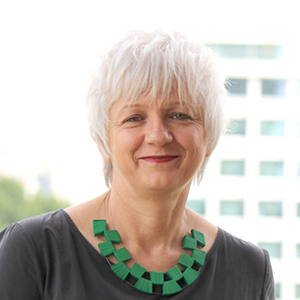
Dária G. Jaremtchuk is an associate professor of art history at the Universidade de São Paulo, Brazil, where she teaches undergraduate and graduate courses on contemporary art. As Fulbright Brazil Distinguished Chair at Emory University in 2019, she taught a course in the art history department about Brazilian contemporary visual arts. In 2018, she was a visiting scholar at Georgetown University and at Brown University in 2011. In 2010, she edited the book Arte e política: situações (Art and politics: situations) (Alameda Editora) and in 2007 she published Anna Bella Geiger: Passagens Conceituais (Anna Bella Geiger: conceptual passages) (C/Arte and Editora da Universidade de São Paulo). She is currently researching the relocation of Brazilian artists during the Brazilian military dictatorship of the 1960s and 70s and the artistic exchange between Brazil and the United States at that time. She has published on this topic in journals, conference proceedings, and book chapters.
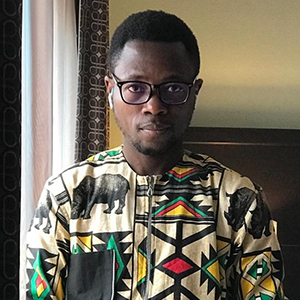
Ganiyu Jimoh received a PhD in art history from the University of Lagos, Nigeria, where he is also a lecturer. He is currently a postdoctoral fellow with the Arts of Africa and Global Souths research program in the Department of Fine Art at Rhodes University in South Africa. His research, which focuses on contemporary art, new media, satire, and cartoons has attracted major awards, including the prestigious University of Lagos Best Researcher Award in Arts and Humanities in 2011. In 2015 he received a grant to conduct research for his PhD dissertation at the African Studies Center at Michigan State University. Jimoh is also a recipient of the 2019 African Studies Association Presidential fellowship. As a scholarly writer who is also a practicing political cartoonist, Jimga (his cartoon signature) has several local and international exhibitions to his credit and currently serves as the secretary of Cartoonists Association of Nigeria (CARTAN).
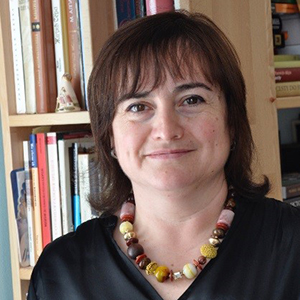
Mariana Levytska is a research associate in the Department of Art Studies of the Ethnology Institute at the National Academy of Sciences of Ukraine in Lviv. She received a PhD in the history of art from the Lviv National Academy of Arts in 2003. Based on her thesis, she published a monograph about Ukrainian portrait painting as an artistic and memorial phenomenon of the long nineteenth century. In addition, she has worked as a senior lecturer from 2005–14 and associate professor in 2015 at the Department of Architectural Environment Design in the Faculty of Architecture of the Lviv National Agricultural University. Levytska’s current area of research is Ukrainian religious art of the eighteenth century (late Baroque-Rococo period), focusing on the concept of cultural transfer according to “peripatetic works of art (such as engravings and albums)” as well as peripatetic artists. She is also interested in issues of Ukrainian historiography of the art of the twentieth century.
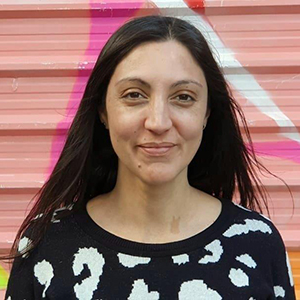
Daniela Lucena holds a PhD in social sciences from the University of Buenos Aires (UBA) and specialize in the sociology of art and culture. A researcher at the National Scientific and Technical Research Council (CONICET) in Buenos Aires, she teaches sociology of art courses at UBA, where she is also head of a research team. Since 2003 she has studied various aesthetical projects where art, culture, and politics are intertwined. Her books include Contaminación artística. Arte concreto, comunismo y peronismo en los años 40 (Artistic contamination: concret avant-garde, communism and Peronism in the 40s) (Biblios, 2015) and Modo mata moda. Arte, cuerpo y (micro)política en los 80 (Form kills fashion: art, body and [micro]politics in the 80s), coauthored with Gisela Laboureau, (EDULP, 2016). In addition to her work as researcher, since 2007 she has collaborated with PH15, a foundation that organizes photography workshops for children of vulnerable populations, assessing programs and community work linked to art.
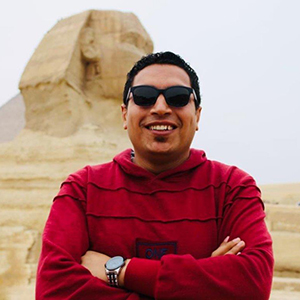
Ali Mahfouz is the director of the Mansoura Storage Museum, part of the Ministry of Egyptian Antiquities. He received a BA in 2010 and an MA in Egyptology in 2017, both from Mansoura University. He is currently working on his PhD. Mahfouz began working as an inspector of antiquities at the Ministry of Antiquities in 2012. In August 2015 he was appointed the supervisor of the Mansoura Storage Museum and in October 2018 he became its director. With colleagues, Mahfouz founded Save Mansoura, a volunteer organization dedicated to raising public awareness about the value of cultural heritage and the restoration of historic sites. He is also the cofounder of the Documentation of Architectural and Urban Heritage of Mansoura City Project, which aims to document, digitize, and archive that city’s cultural history. His greatest concern is the fate of archaeological sites damaged or destroyed because of political conflicts and the need to preserve his country’s cultural heritage in the wake of that destruction.
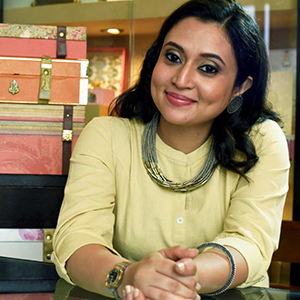
Priya Maholay-Jaradi is the founding convenor of a new art history academic program, a collaboration between the National University of Singapore (NUS) and the National Gallery Singapore. She earned an MA in art history from the School of Oriental and African Studies, London (2001); a PhD from NUS (2012), and a postdoctoral fellowship at the International Institute for Asian Studies, Leiden (2013). A former curator at the Asian Civilizations Museum, Singapore, she has curated Portrait of a Community (National Gallery of Modern Art, Mumbai, 2002), Beauty in Asia (Asian Civilizations Museum, Singapore, 2007) and Tautology of Memory (NUS Museum, Singapore, 2012). Jaradi’s monograph, Fashioning a National Art: Baroda’s Royal Collection and Institutions (1875-1924) (Oxford University Press, 2016), mobilizes provincial archives to reveal links between princely modernities and nationalisms in South Asia. She is the volume editor of Baroda: A Cosmopolitan Provenance in Transition (Marg Foundation, 2015). Her current research examines India-Singapore museological imaginations within the context of cold war diplomacy, the Non-Aligned Movement, and decolonization.
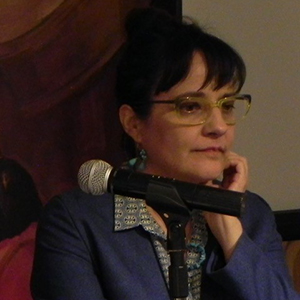
Valeria Paz Moscoso specializes in modern and contemporary Bolivian art history. She is the academic coordinator and advisor in the Department of Culture at the Universidad Católica Boliviana (La Paz), where she is also a temporary lecturer and editor of the journal Ciencia y Cultura (Science and culture). Her PhD dissertation examined the concept of repression and emancipation in the work of Bolivian artist Roberto Valcárcel. Currently, she is researching the disruption of the narrative of Indigenism in contemporary art. Additional research interests include gender, humor, critical theory, postcolonial studies, and arts-based research. She has curated exhibitions in Bolivia and the United Kingdom, and published in journals such as ESCALA Research Papers, Ciencia y Cultura, Bisagra (Hinge), Terremoto (Earthquake), and in the books Corrosión y Anomalía: escenas del arte contemporáneo boliviano (Corrosion and anomaly: scenes from contemporary Bolivian art) (2019) and Bolivia: Los caminos de la escultura (Bolivia: the paths of sculpture) (2009), a publication selected for the Bicentennial Library of Bolivia.
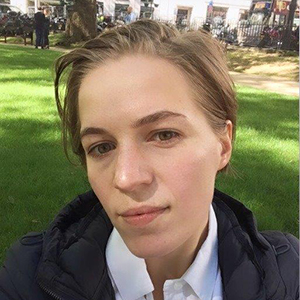
Daria Panaiotti is a photography curator and research associate in the Contemporary Art Department of the State Hermitage Museum, St. Petersburg, Russia. She graduated with honors from the European University in St. Petersburg (EUSPB), where she is currently completing her PhD with a dissertation on the history of Soviet documentary photography in Brezhnev’s era. She is also a member of the program committee of the After Post-Photography international conference, the only annual conference on photographic theory and history in Russia. Previously she was involved in the project In Support of Photography in Russia, funded by the IRIS Foundation, Moscow, where she was a member of the curatorial team that organized exhibitions of Russian photography for FotoFest 2012—an international photography festival held every two years in Houston, Texas—and where she also participated in an international portfolio review for Russian photographers at the Garage Center for Contemporary Culture in Moscow in 2011.
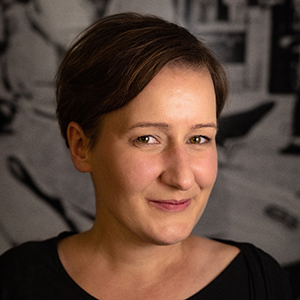
Aleksandra Paradowska is a lecturer and researcher in the Department of Art History and Philosophy, Faculty of Art Education and Curatorial Studies, at the University of Fine Arts in Poznań, Poland. After receiving a PhD from the Adam Mickiewicz University in Poznań in 2013, she was a postdoctoral fellow at the University of Wrocław from 2014–17. Her research focuses on architectural history of the nineteenth and twentieth centuries, especially the relationship between architecture and politics. For the past five years she has studied Nazi architecture in Polish territories during the Second World War in relation to different perspectives of the humanities, that is, interdisciplinary views of postcolonial and heritage studies. Paradowska has published widely on Polish interwar architecture and received several scholarships: from DAAD (Deutscher Akademischer Austauschdienst) in 2010, START by the Foundation for Polish Science in 2014, and a scholarship for leading young researchers in Poland by the Ministry of Science and Higher Education in 2017–19.
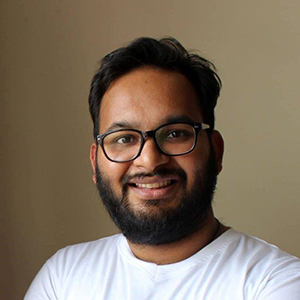
Saurabh Tewari received a BArch in 2008 from the Sushant School of Art and Architecture, Gurgaon/GGSIP University, Delhi (India), and a MDes in 2010 from the Industrial Design Center, Indian Institute of Technology Bombay. As a doctoral candidate in the Design Program at the Indian Institute of Technology Kanpur, he is attempting to map out and understand the shifting role of design in postcolonial India within the broader narrative of national development. Currently an assistant professor of design in the School of Planning and Architecture in Bhopal, Tewari has developed a curriculum that includes design history, design culture, and design studies. Ultimately, his goal is to develop South Asia’s first postgraduate program in design history and studies. He views his role in two ways: as a design historian in South Asia exploring and constructing scholarly approaches to design history, and as a South Asian scholar in the design history community voicing the potential of decolonized approaches to the field.
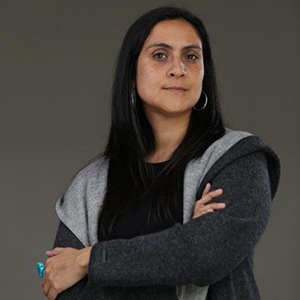
Giuliana Vidarte received a BA in Latin American literature and an MA in art history from the Pontificia Universidad Católica del Perú. In 2013 she was part of a curatorial intensive course in Northern Ireland organized by Independent Curators International (New York). In 2014 she received a travel grant to participate in the annual meeting of the International Committee for Museums and Collections of Modern Art (CIMAM) in Qatar. Between 2015–18, she was the curator of Bufeo: Amazonía+Arte, a project for the research and dissemination of Amazonian art. Vidarte has developed exhibition projects about the relationship between visual arts and literature, the rewriting of history based on the recovery of unofficial discourses, and artistic production in the Peruvian Amazon. Currently, she is chief curator and head of exhibitions at the Museo de Arte Contemporáneo in Lima (MAC Lima) and curatorial assistant for the Peruvian pavilion at the 58th Venice Biennale in 2019.
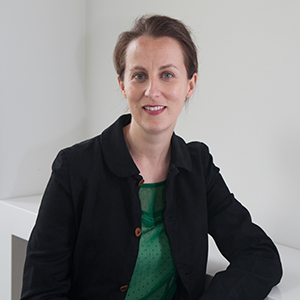
Julia Waite is the curator of New Zealand art at the Auckland Art Gallery Toi o Tāmaki, New Zealand’s largest art museum. She has worked on a number of large-scale exhibitions including the fifth Auckland triennial, If you were to live here . . . (2013) and Space to Dream: Recent Art from South America (2016). Her research interests are focused on the development of modern art in New Zealand and its connections with other peripheral modernisms. In 2015 she curated the exhibition Freedom and Structure: Cubism and New Zealand Art 1930–1960, which toured throughout New Zealand, and published an associated catalogue. She cocurated the major survey of New Zealand’s preeminent abstract painter Gordon Walters: New Vision, which opened at Auckland Art Gallery in 2018. Most recently, Waite has cocurated Louise Henderson: From Life, the first comprehensive retrospective of French-born New Zealand artist Louise Henderson. She has an MA in art history (First Class) and an MA in museum and heritage studies.
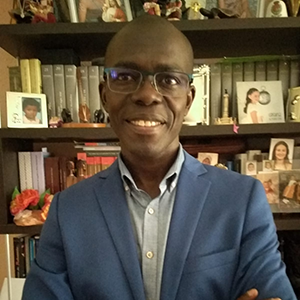
Jean-Arsène Yao received a PhD in Latin American history from the Universidad de Alcalá (Spain) in 2002. His scholarship focuses on teaching Spanish in the African Diaspora, particularly with blacks in Argentina. Currently professor of Latin America and Caribbean studies at the Université Félix Houphouët-Boigny (Côte d’Ivoire) and visiting professor at the Universidad de Alcalá and the Universidad de Granada (Spain), his teaching interests include Hispanic American culture and civilization; race, class, and ethnicity in Latin America; and Afro-Hispanic history. He has a special interest in the visual representation of people of African descent in art history and visual studies. Yao has conducted research in Argentina, Colombia, Cuba, Ecuador, and Uruguay. He has published widely, including five books, several book chapters, and over twenty articles in juried journals of research. Since 2016 he has been the founder-coordinator of the Group of Latin American Studies and Research (https://grelat-ufhb.org/).
Participating Alumni
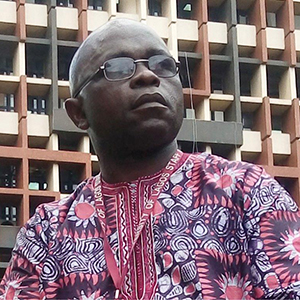
Abiodun Akande is a senior lecturer at the University of Lagos, Nigeria, where he teaches painting, art education, and art history. Akande earned a BA in fine arts from the Obafemi Awolowo University and received an MA and PhD in the visual arts of Africa from the Institute of African Studies, University of Ibadan, Nigeria. In 2013, he participated in the first Basel Summer School in African Studies at the University of Basel in Switzerland; he also attended a graduate symposium hosted by the School of Arts at Peking University in Beijing, China. Akande first participated in the CAA-Getty International Program in 2016 and returned the following year to participate in the 2017 CAA-Getty reunion program. His current research focuses on knowledge systems in the art and cultural practices of indigenous communities in Nigeria. A recent publication, “Ará òrun kìn-ìn kin-in: Òyó-Yòrùbá egúngún Masquerade in Communion and Maintenance of Ontological Balance,” (Genealogy, 3(1), 7, 2019) explores the Yòrùbá belief in life after death, and how the powers and spirits of the deceased are harnessed for the benefit of the living.
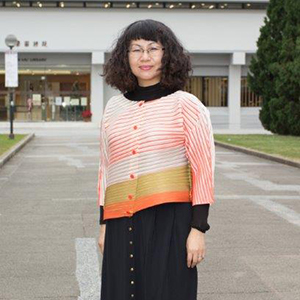
Pedith Chan is an assistant professor of Cultural Management in the Faculty of Arts at the Chinese University of Hong Kong. She received her PhD in Art and Archaeology from SOAS, University of London. Before joining the Chinese University of Hong Kong Chan was an assistant curator at the Hong Kong Museum of Art, and an assistant professor at the City University of Hong Kong. Her research interests focus on the production and consumption of art and cultural heritage in modern and contemporary China. Recent publications include The Making of a Modern Art World: Institutionalization and Legitimization of Guohua in Republican Shanghai (Leiden: Brill, 2017), “Representation of Chinese Civilization: Exhibiting Chinese Art in Republican China,” in The Future of Museum and Gallery Design (London: Routledge, 2018), and “In Search of the Southeast: Tourism, Nationalism, Scenic Landscape in Republican China,” (Twentieth-Century China, 2018). She is currently researching the making of scenic sites in modern China. Chan was a participant in the 2019 CAA-Getty International Program.
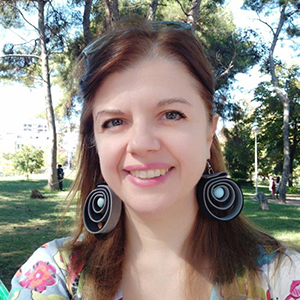
Iro Katsaridou has been the curator of modern and contemporary art at the Museum of Byzantine Culture in Thessaloniki, Greece since 2005. She studied art history at the Aristotle University of Thessaloniki and the Université Paris I-Sorbonne, and also pursued museum studies at the City University of New York. Her doctoral dissertation focused on contemporary Greek photography (Aristotle University, 2010). For the past six years Katsaridou has been researching photography and art in World War I and II, during which time she has curated exhibitions on the subject and edited related catalogues. For the last four years she has been teaching as an adjunct faculty member at several Greek universities. She has co-edited two books about photography during the Nazi Occupation of Greece (1941-1944) and written articles and book chapters on photography, exhibition display policies, as well as the relationship between contemporary Greek art and politics. In 2019, she participated in the CAA-Getty International Program.
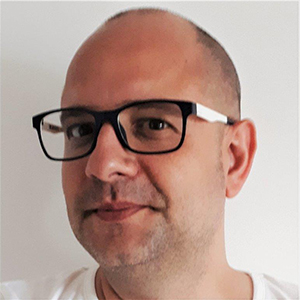
Cristian Nae is an associate professor at the George Enescu National University of Arts in Iași, Romania, where he teaches courses on contemporary art history, critical theory, visual and exhibition studies. He has benefited from scholarships and research grants from the Erste Foundation (Vienna), National Research Council, Romania (CNCS-UEFISCDI) , the CAA-Getty International Program, the Getty Foundation (Los Angeles), and New Europe College (Bucharest). His latest studies have appeared in collective volumes published by Wiley-Blackwell (2019, forthcoming) and Routledge (2018). Nae is the co-editor of Rethinking the Image of the World: Projects and Sketches. Contemporary Romanian Art 2010-2020 (Hatje Cantz, 2019, forthcoming). As a curator, he is the co-organizer of the exhibition Rethinking the Image of the World: Projects and Sketches (Musée Mill, La Louvrière, Belgium, 2019), which was part of the Europalia Arts Festival. Nae also curated Unfinished Conversations on the Weight of Absence, the exhibition marking Romania’s participation in the 58th Venice Biennale (2019). Nae participated in the first year of the CAA-Getty International Program, in 2012.
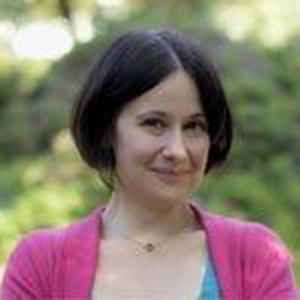
Nóra Veszprémi is a research associate for the European Research Council-funded project Continuity/Rupture: Art and Architecture in Central Europe 1918–1939 (CRAACE) at Masaryk University, Brno (Czech Republic). She is also an honorary research fellow at the University of Birmingham (UK), where she recently completed a project on museums in Austria-Hungary between 1867 and 1918. In 2014–15 she taught at the Institute of Art History at Eötvös Loránd University, Budapest (Hungary), where she also received her PhD in 2013. Veszprémi specializes in nineteenth- and early-twentieth-century Central European art. A former curator at the Hungarian National Gallery, she is the author of a monograph on romanticism and popular taste in mid-nineteenth century Hungary (in Hungarian) and co-author (with Matthew Rampley and Markian Prokopovych) of two forthcoming volumes on museums in Austria-Hungary: An Empire on Display: The Art Galleries and Museums of Austria-Hungary (Penn State University Press, 2020); and Liberalism, Nationalism and Design Reform in the Habsburg Empire: Museums of Design, Industry and the Applied Arts (Routledge, 2020). She is currently working on a monograph about historical memory in Central Europe after the collapse of the Habsburg Empire. Veszprémi was a 2015 participant in the CAA-Getty International Program.
International Review: A Centenary Celebration of Chilean Artist Nemesio Antúnez
posted by CAA — November 14, 2019
The following article was written in response to a call for submissions by CAA’s International Committee. It is by Sophie Halart, Professor of Art History at the Universidad Adolfo Ibañez, Santiago, Chile.
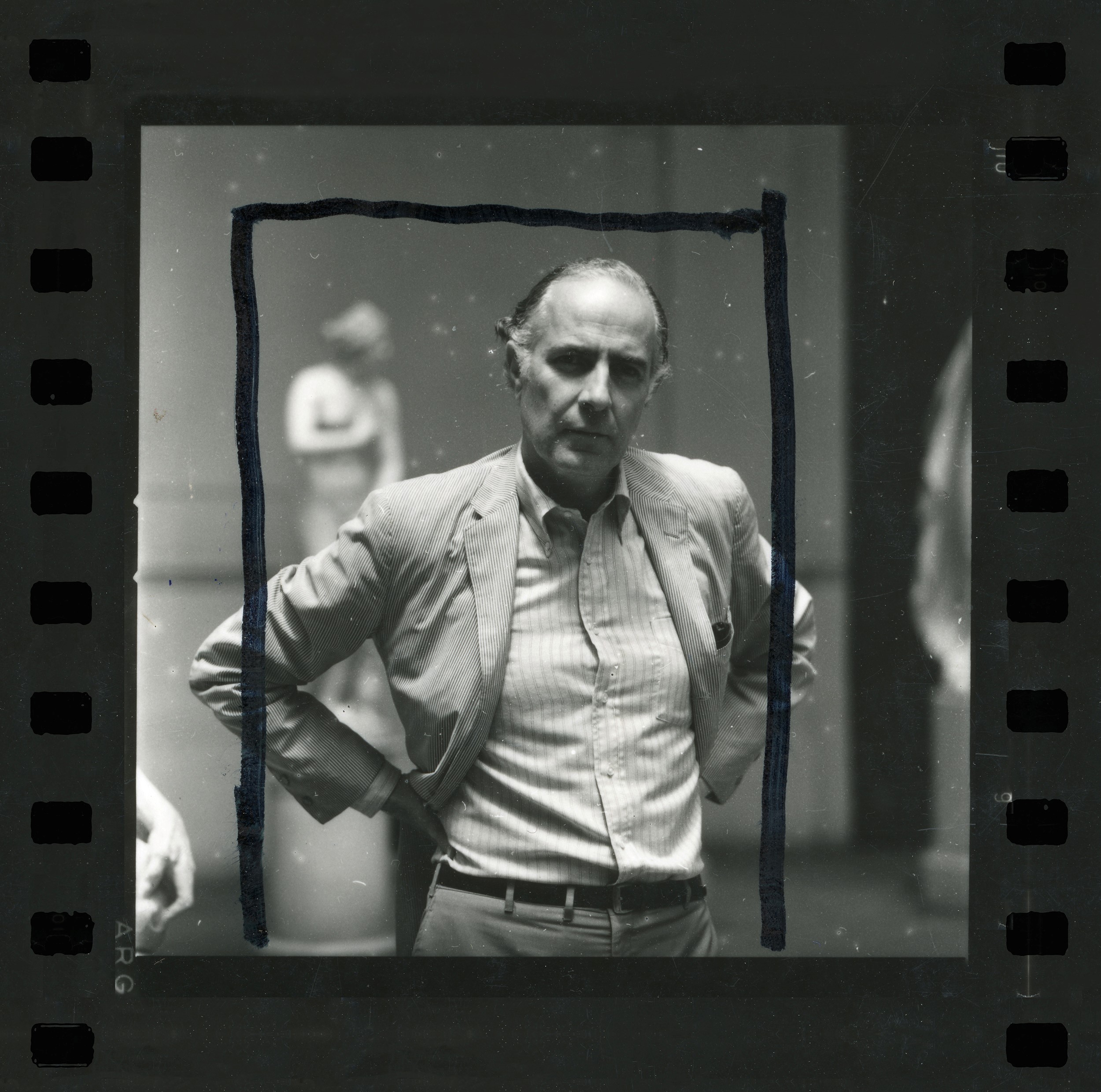
Figure 1. Promotional image of the Antúnez centenary celebration (photograph provided by the Ministerio de las culturas, las artes y el patrimonio)
In 2018-19, Chile celebrated the centenary of the visual artist, educator, and cultural figure Nemesio Antúnez (1918-93) (Fig. 1). The initiative, led by the family foundation in charge of Antúnez’s legacy, comprised several events, including roundtable discussions and archival and retrospective exhibitions throughout the country. In Santiago, the Museo de Bellas Artes (Fine Arts Museum) and the Museo de Arte Contemporáneo (Museum of Contemporary Art), two institutions whose very structure and mission were profoundly modified under Antúnez’s leadership, organized a series of three exhibitions, each focusing on one aspect of his prolific career.
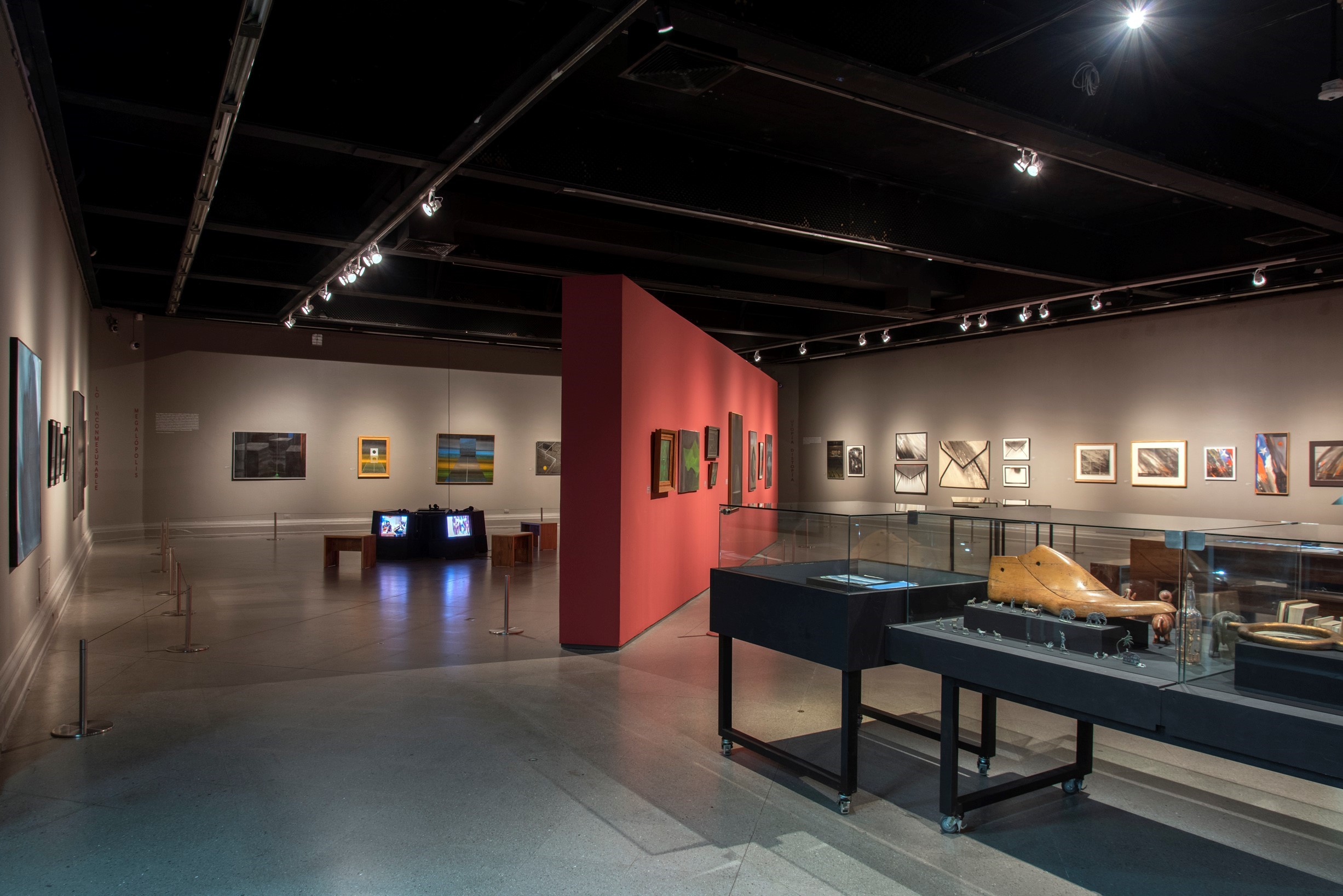
Figure 2. Manifiesto, installation view (photograph provided by the author)
The Museo de Bellas Artes hosted Manifiesto (Manifesto), a comprehensive retrospective of Antúnez’s artistic production (Fig. 2). Showcasing a selection of paintings, engravings, notebooks, and photographic archives, curator Ramón Castillo retraced both Antúnez’s international formation and his influence on the Chilean art scene. Initially trained as an architect in Chile, Antúnez secured a Fulbright grant in 1943 to study art in New York, where he attended Stanley William Hayter’s Atelier 17. Upon his return to Santiago in 1956, he founded his own engraving workshop, Taller 99, attended by important national artists like Roser Bru and Juan Downey. Antúnez’s interest in art education also led him to take part in the creation of the Universidad Católica’s School of Arts in 1959. Castillo’s exhibition offers an intimate gaze into Antúnez’s life and work, revealing the complexity of both. More importantly, the show considers the artist’s standing at the threshold of two epochs. A product of cosmopolitan modernity, Antúnez felt more acutely than most the changes that entry into the contemporary age would bring to Latin American art.
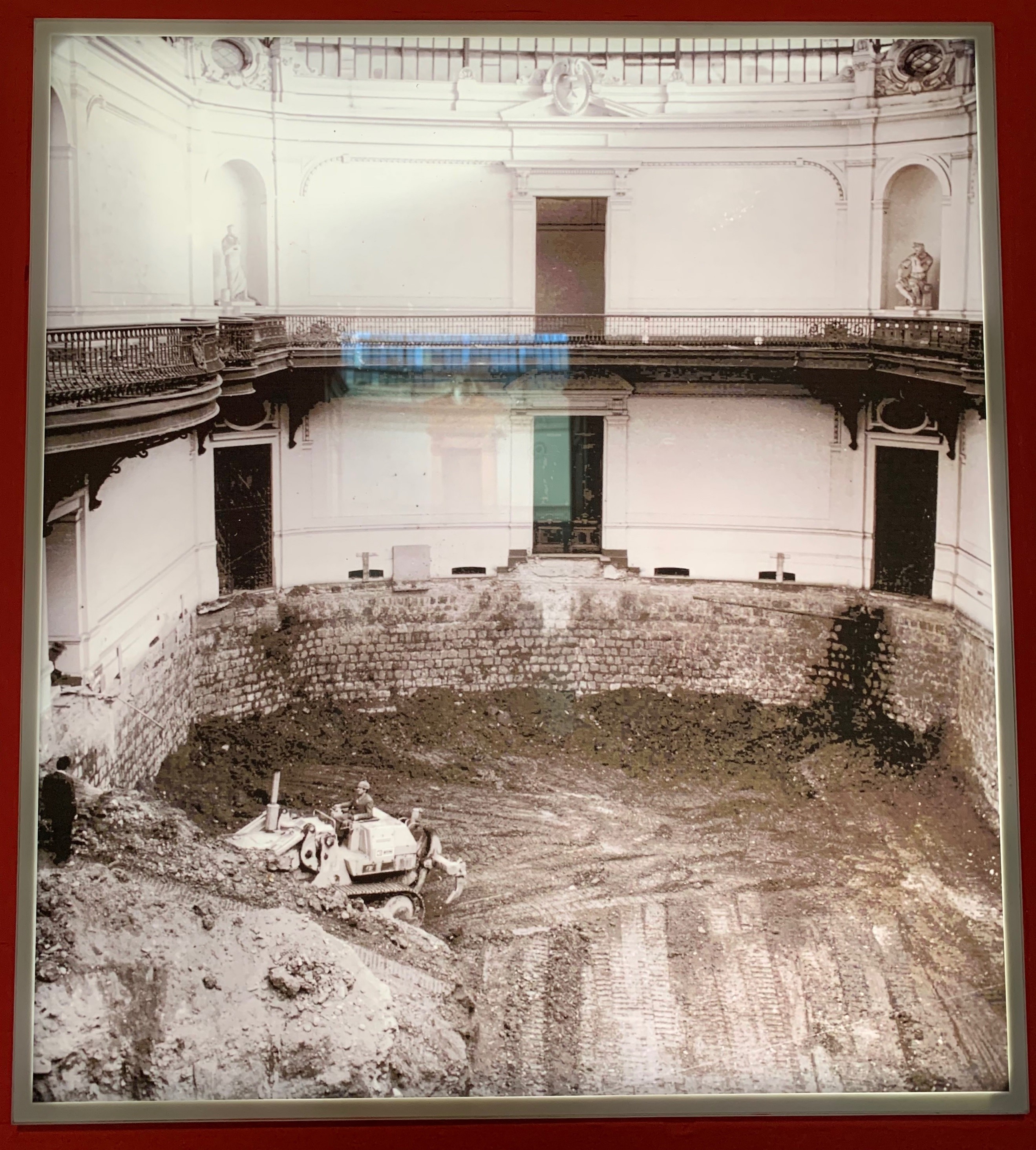
Figure 3. Construction of a lower ground floor at the Museo de Bellas Artes, Santiago (photograph provided by the author)
This temporal aspect of Antúnez is even more clearly evidenced in the second exhibition hosted by the museum. El Museo en Tiempos de Revolución (The museum in times of revolution), curated by Amalia Cross, examined the pivotal changes made by Antúnez when he became the Fine Arts Museum’s director in 1969. The appointment, which just preceded the presidential election of Socialist candidate Salvador Allende, reflected the implementation of an equally revolutionary agenda that sought to do away with the museum’s elitist image. Appealing to the etymological roots of the word museum, Antúnez opened the institution’s doors to a plurality of artistic media, including music and live performance, while striving to attract new, more diverse audiences. He also oversaw an important refurbishment of the building that included the construction of an additional, underground exhibition space dedicated to recent art (Fig. 3).
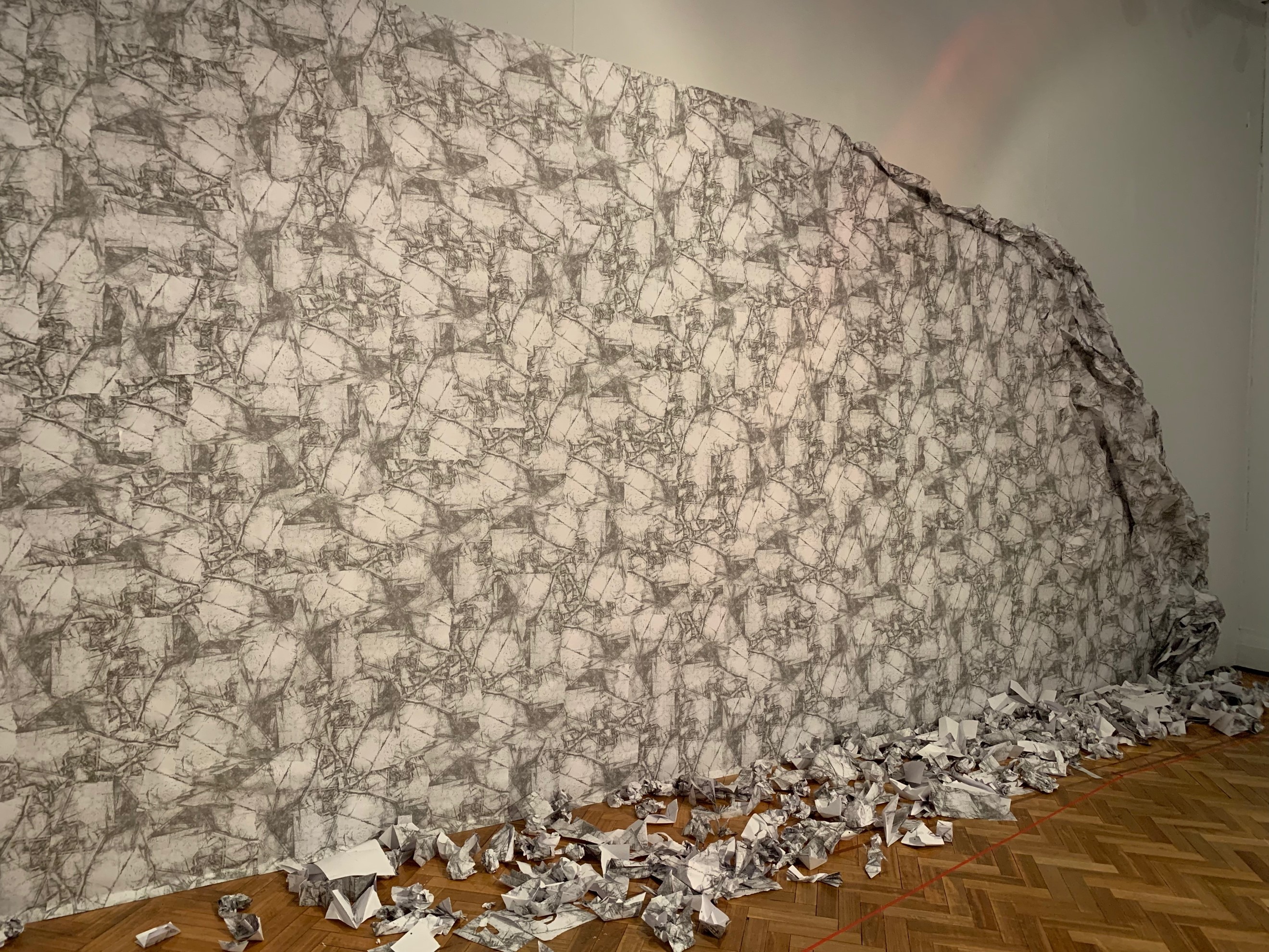
Figure 4. Liliana Porter, Wrinkle Environment, 1969. 2019 re-creation of the piece in the Museo de Bellas Artes, Santiago (photograph provided by the author)
While Antúnez shared some of the democratizing ideals of culture advocated by Allende’s government, his project to open the museum to new audiences and artistic practices—including an incipient conceptual scene—rejected strictly programmatic and propagandistic ends. Some memorable on-site interventions were performed under his tenure, including Juan Pablo Langlois’s Cuerpos Blandos (Soft bodies, 1969) and Cecilia Vicuña’s Otoño (Autumn, 1971), both pioneering the field of institutional critique in Chile. Through a display of archival documents and photographs, Cross’s curatorial work invites comparison of the infrastructural and conceptual modifications that took place in the museum. The exhibition also recreates an installation produced by Liliana Porter whom Antúnez had invited to exhibit in June 1969 along with Luis Camnitzer. A founding member of the New York Graphic Workshop (along with Camnitzer), Porter produced one of her “Wrinkled Environments,” a paper tapestry that covered the walls of the museum and which visitors were invited to modify by tearing away some of the sheets and discarding them on the floor (Fig. 4).
The 1973 military coup, which took place on the eve of an exhibition on Mexican muralism due to open a few days later, put an abrupt end to this period of political and artistic experiments and sent Antúnez into European self-exile. The return of a democratic government in 1990 allowed him to resume his work as director of the museum, a position he occupied until his death three years later.
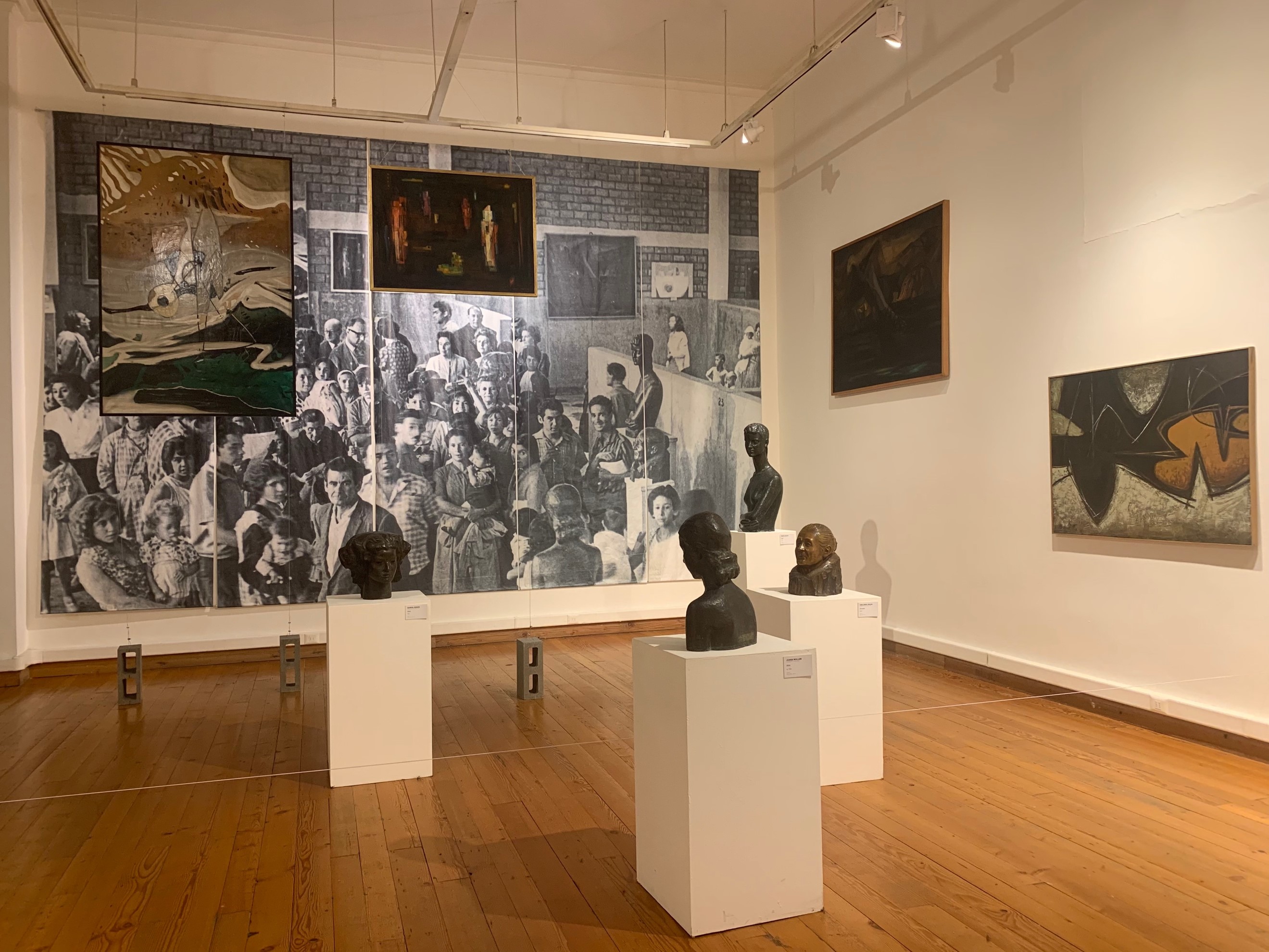
Figure 5. Nemesio Antúnez: Panamericano, installation view (photograph provided by the author)
While these first two exhibitions focused on Antúnez during his time as director of the Bellas Artes, the show Nemesio Antúnez: Panamericano, which took place in the adjoining building of the Museo de Arte Contemporáneo (MAC), focused on a previous and lesser-known period of Antúnez’s professional life, namely his tenure as director of that museum (1962–64) and his influential role in rethinking contemporary artistic creation along transdisciplinary and cross-regional lines. (Fig. 5). According to the show’s curator Matías Allende, Antúnez remains a ghostly figure in the MAC, his vision haunting an institution which, when it opened in 1946, was the first museum of contemporary art in Latin America. Allende’s research focuses on the way Antúnez contributed to rethinking contemporary creation along three axes: the national, the popular, and the American. Indeed, while the off-site events he staged in modest neighborhoods of Santiago revealed an early ambition to democratize art, the organization of the first Biennial of American Printmaking (1963) showed Antúnez’s desire to build a bridge between avant-garde art and popular crafts on a continental scale. Moreover, using the connections he had made while studying in the US, his acquaintance with Alfred Barr in particular, Antúnez also piloted the organization of exhibitions comprised of works on loan from MoMA’s permanent collection. In this exhibition, Allende opted for a densely documented installation that could be overwhelming at times. Thankfully, this encyclopedic fervor was offset by the presence of short videos the curator commissioned from the video artist Flavia Contreras. Somewhat dramatizing Antúnez’s aura as an educator, these videos were fictional recreations of the cultural TV program Ojo con el arte (Watch out with the art) that Antúnez hosted for two seasons on national TV (in 1970–71 and for a second run between 1990 and 1993).
While the three exhibitions discussed above were products of independent research and curatorial planning, each of which focused on one facet of Antúnez, they may also be understood as part of a collective portrait enriching the prolific and multifarious contributions he made to Chilean art and cultural life. At the same time, the pivotal role played by the private Fundación Nemesio Antúnez in the planning of the centenary, an organization founded and directed by relatives of the artist, also begs the question of the public sector’s passivity in providing official recognition to one of Chile’s most important cultural figures. While the Fine Arts Museum, a state entity, and the MAC, a university institution that also relies on public support, did eventually take an active part in the celebration, the delays that occurred in the opening of the exhibitions were due in part to an initial lack of enthusiasm on the part of the State. Thus, while the exhibitions comprising the backbone of the centenary celebrations must be praised for their quality, they also highlight the problematic absence of public funding for culture in Chile and the ways in which the writing of art historical narratives continue to be relegated to the goodwill of private institutions and family estates.
RAAMP Coffee Gathering: My Gallery Is Bigger Than Your Gallery
posted by CAA — November 13, 2019
Coffee Gathering: My Gallery Is Bigger Than Your Gallery
 On Thursday, November 21, 2019 at 2 PM (EST) RAAMP will be online with Michael Dickins, the curator and director of The New Gallery at Austin Peay State University. He will talk about the campus plan he created which enables him to share the gallery’s collection in the university’s community spaces.
“My formal gallery is 1500 sq. Ft,” writes Dickins. “My actual gallery is 186 acres of surrounding campus. I list my Gallery as my primary residence, but the rest of my campus is my second home, or better yet, a cultured land that includes some of my favorite vacationing spots.”
“I often use academic buildings, student common areas and the campus landscape to install works of art to not just boost the presence of the Department of Art+Design around campus, but as extensions of the gallery to educate students and the campus community about art and to generate conversations. These installations of artworks have bred collaboration between departments, administration and, more importantly, the facilities and grounds crews. They have also been excellent teaching opportunities for my students to learn about curating, installation, collaboration and managing red tape.”
To RSVP to this online coffee gathering, please email Olivia Knauss at oknauss@collegeart.org
RAAMP Coffee Gatherings are monthly virtual chats aimed at giving participants an opportunity to informally discuss a topic that relates to their work as academic art museum professionals. Learn more here.
Submit to RAAMP
RAAMP (Resources for Academic Art Museum Professionals) aims to strengthen the educational mission of academic art museums by providing a publicly accessible repository of resources, online forums, and relevant news and information. Visit RAAMP to discover the newest resources and contribute.
RAAMP is a project of CAA with support from The Andrew W. Mellon Foundation.
News from the Art and Academic Worlds
posted by CAA — November 13, 2019
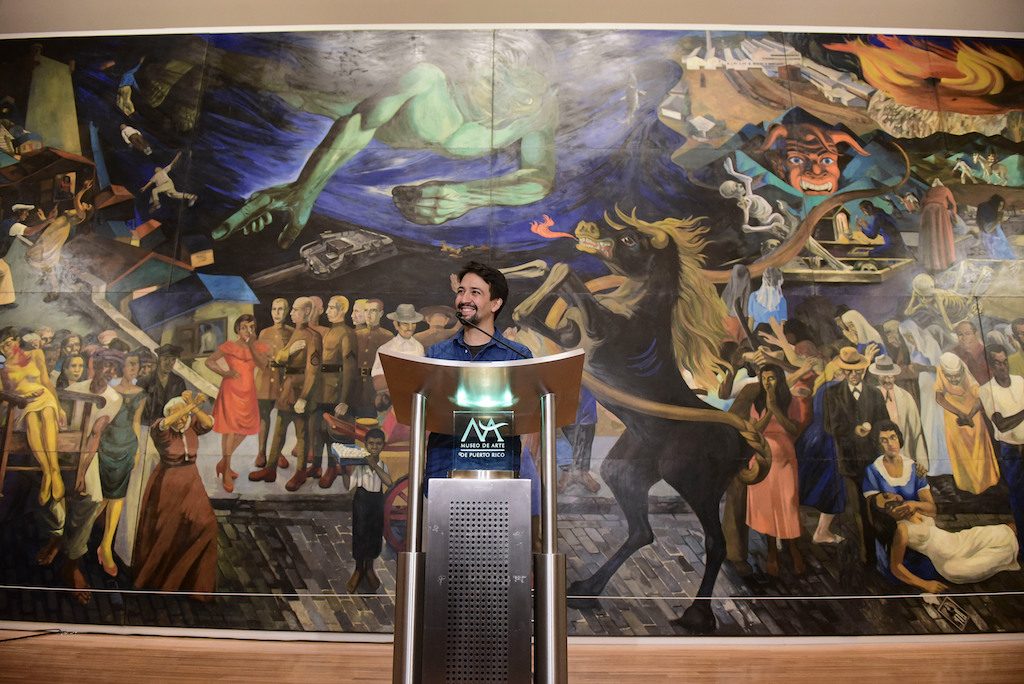
Lin-Manuel Miranda at the Art Museum of Puerto Rico in San Juan, Puerto Rico, in 2018. Photo: Carlos Giusti/AP/Shutterstock, via ARTnews
Lin-Manuel Miranda Teams Up with Google for Major Art Digitization Project in Puerto Rico
The collaboration was formed after Miranda’s recent visit to the Instituto de Cultura Puertorriqueña in San Juan, which currently lacks a permanent space for exhibitions. (ARTnews)
What’s Next for Nonprofit Museums after the Closing of the Marciano Art Foundation?
The museum abruptly closed last week after laying off dozens of employees attempting to unionize, and now faces a charge from the National Labor Relations Board. (Los Angeles Times)
Here’s How to Make Your Teaching More Inclusive
Incorporate these practical steps into your teaching to minimize inequities and help more students succeed. (Chronicle of Higher Ed)
MoMA’s Revisionism Is Piecemeal and Problem-Filled: Feminist Art Historian Maura Reilly on the Museum’s Rehang
“Does Ringgold need to be linked with Picasso to validate her genius?” (ARTnews)
Want articles like these in your inbox? Sign up:
Deadline extended! Annual Conference Committee Seeks Members
posted by CAA — November 12, 2019
CAA invites nominations and self-nominations for two at-large members of the Annual Conference Committee to serve a three-year term. Terms begin February 2020, immediately following the 108th Annual Conference.
The Annual Conference Committee, working with the CAA Programs Department, selects the sessions and shapes the program of the Annual Conference. The committee ensures that the program reflects CAA’s goals for the conference, namely, to make it an effective place for intellectual, aesthetic, and professional learning and exchange; to reflect the diverse interests of the membership; and to provide opportunities for participation that are fair, equal, and balanced.
The Annual Conference Committee meets during the conference and at the call of the program chair and vice president for Annual Conference. Committee members also serve to support sessions comprised of individual papers and projects where a formal chair has not been identified.
Please send a 150-word letter of interest and a CV to Mira Friedlaender (mfriedlaender@collegeart.org), CAA manager of annual conference.
Deadline (extended): February 18, 2020
Announcing N. Elizabeth Schlatter as President-Elect of CAA
posted by CAA — November 11, 2019
 We’re delighted to announce that N. Elizabeth Schlatter was elected at our October Board meeting as the new President of the CAA Board of Directors. She will succeed Jim Hopfensperger and serve a two-year term beginning May 1, 2020.
N. Elizabeth Schlatter is Deputy Director and Curator of Exhibitions at the University of Richmond Museums, Virginia. A museum administrator, curator, and writer, she focuses on modern and contemporary art and on topics related to curating and issues specific to university museums. At UR, she has curated more than 20 exhibitions, including recent group exhibitions of contemporary art such as “Crooked Data: (Mis)Information in Contemporary Art,” “Anti-Grand: Contemporary Perspectives on Landscape,” and “Art=Text=Art: Works by Contemporary Artists,” She also serves on and chairs various University and School of Arts & Sciences committees. Prior to the University of Richmond, she worked with exhibitions at the Smithsonian Institution Traveling Exhibition Service (SITES) in Washington, D.C, and in fundraising at the Contemporary Arts Museum, Houston. She is author of Museum Careers: A Practical Guide for Novices and Students (Left Coast Press, Inc.) and a contributor to A Life in Museums: Managing Your Museum Career (American Association of Museums). She has a B.A. in art history from Southwestern University in Texas, and an M.A. in art history from George Washington University.
Prior to this elected position, Schlatter was completing a 4-year term as a CAA board member, elected in February 2016. During that time, she served as Vice President for Annual Conference for two years, and in 2019 she served on the Nominating Committee and the Strategic Plan Task Force. She jointly initiated and assisted with the development of CAA’s Resources for Academic Art Museums Professionals (RAAMP), and prior to joining CAA’s board, she was chair of the Museum Committee.
Art Journal / Art Journal Open (AJO) Editorial Board Seeks New Members
posted by CAA — November 11, 2019
CAA invites nominations and self-nominations for two individuals to serve on the Art Journal / AJO Editorial Board for a three-and-one-half-year term: January 1, 2020–June 30, 2023 Candidates may be artists, art historians, art critics, art educators, curators, or other art professionals; institutional affiliation is not required. Art Journal, published quarterly by CAA, is devoted to twentieth- and twenty-first-century art and visual culture. AJO is an online forum for the visual arts that presents artists’ projects, conversations and interviews, scholarly essays, and other forms of original content. Committed to fostering new intellectual exchanges in the fields of modern and contemporary art, AJO prioritizes material that makes meaningful use of the web and publishes on a rolling basis.
The editorial board advises the Art Journal and AJO editors-in-chief and assists them in seeking authors, articles, artists’ projects, and other content for the journal; performs peer review and recommends peer reviewers; guides the journals’ editorial programs and may propose new initiatives for them; promotes and advocates for both journals; and may support fundraising efforts on their behalf. Members also assist the editors-in-chief to keep abreast of trends and issues in the field by attending and reporting on sessions at the CAA Annual Conference and other academic conferences, symposia, exhibitions, and events.
The Art Journal / AJO Editorial Board meets three times a year, with meetings in the spring and fall plus one at the CAA Annual Conference in February. The fall and spring meetings are currently held by teleconference. Members are expected to pay travel and lodging expenses to attend the conference in February. Members of all editorial boards volunteer their services to CAA without compensation.
Candidates must be current CAA members in good standing and should not be serving on the editorial board of a competitive journal or on another CAA editorial board or committee. Members may not publish their own work in the journals during the term of service. CAA encourages applications from colleagues who will contribute to the diversity of perspectives on the Art Journal / AJO Editorial Board and who will engage actively with conversations about the discipline’s engagements with differences of culture, religion, nationality, race, gender, sexuality, and access. Nominators should ascertain their nominee’s willingness to serve before submitting a name; self-nominations are also welcome. Please send a letter describing your or your nominee’s interest in and qualifications for appointment, a CV, and your contact information to Joan Strasbaugh, Managing Editor, at JStrasbaugh@collegeart.org or c/o CAA, 50 Broadway, 21st floor, New York, NY 10004.
Deadline: Sunday, December 8, 2019
Chalice Mitchell and Charlotte Brisland
posted by CAA — November 11, 2019
The weekly CAA Conversations Podcast continues the vibrant discussions initiated at our Annual Conference. Listen in each week as educators explore arts and pedagogy, tackling everything from the day-to-day grind to the big, universal questions of the field.
CAA podcasts are on iTunes. Click here to subscribe.
This week, Chalice Mitchell and Charlotte Brisland discuss painting and relationships to public and private audiences.
Chalice Mitchell is an independent scholar, figurative painter, and occasional video artist who has just relocated back to the United States after living in Japan and the UK.
Charlotte Brisland is an associate lecturer in drawing and painting at University of the Creative Arts in the UK, and an artist borrowing painting’s language and playing with everyday landscape using light and space.
Chalice and Charlotte first met in Japan at a residency.
New in caa.reviews
posted by CAA — November 08, 2019
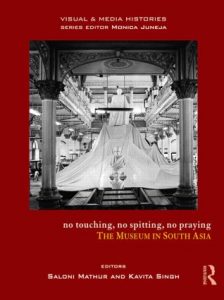
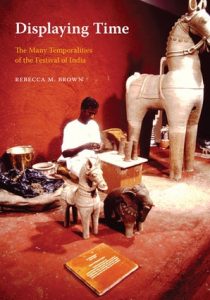
Atreyee Gupta reviews No Touching, No Spitting, No Praying: The Museum in South Asia, edited by Saloni Mathur and Kavita Singh, alongside Displaying Time: The Many Temporalities of the Festival of India by Rebecca M. Brown. Read the full review at caa.reviews.
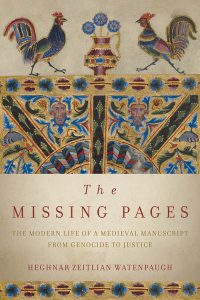
Stephennie Mulder writes about Heghnar Zeitlian Watenpaugh’s volume The Missing Pages: The Modern Life of a Medieval Manuscript, from Genocide to Justice. Read the full review at caa.reviews.
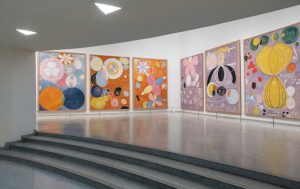
Elizabeth Berkowitz considers Hilma af Klint: Paintings for the Future, formerly on view at the Solomon R. Guggenheim Museum. Read the full review at caa.reviews.
Juliette Milbach discusses the Tate Britain exhibition Aftermath: Art in the Wake of World War One. Read the full review at caa.reviews.
Affiliated Society News for November 2019
posted by CAA — November 07, 2019
Affiliated Society News shares the new and exciting things CAA’s affiliated organizations are working on including activities, awards, publications, conferences, and exhibitions.
Interested in becoming an Affiliated Society? Learn more here.
Mid-America College Art Association
The Mid-America College Art Association is seeking to add a board member position to assist with financial aspects of the organization. The Association is an all-volunteer, national organization in the process of shaping a five-year plan (and beyond!) The Board meets once per month via ZOOM online meetings. If interested, please contact: Heather Hertel at heather.hertel@sru.edu.
American Society of Appraisers
Introduction to the Chinese Art Market, Challenges and Opportunities
Wednesday, February 5, 2019 | Webinar| 1:00pm – 3:00pm ET | $79 members; $119 non-members
In the past 20 years, the Chinese art market has grown dramatically, tracking the expansion of the Chinese economy, which is now the world’s second largest. This webinar will provide an overview of the socio-economic forces behind its dramatic growth and headline making prices at auction, and the challenges of appraising and advising on Chinese art. According to Artprice, since 2006, China has consistently been in the top three global art markets and is the largest in Asia. Some sectors are booming with prices often wildly exceeding auction high estimates, while others have stayed the same or declined. Drawing on more than twenty-five years in the field of Chinese art as an art historian, educator and appraiser, the presenter will address the following: the factors behind the growth of certain sectors, the role of mainland Chinese collectors and Chinese auction houses in driving the market, why the IRS will not accept realized sales from Chinese auction houses, the industry of fakes and forgeries of Chinese painting, sculpture, ceramics among other works of art and its impact on the market.
To see more upcoming ASA webinars and classes, click here.
William Morris Society in the United States
The William Morris Society in the United States is sponsoring two sessions at the Modern Language Association convention in Seattle on January 11 and 12, 2020.
Our first session, “Re-evaluating the Pre-Raphaelites,” examines how recent exhibitions have reassessed Pre-Raphaelite art and design, from William Holman Hunt and the Pre-Raphaelite Vision at the Manchester Art Gallery in 2009 to the traveling exhibition Victorian Radicals: From the Pre-Raphaelites to the Arts and Crafts Movement at venues through 2021. These displays have positioned the intersection of art, design, and literature as defining features of the Pre-Raphaelites and the Arts and Crafts movement, marking them as both “avant-garde” and deeply engaged with the past.
Our second session, “Ecosocialism and the Late Victorians,” is co-sponsored with the Association for the Study of Literature and Environment and addresses how the late nineteenth century saw artists and writers, including Morris, plant the seeds of ecological concerns in socialist politics, leading to innovative approaches to both environmental and socialist ideas.
Interested attendees who are not members of MLA may obtain guest passes by contacting kellyann.fitzpatrick@gmail.com
For paper abstracts, panelists, and scheduling information, see http://www.morrissociety.org/MLA2020sessions.pdf
Society of Architectural Historians
The Society of Architectural Historians (SAH) and University of Virginia Press are pleased to announce a new open-access, mobile-friendly edition of SAH Archipedia, an authoritative online encyclopedia of the built environment of the United States developed by SAH and Rotunda, the Press’s digital imprint, with lead funding from the National Endowment for the Humanities: sah-archipedia.org. The newly redesigned SAH Archipedia brings peer-reviewed scholarship to a worldwide audience of researchers, students, teachers, preservation advocates, cultural tourists and others interested in learning more about the architectural history of the U.S.
SAH will offer 36 paper sessions at its 2021 Annual International Conference in Montréal, Québec, Canada. The Society invites individuals and those representing SAH chapters and partner organizations to submit a session proposal for the Montréal conference. SAH membership is required to chair or present research at the annual conference; non-members who are selected to chair a session will be required to join SAH in August 2020. Session proposals covering every time period and all aspects of the built environment, including landscape and urban history, are encouraged. Session proposals are due January 14, 2020.
In a joint program with the Athenaeum of Philadelphia, SAH is pleased to offer the Charles E. Peterson Fellowship that will support the participation of a graduate student in the research and writing for a volume in the Buildings of the United States (BUS) series and/or SAH Archipedia. The recipient will research some aspect of American architecture prior to 1860, which they may choose from a list of topics provided by authors of forthcoming BUS books. The fellowship is intended for students currently enrolled in graduate programs in art or architectural history, architectural design, urban planning, historic preservation, landscape architecture, American studies, or related disciplines. The application deadline is January 6, 2020.
Historians of Islamic Art Association
CFP: Regime Change
University of Michigan
Ann Arbor
10.29–11.01.20
The aim of this conference is to focus on moments of “regime change” in Islamic art history and to also direct attention to “regimes” that structure our own field, raising questions of interpretation and method. We invite new research focusing on art and architecture after clear political ruptures (e.g., invasion, occupation, conversion); on the replacement of one symbolic order with another (e.g., public inscriptions in the urban space, changes in sartorial codes, new gender norms); and on the transfer of resources (e.g., artists, objects, libraries, treasuries) from one power to another. We also invite panels and papers that explore the potentials and pitfalls of new interpretive and methodological approaches to core questions about objects, material, and images, in both the academy and the museum.
Call for Papers
The submission deadline for pre-organized panels and single papers is December 1, 2019. For single papers, please submit as a single attachment a one-page CV and a paper abstract of no more than 250 words. For pre-organized panels (three or four papers), please submit as a single attachment one-page CVs for all speakers, and the panel abstract and individual abstracts, each no more than 250 words.
Please submit panels and papers to Christiane Gruber, Organizer (cjgruber@umich.edu). All other queries may be directed to Bihter Esener, Managing Organizer (besener@umich.edu).
Accepted speakers must be HIAA members in good standing by the time of the symposium. Speakers will have their travel expenses and accommodation covered by the University of Michigan and HIAA.
The 2020 HIAA Symposium Committee:
Christiane Gruber, organizer
Anneka Lenssen, Michael Chagnon, and Alain George, committee members
ACASA
ACASA Triennial 2020 Program Preview
ACASA 18th Triennial Symposium on African Art, June 17 – 21, 2020
The ACASA 18th Triennial Symposium on African Art will take place at DePaul University and the Art Institute of Chicago, June 17-21, 2020. This is the preliminary program:
Tuesday, June 16
Conference Registration, DePaul University Center
Wednesday, June 17
Museum Day and Reception, the Art Institute of Chicago. Separate registration required
Thursday-Sunday, June 18-21, 8am-5pm
Conference Panels, DePaul University Center
Thursday evening, June 18
Evening Reception at the Block Museum, Northwestern University
Friday evening, June 19
Awards Ceremony and Keynote Lecture by Koyo Kouoh, Executive Director and Chief Curator of Zeitz MOCA, the Art Institute of Chicago
Saturday, June 20, 5-9pm
Dinner and Dance Party, DePaul Student Center
For more and detailed information and registration, see:
ACASA website
Women’s Caucus for Art
Women’s Caucus for Art 2020 conference has a theme of Intersectionality
This conference, centered at Columbia College and concurrent with CAA, includes a wide range of panels and workshops.
The WCA 2020 President’s Award for Art and Activism will be given to Rose B. Simpson, a mixed-media artist, whose work addresses the emotional and existential impacts of living in the 21st century, an apocalyptic time for many analogue cultures. Her figures are often powerful matriarchs or elusively androgynous empaths who channel the spirits of high art, hiphop, lowrider attitudes, and long-lost ancestors of all kinds. Simpson’s work will also be discussed by Alicia Harris in the CAA panel on Inappropriate Bodies: Art, Design, and Maternity.
WCA has a new LGBTQIA+ Committee. Those interested in joining should contact the chair, Emily Getsay: getsay.emily@gmail.com
There are two national juried exhibitions on view during the conference, February 12-16: “Collectively Shifting,” Cecilia Vargas, juror, at Bridgeport Art Center and “Intersectional History,” Donna M. Weeks, juror at Woman Made Gallery.
American Institute for Conservation
We’re looking forward to our 2020 Annual Meeting in Salt Lake City! The theme is “Conservation – Reactive and Proactive.” Registration is now open! The full program schedule will be available shortly, so please continue to check our site for updated information.
Conservators play a vital role in protecting and preserving the objects and places that tell the story of our lives, history, and society. Become a Friend of Conservation and make sure our past has a future.
If you are interested in learning more about conservation and supporting the essential work performed by conservators, or want exclusive insights into conservation, including tips on preserving personal collections, learn about the benefits of being a Friend: www.culturalheritage.org/friends.
Historians of German, Scandinavian, and Central European Art and Architecture (HGSCEA)
HGSCEA is now accepting submissions for the Society’s 8th Annual Emerging Scholars Essay Prize, an award of $500 given annually to the author of a distinguished article or essay published the preceding year on any topic in the history of German, Scandinavian, or Central European art, architecture, design, or visual culture. Submissions, which must be in English and may be from electronic or print publications, must have a publication date of 2019. Applicants must be either current Ph.D. students or have earned a Ph.D. in or after 2015, and must be members of HGSCEAat the time of application. The deadline for submissions is 16 December 2019.
The Board is also seeking nominations and self-nominations for election to the HGSCEA Board for a three-year term to begin February 2020. Candidates for four at-large Board Members as well as for four Board Officers are all welcome. Each of HGSCEA’s three areas – Germany, Scandinavia, and Central Europe – should have at least one representative on the Board and candidates from all three of these areas are currently sought. Any member of HGSCEA in good standing may seek election to the Board. The deadline for nominations is 25 November 2019.
For more information on how to join HGSCEA, on the responsibilities of Board members, and how to submit materials either for the publication prize or for the election, please go to the HGSCEA website: http://hgscea.org/
Renaissance Society of America
RSA Travel, Diversity, and On-Site Care Grants
The Renaissance Society of America will hold its Annual Meeting in Philadelphia April 2-4, 2020. RSA members are invited to apply for travel, diversity, and on-site care grants. Each grant has a separate application with different requirements. Applications for conference grants are now live and can be found here. The deadline for all grant applications is December 3, 2019. Haven’t registered for the conference yet? Here is the link.
Day of Digital Learning
The RSA is pleased to offer a Day of Digital Learning on Sunday, 5 April 2020, the day after our Annual Meeting in Philadelphia (April 2-4, 2020). A tentative course list is now available to view. Signup will begin in January.
Innovative Teaching Grant Winners Announced
The RSA is pleased to announce our Grants in Support of Innovative Teaching of Renaissance Studies to High School Students will fund two projects this year. One examines the historiography of Spanish Arizona and the other highlights an inclusive Shakespeare curriculum. RSA President Clare Carroll announces our winners.
Renaissance Quarterly Open Access
The Editors of Renaissance Quarterly are pleased to provide complimentary access to two collections of articles from the journal, one relating to Islam and the Middle East and the other on The Americas.
SOCIETY OF HISTORIANS OF EASTERN EUROPEAN, EURASIAN, AND RUSSIAN ART AND ARCHITECTURE (SHERA)
The Board of the Society of Historians of Eastern European, Eurasian, and Russian Art and Architecture (SHERA) is pleased to announce that Anna (Ania) Paluch of Carleton University has been awarded the SHERA Graduate Student or Independent Scholar Travel Grant to attend and present at the 108th CAA Annual Conference in 2020. She will be delivering a paper entitled “From Turtle Island to Vistula’s Shores: Indigenous and Slavic Futurisms in Dialogue” as part of the panel “The Present of the Future: Indigenous Futurisms in the Visual Arts” (Saturday, February 15, 2:00 – 3:30 PM in Continental B, Lobby Level). Paluch examines “the use of oral stories, memories, history, and cultural survivance within pop culture, contact zones, Native and Slavic Slipstreams and oral stories/legends as sci-fi (SF) narratives within Indigenous Futurism and Slavic Futurism, and how these genres are connected through those concepts.”
The SHERA-sponsored panel “Freezes and Thaws in the Socialist Bloc” will be held on Saturday, 4:00 – 5:30 PM in the Astoria Room (3rd Floor). This session will consider art from the former Soviet Bloc and beyond that tried to recuperate, revivify, or re-engage cultural formations that had previously been rejected or suppressed. Papers include: “A Classic(al) Russian Freeze: Timur Novikov and the New Academy of Fine Arts” (Liana Battsaligova, Yale University); “Jugoslovenka and her Discontents: Feminist Resistance During Yugoslav Socialism & After” (Jasmina Tumbas, University at Buffalo); and, “Neo-avantgarde on repeat: Polish contemporary artists revisit the 1970s” (Magdalena Moskalewicz, School of the Art Institute of Chicago).
Association of Greek Art Historians (EEIT)
The 6th National Conference the Association of Greek Art Historians (EEIT) will be held November 22 through 24, 2019 at the Amphitheater of the Benaki Museum, 138 Pireos Street, Athens, Greece. Thirty eight papers will respond to the conference’s theme, “Periods of Crisis and Paradigm Shifts,” and will address the following topics: canonical narratives and their relative ‘paradigms’; paradigm shifts and epistemological ruptures; interdisciplinary approaches, technoscience and the crisis of humanist studies; and global art history, interculturality and art geographies. A keynote address by Mechthild Fend, professor of history of art, University College London, will investigate the theme of medical pathology in relation to the crises of the French Revolution.
More information is available at: https://eeit.org/news/6th-conference-of-history-of-art/?lang=en
Association of Art Museum Curators
Know a curator who is creating groundbreaking new work?
Nominate them for Association of Art Museum Curators’ Awards for Excellence, the annual prize dedicated to recognizing both affiliated and independent curators whose work offers new methodologies, considers the public’s understanding, and advances the field. Since their launch in 2004, nearly 200 curators have received an award from AAMC. Click here to view past Awards for Excellence recipients.
Only affiliated and independent curator(s) working in the nonprofit sector can receive an award. All nominations must be submitted by AAMC members in good standing. Those in other fields and in for-profit settings cannot be nominated. Self-nominations are welcome, encouraged, and will receive the same consideration as other nominations.
A nominator may submit more than one nomination in one or more of the following categories for work on view or published between January 1 and December 31, 2019:
- Printed Exhibition or Permanent Collection Catalogue
- Exhibition or Installation
- Article or Essay (digital or print)
- Digital Publication
Awardees are kept confidential until they are announced at the Annual Conference & Meeting during an Awards for Excellence reception on Sunday, May 3, 2020, in Seattle, Washington, USA. We hope that all Awardees will be able to join us at the event. Ability to attend the event does not influence the award selection process.
All nominations must be submitted through our online portal by 12PM ET on Monday, December 2. The deadline is fast approaching, so click here to submit your nomination today!
Foundations in Art: Theory and Education (FATE)
Foundations in Art: Theory and Education is thrilled to announce that University of North Carolina Charlotte will host our 18th Biennial Conference! Mark your calendars for April 1-3, 2021 and make plans to be there.