CAA News Today
Kevin Tervala and Jennifer Kingsley
posted by CAA — December 09, 2019
The weekly CAA Conversations Podcast continues the vibrant discussions initiated at our Annual Conference. Listen in each week as educators explore arts and pedagogy, tackling everything from the day-to-day grind to the big, universal questions of the field.
CAA podcasts are on iTunes. Click here to subscribe.
On this week’s podcast, a medievalist stumbles into an Africanist and they decide to invite undergraduates to curate a feminist show.
Correction: Ashton Cooper’s article first appeared as part of a Barnard College exhibition, not Bryn Mawr. For more information: The Problem of the Overlooked Female Artist: An Argument for Enlivening a Stale Model of Discussion
Kevin Tervala is Associate Curator of African Art and Department Head for the Arts of Africa, the Americas, Asia, and the Pacific Islands at The Baltimore Museum of Art.
Jennifer Kingsley is the Director of the interdisciplinary undergraduate Programs in Museums and Society at the Johns Hopkins University.
New in caa.reviews
posted by CAA — December 06, 2019



Luke A. Fidler reviews the exhibition and catalog Jonathas de Andrade: One to One. Read the full review at caa.reviews.
Ian Verstegen discusses Michael Baxandall, Vision and the Work of Words, edited by Peter Mack and Robert Williams. Read the full review at caa.reviews.
Aaron Wile writes about Enchanted Islands: Picturing the Allure of Conquest in Eighteenth-Century France by Mary D. Sheriff. Read the full review at caa.reviews.
Apply for a Childcare Grant for CAA 2020
posted by CAA — December 06, 2019
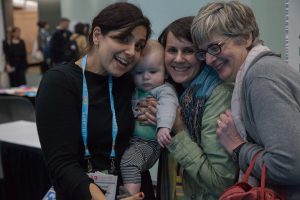
Attendees at 2018 Annual Conference in Los Angeles. Photo: Rafael Cardenas
Thanks for your interest! As of January 2, 2020, childcare grants are at capacity and the application portal is closed.
CAA recognizes the need among members for childcare support during the Annual Conference. In our effort to better meet these needs, CAA now offers grants of up to $250 per family.
Grants are available for CAA members who are registered for the conference and will bring their child to the conference, or who will incur extra care-giving expenses while away from their dependents.
Deadline to apply: January 5, 2020
Grant funding is limited and grants will be filled on a first-come, first-served basis. (If you signed up for the now-canceled onsite care with Kiddie Corp, you will be given priority.) The grants will be given as a reimbursement for expenses up to $250 upon submission of receipts or invoices.
Examples of allowable expenses
- Childcare expenses incurred on-site at the conference.
- Daycare above and beyond what is normally scheduled because member is attending the conference (for example, overtime at a daycare center, cost of a sitter, etc.)
- Travel expenses incurred in bringing a caregiver/family member to supervise your child at the conference or at your home.
- Travel expenses incurred in bringing a child to a caregiver/family member.
Note: Care must occur during the conference dates. Attendees are responsible for making their own arrangements. CAA does not sanction or recommend childcare providers and does not assume responsibility or liability for childcare services of any sort. It is the responsibility of the parent(s) to thoroughly investigate all childcare providers.
Expenses not eligible for reimbursement
- Normally scheduled childcare expenses in your home city.
- Toys, and tickets to museums, amusement parks, etc.
- Travel or other expenses related to the attendee’s participation in the meeting, conference registration, meals, or other expenses the attendee would already be incurring by attending the meeting.
Reimbursement procedure
- Reimbursement forms will be distributed to grantees upon notification, the completed PDF must accompany a scan of receipts.
- Recipients of a grant must submit receipts for reimbursable expenses by email to Mira Friedlaender, mfriedlaender@collegeart.org with the subject line “Child Care Reimbursement”, by March 5, 2020
- Reimbursements will be distributed within 3-4 weeks of CAA’s receipt of complete documentation.
Grants will be awarded on a rolling basis. The deadline to apply for the grant is January 5, 2020.
Questions about childcare grants for the Annual Conference? Email mfriedlaender@collegeart.org
The following Chicago-based childcare services are available for attendees seeking childcare during conference. CAA has no contract with these service providers, and this list should not be considered an endorsement of any companies listed.
American Childcare
207 East Ohio Street, 121, Chicago, IL 60611
Phone: 312-644-7300
Website: http://www.americanchildcare.com/hotel_babysitting.htm
College Sitters
1000 West Diversey Parkway, 234, Chicago, IL 60614
Phone: 773-697-9326
E-mail: lincolnparkil@collegenannies.com
Website: http://www.collegenanniesandtutors.com/nechicagoil
Sitters Studio
Phone: 312-890-8194
E-mail: bookchicago@sittersstudio.com
Website: http://www.sittersstudio.com/hotel-care/
News from the Art and Academic Worlds
posted by CAA — December 04, 2019
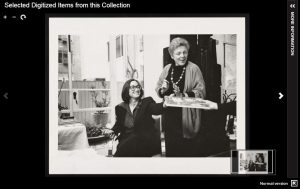
Archives of American Art Publishes Finding Aid for Linda Nochlin Papers
The Smithsonian has just released an online finding aid for over 30 linear feet of the late art historian’s archival material. (Archives of American Art)
A Viral List of Hundreds of Opportunities for Artists, Compiled by One Person to Encourage Community
Everest Pipkin has made public their “Big Artist Opportunities List”—a collection of over 400 opportunities for artists across the globe. (Hyperallergic)
George Soros’s Foundation Is Launching a $15 Million Initiative to Repatriate Cultural Objects to African Nations
The Open Society’s initiative will support African lawyers, scholars, archivists, and grassroots organizations campaigning for the return of artifacts taken during the colonial era. (artnet News)
Want articles like these in your inbox? Sign up:
Nada Shabout
posted by CAA — December 03, 2019
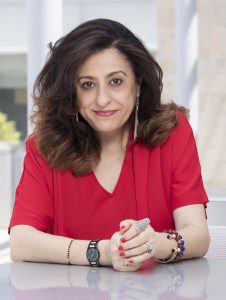
STATEMENT
As a member of CAA, I have been a witness to its progress in different directions and aspects. At this moment of time, however, I am more interested to see CAA further grow in diversity and inclusion of subjects, membership and global connections. Given the current worldwide calls to decolonize art history and practice, CAA can play a pivotal role to facilitate this in the US, and consequently in a wider sphere of influence. For the survival, strengthening and to remain effective, this is the future direction I see for CAA. Moreover, my goal as an art historian who specializes in modern Arab art is to continue to reinforce the field of study that I helped build in academia and push for its further recognition and inclusion in the canon of art history as an equal sphere of knowledge, history and production. It is within these two interrelated scopes that I would locate my contributions and accomplishments as a board member. I want to see CAA become a more active participant in exacting change in the fields it represents and I want to see Arab art become part of its mainstream representation.
Scherezade Garcia-Vazquez
posted by CAA — December 03, 2019

STATEMENT
I am running for the CAA Board because, as both an artist and an educator, my mission is to cultivate a creative space for all further. Working under an art institution as an Assistant professor and mentor regularly teach me this; that creative opportunity, freedom, and accessibility are of utmost importance. One of the most rewarding experiences for me has been teaching diverse groups of first-year students, and senior thesis students from all over the world and developing lesson plans for inter-disciplinarian practices and Art History. This environment profoundly resonates with my creative work around the politics of inclusion within my own art practice. In addition to serving as an educator, I have extensive advising experience with students of color as coordinator of the Altos de Chavon/Parsons partnership, advising Dominican and Latinx students through their college experience. Through this mentoring experience, I have also reached out to African American, Asian, and Middle Eastern students to navigate them through school and make sure their communities are represented. I also organize lectures and activities to both maintain and cultivate those communities within the university to help expose them to opportunities within their fields. As a board member, my immediate priorities would include diversifying our membership through community outreach, artistically and politically engaging more people, and facilitating more democratic decision-making within a renowned association. I am eager to play a role in utilizing the CAA’s resources to continue supporting artists, aligning myself with its academic, creative, and professional values. I believe the CAA needs more artists serving on its board to ensure a cohesive, effective, and grounded advocacy of the arts. The CAA is the body that ties our art advocacy work to our communities. I wish to uphold its inclusive legacy.
Ixchel Ledesma
posted by CAA — December 03, 2019

STATEMENT
I am an independent curator from Mexico City with vast experience in assembling international transdisciplinary exhibitions. My curatorial practice mainly revolves around exploring the relationships between body and territory through different artistic mediums. My research touches on topics of migration, feminism, politics of visibility and space. I am interested in assembling exhibitions that put into question gender binary concepts and propose alternative dynamics of power between bodies and spaces. A very important aspect of my practice is to gather artists from different backgrounds in order to observe how they approach the concept of territory. From my ongoing research about bodies and spaces I have become very interested in the notion of representation.
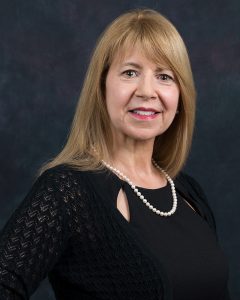
Robin Landa
posted by CAA — December 03, 2019
STATEMENT
It’s been a good number of years since that brisk January morning when I had my first interview for a full-time teaching position at the CAA conference career center. What would be my first of dozens of annual conferences was dizzying — I was surrounded by so many others who also were passionate about the disciplines that fueled me. At that early stage of my career, I hadn’t realized I was beginning a lifelong relationship with a multifaceted arts organization.
As a senior faculty member at Kean University, where I hold the title of Distinguished Professor in the Michael Graves College, and through my role as a Co-Chair of Design Incubation, I have dedicated a great deal of time to mentoring junior faculty. Engaged inquiry enhances my career; I work to ensure others can pursue their research interests productively, as well as connect scholarship and teaching. At Kean University, I actively guide junior faculty through reappointment and tenure, usher their career pursuits of scholarship, and introduce them to editors, agents and arts organizations, such as CAA, Design Incubation, AIGA, and the One Club, among others. At Design Incubation, I work with our Research Fellows during our annual program and beyond to encourage and facilitate their projects.
With extensive graduate coursework in art history, a Master of Fine Arts in painting, a graphic design practice, and twenty-three published books and numerous articles, I am in a unique position to understand how visual artists, art historians, designers and educators can collaborate and cross pollinate. Publishers have translated many of my books into Spanish, Chinese and Russian, including Graphic Design Solutions, 6th ed., Advertising by Design, 3rd ed., Draw!, and Nimble: Thinking Creatively in the Digital Age. Many of my published articles bridge the divide between visual arts disciplines and draw upon other arts, such as dance, literature, and music. Whether fostering T-shape thinking in the classroom, or prompting colleagues to utilize a bisociative framework, I seek to expand ways to interpret the world.
For years, I have worked relentlessly to foster inclusion and diversity in the graphic design and advertising professions. I received a Human Rights Educator award for my work with The Enough Project.
I want to represent all disciplines, widen reach, foster tolerance, and increase understanding to help guide the future direction of CAA. Empowerment of members. Advocacy. Diversity. Inclusion. Access. I hope to take a lead on these urgent issues, providing lifetime career contexts for members, working towards CAA’s goals.
For CAA to stay agile, we must focus on dynamic career demands and how culture, technology and the global economy are transforming the visual arts professions. Such transformations deserve vigorous debate. Through greater outreach to designers, art directors, architects, and educators and building affiliations, we can establish wider participation and greater engagement. As a design educator, an artist, author, a chair of Design Incubation, and faculty mentor, promoting the visual arts comes naturally to me. I hope you will allow me to enlarge my lifelong relationship with CAA.
Tiffany Holmes
posted by CAA — December 03, 2019

STATEMENT
I am an artist, scholar, educator, and administrator. I currently serve as the Vice Provost of Undergraduate Studies at the Maryland Institute College of Art.
Over my 20-year career in the arts, CAA has inspired my own professional development and intellectual engagement with peers. I attended my first annual CAA conference in New York in 1999 to interview for teaching positions. When I walked through the revolving doors of the Midtown Hilton for the first time, I felt the surge of energy that comes with the conference kick off and the anticipation of reconnecting with friends—and I look forward to that lobby energy every time I return. I’m honored to be nominated to join the Board of Directors so that I might help advocate for the vital role of the arts in society given the challenges facing higher education.
I worked as a Professor of Art and Technology Studies for eleven years at the School of the Art Institute of Chicago before I took on a dean role for the next seven. For those of us in my generation, we have witnessed some of the most important technological breakthroughs of the history of the planet. We can remember a world with rotary phones, floppy disks, and Commodore 64s. Most of our college students cannot. The “iGen” of the developed world connects and shares globally at all hours. This generation of future scholars and educators is demanding that institutions steeped in privilege adapt rapidly to provide more equitable hiring practices as well as more inclusive forms of teaching. This is CAA’s moment to shine and utilize technology to facilitate learning communities, provide key resources and professional development opportunities to its academically affiliated and independent members around the world. The annual conference is wonderful but there may be further opportunities for dialogue to produce more empathetic teaching strategies, advocacy groups, and community partnerships.
For the last eight years, my work has been concentrated in academic leadership; I have a solid track record directing complex initiatives with limited resources: a Scientist-In-Residence program at an art school, an honors or “scholars” concentration with a global learning component, an interdisciplinary professional practice curriculum, and soon, a research center and new curriculum in creative entrepreneurship for artists and designers. I care deeply about the future of art and design education as well as the urgent need to retain a liberal arts focus in higher education. We must work collectively to develop evidence of the immense value provided by an art history or studio degree. I would welcome the opportunity to bring my considerable professional experience and capacity for listening to serve the CAA community.
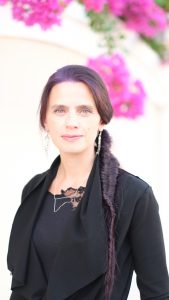
Janet Bellotto
posted by CAA — December 03, 2019
STATEMENT
As a Canadian artist, educator and creative initiator working internationally, in my professional practice, as well as in my academic roles, I advocate and facilitate building connections between people and places—particularly cross-cultural explorations within international contexts. This is the international perspective that I will bring to the CAA Board of Directors.
Over the past two decades I have assembled an international network of peers comprising academics, artists, designers, architects and industry specialists, along with important stakeholders who have contributed to innovative strategizing. I believe my experience and my advocacy of a multidisciplinary and international approach demonstrates my passionately held commitment to the issues in which I am engaged. These include women in the arts, cultural diversity and exchange, as well as ecological issues in my own practice. I look forward to engaging my network through collaborations and potentially facilitate more international exchange at CAA. Working in the Gulf / West Asia, it has been crucial to discuss and promote cultural awareness and the importance globally for inclusion while also decolonizing the curriculum. How can we as educators work positively together for a more inclusive tomorrow that also takes into consideration future generations? How can CAA become a resource globally, for promoting new dialogues? The world needs more platforms for exchange to counter fear and build trust across cultures. CAA should be such a platform promoting cultural collaboration and understanding.
Currently, I am a Professor in Visual Arts at the College of Arts and Creative Enterprises, Zayed University, Dubai. Throughout my time in the United Arab Emirates I have contributed to the development of the art community and to the education of emerging artists here, accomplishing significant milestones as I engaged the opportunity to build, imagine and support this vision. I have been a member of CAA since 1999 and have seen the association expand its strength in advocacy and intellectual engagement. One of its ongoing milestones is its drive towards inclusivity to grow the diversity in its membership.
I see CAA playing a larger role internationally, in particular to achieve its vision of supporting all professionals whether academic or practitioners, across all areas of the arts, design and architecture, while strengthening a diverse membership of art historians globally. It must also continue to look at new models, to engage emerging professionals, and strengthen communication and opportunities throughout the year. Interdisciplinary, multi-voiced approaches need to be strengthened, along with creating various virtual channels of communication that can attract the next generation of CAA that ideally will be more global.
Through team efforts, cultural and intellectual exchange as well as building connections between international and local artists, designers, art historians (and more) are initiatives I will contribute towards. I see these as essential for building a future of CAA that is more inclusive internationally. However, these cannot be accomplished in silos and I want to listen to the members, their ideas and see how I can help foster them.