
CAA News Today
Books Published by CAA Members
posted by CAA — August 09, 2017
Publishing a book is a major milestone for artists and scholars—browse a list of recent titles below.
Books Published by CAA Members appears every two months: in February, April, June, August, October, and December. To learn more about submitting a listing, please follow the instructions on the main Member News page.
August 2017

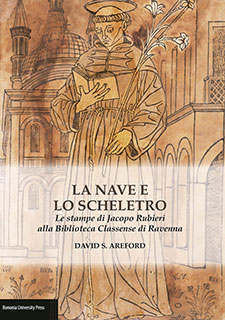
David S. Areford. La nave e lo scheletro: Le stampe di Jacopo Rubieri alla Biblioteca Classense di Ravenna (Bologna: Bononia University Press, 2017).

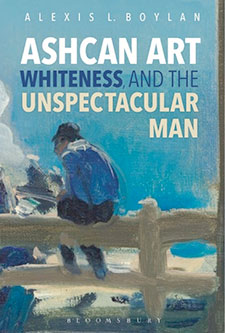
Alexis L. Boylan. Ashcan Art, Whiteness, and the Unspectacular Man (New York: Bloomsbury Academic, 2017).

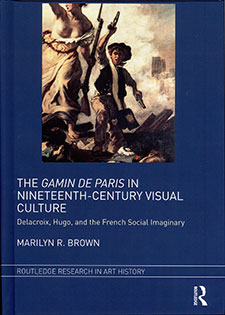
Marilyn R. Brown. The “Gamin de Paris” in Nineteenth-Century Visual Culture: Delacroix, Hugo, and the French Social Imaginary (New York: Routledge, 2017).


Clarence C. Cook. A Description of the New York Central Park, intro. Maureen Meister (New York: New York University Press, 2017).

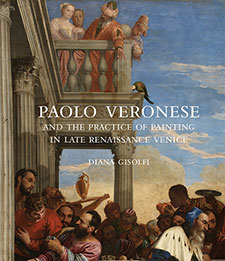
Diana Gisolfi. Paolo Veronese and the Practice of Painting in Late Renaissance Venice (New Haven: Yale University Press, 2017).

D. Gustafson and A. M. Zervigón. Subjective Objective: A Century of Social Photography (Munich: Hirmer Verlag, 2017).

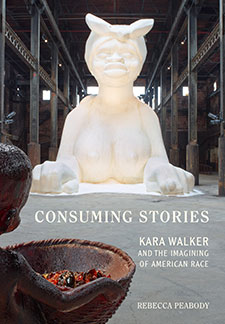
Rebecca Peabody. Consuming Stories: Kara Walker and the Imagining of American Race (Oakland: University of California Press, 2016).

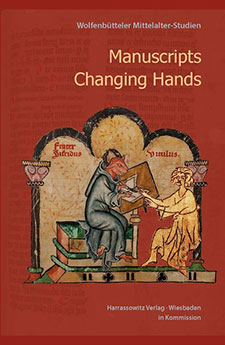
Corine Schleif and Volker Schier, eds. Manuscripts Changing Hands (Wiesbaden, Germany: Harrassowitz, 2016).


Rachel Stern. The Expressionist Fritz Ascher: To Live Is to Blaze with Passion / Der Expressionist Fritz Ascher: Leben ist Glühn, ed. Ori Z. Soltes (Cologne: Wienand, 2016).

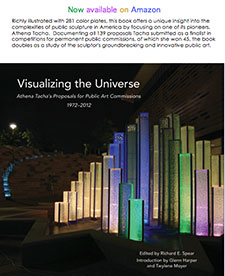
Athena Tacha. Visualizing the Universe: Athena Tacha’s Proposals for Public Art Commissions 1972–2012, ed. Richard E. Spear (Washington, DC: Grayson, 2017).

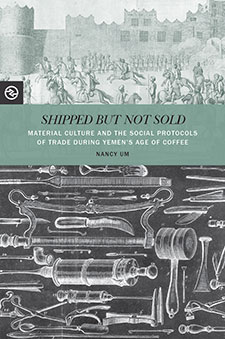
Nancy Um. Shipped but Not Sold: Material Culture and the Social Protocols of Trade during Yemen’s Age of Coffee (Honolulu: University of Hawai’i Press, 2017).

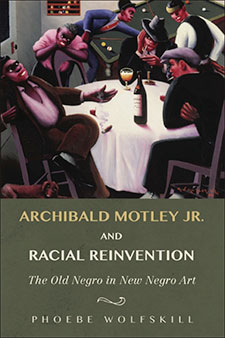
Phoebe Wolfskill. Archibald Motley Jr. and Racial Reinvention: The Old Negro in New Negro Art (Champaign: University of Illinois Press, 2017).
Work with us at CAA
posted by CAA — August 04, 2017
In July CAA announced a restructuring of the organization and the departure of several staff members who took advantage of a buyout program. As part of the restructure we find ourselves with the opportunity to hire new staff at CAA. Below are six positions we are hiring for immediately. Please feel free to share these postings with colleagues and friends who might be a good fit. Click on the linked title of the position to learn more about the role and for application submission details.
Institutional and Individual Giving Manager
Publications and Programs Administrator
Sponsorship and Partnership Manager
Publications and Programs Editor
New in caa.reviews
posted by CAA — August 04, 2017
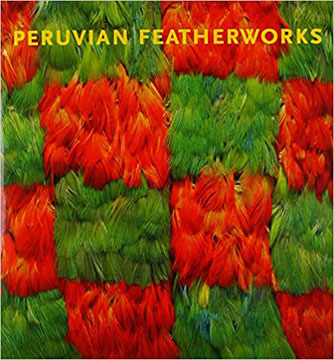 Amy Buono reads Peruvian Featherworks: Art of the Precolumbian Era, edited by Heidi King. The volume is “an important contribution to a profoundly complex yet largely overlooked artistic genre: Andean featherwork.” It “highlights both the difficulties of interpreting ancient Andean featherworking and its rich scholarly potential” and “is a superb resource for understanding how featherwork fits into the larger arena of Andean artistic practices.” Read the full review at caa.reviews.
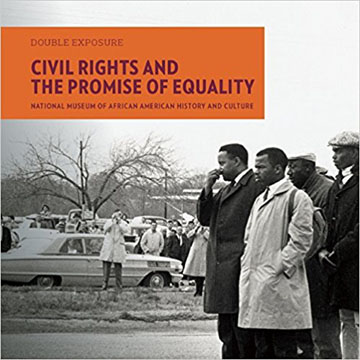 Rhonda L. Reymond reviews Civil Rights and the Promise of Equality and African American Women, both edited by Laura Coyle and Michèle Gates Moresi, which are part of a series published by the National Museum of African American History and Culture. “These volumes deserve a place on library bookshelves enriching the photographic section in general and adding to the significant number of books examining or reproducing images of African Americans.” Read the full review at caa.reviews.
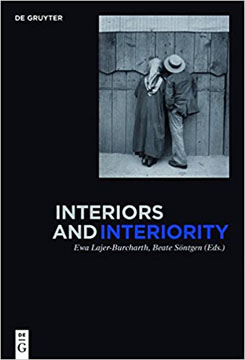 Anne Leonard discusses Interiors and Interiority, edited by Ewa Lajer-Burcharth and Beate Söntgen. Featuring “twenty-two essays, mostly by German and U.S. scholars,” the book argues that “the relationship between interiors and interiority is not limited to private spaces and individual psychology but engages just as ineluctably with complex dynamics of performativity, cultural mobility, technology, and material agency.” Read the full review at caa.reviews.
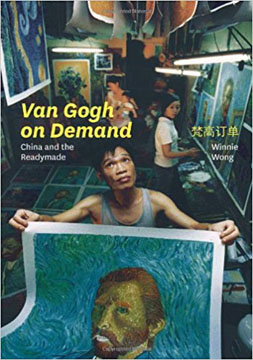 Jenny Lin examines Van Gogh on Demand: China and the Readymade by Winnie Won Yin Wong. The author “not only overturns accounts of Dafen as a factory full of exploited assembly-line painters, which she successfully reveals as strategically crafted fictions, but also unsettles contemporary art’s unspoken hierarchies and topples modernist and postmodernist assumptions about originality, authenticity, and authorship.” Read the full review at caa.reviews.
CAA Launches CAA Commons in Partnership with MLA
posted by CAA — August 03, 2017
Dear CAA members,
For the past year we have watched conversations grow in discussion groups on CAA Connect, our online social community for members. We see how our members want to stay in touch and develop ideas around the visual arts and their work outside of our Annual Conference. Our CAA-Getty International Program Scholars, for example, have a discussion group with 280 posts and twenty library items. Our Resources for Academic Art Museum Professionals (RAAMP) group has over 100 resources posted.
Now it’s time to expand the network. CAA is joining forces with the Modern Language Association (MLA) to become part of their Humanities Commons platform, and CAA will also have its own CAA Commons network as part of the partnership. The two networks (Humanities Commons and CAA Commons) will serve different purposes for our members, but we believe each will be of value. Humanities Commons is an open-access network where one can create a professional profile, discuss common interests in groups, develop new publications, and share work. The Humanities Commons network is open to anyone. CAA Commons will be the CAA member portal on the same network, where CAA members only can start discussion groups, contribute to discussion groups, and post resources for professionals in the visual arts.
CAA is not alone in joining Humanities Commons. Other members include The Association for Slavic, East European, and Eurasian Studies (ASEEES), Association for Jewish Studies (AJS), and the Modern Language Association (MLA), of course. Going forward we expect many more associations and organizations to join the network, creating a dynamic, interdisciplinary forum that CAA members can explore and use to expand the reach of their professional work.
Features of CAA Commons and Humanities Commons
- Join discussion groups or create your own on CAA Commons or on Humanities Commons
- Browse the Core Repository or deposit your own work: A collection of papers, images, and materials with open-access
- Create your own WordPress Website
Logging in to CAA Commons and Humanities Commons
Which email should I use to create an account?
If you do not have a Humanities Commons or CAA Commons account, you must create one. The CAA Support page can guide you through creating an account. Please note when creating an account, you must use your primary CAA member email address. If you do not remember this email address please log in to your CAA account to check.
I already have a Humanities Commons account
If you already have a Humanities Commons account, then you will automatically be added to the CAA Commons platform and have full access.
Please note that you DO NOT use your CAA Member ID to log into Humanities Commons or CAA Commons.
For more information about creating an account and extensive FAQs about CAA Commons and Humanities Commons, please visit the CAA Support page.
By joining CAA Commons, you are accepting the Terms & Conditions of the platform.
If you have any questions, please contact us at caa@hcommons.org.
Sincerely,

Hunter O’Hanian
Executive Director
Chief Executive Officer

Kathleen FitzpatricK
Project Director,
Humanities Commons, Modern Language Association
August 2017 Picks from CAA’s Committee on Women in the Arts
posted by CAA — August 01, 2017
Hương Ngô: To Name It is to See It
Firelei Báez: Vessels of Genealogies
DePaul Art Museum
935 W Fullerton, Chicago, IL
April 27–August 6, 2017
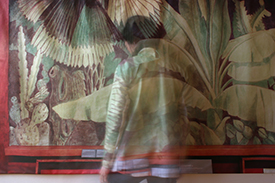
Hương Ngô, study for the video Hidden from Plain Sight, 2017 (artwork © Hương Ngô)
In concurrent exhibitions, the DePaul Art Museum presents Firelei Báez, Vessels of Genealogies, and Hương Ngô, To Name It is to See It. Báez, a Miami-based Dominican-American artist, is known for her use of textiles, patterns, and bright colors. She often depicts identity through the use of hairstyles and tattoos in her large-scale paintings, evoking both beauty and political implications “for those whose cultural identities have remained traditionally absent from dominant culture.” While Báez migrated to the United States, her work also addresses identity formation experienced by those who grew up in Latin, Caribbean, and African regions. She “challenges the basic idea of how race is experienced in the US—a condition defined as binary and black or white. In her work, one can appreciate that she is many cultures. She expresses the consciousness of a new generation eager to embrace their cultural prowess in terms of hybridity.”
In To Name It is to See It, Ngô, focuses on Vietnamese anticolonial organizer Nguyễn Thị Minh Khai. Ngô draws connections between language and seeing. The artist said, “‘To Name It Is To See It’ evokes the promise of a discursive practice, identifying an injustice by name is the first step to understanding it and working towards change. At the same time, there is deception to the title because identification was a preoccupation of the colonial authorities….” The exhibition by Ngô features more than twenty-five individual pieces of art ranging from photos to video and fabrics.
SaveArtSpace: The Future is Female
Through Summer 2017
Various locations throughout New York City
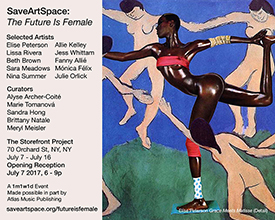 In this all-woman gallery and public art exhibition, The Future Is Female by SaveArtSpact features female artists on advertising spaces and billboards throughout the New York City area during summer 2017. The exhibit aims to expand upon the mainstream definition of “the female gaze” through works that reflect the multifaceted reality of womanhood in the twenty-first century and that expand upon society’s traditional ideals of femininity.
“One such woman is artist Elise Peterson,” writes Priscilla Frank in a HuffPost review, “whose piece Grace Meets Matisse injects a photographic image of Grace Jones into Henri Matisse’s 1910 Dance, placing her in the center of a ring of naked dancers. The image puts Jones’ black body into an image previously filled with white bodies, juxtaposing the flesh of the painted figures with the three-dimensional glow of Jones’ self-actualized body, mid-performance.” (http://www.huffingtonpost.com/entry/feminist-art-new-york-billboards_us_594abba7e4b0312cfb60fb92)
The work was curated by Meryl Meisler, Marie Tomanova, Alyse Archer-Coité, Sandra Hong, and Brittany Natale. In addition to Peterson, artists include Allie Kelley, Beth Brown, Fanny Allié, Jess Whittam, Julie Orlick, Lissa Rivera, Mónica Félix, Nina Summer, and Sara Meadows. Peterson’s work can be viewed in various locations throughout New York City, including Grand Street and Ludlow Street (343 Grand Street).
Jeanine Oleson
Commonwealth & Council
3006 W 7th St. Suite 220, Los Angeles, CA
July 8–August 19, 2017
The amplification of sound and image is at the center of Jeanine Oleson’s powerful exhibition at Commonwealth & Council. Using natural materials such as shell and glass within a performance-based lexicon, Oleson examines the effects of production under late capitalism, the meanings of community, and bodily experience. Three-dimensional imaging technology is employed to render visible what we already see but which we might not value; and elsewhere a transducer speaker made of shell expertly turns an object of childlike wonder into a proxy for political speech. Although not specifically positioned as a pendant to Oleson’s Hammer exhibition, concurrently on view, many of the interests in the two shows are similar, and benefit from a close read. At issue in both is how one might become a conductor—realizing the longing for a political elsewhere—using materials of the body and the world?
CUNT
Venus Over Los Angeles
601 S Anderson St, Los Angeles, CA
July 15–September 2
Although more iconographic than strictly historical, this group exhibition brings together six feminist artists who address the visuality of female bodies and their attendant sexualities. Betty Thompkins, Carolee Schneemann, VALIE EXPORT, Judith Bernstein, Dorothy Iannone, and Marilyn Minter may each depict the vulvic, but their similarities end there. Iannone’s confessional work, I Was Thinking of You (1975/2006), displays a video of artist’s face while she masturbates, housed in a lovingly decorated cabinet which recounts an old story of love and abuse (the text on the cabinet’s exterior begins: “You walk into my quarters 2000 years ago which are outside the city gates….”) The exhibition features new work by some of the artists—most notably a large black-light mural by Bernstein, in which a giant limp phallus covered in swastikas comes to stand for the “Trumpery” of America’s current political hierarchy. Nearby, a vagina dentata seems to be growing out of the official seal of the United States. It is a caustic and damning work—one filled with heaps of rage and anger—revealing why explicitness in our lives, politics, and art are as necessary as ever.
As in Nature: Helen Frankenthaler Paintings
225 South Street
Williamstown, MA 01267
July 1–October 9, 2017
As in Nature: Helen Frankenthaler Paintings presents twelve of this major Abstract Expressionist artist’s large-scale paintings. Made over the course of her long career, these works explore the tension between abstraction and representation and demonstrate her engagement with the landscape painting tradition. In particular, she found inspiration in the idyllic, wooded landscapes of the northeastern United States, home of the Clark Art Institute. Spanning the full range of styles, techniques, and formal preoccupations that Frankenthaler explored over five decades of work, these paintings are primarily abstract, yet reveal recognizable elements from the landscape that function, paradoxically, to reinforce their abstraction: as in nature, but not as in nature. As she said of one of her most iconic paintings, Mountain and Sea (1952), “The landscapes were in my arms as I did it. I didn’t realize all that I was doing. I was trying to get at something—I didn’t know what until it was manifest.”
A publication, authored by guest curator Alexandra Schwartz, with contributions by Christina Kee, accompanies this exhibition.
Marina Abramović: The Cleaner
Gammel Strandvej 13
DK 3050 Humlebaek, Denmark, Copenhagen
June 17–October 22, 2017
This summer, the Louisiana Museum of Art presents Marina Abramović: The Cleaner, the first major European retrospective presentation of this pioneering body and performance artist. The exhibition at Louisiana comprises more than one hundred works and spans more than five decades—from early concept sketches, paintings, and sound works to presentations of the artist’s performances—including her collaboration with former partner Ulay. Reperformances of an early work form part of the exhibition as well. The exhibition is structured chronologically, beginning with her Sound Corridor (War) of 1971, where the spectator is inundated with the sounds of gunfire, and ending with her quieter and more transformative works.
Marina Abramović: The Cleaner has been developed in a dialogue with the artist and is organized by Moderna Museet, Stockholm, in collaboration with the Louisiana Museum of Modern Art, Henie Onstad Kunstsenter, and Bundeskunsthalle, Bonn.
New in caa.reviews
posted by CAA — July 28, 2017
Kris Cohen visits Josh Kline: Freedom at the Portland Art Museum. “The first work in a projected five-work cycle,” Freedom imagines “a future that extends out from the present’s particular techno-economic landscapes.” The artist “takes the technologies and labor economies of neoliberalism not just as the context for his work but as the medium,” and the show is “far more esoteric than Kline admits.” Read the full review at caa.reviews.
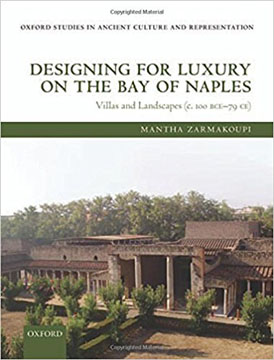 Elaine K. Gazda reads Designing for Luxury on the Bay of Naples: Villas and Landscapes (c. 100 BCE–79 CE) by Mantha Zarmakoupi. The author “argues that by appropriating selected elements of Hellenistic and Roman architecture designers created a new architectural language for Roman luxury villas.” The book’s “primary contribution” lies in its “analyses of the physical components of this language.” Read the full review at caa.reviews.
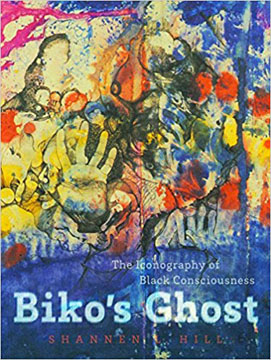 Jessica Stephenson reviews Shannen L. Hill’s Biko’s Ghost: The Iconography of Black Consciousness. The author “offers a convincing reconsideration of the contributions” that Black Consciousness and Stephen Biko’s “meaning and legacy” give “to a visual culture of liberation in South Africa.” Presenting “an impassioned redress,” she argues that this history has previously been marginalized and willfully misread. Read the full review at caa.reviews.
Making Changes for the Future
posted by CAA — July 27, 2017
Dear CAA members,
CAA exists to serve its members and the wider community of arts and culture professionals. Many of our members are facing challenging fiscal dynamics in their own institutions. They have seen opportunities to attend professional conferences and discretionary departmental budgets decrease. Even more concerning is the lack of new professional opportunities for those entering the field as the number of full time and tenured positions continues to decline.
We know how integral our staff is to serving our 9,000 individual and 600 institutional members. Recently, we took a closer look at our staffing at CAA in relation to changes in the higher education landscape, the visual arts field, and the ecosystem of associations. We discovered that in order to move forward as an organization CAA had to reduce its organizational footprint. Coming to this realization was difficult but we also knew we did not want to simply cut staff.
With this reality in mind, last spring we worked to reduce the size of the CAA staff. Based on my recommendation, the Board of Directors adopted a 2018 budget that matched realistic revenue projections against actual expenses. We offered an Employee Exit Incentive Plan, a plan of choice, to all staff. Several people took the plan. We are saddened to see staff at CAA leave. Some have served the organization for many years and contributed to much of what makes CAA tick. But we also know they are headed for new adventures professionally and personally, and we are proud to offer them support and security as they embark.
The departures at CAA gave us a rare opportunity to restructure the organization, to look at every department and assess its work and goals. It also gave us the chance to hire for a few new mission-driven positions. Programming is important to CAA and its members, and as part of the new structure we expanded programs and placed publications, one of our flagship programs, in that department. The publications department will not change fundamentally and will continue to produce exemplar issues of Art Journal and The Art Bulletin, as well as outstanding digital content in Art Journal Open and caa.reviews. Tiffany Dugan has been named the director of programs and publications to lead the new department. Communications and marketing will also grow as a department as it joins forces with membership services, a pairing that will bring more clarity to how we communicate with our members and how we will look to build our membership in the coming years. The newly formed communications, marketing, and membership department will be led by Nick Obourn. Lastly, our finance department will take the IT department under its wing, forming what will be the center of operations for CAA. Teresa Lopez will lead that department.
We know this is a lot to digest, but we felt it necessary to explain things in full. Restructuring CAA was difficult for us as an organization, but it was a decision we had to make to gain stability and ensure that we exist to serve our members and professionals in the visual arts for another 106 years. These changes will not result in any reduction of services or support to our members and the visual arts field at large.
In the coming weeks we will also announce exciting new offerings for our members at CAA. Stay tuned!
We look forward to seeing you in Los Angeles, February 21–24, 2018 for the 106th Annual Conference.
Please reach out to us at 212-691-1051 or nyoffice@collegeart.org if you have any questions at all.
In Memoriam: Dina Bangdel, Art Historian and CAA Board Member
posted by CAA — July 26, 2017
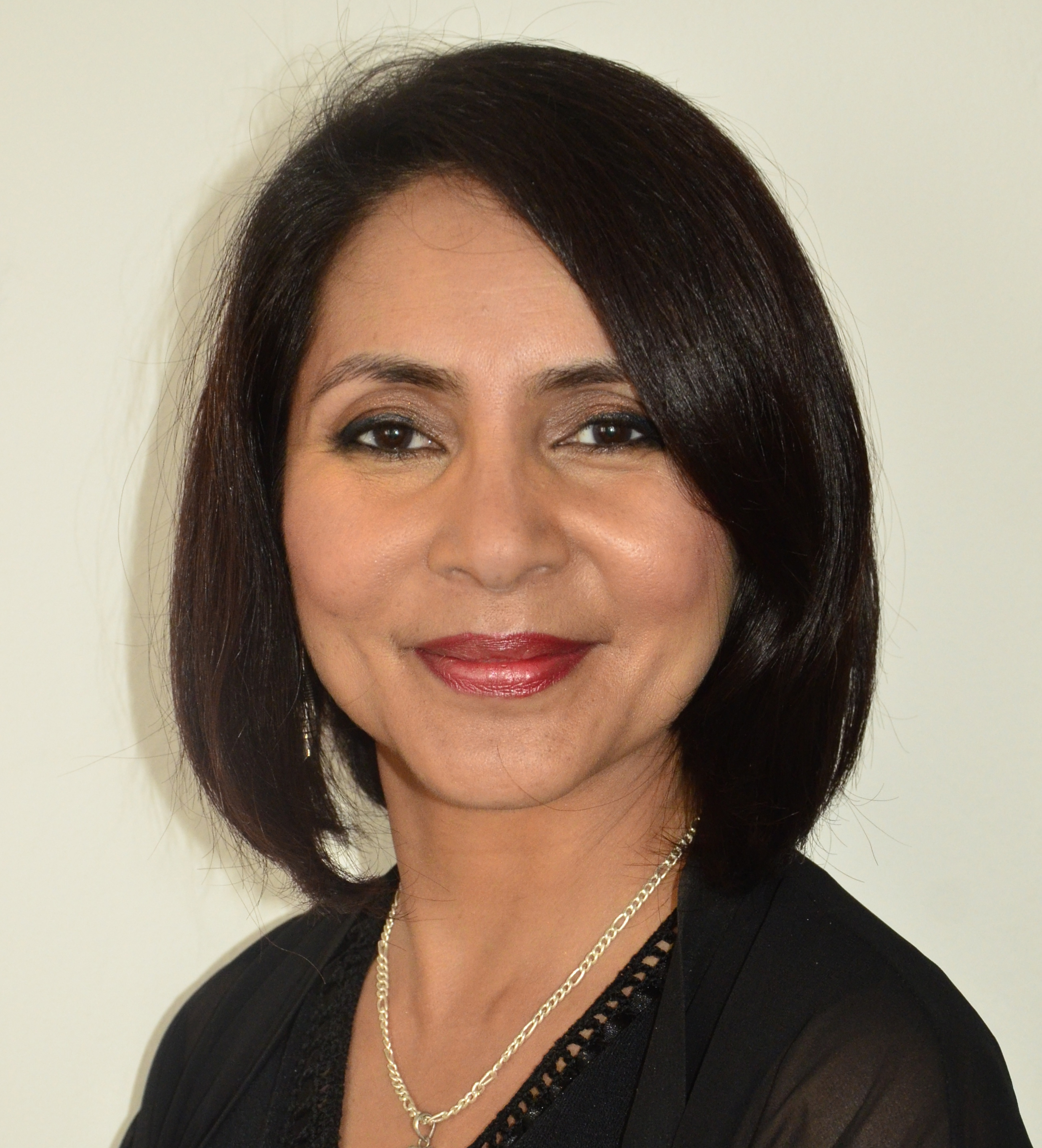
We were very sad to learn of the early and sudden passing of CAA Board Member Dina Bangdel. Dina, who was a long-standing member of CAA, joined our Board of Directors in 2016. Prior to that, she was on CAA’s Nominating Committee and served as the Board liaison to the Education Committee. In addition, Dina was active in the Student and Emerging Professionals Committee (SEPC) and the Committee on Women in the Arts (CWA). She is survived by her husband, Dr. Bibhakar Shakya, and her children, Deven and Neal.
Dina was Director of the Art History Department at Virginia Commonwealth University in Qatar. A more complete obituary can be found here.
In addition, here is a wonderful interview with her.
We will all miss her warm smile and thoughtful participation at CAA.
To send condolences to her family:
Dr. Bibhakar Shakya
3029 Crossfield Road
Richmond, VA 23233
New in caa.reviews
posted by CAA — July 21, 2017
Edith Wolfe visits Adam Pendleton: Becoming Imperceptible at the Contemporary Art Center in New Orleans. The exhibition is “charged with a political urgency at odds with the artist’s restrained forms,” yet “the triumph—and challenge—of Pendleton’s language-based enquiries reside in their capacity to interrogate system and process as provocatively as they explore the African American experience.” Read the full review at caa.reviews.
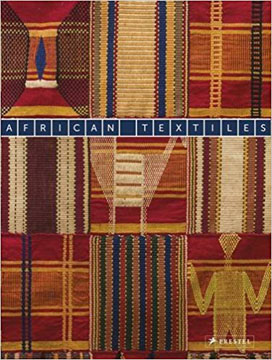 Erin M. Rice reviews African Textiles: The Karun Thakar Collection with contributions by Duncan Clarke and Miriam Ali-de-Unzaga. While “the text itself does not provide the groundbreaking research the authors call for, it does highlight parts of a collection with great potential for future in-depth, object-based research,” and “the book is superbly illustrated with quality, color photographs.” Read the full review at caa.reviews.
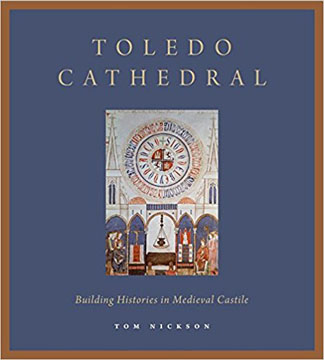 Elisa A. Foster reads Toledo Cathedral: Building Histories in Medieval Castile by Tom Nickson. The author “endeavors to untangle the complicated and often tacitly accepted ‘building history’ of the cathedral’s construction.” “A wonderfully interdisciplinary study,” the “impressive” volume “is a significant contribution to recent scholarship on medieval Spain as well as Gothic architecture more broadly.” Read the full review at caa.reviews.
Tirza True Latimer discusses the reopening of the San Francisco Museum of Modern Art. Although the architecture, which “more than doubles” the galleries, offers “the tacit promises of disruption,” “the artworks exhibited in SFMOMA’s inaugural year are predominately canonical.” Only “time will tell what stories can be told and how the holdings can be differently expanded, displayed, and contextualized.” Read the full review at caa.reviews.
Affiliated Society News for July 2017
posted by CAA — July 18, 2017
Association for Critical Race Art History (ACRAH)
The Association for Critical Race Art History’s Bibliographic resource launched on January 9, 2017, and received over one thousand hits on the first day. In conjunction with the publication of the bibliography, reading groups were formed in the San Francisco Bay Area, Boston, New York, and Washington, DC, to bring together art historians engaged with issues of the representation of race and ethnicity and their histories. To date, forty-two people have participated in the reading groups, which have covered a wide array of topics including hybridity, empire, borders, primitivisms, and the contemporary status of identity politics. The reading groups were organized by Caitlin Beach (New York), Layla Bermeo (Boston), Margarita Karasoulas (Washington, DC), Marci Kwon (Bay Area), and Sean Nesselrode Moncada (New York). The organizers would like to thank Jacqueline Francis and Camara Dia Holloway, cofounders of the Association for Critical Race Art History, for their support and guidance in this endeavor.
Association for Latin American Art (ALAA)
The Association of Latin American Art announces its Eighteenth Annual Book Award for the best scholarly book published on the art of Latin America from the pre-Columbian era to the present. The award is generously funded by the Arvey Foundation and consists of a citation and a $1,000 honorarium. We will present the award at the CAA Annual Conference in Los Angeles, February, 21–24, 2018. The name of the recipient will appear in the newsletters of both ALAA and CAA. Visit our website for more information.
Association of Historians of American Art (AHAA)
AHAA announces the June 2017 publication of its ejournal Panorama, issue 3.1. Published twice a year, Panorama is the first peer-reviewed electronic publication dedicated to American art and visual culture from the colonial period to the present day. In addition to peer-reviewed scholarly articles, Panorama publishes Book Reviews, Exhibition Reviews, and shorter Research Notes, and features The Bully Pulpit. Subscribe for FREE here.
AHAA members received 2017 Awards for Excellence from the Association of Art Museum Curators. A publication award went to Melissa Wolfe, Curator of American Art, Saint Louis Art Museum, for Subversion & Surrealism in the Art of Honoré Sharrer at the Columbus Museum of Art. An exhibition award went to Kristina Wilson, Associate Professor of Art History, and Chair, Department of Visual and Performing Arts, Clark University for Cyanotypes: Photography’s Blue Period at the Worcester Art Museum.
AHAA announces its CAA 2018 session “America is (Still) Hard to See.” The program addresses where American art history sits in our twenty-first-century classrooms, galleries, museums, blogs, and journals and directions for its future growth. Speakers include: Kathryn Bunn-Marcuse, University of Washington; Kristine K. Ronan, independent scholar; and Rachel Stephens, University of Alabama. Distinguished scholar Erika Doss, University of Notre Dame, is the discussant.
AHAA’s Fourth Biennial Symposium will be held in October 2018 in Minneapolis, Minnesota (dates TBD).
AHAA’s mission is to promote scholarship on art of the United States through museum-based or theoretically oriented topics, whether regionally focused or offering broad historical sweep, by emerging and established scholars. The organization provides a forum for presenting and advancing new approaches; for examining problems that confront the field; and for identifying scholarly needs and opportunities to its members. Join today!
Association of Print Scholars (APS)
The Association of Print Scholars (APS) recently awarded the 2017 Schulman and Bullard Article Prize to Jonas Beyer of the Department of Art History at the Georg-August-Universität in Göttingen, Germany. Now in its third year, the prize recognizes an article published by an early career scholar that features compelling and innovative research on prints or printmaking. Beyer’s article, “Pictures in Flux: Degas’s monotypes and some notes on their relation to other media,” appeared in the book Perspectives on Degas, edited by Kathryn Brown and published in 2016. This is the first year that an article focusing on modern printmaking has won the award.
APS is pleased to announce that Anne Verplanck, associate professor of American studies at Penn State Harrisburg, has been elected as director-at-large for a three-year term.
During the recent Renaissance Society of America Conference, APS hosted a reception at the Art Institute of Chicago’s Goldman Study Center, where members viewed early modern works on paper. APS is now an affiliated society of the Renaissance Society of America and will host two panels at the 2018 conference.
APS looks forward to hosting our affiliated-society panel at next year’s CAA Annual Conference in Los Angeles. The selection committee is pleased to announce Yasmin Amaratunga Railton of Sotheby’s Institute of Art in London as chair of the panel, titled “Now you see it, now you don’t: Materialism and Ephemeral Prints.”
Community College Professors of Art and Art History (CCPAAH)
CCPAAH wants to thank all the presenters and participants at our affiliated session at the 2017 FATE Conference in Kansas City, Missouri. The panel “Draw and Repeat: Reconsidering the Sketchbook,” was chaired by Susan Altman, Middlesex County College and included the following presentations: “That’s Mine: Making the Sketchbook Personal” by Angus Galloway, University of West Georgia; “Reuse/Reclaim/Repurpose” by Eric Wold, Clark University; and “What’s in a Name? Renaming the Sketchbook” by Jon Hunt, Kansas State University. Everyone left with new ideas to bring back to their studio classrooms.
CCPAAH will be sponsoring a session at CAA’s 2018 Annual Conference in Los Angeles. The call for papers for “Championing the Relevancy of Studio Art and Art History in the Twenty-First Century: Stories of Success and Advocacy,” next year’s affiliated-society session at the CAA conference, was posted to the CAA website on June 30, with a submission deadline of August 14, 2017. Please consider submitting a proposal for this session. Interested in getting more involved with CCPAAH? Contact Susan Altman.
FATE (Foundations in Art: Theory and Education)
 Episodes 10, 11, and 12 of “Positive Space,” FATE’s monthly podcast are now available. FATE Educator Award Winner, M. Michelle Illuminato, and FATE Shout Out Award Winner, Ralph Pugay, discuss rebuilding foundations at Portland State University, community engagement, creating welcoming learning environments and how to encourage students to be present in the creative process. FATE Educator Award Winner, Rae Goodwin discusses “Failing Forward” in her own work and how that influences her teaching and interactions with students, and FATE Leadership Award Winner, Scott Betz, discusses mentorship, creativity, and how teaching informs his ability to lead people both inside and outside the classroom. More info on the Positive Space webpage, and you can listen on iTunes.
In addition, FATE in Review seeks thoughtful articles relating to all areas of foundations education, including expanding the practicum, flexing the core, and re-visioning visual culture. Conference papers and/or presentations, as well as papers written solely for publication, may be submitted throughout the year. We are also interested in reviews of newer books that inform foundations discussion and curriculum. Contact FATE in Review Editor, Michael Marks.
Upcoming for CAA 2018: FATE’s CAA affiliate representative, Naomi J. Falk, is looking for panelists for FATE’s affiliate conference session, entitled, “Let’s Dance, But Don’t Call Me Baby: Dialogue, Empathy, and Inclusion in the Classroom and Beyond.” Feeling welcome, acknowledged, and heard encourages learning. Fostering inclusiveness and empathy on behalf of minority students legitimizes perspectives. How do we build trust and empathy between faculty, students, peers, and others in our classrooms and communities? How do we create a welcoming and inclusive environment? What has worked? What has gone terribly wrong? Where do we go from here? Examples of readings, projects, tools, and exercises for building inclusive, encouraging, and productive dialogues are all of interest. Please contact: Naomi J. Falk.
Japan Art History Forum (JAHF)
The Japan Art History Forum is pleased to announce that it will hold its first competition to award the JAHF First Book Subvention Prize this year. This prize will be awarded once a year to a book project that will make a substantial contribution to the field of Japanese art history, broadly defined. The award is for a maximum of $2,000, provided from membership dues and donations to the Japan Art History Forum. The deadline for submission is September 15, 2017. Visit our website for more information.
National Council of Arts Administrators (NCAA)
The forty-fifth National Council of Arts Administrators (NCAA) annual gathering, “Ground | Work: Producing Access and Equity in the Arts,” convenes September 20–23, 2017, hosted by the University of Arizona School of Art in Tucson. The lineup of speakers promises to be dynamic and engaging and includes the artist Wafaa Bilal and keynote speaker Alfredo Jaar. We have a wide range of presentations and activities arranged around this year’s conference theme: “Ground | Work: Producing Access and Equity in the Arts.” We invite current and aspiring art-department chairs, directors, and deans to attend. Visit the website to learn more about the conference, member benefits, and to join NCAA.
Public Art Dialogue (PAD)
Public Art Dialogue welcomes five new board members: Annie Dell’Aria, Leslie Markle, and Andrew Wasserman, are PAD’s new program committee. Laura Holzman joins PAD’s social media team, and Ciara McKeown joins the PAD board as member at large. We’d like to thank our former program committee members, Norie Sato and Renee Piechocki for doing such a terrific job.
In other PAD news, co-chairs Cameron Cartiere and Jennifer Wingate have succeeded Cher Knight and Harriet Senie as co-editors of the journal Public Art Dialogue, and Erica Doss has taken over the position of book editor from Patricia Phillips. The fall 2017 issue will be the new editors’ first. All at PAD are grateful for Cher Knight and Harriet Senie’s stewardship as founding co-chairs of the organizations and as founding editors of the journal, and we also thank Patricia Phillips for her contributions as PAD’s book editor.
Please see CAA’s Annual Conference call for papers for information about PAD’s session in Los Angeles, “Teachable Monuments,” chaired by Sierra Rooney and Harriet Senie. Also, see the Public Art Dialogue website for the call for articles for the Fall 2018 issue of Public Art Dialogue on the topic of “Public Art as Political Action.” The deadline is March 1, 2018.
The Feminist Art Project (TFAP)
The Feminist Art Project (TFAP) at Rutgers University is pleased to announce TFAP Add-a-Thon, a week-long initiative to expand the TFAP Calendar Archive of the contemporary feminist art movement. During July 24–30, 2017, TFAP invites the public to help in reaching the goal to add one thousand additional listings to the TFAP Calendar Archive—the only comprehensive, searchable, virtual, and physical repository of contemporary feminist art activities across varying media and from all over the world.
Participate by adding events to the online calendar during July 24–30. TFAP is looking for new listings to add from 2005 onward, such as exhibitions, films, lectures, performances, and publications, and classes, in or about all visual art media with feminist art content, feminist intent, or work by any individual woman or women of all gender expressions. So dig through your files for past, current, and future events! List your or your institution’s activities, or be a feminist archivist-activist by picking a smaller institution in your community, or a large university or museum, to focus on.
TFAP needs your catalogues, announcements, and other documentation that mirror the Calendar Archive listings that you post. They will be included in the Miriam Schapiro Archives at Special Collections and University Archives at Rutgers University Libraries, where the TFAP Archive is housed. It is vital for us to continue to contribute to this archive to ensure that the activities of women artists are included in the historical record and creating a key resource for researchers and scholars who will study the feminist art movement in the future.
The TFAP Add-a-Thon is presented in partnership with Special Collections and University Archives, Rutgers University Libraries. Visit feministartproject.rutgers.edu for more information about the TFAP Add-a-Thon and sending your archive materials.