
CAA News Today
Jim Leach Is the New Chairman of the NEH
posted by Christopher Howard — August 13, 2009
After receiving confirmation from the US Senate last Friday, Jim Leach was sworn in as the ninth chairman of the National Endowment for the Humanities (NEH). A Republican, Leach previously served southeastern Iowa for thirty years in the US House of Representatives, where he chaired the Banking and Financial Services Committee, the Subcommittee on Asian and Pacific Affairs, and the Congressional-Executive Commission on China. He also founded and cochaired the Congressional Humanities Caucus.
After leaving Congress in 2007, Leach was John L. Weinberg Visiting Professor of Public and International Affairs in Princeton University’s Woodrow Wilson School. In September 2007, he took a year’s leave of absence from Princeton to serve as the interim director of the Institute of Politics and a lecturer at the John F. Kennedy School of Government at Harvard University.
In a recent staff “town hall” meeting about a new “bridging cultures” theme for the NEH, Leach said, “In an era where declining civility increasingly hallmarks domestic politics and where anarchy has taken root in many parts of the world, it is imperative that cultural differences at home and abroad be respectfully understood, rather than irrationally denigrated.”
Leach graduated from Princeton, received a master’s degree in Soviet politics from the School of Advanced International Studies at John Hopkins University, and did additional graduate studies at the London School of Economics. He also holds eight honorary degrees and has received numerous awards, including the Sidney R. Yates Award for Distinguished Public Service to the Humanities from the National Humanities Alliance; the Woodrow Wilson Award from Johns Hopkins; the Adlai Stevenson Award from the United Nations Association; the Edgar Wayburn Award from the Sierra Club; the Wayne Morse Integrity in Politics Award; the Norman Borlaug Award for Public Service; and the Wesley Award for Service to Humanity.
Fractional Gifts Legislation Introduced in the Senate
posted by Christopher Howard — August 10, 2009
An untitled bill introduced last week in the US Senate may loosen recent government restrictions on fractional gifts of works of art to museums, reports Shelly Banjo of the Wall Street Journal. Senator Charles Schumer (D-NY), whose state contains many important art museums, patrons, and philanthropists, is sponsoring S 1605, which would reform the rules regulating fractional charitable donations of tangible personal property.
Fractional gifts—which allow Americans to give partial ownership rights of an artwork to a museum or charitable organization and take an income-tax deduction for the donated portion of its value—were common practice in the museum world until 2006, when provisions put into the Pension Protection Act of 2006 by Senator Charles E. Grassley (R-IA) made partial gifts less attractive for donors. (Namely, that work must be fully donated within ten years of the initial fractional gift, and that the value of the artwork is capped when the first gift is made.) Since then, museums noticed that the practice of fractional gifts has nearly disappeared.
Here’s more background information on fractional gifts in the New York Times in 2006 and 2008.
Rocco Landesman Is New NEA Chairman
posted by Christopher Howard — August 10, 2009
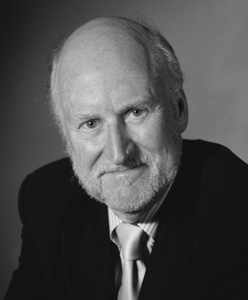 On Friday, August 7, 2009, the US Senate confirmed Rocco Landesman, a Broadway theater producer, as the tenth chairman of the National Endowment for the Arts (NEA). Nominated by President Barack Obama, Landesman succeeds Dana Gioia, who resigned in January 2009. Patrice Walker Powell, the NEA’s deputy chairman for state, regions, and local arts agencies, had served as acting chairman in the interim.
Upon his confirmation Landesman said, “I am honored to receive the Senate’s vote of confirmation. I look forward to serving the nation as Chairman of the National Endowment for the Arts. I believe this is an auspicious time for the NEA and the country. Art is essential to the civic, economic, and cultural vitality of our nation. It reflects who we are and what we stand for—freedom of expression, imagination, and vision. I am eager to work with our many partners to bring quality arts programs to neighborhoods and communities across the country.”
Born and raised in St. Louis, Missouri, Landesman pursued his undergraduate education at Colby College and the University of Wisconsin, Madison, and earned a doctorate in dramatic literature at the Yale School of Drama. At the completion of his course work, he stayed at the school for four years, working as an assistant professor.
His ensuing career has been a hybrid of commercial, philanthropic, and artistic engagements. In 1977, he left Yale to start a private investment fund, which he ran until his appointment in 1987 as president of Jujamcyn, a company that owns and operates five Broadway theaters. Before and after joining Jujamcyn, Landesman produced Broadway shows, the most notable of which are Big River (1985 Tony for best musical), Angels in America, and The Producers (2001 Tony for best musical). In 2005, he bought Jujamcyn and managed it until President Obama announced his intention to nominate him to the NEA chairmanship.
Landesman has also been active on numerous boards, including the Municipal Arts Society; an advocacy organization concerned with New York City’s public spaces and preservation; the Times Square Alliance, which has radically changed the heart of the city by improving its safety, sanitation, and aesthetic; and the Educational Foundation of America. Over the years, he returned to the Yale School of Drama and Yale Rep to teach.
Photo: Michael Eastman.
Rocco Landesman Is New NEA Chairman
posted by Christopher Howard — August 10, 2009
On Friday, August 7, 2009, the US Senate confirmed Rocco Landesman, a Broadway theater producer, as the tenth chairman of the National Endowment for the Arts (NEA). Nominated by President Barack Obama, Landesman succeeds Dana Gioia, who resigned in January 2009. Patrice Walker Powell, the NEA’s deputy chairman for state, regions, and local arts agencies, had served as acting chairman in the interim.
Upon his confirmation Landesman said, “I am honored to receive the Senate’s vote of confirmation. I look forward to serving the nation as Chairman of the National Endowment for the Arts. I believe this is an auspicious time for the NEA and the country. Art is essential to the civic, economic, and cultural vitality of our nation. It reflects who we are and what we stand for—freedom of expression, imagination, and vision. I am eager to work with our many partners to bring quality arts programs to neighborhoods and communities across the country.”
Born and raised in St. Louis, Missouri, Landesman pursued his undergraduate education at Colby College and the University of Wisconsin, Madison, and earned a doctorate in dramatic literature at the Yale School of Drama. At the completion of his course work, he stayed at the school for four years, working as an assistant professor.
His ensuing career has been a hybrid of commercial, philanthropic, and artistic engagements. In 1977, he left Yale to start a private investment fund, which he ran until his appointment in 1987 as president of Jujamcyn, a company that owns and operates five Broadway theaters. Before and after joining Jujamcyn, Landesman produced Broadway shows, the most notable of which are Big River (1985 Tony for best musical), Angels in America, and The Producers (2001 Tony for best musical). In 2005, he bought Jujamcyn and managed it until President Obama announced his intention to nominate him to the NEA chairmanship.
Landesman has also been active on numerous boards, including the Municipal Arts Society; an advocacy organization concerned with New York City’s public spaces and preservation; the Times Square Alliance, which has radically changed the heart of the city by improving its safety, sanitation, and aesthetic; and the Educational Foundation of America. Over the years, he returned to the Yale School of Drama and Yale Rep to teach.
Photo: Michael Eastman.
New Lawsuit Aims to Halt Rose Museum Closing
posted by Christopher Howard — July 28, 2009
“Guess what? The art is not yours to sell.” So says Jonathan Lee of the board of overseers of the maligned Rose Art Museum about a lawsuit filed yesterday that aims to stop Brandeis University from closing the institution and selling the art collection. Lee has joined fellow overseers Lois Foster and Meryl Rose—who is a member of the family that founded the museum—to ask the Supreme Judicial Court of Massachusetts to issue a preliminary injunction to halt the university’s plans.
Jerry Kronenberg of the Boston Herald and Tracy Jan of the Boston Globe have more on the story.
CAA Signs Anticensorship Amicus Brief for US v. Stevens
posted by Christopher Howard — July 28, 2009
US v. Robert Stevens involves a federal statute that makes it a crime to own, possess, or display depictions of animal cruelty, if the acts portrayed are illegal in the state where someone owns, possesses, or sells them—even if the acts portrayed weren’t illegal when or where they were performed. The actual case involves a man who was convicted under the statute for a video about pit bulls that contained footage of dogfights in places where they were legal—not to promote dog fighting but to describe how the dogs have been/are used. The conviction was reversed on appeal on the ground that the prohibition on the depiction alone violates the First Amendment, and the Supreme Court has agreed to hear the case. It is important to emphasize, though, that cruelty to animals itself is illegal in most states, and CAA is not advocating for the repeal of those laws—just the law that bans any depiction of animal cruelty.
CAA has signed an amicus brief prepared by the National Coalition Against Censorship that will discuss the implications for free expression, focusing on some well-known art situations, such as Adel Abdessemed’s cancelled show at San Francisco Art Institute, Wim Delvoye’s tatooed pigs, and Hermann Nitsch’s performances. Whatever the ethical issues such work raises, we claim that pure expression—as opposed to actual acts of animal cruelty—should not be subject to criminal penalties, and that the government’s argument in favor of criminalizing speech if its “social cost” outweighs its “value” is so far-reaching that it would chill all kinds of protected expression and exhibition.
This case is relevant to not only artists but also art-history professors, as they may want to teach about ethical issues in art, including the treatment of animals in bioart, etc. The law as it stands might chill their ability to show such work.
CAA Statement
The College Art Association joins the National Coalition Against Censorship in urging the Supreme Court to uphold the decision of the United States Court of Appeals for the Third Circuit in striking down Section 48 as unconstitutional. Section 48 is unconstitutional because it could deter and punish the production, distribution, and even the simple possession of constitutionally protected speech. If the decision is reversed, not only will some lawful expression depicting animals being killed or injured be subject to criminal sanction, but the ramifications are also far-reaching: Congress and the states could outlaw the creation and possession of artworks that depict certain types of conduct simply on the basis that the conduct itself is illegal.
This would chill a wide range of expression, including, potentially, art that depicts such criminal activities as terrorist acts, drug use, and certain types of sexual behavior. Although CAA does not condone cruelty to animals or any other sort of unlawful conduct, CAA has long and firmly opposed artistic and scholarly censorship of all kinds.
Paul B. Jaskot, President, College Art Association
Professor, Department of Art and Art History, DePaul University
Linda Downs, Executive Director, College Art Association
CAA Signs Anticensorship Amicus Brief for US v. Stevens
posted by Christopher Howard — July 28, 2009
US v. Robert Stevens involves a section of a federal statute (18 U.S.C. § 48) that makes it a crime to own, possess, or display depictions of animal cruelty if the acts portrayed are illegal in the state where someone owns, possesses, or sells them—even if the acts portrayed weren’t illegal when or where they were performed. The actual case involves a man who was convicted under the statute for a video about pit bulls that contained footage of dogfights in places where they were legal—not to promote dog fighting but to describe how the dogs have been/are used. The conviction was reversed on appeal on the ground that the prohibition on the depiction alone violates the First Amendment, and the Supreme Court has agreed to hear the case. It is important to emphasize, though, that cruelty to animals itself is illegal in most states, and CAA is not advocating for the repeal of those laws—just the law that bans any depiction of animal cruelty.
CAA has signed an amicus curiae brief prepared by the National Coalition Against Censorship that will discuss the implications for free expression, focusing on some well-known art situations, such as Adel Abdessemed’s cancelled show at San Francisco Art Institute, Wim Delvoye’s tattooed pigs, and Hermann Nitsch’s performances. Whatever the ethical issues such work raises, we claim that pure expression—as opposed to actual acts of animal cruelty—should not be subject to criminal penalties, and that the government’s argument in favor of criminalizing speech if its “social cost” outweighs its “value” is so far-reaching that it would chill all kinds of protected expression and exhibition.
This case is relevant to not only artists but also art-history professors, as they may want to teach about ethical issues in art, including the treatment of animals in bioart, etc. The law as it stands might chill their ability to show such work.
CAA Statement
The College Art Association joins the National Coalition Against Censorship in urging the Supreme Court to uphold the decision of the United States Court of Appeals for the Third Circuit in striking down Section 48 as unconstitutional. Section 48 is unconstitutional because it could deter and punish the production, distribution, and even the simple possession of constitutionally protected speech. If the decision is reversed, not only will some lawful expression depicting animals being killed or injured be subject to criminal sanction, but the ramifications are also far-reaching: Congress and the states could outlaw the creation and possession of artworks that depict certain types of conduct simply on the basis that the conduct itself is illegal.
This would chill a wide range of expression, including, potentially, art that depicts such criminal activities as terrorist acts, drug use, and certain types of sexual behavior. Although CAA does not condone cruelty to animals or any other sort of unlawful conduct, CAA has long and firmly opposed artistic and scholarly censorship of all kinds.
Paul B. Jaskot, President, College Art Association
Professor, Department of Art and Art History, DePaul University
Linda Downs, Executive Director, College Art Association
Court Rules That O’Keeffe Museum Cannot Stop Paintings Sale
posted by Christopher Howard — July 17, 2009
A Tennessee Court of Appeals ruled on Tuesday that the Georgia O’Keeffe Museum in Santa Fe, New Mexico, may not intervene in the sale of artworks that the late artist donated to Fisk University. For more than three years the cash-strapped Nashville school, which owns a substantial bequest that includes O’Keeffe’s famous Radiator Building – Night, New York (1927) and Marsden Hartley’s Painting No. 3 (1913), has wanted to sell those two paintings to—and share the display of many other works in the prized collection with—the Crystal Bridges Museum in Bentonville, Arkansas.
Travis Loller of the Associated Press and Jack Silverman of the Nashville Scene have more details.
CAA encourages you to sign a petition that supports the integrity and value of university and college art museums.
Court Rules That O’Keeffe Museum Cannot Stop Paintings Sale
posted by Christopher Howard — July 17, 2009
A Tennessee Court of Appeals ruled on Tuesday that the Georgia O’Keeffe Museum in Santa Fe, New Mexico, may not intervene in the sale of artworks that the late artist donated to Fisk University. For more than three years the cash-strapped Nashville school, which owns a substantial bequest that includes O’Keeffe’s famous Radiator Building – Night, New York (1927) and Marsden Hartley’s Painting No. 3 (1913), has wanted to sell those two paintings to—and share the display of many other works in the prized collection with—the Crystal Bridges Museum in Bentonville, Arkansas.
Travis Loller of the Associated Press and Jack Silverman of the Nashville Scene have more details.
CAA encourages you to sign a petition that supports the integrity and value of university and college art museums.
Petition to Support University Galleries and Museums
posted by CAA — July 14, 2009
Several university art museums or their school administrations have recently sold, or have attempted to sell, artworks and objects in their collections to offset operating costs. In response to this, CAA has joined a task force supporting the educational importance of preserving collections at university museums and galleries. The task force—which includes representatives from the American Association of Museums, the Association of Art Museum Directors, the Association of College and University Museums and Galleries, and the Samuel H. Kress Foundation—has established a two-pronged effort: 1) to recognize museums as integral educational resources in the university accreditation process; and 2) to heighten public awareness of the educational value of art museum collections.
Members of the task force are meeting with accreditation organizations throughout the country to enlist their support for the recognition of art museums as integral educational resources.
A petition has been prepared that reaffirms the integrity and value of university and college museums.
Please show support for our efforts by adding your name and affiliation to this petition, which will be published in the Chronicle of Higher Education this fall. Please encourage your university, college, or museum to sign it as well.
Thank you for your support on this critical issue.
Paul B. Jaskot, President, and Linda Downs, Executive Director