
CAA News Today
Brandeis Committee Recommends Keeping the Rose Art Museum Open
posted by Christopher Howard — September 22, 2009
A report issued by a Brandeis University committee recommends that the school’s Rose Art Museum remain open, but the future of the collection of modern and contemporary art is still in doubt.
In the Boston Globe, Tracy Jan writes that the committee, comprising teachers, students, and university trustees and officials, also suggests better integration between the museum and academic departments, which include not just visual art but also math and science. In addition, a full-time director, who would also teach, and an education director should be hired.
This past summer several members of the Rose Art Museum’s board of overseers filed a lawsuit in Massachusetts in an attempt to prevent Brandeis from selling the art collection. Last week the university filed to dismiss that lawsuit, according to Greg Cook of the New England Journal of Aesthetic Research. An October 13 hearing date has been set.
Obama Names Committee on the Arts and the Humanities Leaders
posted by Christopher Howard — September 18, 2009
Barack Obama has appointed new leaders to the President’s Committee on the Arts and the Humanities. George Stevens, Jr., and Margo Lion will serve as cochairs, and Mary Schmidt Campbell will be vice chair.
This committee, founded in 1982 and comprised of private citizens from across the United States, advocates for the arts and humanities as core of a vital society. It works with the National Endowment for the Arts, the National Endowment for the Humanities, and the Institute of Museum and Library Services to advance nonpartisan cultural objectives of the Obama administration.
Stevens is a writer, director, producer of motion pictures and television, founder of the American Film Institute, and creator of the Kennedy Center Honors. He fostered a new generation of documentary filmmakers as head of the US Information Agency’s Motion Picture Service during the Kennedy presidency.
As a Broadway producer, Lion has worked with Tony Kushner, David Mamet, Arthur Miller, August Wilson, and George C. Wolfe, and her work has earned Tony and Olivier awards and a Pulitzer Prize. She is also an adjunct professor and a member of the Dean’s Council at New York University’s Tisch School of the Arts.
Tisch is also home to Campbell, where she is dean. A former chair of the New York State Council on the Arts, Campell was executive director of the Studio Museum in Harlem, where she wrote the catalogue for the exhibition Memory and Metaphor: The Art of Romare Bearden, 1940–1987.
In early August, President Obama appointed Rachel Goslins, an independent television and film producer, as the committee’s executive director.
Obama Names Committee on the Arts and the Humanities Leaders
posted by Christopher Howard — September 18, 2009
Barack Obama has appointed new leaders to the President’s Committee on the Arts and the Humanities. George Stevens, Jr., and Margo Lion will serve as cochairs, and Mary Schmidt Campbell will be vice chair.
This committee, founded in 1982 and comprised of private citizens from across the United States, advocates for the arts and humanities as core of a vital society. It works with the National Endowment for the Arts, the National Endowment for the Humanities, and the Institute of Museum and Library Services to advance nonpartisan cultural objectives of the Obama administration.
Stevens is a writer, director, producer of motion pictures and television, founder of the American Film Institute, and creator of the Kennedy Center Honors. He fostered a new generation of documentary filmmakers as head of the US Information Agency’s Motion Picture Service during the Kennedy presidency.
As a Broadway producer, Lion has worked with Tony Kushner, David Mamet, Arthur Miller, August Wilson, and George C. Wolfe, and her work has earned Tony and Olivier awards and a Pulitzer Prize. She is also an adjunct professor and a member of the Dean’s Council at New York University’s Tisch School of the Arts.
Tisch is also home to Campbell, where she is dean. A former chair of the New York State Council on the Arts, Campell was executive director of the Studio Museum in Harlem, where she wrote the catalogue for the exhibition Memory and Metaphor: The Art of Romare Bearden, 1940–1987.
In early August, President Obama appointed Rachel Goslins, an independent television and film producer, as the committee’s executive director.
CAA Joins Task Force on University Galleries and Museums
posted by Christopher Howard — September 01, 2009
In response to troubling trends in university museums and galleries—including the sale of Maier Art Museum paintings by Randolph College, the closure of the Rose Art Museum at Brandeis University, and the threat of sale of important modernist works at Fisk University—a task force was formed that includes CAA, the American Association of Museums, the Association of Art Museum Directors, the Association of College and University Museums and Galleries, and the Kress Foundation to address ways to educate university trustees about the educational value of university museums and to explore protective avenues. A petition was circulated to various associations and also set up online, which received several thousand signatures—including many from CAA members. The petition will be published in the Chronicle of Higher Education later this fall. Quiet conversations are continuing with Brandeis trustees, and several university accreditation commissions have been apprised of the concerns of the task force and the visual-arts field.
On the same topic, caa.reviews recently published an essay entitled “Curricular Connections: The College/University Art Museum as Site for Teaching and Learning.” The author, Laurel Bradley, who is director of exhibitions and curator of the College Art Collection at Carleton College, provides a brief history of university museums and galleries since the mid-twentieth century before exploring several recent initiatives—some funded by the Mellon Foundation’s College and University Art Museum Program—that combine academic and curatorial teaching and education in novel, and often successful, ways.
Jim Leach Is New Chairman of the NEH
posted by Christopher Howard — August 13, 2009
After receiving confirmation from the US Senate last Friday, Jim Leach was sworn in as the ninth chairman of the National Endowment for the Humanities (NEH). A Republican, Leach previously served southeastern Iowa for thirty years in the US House of Representatives, where he chaired the Banking and Financial Services Committee, the Subcommittee on Asian and Pacific Affairs, and the Congressional-Executive Commission on China. He also founded and cochaired the Congressional Humanities Caucus.
After leaving Congress in 2007, Leach was John L. Weinberg Visiting Professor of Public and International Affairs in Princeton University’s Woodrow Wilson School. In September 2007, he took a year’s leave of absence from Princeton to serve as the interim director of the Institute of Politics and a lecturer at the John F. Kennedy School of Government at Harvard University.
In a recent staff “town hall” meeting about a new “bridging cultures” theme for the NEH, Leach said, “In an era where declining civility increasingly hallmarks domestic politics and where anarchy has taken root in many parts of the world, it is imperative that cultural differences at home and abroad be respectfully understood, rather than irrationally denigrated.”
Leach graduated from Princeton, received a master’s degree in Soviet politics from the School of Advanced International Studies at John Hopkins University, and did additional graduate studies at the London School of Economics. He also holds eight honorary degrees and has received numerous awards, including the Sidney R. Yates Award for Distinguished Public Service to the Humanities from the National Humanities Alliance; the Woodrow Wilson Award from Johns Hopkins; the Adlai Stevenson Award from the United Nations Association; the Edgar Wayburn Award from the Sierra Club; the Wayne Morse Integrity in Politics Award; the Norman Borlaug Award for Public Service; and the Wesley Award for Service to Humanity.
Jim Leach Is the New Chairman of the NEH
posted by Christopher Howard — August 13, 2009
After receiving confirmation from the US Senate last Friday, Jim Leach was sworn in as the ninth chairman of the National Endowment for the Humanities (NEH). A Republican, Leach previously served southeastern Iowa for thirty years in the US House of Representatives, where he chaired the Banking and Financial Services Committee, the Subcommittee on Asian and Pacific Affairs, and the Congressional-Executive Commission on China. He also founded and cochaired the Congressional Humanities Caucus.
After leaving Congress in 2007, Leach was John L. Weinberg Visiting Professor of Public and International Affairs in Princeton University’s Woodrow Wilson School. In September 2007, he took a year’s leave of absence from Princeton to serve as the interim director of the Institute of Politics and a lecturer at the John F. Kennedy School of Government at Harvard University.
In a recent staff “town hall” meeting about a new “bridging cultures” theme for the NEH, Leach said, “In an era where declining civility increasingly hallmarks domestic politics and where anarchy has taken root in many parts of the world, it is imperative that cultural differences at home and abroad be respectfully understood, rather than irrationally denigrated.”
Leach graduated from Princeton, received a master’s degree in Soviet politics from the School of Advanced International Studies at John Hopkins University, and did additional graduate studies at the London School of Economics. He also holds eight honorary degrees and has received numerous awards, including the Sidney R. Yates Award for Distinguished Public Service to the Humanities from the National Humanities Alliance; the Woodrow Wilson Award from Johns Hopkins; the Adlai Stevenson Award from the United Nations Association; the Edgar Wayburn Award from the Sierra Club; the Wayne Morse Integrity in Politics Award; the Norman Borlaug Award for Public Service; and the Wesley Award for Service to Humanity.
Fractional Gifts Legislation Introduced in the Senate
posted by Christopher Howard — August 10, 2009
An untitled bill introduced last week in the US Senate may loosen recent government restrictions on fractional gifts of works of art to museums, reports Shelly Banjo of the Wall Street Journal. Senator Charles Schumer (D-NY), whose state contains many important art museums, patrons, and philanthropists, is sponsoring S 1605, which would reform the rules regulating fractional charitable donations of tangible personal property.
Fractional gifts—which allow Americans to give partial ownership rights of an artwork to a museum or charitable organization and take an income-tax deduction for the donated portion of its value—were common practice in the museum world until 2006, when provisions put into the Pension Protection Act of 2006 by Senator Charles E. Grassley (R-IA) made partial gifts less attractive for donors. (Namely, that work must be fully donated within ten years of the initial fractional gift, and that the value of the artwork is capped when the first gift is made.) Since then, museums noticed that the practice of fractional gifts has nearly disappeared.
Here’s more background information on fractional gifts in the New York Times in 2006 and 2008.
Rocco Landesman Is New NEA Chairman
posted by Christopher Howard — August 10, 2009
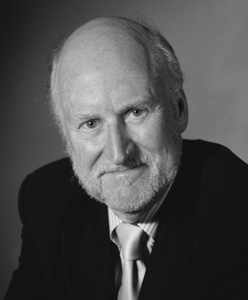 On Friday, August 7, 2009, the US Senate confirmed Rocco Landesman, a Broadway theater producer, as the tenth chairman of the National Endowment for the Arts (NEA). Nominated by President Barack Obama, Landesman succeeds Dana Gioia, who resigned in January 2009. Patrice Walker Powell, the NEA’s deputy chairman for state, regions, and local arts agencies, had served as acting chairman in the interim.
Upon his confirmation Landesman said, “I am honored to receive the Senate’s vote of confirmation. I look forward to serving the nation as Chairman of the National Endowment for the Arts. I believe this is an auspicious time for the NEA and the country. Art is essential to the civic, economic, and cultural vitality of our nation. It reflects who we are and what we stand for—freedom of expression, imagination, and vision. I am eager to work with our many partners to bring quality arts programs to neighborhoods and communities across the country.”
Born and raised in St. Louis, Missouri, Landesman pursued his undergraduate education at Colby College and the University of Wisconsin, Madison, and earned a doctorate in dramatic literature at the Yale School of Drama. At the completion of his course work, he stayed at the school for four years, working as an assistant professor.
His ensuing career has been a hybrid of commercial, philanthropic, and artistic engagements. In 1977, he left Yale to start a private investment fund, which he ran until his appointment in 1987 as president of Jujamcyn, a company that owns and operates five Broadway theaters. Before and after joining Jujamcyn, Landesman produced Broadway shows, the most notable of which are Big River (1985 Tony for best musical), Angels in America, and The Producers (2001 Tony for best musical). In 2005, he bought Jujamcyn and managed it until President Obama announced his intention to nominate him to the NEA chairmanship.
Landesman has also been active on numerous boards, including the Municipal Arts Society; an advocacy organization concerned with New York City’s public spaces and preservation; the Times Square Alliance, which has radically changed the heart of the city by improving its safety, sanitation, and aesthetic; and the Educational Foundation of America. Over the years, he returned to the Yale School of Drama and Yale Rep to teach.
Photo: Michael Eastman.
Rocco Landesman Is New NEA Chairman
posted by Christopher Howard — August 10, 2009
On Friday, August 7, 2009, the US Senate confirmed Rocco Landesman, a Broadway theater producer, as the tenth chairman of the National Endowment for the Arts (NEA). Nominated by President Barack Obama, Landesman succeeds Dana Gioia, who resigned in January 2009. Patrice Walker Powell, the NEA’s deputy chairman for state, regions, and local arts agencies, had served as acting chairman in the interim.
Upon his confirmation Landesman said, “I am honored to receive the Senate’s vote of confirmation. I look forward to serving the nation as Chairman of the National Endowment for the Arts. I believe this is an auspicious time for the NEA and the country. Art is essential to the civic, economic, and cultural vitality of our nation. It reflects who we are and what we stand for—freedom of expression, imagination, and vision. I am eager to work with our many partners to bring quality arts programs to neighborhoods and communities across the country.”
Born and raised in St. Louis, Missouri, Landesman pursued his undergraduate education at Colby College and the University of Wisconsin, Madison, and earned a doctorate in dramatic literature at the Yale School of Drama. At the completion of his course work, he stayed at the school for four years, working as an assistant professor.
His ensuing career has been a hybrid of commercial, philanthropic, and artistic engagements. In 1977, he left Yale to start a private investment fund, which he ran until his appointment in 1987 as president of Jujamcyn, a company that owns and operates five Broadway theaters. Before and after joining Jujamcyn, Landesman produced Broadway shows, the most notable of which are Big River (1985 Tony for best musical), Angels in America, and The Producers (2001 Tony for best musical). In 2005, he bought Jujamcyn and managed it until President Obama announced his intention to nominate him to the NEA chairmanship.
Landesman has also been active on numerous boards, including the Municipal Arts Society; an advocacy organization concerned with New York City’s public spaces and preservation; the Times Square Alliance, which has radically changed the heart of the city by improving its safety, sanitation, and aesthetic; and the Educational Foundation of America. Over the years, he returned to the Yale School of Drama and Yale Rep to teach.
Photo: Michael Eastman.
New Lawsuit Aims to Halt Rose Museum Closing
posted by Christopher Howard — July 28, 2009
“Guess what? The art is not yours to sell.” So says Jonathan Lee of the board of overseers of the maligned Rose Art Museum about a lawsuit filed yesterday that aims to stop Brandeis University from closing the institution and selling the art collection. Lee has joined fellow overseers Lois Foster and Meryl Rose—who is a member of the family that founded the museum—to ask the Supreme Judicial Court of Massachusetts to issue a preliminary injunction to halt the university’s plans.
Jerry Kronenberg of the Boston Herald and Tracy Jan of the Boston Globe have more on the story.