
CAA News Today
Greg Watts
posted by CAA — December 06, 2018
 STATEMENT
I have been an active member of the College Art Association for more than twenty years and I truly respect and appreciate the forum the association provides for us to refine our collective wisdom through advocacy, engagement and vision.
As a member of the CAA Board of Directors I will endeavor to advance the inclusivity, breadth, and depth of our membership, and encourage greater reciprocity with our peer organizations. With such intent, I currently serve as a member of the Executive Committee and as the Chair of the Commission on Accreditation for the National Association of Art and Design (NASAD). Through this work, as well as past and present work with other organizations, I support active participation that I believe strengthens our prospects for a richly collaborative future. The creative economy, broader advocacy for the arts, greater student involvement, and emergent technologies as methods of building community are examples of areas that I believe are worthy of ongoing consideration for the future of the association – all of which must be on an increasingly global stage.
The heart of my own purpose, within the visual arts in higher education, is to always encourage professional success in concert with personal fulfillment. I believe that we must nurture creativity in both our students and our colleagues; engage in bold conversations about grand ideas; and compel purpose and establish identity through our shared endeavors.
As a member of the CAA Board of Directors I will offer you leadership derived from the breadth of my international experience in concert with an extensive academic background. As an artist, educator, and administrator functioning across complex organizations, I relish the opportunity to give back to our CAA community through my service to the board. I would appreciate your vote! Thank you.
Niku Kashef
posted by CAA — December 06, 2018
 STATEMENT
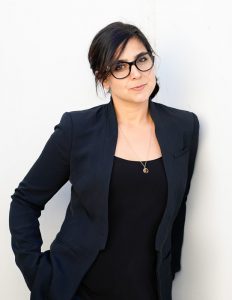
Hello, I’m Niku Kashef, a Los Angeles based artist, educator, and independent curator. I also maintain a commercial photography practice. I have both taught and exhibited work at the local and international levels and produced arts programming for more than a decade. I came to academia after a long time away working in various other areas in the arts, namely: Los Angeles theater; design and video production; technology; building professional resources for creatives in commercial and fine-art; co-developing one of the first online portfolio hosting resources for artists and working in the commercial arts.
I question how non-constituents can become further involved, and how we can more broadly reach and bring the standards set by CAA to contingent faculty, non-academic artists, and those balancing other arts careers like the commercial-arts/design professionals. I excited by the focus of CAA’s Strategic plan to extend the dialogue we have with each other once a year in more dynamic ways beyond the February conference to include regional meetings, outreach, networking opportunities and for our members to find new ways to share scholarship and advocacy work in underrepresented areas.
I am also interested in bringing diversity and representation to the Board from my roles as a part-time lecturer of art, a full-time interdisciplinary artist, a full-time single mother, a part-time commercial artist, a past Director for the National Women’s Caucus for Art, a two-time Past-President of the Southern California Women’s Caucus for Art, an independent curator, and an Angelino. My practice in all these areas begins with non-hierarchical feminist values of equity and agency for diverse perspectives. I believe these varied experiences allow me to identify with many of our CAA members, and engage the larger community who balance their practice by wearing multiple-hats.
My interest to serving on the CAA Board stems from the desire to offer more resources for individuals like myself while fostering closer relationships with the non-academic art community, art historians, curators, and arts administrators. I was first introduced to CAA in 2007 during graduate school. While a member of CAA, I have served on two committees: Student and Emerging Professionals (SEPC) for three years and Services to Artists (SAC) for four years, the latter of which I have additionally served on as Chair for an additional three years. The SAC produces content for ARTspace and MediaLounge as well as the Distinguished Artist interviews and ARTexchange.
The participation in production of conference offerings, sharing time, space and ideas with like-minded peers, as well as a desire to be of service to young artists’ professional development was the powerful draw that brought me to join the SEPC. On that committee I helped create the mock interviews and what would later become the informal “discussions” now named the brown bag lunch.
During my time with SAC, I helped create a series of panels about artists in non-traditional career paths, parent-artist and family collaborations, and balancing family/personal life and practice; I have continued this series of artist-as-parent offerings yearly since it’s inception. I have also helped lead the development of a new dynamic conference offering “Open Source: Artist Resource Roundtables” bringing local and National organizations to a dynamic roundtable format.
If elected to the Board, I feel my background can support the concerns of the full spectrum of CAA’s membership as well as speak to ways we can consider how to expand our advocacy in underrepresented areas in our arts community.
Jennifer Rissler
posted by CAA — December 06, 2018
 STATEMENT
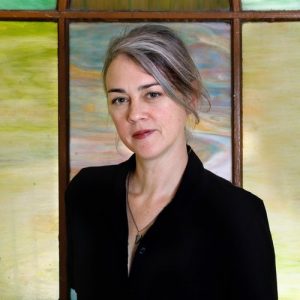
I have dedicated my 20-year professional career to educate, to support, and to advance artists and cultural production in the visual arts at the San Francisco Art Institute (SFAI), where I serve currently as Vice President and Dean of Academic Affairs. A small, independent fine arts college founded in 1871, SFAI is one of the nation’s oldest and most prestigious schools of higher education in contemporary art. SFAI’s core philosophy is one of fostering creativity and critical thinking in an open, experimental, and interdisciplinary environment. This mission statement informs my approach to and work within the visual arts generally, and I believe CAA shares a similar ethos, one that should be advanced to ensure its organizational longevity and relevancy for its members. That, in brief, is my main motivation for joining the Board of Directors.
As reflected on my CV, I serve this professional and personal mission through many board positions with non-profit organizations –including the Skowhegan School for Painting and Sculpture in Skowhegan, ME and Oakwood Arts/P35 in Richmond, VA. Both organizations, although distinct from one another in several ways, exist and were founded to advance creativity and artists’ roles in our society. Both are sustained by a shared belief in this value proposition, which places education at the fore. Higher education, specifically liberal and visual arts education, is increasingly under attack by a dangerous national rhetoric which aims to assault intellectualism, critical and creative thinking. Our roles – as arts administrators, scholars, and practitioners — therefore is exceedingly important against such a cultural context. Advocacy, which is a platform I believe CAA can steward in a more impactful manner, becomes even more urgent.
Currently, it is my desire to return serving a membership organization. As President Emerita of ArtTable, Inc., a non-profit membership organization dedicated to advancing women’s leadership in the visual arts, I’m familiar with the challenges inherent in stewarding organizational initiatives toward member responsiveness. I am excited by the prospect of serving a member-based organization dedicated to advancing scholarship of and advocacy for art and design. Toward that end, I believe unequivocally in Executive Director Hunter O’Hanian’s recent statement, “We must be a leader in the national conversation about the future of art history and studio arts education; indeed, we can work to strengthen all humanities departments in colleges and universities.” Organizations as august as CAA must be responsive to its membership base, cognizant of the ever-shifting landscape of higher education, while balancing the tensions of its founding mission and ethos with the pressure to remain relevant. I have a proven track record of stewarding initiatives in response to a diverse membership base, as my tenure with ArtTable demonstrates. Specifically, I led a strategic planning process that gave more autonomy to its members outside of the tri-state area (ArtTable’s offices are in midtown Manhattan), enhanced programming that addressed prescient issues facing women leaders in the visual arts, and expanded our mentoring initiatives to support emerging leaders in the field. I deduce from many conversations with members of CAA’s Committee on Women in the Arts (which I chair currently) a shared desire to expand CAA programming along similar vectors. That is a task I am ready for, and I would welcome the opportunity to serve CAA members.
Janet Bellotto
posted by CAA — December 06, 2018
 STATEMENT
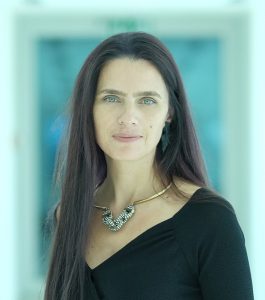
My primary goal if elected to the Board will be to advocate for growing the international presence and global engagement of CAA. As a practicing artist, seasoned educator, and project initiator based in the United Arab Emirates (UAE) for more than a decade, the unique asset I bring to the Board is my extensive experience as an active participant within international art worlds. This has included building connections between people and places—which have fostered cross-cultural explorations within an international context. This is evident in the many projects I have organized over twenty years of my professional practice as well as in my academic and administrative positions in the UAE. My most recent and monumental accomplishment as a facilitator of building international relationships for both individual artists and international institutions was as Artistic Director of the International Symposium on Electronic Art organized in Dubai (ISEA2014) on the theme of Location: Where Art, Science and Technology Come Together. Over ten days, more than 250 participants travelled to Dubai where exhibitions, installations and an academic conference were held at the major universities in the UAE as well as in more than thirty non-profit and institutional spaces. All the participating artists and institutions grew lasting international connections through that one event. Perhaps there are ways to similarly engage wider international participation in CAA’s conference and other activities. This certainly is a way I would like to foster an international network of peers comprising academics, artists, designers, architects, and industry specialists, along with important community stakeholders, who also could contribute to innovative strategizing with the CAA.
Another position I would promote on the Board is art as advocacy. I believe my experience as a practicing artist and my use of multidisciplinary approaches in art practices demonstrates my passionately held commitment to various media as well as to art that addresses pressing contemporary issues – including rising sea levels and their possible effect on the evolving ecosystems of islands which my own art practice engages. As a Board Member, I would explore ways for CAA to more proactively encourage and display art that incorporates advocacy at our annual conference, as well as online. This could become an annual event or competition which would again attract international attention and participation.
As Professor and Associate Dean at the College of Arts and Creative Enterprises of Zayed University in Dubai, as well as being Canadian, I am in a unique position to represent international concerns and opportunities to the Board. Throughout more than a decade in the UAE, as an academic and administrator I have contributed to the dynamic development of the arts community here, including teaching successive cohorts of women, many who subsequently became leading Emirati artists, even representing the UAE at the Venice Biennale and in other international exhibitions. In the UAE I have engaged the opportunity to build, imagine and support a vision where artists and their art from different countries and cultures can build bridges of understanding between communities. Believing that cultural understanding should be an integral component in the teaching of art and design, I will support CAA programs that promote connections between artists and institutions internationally. This also can contribute to growing CAA’s membership.
CAA has continued to develop and improve its organizational structure and its communications. In particular, in the last year CAA made a bold move with new branding while also promoting the diverse nature of its membership. I certainly will support these ongoing Board initiatives. I have been a member of CAA since 1999 and most recently have been a member of CAA’s International Committee. I envision CAA playing a larger role internationally to achieve its vision of supporting all visual arts professionals, including in the areas of design and architecture, while strengthening a diverse membership of art historians. I would also promote the growing online presence of CAA. Engaging with new technologies is essential for building an international profile. This engages emerging professionals, strengthens communication and publications throughout the year, and promotes those artists and designers who are CAA members.
Through team efforts across all aspects of CAA’s activities, I look forward to the possibility of promoting cultural and intellectual exchanges between our community of designers, architects, and art historians with international cohorts. It is a future CAA integrated internationally that I look forward to.
An Interview with Jim Hopfensperger, the New President of CAA
posted by CAA — May 24, 2018

Jim Hopfensperger at home.
As of this month, Jim Hopfensperger, professor of art at Western Michigan University’s Gwen Frostic School of Art, is CAA’s new president for the 2018-2022 term. As a professor and artist with a wealth of experience, we thought it would be a great opportunity to ask Jim his thoughts on CAA and the field at-large. CAA media and content manager Joelle Te Paske spoke with him earlier this month.
JTP: Hi Jim! Thanks so much for speaking with me. How are you?
JH: Very well, Joelle. Thank you so much for taking the time to visit!
JTP: To get us oriented, where did you grow up?
JH: My spouse, Jane, and I were raised in the upper Midwest. While career choices took us to Pennsylvania and Massachusetts, we returned “home” to Michigan eighteen years ago to be nearer aging family members.
JTP: And what did you study?
JH: I was educated as a craftsperson, working primarily in non-ferrous metals such as silver, gold, and copper. During a sabbatical leave from my faculty position at Penn State University in the early 1990s, I was presented the opportunity to work in a furniture studio in Massachusetts. Within a few weeks I was totally hooked, gifting my metal working tools to a younger artist and moving forward as a furniture maker.
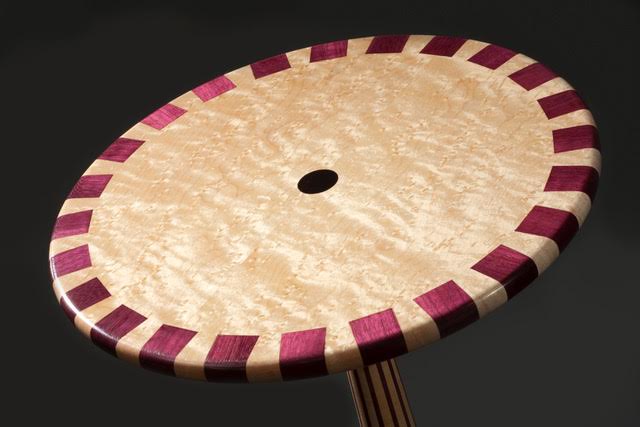
Jim Hopfensperger, Shaker Purple, 2012
JTP: What drew you to the work you do now?
JH: I am drawn to how creating art/design objects—one-at-a-time and by hand—reinforces and reaffirms what it means to be a human being. Thinking with my hands, my eyes, and my mind to conceive well-designed and useful articles makes me feel whole. Perhaps I am a kinesthetic thinker/learner? It also seems possible that, for better and for worse, my sense of self is simply anchored in making things. The non-existent term “neuroceutical therapy” comes to mind!
JTP: What is exciting to you as the incoming CAA president?
JH: The forces of change are in motion all around us. It is a truly exhilarating time to be in the business of living!
As for CAA, a raft of research suggests that healthy organizations prosper when focusing efforts along two key pathways: 1) identifying and strengthening essential core competencies and 2) systematically exploring future capacities. This means sustaining CAA’s outstanding programs and services while simultaneously identifying the organization’s next purposes. Full attention to both matters seems essential if we are to extend a highly distinguished history of advocacy for artists, art historians, scholars, curators, critics, designers, collectors, and educators. I am grateful for this opportunity and excited about the work ahead.
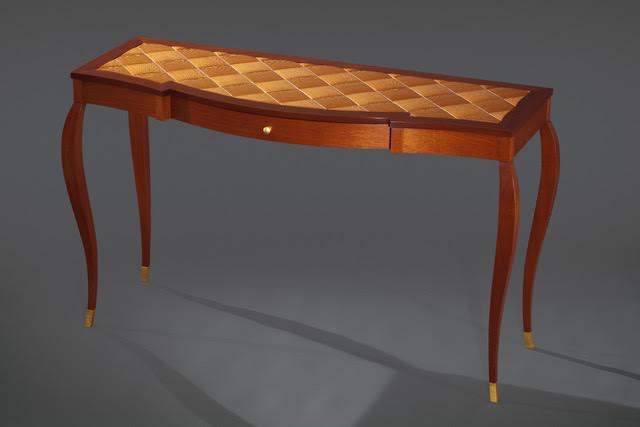
Jim Hopfensperger, Deliberation No. 7, 2005
JTP: What work has been done over the past few years that you would like to build on? What would you like to see happening at CAA in the next year? How about in the next ten?
JH: Clearly, CAA remains an eminent learned society. At the same time it is increasingly fulfilling its potential as a professional association that serves members across educational, curatorial, scholarly, and creative pursuits. In the short term I am confident CAA will remain a strong association and identify more ways to support members in their professional lives.
Over the next few years a pivot toward some key constituencies might make strategic sense. Those include 1) the burgeoning ranks of contingent employees upon whom educational and cultural institutions have become increasingly reliant; 2) the large number of design and new/emerging media practitioners graduating from art and design programs; and 3) the community of international scholars, artists, and designers steadily advancing global perspectives. I look forward to working with CAA members, staff, board, and other stakeholders to map a future wherein these colleagues will be well served.
JTP: What has been a memorable professional moment for you at a CAA Annual Conference?
JH: I am deeply invested in the fellowship aspects of CAA. My fondest memory involves mentoring in the Professional Development Workshops at the Annual Conference in 2000. One my mentees was, as I, trained as a metalsmith. We worked closely after that conference to identify strategies for achieving his professional goals, and he eventually accepted a splendid academic position. In return for my service, and for each of the past eighteen years uninterrupted, he has gifted to me a handcrafted metal ornament to hang on our family holiday tree. Simply precious! (And if you are reading this Professor James Thurman, a wholehearted “Thank You!” is long overdue.)
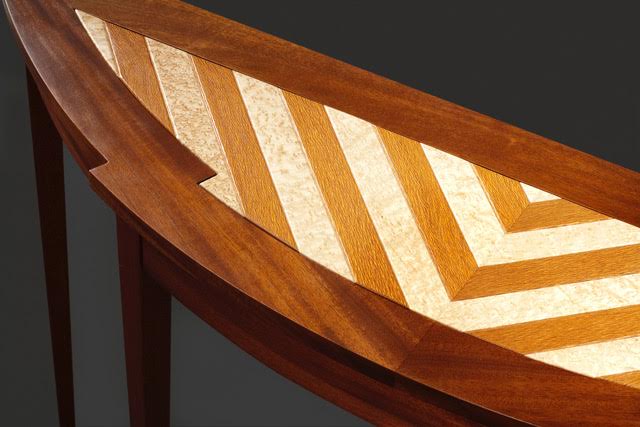
Jim Hopfensperger, Deliberation No. 9, 2013
JTP: What would you say is the number one challenge facing higher education?
JH: Excellent question. My two cents: Adapting to the startling, inevitable pace of cultural and technological change is an operational necessity. Yet, communicating the value of an educated populace appears to be our most immediate and pressing challenge. Making the case for the causal relationship between educational opportunities and the ascendance of an increasingly ethical, moral, and empathetic society is job one. In the absence of such a mission statement, it is not difficult to imagine financial or economic ‘values’ easily filling the void.
The logical outcome might then resemble Oscar Wilde’s timeless quip about a cynic being ‘a man who knows the price of everything and the value of nothing.’
JTP: Do you have a favorite artwork?
JH: I have a keen interest in all forms of applied design—dynamic and surprising buildings, objects, communications, products, and processes. However, and for reasons I am not fully able to explain, my favorite artwork is Monet’s Four Trees in the Met’s collection. This quiet little companion and I visit perhaps once every 12 to 24 months. Invariably, I leave our encounters refreshed and restored.
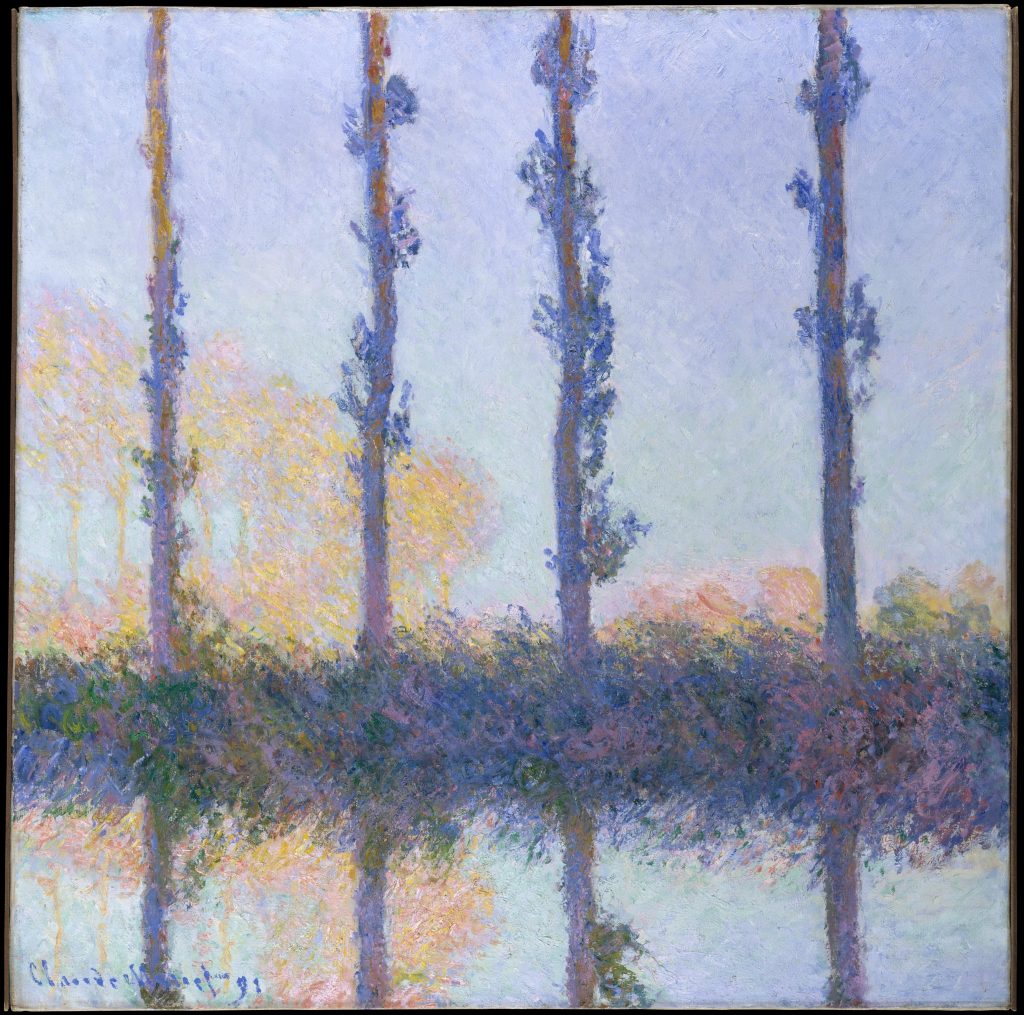
Claude Monet, The Four Trees, 1891, oil on canvas, 32 1/4 x 32 1/8 in. (81.9 x 81.6 cm) Collection of The Metropolitan Museum of Art. Image: Wikimedia Commons
JTP: What about a favorite book?
JH: Much of my reading over the past decade can be described as a search for serviceable maps of the human mind, followed by rubbernecking at accidents caused by irrational behaviors. Daniel Kahneman’s Thinking Fast and Slow is a fine example of the former, the type of mind mapping I find highly addictive. Kahneman’s lenses for understanding our extraordinary capabilities, while simultaneously identifying those pesky faults and deep biases that accompany human thought and action, help structure my own thinking. In a related way writings on decision-making in everyday life are equally intriguing and useful. Charles Duhiggs’s The Power of Habit, Dan Ariely’s Predictably Irrational, Keith Payne’s The Broken Ladder successfully illustrate complexities and contradictions when/where supposedly rational thoughts and human actions intersect, often to hilarious and/or tragic effect—endlessly fascinating stuff!
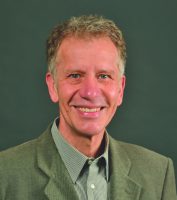
Jim Hopfensperger is a professor of art at Western Michigan University’s Gwen Frostic School of Art where he teaches foundation art. Jim’s art works have been shown nationally and internationally in over 100 exhibitions at venues including the Detroit Institute of Arts, Nelson-Atkins Museum of Art, Auckland Memorial Museum, Lever House, University of Iowa Museum of Art, University of Oregon Museum of Art, State Museum of Pennsylvania, North Carolina Museum of History, and National Ornamental Metals Museum.
Jim’s past appointments include serving as Senior Associate Dean in the College of Fine Arts at Western Michigan University, Chair of the Department of Art & Art History at Michigan State University, and Head of the Studio Art Program at The Pennsylvania State University. He has also taught at the Massachusetts College of Art, University of Massachusetts-Dartmouth, Skidmore College, University of Michigan, and North Carolina State University.
Jim is Past President of the National Council of Arts Administrators, and is an accreditation visitor for the National Association of Schools of Art and Design. He earned a MFA from University of Michigan, a MA from University of Illinois at Urbana-Champaign, and a BA from Michigan State University.
Do You Know a CAA-Friendly Person Who Knows Numbers?
posted by CAA — May 11, 2018

As you know, CAA is a non-profit organization. Last fall, our beloved Treasurer Jack Hyland passed away after more than twenty years of service to the Association. Board Member Peter Lukehart has agreed to serve as Interim Treasurer until a permanent new treasurer is found.
If you know someone, perhaps a spouse or friend of an existing CAA member, who knows their away around numbers (i.e., budgets, annual financial statements, etc.) who would be willing to serve the Association as its Treasurer, please contact Executive Director Hunter O’Hanian (HOHanian@collegeart.org). Elected by the Board of Directors, the Treasurer is a non-paid position and sits on the Board of Directors. He or she works closely with the Association’s CFO to review financial statements. It is estimated that this role takes approximately 5 hours of volunteer time per quarter, in addition to attendance at the Board of Directors meetings which are usually in February, May and October.
CAA Welcomes New Board Members
posted by CAA — March 02, 2018
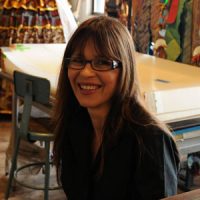
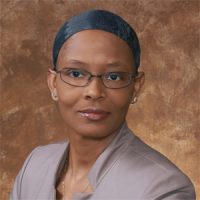
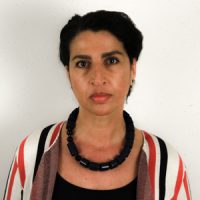

The results of the 2018 CAA Board of Directors Election were presented at the CAA Annual Business Meeting, Part II on Thursday, February 23 at 2:00 PM at the 106th CAA Annual Conference in Los Angeles. We are grateful to all the candidates who put forward their names for consideration this year.
Six candidates were selected for election by the 2017-18 Nominating Committee for a four-year term running from 2018–22.
We congratulate Laura Anderson Barbata, Audrey G. Bennett, Dahlia Elsayed, and Alice Ming Wai Jim on their election to the CAA Board of Directors.
Read more about the new board members:
Laura Anderson Barbata statement and resume
Audrey G. Bennett statement and resume
Dahlia Elsayed statement and resume
Alice Ming Wai Jim statement and resume
About the Board of Directors
The Board of Directors is charged with CAA’s long-term financial stability and strategic direction; it is also the Association’s governing body. The board sets policy regarding all aspects of CAA’s activities, including publishing, the Annual Conference, awards and fellowships, advocacy, and committee procedures.
Do You Know a CAA-Friendly Person Who Knows Numbers?
posted by CAA — February 12, 2018
As you know, CAA is a non-profit organization. Last fall, our beloved Treasurer Jack Hyland passed away after more than twenty years of service to the Association. Board Member Peter Lukehart has agreed to serve as Interim Treasurer until a permanent new treasurer is found.
If you know someone, perhaps a spouse or friend of an existing CAA member, who knows their away around numbers (i.e., budgets, annual financial statements, etc.) who would be willing to serve the Association as its Treasurer, please contact Executive Director Hunter O’Hanian (HOHanian@collegeart.org). Elected by the Board of Directors, the Treasurer is a non-paid position and sits on the Board of Directors. He or she works closely with the Association’s CFO to review financial statements. It is estimated that this role takes approximately 5 hours of volunteer time per quarter, in addition to attendance at the Board of Directors meetings which are usually in February, May and October.
Notice of CAA 106th Annual Business Meeting
posted by CAA — December 15, 2017
College Art Association
Notice of 106th Annual Business Meeting
Los Angeles, California
Wednesday, February 21 and Friday, February 23, 2018
The 106th Annual Business Meeting of the members of the College Art Association will be called to order at 6:00 PM on Wednesday, February 21st, during Convocation at the 2018 Annual Conference, in Room 502A and B at the Los Angeles Convention Center, 1201 S. Figueroa Street, Los Angeles, California.
CAA President, Suzanne Preston Blier, will preside. The Annual Business Meeting will be held in two parts.
AGENDA
The Agenda for the first part of the Annual Business Meeting is as follows:
I. Welcome – Hunter O’Hanian, CAA Executive Director and CEO
II. Presentation by Suzanne Preston Blier, CAA President
III. Executive Director’s Report – Hunter O’Hanian
IV. Presentation of CAA Awards for Distinction – Suzanne Preston Blier
V. 2018 Professional Development Fellowships in Visual Arts and Art History
VI. Keynote Address – Charles Gaines, CalArt, School of Art.
After the Keynote Address, the Meeting will be recessed and will re-convene on Friday, February 23, 2018 from 2:00 – 3:30 PM in Room 403B, at the Los Angeles Convention Center. The Agenda for the second part of the Annual Business Meeting is as follows:
VII. Approval of Minutes of 105th Annual Business Meeting, February 15 and 17, 2017 – see: https://www.collegeart.org/news/2017/12/15/caa-105th-annual-business-meeting-minutes
VIII. Financial Report: Teresa Lopez, CAA Chief Financial Officer
IX. Old Business
X. New Business
XI. Results of Election of New Directors: Suzanne Preston Blier
XII. Open discussion with members, Board and staff
Proxies
If you are unable to attend the Annual Business Meeting, please complete a proxy online to appoint the individuals named thereon to (i) vote, as directed by you, for directors, and, at their discretion, on such other matters as may properly come before the Annual Business Meeting; and (ii) to vote in any and all adjournments thereof. CAA Members will be notified when the proxy for casting votes becomes available online in early January 2018. A proxy, with your vote for directors, must be received no later than 6:00 PM PST Thursday, February 22, 2018.
Next Meeting – 2019
The 107th Annual Business Meeting of the College Art Association will be held in New York in 2019, and again take place in two parts — with a call to order on February 13, and a second meeting and open discussion on February 15.
Roberto Tejada, Secretary
College Art Association
December 15, 2017
CAA 105th Annual Business Meeting Minutes
posted by CAA — December 15, 2017
The College Art Association 105th Annual Business Meeting Minutes
New York Hilton Midtown Hotel
1335 Avenue of the Americas
NY NY 10019
February 15, 2017: Convocation, 5:30 p.m.
West/East Ballroom, 3rd Floor
February 17, 2017: MY_CAA, 12:15 p.m.
East Ballroom, 3rd Floor
Part One
CAA’s President, Suzanne Preston Blier, welcomed attendees to CAA’s Convocation and to the Association’s 105th Annual Meeting of its members. While the Annual Meeting was scheduled to be held in two parts, Blier advised attendees that official items of the meeting would be covered on Friday, February 17th, from 12:15 – 1:15 p.m. at the “My-CAA meeting, hosted by Hunter O’Hanian, CAA’s new Executive Director and CEO.
Convocation proceeded with the President’s opening comments followed by the Awards ceremony, the Keynote Address with Mary Miller, and cocktails next to the East Ballroom.
CAA’s President, Suzanne Preston Blier addressed Convocation with the subject “Art Matters.” Here follows the link to President Blier’s comments: https://www.collegeart.org/news/2017/02/24/caa-2017-convocation-presidents-address-art-matters/
Part Two
I. Call to Order – President’s Report – Suzanne Preston Blier
On Friday, February 17, 2017 at 12:15 p.m., President Blier called to order Part Two of the Annual Meeting in the East Ballroom.
II. Blier introduced Judith Rodenbeck the Annual Conference Chair who spoke of the success of the changes to the Annual Conference instituted by the Annual Conference Committee and other parties. Rodenbeck had received much positive feedback on the new, shorter session times (90 minutes) and the multitude of session options available to Conference attendees.
III. Report by Hunter O’Hanian, CAA’s Executive Director and CEO
IV. President Blier asked for the approval of the minutes of the February3, 2016 Annual Business Meeting held in Washington, D. C. A motion was made to approve the 2016 minutes. The motion was seconded and the minutes were approved.
V. Blier/Hunter called on Teresa Lopez, CAA’s Chief Financial Officer, to give her financial report for Fiscal Year 2016.
Due to reduced membership enrollment, as well as lower attendance in at 2016 Washington DC annual conference, the Association ended fiscal year 2016 with a deficit of $326,000 including one-time expenses of $125,000.
As of the end of the last fiscal year, there were 9,027 individual members and 1,311 institutional members, including 735 library subscribers handled through Taylor & Francis. Last year’s deficit was funded from the Association’s reserves. The fair market value of CAA’s investment portfolio decreased from $9,644,074 on July 1, 2016 to $9,399,572 on June 30, 2016. CAA drew down $925,000 in that period.
In July 2016, the CAA Board of Directors hired a new executive director, Hunter O’Hanian. In the current year, we have seen an increase in total membership numbers and revenue. Registrations for this year’s annual conference have not only exceeded last year, but have also exceeded paid registrations from the 2015 annual conference in New York. The number of attendees for this Annual Conference stands at 3,236 as of this afternoon.
Over the next few months CAA staff and board will be working on budgets on for future years which will better match projected expenses to projected revenues.
Copies of the audited financial statements for FY2016 compared with FY2015 are available here and as a pdf on our website.
VI. President Blier called for Old Business. There was none.
VII. President Blier called for New Business. There was none.
VIII. Results of Board Election
President Blier stated that official business was completed and announced the results of the election of new directors. The following members have been elected to CAA’s Board of Directors:
Colin Blakely
Peter Lukehart
Melissa Hilliard Potter
Julia Sienkewicz
President Blier thanked all the candidates for their willingness to serve CAA.
Respectfully submitted,
Roberto J. Tejada, Secretary
College Art Association
March 22, 2017
Next CAA Annual Business Meeting – 2018
The 106th Annual Meeting of the College Art Association will take place during Convocation on Wednesday, February 21, 2018 at 6:00 p.m. and on Friday, February 23, 2018 at 2:00 p.m. at the Los Angeles Convention Center.