
CAA News Today
Candidates for CAA’s 2018 Board of Directors Election
posted by CAA — November 30, 2017
The CAA Board of Directors comprises professionals in the visual arts who are elected annually by the membership to serve four-year terms. Please read the CAA By-laws on Nominations, Elections, and Appointments for more information on the process.
As of January 3, 2018, voting is open! Scroll down to meet the candidates and cast your vote.
The deadline for voting is 6:00 p.m. (Pacific Time) on Thursday, February 22, 2018.
Meet the Candidates
The 2017–18 Nominating Committee has selected a slate of six candidates for election to the CAA Board of Directors for the 2018–22 term. Click the names of the candidates below to read their statements and resumes before casting your vote. The candidates are:
- Laura Anderson Barbata
- Audrey G. Bennett
- Dahlia Elsayed
- Alice Ming Wai Jim
- Richard Lubben
- Walter Meyer
About the Board
The Board of Directors is charged with CAA’s long-term financial stability and strategic direction; it is also the Association’s governing body. The board sets policy regarding all aspects of CAA’s activities, including publishing, the Annual Conference, awards and fellowships, advocacy, and committee procedures.
HOW TO VOTE
CAA members may vote for up to four (4) candidates, including one write-in candidate (who must be a CAA member). The four candidates receiving the most votes will be elected to the board. CAA members may cast their votes and submit their proxies online beginning in early January 2018; no paper ballots will be mailed. Please have your CAA user/member ID# and password handy when you are ready to vote.
Please fill out the form below to cast your vote. (Use the scroll bar on the right side of the form to scroll down, make your choices, and submit.)
Create your own user feedback survey
The results of the 2018 Board of Directors election will be announced at CAA’s Annual Business Meeting from 2:00 – 3:00 p.m. on Friday, February 23, at the 2018 Annual Conference in Los Angeles.
Questions? Contact Vanessa Jalet, executive liaison, at (212) 392-4434 or vjalet@collegeart.org
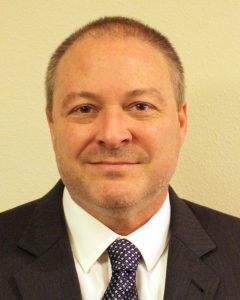
Richard Lubben
posted by CAA — November 30, 2017
 STATEMENT
I believe the current and future direction of CAA should focus, in part, on how to remain relevant and supportive to our membership. This includes strengthening our online presence, and developing innovative programs to better support the participation and recruitment of international institutions and members. This direction also aligns with CAA’s commitment to diversity, and broadens the discussion and perspective on scholarship, pedagogy, curriculum and creative practice.
With a background in studio arts, and administrative experience as a community college Arts Dean, I would also advocate for more dialogue around some of the issues and challenges that might be specific to studio artists, community college faculty, and 2-year college administration. The CAA Board does not currently include a member representing community colleges; however, there are thousands of 2-year college individual members, and many more potential members associated with the nearly 1500 community colleges across the United States.
As a CAA Board member I would also offer my experience and passion for advocacy. One current challenge many colleges and universities are experiencing is how to effectively communicate and defend the value of art programs and curriculum in times of budget shortages, and changes in some state-level general education requirements. These types of challenges are especially relevant to many of our community college members, as well as colleges and universities struggling with declining enrollment.
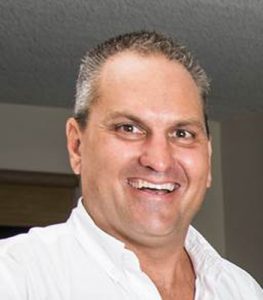
Walter Meyer
posted by CAA — November 30, 2017
 STATEMENT
As a full-time art historian at a 2 year community college, much of my time and talents have been about increasing enrollments in art history and our transfer population to the University of California and Cal State system. At SMC, we are 3 full time faculty and 20+ adjuncts with over 40 sections of art history taught each semester. While college-wide enrollments are flat or declining, Art History continues to grow and has doubled in size in just the last four years.
Leading art history at Santa Monica College has put my efforts directly in line with one of the missions of the California Community College System: to close equity and achievement gaps with under-represented higher-ed populations. Closing these gaps is not a challenge unique to California Community Colleges and as the College Art Association moves into the 21st century it can play a vital role in making art and art history programs at the forefront of meeting this important task. I believe that having a representative from a community college is an important step for CAA to take and I am honored to be nominated to serve our disciplines and the membership.
My other interests reside in pedagogy and technology. At Santa Monica College, I am currently: the co-chair of the Technology Planning Committee; incoming chair of the Distance Education Committee and have previously chaired or served on the Sabbaticals Committee, the Information Services Committee, and the Curriculum Committee. My service to the community includes being the President of the Art Historians of Southern California, an Arts Commissioner and the former chair of the Public Art Committee for the city of Santa Monica and former board member for the Craft and Folk Art Museum of Los Angeles and the Santa Monica Arts Foundation.
Just in the state of California there are 2.1 million community college students across 113 colleges (there are over 1200 across the country serving over 7 million students). I believe in the mission of the community college system and in the ability of community colleges to help art and art history programs close the equity gap with under-represented populations on college campuses and I would like to be an effective advocate as a CAA board member for them and their students.
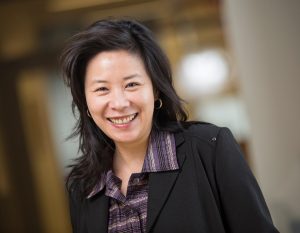
Alice Ming Wai Jim
posted by CAA — November 30, 2017
 STATEMENT
I am currently Associate Professor in Contemporary Art and Concordia University Research Chair in Ethnocultural Art Histories at Concordia University in Montreal, Quebec, Canada. I am a founding co-editor, with Alexandra Chang, of the international scholarly journal, Asian Diasporic Visual Cultures and the Americas (ADVA). Informed by a hemispheric transnational approach, ADVA is the first academic journal to focus on the scholarship of intersections between visual culture studies and the study of Asian diaspora in the Americas and the myriad ways in which these topics and communities connect with Asia writ large. The journal’s coverage spans the continent (North North America, Canada, US, Latin America, and Mexico) as well as the Pacific Islands and the Caribbean.
As an art historian, curator and cultural organizer in the fields of diasporic and global art histories, media arts, and curatorial studies, I bring to College Art Association over twenty years of academic and professional experience working in multiple sectors in education, the arts, and culture. Focusing primarily on Asian Canadian and African Canadian artists, I have curated exhibitions of over fifty artists of color and Indigenous artists and organized major
scholarly events within academic settings and for the broader arts community in Canada and internationally. I have also been involved in a leadership capacity in several formal partnerships involving international networking and community building initiatives, with a strong commitment to research and social justice.
As the only art historian at Concordia University and in Canada who specializes in contemporary Asian and Asian Canadian art, I am acutely aware of the profound value of the annual CAA conference as a vital means to connect international scholars and practitioners, at all stages of careers and from culturally-diverse communities, on a regular
basis. I have been a member of CAA since 1999; a representative member of the CAA Affiliated Society, the Diasporic Asian Art Network, since 2009; and a research member of the NYU Global Asia/Pacific Art Exchange (GAX) since 2014.
As a board member, I would contribute to conversations on how CAA could work towards increasing the visibility of members from diverse cultural communities and provide support and incentives for new returning members. I would also participate in discussions on how CAA could strengthen international connections and exchanges and expand
critical capacities for art historical scholarship and critical visual culture studies on and by ethnic minority, mixed race, and Indigenous peoples across the Americas and internationally. Finally, I am also interested in ways to foster interdisciplinary, cross-cultural knowledge inquiry and co-production through innovative tools and techniques of digital art history.
Montreal, November 21, 2017
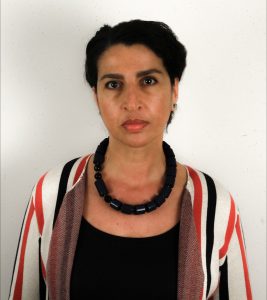
Dahlia Elsayed
posted by CAA — November 30, 2017
 STATEMENT
I greatly value the College Art Association’s steadfast advocacy for visual arts professionals. I am eager to contribute to its work as an essential resource for a diverse body of practitioners to intellectually engage in the field.
As a working artist, academic, and member since 2010, I regularly interact with CAA content and programming in a variety of ways and am excited about the organization’s strategic plan to diversify communication channels and connect with under-represented visual arts professionals and communities.
An area of particular interest to me is welcoming community college faculty and students to participate as an important aspect of a vibrant future for CAA. As an Associate Professor at CUNY-LaGuardia Community College in Queens, NY, I meet non-traditional students as they enter a transitional space of learning, as the first step into a study field that leads to various modes of continued education and engagement with the arts. Being an artist and professor who started her own educational path at a community college, I recognize the powerful impact that envisioning a professional future in the arts has on students. At LaGuardia, I have worked to develop curricula that expands learning beyond the studio, through experiential learning opportunities and exposure to learning outside of the classroom.
As enrollment in community colleges has grown significantly, these faculty are a vital constituency as they design programs and mentor students in pursuing continued education and careers in the arts. I believe that CAA-affiliated regional events around core issues could provide opportunities to interact with colleagues from senior colleges, graduate programs and institutions to strengthen best practices. I would also advocate for more mentoring opportunities for people at different points in their careers.
As a working artist, I exhibit regularly and widely, and have received awards from the Joan Mitchell Foundation, MacDowell Colony, New Jersey State Council on The Arts, amongst others. Another area of interest is growing the platforms for CAA members to share resources and research, through both events and digitally, with those outside of academia, including unaffiliated artists. Expanding CAA’s support for artists through micro-conferences, exhibition support and an active online community are potential ways to connect beyond the annual conference, fortify networks between ongoing research and practice, and to invigorate and inspire future members.
I am dedicated to expanding the diversity of voices in the creation, teaching and analysis of visual art. If elected, I would take on the role of CAA board member with an active, serious commitment to serve all members as well as further the organization’s mission and vision.
Laura Anderson Barbata
posted by CAA — November 30, 2017
 STATEMENT
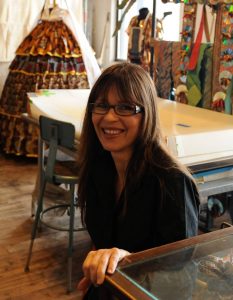
I am a practicing, trans-disciplinary artist living and working in Brooklyn and Mexico City. My work is intended to connect various cultures through the platform of contemporary art by engaging creative practices that promote dignity, shared values, diversity, and collaboration through reciprocal exchange of knowledge. I have initiated projects with the Yanomami of the Venezuela Amazon to document their oral history (ongoing); continue developing collaborative projects with traditional stilt dancing groups from Trinidad and Tobago, Brooklyn and Oaxaca and master artisans from Mexico that combine dance, music, costuming, procession and protest; as well as directed a 10-year effort to repatriate the remains of Julia Pastrana (1834-1860) Mexican Opera Singer whose body was kept at the Schreiner Collection in Oslo and was successfully repatriated to Mexico for her burial in 2013.
My work seeks to further the expectations of socially-engaged art by moving across disciplines by involving collaborators across various fields such as archivists, scientists, activists, rock stars, burlesque performers, street dancers, traditional artisans, traditional stilt dancers, theater companies, storytellers, writers, international institutions and government officials.
I have worked for over 30 years as an artist, educator and researcher. As a CAA Board Member I offer a perspective that is uniquely informed by my bi-cultural background and my extensive collaborative artistic experiences in Mexico, Venezuela, Trinidad and Tobago, Norway and the United States. All of which I believe have prepared me to serve and further CAA´s international leadership and its mission to promote visual arts and their understanding through advocacy, intellectual engagement and a commitment to the diversity of practices and practitioners.
Audrey G. Bennett
posted by CAA — November 30, 2017
 STATEMENT
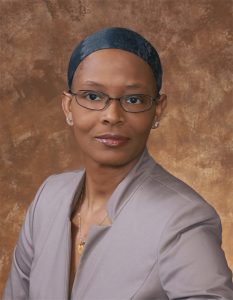
The College Art Association strategically invests in its future with Professional Development Fellowships. I received a College Art Association Professional Development Fellowship when I was a graduate student and immigrant in the United States with permanent resident status. This award provided critical resources that contributed to my securing a tenure-track position at a research institution. Twenty-years later, I am a naturalized and tenured African-American design scholar with distinction. This achievement is one that I do not take for granted. I give back to the College Art Association through service.
The College Art Association’s mission includes culturally diversifying its membership and intellectual capital. I have experience dealing with the challenges associated with this critical task: as a Black youth from a low-income community who fell in love with art; as a minority, junior professor with a Master of Fine Arts pursuing tenure at a research institution; and now as a scholar and administrator confronted by ‘wicked’ barriers to inclusion that include the perennial, melee between socio-economic factors and institutional bureaucracy.
One way that the College Art Association confronts barriers to inclusion is by collaborating with its Affiliated Societies to pave a path through a massive, digital, network of texts and images from different cultures. With this approach, the critical and creative undergirding of the organization’s intellectual capital has the potential to diversify slowly but steadily. I aim to propel diversification efforts forward with strategies that broaden the organization’s intellectual reservoir with new knowledge about culture gleaned from interdisciplinary, positivist, and empirical methods.
A second way that the College Art Association confronts barriers to inclusion is by using technology to transcend socio-economic challenges with professional-development webinars. A decade ago, I competitively secured funding from the AIGA to deliver a virtual design conference titled Global Interaction in Design Education that disseminated new knowledge generated by graphic design scholars from around the world including Taiwan, Hong Kong, Italy, United Kingdom, Australia, and the United States. The question I have now is: Can we secure funding to develop a robust technological infrastructure within the College Art Association that supports the scholarly dissemination of creative work and research findings?
A third way that the College Art Association confronts barriers to inclusion is by cultivating the involvement of designers—an intellectually underrepresented community in the organization’s membership. I can recall early in my academic career gravitating away from the annual College Art Association conferences due to a perceived exiguous representation of designers. Today, I am a member of the College Art Association’s Inaugural Committee on Design where I help to develop design content for its annual conference and publications and integrate design language and issues into the organizations’ internal and external communication processes.
I am eager to continue service to the College Art Association through leadership on its Board of Directors. If elected, I plan to further cultivate and sustain cultural and intellectual diversity within the organization’s membership and operating activities to increase individual and institutional memberships and conference participation.
2018-2019 Nominating Committee Seeks Members
posted by CAA — November 27, 2017
CAA invites you to help shape the future of the organization by serving on the 2018-2019 Nominating Committee. Each year, this committee nominates and interviews potential candidates for the CAA Board of Directors and selects the final slate for the membership’s vote. The candidates for the 2018 Board of Directors’ election were announced on Thursday, November 9, 2017.
The Board of Directors and the Nominating Committee strive to find the best candidates that represent the broad sub-disciplines and practitioners represented in CAA’s membership. The 2017-2018 Nominating Committee will select new members of the 2018-2019 committee at its business meeting, to be held at the 2018 Annual Conference in Los Angeles in February. Once selected to serve on the 2018-2019 Nominating Committee, each member, in the spring of 2018, proposes 5 or more people to run for the board. Service on the Nominating Committee involves conducting telephone interviews with candidates during the summer and meeting with the Committee in the fall to determine a final slate for the 2019 Board of Directors’ election. Nominating Committee members attend their own business meeting at the 2019 Annual Conference in New York to select the new members who will replace them on the next year’s Nominating Committee.
Nominations and self-nominations should include a brief statement of interest and a 3–4 page condensed CV. Please email a statement and your CV as Word attachments, with the subject line “2018-2019 Nominating Committee,” care of Vanessa Jalet, CAA executive liaison. Deadline: Friday, December 1, 2017
The CAA Board in Action
posted by CAA — November 22, 2017
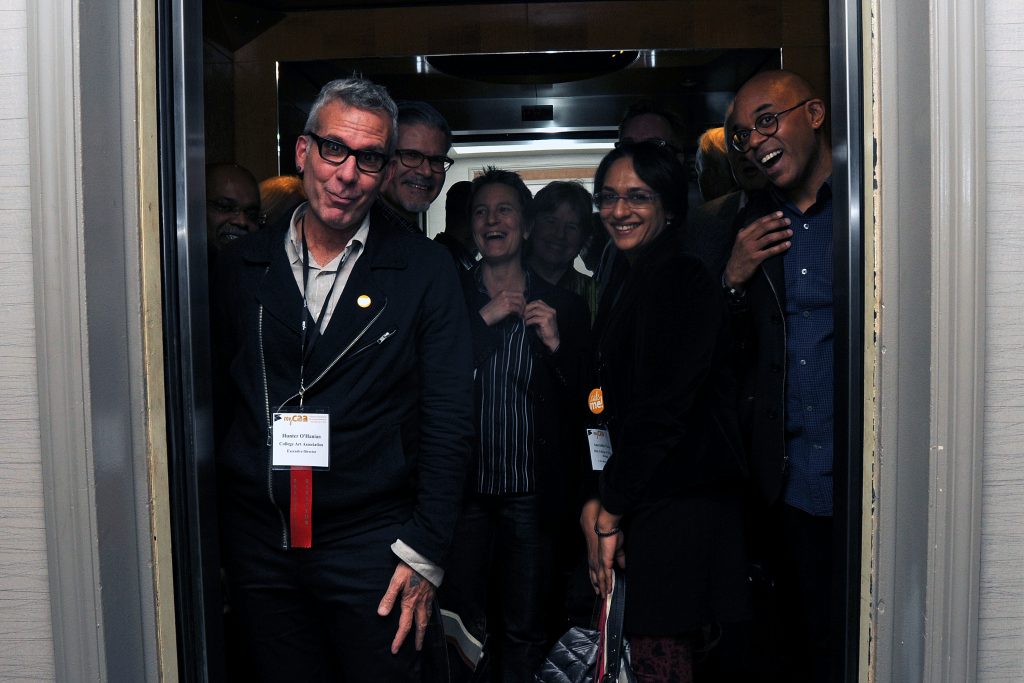
CAA board members at the 105th Annual Conference in New York, 2017. Photo: Ben Fractenberg
This has been a busy time for the CAA Board of Directors. In the end of October, they attended a two-day meeting and retreat, addressing a variety of issues facing the organization and the field.
Under the leadership of President Suzanne Preston Blier, the Board looked at potential changes to the governance structure, updates on finances and membership enrollment, the impact of the Annual Conference, the recent staff reorganization and progress on our 2015-2020 strategic plan.
In addition to hearing detailed reports from the various committees, the Board spent time on the process to rebrand and rename the Association. We have narrowed down the choices and members will be asked for their input in the coming weeks. Many thanks to the 800 members who responded to the survey this summer. That survey feedback was valuable in directing our thinking. We are hopeful that a new name and identity will be launched at the 106th Annual Conference in Los Angeles in February 2018.
The board also elected new officers: Jim Hopfensberger was elected to succeed Suzanne Blier. She finishes her term as president in Spring 2018. Melissa Potter was elected secretary and Peter Lukehart was elected treasurer.
Roberto Tejada was elected to serve in the newly created office of vice president of Diversity and Inclusion.
Candidates for CAA’s 2018 Board of Directors Election
posted by CAA — November 09, 2017
CAA’s Nominating Committee met in early October 2017 to review the candidates who have applied to run in CAA’s Board of Directors election for the term 2018-2022. The Nominating Committee selected the following six candidates, four of whom will be elected to Board service. In the coming weeks, CAA will post their full biographies for consideration by the CAA membership.
Laura Anderson Barbata is a practicing, trans-disciplinary artist living and working in Brooklyn and Mexico City. Her work is intended to connect various cultures through the platform of contemporary art. Her art engages creative practices that promote dignity, shared values, diversity, and collaboration through reciprocal exchange of knowledge. Among many unique projects, she has worked with the Yanomami of the Venezuela Amazon to document their oral history, overseen collaborative work with stilt dancing groups from Trinidad and Tobago, Brooklyn and Oaxaca and directed a 10-year effort to repatriate the remains of a Mexican Opera Singer. Ms. Barbata has extensive business expertise, as director of image and concept designer for a chain of 50 restaurants throughout Mexico. She was Vice President of the company and worked to protect the interests of the shareholders until the business was sold. Ms. Barbata feels she offers a unique perspective – having international business experience as well as maintaining a career as an artist.
Audrey G. Bennett is a full professor in the Department of Communication and Media, and director of the interdisciplinary graduate program in Communication and Rhetoric at Rensselaer Polytechnic Institute. She was a 1996 recipient of a CAA Professional Development Fellowship and is currently a member of CAA’s Inaugural Committee on Design. From 2002-2010 she was a member of the Board of the Upstate New York chapter of the AIGA, the professional association for design where she served in a number of leadership roles. She is a former 2015 Andrew W. Mellon Distinguished Scholar, University of Pretoria, South Africa. Prof. Bennett secured funding for and founded the Global Interaction in Design Education (GLIDE), a biennial, virtual design conference. She would like to assist CAA in diversifying its membership culturally and intellectually.
Dahlia Elsayed is an Associate Professor of Fine Arts in the Humanities Dept. at CUNY-LaGuardia Community College. She is a practicing artist who combines text and imagery to create visually narrative paintings that document internal and external geographies. Her work is influenced by conceptual art, comics and landscape painting and cartography. She is particularly interested in attracting and welcoming the vital constituency of community college faculty and students to CAA. Furthermore she sees opportunities to facilitate interactions between community colleges, senior colleges and graduate programs to strengthen best practices and continuity.
Alice Ming Wai Jim is Associate Professor in Contemporary Art and Concordia University Research Chair in Ethnocultural Art Histories at Concordia University in Montreal, Quebec, Canada. She is the founding co-editor of the international scholarly journal, “Asian Diasporic Visual Cultures and the Americas.” Alice is an art historian, curator and cultural organizer in the fields of diasporic and global art histories, media arts and curatorial studies. Focusing on Asian Canadian and African Canadian artists, she has curated exhibitions of over fifty artists of color and Indigenous artists and organized major scholarly events within academic settings and for the broader arts community in Canada and internationally. She is also involved in a leadership capacity in several formal partnerships involving international networking and community building initiatives, with a strong commitment to research and social justice. Alice would like to work toward increasing the visibility of members from diverse cultural communities, strengthening international exchanges, and expanding critical capacities for art historical scholarship and critical visual culture studies on and by ethnic minority and Indigenous peoples across the Americas and internationally.
Richard Lubben is Dean of the Arts Division at Lane Community College in Eugene, Oregon. He is a painter, whose recent work consists of a series of large format abstract oil paintings examining visual transitions of landscapes through seasonal changes, memories of nature and delicate ecosystems. He was awarded a Fulbright Visiting Research Chair in Human Rights and Social Justice at the University of Ottawa in 2013. He has served on CAA’s Task Force on Advocacy, been on panels at CAA’s Annual Conference and is currently the Chair of CAA’s Education Committee. Lubben urges the inclusion of representatives from community colleges on CAA’s board but even more importantly attracting to CAA the thousands of 2-year institutional members, and potential individual members, associated with the nearly 1500 community colleges across the United States.
Walter Meyer, Professor of Art History at Santa Monica College, a 2-year community college in California. His degree is early 20th century art, specializing in Eastern Europe and Russia. He has taken on a number of leadership positions at SMC including co-chairing the Technology Planning Committee . He is President of the Art Historians of Southern California, and former board member of the Craft & Folk Art Museum in Los Angeles. Currently, he serves on CAA’s Professional Practices Committee. Meyer believes in the mission of the community college system and its ability to help art and art history programs close the equity gap with under-represented populations on college campuses.