
CAA News Today
Meet the 2016 Participants in the CAA-Getty International Program
posted by Janet Landay, Program Manager, Fair Use Initiative — November 17, 2015
CAA is pleased to announce the 2016 recipients of travel support through the CAA-Getty International Program. In an effort to promote greater interaction and exchange among art historians internationally, CAA will bring scholars from around the world to participate in the program, to be held during CAA’s 104th Annual Conference in Washington, DC, from February 3 to 6, 2016. This is the fifth year of the program, which has been generously funded by the Getty Foundation since its inception. The participants—professors of art history, curators, and artists who teach art history—were selected by a jury of CAA members from a highly competitive group of applicants. In addition to covering travel expenses, hotel accommodations, and per diems, the CAA-Getty International Program includes support for a preconference on international issues in art history, conference registration, and a one-year CAA membership.
Activities for participants in the CAA-Getty International Program will begin with a one-day preconference colloquium on international issues in art history, during which they will meet with North-American–based CAA members to discuss common interests and challenges. Participants will also be assisted throughout the conference by CAA member hosts, who will recommend relevant panel sessions and introduce them to colleagues who share their interests. Members of CAA’s International Committee have agreed to serve as hosts, along with representatives from several affiliated societies of CAA, including the Arts Council of the African Studies Association, the Association for Latin American Art, and the Society of Historians of East European, Eurasia, and Russian Art and Architecture.
This program has increased international participation in CAA’s activities and expanded international networking and the exchange of ideas during and after the conference. The CAA-Getty International Program supplements CAA’s regular program of Annual Conference Travel Grants for graduate students and international artists and scholars. CAA looks forward to welcoming the 2016 recipients at the upcoming Annual Conference in Washington, DC, this February.
2016 CAA-Getty International Program Participants
 Sarena Abdullah is a senior lecturer in the School of the Arts at the Universiti Sains Malaysia in Penang, where she teaches art history to undergraduate and graduate students. She received an MA in art history from the University at Buffalo, State University of New York, and a PhD in art history from the University of Sydney in Australia. Specializing in contemporary Malaysian and Southeast Asian art, Abdullah is widely published locally and abroad and has presented papers at conferences in Malaysia, Singapore, Australia, and the United States. She is a field leader for Ambitious Alignments: New Histories of Southeast Asian Art, a research project led by the Power Institute Foundation for Art and Culture at the University of Sydney and funded by the Getty Foundation. With two research grants from the Universiti Sains Malaysia, Abdullah is working on a project called “Theorizing Early Modernism and Cosmopolitanism in Early Twentieth Century Penang by Examining Modern Artistic Works and Print Medium Pertaining to Penang (1826–1942).”
 Abiodun Akande studied fine arts at Obafemi Awolowo University in Ile Ife, Nigeria, and received an MA and PhD from the Institute of African Studies at the University of Ibadan, also in Nigeria. His dissertation on “Yoruba Traditional Religious Wood-Carvings in Oyo, Sabe, and Ife” reflects his broader interest in the diffusion history of Yoruba peoples and their material culture across national boundaries. Akande is also interested in recording the effects of diffusion on sociocultural and artistic productivity and the resultant identities and iconologies of this culture group. Akande teaches art history, museology, art education, and painting at the Emmanuel Alayande College of Education in Oyo. In 2013, he participated in the first Basel Summer School in African Studies at the University of Basel in Switzerland; he also attended a graduate symposium hosted by the School of Arts at Peking University in Beijing, China.
 María Isabel Baldasarre holds a PhD in art history from the Universidad de Buenos Aires in Argentina, having earned an undergraduate degree in art history from the same university and a National Professor of Sculpture degree from the Escuela Nacional de Bellas Artes Prilidiano Pueyrredón. Baldasarre is currently a researcher at the Consejo Nacional de Investigaciones Científicas y Técnicas (CONICET), an associate professor and coordinator of the master’s degree program in Argentinean and Latin American art history at the Universidad Nacional de San Martín, and a member of the board of the Centro Argentino de Investigadores de Arte. Baldasarre has received scholarships and grants from CONICET, the Antorchas Foundation, the Latin American Studies Association, the Getty Foundation, the Institut National d’Histoire de l’Art, and the Kunsthistorisches Institut in Florenz. A specialist in late-nineteenth- and early-twentieth-century European and Argentinean art, art collecting, and the art market, Baldasarre is the author of Los dueños del arte. Coleccionismo y consumo cultural en Buenos Aires (Buenos Aires: Edhasa, 2006).
 Danielle Becker is an adjunct lecturer in the Department of Visual Arts at Stellenbosch University in Stellenbosch, South Africa, and the Michaelis School of Fine Art at the University of Cape Town. She was previously the head of visual studies at the Stellenbosch Academy of Design and Photography. Her PhD research, in progress at the University of Cape Town, examines how South African art history is framed in art-historical curricula at tertiary institutions, in art-historical writing, and in museum displays. Becker’s interests include art historiography, postcolonial theory, and the framing of African art. Before beginning her doctoral research, she completed a fine-arts degree at Cape Town, worked as the arts coordinator for a nonprofit called South African Education and Environment Project, and completed a master’s degree in art history at the University of Manchester in England. Her forthcoming publications include a book chapter on Instagram in Africa’s Media Image in the Twenty-First Century: From the Heart of Darkness to Africa Rising (forthcoming from Routledge) and an essay, “Locating the Label on the Luggage: Towards a Continued Decolonization of South African Visual Culture.” (forthcoming from Third Text: Critical Perspectives on Contemporary Art and Culture.)
 Bùi Thị Thanh Mai is a lecturer in art history, theory, and criticism at the Vietnam University of Fine Arts in Hanoi. She is also head of the university’s Department of Academic Research Management and International Relations and a member of the editorial board for the university’s journal, Art Research Magazine. Bùi specializes in the history of Vietnamese art, with a focus on modern and contemporary art; she is also interested in art theory, art education, and curatorial theory and practice. Bùi is working on three concurrent projects: “Optimistic Characterization in Painting in Hanoi in 1945–1990” within the framework of the Ambitious Alignments: New Histories of Southeast Asian Art program; “Art Theory and Criticism in Vietnam: Actual Situations and Solutions of the Effect on the Artistic Life”; and a textbook on Vietnamese art history for the Vietnam University of Fine Arts.
 Heloisa Espada received a PhD in art history and art criticism from the School of Communications and Arts at the University of São Paulo in Brazil in 2011. She studies Brazilian art after World War II, with a special focus on geometric abstraction and photography. In 2014 Espada began postdoctoral studies at her university’s Museum of Contemporary Art, where she is researching the origins of Concrete art in the city, supported by a grant from the Coordenação de Aperfeiçoamento de Pessoal de Nível Superior, a Brazilian government agency. Espada wrote Hércules Barsotti (São Paulo: Folha de São Paulo, 2013), Geraldo de Barros e a fotografia (São Paulo: Instituto Moreira Salles and Edições SESC, 2014), and Monumentalidade e sombra: o centro cívico de Brasília por Marcel Gautherot (forthcoming from Annablume). Since 2008, she has been the head of visual arts at the Instituto Moreira Salles, where she is also researcher and curator.
 Ildikó Gericsné Fehér received an MA and PhD in art history from Eötvös Loránd University in Budapest, Hungary. As associate professor in the Department of Art History of the Hungarian University of Fine Arts in Budapest, she lectures and leads seminars on Renaissance and Baroque art. She is also a consultant to the university’s Conservation Department. Fehér’s research interests include detached wall paintings from medieval and Renaissance Italy in the collection of the Museum of Fine Arts Budapest; Florentine art dealers at the end of the nineteenth century; Károly Pulszky’s purchases of paintings in Italy for the museum circa 1890; wall paintings in Umbria from the fourteenth to sixteenth century; self-portraits by Hungarian artists in the Uffizi Gallery; and the works of Jacopo Palma il Giovane.
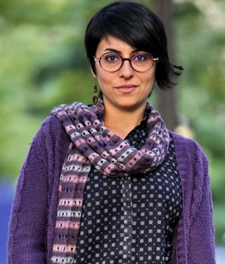 Peyvand Firouzeh specializes in the art and architecture of the Islamic world, with a focus on Iran, Central Asia, and India in the medieval period. She is particularly interested in interconnections between architecture and power, patronage of art and architecture, cross-cultural exchanges between Iran and India, and museum studies. Firouzeh obtained her BA (2004) and MA (2007) in architecture from the Tehran University of Art in Iran and her MPhil (2011) and PhD (2015) in the history of art and architecture and Asian and Middle Eastern studies from the University of Cambridge in England. She was the acting curator of Islamic collections from Iran, Central Asia, and India at the British Museum in London in 2014–15. Firouzeh is currently a fellow of art histories and aesthetic practices (2015–16) at the Forum Transregionale Studien and Museum für Islamische Kunst in Berlin, where she is working on a new project, “Depicted Legitimacy: Sufi-Sultan Encounters in the Visual and Textual Cultures of South Asia.”
 Lev Maciel graduated from the Medieval Studies Department at Lomonosov Moscow State University in Russia in 1998, with an M.A. thesis on fifteenth-century Spanish history. His dissertation on eighteenth-century Siberian architecture earned him a PhD in 2004 from the State Institute for Art History in Moscow. Currently Maciel is an associate professor in the Faculty of Humanities of the National Research University Higher School of Economics in Moscow, where he supervises the recently created program in art history. He is also a part-time research associate professor at the Institute for Theory and History of Architecture and Town Planning in Moscow. Maciel’s research interests include a wide range of subjects within the history of architecture, including the late Renaissance and Baroque (Russia, southern Italy, Brittany, Spain, and Latin America), late antiquity and Byzantium, the Islamic world, Mongolia and Tibet, and nonmodernist movements in the twentieth century.
 Emmanuel Moutafov is a Byzantinist, art historian, and epigrapher who holds a PhD in world history of the fifteenth to nineteenth centuries from the Institute for Balkan Studies at the Bulgarian Academy of Sciences in Sofia. He has been a visiting research fellow at the Program in Hellenic Studies at Princeton University; a Mellon Foundation fellow at the Institute for Advanced Studies in Berlin; a Mellon Foundation fellow at the W. F. Albright Institute of Archaeological Research in Jerusalem; and a Getty Foundation research fellow in the summer research group Visions of Byzantium in Istanbul, Turkey. In 2013 he became a supervisor of research at the board of directors of the Institute for Art Studies at the Bulgarian Academy of Sciences and last year was appointed a director of the same institute.
 Ceren Özpınar is a lecturer and a scholar of art historiography and the history of art whose research covers feminist temporalities in art historiography and contemporary art in Turkey. She is currently a British Academy Newton International Fellow in the Department of Art History at the University of Sussex (2015-17). Özpınar received a PhD in the history of art from Istanbul Technical University in 2015, with a thesis on the historiography of contemporary art in Turkey. In 2013, she held a one-year position of visiting research fellow at the University of Leeds, for which she was awarded a doctoral research grant by the Scientific and Technological Research Council of Turkey. She is among the authors of National Art Histories in an Unfinished World (forthcoming from McGill-Queen’s University Press). Özpınar teaches undergraduate and graduate courses in art history, art management, and visual culture.
 Horacio Ramos is a Peruvian art historian who specializes in Latin American vanguardism and neovanguardism. He teaches at the Pontificia Universidad Católica del Perú in Lima and also works as researcher at Museo de Arte de Lima. Ramos holds a BA in philosophy and an MA in art history from the Universidad Católica. In previous research, he explored the reform of Lima’s main square (or Plaza de Armas) during the first half of the twentieth century, a complex process that involved debates about nationalism, architectural heritage, and modernism. Currently he is focusing on how invasiones (precarious urban settlements at the periphery of Peruvian cities) have been represented in documentary photography and neovanguardist art of the later twentieth century. Since invasiones and abandoned archeological ruins share the deserted landscape of the coast, his investigation seeks to trace the complex interconnections between art, archeology, landscape, and social exclusion.
 Olaya Sanfuentes Echeverría earned a bachelor’s degree in history from the Pontificia Universidad Católica de Chile in Santiago, a master of arts from Georgetown University in Washington, DC, and a PhD in art history from the Universitat Autònoma de Barcelona in Spain. She is a professor at the Institute of History, a part of the Department of History, Geography, and Political Science at the Pontificia Universidad Católica de Chile. Sanfuentes’s current research focuses on devotional practices involving art, especially religious statues used in festivals and rites in honor of the saints and virgins in Andean communities, as well as similar practices related to nativity cribs. More generally, Sanfuentes is interested in practices surrounding visual representations, history, and material culture, and how communities deal with cultural heritage.
 Paulo Silveira holds bachelor’s degrees in fine arts (with qualifications in drawing and painting) and in communication studies from the Universidade Federal do Rio Grande do Sul in Porto Alegre, Brazil. He earned an MA and PhD in visual arts, with an emphasis in art history, theory, and criticism, from the same university. His graduate studies included doctoral research in France at the Université Paris 1 Panthéon-Sorbonne. Silveira is a professor of art history at the Instituto de Artes at the Universidade Federal do Rio Grande do Sul. His research interests include visual arts, with a focus on the formal and contextual study of the artistic process, the intellectual and artistic foundations of contemporary art, intermedia, perception of works of art, aesthetics, rhetoric of artist’s publications, and methodology. Silveira is a member of the Brazilian Committee of Art History and the National Association of Researchers in Fine Arts (serving on its committee for history, theory, and criticism).
 Sandra Uskoković is an assistant professor in the Department of Arts and Restoration at the University of Dubrovnik in Dubrovnik, Croatia. Her primary areas of research include architectural theory, modern architecture, urban culture, performance art, and cultural studies and heritage. She received an MA in architectural history and heritage preservation from George Washington University in Washington, DC, and a PhD in historic preservation and architectural history from the University of Zagreb. During 2002–3 Uskoković served as an intern at the International Centre for the Study of the Preservation and Restoration of Cultural Property in Rome, Italy, and at the International Committee on Monuments and Sites (US/ICOMOS) in Washington, DC. She is a member of the ICOMOS Scientific Committee on Twentieth-Century Heritage and has participated in conferences on international preservation. Uskoković is the author of three books: Modern Architectural Heritage of Dubrovnik (Zagreb: Antibarbarus, 2010), Contemporary Design in Historic Settings (Zagreb: Antibarbarus, 2013), and Architect Lovro Perković: Sensibility of Space Design (Zagreb: Ex Libris, 2015). She also has published numerous articles in academic and artistic journals. Since 2015 she has coordinated a regional interdisciplinary forum for research in urban culture in the Balkans, called Urban Hum.
For more information about the CAA-Getty International Program, please contact project director Janet Landay at jlanday@collegeart.org or 212-392-4420.
Failure as Art and Art History as Failure
posted by Janet Landay, Program Manager, Fair Use Initiative — November 13, 2015
The following article is by Susana S. Martins, a 2014 CAA-Getty International Program participant from Portugal, in which she uses a session at the 2014 Annual Conference as the starting point for a consideration of failure: “In particular, the stance that artistic failure may not configure just an impossible obstacle, but can equally offer an ideal standpoint for open experimentation and for raising constant questions, has proven to be quite popular among creators, particularly post the avant-gardes of the early twentieth century.”
http://www.thirdtext.org/Failure-As-Art
A Visit with CAA 2016 Keynote Speaker Tania Bruguera at the Havana Biennial
posted by Christopher Howard — November 04, 2015
Kate Flint, Provost Professor of Art History and English at the University of Southern California in Los Angeles, wrote an article for Public Books on her experiences at the Havana Biennial, which was held May 22–June 22, 2015. In her text, titled “Breaking Down Walls at the Havana Biennial” and published on November 1, Flint describes her encounters with works of art throughout the city. Here is one experience:
Many works of art on show in the “Zona Franca” were overtly political: Michel Mirabal’s distressed and fragmenting Cuban and American flags; Luis Camejo’s delicate drawings of Cuban monuments collapsed, flooded, overgrown at the end of the third millennium; Arlés del Rio’s La necesidad de otros aires (The Need for Other Airs), an entire room filled with breathing tubes hanging from the ceiling, like elongated snorkels, reminding us that being choked by police, or by political or social constraints, or, for that matter, by pollution (and deep concern for the environment was a frequently occurring theme at the Biennale) is a global, as well as a local, concern.
Flint, who traveled to Cuba as part of a trip organized by CAA, participated in a performance work by Tania Bruguera, the artist who will deliver the keynote address during Convocation at the 2016 Annual Conference in Washington, DC. Flint wrote:
During the Biennial’s first weekend, Bruguera staged a hundred-hour reading of Hannah Arendt’s Origins of Totalitarianism. Seated inside her own home, she was breaking no laws (she asked for, but was told she didn’t need, a police permit). The reading—usually in Spanish—was broadcast through loudspeakers, muted at night, to the street outside…. The readings were carried out by those who signed up on a sheet inside space, bare but for a chair, video camera, treats brought by supporters, and a tethered dove…. I was about the 124th person to sign up to read. About an hour later, I was invited to sit in the chair. I’d only intended to read a short paragraph, but no one around seemed to want to take over. Indeed, people seemed to be clearing up their things. Seven pages of Arendt (in Spanish) later, Bruguera herself came over and took the book from me, finished that particular paragraph, and we all exited.
You can also read another article on the same trip to Cuba, written by Katherine Jánszky Michaelsen, professor of art history at the Fashion Institute of Technology in New York, on the CAA website.
The next CAA-sponsored trip is the Turkish-Islamic Art Study Tour, taking place June 3–18, 2016. For more information, please visit CAA’s international tours page.
The Role of Contextual Studies in Art School Education in Scotland
posted by Sarah Smith, Joint Head of the Forum for Critical Inquiry, the Glasgow School of Art, and member of CAA’s International Committee — October 26, 2015
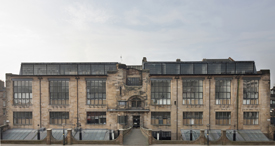 Last April, my colleagues and I in the Glasgow School of Art’s Forum for Critical Inquiry organized a seminar on “The Role of Critical and Contextual Studies in Art School Education in Scotland,” which aimed to facilitate and stimulate scholarly debate on art and design higher education and to establish a regional network of Scottish faculty who teach Critical and Contextual Studies. The seminar was funded by the UK’s Council for Higher Education in Art and Design and formed part of their Regional Seminar programme.
Since 1962–63, university level art and design education in the UK has included an “academic” element, which was originally referred to as the History of Art and Design and Complementary Studies and is now better known as Critical and Contextual Studies (CCS). This element was introduced to give “degree equivalence” to what was initially a quite technically focused diploma by providing context to studio practices and developing a broader range of skills in students. Topics taught under this rubric include histories of art and design, film and media histories, critical theory, aesthetics, and, more recently, curatorial and art writing practices. Recent changes to UK art and design higher education, precipitated by diverse drivers such as funding cuts and the emergence of the PhD by practice as the terminal degree, has brought the debate about the role of CCS back into sharp focus. A central question for this debate is: if the role of CCS is no longer “to elevate” and “lend academic credibility” to studio practice, as was originally the case (outlined in the Coldstream Reports of 1960 and 1970), then what do we see as its role both now and in the future?
This is a recurring (if not perpetual) question for art schools in the UK and Ireland where CCS still represents a sort of “minor” subject that underpins the “major” studio practice; the relationship between the two is never quite at ease. The question has been addressed by my institution, the Glasgow School of Art, three times through departmental review since I began teaching there in 2000, and it has not been satisfactorily answered to date. The most recent iteration was prompted by a recommendation in the Glasgow School of Art’s Fine Art 2013 Periodic Review, which advised that CCS be divided and brought under the management of the institution’s three schools (Fine Art, Design, and Architecture) rather than be managed centrally and provide cross-institution curriculum.
Across the UK there exists a variety of curricular and organizational CCS models, which are reflected in the different approaches of the four Scottish art schools: Glasgow School of Art; Edinburgh College of Art, University of Edinburgh; Duncan of Jordanstone College of Art and Design, University of Dundee; and Gray’s School of Art, Robert Gordon University, Aberdeen. By focusing on the regional context, we hoped to identify issues and opportunities that may be unique to the Scottish higher education sector, which differs from the rest of the UK in a range of ways, including a tendency for four-year degree programs; no tuition fees for home or European Union students; the ability of Scottish students to start university at the age of seventeen; and a focus on educational breadth at the undergraduate level.
Thirty-five delegates from across Scotland and the UK attended the seminar, and for the opening keynote, Dr. Annebella Pollen from the University of Brighton presented an overview of a piece of pedagogic research that was recently published in Design and Culture.[1] In the paper, titled “Theory and Practice: Objective and Subjective?,” she critiques the perception of the “academic element” of studio-based programs as lacking in subjectivity and personal investment, instead arguing that design history is an embodied, reflective, and affective discipline.
 Two lecturers from each of the four Scottish art schools then gave short presentations on CCS within their institutions, offering either overviews of their respective curricular and operational models or focusing on examples of innovative practice that, for instance, combine studio and CCS methodologies and techniques (such as visual presentation, collage, assemblage, collecting, curating, and writing) to design CCS courses.
Numerous differences emerged in the various models and approaches employed by each of the four institutions. It was clear that operational models have a considerable impact on learning and teaching practices. For example, the Edinburgh College of Art and the Glasgow School of Art can offer team-taught courses and a diverse range of electives because they have separate CCS departments that work across programs. In contrast, the Duncan of Jordanstone College of Art and Design faculty tend to be attached to specific programs and work in a more isolated way or, when possible, in pairs. (Certainly there is no sense in having a strategic approach to CCS provision—and related research—at an institutional level at Duncan of Jordanstone.) Perhaps because CCS at Gray’s School of Art has been through several different operational and pedagogic iterations over the past ten years (from being a separate department, to being fully integrated with studio, and then back to being a separate department), the school seems well placed to propose courses that endorse innovative practices to engage students with CCS.
The closing keynote by Neil Mulholland from the Edinburgh College of Art, provocatively titled “Juche: Art School State of Mind,” was based on his article for the New Art West Midlands 2014 exhibition catalogue and is part of his sustained research project into art school pedagogy.[2] His central thesis posits that, while there is an exciting scope for developing radical pedagogies within art schools, the insular culture fostered therein since the mid-twentieth century stymies opportunities for curricular diversity. Having broad-based contextual studies goes some way toward challenging the monoculturalism that art and design education can, at times, endorse; it does so both by fostering critical thinking and by facilitating the student’s development of a different skill set.
We hoped that the keynotes from Pollen and Mulholland would provide a sort of framing, and they did by asking provocative questions about what art school education is and should be in the twenty-first century, and by considering how to challenge ossification and reconceptualize the role of contextual studies as part of a diverse curriculum. The short presentations from the four Scottish art schools gave us a chance to see what and how we teach, and allowed us to share good practices. Perhaps the most valuable aspect of the seminar was the opportunity to meet and talk about the issues we share as contextual studies faculty working within art schools, thereby kick-starting a range of collaborations between CCS staff within Scotland, from informal teaching exchanges and joint writing projects to developing cross-institutional research funding bids.
Scottish higher education institutions have a strong tradition of collaboration due to their relatively small number, geographical proximity, and shared well-defined regional/national identity, yet Scottish CCS staff have rarely collaborated. This lack of collaboration may be partly attributable to a lack of organizational support and recognition of this “minor” subject, but it is also a result of there being no natural home for an interdisciplinary subject area that spans art and design history, cultural studies, philosophy, film and media studies, gender studies, ethnography, and various other subjects. Individual CCS faculty tend to participate in professional networks tied to one or two of these disciplines, but there is something distinctive about teaching and researching in an art school context that requires another kind of network and other kinds of support. Currently Scotland is bereft of this kind of support, and we therefore need to build this support at regional and national levels while simultaneously connecting with major national and international organizations such as the UK’s Council for Higher Education in Art and Design and the College Art Association, which have long recognized the need to support art and design higher education across studio and contextual studies.
[1] Annebella Pollen, “My Position in the Design World: Locating Subjectivity in the Design Curriculum,” Design and Culture 7, no. 1 (2015): 85–106.
[2] Neil Mulholland, “Juche: Art School State of Mind,” in New Art West Midlands 2014, exh. cat. (Birmingham, UK: Birmingham Museums Trust, 2014), 25–28, at www.newartwestmidlands.org/wp-content/uploads/New-Art-West-Midlands-catalogue-2014.pdf, as of October 19, 2015.
Participants Selected for 2016 CAA–Getty International Program
posted by Janet Landay, Program Manager, Fair Use Initiative — October 07, 2015
CAA is pleased to announce this year’s participants in the CAA–Getty International Program. In an effort to promote greater interaction and exchange between U.S. and international art historians, CAA will bring colleagues from around the world to its Annual Conference, this year to be held in Washington, D.C. from February 3–6, 2016. This is the fifth year of the program, which has been generously supported by a grant from the Getty Foundation since its inception. The participants—professors of art history, curators, and artists who teach art history—were selected by a jury of CAA members from a highly competitive group of applicants. In addition to covering travel expenses, hotel accommodations, and per diems, participants in the CAA–Getty International Program also receive complimentary conference registration and a one-year CAA membership.
The participants’ activities begin with a one-day preconference colloquium on international issues in art history, during which they meet with U.S.-based CAA members to discuss common interests and challenges. They are assisted throughout the conference by CAA member hosts, who recommend relevant panel sessions and introduce them to colleagues who share their interests. Members of CAA’s International Committee have agreed to serve as hosts, along with representatives from several of CAA’s Affiliated Societies.
CAA hopes that this program will not only increase international participation in the organization’s activities, but will also expand international networking and the exchange of ideas both during and after the conference. CAA currently includes members from 70 countries around the world; see the International Desk on CAA’s website for news about international activities and opportunities. The CAA–Getty International Program supplements CAA’s regular program of Annual Conference Travel Grants for graduate students and international artists and scholars. We look forward to welcoming the following participants at the next Annual Conference in Washington, DC.
2016 Participants in the CAA-Getty International Program
Sarena Abdullah, Senior Lecturer, School of the Arts, Universiti Sains Malaysia, Penang
Abiodun Akande, Principal Lecturer, Department of Fine and Applied Arts, Emmanuel Alayande College of Education, Oyo State, Nigeria
María Isabel Baldasarre, Associate Professor, Universidad Nacional de San Martin, Buenos Aires, Argentina
Danielle Becker, Lecturer in Art History and Visual Studies, University of Cape Town and Stellenbosch University, South Africa
Heloisa Espada, Postdoctoral Researcher, Museum of Contemporary Art of the University of Saõ Paulo, Brazil
Ildikó Fehér, Associate Professor, Art History Department, University of Fine Arts of Hungary, Budapest, Hungary
Peyvand Firouzeh, Post-doctoral Fellow, Museum fur Islamische Kunst, Berlin, Germany
Lev Maciel, Associate Professor, National Research University, Higher School of Economics, Moscow, Russia
Bui Thi Thanh Mai, Lecturer of Art History, Head of Department of Academic Research Management and International relations, Vietnam University of Fine Arts, Ha Noi, Vietnam
Emmanuel Moutafov, Associate Professor, Director, Institute of Art Studies, Bulgarian Academy of Sciences, Sofia, Bulgaria
Ceren Ozpinar, Lecturer, Isik University and Kadir Has University, Istanbul, Turkey
Horacio Ramos, Associate Professor, Pontificia Universidad Católica del Perú
Olaya Sanfuentes, Professor, Pontificia Universidad Católica de Chile
Paulo Silveira, Professor, Universidade Federal do Rio Grande do Sul, Porto Alegre, Brazil
Sandra Uskokovic, Assistant Professor, University of Dubrovnik, Arts & Restoration Department, Croatia
A Letter from Buenos Aires
posted by CAA — September 09, 2015
Fernando Martínez Nespral is a professor in the School of Architecture, Design, and Urbanism at the University of Buenos Aires in Argentina and a participant in the 2014 CAA-Getty International Program.
This past July, there was a thought-provoking exhibition on view in Buenos Aires at the Museo de Arquitectura y Diseño (Museum of Architecture and Design), known as MARQ. Titled Secciones, this collection of drawings by Santiago Nicolás Lovecchio added a lively local commentary to the form versus function debate in architecture.
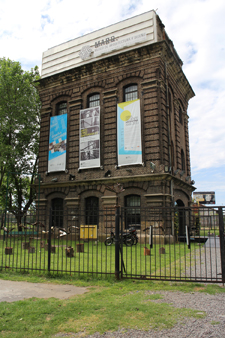 MARQ was founded by the Central Society of Architects to explore the architecture of Argentina, from its history and heritage to contemporary issues and projects. It is the first museum in the country dedicated specifically to architecture, and its activities have continued to grow since it opened fifteen years ago. The museum is situated in an old railway building on the Avenida del Libertador, sharing the Buenos Aires Museum Mile with the Museo Nacional de Bellas Artes (National Museum of Fine Arts), Museo Nacional de Arte Decorativo (National Museum of Decorative Arts), Museo de Arte Hispanoamericano (Museum of Spanish American Art), and Museo de Arte Latinoamericano (Museum of Latin American Art), among others.
Lovecchio’s exhibition presented a series of digitally enhanced pencil and ink sectional drawings of detailed plans for imaginary buildings. Each one juxtaposes clear references to landmarks of architectural history with the typical shapes and traditional forms of domestic architecture in Buenos Aires.
This local perspective on history makes sense when we consider the biography of its author. Lovecchio is a young Argentine who combines his work as a practicing architect with his teaching of architectural history. In this exhibition, he courageously addressed a subject that is at the center of academic discussions about architecture in Argentina today. I am referring to the Dwelling Theory, which favors the analysis of architecture as a setting for the activities of those who live in the buildings, rather than the study of forms.
Thus, in Ninfeo, Lovecchio includes straightforward references to Italian grottos. Similarly, in Casa para dos caballos/caballeros (House for Two Horses/Knights) and especially Casa para dos señoritas bienudas (House for Two Distinguished Ladies), he includes elements reminiscent of the interior spaces in Sir John Soane’s Museum in London. Particularly in the latter two cases, references to the architecture, customs, and lifestyles of Argentina’s upper classes in the early twentieth century come to light with remarkable vividness. They harken back to the Anchorena Palace (now the Ministry of Foreign Affairs) and the Errázuriz Palace (now the National Museum of Decorative Arts), both examples of upper-class residences in Buenos Aires.
 The academic, monumental architecture that characterizes the heritage of Buenos Aires, as seen in the abovementioned drawings, is also evident in Invernadero (Greenhouse) and the fabulous Casa cúpulas (House of Domes). But the most attractive element in these imaginary architectural studies is the critical irony that seeps lucidly through Lovecchio’s drawings. Different eras, designs, and ways of living are superimposed and reveal new perspectives and interpretations of the past and present.
The work El porteño burguesón (The Buenos Aires Bourgeoisie) starkly displays—as only sectional drawings do—the intimacies of the typical apartments and apartment dwellers of Buenos Aires’s middle class, and it combines these traditional, conservative forms with an oneiric artificial cloud of glass polygons that recall complex underground mechanisms and outdated boilers from the Industrial Revolution.
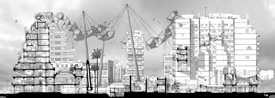 But in my opinion, La manzana porteña (Buenos Aires City Block) is where the architecture of Buenos Aires is most starkly illuminated. The drawing shows the miseries of real-estate speculation and its promise of Patios de aire y luz (Courtyards for Air and Light), as we say here—that do not provide either—along with the chaos of cables, air conditioners, and tiny windows that coexist with modest traditional houses from a previous era that are still part of our time.
The title of the exhibition, Secciones, alludes to the structural cross sections depicted in the drawings, but in Spanish, sectional drawings are called cortes (cuts, or slices). So the choice of the word secciones undoubtedly refers to the idea that Lovecchio’s sections show more than just buildings. His drawings explore nuances, complexities, and contrasts that exceed traditional interpretations of architecture.
In sum, Lovecchio’s works bring a bold, young, and specifically Argentine point of view to the ever-present idea of the “complexity and contradiction of contemporary architecture” that Robert Venturi wisely warned us about almost half a century ago.
For more information, see the MARQ website or Facebook page. To enjoy these drawings online, see santiagonlove.tumblr.com or the recent article published on Plataforma Arquitectura (text in Spanish).
Between Democracies 1989–2014: Remembering, Narrating, and Reimagining the Past in Eastern and Central Europe and South Africa
posted by CAA — September 09, 2015
Judy Peter is head of the Department of Jewellery Design and Manufacture at the University of Johannesburg in South Africa and a 2012 participant in the CAA-Getty International Program.
In 2012, I was one of twenty international art historians from developing countries who received a travel grant funded by the Getty Foundation to attend the CAA Annual Conference in Los Angeles. One of the objectives of the CAA-Getty International Program is to encourage and strengthen conversations between developing countries about the commonality, diversity, and parallel histories in the discursive field of visual culture. To this end, Cristian Nae, a participant from Romania, and I conceptualized the research project “Between Democracies 1989–2014: Remembering, Narrating, and Reimagining the Past in Eastern and Central Europe and Southern Africa” (EESA). This transnational collaboration brings together scholars and artists from Eastern and Central Europe and South Africa, and draws from their cultural and disciplinary diversities and cohesions to contribute to the generation of knowledge.
Over the past three years, the EESA project has expanded to include conveners, curators, and institutions. Ljiljana Kolesnik from the Institute of Art History in Zagreb, Croatia, collaborated on the project until May 2015; Karen von Veh, a 2013 CAA-Getty program alumnus from the University of Johannesburg in South Africa, was included as a convener and curator for the project in 2013; and Richard Gregor, a 2013 CAA-Getty program participant from the Dom umenia/Kunsthalle Bratislava in the Slovak Republic, joined the project as a curator in 2013.
Framework
In 1994, new ideological and political shifts in South Africa were entrenched by a neoliberal democracy. Postapartheid South Africa was initially marked by nation-building strategies such as the Truth and Reconciliation Commission, idealistic notions of the Rainbow Nation, and the African Renaissance, all of which functioned as vehicles to grapple with the social constructions of identities in a new South Africa. These strategies reflected a rationalization of the postcolonial recovery with a sense of self and place, and they were premised on the assumptions of interchange, mixing, inter/transculturations, hybridity, and creolization. The realities of postcolonial negotiations eroded this naïve enthusiasm, however, and South African art is still located in unresolved identities and remains in search of a recovery of self. Many artists also continue their artistic practices of the “struggle years” by employing forms of activism or social commentary to highlight the ongoing inequalities that have not been erased with the removal of the old regime.
Regarding Eastern and Central Europe, Nae states: “East and Central Europe also emerged from a totalitarian regime twenty-five years ago with the demise of socialism. The collapse of the Berlin Wall prompted a reimagining of the formerly divided Europe on the grounds of different political imagined realities, economies, and bio-political regimes. Artists and curators revisited the logic of modernity and explored its unrealized possibilities, while at the same time questioning contested territorial marks and processes of un-belonging. In relation to temporality, issues of identity and reconstruction of the private and the collective selves became central themes in the recently unmarked and de-territorialised territorialized places of the ‘former East’. Thus, the question of coping with the socialist past and its heritage has been an important political issue in much of the art after 1989, overlapping issues of gender, ethnicity, class, and national belonging.”[1]
The EESA project consists of exhibitions, conferences, roundtable discussions, and peer-reviewed publications. Participants have presented, published, and curated texts and artworks, raising questions about how, why, and when the theoretical and artistic practices of these nations respond to the constructs of place and political disruption, memory and commemoration, transforming ideologies, and new contexts of acculturation. The project has considered to what extent an existing critical methodology, informed by postcolonial theory, psychoanalysis, and post-Marxist theory, contributes to understanding these discursive constructions. It also questions whether new interpretive principles should be envisioned in order to deal with a comparative perspective, with the internal disparities inhabiting these imaginary geographies.
At the 2016 CAA Annual Conference in Washington DC, Nae, von Veh, Gregor, and I will lead a roundtable discussion on these issues with the new group of CAA-Getty International Program participants. It will take place in advance of the EESA group’s second annual conference in September 2016 in Bratislava. Not only has this collaborative project enlarged our understanding of regional comparisons in a postcolonial world, but we hope it will provide a model for future cross-cultural projects among CAA members.
[1] Cristian Nae, email message to author, 2013.
You never know where opportunities will lead you…
posted by Karen von Veh — September 09, 2015
Karen von Veh is associate professor of art history at the University of Johannesburg in South Africa and participant in the 2013 CAA-Getty International Program.
In 2013 I was one of the lucky recipients of a Getty travel grant to attend the CAA Annual Conference in New York. The first time I met the other grantees was when we had to give a short presentation about our research interests and show examples of the work we were studying. Ding Ning from Peking University was one of our group. Shortly after we returned to our home countries, he contacted me to ask about the possibility of showcasing the art of South Africa as an invited “special exhibition” for the Beijing Biennale in September 2015. Each year the biennale invites selected countries to produce what they call “special exhibitions” and to date they have never had exhibitions from anywhere in Africa. An exhibition of South African art would therefore be a “first” for them and a huge opportunity for us in South Africa—not only to showcase the excellence of our art production but also to align with the drive for cooperation between the BRICS nations (Brazil, Russia, India, China, and South Africa) and the various cultural and economic exchange programs that are currently underway.
Special exhibitions at the Beijing Biennale are expected to be showcases of the invited country’s cultural (fine art) production, and we decided to use this exhibition to reflect on the perceived state of our fledgling democracy. After the long struggle to introduce a democratic system and freedom for all in South Africa, one might imagine that an exhibition reflecting the current state of our democratic society might be a very cheerful and upbeat affair. However, twenty-one years after apartheid, we are still seeing the aftereffects of institutionalized inequalities, and the pace of change is not necessarily fulfilling citizen’s expectations. Annie E. Coombes’s book, History after Apartheid: Visual Culture and Public Memory in a Democratic South Africa (Durham, NC: Duke University Press, 2003), argues that cultural manifestations both reflect and affect this change in social structures and relationships. Transition is a difficult state to occupy; often beliefs or behavioral practices are so normalized that change is virtually impossible without a catalyst to shake us out of complacency and awaken us to the possibilities of alternative practices and thoughts. I believe that intellectually engaged, socially conscious art is just such a catalyst.
Bearing this in mind, my cocurators and I have chosen works by a cross section of high profile established artists—those who have been part of the struggle toward democracy and who have seen and reacted to both the good and the bad changes brought about by the new dispensation (William Kentridge, Diane Victor and David Koloane would be examples of this category). These artists have established careers and are well known at home and internationally. In addition, we made a careful selection of young emerging contemporary artists who we believe are embarking on successful careers and who have something pertinent to say about the condition of our society for the future of the youth. All the artists selected acknowledge the role of contemporary art in South Africa as a catalyst for change and raise social and political issues. Their work comments on the real impact of twenty-one years of democracy—a democracy that has allowed them the artistic freedom to comment incisively on some of the continuing challenges arising from inherited and ongoing inequality in society. The chosen examples also illustrate South Africa’s achievements in various traditional media (drawing, painting, printmaking, sculpture) and, in addition, we have included some examples of digital media and/or mixed-media works.
As I write this, we are packing up the works for transport to China and preparing to travel there ourselves in mid-September to set up the exhibition. Thinking back to the initial invitation to visit New York in 2013, I had no conception at the time of where this opportunity might lead in the future, and what fruitful projects might come from the contacts made on this occasion.
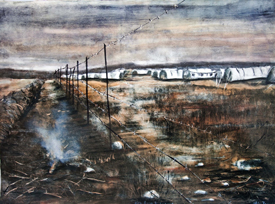
Kim Berman’s monotype is a reminder of the 2009 xenophobic attacks in South Africa. She records the tented camps put up by local authorities and aid organizations to house dispossessed foreigners, who were victims of violence and intimidation. A barbed-wire fence running through the center of the image is reminiscent of records from the Anglo Boer War concentration camps of the early 1900s. Berman is perhaps suggesting that little has changed in terms of difference, intolerance, and unequal power relations.
Image: Kim Berman, Rifle Range I, Roodepoort, 2009, monotype, 78 x 108 cm (artwork © Kim Berman)
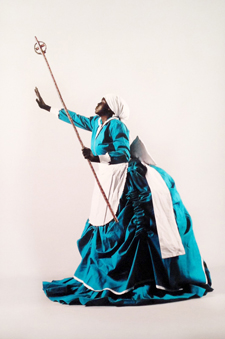
Mary Sibande performs her alter ego, Sophie, clad in Victorian attire. The color of her dress refers to the Zionist Christian Church (ZCC) uniform, and she is wielding a Zionist prayer stick. Sibande refers to the conflation of Christianity and traditions of ancestral worship that exist within the ZCC. This cultural overlap illustrates her search for identity as a young black woman living in the Westernized culture of contemporary South Africa. Her Sophie persona thus explores postcolonial South African identity and critiques stereotypical depictions of women, especially black women, in society.
Image: Mary Sibande, I put a spell on me, 2009, digital pigment print, 90 x 60 cm (artwork © Mary Sibande)
CAA as a Global Site for International Collaboration
posted by CAA — September 09, 2015
Parul Dave Mukherji is a professor in the School of Arts and Aesthetics at Jawajarlal Nehru University in New Delhi, India. In 2013 she was a participant in the CAA-Getty International Program.
When I attended the College Art Association’s 101st Annual Conference in New York as a participant in the 2013 CAA-Getty International Program, little did I realize the long-term benefits of interacting with scholars from different parts of the world. While learning about different art-history teaching and research methodologies in areas as far flung from my native India as South Africa, Eastern Europe, Turkey, and China, among others, it was meeting art historians from neighboring countries such as Pakistan, Sri Lanka, and Bangladesh that laid the groundwork for future collaboration and the possibility of rethinking South Asian art history in both global and regional terms. It is indeed ironic that I “discovered” art historians from these South Asian nations in New York.
When Stephen Ross and Allana Lindgren invited me to contribute a chapter about South Asian visual arts to their edited volume, The Modernist World (New York: Routledge, 2015), I was reluctant to represent the art histories of Pakistan, Bangladesh, and Sri Lanka and wanted to invite art historians from these regions to write about their own art histories. The CAA-Getty Program played a key role by offering a global platform for art historians from diverse regions to meet and exchange notes about their research and pedagogical practices. Meeting a fellow participant, a young art historian from Bangladesh, AKM Khademul Haque, helped me develop a fuller account of South Asian modernism and paved the way for future collaborations. Haque, Simone Wille, and T. Sanathanan, and I coauthored the chapter “Visual Arts in South Asia” in The Modernist World.
‘Massacre of the Innocents’
posted by CAA — September 09, 2015
Musarrat Hasan is an advisor to the Institute of Art and Design and professor of art history at Lahore College Women’s University in Lahore, Pakistan. She was a 2013 participant in the CAA-Getty International Program.
In Pakistan, the Taliban and many other militant groups have carried out terrorist activities for the last several years, killing thousands of people through suicide bombings and other horrific attacks. Their aggression has now been greatly curtailed through the joint efforts of the military and the citizens of Pakistan. However, on December 16, 2014, seven gunmen affiliated with the Taliban conducted a terrorist attack on the Army Public School in the northwestern Pakistani city of Peshawar. They entered the school and fired on school staff, teachers, and children, killing 145 people, including 132 schoolchildren between eight and eighteen years of age.
Worldwide protest and expressions of horror at this outrage followed immediately. The artists of Pakistan, like their fellow citizens, were greatly shaken by the brutal event. Through their national organization, the Artists’ Association, they decided to make their outrage public. During a meeting of the organization’s executive committee, under the leadership of Mian Ijaz ul Hassan, the group condemned the Peshawar attack and voted to devote the upcoming annual exhibition to artistic responses to this violence. The organization sent out a notice to members and all other artists in universities, cultural bodies, and international members, announcing that the annual show would be postponed by about three weeks so that all members and other artists could participate. The title for the exhibition would be ‘Massacre of the Innocents’ and it would be about the suffering of innocents all over the world.
Although Pakistani artists have previously responded to national and international events of tragic and human significance, I do not recall a collective public response to current events by artists carried out with such immediacy. There have been instances of commissioned murals years after the event, but this sort of action was unprecedented.
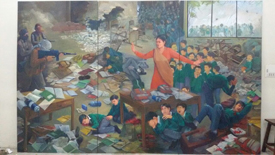 At the Lahore College Women’s University, the faculty members were also motivated to participate and decided to collectively produce the mural that is illustrated here. They pooled funds to buy oil paints, panels of stretched canvas, and other materials required for the mural. I was honored to supervise the creation of this work from conception to completion. We decided not to dwell on the gruesome murders but instead to celebrate the bravery and sacrifice of the headmistress who faced the Taliban with courage and gained time for hundreds of students to escape, even though she herself was killed in the process.
The final mural is 8 x 13 feet and demonstrates the painting skills and commitment of fourteen young faculty members who worked on weekdays and late into the night, putting their hearts and souls into the timely completion. The faculty members of the Lahore College Women’s University who worked on this project were Rifaat Dar, Aasma Majeed, Amber Muneer, Aqsa Rehan, Sadia Murtaza, Samina Naseem, Farah Khan, Ghazala Anjum Shirazi, Nighat Mahboob, Rehana Salman, Rabia Yaseen, and Maryam Baber.
The exhibition at Lahore was a great success. It stirred the community and also inspired many other artists to participate in a subsequent exhibition held at the National Art Gallery in Islamabad. The Shakir Ali Museum in Lahore collaborated with the Artists’ Association in this endeavor. The exhibition is scheduled to travel to other major cities such as Peshawar and Karachi later this year.