CAA News Today
NEA Survey Shows a Decline in Art Participation
posted by Christopher Howard — June 16, 2009
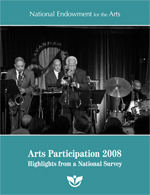 American audiences for the arts are getting older and their numbers are declining, according to new research released yesterday by the National Endowment for the Arts (NEA). Arts Participation 2008: Highlights from a National Survey, which can be ordered or downloaded from the NEA website, features top findings from the 2008 Survey of Public Participation in the Arts, the nation’s largest and most representative periodic study of adult participation in arts events and activities, conducted by the NEA in partnership with the US Census Bureau.
Five times since 1982, the survey has asked US adults eighteen and older about their patterns of arts participation over a twelve-month period. The 2008 survey reveals dwindling audiences for many art forms, but it also captures new data on internet use and other forms of arts participation. Although the 2008 recession likely affected survey responses, long-term trend analysis indicates that other factors also may have contributed to lower arts participation rates.
There are persistent patterns of decline in participation for most art forms. Although nearly 35 percent of US adults—an estimated 78 million—attended an art museum or an arts performance in the 2008 survey period, the figure is a decline from 40 percent reported in 1982, 1992, and 2002.
Attendance at the most popular types of arts events—such as art museums and craft or visual-arts festivals—saw notable declines. The US rate of attendance for art museums fell slightly from a high of 26 percent in 1992–2002 to 23 percent in 2008, comparable to the 1982 level.
Further, fewer adults are creating and performing art. Weaving and sewing remain popular as crafts, but the percentage of adults who do those activities has declined by 12 points. Only the number of adults doing photography has increased—from 12 percent in 1992 to 15 percent in 2008.
Historically the most dependable arts participants, forty-five to fifty-four-year-olds, showed the steepest declines in attendance for most art events, compared with other age groups. Educated Americans—the most likely to attend or participate in the arts—are doing so less than before, and less-educated adults have significantly reduced their already low levels of attendance.
In a positive trend, the internet and mass media are reaching substantial audiences for the arts. Consider these findings:
- About 70 percent of US adults went online for any purpose in 2008 survey, and of those adults, nearly 40 percent used the web to view, listen to, download, or post artworks or performances
- Thirty percent of internet-using adults download, watch, or listen to music, theater, or dance performances online at least once a week. More than 20 percent of them view paintings, sculpture, or photography at least once a week
- More Americans view or listen to broadcasts and recordings of arts events than attend them live (live theater being the sole exception). Classical and Latin or salsa music were the most popular music categories (with 40 and 33.5 million viewers/listeners, respectively), and 33.7 million adults reported listening to, or viewing programs or recordings about books and writers. The same number (33.7 million) enjoyed broadcasts or recordings about the visual arts.
The entire survey questionnaire, the raw data, and a user’s guide are available both on the NEA website and from Princeton University’s Cultural Policy and the Arts National Data Archive (CPANDA). More detailed study results will be available later this year.
June 2009 Issue of The Art Bulletin Published
posted by Christopher Howard — June 02, 2009
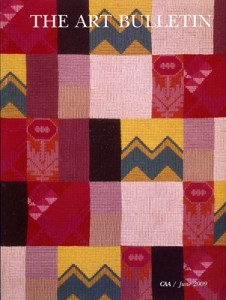 The June 2009 issue of The Art Bulletin, the leading publication of art-historical scholarship, has just been published. It will be mailed to those CAA members who elect to receive it, and to all institutional members.
On the cover is a detail of a pillowcase designed ca. 1916 by the Swiss artist Sophie Taeuber, which accompanies an essay by Bibiana Obler that considers the difference between Taeuber’s and Hans Arp’s public and private identities through a set of collaborative and closely related works and why they kept their most “advanced” work to themselves.
For her contribution, Stephanie Leitch investigates Hans Burgkmair’s images of non-Western communities in the woodcut frieze The Peoples of Africa and India (1508), which neither played into iconographic presets nor invented new stereotypes. Two more essays round out the issue: Norma Broude explores the political dynamics of gender informing the intentions, subjects, production, and reception of Giambattista Tiepolo’s frescoes for the palazzina of the Villa Valmarana, and Laura Morowitz examines the extraordinary popularity and religious undercurrents of the Hungarian artist Mihály Munkácsy’s paintings Christ before Pilate and Christ on Golgotha in late-nineteenth-century America.
The June issue of The Art Bulletin also contains reviews of books on Chinese epigraphy, Giovanni Bellini, Lucas Cranach the Elder, and Marcel Duchamp. Please read the full table of contents for more details.
Spring Meiss Grant Winners
posted by Christopher Howard — May 29, 2009
CAA has awarded three grants from the Millard Meiss Publication Fund for spring 2009. Thanks to the generous bequest of the late Prof. Millard Meiss, these grants are given twice annually to publishers to support the publication of scholarly books in art history and related fields.
The grantees are:
- Anna Arnar, The Book as Instrument: Stéphane Mallarmé, the Artist’s Book, and the Transformation of Print Culture, University of Chicago Press
- Nehabat Avcioglu, Turkish Architecture in Europe, 1737–1876, Ashgate
- Bissera Pentcheva, The Sensual Icon: Ritual, Space, and the Senses in Byzantium, Pennsylvania State University Press
Books eligible for a Meiss grant must already be under contract with a publisher and be on a subject in the arts or art history. Authors must be current CAA members.
Please note that the Millard Meiss Publication Fund has been suspended for fall 2009–spring 2010.
Study Finds Overreliance on Part-Time Faculty in Higher Education
posted by Christopher Howard — May 18, 2009
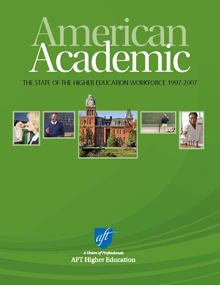 The primary finding of a report released last week by the American Federation of Teachers (AFT), entitled American Academic: The State of the Higher Education Workforce 1997–2007, presents a troubling picture of disinvestment in the higher-education teaching profession—notably, a reduction in the proportion of full-time tenured and tenure-track faculty, and an increased reliance on employing “contingent” faculty and instructors such as part-time faculty, full-time nontenure track faculty, and graduate employees.
An analysis of the most recent ten years of national data finds that the higher-education instructional workforce grew in the past decade, which is not surprising since college enrollments increased during that time by over 3 million. But to meet the needs of a growing student population, colleges and universities overwhelmingly relied on hiring undersupported contingent faculty and instructors. Previous reports have demonstrated the problems created when colleges hire contingent faculty and instructors without fair wages, job security, and professional support. This new report documents that, rather than working to reverse these trends and investing in a more secure higher-education teaching workforce, colleges and universities are expanding their reliance on contingent faculty and instructors.
Among the report’s other key findings:
- From 1997 to 2007, the proportion of full-time tenured and tenure-track faculty members declined from approximately one-third of the instructional staff to slightly more than one-quarter
- The increased reliance on contingent faculty and instructors was found in all sectors of higher education, with the most dramatic increase in community colleges
At the same time, the study notes an increase in the number of professional staff who provide direct student services, such as registrars, counselors, and financial-aid officers. Professional staff grew by 50 percent from 1997 to 2007, and the vast majority of these positions were full-time.
This report is the first in a new series on the higher-education workforce in colleges and universities. Each issue in AFT’s American Academic series will explore different aspects of trends in hiring, compensation, and working conditions among the increasingly diverse higher-education workforce. More higher education data can be found in AFT’s Higher Education Data Center.
The Chronicle of Higher Education and Insider Higher Ed have reported on the report, with extensive comments by readers posted to the latter article.
CAA encourages all colleges and universities to read and uphold its Guidelines for Part-Time Professional Employment, which give recommendations on fair compensation, office and studio space, benefits, and more for part-time workers.
CAA 2009–10 Operating Budget Reductions
posted by Linda Downs — May 11, 2009
Updated May 14, 2009.
Like most universities, art museums, and learned societies, CAA has been significantly affected by the global economic downturn. The Board of Directors made difficult decisions at its May 2009 meeting that nevertheless will allow CAA to maintain the high quality of member services and programming. Strategic reductions and other measures have been instituted throughout the association to balance the budget and keep core programs, publications, and services in operation. With this careful financial planning, CAA remains dedicated to supporting members and the visual-arts community at large through our advocacy, career services, publications, and conference.
Annual Conference
The 2010 Annual Conference in Chicago will commence on Wednesday evening, February 10, with Convocation and the Gala Reception. All 120 planned sessions will be presented over the following three days, Thursday, February 11 to Saturday, February 13, with the addition of extended evening hours. No sessions will take place on Wednesday.
Publications
Newsletter: Beginning July 2009, CAA News will only be distributed online in a new reader-friendly design. This allows us to save printing and mailing costs and help to preserve coverage of core programs and publications. CAA’s website, www.collegeart.org, will become the primary hub of up-to-date information on the organization.
Journals: CAA’s longtime support of the journals is absolutely central to the mission, and the association is fully committed to maintaining them now and in the future. The Art Bulletin and Art Journal will continue to be published. Illustrations, however, will be limited to black and white for 2009–10, except where editorial and budget decisions may allow the insertion of color. caa.reviews will be unchanged, with new book reviews, exhibition reviews, and conference and symposia reports published regularly. While the CAA Board of Directors has determined the budget restrictions necessary for this part of the association, the editors-in-chief will work closely with staff and editorial boards to make sure that any further reductions are implemented with a strict attention to quality consistent with the identity and mission of the journals.
Grants and Fellowships
Two programs in CAA’s grant-making arm will be suspended for 2009–10: the Professional Development Fellowship Program for graduate students and the Millard Meiss Publication Fund. However, the Annual Conference Travel Grants and the Wyeth Foundation for American Art Publication Grant will both continue, and the CAA Annual Exhibitions, also funded by a grant, will take place at the Chicago and New York conferences.
May CAA News Published
posted by Christopher Howard — May 08, 2009
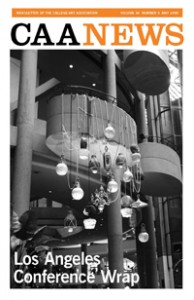 The May issue of CAA News has just been published. All individual and institutional members will receive it in the mail; you can also download a PDF of the issue now, reformatted to better fit your screen.
In the issue, CAA President Paul Jaskot and Director of Programs Emmanuel Lemakis sum up highlights from the 2009 Annual Conference in Los Angeles, and CAA Board Member Andrea Kirsh writes about her experiences at this year’s Arts Advocacy Day and Humanities Advocacy Day.
The May newsletter also includes instructions for proposing a session for the 2011 Annual Conference in New York—CAA’s centennial year. Please read the guidelines carefully before the submission process begins on June 16, 2009. Deadline: September 1, 2009.
Also published are calls for texts on “the contemporary” for Art Journal and for participation on CAA’s Professional Interests, Practices, and Standards Committees—plus the latest news from CAA’s affiliated societies and listings of solo exhibitions, books published, and exhibitions curated by CAA members.
Call for Art Journal Texts on “the Contemporary”
posted by Christopher Howard — May 05, 2009
Katy Siegel is incoming editor-in-chief of Art Journal and associate professor of art history at Hunter College, City University of New York.
During my tenure as editor-in-chief of Art Journal, I would like to publish a wide-ranging series that assesses contemporary art—its making, exhibition, criticism, history, and social uses. This series could include the kind of state-of-the-field essays that have traditionally been written about historical areas of study for The Art Bulletin. It could also mean more focused historiographic subjects, such as the evolution of “the contemporary” or the rise and fall of postmodernism. Or theoretical discussions of, for example, the relationships between the modern and the contemporary (questions of periodization being of special interest), or more speculative considerations of the changing role of contemporary art in current economic, technological, and social conditions.
I welcome approaches that are ambitious and generalizing, but since “the contemporary” is not really a single unified disciplinary object, I am also seeking writing that is partisan and partial, local and medium-specific. While one person might approach postmodernism from a historical perspective, as an object in the past, another might argue for its continuing validity under current conditions. Different authors might investigate the social meaning of “the contemporary” as opposed to the modern in particular countries at particular moments (the US at midcentury, China today), or for particular institutions, such as the museum, biennial exhibition, or university/college course.
I would like to hear from curators, teachers, critics, and artists about their own concrete experiences in relation to these large, abstract questions. I am interested not only in a wide range of topics, but also a diversity of approaches to those topics: art criticism, discussions, shorter polemical essays, and artists’ projects are all possibilities in addition to the scholarly article.
For more information, please write to katy.siegel@gmail.com.
Spring Art Journal Published
posted by Christopher Howard — May 04, 2009
 In her introductory editor’s letter to the recently published Spring 2009 Art Journal, Judith Rodenbeck underlines the notion of retooling in the issue. The authors and contributors, she notes, confront three areas in particular: how the expansive global art world thrives in non-Western countries; how art education is undergoing progressive change outside traditional art academia; and how a history of early computer art can inform contemporary practice.
Gail Gelburd’s essay, “Cuba and the Art of ‘Trading with the Enemy,’ ” looks at Cuban-American relations over the past fifty years and their effect on cultural exchange. In her essay “Urban Claims and Visual Sources in the Making of Dakar’s Art World City,” Joanna Grabski discusses the Dak’Art Biennale in relation to Senghorian Négritude, the city’s School of Fine Arts, and Dakar’s urban fabric.
During the past several years, Art Journal has investigated retoolings in pedagogical issues. “The Currency of Practice: Reclaiming Autonomy for the MFA,” developed from a roundtable discussion that took place at the CAA Annual Conference in 2007, explores alternatives to traditional graduate degrees such as often-nomadic, nonaccredited schools, organizations led and run by artists, and programs for PhDs for artists.
Moving forward by looking back, three essays explore the history and practice of digital art. The artist Paul Hertz presents an overview that draws on his recent cocurated exhibition, Imaging by Numbers: A Historical View of the Computer Print. A computer scientist and pioneering artist, Frieder Nake, examines early European computer artists and their work, which he calls “algorithmic images accepted as art.” Patric D. Prince, a scholar, artist, and collector of computer art, provides a short history of computer-generated imagery and digital printmaking in America before the era of the home computer.
Reviews include texts on recent projects by Boris Groys (a collection of essays and an exhibition) and a book on Marcel Duchamp and artists’ labor. Letters to the editor include two replies to an Art Journal article, “Steps to an Ecology of Communication: Radical Software, Dan Graham, and the Legacy of Gregory Bateson,” from the Fall 2008 issue.
March 2009 Issue of The Art Bulletin Published
posted by Christopher Howard — March 20, 2009
 The March 2009 issue of The Art Bulletin, the leading publication of international art-historical scholarship, has been published and was mailed to CAA members earlier this month.
Special to this issue is the publication of Picasso’s Closet, a play by the Chilean American writer and Duke University professor Ariel Dorfman, which examines Pablo Picasso’s thorny politics and raises questions about the role of an artist during wartime. The art historians Pepe Karmel and Patricia Leighton and the theorist Mieke Bal respond.
Two essays examine on art and culture in eighteenth- and nineteenth-century France. Judy Sund reads Antoine Watteau’s Les charmes de la vie as a commentary on the ways that nature was domesticated and aestheticized for wealthy Parisians, with the artist standing as mediator between the realms of culture and nature. Meanwhile, Jennifer Olmsted considers how Eugène Delacroix’s The Sultan of Morocco and His Entourage was at odds with the triumphalist paintings of French domination over North Africa that were also on view at the Salon of 1845 in Paris.
This issue of The Art Bulletin also contains four book reviews on Roman visuality, the Buddhist afterlife in art, the Psalter of Saint Louis, and African architecture. Please read the full table of contents for more details.
NEA Report on Unemployment Rates for Artists
posted by Christopher Howard — March 09, 2009
Unemployment rates are up among working artists and the artist workforce has contracted, according to new research from the National Endowment for the Arts (NEA). Artists in a Year of Recession: Impact on Jobs in 2008 examines how the economic slowdown has affected the nation’s working artists. The study looks at artist employment patterns during two spikes in the current recession—the fourth quarters of 2007 and 2008. Not unexpectedly, this downturn reflects larger economic declines across the nation: a Commerce Department report from late February noted a 6.2 percent decrease in the gross domestic product in the last quarter of 2008. The ten-page publication can be downloaded as a PDF.
Among the findings:
- Artists are unemployed at twice the rate of professional workers, a category in which artists are grouped because of their high levels of education. The artist unemployment rate grew to 6 percent in the fourth quarter of 2008, compared with 3 percent for all professionals. A total of 129,000 artists were unemployed in the fourth quarter of 2008, an increase of 50,000 (63 percent) from one year earlier. The unemployment rate for artists is comparable to that for the overall workforce (6.1 percent)
- Unemployment rates for artists have risen more rapidly than for US workers as a whole. The unemployment rate for artists climbed 2.4 percentage points between the fourth quarters of 2007 and 2008, compared to a one-point increase for professional workers as a whole, and a 1.9 point increase for the overall workforce
- Artist unemployment rates would be even higher if not for the large number of artists leaving the workforce. The US labor force grew by 800,000 people from the fourth quarter of 2007 to the fourth quarter of 2008. In contrast, the artist workforce shrank by 74,000 workers. Some of this decline may be attributed to artists’ discouragement over job prospects
- Unemployment rose for most types of artist occupations. Artist jobs with higher unemployment rates are performing artists (8.4 percent), fine artists, art directors, and animators (7.1 percent), writers and authors (6.6 percent), and photographers (6.0 percent)
- The job market for artists is unlikely to improve until long after the US economy starts to recover. Unemployment is generally a lagging economic indicator, or a measure of how an economy has performed in the past few months. During the prior recession (2001), artist unemployment did not reach its peak of 6.1 percent until 2003—two years after economic recovery began nationwide.
As an example of how arts jobs intersect with the larger economy, consider the construction industry. Industry-wide declines, which began in 2006, have contributed to the shrinking job market for architects. While this group usually has the lowest unemployment rates among all artist occupations and all professionals, architect unemployment rates doubled, from 1.8 percent in fourth quarter 2007, to 3.8 percent in the fourth quarter of 2008. Unemployment in the designer category also doubled, from 2.3 percent to 4.7 percent. This broad category includes interior, commercial, and industrial designers whose work is closely associated with the construction industry. Eighty-three thousand designers left the artist labor market during that time period.
The contraction of the arts workforce has implications for the overall economy. A May 2008 NEA study revealed there are two million full-time artists representing 1.4 percent of the US labor force, only slightly smaller than the number of active-duty and reserve personnel in the military (2.2 million). More recently, a National Governors Association report recognized that the arts directly benefit states and communities through job creation, tax revenues, attracting investments, invigorating local economies, and enhancing quality of life. There are 100,000 nonprofit arts organizations that support 5.7 million jobs and return nearly $30 billion in government revenue every year, according to a study by Americans for the Arts.
The NEA Office of Research and Analysis produced Artists in a Year of Recession: Impact on Jobs in 2008 using published and unpublished data from the Department of Labor’s Bureau of Labor Statistics. The research note measures unemployment rates among workers who self-reported an artist job as occupying their greatest number of working hours per week, whether the employment was full-time or part-time.