
CAA News Today
Exhibitions Curated by CAA Members
posted by CAA — December 15, 2014
Exhibitions Curated by CAA Members
Check out details on recent shows organized by CAA members who are also curators.
Exhibitions Curated by CAA Members is published every two months: in February, April, June, August, October, and December. To learn more about submitting a listing, please follow the instructions on the main Member News page.
December 2014

Katerina Lanfranco. PostPartumParty. Rhombus Space, Brooklyn, New York, November 21–December 14, 2014.
Katerina Lanfranco. Funkdafied. Rhombus Space, Brooklyn, New York, October 17–November 9, 2014.
Melody Rod-ari. Home and Away: The Printed Works of Ruth Asawa. Norton Simon Museum, Pasadena, California, September 19, 2014–January 19, 2015.
Jan Wurm. Closely Considered: Diebenkorn in Berkeley. Richmond Art Center. Richmond, California, September 14–November 16, 2014.
Books Published by CAA Members
posted by CAA — December 15, 2014
Publishing a book is a major milestone for artists and scholars—browse a list of recent titles below.
Books Published by CAA Members appears every two months: in February, April, June, August, October, and December. To learn more about submitting a listing, please follow the instructions on the main Member News page.
December 2014

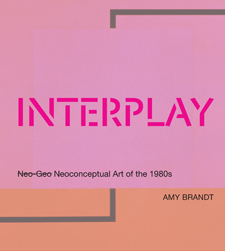
Amy Brandt. Interplay: Neo-Geo Neo-Conceptual Art of the 1980s (Cambridge, MA: MIT Press, 2014).

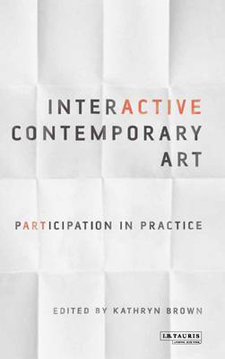
Kathryn Brown, ed. Interactive Contemporary Art: Participation in Practice (London: I. B. Tauris, 2014).

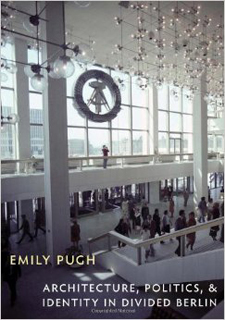
Emily Pugh. Architecture, Politics, and Identity in Divided Berlin (Pittsburgh: University of Pittsburgh Press, 2014).

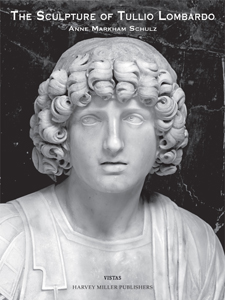
Anne Markham Schulz. The Sculpture of Tullio Lombardo (Turnhout, Belgium: Harvey Miller, 2014).
Committee on Women in the Arts Picks for December 2014
posted by CAA — December 10, 2014
Each month, CAA’s Committee on Women in the Arts selects the best in feminist art and scholarship. The following exhibitions and events should not be missed. Check the archive of CWA Picks at the bottom of the page, as several museum and gallery shows listed in previous months may still be on view or touring.
December 2014
Suzanne Lacy: Gender Agendas
Museo Pecci Milano
Ripa di Porta Ticinese 113, Milan, Italy
November 14, 2014–January 6, 2015
The Milan Pecci Museum is presenting a Suzanne Lacy’s Gender Agendas. This retrospective exhibition launches a whole new line of investigation at the the Centre for Contemporary Art Luigi Pecci that has been dedicated to the pioneering work in the arts developed internationally in the sixties, seventies, and eighties. Born in California in 1945 and based in Los Angeles, Lacy is an influential artist, educator, and writer. She is known as one of the pioneer artists blending Conceptual and Performance art with social commitment in the early seventies in Los Angeles. Her approach to researching and making follows her questioning the relationship of “service” to “activism,” and of both to “art practice.” Her diverse approach to this investigation stretches from explorations of the body and intimate reflections to the production of large and lengthy public demonstrations involving dozens of artists and thousands of spectators.
Gender Agendas presents, for the first time in Europe, a large series of Lacy’s projects that follow a constant of her artistic development: the investigation of the female condition. From a more intimately approach to a strong political and civic one, Lacy explores the power of art as a useful and effective tool for social struggle and for the promotion of progressive ideas, digging in this way into the meanings of the hundreds of anonymous female and working-class performers who would have no access to the communication systems otherwise. Sexual exploitation, violence, media representation of the aging woman, and social issues ranging from racism to the conditions of labor and class may have been provocative and avant-garde in the seventies and eighties, but are still deeply relevant today.
Through the curatorial approach of Lacy’s retrospective exhibition, Fabio Cavallucci and Megan Steinman, propose a readaptation of some of her most important works, including Prostitution Notes (1974); Three Weeks in May (1977); In Mourning and In Rage (1977); The Crystal Quilt (1985–87); and Full Circle (1994); as well as one of her most recent projects, Storying Rape (2012), a discussion among significant personalities in the media, activists, and politicians in an attempt to find a new cultural narrative that describes sexual violence.
Birgit Jurgenssen
Fergus McCaffrey
514 West 26th Street, New York, NY 10001
November 6–December 20 2014
For the second exhibition of Birgit Jurgenssen, Fergus McCaffrey brings together a large group of her photographic works in combination with a number of sculptures in order to underscore the variety and complexity of her work.
Highly experimental, Jurgenssen’s photographic work is exemplified by her Stoff-arbeiten (Fabric Works), which were created from the late 1980s to the early 1990s. The “fabric works” consist of photographic prints mounted on canvases that have been screwed to iron frames made by the artist, giving a highly sculptural character to their combinations. Thin, translucent fabrics such as gauze are stretched over the surface, veiling and slightly obscuring the images. The photographs themselves are created through a range of processes, including photograms, solarization, and multiple exposures. The juxtaposition of hard-welded iron frames and delicate textile emphasizes their materiality and draws a direct relationship to Jürgenssen’s sculptural works.
The exhibition also includes works that Jurgenssen referred to as “painted” photography. These large format photograms were created by manipulating sheets of photo paper in developer and fixing baths and by pouring photo chemicals directly over the paper. The resulting marbled and dripped images were then exposed to light and fixed, after which the surfaces were scratched, creating gestural drawings over the “painted” photographic surfaces.
Born and educated in Vienna, Jürgenssen (1949–2003) died prematurely at the age of 54. Her studio practice encompassed drawing, performance, photography, and sculpture, through which she compellingly combined classically refined draftsmanship, mixed media, and experimental photo techniques. She is best known for her connection to the Austrian feminist movement of the 1970s. Equally important is her engagement with Surrealism and her concern for materials and processes.
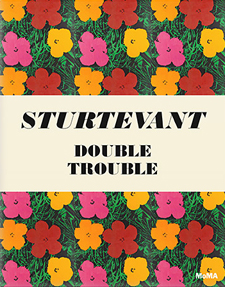
Cover of the catalogue for Sturtevant: Double Trouble
Sturtevant: Double Trouble
Museum of Modern Art
Special Exhibitions Gallery, Third Floor; and Sue and Edgar Wachenheim III Painting and Sculpture Gallery, Gallery 5, Fifth Floor, 11 West 53rd Street, New York, NY 10009
November 9, 2014–February 22, 2015
Elaine Sturtevant (American, 1924–2014) began “repeating” the works of her contemporaries in 1964, using some of the most iconic artworks of her generation as a source and catalyst for the exploration of originality, authorship, and the interior structures of art and image culture. Beginning with her versions of works by Jasper Johns and Andy Warhol, she initially turned the visual logic of Pop art back on itself, probing uncomfortably at the workings of art history in real time. Yet her chameleonlike embrace of other artists’ art has also resulted in her being largely overlooked in the history of postwar American art. As a woman making versions of the work of better-known male artists, she has passed almost unnoticed through the hierarchies of midcentury modernism and postmodernism, at once absent from these histories while nevertheless articulating their structures.
Far more than copies, her versions, for instance, of Johns’s flags, Warhol’s flowers, and Joseph Beuys’s fat chairs are studies in the action of art that expose aspects of its making, circulation, and canonization. Working primarily in video since 2000, the artist remained deeply engaged with the politics of image production and reception, using stock footage from Hollywood films, television, and advertising to point to the exhaustion built into much of postwar cultural production.
This exhibition is the first comprehensive survey in America of Sturtevant’s fifty-year career and the only institutional presentation of her work organized in the United States since her solo show at the Everson Museum of Art in 1973. Rather than taking the form of a traditional retrospective, the exhibition offers a historical overview of her work from a contemporary vantage point, interspersing more recent video pieces among key artworks from all periods of her career.
Michelle Stuart: Silent Movies
Leslie Tonkonow: Art Works and Projects
535 West 22nd Street, Sixth Floor, New York, NY 10011
November 1–December 20, 2014
Michelle Stuart (American, b. 1933) became internationally known in the 1970s for innovative works that synthesize Land art, drawing, and sculpture, as well as her pioneering use of natural materials in sculpture, painting, and drawing. Since 2011 photography has been her primary medium, although present in her work both literally and conceptually since the 1970s. Devising a highly personal and original method of photographic manipulation, Stuart conveys the impression of deeply felt images seen through time and layers of consciousness. It is “a combination of fact and fiction, truth and lies—and lies that tell the truth,” as put by the artist.
The exhibition at Leslie Tonkonow comprises photographs drawn from Stuart’s vast archive of analogue and digital photographs taken for almost half a century. Stuart activates their aesthetic and storytelling potential by arranging them in gridlike groups or occasionally altering them. Each work is composed of between seven and seventy separate images, digitally printed on 8½ x 11 inch sheets of archival paper. Both painterly and cinematic in their rhythmic visual arrangement, the works in this exhibition amount to meditations on the nature of memory.
As dreamlike recollections of her past, these works continue her lifelong artistic engagement with specific locations, while affirming the significance of place as a unique source of memory. “Memories are silent until we either articulate them in words on paper or depict them visually,” as put by the artist herself. Two years ago, in Palimpsests, her first solo show of exclusively photographic works, Stuart expressed thoughts on war, the cosmos, the passing of time, and on form itself. The compositions in Silent Movies, all created since then, present universal themes with deeply personal associations that contain keys to momentous events and evoke times and places in a manner that is both specific and archetypical. With abundant literary, cinematic, and historical references, these works do not merely address memories, but, as put in the press release, the very process of recall itself.
CAA NAMES RECIPIENTS FOR 2015 CAA-GETTY INTERNATIONAL PROGRAM
posted by Janet Landay, Program Manager, Fair Use Initiative — December 01, 2014
CAA is pleased to announce this year’s recipients of travel support through the CAA-Getty International Program. In an effort to promote greater interaction and exchange between American and international art historians, CAA will bring scholars from around the world to participate in the 2015 program, held during the association’s Annual Conference in New York City from February 11–14, 2015. This is the fourth year of the program, which has been generously funded by grants from the Getty Foundation since its inception. The participants—professors of art history, curators, and artists who teach art history—were selected by a jury of CAA members from a highly competitive group of applicants. In addition to covering travel expenses, hotel accommodations, and per diems, the CAA-Getty International Program includes support for conference registration and a one-year CAA membership.
The CAA-Getty International Program participants’ activities begin with a one-day preconference colloquium on international issues in art history, during which they meet with North-American-based CAA members to discuss common interests and challenges. The participants are assisted throughout the conference by CAA member hosts, who recommend relevant panel sessions and introduce them to colleagues who share their interests. Members of CAA’s International Committee have agreed to serve as hosts, along with representatives from several Affiliated Societies of CAA, including the American Council for Southern Asian Art, the Arts Council of the African Studies Association, the Association for Latin American Art, the Society of Contemporary Art Historians, and the Society of Historians of East European, Eurasia, and Russian Art and Architecture.
This program has increased international participation in the association’s activities, and expanded international networking and the exchange of ideas both during and after the conference. The CAA-Getty International Program supplements CAA’s regular program of Annual Conference Travel Grants for graduate students and international artists and scholars. We look forward to welcoming the recipients at the Annual Conference in New York City this February.
2015 CAA-Getty International Program Participants
Mokammal H. Bhuiyan
Mokammal H. Bhuiyan
Mokammal H. Bhuiyan is chairman of the Department of Archaeology at Jahangirnagar University, Dhaka, Bangladesh. With a BA (honors), MA, MPhil, and PhD in archaeology, he has developed scholarly interests that also include art history, iconography, and heritage studies and management of Eastern India and Bangladesh. The author of a 2003 book, Terracotta Art of Ancient Bengal, Bhuiyan has written numerous scholarly articles on art, iconography, archaeology, and heritage, both nationally and internationally, as well as newspaper articles on current issues in Bangladesh. He edited Studies in South Asian Heritage, featuring contributions by leading international scholars, as well as Pratnatattva, Vols. 17 and 18. He was a member of the editorial board of the Jahangirnagar Review Part-C, Vol. XXIII, 2011–2012 and serves on the Board of Advanced Studies and Academic Council of Jahangirnagar University. A participant in conferences and seminars around the world, Bhuiyan is a research fellow of the SAARC Cultural Centre and was a research fellow of the Asiatic Society of Bangladesh. As a member of Object Identification Committee, Department of Archaeology, Government of Bangladesh, he has been actively involved in researching the vernacular architecture of Narsingdi, Bangladesh, and conducting a comparative study between Buddhist stone sculptures found in Mainamati, Bangladesh, and those in Tripura, India.
Dafne Cruz Porchini
Dafne Cruz Porchini
Dafne Cruz Porchini is a curator at the Museo del Palacio de Bellas Artes (Museum of the Palace of Fine Arts) in Mexico City. From 2007 to 2011 she was the deputy director of the Museo Nacional de Arte (National Museum of Art), Mexico City. Cruz studied at the Universidad Nacional Autónoma de México (UNAM), where she received a PhD in art history in 2014. Her main research interests include the history of modern exhibitions and transcultural artistic exchanges, topics she has tried to link with her curatorial practice. Her most recent publication is a critical catalogue of twentieth-century modern Mexican painting, Catálogo comentado de pintura del siglo XX (Museo Nacional de Arte-Instituto de Investigaciones Estéticas, 2013), for which she served as the academic coordinator. She is currently organizing the exhibition Mexican Modernisms,which will open at the Philadelphia Museum of Art in fall 2016.
Boureima Tiékoroni Diamitani
Boureima Tiékoroni Diamitani
Since 2001, Boureima Tiékoroni Diamitani has been the executive director of the West African Museums Programme (WAMP), based in Ouagadougou, Burkina Faso. From 1989 to 1993, he served as the director of cultural heritage and museums of Burkina Faso and then as a consultant to the World Bank. Diamitani received his PhD in art history from the University of Iowa in Iowa City and is a specialist in the art of the Senufo people. He also holds a master’s degree in architecture and town planning from the African Crafts School of Architecture and Urbanism in Lomé, Togo. Diamitani was a predoctoral fellow at the National Museum of African Art, Smithsonian Institution, and a Coleman fellow at the Metropolitan Museum of Art in New York. Among the many exhibitions he has organized is Deux Roues (Two Wheels: History of Bicycles and Motorcycles in Burkina), National Museum of Burkina Faso, April 1990.
Ljerka Dulibić
Ljerka Dulibić
Ljerka Dulibić is senior research associate and curator of Italian paintings at the Strossmayer Gallery of Old Masters of the Croatian Academy of Sciences and Arts. She received her PhD in the history of art from Zagreb University in 2007 with a thesis on Tuscan fifteenth-century paintings from the Strossmayer Gallery collection. Since 2008 she has taught courses on art history and iconography at the Catholic Faculty of Theology, Zagreb University. Dulibić has received several awards and scholarships, including a grant from the Attingham Trust, England (2008). She has published papers in international conference proceedings and scholarly articles in international journals, as well as several books on the painting collection at the Strossmayer Gallery. Dulibić’s main research interests are focused on Italian Renaissance and Baroque painting, the history of art collecting and collections, provenance research of works of art in Croatian collections, and the history of the European art market in the nineteenth and early twentieth centuries.
Georgina Gluzman
Georgina Gluzman
Georgina Gluzman is an assistant professor of art history at the Universidad de San Andrés in Buenos Aires, Argentina. She graduated with honors from the Universidad de Buenos Aires, where she is currently completing her PhD. Gluzman’s research focuses on the work of nineteenth-century and early-twentieth-century Argentine women artists. She has published articles and book chapters concerning women artists in Buenos Aires, the iconography of the women of the 1810 revolution, and the role of women artists in early Argentine art-history surveys. In 2014 she cocurated Desbordando los géneros (Undoing Genders: Women Artists from the Ateneo) at the Museo de Arte de Tigre. This exhibition, based on the dissertation she is currently working on, showcased the work of three women artists active between 1880 and 1920.
Angelo Kakande
Angelo Kakande
Angelo Kakande is a senior lecturer and head of the Department of Industrial Arts and Applied Design, College of Engineering Design, Art, and Technology, Makerere University in Uganda. He holds degrees in fine arts (painting and ceramics), art history (MA and PhD), and law (bachelor of law). This combination of interests and training has altered the path of his studio practice and approach to art history and turned him into an activist-scholar. Kakande’s research now lies in the nexus of popular culture, art, art history, law, and the injustices and inequities afflicting many African citizens. Currently, he is exploring the ways in which widespread breaches in human rights form the character of Uganda’s art and art history. He has pursued this subject through two postdoctoral research projects. The first, called “Surviving as Entrepreneurs: Contemporary Ugandan Art and the Era of Neoliberal Reform”(2013), explores the ways in which artists have responded to the Structural Adjustment Programme in Uganda since the 1980s. The second project, “Kampala’s Public Monuments and Allegories of Exclusion: Perspectives on Governance, Human Rights, and Development (2014–16),” questions the ways in which Uganda’s national monuments function as agents of exclusion.
Nazar Kozak
Nazar Kozak
Nazar Kozak is a senior researcher in the Department of Art Historical Studies in the Ethnology Institute at the National Academy of Sciences of Ukraine. After receiving his PhD from the Lviv Academy of Arts in Ukraine, he spent a year at the University of Athens under the auspices of the State Scholarships Foundation. A recipient of research and publication grants from the American Council of Learned Societies, Kozak also earned a fellowship to conduct research at the University of Vienna. Between 2001 and 2013, he taught art history at the Ivan Franko National University of Lviv (Ukraine). Kozak’s research focuses on political and religious iconography. He has published a monograph about the portraits of rulers in the art of Kyivan Rus’ as well as articles dealing with Byzantine and post-Byzantine murals preserved in Ukraine. His current studies are concerned with the iconography of the Akathistos Hymn in post-Byzantine art of the sixteenth century.
Savita Kumari
Savita Kumari
Savita Kumari is currently an assistant professor in the Department of History of Art at the National Museum Institute of History of Art, Conservation, and Museology, New Delhi, India. She holds a PhD from the same institute and specializes in medieval and premodern Indian art history. Engaged in research and teaching for the past eight years, Kumari is currently working on an international research project called “Cham Sculptures from Vietnam and Their Interface with Indian Art,” in collaboration with the Da Nang Museum of Cham Sculpture, Vietnam. She published a book entitled Tombs of Delhi: Sultanate Period in 2006 and coauthored a book entitled Heritage of Haider Ali and Tipu Sultan: Art and Architecture in 2012. Kumari has been awarded fellowships from the Indian Council of Historical Research (ICHR), Charles Wallace India Trust Grants for Research and Visit (CWIT), and a UK Travel Award from Nehru Trust for Indian Collections at the Victoria and Albert Museum (NTICVA).
Nomusa Makhubu
Nomusa Makhubu
Nomusa Makhubu holds a PhD in art history and visual culture from Rhodes University, South Africa, and lectures in art history at the Michaelis School of Fine Art, University of Cape Town. She is also a practicing artist who received the ABSA L’Atelier Gerard Sekoto Awardin 2006 and the Rhodes Amnesty International Woman of the Year Award(Art). Since then Makhubu has exhibited her work in South Africa, France, Germany, Italy, Austria, Swaziland, China, and Reunion Island. In 2008 she was nominated as the presenting artist for the Business Day: Business and Art South Africa (BASA) Awardsand received the Purvis Prize for Academic Achievement in Fine Art, Rhodes University. Makhubu has presented research papers nationally and internationally. In 2010, she completed her fellowship with the Omooba Yemisi Adedoyin Shyllon Art Foundation (OYASAF) in Nigeria. Her current research focuses on African popular culture and photography. She has worked as a Cue reviewer for the National Arts Festival in Grahamstown (2007, 2010, 2012) and was appointed to the National Arts Festival committee in 2011. Makhubu is a member of the Friends of the Michaelis Collection Committee at the Iziko South African National Gallery.
Ana Mannarino
Ana Mannarino
Ana Mannarino is an art-history professor at Rio de Janeiro Federal University in Brazil, where she teaches courses for students working on bachelor’s degrees in art history, as well as for other art degrees at the same institution. She is also an art historian and researcher. Mannarino received a PhD in art history from the Rio de Janeiro Federal University (PPGAV–UFRJ, Brazil) and participated in a year-long collaborative study program at the Université Sorbonne Nouvelle – Paris 3. Her doctoral thesis, “Word in Brazilian Art: Mira Schendel and Waltercio Caldas,” focused on the relationship between text and image in Brazilian contemporary art, especially in the work of these two artists. Her research also considers the connections between art and poetry in Brazil, Concrete and Neoconcrete art, and the production of artist’s books.
Márton Orosz
Márton Orosz
After receiving an MA in art history and in graphic design ten years ago, Márton Orosz defended his PhD in the Institute of Art History at the University of Eötvös Loránd in Budapest, Hungary, in 2014. Since 2005 he has been working at the Museum of Fine Arts (MFA) in Budapest. There, as part of the Department of Art after 1800, he established the collection of photography and media art. In 2014 he became the director of the Victor Vasarely Museum, which is affiliated with the MFA. He now works as a curator in both institutions. Orosz’s research focuses on media art of the twentieth century such as photography, animated film and motion picture, as well as the art of the classical avant-garde, including architecture, design, and collectorship. Orosz has been a Terra Predoctoral Fellow at the Smithsonian Institution, Washington DC; an ESKAS Fellow at University of Berne in Switzerland; a Baden-Württemberg Research Fellow at Hochschule für Gestaltung (HfG) in Karlsruhe, Germany; and he was awarded a Gyorgy Kepes Fellowship for Advanced Studies and Transdisciplinary Research in Art, Culture and Technology at MIT in Cambridge, Massachusetts. He is now working on the first monograph of the Hungarian–American visual artist, Gyorgy Kepes.
Andrey Shabanov
Andrey Shabanov
Andrey Shabanov received an MA in art history from the European University at Saint Petersburg, Russia (EUSPB) in 2004. In 2013 he completed his PhD at the Courtauld Institute of Art, University of London, with a thesis entitled “Re-Presenting the Peredvizhniki: a Partnership of Artists in Late Nineteenth-Century Imperial Russia.” A monograph based on the thesis and translated into Russian will be published by EUSP Press in early 2015. It will be followed in due course by a monograph in English. Shabanov is an associate research fellow in the Department of Art History of EUSPB, where he teaches graduate courses called “Russia and Europe: Emergence and Modernisation of Art Institutions and Practices in XVIII–XX Centuries” and “From Descriptive to Critical, Problem-Based Art Historical Research: Some Aspects of Academic Writing.” Inspired and informed by his work at the Courtauld, these courses aim to meaningfully link the present Russian art-historical scholarship practice with modern Western academic research standards and knowledge on the subject. Shabanov’s broader research interests are Russian and Western art of the second half of the nineteenth century and the twentieth century, contemporary art, the social history of art, the sociology of art, modern institutional art history, and the history of art exhibitions in Europe.
Shao Yiyang
Shao Yiyang
Shao Yiyang is a professor of art history and theory and the head of Western art studies at the Central Academy of Fine Art, Beijing. She is also a member of the Chinese executive committee of the Committée Internationale d’Histoire d’Art (CIHA). Shao received her PhD in art history and theory in 2003 from the University of Sydney, and her MA degree at the University of Western Sydney. Her teaching and research focuses on Western art history, theory, and Chinese modern and contemporary art. She has published widely on contemporary art and theory in Chinese including two books, Art after Postmodern (Hou xian dai zhi hou) and Beyond Postmodern (Chuanyue hou xiandai). Shao presented papers on Chinese modern art at the thirty-second CIHa congress in Melbourne (2008), the thirty-third CIHA congress in Nuremburg (2012), and the twenty-ninth art-history conference organized by Verband deutscher Kunsthistoriker (Association of German Art Historians) in Regensburg in 2007.
Lize van Robbroeck
Lize van Robbroeck
Lize van Robbroeck completed her honors degree in the history of art at the University of the Witwatersrand, South Africa. Her MA, from the same university, dealt with the ideology and practice of community arts in South Africa. Van Robbroeck completed her PhD at the University of Stellenbosch, studying the discursive reception of modern black art in white South African writing. Her subsequent publications focused on postcoloniality and nationalism in South African visual arts. As a council member of the South African Visual Arts Historian’s Association (SAVAH), van Robbroeck organized the association’s 2008 annual conference. She is one of the editors and writers of Visual Century: South African Art in Context: 1907–2007, a four volume revisionist history of South African art in the twentieth century. Recently her research interests have expanded to include psychoanalytic theories of subjectivity, which she is applying to postcolonial visual culture. She is currently associate professor in the Department of Visual Arts at Stellenbosch University, where she coordinates the visual-studies courses.
Nóra Veszprémi
Nóra Veszprém
Nóra Veszprémi is a lecturer at the Institute of Art History, Eötvös Loránd University, Budapest, Hungary. She studied art history and Hungarian literature at the same university, where she completed her PhD in art history in 2012. In 2011, Veszprémi was a visiting research student in art history at University College London, and in 2013 she received a research fellowship from the Cantemir Institute, University of Oxford. Until 2014, she was a curator at the Hungarian National Gallery, where she cocurated a retrospective of the nineteenth-century Hungarian painter József Borsos (2009) and a major exhibition on art and national identity in nineteenth-century Hungary (2010). Veszprémi’s research focuses on nineteenth-century Hungarian and Austrian visual culture. Her PhD thesis, which will soon be published as a book, provided a critical investigation of the concept of “national Romanticism.” She has presented papers at conferences in Hungary and abroad and has published essays on topics including the representation of gypsies in nineteenth-century Hungarian painting and literature, gothic imagery in Hungarian Romanticism, and the artists Miklós Barabás, József Borsos, and Viktor Madarász. Her article on the Rococo revival in mid-nineteenth-century Hungarian and Austrian painting will be published in The Art Bulletin in December 2014.
AN INTERVIEW WITH DAVE HICKEY
posted by Christopher Howard — November 26, 2014
The art critic Dave Hickey will deliver the keynote address during Convocation at the 2015 CAA Annual Conference in New York. Free and open to the public, Convocation takes place on Wednesday, February 11, from 5:30 to 7:00 PM. The event will include the presentation of the annual Awards for Distinction and be followed by the conference’s Opening Reception, to be held at the Museum of Modern Art.
Hickey is the author of several books, including Prior Convictions: Stories from the Sixties (1989), The Invisible Dragon: Four Essays on Beauty (1993), Air Guitar: Essays on Art and Democracy (1997), and, most recently, Pirates and Farmers: Essays on Taste (2013). A new book, Pagan America, will appear in 2015, and a two-volume work called Feint of Heart: Essays on Individual Artists is in preparation.
Hickey has also contributed to numerous other books, exhibition catalogues, and anthologies, as well as to a wide range of magazines, journals, and newspapers. He has lectured at museums and universities around the world and taught art theory and creative writing for twenty years at the University of Nevada, Las Vegas. The recipient of numerous grants and fellowships, Hickey was honored by CAA in 1994 with the Frank Jewett Mather Award for distinction in art criticism.
CAA communicated with Hickey via email this month. Here’s what he had to say.
Over the years I’ve consistently seen copies of your 1997 book Air Guitar: Essays on Art and Democracy in the studios of MFA students in New York. Why do you think the impact of this anthology has lasted so long?
I have a steady market of artists ages twenty to thirty. By the time they’re thirty and have tenure and benefits, they aren’t my fans anymore. About Air Guitar, I think it’s a willfully forgiving book that is kinda the Catcher in the Rye for young artists. Not a high recommendation.
At the CAA conference, you’ll have an audience that’s maybe a third artists, a third historians, with a few curators, critics, and art lovers thrown in for good measure. How do you plan to address this diverse crowd?
Unless this crowd has been radically balkanized in the last few years, I think we all have something in common. I could be very wrong.
What have you recently seen in contemporary art that excites or annoys you?
I’ve been a lot of things, but I can’t be a race-track tout.
CAA’s oldest member, the architectural historian James S. Ackerman, retired in 1990 but still conducts research and writes books. At age 94, he even has a website that receives regular updates on his activities. Do people in the visual artists—artists, scholars, critics, and curators—really ever retire?
If you write about art as long as I have, art becomes your language. My art language is being phased out by universities, but I will keep using it while I’m alive. I intend to win the long run.
Committee on Women in the Arts Picks for November 2014
posted by CAA — November 10, 2014
Each month, CAA’s Committee on Women in the Arts selects the best in feminist art and scholarship. The following exhibitions and events should not be missed. Check the archive of CWA Picks at the bottom of the page, as several museum and gallery shows listed in previous months may still be on view or touring.
November 2014
Ciara Phillips: Turner Prize Nominee
Tate Britain
Millbank, London SW1P 4RG, United Kingdom
September 30, 2014–January 4, 2015
Ciara Phillips has been nominated for the Turner Prize 2014. The nomination was based on her solo exhibition presented at the Showroom, London. Workshop was an installation made up of multiple screen prints on newsprint and large-scale works on cotton set as a two-month temporary print studio within the gallery space over the course of the exhibition. Along this project, Phillips collaborated with invited artists, designers, and local women’s groups to produce new screen prints. Guests contributed to Workshop their diverse knowledge and experiences of working collectively. These collaborations initiated conversations and actions that aren’t contained within specific disciplines of art, community action, design, or activism, leaving the workshop/exhibition structure open for development as the project progresses.
By making prints in these new collaborative groupings, Phillips explores the potential of “making together” as a way of negotiating ideas and generating discussions around experimental and wider uses of print. Her long-term commitment to collaborative production underpins her expansive printing practice that makes use of screen printing, wall drawing, and photography to create context-specific installations.
Phillips (born in Canada, 1976) lives and works in Glasgow. She acknowledges having been inspired by Corita Kent in her collaborative approach to art practice. Corita Kent (a.k.a. Sister Mary Corita, 1918–1986) was a pioneering artist, educator, and activist who reinterpreted the advertising slogans and imagery of 1960s consumer culture.
A piece to be highlighted from the exhibition is New Things to Be Discussed (2014), a circular booth installation including screen prints on paper and audio recording based on her conversations with fellow artists and with Justice for Domestic Workers, a self-organized group of migrant domestic workers who work in private houses in the United Kingdom. Engagements and discussions among J4DW, artists, curators, and curatorial projects have sought to address making domestic work visible in British society and the employment of artistic and aesthetic strategies to this end.
Someday Is Now: The Art of Corita Kent
Artis—Naples, Baker Museum
5833 Pelican Bay Boulevard, Naples, FL 34108
September 27, 2014–January 4, 2015
The Baker Museum presents Someday Is Now: The Art of Corita Kent. Corita Kent (Iowa, 1918–Boston, 1986), also known as Sister Mary Corita, was a pioneering Los Angeles–based artist, designer, educator, and activist. She has experimented in printmaking, producing a groundbreaking body of work that combines faith, activism, and teaching with messages of acceptance and hope. Through vibrant, Pop-inspired prints, Corita posed philosophical questions about racism, war, poverty, and religion through work that has been described as saucy, funny, and yet deeply devotional.
Mixing street signs, scripture, poetry, philosophy, advertising, and pop-song lyrics, Corita developed her own version of Pop art. Exploring printmaking as a collaborative and popular medium to communicate with the world, her bright and bold imagery, along provocative texts drawn from a range of secular and religious sources, were widely disseminated as billboards, book jackets, illustrations, and posters.
As a Sister of the Immaculate Heart of Mary, Corita taught at the Art Department at Immaculate Heart College from 1947 through 1968. She lectured extensively and appeared on television and radio talk shows across the country and on the cover of Newsweek in 1967. As an educator, Corita inspired her students and international artists for many generations (See Ciara Phillips at Turner Prize 2014) to discover new ways of experiencing the world and search for revelations in the everyday. Sister Mary Corita left her order in 1968 and was thereafter known as Corita Kent. She continued to make art, producing prints and carrying out many commissions. In 1985 Kent designed the celebrated Love stamp for the US Postal Service.
Her passionate creative practice made us aware that she walked a bumpy road after the Vatican criticized her work has been infected by “radical feminism.” Corita believed that “women’s liberation is the liberation of the feminine in the man and the masculine in the woman.”
22 Women: A Project by Alfredo Jaar
SKMU Sørlandets Kunstmuseum
Skippergata 24B, Kristiansand, Norway
October 10, 2014–February 15, 2015
SKMU Sørlandets Kunstmuseum presents 22 Women, a project by Alfredo Jaar (b. 1956, Santiago de Chile) that casts light on brave activists women who, despite being active in the world today, remain unknown to the wider public.
Jaar is an international artist, architect, and filmmaker whose work explores art’s possibilities for conveying perceptions and interpretations of real historical events and situations. His uncompromising, innovative, and captivating large installations explore and discuss themes such as war, corruption, social injustice, and imbalances in global power structures. Reacting to specific events in real life, Jaar examines and reflects on the position that art can and should have in a global social debate for sharing opinions in ways that mass media and politics cannot.
Jaar’s 22 Women follows Three Women (2010), a project that cast light on Graça Machel, Ela Bhatt, and Aung San Suu Kyi. The new installation means the first iteration of Jaar’s ongoing project that aims to shine light on the life and work of at least one hundred remarkable women. Here, twenty-two minuscule portraits are illuminated by a multitude of light projectors. Spotlighting on the portraits of 22 Women, Jaar acknowledge their invisibility, while their stories are told in a separate booklet accompanying the exhibition. Amira Hass (Israel/Palestine), Bertha Oliva (Honduras), Camila Vallejo (Chile), Hawa Abdi (Somalia), Jenni Williams (Zimbabwe), Kalpona Akhter (Bangladesh), Lina Ben Mhenni (Tunisia), Lydia Cacho (Mexico), Mahnaz Mohammadi (Iran), Malalai Joya (Afghanistan), Mathilde Muhindo (Democratic Republic of the Congo), Nawal El Saadawi (Egypt), Ni Yulan (China), Olayinka Koso-Thomas (Nigeria/Sierra Leone), Razan Zaitouneh (Syria), Sandra Gomes Melo (Brazil), Susan Burton (United States), Svetlana Gannushkina (Russia), Ta Phong Tan (Vietnam), Tetyana Chornovol (Ukraine), Vandana Shiva (India), and Zainab Alkhawaja (Bahrain) are outstandingly achieved women whose crucial work is underrecognized, suppressed, or ignored. Jaar’s project aims to pay homage to these women who are models of resistance that fight human-rights violations, sexual violence, censorship, ethnic persecution, and social injustice.
Jaar’s 22 Women is following up on a series of exhibitions at SKMU that focus on women, equality, and women rights, looking critically at the museum collection and how it represents women.
Judith Lauand: Brazilian Modernist, 1950s–2000s
Driscoll Babcock Galleries
525 West 25th Street, New York, NY 10001
October 23–December 20, 2014
Judith Lauand:Brazilian Modernist, 1950s–2000s is the first New York solo exhibition of one of the most celebrated—and yet overlooked in North America—Brazilian artists of the postwar era. Lauand developed her formative career in São Paulo, alongside prolific debates and investigations into the critical definitions of the planar surface and abstraction, and is justifiably known as the “first lady of Concretism.” Seeking to illuminate and establish Lauand’s critical significance as a pioneer of modernism and qualifying as a mini survey, this exhibition brings together over thirty works that span the critical periods of Lauand’s career from the 1950s to 2007; it is accompanied a fully illustrated book by the curator of the show, the art historian Aliza Edelman, that investigates the artist’s prolific achievements in postwar abstraction, geometry, and feminism.
As put by Edelman, Lauand’s “modernist geometric abstractions actively unhinge the rational and seemingly impersonal grid of Concretism. Her objective, mathematical, and precise constructions—primary components of Arte Concreta—introduced new geometries aligned with contemporary ideas on space, time, and matter. Lauand was the only female artist invited to join Grupo Ruptura, an artist group initially formed in São Paulo in 1952, and her successful demonstration of postwar Concretism led in the following decades to further experimentations, with figural and popular representation, assemblage, and optical color contrasts. Thus, Lauand successfully negotiated the development of Brazilian avant-garde tendencies after World War II—including the influence and reception of Pop art and New Figuration in the 1960s and 1970s, as well as the political disruption initiated during the military dictatorship—continually buttressing Concretism’s critical ideas while formulating her own meaningful intersections with notions of rupture.”
Works from her early groundbreaking work in the exhibition include Concreto 88, Acervo 186 (1957), a gouache on paper that evokes the photographically inspired architectural façades in Geraldo de Barros’s Fotoformas (Photoforms) and exemplifies the way in which “horizontal bands across shifting chains that link positive and negative space rupture the Concrete grid with rhythmic motion and the perception of subtle contradictions.” Conversely, Sem título (Untitled) (2007) illustrates the diverse ways in which Lauand continues exploring her geometric systems of the 1960s by reworking her principle set of shapes and networks and using color to expand her vision of infinite constructions and her exploration of the endless permutations of structure.
Lauand had her first solo exhibition after being a gallery monitor in the second Bienal de São Paulo in 1953–54. She has participated in significant group shows, including the III Bienal de São Paulo in 1955; the I Exposição Nacional de Arte Concreta (First National Exhibition of Concrete Art) in 1956; and the international retrospective on Concretism, Konkrete Kunst: 50 Jahre Entwicklung (Concrete Art: 50 Years of Development), organized by Max Bill in Zurich in 1960. A recipient of multiple prestigious awards and an exhibitor in numerous editions of the Bienal de São Paulo, as well as the Salão Nacional de Arte Moderna, Lauand was the subject of a major retrospective, Judith Lauand: Experiências (Judith Lauand: Experiences), at the Museu de Arte Moderna de São Paulo in 2011.
Aikaterini Gegisian: Is This Why I Cannot Tell Lies?
Tintype
107 Essex Road, London N1 2SL United Kingdom
November 19–December 13, 2014
Is This Why I Cannot Tell Lies? is the first solo exhibition in London of work by the multimedia Greek Armenian artist Aikaterini Gegisian. Although she is better known for her films, including the recent Pink City (2014), filmed in Yerevan and exploring gendered divisions in the experience of the city, this exhibition brings together new samples of her extensive collage practice along with photographs and a sound installation based on a dream diary and a textbook on how to become a male escort.
Gegisian’s work is largely concerned with challenging received notions of cultural and sexual identity, as manifested in her multifaceted and ongoing investigation of the identity of Ottoman Woman. Formally structured around the idea of movement and the cinematic device of the jump cut, the collages featured in this show are assembled from heterogeneous material, such as Soviet and Western photo albums and magazines, and feature incongruous images, such as female gymnasts and space missions, scientific illustrations of Eisenstein’s theory of relativity, flower patterns, and home interiors. As such, the works reflect upon female sexuality by referencing a set of spaces in which ideological and gender conflicts are played out, from the outer space to the female body, from the natural world to the space of dream. Repossessing photographic representations of female gymnasts that foreground the highly disciplined form of their activity, and juxtaposing them with photographs of space rockets, scientific illustrations, botanical imagery, and pornographic material, Gegisian conjurs the radical potential of the jump cut in order to suggest the possibility of transformation. She negotiates contrasting ideologies that have restricted female imagination to ignite release from conventional narratives and eventually questions how women are positioned—literally and symbolically—in the space of the future by deconstructing and articulating female sexuality.
Represented byKalfayan Galleriesin Greece, Gegisianstudied at the University of Brighton and Chelsea College of Art and Design and holds a PhD from the University of Westminster in London (2014). She is currently visiting research scholar-artist at the University of Pennsylvania in Philadelphia. She has participated in numerous group shows—the most recent include Re-Tracing the Land at NARS Foundation in Brooklyn (2014); Visualising the Ottoman City at Peltz Gallery at Birkbeck College in London (2014); and Sensible Action at Vladikafkaz Fine Arts Museum in North Ossetia, Russia (2013)—and in international residencies in Russia, Armenia, Egypt, and Turkey. Gegesian’s films have been screened in several film festivals around the world, and her work is represented in public collections, such as the National Centre of Contemporary Art (North Ossetia), the State Museum of Contemporary Art (Thessaloniki), and the Macedonian Museum of Contemporary Art, as well as in many private collections in Greece.
Sonia Delaunay: Les Couleurs de l’Abstraction
Musée d’art de la ville de Paris
11 avenue du Président Wilson, 75116 Paris, France
October 17 2014–February 22 2015
Highlighting the agelessness of Sonia Delaunay’s work that, while always of its time, remains fresh and relevant in its formal explorations and quest for a synthesis of the arts even today, this touring survey (curated by Anne Montfort et Cécile Godefroy) is surprisingly the first major retrospective of the artist in Paris since 1967. Bringing together three re-created environments and over four hundred works that include paintings, wall decorations, gouaches, prints, fashion items, and textiles, Les Couleurs de l’Abstraction traces the artist’s evolution since the beginning of the twentieth century to the late 1970s.
As aptly put in the press release, while her husband Robert Delaunay was busy conceptualizing abstraction as a universal language, Sonia was testing it out in painting, posters, garments, bookbinding, and household items, and collaborating with the poet Blaise Cendrars on the artist’s book Prose of the Trans-Siberian and of Little Jehanne of France. Her Spanish and Portuguese years during the First World War saw her first ventures into theater and commercial fashion design in Madrid before her return to Paris in the 1920s. The following decade brought a pared-down abstraction in the International Style that harmonized with the architecture of the time, as in the big mural decorations for the Air Transport Pavilion at the International Exhibition of Art and Technology in Modern Life, on view here for the first time since 1937. Her role as a “go-between” for the pioneers of abstraction and the postwar generation is pointed out through her contributions to the Salons des Réalités Nouvelles, her involvement in various architecture projects, and her exhibitions at the Denise René Gallery in Paris. After the war her painting underwent a profound renewal, culminating in the late 1960s in an intensely poetic form of abstraction. Her formal and technical gifts found expression in monumental paintings, mosaics, carpets, and tapestries, and her late work was marked by the albums of etchings she produced for Editions Artcurial.
It is by exploring her work in the applied arts, her distinctive place in Europe’s avant-garde movements, and her idiosyncratic approach to color (which relates to her childhood in Russia and art study in Germany) that this exhibition promises to effect a rigorous and lasting reassessment of Delaunay’s major and pioneering role as an abstractionist.
Women in Visual Arts 1960–1980: Their Contribution to the Greek Avant-Garde
ISET
9a Valaoritou Street, 106 71 Athens, Greece
October 16, 2014–January 10, 2015
The contemporary Greek art institute ISET presents the exhibition Women in Visual Arts 1960–1980: Their Contribution to the Greek Avant-Garde. Assessing the contributions of female artists in the formation of various avant-garde manifestations in Greece, this exhibition is remarkable for its focus on female artists in a country where gender and feminism have not yet played an important role in the discourse of art.
Curated by Charis Canelopoulou and accompanied by an in-depth catalogue, the exhibition claims the marginalized importance of female artists in various avant-garde experimentations that took place in Greece during the military junta and the tumultuous period that followed it. While castigating the secondary place female artists have played in the historiography of Greek art as “women artists,” it sheds new light on the work of a great assortment of artists whose diverse practices—which range from feminist performance to political Pop, Minimalism to multimedia and conceptual practices—variously contributed to the formation of a multifaceted postwar Greek avant-garde scene and its politics.
The included artists are: Celeste Polycroniadi, Eleni Zerva, Nausica Pastra, Sosso Houtopoulou-Kontaratou, Alex Mylona, Ioanna Spiteris-Veropoulou, Chrysa Romanos, Bia Davou, Niki Kanagini, Aspa Stassinopoulou, Celia Daskopoulou, Rena Papaspyrou, Maria Karavela, Vasso Kyriaki, Opy Zouni, Diohandi, and Leda Papaconstantinou.
A nonprofit civil company, ISET was founded in February 2009 by the senior partners of Nees Morfes Art Gallery, in collaboration with art professionals and consultants (such as artists and art historians). ISET’s main objective is to collect and preserve a comprehensive archive of contemporary Greek art (1945 to the present). It’s archival database was originally based on the archives of the Nees Morfes and Desmos art galleries and is being complemented and enriched continuously with archival material generously donated by public and private institutions, artists, art historians, and individuals.
Solo Exhibitions by Artist Members
posted by CAA — October 22, 2014
See when and where CAA members are exhibiting their art, and view images of their work.
Solo Exhibitions by Artist Members is published every two months: in February, April, June, August, October, and December. To learn more about submitting a listing, please follow the instructions on the main Member News page.
October 2014
Mid-Atlantic

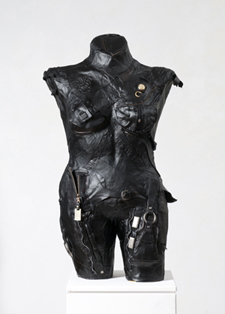 Linda Stein, Defender 696, 2010, leather, metal, and mixed media, 38 x 22 x 14 in. (artwork © Linda Stein)
Linda Stein. HUB Gallery, HUB-Robeson Center, Pennsylvania State University, University Park, Pennsylvania, September 5–November 20, 2014. The Fluidity of Gender: Sculpture by Linda Stein. Sculpture.
Northeast

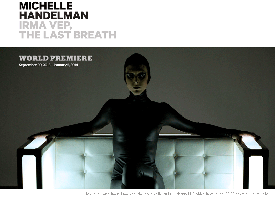 Michelle Handelman, Irma Vep, the last breath, 2013, 4-channel HD video installation, 33:00 min. (artwork © Michelle Handelman; photograph by Laure Leber)
Michelle Handelman. NewFest, Lincoln Center, New York, July 27, 2014. Irma Vep, the Last Breath. Single-channel video.
Michael Rich. Old Spouter Gallery, Nantucket, Massachusetts, August 8–21, 2014. A Season’s Journey, Not Far from Home. Painting.
West
Angela Ellsworth. Lisa Sette Gallery, Scottsdale, Arizona, January 2–February 1, 2014. Volume. Works on paper and cardboard.
Michelle Handelman. Outfest, REDCAT, Los Angeles, California, July 19, 2014. Irma Vep, the Last Breath. Single-channel video.
People in the News
posted by CAA — October 17, 2014
People in the News lists new hires, positions, and promotions in three sections: Academe, Museums and Galleries, and Organizations and Publications.
The section is published every two months: in February, April, June, August, October, and December. To learn more about submitting a listing, please follow the instructions on the main Member News page.
October 2014
Academe
Amy Freund, previously an assistant professor at Texas Christian University in Fort Worth, has become assistant professor and Kleinheinz Family Endowed Chair in Art History in the Meadows School of the Arts at Southern Methodist University in Dallas.
Adriene Jenik, director of the Herberger Institute School for Design and the Arts at Arizona State University in Tempe, has taken a year’s leave, which began on August 1, 2014.
Stephanie Langin-Hooper has left Bowling Green State University in Bowling Green, Ohio, to begin a new position as assistant professor and Karl Kilinski II Endowed Chair of Hellenic Visual Culture in the Department of Art History at Southern Methodist University in Dallas, Texas.
Aleca Le Blanc has left her position as managing editor of the Getty Research Journal at the Getty Research Institute in Los Angeles, California, to become assistant professor of Latin American art in the Department of the History of Art at the University of California, Riverside.
Kathryn Maxwell has been appointed acting director of the Herberger Institute School for Design and the Arts at Arizona State University in Tempe.
Judith Rodenbeck, professor of modern and contemporary art at Sarah Lawrence College in Bronxville, New York, has accepted a position on the faculty of the Department of Media and Cultural Studies at the University of California, Riverside, for the 2014–15 academic year.
Ashley Thompson, formerly senior lecturer in the School of Fine Art at Leeds University in England, has become professor and Hiram W. Woodward Chair in Southeast Asian Art in the University of London’s School of Oriental and African Studies.
Museums and Galleries
Esther Bell, formerly curator of European paintings, drawings, and sculpture at the Cincinnati Art Museum in Ohio, has become the new curator in charge of European paintings at the Fine Arts Museum in San Francisco, California.
Kate Ezra has left her position as Nolen Curator of Education and Academic Affairs at the Yale University Art Gallery in New Haven, Connecticut.
Erika Holmquist-Wall, formerly assistant curator of paintings at the Minneapolis Institute of Arts in Minnestoa, has been named Mary and Barry Bingham Sr. Curator of European and American Painting and Sculpture at the Speed Art Museum in Louisville, Kentucky.
Ted Mann, formerly assistant curator at the Solomon R. Guggenheim Museum in New York, has become a San Francisco–based consulting curator for the museum’s Panza Collection.
Virginia Reynolds, curatorial assistant for the Detroit Institute of Arts in Michigan, has left her position at the museum.
Kailin Weng has left her position at Chinese art project manager at the Smithsonian Institution’s Freer and Sackler Galleries in Washington, DC. She is now a graduate student at Harvard University in Cambridge, Massachusetts.
Organizations and Publications
Roger Thorp, formerly publishing director for Tate Publishing in London, England, has been appointed editorial director for art and children’s books at Thames and Hudson, also in London.
Institutional News
posted by CAA — October 17, 2014
Read about the latest news from institutional members.
Institutional News is published every two months: in February, April, June, August, October, and December. To learn more about submitting a listing, please follow the instructions on the main Member News page.
October 2014
The Sterling and Francine Clark Art Institute in Williamstown, Massachusetts, has been awarded a grant of $118,737 from the Institute of Museum and Library Services, a federal agency, in the Museums in America program. The Clark will use the funds to digitize significant volumes from the Julius S. Held Collection of Rare Books.
The North Carolina Museum of Art in Raleigh has accepted a $1.9 million grant from the State Employees’ Credit Union Foundation to help fund research in art education.
The University of Texas at Dallas has received a $17 million contribution from the arts patron Edith O’Donnell to create the school’s new Edith O’Donnell Institute of Art History, which opened this fall.
Grants, Awards, and Honors
posted by CAA — October 15, 2014
CAA recognizes its members for their professional achievements, be it a grant, fellowship, residency, book prize, honorary degree, or related award.
Grants, Awards, and Honors is published every two months: in February, April, June, August, October, and December. To learn more about submitting a listing, please follow the instructions on the main Member News page.
October 2014
Grimanesa Amorós, an artist based in New York, has been named the 2014 Lebowitz Visiting Artist in Residence for the Mary H. Dana Women Artists Series at the Institute for Women and Art at Rutgers University in Piscataway, New Jersey.
Paul Catanese, associate professor at Columbia College Chicago in Illinois and director of his school’s MFA program for interdisciplinary arts and media, has received a 2014 Efroymson Contemporary Arts Fellowship. The award will support his studio practice and help to expand work on his project visible from space. Catanese will also develop visible from space in early October during a Playa Artists’ Residency in eastern Oregon.
Blane De St. Croix has received a 2014–15 residency in Brooklyn, New York, from the Sharpe-Walentas Studio Award Space Program (formerly known as the Marie Walsh Sharpe Art Foundation).
Caitlin Earley, a graduate student in the Department of Art and Art History at the University of Texas at Austin, has received a 2014–15 junior fellowship in Precolumbian studies from Dumbarton Oaks Research Library and Collection in Washington, DC. The award will support her project, titled “At the Edge of the Maya World: Power, Politics, and Identity in Monuments of the Comitán Valley.”
Danielle Joyner, assistant professor of medieval art history at the University of Notre Dame in Notre Dame, Indiana, has received a 2014–15 fellowship in garden and landscape studies from Dumbarton Oaks Research Library and Collection in Washington, DC. She will work on a project called “Landscapes and Medieval Arts.”
Micheline Nilsen, a faculty member in art history at Indiana University South Bend, has accepted a 2014–15 fellowship in garden and landscape studies from Dumbarton Oaks Research Library and Collection in Washington, DC. Her project is titled “From Turnips to Lawn Chairs: Allotment Gardens in Europe, 1920 to 1975.”
Camille Serchuk, professor of art at Southern Connecticut State University in New Haven, has been awarded a 2014–15 fellowship from the National Humanities Center, based in Research Triangle Park, North Carolina. She will work on her project, “Realm and Representation: Art, Cartography and Visual Culture in France, 1450–1610.”