
CAA News Today
People in the News
posted by CAA — February 17, 2014
People in the News lists new hires, positions, and promotions in three sections: Academe, Museums and Galleries, and Organizations and Publications.
The section is published every two months: in February, April, June, August, October, and December. To learn more about submitting a listing, please follow the instructions on the main Member News page.
February 2014
Museums and Galleries

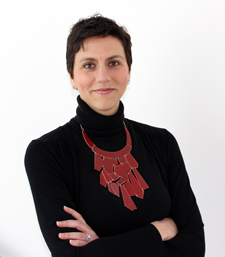
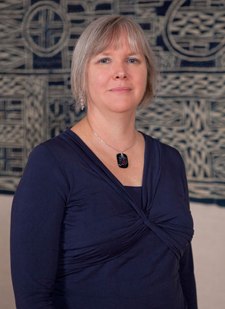 Kathleen Bickford Berzock
Kathleen Bickford Berzock, previously curator of African art at the Art Institute of Chicago, has been appointed associate director of curatorial affairs for the Mary and Leigh Block Museum of Art at Northwestern University in Evanston, Illinois.

Michael Brown, a researcher, lecturer, and formerly Mayer Curatorial Fellow for Spanish Colonial Art at the Denver Art Museum in Colorado, has become an associate curator of European art at the San Diego Museum of Art in California.

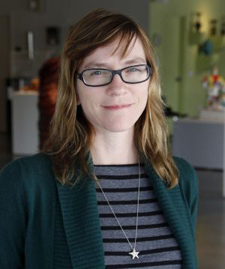 Elizabeth Kozlowski
Elizabeth Kozlowski, formerly Windgate Curatorial Fellow at the Arizona State University Museum in Tempe, has become a new curator for the Houston Center for Contemporary Craft in Texas.
Institutional News
posted by CAA — February 17, 2014
Read about the latest news from institutional members.
Institutional News is published every two months: in February, April, June, August, October, and December. To learn more about submitting a listing, please follow the instructions on the main Member News page.
February 2014
The Brooklyn Museum, the Museum of Modern Art, and the Frick Collection, whose institutional libraries formed the New York Art Resources Consortium (NYARC), have been awarded a $340,000 grant from the Andrew W. Mellon Foundation to initiate a program of web archiving for specialist art-historical resources. The two-year program will follow a 2012 pilot study, Reframing Collections for the Digital Age, also funded by the Mellon Foundation.
The Fralin Museum of Art at the University of Virginia in Charlottesville has accepted a $20,000 grant from the National Endowment for the Arts to support an upcoming exhibition, Joseph Cornell and Surrealism, organized by the museum and the Musee des Beaux-Arts in Lyon, France.
The J. Paul Getty Trust, based in Los Angeles, California, and the British Museum in London, England, have announce a three-year collaboration with the National Cultural Fund and the Archaeological Survey of India (ASI), under the aegis of the Indian government’s Ministry of Culture, to build the capacities of ASI’s site-museum and site-management professionals. Nearly one hundred ASI professionals—among them archaeologists, site-museum professionals, site managers, directors, and caretakers—will participate in workshops, trainings, conferences, and working-group meetings in India, Los Angeles, London, and other Asian sites to help reimagine Indian site-museums with enhanced narratives, better collection management, and conservation.
The Herron School of Art and Design, part of Indiana University–Purdue University Indianapolis, has received a $2 million gift from Cindy Simon Skjodt, a philanthropist and advocate for mental health, to endow a chair for the school’s program in art therapy.
The Philadelphia Museum of Art in Pennsylvania has met the goal of a major five-year initiative, the Lenfest Challenge, having raised a total of $54 million to endow twenty-nine staff positions in its curatorial, conservation, library, archive, education, publishing, and digital-technology departments. H. F. (Gerry) Lenfest, chairman emeritus of the museum’s board of trustees, and his wife, Marguerite, offered a $27 million grant in September 2008, challenging donors to match this gift on a one-to-one basis to endow and name these positions.
The University of Southern California (USC) in Los Angeles and the Pacific Asia Museum of Pasadena, one of the few American museums dedicated to the arts and culture of Asia and the Pacific Islands, have announced a new partnership that will preserve the museum’s 1924 Chinese Qing Dynasty–inspired mansion in downtown Pasadena as an art museum. The partnership will also enhance the scholarship of the creative faculty and students at USC’s six arts schools and those in the departments of art history, East Asian language and cultures, religion, and archaeology. In addition, the alliance will provide a foundation for a renewed museum-studies and curatorial-training program at USC.
The University of Texas at Dallas has announced the new home for the Arts and Technology (ATEC) program: the Edith O’Donnell Arts and Technology Building. This new 155,000-square-foot facility will host programs and promote advancements in visual art, emerging media technology, and multimedia communications.
The Wadsworth Atheneum Museum of Art in Hartford, Connecticut, has received a $9.6 million bequest from the estate of Charles H. Schwartz to establish an endowment to expand and enhance the museum’s collection of English and European works of art from the eighteenth century.
Grants, Awards, and Honors
posted by CAA — February 15, 2014
CAA recognizes its members for their professional achievements, be it a grant, fellowship, residency, book prize, honorary degree, or related award.
Grants, Awards, and Honors is published every two months: in February, April, June, August, October, and December. To learn more about submitting a listing, please follow the instructions on the main Member News page.
February 2014

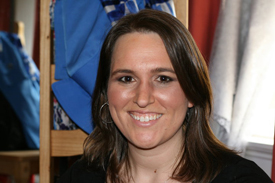 Amy Bryzgel
Amy Bryzgel, lecturer in history of art at the University of Aberdeen in Scotland, has been awarded a Leverhulme Research Fellowship for 2014 to support work on a book project titled “Performance Art in Central and Eastern Europe,” which will be a comprehensive study of performance art practices in the region.
Sharon L. Butler, an artist and writer based in New York and southeastern Connecticut, has accepted a 2013 award from the Arts Writers Grant Program for her blog, Two Coats of Paint.
Stephanie Cardon of Jamaica Plain, Massachusetts, has been accepted into the 2013 Art Writing Workshop, a partnership between the International Association of Art Critics, the Arts Writers Grant Program (supported by Creative Capital), and the Andy Warhol Foundation for the Visual Arts.
Carolyn Castaño, an artist based in Los Angeles, California, has received a $25,000 award from the 2013 Painters and Sculptors Grant Program, administered by the Joan Mitchell Foundation.
Victoria Fu, an artist based in San Diego and Los Angeles, California, has earned a 2013 grant from Art Matters to support her ongoing work.
Gregory Halpern, a photographer who lives and works in Rochester, New York, has been accepted into Light Work’s Artist-in-Residence Program for 2014.
Steve Kurtz, professor of art and chair of the Department of Visual Studies at the State University of New York’s University at Buffalo, has earned a 2013 grant from Art Matters to support travel to Argentina for Critical Art Ensemble’s work with the art and environmental organization Ala Plástica in Río de la Plata, toward the second part of the project Basins.
Jessica Labatte, a photographer based in Chicago, Illinois, has been accepted into Light Work’s Artist-in-Residence Program for 2014.
Saloni Mathur of the Department of Art History at the University of California, Los Angeles, has earned a 2013 award from the Arts Writers Grant Program for her book project, “A Fragile Inheritance: Radical Stakes in Contemporary Indian Art.”
Allison Miller, an artist who lives and works in Baltimore, Maryland, has been named a 2014 Artist in Residence by the Sam and Adele Golden Foundation for the Arts, based in New Berlin, New York.
Sarah Pollman of Allston, Massachusetts, has been accepted into the 2013 Art Writing Workshop, a partnership between the International Association of Art Critics, the Arts Writers Grant Program (supported by Creative Capital), and the Andy Warhol Foundation for the Visual Arts.
Gregory Sale has won a 2013 Art Matters grant to support the first iteration of Sleepover, a series of activities with diverse constituents exploring reentering society after incarceration, in Phoenix, Arizona.
Krista Thompson, associate professor in the Department of Art History at Northwestern University in Evanston, Illinois, has received a 2013 award from the Arts Writers Grant Program for her book project, “The Visual Economy of Light in African Diasporic Aesthetic Practice.”
Exhibitions Curated by CAA Members
posted by CAA — February 15, 2014
Check out details on recent shows organized by CAA members who are also curators.
Exhibitions Curated by CAA Members is published every two months: in February, April, June, August, October, and December. To learn more about submitting a listing, please follow the instructions on the main Member News page.
February 2014

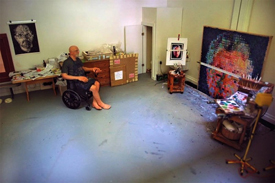 Joe Fig, Chuck Close: Summer 2004 #1, 2007, Cibachrome print, 16 x 20 in. (artwork © Joe Fig)
Susan Ball. Inside the Artists’ Studios: Small-Scale Views. Bruce Museum, Greenwich, Connecticut, December 14, 2013–March 16, 2014.
Tabitha Barber and Stacy Boldrick. Art under Attack: Histories of British Iconoclasm. Tate Britain, London, England, October 2, 2013–January 5, 2014.

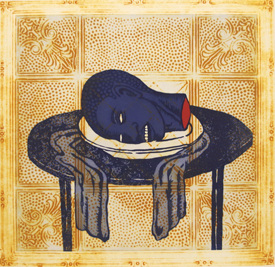 Alison Saar, Blue Plate Special, 1993, etching, lithograph, and chine collé, 29 x 28¾ in. (artwork © Alison Saar)
 Tyrus Clutter. [in]justice: art and atrocity in the 20th century. Appleton Museum of Art, Ocala, Florida, February 8–May 11, 2014.
Laura Knott. 5000 Moving Parts. MIT Museum, Massachusetts Institute of Technology, Cambridge, Massachusetts, November 21, 2013–November 20, 2014.
Books Published by CAA Members
posted by CAA — February 15, 2014
Publishing a book is a major milestone for artists and scholars—browse a list of recent titles below.
Books Published by CAA Members appears every two months: in February, April, June, August, October, and December. To learn more about submitting a listing, please follow the instructions on the main Member News page.
February 2014

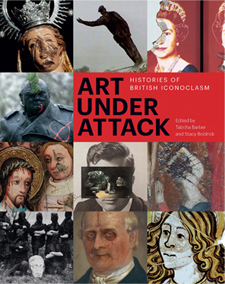
Tabitha Barber and Stacy Boldrick, eds. Art under Attack: Histories of British Iconoclasm (London: Tate Publishing, 2013).

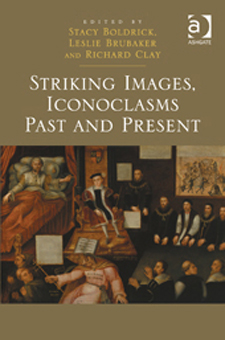
Stacy Boldrick, Leslie Brubaker, and Richard Clay, eds. Striking Images: Iconoclasms Past and Present (Burlington, VT: Ashgate, 2013).

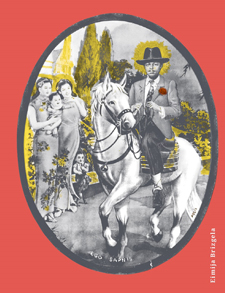
Amy Bryzgel. Performing the East: Performance Art in Russia, Latvia, and Poland since 1980 (London: I. B. Tauris, 2013).

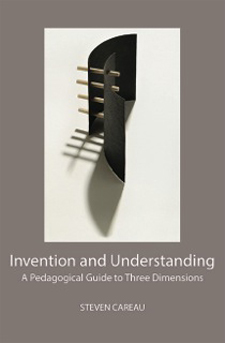
Steven Careau. Invention and Understanding: A Pedagogical Guide to Three Dimensions (Washington, DC: New Academia Publishing, 2013).

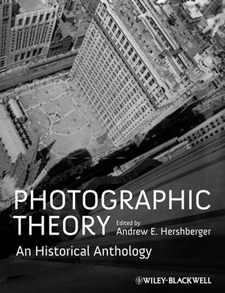
Andrew E. Hershberger, ed. Photographic Theory: An Historical Anthology (Boston: Wiley-Blackwell, 2014).

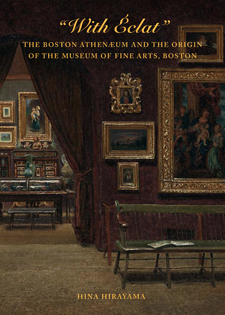
Hina Hirayama. “With Éclat”: The Boston Athenæum and the Origin of the Museum of Fine Arts, Boston (Boston: Boston Athenæum, 2013).


Rosina Neginsky. Salome: The Image of a Woman Who Never Was (Newcastle upon Tyne, UK: Cambridge Scholars Publishing, 2013).

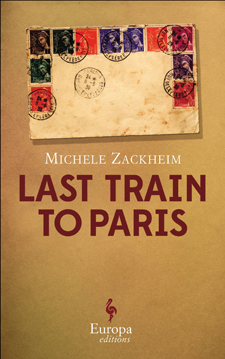
Michele Zackheim. Last Train to Paris (New York: Europa Editions, 2014).
Committee on Women in the Arts Picks for the 2014 Annual Conference
posted by CAA — February 10, 2014
Each month, CAA’s Committee on Women in the Arts selects the best in feminist art and scholarship. The following exhibitions and events should not be missed. Check the archive of CWA Picks at the bottom of the page, as several museum and gallery shows listed in previous months may still be on view or touring.
2014 Annual Conference in Chicago
The CWA Picks for the 2014 Annual Conference in Chicago are dedicated to the memory of Wanda D. Ewing (January 4, 1970–December 8, 2013), an artist and educator who lived and worked in Omaha, Nebraska, by her friends and fellow members of the Committee on Women in the Arts.

Installation view of Lilli Carré (artwork © Lilli Carré; photograph by Nathan Keay and © Museum of Contemporary Art, Chicago)
Lilli Carré: BMO Harris Bank Chicago Works
Museum of Contemporary Art, Chicago
220 East Chicago Avenue, Chicago, IL 60611
December 17, 2013–April 15, 2014
Although Lilli Carré is perhaps best known for her award-winning comics, animated films, and commercial illustration, her interdisciplinary creative practice employs a wide range of media including printmaking, artists’ books, painting, and, most recently, sculpture. Her work, which defies simple classification by medium, encompasses delicate and moving explorations of humor and failure, narrative and time, the human form and abstraction, and presence and mortality.
For BMO Harris Bank Chicago Works—the artist’s first solo exhibition at the Museum of Contemporary Art, Chicago—Carré presents an entirely new body of work in animation, sculpture, and drawing, highlighting new directions in her creative process. Sculptures are displayed in pairs to show the objects in two separate states of being, while their dimensional forms are abstracted, flattened, and reflected in accompanying drawings. A new work, made specifically for this installation, consists of two videos projected on opposite walls. The dual projection reveals slowly shifting temporal relationships between images, which alternate between abstraction and figuration, and positions the viewer in the empty space between the two animations. The artist encourages viewers to interpret this space and play an active role in filling the gap between objects and their resonant images.
Ghost Nature
Gallery 400
University of Illinois, Chicago, 400 South Peoria Street, Chicago IL 60607
January 17–March 1, 2014
The Northwest Passage—a historic golden fleece of shipping routes—has opened up in the Arctic, and scientists continue to predict dramatically rising seas. Bee populations have fallen rapidly, raising questions about food production. Mice grow human ears on their backs in laboratories, and rabbits glow in the dark. In this new age of ecological awareness, “Nature” as a Romantic ideal—a pristine mountainside beyond the scope of human influence—is but a dithering spirit. Rather than succumbing to the pang of this loss, Ghost Nature exposes the limits of human perspective in the emergent landscape that remains: a slippery network of sometimes-monstrous creatures, plants, and technological advances. Organized by Caroline Picard, the exhibition consists of the following artists: Sebastian Alvarez, Art Orienté objet (Marion Laval-Jeantet and Benoît Mangin), Jeremy Bolen, Irina Botea, Agnes Meyer-Brandis, Robert Burnier, Marcus Coates, Assaf Evron, Carrie Gundersdorf, Institute of Critical Zoologists, Jenny Kendler, Devin King, Stephen Lapthisophon, Milan Metthey, Rebecca Mir, Heidi Norton, Akosua Adoma Owusu, Tessa Siddle, and Xaviera Simmons.
Judy Ledgerwood: Chromatic Patterns for the Smart Museum
David and Alfred Smart Museum of Art
University of Chicago, 5550 South Greenwood Avenue, Chicago, IL 60637
December 26, 2013–spring 2015
The Chicago-based artist Judy Ledgerwood has created an immense, site-specific wall painting for the Smart Museum of Art that is part of an ongoing series inspired by the energetic, asymmetrical rhythms of the composer Morton Feldman’s Patterns in a Chromatic Field (1981). The painting comprises horizontal bands of boldly colored patterns—blue with bronze, fluorescent red with mint green, spring green with copper—that run across the large central wall in the Smart’s lobby. The work responds to both the soaring, symmetrical architecture of the space and, in its repeating patterns, the design of Louis Sullivan’s elevator screens for the Chicago Stock Exchange building (two of which are on view in the lobby). The artist painted Chromatic Patterns by hand directly on the wall. The work, in the artist’s words, is made to “hang tapestry-like” with drooping and irregular edges that contrast with the clean lines of the museum’s modernist architecture.
RISK: Empathy, Art, and Social Practice
Glass Curtain Gallery
Columbia College Chicago, 1104 South Wabash Avenue, First Floor, Chicago, IL 60605
February 10–April 26, 2014
RISK considers the interdependent role of empathy and risk in socially engaged art as practiced by contemporary Chicago artists. Organized by Amy M. Mooney and Neysa Page-Lieberman, the exhibition features artists who work in a public arena to foster connections among individuals and to activate communities. Their work invites the outside in, blurs the lines of public and private, reveals our mutual dependencies, and effects social change. The “success” or “failure” of these relationship-driven projects, however, can never be guaranteed, as this porous, process-based art form exists in unpredictable, shifting environments.
The works in RISK are divergent in medium, content, and scope, but all share an interest in initiating and negotiating relationships through personal interaction. Projects range from a community Shack built in the gallery and the staging of an actual Wedding Party to herbal-remedy offerings from an Anxiety Garden and vintage Tintype Portrait sessions. Working with cultural partners and sites across the city, RISK highlights many exciting practices that are emerging in this field and explores artists’ motivations and viewers’ expectations for socially engaged art. Participating artists include: Alberto Aguilar, Jim Duignan, Industry of the Ordinary, Samantha Hill, Kirsten Leenaars, Faheem Majeed, Cecil McDonald Jr., Jennifer Mills, Cheryl Pope, the Museum of Contemporary Phenomenon, Potluck: Chicago, and Fereshteh Toosi.

Nora Schultz, image from Parrottree—Building for Bigger Than Real, 2013 (artwork © Nora Schultz)
Nora Schultz: Parrottree—Building for Bigger Than Real
Renaissance Society
University of Chicago, 5811 South Ellis Avenue, Chicago, IL 60637
January 12–February 23, 2014
The Renaissance Society presents the first museum solo exhibition of Nora Schultz, a Berlin-based artist who produces sculptural installations that double as analogue printing studios. Her primary materials are discarded objects scavenged from her studio and the site of her exhibitions, often in the form of metal bars and sheets, grates, tubes, and plastics. Schultz repurposes this refuse into sculptural objects, as well as contact printing devices, stencils, and even simple rotary presses with which she prints (often as public performance) abstractions scaled from the intimate to the monumental, exhibited individually or in accumulating heaps. Deeply engaged with material and process, Schultz’s installations are themselves, at times, engines of ongoing artistic creation.
Social Paper
Center for Book and Paper Arts
Columbia College Chicago, 1104 South Wabash Avenue, Second Floor, Chicago, IL 60605
February 10–April 15, 2014
Social Paper, curated by Jessica Cochran and Melissa Potter, charts the evolution of the art of hand papermaking in relation to recent discourse around socially engaged art, pointing specifically to craft, labor, and site-specificity and to the collaborative and community aspects of contemporary hand papermaking. According the medium’s proponents, socially engaged art blurs the lines separating politics, community organizing, and art. Projects such as community gardens and centers, interactive and multigenerational workshops, educational programs, and public art invoke the spirit of urgent social transformation.
From urban elementary schools to indigenous tribes in Latin America to communities of international war veterans, hand papermaking artists translate this medium into meaningful activity with diverse constituencies. To date, no major exhibitions or discourse around this important and timely theme exist. This exhibition will contribute to new scholarship in the field of craft arts and specifically hand paper making, as well as feature the work of the Center for Book and Paper Arts, a unique institution in Chicago, and the world that supports critical discourse and interdisciplinary activity in the book and paper arts. Artists include: Loreto Apilado and Trisha Martin, Laura Anderson Barbata, Kim Berman, Combat Paper, Nick Dubois, Fresh Press (University of Illinois), Julia Goodman, Sheroanawe Hakihiiwe, Cathy Mooses, Paper Road Tibet, Parents Circle – Families Forum, Peace Paper, Maggie Puckett, John Risseeuw, Kiff Slemmons, the People’s Library (Richmond), and Women’s Studio Workshop (Art Farm).
MCA DNA: Warhol and Marisol
Museum of Contemporary Art, Chicago
220 East Chicago Avenue, Chicago, IL 60611
September 21, 2013–June 15, 2014
The 1960s were important years for two artists and friends—Andy Warhol (American, 1928–1987) and Marisol (Marisol Escobar, American, b. France, 1930)—and marked a formative period in the development of their individual careers. Warhol began using his celebrated silkscreen techniques to produce serial paintings, often based on mass-media images. Marisol made the first of many portraits and developed her signature style: wooden sculptures with flat painted surfaces and additional elements such as everyday objects or plaster castings. Both were prominent figures in New York’s lively art scene during this time. The two attended events together and each exhibited their work in solo shows at Eleanor Ward’s Stable Gallery as they came to be identified with the rising Pop art movement. Warhol and Marisol even turned to one another as occasional subjects: Marisol made a sculptural portrait of Warhol in the early 1960s, titled Andy; and around the same time, Warhol featured Marisol in some of his legendary early films.
Inspired by the multifaceted relationship of these two artists, MCA DNA: Warhol and Marisol presents a focused selection of their works, side by side, drawn primarily from the museum’s collection. Key examples of Warhol’s silkscreen paintings and Marisol’s wood sculptures illuminate the artists’ respective approaches to portraiture, while the pairing of their work brings certain affinities into view, including a similar use of repeating figures. At the same time, their methods diverge in significant ways, perhaps most visibly in the contrast between Warhol’s overtly mechanical approach to painting and Marisol’s more handcrafted, labor-intensive techniques as a sculptor.

Faith Wilding performing as Isadora Duncan at the Fresno Feminist Art Program in 1971, with a collaborative costume image and staging by Nancy Youdelman (photograph by Dori Atlantis)
Faith Wilding: Fearful Symmetries Retrospective
Three Walls
119 North Peoria Street, No. 2C, Chicago, IL 60607
January 10–February 22, 2014
Although best known for her contribution to Womanhouse—the 1972 performance Waiting—and for her role in the formation of the first Feminist Art Program in Fresno and Cal Arts, Faith Wilding remains largely understudied. As the first major retrospective of her work, Fearful Symmetries spans forty years and brings together and contextualizes the studio practice—especially works on paper—that accompanies Wilding’s performative work, illuminating the allegorical imagery that underpins her feminism and the centrality of transformation and emergence in its articulation. As such the exhibition highlights the theme of becoming—as transformative event and threshold to transfiguration—as a state of in-between-ness, evoked by iconographic motifs such as leaves, the chrysalis, hybrid beings, or “waiting” itself.
Alongside the exhibition is a curated archive featuring Wilding’s work with the collaborative research and performance group subRosa; rare videos of performances made throughout her career; and papers and publications dating from her participation in the feminist art movement in the 1970s. A series of special events will punctuate the exhibition.
Molly Zuckerman-Hartung: Violet Fogs Azure Snot and Sensitive Instruments
Corbett vs Dempsey Gallery
120 North Ashland Avenue, Third Floor, Chicago, IL 60622
February 7–March 15, 2014
Violet Fogs Azure Snot is an exhibition of new paintings by Molly Zuckerman-Hartung, a Chicago-based artist who will be included in the 2014 Whitney Biennial. The exhibition is accompanied by a full-color, eighty-page catalogue. In Sensitive Instruments, Zuckerman-Hartung has invited nine artists to exhibit works in tandem with a CAA panel of the same name: Cora Cohen, Dana DeGiulio, Abigail DeVille, Susanne Doremus, Michelle Grabner, Suzanne McClelland, Deirdre O’Dwyer, Jennifer Packer, and Monique Prieto.
Strange Bedfellows
Averill and Bernard Leviton A+D Gallery
Columbia College Chicago, 619 South Wabash Avenue, Chicago, IL 60605
January 16–February 22, 2014
Columbia College Chicago’s Averill and Bernard Leviton A+D Gallery presents Strange Bedfellows, organized by the San Francisco art historian Amy Cancelmo. Artists from across the United States who range in their gender and sexual identities, politics, and strategies for collaboration will contribute artworks that explore collaborative roles in contemporary queer art practice, including the personal, performative, and political.
This exhibition includes work by Annie Sprinkle and Elizabeth Stephens, who have been married sixteen times. They’ve married each other legally in Canada and also married their community, the Earth, the sea, the rocks, the moon, the snow, and many other natural elements in extravagant and colorful performances. For Strange Bedfellows, Sprinkle and Stephens present an audiovisual installation featuring simultaneous screenings of their first seven weddings.
Participating in the exhibition are: Bren Ahearn and Jesse Kahn, E. G. Crichton, Sean Fader, Alexander Hernandes and RUDE House, Sarah Hirneisen, Amos Mac and Juliana Huxtable LaDosha, Tara Mateik, Barbara McBane and Susan Working, Dutes Miller and Stan Shellabarger, billy ocallaghan, PosterVIRUS/Jordan Arseneault, Adrienne Skye Roberts, Annie Sprinkle and Beth Stephens, Julie Sutherland, Tina Takemoto and Angela Ellsworth, Chris Vargas and Greg Youmans, Joe Varisco and QUEER LEXICON, and Angie Wilson and Amber Straus.
Committee on Women in the Arts Picks for February 2014
posted by CAA — February 10, 2014
Each month, CAA’s Committee on Women in the Arts selects the best in feminist art and scholarship. The following exhibitions and events should not be missed. Check the archive of CWA Picks at the bottom of the page, as several museum and gallery shows listed in previous months may still be on view or touring.
February 2014
The CWA Picks for February 2014 are dedicated to the memory of Wanda D. Ewing (January 4, 1970–December 8, 2013), an artist and educator who lived and worked in Omaha, Nebraska, by her friends and fellow members of the Committee on Women in the Arts.
Jillian Mayer: Salt 9
Utah Museum of Fine Arts
University of Utah, Marcia and John Price Museum Building, Salt Lake City, UT 84112
January 17–August 17, 2014
The Utah Museum of Fine Arts presents the first museum exhibition of Jillian Mayer (American, b. 1984). Engaging the ubiquitous self, duping Google Image, or subverting facial-recognition software, Mayer’s newest body of work tosses aside the physical body to investigate modern identity formation. Identity, online and IRL, is a fluid performance of multiple selves in constant construction, but online there is no place, need, or value for the real body.
The mind, untethered by physical limits, can be free in its construction of identity. While presenting tools to maintain online identities, Mayer exposes moments when the virtual world defines the physical world, creating an alternate reality. In salt 9 she sets up scenarios, often using her own image, that call attention to how Web 2.0’s architecture of participation is changing perceptions of truth, privacy, authorship, and authenticity. By accepting the web’s uncontrollable context and by being open to malleable meaning, Mayer enlists an ever-expanding audience of collaborators and challenges the traditional relationship between artist and viewer, in which the latter becomes a participant, a collaborator, and even an active creator of content and meaning.
Doris Salcedo
Museum of Contemporary Art, Chicago
220 East Chicago Avenue, Chicago, IL 60611
February 21–May 31, 2015
The Museum of Contemporary Art, Chicago, presents the first survey of the work of the renowned sculptor Doris Salcedo (Colombian, b. 1958). Salcedo, who lives and works in Bogotá, gained prominence in the 1990s for her fusion of Postminimalist forms with sociopolitical concerns. The exhibition features all major bodies of work from the artist’s twenty-five-year career—most of which have never been shown together before—as well as the American debut of her recent major work Plegaria Muda (Silent prayer) (2008–10) and a site-specific public project.
Salcedo’s work is deeply rooted in her country’s social and political landscape, including its long history of civil wars, yet her sculptures and installations subtly address these fraught circumstances with elegance and a poetic sensibility that balances the gravitas of her subjects. She grounds her art in intense research and fieldwork, which involves extensive interviews with people who have experienced loss and trauma in their everyday lives due to political violence. In more recent years, Salcedo has become increasingly interested in the universal nature of these experiences and continues to pursue research in different locations, including Turkey, Italy, Great Britain, and the United States. Rather than making literal representations of violence or trauma, however, her artworks convey the idea of corporeal fragility and evoke a collective sense of loss. The resulting pieces engage with multiple dualities at once—strength and fragility, ephemeral and enduring—and bear elements of healing and reparation in the careful, laborious process of their making.
Güler Ates: Whispers of Colour
Kubik Gallery
Rua da Restauração, 2, 4050-499 Porto, Portugal
January 25–March 1, 2014
The central themes of gender, identity, and cultural hybridity are driving forces in Güler Ates’s practice, which examines how various settings can challenge and disrupt a person’s assumptions on these topics. The lone veiled woman is the central motif of her work, an ambiguous figure whose identity is consistently kept from the viewer.
While the veiled female figure is a recurring motif, it is the setting that informs her practice. Each series is site-specific in that Ates’s captures through photography the ways in which her figure interacts with each environment. Thus, by responding to her surroundings, her work explores the nuanced ways in which locale and context affect our interpretation of figures. This aspect works in tandem with the concept of performativity. An essential element to Ates’s work, this theme stems form Judith Butler’s seminal theory that such supposedly fixed concepts, such as gender, ethnicity, or nationality, are in no way fixed but are rather merely roles that we perform. Thus, while the repetition of our actions reinforces the identity to which those actions are associated, when the cultural context in which this performance takes place changes, so too does the identity. In her use of a veil, Ates interrogates what it means for a woman to be covered. She reclaims the female body by respecting the autonomy of the figure. In doing so, the artist is able to reclaim not simply the female body but also Orientalist imagery, thus creating highly charged images that are alluring yet defiant.
Carrie Mae Weems: Three Decades of Photography and Video
Solomon R. Guggenheim Museum
1071 Fifth Avenue, New York, NY 10128
January 24–May 14, 2014
Organized by Frist Center for Visual Arts in Nashville, Tennessee, where it first opened in 2012, Carrie Mae Weems: Three Decades of Photography and Video—the first major museum retrospective of the work of Carrie Mae Weems—finally comes to New York. Featuring more than 120 works—primarily photographs but also texts, videos, and an audio recording—and a range of related educational programs, the exhibition thoroughly traces the evolution of the artist’s career over the last thirty years, from her early documentary and autobiographical photographic series to later conceptual and philosophically complex works of global concerns. As such Carrie Mae Weems offers a great opportunity to explore the breadth of her practice and marvel at the visual poetics of her politics.
Having opened influential paths for younger generations of photographers with sociopolitical and gender concerns over the past forty years, Weems has sharply, movingly and beautifully contemplated issues surrounding race, gender, and class inequality. It is by positioning herself “as history’s ghost,” as put by Nancy Princenthal, that her work brings to light the ignored or erased experiences of marginalized people, even though the artist strives to propose a multidimensional picture of history and humanity, intended to raise greater cultural awareness and compassion. While Weems’s subjects are often African American, “Her work speaks to human experience and of the multiple aspects of individual identity, arriving at a deeper understanding of humanity,” as said by Mary Jane Jacobs.
Organized in a loose chronology throughout two of the museum’s Annex Levels, Carrie Mae Weems begins with the breakthrough series Family Pictures and Stories (1978–84) and brings together most landmark series of the artist’s photographic work. Also included, of course, is the celebrated Kitchen Table Series (1990), which employs text and photography and explores the range of women’s roles within a community, pointedly situating the photographs’ subject within a domestic setting and foregrounding the artist’s gendered concerns. The exhibition also looks at the role of video as a natural extension of Weems’s narrative photographic practice and as an opportunity to include music in her work. Along with a selection of videos such as Italian Dreams (2006), Afro Chic (2009), and Constructing History: A Requiem to Mark the Moment (2008) placed near related photographic series, Weems’s first major endeavor in film, Coming Up for Air (2003–4), a work comprised of series of poetic vignettes, will be screened in the New Media Theater in the Guggenheim’s Sackler Center for Arts Education.
Theresa Bernstein: A Century in Art
Phillips Museum of Art
Franklin and Marshall College, Colonel J. Hall Steinman College Center, College Avenue, Lancaster, PA
17603
February 7–April 12, 2014
This exhibition features work from the American artist Theresa Bernstein (1890–2002), one of the few—if not the only—artist to display work in every decade of the twentieth century. Although Bernstein found great success early in her career as an art student, she struggled with fluctuations in popularity as various art movements came and went, resulting in her work falling into obscurity for most historians and art critics. Despite this neglect, Bernstein has recently begun to receive recognition, and her work is being touted as noteworthy, even in comparison to her contemporaries such as Edward Hopper, Stuart Davis, and John Sloan. Through her realist technique, Bernstein captured many iconic American themes from the twentieth century, such as women’s suffrage, World War I, the struggles of immigrants, jazz, and even Hassidic life. Therefore her work is not only skilled and aesthetic, but it also offers another perspective on American history. Theresa Bernstein: A Century in Art was curated by Gail Levin, Distinguished Professor of Art History, American Studies, and Women’s Studies at Baruch College and the Graduate Center, City University of New York.
Ileana Sonnabend: Ambassador for the New
Museum of Modern Art
11 West 53rd Street, New York, NY 10019
December 21, 2013–April 21, 2014
Ileana Sonnabend: Ambassador for the New is an homage to one of the most foresighted art dealers of the late twentieth century. Organized by Ann Temkin with the assistance of Claire Lehmann, the exhibition is accompanied by an extensive publication with the same title and celebrates the donation of Robert Rauschenberg’s combine Canyon (1959) to the Museum of Modern Art by Ileana Sonnabend’s Estate. Bringing together works of over forty major artists—from Jasper Johns and Andy Warhol to Mario Merz and Vito Acconci—who either debuted at her gallery in Paris (1959–1968) or New York (1968– ) or entered into her personal collection early, the exhibition captures Sonnabend’s instrumental role in introducing American Pop and Minimalism to Europe and Arte Povera to the United States, while exploring her legendary eye and championship of new artists.
Despite frustrating limitations, including the politics of the exhibition, the donation of Canyon, and an unsurprising selection of masterpieces that self-congratulatorily reinforces mainstream narratives of American and European art of the late twentieth century housed in modern art temples such as MoMA (as justly implied by Holland Cotter in his New York Times review), Ileana Sonnabend: Ambassador for the New is a great reminder that the often-catalytic contribution of several female agents’ of postwar art in shaping its course in North America and Europe remains unexplored, if not unsung. Instead of just marveling at iconic landmarks of postwar, especially American, art as known, this exhibition should trigger further interest in Sonnabend’s story and raise questions that will pressure the histories of postwar art as we know them by illuminating the impact of the stories Sonnabend fashioned from the art of her time with her choices or the difference of her staging of her finds in Europe and in the United States.
Committee on Women in the Arts Picks for January 2014
posted by CAA — January 10, 2014
Each month, CAA’s Committee on Women in the Arts selects the best in feminist art and scholarship. The following exhibitions and events should not be missed. Check the archive of CWA Picks at the bottom of the page, as several museum and gallery shows listed in previous months may still be on view or touring.
January 2014

Jennifer Yorke, Pretty Little Lies, 2012, collage and acrylic on paper, 30 x 22 in. (artwork © Jennifer Yorke)
Jennifer Yorke: Twerks on Paper
Packer Schopf Gallery
942 West Lake Street, Chicago, IL 60607
January 10–February 15, 2014
Fashion! Food! Sex! Death! Through her Twerks on Paper, Jennifer Yorke laughs at them all. In her collages, the failures and flaws of the body assert themselves over the seductive veneer of beauty and propriety created by both costume and custom. Despite our best efforts to create controlled, socially appropriate selves, our bodies are often filled with unruly desires and only imperfectly contain the sticky, the smelly, and the wet. Yorke demonstrates the absurdity of our efforts at control through humor—and the humors that seep and spurt out of her fashionable figures. She conflates fashion’s celebration and distortion of the body with our more day-to-day experience of its flaws, failures, and expellants, encouraging us to shake our asses at them.
Faith Wilding: Fearful Symmetries
Three Walls
119 North Peoria Street, No. 2C, Chicago, IL 60607
January 10–February 22, 2014
Although best known for her contribution to Womanhouse—the 1972 performance Waiting—and for her role in the formation of the first Feminist Art Program in Fresno and Cal Arts, Faith Wilding remains largely understudied. As the first major retrospective of her work, Fearful Symmetries spans forty years and brings together and contextualizes the studio practice—especially works on paper—that accompanies Wilding’s performative work, illuminating the allegorical imagery that underpins her feminism and the centrality of transformation and emergence in its articulation. As such the exhibition highlights the theme of becoming—as transformative event and threshold to transfiguration—as a state of in-between-ness, evoked by iconographic motifs such as leaves, the chrysalis, hybrid beings, or “waiting” itself.
Alongside the exhibition is a curated archive featuring Wilding’s work with the collaborative research and performance group subRosa; rare videos of performances made throughout her career; and papers and publications dating from her participation in the feminist art movement in the 1970s. A series of special events will punctuate the exhibition, including a performance and discussion with Irina Aristarkhova on January 9.
Nora Schultz, image from Parrottree—Building for Bigger Than Real, 2013 (artwork © Nora Schultz)
Nora Schultz: Parrottree—Building for Bigger Than Real
Renaissance Society
University of Chicago, 5811 South Ellis Avenue, Chicago, IL 60637
January 12–February 23, 2014
The Renaissance Society presents the first museum solo exhibition of Nora Schultz, a Berlin-based artist who produces sculptural installations that double as analogue printing studios. Her primary materials are discarded objects scavenged from her studio and the site of her exhibitions, often in the form of metal bars and sheets, grates, tubes, and plastics. Schultz repurposes this refuse into sculptural objects, as well as contact printing devices, stencils, and even simple rotary presses with which she prints (often as public performance) abstractions scaled from the intimate to the monumental, exhibited individually or in accumulating heaps. Deeply engaged with material and process, Schultz’s installations are themselves, at times, engines of ongoing artistic creation.
Hannah Höch
Whitechapel Gallery
77-82 Whitechapel High St, London E1 7QX, United Kingdom
January 15–March 23, 2014
The Whitechapel Gallery presents the first major UK exhibition of the influential German artist Hannah Höch (1889–1978), an important member of the Berlin Dada movement and a pioneer in collage. Splicing together images taken from popular magazines, illustrated journals, and fashion publications, Höch created a humorous and moving commentary on society, in particular questioning traditional gender and racial stereotypes, during a time of tremendous social change. She also established collage as a key medium for satire with extraordinary skill and beauty.
Nargess Hashemi: The Pleasure in Boredom
Gallery Isabelle van den Eynde
Street 8, Alserkal Avenue, Unit 17, Al Quoz 1, Dubai, United Arab Emirates
January 12–February 27, 2014
Nargess Hashemi (b. 1979, Tehran) takes a new direction in her latest show, deviating from largely figurative works centering on themes of domesticity and everyday life and moving in a surprising new trajectory. The Pleasure in Boredom charts Hashemi’s process of developing over ten years worth of experimentation on graph paper. Doodling in notebooks from a young age, the artist has made the practice somewhat of a lifelong obsession. Using only the most basic materials, Hashemi adopts a commonly unfocused and subliminal practice and refines it, resulting in vibrant artworks of great complexity. The title of the exhibition references an essay by E. H. Gombrich, in which the art historian examined the psychology behind the act of doodling and explored its artistic merit. A doodle by its very nature is a subconscious impulse, something that we are naturally compelled to do in a dreamlike, absentminded state. In her new series, Hashemi has evolved this instinctual act into artistic endeavors of great structure and precision.
Salla Tykkä: The Palace
Baltic Centre for Contemporary Art
Gateshead Quays, South Shore Road, Gateshead, NE8 3BA, United Kingdom
November 22, 2013–March 2, 2014
The Finnish artist Salla Tykkä (b. Helsinki, 1973) is known for photographs and videos with historically and psychologically charged narratives. Her dramatically edited footage plays with cinematic structures and is often set to familiar, grandiose film scores. Since 2008, Tykkä has been completing a trilogy of films: Victoria (2008), Airs above the Ground (2010), and, most recently, Giant (2013), which was partially commissioned by the Baltic Centre for Contemporary Art. The Palace comprises an installation featuring all three works and is the first exhibition to bring them together. It also marks the international premiere of Giant.
Victoria is a documentation of the nightly blossoming of the giant water lily; a ten-minute time-lapse of the plant’s life cycle as it unfurls its petals in the dark. The lily blossoms over two nights; the first night it is white and when it opens for a second time a day later, its color has changed to a red hue. European explorers brought Victoria amazonica and Victoria cruziana from South America to Europe and named them after Queen Victoria. Tykkä offers the plant as a symbol of colonial power and domination in the nineteenth century.

Chryssa Romanos, Labyrinth, 1965, collage on canvas, 55 x 65 cm (artwork © Chryssa Romanos)
Chryssa Romanos
The Breeder
45 Iasonos St, GR 10436, Athens, Greece
January 17–February 17, 2014
Focusing on Chryssa Romanos’s 1960s collage on canvas and her recent décollage on Plexiglas, this exhibition surveys the practice of this outstanding Greek artist—a vanguard member of the Greek diaspora in Paris from the 1960s to the 1980s and a neglected female participant in intersecting circles of the Parisian avant-garde—whose reputation has suffered from the usual predicament of gender, including the overshadowing of her work from that of her life partner, the celebrated artist Nikos Kessanlis.
Romanos began as an abstract painter in Greece, rebelling against both the academic realism favored by the art establishment and the social realism propagated by the communist party, though she was an active member of it. In the early sixties she moved to Paris and became affiliated, along with Nikos, with intersecting circles of the Parisian avant-garde, especially those evolving around the critic Pierre Restany. Reconsidering the communicative role of her art, she rediscovered herself in 1964 as a Pop collagist, turning to what Restany called the “sociological reality”—yet through a surfeit of print media rather than the everyday objects of “urban folklore”—in order to launch a staunch critique of societal injustice, industrialization and the society of spectacle, as put by Kalliopi Minioudaki in the exhibition Power Up: Female Pop Art (at the Vienna Kunsthalle in 2010), where she mapped Romanos’s work in the context of Pop.
In several collages, which constitute the first part of this exhibition at the Breeder, Romanos “explicitly criticized consumerism, exposing its inextricability with vital engines of capitalism, such as war. In her Reportage series, for instance, she unmasked the fallacies of capitalist democracy and the industries that supported its domestic myths in the years of decolonization struggles and the Vietnam War—by mimicking the symbiosis of advertising and photojournalism in print media, while sarcastically miscaptioning scenes of famine or war with alluring advertising messages and unfit captions. In her various versions of the Luna Parc (1965) series—structured as a vicious shooting gallery—the consumerist cornucopia of the American Dream, promised to the Cold War era consumer by means of the consumer goods that are pasted around targets—is suggestively predicated upon the extinction of humanity, whether by its shooting, or its rendering into mass. This is at least suggested by the anthropocentric collages that constitute the targets.” Such signature collages were well received when exhibited in Charlottenburg, West Berlin, in 1965 and at the São Paolo Biennial in 1967. In response, however, to a studio visit by Restany—who demanded she substitute clippings with found objects as a true Nouveau Realist would do—Romanos resolutely quit what she considered, by her account, as the most important step in her career: her political Pop.
Solo Exhibitions by Artist Members
posted by CAA — December 22, 2013
See when and where CAA members are exhibiting their art, and view images of their work.
Solo Exhibitions by Artist Members is published every two months: in February, April, June, August, October, and December. To learn more about submitting a listing, please follow the instructions on the main Member News page.
December 2013
Abroad

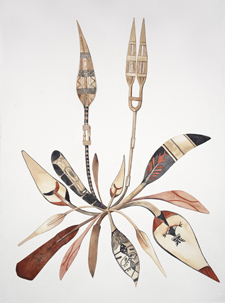 Sue Johnson, Paddling Brush, 2011, gouache, watercolor, and pencil on paper (artwork © Sue Johnson; photograph by Malcolm Osman/PRM)
Sue Johnson. Salisbury and South Wiltshire Museum, Salisbury, England, February 1–May 10, 2014. Pitt Rivers: Collecting Patterns. Painting and printmaking.
Mid-Atlantic

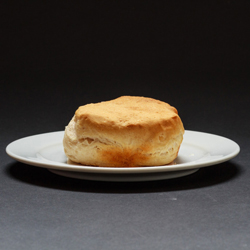 Peter Dueker, Untitled (#9), digital c-print, 10 x 10 in. (artwork © Peter Dueker)
Peter Dueker. Outer Space, Washington, DC, October 5–26, 2013. 19 Hot Biscuits. Photography.
Midwest

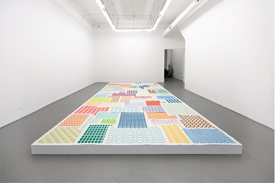 Michelle Grabner, Untitled, 2013 (artwork © Michelle Grabner; photograph provided by the artist and Shane Campbell Gallery, Chicago)
Michelle Grabner. Museum of Contemporary Art, Cleveland, Ohio, November 1, 2013–February 16, 2014. I Work from Home. Painting, printmaking, video, and sculpture.

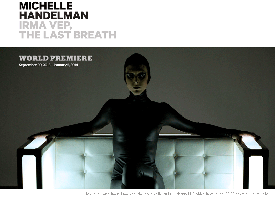 Michelle Handelman, Irma Vep, the last breath, 2013, 4-channel HD video installation, 33:00 min. (artwork © Michelle Handelman; photograph by Laure Leber)
Michelle Handelman. Eli and Edythe Broad Art Museum, Michigan State University, East Lansing, Michigan, September 20, 2013–March 30, 2014. Irma Vep, the last breath. Multichannel video installation.
Amy Reidel. Meramec Contemporary Art Gallery, Saint Louis Community College, Saint Louis, Missouri, October 3–25, 2013. Relic-quarry: New Work by Amy Reidel. Painting, installation, collage, and video.
Northeast

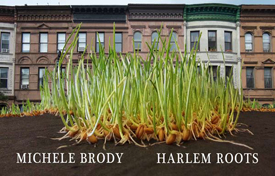 Invitation card for Michele Brody’s Harlem Roots
Michele Brody. Casa Frela, New York, November 9–December 9, 2013. Harlem Roots. Environmental installation.

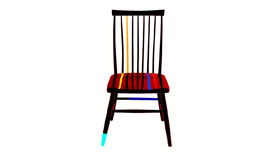 Sharon Louden, still from Community, 2013, digital animation, 2:35 min. (artwork © Sharon Louden)
Sharon Louden. Morgan Lehman Gallery, New York, October 24–December 7, 2014. Community. Sculpture and video.
Josette Urso. Anthony Giordano Gallery, Dowling College, Oakdale, New York, September 4–October 12, 2013. Multiple Choice.

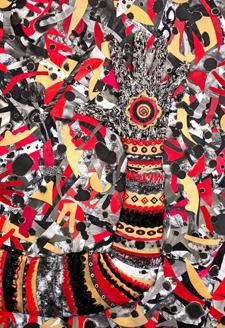 Michael Velliquette, Working Arm, 2013, paper, ink, acrylic, foam, and glue, 52 x 36 in. (artwork © Michael Velliquette)
Michael Velliquette. DCKT, New York, October 25–December 8, 2013. Their Arising and Passing Away. Sculptural cut-paper construction.
South

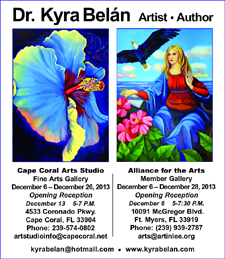 Invitation card for Kyra Bélan’s exhibitions
Kyra Bélan. Fine Arts Gallery, Cape Coral Arts Studio, Cape Coral, Florida, December 6–26, 2013. Painting and text.
Kyra Bélan. Member Gallery, Alliance for the Arts, Fort Meyers, Florida, December 6–28, 2013. Painting, drawing, digital media, and mixed media.

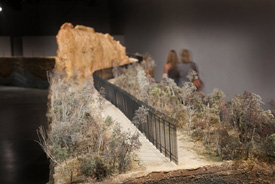 Blane De St. Croix, Broken Landscapes III, 2013 (artwork © Blane De St. Croix)
Blane De St. Croix. Blue Star Contemporary Art Museum, San Antonio, Texas, December 5, 2013–February 16, 2014. Broken Landscapes III. Sculpture.

 Sue Johnson, Mod-style Hearth (left) and Picture Window Looking West, from the series Ready-Made Dream, 2013 (artworks © Sue Johnson)
Sue Johnson. Eleanor D. Wilson Museum, Hollins University, Roanoke, Virginia. October 3–December 7, 2013. Sue Johnson: American Dreamscape. Installation.

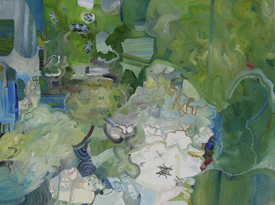 Josette Urso, Cloud Lily, 2013, oil on canvas, 24 x 30 in. (artwork © Josette Urso)
Josette Urso. Maitland Art Center Galleries, Art and History Museum Maitland, Maitland, Florida, October 11–December 29, 2013. Artist-in-Residence ONE: Josette Urso. Painting.
West

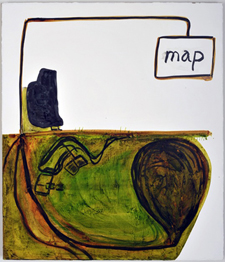 Mira Schor, Reversible Painting: Map, 2013, ink and oil on gesso on linen, 28 x 24 in. (artwork © Mira Schor)
Mira Schor. CB1 Gallery, Los Angeles, California, October 19–December 8, 2013. Mira Schor: Chthonic Garden. Painting.
People in the News
posted by CAA — December 17, 2013
People in the News lists new hires, positions, and promotions in three sections: Academe, Museums and Galleries, and Organizations and Publications.
The section is published every two months: in February, April, June, August, October, and December. To learn more about submitting a listing, please follow the instructions on the main Member News page.
December 2013
Academe

 Anna Collette
Anna Collette has been appointed assistant professor in photography by the Department of Art and Art History in the College of Fine Arts at the University of Texas at Austin.
Luba Freedman, a specialist of Italian Renaissance art and professor in history of art at the Hebrew University of Jerusalem in Israel, has been named Jack Cotton Professor in Architecture and Fine Arts at her school.

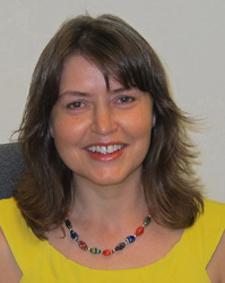 Carma Gorman
Carma Gorman has joined the Department of Art and Art History in the College of Fine Arts at the University of Texas at Austin as associate professor in design.
LaToya M. Hobbs has been appointed to teach foundations at Maryland Institute College of Art in Baltimore.
Museums and Galleries

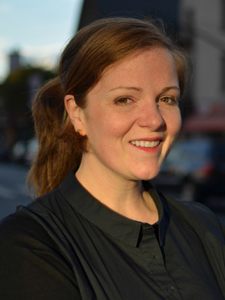 Cathleen Chaffee (photograph by James Sevigny)
Cathleen Chaffee, assistant curator of modern and contemporary art at the Yale University Art Gallery in New Haven, Connecticut, has joined the Albright-Knox Art Gallery in Buffalo, New York, as curator.
Amy Galpin, an associate curator for the San Diego Museum of Art in California, has become the new curator for the Cornell Fine Arts Museum at Rollins College in Winter Park, Florida.
Mazie McKenna Harris, a doctoral candidate in the history of photography at Brown University in Providence, Rhode Island, has been named Linda Wyatt Gruber ’66 Curatorial Fellow in Photography by the Davis Museum at Wellesley College in Wellesley, Massachusetts.
Ronda Kasl, formerly senior curator of painting and sculpture before 1800 at the Indianapolis Museum of Art in Indiana, has become a curator of colonial Latin American art at the Metropolitan Museum of Art in New York.

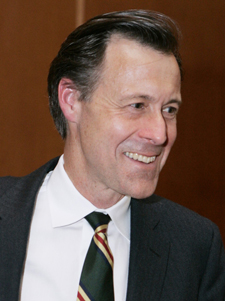 Karl Kusserow
Karl Kusserow, curator of American art at the Princeton University Art Museum in Princeton, New Jersey, has been named the inaugural John Wilmerding Curator of American Art at his institution.
Michael W. Maizels, most recently a research assistant and predoctoral fellow at the Smithsonian Institution’s National Portrait Gallery in Washington, DC, has been appointed Mellon New Media Curator and Lecturer by the Davis Museum at Wellesley College in Wellesley, Massachusetts.
Joanne Pillsbury, an associate director of the Getty Research Institute, has been named Andrall E. Pearson Curator in the Department of the Arts of Africa, Oceania, and the Americas at the Metropolitan Museum of Art in New York.

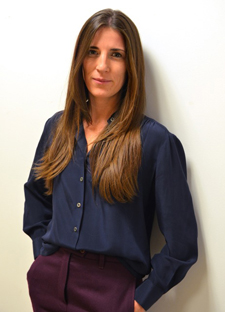 Kelly Taxter
Kelly Taxter, a cofounder of Taxter and Spengeman Gallery in New York and a curatorial consultant for the Aldrich Contemporary Art Museum in Ridgefield, Connecticut, has joined the Jewish Museum in New York as assistant curator.

 Mary M. Tinti
Mary M. Tinti, formerly a curatorial fellow for the deCordova Sculpture Park and Museum in Lincoln, Massachusetts, has been appointed associate curator of the Fitchburg Art Museum in Fitchburg, Massachusetts.