
CAA News Today
Solo Exhibitions by Artist Members
posted Jun 09, 2017
See when and where CAA members are exhibiting their art, and view images of their work.
Solo Exhibitions by Artist Members is published every two months: in February, April, June, August, October, and December. To learn more about submitting a listing, please follow the instructions on the main Member News page.
June 2017
Mid-Atlantic

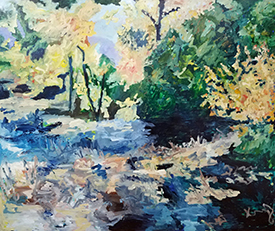 H. K. Anne, Taos, New Mexico, 2017, oil on canvas, 60 x 72 in. (artwork © H. K. Anne)
H. K. Anne. Art Hallway, US Geological Survey National Center, Reston, Virginia, May 2–June 29, 2017. H. K. Anne Presents the American Landscape. Oil painting.
Northeast

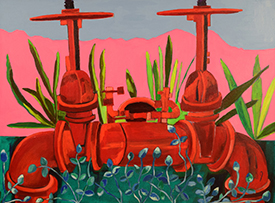 Jean Bundy, painting from Underpinnings (artwork © Jean Bundy)
Jean Bundy. Pleiades Gallery, New York, May 16–June 10, 2017. Underpinnings: Truth Is Found beneath Surfaces. Painting.

Ellen K. Levy. Mid-Manhattan Library, New York Public Library, New York, April 6–June 28, 2017. Meme Machines. Mixed media.

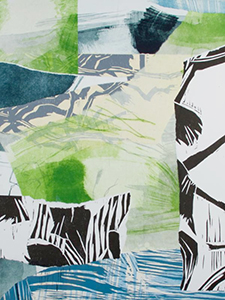 Michael Rich, Wilder Places IX, 2017, woodcut collage (artwork © Michael Rich)
Michael Rich. Mary Castelnovo Gallery, Providence Art Club, Providence, Rhode Island, June 4–23, 2017. Woodcut collage.

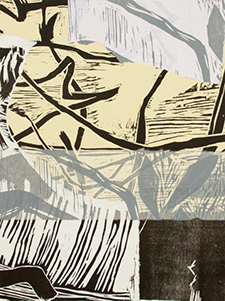 Michael Rich, The Sleepless Landscape II, 2017, woodcut collage (artwork © Michael Rich)
Michael Rich. Imago Foundation for the Arts, Warren, Rhode Island, April 6–May 7, 2017. Collage and painting.
South

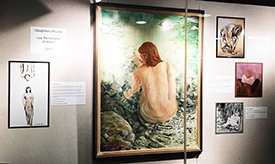 Installation view of Jill Withrow Baker’s Daughters of Leda Illustrations
Jill Withrow Baker. Pennington Gallery, Ekstrom Library, University of Louisville, Louisville, Kentucky, April 11–July 31, 2017. Daughters of Leda Illustrations. Oil painting and drawing.

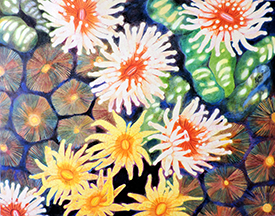 Kyra Belán, Aphrodite’s Anemones, 23 x 29 in. (artwork © Kyra Belán)
Kyra Belán. Grand Atrium and Conservatory Galleries, Sydney and Berne Davis Art Center, Fort Myers, Florida, April 1–30, 2017. Kyra Belán: Symbolic Magic. Painting, drawing, and mixed media.
West
Michael Azgour. Hohmann Fine Art, Palm Desert, California, January 14–February 15, 2017. Velocity. Painting.

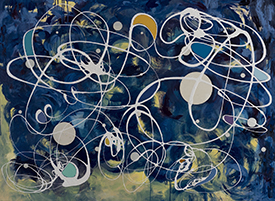 Serena Bocchino, Night Flash, 2016, enamel and mirrors on canvas, 44 x 60 in. (artwork © Serena Bocchino)
Serena Bocchino. ArtHaus, San Francisco, California, April 6–June 30, 2017. Painting.
New in caa.reviews
posted Jun 09, 2017
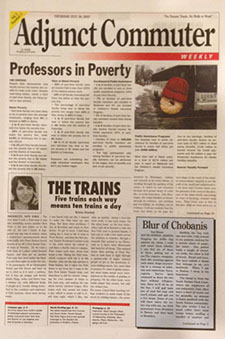 William S. Smith discusses Adjunct Commuter Weekly, edited by Dushko Petrovich, “a one-off, twenty-page publication” created “by and for these academic day laborers.” Although it “employs the conventions of newspaper publishing in a tongue-in-cheek manner,” it “also seems intended to publicize the struggle it documents.” Moreover, Adjunct Commuter Weekly “has to be seen within a tradition of artists’ publications.” Read the full review at caa.reviews.
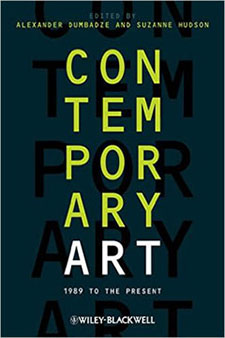 Robert Summers reviews Contemporary Art: 1989 to the Present, an anthology edited by Alexander Dumbadze and Suzanne Hudson. With the “desire to expand the discussion of contemporary art to include a multiplicity of voices,” the volume features “forty-six international writers” grouped into fourteen rubrics. Although “there are blind spots in the anthology, it is very much worth reading.” Read the full review at caa.reviews.
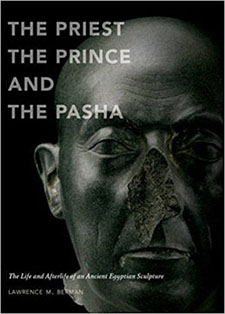 Jean Li reads The Priest, the Prince, and the Pasha: The Life and Afterlife of an Ancient Egyptian Sculpture by Lawrence Berman. Focusing on “the so-called Boston Green Head,” the book questions “what is it about antiquities that so compels us to collect them” by examining “the personalities responsible for the ‘afterlife’ of the head.” It “spurs reflection on the issues of desire, value, and commodification.” Read the full review at caa.reviews.
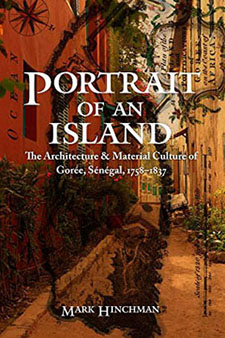 Michelle Moore Apotsos reviews Mark Hinchman’s Portrait of an Island: The Architecture and Material Culture of Gorée, Sénégal, 1758–1837. In this “meticulous, compelling” study of Gorée Island, “a depot for the trans-Atlantic slave,” the author brings to light “its accompanying history as a center of globalistic capitalistic enterprise and the point of origin for an emergent brand of Afro-modernity.” Read the full review at caa.reviews.
CWA Picks for June 2017
posted Jun 09, 2017
Each month, CAA’s Committee on Women in the Arts selects the best in feminist art and scholarship. The following exhibitions and events should not be missed.
Julia Jacquette: Unrequited and Acts of Play; Playground of My Mind
Ruth and Elmer Wellin Museum of Art
Hamilton College, 198 College Hill Road, Clinton, NY
February 18–July 2, 2017
In her first major museum retrospective, artist Julia Jacquette unveils two exhibitions, Unrequited and Acts of Play and Playground of My Mind, at the Wellin Museum of Art in Clinton, New York. Curated by Tracy L. Adler, the Johnson-Pote Director of the Wellen Museum, Unrequited focuses on commercialized objects of desire, “exposing our seemingly insatiable longing for the ideal.” Known for taking her inspiration from cookbooks and contemporary food magazines, Jacquette presents “these material trappings … often close up, in crisply detailed paintings that both profess and resent such desires and the complications they present personally, socially, and culturally.”
“I feel the gender of food is an under discussed topic. The kind of food images I use are a kind of highly styled food, that I think was and is targeted at women—food that looks like it is achieving a kind of domestic perfection,” Jaquette said in an interview with Maxwell Williams.
Running simultaneously, Playground of My Mind is a graphic memoir based on the “adventure playgrounds” of New York City and Amsterdam during the 1970s. “These structures encouraged constructive, imaginative play and gave renewed life to utopian notions of American and European modernist architecture.” Jacquette’s father codesigned one for Central Park. The body of work, comprised of gouache drawings and an illustrated artist book, explores their influence on Jaquette’s aesthetic.
The exhibit also includes space for community-organized, play-oriented projects based on the project. A schedule is available online.
Michelle Vosper: Creating Across Cultures: Women in the Arts from China, Hong Kong, Macau and Taiwan
Book
ISBN9789881604705
Released February 2017 by Muse Press
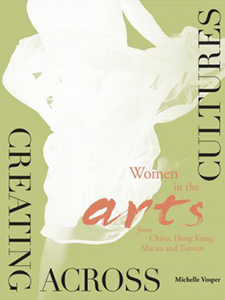
Creating Across Cultures: Women in the Arts from China, Hong Kong, Macau and Taiwan presents essays by journalists, scholars, and artists celebrate the artistic achievements of sixteen visionary women. Edited by Michelle Vosper, formerly the Asian Cultural Council Representative, the 360-page, hardback book profiles contemporary artists such as Yin Xiuzhen 尹秀珍, visual artist, and Lulu Hou 侯淑姿, photographic artist.
“These courageous women often had to defy cultural expectations in order to heed their artistic drive. Their artworks delve into the social realities of their times, and their personal stories provide an intimate portrait of the historical trajectory of Greater China over three generations.”
Other artists profiled include Nieh Hualing 聶華苓, author; Liao Wen 廖雯, art critic and curator; Candace Chong 莊梅岩, playwright; Choi Yan Chi 蔡仞姿 , artist and educator; Jaffa Lam 林嵐, installation artist; Yang Lina 楊荔鈉, filmmaker; Bun-Ching Lam 林品晶, composer; Wang Xinxin 王心心, Nanguan performer; Tian Mansha 田蔓莎, Sichuan Opera performer; Wu Na 巫娜, guqin musician; Yang Meiqi 楊美琦, modern dance pioneer; Pisui Ciyo 碧斯蔚 .梓佑, dancer/choreographer/vocalist; Mui Cheuk Yin 梅卓燕, dancer/choreographer; and Wen Hui 文慧, dancer/choreographer.
The essay authors include Liza Bielby, Christina Yuen Zi Chung, Samantha Culp, Valerie C. Doran, Jennifer Feeley, Georg Kochi, Tina Li Ying Ma, Terry O’Reilly, Ralph Samuelson, Clare Tyrrell-Morin, and Sasha Su-Ling Welland.
Octavia E. Butler: Telling My Stories
Huntington Library, Art Collections, and Botanical Gardens
1151 Oxford Road, San Marino, CA
April 8–August 7, 2017
Last year, Julia Meltzer (curator and director of the Clockshop) invited twelve artists and writers to mine the archives of Pasadena-based sci-fi writer Octavia E. Butler, who had passed away some ten years before. Because Butler gave her archive to the Huntington, much of the research for the new works and writings occasioned by Meltzer’s show happened in the Huntington’s library. Entitled Radio Imagination, that exhibition was a meditation on some of the key themes in Butler’s works (disenfranchisement, survival, the power of the mind) as well as the tricky business of re-presenting stories, documents, and a life that remains under recognized.
Now the Huntington has entered the fray with their own exhibition, this one tightly focused on the contents of Butler’s archives. It includes some of the early writings (and a really wonderful drawing of two horses) the author composed while still a child, as well as drafts of books and stories. Butler had a habit of color coding her documents, making notes with brightly colored highlighters—so these pieces of paper often have a striking visual quality. But it is the words, the prose, and the bare-bones reflections of an author working arduously to always do better that are really the stars here. In a letter sent to her mother from a pit of despair while at (what would be the first of many visits to) the Clarion Science Fiction and Fantasy Writer’s Workshop, Butler beats herself up for being blocked, and for not getting more accomplished. For a writer who was fairly private while she lived, these documents can be a revelation regarding the vulnerabilities of process, the messiness of affect, and the rigor of a brilliant mind and storyteller.
Pia Camil: Bara Bara Bara
Dallas Contemporary
161 Glass Street, Dallas, TX
April 8–August 20, 2017
“Bara! Bara! Bara!” is the cry that vendedores make in the markets in Itzapalapa, one of the sixteen boroughs of Mexico City, to lure in buyers with the promise of cheap (“barato”) goods. For her solo exhibition at the Dallas Contemporary, Mexico-based artist Pia Camil transforms some of the most ubiquitous materials from these markets, T-shirts, into expansive fields of color. These shirts are often made in Mexico (and many other countries outside the US), sold to US consumers, and then, after trickling through second-hand stores, they are eventually shipped by the tonnage back to Mexico and Central America, where they are sold to new markets. The global circuit of vestments is well-trod ground in contemporary art, one example being Shinique Smith’s Bale Variants series (2009–14). But Camil’s project is differently expansive, both formally and conceptually.
Suspended from the vast ceiling of the Dallas Contemporary’s warehouselike space, Camil’s t-shirt sheets look like low-hanging clouds, droopy body parts (bellies, breasts, asses), or, in a call-back to the site of acquisition, the informal coverings of outdoor markets. Because each of these works is called Divisor Pirata, they bear some relation to Lygia Pape’s Divisor, first performed in 1967–68. In that performance, participants from the streets of Rio de Janeiro filled in the holes of a large white piece of fabric and then travelled as a communal body through the streets. Indeed, Camil’s sheets are full-up with performance potential: viewers are invited to stick their heads through the neck holes, thus changing their perspective and relationship to these forms. What once operated like a covering now functions as a shifting new ground, rolling and roiling.
We Wanted a Revolution: Black Radical Women, 1965–85
Brooklyn Museum
200 Eastern Parkway, Brooklyn, New York 11238-6052
April 21–September 17, 2017
After almost fifty years after the groundbreaking show of contemporary black women artists, Where We At, the Brooklyn Museum has organized a landmark exhibition to honor and extend the work of these art activists. As its organizers proudly proclaim, We Wanted a Revolution: Black Radical Women, 1965–85 “is the first exhibition to highlight the voices and experiences of women of color—distinct from the primarily white, middle-class mainstream feminist movement—in order to reorient conversations around race, feminism, political action, art production, and art history in this significant historical period.” Featuring a wide array of media—film, performance, conceptual and video art, as well as painting, sculpture, photography, and print media—We Wanted a Revolution captures the energy and vitality of these critical interventions into the art practices of this formative era. Simply put, this exhibition is a must-see.
The artists represented in the exhibition include Emma Amos, Camille Billops, Kay Brown, Vivian E. Browne, Linda Goode Bryant, Beverly Buchanan, Carole Byard, Elizabeth Catlett, Barbara Chase-Riboud, Ayoka Chenzira, Christine Choy and Susan Robeson, Blondell Cummings, Julie Dash, Pat Davis, Jeff Donaldson, Maren Hassinger, Janet Henry, Virginia Jaramillo, Jae Jarrell, Wadsworth Jarrell, Lisa Jones, Loïs Mailou Jones, Barbara Jones-Hogu, Carolyn Lawrence, Samella Lewis, Dindga McCannon, Barbara McCullough, Ana Mendieta, Senga Nengudi, Lorraine O’Grady, Howardena Pindell, Faith Ringgold, Alva Rogers, Alison Saar, Betye Saar, Coreen Simpson, Lorna Simpson, Ming Smith, and Carrie Mae Weems.
The exhibition is accompanied by a sourcebook, edited by Catherine Morris and Rujeko Hockley and published by Duke University Press, which reprints important essays, correspondence, critiques, and manifestoes from key figures in this movement. Authors include Gloria Anzaldúa, James Baldwin, bell hooks, Lucy R. Lippard, Audre Lorde, Toni Morrison, Lowery Stokes Sims, Alice Walker, Michelle Wallace, and others.
Peju Alatise: Flying Girls, Nigerian Pavilion, 57th Venice Biannale
Scoletta dei Battioro e dei Tiraoro
Campo San Stae, 1980 30135, Venice, Italy
May 13–November 26, 2017
In this historic exhibition, the first-ever Nigerian Pavilion at the Venice Biannale, artist Peju Alatise takes the theme “How About NOW?” seriously. Her contribution to the Nigerian pavilion is an installation titled Flying Girls. Made over a three-year period from 2013–16, it is composed of eight black-painted and life-sized figures of girls, standing in a circle, who appear to have sprouted wings. Above them hovers a flock of birds. The work is a clear reference to the ongoing kidnapping and sexual enslavement of the Nigerian girls by Boko Haram. Flying Girls alludes to a character in one of Alatise’s books, a Yoruban girl who has been sold into domestic servitude and who dreams she belongs to no one but herself and can escape her imprisonment through flight.
Alatise, who was trained as an architect and is a renowned poet and novelist as well as a visual artist, is committed to producing works that addresses the social, political, and gender issues facing her country, with particular attention to what womanhood means within these contemporary contexts. She said this of her contribution to the Nigerian Pavilion: “I thought I would give a voice to the most vulnerable, which is the young black girl—especially in Nigeria,” she says. “It’s not necessarily focusing on that label, but the vulnerability of the girl child and the fact we do not have the government, cultural knowledge and aspiration to do something to help the girl child.”
Exhibitions Curated by CAA Members
posted Jun 09, 2017
Check out details on recent shows organized by CAA members who are also curators.
Exhibitions Curated by CAA Members is published every two months: in February, April, June, August, October, and December. To learn more about submitting a listing, please follow the instructions on the main Member News page.
June 2017

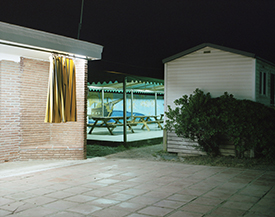 Valentina Stellino, Camping in Spain, 2016, C-print, 27.5 x 19.6 in. (artwork © Valentina Stellino; photograph provided by the artist)
Tom Nys. Betwixt and Between. Fotomuseum Antwerpen, Antwerp, Belgium, May 6–June 2, 2017.
An Interview with Linda Nochlin
posted Jun 08, 2017
CAA is proud to launch our newest initiative for fostering academic discussions about art and its purpose through conversations with diverse scholars and practitioners from our community. Every month, executive director Hunter O’Hanian will interview a notable scholar or artist who is making or has made progressive change in his or her field, with the goal to not only learn more about their craft, but to understand the artist or scholar behind it.
Our first interview in this series is with renowned feminist art historian Linda Nochlin, a long time CAA member and author of the pioneering essay “Why Have There Been No Great Women Artists?” We caught up with Linda at her home on the Upper West Side, where art and inspiring works lined every wall of her apartment. Read the full conversation below (or click the video!) to hear Linda recount the early beginnings of her career, her thoughts on feminism then and now, her advice to young scholars, and a sneak preview of her upcoming book, Misère.
| Hunter O’Hanian: | Hello, my name is Hunter O’Hanian, and I’m the Director of the College Art Association. I’m here today with Linda Nochlin. Hello Linda. |
| Linda Nochlin: | Hello. |
| Hunter O’Hanian: | How are you? |
| Linda Nochlin: | I’m okay. |
| Hunter O’Hanian: | You’ve been a member of CAA for a long time. It’s great to have this opportunity to chat with you. Let’s talk a little bit about your background. I know you grew up here in New York, in Brooklyn. You earned degrees from Vassar, Colombia, and NYU. You taught at Colombia, Vassar, Yale. You’ve won many awards from CAA. Most recently you won the 2006 Distinguished Lifetime Achievement Award for writing in art. I know you’ve won a Guggenheim Fellowship. I know you’re a fellow at the American Academy of Arts and Sciences. You’ve got an honorary doctorate from Harvard. A lot of it’s really been about what you’ve been doing as far as thinking about, writing about, teaching about art. What brought you to art? |
| Linda Nochlin: | 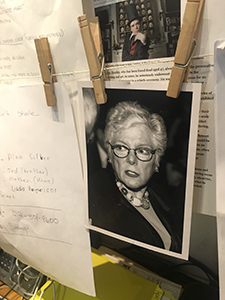 I was always interested. When I was a little kid, I liked to paint and draw. I was very much encouraged to paint and draw both by mother and by my school. Being in New York, I had all these museums. There were a lot of other people who were interested in art that were around me, that were my friends. It seemed sort of natural to go to museums. I enrolled myself when I was 12 in the class for talented children at the Brooklyn Museum. A very interesting place. I was always interested. When I was a little kid, I liked to paint and draw. I was very much encouraged to paint and draw both by mother and by my school. Being in New York, I had all these museums. There were a lot of other people who were interested in art that were around me, that were my friends. It seemed sort of natural to go to museums. I enrolled myself when I was 12 in the class for talented children at the Brooklyn Museum. A very interesting place. |
| Hunter O’Hanian: | You enrolled yourself you said? |
| Linda Nochlin: | I went with a portfolio and they said, “Come on.” |
| Hunter O’Hanian: | Great. |
| Linda Nochlin: | I was always interested in art, music, dance. I loved to dance. The arts. |
| Hunter O’Hanian: | Apart from your writing, have you been drawing and making work through your adult life as well? |
| Linda Nochlin: | No, I quit. |
| Hunter O’Hanian: | How come you quit? |
| Linda Nochlin: | Well, I don’t know. I just got interested in writing about it rather than making it. |
| Hunter O’Hanian: | You have a very long history of publishing. There’s certainly a lot of work that you’ve done with Realism and Courbet. What attracted you to that particular period and that particular genre? |
| Linda Nochlin: | Probably it was political I think. It was during the McCarthy period that I came to maturity. I went to the Institute. I really wanted to work on something that was anti-McCarthy. That was left. I was a person of the left and Courbet was the ideal subject in that. |
| Hunter O’Hanian: | Tell me about what you remember of the McCarthy era and what was going on at the time and how artists and writers were dealt with. |
| Linda Nochlin: | It really was a very oppressive period for people in intellectual and artistic pursuits. Even if they didn’t come and get you, that was always a threat lying over. I remember I began my Frick talk with a long quotation from Karl Marx. People were dumbfounded. I remember my teacher said, “Linda, you’re so brazen.” It was scary times. |
| Hunter O’Hanian: | Watching the news today, do you see any similarities? |
| Linda Nochlin: | No. I think it’s a different thing now. It’s scary in a different way, but you can say what you want. Unless you’re in government. I think it is a different take. It’s not good and it’s not pleasant, but I think it’s different. |
| Hunter O’Hanian: | I noticed…. I’ve read that you said you were introduced to feminism in the late 1960s. You were probably in your 30s at that time. You wrote that you became a feminist virtually overnight. Tell me about that. |
| Linda Nochlin: | I had been in Italy in ‘68, ‘69. I came home and a friend came with all these publications and said, “Do you know about feminism”? It was called the women’s movement. I said, “No.” She said, “Read this.” She left me Off Our Backs and rather the somewhat crude broadsheets of the early feminist movement. I stayed up all night reading and I was a feminist the next day. Certainly I always had been to some degree, but I could see now I could become formally as part of an organization, as part of a movement. Yes, I was a feminist. |
| Hunter O’Hanian: | Do you see the movement alive today? |
| Linda Nochlin: | Mm-hmm [affirmative] yes. But, of course, a lot of people I know happen to be feminists. I don’t know how alive it is otherwise. I think it still is. |
| Hunter O’Hanian: | It’s interesting. I meet a lot of male feminists, too, which back in the beginning of the movement…. |
| Linda Nochlin: | It would be unheard of. |
| Hunter O’Hanian: | It would be unheard of for a man to say he was a feminist. Now there’s many of us who are actually happy to say that. |
| Linda Nochlin: | You think of the Women’s March after the inauguration this year. It was enormous. Enormous. Not every one of those people might be a self-pronounced feminist, but they’re all feminists in the sense that they gathered together to show that they believed in something and were against other things. |
| Hunter O’Hanian: | Of course there’s the essay “Why Have There Been No Great Women Artists?” that you wrote in 1971. I think ARTnews published that? |
| Linda Nochlin: | Yes. |
| Hunter O’Hanian: | First of all, tell me about the title. How did you end up with that title? Why have there been no great women artists? |
| Linda Nochlin: | I was at a Vassar graduation the year before and I think … I can’t remember who it was. He had a gallery. He was a well known gallerist. He said, “Linda, I would love to show women in my gallery, but why are there no great women artists?” I started really thinking about it and one thought followed another. It almost wrote itself. It seemed all so hitched together, so logical. |
| Hunter O’Hanian: | You address the question in the beginning of the essay about how many great artists there are regardless of their gender, the fact of what actually makes a great artist. Talk a little bit about that. |
| Linda Nochlin: | I refuse to say it’s something inborn, a golden nugget I would say, but artistic greatness, artistic production depends so much on time, place, situation, etc. It was no accident that up through the Renaissance, even the 18th century that artists came in families. Father artists, mother artists. You think of the Bach, Johann Sebastian Bach family, family practice. |
| Hunter O’Hanian: | You write in here “The problem lies not so much with some feminist concept of what femininity is, but rather with their misconception shared with the public at large of what art is with the naïve idea that art is the direct personally expression of individual, emotional experience, a translation of personal life into visual terms. Art is almost never that. Great art never is.” |
| Linda Nochlin: | Well that says what I mean. It always takes place within a context, within a setting, certain training, certain standards. What might be considered great art in one period might not be in others. It’s interesting. There’s a certain agreement in the Renaissance. They knew it was Raphael Michelangelo, etc., very little question. |
| Hunter O’Hanian: | You also write here, “the fact of the matter is that there have been no supremely great women artists as far as we know.” I’m happy you added that in, “as far as we know,” although there have been many interesting and very good ones who remain insufficiently investigated or appreciated. |
| Linda Nochlin: | I think that’s been corrected to a certain extent today. |
| Hunter O’Hanian: | Tell me about the ones who have been discovered or investigated. |
| Linda Nochlin: | I suppose Artemisia Gentileschi would be a primary one. Who else? |
| Hunter O’Hanian: | What about women artists in the latter part of the 20th century or beginning part of the 21st century? |
| Linda Nochlin: | I think women artists have definitely caught up as leaders, as being the interesting ones making art and so on. I’m thinking of somebody like Joan Jonas, for example. I’m thinking of somebody like Louise Bourgeois. |
| Hunter O’Hanian: | I was just going to ask you about Louise. |
| Linda Nochlin: | Obviously. |
| Hunter O’Hanian: | Judy Pfaff |
| Linda Nochlin: | The list itself is so long. I’m not saying they’re all Michelangelo, but I’m personally not a Michelangelo person. They’re really interesting and dynamic and have changed the way we look at art, which I think is important. |
| Hunter O’Hanian: | I guess it’s in part because society has allowed them to some degree to be able to do that. |
| Linda Nochlin: | Yes, of course. They had to fight for it, too. |
| Hunter O’Hanian: | Of course. One last quote that I thought was interesting. There’s so much of this essay. I hadn’t read it for years. It’s just so dense. It so wonderful. |
| Linda Nochlin: | It is. I tried to squeeze a lot in. |
| Hunter O’Hanian: | You say “most men despite lip service to equality are reluctant to give up the natural order of things in which their advantages are so great. For women, the case is further complicated by the fact that unlike other oppressed groups or castes, men demand of them not only submission, but unqualified affection as well.” |
| Linda Nochlin: | It’s sort of hard. Say in terms of color, nobody demands that black people love and adore and cater to white people. It’s only gender that does that. It’s very confusing if on the one hand there is somebody you love, live with, etc., yet who is part of a group or caste that is really denying you equality and denying you self-expression. It’s confusing to put it mildly. |
| Hunter O’Hanian: | As we said, we have made progress…. |
| Linda Nochlin: | I think so. |
| Hunter O’Hanian: | But how much progress to do you think that we’ve made? How tough do you think it is for a young woman, 30 years old, starting out today? |
| Linda Nochlin: | I think it’s undeniably better. The conditions are better for a woman succeeding, and a lot of the major artists now certainly are women, but there’s still a boys’ club feeling about certain types of art and certain types of artists. I think you know equality has gone so far and no further maybe. |
| Hunter O’Hanian: | It’s interesting when you think about it in the sense that we think women have had the right to vote for 100 years, but still they don’t get paid the same wage. It’s been 135 years since the Emancipation Proclamation has been signed. |
| Linda Nochlin: | No, it isn’t just done by words or by the progress of a few superstars either. |
| Hunter O’Hanian: | Switching gears, but also on this one a little bit, obviously you’ve been involved in the academy and artistry for many, many years. What is your sense about the future for people graduating out of a master’s programs or PhD programs and getting jobs in higher education today? What do you think about that? |
| Linda Nochlin: | 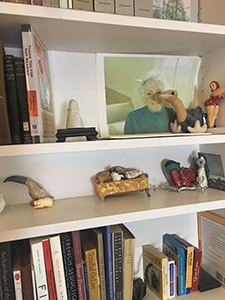 I think it’s a difficult market as far as I can see. Although there are now galleries and museums throughout the country. It’s not just a question of the east coast and the west coast and Chicago. I think there is a sort of spreading, or a spread of art which allows for some jobs, but being an artist is tough no matter how you take it. I think it’s getting ahead, finding a gallery, getting a proper amount of publicity, making sure you show. It’s hard. I think it’s a difficult market as far as I can see. Although there are now galleries and museums throughout the country. It’s not just a question of the east coast and the west coast and Chicago. I think there is a sort of spreading, or a spread of art which allows for some jobs, but being an artist is tough no matter how you take it. I think it’s getting ahead, finding a gallery, getting a proper amount of publicity, making sure you show. It’s hard. |
| Hunter O’Hanian: | What about for scholars, for those getting their PhD about being able to move their careers along? What advice would you have for them? |
| Linda Nochlin: | What advice would I have for them? Be very, very smart. Write a lot. Have strong opinions. Just don’t be a little library worm. |
| Hunter O’Hanian: | It seems your strong opinions have done you well for your career. |
| Linda Nochlin: | I wouldn’t know how to not have them if you know what I mean. That’s what I’m about is my opinions. You have to know something. Frankly I know a great deal. There are very good…. I was a very good student, very good. I worked very hard. I really took pains and energy with my research, not just opinions. They have to be based on something. |
| Hunter O’Hanian: | Can you think of an opinion that you had out there in some of your writing that you looked at it years later and thought, “I wouldn’t have come to the same conclusion?” |
| Linda Nochlin: | I’m sure there are. |
| Hunter O’Hanian: | It’s so interesting how we develop those opinions based upon what we believe at a given time. |
| Linda Nochlin: | Oddly enough I’ve remained more or less consistent. I’ve added some artists in, subtracted some, but the ones that I like are still the ones that I’m interested in. At least many of the issues that I was committed to, I’m still committed to. |
| Hunter O’Hanian: | What are you working on now? |
| Linda Nochlin: | I’ve just finished a large book called Misère about the representation about misery in the second half of the 19th century in France and England. |
| Hunter O’Hanian: | Wonderful. |
| Linda Nochlin: | That’s at the publisher right now. |
| Hunter O’Hanian: | When should we expect to see it? |
| Linda Nochlin: | In the fall I should think. Thames & Hudson as usual.* *Update: Misère is slated for release after Spring 2018. |
| Hunter O’Hanian: | Are you excited about it? |
| Linda Nochlin: | Yeah, I am. I laughingly said to my editor, “Are you going to be able to sell a book called Misère?” He said, “Misère by Linda Nochlin, yes.” It was fascinating, really interesting. It pulls together a lot of things I’ve been interested in all along. It’s both new territory, but based on elements that I’ve been interested in for a long time. |
| Hunter O’Hanian: | Any nuggets that you want to give away from that that come to mind? |
| Linda Nochlin: | Let me think. There’s been relatively little in investigation of the representation of the poor and oppressed. Middle class Impressionism, etc., upper class before that, religious high-minded themes, battles, just the everyday lives of the poor and “uninteresting,” so to speak, not much setting. |
| Hunter O’Hanian: | It’s interesting because that seems like a very timely topic for us. |
| Linda Nochlin: | Exactly I thought of that too. |
| Hunter O’Hanian: | As we think of how elections change and how government change and how the education system changes about access, I think it seems.… |
| Linda Nochlin: | Absolutely. It was certainly true in the 19th century, early 20th. I think it’s an interesting book. I hope other people find it interesting. |
| Hunter O’Hanian: | I look forward to seeing it. Thank you so much for allowing us here in your home. It was great to chat with you about these things. |
| Linda Nochlin: | Good. |
| Hunter O’Hanian: | I look forward to seeing you at another CAA event soon I hope. |
| Linda Nochlin: | I hope so. |
| Hunter O’Hanian: | Thank you. |
| Linda Nochlin: | I would love to. Thank you. |
News from the Art and Academic Worlds
posted Jun 07, 2017
Each week CAA News summarizes eight articles, published around the web, that CAA members may find interesting and useful in their professional and creative lives.
Dear Art School Grads, Do What You Love—but Never for Free
Even if your dream job is to do something creative full-time, you’ll have to get used to the business side of whatever you do. That means shaking habits you might’ve learned in college to produce great work, or ditching assumptions that led you to take that unpaid internship. Above all else, it means always charging what you’re worth—starting now, no exceptions. (Read more from Fast Company.)
Should Artists Have to Talk about Their Work?
An artist’s ability to give a Big Talk has been part of the job for years. There are many ways an artist can shape this talk—this overview of his or her work—or willfully avoid shaping it. But when did we decide that artists have to be able to talk about their work in order to justify the work’s value, or its existence? (Read more from Glasstire.)
Jerry Saltz’s Life as a Failed Artist
It pains me to say it, but I am a failed artist. “Pains me” because nothing in my life has given me the boundless psychic bliss of making art for tens of hours at a stretch for a decade in my twenties and thirties, doing it every day and always thinking about it, looking for a voice to fit my own time, imagining scenarios of success and failure. (Read more from Vulture.)
World’s First Graphene Paint Launches in the UK
The miracle material graphene—considered the strongest substance known to science—has been used to make ecofriendly paint by the manufacturer Graphenstone. The paint is made from a pure lime base that has been combined with graphene—a recently engineered material hailed as the thinnest, strongest, and most conductive ever developed. (Read more from De Zeen.)
Is LA’s Art Scene Growing Too Quickly?
For years, Los Angeles seemed perpetually about to come into its own, always a soon-to-arrive international art city. Now that international attention and infrastructural shifts suggest it has arrived, the question becomes how to save some of the freedom that LA’s always-emerging state previously allowed it. (Read more from Apollo.)
Structures of Power and the Ethical Limits of Speech
Broad constitutional protections mean that, when it comes to artistic expression, direct government censorship is limited and declining. In contrast, private constraints on expression are on the rise: they range from the limits set by social-media platforms and self-censorship resulting from market demands to programmatic decisions made in response to political pressure from ad hoc groups. (Read more from Truthdig.)
Theory from the Ruins
The polemical theories of the Frankfurt School remain indispensable in the present age, when the dilemmas and malaises once specific to Western societies have expanded to encompass the whole globe. As a new era of irrationalism dawns on humankind, with corruption and mendacity becoming an openly avowed modus operandi for all shades of government, the Frankfurt analysis urges itself upon us once more. (Read more from Aeon.)
Tread Carefully with the Socratic Method
Many of us use some version of the Socratic method in our classrooms to stimulate critical thinking. What if a student takes offense to something we said—perhaps while we were playing devil’s advocate—and accuses us of some form of discrimination? On today’s hypersensitized campuses, that has become a very real possibility. (Read more from Vitae.)
Why Are Americans So Hostile to State-Funded Art?
Before the establishment of the NEA, arts and culture support remained the project of urban elites, business communities, and institutional philanthropy. When the government eventually intervened, it supported artists through passive systems like tax exemptions for cultural organizations and for donations by wealthy patrons. (Read more from the New Republic.)
Books Published by CAA Members
posted Jun 06, 2017
Publishing a book is a major milestone for artists and scholars—browse a list of recent titles below.
Books Published by CAA Members appears every two months: in February, April, June, August, October, and December. To learn more about submitting a listing, please follow the instructions on the main Member News page.
June 2017

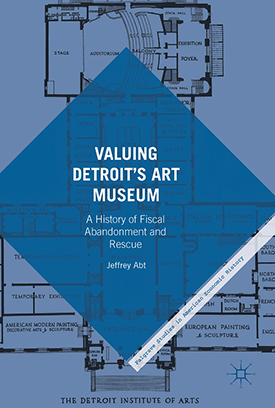
Jeffrey Abt. Valuing Detroit’s Art Museum: A History of Fiscal Abandonment and Rescue (New York: Palgrave Macmillan, 2017).


Matthew Baigell. The Implacable Urge to Defame: Cartoon Jews in the American Press, 1877–1935 (Syracuse, NY: Syracuse University Press, 2017).

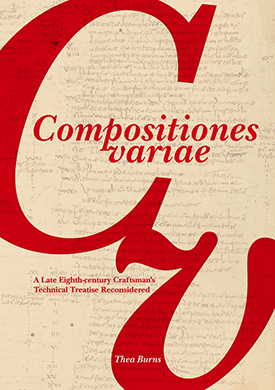
Thea Burns. The “Compositiones variae”: A Late Eighth-Century Craftsman’s Technical Treatise Reconsidered (London: Archetype, 2017).

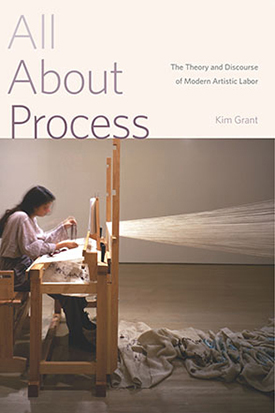
Kim Grant. All about Process: The Theory and Discourse of Modern Artistic Labor (University Park: Pennsylvania State University Press, 2017).


James Housefield. Playing with Earth and Sky: Astronomy, Geography, and the Art of Marcel Duchamp (Lebanon, NH: University Press of New England; Hanover, NH: Dartmouth College Press, 2016).


Ruth E. Iskin, ed., Re-envisioning the Contemporary Art Canon: Perspectives in a Global World (New York: Routledge, 2017).

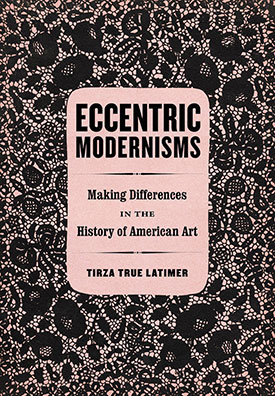
Tirza True Latimer. Eccentric Modernisms: Making Differences in the History of American Art (Oakland: University of California Press, 2016).

Chari Pradel. Fabricating the Tenjukoku Shūchō Mandara and Prince Shōtoku’s Afterlives (Leiden, the Netherlands: Brill, 2016).

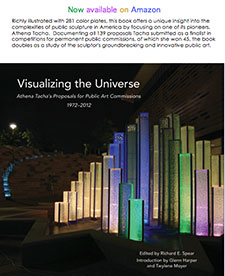
Athena Tacha. Visualizing the Universe: Athena Tacha’s Proposals for Public Art Commissions 1972–2012, ed. Richard E. Spear, introduction by Glenn Harper and Twylene Moyer (Washington, DC: Grayson, 2017).
Getty Supports the CAA-Getty International Program for a Seventh Year
posted Jun 05, 2017
 The Getty Foundation has awarded the College Art Association (CAA) a grant to fund the CAA-Getty International Program for a seventh consecutive year. The Foundation’s support will enable CAA to bring twenty international visual-arts professionals to the 106th Annual Conference, taking place February 21-24, 2018 in Los Angeles, CA. Fifteen individuals will be first-time participants in the program and five will be alumni, returning to present papers during the conference. The CAA-Getty International Program provides funds for travel expenses, hotel accommodations, per diems, conference registrations, and one-year CAA memberships to art historians, artists who teach art history, and museum curators. The program will include a one-day preconference colloquium on international issues in art history on February 20, this year to be held at the Getty Center.
The deadline for applications is August 21, 2017. Guidelines and application.
The CAA-Getty International Program was established to increase international participation in CAA and the CAA Annual Conference. The program fosters collaborations between North American art historians, artists, and curators and their international colleagues and introduces visual arts professionals to the unique environments and contexts of practices in different countries.
Since the CAA-Getty International Program’s inception in 2012, ninety scholars have participated in CAA’s Annual Conference. Historically, the majority of international registrants at the conference have come from North America, the United Kingdom, and Western European countries. The CAA-Getty International Program has greatly diversified attendance, adding scholars from Central and Eastern Europe, Russia, Africa, Asia, Southeast Asia, Caribbean countries, and South America. The majority of the participants teach art history (or visual studies, art theory, or architectural history) at the university level; others are museum curators or researchers.
Earlier this year, CAA organized a reunion to celebrate five successful years of the CAA-Getty International Program. Twenty alumni were selected to present papers at the Annual Conference in New York, held February 15-18, 2017. Organized into four sessions about international topics in art history, these Global Conversations were chaired by distinguished scholars from the United States and featured presentations by the CAA-Getty alumni.
Read Global Conversations: 20 Papers from the 2017 CAA-Getty Alumni
One measure of the program’s success is the remarkable number of international collaborations that have ensued, including an ongoing study of similarities and differences in the history of art among Eastern European countries and South Africa, attendance at other international conferences, publications in international journals, and participation in panels and sessions at subsequent CAA Annual Conferences. Former grant recipients have become ambassadors of CAA in their countries, sharing knowledge gained at the Annual Conference with their colleagues at home. The value of attending a CAA Annual Conference as a participant in the CAA-Getty International Program was succinctly summarized by alumnus Nazar Kozak, Senior Researcher, Department of Art Studies, National Academy of Sciences of Ukraine “To put it simply, I understood that I can become part of a global scholarly community. I felt like I belong here.”
About CAA
The College Art Association is the world’s largest professional association for artists, art historians, designers, arts professionals, and arts organizations. CAA serves as an advocate and a resource for individuals and institutions nationally and internationally by offering forums to discuss the latest developments in the visual arts and art history through its Annual Conference, publications, exhibitions, website, and other programs, services, and events. CAA focuses on a wide range of advocacy issues, including education in the arts, freedom of expression, intellectual-property rights, cultural heritage and preservation, workforce topics in universities and museums, and access to networked information technologies. Representing its members’ professional needs since 1911, CAA is committed to the highest professional and ethical standards of scholarship, creativity, criticism, and teaching.
About the Getty Foundation
The Getty Foundation fulfills the philanthropic mission of the Getty Trust by supporting individuals and institutions committed to advancing the greater understanding and preservation of the visual arts in Los Angeles and throughout the world. Through strategic grant initiatives, it strengthens art history as a global discipline, promotes the interdisciplinary practice of conservation, increases access to museum and archival collections, and develops current and future leaders in the visual arts. It carries out its work in collaboration with the other Getty Programs to ensure that they individually and collectively achieve maximum effect.
New in caa.reviews
posted Jun 02, 2017
Rachel Goshgarian visits Court and Cosmos: The Great Age of the Seljuqs at the Metropolitan Museum of Art. As “the first major exhibition on the Seljuqs in the United States,” the show “sets out to elucidate how the orders of this world and the next were conceptualized and represented in the Seljuq Empire and its successor states,” and, “to a certain extent,” the curators “delivered.” Read the full review at caa.reviews.
 Amy Chun Kim reads They Shall Not Have Me: The Capture, Forced Labor, and Escape of a French Prisoner in World War II, the artist Jean Hélion’s account of his imprisonment and escape from German camps. His “experience of the concrete as a camp inmate consolidated an aesthetic trajectory that was already in motion,” and this “vivid portrait” is “a stylistic testimony to this rejection of abstraction.” Read the full review at caa.reviews.
 Agata A. Gomółka reviews Gretchen E. Henderson’s Ugliness: A Cultural History. The author “ventures on a critical journey through the history of ugliness, viewing the concept through the lens of culture and corporeality” and “packs an abundance of fascinating case studies and thought-provoking insights into a stimulating conceptual framework.” It is a “highly readable, erudite, and compelling account.” Read the full review at caa.reviews.
Rebecca Uchill is the New Web Editor for Art Journal Open
posted Jun 01, 2017
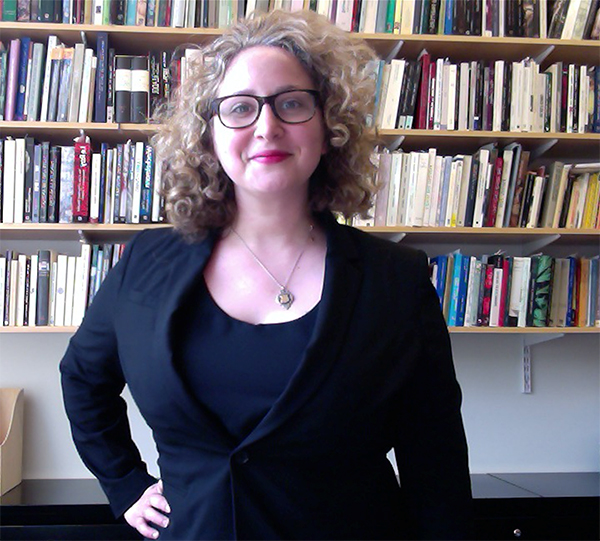
Rebecca Uchill
CAA’s president, Suzanne Preston Blier, has appointed Rebecca Uchill as the new web editor for Art Journal Open, endorsing the recommendation of the editorial board of Art Journal. Uchill, who currently is a Mellon Postdoctoral Fellow with the Center for Art, Science, and Technology at the Massachusetts Institute of Technology, joins the College of Visual and Performing Arts at UMass Dartmouth in September as a full-time lecturer. Uchill’s three-year term for Art Journal Open commences on July 1, 2017; she succeeds inaugural web editor Gloria Sutton, assistant professor of contemporary art history and new media at Northeastern University. During her term, Uchill will be responsible for commissioning and vetting content for the website, including artist projects and essays. She will serve on the Art Journal editorial board.
Uchill is the coeditor (with Caroline A. Jones and David Mather) of Experience: Culture, Cognition, and the Common Sense (MIT Press, 2016), as well as curator of the artist entries for the volume. She organizes interdisciplinary events and programs, including the recent “Being Material” symposium at MIT and a series of curatorial experiments with the collaborative Experience Economies. Uchill has published in journals such as Future Anterior, Museum and Curatorial Studies Review, Visual Resources: An International Journal of Documentation, and Journal of Curatorial Studies. She has curated exhibitions at Harvard University’s Carpenter Center for the Visual Arts, the Indianapolis Museum of Art, and Mass MoCA. Uchill earned her PhD in history, theory, and criticism of art at MIT in 2015.
CAA welcomes Rebecca Uchill to Art Journal Open.
Art Journal Open welcomes proposals for artists’ projects, critical writing, and other contributions, on a rolling basis. Please see the submission guidelines here. Submissions are accepted via e-mail to art.journal.open@collegeart.org.