CAA News Today
CAA Member Tour of Greece and Italy
posted Dec 07, 2016
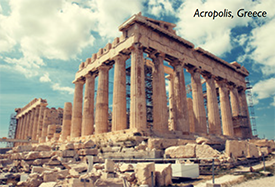 CAA is excited to announce an exclusive offer to its members to spend two weeks exploring the art and art history of Greece and Italy, from June 2 to June 11, 2017. The trip includes stops in Athens, Rome, and Florence. Hosted by CAA Executive Director and CEO, Hunter O’Hanian, this is a once in a lifetime opportunity to explore these majestic cities with fellow CAA members and lovers of art.
Local tour guides in each city will lead the group through numerous cultural and historic sites, museums, and galleries. The tour begins in Athens, where highlights include the National Archaeological Museum, the Benaki Museum, Zappio Gardens, the Acropolis and museum, and the Museum of Cycladic Art. In Rome, the tour will visit the Colosseum, Roman Forum, Capitoline Museums, and the Borghese Gallery, among others. Ending in Florence, the tour will stop at the Duomo and Baptistery, Church of Santa Croce, Galleria dell’Accademia, Medici Chapels, Church of San Lorenzo, and the Uffizi Gallery.
Following Florence, you may choose to extend your trip to Venice where the 57th Venice Biennale will be taking place, May 13 through November 26, 2017.
For more information, including rates and a day-by-day tour itinerary, please download and review the Greece & Italy Art and Art History Tour brochure.
News from the Art and Academic Worlds
posted Dec 07, 2016
Each week CAA News summarizes eight articles, published around the web, that CAA members may find interesting and useful in their professional and creative lives.
Art Must Admit the Lesson of Donald Trump’s Election or Face Irrelevance
By now, the shock of Donald Trump’s election is fading, leaving only the horror. But we need to reckon with the shock if we are to combat the horror effectively. Since election night, the cultural sphere has valiantly rallied its opinion-leaders, declaring that art must join the fight against whatever terrors a Trump presidency has in store for us. (Read more from Artnet News.)
Professor Watchlist Is Seen as Threat to Academic Freedom
A new website that accuses nearly two hundred college professors of advancing “leftist propaganda in the classroom” and discriminating against conservative students has been criticized as a threat to academic freedom. The site, Professor Watchlist, says it names those instructors who “advance a radical agenda in lecture halls.” (Read more from the New York Times.)
Activism and Professionalism in the Workplace
Activism to me was, by necessity, subtle. Once, one of my clients said something that made me think he was gay. To prove myself an ally, I wore a rainbow watch the next time I saw him. He saw it. Blushed. Looked away. I tell myself I helped him. Change comes slowly. One person can make a difference. (Read more from Inside Higher Ed.)
The Urgency of Empathy and Social Impact in Museums
How we can start an empathy revolution in museums? How can we more fiercely recognize the meaningful work that museum professionals are doing to enact change around the relevant issues in our communities? How do we radically expand the work of museums in bringing people together and contributing to strong, resilient communities? (Read more from MuseumNext.)
Dealing with Difficult Art in Post-Election America
Over Thanksgiving weekend, an art exhibition at Salem State University was temporarily closed after a group of students complained that they found several of the works hurtful and offensive. After a closed-door meeting with fifty students, the university reopened the exhibition on November 30, but not before making “several modifications.” (Read more from the National Coalition against Censorship.)
How to Fix the Art World, Part 3
Last August ARTnews embarked on an epic project: finding out what inhabitants of the art world think is wrong with their world and how they would fix it. In the ensuing months, the magazine spoke with more than fifty individuals—artists and curators, critics and historians, art dealers and an art-fair director—to gather a range of perspectives. (Read more from ARTnews.)
Is the Destruction of Cultural Property a War Crime?
It is a settled principle in international law that the deliberate targeting or plundering of religious, historic, and cultural sites is prohibited during war. Prosecutors have discretion in the cases that they bring, but the law of war is clear about accountability in cases of cultural destruction. (Read more from Apollo.)
The Art Schools Fidel Castro Built—and Then Neglected
Designed by three architects, the Escuelas Nacionales de Arte were constructed in flamboyant, sinuous forms deliberately reflecting the local landscape. Built in brick and terracotta as a pragmatic response to the US embargo of imported steel and using the Catalan vault throughout, these were a confident repudiation of Western-style international modernism. (Read more from the Art Newspaper.)
CAA Seeks Part-Time Program Assistant
posted Dec 06, 2016
| Job Title: | Program Assistant | Date: | February 25, 2016 |
| Department: | Programs | ||
| Supervisor: | Manager of Programs |
Part-time position with approximately 20 hours per week, schedule may vary with flexible hours.
COLLEGE ART ASSOCATION ANNUAL CONFERENCE:
The College Art Association Annual Conference is the largest international gathering of professionals in the visual arts. The conference brings together 4,000 of its members to participate in over 250 presentations, panel discussions, workshops, and special events on a wide range of topics on art scholarship and practice; to engage in in-depth discussions on new scholarship, innovative art, and issues in the arts today; and to connect with colleagues from across the country and around the world. The 105th annual conference will be held in New York, February 15- 18, 2017.
FUNCTION:
Reporting to the director of programs, the program assistant provides assistance to both the assistant director for annual conference and manager of programs with all daily operations of the department.
DUTIES AND RESPONSIBILITIES:
- Assists with data entry support (e.g. NetFORUM membership database), detailed record keeping, database document production, and producing reports.
- Assists with the coordination of the scheduling of the CAA conference sessions and events. This includes, but is not limited to, data entry, preparing spreadsheets, proof reading, and creating reports. Communicates with CAA departments on conference details as requested.
- Corresponds with conference participants, service providers, book and trade fair exhibitors, and general membership on conference-related matters.
- Provides internet research to source prospects for the CAA conference book and trade fair.
- Prepare mailings sent to conference participants, exhibitors, advertisers, jurors, committee members, and volunteers. Document production and photo-copying.
- Assist with the development of all conference publications.
- Assists with the coordination of temporary conference staff including, scheduling, correspondence, and training.
- Provides on-site conference support, including but not limited to assisting with all aspects of conference logistics, checking set-up arrangements, posting signs, and providing hospitality as needed.
- Staffs Speaker Ready Room during the conference providing assistance to conference presenters and chairs as needed.
- Provides post-conference support including compiling and summarizing event statistics.
- Assists with financial recording keeping, including but not limited to, processing purchase orders and transactions, creating invoices, tracking expenses, and preparing ledgers and reconciliation reports.
- Provides research and creates reports as requested.
- Performs various administrative and clerical duties for the director of programs. Other duties as assigned.
QUALIFICATIONS:
- Bachelor’s degree required, Master’s degree in art history or MFA preferred.
- Ability to work independently, organize multiple concurrent tasks, work efficiently, and follow through on details.
- Experience with spreadsheets, systems and database management, and generally accepted programs and office equipment required.
- Excellent customer services skills, and writing and editing skills, and oral communication.
- Should possess tact, discretion, and the ability to work confidentially.
- The capacity to remain poised under pressure.
- The ability and willingness to work on-site at annual conference as well as hours outside typical business day, as needed.
Send resume and cover letter to tdugan@collegeart.org
This job description is intended as a summary of the primary responsibilities of and qualifications for this position. The job description is not intended as inclusive of all duties an individual in this position might be asked to perform or of all qualifications that may be required either now or in the future.
The College Art Association is an equal opportunity employer and considers all candidates for employment regardless of race, color, sex, age, national origin, creed, disability, marital status, sexual orientation, gender expression or political affiliation.
An Interview with Mary Miller, CAA 2017 Convocation Speaker
posted Dec 06, 2016
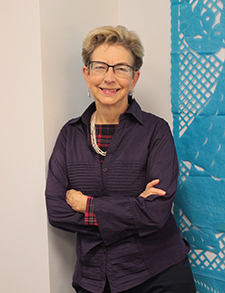
Mary Miller, Sterling Professor of History of Art at Yale University in New Haven, Connecticut, will deliver the keynote address during Convocation at the 2017 Annual Conference, to be held at the New York Hilton Midtown in Manhattan. Free and open to the public, Convocation takes place on Wednesday, February 15, 5:30–7:00 PM. The event will include the presentation of the annual Awards for Distinction and be followed by the conference’s Opening Reception.
Miller earned an AB in 1975 at Princeton University in Princeton, New Jersey. Six years later she completed her PhD at Yale, joined the faculty there, and has remained at the school ever since. Miller was recently appointed as senior director of the Institute for the Preservation of Cultural Heritage at Yale. She also served as dean of Yale College from 2008 to 2014 and has taken many other professorial and administrative roles over the years.
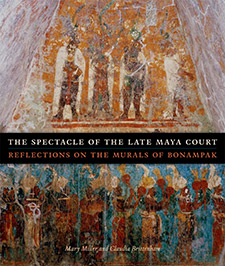
Miller is the author of The Murals of Bonampak (1986), The Art of Mesoamerica: From Olmec to Aztec (1986), and Maya Art and Architecture (1999). A frequent collaborator, she wrote The Gods and Symbols of Ancient Mexico and the Maya (1993) with Karl Taube and edited A Pre-Columbian World (2006) with Jeffrey Quilter and The Aztec Calendar Stone (2010) with Khristaan D. Villela. In recent years Miller edited Painting a Map of Sixteenth-Century Mexico City (2012), a study of a rare indigenous map in Yale’s Beinecke Library, with Barbara Mundy and completed The Spectacle of the Late Maya Court: Reflections on the Murals of Bonampak (2013) with Claudia Brittenham.
Miller has written essays for both of CAA’s scholarly print publications. In “A Re-examination of the Mesoamerican Chacmool,” published in The Art Bulletin in 1985, Miller proposed Maya sources for “the form, location, variety, and iconography” of the chacmool, the Mesoamerican stone sculptures of reclining male figures associated with war and sacrifice; previous scholarship had assumed they were of Central American origin and introduced to the Maya during the Toltec era.[1] In “Shaped Time,” published in Art Journal in 2009, Miller considered George Kubler’s 1962 landmark study The Shape of Time, “so rich in its textured treatment of the ways that streams of history and art-making intersect.”[2] She drew on her deep knowledge of ancient Mesoamerica to contextualize the book in relation to both Kubler’s research and other postwar scholarship in the field.
In 1988 Miller and Linda Schele accepted CAA’s Alfred H. Barr Award for museum scholarship for The Blood of Kings: Dynasty and Ritual in Maya Art (1986). The book, with photographs by Justin Kerr, was the catalogue for a traveling exhibition organized by Schele and Miller for the Kimbell Art Museum in Fort Worth, Texas.
Among Miller’s many accolades are a John Simon Guggenheim Memorial Fellowship and membership in the American Academy of Arts and Sciences. In 2010 she gave the fifty-ninth A. W. Mellon Lectures in the Fine Arts at the National Gallery of Art in Washington, DC—one of the highest honors in American art history.
CAA communicated with Miller via email last month. Here’s what she had to say.
How has teaching art history changed over the last twenty years?
Well, that takes us back to 1996, and just about then I volunteered to be the departmental pioneer (or guinea pig, take your pick) for digital images. I had to wrestle with the visual resources department to be allowed to build my own PowerPoints in that first iteration! And before I knew it, the slide cabinets had departed for remote storage. But that is the technical change. There are other changes that come along, especially in terms of what it is students bring to the class, and how the visual image is beginning to be the center for most of them.
What were the most important lessons you learned while serving as a dean?
You don’t want to know most of them! But, seriously, I gave a lot of thought to grading while dean. I also paid attention to learning outcomes, especially the importance of short assignments and detailed feedback early in the term. And I committed to developing opportunities for public speaking for students in class—a critical part of education but rarely intentionally instructed these days.
What does your current research concern?
My current research is focused on the gold disks of the Sacred Cenote at Chichén Itzá. The only serious study of the full set of them was published in 1952, although everyone knows them. Or thinks they know them. They’ve turned out to be even more fascinating than I though they’d be: the material—gold—was entirely new to the Maya of the ninth century, the technique of executing imagery on it entirely new as well. And then the imagery itself quite distinct. All but one of the disks were burned, ripped into pieces, crumpled, stomped upon, and then hurled into the Cenote (and the “one” is distinct only in not having been torn apart). There is meaning embedded in that dramatic ending! But three other projects have been developing along the edges. I keep all the files and notes for one of them—a history of the dealers, collectors, and materials that are critical to the formation of pre-Hispanic art as a field in the United States, 1940 onward—in a folder I call “The Rabbit Hole,” which tells you it is a wild and winding journey.
What was your first CAA Annual Conference experience like?
Oh, gosh. I think I was the driver of a group of Yale graduate students to DC [in 1979] and I am almost certain that George Shackelford was in the car. I’d had the bad fortune to have my wallet relieved of folding bills while I snoozed in the Yale Art and Architecture Library, so I scrounged together $40 to make the trip. I slept in the basement of a house some of my college friends shared near the Washington Cathedral, and then I hiked down Mass Ave to the Hilton—a good distance, I can assure you. I attended a session chaired by Joel Snyder that thrilled me. I watched a grad-school colleague give a presentation on African time, among other talks, and I had a lot of fun.
What are two or three pressing issues that both artists and academics share?
We all share the problem of the Google search: no matter what I am looking for, once I start searching for images, by page three the algorithm is offering me pictures of Van Gogh’s Sunflowers. If I am looking for a work of art, then surely I must want Sunflowers!
Seriously, I think the most pressing issue we share is that of conservation and preservation. How can the past—or the present—be preserved for the future?
Can you give us a teaser of what you will discuss at Convocation?
Well, last year I gave a talk at the Clark Art Institute in which I said art history can play a different role in twenty-first-century humanities than it did in twentieth-century humanities. I’ve developed these ideas more fully—and I hope I have some interesting things to say to the community of art historians, and the community of artists!
Notes
[1] See Mary Ellen Miller, “A Re-examination of the Mesoamerican Chacmool,” The Art Bulletin 67, no. 1 (March 1985): 7–17.
[2] See Mary Miller, “Shaped Time,” Art Journal 68, no. 4 (Winter 2009): 71–77.
New CAA Standards and Guidelines
posted Dec 05, 2016
At the most recent meeting of CAA’s Board of Directors, which took place on October 23, 2016, the following statements and guidelines were revised and approved:
- Statement concerning the Acquisition of Cultural Properties Originating from Abroad, from Indigenous Cultures, and from Private Collections during the Nazi Era
- Guidelines for Museums or Other Not-For-Profit Visual-Arts Institutions Working with Artists on Exhibitions and Commissioned Works
- Guidelines regarding the Hiring of Guest Curators by Museums
- Guidelines regarding the Hiring of Catalogue Essayists
At the Forefront: Intersections of Race and Art at the CAA Conference
posted Dec 05, 2016
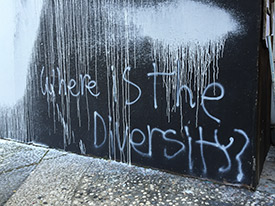 Photo Credit Maxwell Leung, Ph.D., CCA
The 2017 Annual Conference in New York, taking place February 15–18, boasts a number of presentations addressing the intersections of race and contemporary art, colonialism in art history, and the Black Lives Matter movement. Here are a few highlights:
Deborah Willis of New York University and Cheryl Finley from Cornell University will provide a historical overview through a session titled “Picturing Social Movements from Emancipation to Black Lives Matter.” Kellie Jones, an art historian at Columbia University and winner of a 2016 MacArthur fellowship, is among the speakers. Public Art Dialogue, one of CAA’s many affiliated societies, will host a discussion on “Public Art in the Era of Black Lives Matter.” The first presenter will be Evie Terrono from Randolph-Macon College in Virginia, who has researched “Symbolic Interventions, New Narratives: Challenging the Authority of the Confederate Flag.”
The session “Race and Labor in the Art World” will be chaired by Hayes Peter Mauro of Queensborough Community College, City University of New York. The scheduled speakers—Sarah Cervenak, John Ott, and LaTanya Autry—teach in North Carolina, Virginia, and Connecticut, respectively. Elsewhere, four panelists will offer case studies of race and representation in nineteenth-century art, and another collection of scholars will examine “Blackness, Violence, Representation.” The Arts Council of the African Studies Association, also a CAA affiliated society, has given the tantalizing title of “Flesh” to its session, while another panel will give form to “Post-Black and Liquid Blackness” in contemporary African American art.
Richard Hylton from University for the Creative Arts in England will lead a panel that sheds light on British perspectives regarding “Contemporary Art, Ethnography, and the Western Museum,” while scholars from Italy and South Africa will lead a session called “Writing Art History in the Margins: Rethinking Centers and Peripheries in ‘Non-Western’ Art Historiography.” Finally, the Association for Critical Race Art History, another CAA affiliate, will present “Riff: Black Artists and the European Canon.” Among the artists to be examined are Robert Colescott, Carrie Mae Weems, and Moe Brooker.
New in caa.reviews
posted Dec 02, 2016
Sarah-Neel Smith reviews Walid Raad, an exhibition and catalogue produced by the Museum of Modern Art. The museum “should be applauded for its impeccable staging of this rich exhibition,” while the volume “will undoubtedly serve as the go-to resource on the artist for years to come,” despite being “colored by a set of historiographic problems that Raad himself works over in his artistic production.” Read the full review at caa.reviews.
Mark Alan Hewitt reads Lost Mansions: Essays on the Destruction of the Country House, a book of essays edited by James Raven. The publication “takes up the subject of how England, Scotland, Wales, and Ireland have dealt with the destruction of county houses during the past several decades,” noting that today’s keepers “must squarely face the reality of multiculturalism, diminishing resources, and indifferent politicians.” Read the full review at caa.reviews.
Theresa Leininger-Miller discusses the catalogue Common Wealth: Art by African Americans in the Museum of Fine Arts, Boston, edited by Lowery Stokes Sims. Featuring one hundred works by African American artists, all of which were acquired by the museum over the past forty years, the “large, handsome” book “is part of a trend of museums publishing and showcasing their growing collections of African American art.” Read the full review at caa.reviews.
caa.reviews publishes over 150 reviews each year. Founded in 1998, the site publishes timely scholarly and critical reviews of studies and projects in all areas and periods of art history, visual studies, and the fine arts, providing peer review for the disciplines served by the College Art Association. Publications and projects reviewed include books, articles, exhibitions, conferences, digital scholarship, and other works as appropriate. Read more reviews at caa.reviews.
Your Support Is Vital to the Arts
posted Dec 02, 2016
 Imagine our world without culture.
In today’s economy-driven society, it is easy to imagine a world where our past and present cultural history is ignored—or even worse, destroyed. We see educational systems focused more on science and technology and less on the arts and humanities, with art department budgets slashed and employment opportunities shrinking while student debt is rising to an all-time high and our collective historic cultural past is destroyed in the Middle East and other parts of the world.
That’s why the College Art Association is important. For more than a century, CAA has been the preeminent international leadership organization in the field of visual arts. We strive to create an environment where visual artists, art historians, designers, museum professionals, critics, and scholars successfully and freely create and prosper in their professional fields. We do this because we know if these professionals prosper, our culture will not only be preserved, it will thrive.
We ask that you join us in celebrating CAA’s rich history and prosperous future by making a tax-deductible gift to the organization. Your support goes directly to the programs we offer.
Register now for the 2017 Annual Conference, February 15-18 in New York. The Early Registration deadline is December 19.
Together, we can ensure that our culture is preserved.
Sincerely,
Hunter O’Hanian
Executive Director and Chief Executive Officer
2017–2018 Nominating Committee Seeks Members
posted Nov 30, 2016
CAA invites you to help shape the future of the organization by serving on the 2017-2018 Nominating Committee. Each year, this committee nominates and interviews potential candidates for the CAA Board of Directors and selects the final slate for the membership’s vote. The candidates for the 2017 Board of Directors’ election were announced on November 29, 2016.
The Board of Directors and the Nominating Committee strive to find the best candidates that represent the broad subdisciplines and practitioners represented in the membership. The 2016-2017 Nominating Committee will select the members of the 2017-2018 committee at its business meeting during CAA’s Annual Conference in New York City in February 2017. Once selected as new members of the Nominating Committee, all members propose, in the spring, five to ten nominations of people to run for the board. Service on the committee involves conducting telephone interviews with candidates during the summer of 2017, and meeting in the fall to select the final slate of Board candidates. Finally, all Nominating Committee members attend their next business meeting, at the 2018 Annual Conference in Los Angeles to select the succeeding committee members.
Nominations and self-nominations should include a brief statement of interest and a 3–4 page condensed CV. Please email a statement and your CV as Word attachments, with the subject line “2017-2018 Nominating Committee,” to the attention of Jim Hopfensperger, CAA vice president for committees, care of Vanessa Jalet, CAA executive liaison. Deadline extended: Friday, January 6, 2017.
News from the Art and Academic Worlds
posted Nov 30, 2016
Each week CAA News summarizes eight articles, published around the web, that CAA members may find interesting and useful in their professional and creative lives.
When Art Offends (and Isn’t Understood)
Salem State University in Massachusetts invited artists to create works inspired by the US presidential election. Several paintings, created by critics of Donald Trump, were intended to draw attention to oppression. But minority students were offended—and the university shuttered the exhibition. (Read more from Inside Higher Ed.)
The New Go-To Platform for Finding Artist Residencies
Anyone who has ever tried to find an artist residency knows it’s a difficult task. There are dozens of online aggregators of residency programs, but none claims to be comprehensive, most if not all websites are updated manually, and artists are hard-pressed to narrow down the multitude of opportunities to reflect their personal needs and preferences. (Read more from Artsy.)
How to Fix the Art World, Part 2
Last August ARTnews embarked on an epic project: finding out what inhabitants of the art world think is wrong with their world and how they would fix it. In the ensuing months the magazine spoke with more than fifty individuals—artists and curators, critics and historians, art dealers and an art-fair director—to gather a range of perspectives. (Read more from ARTnews.)
Help Desk: Solo No-No
I’m updating my CV and visited a friend’s website to clarify the details of a collaborative piece we worked on a few years ago. While looking for that project, I came across a different listing that we also shared: a two-person exhibition that he has billed as a solo exhibition. How do I deal with this? (Read more from Daily Serving.)
The Factory of Fakes
A digitally recorded copy, Adam Lowe argues, can be both a lode of “forensically accurate information” and a vehicle for provoking a “deep emotional response.” Because an artwork can be scanned without physical contact, the facsimile process makes traditional conservation efforts—from repainting to varnishing—seem like an exalted form of graffiti. (Read more from the New Yorker.)
It Is Pretty Easy to Get Art Experts to Fall for Fakes
The world of modern art is often viewed as irrational and perplexing by outsiders and insiders alike. Last fall, for example, an Italian art museum displayed an unusual installation, consisting of strewn-about champagne bottles, cigarette butts, and confetti, but cleaners at the gallery threw it all away, mistaking it for the leftover detritus of a party held at the museum the night before. (Read more from New York Magazine.)
MFAs Are Expensive—Here Are Eight Art-School Alternatives
Higher education is in a state of crisis. Student debt is skyrocketing, and those looking for master’s degrees pay ever-higher sums to institutions that frequently underpay the adjunct faculty they employ as teachers. For those in the arts, whether or not an MFA is worth the investment of time and money is perpetually vexing. (Read more from Artsy.)
DIY Syllabus: How to Move Beyond the Transactional
We all know that a syllabus must convey information and set an open and inviting tone. But no matter how skillfully and engagingly it does those things, a syllabus must move beyond the basics and embody the actual substance of the course to be truly effective. (Read more from Vitae.)