CAA News Today
Candidates for CAA’s 2017 Board of Directors Election
posted Nov 29, 2016
The 2016-17 Nominating Committee has announced a slate of five candidates for the annual election of four new CAA members to serve on the Board of Directors for a four-year term (2017–2021). Voting will begin in early January 2017. The web pages for the election, which will include the candidates’ statements and biographies, will be published in late December 2016.
The five candidates are:
- Colin Blakely, Director, School of Art, University of Arizona
- Peter M. Lukehart, Associate Dean, Center for Advanced Study in the Visual Arts
- Melissa Hilliard Potter, Associate Professor, Columbia College Chicago
- Julia Sienkewicz, Assistant Professor, Duquesne University
- Greg Watts, Dean & Professor, College of Visual Arts & Design, University of North Texas
If you have questions about the Nominating Committee, the candidates, or the voting process, please contact Vanessa Jalet, CAA executive liaison.
2016 Wyeth Foundation for American Art Publication Grant Winners
posted Nov 29, 2016
CAA is pleased to announce eight recipients of the annual Wyeth Foundation for American Art Publication Grant for 2016. Thanks to a generous grant from the Wyeth Foundation, these awards are given annually to publishers to support the publication of one or more book-length scholarly manuscripts in the history of American art, visual studies, and related subjects. For this grant program, “American art” is defined as art created in the United States, Canada, and Mexico.
The eight grantees for 2016 are:
- Ella Diaz, Flying under the Radar with the Royal Chicano Air Force: Mapping a Chicano/a Art History, University of Texas Press
- Jason Hill, Artist as Reporter: Weegee, Ad Reinhardt, and the PM News Picture, University of California Press
- Wadsworth Jarrell, AfriCOBRA: Experimental Art toward a School of Thought, Duke University Press
- Kellie Jones, South of Pico: African American Artists in Los Angeles in the 1960s and 1970s, Duke University Press
- Jennifer Josten, Mathias Goeritz: Modernist Art and Architecture in Cold War Mexico, Yale University Press
- Lauren Kroiz, Cultivating Citizens: The Regional Work of Art in the New Deal Era, University of California Press
- Tirza Latimer, Eccentric Modernism: Making Differences in the History of American Art, University of California Press
- Jennifer Van Horn, The Power of Objects in Eighteenth-Century British America, University of North Carolina Press
Eligible for the grant are book-length scholarly manuscripts in the history of American art, visual studies, and related subjects that have been accepted by a publisher on their merits but cannot be published in the most desirable form without a subsidy. Authors must be current CAA members. Please review the application guidelines for more information.
Fall 2016 Recipients of the Millard Meiss Publication Fund
posted Nov 28, 2016
This fall, CAA awarded grants to the publishers of seven books in art history and visual culture through the Millard Meiss Publication Fund. Thanks to the generous bequest of the late Prof. Millard Meiss, CAA gives these grants to support the publication of scholarly books in art history and related fields.
The seven Meiss grantees for fall 2016 are:
- Rebecca Brown, Displaying Time: The Many Temporalities of the Festival of India, University of Washington Press
- Richard Emmerson, Apocalypse Illuminated: The Visual Exegesis of Revelation in Medieval Illustrated Manuscripts, Pennsylvania State University Press
- Michele Greet, Transatlantic Encounters: Latin American Artists in Paris between the Wars, Yale University Press
- Sharon Hecker, A Moment’s Monument: Medardo Rosso and the International Origins of Modern Sculpture, University of California Press
- Katie Hornstein, Picturing War in France, 1792–1856, Yale University Press
- Amy Neff, A Soul’s Journey into God: Art, Theology, and Devotion in a Franciscan Manuscript of the Late Duecento, Pontifical Institute of Mediaeval Studies
- Hsueh-man Shen, Authentic Replicas: Buddhist Art in Medieval China, University of Hawai‘i Press
Books eligible for Meiss grants must already be under contract with a publisher and on a subject in the visual arts or art history. Authors and presses must be current CAA members. Please review the application guidelines for more information.
CAA 2017 Annual Conference Keynote, Distinguished Scholar, and Artist Interviews
posted Nov 28, 2016
CAA is excited to present talks by the following special guests at the 105th Annual Conference, taking place February 15–18, 2017, in New York.
 Keynote Speaker
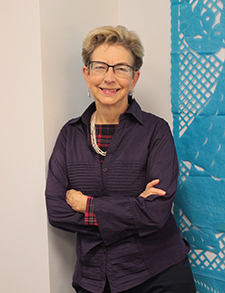
This year Mary Miller, a scholar of art of the ancient New World, Sterling Professor of History of Art, and senior director of the Institute for the Preservation of Cultural Heritage at Yale University, will deliver the keynote address during Convocation.
This special event, to be held on the first evening of the Annual Conference, includes a welcome from Suzanne Preston Blier, CAA president, and Hunter O’Hanian, CAA executive director, as well as the presentation of annual Awards for Distinction.
Convocation is free and open to the public.
Distinguished Artist Interviews
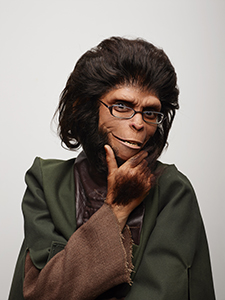
Organized by CAA’s Services to Artists Committee, the Distinguished Artist Interviews feature esteemed artists who discuss their work with a respected colleague. The interviews are held as part of ARTspace, a program partially funded by a generous grant from the National Endowment for the Arts.
First, the artist and activist Coco Fusco will be in conversation with the art historian Steven Nelson of the University of California, Los Angeles. Next, the painter Katherine Bradford will speak with a fellow artist, Judith Bernstein.
The Distinguished Artist Interviews are free and open to the public.
 Distinguished Scholar
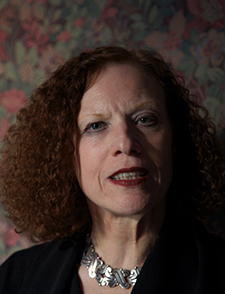
Kaja Silverman, a historian of art and film, critical theorist, and Katherine and Keith L. Sachs Professor of Art History at the University of Pennsylvania, will be recognized as CAA’s Distinguished Scholar for 2017 in this special session.
In addition to remarks from Silverman, the panel will feature talks from Richard Meyer, Robert and Ruth Halperin Professor in Art History at Stanford University, and Homay King, Professor of History of Art at Bryn Mawr College.
Please join the speakers for a reception immediately following the session in the Third Floor East Promenade. A cash bar will be available.
Conference registration is required to attend the Distinguished Scholar Session.
Film Screening: Eva Hesse
posted Nov 28, 2016
Zeitgeist Films offers a free screening of the acclaimed documentary Eva Hesse (2016) to attendees of CAA’s 2017 Annual Conference. Directed by Marcie Begleiter and produced by Karen Shapiro, the film is the first feature-length appreciation of this important artist’s life and work.
Eva Hesse makes superb use of the artist’s voluminous journals, her correspondence with her close friend and mentor Sol LeWitt, and archival and contemporary interviews with fellow artists—among them Richard Serra, Robert Mangold, and Dan Graham—who recall her passionate, ambitious, and tenacious personality.
The screening will talk place on Wednesday, February 15, from 7:00 to 9:00 PM in the Time Warner Screening Room, Lewis B. and Dorothy Cullman Education and Research Center, Museum of Modern Art, 4 West 54th Street, New York, NY 10019. The museum is half a block from the New York Hilton Midtown, the headquarters hotel.
The audience is limited to fifty people. Please send your RSVP (required) to emily@zeitgeistfilms.com.
News from the Art and Academic Worlds
posted Nov 23, 2016
Each week CAA News summarizes eight articles, published around the web, that CAA members may find interesting and useful in their professional and creative lives.
Trump and the Arts: Evita, Huge Towers, and a Snub for Warhol
For the arts world, the question is essentially the same as the one being asked everywhere right now, across the political spectrum: “What will a President Donald J. Trump mean for me?” The answer from artists, museums, theaters, actors, writers, musicians, and the movie and television industry is: “Your guess is as good as mine.” (Read more from the New York Times.)
How to Fix the Art World, Part 1
Last August ARTnews embarked on an epic project: finding out what inhabitants of the art world think is wrong with their world and how they would fix it. In the ensuing months ARTnews spoke with more than fifty individuals—artists and curators, critics and historians, art dealers and an art-fair director—to gather a range of perspectives. (Read more from ARTnews.)
An Era for Women Artists?
Nearly half a century has passed since Linda Nochlin posed her question “Why Have There Been No Great Women Artists?” Now we face it again, as a new wave of all-women exhibitions revives the question and suggests a new answer. (Read more from the Atlantic.)
The Ballet of White Victimhood: On Jordan Wolfson, Petroushka, and Donald Trump
The white body, through its repetition in a history of art that is largely painted white itself, has become an easy and lazy signifier for a universal body, for a metaphorical body, one that becomes symbolic and slippery, that can always be more than its mere representation. The nonwhite body has greater difficulty in attaining this metaphorical bounty. (Read more from Artspace Magazine.)
“Decolonization Is Not a Metaphor”: Artists Space Steps out of Analysis and into Action
Amid all the election paraphernalia of the past few months, some bold stickers have been appearing across New York City. With white text on a red background, they demand: “Decolonize This Place.” At Artists Space Books and Talks, the home base of Decolonize This Place through December 17, the “source” is more complicated than any one person, location, or idea. (Read more from ARTnews.)
Thinking outside the Pipeline
Many faculty diversity initiatives are predicated on the pipeline theory: that getting more minority students to enroll in PhD programs eventually will lead to gains in numbers of professors from underrepresented backgrounds. The pipeline theory has long had its critics, who point to other problems within the academic recruitment, hiring, and retention system. A new study seeks to back up such criticisms with hard data. (Read more from Inside Higher Ed.)
Impostor Syndrome Is Definitely a Thing
Impostor syndrome is the feeling that you don’t belong—in graduate school or in your first academic or alt-ac job—and it’s more common that you might think. It makes people believe that they aren’t good enough, smart enough, or deserving enough. (Read more from the Chronicle of Higher Education.)
Ugly Consequences of Complaining about “Students These Days”
Sometimes we do need to vent. It isn’t easy teaching students who don’t come to class prepared, seem to always want the easiest way, are prepared to cheat if necessary, don’t have good study skills, and aren’t interested in learning what we love to teach. At some point, though, venting morphs into complaining, and what we say about students becomes what we think about them. (Read more from Faculty Focus.)
Member Partner Designers and Books’ Kickstarter Campaign
posted Nov 22, 2016
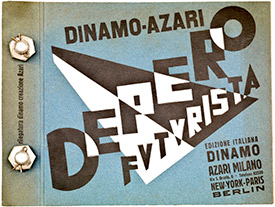 Depero Futurista, Dinamo-Azari, Milan, Italy, 1927, artist’s book bound with bolts, 32 x 24.2 cm. © 2016 Artists Rights Society (ARS), New York / SIAE Rome. Photo by Adam Reich
One of our Member Partners, Designers and Books, recently launched a Kickstarter campaign to raise funds to bring a classic design book back to life.
In 1927 Italian futurist artist Fortunato Depero developed what is still considered the first avant-garde artist book: Depero Futurista, commonly known as the Bolted Book. In an edition of fewer than 1,000 copies, this book is celebrated for its daring experiments in typography, innovative ideas about graphic design, and reinvention of the concept of the printed book (and yes– its binding is two steel bolts!).
You can explore this wonderful book, page by page, on the Bolted Book website.
Designers and Books is partnering with the Center for Italian Modern Art in New York and the MART Museum of modern and contemporary art of Trento and Rovereto to produce the first exact facsimile of Depero Futurista. The facsimile will include an accompanying readers’ guide, featuring essays from a variety of experts, original unpublished materials from the Depero archives at MART, and translations of selected pages of the book.
Your Kickstarter pledge toward this important piece of art and design history will be rewarded with an exact copy of The Bolted Book, the readers’ guide, and full acknowledgement of your support.
The least expensive Kickstarter reward tier currently available for a copy of the book is $141 (including US shipping). Acknowledging the special relationship of this book to the CAA community Designers and Books is making it available for a special price: $109 (plus shipping of $14 for a total of $123)——for a savings of $18.
Since this price is not available to the general public, here is how CAA members can secure a copy of the book for this special price:
1) Go to bit.ly/BoltedBook-Kick
2) Next to the video, click “Back This Project”
3) Click “Make a pledge without a reward”
4) Enter $123 and click “continue”
5) Log in or sign up, then complete the pledge as directed
6) Please email info@designersandbooks.com indicating your name, shipping destination, and the code “CAA.”
You will then receive a confirmation that you are registered for this special offer.
CAA Restatement of Values, November 2016
posted Nov 22, 2016
For more than one hundred years, the College Art Association (CAA) has been dedicated to the creative process through making and thinking about art and how it affects our past, present, and future. We do this through scholarship, publications, convenings, research, and professional development for artists, designers, and art historians. As a member-driven association, we are committed to intellectual rigor, peer review, inclusion, and diversity. We uphold these values by engaging everyone, nationally and internationally; all races, ages, abilities, religions, citizenships, ethnicities, gender expressions, and sexual orientations. We defend academic freedom as forcefully as we reject discrimination, bigotry, sexual assault, and violence against the vulnerable.
As scholars, artists, and educators, we expect the same exactitude from leaders in education, cultural institutions, and, in particular, government. We will continue to advocate in no uncertain terms for an inclusive climate that fosters intellectual honesty, transparency, and human engagement.
Suzanne Preston Blier
Executive Director
Hunter O’Hanian
Finalists for the 2017 Morey and Barr Awards
posted Nov 22, 2016
CAA is pleased to announce the 2017 finalists for the Charles Rufus Morey Book Award and two Alfred H. Barr Jr. Awards. The winners of the three prizes, along with the recipients of nine other Awards for Distinction, will be announced in late January and presented during Convocation in conjunction with CAA’s 105th Annual Conference in New York, taking place February 15–18, 2017.
 Charles Rufus Morey Book Award
The Charles Rufus Morey Book Award honors an especially distinguished book in the history of art, published in any language between September 1, 2015, and August 31, 2016. The three finalists for 2017 are:
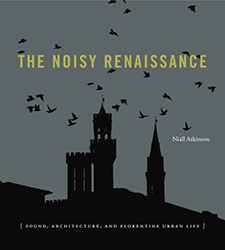
- Niall Atkinson, The Noisy Renaissance: Sound, Architecture, and Florentine Urban Life (University Park: Pennsylvania State University Press, 2016)
- Elizabeth Kindall, Geo-Narratives of a Filial Son: The Paintings and Travel Diaries of Huang Xiangjian (1609–1673) (Cambridge, MA: Harvard University Asia Center, 2016)
- Kishwar Rizvi, The Transnational Mosque: Architecture and Historical Memory in the Contemporary Middle East (Chapel Hill: University of North Carolina Press, 2015)
 Alfred H. Barr Jr. Award
The Alfred H. Barr Jr. Award for museum scholarship is presented to the author(s) of an especially distinguished catalogue in the history of art, published between September 1, 2015, and August 31, 2016, under the auspices of a museum, library, or collection. The five finalists for 2017 are:
- Ruth Fine, ed., Procession: The Art of Norman Lewis (Philadelphia: Pennsylvania Academy of the Fine Arts, in association with the University of California Press, 2015)
- Barbara Haskell and Harry Cooper, Stuart Davis: In Full Swing (Washington, DC: National Gallery of Art; New York: Whitney Museum of American Art; New York: DelMonico Books, 2016)
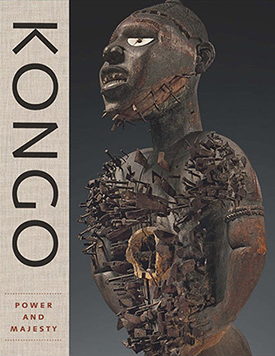
- Alisa LaGamma, Kongo: Power and Majesty (New York: Metropolitan Museum of Art, 2015)
- Helen Molesworth, ed., Kerry James Marshall: Mastry (Chicago: Museum of Contemporary Art, Chicago; New York: Skira Rizzoli, 2016)
- Adrian Sudhalter, Dadaglobe Reconstructed (Zürich: Kunsthaus Zürich/Scheidegger & Spiess, 2016)
 Alfred H. Barr Jr. Award for Smaller Museums, Libraries, Collections, and Exhibitions
In 2009, CAA established a second Barr award for the author(s) of catalogues produced by smaller museums, libraries, and collections with an annual operating budget of less than $10 million. The five finalists for the second Barr award for 2017 are:
- Zdenka Badovinac, Eda Čufer, and Anthony Gardner, eds., NSK from “Kapital” to Capital: Neue Slowenische Kunst—An Event of the Final Decade of Yugoslavia (Ljubljana, Slovenia: Moderna galerija; Cambridge, MA: MIT Press, 2015)
- Geoffrey Batchen, Emanations: The Art of the Cameraless Photograph (New Plymouth, New Zealand: Govett-Brewster Art Gallery; New York: DelMonico Books, 2016)
- Andreas Marks, ed., Tōkaidō Texts and Tales: Tōkaidō “gojūsan tsui” by Kuniyoshi, Hiroshige, and Kunisada (Gainesville: University Press of Florida, 2015)
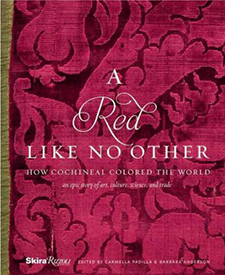
- Carmella Padilla and Barbara Anderson, eds., A Red Like No Other: How Cochineal Colored the World (New York: Skira Rizzoli, in association with the Museum of International Folk Art, 2015)
- Valérie Rousseau, Art Brut in America: The Incursion of Jean Dubuffet (New York: American Folk Art Museum, 2015)
The presentation of the 2017 Awards for Distinction will take place on Wednesday evening, February 15, 5:30–7:00 PM, at the New York Hilton Midtown in Manhattan. The event is free and open to the public. For more information about CAA’s Awards for Distinction, please contact Katie Apsey, CAA manager of programs.
Complimentary Conference Registration + $250 Scholarship
posted Nov 21, 2016
with support from
Registration is in full swing for the 2017 Annual Conference in New York, February 15-18.
We are always listening to what our members want and seeking out the benefits to fit your needs. That is why we have partnered up our sponsors, multinational publisher, Routledge, Taylor & Francis, and art materials specialist, Blick Art Materials, to create a student scholarship fund to assist CAA Student Members with conference costs.
Routledge, Taylor & Francis Student Scholarship
CAA’s Annual Conference Partner Sponsor, Routledge, Taylor & Francis will award four (4) CAA Student Members with complimentary registration and an additional $250 in scholarship money to help with conference expenses such as travel, housing, or meals. Receipts will be required for reimbursement.
Blick Art Materials Student Scholarship
CAA’s Annual Conference Presenter Sponsor, Blick Art Materials will also fund conference registration fees for four (4) CAA Student Members. No travel expenses are available.
Criteria for the Scholarship
Awardee will be chosen by lottery on the following criteria:
- Individuals must be registered for the Annual Conference by the Early Registration deadline
- Individuals must be current CAA student members (proof of student status will be required by the 8 winners chosen)
- Individuals cannot receive conference registration or travel reimbursement from their institution or employer
What does this mean for you? It means register today for the 2017 Annual Conference before the Early Registration deadline for a chance to be one of the lucky 8 CAA Student Members to receive one of these scholarships. Recipients will be randomly selected by CAA and announced in mid January.
We look forward to seeing you in New York!