
CAA News Today
Wanda Ewing: In Memoriam
posted Dec 20, 2013
Maria Elena Buszek is associate professor of art history in the College of Arts and Media at the University of Colorado Denver.

Wanda Ewing (photograph by Dana Damewood)
The artist and educator Wanda Ewing died in Omaha, Nebraska, on December 8, 2013, of complications from chemotherapy. She was 43 years old.
Born on January 4, 1970, Ewing received her BFA in printmaking from the San Francisco Art Institute, and later both an MA and MFA in printmaking from the University of Iowa. She was an associate professor of art at the University of Nebraska in Omaha, where she began teaching in 2005, leading courses in foundations and senior capstones for studio majors. She was a longtime member of the College Art Association, on whose Committee on Women in the Arts she served at the time of her death, as well as the Southern Graphics Council, where she was the International Board of Directors’ secretary.
Ewing’s work ranged from traditional print media to sculpture and, most recently, fiber arts. She was influenced by folk-art aesthetics and the depiction—and lack thereof—of African American women in popular culture, often with a biting, comical edge. Ewing’s best-known series included her pin-ups Black as Pitch, Hot as Hell, voluptuous clothing from The Summer I Wore Dresses,and faux magazine covers entitled Bougie. Her work has been included in exhibitions and purchased for collections throughout the world, and was reproduced in such publications as the Paris Review.
At the time of her passing, her series of brand-new, latch-hook works, Little Deaths, was on display at the RNG Gallery in Council Bluffs, Iowa—which will remain on exhibit, with additional works, through January 2014 as a memorial. She was, perhaps, proudest of her inclusion in the 2010 exhibition A Greater Spectrum: One Hundred Years of African American Artists in Nebraska at the Museum of Nebraska Arts, where her work was included alongside that of luminaries such as Aaron Douglas. Ewing was the recipient of grants and honors from the Women’s Caucus for Art, the Pollock-Krasner Foundation, and the Nebraska Arts Council, among other accolades.

Wanda Ewing, Girl #9, from the series Black as Pitch, Hot As Hell, 2006, acrylic and latex paint on carved plywood, 48 x 48 in. (artwork © Wanda Ewing)
Ewing was also an excellent educator, beloved and respected by both colleagues and students at the University of Nebraska for her rigorous curricula, her no-nonsense critiques, and her outreach to the regional arts community. Her legacy at the school will live on in the form of the Wanda Ewing Scholarship Fund.
Wanda Ewing will be remembered by all who knew her for her larger-than-life personality, tremendous warmth, and indomitable spirit. She is survived by her mother Elouise Ewing; her siblings Mona Yaeger, Clarence Ewing III, and Annette Ewing McCann; and her nephew and niece Devlin and Kayleigh McCann.
Art Journal Seeks Web Editor
posted Dec 20, 2013
 The Art Journal Editorial Board invites nominations and self-nominations for the new position of web editor for a three-year term, July 1, 2014–June 30, 2017. A candidate may be an artist, art historian, art critic, art educator, curator, or other art professional with stature in the field; institutional affiliation is not required. Art Journal, published quarterly by CAA, is devoted to twentieth- and twenty-first-century art and visual culture.
Working with the editorial board, the web editor is responsible for commissioning and acquiring all content for the website of the journal. He or she will determine the number, format, and type of artists’ projects, news items, commentary, or other content that will be published on the website. The web editor also works with authors, artists, and CAA staff in the development and preparation of content as necessary, and assists authors in revising their work. The web editor must have a strong grasp of twentieth-century and contemporary art, criticism, theory, and visual culture; it is crucial that the he or she keeps abreast of digital innovations in the arts and websites that publish content, archives, or other projects on contemporary art. The three-year term includes membership on the Art Journal Editorial Board and a small annual honorarium, paid quarterly.
The web editor attends the Art Journal Editorial Board’s three meetings each year—held twice in New York in the spring and fall and once at the CAA Annual Conference in February—and submits an annual report to CAA’s Board of Directors. CAA reimburses the web editor for travel and lodging expenses for the two New York meetings in accordance with its travel policy, but he or she pays these expenses to attend the conference.
Candidates must be current CAA members and should not be serving on the editorial board of a competitive journal or on another CAA editorial board or committee. Members may not publish their own work in the journal during the term of service. Nominators should ascertain their nominee’s willingness to serve before submitting a name; self-nominations are also welcome. Please send a letter describing your interest in and qualifications for appointment, a CV, at least one letter of recommendation, and your contact information to: Art Journal Web Editor Search, College Art Association, 50 Broadway, 21st Floor, New York, NY 10004; or email the documents to Joe Hannan, CAA editorial director. Deadline: January 20, 2014; finalists will be interviewed in February at CAA’s Annual Conference in Chicago.
December 2013 Issue of The Art Bulletin
posted Dec 19, 2013
 The December 2013 issue of The Art Bulletin, the leading publication of international art-historical scholarship, leads off with “Regarding Art and Art History,” in which Zainab Bahrani highlights the indispensable role of ancient Near Eastern art in Western art history. For “Notes from the Field,” twelve artists, scholars, curators, anthropologists, and thinkers—Obiora Udechukwu, John Brewer, Jay Clarke, Tapati Guha-Thakurta, Hans Hayden, Gregg Horowitz, Thomas DaCosta Kaufmann, Susanne Küchler, Maria Loh, Ruth Phillips, Regine Prange, and Alessandra Russo—ruminate on tradition in art. Next, Stephen Bann and Karen Lang consider the sense of the past and the writing of art history in the December “Interview.”
The first essay, by Gerd Blum, closely examines Vasari’s alleged account of Roman Jews pilgrimaging every Sabbath to venerate Michelangelo’s Moses, revealing that Vasari’s Lives is underpinned by a Christian theology of history and the theological topos of the “eschatological Jew.” In an article titled “‘Precisely These Objects,’” Jennifer Raab explores Frederic Edwin Church’s use of detail in relation to nineteenth-century American debates concerning the aims of landscape painting, scientific and artistic representation, and the detail as a cultural object.
In “Awa Tsireh and the Art of Subtle Resistance,” Sascha Scott studies silence, misdirection, coding, and masking in Tsireh’s paintings of the 1920s to show how these visual strategies controlled the flow of information about Pueblo Indian culture at a time when the Pueblos were being besieged by anthropologists and persecuted by the Office of Indian Affairs. Finally, Natasha Eaton’s essay analyzes the contested status of color in the art of Indian nationalism—with particular attention to the speeches, manifestoes, and works of art by M. K. Gandhi, Abanindranath and Rabindranath Tagore, Nandalal Bose, and Jamini Roy—to demonstrate the role of color in establishing a new Bengali aesthetic.
The Reviews section features scholarly assessments written by former Art Bulletin editors: Marc Gotlieb considers Edward Snow’s monograph A Study of Vermeer, and David Roxburgh analyzes Laurence Binyon, J. V. S. Wilkinson, and Basil Gray’s book Persian Miniature Painting. Richard J. Powell takes on Freeman Henry Morris Murray’s Emancipation and the Freed in American Sculpture, and Nina Athanassoglou-Kallmyer reviews Daniel Arasse’s Le détail: Pour une histoire rapprochée de la peinture. In a jointly authored review, Michael W. Cole and Christopher S. Wood assess L’antirinascimento by Eugenio Battisti.
CAA sends The Art Bulletin to all institutional members and to those individuals who choose to receive the journal as a benefit of their membership. The next issue of the quarterly publication, to appear in March 2014, will feature Griselda Pollock’s critical engagement with interpretative and institutional trends in an essay titled “Whither Art History?” The March issue will also publish essays on Michelangelo’s drawing Children’s Bacchanal, Pedro Teixeira’s monumental 1656 map of Madrid, olfactory traditions in Ottoman incense burners, and the twentieth-century Brazilian artist Vicente do Rego Monteiro, as well as reviews of books on art and science in the United States and Japan, Mexican modernism, the genealogy of new-media art, and the golden age of Dutch art.
News from the Art and Academic Worlds
posted Dec 18, 2013
Each week CAA News publishes summaries of eight articles, published around the web, that CAA members may find interesting and useful in their professional and creative lives.
Delusions in Detroit
Since last spring, when Detroit’s emergency manager, Kevyn Orr, said that he might have to sell art from the city-owned collection of the Detroit Institute of Arts to help pay off the city’s $18 billion in debt, the museum has been operating in a state of unreality. Less than a year after voters in three nearby counties approved a property tax to fund the DIA for ten years, the museum’s survival was again endangered. (Read more from the Wall Street Journal.)
DIA Joins Deal in Works with Mediators That Would Protect Art and Pensions
A potential grand bargain that could shield the Detroit Institute of Arts from the reach of creditors in the city’s bankruptcy while bolstering at-risk city pensions took a key step forward. The museum embraced publicly, for the first time, the broad outline of a federally mediated deal that would protect its art from sale and spin off the museum from city ownership into an independent nonprofit. The deal would raise roughly $500 million from a consortium of national and local charitable foundations and funnel the money into retiree pensions on behalf of the value of DIA’s art. (Read more from the Detroit Free Press.)
JSTOR’s Hidden Power
Training students to be attentive and discriminating in their use of sources is difficult and time consuming. It is enormously tempting to say “just use Project Muse and JSTOR articles” and be done with it. (Read more from the Atlantic.)
Rays of Light and Menacing Shadows
It’s hard to say whether 2013 was a lucky or unlucky year for the art world, but it was definitely packed with exhibitions and events that inspired or dismayed, sometimes in related clusters. The Metropolitan Museum of Art mostly shone this year, especially with the unveiling of its enlarged and rearranged European Painting Galleries, which start to give this splendid collection the space it deserves. (Read more from the New York Times.)
Michelangelo Was in a Class of His Own
Lorenzo de’ Medici, ruler of the Florentine Republic, was so taken by a statue carved by an adolescent that he proposed to make the sculptor a member of his household. The boy’s father was not impressed. He told Lorenzo that his family would be demeaned if his son were to become a stonemason. But the youth believed that he had been born to carve stone, and so the father relented. (Read more from the Economist.)
Taking a Magnifying Glass to the Brown Faces in Medieval Art
This Tumblr sounds a bit like a college course: People of Color in European Art History. And its goal is pretty ambitious. The blog’s author, Malisha Dewalt, says that she wants to challenge the common perception that pre-Enlightenment Europe was all white, which she argues is a much more recent and deliberate invention. Her blog, she writes, “is here to emphasize the modern racism that retroactively erases gigantic swaths of truth and beauty.” (Read more from National Public Radio.)
Artist-Run Art Schools
Artists may be among the greatest individualists in any society, but some contemporary practitioners, anxious about the future of the culture, are piloting projects that aim to educate and sustain their younger peers. Chris Ofili, one of Britain’s top contemporary painters, puts the problem succinctly: if he had been born twenty years later, he says he might never have become an artist. (Read more from the Financial Times.)
How Museums Name Their Shows
Got a show to curate? Need a title for your exhibition? You might use Rebecca Uchill’s Random Exhibition Title Generator, which will give you such plausible-sounding banners as Breaking Dissent: A Remix of the Local and After Illusion: The Video Art of Urban Experience. Uchill, a former independent curator who is now a PhD candidate in architecture at MIT, cooked up the idea and worked with a programmer friend to launch the site in 2010, plugging in words and syntax that seemed to recur in her experiences with museum and gallery titles. (Read more from ARTnews.)
Jessica Stockholder Is CAA’s Convocation Speaker
posted Dec 17, 2013
 The artist Jessica Stockholder will deliver the keynote address during Convocation at the 2014 Annual Conference in Chicago. The event will take place on Wednesday evening, February 12 from 5:30 to 7:00 PM in Hilton Chicago’s Grand Ballroom.
Free and open to the public, Convocation will also include the presentation of CAA’s 2014 Awards for Distinction, overseen by Anne Collins Goodyear, codirector of the Bowdoin College Museum of Art and president of the CAA Board of Directors.
An internationally exhibiting artist whose work has transformed the traditional conception of sculpture, Stockholder creates genre-defying multimedia installation pieces composed of commercially produced objects and referencing the bold, vibrant colors of painting. She is also an educator who spent twelve years at Yale University’s School of Art in New Haven, Connecticut, most recently as director of graduate studies in sculpture. Stockholder joined the University of Chicago in 2011 as professor in the Department of Visual Arts, which she also leads as chair. Stockholder said the university’s lively intellectual atmosphere, as well as the building of the Reva and David Logan Center for the Arts, were key factors in her decision to join the faculty.
Stockholder works at the intersection of painting and sculpture, often incorporating the architecture in which her work has been conceived, blanketing the floor, scaling walls and ceiling, and spilling out of windows, through doors, and into the surrounding landscape. Her work is energetic, cacophonous, idiosyncratic, and formal—tempering chaos with control. She orchestrates an intersection of pictorial and physical experience, probing how meaning derives from physicality. Best known for her temporary site-specific installations, Stockholder has created work that has been discussed in relationship to the works of Robert Rauschenberg, Kurt Schwitters, Henri Matisse, and Paul Cézanne, as well as artists of the Cubist and Minimalist traditions.
Stockholder’s work has been shown in top museums, including the Dia Art Foundation, the Whitney Museum of American Art, the Aldrich Contemporary Art Museum, and the Weatherspoon Art Museum in the United States, and the Centre Georges Pompidou and the Museo Nacional Centro de Arte Reina Sofía in Europe. She has also participated in numerous important group exhibitions, such as SITE Santa Fe, the Whitney Biennial, and the Venice Biennale. The Renaissance Society at the University of Chicago exhibited her installation Skin Toned Garden Mapping in 1991. In North America, Stockholder is represented by Mitchell-Innes & Nash in New York, 1301PE Gallery in Los Angeles, California, and Barbara Edwards Contemporary in Toronto, Ontario, and Calgary, Alberta. Barbara Edwards is currently showing new sculpture and work on paper in the Calgary gallery, on view through February 1, 2014.
Stockholder studied art at the University of Victoria in British Columbia in 1982 and earned an MFA from Yale University in 1985. Both Emily Carr College of Art and Columbia College Chicago have awarded her honorary doctorate degrees, in 2010 and 2013 respectively. In 2007, she received the Lucelia Artist Award from the Smithsonian American Art Museum. Before that Stockholder won a National Endowment for the Arts grant for sculpture in 1988 and a John Simon Guggenheim Fellowship in 1996.
Watch
People in the News
posted Dec 17, 2013
People in the News lists new hires, positions, and promotions in three sections: Academe, Museums and Galleries, and Organizations and Publications.
The section is published every two months: in February, April, June, August, October, and December. To learn more about submitting a listing, please follow the instructions on the main Member News page.
December 2013
Academe

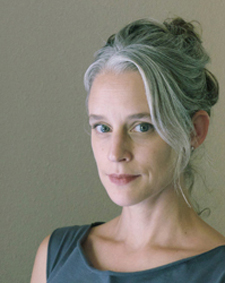 Anna Collette
Anna Collette has been appointed assistant professor in photography by the Department of Art and Art History in the College of Fine Arts at the University of Texas at Austin.

Luba Freedman, a specialist of Italian Renaissance art and professor in history of art at the Hebrew University of Jerusalem in Israel, has been named Jack Cotton Professor in Architecture and Fine Arts at her school.

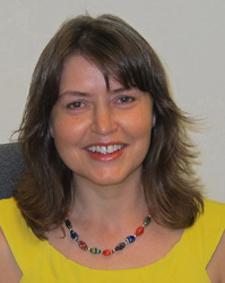 Carma Gorman
Carma Gorman has joined the Department of Art and Art History in the College of Fine Arts at the University of Texas at Austin as associate professor in design.
LaToya M. Hobbs has been appointed to teach foundations at Maryland Institute College of Art in Baltimore.
Museums and Galleries

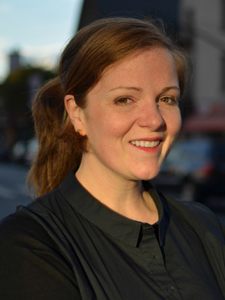 Cathleen Chaffee (photograph by James Sevigny)
Cathleen Chaffee, assistant curator of modern and contemporary art at the Yale University Art Gallery in New Haven, Connecticut, has joined the Albright-Knox Art Gallery in Buffalo, New York, as curator.
Amy Galpin, an associate curator for the San Diego Museum of Art in California, has become the new curator for the Cornell Fine Arts Museum at Rollins College in Winter Park, Florida.
Mazie McKenna Harris, a doctoral candidate in the history of photography at Brown University in Providence, Rhode Island, has been named Linda Wyatt Gruber ’66 Curatorial Fellow in Photography by the Davis Museum at Wellesley College in Wellesley, Massachusetts.
Ronda Kasl, formerly senior curator of painting and sculpture before 1800 at the Indianapolis Museum of Art in Indiana, has become a curator of colonial Latin American art at the Metropolitan Museum of Art in New York.

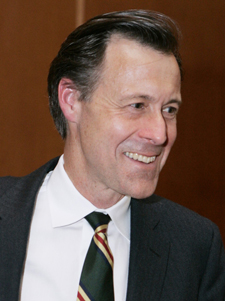 Karl Kusserow
Karl Kusserow, curator of American art at the Princeton University Art Museum in Princeton, New Jersey, has been named the inaugural John Wilmerding Curator of American Art at his institution.
Michael W. Maizels, most recently a research assistant and predoctoral fellow at the Smithsonian Institution’s National Portrait Gallery in Washington, DC, has been appointed Mellon New Media Curator and Lecturer by the Davis Museum at Wellesley College in Wellesley, Massachusetts.
Joanne Pillsbury, an associate director of the Getty Research Institute, has been named Andrall E. Pearson Curator in the Department of the Arts of Africa, Oceania, and the Americas at the Metropolitan Museum of Art in New York.

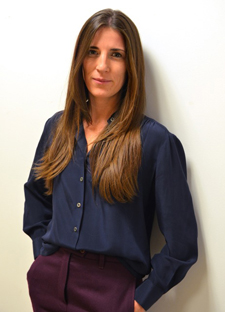 Kelly Taxter
Kelly Taxter, a cofounder of Taxter and Spengeman Gallery in New York and a curatorial consultant for the Aldrich Contemporary Art Museum in Ridgefield, Connecticut, has joined the Jewish Museum in New York as assistant curator.

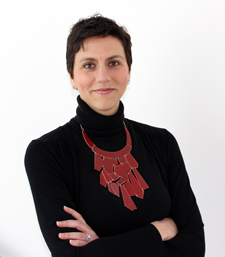 Mary M. Tinti
Mary M. Tinti, formerly a curatorial fellow for the deCordova Sculpture Park and Museum in Lincoln, Massachusetts, has been appointed associate curator of the Fitchburg Art Museum in Fitchburg, Massachusetts.
Institutional News
posted Dec 17, 2013
Read about the latest news from institutional members.
Institutional News is published every two months: in February, April, June, August, October, and December. To learn more about submitting a listing, please follow the instructions on the main Member News page.
December 2013
The December 2013 listing of Institutional News will be published in spring 2014.
102nd Annual Members’ Business Meeting
posted Dec 16, 2013
102nd Annual Members’ Business Meeting
College Art Association, February 14, 2014
AGENDA
The 102nd Annual Meeting of the members of the College Art Association will be held on Friday, February 14, 2014 from 5:30 to 7:00 p.m. (CST) in the International South Ballroom, 2nd Floor of the Hilton Chicago, 720 South Michigan Avenue, Chicago, Illinois 60605. CAA’s President, Anne Collins Goodyear, will preside.
- Call to Order: Anne Collins Goodyear, CAA President
- Approval of Minutes of Annual Members’ Business Meeting, February 15, 2013 [ACTION ITEM] – See Minutes at http://www.collegeart.org/pdf/2013AnnBusMin.pdf
- President’s Report: Anne Collins Goodyear
- Financial Report: Teresa Lopez, Chief Financial Officer
- caa.reviews 15th Anniversary Project, Bernini: Sculpting in Clay: Sheryl Reiss, caa.reviews Editor in Chief
- The Future of CAA: An Open Discussion of CAA’s 2015-2020 Strategic Plan
- Old Business
- New Business
- Election of New Directors: Anne Collins Goodyear
- Membership Vote on Amendment to the By-laws: Anne Collins Goodyear
Amendment to Article III: Membership and Affiliation of the Association’s By-laws. To review the amendment proposed by the Board to the membership, visit http://www.collegeart.org/pdf/caa_by-laws_amendment_2-2014.pdf
Please join us for a champagne reception immediately following the Annual Meeting
Proxies
If you are unable to attend the Annual Meeting, please complete a proxy online to appoint the individuals named thereon to (i) vote, in their discretion, on such matters as may properly come before the Annual Meeting; and (ii) to vote in any and all adjournments thereof. CAA Members will be notified by email when the online proxy, and the ability to cast votes for directors, will be available, which will be in early January 2014. A proxy and vote must be received no later than 5:00 p.m.(CST) on Friday, February 14, 2014.
Next Meeting
The 103rd Annual Meeting of the College Art Association will take place on Friday, February 13, 2015 in New York, New York.
December 2, 2013
2013 Wyeth Grant Recipients
posted Dec 16, 2013
CAA is pleased to announce the five recipients of the annual Wyeth Foundation for American Art Publication Grant, established in 2005. Thanks to a generous grant from the Wyeth Foundation, these awards are given annually to publishers to support the publication of one or more book-length scholarly manuscripts in the history of American art, visual studies, and related subjects. For this grant program, “American art” is defined as art created in the United States, Canada, and Mexico through 1970.
Receiving 2013 grants are:
- Ross Barrett, Rendering Violence: Riots, Strikes, and Upheavals in Nineteenth-Century American Art, University of California Press
- Craig Burnett, Philip Guston: The Studio, Afterall Books
- Sarah Hamill, David Smith in Two Dimensions: Photography and the Matter of Sculpture, University of California Press
- Sascha T. Scott, A Strange Mixture: The Art and Politics of Painting Pueblo Indians, University of Oklahoma Press
- Karen Stanworth, Visibly Canadian: Imaging Collective Identity in the Canadas, 1820–1910, McGill-Queens University Press
Eligible for the grant are book-length scholarly manuscripts in the history of American art, visual studies, and related subjects that have been accepted by a publisher on their merits but cannot be published in the most desirable form without a subsidy. Authors must be current CAA members. Please review the application guidelines for more information.
Fall Winners of the Meiss/Mellon Author’s Book Award
posted Dec 16, 2013
CAA is pleased to announce the two recipients of the Meiss/Mellon Author’s Book Award for fall 2013. Thanks to a grant of $60,000 from the Andrew W. Mellon Foundation, CAA is supporting the work of emerging authors who are publishing monographs on the history of art and related subjects.
The fall 2013 grant recipients are:
- Sarah Hamill, David Smith in Two Dimensions: Photography and the Matter of Sculpture, University of California Press
- Ara H. Merjian, Giorgio de Chirico and the Metaphysical City, Yale University Press
The purpose of the Meiss/Mellon subventions is to reduce the financial burden that authors carry when acquiring images for publication, including licensing and reproduction fees for both print and online publications.