CAA News Today
Institutional News
posted Oct 17, 2013
Read about the latest news from institutional members.
Institutional News is published every two months: in February, April, June, August, October, and December. To learn more about submitting a listing, please follow the instructions on the main Member News page.
October 2013

The Archives of American Art, a branch of the Smithsonian Institution based in New York and Washington, DC, has received a $37,500 grant from the Terra Foundation for American Art to support its first symposium on digital humanities and American art, scheduled for November 2013.
The Art Institute of Chicago in Illinois has received a $125,000 grant from the Terra Foundation for American Art to support an exhibition called Art and Appetite: American Painting, Culture, and Cuisine, which will open in November 2013.
The Art Institute of Chicago in Illinois has received a $100,000 grant from the Terra Foundation for American Art to support the development and implementation of “American Sources: Using Visual Art in the Humanities Curriculum,” a yearlong professional-development program that will explore the use of American artworks as primary documents and guide participants in the development of related curriculum for middle and high school students in the region.
Artspace, a nonprofit art organization in New Haven, Connecticut, has received a 2013 grant from the Foundation for Contemporary Arts.
The Association of Research Institutes in Art History, an organization based in Miami Beach, Florida, has accepted a $75,000 grant from the Terra Foundation for American Art to support three research fellowships in American art.
The Bard Graduate Center in New York has recieved a 2013 grant from the Graham Foundation for Advanced Studies in the Fine Arts. The school will use the funds for the exhibition Artek: Design, Domesticity, and the Public Sphere.
The Canadian Center for Architecture in Montreal, Quebec, has received a 2013 grant from the Graham Foundation for Advanced Studies in the Fine Arts. The institution will use the funds for a publication, Chandigarh and Casablanca: Modern Urbanism, New Geographies.
Columbia College Chicago in Illinois has applied a $40,000 grant from the Terra Foundation for American Art toward a professional-development program for teachers in twenty-five public schools in Chicago for the 2012–13 academic year.
DePaul University in Chicago, Illinois, has received a $12,560 grant from the Terra Foundation for American Art to support an exhibition called For and against Modernity: The Armory Show + 100, which took place at the DePaul Art Museum earlier this year.
Elmhurst College in Elmhurst, Illinois, has spent a $18,870 grant from the Terra Foundation for American Art on a public symposium that explored the role of humor in American art of the 1960s through the 1980s. The event took place on April 27, 2013, in partnership with the DePaul Art Museum.
The Getty Research Institute in Los Angeles, California, has acquired the archive of the photographer Lewis Baltz, which includes his negatives, prints and proofs, ephemera, photographs, and publications.
The Solomon R. Guggenheim Foundation in New York has accepted a $200,000 grant from the Terra Foundation for American Art to support its forthcoming exhibition, Robert Motherwell: The Early Collages.
The Herron Art Library at Indiana University–Purdue University Indianapolis has become the only American library housing a permanent art collection honoring the literary history of Iraq. The library signed an agreement with an international coalition of artists and writers to preserve and showcase a collection of more than three hundred printed materials remembering the destruction of al-Mutanabbi Street, the centuries-old literary center of Baghdad.
The Los Angeles County Museum of Art in California, the Art Gallery of New South Wales in Sydney, Australia, and the National Museum of Korea in Seoul have collaborated on an exhibition project called America: Painting a Nation, which received $849,968 in funds from the Terra Foundation of American Art.
The Metropolitan Museum of Art in New York has accepted a $300,000 grant from the Terra Foundation for American Art to support American West in Bronze, 1850–1925, an exhibition that will open in December 2013 and later travel to Denver, Colorado, and to China.
Montana State University in Bozeman has accepted a $30,140 grant from the Terra Foundation for American Art to support an international scholarly conference, “Dialect[ic]s of Diplomacy: American and French Political Portraits during the Revolutionary and Federal Areas, circa 1776–1815.” The event will take place at the Smithsonian Institution’s National Portrait Gallery in Washington, DC, in September 2014.
The Moore College of Art and Design in Philadelphia, Pennsylvania, has created a new website. The school invites students, faculty, alumni, and others to visit the site and return often for updates.
New York University has received a $20,000 grant from the Terra Foundation for American Art to support an international graduate-student symposium, “Mapping the Landscape: Geography, Power, and the Imagination in the Art of the Americas,” which was held March 7–8, 2013.
Northeastern Illinois University in Chicago has accepted a $40,000 grant from the Terra Foundation for American Art on behalf of the Chicago Teachers’ Center. The funds support the second year of a three-year initiative for public-school teachers called “Studio Thinking and American Art.”
The Pennsylvania Academy of the Fine Arts in Philadelphia has established a new endowment for the purchase of contemporary works of art. The school’s goal is to greatly increase an aspect of the acquisitions program that has long been critical to building the renowned collection of the academy’s museum.
San Francisco State University in California has received a $95,165 grant from the Terra Foundation for American Art to support an exhibition in its Fine Arts Gallery called The Moment for Ink, which took place earlier in 2013.
The School of the Art Institute of Chicago in Illinois has applied a 2013 grant from the Graham Foundation for Advanced Studies in the Fine Arts for a public lecture “Toyo Ito: Architecture after 3.11,” taking place on October 15, 2013.
The Smithsonian American Art Museum in Washington, DC, has acquired one hundred photographs from the Irving Penn Foundation. The gift includes rare street photographs from the late 1930s and 1940s, many of which are unpublished; images of postwar Europe; iconic portraits of figures such as Agnes de Mille, Langston Hughes, and Truman Capote; color photographs made for magazine editorials and commercial advertising; self-portraits; and some of Penn’s most recognizable fashion and still-life photographs. An exhibition is planned for 2015.
The Smithsonian American Art Museum and its Renwick Gallery, both in Washington, DC, have received a $25,000 grant from the Terra Foundation for American Art to support travel by a to-be-appointed international member of the American Art editorial board to strengthen the journal’s global ties and networks.
Tate, a family of four museums in England, has accepted a $435,546 grant from the Terra Foundation for American Art to support the appointment of a three-year Terra Research Fellow in American Art (2014–17) as part of the “American Art Initiative.”
The Terra Foundation for American Art in Chicago, Illinois, has awarded itself a $733,210 grant to support a three-year initiative, “American Art at the Core of Learning,” which helps cultural organizations in Chicago to address the new Common Core State Standards in English Language Arts.
The Terra Foundation for American Art in Chicago, Illinois, has applied a $117,000 grant toward supporting its international publication initiative, “Perspectives in American Art,” which explores fundamental ideas shaping American art and culture.
The Terra Foundation for American Art in Chicago, Illinois, has earmarked a $79,000 grant to support the 2014 Terra Research Travel Grants, which have been awarded annually since 2003.
The Terra Foundation for American Art in Chicago, Illinois, has awarded itself a $150,000 grant to support a scholarly peer-reviewed anthology to accompany the single-painting exhibition, Samuel F. B. Morse’s “Gallery of the Louvre” and the Art of Invention, during its upcoming tour of American museums.
The Terra Foundation for American Art in Chicago, Illinois, has used a $39,000 grant to support planning for programming focused on Chicago’s art and design legacy. The funds support an advisory committee to assess program and content ideas for the initiative and to develop an initiative plan, including various kinds of public and K–12 programs, archival projects, publications, and more.
The University of Glasgow in Scotland has won a $100,000 grant from the Terra Foundation for American Art to support an inventory of historical American art in public collections in the United Kingdom.
The University of Kentucky in Lexington has taken a $61,443 grant from the Terra Foundaiton for American Art to support an academic conference called “American Art in Exhibition: Presentations of American Art at Home and Abroad from the Nineteenth Century to the Present,” that will take place November 15–16, 2013, at Tsinghua University in China.
The University of Nottingham in Nottingham, England, has used a $17,450 grant from the Terra Foundation for American Art to support a two-day symposium, “Art across the Black Diaspora: Visualizing Slavery in America,” which took place in May 2013 at the Rothermere American Institute at the University of Oxford.
The University of Wisconsin, Milwaukee, has received a 2013 grant from the Graham Foundation for Advanced Studies in the Fine Arts to help produce an exhibition called The Uncertainty of Enclosure: Leo Saul Berk and Bruce Goff, to be held in summer 2014.
The Wolfsonian at Florida International University in Miami Beach, Florida, has received a 2013 grant from the Graham Foundation for Advanced Studies in the Fine Arts. The museum will use the funds to publish a special issue of the Journal of Decorative and Propaganda Arts on Turkey.
News from the Art and Academic Worlds
posted Oct 16, 2013
Each week CAA News publishes summaries of eight articles, published around the web, that CAA members may find interesting and useful in their professional and creative lives.
Were the First Artists Mostly Women?
Women made most of the oldest-known cave paintings, suggests a new analysis of ancient handprints. Most scholars had assumed these ancient artists were predominantly men, so the finding overturns decades of archaeological dogma. The archaeologist Dean Snow analyzed hand stencils found in eight cave sites in France and Spain. By comparing the relative lengths of certain fingers, he determined that three-quarters of the handprints were female. (Read more in National Geographic.)
How to Pronounce Artists’ Names, Vol. 1
The art world isn’t really as snobbish as depicted in movies and TV shows like Bravo’s Gallery Girls, and it’s apt to be liberally forgiving of most uncouth behavior … with one notable exception: you can’t get away with mispronouncing artists’ names. To ensure you avoid such embarrassments, consult this handy guide to pronouncing some of the thorniest artist names out there. (Read more from Artspace.)
Who Holds the Rights?
Faculty must defend their rights to their intellectual property, which are increasingly under threat, according to a draft report released by the American Association of University Professors. The report, called “Defending the Freedom to Innovate: Faculty Intellectual Property Rights after Stanford v. Roche,” argues that university attempts to assert ownership over faculty intellectual property have accelerated since—and in response to—that 2011 US Supreme Court decision. (Read more from Inside Higher Ed.)
Why the Detroit Institute of Arts Is One Asset That Kevyn Orr Shouldn’t Touch
Detroit’s emergency manager Kevyn Orr has taken on a Herculean task. He must untangle decades of mismanagement and bureaucratic negligence and devise a way for the city to meet its obligations to, among others, private contractors and hundreds of police officers, firefighters, and civil servants. To do so, he must view every potential solution and option dispassionately in order to elaborate a fair and balanced plan to pay the staggering debt. What he should not do is view the stunning collection of the Detroit Institute of Arts as a fungible asset, available to satisfy the city’s creditors. (Read more in the Detroit Free Press.)
Hunting Detroit’s Masterworks of Architecture before They Go Extinct
Though Detroit has recently been looking like it was hit by a convoy of mile-wide firenados, there remain signs of architectural grandeur illustrating why it was once known as the Paris of the Midwest. Perhaps nowhere is this faded beauty more palpable than in the large-format photography of Philip Jarmain, a Vancouver native who’s spent three years shooting Detroit’s sublime edifices, sometimes just months before they were wiped out by bulldozers. (Read more in Atlantic Cities.)
AbEx Fakes Scandal Silences the Experts
The crisis around fake Abstract Expressionist works sold in New York—around forty of which were handled by the now-defunct Knoedler Gallery—has sent shockwaves through the art market and is having a chilling effect on scholars. As well as a federal investigation, there has been a slew of civil lawsuits. (Read more in the Art Newspaper.)
Should Academics Write for Free?
In 2006, I published my first article in an academic journal, a lengthy analysis debunking the existence of an Uzbek terrorist organization. I called my mother to tell her the news. “Great,” she said. “What are they paying you?” “Nothing.” She laughed. Then she realized I was serious. (Read more in Chronicle Vitae.)
Why No Nobel Prize for Art?
Science, literature, and peace are recognized—but why is there not a Nobel prize for art? Since the Nobel was first awarded in 1901, it has always included literature in its mainly scientific and political mission. This reflects the hierarchy of the arts at the beginning of the twentieth century. (Read more in the Guardian.)
caa.reviews Seeks 2013 Doctoral Dissertations
posted Oct 16, 2013
Dissertation titles in art history and visual studies from American and Canadian institutions, both completed and in progress, are published annually in caa.reviews, making them available through web searches. PhD-granting institutions may send a list of their doctoral students’ dissertation titles for 2013 to dissertations@collegeart.org. The complete Dissertation Submission Guidelines regarding the format of listings are now available. CAA does not accept listings from individuals. Improperly formatted lists will be returned to sender. For more information, please write to the above email address or visit the guidelines page. Deadline: January 15, 2014.
Grants, Awards, and Honors
posted Oct 15, 2013
CAA recognizes its members for their professional achievements, be it a grant, fellowship, residency, book prize, honorary degree, or related award.
Grants, Awards, and Honors is published every two months: in February, April, June, August, October, and December. To learn more about submitting a listing, please follow the instructions on the main Member News page.
October 2013
Karen Barzman from Harvard University’s Center for Italian Renaissance Studies in Cambridge, Massachusetts, has been appointed visiting professor at Villa I Tatti in Florence, Italy, for the fall 2013 semester. She will work on a book project called “The Limits of Identity: Venice, Dalmatia, and the Representations of Difference.”
Ruthann Godollei, DeWitt Wallace Professor of Art in the Department of Art and Art History at Macalester College in Saint Paul, Minnesota, was awarded the 2013 Thomas Jefferson Award for teaching and service to the college.

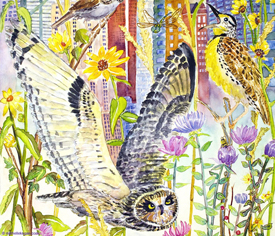 Michelle Kogan, detail of Wildlife Comes to Lake Shore Drive, 2013, watercolor and watercolor pencil on paper, 40 x 26 in. (artwork © Michelle Kogan)
Michelle Kogan, an artist based in Chicago, Illinois, has received a 2013 Individual Artist Program Grant from the city of Chicago’s Department of Cultural Affairs and Special Events Grants Department.
Jacqueline Marie Musacchio has been awarded the inaugural ARIAH Prize for Online Publishing from the Association of Research Institutes in Art History. Musacchio’s winning article, “Infesting the Galleries of Europe: The Copyist Emma Conant Church in Paris and Rome,” was published in the Autumn 2011 issue of Nineteenth-Century Art Worldwide.
Kori Newkirk, an artist based in Los Angeles, California, has won a $10,000 FOCAFellowship Award for 2013 from the Fellows of Contemporary Art.
Josette Urso has received a 2013–14 Adolph and Esther Gottlieb Foundation Grant for her painting.
2014 Conference Information and Registration Booklet
posted Oct 15, 2013
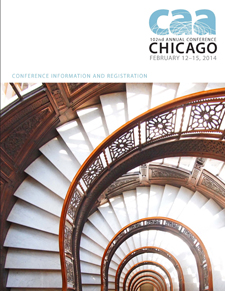 CAA has begun mailing Conference Information and Registration, which provides important details, instructions, and deadlines for attending and participating in the 102nd Annual Conference, to all individual and institutional CAA members. Nonmembers and those wanting a digital file now can download a PDF of the booklet. The conference will take place February 12–15, 2014, in Chicago.
Following sections on registration and CAA membership, Conference Information and Registration describes travel, lodging, and transportation options and explains the basic processes for candidates seeking jobs and employers placing classifieds and renting booths and tables in the Interview Hall. In addition, the publication lists topics for eleven Professional-Development Workshops. If you want to connect with former and current professors and students, consult the Reunions and Receptions page. The booklet includes paper forms for CAA membership, conference registration, workshops, special events, and mentoring enrollment.
The contents of Conference Information and Registration also appear on the conference website, which is being updated regularly between now and the February meeting. You may also choose to join CAA and register online.
Exhibitions Curated by CAA Members
posted Oct 15, 2013
Check out details on recent shows organized by CAA members who are also curators.
Exhibitions Curated by CAA Members is published every two months: in February, April, June, August, October, and December. To learn more about submitting a listing, please follow the instructions on the main Member News page.
October 2013

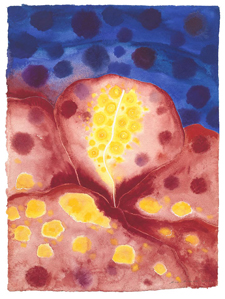 Basil Alkazzi, Kiss of the Butterfly V, 2003, gouache on paper (artwork © Basil Alkazzi)
Judith K. Brodsky. An Odyssey of Dreams: A Decade of Paintings 2003–2012. Anne Kittrell Art Gallery, University of Arkansas, Fayetteville, Arkansas, November 4–December 6, 2013.

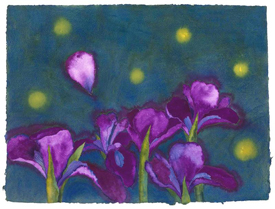 Basil Alkazzi, Iris and the Grasshopper That Flew Away, 2006, gouache on paper, 78 x 102 cm (artwork © Basil Alkazzi)
Judith K. Brodsky. An Odyssey of Dreams: A Decade of Paintings 2003–2012. Bradbury Gallery, Fowler Center, Arkansas State University, Jonesboro, Arkansas, August 29–September 29, 2013.

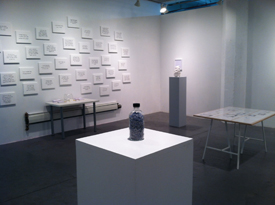 Installation view of F_ll in the Bl_nk
Shlomit Dror. F_ll in the Bl_nk. New York Art Residency and Studios (NARS) Foundation, Brooklyn, New York, June 21–July 19, 2013.

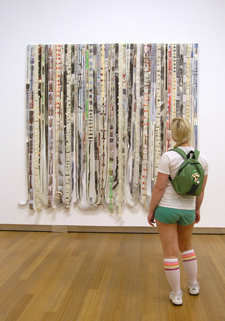 Daniella Woolf, Yours, Mine, and Ours, 2011, encaustic sewn paper, 8 x 8 ft. (artwork © Daniella Woolf)
Reni Gower. Papercuts. Emily Davis Gallery, Myers School of Art, University of Akron, Akron, Ohio, October 28–December 6, 2013.

 Heimrad Bäcker, Untitled, silver gelatin print, 2 x 2¾ in. (artwork © Michael Merighi)
Patrick Greaney. Heimrad Bäcker: Landscape M. Museum of Contemporary Art Denver, Denver, Colorado, September 27, 2013–January 5, 2014.

 Announcement card for Graphic Alert: AIDS Posters from around the World
Adrienne Klein. Graphic Alert: AIDS Posters from around the World. MSB Gallery, Langone Medical Center, New York University, New York, September 1–30, 2013.
Theresa Papanikolas. Georgia O’Keeffe and Ansel Adams: The Hawai‘i Pictures. Honolulu Museum of Art, Honolulu, Hawai‘i, July 18, 2013–January 12, 2014.
Jeff Phillips. Resonating Images: 1950 to Now. William Rolland Gallery of Fine Art, California Lutheran University, Thousand Oaks, California, June 7–November 8, 2013.
Mira Schor. Abstract Marriage: Sculpture by Ilya Schor and Resia Schor. Provincetown Art Association and Museum, Provincetown, Massachusetts, August 16–September 29, 2013.
Books Published by CAA Members
posted Oct 15, 2013
Publishing a book is a major milestone for artists and scholars—browse a list of recent titles below.
Books Published by CAA Members appears every two months: in February, April, June, August, October, and December. To learn more about submitting a listing, please follow the instructions on the main Member News page.
October 2013

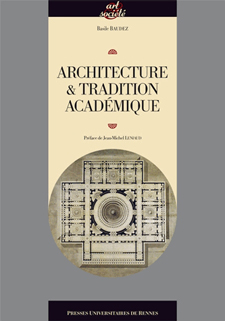
Basile Baudez. Architecture et tradition académique au siècle des Lumières (Rennes, France: Presses universitaires de Rennes, 2013).

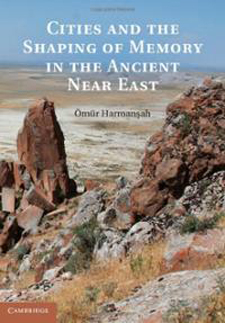
Ömür Harmanşah. Cities and the Shaping of Memory in the Ancient Near East (New York: Cambridge University Press, 2013).

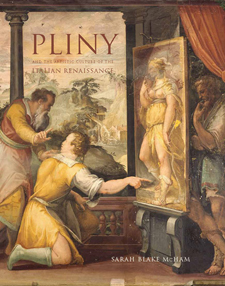
Sarah Blake McHam. Pliny and the Artistic Culture of the Italian Renaissance: The Legacy of the “Natural History” (New Haven: Yale University Press, 2013).

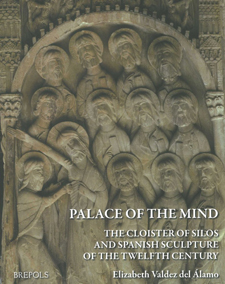
Elizabeth Valdez del Álamo. Palace of the Mind: The Cloister of Silos and Spanish Sculpture of the Twelfth Century (Turnhout, Belgium: Brepols, 2012).
Recent Deaths in the Arts
posted Oct 10, 2013
In its regular roundup of obituaries, CAA recognizes the lives and achievements of the following artists, historians, curators, educators, and others whose work has significantly influenced the visual arts. Notable deaths this summer and fall include the artists Stephen Antonakos and Mark Gottsegen and the Renaissance art historian Mark Zucker.
- Stephen Antonakos, an artist known for abstract sculpture that incorporates neon lighting, died on August 17, 2013, at age 86
- Jack Beal, an American painter of nudes, still lifes, and murals whose representational aesthetic ushered in the New Realism of the 1960s and 1970s, died on August 29, 2013, at the age of 82
- John Bellany, a Scottish figurative painter whose retrospective was held last year at the Scottish National Gallery, passed away on August 28, 2013. He was 71
- Marion Bloch, an art collector and philanthropist, died on September 24, 2013, at age 83. The wife of the founder of H&R Block, she was a longtime supporter of the Nelson-Atkins Museum of Art in Kansas City
- Michael K. Brown, a longtime curator of the Bayou Bend Collection, part of the Museum of Fine Arts, Houston, passed away on September 8, 2013. He was 60 years old
- Red Burns, an arts professor and chair of the Interactive Telecommunications Program in the Tisch School of the Arts at New York University, died on August 23, 2013. Known as the “godmother of Silicon Alley,” she was 88 years old
- Anne Christopherson, an English painter renowned for her depictions of the Thames River, died on August 15, 2013. She was 91
- Alvin Eisenman, the founding director of Yale University’s graduate program in graphic design, died on September 3, 2013. He was 92
- Cecil Fergerson, a former curator for the Los Angeles County Museum of Art and a community activist, died on September 18, 2013, at age 82. Fergeson started working for the museum in 1948 as a janitor and became a preparator before joining the curatorial staff
- Juan Garcia de Oteyza, an editor, publisher, and diplomat who served as director of Aperture Foundation from 2008 to 2010, died on August 26, 2013. He was 51
- Mark Gottsegen, a painter and the founder of Art Materials Information and Education Network (AMIEN), passed away on September 24, 2013. He had been a professor at the University of North Carolina in Greenboro and was the author of The Painter’s Handbook
- Alfred Rozelaar Green, a painter who spent the 1930s in Paris and who later founded the Anglo-French Art Centre in London, has died. He was 95 years old
- Ellen Lanyon, a painter and printmaker based in New York whose work has been described as a “unique blend of realism and the surreal,” died on October 7, 2013. She was 86
- Frank Martinez, an artist and muralist based in Los Angeles, died on August 17, 2013. He was 89
- Michael McManus, former chief curator of the Laguna Art Museum in California, died on August 10, 2013, at age 60. He had taught at California State University, Fullerton, and the Laguna College of Art and Design
- Mario Montez, a drag performer and film actor who was part of Andy Warhol’s entourage of superstars, died on September 26, 2013. He was 78
- Steve Ross, a literary scholar and the director of the Office of Challenge Grants at the National Endowment for the Humanities from 1995 to 2013, died on August 21, 2013. He was 70
- Sadegh Tirafkan, an Iranian artist who blended photography and other artistic media in innovative ways, passed away on May 9, 2013. He was 47
- Arturo Vega, a Mexican artist who designed graphics for the Ramones, including the band’s famous circular logo, died on June 7, 2013. He was 65 years old
- Gillian Wakely, associate director of education for the University of Pennsylvania Museum, died on August 14, 2013, age 67. She had worked for her institution for forty years
- Kathleen Watkins, an English curator and secretary of the Penwith Society of Arts in St. Ives, Cornwall, for forty-six years, died on September 5, 2013. She was 80 years old
- George Weissbort, a traditional painter of portraits, landscapes, and still lifes who was based in London for decades, died on July 9, 2013. He was age 85
- John Wright, a British artist of many talents—he was a painter, professor, writer, designer, and filmmaker—died on July 9, 2013. He was 82 years old
- Mark Zucker, a Renaissance art historian and a professor in the College of Art and Design at Louisiana State University for thirty-two years, died on August 3, 2013. He was 69
Read all past obituaries in the arts in CAA News, which include special texts written for CAA. Please send links to published obituaries, or your completed texts, to Christopher Howard, CAA managing editor, for the next list.
Committee on Women in the Arts Picks for October 2013
posted Oct 10, 2013
Each month, CAA’s Committee on Women in the Arts selects the best in feminist art and scholarship. The following exhibitions and events should not be missed. Check the archive of CWA Picks at the bottom of the page, as several museum and gallery shows listed in previous months may still be on view or touring.
October 2013

Chiharu Shiota, performance of IN SILENCE at Centre PasquArt, Biel/Bienne, 2008, black wool, burnt grand piano, and burnt chairs (artwork © Chiharu Shiota; photograph by Sunhi Mang and provided by VG Bild Kunst)
Chiharu Shiota: Trace of Memory
Mattress Factory
505 Jacksonia Street, Pittsburgh, PA 15212
September 12, 2013–May 31, 2014
The Japanese-born, Berlin-based, yet largely nomadic installation artist Chiharu Shiota started using wool to draw in space when she studied painting in 1992. Ever since she has become worldwide known for her haunting environments of dense, convoluted networks of black or red wool that often shroud found objects of personal or social significance, such as shoes, hospital beds, charred chairs, monumental or miniature dresses, et cetera. Her work evokes the psychic interlacing of loss and memory, dream and reality, past and present, the complexity and fragility of human relationships, and the body itself, and Shiota’s networks universalize the personal with an antimonumental scale, despite the often large size of her installations. Exploring remembrance, a central theme of her poetics, for the Mattress Factory’s Trace of Memory, the artist responds site specifically to the storied past of a nineteenth-century row house—the building at 516 Sampsonia Way in Pittsburgh—filling eight rooms with her work.
Multiple Occupancy: Eleanor Antin’s “Selves”
Miriam and Ira D. Wallach Art Gallery
Columbia University, 826 Schermerhorn Hall, MC5517, 1190 Amsterdam Avenue, New York, NY 10027
September 4–December 7, 2013
Multiple Occupancy: Eleanor Antin’s “Selves” is a homecoming survey of the fascinating variety of “selves” that this Southern Californian artist invented and embodied between 1972 and 1991. These persons make sharp commentaries on history, identity, and their own fictions, often from a feminist perspective, that resonate with contemporary interrogations of identity and archival slippage. Focusing on themselves as they unfold in videos, photographic series, drawings, and installations, the exhibition offers a unique opportunity not only to follow the tragic and humorous ways in which Antin’s fictional lives develop in time and across media and unveil the complexities of history, identity, and gender under a postmodernist light, but also to study the radical ways in which the artist intervened in the all-male club of Conceptual art and dilated its rigidity with combinations of performance, narrative, fantasy, and biography.
The exhibition features Antin’s best-known alter ego, the African American ballerina Eleanora Antinova from Sergei Diaghilev’s Ballets Russes, who dreamed to play the classic roles of Giselle and Sylphide but was always relegated to more “exotic” types. Antinova helped Antin to interweave race into the feminist critique that underpins her impersonation of ballerinas. Multiple Occupancy also includes Antin’s Vietnam-era King of Solana Beach, a seventeenth-century-looking monarch who struggles to empower his disenfranchised subjects in their fight against the greed of wealthy landowners; a self-taught ballerina who has mastered poses but cannot dance in motion; the Nurse Eleanor Nightingale, who cares for soldiers at the front line of the Crimean War; and Little Nurse Eleanor, whose attempts to heal her patients fail due to their lust for her a century later. The exhibition ends with Yevgeny Antinov, an exiled Russian film director from the 1920s who disseminates his radical leftist politics through a silent film, The Man without a Word, that depicts Polish shtetl life. The work is an homage to Antin’s mother, who was an actress in Poland’s Yiddish theater.

n.paradoxa: international feminist art journal
Call for Contributions: Religion
n.paradoxa
November 1, 2013
The editorial board of n.paradoxa: international feminist art journal, published by KT press, seeks contributions on the topic of religion for volume 33, to be published in January 2014. Women artists’ works that have provided a critical view of religious life, belief, doctrine, and representation will be the focus of this volume. How have women artists addressed, challenged, or critiqued representations of themselves in the major and minor religions around the world?
Religions are not only “opium for the masses”; they have also provided major rituals that mediate experiences of birth, marriage, and death in society. Explorations of female power, women goddesses, female spirituality, and sexuality have all been mediated by reconsidering or critiquing many aspects of religious ritual, belief systems, and representations of the role of women (such as Madonna/whore and veiled/unveiled). Women experience different religions and cults as both liberating and oppressive in their moral codes for how they should dress, behave, operate as sexual beings, have families, and live a “good” life.
Artworks that offer critical perspectives on the either liberating or oppressive views of religion for women will be considered here, as well as works that address multifaith (and tolerant) conceptions or readings analyzing the many different religions of the world today. In some parts of the world, artworks and exhibitions are still censored for their idolatry, offense to religious belief, or desecration of religious symbols. Case studies in which women artists have been central to different forms of censorship on religious grounds are welcome. Deadline for copy: November 1, 2013.

Şükran Moral, La Artista, 1994, silver print, 200 x 180 cm (artwork © Şükran Moral)
Despair and Metanoia
Galeri Zilberman
İstiklal Cad. Mısır, Apt. 163, K.3 D.10, Beyoğlu, Istanbul
September 12–October 26, 2013
Despair and Metanoia pairs the work of two pioneering performance artists, the Austrian VALIE EXPORT and the Turkish Şükran Moral, underlining the confluences between both artists’ artistic tropes, themes, gender politics, and provocation strategies. One of the two centerpieces that give the exhibition its title, Moral’s Despair, which features images of a boat of illegal immigrants in the middle of the sea. Another Moral work, Crucified, is a provocative response to the social exclusion and ridicule that her most controversial feminist performances (such as Hammam and Bordello) have triggered—though these contentious works best exemplify her subversive strategies and gender politics. The second part of the exhibition’s title reflects EXPORT’s centerpiece, an installation of twenty-nine videos of performances from the 1970s to today. While this video complements other photographs that showcase the artist’s use of the female body for various ends and her questioning of the construction of gender, it also offers an opportunity for audiences to reevaluate her moving-image work and contemplate its role in her oeuvre.
She Who Tells a Story: Women Photographers from Iran and the Arab World
Museum of Fine Arts, Boston
465 Huntington Avenue, Boston, MA 02115
August 27, 2013–January 12, 2014
The first North American museum survey of female photographers from the Arab world, She Who Tells a Story brings together more than one hundred images and two videos from twelve leading Iranian and Arab photographers, celebrating the fact that some of the most groundbreaking work in photography from Iran and the Arab world is produced by women. Ranging from fine art to photojournalism, the works “tell stories” about their makers and their contexts, shattering stereotypes about the Orient and about Arab women and casting contemporary life in these countries—especially that of women—under a fresh and challenging light. The exhibition adeptly balances the individual artists, the cultural and sociopolitical specificities of their contexts, and the photographic genres under scrutiny through such themes as “Deconstructing Orientalism,” “Constructing Identities,” New Documentary.” The artists in the show are: Jananne Al-Ani, Boushra Almutawakel, Gohar Dashti, Rana El Nemr, Lalla Essaydi, Shadi Ghadirian, Tanya Habjouqa, Rula Halawani, Nermine Hammam, Rania Matar, Shirin Neshat, and Newsha Tavakolian.

Nalini Malani, installation view of In Search of Vanished Blood, 2012, 6-channel video and shadow play with 5 rotating reverse painted Mylar cylinders, with sound, 11 mins., dimensions variable (artwork © Nalini Malani)
Nalini Malani: In Search of Vanished Blood
Galerie Lelong
528 West 26th Street, New York, NY 10001
September 6–October 26, 2013
A leading video artist in India, Nalini Malani debuts in New York with a projection work called In Search of Vanished Blood that distinguished her participation in last year’s Documenta. Video projections filter across five suspended, rotating Mylar cylinders featuring reverse painted imagery of Hindu and Western icons. The effect creates an immersive shadow play that is complicated by the different speeds of the moving images and further enhanced by sound. Taking its title from the 1965 Urdu poem “Lahu Ka Surag,” In Search of Vanished Blood is also inspired by the 1984 novel Cassandra by Christa Wolf and the 1910 book The Notebooks of Malte Laurids Brigge by Rainer Maria Rilke. The artist, however, draws from history and her own experience as a refugee of the Partition of India, colonialism, and decolonization as she does from literary culture. These investigations form a fleeting narrative that synthesizes the themes that have always preoccupied her—violence, the feminine, and national identity—from an idiosyncratically “internationalist” perspective. The exhibition also includes paintings related to the installation yet hung in a separate room.
The Beginning Is Always Today: Contemporary Feminist Art in Scandinavia
SKMU Sørlandets Kunstmuseum
Skippergata 24 B, Kristiansand, Norway 4666
September 21, 2013–January 2004
Titled with a quote from the eighteenth-century British writer Mary Wollstonecraft and culminating SKMU’s centennial celebration of women’s suffrage in Norway, The Beginning Is Always Today is the first major museum survey of feminist art to be held in Scandinavia in twenty years. The exhibition brings together the work of forty artists from a region where, in spite of advances in sexual liberation and gender equality, feminism is often considered outdated and the feminist art scene remains little known. It also explores both the far-reaching social scope of contemporary feminism in the arts and the legacy of early feminist art’s strategies, while questioning the success of past battles for gender equality and equal rights. The exhibition is accompanied by a scholarly catalogue that promises to shed light on the recent developments of feminist art in Scandinavia, an illuminating sequel to the groundbreaking publication on Swedish art feminism, Konstfeminism (2005), and a recent exhibition on Norwegian art feminism held earlier this year, organized by artists included in this show.
The Beginning Is Always Today features the following artists: Lotta Antonsson, Elisabet Apelmo, Pia Arke, Bob Smith, Catti Brandelius, Peter Brandt, Nanna Debois Buhl, Kajsa Dahlberg, Ewa Einhorn, Åsa Elzén, Unn Fahlstrøm, Roxy Farhat, Fine Art Union, FRANK, Unni Gjertsen, Trine Mee Sook Gleerup, Jenny Grönvall, Annika von Hausswolff, High Heel Sisters, Leif Holmstrand, Maryam Jafri, Dorte Jelstrup, Jesper Just, Jane Jin Kaisen, Line Skywalker Karlström, Kvinder på Værtshus, Ane Lan (alias Eivind Reierstad), Lotte Konow Lund, Annika Lundgren, Jannicke Låker, Malmö Fria Kvinnouniversitet (MFK), Eline Mugaas, Ellen Nyman, Radikal pedagogik, Lilibeth Cuenca Rasmussen, Annica Karlsson Rixon, Joanna Rytel, Katya Sander, Mari Slaattelid, Lisa Strömbeck, Vibeke Tandberg, Lisa Vipola, and YES! Association/Föreningen JA!
News from the Art and Academic Worlds
posted Oct 09, 2013
Each week CAA News publishes summaries of eight articles, published around the web, that CAA members may find interesting and useful in their professional and creative lives.
Leonardo da Vinci Painting Lost for Centuries Found in Swiss Bank Vault
It was lost for so long that it had assumed mythical status for art historians. Some doubted whether it even existed. But a five-hundred-year-old mystery was apparently solved after a painting attributed to Leonardo da Vinci was discovered in a Swiss bank vault. The painting, which depicts Isabella d’Este, a Renaissance noblewoman, was found in a private collection of four hundred works kept in a Swiss bank by an Italian family who asked not to be identified. (Read more in the Telegraph.)
Why the Affordable Care Act Matters To Artists
It’s not yet clear how many people purchased insurance through the exchanges created under the Affordable Care Act (ACA) that opened recently. But one of the things I’ve been hearing from a lot of creative people is that the ACA has made it easy to be, or to contemplate being, an artist. (Read more from ThinkProgress.)
Decoding Job Ads
You can teach yourself about what institutions pride themselves from reading their job ads. You’ll start to notice trends in the language and structure of ads, so that you can start to group similarly worded ads together and easily spot the ads that break those patterns, or start their own, set of conventions. (Read more from Inside Higher Ed.)
Learn Art History through Ten Stunning Pairs of High Fashion Heels
The designer Nick Adelman challenged himself to encompass the art of different cultures and eras in a fashion medium, and the amount of ornate detail put into these high-heeled shoes practically begs for them to become reality. (Read more from Buzzfeed.)
Is Showing Your Art in a Co-op Gallery Worthwhile?
Last week I wrote a post about the advisability of showing your work in a vanity gallery. In the comments, it became clear that there is some confusion, or at least a blurry understanding, of the difference between a pay-for-display (vanity) gallery and cooperative (co-op) galleries. I feel it would be a good idea to expand the conversation to cover this second type of gallery. (Read more in Red Dot Blog.)
Critics Say Sting on Open-Access Journals Misses Larger Point
Perhaps months from now, when the dust settles and academics really look back at it, they’ll find some hard lessons in the elaborate Science magazine exposé this week by the journalist John Bohannon. After more than a year of work, in which Bohannon, who has a PhD in biology, crafted a fraudulent cancer-research article and painstakingly tracked the responses to it from more than three hundred journals, he gave his industry the embarrassing news that more than half of them had agreed to publish it. (Read more in the Chronicle of Higher Education.)
Puzzling Peer Reviews
Just because scholars who seek to publish in open-access journals are open to new forms of peer review doesn’t mean they all see eye-to-eye—or know what to expect. As one sting operation shows, many such journals are unable to reject obviously flawed submissions, even as they promise thorough review processes. Meanwhile, other journals are even criticized for being too much like the traditional publishing they aim to reform. (Read more from Inside Higher Ed.)
The Agony of Suspense in Detroit
It would have been hard to think of a better metaphor: A fire-breathing dragon was bearing down on the Detroit Institute of Arts. For months now, the institute has found itself confronting a threat never experienced by another American museum of its size and not of its own making: the possibility that parts of its world-class collection will be forcibly sold off to help pay billions in debt owed by the city, now in federal bankruptcy. (Read more in the New York Times.)