CAA News Today
2012 National Humanities Alliance Annual Meeting
posted Apr 18, 2012
 Linda Downs is CAA executive director, and Anne Collins Goodyear, associate curator of prints and drawings at the National Portrait Gallery, Smithsonian Institution, is the incoming president of the CAA Board of Directors.
Anne Collins Goodyear and Linda Downs attended a day of meetings and panel discussions presented by the National Humanities Alliance (NHA). The event, held on March 19, 2012, in Washington, DC, stressed the practical significance of the humanities for a democratic society and highlighted the important contributions of recent research projects. It also helped prepare participants for Humanities Advocacy Day, taking place on Capitol Hill the following day. CAA is a member of NHA, which advocates federal funding of the humanities. In addition to its annual meeting, NHA organizes Humanities Advocacy Day, which brings critical information to participants and prepares them for congressional visits to support the National Endowment for the Humanities, the National Historical Publications and Records Commission, the Fulbright Program, the Institute for Museum and Library Services, and numerous Department of Education programs in the humanities.
 The first panel introduced a wide variety of historical research projects, such as the Dictionary of American Regional English, which took ten years to develop, according to its senior editor, Luanne von Schneidemesser, and now has a broad value to researchers of all kinds, from linguists to forensic detectives. Kenneth Price, a professor of literature at the University of Nebraska in Lincoln, discussed the Walt Whitman Archive, an online resource of thousands of documents related to the poet’s writings, and Colin Gordon, a history scholar at the University of Iowa, talked about his recent book, Mapping Decline: St. Louis and the Fate of the American City. Finally, Connie Lester, a professor of history at the University of Central Florida, presented the Regional Initiative for Collecting the History, Experiences, and Stories, an oral-history program that is taking place in her state. Each project demonstrated its uses to both academic and public researchers.
Hunter Rawlings, president of the Association of American Universities, led a second panel that focused on “The Role of the Humanities in Undergraduate Education,” offering a historical case study of James Madison to illustrate the value of prolonged study in the humanities as a means to cultivate flexible and cohesive thinking. Madison studied the classics and philosophy at New Jersey College (later renamed Princeton University). After graduation, having no specific profession or direction, he moved back home with his parents and asked the president of the college if he could continue studying under his tutelage, in effect becoming the first unofficial graduate student of the college. Madison eventually put his academic background to good use when he became the primary author of the Bill of Rights, adopted by the House of Representatives in 1789, and was later elected the fourth president of the United States. Rawlings stressed that liberty and learning are intrinsic to the humanities, noting that countries with autocratic political systems can have successful science and math curricula but that the arts and the humanities require freedom of expression to flourish.
 The panel’s second speaker, Raynard Kington, president of Grinnell College and acting director of the National Institutes of Health, observed that humanities majors tend to be “life-long learners,” and that many leaders, even in the sciences, have strong humanities training. The humanities, he noted, might benefit from a stronger advocacy base that could demonstrate the tangible benefits of humanities training as a means of encouraging legislators and administrators to protect humanities education, even at times of financial duress.
The role of the humanities in undergraduate education in direct relation to the job market was addressed by Sandra L. Kurtinitis, president of the Community College of Baltimore County, which boasts a student body of 45,000. She emphasized that two-year schools provide every student with an introduction to the humanities regardless of his or her associate-degree curriculum. Kurtinitis’s figures were astounding: 50 percent of all incoming freshmen at American colleges and universities are enrolled in one of 1,200 community colleges across the country, and the average age of the freshman class has risen to twenty-eight. Five million more students, she told us, will enroll in community colleges by the year 2020. In closing, Kurtinitis emphasized that all degrees lead to jobs, whether students decide to pursue careers as varied as poets, artists, nurses, or electricians.
 In his keynote address, Richard H. Brodhead, president of Duke University and cochair of the American Academy of Arts and Sciences’ Commission on the Humanities and Social Sciences, described the blue-ribbon panel of corporate and academic leaders who have come together to address the importance of the humanities in education and American life. Echoing Raynard Kington’s story about James Madison, Brodhead evoked an America that was built on the values of humanism and a strong liberal-arts education and called attention to the plight of budget cuts across the country that are scaling back humanities programs in elementary and high schools.
Brodhead stressed the wide-ranging, lifelong effect a thorough education in the humanities can have for an individual, no matter what his or her chosen profession is. “The kind of intelligence that has brought the broadest benefits to our society,” he said, “is an active, integrative mind awakened to multiple forms of knowledge and able to combine them in new ways.” As part of Humanities Advocacy Day, on March 20, the panel presented recommendations to President Barack Obama and to Congress in support of the humanities in higher education.
NHA has published a summary of the 2012 annual meeting and Humanities Advocacy Day, and Duke Today has printed the written text of Brodhead’s keynote address, “Advocating for the Humanities.”
Images from top to bottom: Jim Leach, chairman of the National Endowment for the Humanities; Luanne von Schneidemesser; Raynard Kington; and Richard H. Brodhead (photographs provided by the National Humanities Alliance)
New CAA Standards and Guidelines on the Fair Use of Images
posted Apr 17, 2012
In accordance with CAA’s practice to regularly update its Standards and Guidelines in the fields of art and art history, the Board of Directors adopted two documents at its meeting on February 26, 2012, that address fair use of visual resources in teaching, scholarship, and libraries.
Christine Sundt, editor of the journal Visual Resources and cochair of CAA’s Committee on Intellectual Property, presented the Statement on the Fair Use of Images for Teaching, Research, and Study, authored and published by the Visual Resources Association (VRA) in 2011, and the Code of Best Practices in Fair Use for Academic and Research Libraries, produced by the Association of Research Libraries (ARL) in 2012.
Fair Use of Images for Teaching, Research, and Study
Visual Resources Association: Statement on the Fair Use of Images for Teaching, Research, and Study is a helpful tool for educators and scholars who rely on images for teaching, research, publishing, and other academic work. The statement describes the six uses of images that fall within the doctrine of fair use according to United States copyright law: the use of images for the purpose of teaching; the preservation and transferring of images from one format to another; the creation of online image resources for students; the use of images by students in the context of the classroom; the sharing of images among cultural or educational institutions; and the inclusion of images in theses and dissertations.
The statement is intended to instill confidence in the scholarly community by clarifying the many educational and academic contexts to which fair use can be applied. The statement, reviewed by a committee of legal experts and copyright scholars who have determined the accuracy of each example of fair use, is by no means exhaustive on the subject of fair use, and it only addresses copyright laws within the United States.
Fair Use of Images for Academic and Research Libraries
The Code of Best Practices in Fair Use for Academic and Research Libraries (2012) describes eight examples of common library practices that are affected by the rules of copyright and fair use. Because the prevalence of digital technologies in higher education has changed the way in which students and faculty use libraries and offer access to academic coursework, the code urges institutions to clarify and update research database systems and to transfer archive material deemed as “at risk items” into a digital format. The code also discusses the need to reproduce library material for disabled students and faculty without bias.
Like the VRA statement, the ARL code does not claim to cover the topic of fair use exhaustively. Rather, its objective is to expand understanding and engagement with copyright laws for librarians and library users. The code was created through the process of interviewing sixty-five librarians across the United States who represented a wide spectrum of academic and research libraries.
People in the News
posted Apr 17, 2012
People in the News lists new hires, positions, and promotions in three sections: Academe, Museums and Galleries, and Organizations and Publications.
The section is published every two months: in February, April, June, August, October, and December. To learn more about submitting a listing, please follow the instructions on the main Member News page.
April 2012
Academe

 Luba Freedman
Luba Freedman, a scholar of Italian Renaissance art and a member of the Renaissance Studies editorial board and the Sixteenth Century Journal editorial committee, has been promoted to the rank of full professor in the History of Art Department at Hebrew University of Jerusalem in Israel.

Scott Johnson, a sculptor, photographer, and installation artist, has received tenure in the Art Department at Colorado College in Colorado Springs.
Susan Yelavich, a longtime faculty member at Parsons the New School for Design in New York, has been appointed director of the master of arts in design studies program at her school.
Museums and Galleries

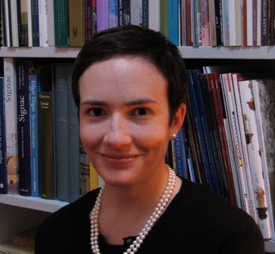 Emily Beeny (photograph provided by the Museum of Fine Arts, Boston)
Emily Beeny will join the Museum of Fine Arts, Boston, in June 2012 as assistant curator of nineteenth-century painting in Art of Europe. Beeny is presently a doctoral candidate completing a year in Paris on the Rudolf Wittkower Dissertation Fellowship from Columbia University in New York.

 Olivier Meslay (photograph provided by the Dallas Museum of Art)
Olivier Meslay, senior curator of European and American art and Barbara Thomas Lemmon Curator of European Art at the Dallas Museum of Art in Texas, has been named associate director of curatorial affairs at his institution.

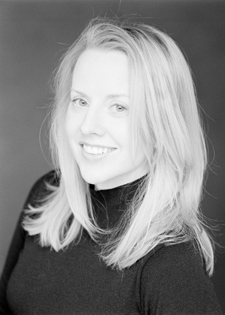 Joanne Pillsbury (photograph provided by Getty Communications)
Joanne Pillsbury, formerly director of Precolumbian studies at Dumbarton Oaks in Washington, DC, has been named associate director of scholarly programs at the Getty Research Institute in Los Angeles, California.

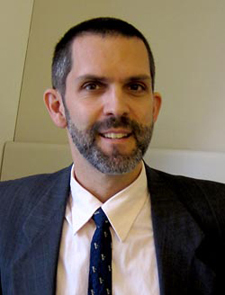 Joel Smith (photograph provided by the Morgan Museum and Library)
Joel Smith, currently Peter C. Bunnell Curator of Photography at the Princeton University Art Museum in Princeton, New Jersey, has been appointed curator of photography at the Morgan Library and Museum in New York. Smith begins his new position in September 2012.
Institutional News
posted Apr 17, 2012
Read about the latest news from institutional members.
Institutional News is published every two months: in February, April, June, August, October, and December. To learn more about submitting a listing, please follow the instructions on the main Member News page.
April 2012

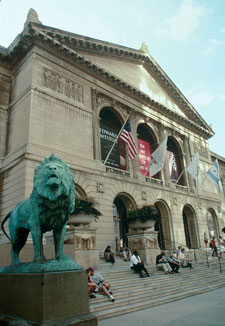 South view of the Michigan Avenue façade of the Art Institute of Chicago (photograph provided by the Art Institute of Chicago)
The Art Institute of Chicago in Illinois has received a $500,000 grant from the Indian government in support of a four-year exchange program with museums in India. The Art Institute is the first American museum to receive the grant, named the Vivekananda Memorial Program for Museum Excellence, in honor of Swami Vivekananda, an Indian musician, playwright, and philosopher.
The Metropolitan Museum of Art in New York has taken steps to make its digital-image collection more comprehensive and accessible to the public by integrating staff from the analogue-image library into the digital-media department.
The Rhode Island School of Design in Providence has partnered with the US Department of State’s Office of Art in Embassies to create a permanent, large-scale outdoor artwork for the future American embassy in Rabat, Morocco. An artist and RISD alumnus, Jim Drain, spearheaded the project with a special six-week course called “Art in Embassies: Morocco,” which he taught in winter 2012, collaborating with students and a visiting Moroccan artist. The artwork will debut on November 30, 2012, at the Smithsonian Institution in Washington, DC.
April 2012 Picks from CAA’s Committee on Women in the Arts
posted Apr 16, 2012
 Each month, CAA’s Committee on Women in the Arts produces a curated list, called CWA Picks, of recommended exhibitions and events related to feminist art and scholarship in North Americn and around the world.
The CWA Picks for April 2012 include exhibitions from all over the United States and Europe. Kate Gilmore shows new videos at David Castillo Gallery in Miami, the city in which the German-born artist Dara Friedman filmed her most recent work, Dancer, which makes its debut at CAM Raleigh in North Carolina. Other April picks include exhibitions of new work by Sturtevant in Stockholm, Sarah Braman in Los Angeles, and Jacqueline Humphries in New York, as well as a retrospective of paintings and works on paper by Jaune Quick-to-See Smith at the Georgia O’Keeffe Museum in Santa Fe, New Mexico.
Check the archive of CWA Picks at the bottom of the page, as several museum and gallery shows listed in previous months may still be on view or touring.
Image: Kate Gilmore, Rock, Hard, Place, 2012, high-definition color video with sound, 11:15 min. (artwork © Kate Gilmore; photograph provided by David Castillo Gallery)
Grants, Awards, and Honors
posted Apr 15, 2012
CAA recognizes its members for their professional achievements, be it a grant, fellowship, residency, book prize, honorary degree, or related award.
Grants, Awards, and Honors is published every two months: in February, April, June, August, October, and December. To learn more about submitting a listing, please follow the instructions on the main Member News page.
April 2012

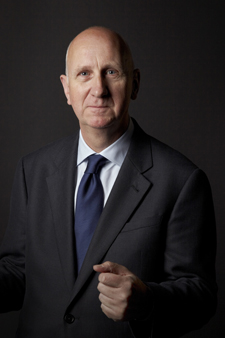 Craig Clunas
Craig Clunas, a professor of art history at the University of Oxford in England, will deliver the sixty-first A. W. Mellon Lectures in the Fine Arts at the National Gallery of Art in Washington, DC. Clunas’s six-part lecture series, titled “Chinese Painting and Its Audiences,” will take place on Sundays from March 11 to April 22, 2012.
Brianne Cohen, a doctoral student at the University of Pittsburgh in Pennsylvania, has been awarded a grant from the National Committee for the History of Art to attend the thirty-third International Congress of the History of Art in Nuremberg, Germany, taking place July 15–20, 2012.
Jennifer Cohen, a PhD candidate at the University of Chicago in Illinois, has received a grant from the National Committee for the History of Art to attend the thirty-third International Congress of the History of Art in Nuremberg, Germany, taking place July 15–20, 2012.
Dana Cowen, a doctoral candidate at Case Western Reserve University in Cleveland, Ohio, has accepted a travel grant from the National Committee for the History of Art. She will apply the funds to attend the thirty-third International Congress of the History of Art, to be held July 15–20, 2012, in Nuremberg, Germany.
Vidya J. Dehejia, the Barbara Stoler Miller Professor of Indian and South Asian Art at Columbia University in New York, has received a Padma Bhushan award from the government of India. Equivalent to British knighthood, the award recognizes the distinguished service of an individual to the nation, in any field.

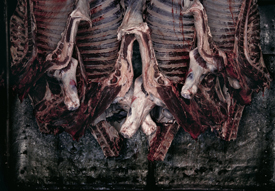 Muriel Hasbun, encarnado: embodied (carne/meat), 2011, archival pigment print (artwork © Muriel Hasbun)
Muriel Hasbun, a photographer and associate professor at the Corcoran College of Art and Design in Washington, DC, has been awarded a 2012 Maryland State Arts Council Individual Artist Award in Photography for encarnado: embodied, a series of color photographs taken in a Mexican slaughterhouse.
John Hawke, a New York–based artist who creates public art installations, has been chosen to attend the 2012 Art and Law Residency, a program developed by Volunteer Lawyers for the Arts in New York. The residency provides a platform for artists, writers, and curators to examine their visual practice and critical writing in the context of contemporary and historical legal issues.
Jill Holaday, a doctoral student at the University of Iowa in Iowa City, has been awarded a grant from the National Committee for the History of Art to attend the thirty-third International Congress of the History of Art in Nuremberg, Germany, taking place July 15–20, 2012.
Jennifer A. Morris, a PhD candidate at Princeton University in Princeton, New Jersey, has earned a travel grant from the National Committee for the History of Art. She will use the funds to attend the thirty-third International Congress of the History of Art, which takes place July 15–20, 2012, in Nuremberg, Germany.
Stephanie E. Rozman, a PhD student at the University of Minnesota, Twin Cities, has received a grant from the National Committee for the History of Art to attend the thirty-third International Congress of the History of Art in Nuremberg, Germany, taking place July 15–20, 2012.
Diana Shpungin, a Brooklyn-based artist who works in installation, drawing, and animation, will take part in the Volunteer Lawyers for the Arts’ 2012 Art and Law Residency. The residency, taking place in New York, provides artists, curators, and writers with an opportunity to examine their art practice and critical writing within a framework of historical and contemporary legal issues.
Erin Sullivan, a PhD student at the University of Southern California in Los Angeles, has been awarded a grant from the National Committee for the History of Art to attend the thirty-third International Congress of the History of Art in Nuremberg, Germany, taking place July 15–20, 2012.
Exhibitions Curated by CAA Members
posted Apr 15, 2012
Check out details on recent shows organized by CAA members who are also curators.
Exhibitions Curated by CAA Members is published every two months: in February, April, June, August, October, and December. To learn more about submitting a listing, please follow the instructions on the main Member News page.
April 2012

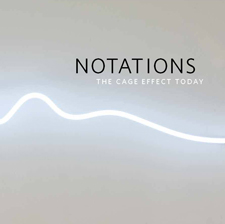 Cover of the exhibition catalogue for Notations: The Cage Effect Today
Joachim Pissarro, Bibi Calderaro, Julio Grinblatt, and Michelle Yun. Notations: The Cage Effect Today. Hunter College Time Square Gallery, Hunter College, City University of New York, New York, February 17–April 21, 2012.

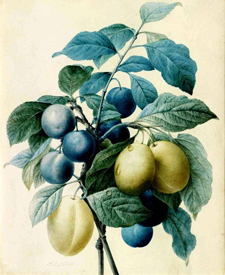 Pierre-Joseph Redouté, Plum Branches Intertwined, 1802–4, watercolor on vellum, 31.9 x 26.3 cm. Frick Collection, bequest of Charles A. Ryskamp, 2010 (artwork in the public domain; photograph by Michael Bodycomb)
Anne L. Poulet, Colin B. Bailey, and Susan Grace Galassi. A Passion for Drawings: Charles Ryskamp’s Bequest to the Frick Collection. Frick Collection, New York, February 14–April 8, 2012.
Books Published by CAA Members
posted Apr 15, 2012
Publishing a book is a major milestone for artists and scholars—browse a list of recent titles below.
Books Published by CAA Members appears every two months: in February, April, June, August, October, and December. To learn more about submitting a listing, please follow the instructions on the main Member News page.
April 2012

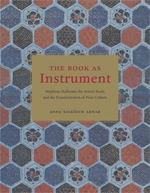
Anna Sigrídur Arnar. The Book as Instrument: Stéphane Mallarmé, the Artist’s Book, and the Transformation of Print Culture (Chicago: University of Chicago Press, 2011).

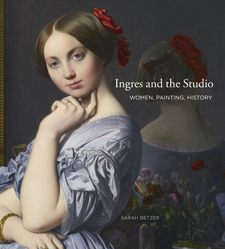
Sarah Betzer. Ingres and the Studio: Women, Painting, History (University Park: Pennsylvania State University Press, 2012).

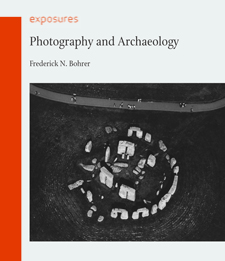
Frederick N. Bohrer. Photography and Archeology (London: Reaktion Books, 2011).

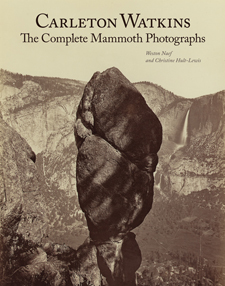
Christine Hult-Lewis and Weston Naef. Carleton Watkins: The Complete Mammoth Photographs (Los Angeles: J. Paul Getty Museum, 2011).

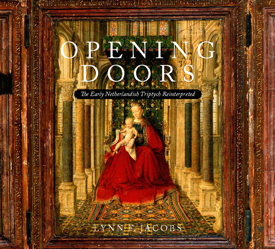
Lynn F. Jacobs. Opening Doors: The Early Netherlandish Triptych Reinterpreted (University Park: Pennsylvania State University Press, 2011).

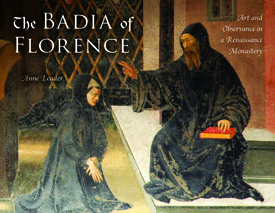
Anne Leader. The Badia of Florence: Art and Observance in a Renaissance Monastery (Bloomington: Indiana University Press, 2011).

Véronique Plesch, Catriona MacLeod, and Jan Baetens, eds., Efficacité/Efficacy: How To Do Things with Words and Images? (Amsterdam: Rodopi, 2011).

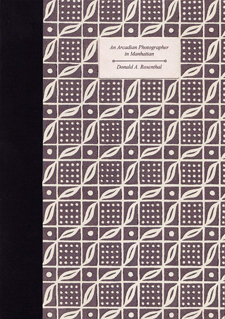
Donald A. Rosenthal. An Arcadian Photographer in Manhattan: Edward Mark Slocum (Portsmouth, UK: Callum James Books, 2012).

Vanessa Bezemer Sellers. Gijsbert van Laar’s “Magazijn van Tuin-sieraaden” or “Storehouse of Garden Ornaments” (New York: Foundation for Landscape Studies, 2012).


Vivian Tsao. Paintings by Vivian Tsao (Taipei City, Taiwan: National Museum of History, 2009).
Committee on Women in the Arts Picks for April 2012
posted Apr 10, 2012
Each month, CAA’s Committee on Women in the Arts selects the best in feminist art and scholarship. The following exhibitions and events should not be missed. Check the archive of CWA Picks at the bottom of the page, as several museum and gallery shows listed in previous months may still be on view or touring.
April 2012
Kate Gilmore: Rock, Hard, Place
David Castillo Gallery
2234 NW Second Avenue, Miami, FL 33127
April 14–May 31, 2012
Kate Gilmore’s work has drawn comparisons with numerous pioneers of performance art, such as Marina Abramović and Yoko Ono. Captured in video, photography, and sculpture, Gilmore’s actions are visually compelling statements in which the artist play-acts different female stereotypes, while also referencing the materials and processes of manual labor and art-making. In Rock, Hard, Place (2012), hot-pink paint is wedged into a gridded structure of bowls, overflowing and leaving a unique mark, as a rock is smashed into each unit. For her show at David Castillo Gallery, the artist debuts two new videos, Pot Kettle Black and Break of Day. Each depicts Gilmore as an actor engaged in Sisyphean tasks that call into question the role of women in society; the works also forward the idea of the artist as a free-willed magician.
Sturtevant: Image over Image
Moderna Museet
Skeppsholmen, Stockholm, Sweden
March 17–August 26 2012
Elaine Sturtevant, an American-born artist based in Paris, creates masterful handmade replicas of artwork by Jasper Johns, Andy Warhol, and Joseph Beuys that challenge narratives of authenticity and originality, while also speaking to the artistic possibilities that arise from cloning and cybernetics. More recently she has made “cover versions” of noted works by Paul McCarthy, Felix Gonzales-Torres, and Robert Gober. Sturtevant: Image over Image showcases thirty works of art, including four recent video installations, and new pieces that were produced specifically with the Moderna Museet’s collection in mind, such as a copy of Marcel Duchamp’s freestanding sculpture Fresh Widow (1920/1964). Sturtevant’s mode of production, bemusing to audiences and critics when it first appeared in the mid-1960s, has now assumed the mantel of a postmodern feminist critique, albeit one that still leaves room for analysis, debate, and pleasure.
Zoe Leonard: Observation Point
Camden Arts Centre
Arkwright Road, London, NW3 6DG, United Kingdom
March 31–June 24, 2012
Zoe Leonard has transformed one gallery of the Camden Arts Centre into a room-sized camera obscura, creating a live, inhabitable photographic image that is time based and always changing. In two other rooms, she exhibits a series of photographs taken with the lens pointed directly at the sun and presents a wall installation of found postcards of Niagara Falls. All three installations stretch the limits of photography and ask, what exactly constitutes a “photograph”? The exhibition also considers how we experience and shape the world through accumulation and manipulation of photographs.
Jaune Quick-To-See Smith: Landscapes of an American Modernist
Georgia O’Keeffe Museum
217 Johnson Street, Santa Fe, NM 87501
January 27–April 29, 2012
An exhibition of oil paintings and works on paper by Juane Quick-To-See Smith, a New Mexico–based artist and a member of the Confederated Salish and Kootenai Nation, evokes the Southwestern landscape and recalls certain modernist masters, such as Georgia O’Keeffe, and Marsden Hartley, who joined symbolism to abstraction. Quick-To-See Smith’s work also deals with political and ecological themes in the Petroglyph Park Series (1985) and in a group of paintings from the late 1980s created in honor of Chief Seattle, a nineteenth-century Native American leader who prophesized the environmental damage of the twentieth century.
Dara Friedman: Dancer
CAM Raleigh
409 West Martin Street, Raleigh, NC 27603
January 28–May 14, 2012
CAM Raleigh is screening Dancer, the latest film by the German-born artist Dara Friedman, which she created in Miami in 2011. Originally filmed in 16mm and transferred to high-definition digital video, Dancer captures sixty-six performers in forty separate segments representing all forms of movement and dance, from hip-hop to modern, flamenco to skateboarding, and classical ballet to skipping down the street. Dancer is the third installment in an unofficial trilogy that includes Musical (2007–8) and Frankfurt Song (2010). All three films explore spontaneous actions and synchronized performances in international urban settings.
Sarah Braman: These Days
International Art Objects Galleries
6086 Comey Avenue, Los Angeles, CA 90034
March 31–May 5, 2012
Sarah Braman works in painting and sculpture, frequently creating mash-ups of the two media. These Days presents playful and wide-ranging work in oil and spray paint on wood boards, shipping crates, and cardboard. Freestanding Plexiglas chambers, resembling sci-fi coffins of pleasure, are paired with the occasional found object (like a 1980s boombox) in works such as Time Machine, TV in bed, andDawn Dog. Braman’s art is without a predetermined conceptual underpinning; instead it is “engineered entirely to fulfill the dream of desire,” according to Rupert Winkelsnap, the author of the gallery’s press release.
Jacqueline Humphries
Greene Naftali Gallery
508 West 26 Street, Eighth Floor, New York, NY 10001
March 28–April 28, 2012
The New York–based painter Jacqueline Humphries is known for her large-scale canvases and expressionistic mark-making, as well as the frequent use of metallic silver paint evocative of industrial coloring, gelatin-silver photographs, and the cinema’s fanciful silver screen. The new paintings from her seventh solo show at the Greene Naftali Gallery continue these formal investigations while introducing an exploration of the push–pull between abstract flatness and pictorial space, framing within the picture plane, and the immense variety found in the repetition of painterly motifs.
Yayoi Kusama
Tate Modern
Bankside, London SE1 9TG, United Kingdom
February 9–June 5, 2012
In New York in the early 1960s, the Japanese-born Yayoi Kusama often performed her art in public as a staged “happening,” exploring a newfound territory between theater and visual art that Claes Oldenburg was charting at the same time. Yet she stood out against the male-dominated Pop and Fluxus scenes. Active as an artist for over four decades, and a voluntarily inmate in a mental institution since 1977, Kusama has created work that remains as arrestingly obsessive, spontaneous, and unabashedly colorful as ever. The Tate Modern retrospective includes a cinema series, Kusama on Film, which runs from April 15 to May 27, 2012. Screenings include landmark records of the artist’s rarely seen performances, Kusama’s Self-Obliteration and Love-In Festival (both 1968), which provide a window onto this artist’s unique, hybrid art practice.
Strengthening Partnerships with CAA’s Affiliated Societies
posted Apr 09, 2012
The following report was written by Barbara Nesin, president of the CAA Board of Directors, and Judith Thorpe, also a board member.
The third annual meeting of CAA’s affiliated societies was held during the 100th Annual Conference in Los Angeles on Saturday, February 25, 2012. Twenty representatives from the affiliates joined the CAA president, Barbara Nesin, and members of the Board of Directors to review the accomplishments of the past year and to discuss future directions.
Nesin took this opportunity to announce the formation of a Task Force on Affiliated Societies, approved by the board at its October 2011 meeting. Starting in May 2012, the task force will develop recommendations about the best means of working together to achieve common goals and objectives. She thanked Judith Thorpe, a CAA board member, for leading that effort and for assembling a team of committed board members to serve on the task force. Thorpe reviewed the highlights of CAA’s 2010–2015 Strategic Plan that specifically call for affiliated-society engagement, especially through enhanced communications, advocacy, and membership. Nesin also thanked Jean Miller, another CAA board member, for her preliminary research on which the task force can build. The task force will likely conduct a membership survey before making its recommendations.
Nesin also noted the contributions of the affiliates to the Los Angeles conference. There were twenty-three major affiliate-sponsored sessions reviewed and selected by the Annual Conference Committee, in addition to over seventy special sessions and business meetings providing many opportunities for all CAA members to become familiar with the work of the affiliate organizations.
Nesin encouraged greater collaboration between CAA and the affiliates in the future to include activities beyond the conference, currently the center of affiliate activities. With this in mind, a spreadsheet of all affiliated-society conferences and meetings throughout the year was distributed so that CAA board members could plan to attend more of these events. This year CAA participated in the Southeastern College Art Conference, the annual meeting for the Mid-America College Art Association, and the Society for Photographic Education national conference. CAA staff has also increased communications with affiliated-society representatives by making use of the affiliate listserv and by inviting input on a variety of topics. By the same token, Nesin encouraged the affiliates to nominate their members for service on CAA’s committees and board. Those in attendance had the opportunity to ask questions and to share suggestions.
The homepage for the main CAA website was enhanced with an Affiliated Societies tab on the horizontal navigation bar that links directly to the Directory of Affiliated Societies. Each affiliated-society listing contains a link to its own website. Nesin pointed out the importance of keeping the contact information for each organization up to date to be sure that information goes to the right person, who is in turn responsible for sharing information with the leadership and/or members of his or her organization. To keep the directory current, CAA annually seeks updates and solicits announcements and news from the groups every two months; these items appear in the Affiliated Society News section of the CAA website, which is promoted through CAA News.
CAA’s seventy-five affiliated societies, covering a wide range of disciplines, are essential partners in the fulfillment of the organization’s mission to promote the visual arts and their understanding through committed practice and intellectual engagement.