CAA News Today
Books Published by CAA Members
posted Dec 15, 2011
Publishing a book is a major milestone for artists and scholars—browse a list of recent titles below.
Books Published by CAA Members appears every two months: in February, April, June, August, October, and December. To learn more about submitting a listing, please follow the instructions on the main Member News page.
December 2011


Samantha Baskind and Larry Silver. Jewish Art: A Modern History (London: Reaktion Books, 2011).

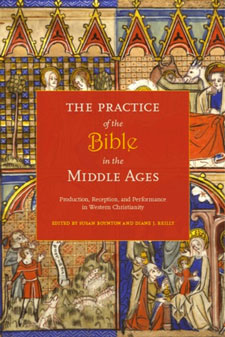
Susan Boynton and Diane J. Reilly. The Practice of the Bible in the Middle Ages: Production, Reception, and Performance in Western Christianity (New York: Columbia University Press, 2011).


Sheila Crane. Mediterranean Crossroads: Marseille and Modern Architecture (Minneapollis: University of Minnesota Press, 2011).

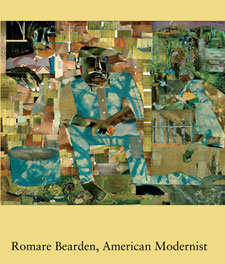
Ruth Fine and Jacqueline Francis, eds. Romare Bearden, American Modernist (Washington, DC: National Gallery of Art, 2011).

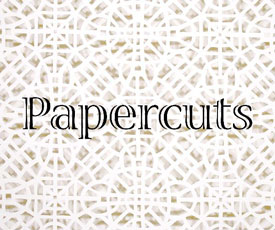
Reni Gower. Papercuts: The Art of Contemporary Paper Cutting (San Francisco: Blurb, 2011).

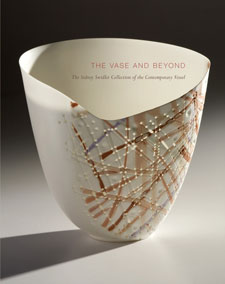
Martha Drexler Lynn and Diana L. Daniels. The Vase and Beyond: The Sidney Swidler Collection of the Contemporary Vessel (Sacramento, CA: Crocker Art Museum, 2010).


Rebecca Peabody, Andrew Perchuk, Glenn Phillips, and Rani Singh, with Lucy Bradnock, eds. Pacific Standard Time: Los Angeles Art, 1945–1980 (Los Angeles: Getty Research Institute and the J. Paul Getty Museum, 2011).

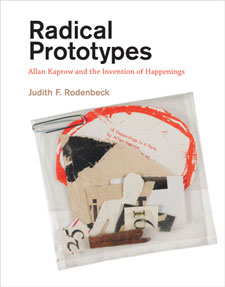
Judith Rodenbeck. Radical Prototypes: Allan Kaprow and the Invention of Happenings (Cambridge, MA: MIT Press, 2011).


Anna Sokolina, ed. Arkhitektura i Antroposofiia [Architecture and Anthroposophy], 2nd ed. (Moscow: KMK Scientific Press, 2010).
April Greiman Will Speak at the Annual Members’ Business Meeting
posted Dec 13, 2011
 April Greiman, an innovative designer whose work with digital technology freed graphic design and typography from its reliance on the modernist grid, helping push an analogue profession into the digital realm, will speak at CAA’s upcoming Annual Members’ Business Meeting.
Born and raised in New York, Greiman attended the Kansas City Art Institute in Missouri. She completed graduate studies with the designers Armin Hoffman and Wolfgang Weingart at the Allgemeine Kunstgewerbeschule (General Arts Trade School) in Basel, Switzerland, an early 1970s hotbed for the emerging “new wave” aesthetic. Greiman’s early visual identity and publication projects—especially her experimental issue of Design Quarterly in 1986—were notable for their pioneering use of early Apple Macintosh computers and software, and for their radical combination of video and print technologies.
As head of the design studio Made in Space, Greiman consults in transmedia identity and architectural branding, and with color, surfaces, and materials. In the academic sphere, she has taught at the Southern California Institute of Architecture and the California Institute of the Arts, where she led the design program in the 1980s and served as chair of Visual Communications in the 1990s. She is the author of several books on design, including Hybrid Imagery: The Fusion of Technology and Graphic Design (1990) and Something from Nothing: Design Process (2001).
As a practicing fine artist, Greiman has produced work encompassing digital photography, video, installation design, and architecture. Her public projects in Los Angeles, where she has lived since 1976, include Poet’s Walk for Citicorp Plaza and the seven-story mural Hand Holding a Bowl of Rice at the entrance to the Wilshire Vermont Metro Station in Koreatown. Greiman’s digital photography and transmedia work has been the subject of solo exhibitions at the School of Visual Arts in New York and the Pasadena Museum of California Art. Most recently, her work was included in the exhibition elles@centrepompidou at the Centre Pompidou in Paris.
Greiman has received numerous local, state, and national design awards, including a Hall Chair Fellowship from the Hallmark Corporation, a Gold Medal from the American Institute of Graphic Arts, a Chrysler Award for Innovation from the Chrysler Corporation, an AIGA Fellowship, and an American Institute of Architects Award.
CAA’s Annual Members’ Business Meeting will take place during the 100th Annual Conference on Friday, February 24, 2012, from 5:30 to 7:00 PM at Los Angeles Convention Center.
December Picks from CAA’s Committee on Women in the Arts
posted Dec 12, 2011
 Each month, CAA’s Committee on Women in the Arts produces a curated list, called CWA Picks, of recommended exhibitions and events related to feminist art and scholarship in North America and around the world.
Leading off the CWA Picks for December 2011 is an exhibition at the Gibbes Museum of Art in South Carolina covering three hundred years of work by women artists such as Henrietta de Beaulieu Dering Johnston, who is considered the first female professional artist in America. Three solo shows in New York are also worth checking out: new photographs by Nan Goldin, sculptural installations from Sarah Sze, and a Sanja Iverković survey.
Check the archive of CWA Picks at the bottom of the page, as several museum and gallery shows listed in previous months may still be on view or touring.
Image: Henrietta de Beaulieu Dering Johnston, Henriette Charlotte Chastaigner (Mrs. Nathaniel Broughton), 1711, pastel on paper, 14 2/5 x 11 3/5 in. Gibbes Museum of Art, Gift of Victor A. Morawetz (artwork in the public domain)
Committee on Women in the Arts Picks for December 2011
posted Dec 10, 2011
Each month, CAA’s Committee on Women in the Arts selects the best in feminist art and scholarship. The following exhibitions and events should not be missed. Check the archive of CWA Picks at the bottom of the page, as several museum and gallery shows listed in previous months may still be on view or touring.
December 2011

Henrietta de Beaulieu Dering Johnston, Henriette Charlotte Chastaigner (Mrs. Nathaniel Broughton), 1711, pastel on paper; 14 2/5 x 11 3/5 in. Gibbes Museum of Art, Gift of Victor A. Morawetz (artwork in the public domain)
Breaking Down Barriers: 300 Years of Women in Art
Gibbes Museum of Art
135 Meeting Street, Charlestown, SC 29401
October 28, 2011–January 8, 2012
This exhibition, drawn from the museum’s permanent collection, examines the challenges that women artists have faced over the past three hundred years. The oldest works are by Henrietta de Beaulieu Dering Johnston (ca. 1674–1729), who is considered the first female professional artist in America. Among the most recent contributions are those by artists who work in Charleston today.
Nan Goldin: Scopophilia
Matthew Marks Gallery
522 West 22nd Street, New York, NY 10011
October 29–December 23, 2011
Scopophilia (“the love of looking”) combines Nan Goldin’s autobiographical photographs with those taken in the Louvre Museum after hours. A video, complete with the artist’s commentary and soaring choral music, is shown in a darkened viewing room. Both the photographs and video deal with themes of love and desire.
Sarah Sze: Infinite Line
Asia Society
725 Park Avenue, New York, NY 10021
December 16, 2011–March 25, 2012
Sarah Sze: Infinite Line comprises two-dimensional works on paper and a new large-scale, site-specific installation. Sze uses everyday objects such as milk cartons, takeout cups, bars of soap, feathers, lamps, ladders, pebbles, potted plants, pens, plastic bottles, tools, and twigs, which are transformed in her installations by their associations.
Sanja Iverković: Sweet Violence
Museum of Modern Art
11 West 53rd Street, New York, NY 10019
December 18, 2011–March 25, 2012
This first US museum exhibition of the Croatian feminist, activist, and video and performance artist Sanja Iverković covers four decades of her career. Roxana Marcoci, curator in the Department of Photography, has brought together a group of videos and media installations, including Sweet Violence (1974), Personal Cuts (1982), Practice Makes a Master (1982/2009), General Alert (Soap Opera) (1995), and Rohrbach Living Memorial (2005), along with one hundred photomontages.
Practice Your Interviewing Technique at the Los Angeles Conference
posted Dec 09, 2011
Students and emerging professionals have the opportunity to sign up for a twenty-minute practice interview with a professional at the 2012 Annual Conference in Los Angeles. Organized by the Student and Emerging Professionals Committee, the Mock Interview Sessions give participants the chance to practice their interview skills one on one with a seasoned professional, improve their effectiveness during interviews, and hone their elevator speech. Interviewers also provide candid feedback on application packets.
Mock Interview Sessions are offered free of charge. Sessions are filled by appointment only and scheduled for Thursday, February 23, 10:00 AM–NOON and 4:00–6:00 PM; and Friday, February 24, 10:00 AM–NOON. Conference registration, while encouraged, is not necessary to participate.
To apply, download, complete, and send the Mock Interview Sessions form to Jennifer Stoneking-Stewart, chair of the Student and Emerging Professionals Committee. You may enroll in one twenty-minute session. Limited onsite enrollment is available for Thursday afternoon only. Onsite reservation starts on Wednesday afternoon, February 22, for spaces on Thursday, February 23, between 4:00 and 6:00 PM. Deadline: February 1, 2012.
You will be notified of your appointment day and time by email. Please bring your application packet, including cover letter, CV, and other materials related to jobs in your field. The Student and Emerging Professionals Committee will make every effort to accommodate all applicants; however, space is limited.
CAA Seeks Interviewers for the Mock Interview Sessions
posted Dec 09, 2011
For the 2012 Annual Conference in Los Angeles, the Student and Emerging Professionals Committee seeks established professionals to volunteer as practice interviewers for the Mock Interview Sessions. Participating as an interviewer is an excellent way to serve the field and to assist with the professional development of the next generation of artists and scholars.
In these sessions, interviewers pose as a prospective employer, speaking with individuals in a scenario similar to the Interview Hall at the conference. Each session is composed of approximately 10–15 minutes of interview questions and a quick review of the application packet, followed by 5–10 minutes of candid feedback. Whenever possible, the committee matches interviewers and interviewees based on medium, discipline, or institution type (school, museum, nonprofit, etc.).
Interested candidates must prepared to give six successive twenty-minute interviews with feedback in a two-hour period on one or both of these days: Thursday, February 23, 10:00 AM–NOON and 4:00–6:00 PM; and Friday, February 24, 10:00 AM–NOON. Conference registration, while encouraged, is not required to be a mock interviewer. Art historians and studio artists should be tenured; critics, museum educators, and curators should have five years’ experience. You may volunteer for one, two, or all three Mock Interview Sessions.
Please send a brief letter of interest, your CV, and the days and times that you are available to Jennifer Stoneking-Stewart, chair of the Student and Emerging Professionals Committee. Deadline: January 18, 2012.
The Mock Interview Sessions are not intended as a screening process by institutions seeking new hires.
Deadline Extended for ARTexchange in Los Angeles
posted Dec 08, 2011
 CAA’s Services to Artists Committee has extended the deadline for membership participation in ARTexchange, an open forum for sharing work at the 2012 Annual Conference. The new deadline is February 10, 2012. Free and open to the public, ARTexchange will be held on Friday, February 24, 5:30–7:30 PM, in a central location at the Los Angeles Convention Center. A cash bar will be available.
ARTexchange is an annual event showcasing the art of CAA members, who can exhibit their paintings, drawings, prints, photographs, sculptures, and digital works using the space on, above, and beneath a six-foot folding table. Artists may also construct temporary mini-installations and conduct performance, sound, and spoken-word pieces in their space. In the past, many ARTexchange participants found the event to be their favorite part of the conference, with the table parameter sparking creative displays.
To be considered for ARTexchange in Los Angeles, please send your full name, your CAA member number, a brief description of the work you want to exhibit (no more than 150 words), and a link to your website to Lauren Stark, CAA manager of programs. Artists presenting performance or sound art, spoken word, or technology-based work, including laptop presentations, must add a few sentences about their plans. Accepted participants will receive an email confirmation. Because ARTexchange is a popular venue with limited space, early applicants will be given preference. Deadline extended: January 6, 2012.
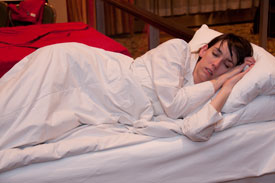 Participants are responsible for their work; CAA is not liable for losses or damages. The sale of work is not permitted. Participants may not hang their artworks on walls or run their power cords from laptops or other electronic devices to outlets—please bring fully charged batteries. For the first time, CAA will provide wireless internet to ARTexchange participants free of charge.
Top image: Participants in the 2011 ARTexchange (photograph by Bradley Marks)
Bottom image: The interdisciplinary artist Rachel Hines performs a work called Interview during the 2011 ARTexchange in New York (photograph by Bradley Marks)
Career Services Guide for the Los Angeles Conference
posted Dec 07, 2011
 CAA has designed the Career Services Guide to inform job seekers and employers about placement activities at the 2012 Annual Conference in Los Angeles. The publication, available as a PDF, will help you navigate Career Services events and provides answers to frequently asked questions. Study this guide carefully so that you will know what to expect from conference interviewing and how best to prepare for a successful experience.
Job candidates can review the basics of the conference employment search. Read about the Candidate Center, your home base at the conference, as well as Orientation, an introduction to Career Services where you can ask questions. In addition, learn more about the Online Career Center, where you can search for position listings, post application materials, and arrange interviews. The publication includes tips for improving your CV, portfolio, and supplemental application materials.
Employers will find details in the guide for renting interview booths and tables as well as recommendations for posting jobs and conducting interviews at the conference. You can begin preparations now for Career Services through the Online Career Center or onsite at the Interviewer Center.
Printed copies of the Career Services Guide will be distributed onsite at Orientation and in the Candidate Center. All conference Career Services will take place at the Los Angeles Convention Center. For more information about job searching, professional-development workshops, and more, visit the Career Services section of the conference website.
Recipients of CAA’s Meiss and Wyeth Publications Grants
posted Dec 05, 2011
CAA has awarded grants to the publishers of thirteen books in art history and visual culture through two programs: the Millard Meiss Publication Fund and the Wyeth Foundation for American Art Publication Grant.
Meiss Grants Winners
This fall, CAA awarded grants to the publishers of eight books in art history and visual culture through the Millard Meiss Publication Fund. Thanks to the generous bequest of the late Prof. Millard Meiss, CAA gives these grants to support the publication of scholarly books in art history and related fields.
The eight grantees for fall 2011 are:
- Esra Akcan, Architecture in Translation: Germany, Turkey, and the Modern House, Duke University Press
- Helen Hills, The Matter of Miracles: Forms of Holiness in Baroque Naples, Manchester University Press
- Paul B. Jaskot, The Nazi Perpetrator and Postwar German Art, University of Minnesota Press
- Jacqueline Jung, The Gothic Screen: Sculpture, Space, and the Community in the Cathedrals of France and Germany, 1200–1400, Cambridge University Press
- Jinah Kim, Receptacle of the Sacred: Illustrated Manuscripts and the Buddhist Book Cult in South Asia, University of California Press
- Mary Quinlan-McGrath, Influences—From the Orb of the Universe to the Orb of the Eye: Astrology and Art in the Italian Renaissance, University of Chicago Press
- Hanna Rose Shell, Hide and Seek: Camouflage, Animal Skin, and the Media of Reconnaissance, Zone Books
- Charlotte Townsend-Gault, Northwest Coast Native Art: The History of an Idea, University of British Columbia Press
Books eligible for Meiss grants must already be under contract with a publisher and on a subject in the visual arts or art history. Authors must be current CAA members. Please review the application guidelines for more information. The deadline for the spring 2012 grant cycle is March 1, 2012.
Wyeth Grant Winners
CAA is pleased to announce five recipients of the annual Wyeth Foundation for American Art Publication Grant. Thanks to a second generous three-year grant from the Wyeth Foundation, these awards are given annually to publishers to support the publication of one or more book-length scholarly manuscripts in the history of American art, visual studies, and related subjects.
Receiving 2011 grants are:
- Amanda Carlson and Robin Poynor, Africa in Florida: 500 Years of African Presence in the Sunshine State, University Press of Florida
- Mary Coffey, Mexican Muralism and the “Philanthropic Ogre”: How a Revolutionary Art Became Official Culture, Duke University Press
- Mónica Domínguez Torres, Military Ethos and Visual Culture in Post-Conquest Mexico, Ashgate
- Tatiana Flores, From Estridentismo to ¡30-30!: The Historical Avant-Gardes of Post-Revolutionary Mexico, Yale University Press
- Sue Rainey, Harry Fenn’s Career in Art: Creating a World on Paper, University of Massachusetts Press
For the purpose of this program, “American art” is defined as art created in the United States, Canada, and Mexico prior to 1970. Books eligible for a Wyeth grant must already be under contract with a publisher. Authors must be current CAA members. Please review the application guidelines for more information. The deadline for the 2012 grant cycle is October 1, 2012.
Finalists for the 2012 Morey and Barr Awards
posted Dec 02, 2011
CAA is pleased to announce the finalists for the 2012 Charles Rufus Morey Book Award and the Alfred H. Barr Jr. Award. The winners of both prizes, along with the recipients of ten other Awards for Distinction, will be announced in January and presented during a special ceremony in Los Angeles, in conjunction with the 100th Annual Conference and Centennial Celebration.
The Charles Rufus Morey Book Award honors an especially distinguished book in the history of art, published in any language between September 1, 2010, and August 31, 2011. The four finalists are:
- Michael W. Cole, Ambitious Form: Giambologna, Ammanati, and Danti in Florence (Princeton: Princeton University Press, 2011)
- Rebecca Messbarger, The Lady Anatomist: The Life and Work of Anna Morandi Manzolini (Chicago: University of Chicago Press, 2010)
- Alexander Nagel, The Controversy of Renaissance Art (Chicago: University of Chicago Press, 2011)
- Nina Rowe, The Jew, The Cathedral, and the Medieval City: Synagoga and Ecclesia in the Thirteenth Century (New York: Cambridge University Press, 2011)
The Alfred H. Barr Jr. Award for museum scholarship is presented to the author(s) of an especially distinguished catalogue in the history of art, published between September 1, 2010, and August 31, 2011, under the auspices of a museum, library, or collection. The three finalists are:
- Maryan W. Ainsworth, ed., Man, Myth, and Sensual Pleasures: Jan Gossart’s Renaissance; The Complete Works (New York: Metropolitan Museum of Art, in association with Yale University Press, 2010)
- Suzanne Glover Lindsay, Daphne S. Barbour, and Shelley G. Sturman, Edgar Degas Sculpture (Washington, DC: National Gallery of Art, 2010)
- Elizabeth Morrison and Anne D. Hedeman, Imagining the Past in France: History in Manuscript Painting, 1250–1500(Los Angeles: J. Paul Getty Museum, 2010)
The Barr jury has also shortlisted two catalogues for the second Barr Award for Smaller Museums, Libraries, or Collections. The titles are:
- Roy Flukinger, The Gernsheim Collection (Austin: Harry Ransom Center, University of Texas Press, 2010)
- James T. Tice and James G. Harper, Giuseppe Vasi’s Rome: Lasting Impressions from the Age of the Grand Tour (Eugene: Jordan Schnitzer Museum of Art, University of Oregon, 2010)
The presentation of the 2012 Awards for Distinction will take place on Thursday afternoon, February 23, 12:30–2:00 PM, in West Hall Meeting Room 502AB, Level 2, Los Angeles Convention Center. The event is free and open to the public. For more information about CAA’s Awards for Distinction, please contact Lauren Stark, CAA manager of programs, at 212-392-4405.