
CAA News Today
In Memoriam: Robert L. Herbert
posted Dec 22, 2020
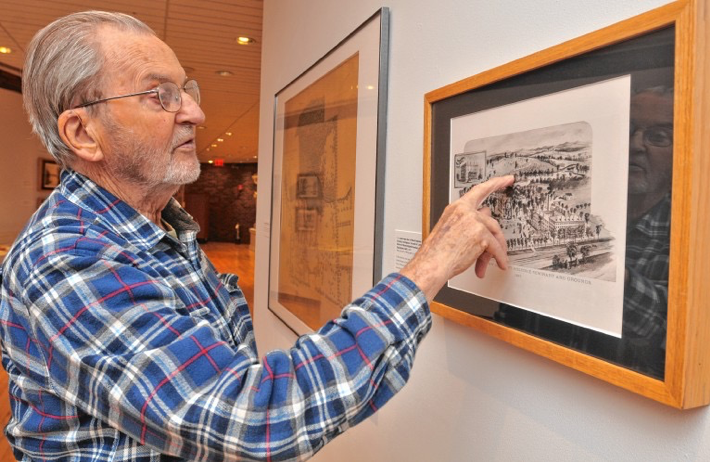
Robert L. Herbert
We are saddened to learn of the passing of Robert L. Herbert, a visionary in art history and extraordinary teacher to many. He received CAA’s Distinguished Lifetime Achievement Award for Writing on Art in 2008. He passed December 17 of a stroke at 91.
Robert L. Herbert
In an extraordinary career spanning more than sixty years, Robert L. Herbert was remarkably consistent in a practice that has come to define the social history of art, which he described as “the moral and passionate … search for what paintings and drawings meant in the artists’ time.”1
As an undergraduate at Wesleyan University in the late 1940s and early 1950s, he was fascinated by the history of science, an interest that encouraged his study of color theory in his dissertation on the nineteenth-century French artist Georges Seurat, completed at Yale University under the direction of George Heard Hamilton in 1957. By that time, Herbert had already been inspired by the work of Meyer Schapiro, who encouraged his lifelong commitment to socialism as a framework for political and intellectual development. Proud of his roots in a working-class New England family, Herbert resisted the formalist bias of his training, although he readily acknowledges a debt to those who taught him to look carefully at works of art and to appreciate the importance of technique and pictorial structure. From the beginning he always insisted that “the stuff of ordinary daily life should enter into art history,” and made it his goal “to restore the flesh of real painters and their culture to the bones of style and form.”
A desire to balance respect for the artist’s distinctive modes of representation with a socially and historically grounded reading of subject matter was a salient feature of Herbert’s research, which focused, for example, not only on the color and facture of paintings by Seurat and other Neoimpressionist artists, but also on the distinctive subject matter and the politics of their art. Recognizing that the prevailing view of Seurat tended to privilege his large-scale paintings, Herbert trained attention on his drawings in a book published in 1963; yet he also continued to explore the meanings of Seurat’s paintings, organizing a major retrospective exhibition on the hundredth anniversary of the artist’s death in 1991 as well as another, Seurat and the Making of “La Grande Jatte,” that was devoted to his most celebrated painting in 2004. In fact, many of Herbert’s most innovative and important contributions to the history of art have been made in the context of exhibitions, which require careful attention to individual objects in addition to the presentation of a unifying conception of the whole. For his first foray into this genre of scholarship, the 1962 exhibition Barbizon Revisited, Herbert wrote a catalogue that won CAA’s Frank Jewett Mather Award and precipitated a renewed appreciation of the work and historical significance of mid-nineteenth-century landscape painters such as Corot, Millet, and Rousseau, among others. His ambition for the exhibition was expressed in terms that convey his dedication to a particular kind of art-historical practice: “The purely historical treatment of art is bloodless. The real heritage of Barbizon art is in the paintings, and their vitality must be experienced in our viscera. Otherwise works of art are documents to be assessed, catalogued, and filed away. But there is a proper use of history, namely, to prod us into discoveries which release our imagination and permit us to rise to the realm of true poesis. An historical evaluation of Barbizon art will only have value if it succeeds in doing just this.”
Just as the study of Seurat’s drawings prompted Herbert to look carefully at Millet’s drawings and other work in articles and exhibitions of the 1960s and 1970s, so Seurat’s paintings eventually led him to the work of Fernand Léger, whom he considers to be Seurat’s descendant and a great practitioner of the craft of painting. Thus although Herbert’s scholarly reputation is bound to his work on nineteenth-century French painters—he has written books on Monet and Renoir, a survey devoted to the leisure subjects of the Impressionists, as well as the publications mentioned above on Seurat, Millet, and the Barbizon School—he has also produced significant scholarship on early-twentieth-century modernism. His first contribution to that field was an edited volume of ten essays, Modern Artists on Art, published in 1964. This was followed twenty years later by a detailed study of the large, diverse collection of European and American modernist art from the Société Anonyme that Katherine Dreier had bequeathed to Yale at midcentury and that Herbert had explored for many years together with his students. Along the way, Herbert developed research he had undertaken as a graduate student into a book, published in 1972, on David’s Brutus and its political significance in the context of the French Revolution; his commitment to the social history of art was also evident in a volume of selected art criticism by John Ruskin that Herbert edited in 1964 and for which he wrote an eloquent introduction that provided a thoroughgoing reevaluation of Ruskin’s significance from a variety of perspectives, demonstrating his acute relevance to the social history of art that Herbert was in the process of articulating at the time.
It is impossible to summarize Herbert’s contributions to art history simply in terms of his scholarly production, impressive as that output has been. He has also been an inspiring teacher of undergraduate and graduate students, setting an example in countless ways that go well beyond his commitment to scrutinizing original works of art alongside archival resources of the most diverse kinds. In addition to imparting these indispensable staples of the trade, he maintained an extraordinary level of personal and professional engagement with his students, loyally supporting their ambitions and celebrating their achievements, whether large or small. Refusing to be impressed by conventional measures of status, in 1990 he acted on his commitment to feminism by relinquishing his position at Yale in order to join his wife, Eugenia Herbert—whom he has always described as his greatest intellectual companion—on the faculty of Mount Holyoke College.
As professor emeritus and living in South Hadley, Massachusetts, he discovered a passionate interest in the life and work of a mid-nineteenth-century female botanist and illustrator named Orra White Hitchcock. “I’ve taken the plunge,” Herbert has remarked, “into the world of American women’s diaries, into travel diaries, and into the history of geology and the natural sciences, embraced in the broader spectrum of American social and cultural history of the middle third of the nineteenth century. It’s a new world for me, and I have no regrets at giving up French art history!” Subsequently he turned to exploring the history of Mount Holyoke and curated several exhibitions with James Gehrt and Aaron Miller.
He died December 17 of a stroke at 91 and is survived by his wife of 67 years Eugenia (Fi); children, Tim, Rosie, and Cathy; their mates, Mara, John and Chris; six grandchildren, and a wealth of friends to whom he was immensely devoted as well.
Announcing the CAA 2021 Keynote Speaker: Skawennati
posted Dec 21, 2020
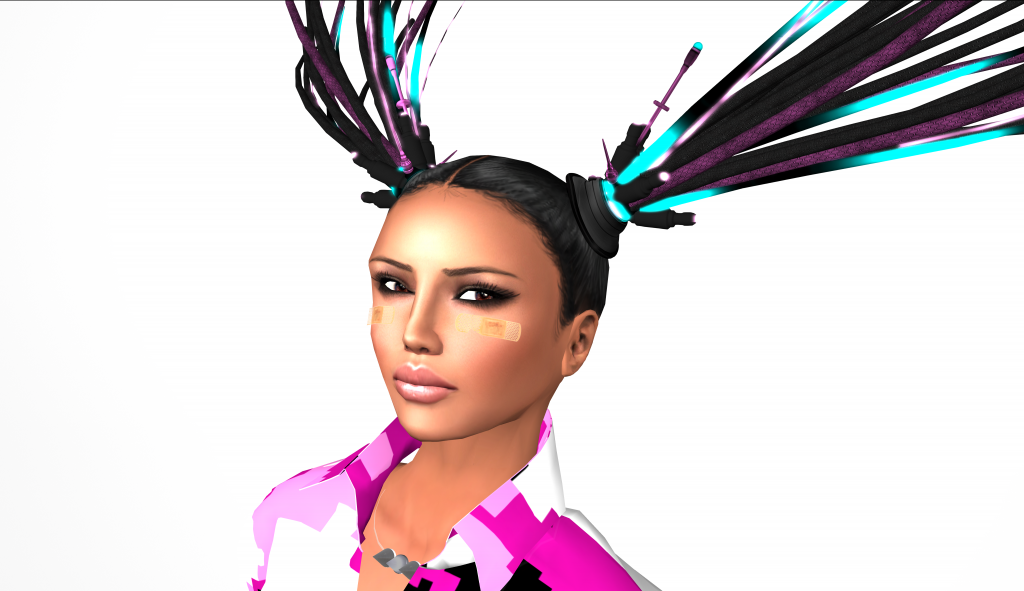
Skawennati as xox
We’re delighted to announce that the Keynote Speaker for the 109th CAA Annual Conference will be Skawennati, who will address the membership during Convocation.
Skawennati makes art that addresses history, the future, and change from her perspective as an urban Kanien’kehá:ka (Mohawk) woman and as a cyberpunk avatar. Her early adoption of cyberspace as both a location and a medium for her practice has led to groundbreaking projects such as CyberPowWow and TimeTraveller™. She is best known for her machinimas—movies made in virtual environments—but she also produces still images, textiles and sculpture.
Her works have been presented in Europe, Oceania, China and across North America in exhibitions such as “Uchronia I What if?”, in the HyperPavilion at the 57th Venice Biennale; “Now? Now!” at the Biennale of the Americas; and “Looking Forward (L’Avenir)” at the Montreal Biennale. They are included in the collections of the National Gallery of Canada, the National Bank of Canada and the Musée d’art contemporain de Montréal, among others. She was honoured to receive the 2019 Salt Spring National Art Prize Jurors’ Choice Award and a 2020 Smithsonian Artist Research Fellow. Skawennati is represented by ELLEPHANT, and her work is viewable at skawennati.com.
Skawennati has been active in various communities. In the 80s she joined SAGE (Students Against Global Extermination) and the Quebec Native Women’s Association. In the 90s she co-founded Nation to Nation, a First Nations artist collective, while working in and with various Indigenous organizations and artist-run centres, including the Native Friendship Centre of Montreal and Oboro. In 2005, she co-founded Aboriginal Territories in Cyberspace (AbTeC), a research-creation network whose projects include the Skins workshops on Aboriginal Storytelling and Digital Media as well as the Initiative for Indigenous Futures. Throughout most of the teens, she volunteered extensively for her children’s elementary school, where she also initiated an Indigenous Awareness programme. In 2019, she co-founded centre d’art daphne, Tiohtià:ke/Mooniyang/Montreal’s first Indigenous artist-run centre.
Born in Kahnawà:ke Mohawk Territory, Skawennati belongs to the Turtle clan. She holds a BFA from Concordia University in Montreal, where she resides.
Convocation will be held on Wednesday, February 10, 2021, 4:30-6:00 pm EST. Access to Convocation requires free registration for “Free and Open Sessions” and is included in paid registration.
Finalists for the 2021 Morey and Barr Awards
posted Dec 16, 2020
CAA is pleased to announce the 2021 finalists for the Charles Rufus Morey Book Award and two Alfred H. Barr Jr. Awards. The winners of the three prizes, along with the recipients of other Awards for Distinction, will be announced in February 2021 and presented during Convocation in conjunction with CAA’s 109th Annual Conference, taking place on February 10-13, 2021.
2021 Charles Rufus Morey Book Award finalists
2021 Alfred H. Barr Jr. Award finalists
Louis Marchesano, ed., Käthe Kollwitz: Prints, Process, Politics, Getty Publications, 2020
2021 Alfred H. Barr Jr. Award for Smaller Museums, Libraries, Collections, and Exhibitions finalists
Andrea Rosen, Wood Gaylor and American Modernism, 1913-1936, Fleming Museum of Art, 2020
Jinah Kim and Todd Lewis, Dharma and Puṇya: Buddhist Ritual Art of Nepal, Brill, 2019
CWA Picks: December 2020
posted Dec 15, 2020
December CWA Picks
December Picks from the Committee on Women in the Arts celebrate a selection of events, exhibitions and calls for work and participation featuring feminist and womxn artists and addressing issues concerning social justice and ethics in intersectional and transnational perspectives.
Food Justice In Appalachia: Call For Content; An exhibit by WVU Libraries in partnership with the WVU Food Justice Lab and the WVU Center for Resilient Communities.
https://exhibits.lib.wvu.edu/gallery_foodjustice
The call (deadline on February 1st, 2021; exhibition launch in August 2021) invites submissions exploring concepts of food justice, food sovereignty and community food security. Selected works will be included in an exhibition, which focuses on ways in which the food system shapes landscapes, defines economic systems and informs cultural practices.
Curators Conversation: Curating the Digital — a Webinar hosted by Art Curator Grid and SALOON London on December 17th, 2020
https://www.eventbrite.pt/e/curators-conversation-curating-the-digital-tickets-129483736341
Curators Julia Greenway and Noelia Portela will be in conversation with SALOON London co-founder Mara-Johanna Kolmel to explore the online spheres and the digital realm in curatorial practices. SALOON London is a professional network for women in the arts with the objective of creating an open forum to exchange ideas, experiences and initiate collaborations.
Online exhibition accompanying On Transversality in Practice and Researchconference 9-11 December 2020, organised by PhD students from across the UK
https://ontransversality.wordpress.com/exhibition/
This exhibition presents the works of Maria Teresa Gavazzi, Emily Beaney, Stav B and Caio Amado Soares, and Niya B. who reflect on the issues addressed by the conference themes: interdisciplinarity, intersectionality and transnationalism in research praxis, from anti-racist, decolonial, feminist, and queer methodological perspectives.
Feminist Art Coalition (FAC)
https://feministartcoalition.org/
FAC, a platform for art projects informed by feminisms, encourages collaborations between arts institutions with the aim of promoting and advocating for social justice and structural change. A series of collaboratively conceived events and exhibitions planned for 2020 have been postponed to 2021 because of COVID-19 closures.
Our inheritance was left to us by no testament prelude exhibition to OnHannah Arendt: Eight Proposals for Exhibition; Richard Saulton Gallery, London
Richard Saulton Gallery launches its programme ‘On Hannah Arendt’ in January 2021 addressing the political philosopher’s 1968 publication Between Past and Future, in which Arendt questions the lost freedoms in the period post World War II and the threads of broken traditions. The group exhibition Our inheritance was left to us by no testament, a prelude to the launch, features the work of seven women artists from Eastern Europe, Alina Szapocznikow, Barbara Levittoux-Świderska, Renate Bertlmann, Běla Kolářová, Jagoda Buić, Jolanta Owidzka and Erna Rosenstein, that speak to possibilities in art without tradition.
CAA 2021 Artists’ Interviews: Polly Apfelbaum interviewed by David Pagel
posted Dec 11, 2020
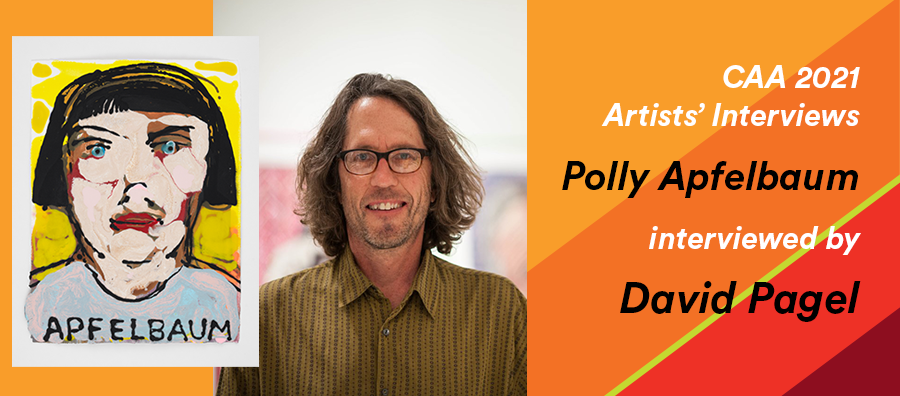
Polly Apfelbaum, image credit: Nicole Eisenman, Apfelbaum, 2019, Paper pulp drawing, Paper dimensions: 30 1/2 x 22 1/2 in, Courtesy the artist and Anton Kern Gallery.
David Pagel.
We are excited to announce that one of this year’s Artists’ Interviews will feature Polly Apfelbaum, interviewed by David Pagel.
Beginning in 1997, the Annual Artists’ Interviews were established to provide the opportunity for esteemed artists to have one-on-one conversations with colleagues at the Annual Conference.
Each year, the Services to Artists Committee identifies two distinguished artists to participate. The interviews, held as part of the Services to Artists Program, provide a unique opportunity for members to hear insights from artists in dialogue with the interviewer. Access to this program content requires free registration for “Free and Open Sessions” and is included in paid registration. This year’s Artists’ Interviews are supported by a generous grant from the NEA.
Speaker Biographies
New York-based artist Polly Apfelbaum’s (b.1955) work has situated itself as a hybrid of painting, sculpture, and installation over a career spanning 30-plus years. Exploring the intricacies of color, Apfelbaum weaves her way, both literally and conceptually, through ideas of Minimalism, Pop aesthetics, and Color Field painting to blur the lines between two-and three-dimensional art making. Apfelbaum graduated from the Tyler School of Art, Elkins Park, Pennsylvania. She has exhibited consistently since her first solo show in 1986. Her work has recently been recognized with a Pew Center for Arts Grant, a Creative Capital Award, and the 2012 Rome Prize at the American Academy. She has also received a Joan Mitchell Grant, The Diebenkorn Fellowship, a Pollock-Krasner Foundation Grant, an Anonymous Was a Woman Grant, and a Guggenheim Fellowship.
Recent solo exhibitions include: “Waiting For the UFO’s (a space between a landscape and a bunch of flowers)” at the Kemper Museum, Kansas City, and the Ikon Gallery, Birmingham, UK (2019); “Haystack Hands” at Haystack Mountain School of Craft, Deer Isle, ME; “Happiness Runs” at Belvedere 21, in Vienna, Austria (2018); “Dubuffet’s Feet, My Hands” at Frith Gallery, London, UK (2017); “The Potential of Women” at Alexander Gray Associates, New York, NY (2017); “Face (Geometry)(Naked) Eyes,” Otis College of Art and Design, Los Angeles, CA (2016); and “Deep Purple, Red Shoes,” Be-Part, Waregem, Belgium (2015). She is represented in numerous collections including: Brooklyn Museum of Art, Brooklyn, NY; Carnegie Museum of Art, Pittsburgh, PA; Dallas Museum of Art, Dallas, TX; Los Angeles County Museum of Art, Los Angeles, CA; Museum of Modern Art, New York, NY; Philadelphia Museum of Art, Philadelphia, PA; Whitney Museum of American Art, New York, NY.
David Pagel is an art critic who lives in Los Angeles and regularly contributes to the Los Angeles Times. He is a professor of art theory and history at Claremont Graduate University and an adjunct curator at the Parrish Art Museum in Water Mill, NY, where he has organized “Telling Stories: Changing the Narratives” (2020) and “Unfinished Business: Paintings from the 1970s and 1980s by Ross Bleckner, Eric Fischl and David Salle” (2016).
Recent publications include “Jim Shaw” (Lund Humphries, 2019) and “Talking Beauty: A Conversation Between Joseph Raffael and David Pagel About Art, Love, Death, and Creativity” (Zero+, 2019). An avid cyclist, he is a seven-time winner of the California Triple Crown.
Apfelbaum and Pagel’s pre-recorded conversation will be available starting on February 5, 2021. They will host a live online Q&A on Friday, February 12 at 5:30pm EST.
Apply to Join the CAA Council of Readers
posted Dec 10, 2020
In preparation for the spring submission cycle for the 2022 Annual Conference, the Annual Conference Committee will appoint up to 22 new members to the Council of Readers. Council members read and rate session and presentation proposals and serve a crucial role in the review process for the Annual Conference.
Over 950 proposals are submitted for review each year for selection to the conference program. Each proposal is read by three Council members. By providing their time, knowledge, and expertise of their fields, the council helps to shape the conference program. Each member of the Council reviews up to 60 proposals per year from across CAA’s fields of study and as much as possible from within their self-identified scholarly focus and knowledge. Most proposals include one 250-word abstract, while complete session submissions can include 4-5 abstracts (1250 words). Each reader receives a similar amount of content.
Requirements for Readers
- Current CAA membership
- Time commitment to read and review no more than 60 proposals online in May-June 2021
- Ability to participate as a Council of Readers member for up to three years
- Readers are required to read and abide by CAA’s Statement on Conflict of Interest and Confidentiality
- Abbreviated CV uploaded to online form
- Completed online form
Application deadline: February 25, 2021
More details:
- The Council of Readers is a group of 50 to 75 CAA members from Professional Committees, Affiliated Societies, and general membership overseen by the Annual Conference chair.
- Readers will be asked to review proposals from across CAA’s fields of study, and as much as possible from within their self-identified scholarly focus. Readers with broad areas of interest are encouraged to participate.
- The proposals will be distributed in early May and must be completed by mid June.
- Readers will access abstracts and complete their reviews in our online system, with orientation and support from the Annual Conference Committee and CAA staff members.
- Each proposal is read and reviewed in the online portal by three different Council members.
- The majority of proposals include a single 250-word abstract, while complete session submissions can include 4-5 abstracts (1250 words).
- Readers will review no more than 60 proposals each, with proportional share of abstracts.
- For each proposal, Readers will use a scale of 1-5 to answer five questions and also enter a short comment for the Annual Conference Committee’s review.
- Members of the Council of Readers serve a three-year term on a rotation so that each year, one third of the council is new.
- The Council of Readers does not meet together in person or electronically.
- After proposals are read and reviewed by the Council, the chair reports to the Annual Conference Committee on session topics, including identifying possible areas of content that are missing from the submissions received.
- The chair finalizes the conference content based on the reviewed submissions.
Please email programs@collegeart.org with any questions.
CAA 2021 Artists’ Interviews: Alan Michelson interviewed by David Joselit
posted Dec 07, 2020
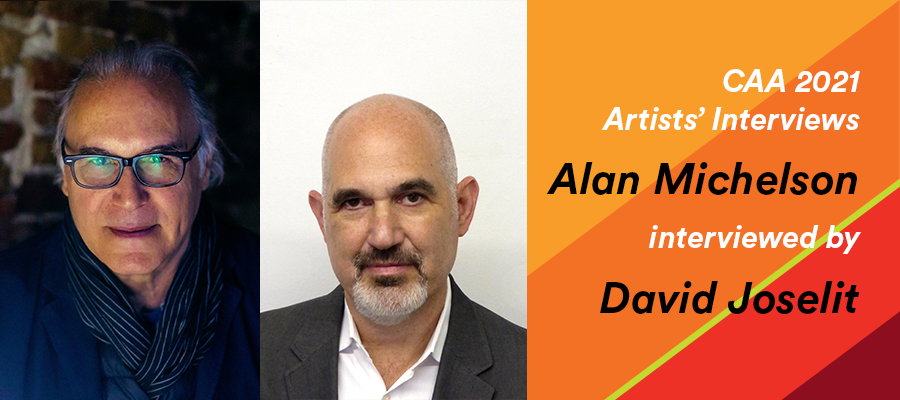
Alan Michelson, photo: Karolina Sobel. David Joselit, photo: Mary Ellen Carroll.
We are pleased to announce that one of this year’s Artists’ Interviews will feature Alan Michelson, interviewed by David Joselit.
Beginning in 1997, the Annual Artists’ Interviews were established to provide the opportunity for esteemed artists to have one-on-one conversations with colleagues at the Annual Conference.
Each year, the Services to Artists Committee identifies two distinguished artists to participate. The interviews, held as part of the Services to Artists Program, provide a unique opportunity for members to hear insights from artists in dialogue with the interviewer. Access to this program content requires free registration for “Free and Open Sessions” and is included in paid registration. This year’s Artists’ Interviews are supported by a generous grant from the NEA.
Speaker Biographies
Alan Michelson is an internationally recognized New York-based artist, curator, writer, lecturer and Mohawk member of the Six Nations of the Grand River.
For over thirty years, he has been a leading practitioner of a socially engaged, critically aware, site-specific art grounded in local context and informed by the retrieval of repressed histories. Recent exhibitions include Alan Michelson: Wolf Nation, Whitney Museum of American Art, Volume 0, Zuecca Projects, Venice, and Citizenship: A Practice of Society, MCA Denver.
His work is in the permanent collections of the Whitney Museum of American Art, the National Gallery of Canada, the Smithsonian National Museum of the American Indian, and the Art Gallery of Ontario. His essays have recently appeared in Frieze and October.
Public art is also part of his diverse practice, and Mantle, his large-scale monument honoring Virginia’s Indian nations was dedicated at the capitol in Richmond in 2018.
Michelson is co-founder and co-curator, with the Vera List Center for Art and Politics at the New School, of the groundbreaking Indigenous New York series.
David Joselit is Professor of Art, Film, and Visual Studies at Harvard. Joselit is author of Infinite Regress: Marcel Duchamp 1910-1941 (MIT, 1998), American Art Since 1945 (Thames and Hudson, 2003), Feedback: Television Against Democracy (MIT, 2007), and After Art (Princeton University Press, 2012). He co-organized the exhibition, “Painting 2.0: Expression in the Information Age,” which opened at the Brandhorst Museum in Munich in 2015.
Joselit is an editor of the journal OCTOBER and writes regularly on contemporary art and culture. His most recent book is Heritage and Debt: Art in Globalization (MIT Press 2020).
Michelson and Joselit’s pre-recorded conversation will be available starting on February 5, 2021. They will host a live online Q&A on Friday, February 12 at 4:30 pm EST.
Notice of CAA 109th Annual Business Meeting
posted Dec 04, 2020
College Art Association
Notice of 109th Annual Business Meeting
Friday, February 12, 2021
2:00 p.m. EST
The 109th Annual Business Meeting of the members of the College Art Association will be called to order at 2:00 p.m. EST on Friday, February 12th at the 2021 Annual Conference. Access to this meeting requires free registration for “Free and Open Sessions” and is included in paid registration. Once you have registered, please log into the online conference portal to attend the meeting.
CAA President, N. Elizabeth Schlatter will preside.
AGENDA
- Welcome / Call to Order – N. Elizabeth Schlatter, CAA President
- Executive Director’s Report – Meme Omogbai
- Approval of Minutes of 108th Annual Business Meeting, held in two parts, February 12 and February 14, 2020 [ACTION ITEM] See CAA 108th Annual Business Meeting Minutes.
- Financial Report: Robert Tofolo, Chief Financial Officer
- Old Business
- New Business
- Results of Election of New Directors – N. Elizabeth Schlatter, CAA President
- Adjournment
Proxies
If you are unable to attend the Annual Business Meeting, kindly complete a proxy online to appoint the individuals named thereon to (i) vote, as directed by you, for directors, and, at their discretion, on such other matters as may properly come before the Annual Business Meeting; and (ii) vote on any and all adjournments thereof. CAA Members will be notified when the proxy for casting votes becomes available — online in late December 2020. A proxy, with your vote for directors, must be received no later than 6:00 p.m. EST Thursday, February 11th, 2021.
Next Meeting – 2022
The 110th Annual Business Meeting of the College Art Association will be held in Chicago in 2022, precise date to be announced.
Colin Blakely, Secretary
College Art Association
December 10, 2020
CAA 108th Annual Business Meeting Minutes
posted Dec 04, 2020
College Art Association
108th Annual Business Meeting
MINUTES
Hilton Chicago, 720 South Michigan Avenue, Chicago, IL
Part I: February 12, 2020: Convocation, 6:00PM, Grand Ballroom
Part II: February 14, 2020: 2:00PM, Room 4A
Part I: February 12, 2020
I. Welcome
David Raizman, Interim Executive Director, welcomed attendees to the Convocation and to the Association’s 108th Annual Business Meeting.
II. Executive Director’s report
Raizman noted that this year’s Annual Conference has approximately 375 ninety-minute sessions.
This year, in collaboration with the Committee on Women in the Arts, the conference offers a selection of sessions, papers, speakers, and related programming in celebration of the Centennial of Women’s Suffrage in the US. Approximately 50% of the conference’s content is focused on women-centered research, artistic presentations, and discourse. Also, as of this year, the conference program is available only in a variety of digital formats, including the conference app and a downloadable pdf file.
President Jim Hopfensperger was not in attendance, and President-Elect N. Elizabeth Schlatter was ill and could not attend the conference.
III. Awards for Achievement
The awards for achievement were presented by former Presidents: Suzanne Blier, DeWitt Godfrey, Anne Goodyear. The 2020 Professional Development Fellowships in Art History and Visual Art were presented by Raizman.
IV. Keynote address
Raizman introduced Amanda Williams, visual artist and architect, who presented the keynote address.
Part II: February 14, 2020
V. Call to Order
Raizman called the meeting to order.
VI. Approval of Minutes
Raizman asked for a motion to approve the minutes of the meeting held on February 13 and 15, 2019. Cunard made the motion, seconded by Blakely. Motion was approved.
VII. Financial Report
Robert Tofolo, Chief Financial Officer, presented the financial report for the Association for the year ending June 30, 2019. The Association posted an operating deficit of $-167,000, versus a forecasted deficit of $-189,000 and against it original budget of $57,000. The Association continues to work to budget expenses within projected revenue targets. Revenue totaled $3,523,000 against expenses of $3,690,000.
As of June 30, 2019, there were 7,773 (8,435, -8%) individual members. There were 464 (461) organizational members and an additional 617 (651, -5%) subscribers to The Art Bulletin and/or Art Journal through the Association’s co-publisher Taylor and Francis.
The market value of the investment portfolio as of June 30, 2019 was $9,609,945 versus the prior year balance of $9,514,314.
Copies of the audited financial statements for fiscal year 2019 are available and they will be posted as a PDF on the Association’s website.
The Executive Director search is ongoing, conducted by the search committee comprising Directors and staff members.
The number of attendees at this Annual Conference stands at 3,300 as of this afternoon.
VIII. Election of Board Members
Julia Sienkewicz, Vice President for Committees, presented the results of the elections of new members to the Board. The following four members were elected to the Board by the membership to serve a four-year term starting in May 2020:
- Mora Beauchamp-Byrd
- Scherezade Garcia-Vazquez
- Tiffany Holmes
- Nada Shabout
The following member was elected to the Board as an Emerging Professional Director to serve a two-year term starting in May 2020:
- Lara Ayad
IX. Old Business
Raizman called for old business. There was none.
X. New Business
Raizman called for new business. There was none.
XI. Adjournment
Raizman adjourned the meeting.
Vote for CAA’s 2021 Board of Directors
posted Dec 03, 2020
As a CAA member, voting is one of the best ways to shape the future of your professional organization. Thank you for taking the time to vote! Scroll down to meet this year’s candidates and submit your online voting form.
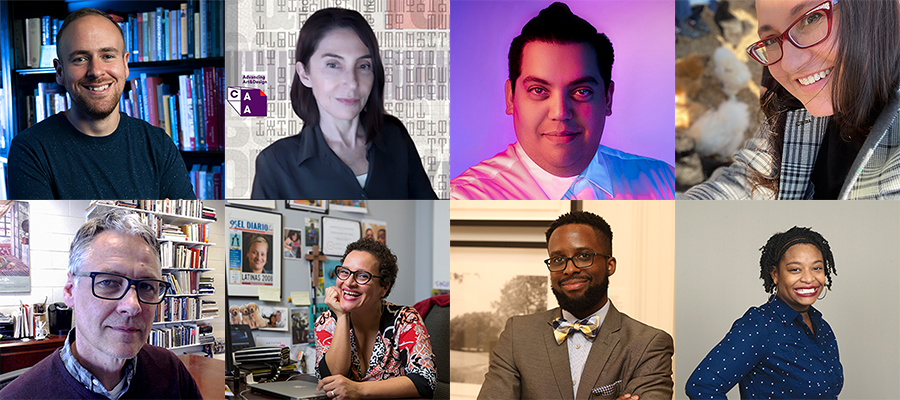
2021 CAA Board of Directors candidates, from left to right, top to bottom: Roland Betancourt, Patricia Childers, Alberto De Salvatierra, Lara Evans, Charles Kanwischer, Wanda Raimundi-Ortiz, Kelvin Parnell, and Kelly Walters.
2021 CAA BOARD OF DIRECTORS ELECTION
The CAA Board of Directors is comprised of professionals in the visual arts who are elected annually by the membership to serve four-year terms (or, in the case of the Emerging Professional Board members, two-year terms). The Board is charged with CAA’s long-term financial stability and strategic direction; it is also the Association’s governing body. The board sets policy regarding all aspects of CAA’s activities, including publishing, the Annual Conference, awards and fellowships, advocacy, and committee procedures. For more information, please read the CAA By-laws on Nominations, Elections, and Appointments.
MEET THE CANDIDATES
The 2020–21 Nominating Committee has selected the following candidates for election to the CAA Board of Directors. Click the names of the candidates below to read their statements and resumes before casting your vote.
BOARD OF DIRECTOR CANDIDATES (FOUR-YEAR TERM, 2021-2025)
Roland Betancourt, Professor of Art History, University of California Irvine, Irvine, CA
 Alberto De Salvatierra, Assistant Professor of Urbanism and Data in Architecture + Director of the Center for Civilization, University of Calgary School of Architecture, Planning and Landscape (SAPL), Calgary, Alberta, Canada
Lara Evans, Interim Director, Research Center for Contemporary Native Arts, Institute of American Indian Arts, Santa Fe, NM
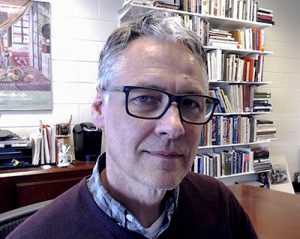
Charles Kanwischer, Director, School of Art, Bowling Green State University, Bowling Green, OH
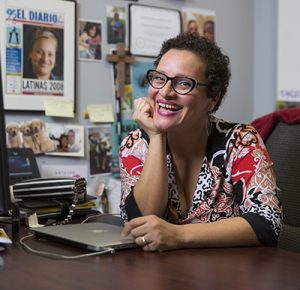 Wanda Raimundi-Ortiz, Associate Professor, Studio Art, University of Central Florida, Orlando, FL
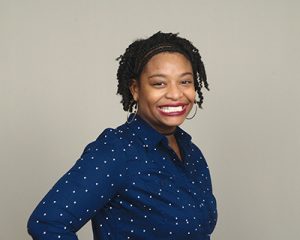 Kelly Walters, Associate Director, BFA Communication Design Program, Parsons School of Design, The New School, New York, NY
Emerging Professionals BOARD OF DIRECTOR CANDIDATES (TWO-YEAR TERM, 2021-2023)
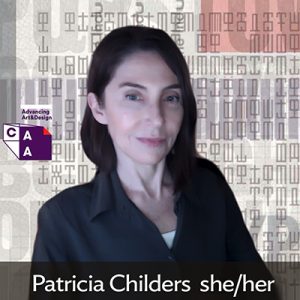
Patricia Childers, Adjunct Faculty, New York City College of Technology, City University of New York (CUNY), Communication Design Department, New York, NY
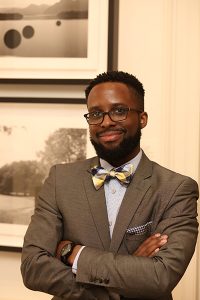
Kelvin Parnell, Ph.D. Candidate, Art and Architectural History, University of Virginia, Charlottesville, VA
CAA members must cast their votes for board members online using the link below; no paper ballots will be mailed. The deadline for voting is 6:00 p.m. EST on February 11, 2021.
The elected individuals will be announced at CAA’s Annual Business Meeting to be held at 2:00 p.m. on Friday, February 12, 2021.
Questions? Contact Vanessa Jalet, executive liaison, at (212) 392-4434 or vjalet@collegeart.org