CAA News Today
Announcing Milette Gaifman and Lillian Lan-ying Tseng as Coeditors of The Art Bulletin
posted Dec 06, 2018
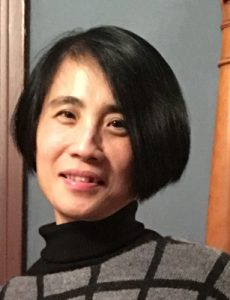
Lillian Lan-ying Tseng
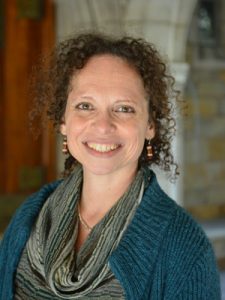
Milette Gaifman
We’re pleased to announce the appointment of Lillian Lan-ying Tseng and Milette Gaifman as the new coeditors of The Art Bulletin. The appointment marks the first joint editorship in the 105-year history of the journal. The Art Bulletin is the flagship journal of art history, covering prehistoric to 21st-century art. Previous editors of The Art Bulletin have included H. W. Janson, George Kubler, Millard Meiss, and John Shapley, among many others. The Art Bulletin editorship rotates every three years.
“CAA believes in interdisciplinary practice and collaboration in all programs and publications. The Art Bulletin’s rich and long history as the journal of record for the art history field will only benefit from this new coeditor approach,” said Hunter O’Hanian, executive director of CAA. “Professors Tseng and Gaifman are highly respected in the field and will bring to the journal diverse experiences and expertise that will be reflected in The Art Bulletin over the years of their editorship.”
Lillian Lan-ying Tseng is associate professor of East Asian art and archaeology at the Institute for the Study of the Ancient World at New York University and specializes in Chinese art and archaeology. The mediums she investigates are diverse, including city planning, architecture, sculpture, painting, calligraphy, textile, and bronze objects. The timeframes of her publications cluster in early imperial China, later imperial China, and the twentieth century. The issues she explores concern not only art objects but also broader contexts in which they are situated, such as how artisans appropriated scientific knowledge for religious purposes, how memory facilitated the creation, circulation, and reception of artifacts, and how political intentions or situations stimulated the development of visual and material cultures. She is the author of Picturing Heaven in Early China (Harvard University Press, 2011). She is currently at work on two book projects: one looks into the reception of antiquity and its impact on visual production in 18th-century China, while the other examines frontiers and visual imaginations in Han China.
“Art and visual culture are central elements in the study of ancient civilizations, as they are of all periods of history,” said Alexander Jones, Leon Levy Director and Professor of the Exact Sciences in Antiquity, Institute for the Study of the Ancient World, NYU. “The Institute for the Study of the Ancient World is proud and delighted on the occasion of Lillian Tseng’s appointment as coeditor of The Art Bulletin.”
Milette Gaifman is associate professor of classics and history of art at Yale University. She is a scholar of ancient art and archaeology, focusing primarily on Greek art of the Archaic and Classical periods. At Yale, she is jointly appointed in the departments of Classics and History of Art. Her research interests include the interaction between visual culture and religion, the variety of forms in the arts of antiquity, the interactive traits of various artistic media, and the reception of Greek art in later periods. In addition, her scholarship explores the historiography of the academic disciplines of art history and archaeology. She is the author of Aniconism in Greek Antiquity (Oxford University Press, 2012), and The Art of Libation in Classical Athens (Yale University Press, 2018); and coeditor of “Exploring Aniconism,” a thematic issue of Religion (2017), and “The Embodied Object in Classical Art,” a special issue of Art History (June 2018).
“It is a significant honor for Yale and for the field of Classical Greek Art that Milette Gaifman has been appointed co-editor of The Art Bulletin. Successor in this role to such hallowed Yale luminaries as Creighton Gilbert and Walter Cahn, Milette will bring the same dynamism and intellectual energy to the position that can be seen in her publications and her hugely successful teaching in our Department,” said Timothy Barringer, Chair and Paul Mellon Professor in the Department of the History of Art at Yale University. “Author of two path-breaking books, Milette is a scholar of wide-ranging tastes and interests, who insists on methodological rigor but also enjoys crossing scholarly borders and dismantling the shibboleths of orthodox thinking. Working with our respected former colleague, Lillian Tseng, she will doubtless bring a new, iconoclastic and perhaps occasionally irreverent spirit to an august journal.”
International Review: Gordon Walters: New Vision by Leonard Bell
posted Dec 06, 2018
The following article was written in response to a call for submissions by CAA’s International Committee. It is by Leonard Bell, professor of art history, University of Auckland, New Zealand.
Exhibition and catalogue review: Gordon Walters: New Vision, Dunedin Public Art Gallery, 11 November 2017- 8 April 2018, and Auckland Art Gallery, 7 July – 4 November 2018.
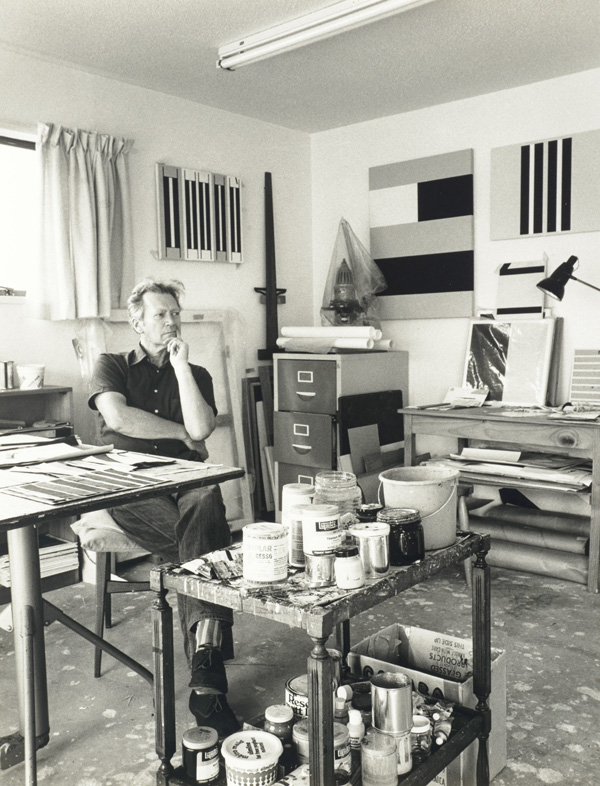
Marti Friedlander, Portrait of Gordon Walters in His Studio, 1978, Marti Friedlander Archive, EH McCormick Research Library, Auckland Art Gallery Toi o Tāmaki, Courtesy Gerrard and Marti Friedlander Charitable Trust.
The much-lauded work of Gordon Walters (1919-1995), one of New Zealand’s first geometric abstract painters, has also generated controversy. A retrospective show traveled the country in 1983, but the present exhibition is the first comprehensive survey of Walters’s complete oeuvre from the late 1930s until his last painting in 1995. A wonderful show, curated by Lucy Hammonds, Laurence Simmons, and Julia Waite, it clearly establishes Walters’s greatness as a painter. Walters’s art was informed and sustained by an extensive knowledge and sophisticated understanding of Euro-American—Piet Mondrian (principally), Sophie Tauber-Arp, Joseph Albers, Auguste Herbin and John McLaughlin, for instance—and Oceanic art, in particular the koru motif of Maori kowhaiwhai (painting, on rafters and paddles, for example) and moko (tattoo). Add to those his early, unusual-in-New Zealand interest in Surrealism and the idiosyncratic sketches of a mentally ill man, Rolf Hattaway. Walters learned about these from a close friend, émigré Dutch artist Theo Schoon, an ardent advocate of Bauhaus practices and Maori visual arts, especially “primitive” rock art.
The resultant body of work constitutes an imaginative and distinctive interweaving of elements from diverse societies and cultures. Formally and technically rigorous, visually refined, conceptually deep, Walters’s paintings are both still and tense. While pulling in different directions, his best known work, the so-called koru paintings, somehow betoken their place, a cluster of islands in the southwest Pacific. Their imprint extends far beyond the art world, to the New Zealand Film Commission’s logo, for instance. Yet, to present Walters’s art only in terms of these koru paintings would skew the overall picture and leave it incomplete. The exhibition rightly gives as much attention to his many other different paintings.
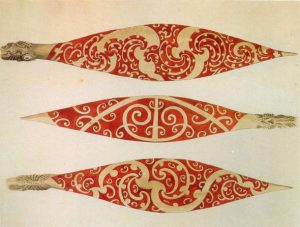
Sydney Parkinson, painted Maori paddle, 1769, Museum of Anthropology and Archaeology, University of Cambridge, UK.
Since Walters’s breakthrough shows at Auckland’s New Vision Gallery in 1966 and 1968 (his first since an early exhibition in 1949), writings about his art have proliferated. His abstractions attracted the keen attention not only of New Zealand art historians, critics, and philosophers, but also the eminent British critic Robert Melville (Architectural Review, 1968), who regarded Walters’s paintings as the best he encountered in New Zealand, polymathic Ernst Gombrich (The Sense of Order, 1979), as well as Australian art historians Rex Butler and A. D. S. Donaldson, and American Thomas Crow (in the present catalogue). The handsome publication reproduces a rich feast of Walters’s works. Nine writers produced eight essays exploring various aspects of Walters’s art and career. Several essays (notably by Peter Brunt and the Australians) offer new details and connections between Walters and other artists.
The trajectory of his career, his primary inspirational sources, his paintings’s formal qualities and conceptual substance, though, have already been intensively excavated, especially by Michael Dunn in the 1970s and 1980s, and Francis Pound from the mid-1980s until his death in 2017.
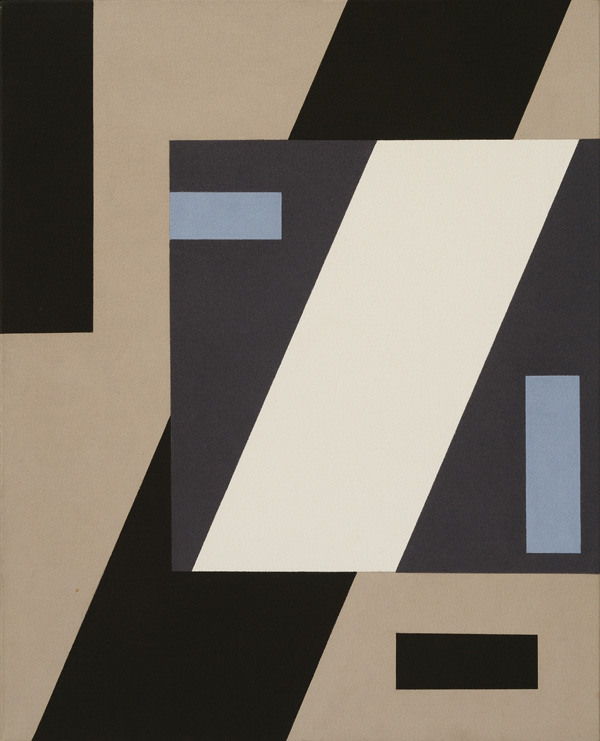
Gordon Walters, Untitled, 1989, Collection James Wallace Arts Trust, gift of the Rutherford Trust.
In an exhibition review in Art News New Zealand (Summer, 2017), David Eggleton observed, “Curiously, Pound is an absent if also an insistent presence in the catalogue of the show. Although not included as a contributor, many of the ideas and notions first proposed by him appear in the text, subsumed into the writings of others.” And a festschrift in 1989 to mark his 70th birthday, Gordon Walters: Order and Intuition, edited by James Ross and Laurence Simmons, had ten scholarly essays, including (disclosure) my “Walters and Maori Art: the nature of the relationship?”
Transformation of his inspirational sources characterizes Walters’s art. His first investigations of the Maori koru motif, small studies in ink and gouache, appeared in the mid-1950s. They were close to the source; the motif’s organic quality was semi-retained.
In the mid-1960s Walters geometricized the form. Except for circular shapes terminating the crisply delineated bars, curves were straightened out. The reshaped element provided a means, in league with Mondrian et al, for studies in formal relationships using a “deliberately limited range of forms” (Walters, 1966).
These were not intended to draw on the Maori motif’s symbolic values, though Walters’s use of Maori terms for many titles was an acknowledgement of the inspirational importance of Maori art as he had experienced it.
From the mid-1980s, most forcefully in the 1990s, possibly triggered by critiques leveled at the Museum of Modern Art’s 1984-1985 exhibition, Primitivism: Affinity of the Tribal and the Modern, Walters was accused of exploitative appropriation of Maori art by several critics, both Maori and Pakeha (European New Zealander).
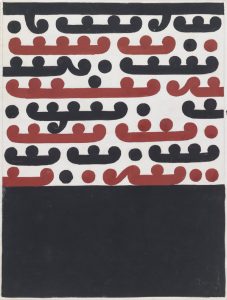
Gordon Walters, Gouache, 1957-8, Hocken Collections Uare Taoka o Hākena.
Others, including Maori and Pakeha artists, also defended Walters. The catalogue touches on this sometimes acrimonious argument, though the exhibition’s wall texts and captions bypass it. Deidre Brown’s catalogue essay, “Pitau, Primitivism and Provocation: Gordon Walters’ Appropriation of Maori Iconography,” steers a near-neutral path between the antagonists, culminating with the claim that they moved onto other concerns: “the appropriation debate faded away from academic art history.” Several reviewers, though, questioned whether the contentious issue was satisfactorily addressed by the show.
Most of Walters’s detractors and advocates assumed a straightforward relationship between his work and Maori art: cause = koru motif and effect = the forms in Walters’s koru paintings. The detractors appeared to subscribe to a Manichean structure of polarities in which modernist borrowings are, ipso facto, “bad.” In this system a single component in the works becomes the only or dominant one. If the same paintings are seen within wider cultural and historical contexts, though, an interplay of multiple elements and global connections, in which no single one is dominant, becomes manifest. A complex of factors also mediates how Walters’s koru paintings have functioned. Depending on the kinds of knowledge and cultural baggage individual viewers bring to the encounter, they are clearly perceived very differently. Indeed, one could well wonder whether viewers with opposing perspectives are talking about the same pictures. The diverse opinions resist resolution; the conflicting perspectives are incommensurable. Just as creationists are unlikely to accept a logical refutation of the existence of “God,” so Walters’s critics are not likely to see his art in any other way than their own.
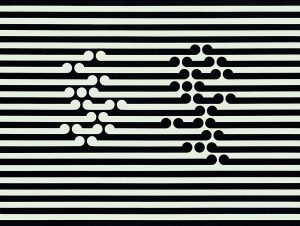
Gordon Walters, Painting No. 1, 1965, Auckland Art Gallery Toi o Tāmaki, Purchase 1965.
Take another slant. In 1910 the New Zealand Herald reported a “curious discovery” by Mme Boeufvre, wife of New Zealand’s French consul. Seeing the Book of Kells (c. 800 CE) in Dublin, she “was much struck by the similarity of Celtic ornaments to Maori conventional designs…how very closely the Maori patterns resembled those of the ancient artists of Ireland.” Since the nineteenth century parallels were frequently drawn between curvilinearities in Maori artifacts and those in the art and ornament of other societies, including such varied cultures and aesthetics as Egyptian, Greek, South East Asian, Victorian, and Art Nouveau, in addition to Celtic. For instance, renowned Austrian art historian Alois Riegl (‘Neuseelandische Ornamentik’, 1891, and Stilfragen, 1896) matched Maori and Egyptian spiraling forms. He noted that they could not possibly have had the same origin. Like many other forms, that of the swastika, for example, the form of the Maori koru motif is found all over the world. There is no singular point of invention.
Universal and local collide in Walters’s painting. Was Walters indigenizing the modern or modernizing the indigenous—or both, or neither? Can we look through several lenses simultaneously? Compelling art certainly can emerge from socio-cultural dissonance—Walters’s paintings continue to energize the spaces they inhabit. They have a contemporary urgency, informing the work of contemporary artists of both Pakeha and Maori descent, such as Darren George and Chris Heaphy. (The latter worked with Walters in his last years.) For others tension between Maori and Euro-American aesthetics and practices remains. Walters’s painterly synthesis of Maori, Oceanic, European, and American elements and ideas was virtually unique among Pakeha artists in his time. He trod a solitary path. In retrospect, though, his oeuvre constitutes a crucial watershed, in which the possibilities of bicultural coexistence of things Maori and Pakeha were explored, celebrated and contested.

Gordon Walters, Untitled, 1972, Dunedin Public Art Gallery Loan Collection, Courtesy of the Gordon Walters Estate.
Meet the 2018 CAA Campus Ambassadors
posted Dec 05, 2018
Launched this fall, the CAA Ambassador Program is now in full swing. CAA Ambassadors are representing the organization in New York and Chicago and giving presentations to their fellow classmates and students in nearby schools. Meet the inaugural class of ambassadors below.
Interested in becoming a future CAA Ambassador? Learn more here.
Rikki Byrd
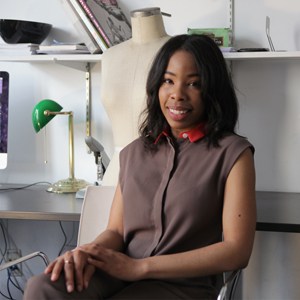
Rikki Byrd is a writer, educator and scholar, with research interests in Black studies, visual culture, fashion history and cultural studies. Her research has appeared at Art Basel: Miami and has been published or is forthcoming in various academic journals and books. She has also written for Teen Vogue, Art.sy, and Hyperallergic, among several other media outlets. She has lectured and participated in panel discussions with Google and The Council of Fashion Designers of America, Parsons School of Design, Junior High! in Los Angeles and Saint Louis Art Museum. Most recently, Rikki was a faculty member at Washington University in St. Louis in the Sam Fox School of Design & Visual Arts and the African and African American Studies department. She is currently a PhD student in African American Studies at Northwestern University.
J. English Cook

J. English Cook is a PhD candidate at the Institute of Fine Arts, NYU, where she specializes in intersections between architecture, cinema, and urban theory. Her dissertation examines the impact of cinema on the postwar spread of phenomenology, particularly as expressed in architects’ re-articulation of notions of spatial experience. She previously received an MA with distinction from the Institute of Fine Arts and a BA with highest honors from Williams College. A native of Atlanta, Georgia, she is currently the Graduate Curatorial Assistant at the Grey Art Gallery, NYU, and has worked as a Curatorial Assistant in Modern and Contemporary Art at the High Museum, Atlanta, and as the Commissioner’s Assistant for the US Pavilion at the 2010 Venice Architecture Biennale. She has produced performances at Momentum Worldwide, a time-based media gallery in Berlin, and has interned in curatorial departments at the Museum of Modern Art, the Whitney Museum of American Art, and the Williams College Museum of Art.
Rebecca Pollack

Rebecca Pollack is a doctoral candidate in art history at the CUNY Graduate Center. Her dissertation “Contextualizing British Holocaust Memorials and Museums: Form, Content, Politics,” examines the publicly funded Holocaust commemorative projects in Britain. She currently holds fellowships from the Memorial Foundation for Jewish Culture, the Jewish Studies Center at the CUNY Graduate Center, and the Paul Mellon Centre for British Art.
Mia Rubin

Mia Rubin is a recent Parsons School of Design graduate. Mia is the Events and Conference Programming Intern at CAA and one of CAA’s newest ambassadors. She will assist with planning the Annual Conference. Mia will help organize pre-conference workshops, key conversation panels, events for students, and museum tours. She will research and help develop workshops and programs throughout the year.
Urooj Shakeel
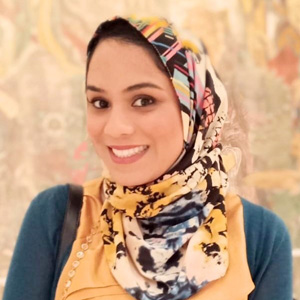
Urooj Shakeel is a graduate student at the School of the Art Institute of Chicago in the Master of Arts in Arts Administration & Policy program. She is also the Leadership Investment and Communications Field Fellow at The Field Foundation of Illinois. Currently, Urooj is working on her thesis project and is designing a library exchange box in the shape of a Pakistani truck that is painted in the traditional art form known as Truck Art. This project examines activating public space for educative functions on Chicago’s Devon Avenue for preadolescents. As a leader, Urooj also serves on the SAIC Graduate Advisory Panel, working closely with the Graduate Dean’s Office to bring attention to graduate student interests through information sharing and problem solving. She earned her BS in Marketing and BA in Art History from Wayne State University in Detroit, Michigan.
News from the Art and Academic Worlds
posted Dec 05, 2018
Want articles like these in your inbox? Sign up: collegeart.org/newsletter
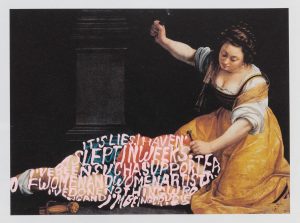
Betty Tompkins, Apologia (Artemisia Gentileschi #3), 2018. Courtesy of Betty Tompkins and P.P.O.W, New York, via Artsy
A Whitney Museum Vice Chairman Owns a Manufacturer Supplying Tear Gas at the Border
“I figured Safariland officials probably had connections elsewhere.” (Hyperallergic)
Protesters Rally Against UNC Chapel Hill’s Decision to Reinstate Confederate Statue
Protesters at the University of North Carolina at Chapel Hill rallied against the university board’s decision to reinstate Silent Sam, the Confederate monument that was toppled in August. (Artforum)
Betty Tompkins Gives Art History a #MeToo Overhaul
How to dismantle art history, literally and figuratively. (Artsy)
Ambitious VR Experience Restores 7,000 Roman Buildings, Monuments to Their Former Glory
A team of 50 academics and computer experts built the environment over a 22-year period. (Smithsonian Magazine)
Graduate School Can Have Terrible Effects on People’s Mental Health
Graduate students cite the combination of financial and professional pressures as a significant challenge. (The Atlantic)
CWA Picks for December 2018
posted Dec 04, 2018
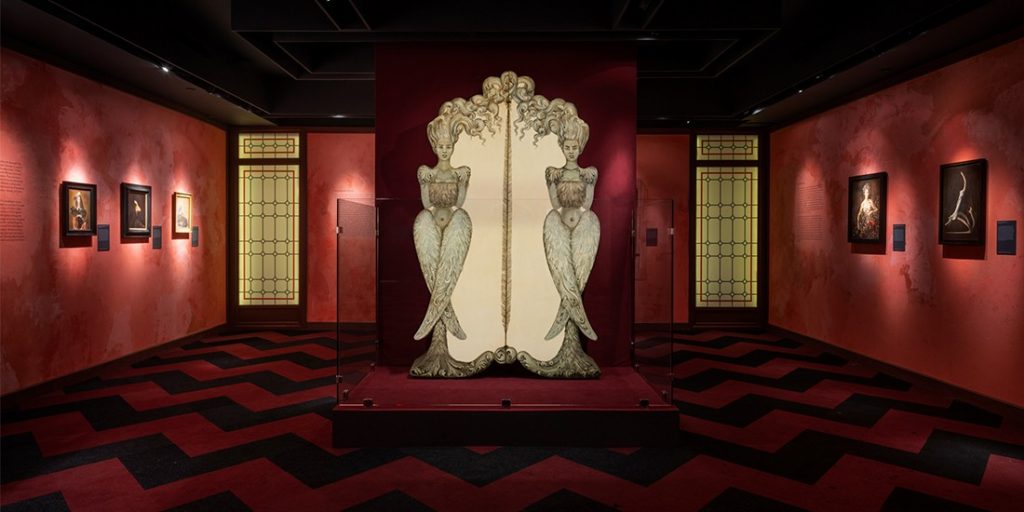
Installation view of Leonor Fini: Theatre of Desire, 1930-1990, on view at the Museum of Sex through March 4, 2019.
CAA’s Committee on Women in the Arts selects the best in feminist art and scholarship to share with CAA members on a monthly basis. See the picks for December below.
CONTRIBUTION TO LIGHT: THE EARLY WORKS OF BARBARA HAMMER
September 13, 2018 – January 31, 2019
Kow Madrid
Barbara Hammer needs no introduction. One of the first filmmakers to openly address and document lesbian sexuality, Hammer is both a feminist pioneer of queer cinema and an influential force of avant-garde and experimental filmmaking. She is also dying.
In a recent talk at the Whitney Museum (The Art of Dying or [Palliative Art Making in the Age of Anxiety]) she frankly, movingly, and inspiringly spoke of death and (her) art, living with cancer and one’s right to die “when she wishes,” advocating terminally ill patients’ right to decide how and when to die. Concentrating instead on works that precede the specter of death in her work, Contribution to Light focuses only on very early films, photographs, and works on paper, including some previously unknown. It seeks to explore the role physical perception of space and relationships play in Hammer’s first steps as an artist, marking the signature combination of physical presence, painterly quality, and sensual expressionism that characterizes much of her work both on celluloid and paper. “Her camera gaze seems to literally touch the environment, inseparable from her body and its experiences, while her paint brush and her pencil are unafraid to discern the surface of the paper as a field of action and mental and formal discovery,” as put in the press release. Touch has been indeed central in Hammer’s vision, and she eloquently speaks about it during the aforementioned talk. While this show in Madrid is only a small homage to Hammer’s beginnings, her illness and own commitment to prepare for the aftermath of her death has already precipitated a wave of much-needed study, preservation, and celebration of her work in the US. A major retrospective will open next summer at the Wexner Center for the Arts. But will she be alive, or conscious to see it? Wishing so, this CWA selection symbolically reciprocates her loving goodbye while she is still in life.
Tomie Ohtake: At Her Fingertips
November 1 – December 22, 2018
Nara Roesler Gallery, New York
This concise exhibition focuses on Tomie Ohtake’s preparatory collages, drawings, and engravings from the 1960s and 1970s and proposes a new dimension to the Japanese-Brazilian artist’s expansive, six-decade career and legacy. Curated by Paulo Miyada, chief curator of the Instituto Tomie Ohtake, São Paulo, At Her Fingertips places Ohtake’s “studies” in direct relationship to a few select paintings, arguing for a dynamic reciprocity between media and offering further insight into the eminent artist’s approach to abstract gesturalism, geometry, and spirituality. These small, colorful collages—torn and ripped somewhat haphazardly—are hung directly from the ceiling in double-sided glass frames, highlighting the graphic and material nature of paper cutouts and promoting the dialectics of chance and control underlying Zen Buddhism and Japanese calligraphy. This tidy show further informs the interwoven dialogues on abstraction offered in postwar Brazil from which Ohtake readily drew upon, including those by the Seibi group’s second generation, including Manabu Mabe and Flávio-Shiró, and the Concrete principles of design and color theory by Wyllis de Castro and Hércules Barsotti, for example. In all, this exhibition continues the important historical work on Ohtake, and delivers a morsel of her brilliant career to a new audience in New York.
LINDA VALLEJO: AMERICAN Latinx
September 4 – December 14, 2018
Kean University Karl and Helen Burger Gallery, Union, New Jersey
Linda Vallejo provokes both directly and subtly poignant questions through her “Make ‘Em All Mexican” (MEAM) series of historical figures and contemporary pop personalities painted brown; and extended series, “The Brown Dot Project” of transformations of Latino populations and workforce data into engaging visual representations using brown dots. MEAM sculptures, handmade books and manipulated aluminum sublimation prints began in 2011 when the artist worked out her own query, “I’m a person of the world. What would the world of contemporary images look like from my own personal Mexican-American, Chicano lens?” From the Three Stooges to Jennifer Lawrence to the Statue of Liberty, these iconic works in brown and titled in Spanish, presented in striking fashion, challenge audiences, “Does color and class define our understanding and appreciation of our culture?” “The Brown Dot” series are dotted objects and abstract images on graphed pages with statistics built into the pointillated designs, stats as the titles, such as National Latino Authors and Writers 5.6% dotted to create a typewriter; or National Latino Architects 7.2% into a VW Beetle. The series has traveled in solo and group exhibitions for a few years now, but its relevancy endures.
ANNE BRIGMAN: A VISIONARY IN MODERN PHOTOGRAPHY
September 29, 2018 – January 27, 2019
Nevada Museum of Art, Reno
Not enough can be said about the innovative, ethereal and intimate photography of Anne Brigman, though this exhibition, the largest ever undertaken including over 300 works spanning her career, attempts to honor her amazing radical oeuvre. Objectifying her own nude body outside in near desolate wilderness was absolutely revolutionary at the turn of the twentieth century, moreover her well-known landscape photography, poetry and art criticism maintained for her a significant career. Her sinuous figure aligns naturally with the lines of the trees and landscapes of Sierra Nevada. Her powerful poses wreak vulnerability and strength, echoing Francesca Woodman decades after her, but with an inner confidence and strength. Brigman redefined the space through her work as did Judy Chicago, Brigman a feminist artist before the notion.
Leonor Fini: Theatre of Desire, 1930-1990
September 28, 2018 – March 4, 2019
Museum of Sex, New York
With an unapologetic dose of theatricality appropriate for its subject, this small but comprehensive survey curated by Lissa Rivera offers a delectable opportunity to discover, re-evaluate and celebrate the art and life of Leonor Fini as well as the rebellious inextricability of both.
Born in Buenos Aires, but raised in Trieste—only by her mother upon her separation of her abusive father whom she escaped by often dressing like a boy—Fini begun to paint at the age of thirteen and by the time she moved to Paris in 1931 had already established herself “as an artist to watch.” While best remembered today as a Surrealist due to her early style, affiliations and her participation in the seminal 1936 MoMA show, Fantastic Art, Dada and Surrealism, and her illustrations of Marquis de Sade Juliette, Fini refused membership in any of the contemporary avant-garde movements and pursued a fiercely independent course in life and art, marked by her eccentric disguises, life-long partnership with two men, and a radical exploration of desire, sexuality, and performativity that cuts across all the media she worked as painter, idiosyncratic draughtsman, and prolific theater designer. Spanning two floors and six decades of work, the exhibition brings together fascinating examples of the changing style of this largely self-taught artist’s painting (presided over by her 1940s androgynous male nudes guarded by female lovers), erotic drawings, book illustrations, and samples her work in theater and design, contextualizing her production and theatrically fleshing out her performative person with photographic and filmic documentation, signature outfits, a projected assortment of select quotes by the artist, and music.
While arrayed along chronological lines, the exhibits are curated in eloquent and eloquently analyzed groupings that capture Fini’s feminism both as an advocate of the feminine and female desire as well as an explorer of a radically boundlessness sexuality. “Subverting the Muse,” “Empowering the Feminine,” “Metamorphosis and Sexual Sorcery,” “Intellectual Explorations of Sexuality,” and “The Corporeal” are a few of such groupings’ titles that speak volumes of both the timeliness of Fini’s sexual politics and the earliness of her revolt, and are convincingly illustrated by her representations of both men and women, her empowering evocation of sorcery, mythology and nature, her work’s unrestricted erotics, ranging from androgynous objects of female desire to homoeroticism and Sadean sadomasochism, and the fluidity of gender and sexuality emanating from her images, disguises, and words.
Bridget Riley
November 16, 2018 – January 26, 2019
Sprüth Magers, Los Angeles
“The curve is a frozen moment,” said Bridget Riley in an interview with The Telegraph, “This side contracts. That side extends. When we see a painted curve we somehow recognize that.” This gathering of work from across Riley’s rigorous and focused career gives a viewer an opportunity to test that observation. From Riley’s early experiments with pointillism, Pink Landscape (1960), to her recent paintings and wall murals consisting of subtly-modulated, colored discs, this show is arranged by “conceptual and compositional affinity rather than chronology.” Seen in this way, what emerges is a set of related concerns—the stripe, for instance—which can then be traced across the artist’s career. More than a survey-text example of Op Art, Riley’s work asks for the perceptual and bodily investment of the viewer; a recognition, a frozen moment, a curve, a line.
Notice to CAA Members on Proposed By-Law Changes
posted Dec 03, 2018
On November 16, 2018, the CAA Board of Directors voted to recommend that the membership amend the Association’s By-laws, as described in the below letter from Jim Hopfensperger, CAA president, and Hunter O’Hanian, CAA chief executive officer and executive director. The complete set of proposed amendments is set out in “Recommended Changes to Membership Association By-laws,” which shows the changes to the current By-laws.
Members may vote at CAA’s Annual Business Meeting on Friday, February 15, 2019, at 2:00 PM in the Hudson Room at the New York Hilton Midtown, 1335 6th Avenue, New York, NY 10019.
November 29, 2018
Dear CAA Members,
On November 16, 2018, the Board of Directors voted to recommend that the membership adopt the changes to the Association’s By-laws set out in the attached. The last time CAA amended its By-laws was in 2013.
These proposed changes, set out in red on the attached version of the By-laws, come as a result of two governance task forces (2015–18) [1] that examined CAA’s governance structure to make CAA more responsive to the needs of its members and the changing demographics in the field. Members can vote on the proposed changes online or at the CAA Annual Meeting on Friday, February 15, 2019, at 2:00 PM.
The principal proposed changes include:
- Creating a Board Position for an Emerging Professional, Criteria for Candidates for Election, Changes to the Nominating Committee: In an effort to allow CAA to empower emerging professionals, the board recommends that up to two directors be emerging professionals. They would be elected by the membership (pages 3, 5, and 9). The Nominating Committee is charged with nominating recommend candidates who reflect CAA’s “Values Statement on Diversity and Inclusion” with particular attention to the balance of professions of the membership, race, ethnicity, sexual orientation, gender identity, age, disability, diversity of geographical location, field of scholarship or practice, and employment type, including the type of institution and independent scholars/practitioners (page 9). The Nominating Committee will also maintain a list of vetted candidates to review in the event that it has to fill a vacancy on the board (page 12). The amendments formalize the current practice of nominating at least six candidates for election to the board each year (other than the emerging professionals), of whom the membership will elect four. This will give choices to members as they vote for new directors (page 9). Instead of the Vice President for Committees serving as the chair of the Nominating Committee, as today (although that person will still be an ex officio member), the By-laws would provide that the Nominating Committee select its own chair from among all past board members (page 13). In addition, the terms of service on the Nominating Committee will increase from two to three years (page 13). It is hoped that these changes will create a more cohesive Nominating Committee, which can work on a year-round basis to recruit and vet candidates (page 20).
- Creation of the Position of Vice President for Diversity and Inclusion: Recognizing CAA’s dedication to the importance of human, geographic, professional diversity, and inclusion, the board recommends the creation of a new officer, the Vice President for Diversity and Inclusion (page 7).
- Creation of an Audit Committee: Although CAA has had its Finance Committee serve as the Audit Committee in the past, the By-laws would establish an independent Audit Committee, consistent with best practices. Its members will not include those who have direct financial oversight of CAA’s finances (page 14).
In addition to the above, the board also recommends the following changes to ensure that the By-laws are consistent with the Association’s current practices and mission:
- Expanding the Purpose of CAA: CAA serves not only art historians, studio artists, curators, librarians, and scholars, but also members of the design community, especially those in the design history field. To recognize this reality, the By-laws would be amended to add the words “design” and “visual art” (defined to include “design”), a term that is used throughout, in the purpose section (pages 1–3).
- Process for Approving Affiliated Societies: This change codifies the Association’s current practice of requiring the Executive Committee to approve organizations’ applications to become Affiliated Societies. If the Executive Committee turns down the application, the amended By-laws would provide that the organization would be able to appeal that decision to the entire board (page 3).
- Removal of a Board Member: The current By-laws do not have a mechanism for the board to remove a director “for cause.” The By-laws would be amended to allow the board to remove a director for cause upon a two-thirds vote (page 5).
- Name Changes to Vice President for Annual Conference and Vice President for External Affairs: The By-laws would be amended to add the words “and Programs” to the title of the Vice President for Annual Conference. In addition, in the title of the Vice President for External Affairs, “Relations” would replace “Affairs” (page 7).
- Term of the President: The By-laws would be amended to clarify the present practice with respect to the expiration of the president’s term just prior to the May meeting of the board (page 11).
- Renaming the Professional Interests, Practices, and Standards Committees: This class of committee will be known as Professional Committees (page 12).
- Consultation with Executive Director Prior to Appointing Members of Professional Committees: Following current practice, the executive director will be consulted before Professional Committees’ appointments are made by the president (page 12).
- Requirement of a Majority Vote for Actions to Be Taken by the Executive Committee: The By-laws would be amended to clarify that a majority of the Executive Committee is necessary to take action (page 13).
- Changes to the Appointed Directors Members Nominating Committee The By-laws would be amended to clarify that whether a majority of the Appointed Directors Nominating Committee is necessary to take action (page 13).
If you have any questions about these proposed changes, we encourage you to reach out to either of us or any member of the Board of Directors.
We wish to express our sincere gratitude to the members of the governance task forces whose hard work has led to these well-crafted changes to CAA’s By-laws.
Jim Hopfensperger Hunter O’Hanian
CAA President CAA Executive Director
Jim.hopfensperger@wmich.edu HOHanian@collegeart.org
[1] Governance Task Force Members – 2015 to 2018: Dina Bangdel, 2017; Colin Blakely, 2017-18; Suzanne Blier, 2016-18, Task Force Chair; Nicole Dearmendi, 2015; Jeffrey P. Cunard, CAA Counsel, 2015-18; Linda Downs, 2015; Linda Earle, 2016; Gail Feigenbaum, 2016-17; Helen Frederick, 2015-18; Jackie Francis, 2016-18; DeWitt Godfrey, 2015-17, Task Force Chair, 2015-16; Mark Golden, 2015; Carma Gorman, 2016-18; Jim Hopfensperger, 2016-18; Betty Leigh Hutcheson, 2015-16; Jack Hyland, 2015; Paul Jaskot, 2016-18; Thomas Lawson, 2015; Ed Liebow, 2016-17; Arthur Liou, 2017-18, Catherine Lord, 2016; Peter Lukehart, 2017-18; Denise Mullen, 2015-16; Guna Nadarajan, 2015-17; Hunter O’Hanian, 2016-18; Doralynn Pines, 2015-17, Anne Imelda Radice, 2016-17; Douglas Richardson, 2016; Jack Risley, 2015; N. Elizabeth Schlatter, 2016-18; Andrew Schulz, 2017-18; Julia Sienkewicz, 2017-18; Larry Silver, 2015; Stefanie Stebich, 2016-17; Roberto Tejada, 2016-17; David Terry, 2017-18; Rachel Weiss, 2016-18; Andres Zervigon, 2017-18.
CAA Announces Notable Speakers for 2019 Annual Conference in New York
posted Dec 03, 2018
Artist Joyce J. Scott leads as Keynote; Distinguished Scholar Elizabeth Hill Boone; Artist Interviews with Julie Mehretu and Julia Bryan-Wilson and Guadalupe Maravilla and Sheila Maldonado; Designer Stephen Burks, and Douglas Dreishpoon and Randy Kennedy with Mary Helimann, Bob Stewart, and John Giorno, among many other notable speakers and presenters
The Getty Foundation to receive the Outstanding Leadership in Philanthropy Award
We’re delighted to announce the following special guests will be presenting at the 107th CAA Annual Conference, taking place February 13-16, 2019, at the New York Hilton Midtown.
Keynote Speaker
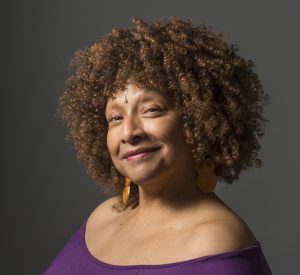
Joyce J. Scott. Photo: John Dean
The Keynote Speaker for the 107th CAA Annual Conference will be Joyce J. Scott, sculptor and craftsperson and 2016 MacArthur Fellow. Scott is best known for her figurative sculpture and jewelry using free-form off-loom bead weaving techniques similar to a peyote stitch, as well as blown glass, and found objects. Over the past 50 years, Scott has established herself as an innovative fiber artist, print maker, installation, and performing artist. She explores challenging subjects, powerfully revealing the equality between materials and practices often associated with “craft” and “fine art.”
Scott is the recipient of myriad commissions, grants, awards, residencies, and prestigious honors from the National Endowment for the Arts, the Louis Comfort Tiffany Foundation, Anonymous Was a Woman, American Craft Council, National Living Treasure Award, and has received a Lifetime Achievement Award from the Women’s Caucus for the Arts, a Mary Sawyers Imboden Baker Award, among others.
CAA Convocation featuring Joyce J. Scott’s Keynote will take place Wednesday, February 13, 2019, from 6-7:30 PM. Free and open to the public.
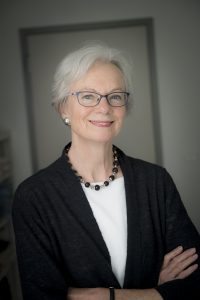
Elizabeth Hill Boone. Photo: Paula Burch
Distinguished Scholar
The Distinguished Scholar for the 107th CAA Annual Conference will be Elizabeth Hill Boone, Professor of History of Art and Martha and Donald Robertson Chair in Latin American Art at Tulane University. An expert in the Pre-Columbian and early colonial art of Latin America with an emphasis on Mexico, Professor Boone is the former Director of Pre-Columbian Studies at Dumbarton Oaks and recipient of numerous honors and fellowships, including the Order of the Aztec Eagle, awarded by the Mexican government in 1990. Read our interview with Elizabeth Hill Boone.
The Distinguished Scholar Session will take place Thursday, February 14, 2019, from 4-5:30 PM.
Distinguished Artist Interviews
The Annual Artist Interviews will feature two artist interviews: Julie Mehretu interviewed by Julia Bryan-Wilson and Guadalupe Maravilla interviewed by Sheila Maldonado.
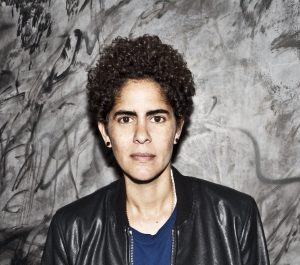
Julie Mehretu. Photo: Anastasia Muna
Julie Mehretu is a world-renowned painter, born in Addis Ababa, Ethiopia in 1970, who lives and works in New York City and Berlin. She received a Master’s of Fine Art with honors from The Rhode Island School of Design in 1997. Mehretu is a recipient of many awards, including the The MacArthur Fellowship (2005) and the US Department of State Medal of Arts Award (2015). She is best known for her large-scale paintings that take the abstract energy, topography, and sensibility of global urban landscapes and political unrest as a source of inspiration. She has shown her work extensively in international and national solo and group exhibitions and is represented in public and private collections around the world. Julia Bryan-Wilson is Doris and Clarence Malo Chair and Professor of Modern and Contemporary Art at University of California, Berkeley.
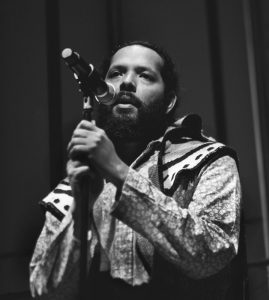
Guadalupe Maravilla. Photo: Raul Rodarte Torres
Guadalupe Maravilla (formally Irvin Morazan) was part of the first wave of undocumented children to arrive at the United States border in the 1980s from Central America. In 2016, as a gesture of solidarity with his undocumented father (who uses Maravilla as his last name in his fake identity) Irvin Morazan changed his name to Guadalupe Maravilla. Maravilla has performed and presented his work extensively in venues such as the Whitney Museum of American Art, New Museum, The Metropolitan Museum of Art, The Bronx Museum, El Museo Del Barrio, Jersey City Museum, Caribbean Museum (Colombia), and MARTE Museum (El Salvador). His work has been recognized by numerous awards and fellowships including, Franklin Furnace, Creative Capital Grant, Joan Mitchell Emerging Artist Grant, Art Matters Grant & Fellowship, Virginia Museum of Fine Arts Fellowship, Dedalus Foundation Fellowship and the Robert Mapplethorpe Foundation. Sheila Maldonado is a New York-based writer and poet, whose family hails from Honduras.
The Distinguished Artist Interviews will take place Friday, February 15, 2019, 3:30-5:30 PM. Free and open to the public.
CAA Committee on Design Featured Speaker

Stephen Burks. Photo: Photography Emin
CAA is also pleased to announce that designer Stephen Burks will speak at the Annual Conference in a special event of the CAA Committee on Design. Burks will lead a talk titled, “Objects of African Descent: Tracing the lineage and influence of everyday African objects and culture throughout the diaspora and beyond.” Burks believes in a pluralistic vision of design inclusive of all cultural perspectives. For his efforts with artisan groups around the world, he has been called a design activist. His ongoing Man Made project bridges the gap between authentic developing world production, industrial manufacturing, and contemporary design. Independently and through association with the nonprofits Aid To Artisans, Artesanias de Colombia, the Clinton Global Initiative, Design Network Africa, and the Nature Conservancy, Burks has consulted on product development with artisan communities throughout the world. In addition, leading, manufacturers have commissioned his studio, Stephen Burks Man Made, to develop lifestyle collections that engage hand production as a strategy for innovation. In 2015, Burks was awarded the National Design Award in product design and in 2018, the Harvard Loeb Fellowship.
UPDATE, January 28, 2019: Unfortunately due to scheduling conflicts this event is canceled. Explore other presentations on design here.
Outstanding Leadership in Philanthropy Award

For the second year, CAA will present the Outstanding Leadership in Philanthropy Award to a foundation or philanthropic organization that has established a record of exceptional generosity and civic and charitable responsibility. This year’s award will be given to the Getty Foundation.
Sherry Muyuan He and Jonathan Aller
posted Dec 03, 2018
The weekly CAA Conversations Podcast continues the vibrant discussions initiated at our Annual Conference. Listen in each week as educators explore arts and pedagogy, tackling everything from the day-to-day grind to the big, universal questions of the field.
CAA podcasts are now on iTunes. Click here to subscribe.
This week, Sherry Muyuan He and Jonathan Aller discuss working with students of diverse level skillsets in the classroom.
Sherry Muyuan He is an assistant professor of Graphic Design at the University of South Dakota. She is also an interdisciplinary designer engaging in the community with food-themed activities.
Jonathan Aller is an adjunct faculty member at Minneapolis College of Art and Design, and contemporary portraiture artist exploring community and identity in the physical and digital realm.
New in caa.reviews
posted Nov 30, 2018
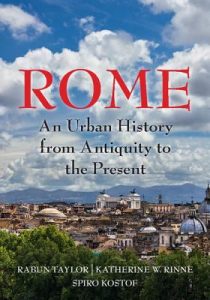
Gregor Kalas reviews Rome: An Urban History from Antiquity to the Present by Rabun Taylor, Katherine Wentworth Rinne, and Spiro Kostof. Read the full review at caa.reviews.
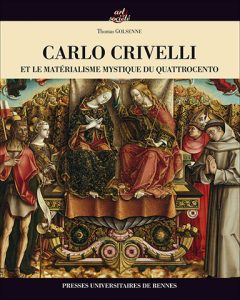
Liliana Leopardi writes about Carlo Crivelli et le matérialisme mystique du Quattrocento by Thomas Golsenne. Read the full review at caa.reviews.
Paul Baker Prindle discusses Global and World Art in the Practice of the University Museum, edited by Jane Chin Davidson and Sandra Esslinger. Read the full review at caa.reviews.
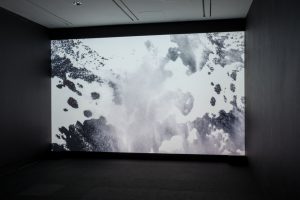
Erin Reitz looks at Cinthia Marcelle and Tiago Mata Machado: Divine Violence at the Reva and David Logan Center for the Arts, University of Chicago. Read the full review at caa.reviews.
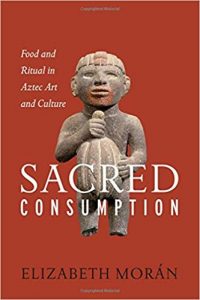
Kristopher Driggers reviews Sacred Consumption: Food and Ritual in Aztec Art and Culture by Elizabeth Morán. Read the full review at caa.reviews.
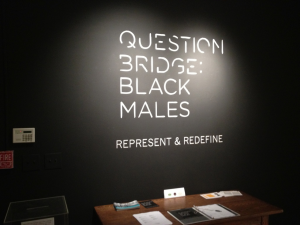
Bryant Keith Alexander writes about Question Bridge: Black Males at the Brooklyn Museum, and Question Bridge: Black Males in America, edited by Deborah Willis and Natasha L. Logan. Read the full review at caa.reviews.
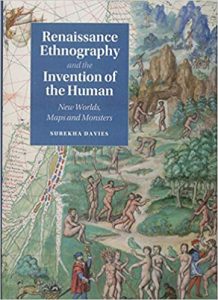
Ivana Horacek examines Renaissance Ethnography and the Invention of the Human: New Worlds, Maps and Monsters by Surekha Davies. Read the full review at caa.reviews.
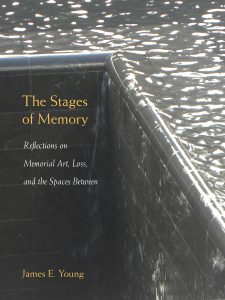
David Ehrenpreis discusses The Stages of Memory: Reflections on Memorial Art, Loss, and the Spaces Between by James E. Young. Read the full review at caa.reviews.
Sarah Stefana Smith reviews the exhibition Senses of Time: Video- and film-Based Works of Africa. Read the full review at caa.reviews.
Finalists for the 2019 Morey and Barr Awards
posted Nov 29, 2018
CAA is pleased to announce the 2019 finalists for the Charles Rufus Morey Book Award and two Alfred H. Barr Jr. Awards. The winners of the three prizes, along with the recipients of other Awards for Distinction, will be announced in January 2019 and presented during Convocation in conjunction with CAA’s 107th Annual Conference, taking place in New York, February 13-16, 2019.
Charles Rufus Morey Book Award
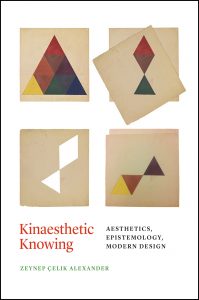
Zeynep Çelik Alexander, Kinaesthetic Knowing: Aesthetics, Epistemology, Modern Design (Chicago: University of Chicago Press, 2017)
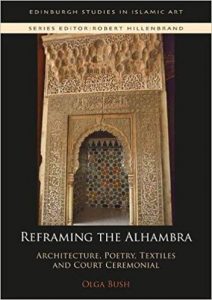
Olga Bush, Reframing the Alhambra: Architecture, Poetry, Textiles and Court Ceremonial (Edinburgh: Edinburgh University Press, 2018)
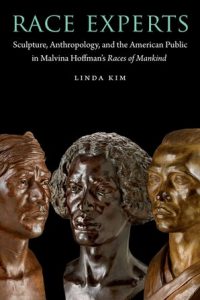
Linda Kim, Race Experts. Sculpture, Anthropology, and the American Public in Malvina Hoffman’s Races of Mankind (Lincoln: University of Nebraska Press, 2018)
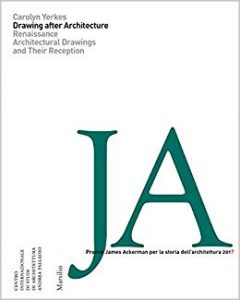
Carolyn Yerkes, Drawing after Architecture (Princeton: Princeton University Press, 2017)
Alfred H. Barr Jr. Award
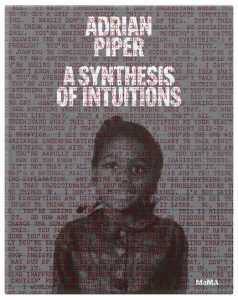
Christophe Cherix, Cornelia Butler, and David Platzker, Adrian Piper: A Synthesis of Intuitions 1965-2016 (New York: Museum of Modern Art, 2018)
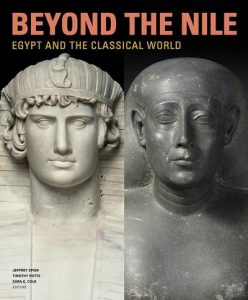
Jeffrey Spier and Timothy Potts, Beyond the Nile: Egypt and the Classical World (Los Angeles: J. Paul Getty Trust, 2018)
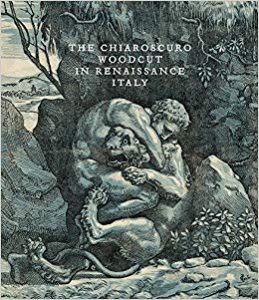
Naoko Takahatake and Jonathan Bober, The Chiaroscuro Woodcut in Renaissance Italy (Los Angeles: Los Angeles County Museum of Art, 2018)
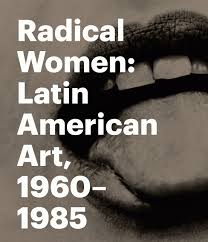
Cecilia Fajardo-Hill and Andrea Giunta, Radical Women: Latin American Art, 1960-1985 (Los Angeles : Hammer Museum, University of California, 2017)
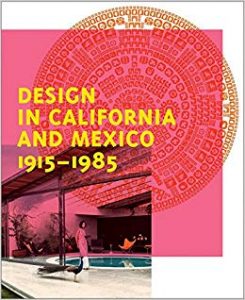
Wendy Kaplan, Design in California and Mexico 1915-1985: Found in Translation (Los Angeles: Los Angeles County Museum of Art, 2017)
Alfred H. Barr Jr. Award for Smaller Museums, Libraries, Collections, and Exhibitions
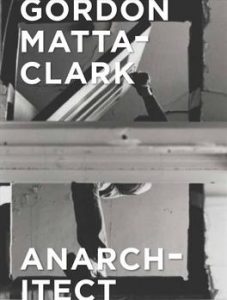
Antonio Sergio Bessa and Jessamyn Fiore, Gordon Matta-Clark: Anarchitect (New York: The Bronx Museum of Art, 2017)
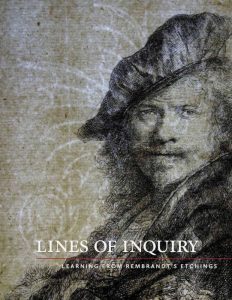
Andrew C. Weislogel and Andaleeb Badiee Banta, Lines of Inquiry: Learning from Rembrandt’s Etchings (Ithaca: Herbert F. Johnson Museum of Art, Cornell University, 2017)
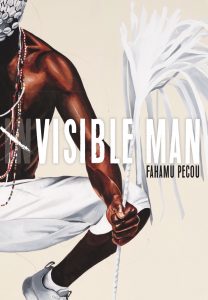
Mark Sloan, Fahamu Pecou: Visible Man (Charleston, SC: Halsey Institute of Contemporary Art, 2016)
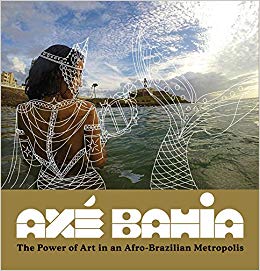
Patrick Arthur Polk, Axe Bahia: The Power of Art in an Afro-Brazilian Metropolis (Los Angeles: Fowler Museum at UCLA, 2018)
The presentation of the 2019 Awards for Distinction will take place on Wednesday evening, February 13, 2019 from 6-7:30pm in the Grand Ballroom East at the New York Hilton Midtown. The event is free and open to the public. For more information about CAA’s Awards for Distinction, please contact nyoffice@collegeart.org