CAA News Today
Deadlines are Approaching for 2017 CAA Professional-Development Fellowships
posted Aug 30, 2017
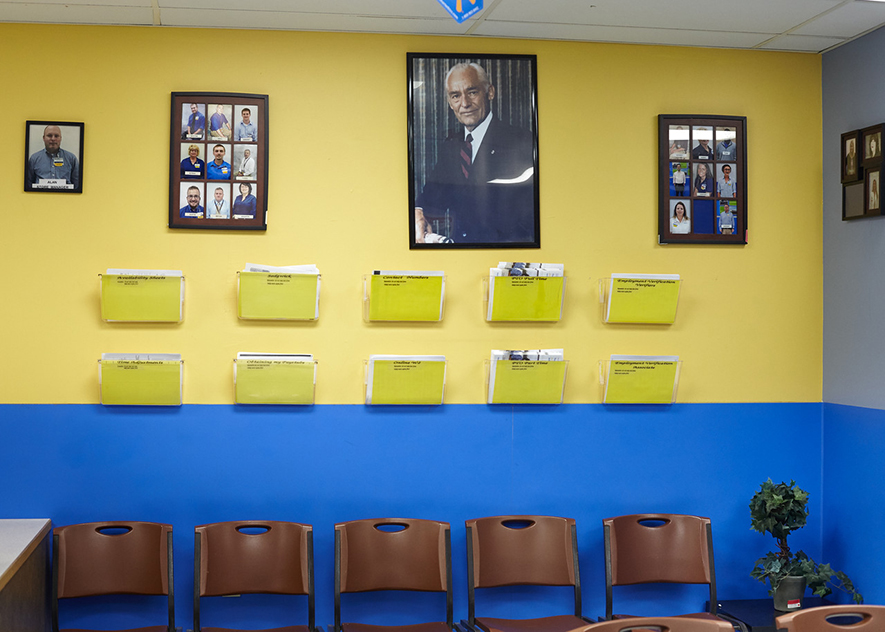
Photography by Daniel Seth Kraus, 2016 Professional-Development Fellowship Awardee
October 2 (PhD candidates) and November 10 (MFA candidates) are the deadlines for the CAA Professional-Development Fellowships. The program supports promising artists, designers, craftspeople, historians, curators, and critics who are enrolled in MFA, PhD, and other terminal-degree programs nationwide.
Fellows are honored with $10,000 grants to support their work, whether it be for job-search expenses or purchasing materials for the studio.
“I remember sitting in my graduate school studio applying for the award. I was day-dreaming about how it could help me be a self-sustaining artist and maybe start my career in teaching. A few months later I received notification of the award and I’m happy to say the grant has helped me enormously with both of my day-dreams, artistic and academic. CAA’s Professional-Development Fellowship for Visual Artists has stabilized a shaky phase of my career and life, continuing an artistic practice after graduate school. The award funds helped me to kick-start my studio space, travel for photography research, and secure teaching positions right out of graduate school. CAA’s support of developing visual artists is certainly outstanding and to an even greater extent, appreciated. I’m happy to now be a CAA member and encourage others to apply for the fellowship without hesitation.” —Daniel Kraus, 2016 Professional-Development Fellowship Recipient
One award will be presented to a practitioner—an artist, designer, and/or craftsperson—and one award will be presented to an art, architecture, and/or design historian, curator, or critic. Fellows also receive a free one-year CAA membership and complimentary registration to the 2018 Annual Conference in Los Angeles, February 21-24. Honorable mentions, given at the discretion of the jury, also earn a free one-year CAA membership and complimentary conference registration.
CAA initiated its fellowship program in 1993 to help student artists and art historians bridge the gap between their graduate studies and professional careers.
New in caa.reviews
posted Aug 25, 2017
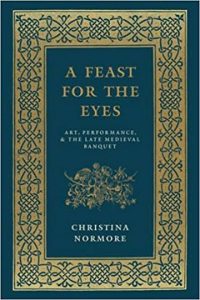
Pascale Rihouet discusses A Feast for the Eyes: Art, Performance, and the Late Medieval Banquet by Christina Normore. Read the full review at caa.reviews.
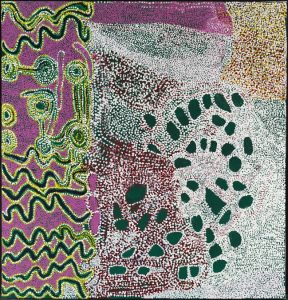
Morgan Thomas visits Everywhen: The Eternal Present in Indigenous Art from Australia, which was on view at the Harvard Art Museums, Cambridge, MA, from February 5–September 18, 2016. Read the full review at caa.reviews. Image credit: Tommy Watson, Wipu Rockhole, 2004. Art Gallery of New South Wales, Sydney. © Tommy Watson/Courtesy of Yanda Aboriginal Art.
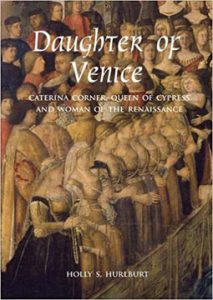
Heather Madar reviews Daughter of Venice: Caterina Corner, Queen of Cyprus and Woman of the Renaissance by Holly S Hurlburt. Read the full review at caa.reviews.
Taking Down Public Art – What do Art Historians and Scholars Think?
posted Aug 24, 2017
Public art, statues, and monuments have seldom been in the news more than in the past few weeks. Figures from Christopher Columbus to Robert E. Lee, from Peter Stuyvesant to Stonewall Jackson have been topics for debate. Regardless of one’s political or cultural point of view, nearly everyone seems to have an opinion.
We want to know what CAA members think about preserving or removing public works of art. How closely tied are a historical figure’s actions to a depiction of the person? How important are these pieces of public art to preserve? Should they be removed? Should they be destroyed? We want to know what you think and why.
We will compile the results of this form and report back CAA members’ thoughts and feelings on these monuments at this moment in history.
Institutional News
posted Aug 22, 2017
Read about the latest news from CAA’s institutional members.
Institutional News is published every two months: in February, April, June, August, October, and December. To learn more about submitting a listing, please follow the instructions on the main Member News page.
August 2017

The Archives of American Art, part of the Smithsonian Institution in Washington, DC, has launched a new online guide to archival collections in the Chicago area that are related to American art. A $413,000 grant from the Terra Foundation for American Art supported a comprehensive survey of art-related archives in more than seventy-five Chicago-area institutions.
Storm King Art Center in New Windsor, New York, has received a 2017 Artistic Production Grant from the VIA Art Fund for Heather Hart’s The Oracle of Lacuna.
The Walker Art Center in Minneapolis, Minnesota, has received a 2017 Artistic Production Grant from the VIA Art Fund for Daniel Buren’s Viole/Toile – Toile/Viole.
The Yale Center for British Art in New Haven, Connecticut, and the Paul Mellon Centre for Studies in British Art have won a gold-level MUSE Award from the American Alliance of Museums for their jointly published, open-access digital journal. Part of the MUSE Open Culture category, the award recognizes British Art Studies for its high standards of excellence in the use of media and technology for Gallery, Library, Archive, and Museum programs.
New in caa.reviews
posted Aug 18, 2017
 Katja Müller-Helle reads Die Tode der Fotografie II: Tod, Theorie, und Fotokunst by Katharina Sykora. In the second volume of The Deaths of Photography series, the author argues that “the interplay between photography and death engenders language and images powerful enough to produce a ‘multiplication of ideas,’” focusing “on the history of theories of photography’s death in relation to artistic positions.” Read the full review at caa.reviews.
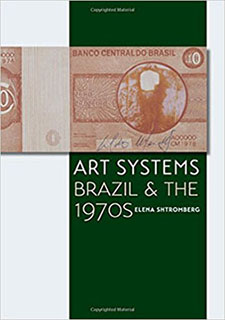 Nadja Rottner discusses Elena Shtromberg’s Art Systems: Brazil and the 1970s and Irene V. Small’s Hélio Oticica: Folding the Frame. Both “propose a new social-art history, which posits art as the gateway onto knowledge,” but “key differences” between them “can be traced back to alternative readings of the notion of the system and how communication is imbricated by and constructs circuits of sociality.” Read the full review at caa.reviews.
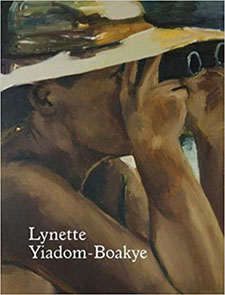 Jessica Bell Brown reviews Lynette Yiadom-Boakye: Verses After Dusk, an exhibition catalogue from Serpentine Gallery. Featuring the artist’s “stunning painterly and writerly interrogations of fictional characters and black figures in her paintings, etchings, short stories, poems, and essays, along with texts by” Glenn Ligon, Hilton Als, and Amira Gad, it asks viewers to unravel “what it means to represent a body in space.” Read the full review at caa.reviews.
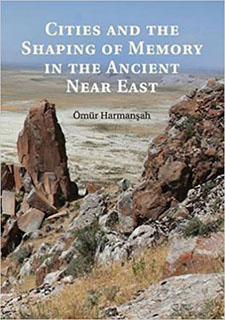 James F. Osborne examines two books by Ömür Harmanşah: Cities and the Shaping of the Memory in the Ancient Near East and Place, Memory, and Healing: An Archeology of Anatolian Rock Monuments. These “thoughtful and provocative monographs” focus on different topics—cities and landscape monuments—but both reveal “an urgent concern” for scholars “to embrace the socially constructed nature of the built environment.” Read the full review at caa.reviews.
Grants, Awards, and Honors
posted Aug 18, 2017
CAA recognizes its members for their professional achievements, be it a grant, fellowship, residency, book prize, honorary degree, or related award.
Grants, Awards, and Honors is published every two months: in February, April, June, August, October, and December. To learn more about submitting a listing, please follow the instructions on the main Member News page.
August 2017

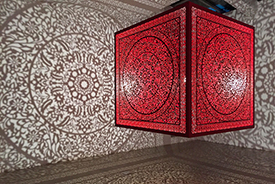 Anila Quayyum Agha, All the Flowers Are for Me (Red), 2017, laser-cut lacquered steel and lightbulb, 60 x 60 x 60 in. Alice Bimel Endowment for Asian Art, 2017.7 (artwork © Anila Quayyum Agha)
Anila Quayyum Agha, associate professor in the Herron School of Art and Design at Indiana University Purdue University Indianapolis, has won the Schiele Prize from the Cincinnati Art Museum in Ohio.
Michelle Moore Apotsos, assistant professor in the Art Department at Williams College in Williamstown, Massachusetts, has won a research grant from the Graham Foundation. She will use the funds for “Selling South Africa: Architecture, Tourism, and Identity in the Post-Apartheid Era.”
Natalie Beall, an artist based in Salt Point, New York, has won a 2017 fellowship from the New York Foundation for the Arts in the printmaking/drawing/book arts category.
Jetshri Bhadviya, a recent MFA graduate from the Cranbrook Academy of Art in Bloomfield Hills, Michigan, has received a 2017–18 Post-Graduate Teaching Fellowship from the Association of Independent Colleges of Art and Design. She will be placed at College for Creative Studies in Detroit.
Susanneh Bieber, assistant professor in the Departments of Visualization and Architecture at Texas A&M University in College Station, has been awarded the 2017 Terra Foundation for American Art International Essay Prize by the Smithsonian American Art Museum in Washington, DC. Her winning essay, “Going Back to Kansas City: The Origins of Judd’s Minimal Art,” will be published in a forthcoming issue of the journal American Art.
Angela Fraleigh, an artist based in New York and Allentown, Pennsylvania, has received studio space in Brooklyn through the 2017 Sharpe-Walentas Studio Program.
Amir Hariri, an artist based in Brooklyn, New York, has received a 2017 fellowship from the New York Foundation for the Arts in the category for printmaking, drawing, and book arts.
Valerie Hegarty, an artist based in Brooklyn, New York, has won a 2017 fellowship in crafts/sculpture from the New York Foundation for the Arts.

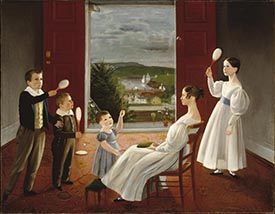 Ambrose Andrews, The Children of Nathan Starr, 1835, oil on canvas, 28 3/8 x 36½ in.; 39 3/16 x 47¼ x 4 13/16 in. framed (artwork in the public domain)
Stacy C. Hollander, deputy director for curatorial affairs, chief curator, and director of exhibitions for the American Folk Art Museum in New York, has won two 2017 Awards for Excellence from the Association of Art Museum Curators. One award is for her exhibition, Securing the Shadow: Posthumous Portraiture in America; the other is for her catalogue essay, “Securing the Shadow: Posthumous Portraiture in America.”
Melissa Huddleston, an artist and assistant conservator at the Getty Research Institute in Los Angeles, has completed an artist’s residency at the Sam and Adele Golden Foundation for the Arts, based in New Berlin, New York.
Sarah Hwang, an art director and designer based in San Leandro, California, has earned the 2017 Art Publishing Residency, awarded by three online publications: Daily Serving, Art Practical, and c3:intiative.
Jennifer Karady, an artist based in Brooklyn, New York, has received a 2017 fellowship in the visual arts from the MacDowell Colony, based in Peterborough, New Hampshire. Karady has also received Art Omi’s Francis Greenburger Fellowship for Mitigating Ethnic and Religious Conflict, which included an artist’s residency in Ghent, New York.
Bahareh Khoshooee, who recently earned an MFA in studio art from the University of South Florida in Tampa, has been appointed an MFA Resident Artist for summer 2017 at the Ox-Bow School of Art and Artists’ Residency in Saugatuck, Michigan.
Sharon Louden, an artist and the editor of The Artist as Cultural Producer, has received studio space in the 2017 Sharpe-Walentas Studio Program, based in Brooklyn, New York.

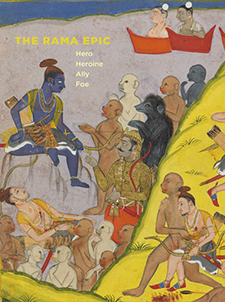
Forrest McGill, Wattis Senior Curator of South and Southeast Asian Art for the Asian Art Museum of San Francisco in California, has won a 2017 Award for Excellence from the Association of Art Museum Curators for his exhibition catalogue, The Rama Epic: Hero, Heroine, Ally, Foe.
Helina Metaferia, a 2015–17 AICAD Post-Graduate Teaching Fellow at the San Francisco Art Institute in California, has been appointed to the 2017 Arts Faculty this summer at the Ox-Bow School of Art and Artists’ Residency in Saugatuck, Michigan
Itohan I. Osayimwese, assistant professor of history of art and architecture at Brown University in Providence, Rhode Island, has won a grant from the Graham Foundation in the publications category. Her project is editing “‘African Building Types: An Architectural-Ethnographic Study’ and Other Essays by Hermann Frobenius.”
Jim Osman, an artist based in Brooklyn, New York, has received a 2017 fellowship in the category for crafts and sculpture from the New York Foundation for the Arts.
Corinna Ray, who recently completed an MFA at the University of Tennessee in Knoxville, has been appointed an MFA Resident Artist for summer 2017 at the Ox-Bow School of Art and Artists’ Residency in Saugatuck, Michigan.
Adam Liam Rose, who earlier this year received an MFA in sculpture from Columbia University in New York, has become an MFA Resident Artist for summer 2017 at the Ox-Bow School of Art and Artists’ Residency in Saugatuck, Michigan.
Felicity D. Scott, director of the PhD Program in Architecture (History and Theory) and codirector of the program in Critical, Curatorial, and Conceptual Practices in Architecture at Columbia University’s Graduate School of Architecture, Planning, and Preservation in New York, has won a research grant from the Graham Foundation. She will work on “Vann Molyvann and the Absent Archives of Cambodian Modernism” with Branden W. Joseph and Mark Wasiuta.
Makia Sharp, who earlier this year earned an MFA in sculpture from the Rhode Island School of Design in Providence, has won a 2017–18 Post-Graduate Teaching Fellowship. The Association of Independent Colleges of Art and Design will place her at California College of the Arts in San Francisco and Oakland.
Emily Silver, an artist based in Ferndale, California, and a faculty member at the College of the Redwoods in Eureka, has completed a residency at PLAYA at Summer Lake in Summer Lake, Oregon.
Irene V. Small, assistant professor in the Department of Art and Archaeology at Princeton University in Princeton, New Jersey, has won a research grant from the Graham Foundation. Her project is titled “The Organic Line and the Ends of Modernism.”
Linda Stein, an artist based in New York, has been recognized as Artist of the Year by the New York City Art Teachers Association and the United Federation of Teachers.
Despina Stratigakos, professor of architecture at the University at Buffalo in Buffalo, New York, has won a research grant from the Graham Foundation. Her project is titled “Hitler’s Northern Dream: Building an Empire in Occupied Norway.”
Dannielle Tegeder, an artist based in New York, has accepted a 2017 fellowship in printmaking, drawing, and book arts category from the New York Foundation for the Arts.
Penelope Umbrico, an artist and faculty member at the School of Visual Arts in New York, has been selected to receive studio space in Brooklyn through the 2017 Sharpe-Walentas Studio Program.

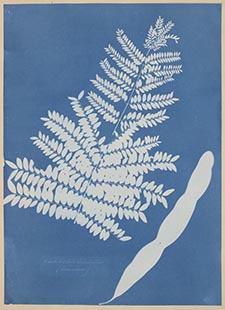 Anna Atkins, Honey Locust Leaf and Pod (Gleditsia triacanthos), ca. 1854 (artwork in the public domain)
Kristina Wilson, associate professor of art history at Clark University in Worcester, Massachusetts, has received a 2017 Award for Excellence from the Association of Art Museum Curators for her exhibition Cyanotypes: Photography’s Blue Period, organized with Nancy Kathryn Burns.
Mabel O. Wilson, associate professor for the Graduate School of Architecture, Planning, and Preservation at Columbia University in New York, has won a grant for publications from the Graham Foundation. She and her fellow editors, Irene Cheng and Charles L. Davis II, will work on a book project called “Race and Modern Architecture.”
People in the News
posted Aug 17, 2017
People in the News lists new hires, positions, and promotions in three sections: Academe, Museums and Galleries, and Organizations and Publications.
The section is published every two months: in February, April, June, August, October, and December. To learn more about submitting a listing, please follow the instructions on the main Member News page.
August 2017
Academe
Nika Elder has become assistant professor in the Department of Art at American University in Washington, DC.
Amy Freund has received tenure and been promoted to associate professor in the Meadows School of the Arts at Southern Methodist University in Dallas, Texas.
Paul B. Jaskot, formerly professor of the history of art and architecture and director of Studio χ at DePaul University in Chicago, Illinois, has been appointed professor of art history and director of Wired! Lab at Duke University in Durham, North Carolina.

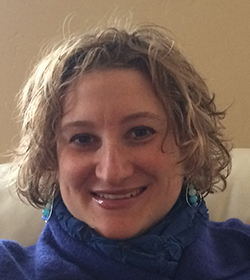 Jenni Sorkin
Jenni Sorkin has received tenure in the History of Art and Architecture Department at the University of California, Santa Barbara. She became associate professor on July 1, 2017.

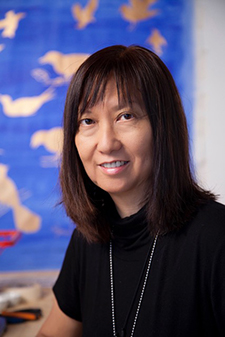 May Sun
May Sun, an artist and former lecturer at Otis College of Art and Design in Los Angeles, California, has become a 2017–18 artist in residence at the Rinehart School of Sculpture at Maryland Institute College of Art in Baltimore.
Rebecca Uchill has left the Massachusetts Institute of Technology in Cambridge for a position at the University of Massachusetts, Dartmouth.
Lisa Young has resigned from her position in the College of Art and Design at Lesley University in Cambridge, Massachusetts.
Museums and Galleries
William J. Chiego has become director emeritus for the McNay Art Museum in San Antonio, Texas, to acknowledge his twenty-five years of service.
Elizabeth Chodos, formerly executive and creative director of Oxbow in Saugatuck, Michigan, has been appointed director of the Regina Gouger Miller Gallery at Carnegie Mellon University in Pittsburgh, Pennsylvania.
Erin B. Coe, director of the Hyde Collection in Glen Falls, New York, has accepted the directorship of the Palmer Museum of Art at Pennsylvania State University in State College.

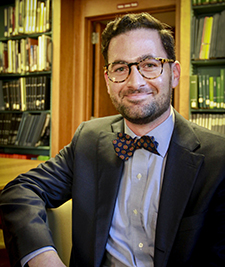 William L. Coleman
William L. Coleman, formerly NEH Post-Doctoral Fellow at the Library Company of Philadelphia in Pennsylvania, has been named associate curator of American art at the Newark Museum in Newark, New Jersey.
Alexa Greist, previously at the Yale University Art Gallery in New Haven, Connecticut, has been named assistant curator of prints and drawings for the Art Gallery of Ontario in Toronto.

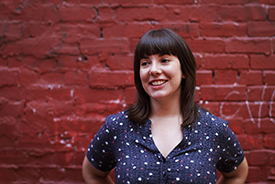 Tarah Hogue
Tarah Hogue, formerly curator at Grunt Gallery in Vancouver, British Columbia, has become the first senior curatorial fellow at the Vancouver Art Gallery.
Wanda Nanibush has been named assistant curator of Canadian and indigenous art for the Art Gallery of Ontario in Toronto.
Christina Olsen, previously director of the Williams College Museum of Art in Williamstown, Massachusetts, has been appointed director of the University of Michigan Museum of Art in Ann Arbor.

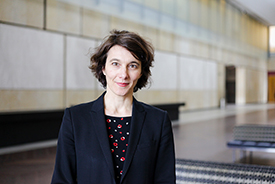 Sylvie Patry
Sylvie Patry has joined the Musée d’Orsay in Paris, France, as deputy director for curatorial affairs and collections. Previously she was deputy director for collections and exhibitions and Gund Family Chief Curator for the Barnes Foundation in Philadelphia, Pennsylvania.

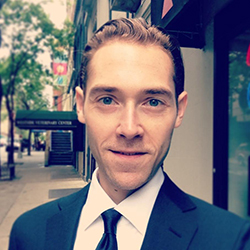 H. Alexander Rich
H. Alexander Rich, assistant professor of art history and director of the Melvin and Burks Galleries at Florida Southern College in Lakeland, has also been named curator and director of galleries and exhibitions for the Polk Museum of Art at his school.
Tina Rivers Ryan, formerly curatorial assistant in the Department of Modern and Contemporary Art at the Metropolitan Museum of Art in New York, has become assistant curator at the Albright-Knox Art Gallery in Buffalo, New York.
Stephanie Sparling Williams, previously John Walsh Fellow at the Yale University Art Gallery in New Haven, Connecticut, has joined the Addison Gallery of American Art at Phillips Academy in Andover, Massachusetts, as assistant curator and visiting scholar.
Daniel H. Weiss, president and chief operating officer of the Metropolitan Museum of Art in New York, has been chosen to lead his institution as chief executive officer.
Cole Woodcox has been appointed director of the Council of Public Liberal Arts Colleges, a consortium of thirty North American universities based in Asheville, North Carolina.
Organizations and Publications
Jo-Anne Birnie Danzker, previously director of the Frye Art Museum in Seattle, Washington, has been appointed director and chief executive officer of the Biennale of Sydney in Australia.
Gilberto Cárdenas, executive director of the Notre Dame Center for Arts and Culture in South Bend, Indiana, has joined the board of trustees for the Smithsonian Institution’s Archives of American Art, based in Washington, DC.

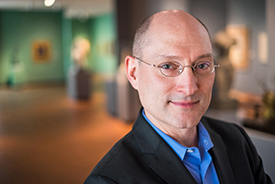 John Davis
John Davis, previously Alice Pratt Brown Professor of Art at Smith College in Northampton, Massachusetts, and executive director of the Terra Foundation for American Art’s Global Academic Programs and Terra Foundation Europe, has been appointed under secretary for museums and research/provost at the Smithsonian Institution in Washington, DC.
Thomas W. Gaehtgens, director of the Getty Research Institute in Los Angeles, has decided to retire in spring 2018.
Exhibitions Curated by CAA Members
posted Aug 16, 2017
Check out details on recent shows organized by CAA members who are also curators.
Exhibitions Curated by CAA Members is published every two months: in February, April, June, August, October, and December. To learn more about submitting a listing, please follow the instructions on the main Member News page.
August 2017

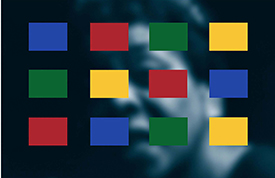 Carrie Mae Weems, Color Real and Imagined, 2004, archival pigment with silkscreened color blocks, 30 x 46 in. (artwork © Carrie Mae Weems)
Ellen Carey. Women in Colour. Rubber Factory, New York, August 19–September 27, 2017.
Rachel Epp Buller. Crossing the Line. Mary Martin Gehman Art Gallery, Harrisonburg, Virginia, June 22–25, 2017.

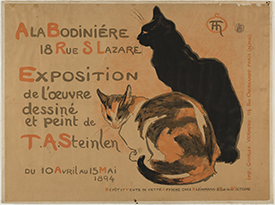 Théophile-Alexandre Steinlen, Exposition a la Bodiniere, 1894, lithograph. Collection Zimmerli Art Museum at Rutgers, gift of Mr. and Mrs. Herbert D. Schimmel (photograph by Peter Jacobs)
Christine Giviskos. On the Prowl: Cats and Dogs in French Prints. Zimmerli Art Museum at Rutgers University, New Brunswick, New Jersey, September 5, 2017–January 7, 2018.

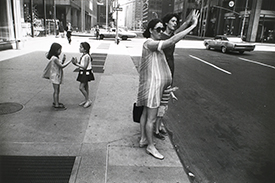 Garry Winogrand, New York City, New York from the portfolio Women Are Better Than Men. Not Only Have They Survived, They Do Prevail., 1969, gelatin silver print, 8⅞ x 13¼ in. Collection Zimmerli Art Museum at Rutgers, gift of Varick D. Martin (artwork © Estate of Garry Winogrand; photograph by Bryan Whitney and provided by Fraenkel Gallery, San Francisco)
Donna Gustafson. Absence and Trace: The Dematerialized Image in Contemporary Art. Zimmerli Art Museum at Rutgers University, New Brunswick, New Jersey, September 5, 2017–January 7, 2018.

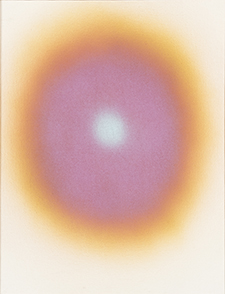 Stanley Twardowicz, Purple Circle, 1968, acrylic polymer on canvas, 25 11/16 × 19 13/16 in. Collection Zimmerli Art Museum at Rutgers University, gift of Benjamin Weiss (photograph by Peter Jacobs)
Donna Gustafson. Stanley Twardowicz: Color Field Paintings, 1962–1990. Zimmerli Art Museum at Rutgers University, New Brunswick, New Jersey, September 5, 2017–July 31, 2018.
Donna Gustafson. Subjective Objective: A Century of Social Photography. Zimmerli Art Museum at Rutgers University, New Brunswick, New Jersey, September 5, 2017–January 7, 2018.

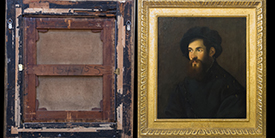 Moretto da Brescia (attributed), Portrait of an Unidentified Man, ca. 1525–50. Krannert Art Museum. Gift of Merle J. and Emily N. Trees (artwork in the public domain)
Nancy Karrels. Provenance: A Forensic History of Art. Krannert Art Museum, University of Illinois, Urbana-Champaign, Illinois, May 13, 2017–June 9, 2018.

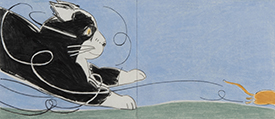 Ward Schumaker, Cat chases, illustration from Mouse Chase, ca. 1995, color pencil and graphite on tissue paper, 7⅛ x 16⅛ in. Collection Zimmerli Art Museum at Rutgers University, gift of the artist (photograph by Peter Jacobs)
Nicole Simpson. Cats vs. Dogs: Illustrations for Children’s Literature. Zimmerli Art Museum at Rutgers University, New Brunswick, New Jersey, July 1, 2017–June 24, 2018.

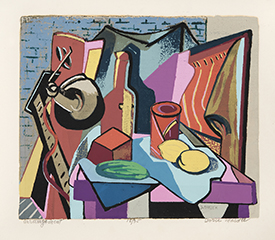 Dorie Marder, Arrangement, 1945, color screen print, 9¾ x 11 7/16 in. Collection Zimmerli Art Museum at Rutgers University, gift of Dr. David and Ruth Robinson Eisenberg (photograph by Peter Jacobs)
Nicole Simpson. Serigraphy: The Rise of Screenprinting in America. Zimmerli Art Museum at Rutgers University, New Brunswick, New Jersey, September 5, 2017–February 11, 2018.
Rachel Stern. “Leben ist Glühn”: Der Expressionist Fritz Ascher / “To Live Is to Blaze with Passion”: The Expressionist Fritz Ascher. Museum Charlottenburg-Wilmersdorf in der Villa Oppenheim, Berlin, Germany, December 8, 2017–March 11, 2018; and Potsdam Museum—Forum für Kunst und Geschichte, Potsdam, Germany, December 10, 2017–March 11, 2018.
Karen Wilkin. “Beauteous Strivings”: Fritz Ascher, Works on Paper. New York Studio School, New York, October 23–December 3, 2017.
News from the Art and Academic Worlds
posted Aug 16, 2017
Each week CAA News summarizes eight articles, published around the web, that CAA members may find interesting and useful in their professional and creative lives.
Conference Strategies for the Shy and Introverted
A comment on Twitter made me realize how many strategies I’ve developed over the past few years to deal with being shy and introverted in a conference environment. Caveats that these are a work in progress, they function best at small to midsized conferences, and I don’t always practice what I preach. (Read more from Jessica Otis.)
11 Studio Hacks That Will Save You Money in Art School
Back to school season means spending all that money you earned at your summer job on art supplies. In this helpful guide, we’ll share some money-saving studio hacks that will get you through the school year without maxing out your credit card. And only one tip involves Dumpster diving! (Read more from Artspace Magazine.)
Why Shamanic Practices Are Making a Comeback in Contemporary Art
“Everyone always talks about how, in times of crisis, people start looking for God,” says Jeremy Shaw. “And I think that’s very synonymous with what’s happening now.” Since his days at art school, Shaw has been exploring the human pursuit of transcendental experience by way of altered states of consciousness. (Read more from Artsy.)
White Supremacists Are Waging a War against Public Space
The Charlottesville attack threatens public space, an amenity that is both scarce and necessary for democracy. The idea of the public square is under attack. And the extremist alt-right is waging a campaign to shut down the public square, using both violence and intimidation, especially under open-carry laws. (Read more from City Lab.)
Now Is the Time to Think about Accessibility
As a new semester approaches, the academic’s to-do list can fill up fast. That course planning you’ve been putting off now seems urgent. Your chair wants a copy of your syllabi by the end of the week. And there’s still the matter of those writing deadlines. I’m here to add one more item to your list. Now is the time—not later—to think about accessibility in your classroom. (Read more from Vitae.)
Sociology Panel Seeks Changes for Adjuncts
The American Sociological Association’s Task Force on Contingent Faculty released its interim report ahead of the association’s annual meeting this week. The report includes an overview of the existing literature on non-tenure-track faculty members and recommends various policy changes. (Read more from Inside Higher Ed.)
The Highest Form of Flattery
Why risk being classified as a mere imitator? In a new book entitled, with quiet provocation, Modern Painters, Old Masters: The Art of Imitation from the Pre-Raphaelites to the First World War, Elizabeth Prettejohn sets out to answer this question, even as she argues for a more expansive understanding of what counts as “modern art.” (Read more from the New York Review of Books.)
The 10 Best Artworks by Raphael, Seraphic Genius of the Renaissance—Ranked
To celebrate the artist’s enduring legacy, we surveyed ten of Raphael’s most popular paintings—determined by their presence on Google Images, the number of reproductions created, and our own aesthetic enthusiasms—and ranked them from one to ten, in order of their degree of accomplishment. (Read more from Artnet News.)
CAA Mourns the Loss of Jack Hyland, its Long-time Treasurer and Friend
posted Aug 15, 2017
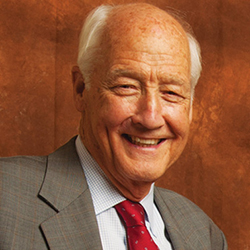 Jack Hyland, CAA’s treasurer and close advisor for over 30 years, passed away suddenly on Friday, August 11, 2017. The CAA staff, board, and committees are saddened by this monumental loss. Hyland began his career in investment banking at major financial services firms, including Morgan Stanley, Warburg Paribas Becker, and PaineWebber/Young & Rubicam Ventures. In 2010, he founded Media Advisory Partners with several partners. Hyland was a strident advocate for CAA, ensuring the financial health of the organization and guiding it with sound input and wisdom through three decades.
Hyland was the author of two notable books, Evangelism’s First Modern Media Star, The Life of Reverend Bill Stidger and The Moses Virus. In the former title, Hyland examined the life of his grandfather, the famous preacher, Bill Stidger, who foresaw the possibilities of modern-day media to expand evangelical work. His second book, The Moses Virus, is a fictional thriller set in Rome.
Hyland was born in 1938 in Detroit, Michigan. He majored in Theoretical Physics at Williams College, graduating in 1959; and from Harvard Business School, graduating in 1961.
In addition to serving CAA, Hyland was Co-Chair of the Board of Trustees of Teachers College, Columbia University. He was also Chairman Emeritus of the American Academy in Rome; and Vice President and Director of the Sterling and Francine Clark Art Institute. Formerly, he was also a Trustee and Treasurer of the National Building Museum in Washington.
We offer our condolences to his partner, Larry Wente; to his former wife, Karen Conant Hyland; to his children, Liza, Jonathan and Susannah, and grandchildren.