CAA News Today
News from the Art and Academic Worlds
posted by CAA — November 14, 2018
Want articles like these in your inbox? Sign up: collegeart.org/newsletter
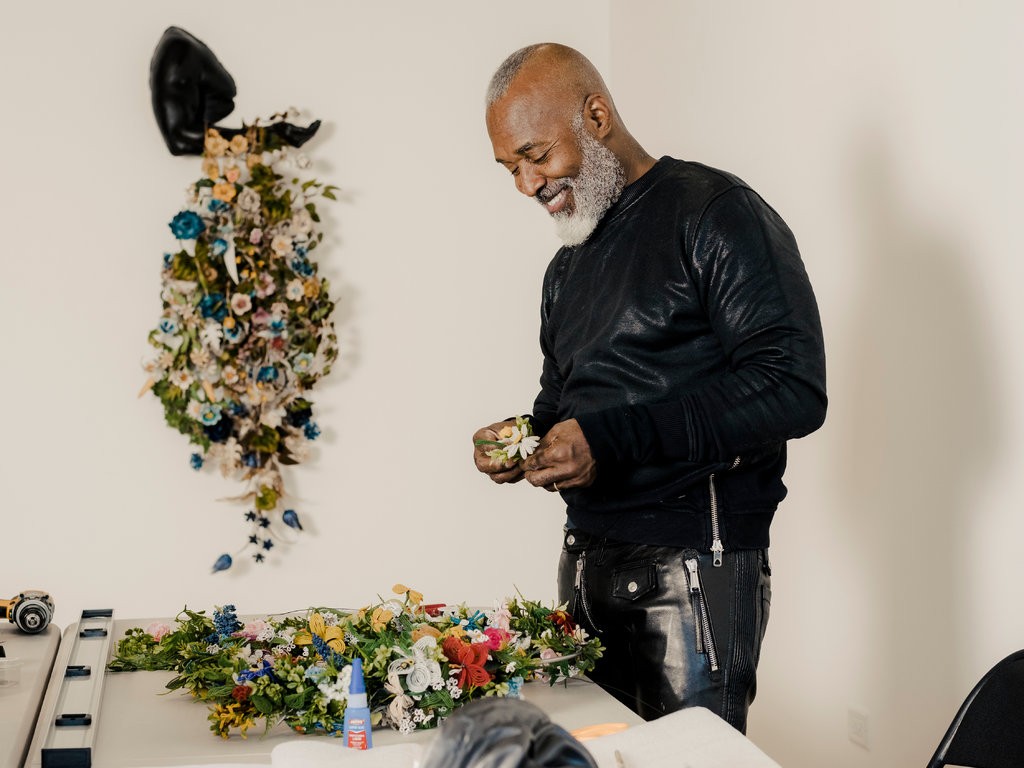
Nick Cave in his studio at Facility, his new multidisciplinary art space in Chicago. Photo: Whitten Sabbatini for New York Times
Artist Covertly Hangs #MeToo-Inspired Wall Labels at the Met Museum
Michelle Hartney posted the guerrilla wall labels next to the artwork of Paul Gaugin and Pablo Picasso. (Hyperallergic)
How Ideas Go Viral in Academia
Can great thinking still catch fire in academia? (CU Boulder)
Nick Cave Uses His Capital to Help Aspiring Creators
Nick Cave and partner Bob Faust have created a new 20,000-square-foot multidisciplinary art space in Chicago. (New York Times)
Still a Problem: Images and Art History in 2018
“Too often we are still using poor quality, lifeless images that we project in the classroom with Powerpoint. We think we can do better.” (Smarthistory)
Countering Myths and Misperceptions of Participating in the Arts
The first in a three-post series examining people’s questions about arts experiences and how organizations can help answer them. (Wallace Blog)
CAA Announces Guidelines for Addressing Proposed Cuts to Arts and Humanities Programs and Departments
posted by CAA — November 12, 2018
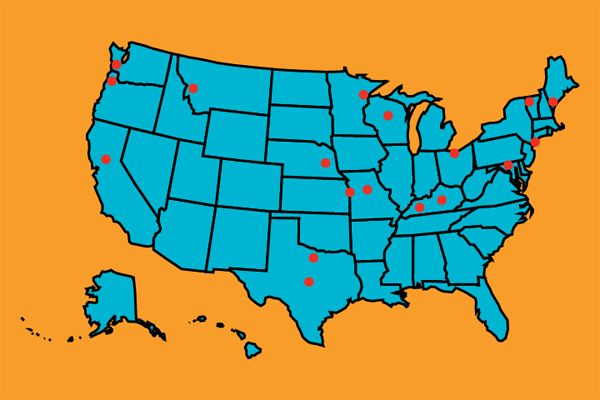
Campuses across the country have been affected by cuts to the arts and humanities. See the full list here. Graphic: Allison Walters
By any number of metrics, the arts and humanities are experiencing challenging times. Funding is under threat from the Federal government. Student enrollment is dropping in higher education classes focusing on the arts and humanities. The number of tenure-track faculty positions are diminishing in arts and humanities departments. The wide support of STEM-centered education has placed an emphasis on career paths with measurable and immediate financial outcomes. Yet, we know the importance of an arts and humanities education, not just for those looking to have careers in the arts and humanities but those across the entire professional spectrum.
In response to the challenges in the arts and humanities, some universities and colleges in the United States have cut programs, collapsed libraries, or shuttered entire departments. These steps, taken as cost-saving measures, only increase the uphill battle for the arts and humanities. Over the past years, CAA has tracked these changes in higher education through the organization’s own research efforts and through narratives relayed directly from our members. These actions taken by administrations are in no way secret. In article after article, the alarm has been sounded. We believe there is a better way to resolve these issues and protect the arts and humanities at the same time.
To bridge this divide, CAA is pleased to release “Guidelines for Addressing Proposed Substantive Changes to an Art, Art History or Design Unit, or Program at Colleges and Universities.”
“These guidelines provide a path for open communication between faculty and administration,” says Hunter O’Hanian, executive director of CAA. “With this new tool to be used by both administrations and faculty equally, CAA builds a resource that is vital to strengthening the arts and humanities on campuses. The guidelines create clearly definable steps and parameters for a process that when handled badly leads to fissures between faculty, students, and administrations.”
The “Guidelines for Addressing Proposed Substantive Changes to an Art, Art History or Design Unit or Program at Colleges and Universities” call for a deeper understanding of the factors and issues that have precipitated the action to close a department or program. The guidelines outline two clear paths: they encourage constituencies to communicate about the potential changes, and they pave the way to resolution without having to eliminate or downsize the program or department.
If those conversations fail to reach a satisfactory outcome with the educational institution, the guidelines emphasize that the institutional administration must do everything it can to see that the program continues. And, as is the case with all scholastic endeavors, the administrations must show their work—they must provide documentation that the department has been adequately resourced and funded. It must demonstrate that growth has been encouraged rather than to allowing it to lay fallow.
“CAA remains convinced that students and society derive lasting benefit when institutions offer a diverse range of academic resources to support different learning styles,” says Jim Hopfensperger, president of the CAA Board of Directors. “These new CAA guidelines outline best practices toward sustaining this essential diversity of academic programs and operational assets.”
Hopfensperger adds that “CAA believes that students, staff, faculty, and institutional leadership teams are all well served by inclusive processes, open lines of communication, engagement across constituencies, and empathetic deliberations.”
IMPACT OF ARTS AND HUMANITIES TOOLKIT
COLLEGES FACING CUTS TO ARTS AND HUMANITIES PROGRAMS
Authors and Contributors for the “Guidelines for Addressing Proposed Substantive Changes to an Art, Art History or Design Unit or Program at Colleges and Universities”:
CAA Working Group for Guidelines for Addressing Proposed Substantive Changes to an Art, Art History or Design Unit or Program at Colleges and Universities: Tom Berding, Michigan State University; Brian Bishop, Framingham State University (Chair, CAA Professional Practices Committee); James Hopfensperger, Western Michigan University (CAA Board President); Charles Kanwischer, Bowling Green State University; Karen Leader, Florida Atlantic University; Richard Lubben, College of the Sequoias; Paul Jaskot, Duke University; Hunter O’Hanian, CAA Executive Director.
Elaine Bezold and Sidney Stretz
posted by CAA — November 12, 2018
The weekly CAA Conversations Podcast continues the vibrant discussions initiated at our Annual Conference. Listen in each week as educators explore arts and pedagogy, tackling everything from the day-to-day grind to the big, universal questions of the field.
CAA podcasts are now on iTunes. Click here to subscribe.
This week, Elaine Bezold and Sidney Stretz discuss failure in the classroom.
Elaine Bezold (Stephen F. Austin State University) is a photographer and educator living in Dover, New Hampshire. She makes work about human-animal interactions, rebirth, loss, and instinct.
Sidney Stretz (University of North Carolina Greensboro) is an artist and educator living and working in Greensboro, North Carolina. She makes work about everyday life and its challenges, strange social situations, and failure.
New in caa.reviews
posted by CAA — November 09, 2018
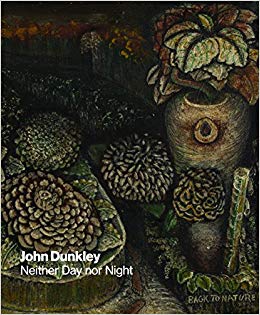
Petrona Morrison writes about John Dunkley: Neither Day nor Night by Diana Nawi, John Dunkley, David Boxer, Olive Senior, and Nicole Smythe-Johnson. Read the full review at caa.reviews.
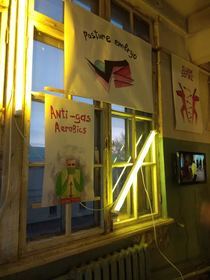
Daria Kostina discusses the 4th Ural Industrial Biennial of Contemporary Art. Read the full review at caa.reviews.
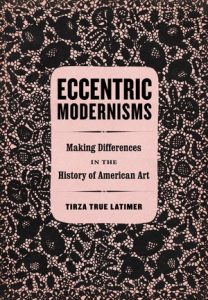
John H. P. Semlitsch reviews Eccentric Modernisms: Making Differences in the History of American Art by Tirza True Latimer. Read the full review at caa.reviews.
Impact of Arts and Humanities Toolkit
posted by CAA — November 08, 2018
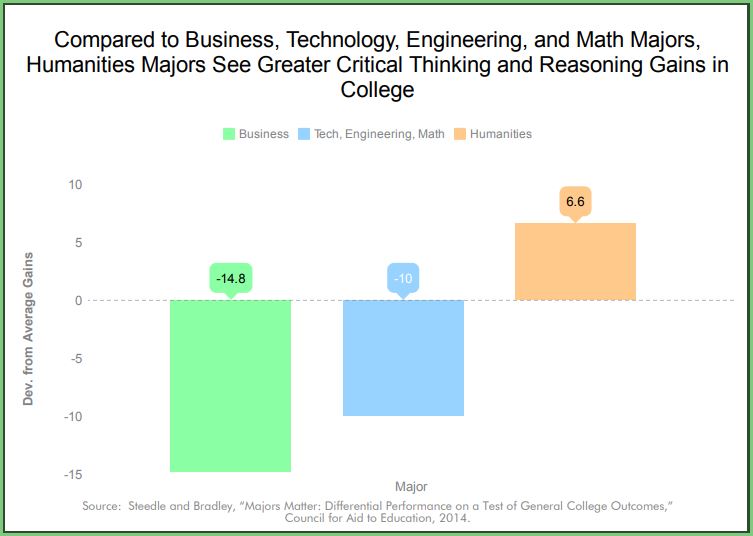
From National Humanities Alliance’s Study the Humanities Toolkit.
In conjunction with the release of our new Guidelines for Addressing Proposed Substantive Changes to an Art, Art History or Design Unit or Program at Colleges and Universities, here are some helpful resources to support the arts and humanities in higher education.
In the News
- Why We Should Spend More on Humanities Research in a High-Tech World (Chronicle of Higher Education, April 2018)
- We Reversed Our Declining English Enrollments. Here’s How. (Chronicle of Higher Education, April 2018)
- It’s Time To Worry When Colleges Erase Humanities Departments (Forbes, March 2018)
- The Arts Contribute More Than $760 Billion to the U.S. Economy (NEA, March 2018)
- STEM May Be the Future—But Liberal Arts Are Timeless (Quartz, February 2018)
- How the Humanities Can Train Entrepreneurs (The Atlantic, September 2017)
- Why Med Schools Are Requiring Art Classes (Artsy, August 2017)
- Liberal Arts in the Data Age (Harvard Business Review, July 2017)
- What Is the Value of an Education in the Humanities? (NPR, February 2016)
See more excellent articles compiled by the National Humanities Alliance.
Online Resources
There is lots of good data to explore online about the impact of the arts and humanities.
From The State of the Humanities 2018: Graduates in the Workforce and Beyond:
- Almost 87% of workers with a bachelor’s degree in the humanities reported they were satisfied with their jobs in 2015, comparable to graduates from almost every other field.
- Over three-quarters of humanities graduates saw themselves at or approaching “the best possible life,” which was similar to the shares among engineering and natural science graduates.
The Study the Humanities Toolkit from the National Humanities Alliance is a collection of resources for higher education faculty and administrators to use in making the case for the value of studying the humanities as an undergraduate.
Americans for the Arts is a hub for data and information about various federal arts agencies and arts education in America.
Data on the arts and humanities can also be found on the National Endowment for the Arts Facts & Figures page.
Colleges Facing Cuts to Arts and Humanities Programs
posted by CAA — November 08, 2018
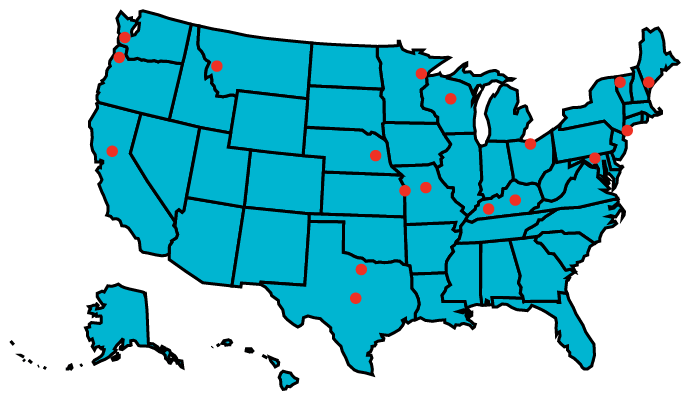
The following schools have taken steps to reduce or cut arts and humanities programs, faculty positions, or institutions on campuses. This list comprises those that have researched these steps and announced them publicly. In some scenarios below, the administration recanted or changed direction due to outcry from faculty and students.
University of Wisconsin – Stevens Point
Plans to cut or discontinue thirteen majors, including its History, Art (excluding Graphic Design), and Philosophy programs. Read more
UPDATE: A new proposal proposes cutting half as many majors than what was proposed, at least initially. Read more
UPDATE, April 2019: UW-Stevens Point backs away from controversial plan to cut several liberal arts majors
University of Wisconsin-Superior
Announced the elimination of nine undergraduate majors, as well as fifteen minors and one graduate program. Read more
California State University, Chico
College of Humanities and Fine Arts (HFA) cut 68 classes due to budget cuts. Read more
University of Southern Maine
University of Southern Maine no longer offers degrees in either American and New England Studies or Modern and Classical Languages and Literatures to newly admitted students. The programs have been discontinued. Read more
SUNY Stony Brook
Proposed cuts to humanities programs. Possible changes include combining the departments of European languages, Hispanic languages, and cultural studies and comparative literature into a single department; suspending doctoral programs in Hispanic languages and cultural studies and comparative literature; and suspending undergraduate majors in comparative literature, cinema and cultural studies, and theater arts. The plan was announced in May 2017. Read more
Eastern Kentucky University
Board of Regents voted to slash a long list of academic programs, eliminate jobs, close a regional campus, and end two sports teams. Read more
Western Kentucky University
Plans to cut 140 positions, eliminate a multidisciplinary college, and turn three regional campuses over to a distance learning unit in an effort to offset a $15 million deficit. Read more
University of Central Missouri
Proposes transferring arts and humanities departments into the College of Education. Read more
UPDATE: The University of Central Missouri has abandoned the plan to move arts and humanities into its College of Education, instead considering a different kind of reorganization. Read more
University of Missouri
Cuts twelve graduate programs amidst budget crisis. Read more
University of Nebraska – Lincoln
Cuts at University of Nebraska – Lincoln include consolidating or eliminating several undergraduate and graduate programs, shuttering certain research and extension offices, and terminating some student services and athletic teams, according to proposals. Read more
University of Akron
Announced that it is terminating nineteen percent of its degree tracks following a comprehensive review of academic programs. New admission to the affected tracks is suspended but current students will be able to finish their programs. Programs cut include bachelor’s degrees in art history, French, geography, math and physics, along with master’s degrees in history, physics, sociology and Spanish. Read more
University of North Texas
College of Visual Arts & Design will discontinue Fibers concentration as the school nears completion of $70 million new building for the arts. Read more
UPDATE: Read a FAQ and update from the UNT administration.
University of Texas Austin
College of Fine Arts and the University of Texas Libraries have threatened to move tens of thousands of books, journals, music scores, CDs and other works from Austin’s Fine Arts Library off-site with little input from the faculty. Read more
UPDATE: After uproar from faculty and students, University of Austin at Texas administration reversed the decision to move library materials and have passed resolutions to further fund the library. Read more
Goucher College
Majors to be cut include Russian studies, studio art, theater, religion, elementary education and special education. Minors to be phased out include book studies, German and Judaic studies. Read more
University of Vermont
Adopts an IBB (incentive-based budgeting) model to cut or eliminate low-enrollment majors and departments, thereby laying off adjuncts and faculty in the humanities. Read more
Marylhurst University
A small private liberal-arts college in Portland, OR will close permanently at the end of 2018. Read more
University of Montana
Specific reductions within departments include ending the Global Humanities and Religions major and minors and consolidating six current majors within the Modern and Classical Languages and Literatures into one World Languages and Cultures major with language options. The plan includes voluntary retirements, as well as some faculty moving to part-time positions, and a reduction of about 58 full-time faculty members by fall of 2021. Read more
Pacific Lutheran University
As of 2017, the plan calls for 31 faculty members could lose their jobs and two areas of study be eliminated or reduced within three years. Read more
Affiliated Society News for November 2018
posted by CAA — November 07, 2018
Affiliated Society News shares the new and exciting things CAA’s affiliated organizations are working on including activities, awards, publications, conferences, and exhibitions.
We’re seeking new organizations to join CAA’s Affiliated Societies. Click here to learn more.
Association for Latin American Art (ALAA)
Save the Date: The World Turned Upside Down
The Fifth Triennial Conference of the Association for Latin American Art (ALAA) will take place next year in Chicago, 7-9 March, 2019. Sponsored by DePaul University and the Art Institute of Chicago with support from the National Museum of Mexican Art and the Thoma Foundation, the conference will include a variety of papers around the theme of “Arts of Oppression and Resistance in the American Hemisphere,” as well as additional activities in and around area institutions. For more information, please visit https://associationlatinamericanart.org/triennial/.
The Feminist Art Project (TFAP)
Call for Contributions to Rejoinder, an online journal featuring work at the intersection of scholarship and activism that reflects feminist/queer and social justice perspectives.
me too
The “me too” movement, founded in 2006 by activist Tarana Burke to help young American women of color heal from sexual assault, has gone global. Survivors around the world are giving unprecedented voice to stories of violence and abuse. The next issue of Rejoinder will explore the history, present, and future of “me too” as it relates to contemporary feminist mobilization and theorizing. We welcome contributions that explore any aspects of “me too,” such as how the movement travels across different contexts (such as the home, the academy, the workplace), through different forms of media and face-to-face interactions. What are the most pronounced effects of “me too?” And what difference does adding the hashtag make? Submissions (including essays, commentary, criticism, fiction, poetry, and artwork) should address this theme from feminist, queer, social and racial justice-inspired perspectives. We particularly welcome contributions at the intersection of scholarship and activism. For manuscript preparation details, please see our website at: http://irw.rutgers.edu/about-rejoinder. Rejoinder is published by the Institute for Research on Women at Rutgers University in partnership with The Feminist Art Project. Please send completed written work (2,000-2,500 words max), jpegs of artwork, and short bios to the editor, Sarah Tobias (stobias@rutgers.edu) by December 19, 2018.
Midwest Art History Society (MAHS)
The 46th Annual Conference of the Midwest Art History Society will be held from March 21–23, 2019, in Cincinnati, Ohio. Join us for thought-provoking sessions at the renowned Cincinnati Art Museum (CAM) on Thursday and Friday, March 21 and 22, and at the Taft Museum of Art on Saturday, March 23. On Thursday evening, the keynote lecture will be delivered by S. Hollis Clayson, Bergen Evans Professor in the Humanities at Northwestern University, in association with CAM’s exhibition Paris 1900: City of Entertainment featuring works drawn from the collections of the City of Paris museums. After sessions conclude on Friday, the Contemporary Arts Center in downtown Cincinnati will host an evening reception. Special behind-the-scenes programs at our partner museums will make this conference a particularly memorable experience. For more information and the conference’s call for papers, please visit the organization’s website http://www.mahsonline.org.
Visual Resources Association (VRA)
The next VRA international conference for image media professionals will take place at the Doubletree Hotel in the Little Tokyo area of downtown Los Angeles on March 26-29, 2019 (see: http://www.vraweb.org/conferences/vra2019/). We welcome CAA members as well as any intensive image users and like-minded information professionals to join in on what will be an exciting schedule of workshops, sessions, meetings, tours, and social events in Southern California. The conference schedule can be found at https://vra2019.sched.com/ and registration will open in December 2018.
The VRA offers several awards to assist with attendance at the VRA Annual Conference. The Travel Awards Committee especially encourages applications from new members/first time conference attendees; veteran members who have not been able to attend conferences for several years; international members; solo, isolated, and part-time VR professionals; students considering careers in visual resources; and any member actively participating in the conference who lacks sufficient funding to attend. You do not need to be a member of the VRA to apply for a travel award, but please note that to receive an award an applicant must become a member of VRA and must attend the 2019 Conference. The deadline for receipt of applications is Friday, November 16, 2018, 11:59pm EST. For more information about the types of travel awards, guidelines, and application information, see: http://vraweb.org/apply-for-a-vra-la-2019-travel-award/.
The Visual Resources Association is a multidisciplinary organization dedicated to furthering research and education in the field of image management within the educational, cultural heritage, and commercial environments affiliated with CAA (http://vraweb.org/). For more information about the important work and professional development activities sponsored by the Visual Resources Association or the VRA Foundation, please contact Maureen Burns, VRA’s CAA Affiliate Representative at moaburns@gmail.com or 310-489-3792.
Society of Architectural Historians (SAH)
The Society of Architectural Historians is accepting session proposals for the SAH 2020 Annual International Conference in Seattle, Washington (April 29–May 3). The Society invites its members, including graduate students, independent scholars and representatives of SAH chapters and partner organizations, to chair a session at the conference. Session proposals covering every time period and all aspects of the built environment, including landscape and urban history, are encouraged. View the Call for Sessions and submit a proposal online at sah.org/2020/call-for-sessions. The submission deadline is January 15, 2019.
In a joint program with the Athenaeum of Philadelphia, SAH is pleased to offer the Charles E. Peterson Fellowship to support the participation of a graduate student in the research and writing for a volume in the Buildings of the United States (BUS) series and/or SAH Archipedia, the Society’s online architectural resource. The recipient will research some aspect of American architecture prior to 1860, which they may choose from a list of topics provided by authors of forthcoming BUS books. Applications are due by January 2, 2019.
The Sally Kress Tompkins Fellowship, a joint program of SAH and the National Park Service’s Historic American Buildings Survey (HABS), permits a graduate student in architectural history or a related field the opportunity to work on a 12-week HABS history project during the summer of 2019. The Fellow will prepare a written history that focuses on a significant U.S. building or site for the permanent HABS collection at the Library of Congress. The award consists of a $12,000 stipend and includes travel, hotel accommodation, and registration for the SAH 2019 annual conference up to $1,000. Applications are due by December 31, 2018.
Association of Art Museum Curators & AAMC Foundation
The Association of Art Museum Curators & AAMC Foundation is currently seeking nominations for the 2019 Awards for Excellence, its annual award dedicated to recognizing curators whose work offers new methodologies, considers the public’s understanding, and advances the field. Since their launch in 2004, nearly 170 curators have received this award from AAMC. Click here to view past recipients.
Only affiliated and independent curator(s) working in the nonprofit sector can receive an award. All nominations must be submitted by AAMC members in good standing, and we encourage self-nominations. Nominated curators do not need to be AAMC members but must be eligible for membership and become a member should they be selected as an Awardee. Those in other fields and in for-profit settings cannot be nominated. Self-nominations are encouraged and welcomed.
A nominator may submit more than one nomination in one or more of the following categories for work on view or published between January 1 and December 31, 2018:
- Outstanding Printed Exhibition or Permanent Collection Catalogue (awarded by art organization operating budget category)
- Outstanding Exhibition or Installation (awarded by art organization operating budget category)
- Outstanding Article or Essay (digital or print)
- Outstanding Digital Publication
Awardees are kept confidential until they are announced at the Annual Conference & Meeting during an Awards for Excellence reception on Sunday, May 5, 2019, in New York City. We hope that all Awardees will be able to join us at the event. Ability to attend the event does not influence the award selection process.
All nominations must be submitted through our online portal by 12PM ET on Friday, December 14. The deadline is fast approaching, so click here to submit your nomination today!
International Sculpture Center (ISC)
The International Sculpture Center, publisher of Sculpture magazine is a non-profit member supported organization promoting sculptors internationally. For the 2018 holiday season, the ISC is offering great gift deals. This includes 1 subscription for $35 or 2 for $60, 30% off ISC Memberships, All 5 ISC Press Publications for just $75, and the ISC Art Sale Project: Sculptors Supporting Sculpture. For more information, please visit: http://www.sculpture.org/holiday/
The ISC will host the 29th International Sculpture Conference in Portland, Oregon in Fall 2019. The Call for Panels will open this winter. For updates, visit: www.sculpture.org/portland19
Pacific Arts Association (PAA)
Pacific Arts Association XIII International Symposium March 25-28, 2019, Brisbane , Australia. Hosted by Queensland Museum, State Library of Queensland, Queensland Art Gallery/Gallery of Modern Art and Queensland Performing Arts Centre. Call for papers is now closed. Please join us in March. The theme of this symposium is RESILIENCE: sustaining, re-activating and connecting culture.
For more information contact paa.2019@qm.qld.au
Conference: Making Connections: ni-Vanuatu Artists, Objects and Histories, 2- – 22nd March 2019 at the national Library and Archives, Port Vila, Vanuau. Hosted by the Pacific Chapter of the Pacific Arts Association.
For more information contact ks-kf@xtra.co.nz
Symposium: Recent Advances in Barkcloth Conservation: at the Royal Botanic Gardens, Kew, UK. December 7th, 2018. This one-day meeting presents diverse approaches to understanding the making, conservation and display of barkcloth in several tropical regions. It will be of interest to conservators, curators, anthropologists, art historians, makers, and all who value this beautiful material
For more information contact m.nesbitt@kew.org
Foundations in Art: Theory and Education (FATE)
http://www.foundations-art.org/
Early Bird Registration Deadline Extended: November 15 for FATE’s 17th Biennial Conference, “Foundations in Flux,” will be hosted by Columbus College of Art & Design in Columbus, Ohio on April 4th-6th, 2019.
Call for Artwork Deadline: December 15: FATE 2019 National Juried Members Exhibition
More info: http://www.foundations-art.org/conferences
Positive Space is FATE’s bi-monthly podcast providing opportunities for those passionate about art foundations to discuss and promote excellence in the development and teaching of college level foundations in art & design studio and history classes. To check out the latest episodes, featuring Libby McFalls and Michael Arrigo, visit: https://www.foundations-art.org/positive-space
If you have podcast ideas, contact us! Positive Space has a phone number: 904-990-FATE. Give us a call & record a message today!
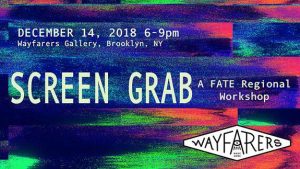 Join us December 14th, for a “Screen Grab,” a FATE Regional Workshop at Wayfarers Gallery, 1109 Dekalb Ave, Brooklyn, 11221. How are institutions using “the screen” in their visual art and design curriculum? The workshop will include hands-on screen-printing demos, innovative ways to incorporate screen printing even without formal facilities, introducing technological screen time into the studio classroom, and creating collaborative art work. Register with Meredith Starr at starrm@sunysuffolk.edu
More info: https://www.foundations-art.org/regional-events
Also join us during CAA 2019 for FATE’s Affiliate session, “Get Up, Stand Up: Contingent Faculty and the Future of Higher Education in the Visual Arts,” Friday, Feb 15, 2019, from 6 – 7:30pm in the Bryant Suite at the New York Hilton Midtown. Chaired by Naomi J. Falk and Richard Moninski, with panelists Christopher Williams, Mark Stemwedel, and Laura Rodman Huaracha. Increasingly, tenure-track positions disappear, contingent faculty numbers swell, and those who are left standing teach more classes. Is this sustainable and how do we support each other? https://caa.confex.com/caa/2019/meetingapp.cgi/Session/2304
Association for Textual Scholarship of Art History (ATSAH)
Karen Hope Goodchild, “Masaccio, Andrea del Sarto, Il Lasca, and the Sausage School of Florence,” Publication: Source. Volume 36, number 3/4 (Spring/Summer 2017), Seite [178]-187. Publisher: [2017]
Liana De Girolami Cheney, “The Symbolism of the Skull in Vanitas: Homo bulla est,” Journal of Cultural and Religious Studies (Fall 2018), Vol. 6. No. 5 (May 2018); 267-284.
Award invitation: ASSOCIATION FOR TEXTUAL SCHOLARSHIP IN ART HISTORY –AWARDS for Students and Scholars
In commemoration of our 30th anniversary, ATSAH plans to offer two awards: one prize for the best article by an emerging scholar (no higher than Associate level). The topic may range from classical to Pre-Raphaelite art, reflecting the aims of ATSAH. The second is a small travel grant for junior scholar presenting a paper an ATSAH session.The board of ATSAH selects these awards.
For further data, contact: Liana Cheney, PhD, President of ATSAH, lianacheney@earthlink.net
New Media Caucus
Media-N Journal of the New Media Caucus announces publication of Vol 14 No 1 (2018): CAA Conference Edition 2018 https://iopn.library.illinois.edu/journals/median/issue/view/4
This collection of essays and reports documents many of the activities of the New Media Caucus at the 2018 College Art Association Conference in Los Angeles, California, which took place February 22–24, 2018. More information about these gatherings can be found at http://www.newmediacaucus.org/2018-caa-los-angeles-events/
News from the Art and Academic Worlds
posted by CAA — November 07, 2018
Want articles like these in your inbox? Sign up: collegeart.org/newsletter
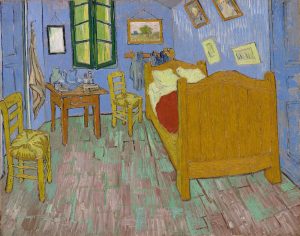
Vincent van Gogh, The Bedroom, 1889. Helen Birch Bartlett Memorial Collection. Courtesy of the Art Institute of Chicago.
The Art Institute of Chicago Is the Latest Museum to Offer Open Access to Thousands of Images in Its Archive
The museum has made 44,313 images available under Creative Commons license. (artnet News)
Remembering an Egyptian Artist Who Was Always Looking East
CAA board member Dahlia Elsayed remembers artist Chant Avedissian, who passed away this week at the age of 67. (Hyperallergic)
Graduate Students’ ‘Fight for $15’
Graduate student assistants across the US are pushing for a minimum living wage. (Inside Higher Ed)
Perspective: Academia Is a Cult
“I escaped a fringe Christian sect when I went to college. Going to grad school felt like joining again.” (Washington Post)
This New Database Aims to Become the World’s Best Resource on the History of Overlooked Women Artists
A Space of Their Own aims to compile the most comprehensive resource to date. (artnet News)
Responding to Misconceptions of Being a Graduate Student
“As a first-generation college student, explaining my day-to-day life as a student was challenging.” (Diverse Education)
Support the Arts and Humanities
posted by CAA — November 05, 2018

Curator and anthropologist Niama Safia Sandy at the 2017 CAA Annual Conference in New York. Photo: Ben Fractenberg
CAA needs your help to advance the programs and support we provide to the individuals and institutions that comprise the world’s largest international professional community in the visual arts. Bringing innovative new ideas and meaningful experiences to artists, designers, crafters, curators, art historians, critics, students and faculty members is always on the forefront of our minds, but we cannot do it alone.
We have over 9,000 members, but did you know that approximately half of our members are artists, students, retirees, and part-time faculty, who have subsidized memberships and conference registrations?
These members, and all members, have full access to CAA programs such as:
- Professional Development Fellowships and Publishing Grants
- Awards of Distinction
- Professional Development Podcasts
- Online Career Center
- Advocacy, Fair Use, and Standards & Guidelines
- Resources for Academic Art Museum Professionals (RAAMP)
We advocate and design programs for all our members, regardless of how much they pay in membership, and we hope that as in all strong communities, those that can help will.
A donation to the Annual Fund allows CAA to provide the much-needed support for the field at the individual level and to institutions. A contribution gives CAA more power to advocate and serve the ever-changing needs of our members.
Our Travel Fund assists ten students and scholars from across the country and around the world to attend the Annual Conference each year, but gifts directed towards this category will increase that number exponentially.
A contribution to the Publication Fund helps offset the cost to produce the print and online scholarly publications of The Art Bulletin, Art Journal, Art Journal Open, and caa.reviews.
Please consider a tax-deductible donation in either fund category that will help us better serve the visual arts community. No matter what fund category you choose, your support will go a long way in making a difference.
On behalf of the Board of Directors and staff of CAA, I thank you for your generosity.
Best regards,

Hunter O’Hanian
Executive Director and CEO
Natasha Hovey and Steve Hilton
posted by CAA — November 05, 2018
The weekly CAA Conversations Podcast continues the vibrant discussions initiated at our Annual Conference. Listen in each week as educators explore arts and pedagogy, tackling everything from the day-to-day grind to the big, universal questions of the field.
CAA podcasts are now on iTunes. Click here to subscribe.
This week, Natasha Hovey and Steve Hilton discuss a yearlong artist residency model at Midwestern State University.
Natasha Hovey is currently an assistant professor at Texas A&M International University in Laredo, Texas, where she teaches: Ceramics 1, Intermediate and Advanced Ceramics, Sculpture 1, Intermediate and Advanced Sculpture, and Practicum Course for Seniors. She never thought she would miss it, but she longs for the Midwest’s subzero temps and feet of snow.
Steve Hilton is a professor of art at the Lamar D. Fain College of Fine Arts at Midwestern State University in Wichita Falls, Texas, teaching both Ceramics and Art Education. He just found out that the current MSU ceramics resident has been offered a full-time position, which means the MSU residency program is 6 for 6 in placing residents.