
CAA News Today
Contribute to the 2011 Publications Fund
posted by Nia Page — May 03, 2011
The Art Bulletin, Art Journal, and caa.reviews have provided important platforms for the open discussion of scholarly, theoretical, and practical issues in the visual arts. With the Centennial year in mind, CAA hopes that you will support the three journals with a generous gift to the 2011 Publications Fund.
Published respectively since 1913 and 1929, The Art Bulletin and Art Journal have grown from their original roots in pedagogy to become authoritative voices in the history and practice of art. Even now, after ninety-eight years in publication, The Art Bulletin continues to evolve and cultivate new interest: the journal witnessed, for example, a 35 percent increase in manuscript submissions during the past year. Upcoming features include interviews with senior scholars and short-form explorations that address the motivations of art historians working today.
Art Journal recently launched a dynamic website, which not only provides free access to select articles from each print issue but also publishes exclusive web-only features. In addition to presenting time-based art online, the journal commissions artists to create special projects—such as Dailies, Kerry James Marshall’s year-long project for the magazine’s inside covers—to underscore a commitment to producing visual art as well as scholarship on it.
Founded in 1998 as one of the first born-digital art journals, caa.reviews recently reached its long-held goal of publishing over 150 reviews a year. With timely, insightful criticism on books, exhibitions, articles, conferences, and an expanding array of other works, caa.reviews also presents the titles of dissertations, both completed and in progress, from PhD students in graduate programs across the United States and Canada. The list for calendar year 2010 is forthcoming later this spring.
At the threshold of its next century of activity, CAA remains committed to the superb quality and ongoing development of these highly regarded journals, which are enjoyed by thousands of readers annually and which remain essential resources for students, educators, and practitioners in all areas of the visual arts. Your contribution not only helps to maintain an invaluable platform for the presentation of new research and interpretation, but it also supports the groundbreaking work of emerging and future scholars.
Contributors of $250 and higher are prominently acknowledged in four issues of the printed publication that they support, or on the donor page of caa.reviews; they are also recognized in the Acknowledgments and through CAA News. CAA hopes that you will take your place on any or all of these growing lists of esteemed donors.
FIELD REPORT
posted by Christopher Howard — May 03, 2011
Lucille A. Roussin is an attorney-at-law who earned a PhD in art history and archaeology from Columbia University. She is the founder and director of the Holocaust Restitution Claims Practicum at the Benjamin N. Cardozo School of Law in New York from which she earned her JD. Roussin introduced the conference and served as moderator of one panel, “Nazi Era Looted Art: Research and Restitution.”
A Conference Report on “Human Rights and Cultural Heritage”
Paul Cézanne, Madame Cézanne in the Conservatory, 1891, oil on canvas, 36¼ x 28¾ in. Metropolitan Museum of Art, New York (artwork in the public domain)
The Benjamin N. Cardozo School of Law at Yeshiva University in New York hosted an all-day conference, entitled “Human Rights and Cultural Heritage: From the Holocaust to the Haitian Earthquake,” on March 31, 2011. The program brought together experts in both human-rights law and Holocaust-era restitution law. Its organizers also invited specialists in the same areas who had not previously engaged this important topic.
The program commenced with opening remarks by Allan Gerson, chairman of AG International Law PLLC, a Washington, DC–based law firm specializing in complex issues of international law and politics. During his talk on “Civil Litigation to Secure Cultural Property as a Human Right,” he spoke of the continuing debate over the existence of a recognized human right to secure restitution of cultural property and, when a victim is deprived of actual possession, the right to just compensation. Gerson included news about his current litigation against the Metropolitan Museum of Art over Paul Cézanne’s Madame Cézanne in the Conservatory (1891) and Yale University over Vincent van Gogh’s The Night Café (1888). Both cases involve major issues in international law, including the Act of State Doctrine and the Foreign Sovereign Immunities Act.
The first morning panel, entitled “Natural Disasters: Haiti and Beyond,” comprised leaders in the law-related nonprofit world. A former officer of the United States Army, Corine Wegener has witnessed cultural-heritage catastrophes firsthand in Sarajevo, Iraq, and, most recently, Haiti. In 2006 she founded the US Committee of the Blue Shield—the “cultural equivalent of the Red Cross”—and serves as its president. Her illustrated presentation addressed what has been, and is being done, to preserve the many cultural monuments of Haiti since the devastating earthquake in January 2010. Wegener stressed that, because of current law, the US cannot provide aid to endangered nations on its own initiative: the country suffering the disaster must first request assistance. Her current efforts focus on training local communities to conduct preservation work themselves.
As executive vice president and chief operating officer of the New York–based World Monuments Fund, Lisa Ackerman helps lead an organization dedicated to protecting and preserving threatened ancient and historic sites around the globe. Using a wonderful PowerPoint presentation, she demonstrated the evolution of heritage-protection efforts in which she has been involved. Ackerman commented that when floods ravaged Venice in 1966, operations rallied around the city as a cultural icon and saved many important works of art. After Hurricane Katrina in 2005, however, community building took precedence over art and architecture. She drove home her point with images of the preservation efforts at the Greater Little Zion Baptist Church in the Ninth Ward, which is not just an architectural gem but the heart of a community. Her two-fold message was a powerful one. First, nonprofits so accustomed to operating on shoestring budgets should not be afraid to think big. Second, widespread public perception that cultural-heritage preservation during times of crisis occurs at the expense of helping humans is a false dilemma. The two-pronged effort in Haiti is an excellent example of how disaster relief led by medical and humanitarian organizations can work side by side with specialists in cultural heritage.
Lucas Cranach the Elder, Adam, ca. 1530, oil on panel, 75 x 27½ in. Norton Simon Art Foundation, Pasadena (artwork in the public domain)
Tess Davis, the executive director of the Lawyers Committee for Cultural Heritage Preservation who has significant preservation experience, particularly in Cambodia and Sri Lanka, summed up the panel. She observed that the public does not realize how important cultural heritage becomes until after the dust settles, floods recede, and immediate humanitarian needs are met. She also emphasized how cultural-heritage preservation should be an up-front part of postwar and disaster-management planning.
The second morning panel concerned “Nazi Era Looted Art: Research and Restitution.” Marc Masurovsky, a leading scholar in this field and the cofounder of the Holocaust Art Restitution Project, led with an historical overview of the restitution of artworks looted during the Holocaust. Inge van der Vlies, a member of the Dutch Restitution Committee in Amsterdam and a professor of constitutional law and of art and law at the University of Amsterdam, considered the workings of Dutch project, its processes, and recent successes. Lucian Simmons, vice president and head of the Restitution Department at the New York branch of Sotheby’s, informed us about the process used at his auction house to determine if a work of art has a questionable provenance. He then illustrated recent restitutions and settlements, discussing research efforts and the outcomes. Lawrence M. Kaye, partner and cochair of the Art Law Group at Herrick, Feinstein LLP, spoke of recent major recoveries to the heirs of the Amsterdam art dealer Jacques Goudstikker. Kaye also addressed the current lawsuit against the Norton Simon Museum for two notable pieces from the former Goudstikker collection, Lucas Cranach the Elder’s Adam and Eve (both ca. 1530), in which a petition for certiorari has been filed with the US Supreme Court. He then detailed other art cases that his firm had handled, most importantly the restitution of several paintings in the Stedelijk Museum in Amsterdam to the heirs of the Suprematist artist Kasimir Malevich.
One program highlight was the midday keynote address by Howard N. Spiegler, also cochair of the Art Law Group of Herrick, Feinstein LLP, who provided an overview of many aspects of and results in cases involving Holocaust-era looted art. He related several examples, including the recently settled case of United States v. Portrait of Wally, in which the firm represented the heirs of Lea Bondi Jaray, the rightful owner of the Egon Schiele painting, Portrait of Wally (1912). Spiegler referenced a haunting testimonial by Rabbi Israel Singer, who once related that: “Himmler said you have to kill all the Jews because if you don’t kill them, their grandchildren will ask for their property back.”
Moderating the first afternoon session, “Libraries and Archives: Restitution of Recorded Cultural Heritage,” was Lynn Wishart, Cardozo’s associate dean for library services and professor of legal research. Her three panelists examined the many difficult issues with the restitution not of art but of written documents. Jeff Spurr, secretary and board member of the Sabre Foundation (based in Cambridge, Massachusetts), deliberated contesting arguments for the restitution of the ancient Jewish books, papers, and manuscripts rescued from the looting and burning of the Iraq National Library and Archives after the American incursion in 2003. Library representatives contend that the holdings belong to their country’s history, but a Jewish community no longer exists in Iraq. With some support from the American government, former Iraqi Jews in Israel and the US argue that the documents should be given to a living Jewish community. Nathan Lewin, a partner at the Washington, DC–based firm Lewin & Lewin LLP, represented the successful plaintiff, Agudas Chasidei Chabad, against the Russian Federation, discussed the case from the viewpoint of international law, under which the Russian Federation is obligated to return books and documents to the Chabad in New York but has refused. Patricia Krimsted, senior research associate at the Harvard Ukrainian Research Institute in Massachusetts, provided a history of looting by the Einsatzstab Reichsleiter Rosenberg (ERR) in Western Europe. She noted that the three largest ERR concentrations of books contained works that came from both West and East—but far more originated in the West. Grimsted also highlighted how looted collections (an estimated 600,000 books) that came to rest in the Soviet sectors of postwar Berlin, taken as part of the Soviet trophy brigades. Prospects for restitution today largely hinge on whether the archives ended up in the Soviet or Allied sectors. Six years ago the Russians admitted for the first time that collections were taken to Minsk in November 1945; Grimsted had found scraps of evidence in card catalogues that matched ERR confiscation lists. She questioned how the Russians could view the cultural materials, taken from Jews and published in languages few people in Russia can read, to be compensation for their World War II–era losses and then demand their own compensation to return them.
The second afternoon panel on the Foreign Sovereign Immunities Act (FSIA) presented a lively discussion on the applicability of the law. Jennifer Anglim Kreder, a professor in the Salmon P. Chase College of Law at Northern Kentucky University, conducted a roundtable with four experts on FSIA litigation to explore the intersection of cultural property, human rights, and the War on Terror. The panelists, all based in Washington, DC, were Mark N. Bravin (partner, Winston & Strawn LLP); Lisa Grosh (deputy assistant legal adviser, US Department of State); Laina C. Lopez (attorney, Berliner, Corcoran & Rowe LLP); and Stuart H. Newberger (partner, Crowell & Moring LLP). Bravin has represented both plaintiffs and defendants in FSIA litigation, including McKesson v. Islamic Republic of Iran (plaintiff), ongoing for twenty-five years, and Orkin v. The Swiss Federation, concerning a van Gogh drawing allegedly sold by a Jew under Nazi duress to a Swiss collector in 1933 (defendant). Grosh, who spoke in her individual capacity, was heavily involved with litigation under the FSIA’s Terrorism Amendments, which expressly authorized litigation against nations identified as State Sponsors of Terrorism. Lopez’s firm represents Iran, included in the McKesson case and proceedings brought by plaintiffs who obtained default judgments against Iran under the Terrorism Amendments; the plaintiffs seek to seize and sell Persian antiquities currently held in US museums to partially execute their judgments. The panelists engaged in a fascinating discussion of the mechanics of FSIA litigation, exploring such questions as: Should forced seizure and possible auction of cultural objects be fair game to compensate victims of terrorism? Is litigation or mass-claims resolution a better course to secure justice for terrorism and genocide victims—and for public safety?
In conclusion, “Human Rights and Cultural Heritage,” which brought together new voices in cultural heritage and human rights, was dynamic, informative, and thought provoking.
Interviews with Contributors to The Eye, the Hand, the Mind
posted by Christopher Howard — April 27, 2011
In conjunction with the publication of The Eye, the Hand, the Mind, CAA has been conducting short email interviews with the many contributors to give an overview of the book’s diverse components. The artist Ellen K. Levy and the art historian Matthew Israel have participated thus far, with additional interviews to be published later in the spring and summer of CAA’s Centennial year.
Ellen K. Levy’s chapter, “Art in an Academic Setting: Contemporary CAA Exhibitions,” focuses on the organization’s role in supporting artists and exhibitions in recent decades. She explores the annual Regional MFA Exhibitions, which began in 1989 in San Francisco, and researched the shows that coincided with the Annual Conference, including Techno-Seduction, held in New York in 1997, and New Space, New Audience, CAA’s first and only online exhibition from 2001.
Matthew Israel’s chapter on “CAA, Pedagogy and Curriculum: A Historical Effort, an Unparalleled Wealth of Ideas,” considers how the organization’s journals, research initiatives, and conference programming reflect its varying commitments to teaching.
Jonathan Lackman of the Art History Newsletter published the first review of The Eye, the Hand, the Mind on February 24, 2011.
Hide/Seek: Museums, Ethics, and the Press: A Symposium Report
posted by Christopher Howard — April 26, 2011
Svetlana Mintcheva, director of programs at the National Coalition Against Censorship, reports on a recent meeting about the Hide/Seek controversy that was held at Rutgers University earlier this month. The first two paragraphs are below; you may also read the full article.
Hide/Seek: Museums, Ethics, and the Press
Hide/Seek may be remembered as the censorship controversy that launched a hundred discussion panels. There were public statements and street protests, of course, letters to the Smithsonian Board of Regents and articles in the press, but most of all, there were the conferences. Starting with a gathering at the Jewish Community Center in Washington, DC, spreading to the West Coast, and featuring major public events at the Corcoran and the New Museum, these discussions responded to an apparently endless desire to analyze and assign blame, to blow off steam and extract lessons, and to place what happened within the history of Culture Wars in America.
An April 9 symposium, “Hide/Seek: Museum, Ethics, and the Press,” organized by the Institute of Museum Ethics at Seton Hall University and the Institute for Ethical Leadership at Rutgers Business School, had the goal of framing the issues surrounding the Hide/Seek controversy as ethical ones. Daniel Okrent, former chairman of the National Portrait Gallery, opened the event by posing several key questions: Is choosing to do a controversial show an ethical decision? Should a show ever be changed after opening? What happens after a controversy in terms of institutional definition and future planning? A diverse group of participants from such disciplines as art history, law, political science, and philosophy, as well as Smithsonian representatives and one journalist, attempted to grapple with these issues and more.
Read the full article in the Features section.
FIELD REPORT
posted by Christopher Howard — April 26, 2011
Svetlana Mintcheva is director of programs at the National Coalition Against Censorship. She is also the editor, with Robert Atkins, of Censoring Culture: Contemporary Threats to Free Expression (New York: New Press, 2006) and the curator of Filth, Treason, Blasphemy? Museums and Censorship, shown at the McCormick Tribune Freedom Museum in Chicago, Illinois, in 2007.
Hide/Seek: Museums, Ethics, and the Press: A Symposium Report
Hide/Seek may be remembered as the censorship controversy that launched a hundred discussion panels. There were public statements and street protests, of course, letters to the Smithsonian Board of Regents and articles in the press, but most of all, there were the conferences. Starting with a gathering at the Jewish Community Center in Washington, DC, spreading to the West Coast, and featuring major public events at the Corcoran and the New Museum, these discussions responded to an apparently endless desire to analyze and assign blame, to blow off steam and extract lessons, and to place what happened within the history of Culture Wars in America.
An April 9 symposium, “Hide/Seek: Museum, Ethics, and the Press,” organized by the Institute of Museum Ethics at Seton Hall University and the Institute for Ethical Leadership at Rutgers Business School, had the goal of framing the issues surrounding the Hide/Seek controversy as ethical ones. Daniel Okrent, former chairman of the National Portrait Gallery (NPG), opened the event by posing several key questions: Is choosing to do a controversial show an ethical decision? Should a show ever be changed after opening? What happens after a controversy in terms of institutional definition and future planning? A diverse group of participants from such disciplines as art history, law, political science, and philosophy, as well as Smithsonian representatives and one journalist, attempted to grapple with these issues and more.
Mounting a show on a controversial topic was, indeed, a decision requiring courage and commitment to the concept of the museum as a space where important cultural conversations should happen. Over forty-five other arts institutions had rejected the idea of a canonical show of queer art before the NPG took it up. With the curators Jonathan Katz and David Ward, the museum went forward with Hide/Seek: Difference and Desire in American Portraiture even though it expected—and was prepared to respond to—controversy and homophobic reactions. Unfortunately the NPG was not as capable of resisting the internal hierarchy of Smithsonian decision-making.
The attacks on the show came a full month after its opening, just as the museum was ready to declare the Culture Wars over. Detractors latched onto a few seconds of video portraying a plastic crucifix, taking the position of the offended victim of hate speech, rather than that of the intolerant bully, which would have happened if they had focused on what really annoyed them: the queer content of the exhibition. The rest of the story is familiar: the NPG’s preparedness to face public complaints was never tested as Smithsonian Secretary G. Wayne Clough unilaterally—and within a single day—ordered the removal of David Wojnarowicz’s A Fire in My Belly, with its eleven seconds of ants crawling over a crucifix. Clough’s ill-conceived effort to appease Republicans in Congress backfired, and the censorship controversy hit the headlines.
Clough’s decision appears to have pitched the pragmatic, that is, protecting funding for the Smithsonian from congressional assault, against the ethical: protecting the integrity of the institution and free-speech principles against partisan pressure. As Abe Zakhem, a philosophy professor at Seton Hall, commented: when normative ethics and practical considerations are in conflict, the need for courage arises. Courage and, perhaps, some political sense: it is far from certain that oppositional bluster in Congress would have succeeded in cutting the budget for the venerable Smithsonian. Worse, it is almost guaranteed that the artwork’s removal will only encourage future interference with the Smithsonian’s curatorial independence.
Failing to demonstrate either courage or political sense, Clough comes out as the villain in the story. Even his supporters on the Smithsonian’s Board of Regents criticized his decision as rash. What about the other actors in this drama? Symposium panelists discussed the role of Penny Starr, whose outrageously titled article—“Smithsonian Christmas-Season Exhibit Features Ant-Covered Jesus, Naked Brothers Kissing, Genitalia, and Ellen DeGeneres Grabbing Her Breasts”—published on November 29, 2010, for the Cyber News Service (formerly the Conservative News Service) appears to have started it all.1 Starr was the first to isolate the eleven seconds of A Fire in My Belly; she also described and photographed other pieces from Hide/Seek and, in an email, goaded Republican Representatives Eric Cantor and John Boehner, among other congressional leaders, with questions about the offensiveness of these images.2
The panelists agreed that the press was indisputably the instigator of crisis in this case, as it has been in many others.3 No matter how detestable and biased one may find Starr’s cultural “intervention,” the press has the right, even the obligation, to direct the public’s attention to matters of importance, including the curatorial politics of the Smithsonian. As the cultural journalist and blogger Lee Rosenbaum noted, Starr was practicing “Journalism 101” when she contacted stakeholders to elicit a response in a potentially controversial case.
The actions of politicians who, alerted by Starr, threatened to cut funds to the Smithsonian remained virtually unquestioned—perhaps because Republican congressmen were so clearly in the wrong, or perhaps because such actions have become politics as usual. Nevertheless, if we have learned anything from the Hide/Seek controversy, it is that museum leaders do not make their ethical decisions in a vacuum but must negotiate a path spiked with the demands of politicians, the eyes of the press, and the campaigns of special-interest groups. Could things have gone differently? Should Martin Sullivan, director of the National Portrait Gallery (and symposium participant), have resigned in protest? Should the Smithsonian’s secretary have attempted to persuade the detractors in Congress—some of whom admitted they never even saw the show—to temper their threats? The possibilities are many, but none present a magic-bullet solution. The Smithsonian has bent under political and interest-group pressure before, and neither the resignation of a museum director nor attempts to appease critics by exhibition script revisions has won any victories.
There is reason to believe that something moderately positive may come from the situation. Sullivan welcomed the new policy adopted by the Smithsonian Board of Regents, which states “in the absence of actual error, changes to exhibitions should not be made once an exhibition opens without meaningful consultation with the curator, director, Secretary, and the leadership of the Board of Regents.” The regents have also decided that the director of the specific museum should make the call regarding the fate of an exhibition, not the Smithsonian secretary, whose decisions are heavily influenced by the risk-averse Office of Congressional Relations.
Another new Smithsonian policy is much more ambiguous, if not ominous. Criticized as “curating via crowdsourcing,” the policy requires solicitation of public input during the exhibition-planning process.4 In previous instances, including the Enola Gay exhibition at the Air and Space Museum (1995–98) and the show of photographs from the Arctic National Wildlife Refuge at the National Museum of Natural History (2003–4), preexhibition input has had dire consequences for curatorial freedom.5 One can easily imagine the effect of public input in which the Catholic League or a similar professional “offense hound” attacks a show in the vulnerable period of its gestation.
In his memoir about the attacks and subsequent cancellation of the Enola Gay exhibition, Martin Harwit, who resigned as director of the Air and Space Museum in protest, writes that “our nation has begun to settle important issues … not through substantive debate, but through partisan campaigns aimed at victory by any means.”6 Apparently little has changed since.
Nevertheless, it was encouraging to hear Rachelle V. Browne, associate general council at the Smithsonian, clearly state that the First Amendment protects museums from having to choose between government funds and self-censorship. She also formulated the most unequivocal ethical message of the day: that concerns about financial sustainability do not override the museum’s obligation to sustain integrity and free speech.
Notes
1. Penny Starr, “Smithsonian Christmas-Season Exhibit Features Ant-Covered Jesus, Naked Brothers Kissing, Genitalia, and Ellen DeGeneres Grabbing Her Breasts,” CNS News, November 29, 2010, http://www.cnsnews.com/news/article/smithsonian-christmas-season-exhibit-fea.
2. In an email obtained by Brian Beutler of Talking Points Memo, Starr wrote to House and Senate leaders from both parties asking for feedback on her story. The email reads: “The federally funded National Portrait Gallery, which is part of the Smithsonian, is running an exhibition through the Christmas season that features an ant-covered Jesus and what the Smithsonian itself calls ‘homoerotic’ art. Should this exhibition continue or be cancelled?” Boehner and Cantor responded by immediately asking that the exhibition be pulled. See Brian Beutler, “Ant Jesus: An Anatomy of the Latest War on Christmas Scandal,” On Capitol Hill (blog), Talking Points Memo, December 1, 2010, http://www.talkingpointsmemo.com/author_blogs/2010/12/ant-jesus-an-anatomy-of-the-latest-war-on-christmas-scandal.php.
3. Recent examples include the leadership role taken by the New York Daily News in the efforts to boot the Drawing Center from a proposed new space at Ground Zero in 2005 (which succeeded) and to close the Brooklyn Museum’s Sensation show in 1999 (which did not).
4. Bob Duggan, “Mob Rule: Curating via Crowdsourcing,” Picture This (blog), Big Think, April 7, 2011, http://bigthink.com/ideas/37784.
5. For a fascinating story of the workings of the Smithsonian’s politics, see Martin Harwit, An Exhibit Denied: Lobbying the History of “Enola Gay” (New York: Copernicus, 1996).
6. Harwit, vii.
New Members and Officers at the May Board Meeting
posted by Vanessa Jalet — April 26, 2011
Newly elected members and officers of the CAA Board of Directors will gather at the governing body’s spring meeting on this Sunday, May 1, 2011. Charged with CAA’s long-term financial stability and strategic direction, the board sets policy regarding all aspects of the organization’s activities, including publishing, the Annual Conference, awards and fellowships, advocacy, and committee procedures.
New Directors
The board welcomes four new members, who will serve from 2011 to 2015:
- Leslie Bellavance, dean of the School of Art and Design in the New York State College of Ceramics at Alfred University in Alfred, New York
- Denise Mullen, president of the Oregon College of Art and Craft in Portland
- Saul Ostrow, chair of Visual Arts and Technologies at the Cleveland Institute of Art in Ohio
- Georgia Strange, director of the Lamar Dodd School of Art at the University of Georgia in Athens
New Officers
At its February 2011 meeting, the board elected new officers—four vice presidents and a secretary—from among its members to serve one-year terms, from May 2011 to April 2012.
- Patricia McDonnell, director of the Ulrich Museum of Art at Wichita State University in Kansas, is vice president for external affairs
- Maria Ann Conelli, director of the American Folk Art Museum in New York, will serve a second term as vice president for committees
- Anne Collins Goodyear, who was vice president for publications for two years, has been named vice president for Annual Conference
- Taking over from Goodyear as vice president for publications is Randall C. Griffin, professor of art history at Southern Methodist University in Dallas, Texas
- DeWitt Godfrey, an artist and associate professor of art and art history at Colgate University in Hamilton, New York, was reelected secretary
Appointed Director
Earlier this year, CAA named Anne-Imelda Radice, a senior consultant for the Dilenschneider Group, to the board as an appointed director. She served as director of the Institute of Museum and Library Services from 2006 to 2010 and earned a PhD in art and architectural history from the University of North Carolina, Chapel Hill, as well as an MBA from American University in Washington, DC.
Solo Exhibitions by Artist Members
posted by CAA — April 22, 2011
See when and where CAA members are exhibiting their art, and view images of their work.
Solo Exhibitions by Artist Members is published every two months: in February, April, June, August, October, and December. To learn more about submitting a listing, please follow the instructions on the main Member News page.
April 2011
Abroad

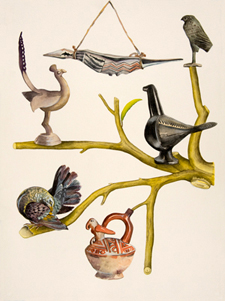 Sue Johnson, Birds without Feathers, 2010, watercolor and pencil on paper, 30 x 22 in. (artwork © Sue Johnson)
Sue Johnson. Pitt Rivers Museum, University of Oxford, Oxford, England, January 28–May 2, 2011. The Curious Nature of Objects: Paintings by Sue Johnson. Gouache, watercolour, and pencil on paper.
Mid-Atlantic

 Diane Burko, #2, Main Rongbuk Glacier, Tibet, 2007, after David Breashears, 2010, oil on canvas, 48 x 74 in. (artwork © Diane Burko)
Diane Burko. Berstein Gallery, Robertson Hall, Woodrow Wilson School of Public and International Affairs, Princeton University, Princeton, New Jersey, April 4–May 19, 2011. Diane Burko: Politics of Snow II. Painting.
Midwest

Amy George Holmes. Hiestand Galleries, School of Fine Arts, Miami University, Oxford, Ohio, February 16–March 4, 2011. Double Vision: A View of Florence Past and Present. Photography.
Jason Lazarus. University Galleries, College of Fine Arts, Illinois State University, February 22–April 3, 2011. Your Time Is Gonna Come: Selected Work, 2005–2011. Photography and installation.
Georgia Wall. LG Space, School of the Art Institute of Chicago, Chicago, Illinois, March 31–April 20, 2011. Georgia Wall: Unseen Performances. Video.
Northeast
Claire Beckett. Carroll and Sons, Boston, Massachusetts, February 23–March 26, 2011. You Are…. Archival inkjet prints.
Susan Klein. Courthouse Gallery, Old County Courthouse, Lake George, New York, March 19–April 22, 2011. Susan Klein. Painting, sculpture, collage, and photography.

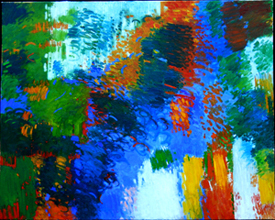 Lorna Ritz, Darkness Falling, 2010, oil on canvas, 40 x 50 in. (artwork © Lorna Ritz)
Lorna Ritz. Trailside Gallery, Northampton, Massachusetts, January 8–February 4, 2011. Darkness Falling. Painting.
Michael Velliquette. DCKT Contemporary, New York, April 2–May 8, 2011. Awaken and Free What Has Been Asleep. Paper sculpture and drawing.

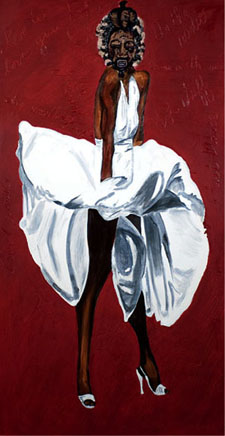 Martha Rose Vendryes, Donnalyn Summeroe, 2005–7, oil on canvas, 48 x 24 in. (artwork © Martha Rose Vendryes)
Martha Rose Vendryes. Slater Concourse Gallery, Aidekman Arts Center, Tufts University, Medford, Massachusetts, March 1–31, 2011. African Divas: Paintings by Martha Rose Vendryes. Painting and mixed media sculpture.
South

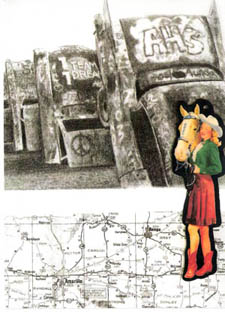 Steven Bleicher, Cadillac Ranch, 2008, graphite and mixed media, 14 x 11 in. (artwork © Steven Bleicher)
Steven Bleicher. McClellanville Arts Council, McClellanville, South Carolina, February 19–March 25, 2011. Destinations: An American Narrative. Digital and mixed media.
Wendy DesChene. Art League Houston, Houston, Texas, January 14–February 25, 2011. WYSIWYG. Site-specific community interactive installation.
Herb Jackson. Van Every/Smith Galleries, Katherine and Tom Belk Visual Arts Center, Davidson College, Davidson, North Carolina, March 11–April 20, 2011. Herb Jackson: Excavations. Painting.

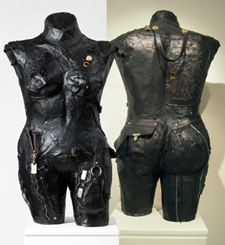 Linda Stein, Defender 696 (with rear view), 2010, leather, metal, mixed media, 38 x 22 x 14 in. (artwork © Linda Stein)
Linda Stein. Sarratt Gallery, Vanderbilt University, Nashville, Tennessee, April 20–May 26, 2011. The Fluidity of Gender: Sculpture by Linda Stein. Sculpture.
West

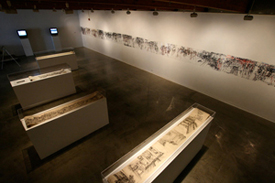 Installation view of Simonetta Moro’s The Panorama Project (photograph by Brian Miller)
Simonetta Moro. Clara Hatton Gallery, Colorado State University, Fort Collins, Colorado, January 26–February 25, 2011. The Panorama Project. Drawing, photography, and video.
People in the News
posted by CAA — April 17, 2011
People in the News lists new hires, positions, and promotions in three sections: Academe, Museums and Galleries, and Organizations and Publications.
The section is published every two months: in February, April, June, August, October, and December. To learn more about submitting a listing, please follow the instructions on the main Member News page.
April 2011
Academe

 Steven Bleicher
Steven Bleicher has been promoted to professor of visual arts in the Department of Visual Arts at Coastal Carolina University in Conway, South Carolina.

 Patricia Cronin
Patricia Cronin, an artist and associate professor of art at Brooklyn College, City University of New York, has been promoted to full professor of art at her school.

 Harper Montgomery
Harper Montgomery, currently teaching at the Rhode Island School of Design in Providence, has been named the Patricia Phelps de Cisneros Professor in Latin American Art at Hunter College, City University of New York. She will begin her new position in fall 2011.
Joshua Rosenstock, a multimedia artist and musician, has been promoted to associate professor of humanities and arts and was granted tenure at Worcester Polytechnic Institute in Worcester, Massachusetts.
Museums and Galleries
Lloyd DeWitt, presently associate curator of the John G. Johnson Collection at the Philadelphia Museum of Art in Pennsylvania, has been appointed curator of European art at the Art Gallery of Ontario in Toronto. He will assume his duties on June 6, 2011.

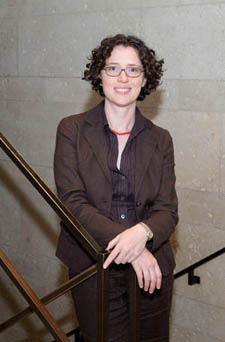 Jessica May
Jessica May has been promoted to associate curator of photographs at the Amon Carter Museum of American Art in Fort Worth, Texas. She joined the museum in 2006.

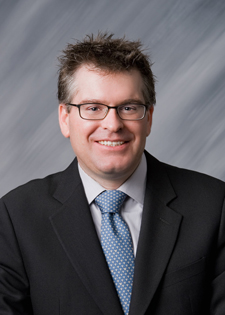 Kevin M. Murphy
Kevin M. Murphy, formerly Bradford and Christine Mishler Associate Curator of American Art at the Huntington Library, Art Collections, and Botanical Gardens in San Marino, California, has been appointed curator of American art at the Crystal Bridges Museum of American Art in Bentonville, Arkansas.
Organizations and Publications

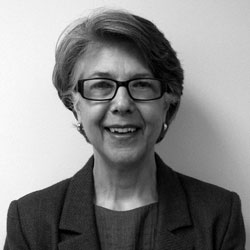 Linda Downs
Linda Downs, executive director of the College Art Association, has been elected secretary of the National Humanities Alliance for a two-year term.
Marti Mayo, a New York–based consultant to nonprofit organizations and artists’ estates, has become the executive director of the Thomas Moran Trust, based in East Hampton, New York.
Institutional News
posted by CAA — April 17, 2011
Read about the latest news from institutional members.
Institutional News is published every two months: in February, April, June, August, October, and December. To learn more about submitting a listing, please follow the instructions on the main Member News page.
April 2011

 Théodore Rousseau, Farm in Les Landes, 1844–67, oil on canvas, 25½ x 39 in. Sterling and Francine Clark Art Institute. 2009.8 (artwork in the public domain)
The Sterling and Francine Clark Art Institute in Williamstown, Massachusetts, has received two gifts that will endow a pair of critical jobs at the museum. Robert and Martha Berman Lipp gave $2.5 million to fund the senior curator position, and Sylvia and Leonard Marx donated $2 million for the director of collections and exhibitions.

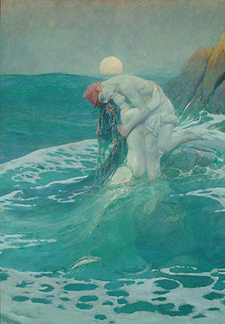 Howard Pyle, The Mermaid, 1910, oil on canvas, 57⅞ x 40⅛ in. Delaware Art Museum, Gift of the children of Howard Pyle in memory of their mother Anne Poole Pyle, 1940 (artwork in the public domain)
The Delaware Art Museum in Wilmington has received four grants to assist with exhibitions, publications, research, and development. The Henry Luce Foundation contributed $100,000 from its Luce Fund in American Art to support work on the exhibition Howard Pyle: American Master Rediscovered, and the Andy Warhol Foundation for the Visual Arts gave $11,000 for curatorial research on the photographer Scott Heiser. A $10,000 gift from the Gladys Krieble Delmas Foundation will sustain the exhibition and publicity of the recently acquired M. G. Sawyer Collection of Decorative Bindings, and $50,000 from the Jessie Ball duPont Fund will help launch a 1:1 matching fundraising challenge.

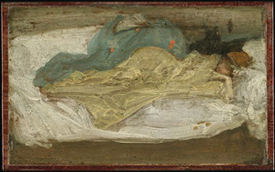 James Abbott McNeill Whistler, The Little White Sofa, ca. 1883–84, oil on wood panel, 4½ x 7 3/16 in.; framed: 4⅛ x 5 3/16 x 11/16 in. Harvard Art Museums/Fogg Museum, Bequest of Grenville L. Winthrop, 1943.169 (artwork in the public domain)
The Harvard Art Museums in Cambridge, Massachusetts, have received $75,000 in a 2010 Access to Artistic Excellence Grant from the National Endowment for the Arts. The funds will support an education program called “Engaging New Americans: Explorations in Art, Self, and Our Democratic Heritage.”
The Metropolitan Museum of Art in New York has accepted a $10 million donation to support the creation of a major exhibition space, to be called the Lizzie and Jonathan Tisch Gallery, within the Costume Institute. Earlier this year, the museum launched a series of online videos called Connections, which highlight the perspectives and insights on art from the collection by curators and other staff members.

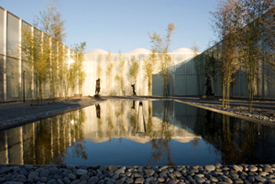 View of the Rodin Court at the North Carolina Museum of Art (photograph provided by the North Carolina Museum of Art)
The North Carolina Museum of Art in Raleigh has been awarded a 2011 American Institute of Architects Honor Award for its new building, designed by Thomas Phifer and Partners. The award is the institute’s highest recognition for building design.
The National Endowment for the Arts has awarded more than $1.6 million in grants to support artist communities, colonies, and residency programs. Among the recipients are these CAA institutional members: the American Academy in Rome, New York ($75,000); Anderson Ranch Arts Center, Snowmass Village, Colorado ($15,000); and Bates College, Lewiston, Maine ($30,000).
Grants, Awards, and Honors
posted by CAA — April 15, 2011
Grants, Awards, and Honors
CAA recognizes its members for their professional achievements, be it a grant, fellowship, residency, book prize, honorary degree, or related award.
Grants, Awards, and Honors is published every two months: in February, April, June, August, October, and December. To learn more about submitting a listing, please follow the instructions on the main Member News page.
April 2011

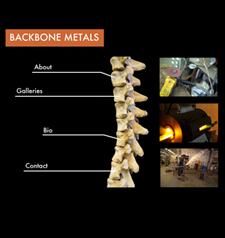 Screen shot of the Backbone Metals website
Benjamin Carpenter, an artist based in San Francisco, California, has received a $1,500 alumni grant from the Maine College of Art’s Belvedere Fund for Professional Development to purchase a new welder for Backbone Metals, his metal-smithing and fabrication business.


Henry John Drewal, the Evjue-Bascom Professor in the Department of Art History at the University of Wisconsin in Madison, has won the 2011 Arnold Rubin Outstanding Publication Award from the Arts Council of the African Studies Association for his edited volume, Sacred Waters: Arts for Mami Wata and other Divinities in Africa and the Diaspora (Bloomington: Indiana University Press, 2008).
Rebecca Hackemann, an artist based in New York, has received a 2011 grant from the Lower Manhattan Cultural Council’s Manhattan Community Arts Fund for her project Visionary Sightseeing Binoculars, consisting of eight altered sightseeing binoculars containing stereoscopic images of the past and future of that site to be installed in unlikely places that have traditionally been underserved by public art.

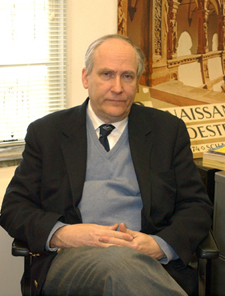 Thomas DaCosta Kaufmann
Thomas DaCosta Kaufmann, the Frederick Marquand Professor of Art and Archaeology at Princeton University in Princeton, New Jersey, has been awarded an honorary doctorate (Doctor Philosophiae Honoris Causae) by Technische Universität Dresden in Germany on the basis of the quality of his research and because of his service to international art historical exchange.

 Karen Lang (photograph by Flora Lang)
Karen Lang, associate professor of art history at the University of Southern California in Los Angeles and editor-in-chief of The Art Bulletin, has been awarded a prestigious Leverhulme Visiting Professorship at the University of Warwick in England. Lang delivered four Leverhulme Lectures in February and March 2011.

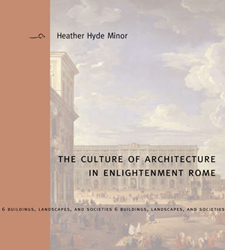
Heather Hyde Minor, assistant professor in the School of Architecture at the University of Illinois in Urbana-Champaign, has won the 2010 Helen and Howard Marraro Prize in Italian History for her book, The Culture of Architecture in Enlightenment Rome (University Park: Pennsylvania State University Press, 2010). The Marraro Prize is conferred annually by the Society for Italian Historical Studies.
Lili White, an artist based in New York, has received a 2011 grant from the Lower Manhattan Cultural Council’s Manhattan Community Arts Fund to hold a screening of women’s experimental films that feature underrepresented themes and issues distinct to women and girls.

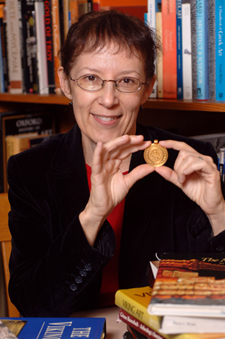 Nancy L. Wicker
Nancy L. Wicker, professor of art history the University of Mississippi in Oxford, has been invited to participate in a Getty Foundation Seminar on “The Arts of Rome’s Provinces.” The seminar comprises two intensive two-week sessions: first in Great Britain in May 2011 and second in Greece in January 2012.
ArtTable, a national organization for professional women in the visual arts celebrating its thirtieth anniversary, has recognized the achievements of thirty women whose contributions have transformed the field. Among the honorees are the following CAA members: Elizabeth Easton, cofounder and director, Center for Curatorial Leadership; Ann Sutherland Harris, professor of art history, Frick Department of the History of Art and Architecture, University of Pittsburgh; Mary Jane Jacob, professor and executive director of exhibitions and exhibition studies, School of the Art Institute of Chicago; Margo Machida, associate professor, Department of Art and Art History, University of Connecticut; and Susan Fisher Sterling, director, National Museum of Women in the Arts, Washington, DC.
The Pollock-Krasner Foundation, based in New York, has awarded grants to artists for 2009–10. The list includes to the following CAA members: Francis Cape, Russell Floersch, Cynthia Knott, Matthew Kolodziej, Eve Laramee, G. Daniel Massad, Shona McDonald, Natalie Moore, Margaret Murphy, Stephen Nguyen, Diana Puntar, James Stroud, and June Wayne.