
CAA News Today
Michael Rabe: In Memoriam
posted by CAA — July 09, 2012
Andrew Cohen is a professor and chair of the Department of Art and Design at Monmouth University in West Long Branch, New Jersey.

Michael Rabe
At the inquisitively early age of five, Michael Rabe (1947–2012) started his long and passionate engagement with India. His father Rudolph Rabe followed a “calling” to do missionary work and in 1952 moved with his wife Eleanore and their sons Michael and Gregg to the Gadag district in the state of Karnataka, India. The area is home to many art-historical landmarks of the Later Calukyan period, such as the Trikutesvara temple complex built in the eleventh century. Rabe spoke happily of his youth in India, especially his schooling at Kodaikanal International School in Tamil Nadu. While his family stayed in India, he was sent to Minnesota to live with an uncle, where he finished his last year of high school. He continued his undergraduate and graduate education at the University of Minnesota, receiving a BA in philosophy in 1969, with a minor in Sanskrit. In 1973 he earned an MA in South Asian languages and literature and completed a PhD in 1987, with the dissertation “The Monolithic Temples of the Pallava Dynasty: A Chronology.” Frederick M. Asher was his advisor, and Rabe was the first of many PhD students to work closely with this professor.
Since 1983 Rabe was an associate professor in the Department of Art and Design at Saint Xavier University in Chicago, where he taught courses in a wide selection of Western and Asian art history. With ease he would explicate the symbolism of global monuments. Eager to share his enthusiasm for South Asian art, he also taught as an adjunct professor at the School of the Art Institute of Chicago from 1986 to the present. A passionate teacher who did not limit himself to the classroom, Rabe was a veritable fountain of knowledge who shared freely with students and colleagues. I first met Michael in Chicago during the early 1980s, and from then on I always knew him as a scholar whose love for South Asian art was contagious. No doubt many members of the American Council for Southern Asian Art (ACSAA) have their own stories of lengthy, at times overwhelming, conversations with him regarding a full array of Indian art and cultural topics.

Rabe was fearless in the pursuit of learning. While never challenging without good reasons, he insisted on questioning the soundness of scholarship. Among his passions was the study of forged or copied works of art, especially South Indian sculptures. I recall more than one ACSAA panel where he questioned the validity, or originality, of certain artworks. One of the last email correspondences we had concerned a bronze that was being promoted as a Vijayanagara period work. Because certain compositional elements seemed “wrong” to me, I asked Rabe for his thoughts; he immediately and accurately identified inconsistencies with the bronze. Recalling this exchange I remember fondly my friend’s joy that came from looking at art, as well as his pursuit of clear vision. During this exchange, while eloquently sharing his thoughts, he was suffering terribly from a relapse of cancer (which he didn’t bother to mention).
Rabe is perhaps most widely known for his Pallava study, especially the densely researched book The Great Penance at Māmallapuram: Deciphering a Visual Text (Chennai, India: Institute of Asian Studies, 2001). Gathering painstakingly detailed visual and literary references, he argued that the ultimate meaning of the large Māmallapuram relief is a Pallava praśasti, a visual counterpart of a celebratory lineage recitation, while maintaining as secondary meaning the more commonly accepted narratives of Arjuna’s penance and of Ganga’s descent. There are other articles where he ties the literary with the visual, such as in “Sexual Imagery on the ‘Phantasmogorical Castles’ at Khajuraho,” published by the International Journal of Tantric Studies in 1996. In his spare time Rabe was working on a textbook to serve as an introduction to comparative themes in Asian religious art.
On behalf of Michael Rabe’s family, friends, and colleagues, I will miss his intellectual prowess and his insightful and generous scholarly sharing. His gregarious, good-natured friendship is what remains the most fondly remembered. Rabe is survived by his wife Duangdow Arjsiri and his three children, Rachel, Dylan, and (from a previous marriage) Daniel.
THE REMARKABLE JOURNEY OF JUDY PETER
posted by Ann Albritton and Janet Landay — July 03, 2012
Ann Albritton is a professor of modern and contemporary art history at Ringling College of Art and Design in Sarasota, Florida, and chair of CAA’s International Committee.
Judy Peter, a scholar at the University of Johannesburg in South Africa, speaks at a meeting of CAA International Travel Grant recipients at the 2012 Annual Conference in Los Angeles (photograph by Bradley Marks)
A short time before the 2012 CAA Annual Conference in Los Angeles, Judy Peter and I began sending occasional emails back and forth from Johannesburg, South Africa, to Sarasota, Florida. As incoming chair of the International Committee, I had been assigned to Peter, one of twenty recipients of the CAA International Travel Grant Program, generously funded by the Getty Foundation. We had been paired based on a shared academic pursuit: teaching contemporary issues in art. Her short biography describing her as head of the Department of Jewellery Design and Manufacture at the University of Johannesburg gave me a brief introduction that made me curious to meet her. We met face-to-face early on the first morning of the conference and went with several other grant recipients and their hosts to a large roundtable breakfast at the Hotel Figueroa. It was there that I began getting to know her as a fellow art historian and theorist who was delighted to be at the conference and determined to make the most of the experience.
Peter is a dedicated scholar who has the distinction of being the first black person in South Africa to complete a PhD in visual studies: she earned her degree in 2011 at the University of Pretoria. Even though her country has been a democracy for eighteen years, many blacks and women in academia must still confront, and break through, the proverbial glass ceiling. Peter describes her research as a “critical reading of the politics of gender and identity issues in a new South Africa.” She is currently studying the work of thirteen female South African artists, looking at myriad geographical and historical influences that have affected their art practice. Each artist she has chosen to write on is working with identity, place, and displacement.
Between visits to the J. Paul Getty Museum and the Los Angeles County Museum of Art, Peter attended sessions she felt were useful to her, including the CAA International Committee panel, “Internationalizing the Field: A Discussion of Global Networks for Art Historians,” and others, such as “Black Venus: They Called Her Hottentot.” These sessions, she writes, “allowed me to compare teaching and learning practices between institutions in the United States and in South Africa.” In addition, Peter attended two of CAA’s Professional Development Workshops: “Advice for New Instructors” and “The Syllabus: Mapping Out Your Semester.” At the latter she made a connection with a workshop presenter, Steven Bleicher, a professor of visual arts at Coastal University in South Carolina. Since the conference, the two have been in communication regarding opportunities for scholars at the University of Johannesburg to contribute to Bleicher’s new book.
For the international scholars, networking within their diverse group was among the most important benefits of being a travel-grant recipient. Discovering common areas of research, exploring conflicting views, and sharing divergent teaching practices made for dynamic discussions and brought various groupings of scholars together. Isolation remains a common problem for many of the grantees, and the conference provided immediate and long-range opportunities for them to build new communities. In fact, many of them have continued these conversations online; several are making concrete plans for future collaborations.
Like even the most seasoned of CAA conference goers, Peter and the other international scholars attended a whirlwind of workshops, sessions, panels, meetings, and museums without much time for reflection. Directly following the event in Los Angeles, however, most travel-grant recipients flew across the country to spend a few days at the Sterling and Francine Clark Art Institute in Williamstown, Massachusetts. At the Clark they were able to relax and get to know each other in a less formal environment, and to start to lay the groundwork for future work together.
I look forward to keeping in touch with Judy Peter in order to keep learning about the vastly different social and political landscape that artists and art historians inhabit in South Africa. I’m especially interested in her research on female artists active from 1994 to 2004. We’ll continue to exchange ideas, share our writing with one another, and possibly collaborate on a project.
Read about another travel-grant recipient, Dóra Sallay from Hungary, and review a report on all activities from the 2012 CAA International Travel Grant Program.
CAA Joins JSTOR Register & Read Program
posted by Christopher Howard — July 02, 2012
 CAA has joined JSTOR’s new Register & Read program, which offers free, read-online access to a wide-range of academic journals to independent scholars and researchers. The service is designed to make scholarship available to those not affiliated with a subscribing institution by allowing them to register for a MyJSTOR account.
CAA is pleased to contribute the full back run of The Art Bulletin and Art Journal, through 2008, to an expanding, eclectic list that includes BOMB Magazine, Film Quarterly, Modern Law Review, and American Journal of Sociology. All articles from The Art Bulletin and Art Journal during this time will be available for individuals to read and, in some instances, to download and purchase as a PDF file.
Since JSTOR launched Register & Read in January 2012, approximately forty publishers have contributed material from seventy-seven journals to the beta site. The user-friendly program mimics the experience of a library by allowing visitors to store up to three articles on a virtual shelf for two weeks before exchanging items. Feedback is key to improving the borrowing service that Register & Read provides. JSTOR plans to perfect the functionality of the program and enlarge its scope to meet the unique research needs of the scholarly community.
Propose a Session for the 2014 Annual Conference in Chicago
posted by Lauren Stark — June 26, 2012
 CAA invites individual members to propose a session for the 102nd Annual Conference, taking place February 12–15, 2014, in Chicago, Illinois. Proposals should cover the breadth of current thought and research in visual art, art and architectural history, theory and criticism, pedagogical issues, museum and curatorial practice, conservation, and developments in technology. For full details on the submission process for the conference, please review the information published on the Chair a 2014 Annual Conference Session webpage.
The Annual Conference Committee welcomes session proposals from established artists and scholars, along with those from younger scholars, emerging and midcareer artists, and graduate students. Particularly welcome are proposals that highlight interdisciplinary work. Artists are especially encouraged to propose sessions appropriate to dialogue and information exchange relevant to artists.
The submission process for the 2014 conference is now open. In order to submit a proposal, you must be a current CAA member. Deadline extended: September 14, 2012; no late applications are accepted.
Image: Georges Seurat, A Sunday on La Grande Jatte — 1884, 1884–86, oil on canvas, 81¾ x 121¼ in. Art Institute of Chicago (artwork in the public domain)
Intellectual Property and the Arts
posted by Christopher Howard — June 25, 2012
The Committee on Intellectual Property (CIP) is pleased to announce the posting of the revised and expanded Intellectual Property and the Arts pages on CAA’s website. CIP monitors and interprets copyright legislation for the benefit of CAA’s various constituencies. In so doing, it seeks to offer educational programs and opportunities for discussion and debate in response to copyright legislation affecting educators, scholars, museum professionals, and artists.
The section is divided into the following eight categories: US Copyright: Fundamentals & Documents; Visual Art/Visual Artists; Publishing in the Visual Arts; Libraries, Archives, and Museums; Image Sources and Rights Clearance Agencies; Fair Use Guidelines, Practices, and Policies; Copyright Outside the United States; and Legal Assistance.
Education is essential for informed communication. The committee hopes that the resources presented in the updated pages will answer your questions about intellectual property and inform your discussions and debates.
Solo Exhibitions by Artist Members
posted by CAA — June 22, 2012
See when and where CAA members are exhibiting their art, and view images of their work.
Solo Exhibitions by Artist Members is published every two months: in February, April, June, August, October, and December. To learn more about submitting a listing, please follow the instructions on the main Member News page.
June 2012
Abroad

 Gesche Würfel, Go for Gold! 2009 The Blue Fence | Olympic Stadium 4, 2007, digital C-type print, 20 x 20 in. (artwork © Gesche Würfel)
Gesche Würfel. Underground Gallery, London, United Kingdom, July 26–August 9, 2012. Go for Gold! Photography.
Mid-Atlantic

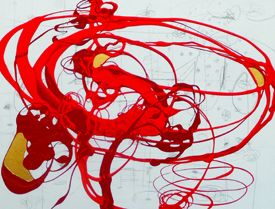 Serena Bocchino, 99º (Fever) Hold Me Tight, 2012, enamel, graphite, and gold leaf on canvas, 38 x 48 in. (artwork © Serena Bocchino)
Serena Bocchino. Simon Gallery, Morristown, New Jersey, May 29–July 31, 2012. Fever. Painting and work on paper.
Midwest

Neil Goodman. Perimeter Gallery, Chicago, Illinois, April 20–May 26, 2012. Breadth. Sculpture.
Northeast

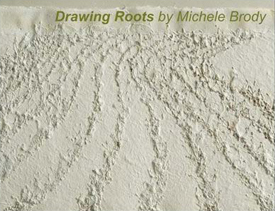
Michele Brody. Guild Gallery II, New York, April 19–June 12, 2012. Drawing Roots. Drawing on handmade paper.
Lisi Raskin. Churner and Churner, New York, February 23–March 31, 2012. Shots in the Dark. Sculpture, drawing, and collage.

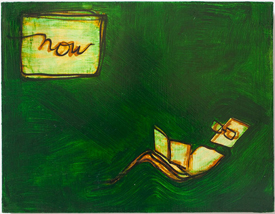 Mira Schor, Now, 2011, ink, oil, and gesso on linen 14 x 18 in. (artwork © Mira Schor)
Mira Schor. Marvelli Gallery, New York, March 29–April 28, 2012. Mira Schor: Voice and Speech. Painting.

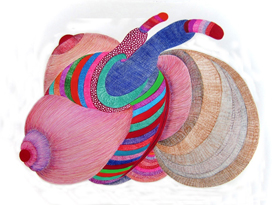 Dee Shapiro, Comfort Zone, 2011, ink and Flashe paint on paper, 22 x 30 in. (artwork © Dee Shapiro)
Dee Shapiro. Andre Zarre Gallery, New York, June 19–July 28, 2012. Sexing the Polymorphs. Drawing.
Annie Shaver-Crandell. SiteImages Chelsea, New York, April 19–28, 2012. Steeds, Sofas, and Pistas: The Figure at Home, Abroad, and Afield. Painting.

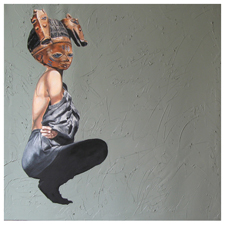 Margaret Rose Vendryes, Gelede Cherrelle – African Diva, 2012, oil and cold wax on canvas with paper, 30 x 30 in. (artwork © Margaret Rose Vendryes)
Margaret Rose Vendryes. Gelabert Studios Gallery, New York, May 29–June 16, 2012. 33⅓ Pushing the Needle: The African Diva Project. Painting and African masks.
South

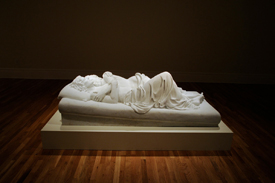 Patricia Cronin, Memorial to a Marriage, 2002, over life-sized Carrara marble (artwork © Patricia Cronin; photograph provided by the artist)
Patricia Cronin. Newcomb Art Gallery, Tulane University, New Orleans, Louisiana, April 25–June 30, 2012. Patricia Cronin: All Is Not Lost. Watercolor and sculpture.
Patricia Cronin. Arthur Roger Gallery, New Orleans, Louisiana, April 7–June 30, 2012. Patricia Cronin: Memorial to a Marriage. Sculpture.
Ruth Dusseault. Robert C. Williams Paper Museum, Institute of Paper Science and Technology, Georgia Institute of Technology, Atlanta, Georgia, April 20–June 8, 2012. The Innermost Room. Photography and video.
West

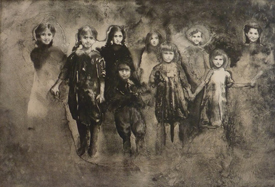 Ruth Weisberg, Together Again, 1975, color lithograph, 15 x 22 in. (artwork © Ruth Weisberg)
Ruth Weisberg. Sylvia White Gallery, North Gallery, Ventura, California, April 11–May 13, 2012. Then and Now. Monotype.
Survey Results on Contingent Faculty in Higher Education
posted by Christopher Howard — June 20, 2012
 The results of a 2010 survey of contingent faculty members and instructors in American higher education, published today by the Coalition on the Academic Workforce (CAW), have confirmed much of what has been reported anecdotally: part-time faculty members demonstrate a dedicated level of commitment to teaching and to the institutions that employ them, but this commitment is not reciprocated by those institutions through compensation or other professional support. The findings also describe larger course loads for teachers, imbalances in compensation in relation to not only professional credentials but also gender and race, and minimal participation in academic decision-making. Further, contingent faculty face longer durations of provisional employment and slim prospects for career advancement, with schools failing to meet their preference for full-time status.
According to a 2009 government study, 75.5 percent of all faculty members at colleges and universities in the United States are contingent: that is, they hold part-time or adjunct positions, have full-time non-tenure-track jobs, or serve as graduate-student teaching assistants. Part-timers alone make up nearly half the total professoriate. The US Department of Education, however, has not kept statistics on contingent-faculty salaries since 2003, when it last carried out its National Study of Postsecondary Faculty. CAW’s comprehensive survey, administered in fall 2010, was conducted in an effort to provide meaningful data for this rapidly growing concern. Of the nearly 30,000 survey respondents, 1,102 were CAA members: 591 in studio art and design, 362 in art history, and 149 in art education. The CAW report focuses on the largest group of contingent faculty: part-timers.
CAA is a founding member (1997) of CAW, which is a group of higher-education associations, disciplinary associations, and faculty organizations committed to addressing issues associated with deteriorating faculty working conditions and their effect on college and university students in the United States. Specifically, CAW’s purpose is to: collect and disseminate information on the use and treatment of full- and part-time faculty members serving off the tenure track and the implications for students, parents, other faculty members, and institutions; articulate and clarify differences in the extent and consequences of changes in the faculty within and among the various academic disciplines and fields of study; evaluate the short-term and long-term consequences of changes in the academic workforce for society and the public good; identify and promote strategies for solving the problems created by inappropriate use and exploitation of part-time, adjunct, and similar faculty appointments; promote conditions by which all faculty members, including full- and part-time non-tenure-track faculty members, can strengthen their teaching and scholarship, better serve their students, and advance their professional careers.
Andrew Delbanco, the author of College: What It Was, Is, and Should Be (2012), stated that, in 1975, 60 percent of college professors were full-time faculty with tenure. The reasons for the accelerated shift toward contingent labor since that time are many. Decreases in state funding, capital expansion without commensurate revenue, increases in specialized knowledge requiring thousands of course offerings, and swelling student enrollment all have had a detrimental effect on faculty budgets, more so than on any other area of expenditures in higher education. Jane Wellman, who led the Delta Project on Postsecondary Education Costs, Productivity, and Accountability, affirmed these observations in a recent New York Times interview:
What the evidence shows is that we’ve done more to cut costs in the faculty area than elsewhere in the budget, and we’ve done it by bringing in more adjuncts and part-timers. So there’s a handful of professors with tenure, who don’t teach very much, and then there’s [a] lot of people who have no benefits who do more of the teaching. I think it’s probably hurting academic quality, especially at institutions where the students are not well prepared. The attrition [of students] is mostly in the first two years, and that’s mostly where the adjuncts are.
While no hard evidence has determined that an increase of adjuncts has diminished the quality of teaching in higher education, the CAW survey results clearly demonstrate pressure on part-time faculty due to not only expanding workloads and larger classes—especially for part-time faculty teaching at multiple institutions—but also expectations to be involved in academic decision-making without additional compensation.
Professors of studio art and art history are acutely aware of all these issues. Enrollment has risen persistently for art-history and studio courses for years, while tenured positions have diminished. The survey results do bring some slightly positive news: median pay for contingent faculty in studio art and design and in art history is $3,000 per three-credit course (the nationwide median is approximately $2,700). In addition, workers at campuses with a union presence earn more than those at nonunion schools. Compensation is lower, however, for survey respondents who identified themselves as black, although the number of African Americans who participated in the survey was low. Please visit the CAW website for details on these issues and more.
The CAW report will provide important data for discussions taking place in several of CAA’s Professional Interests, Practices, and Standards Committees. The Student and Emerging Professionals Committee will be addressing contingent-faculty issues at a panel at the 2013 Annual Conference in New York, which will include Michael Bérubé, president of the Modern Language Association and director of the Institute for the Arts and Humanities at Pennsylvania State University, who will present an overview of the Academic Workforce Data Center, a compilation of historical data of the growth of contingent faculty by universities. Bérubé will also discuss the need to nationalize the academic-job market. Jeanne Brody, an adjunct professor at Villanova University and Saint Joseph’s University, will summarize the ways in which adjunct faculty members are effectively organizing and advocating better treatment within the university system. Victoria H. F. Scott of Emory University will discuss the establishment of an Art History Society of the Americas, which would explore abolishing adjunct position types, raising salaries, collecting statistics, and setting policies to improve and monitor working conditions.
The Committee on Women in the Arts, which focuses on women’s issues in the workplace and beyond, will respond to survey results on gender. Although women make up two-thirds of all CAA members, they tend to occupy the lowest rungs of academia, while men continue filling the higher-ranking and higher-paid positions. To continue the discussion, the committee will present a panel at the 2013 conference, chaired by the artist and professor Claudia Sbrissa, on how the “feminization” of art history may have contributed to lower salaries and prestige for women.
Similarly, the Committee on Diversity Practices will discuss issues related to retention of faculty members of color during its panel at the 2013 conference.
CAA would like to thank the individuals who generously volunteered their time and expertise to develop and tabulate CAW’s survey: John Curtis, director of research and public policy, American Association of University Professors; David Laurence, director of research, Modern Language Association; Kathleen Terry-Sharp, director of academic relations and practicing and applied programs, American Anthropological Society; Craig Smith, director of higher education, American Federation of Teachers; and Robert B. Townsend, deputy director, American Historical Association.
Survey Results on Contingent Faculty in Higher Education
posted by Christopher Howard — June 20, 2012
The results of a 2010 survey of contingent faculty members and instructors in American higher education, published today by the Coalition on the Academic Workforce (CAW), have confirmed much of what has been reported anecdotally: part-time faculty members demonstrate a dedicated level of commitment to teaching and to the institutions that employ them, but this commitment is not reciprocated by those institutions through compensation or other professional support. The findings also describe larger course loads for teachers, imbalances in compensation in relation to not only professional credentials but also gender and race, and minimal participation in academic decision-making. Further, contingent faculty face longer durations of provisional employment and slim prospects for career advancement, with schools failing to meet their preference for full-time status.
According to a 2009 government study, 75.5 percent of all faculty members at colleges and universities in the United States are contingent: that is, they hold part-time or adjunct positions, have full-time non-tenure-track jobs, or serve as graduate-student teaching assistants. Part-timers alone make up nearly half the total professoriate. The US Department of Education, however, has not kept statistics on contingent-faculty salaries since 2003, when it last carried out its National Study of Postsecondary Faculty. CAW’s comprehensive survey, administered in fall 2010, was conducted in an effort to provide meaningful data for this rapidly growing concern. Of the nearly 30,000 survey respondents, 1,102 were CAA members: 591 in studio art and design, 362 in art history, and 149 in art education. The CAW report focuses on the largest group of contingent faculty: part-timers.
CAA is a founding member (1997) of CAW, which is a group of higher-education associations, disciplinary associations, and faculty organizations committed to addressing issues associated with deteriorating faculty working conditions and their effect on college and university students in the United States. Specifically, CAW’s purpose is to: collect and disseminate information on the use and treatment of full- and part-time faculty members serving off the tenure track and the implications for students, parents, other faculty members, and institutions; articulate and clarify differences in the extent and consequences of changes in the faculty within and among the various academic disciplines and fields of study; evaluate the short-term and long-term consequences of changes in the academic workforce for society and the public good; identify and promote strategies for solving the problems created by inappropriate use and exploitation of part-time, adjunct, and similar faculty appointments; promote conditions by which all faculty members, including full- and part-time non-tenure-track faculty members, can strengthen their teaching and scholarship, better serve their students, and advance their professional careers.
Andrew Delbanco, the author of College: What It Was, Is, and Should Be (2012), stated that, in 1975, 60 percent of college professors were full-time faculty with tenure. The reasons for the accelerated shift toward contingent labor since that time are many. Decreases in state funding, capital expansion without commensurate revenue, increases in specialized knowledge requiring thousands of course offerings, and swelling student enrollment all have had a detrimental effect on faculty budgets, more so than on any other area of expenditures in higher education. Jane Wellman, who led the Delta Project on Postsecondary Education Costs, Productivity, and Accountability, affirmed these observations in a recent New York Times interview:
What the evidence shows is that we’ve done more to cut costs in the faculty area than elsewhere in the budget, and we’ve done it by bringing in more adjuncts and part-timers. So there’s a handful of professors with tenure, who don’t teach very much, and then there’s [a] lot of people who have no benefits who do more of the teaching. I think it’s probably hurting academic quality, especially at institutions where the students are not well prepared. The attrition [of students] is mostly in the first two years, and that’s mostly where the adjuncts are.
While no hard evidence has determined that an increase of adjuncts has diminished the quality of teaching in higher education, the CAW survey results clearly demonstrate pressure on part-time faculty due to not only expanding workloads and larger classes—especially for part-time faculty teaching at multiple institutions—but also expectations to be involved in academic decision-making without additional compensation.
Professors of studio art and art history are acutely aware of all these issues. Enrollment has risen persistently for art-history and studio courses for years, while tenured positions have diminished. The survey results do bring some slightly positive news: median pay for contingent faculty in studio art and design and in art history is $3,000 per three-credit course (the nationwide median is approximately $2,700). In addition, workers at campuses with a union presence earn more than those at nonunion schools. Compensation is lower, however, for survey respondents who identified themselves as black, although the number of African Americans who participated in the survey was low. Please visit the CAW website for details on these issues and more.
The CAW report will provide important data for discussions taking place in several of CAA’s Professional Interests, Practices, and Standards Committees. The Student and Emerging Professionals Committee will be addressing contingent-faculty issues at a panel at the 2013 Annual Conference in New York, which will include Michael Bérubé, president of the Modern Language Association and director of the Institute for the Arts and Humanities at Pennsylvania State University, who will present an overview of the Academic Workforce Data Center, a compilation of historical data of the growth of contingent faculty by universities. Bérubé will also discuss the need to nationalize the academic-job market. Jeanne Brody, an adjunct professor at Villanova University and Saint Joseph’s University, will summarize the ways in which adjunct faculty members are effectively organizing and advocating better treatment within the university system. Victoria H. F. Scott of Emory University will discuss the establishment of an Art History Society of the Americas, which would explore abolishing adjunct position types, raising salaries, collecting statistics, and setting policies to improve and monitor working conditions.
The Committee on Women in the Arts, which focuses on women’s issues in the workplace and beyond, will respond to survey results on gender. Although women make up two-thirds of all CAA members, they tend to occupy the lowest rungs of academia, while men continue filling the higher-ranking and higher-paid positions. To continue the discussion, the committee will present a panel at the 2013 conference, chaired by the artist and professor Claudia Sbrissa, on how the “feminization” of art history may have contributed to lower salaries and prestige for women.
Similarly, the Committee on Diversity Practices will discuss issues related to retention of faculty members of color during its panel at the 2013 conference.
CAA would like to thank the individuals who generously volunteered their time and expertise to develop and tabulate CAW’s survey: John Curtis, director of research and public policy, American Association of University Professors; David Laurence, director of research, Modern Language Association; Kathleen Terry-Sharp, director of academic relations and practicing and applied programs, American Anthropological Society; Craig Smith, director of higher education, American Federation of Teachers; and Robert B. Townsend, deputy director, American Historical Association.
Recent CAA Advocacy
posted by Christopher Howard — June 18, 2012
CAA’s advocacy efforts this year addressed a wide range of issues of critical importance to the visual arts, from the necessity of artists to have affordable health-insurance options, to the ethical treatment of animals in works of art, to the ins and outs of copyright law and museum practices. Below is a summary of eleven issues to which CAA has been committed during the past twelve months.
In June 2011, CAA filed an amicus brief in the case of Golan v. Holder, which the United States Supreme Court began hearing in October. The issue raised in Golan v. Holder is whether Congress, after enacting the Uruguay Round Agreements Act of 1994, could legally remove tens of thousands—if not millions—of foreign works from the public domain and bring them back into copyright. Consistent with the First Amendment, the brief argued that those works should remain freely available. On January 18, 2012, the Supreme Court affirmed a lower court’s previous decision, 6–2. In short, foreign works formerly in the public domain in the US can have their copyrighted status reinstated.
In December 2011, CAA signed onto a statement from the Association of Art Museum Directors that opposed the pending sale of a fifty percent stake in the Alfred Stieglitz Collection of Modern American and European Art at Fisk University in Nashville, Tennessee. Since 2005 the school had been attempting to sell the collection, donated by Georgia O’Keeffe (who specified that it never be sold or broken up). “Such an action,” stated the letter, “would violate a core professional standard of AAMD and of the museum field, which prohibit[s] the use of funds from the sale of works of art for purposes other than building an institution’s collection.” Nevertheless, the Tennessee Supreme court did not block the sale to Crystal Bridges Museum of American Art in Bentonville, Arkansas, on April 25, 2012. The university and museum will share the collection on a three-year rotating basis, with the museum helping to conserve the collection.
CAA board and staff members represented the organization at two events this spring in Washington, DC: Anne Collins Goodyear, then-incoming board president, and Linda Downs, CAA executive director and chief executive officer, attended Humanities Advocacy Day in March; and Judith Thorpe, an outgoing board member, and Helen Bayer, CAA marketing and communications associate, went to Arts Advocacy Day in April. The goal of both days was to support continued federal funding through the National Endowment for the Humanities and the National Endowment for the Arts, and to articulate to Congress the vital importance of the humanities and the arts in higher education. The National Humanities Alliance’s annual meeting coincided with Humanities Advocacy Day. Goodyear and Downs have offered a summary of this important event.
At the request of People for the Ethical Treatment of Animals (PETA), CAA investigated the use of homing pigeons in Jon Rubin’s interactive artwork, Thinking about Flying (2012), on view this year at the Museum of Contemporary Art in Denver, Colorado. The piece invites museum visitors to take home a bird, placed in a cardboard box, for a day before releasing it, so that it may fly back to the museum. CAA confirmed the humanitarian treatment of the birds by the artist and museum and notified PETA of the findings.
In April, CAA investigated the complaint raised by several artists who lent work to the 2010 World Festival of Black Artists and Cultures in Senegal that was not returned due to a dispute with an art shipper in Dakar. CAA determined that the situation did not need the organization’s assistance.
Michael Fahlund, CAA deputy director, testified on behalf of the organization at an oversight hearing convened by New York City’s Committee on Cultural Affairs, Libraries, and International Intergroup Relations on January 25, 2012, regarding increasing access to affordable health insurance for artists. Even though CAA is an international organization, its office is in the state of New York; presently the healthcare industry is regulated state by state. Fahlund proposed that CAA be given “employer status” in relation to its members living in New York State in order to provide health-insurance options for them. The committee’s discussions are ongoing.
CAA monitored a federal bill, the Research Works Act (H.R. 3699), that was introduced in the US House of Representatives on December 16, 2011, by Rep. Darrell Issa (R-CA) and cosponsored by Rep. Carolyn Maloney (D-NY)— chairman and member, respectively, of the House Committee on Oversight and Government Reform. The legislation would prohibit federal agencies from mandating free access to scholarly articles submitted to a scientific or scholarly publication without the consent of the publisher. This act primarily addresses science and technology publications but, if enacted, could affect art and humanities publications as well. Many learned societies who are publishers oppose the legislation, and CAA board members have begun discussing the issue and are paying close attention to the legislation’s development.
Representing CAA, Fahlund contributed his expertise to a National Coalition Against Censorship committee that developed Museum Best Practices for Managing Controversy, published in May. The document offers guidance for institutions to turn controversial situations into learning experiences for their public. The committee comprised representatives from the American Association of Museums, the Association of Art Museum Directors, the Association of Art Museum Curators, Columbia University, Arizona State University, the University of Washington, and the New School. CAA’s Museum Committee is reviewing the guideline and will present it for adoption at the CAA board meeting on October 28, 2012.
Fahlund also worked with a liability insurance broker, Herbert L. Jamison and Co. LLC, and Philadelphia Insurance Companies, and with two CAA members, Barbara Buhler Lynes and Nancy Mowll Mathews, to establish comprehensive, affordable liability insurance for art historians and artists who authenticate works of art. Such insurance would help defend against a damaging financial loss that could occur from alleged mistakes or negligence. CAA does not administer the insurance but acts as a referral to the insurance company; in a brief article from this past January, Fahlund offers helpful loss-prevention tips for the art professional to avoid potential workplace liabilities.
Last month CAA signed onto a letter from the Association of Art Museum Directors sent to Congress, urging legislators to pass the Foreign Cultural Exchange Jurisdictional Immunity Clarification Act (S. 2212), a proposed law that would shield a loaned work of art from a non-US collection from being seized by anyone with a claim to legal ownership while the art is on display in the country. According to the letter, the US has “long provided the crucial legal protection that helps make loans from foreign museums possible” through the Department of State, until a 2004–8 lawsuit involving heirs of Kasimir Malevich and the City of Amsterdam weakened those protections. The House passed the bill (H.R. 4086), which the Senate is now debating.
As a member of the Coalition on the Academic Workforce, a group that addresses workforce issues in higher education, CAA helped to prepare and administer a 2010 survey on contingent-faculty issues. The results have been tabulated and will be distributed soon. More than one thousand CAA members filled out the survey. [June 20 update: the survey results have been published.]
Founded as an advocate for the visual arts in higher education, CAA actively engages matters of public policy, litigation, and activism at the local, state, federal, and international levels. For further information, visit the Advocacy section of the website. If you have questions or have advocacy issues you would like to bring to the attention of the CAA board, please contact Anne Collins Goodyear, CAA president, and Linda Downs, CAA executive director and chief executive officer, at info@collegeart.org.
People in the News
posted by CAA — June 17, 2012
People in the News lists new hires, positions, and promotions in three sections: Academe, Museums and Galleries, and Organizations and Publications.
The section is published every two months: in February, April, June, August, October, and December. To learn more about submitting a listing, please follow the instructions on the main Member News page.
June 2012
Academe

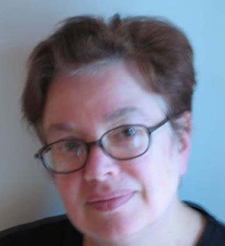 Ellen K. Levy
Ellen K. Levy, an artist, writer, and former CAA president, has joined the faculty of the Institute for Doctoral Studies in the Visual Arts in Portland, Maine, as special advisor on art and sciences.
Museums and Galleries

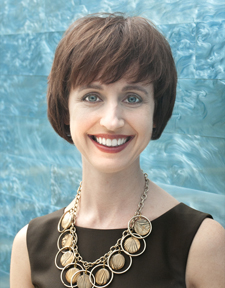 Colette Crossman (photograph by Rick Hall)
Colette Crossman, administrator of arts and programs for the Jack S. Blanton Museum of Art of the University of Texas at Austin, has been appointed curator of exhibitions at the museum.
Karen Sherry, previously associate curator of American art at the Brooklyn Museum in New York, has been named curator of American art at the Portland Museum of Art in Oregon.