
CAA News Today
Exhibitions Curated by CAA Members
posted by CAA — April 15, 2014
Check out details on recent shows organized by CAA members who are also curators.
Exhibitions Curated by CAA Members is published every two months: in February, April, June, August, October, and December. To learn more about submitting a listing, please follow the instructions on the main Member News page.
April 2014

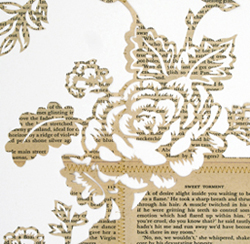 Lauren Scanlon, Sweet Torment (Sorrel II), 2010, hand-cut book pages from romance novels and gold thread on paper, 17½ x 15¼ in. (artwork © Lauren Scanlon)
Reni Gower. Papercuts: The Art of Contemporary Papercutting. Muskegon Museum of Art, Muskegon, Michigan, January 9–March 16, 2014.

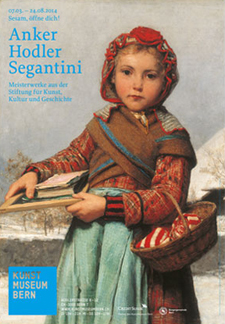 Poster for Open Sesame! Anker, Hodler, Segantini
Valentina Locatelli. Open Sesame! Anker, Hodler, Segantini; Masterpieces from the Foundation for Art, Culture, and History. Kunstmuseum Bern, Bern, Switzerland, March 7–August 24, 2014.

Melissa Potter and Jessica Cochran. Social Paper: Hand Papermaking in the Context of Socially Engaged Art. Center for Book and Paper Arts, Columbia College Chicago, Chicago, Illinois, February 10–April 15, 2014.

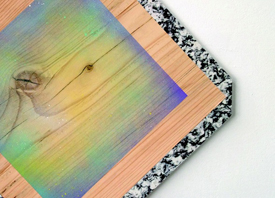 Detail of Parsley Steinweiss, Untitled, 2013, spray paint on digital C-print mounted on Plexiglas and Sintra, 23½ x 22½ in. (artwork © Parsley Steinweiss)
Sarah G. Sharp. Offline. Radiator Gallery, RadiatorArts, Long Island City, New York, February 7–March 15, 2014.
Books Published by CAA Members
posted by CAA — April 15, 2014
Publishing a book is a major milestone for artists and scholars—browse a list of recent titles below.
Books Published by CAA Members appears every two months: in February, April, June, August, October, and December. To learn more about submitting a listing, please follow the instructions on the main Member News page.
April 2014


Katharine P. Burnett. Dimensions of Originality: Essays on Seventeenth-Century Chinese Art Theory and Criticism (Hong Kong: Chinese University Press, 2013).

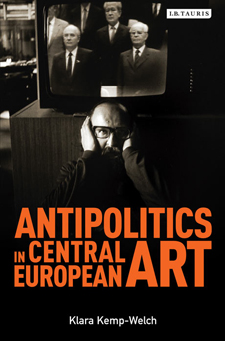
Klara Kemp-Welch. Antipolitics in Central European Art: Reticence as Dissidence under Post-Totalitarian Rule 1956–1989 (London: I. B. Tauris, 2013).


Andreas Marks. Kunisada’s Tōkaidō: Riddles in Japanese Woodblock Prints (Leiden, the Netherlands: Brill, 2013).

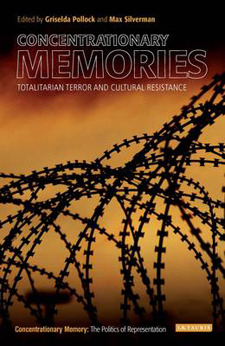
Griselda Pollock and Max Silvermann, eds. Concentrationary Memories: Totalitarian Terror and Cultural Resistance (London: I. B. Tauris, 2013).

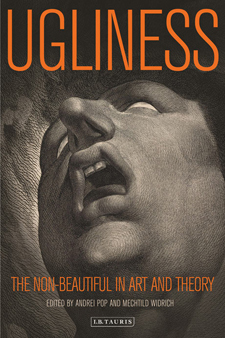
Andrei Pop and Mechtild Widrich, eds. Ugliness: The Non-Beautiful in Art and Theory (London: I. B. Tauris, 2013).

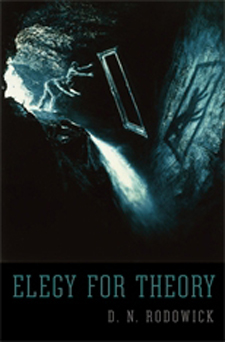
D. N. Rodowick. Elegy for Theory (Cambridge, MA: Harvard University Press, 2014).

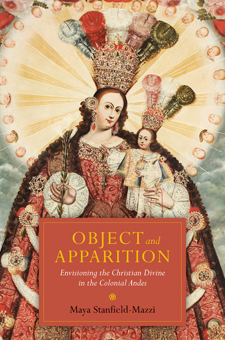
Maya Stanfield-Mazzi. Object and Apparition: Envisioning the Christian Divine in the Colonial Andes (Tucson: University of Arizona Press, 2013).
President Obama Announces His Intent to Nominate Dr. William “Bro” Adams as Chairman of the National Endowment for the Humanities
posted by Christopher Howard — April 10, 2014
Today, President Obama announced his intent to nominate Dr. William “Bro” Adams as Chairman of the National Endowment for the Humanities.
President Obama said, “Bro brings demonstrated leadership and decades of experience as an administrator at major universities and liberal arts institutions. His clear dedication and lifelong commitment to the humanities make him uniquely qualified to lead the nation’s cultural agency. I’m proud to nominate Bro as Chairman of the National Endowment for the Humanities and look forward to working with him in the months and years to come.”
Dr. William “Bro” Adams is President of Colby College, a position he has held since 2000. Previously, he was President of Bucknell University from 1995 to 2000. Dr. Adams was Vice President and Secretary of Wesleyan University from 1993 to 1995, and was Program Coordinator of the Great Works in Western Culture program at Stanford University from 1986 to 1988. Earlier in his career, he held various teaching positions at Stanford University, Santa Clara University, and the University of North Carolina. Dr. Adams served in the Vietnam War as a First Lieutenant in the U.S. Army. In 1977, he became a Fulbright Scholar and conducted research at the Ecole des Hautes Etudes and the Ecole Normale Superieure in Paris, France. Dr. Adams is a member of the Board of Directors of the Maine Film Center and the Maine Public Broadcasting Corporation. Dr. Adams received a B.A. from the Colorado College and a Ph.D. from the University of California, Santa Cruz.
Committee on Women in the Arts Picks for April 2014
posted by CAA — April 10, 2014
Each month, CAA’s Committee on Women in the Arts selects the best in feminist art and scholarship. The following exhibitions and events should not be missed. Check the archive of CWA Picks at the bottom of the page, as several museum and gallery shows listed in previous months may still be on view or touring.
April 2014
Claudia DeMonte: La Forza del Destino
June Kelly Gallery
166 Mercer Street, New York, NY 10012
April 10–May 13, 2014
Claudia DeMonte: La Forza del Destino presents a new series of paintings and sculptures focused on symbols of good and bad luck from around the world. For decades, Claudia DeMonte has been involved in collaborative research and art production with women artists across the globe. As curator, DeMonte is the artifice of WOMEN OF THE WORLD: A Global Collection of Art. This traveling exhibition, with accompanying comprehensive publication, includes the works and statements of women artists from 177 countries portraying their image of what means being a woman in their cultural environment. In her later project, Real Beauty, DeMonte commissioned handmade fabric dolls from artists and crafters to express local concepts of female beauty, standards that are being lost due to plastic reproductions and globalization.
From Bhutan, Laos, and Saudi Arabia to Senegal and Tibet, DeMonte has traveled the globe observing cultures, customs, and idiosyncrasies from women perspectives and often working collaboratively with local women workshops. In one of the works presented in La Forza del Destino, DeMonte uses a female form sculpted from wood and laden with pictographic configurations suggesting lucky charms of protection. Her new works make evident, once again, her continued interest in women’s multifaceted roles and impact as storytellers, historians, and mythological controllers of destiny. In DeMonte’s own words, La Forza del Destino examines from a women’s perspective the icons that represent luck, superstition, and protection from the evils of the world.
Ane Mette Hol: In the Collection
Trondheim Kunstmuseum
Bispegata 7 B, 7013 Trondheim, Norway
February 8–May 18, 2014
Trondheim Kunstmuseum presents In the Collection, a solo exhibition by the Oslo-based artist Ane Mette Hol (b. Bodø, 1979), who uses drawing as a research method that investigates the relationships between originals and reproductions. The “accurate copies” of objects and phenomena are the result of a painstaking work, questioning the very medium of drawing. By using paper and drawing tools, Hol copies things with precision down to the finest detail. She has made copies of brown paper, rolls of drawing paper, music sheets, drawing pads, and book covers, as well as printouts from the internet and botched photocopies. Through her completed works, she challenges the relationship between original and copy with an almost Borgesian approach. Furthermore, through this relationship, Hol’s works comment on our continuous recycling of what already exists and on our common knowledge about art history and theory. In this, she questions the nature of art; its premises in terms of content, politics, and institution through remarkable technical skill and through innovative frames of reference and conceptual discourse.
In the exhibition at Trondheim Kunstmuseum, Hol has based her work on a drawing of a photocopy from Charles Wood’s book How to Draw Portraits (1943). The drawing shows the book’s list of contents, and the exhibition is based on the different sections of the book. As the exhibition title suggested, the show features works from the museum’s collections and from Hol’s drawings, animations, and sound installations.
Maria Lassnig
MoMA PS1
22-25 Jackson Avenue, Long Island City, NY 11101
March 9–May 25, 2014
Maria Lassnig (Austrian, b. 1919) is one of the most important contemporary women painters. Through what she called “body awareness,” her paintings mean an exploration of the inner world. She focused on representing the way her body feels to her from the inside, rather than attempting to depict it from outside. Lassnig’s remarkable career has spanned more than seventy years. Throughout the decades she has continued to create work that vulnerably explores the way she comes into contact with the world, emphasizing often the disjunctions between her own self-image, challenging the way she may be seen by others as a woman, as a painter, and as a person who has lived through the dramatic technological and cultural shifts that have marked the century of her lifetime. In her paintings, Lassnig exposes personal traumas, fantasies, and nightmares, offering instruction for courageous living in a time of social interaction.
From all creative periods of her career, spanning her early involvement with graphic abstraction in Paris and Art Informel, to her later shift to figural representation, Lassnig’s exhibition at PS1 is the most significant survey of the artists’ work ever presented in the United States. The show, focusing in her self-portraits, features approximately fifty paintings drawn from public and private holdings and from the artist’s own collection. A selection of watercolors and filmic works, many of which have never been previously seen in the United States, also make an appearance in the exhibition.
Mimi Smith: Constructing Art about Life
Harold B. Lemmerman Gallery
New Jersey City University Galleries, Hepburn Hall, 2039 Kennedy Boulevard, Room 323, Jersey City, NJ 07305
March 20–April 24, 2014
Mimi Smith: Constructing Art about Life is a concise survey of Mimi Smith’s work over the past five decades, curated by Midori Yoshimoto. A New York–based artist and a graduate of Rutgers University, Smith is best known for the clothing sculptures she begun in the mid-1960s, the most prominent being Steel Wool Peignoir (1966), a see-through dressing gown embellished with lace and steel wool that has become an icon of early feminist art. Combining banal consumer or domestic objects—such as the wrapping plastics of various consumer goods in Recycle Coat (1965), the bath mats in Girdle (1966), or the pieced-together plastics in Maternity Dress (1966)—Smith radically intervened in Pop art, producing feminist sartorial sculptures that addressed the role of fashion in women’s individual and social identities, while unmasking the complicated relationship of the public and the private in women’s lives.
In the early 1970s Smith challenged the Conceptual art of her time from the homebound perspective of a female artist and a mother, then raising her children in Ohio, with a series of works that merit further evaluation for their contribution to postwar art and their diverse politics. These include series of large-scale drawings done with measuring tape and knotted thread that replicates the rooms and furniture of her home, as well as multimedia installations that allude to the pervasiveness of new technologies and the increasing invasiveness of the news media, and also to the environment and nuclear threats.
Sculptural cloth making and clothing itself continue to play a great role in Smith’s contemporary investigation of gendered identity and politics, as seen in her recent ruminations on women’s aging through drawn representations of underwear.
Lee Bontecou: Drawn Worlds
Menil Collection
1533 Sul Ross Street, Houston, TX 77006
January 31–May 11, 2014
Curated by Michelle White under the auspices of the Menil Drawing Institute, Lee Bontecou: Drawn Worlds is the first museum survey to focus on Lee Bontecou’s works on paper. It brings together over seventy works from various collections, including that of the Menil, that sample her drawing practice from 1958 to 2012. The show is accompanied by a fully illustrated catalogue with essays by White, Dore Ashton, and Joan Banach.
Advancing the understanding of the work of this incredible artist, Drawn Worlds explores Bontecou’s experimentation in materials and techniques, such as her early use of a welding torch to deposit velvet layers of black soot on paper, muslin, and canvas. The exhibition also contextualizes the artist’s distinctive iconography, especially her penchant for circles and voids, within the political and environmental concerns of the time of their making. Above all it provides a unique opportunity to witness the “unsettling realms of human folly and the frailty of the natural world” in which Bontecou’s “drawn words” take the viewer, while studying the forms that characterize them, whether as origins of her sculptures or independent transmutations of her haunting vocabulary.
Betye Saar: Redtime Est
Michael Rosenfeld Gallery
100 Eleventh Avenue, New York, NY 10001
March 15–May 3, 2014
Betye Saar is widely known for multimedia collages, box assemblages, altars, and installations consisting of found materials that, as put by the artist, “reach across the barriers of art and life to bridge cultural diversity and forge new understandings,” in effect voicing various political, racial, spiritual and gender concerns. Redtime Est (2011), a variation of the eponymous installation for Pacific Standard Time in Los Angeles three years ago, offers a unique opportunity to indulge the affective sensibility of her highly political objects.
Redtime Est consists of red, or chameleonlike red, works that are curated by the artist in and around a room whose walls are painted red, “the color of anger, danger, violence, heat, passion, blood and fire.” A caged mannequin with a crow as head and dressed with shackles guards the entrance to Redtime Est, setting its tone, while Red Ascension, a painted red ladder, hangs diagonally across the wall that faces the viewer upon his or her entrance, cinematically commemorates the slaves’ trip from Africa to America with various symbolic objects featured in each frame, ranging from an African mask to handcrafted ships to red-painted chains and padlocks.
Unlike the miniretrospective character of the Redtime Est, this one is a mega-assemblage of recent works, the earliest dating from the early 1990s, whose subject matter, as in Justice (2011) features Aunt Jemima, is manifested with signature tropes of the feminist and antiracist underpinnings of the artist’s assemblage practice since the 1960s. Focusing on the most political aspects of her work, the artist brings together objects for Redtime Est that, while sampling the various modes of her practice from painting to assemblage and the sheer repurposing of found objects, illustrate the way in which she used “derogatory” stereotypes of blackness and recycled objects of poignant history and function, such as washboards, to make powerful and empowering critical statements about race and gender with an idiosyncratic marriage of past and present, her homage to her ancestors and her radical legacy to future.
Alexandra Bachzetzis and Claire Hooper
Bonner Kunstverein
Hochstadenring 22,
D-53119 Bonn, Germany
February 22–May 25, 2014
Bonner Kunstverein juxtaposes the deconstructive and seductive ways in which pop culture is respectively employed in the work of the performer and choreographer Alexandra Bachzetsis and the filmmaker Claire Hooper, putting in dialogue the exploration of the distinct significance given by social media in the staging of personality and life today as well as the ways in which their practice challenges the exhibition format. While Bachzetsis performed with Anne Pajunen for A Piece Danced Alone (2011) during the opening, her work is mostly represented through video documentations of her choreographies. Hooper’s videos are exhibited as part of structures that function as projection surfaces and architectural ornamentation, creating links between the exhibition space, the illusionistic space of the film, and its documentary function in a manner typical of Hooper, as, for instance, by recreating a Berlin subway environment.
Bachzetsis’s works depict the controlled movements of bodies following a clear sequence in evocative situations that condense reflections of the contemporary media culture into studies of motion by means of mirroring and repetition. By isolating gestures and body language from the flow of the familiar as signs of cultural codes she deconstructs the sequence of events, while also variously analyzing the mechanics of TV soaps and hip hop video clips, classical ballet, modern dance, and performance art.
Hooper’s films, in which the British tradition of documentaries encounters Greek mythology, focus on figures in precarious social circumstances and their entanglement in restrictive systems that are converted into collective social areas through parablelike, mythological enhancement. Interchangeable elements from everyday life in documentary fashion oscillate kaleidoscopically with theatrically charged passages. While pop culture plays an equally important part in the staging of her figures, Hooper depicts the body in seemingly surreal dance performances that enable her to portray the irrational and also the compulsive forces that continue to drive our society. A dialogue about the body and its representation in the media, as well as its physical and social limitations, develops between their works. Both artists depict the body and the figure as shimmering, constantly changing projection surfaces.
News from the Art and Academic Worlds
posted by Christopher Howard — April 09, 2014
Each week CAA News publishes summaries of eight articles, published around the web, that CAA members may find interesting and useful in their professional and creative lives.
Delaware Art Museum’s Deaccession Debacle: My Q&A with Its Former Director, Danielle Rice
While the Delaware Art Museum has been the target of considerable criticism among museum professionals for its decision to sell art to repay debts and enhance the endowment, no one has been more distressed by this development than the museum’s own former director, Danielle Rice, who left at the end of August to direct a program in museum leadership at Drexel University. In a candid, in-depth conversation, Rice expressed her strong disapproval of what the trustees did after she left, outlined what should have been done instead, and commented on what lies ahead for her former institution. (Read more from Culturegrrl.)
Detroit Creditors Demand a Full Reckoning of Museum’s Art
The Detroit Institute of Arts has hit an obstacle in its ongoing quest to safeguard its collection from the city’s creditors amid Detroit’s bankruptcy proceedings. Over the past week, two groups of creditors served the museum with wide-ranging subpoenas for records covering the past hundred years and documenting the ownership history of every work in its 60,000-piece collection. (Read more from the Art Newspaper.)
What I Learned from Organizing a Conference
Conferences are an integral part of developing oneself as an academic, especially for a graduate student. They provide the chance to practice public speaking, are a great way to get feedback on the progress of one’s work, and are one of the best ways to network with others in your field. But what if you want to be on the other side of the conference? What if you want to organize one? (Read more from GradHacker.)
Galleries Are Man’s World, and Micol Hebron Is Keeping Score
While browsing the glossy pages of Artforum, the artist Micol Hebron kept getting the feeling that male artists were disproportionately represented in the magazine’s advertising. “People assumed that there was an inequity there, but no one had any data,” she recalls. “So every time I got the physical magazine, I would count the ads—the full-page ads for single artists—since that tells you who the galleries are putting their weight behind.” Month after month, she says, the count was roughly the same, “Usually, about 70 percent men.” Sometimes it was worse. (Read more from KCET.)
I’m the Biggest Man on Campus
Overweight professors across academe describe similar battles to achieve self-acceptance, full inclusion in academic life, and genuine respect from students and colleagues. Some struggle daily to navigate campus spaces that don’t comfortably accommodate their size. Some stand in front of classrooms and wonder whether their bodies influence how students perceive their minds. Some say they have trouble adhering to exercise plans or healthy eating habits because their jobs come with lots of research and little structure. Yet larger professors often grapple with these concerns in isolation and silence. (Read more from Vitae.)
What Can You Do with a Humanities PhD, Anyway?
There is a widespread belief that humanities PhDs have limited job prospects, yet recent studies suggest that these tragedies do not tell the whole story. It is true that the plate tectonics of academia have been shifting since the 1970s, reducing the number of good jobs available in the field. What is less widely known is between a fifth and a quarter of them go on to work in well-paying jobs in media, corporate America, nonprofits, and government. (Read more from the Atlantic.)
Stuck in the Middle
Associate professors, in theory, should be hitting a stride in their academic careers. In the middle ranks of faculty, they have typically earned tenure and started to take on broader responsibilities in their departments, juggling more service and governance roles with their teaching and research. But the earning power of these professors is diminishing compared with their peers in ranks above and below them. (Read more from the Chronicle of Higher Education.)
Room to Grow
Flexibility stigma is a term scholars use to describe work places that punish those who don’t fit the “ideal worker” profile: solely devoted to one’s job, available twenty-four hours a day and traditionally male. Lots of studies suggest that in academe, such biases are particularly prevalent in the sciences, and that women with young children are the most frequent targets. But a new study argues that both men and women with small children report and resent inflexible department cultures. It also finds that even nonparents resent flexibility stigma, with negative consequences for the department over all. (Read more from Inside Higher Ed.)
NEH Makes Jefferson Lecture Available in Communities across the Country
posted by CAA — April 09, 2014
Visit the Virtual Jefferson Lecture
The National Endowment for the Humanities (NEH) invites you to join us online for a gala national event featuring Walter Isaacson, the biographer of Steve Jobs and Albert Einstein, speaking on The Intersection of the Humanities and the Sciences.
Isaacson will be delivering the 2014 Jefferson Lecture in the Humanities, the most prestigious honor the federal government bestows for distinguished intellectual achievement in the humanities. The date is 7:30 p.m. May 12th at the John F. Kennedy Center for the Performing Arts in Washington, D.C.
NEH will make a free, high definition, live stream of the lecture available for national viewing. Read more.
Watch Walter Isaacson
Isaacson is one of the preeminent biographers, journalists, and intellectual leaders of our time. He conducted more than 40 interviews with Steve Jobs to write his definitive biography, getting Jobs to describe his own legacy in both the humanities and in technology. His biography of Albert Einstein defined unconventional thinking; his work on Benjamin Franklin and others describes The Intersection of the Humanities and the Sciences in human terms. As president and CEO of the Aspen Institute, he gathers the intellectual elite in a policy powerhouse. Read more.
Convene Film Nights and Start New Conversations
NEH will make the Jefferson Lecture instantly available to very community in the United States with a high speed internet connection. We hope that hundreds of groups will sponsor Jefferson Lecture nights and film discussion groups to consider The Intersection of the Humanities and the Sciences within their schools, communities, and states. Read more.
Catch Up Later
Busy on May 12th? The lecture will be available on www.neh.gov for a year to spur reading and discussion of the Humanities and STEM—science, technology, engineering and math. America needs both the sciences and the humanities to be competitive, innovative, and strong. Read more.
What Do I Need To Do?
Find a venue. Invite an audience. Plan a program. Go to http://www.neh.gov/jefferson-lecture/event-form. Let us know of your plans so people can find a nearby location. Read more.
Join the National Conversation
Share your thoughts and comments with viewers across the country using the Twitter hashtag: #JeffLec2014.
CAA Unveils New Membership Program: More Benefits, New Options
posted by Nia Page — April 07, 2014
Today CAA unveils a newly restructured membership program for individuals. The new membership categories are based on benefits rather than on income, making the various tiers more equitable and offering members more choices. CAA arrived at the new levels—which include, for the first time, a discounted membership for part-time faculty—after a thorough analysis of member feedback, benchmarking against other organizations, and conducting market research. You can watch a video about the new membership program and find a list of benefits associated with each new category at www.collegeart.org/membership/individual.
All individual members will continue to receive an outstanding package of benefits, including print subscriptions to CAA’s acclaimed publications, access to the Online Career Center, discounted registration for the Annual Conference, and invaluable networking and mentoring opportunities. New benefits and options include:
- Online access to The Art Bulletin and Art Journal
- Additional online access to publications in the Taylor & Francis collection
- Access to JPASS—JSTOR’s individual access plan with a catalogue of over 1,500 journals—at a 50 percent discount
- A new, discounted membership category designed to meet the needs of part-time faculty
CAA members make up a vital network that supports the highest standards in scholarship, theory, criticism, education, and practice in the visual arts. Membership dues help CAA to fund important research, carry out advocacy initiatives, publish its scholarly journals, administrate professional-development programs, and host the world’s best-attended visual-arts conference.
New Membership Categories
The dues associated with each level of membership are:
- Student: $60
- Retired: $80
- Part-Time Faculty: $90
- Basic: $125
- Premium: $195
- Sustaining: $300
- Patron: $600
- Life: $5,000
CAA also offers two-year terms and an automatic renewal option for all levels of membership.
Frequently Asked Questions
Please read CAA’s comprehensive FAQs on the new categories and other helpful topics, such as how to join online, how to access publications online, what kind of documentation is needed for students and retired professionals, and how to managing your email subscriptions. You can find the FAQs at www.collegeart.org/membership/faq.
Contact
If you have any questions, please contact CAA’s Member Services by telephone at 212-691-1051, ext. 1; by email at membership@collegeart.org; and by fax at 212-627-238. Office hours are Monday–Friday, 9:00 AM–5:00 PM EST.
Watch
Join the Wyeth Publication Grant Jury
posted by CAA — April 03, 2014
 CAA received a grant from the Wyeth Foundation for American Art to offer the Wyeth Foundation for American Art Publication Grant for three additional years. The funding will allow CAA to award $40,000 in grants to publishers each year from 2014 to 2017. Wyeth grants support the publication of books on the history of American art, visual studies, and related subjects that have been accepted by a publisher on their merits but cannot be published in the most desirable form without a subsidy. For this program, “American art” is defined as art created in the United States, Canada, and Mexico through 1970. The program has supported thirty-nine books since 2005.
CAA seeks nominations and self-nominations for two individuals with expertise in any branch of American art history, visual studies, or a related field to serve on the jury for the Wyeth Foundation for American Art Publication Grant for a three-year term, July 1, 2014–June 30, 2017. Candidates must be actively publishing scholars with demonstrated seniority and achievement; institutional affiliation is not required.
Members review manuscripts and grant applications once a year and meet in New York in the fall to select awardees. CAA reimburses jury members for travel and lodging expenses in accordance with its travel policy.
Candidates must be current CAA members and should not currently serve on another CAA editorial board or committee. Jury members may not themselves apply for a grant in this program during their term of service. Nominators should ascertain their nominee’s willingness to serve before submitting a name; self-nominations are also welcome. Please send a letter of interest describing your qualifications for appointment, a CV, and contact information to: Wyeth Foundation for American Art Publication Grant, College Art Association, 50 Broadway, 21st Floor, New York, NY 10004; or send all materials as email attachments to Alex Gershuny, CAA editorial manager. Deadline: May 10, 2014.
Image Caption
Yale University Press received a Wyeth grant in 2012 to help publish Katherine Bussard’s book Unfamiliar Streets (2014).
News from the Art and Academic Worlds
posted by Christopher Howard — April 02, 2014
Each week CAA News publishes summaries of eight articles, published around the web, that CAA members may find interesting and useful in their professional and creative lives.
The Most Expensive Colleges in the Country Are Art Schools, not Ivies
I recently stumbled across this handy tool from the Department of Education, which generates lists of colleges by cost. The schools that usually get dinged for high tuition (and as a result, scare off low-income applicants) are the elite colleges. But many of those schools are quite rich and distribute a lot of financial aid. (Read more from the Washington Post.)
Sure, I Do Creative Work, but I’m No Artist
Who, exactly, is an artist? Many claim the title, with little to back up their assertion. We’ve all met people who define themselves as artists but have yet to actually produce any actual art. A new study finds that, surprisingly, the reverse is also true. It identifies a large group of Americans who have every right to call themselves professional artists but for some reason avoid doing so. (Read more from Pacific Standard.)
You’re Sure of a Big Surprise
Museums across the United States are hiring staff under the “public engagement” rubric, often as part of their education departments. The Henry Art Gallery in Seattle is seeking “a director of education and public engagement,” and in January the Whitney Museum in New York hired a “director of public programs and public engagement.” Both are new positions. (Read more from the Art Newspaper.)
Without Tenure or a Home
In the classroom, Mary-Faith Cerasoli, an adjunct professor of Romance languages, usually tries to get her message across in lyrical Italian or Spanish. But during spring break, she used stencils and ink and abbreviated English to write her current message—“Homeless Prof.”—on a white ski vest she planned to wear on a solo trip to Albany two days later to protest working conditions for adjunct college professors. (Read more from the New York Times.)
Russian Oligarchs and Brazilian Millionaires Interested in DIA? Orr Was Speaking Metaphorically
OK, let’s clear up any misunderstanding: Russian oligarchs and Brazilian millionaires are not amassed in front of the Detroit Institute of Arts in the hopes of being first in line should the treasures inside go up for sale. But that doesn’t mean they, or someone like them, aren’t intensely interested. While giving a speech at the University of Michigan, Detroit emergency manager Kevyn Orr said that many Russian oligarchs—meaning super-wealthy Russian businessmen—and Brazilian millionaires were “calling and inquiring” about the art. However, Orr’s spokesman Bill Nowling clarified that the emergency manager spoke metaphorically. (Read more from the Detroit Free Press.)
United We Stand: How Galleries Are Working Together
From the Renaissance bottega to the art factories of Damien Hirst and Jeff Koons, artists have long recognized that they get by better with a little help from their friends. Institutions have been slower to catch on. As public funding dwindles, the scramble for sponsorship gets ever more rivalrous as museums vie to woo patrons with the glossiest gala dinner and most highbrow curatorial outing. (Read more from the Financial Times.)
Protesters Rain Down Thousands of Bills in Guggenheim Rotunda
At 6:45 PM on March 29, a handheld bell sounded in the rotunda of the Guggenheim Museum in New York, signaling the second protest action in as many months from the Global Ultra Luxury Faction (or GULF). The ringing was followed by the release of nine thousand “1%” bills of parodic currency, which fluttered downward as patrons rushed to the inner edge of Frank Lloyd Wright’s spiral ramp. (Read more from Hyperallergic.)
Vatican Library Goes Digital
The Vatican Apostolic Library has announced a €18 million deal with a Japanese IT company to digitize 3,000 ancient manuscripts over the next four years. In a press conference last week, the library’s prefect, Monsignor Cesare Pasini, said the partnership with NTT Data Corporation continues “a task we have been undertaking for years” to digitize the Vatican’s entire collection of 82,000 manuscripts, an estimated 40 million pages. (Read more from the Art Newspaper.)
National Mobilization for Equity
posted by CAA — April 01, 2014
Summary
Significant progress has been made by United University Professions (UUP) and other unions, disciplinary societies, the media and lately the U.S. Congressional staff to draw attention to the plight of contingent academic labor. What is needed now is a visible project to activate the nearly one million contingent teachers themselves. Individuals and organizational leaders around the country are coming together to form a National Mobilization for Equity, whose initial effort will be to organize rallies and other public events, beginning on May Day (May 1, 2014).
Mayday $5K Campaign
Last spring, activists at SUNY New Paltz launched a Mayday $5K Campaign. This calls for a minimum starting salary of $5,000 for a three-credit course, halfway between the current average compensation and the $7K recommended by the Modern Language Association as a minimum starting salary. The Mayday $5K Campaign calls for a number of important measures:
1. Increase the starting salary for a three-credit semester course to a minimum of $5,000 for all instructors in higher education.
2. Ensure academic freedom by providing progressively longer contracts for all contingent instructors who have proven themselves during an initial probationary period.
3. Provide health insurance for all instructors, either through their college’s health insurance system or through the Affordable Care Act.
4. Support the quality education of our students by providing their instructors with necessary office space, individual development support, telephones, email accounts and mail boxes.
5. Guarantee fair and equitable access to unemployment benefits when college instructors are not working.
6. Guarantee eligibility for the Public Service Loan Forgiveness Program to all college instructors who have taught for ten years, during which they were repaying their student loans.
7. With or without a time-in service requirement, allow all college teachers to vote and hold office in institutional governance, including faculty senates and academic departments.
This $5K Campaign has been endorsed by nearly a thousand individuals, by New Faculty Majority and by the statewide Executive Board and Delegate Assembly of the UUP, the nation’s largest higher education union. The $5K figure is not set in stone. Depending on the locale, it can be adjusted up or down, according to specific circumstances.
National Mobilization for Equity
The National Mobilization for Equity focuses on organizing May Day activities nationwide, either in support of the $5K Campaign or simply to highlight the plight of contingents and the need for change. On February 3, 2014, UUP’s full Delegate Assembly unanimously passed the following resolution:
Resolved, that the Contingent Employment Committee supports efforts by UUP members to form a National Mobilization for Equity that will, collectively with other unions and organizations, organize rallies and other events annually, beginning on May 1, 2014. These activities are intended to focus attention on the urgent plight of contingent academic labor and to publicly advocate for change. The Contingent Employment Committee asks the full Delegate Assembly for its endorsement of the National Mobilization for Equity and additionally requests UUP President Fred Kowal to reach out to NYSUT and AFT to secure their material support for this effort.
We need to create a MOVEMENT, to activate the one million contingents at the grass-roots’ level, which would greatly help those in organizational leadership positions working with state or federal agencies and legislatures. In addition to contingents, we need to activate tenure-track faculty, retirees, students and their parents, allied organizations, community groups and the general public. Organizing events around the country on May Day can help develop to organize a national grass-roots movement.
During the past decade, we have collectively spent thousands of hours and considerable financial resources working for equity. Our movement lacks any single MLK-like charismatic leader. Instead, there are many dedicated unionists and activists willing to work together to build an equity movement from the bottom up. Individuals or organizational leaders who want to work on this are invited to contact me. A Mobilization steering committee is being formed and will be announced shortly. Please join us!
In solidarity,
Peter D.G. Brown, Chapter President
Distinguished Service Professor Emeritus
United University Professions
SUNY, Lecture Center 6a
New Paltz, NY 12561
Office: 845-257-2783
Mobile: 917-886-1925
peterdg.brown@gmail.com
http://www.newpaltz.edu/uup
Please sign the Mayday Declaration here