
CAA News Today
News from the Art and Academic Worlds
posted by CAA — February 07, 2018
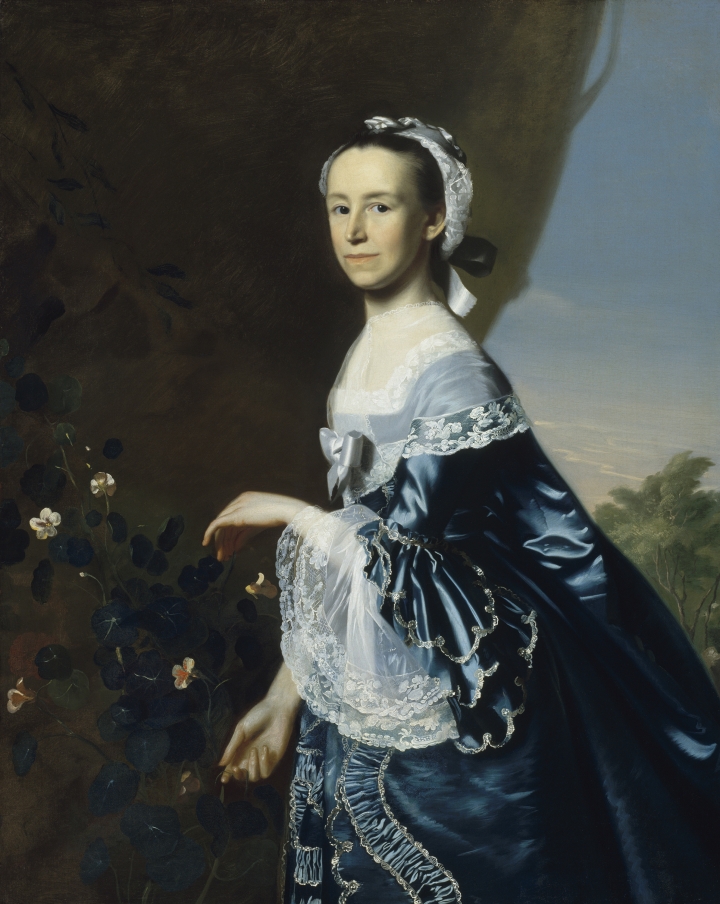
John Singleton Copley, Mrs. James Warren (Mercy Otis), ca 1763, oil on canvas (© Museum of Fine Arts, Boston, Bequest of Winslow Warren)
Each week CAA News summarizes articles, published around the web, that CAA members may find interesting and useful in their professional and creative lives.
Boston and Philadelphia’s Art Museums Gamble Loaning a Painting on the Super Bowl
It looks like the MFA will be sending John Singleton Copley’s Mrs. James Warren (Mercy Otis) to the City of Brotherly Love. (Hyperallergic)
A Peek at Famous Readers’ Borrowing Records from a Private New York Library
Thanks to carefully maintained circulation info, we know when Alexander Hamilton checked out Goethe. (Atlas Obscura)
Sprawling Maya Network Discovered Under Guatemala Jungle
Laser technology was used to survey digitally beneath the forest canopy, revealing houses, palaces, elevated highways, and defensive fortifications. (BBC)
Liberal Indoctrination? Not So Much
New research suggests that college is a time when students gain appreciation of multiple perspectives. (Inside Higher Ed)
7 Artists Reinventing the Ancient Art of Mosaics
From the floors of ancient Pompeii to the walls of the New York subway, mosaics have been a feature of urban life for thousands of years. (Artsy)
AI May Have Just Decoded a Mystical 600-Year-Old Manuscript That Baffled Humans for Decades
The 240-page Voynich manuscript is written in an unknown script and an unknown language that no one has been able to interpret—until now. (artnet News)
An Interview with 2018 CAA Distinguished Artist Awardee Pepón Osorio
posted by CAA — February 06, 2018
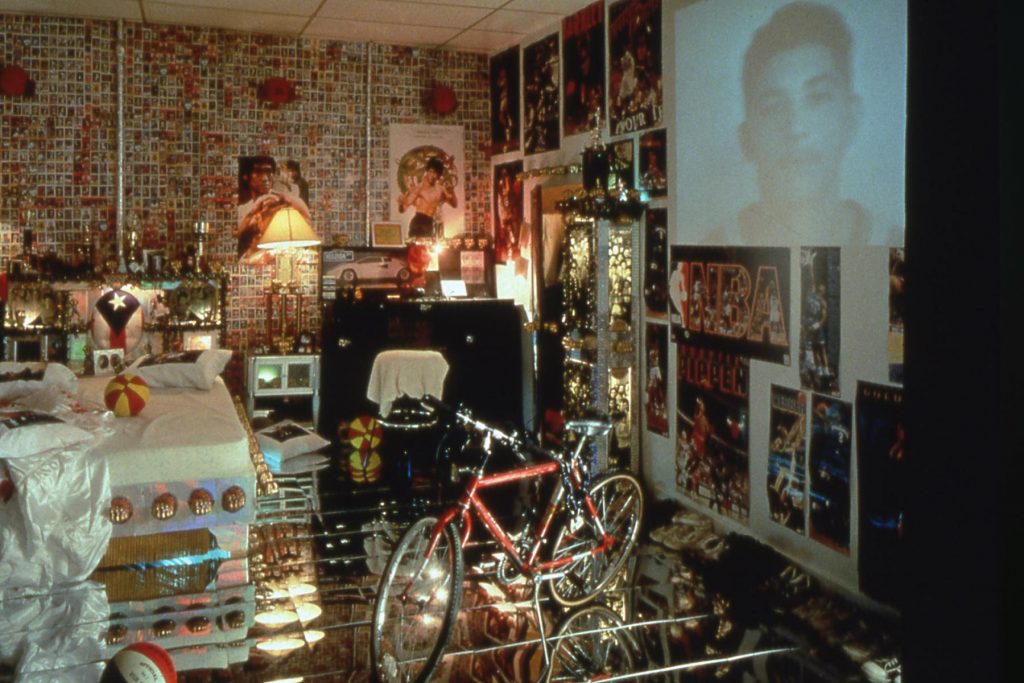
Pepón Osorio, Badge of Honor, 1995. Photo: Sarah Welles
Drawing on his childhood in Puerto Rico and his adult life as a social worker in the Bronx, artist Pepón Osorio creates meticulous installations incorporating the memories, experiences, and cultural and religious iconography of Latino communities and family dynamics. The 2018 CAA Distinguished Artist Awardee for Lifetime Achievement, Osorio is a professor in the Community Arts Practices Program at the Tyler School of Art at Temple University. He is also the recipient of a 2018 United States Artists Fellowship, among many other awards and fellowships.
CAA media and content manager Joelle Te Paske worked with Pepón in 2016 on reForm, a project responding to school closures in Philadelphia in collaboration with students, teachers, and Temple University. In the project high schoolers, affectionately nicknamed “Bobcats” after their former school mascot, were invited to contribute to an art installation at Tyler School of Art, where they also met with local politicians to advocate for community-based school reform.
Joelle caught up with Pepón in January 2018 to hear his thoughts on being an artist and professor, and to learn about his hopes for the year ahead.
This interview has been edited for length and clarity.
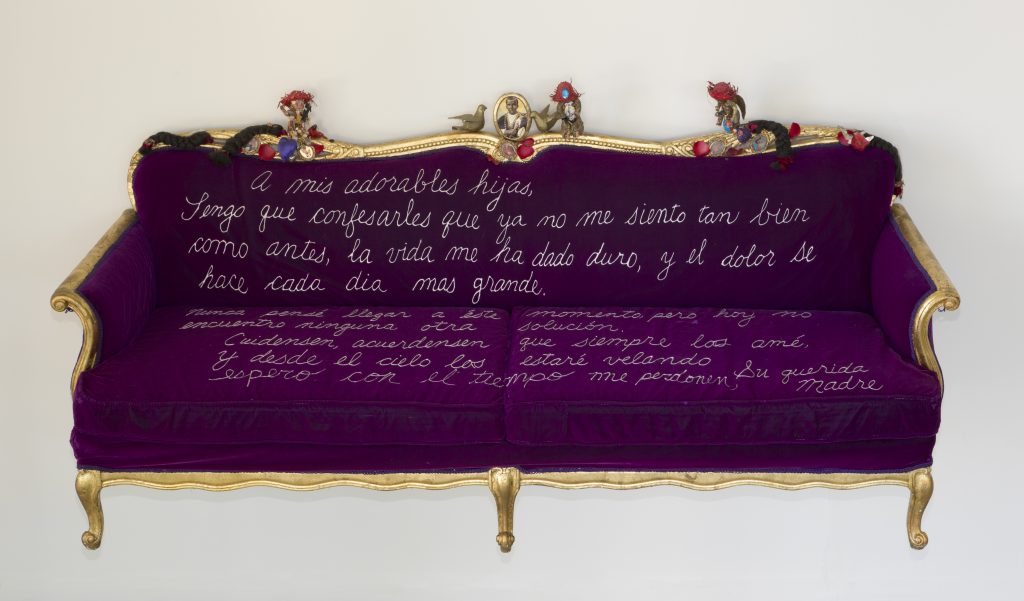
Pepón Osorio, To my darling daughters, 1990. Photo: Carlos Avedaños
JTP: I’m happy to be speaking with you. When I heard that you were getting the award, it was great news!
So, we find ourselves in 2018—how are you doing? What’s on your mind?
PO: I think that I am still processing the fact that we are in 2018 and 2017 didn’t look very good for us. Both as an artist and a citizen. I’m hoping that we begin to tell the truth in a country of lies. I hope that is what 2018 is like. This is a very interesting moment with the CAA lifetime achievement award, because I’ve been mostly thinking in retrospect. How in the world did we get here? How did we get here and how did this happen?
I’m looking in retrospect and trying to see where energy is stored and how to rejuvenate so I can move forward with a new perspective. That’s where I’m at.
JTP: I love that—looking for pockets of energy that are there, but haven’t quite been found.
PO: That in addition to how do we tell the truth in a country of lies? What does that mean? Everything’s been blurry to the point that you begin to doubt. That’s where we are.
JTP: Definitely. And what does your work look like right now?
PO: I am working on a couple of ideas. My production is very, very, very small. I don’t produce tons of work. I only produce work that I feel is urgent and is important. So I’m working on a whole bunch of ideas for possible pieces. Of all those ideas, one will emerge and come out. I’m working with that and also teaching. I’m trying to perfect the transformation of my methodology into a philosophical pedagogy. I’m trying to figure that out without losing touch with my creative self and my sense of curiosity.
JTP: When you say philosophical, do you mean putting together a formal pedagogy? Or more in a spiritual way?
PO: Well, both. I have been teaching at Tyler over the years and I feel that I always want to be able to center myself in my pedagogy in the way that I center myself in my artistic practice.
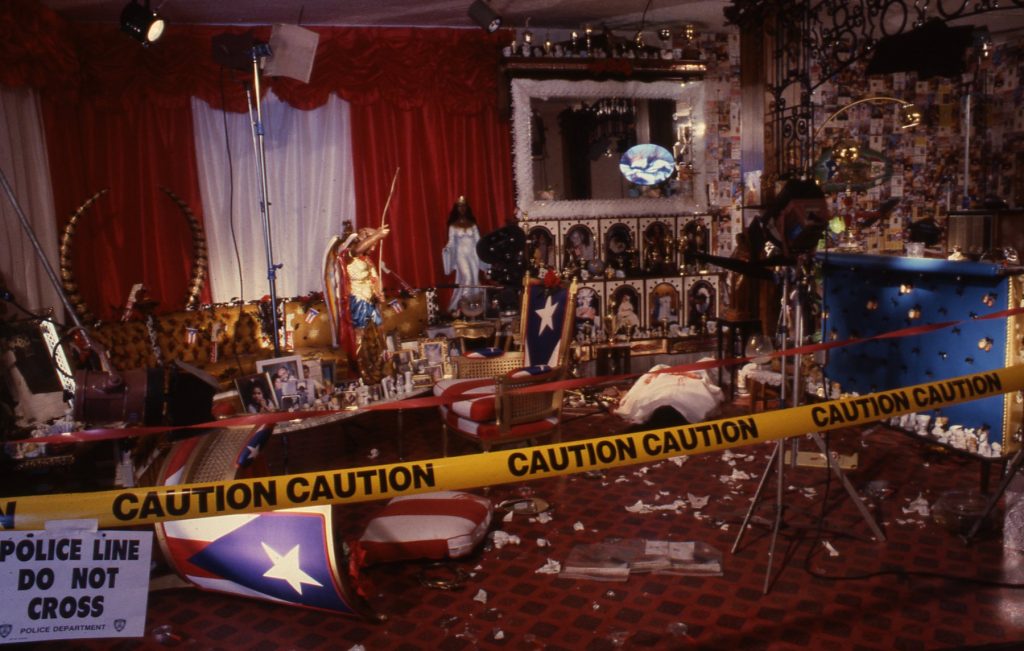
Pepón Osorio, Scene of the Crime… (whose crime?), 1993. Photo: Frank Gimpaya
I’m looking at what I’m really good at and that which I know most, which is my methodology of getting my work done, my practice. How do I transform that into a pedagogy of philosophy? That I can go around and teach something that I feel has this philosophy at the center of the work, similar to my artistic practice. Those are the things that I’ve been doing. A lot of looking in retrospect. Really looking in retrospect at the system.
JTP: That’s great. I’ve enjoyed being at CAA because I’ve been thinking more about history. It’s always there for you to learn from. The more you dig into it, the more you learn about the moment you’re in.
PO: Exactly.
JTP: What are the biggest changes you’ve seen in your time at Tyler as part of the faculty?
PO: The changes that I’m seeing at Tyler are new faculty members are coming in with a preoccupation that seems to be different from the history Tyler was built on. I’m looking at faculty members who are much more interested and preoccupied with things other than the object; where new faculty members are coming in with a clear understanding of what the true intention of becoming an artist is.
So I’m seeing that. I’m seeing transformations. We obviously have a new dean who is also looking at ways of transforming the past into a bright and hopeful future. Which is basically what I think this whole nation should be looking at.
JTP: I’m with you. Feels a little blurry, as you said, right now.
PO: Exactly. I think that the new blood and new faculty members that are coming to Tyler are interested in redefining a lot of concepts. I see that a lot in the world. I see that a lot with new generations of people coming up who are very interested in: “Let’s redefine this thing, because the system as it is simply doesn’t work.”
JTP: Would you say that’s your favorite part of being on the faculty at the moment?
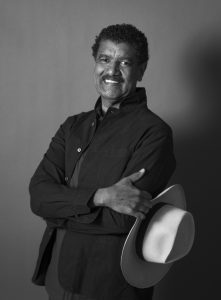
Pepón Osorio
PO: Yes. Also because I always feel that I found a niche in this. As an artist, dealing with the social, the political, the truth, and interdisciplinary work that creates very complex, chaotic environments—all that stuff seems to be so unacademic. I came in and I just felt like, “What in the world? What is my place in all this?” Little by little, by joining a new faculty and redefining, it’s making perfect sense. I’m finding myself more and more comfortable. That there are people around me that are supportive, that understand my trajectory and understand how I got to where I am now, whatever that place is.
It’s wonderful and I think to me that is a highlight. It’s finding a space in academia that feels comfortable and that I can bring the complexity of who I am into it, without necessarily having to be only one person.
JTP: I think that’s beautifully put. Everyone brings their own experiences. No one wants to be part of a monolithic institution that doesn’t let people be themselves …well, ok, some people do. But it’s interesting to me there’s so much more openness for that than I thought there might be, coming to a traditional academic membership organization like CAA, for instance.
PO: Basically, for me, it feels that this is not in demand. I am not filling up a demand of what all the people want to see. This is who I am. In relationship to the earlier question, I just feel like I was able to figure out a way to become myself in a world where people have demands of, “Oh you should be a professor.” Everybody thinks that you should be a [certain type of] professor. No. You just can’t be anybody else but who you are. It just so happened that being a professor is part of that.
We are looking at being an artist from a three-dimensional reality and in a more inter-dimensional way—that being an artist and professor is a very complex human being. I love that. I’d love to embrace that and not hide it from anyone. As a professor, I come in with all my imperfections as well. It’s not like I’m trying to correct them, I’m just going to do a balancing act with all this. That’s me, anyway.
JTP: If there was one thing that you would recommend to students or artists that they should be reading that they aren’t, what would you recommend?
PO: I’m not sure, but a student did ask me the other day if I have a recommendation of what he should be reading and what came out, which is really interesting, was feminist literature. Just listen to that stuff, read it, and understand what it means so then you can place yourself, as a male, in a place of understanding. That’s all.
JTP: I love it—you say, “Yes, I have an answer. Feminist literature.” Done.
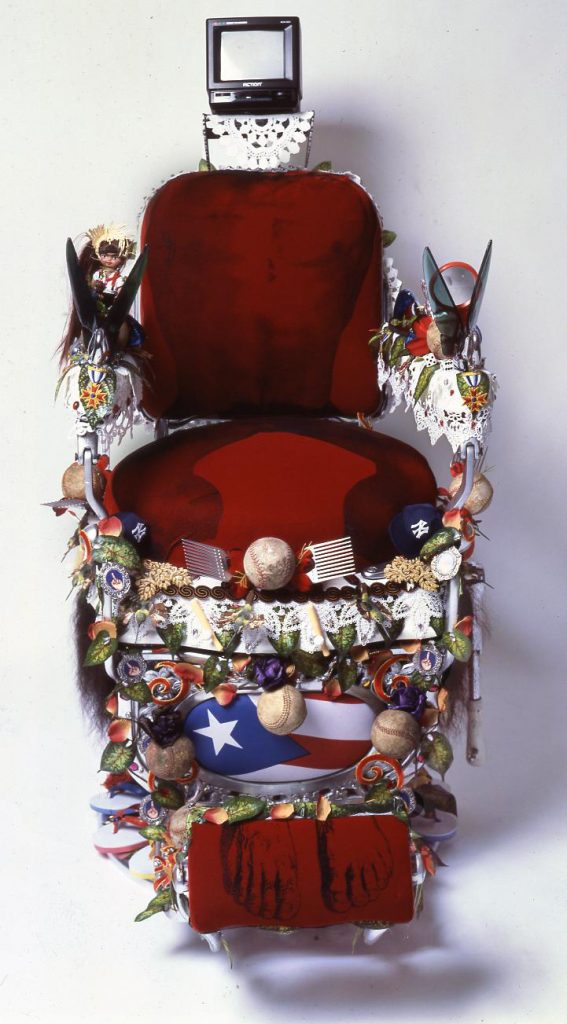
Detail, En la barbería no se llora (No crying allowed in the barbershop),
1994. Photo: Frank Gimpaya
PO: I think that women should be reading it, but I think that men should be getting into it and reading and understanding where it comes from. I think that people, mostly men, will probably begin to empathize with the reality and the system, the fact that it’s not supportive of women.
JTP: I’m curious if you’ve attended CAA conferences in the past? What did you think?
PO: I have participated in the past. I have been in a couple of them.
JTP: It’s my first experience with the conference. It’s enormous.
PO: Yes, it always surprises me how the college system is much bigger than what I always think of it. I just wish that there were much younger people coming in to turn this thing upside down.
JTP: I agree. We’re trying to think of different ways to get closer to that. This year I know that we’re doing outreach to high schools in LA for all the free events. How amazing would it be to have a whole bunch of juniors and seniors in high school from a local public LA high school show up at the LA convention center alongside established, older academics? Just everybody.
PO: So both of them can see each other. Both of them can see each other and it’s like, “Okay, this is what’s coming up,” and the younger will say, “Oh, this is what it’s been.”
Find a happy medium somewhere in there. It’s just too much of the extremes. That’s my reaction. Too much of the extremes.
JTP: I agree. It reminds me of reForm, even just in terms of space—basically allowing people to feel comfortable. I just loved that the Bobcats (high school students who collaborated on the project with Osorio) walked through the main space of Tyler to get down to their classroom. It made Tyler theirs, in a way.
PO: A lot of people asked me, “Why aren’t you doing this piece in their neighborhood?” It was because the chances for the students to come into a college and to occupy space in a college environment were one in a million. I just thought if we can open up a space for them to occupy a classroom, open up a space for them to understand and to begin to look at the social architecture of a university, that’s more than enough for me.
I think that’s basically what I’m referring to when I’m talking about the CAA conference. If we can only suggest and show up a little bit more, that it’s much bigger than that, and that there’s a world out there both ways, that’s it. That’s what needs to happen. So people can come and begin to think differently. That was exactly what happened with the Bobcats. I said, “I’m just doing this at the institution because there are multiple functions in which the institution can work. This is one of them.” We think about institutions as the only place for education. Education is much bigger than that.
JTP: I agree, and I think that gets us closer to the truth you were talking about earlier. It opens up many more opportunities.
PO: Yes. It unties that sense of curiosity in all the kids’ minds.
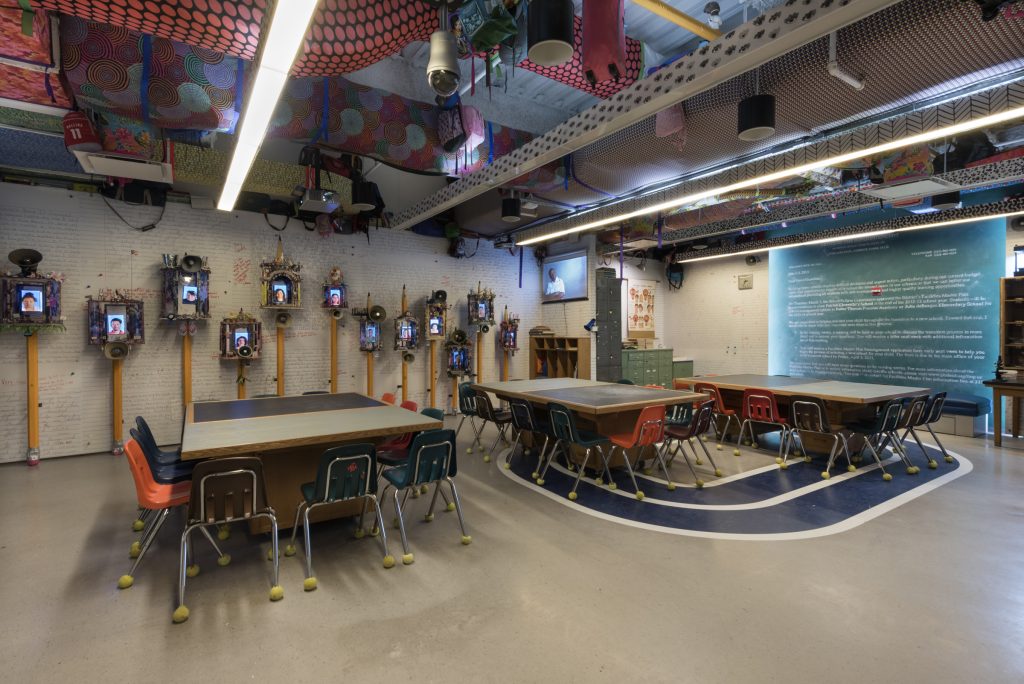
reForm, 2014-2016, installation at Tyler School of Art classroom. Photo: Constance Mensh
JTP: Do you think artists can change the world?
PO: I think artists have changed the world. I think that the changes that I have seen in this country are not by artists alone, but I think that they have. When you’re talking about artists, I think you’re mentioning just these single artists changing the world, and I don’t think that that has happened. But I don’t think that that cannot happen.
I’m saying yes, because in the changes that I’ve seen in the world, there has always been an artist behind that. I do agree, but I don’t think that an artist alone can do it.
To break it down, I think that creativity has always been at the center of world’s change. Artists have always been on the periphery of it. Sometimes at the center of those changes.
JTP: Great, thank you. Lastly, you touched on this a bit, but what gives you hope for the future?
PO: Change.
JTP: Pepón, I’m right there with you. The possibility that it won’t be how it is right now.
PO: Exactly. That’s all. I just hope for change.
CAA’s Annual Conference Convocation, including the presentation of the Awards for Distinction, will occur February 21, 6:00-7:30 PM and will be livestreamed.
New Curatorial Approaches in Art Journal
posted by CAA — February 06, 2018
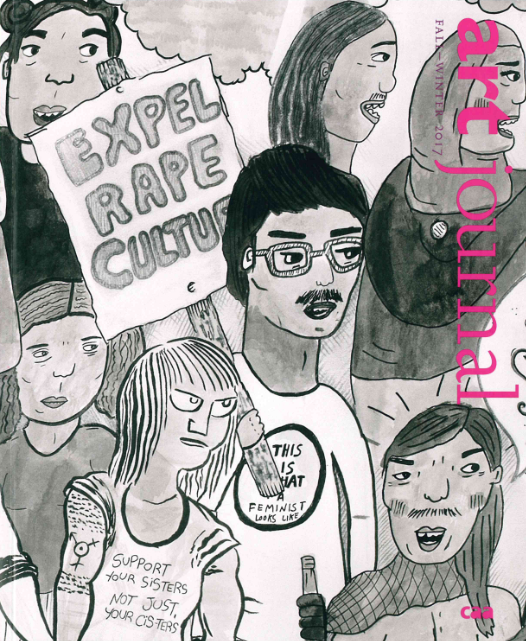
“Curating New Openings: Rethinking Diversity in the Gallery” is the centerpiece of the recently published Fall–Winter issue of Art Journal. The forum, organized by Amanda Cachia, highlights the experimental ideologies and methodologies of curators who root their projects in diversity in ways beyond conventional considerations of difference and access. It features texts by the curators Eliza Chandler, Anne Ellegood, Catherine Flood, Massimiliano Gioni, Naima J. Keith, Rhonda L. Meier, Helena Reckitt, Sara Reisman, Franklin Sirmans, and Cachia herself. The art historian Jonathan D. Katz contributes a polemical text on his dislike of the term “diversity.” The forum also showcases artworks by Firelai Báez, Fayen d’Evie, the collective Gender/Power, Christine Sun Kim, Nadia Myre, Alison O’Daniel, and Matt Smith. And for the first time in Art Journal, captions in the forum include image descriptions.
The afrotrope, the idea of recurrent forms in African and African diasporic visual cultures, is also a recurrent thread in Art Journal. In this issue, the originators of the concept, Huey Copeland and Krista Thompson, reintroduce the theme in a short “user’s guide.” An essay by Allison K. Young then traces the path of afrotrope images from documentary photographs of the 1976 Soweto uprising through artworks created outside South Africa in the following years, particularly in the screenprints of the UK-based artist Gavin Jantjes.
An essay by Tim Stott, a Dublin-based historian, explores the geometries, patterns, and diagrams of paintings, digital prints, and sculpture by Gabriel Orozco, in particular the knight’s move the artist has borrowed from chess.
#silence=violence, an artists’ project by Deirdre Logue and Allyson Mitchell with Heidi Cho and Morgan Sea, unfolds in the issue—quite literally, in a series of unfurling, densely illustrated pages. Responding to an invitation from the Doris McCarthy Art Gallery of the University of Toronto, the artists created the triptych of large-scale drawings, which then became the basis for murals at the university. Dozens of activist figures stream across the panels, addressing sexual violence and harassment on campuses with passion, resolution, and wit—even Siri puts in a cameo appearance.
The Reviews section opens with a critical bibliography on the theme of “possibility aesthetics” in the Anthropocene epoch by the artist Andrew Yang, who ponders eight publications—a graphic novel, a performative lecture, a manifesto, and more—as “opportunities for perceiving the complexity of planet-size facts.” The section continues with reviews of the exhibition and catalogue for A Feast of Astonishments: Charlotte Moorman and the Avant-Garde, 1960s–1980s (by Nicole L. Woods), the exhibition and catalogue for Lynn Hershman Leeson: Civic Radar (by Robert Slifkin), and the exhibition catalogue The Passion according to Carol Rama (by Jennifer Griffiths).
CAA sends print copies of Art Journal to all institutional members and to those individuals who choose to receive the journal as a benefit of membership. The digital version at Taylor & Francis Online is currently available to all CAA individual members regardless of their print subscription choice.
Call for Nominations for CAA Publications
posted by CAA — February 06, 2018
Self-nominations and nominations are now open for several positions with CAA publications. Click the links below to learn more.
THE ART BULLETIN
Call for Editor-in-Chief, The Art Bulletin
The Art Bulletin Editorial Board invites nominations and self-nominations for the position of editor-in-chief for a three-year term: July 1, 2019–June 30, 2022, with service as incoming editor designate, July 1, 2018–June 30, 2019, and as past editor, July 1, 2022–June 30, 2023. The candidate should have published substantially in the field and may be an academic, museum-based, or independent scholar; institutional affiliation is not required. The Art Bulletin features leading scholarship in the English language in all aspects of art history as practiced in the academy, museums, and other institutions. From its founding in 1913, the quarterly journal has published, through rigorous peer review, scholarly articles and critical reviews of the highest quality in all areas and periods of the history of art. Click here to learn more.
Deadline: Monday, April 2, 2018; finalists will be interviewed on Friday, May 4.
ART JOURNAL
Art Journal Seeks Reviews Editor – deadline extended!
The Art Journal Editorial Board invites nominations and self-nominations for the position of reviews editor for a three-year term: July 1, 2019–June 30, 2022 (with service as incoming reviews editor designate, July 1, 2018–June 30, 2019). The candidate may be an artist, art historian, art critic, art educator, curator, or other art professional; institutional affiliation is not required. Art Journal, published quarterly by CAA, is devoted to twentieth- and twenty-first-century art and visual culture. Click here to learn more.
Deadline extended! New deadline is: Tuesday, April 17, 2018; finalists will be interviewed on Thursday, May 3.
Art Journal Editorial Board Seeks New Members
CAA invites nominations and self-nominations for two individuals to serve on the Art Journal Editorial Board for a four-year term: July 1, 2018–June 30, 2022. Candidates may be artists, art historians, art critics, art educators, curators, or other art professionals; institutional affiliation is not required. Art Journal, published quarterly by CAA, is devoted to twentieth- and twenty-first-century art and visual culture. Click here to learn more.
Deadline: Monday, April 16, 2018.
CAA.REVIEWS
caa.reviews Editorial Board Seeks Candidates
CAA invites nominations and self-nominations for two individuals to serve on the caa.reviews Editorial Board for four-year terms, July 1, 2018–June 30, 2022. Candidates may be artists, art historians, art critics, art educators, curators, or other art professionals with stature in the field and experience writing or editing books and/or exhibition reviews; institutional affiliation is not required. The journal also seeks a librarian to serve in an ex officio capacity to advise the editorial board on technical and distribution issues. Click here to learn more.
Deadline: Monday, April 16, 2018.
caa.reviews Seeks TEN Field Editors – deadline extended!
CAA invites nominations and self-nominations for TEN individuals to join the caa.reviews Council of Field Editors for a three-year term, July 1, 2018–June 30, 2021. An online journal, caa.reviews is devoted to the peer review of new books, museum exhibitions, and projects relevant to art history, visual studies, and the arts. Click here to learn more.
Deadline extended! New deadline is: Tuesday, May 1, 2018.
Elizabeth McFalls, Rae Goodwin, and Jane Jensen
posted by CAA — February 05, 2018
The weekly CAA Conversations Podcast continues the vibrant discussions initiated at our Annual Conference. Listen in each week as educators explore arts and pedagogy, tackling everything from the day-to-day grind to the big, universal questions of the field.
This week, Elizabeth McFalls, professor of art and foundations coordinator at Columbus State University and an associate vice president of programming of Integrative Teaching International; Rae Goodwin, associate professor in Art Studio at the University of Kentucky; and Dr. Jane Jensen, associate professor at the University of Kentucky, discuss teaching study abroad courses.
New in caa.reviews
posted by CAA — February 02, 2018
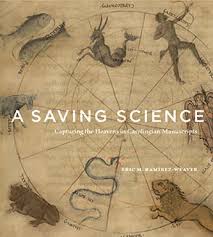
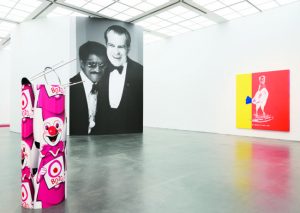
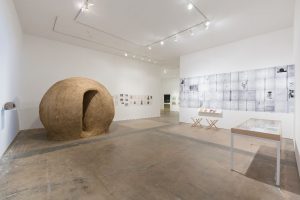
Daniel Barber discusses Extrastatecraft: The Power of Infrastructure Space by Keller Easterling. Read the full review at caa.reviews.
Ellen Kenney reviews Histories of Ornament: From Global to Local edited by Gülru Necipoğlu and Alina Payne. Read the full review at caa.reviews.
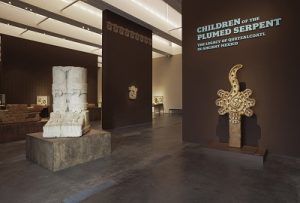
Virginia Miller writes about Children of the Plumed Serpent: The Legacy of Quetzalcoatl in Ancient Mexico by Virginia M. Fields, John M. D. Pohl, and Victoria I. Lyall. Read the full review at caa.reviews.
Renée Ater examines Suffering and Sunset: World War I in the Art and Life of Horace Pippin by Celeste-Marie Bernier. Read the full review at caa.reviews.
Thomas F. X. Noble discusses A Saving Science: Capturing the Heavens in Carolingian Manuscripts by Eric M. Ramírez-Weaver. Read the full review at caa.reviews.
Anne-Marie Bouché reviews Painting the Hortus Deliciarum: Medieval Women, Wisdom, and Time by Danielle B. Joyner. Read the full review at caa.reviews.
Cesar Cornejo discusses On Kawara—Silence by Jeffrey Weiss, Daniel Buren, and Whitney Davis. Read the full review at caa.reviews.
Leslie Wilson writes about After Year Zero: Geographies of Collaboration edited by Annett Busch and Anselm Franke. Read the full review at caa.reviews.
Ariel Evans reviews Kathryn Andrews: Run for President edited by Julie Widholm and Kristine Stiles. Read the full review at caa.reviews.
Alicia Guzman examines SITElines.2016: much wider than a line by Rocío Aranda-Alvarado. Read the full review at caa.reviews.
Call for Editor-in-Chief, The Art Bulletin
posted by CAA — February 02, 2018
The Art Bulletin Editorial Board invites nominations and self-nominations for the position of editor-in-chief for a three-year term: July 1, 2019–June 30, 2022, with service as incoming editor designate, July 1, 2018–June 30, 2019, and as past editor, July 1, 2022–June 30, 2023. The candidate should have published substantially in the field and may be an academic, museum-based, or independent scholar; institutional affiliation is not required. The Art Bulletin features leading scholarship in the English language in all aspects of art history as practiced in the academy, museums, and other institutions. From its founding in 1913, the quarterly journal has published, through rigorous peer review, scholarly articles and critical reviews of the highest quality in all areas and periods of the history of art.
Working with the editorial board, the editor-in-chief is responsible for the content and character of the journal. Each issue has approximately 120 editorial pages (85,000 words), not including book and exhibition reviews, which are the responsibility of a reviews editor. The editor-in-chief reads all submitted manuscripts, refers them to appropriate expert referees for peer review, provides guidance to authors concerning the form and content of submissions, and makes final decisions regarding acceptance or rejection of articles for publication. The editor-in-chief also works closely with the CAA staff in New York, where production for The Art Bulletin is organized. This is a half-time position. CAA provides financial compensation to the editor’s institution, usually in the form of course release or the equivalent, for three years. The editor is not usually compensated directly. The term includes membership on the Art Bulletin Editorial Board.
The editor-in-chief attends the Art Bulletin Editorial Board’s three meetings each year—held in New York in the spring and fall, and at the CAA Annual Conference in February—and submits an annual report to the CAA Board of Directors. CAA reimburses the editor-in-chief for travel and lodging expenses for the two New York meetings in accordance with its travel policy, but the editor-in-chief pays these expenses to attend the conference.
Candidates must be current CAA members and should not be serving on the editorial board of a competitive journal or on another CAA editorial board or committee. The Art Bulletin also encourages nominations from two-person editorial teams representing divergent and/or complementary fields and approaches. Editors may not publish their own work in the journal during the term of service. Nominators should ascertain their nominee’s willingness to serve before submitting a name; self-nominations are also welcome. Please send a statement describing your interest in and qualifications for appointment, a CV, at least one letter of recommendation, and your contact information to: Chair, Art Bulletin Editorial Board, College Art Association, 50 Broadway, 21st Floor, New York, NY 10004; or e-mail the documents to Joe Hannan, CAA editorial director, jhannan@collegeart.org.
Deadline: Monday, April 2, 2018; finalists will be interviewed on Friday, May 4.
Art Journal Seeks Reviews Editor – Deadline Extended!
posted by CAA — February 02, 2018
The Art Journal Editorial Board invites nominations and self-nominations for the position of reviews editor for a three-year term: July 1, 2019–June 30, 2022 (with service as incoming reviews editor designate, July 1, 2018–June 30, 2019). The candidate may be an artist, art historian, art critic, art educator, curator, or other art professional; institutional affiliation is not required. Art Journal, published quarterly by CAA, is devoted to twentieth- and twenty-first-century art and visual culture.
Working with the editorial board, the reviews editor is responsible for commissioning all book and exhibition reviews in Art Journal. He or she selects books and exhibitions for review, commissions reviewers, and determines the appropriate length and character of reviews. The reviews editor also works with authors and CAA’s manuscript editor in the development and preparation of review manuscripts for publication. He or she is expected to keep abreast of newly published and important books and recent exhibitions in twentieth-century and contemporary art, criticism, theory, and visual culture. The three-year term includes membership on the Art Journal Editorial Board and a small annual honorarium, paid quarterly.
The reviews editor attends the three meetings each year of the Art Journal Editorial Board—held in New York in the spring and fall and at the CAA Annual Conference in February—and submits an annual report to CAA’s Board of Directors. CAA reimburses the reviews editor for travel and lodging expenses for the two New York meetings in accordance with its travel policy, but he or she pays these expenses to attend the conference in February.
Candidates must be current CAA members and should not be serving on the editorial board of a competitive journal or on another CAA editorial board or committee. Members may not publish their own work in the journal during the term of service. Nominators should ascertain their nominee’s willingness to serve before submitting a name; self-nominations are also welcome. Please send a statement describing your interest in and qualifications for appointment, a CV, and at least one letter of recommendation to: Art Journal Reviews Editor Search, College Art Association, 50 Broadway, 21st floor, New York, NY 10004; or e-mail the documents to Joe Hannan, CAA editorial director, at jhannan@collegeart.org.
Deadline extended! New deadline is: Tuesday, April 17, 2018; finalists will be interviewed on Thursday, May 3.
Art Journal Editorial Board Seeks New Members
posted by CAA — February 02, 2018
CAA invites nominations and self-nominations for two individuals to serve on the Art Journal Editorial Board for a four-year term: July 1, 2018–June 30, 2022. Candidates may be artists, art historians, art critics, art educators, curators, or other art professionals; institutional affiliation is not required. Art Journal, published quarterly by CAA, is devoted to twentieth- and twenty-first-century art and visual culture.
The editorial board advises the Art Journal editor-in-chief and assists her or him in seeking authors, articles, artists’ projects, and other content for the journal; performs peer review and recommends peer reviewers; guides its editorial program and may propose new initiatives for it; and may support fundraising efforts on the journal’s behalf. Members also assist the editor-in-chief to keep abreast of trends and issues in the field by attending and reporting on sessions at the CAA Annual Conference and other academic conferences, symposia, and other events in their fields.
The Art Journal Editorial Board meets three times a year, with meetings in the spring and fall plus one at the CAA Annual Conference in February. The fall meetings are currently held by teleconference, but at a later date CAA may reimburse members for travel and lodging expenses for New York meetings in accordance with its travel policy. Members pay travel and lodging expenses to attend the conference in February. Members of all editorial boards volunteer their services to CAA without compensation.
Candidates must be current CAA members in good standing and should not be serving on the editorial board of a competitive journal or on another CAA editorial board or committee. Members may not publish their own work in the journal during the term of service. CAA encourages applications from colleagues who will contribute to the diversity of perspectives on the Art Journal Editorial Board and who will engage actively with conversations about the discipline’s engagements with differences of culture, religion, nationality, race, gender, sexuality, and access. Nominators should ascertain their nominee’s willingness to serve before submitting a name; self-nominations are also welcome. Please send a letter describing your interest in and qualifications for appointment, a CV, and your contact information to: Chair, Art Journal Editorial Board, College Art Association, 50 Broadway, 21st floor, New York, NY 10004; or e-mail the documents or inquiries to Joe Hannan, CAA editorial director, at jhannan@collegeart.org.
Deadline: Monday, April 16, 2018.
News from the Art and Academic Worlds
posted by CAA — January 31, 2018
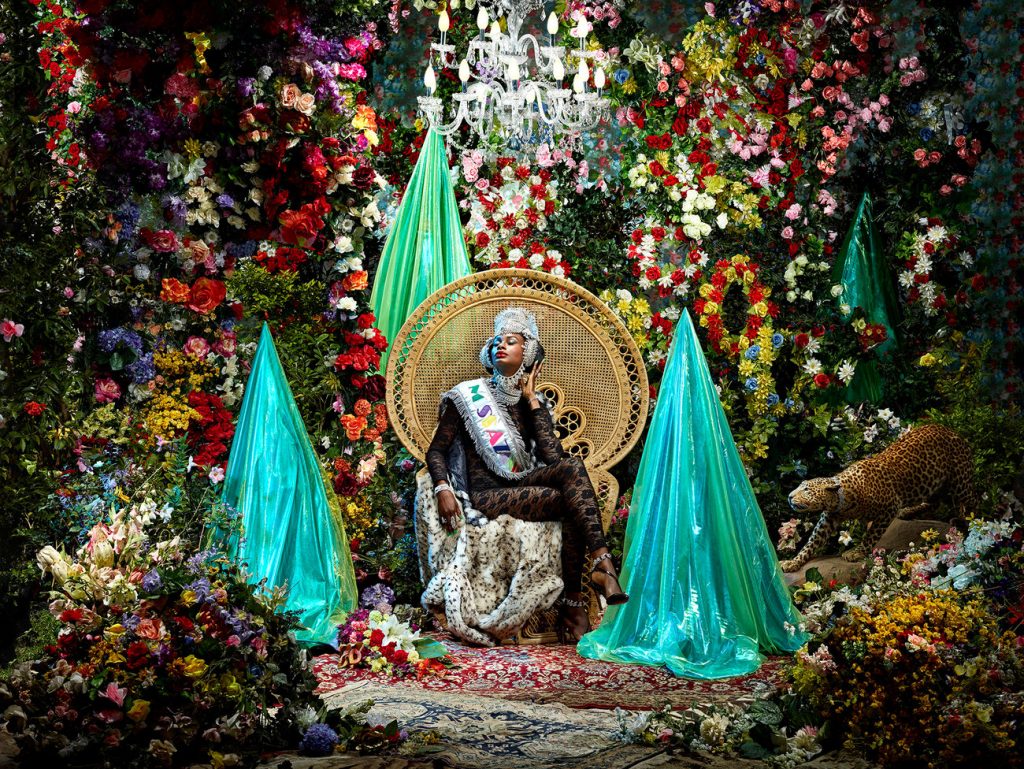
Athi-Patra Ruga, Miss Azania — Exile is waiting, 2015, South Africa, 11th African Biennale of Photography
Each week CAA News summarizes articles, published around the web, that CAA members may find interesting and useful in their professional and creative lives.
Paris on Alert as River Seine Continues to Rise and Louvre Shuts Basements
The iconic museum had to close its basement amid the flooding, in a bid to protect the priceless artworks on display there. (The Sun)
Morris Louis Painting Shown at Jewish Museum, This Time Right-Side-Up
After years of being hung incorrectly, a work by Morris Louis has now been flipped 180 degrees. (New York Times)
PHOTOS: Shaking Up the Idea of What Africa Looks Like
The 11th African Biennale of Photography explores topics of identity and possibility through the theme of “Afrotopia.” (NPR)
Two Rodin Shows Cast the Sculptor’s Legacy in Very Different Lights
In New York, two major Rodin shows are up at the Metropolitan Museum of Art and the Brooklyn Museum. (Hyperallergic)
Around the World in 14,000 “Do Not Disturb” Signs
Collector Edoardo Flores has amassed a collection of over 14,000 designs from more than 200 countries. (Atlas Obscura)
Languages Prioritized Over Arts in UK Government Teacher Plans
As the UK pushes for 75% of its students to study a foreign language, teaching time devoted to music, drama, art and design in secondary schools is set to drop. (Art Professional)