
CAA News Today
CWA Picks for October 2017
posted by CAA — October 05, 2017
Each month, CAA’s Committee on Women in the Arts selects the best in feminist art and scholarship.
Her Paris: Women Artists in the Age of Impressionism
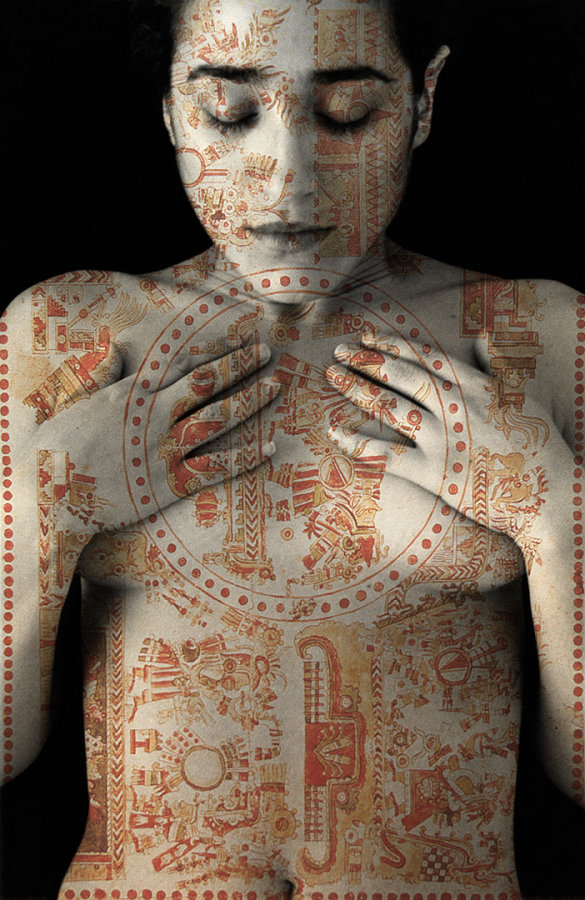
Tatiana Parcero, Cartografia Interior #43 , 1996. Lambda print and acetate. 43 x 31 in. Scripps College. Photo credit: jdc Fine Art.
October 22, 2017–January 14, 2018
Denver Art Museum
100 W 14th Avenue Pkwy
Denver, CO
Her Paris: Women Artists in the Age of Impressionism features works created by women in Paris from 1850 to 1900, including well-known artists Berthe Morisot, Mary Cassatt, and Rosa Bonheur, to lesser-known painters such as Anna Ancher and Paula Modersohn-Becker.
At a time of great cultural change, women were barred from attending the Ecole des Beaux-Arts, and it was socially unacceptable for a woman to be unaccompanied in public spaces. The exhibition at the Denver Art Museum traces “how, despite societal challenges women embraced their artistic aspirations and helped create an alternative system that included attending private academies, exhibiting independently, and forming their own organizations, such as the influential Union des Femmes Peintres et Sculpteurs.”
Her Paris is organized by the American Federation of Arts, curated by Laurence Madeline, independent curator and formerly chief curator of Fine Arts at the Musée d’art et d’histoire in Geneva, and curated locally by Angelica Daneo, curator of painting and sculpture at the DAM. Following its run at the DAM, it will travel to The Speed Art Museum in Louisville, Kentucky (February 17–May 13, 2018), and to its final destination at the Clark Art Institute in Williamstown, Massachusetts (June 6–September 3, 2018).
Sobey Art Award Exhibition
October 24–December 9, 2017
Art Museum at the University of Toronto
University of Toronto Art Center
15 King’s College Circle
Toronto, Ontario
The winner and four finalists for the prestigious Sobey Art Award will be on exhibit at the Art Museum at the University of Toronto from October 9 through December 9, 2017. The 2017 finalists for the award, promoting Canadian contemporary art, are Ursula Johnson, Jacynthe Carrier, Bridget Moser, Divya Mehra, and Raymond Boisjoky. The shortlisted artists question and challenge preconceived notions of diversity and identity and performance.
Installation and performance artist Ursula Johnson, of Mi’kmaw First Nation ancestry, often deploys a collaborative process in her place-based performances. “At this time when Canadians are celebrating and challenging the memory of nationhood, Johnson’s work embodies a considered, critical, yet generous lens through which multiple histories and communities may be considered,” juror Sarah Filmore writes.
Finalist Jacynthe Carrier uses photography and video to explore “the different relationships the body has with the environment and ways of conceptualizing and appropriating the land.” Bodies and objects are assembled as intervention in the landscape.
Bridget Moser, selected for the William and Meredith Saunderson Prize for Emerging Artists, hits “all the bewildering emotional registers of internet culture,” writes juror Sarah Robayo Sheridan. “Moser’s singular voice joins a sentinel species of millennial artists alerting audiences to the new paradoxes of commodity culture gone wild, and offers tragicomic remedy in excess of even the most bombastic late night infomercial.”
“Divya Mehra’s work is an astute example of how art can destabilize our collective and individual perceptions about race and gender,” Jenifer Paparo writes. Mehra explores diasporic identities, racialization, otherness and the construct of ‘diversity’ through a variety of mediums, addressing the effects of colonization and institutional racism re-contextualizing references found in hip hop, literature and current affairs.
The fifth finalist, Indigenous artist of Haida descent, Raymond Boisjoly’s practice “concerns the deployment of images, objects and materials, in and as, Indigenous art, using a reflexive approach to foreground the discourses that frame and delimit the work produced by Indigenous artists.” Boisjoly works in various media, from photography to installation, murals and video.
Revolution and Ritual: The Photographs of Sara Castrejón, Graciela Iturbide, and Tatiana Parcero
August 26, 2017–January 7, 2018
Scripps College
Ruth Chandler Williamson Gallery
251 E. Eleventh Street
Claremont, CA
Celebrating three Mexican woman photographers, Revolution and Ritual features work by Sarah Castrejón, Graciela Iturbide, and Tatiana Pacero. Through the work of the three women, the exhibit explores notions of Mexican identity and considers how photography has been transformed over the past century in Mexico and “responds to the artists’ interest in representing present and past, self and other.”
From documentary photography to more poetic photography, the women in the exhibition explore themes of war, indigenous culture, body and self. Castrejón’s images portray people under the intense pressure of war during the Mexican revolution, while Iturbide’s images reflect the daily life of Mexican Indigenous cultures, and Pacero places herself within the frame through self portraits that “incorporate spliced images of her body with cosmological maps and Aztec codices.
The exhibit is accompanied by a catalog with essays Latin American photography scholars John Mraz, Marta Dahó, and Esther Gabara. Revolution and Ritual is a part of Pacific Standard Time: LA/LA, exploring Latin American and Latino art in dialogue with Los Angeles.
Roots of “The Dinner Party”: History in the Making
October 20, 2017–March 4, 2018
Brooklyn Museum of Art
200 Eastern Parkway
Brooklyn, NY
Judy Chicago’s Dinner Party has been a touchstone for feminist thinking about representation, research, and the politics of identity in art history (and history, broadly conceived). Ten years ago the Elizabeth A Sackler Center for Feminist Art opened in the Brooklyn Museum; a triangular gallery, its centerpiece was, and remains, The Dinner Party. This has no doubt been a challenge for the Center’s curator, Catherine Morris—to know that any exhibition will alaways be read in dialogue with Chicago’s monumental work. Yet for an exhibition like this, the gallery’s organization is a boon. This exhibition plumbs Chicago’s process and the processes of her collaborators. Test plates, notebooks, preperatory drawings, and research documents that will be on display attest to the staggering amount of research and prototyping that went into creating The Dinner Party, a work that does its political work– visiblizing women’s contributions to art, science, myth, and all the rest.
Roots of “The Dinner Party”: History in the Making is part of A Year of Yes: Reimagining Feminism at the Brooklyn Museum, a yearlong series of exhibitions celebrating the 10th anniversary of the Elizabeth A. Sackler Center for Feminist Art.
Laura Aguilar: Show and Tell
September 16, 2017–February 10, 2018
Vincent Price Art Museum
1301 Avenida Cesar Chavez
Los Angeles, CA
This exhibition provides the first opportunity to view a diverse sampling from photographer Laura Aguilar’s complex and rich oeuvre. Raised in the San Gabriel Valley, where her family traces its roots back generations, Aguilar was dogged in using her camera to render herself and her various communities visible. You see this in the touching portraits of the women who populated the Plush Pony, a working-class Chicana/Latina lesbian bar. Or in the series “Latina Lesbians” series, wherein Aguilar’s subjects have added their own handwritten words to their portraits. Throughout the show one can follow the various ways Aguilar deploys her own body in her photographs—as bounded to national and ethnic lines of identification, as the repository for the unruly affects of depression, as something solid like a boulder. In one self portrait Aguilar stand between two small table-top displays of toys and catholic ephemera. A Pee-Wee Herman doll shares space with the Virgen de Guadalupe. These heterogenous objects, bespeaking both spirituality and pop culture, are emblematic of just a couple of the many thematics that can be drawn out from this remarkable retrospective.
The exhibition is accompanied by a catalog that is equally impressive, containing essays by: Mei Valenzuela, Christopher A. Velasco, Deborah Cullen, Amelia Jones, James Estrella, Tracy M. Zuniga, Stefanie Snider, Macarena Gómez-Barris, and Sybil Venegas, the curator of Laura Aguilar: Show and Tell and Aguilar’s former mentor.
News from the Art and Academic Worlds
posted by CAA — October 04, 2017

A T-shirt depicting the face of Eric Garner designed by Ocean Gao, now in the collection of the National Museum of African American History and Culture.CreditJustin T. Gellerson for The New York Times
Each week CAA News summarizes articles, published around the web, that CAA members may find interesting and useful in their professional and creative lives.
Museums Collecting Contemporary History
As history unfolds in the present, curators at institutions such as the National Museum of African American History and Culture in Washington, DC, are committed to collecting and preserving materials from protests, marches, and other important cultural movements immediately. (Read more from The New York Times).
Bilingual Art Spaces in Los Angeles
Museums and galleries in Los Angeles work to become inclusive, bilingual environments, through creating programming, tours, wall text, and more in both Spanish and English. (Read more from The Guardian).
Be a Medici in 2017 (Virtually!)
ARTé: Mecenas is a new video game from Triseum where you play as a member of the Medici family in Renaissance Florence. This educational game was created to address the needs of the Texas A&M University’s art history department as a creative way to teach students about Renaissance art and patronage. (Read more from Hyperallergic).
Proposed Tax Plan and the Art World
Art world experts weigh in on what President Trump’s proposed tax reform plan would mean for the art market and museums if it is passed in Congress. (Read more from artnet).
Crowdfunding a Museum’s New Gallery
Horniman Museum and Gardens in London looks to crowdsourcing to fund the creation of the World Gallery, which will create space to display 3,000 anthropological objects that are currently in the museum’s storage. (Read more from The Art Newspaper).
A Close Look at the Archives
James Somers visits the New York Public Library’s archives, speaking with the archivists who work there. (Read more from The Village Voice).
A New Saint Laurent Museum
Fondation Pierre Bergé–Yves Saint Laurent opens in Paris: a new museum dedicated to the work of the influential fashion designer, Yves Saint Laurent, where visitors can visit a recreation of Saint Laurent’s studio. (Read more from Blouin Artinfo).
Art History Podcasts
Searching for something new to listen to? Salon recommends fourteen podcasts that cover art and art history. (Read more from Salon).
Art Journal Open Call for Essays and Artist Projects
posted by CAA — October 03, 2017
Submit to Art Journal Open
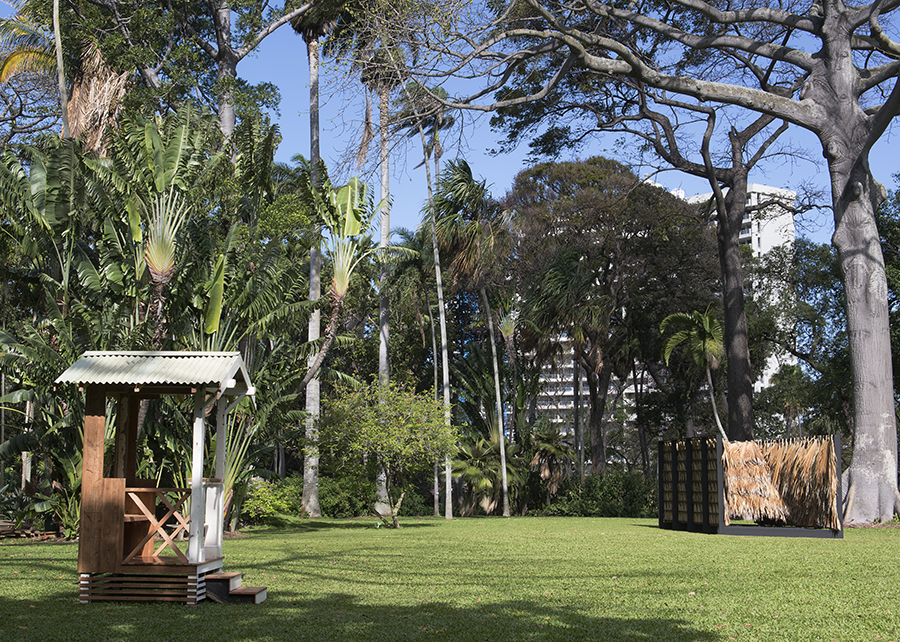
Recently in Art Journal Open, art historians Margo Machida and Jaimey Hamilton Faris spoke with artists Lynne Yamamoto and Sean Connelly about their sculptural works on view at the Honolulu Biennial. [image: Sean Connelly, Thatch Assembly with Rocks (2060s), 2017 and Lynne Yamamoto, Borrowed Time, 2017, installation view at Foster Gardens (artwork © Sean Connelly; artwork © Lynne Yamamoto; photograph © Lucretia Knapp)]
CAA invites submissions and proposals of artists’ projects, essays, conversations, and more to Art Journal Open, an open-access, independently edited, peer reviewed web journal that provides an agile counterpart to the quarterly Art Journal. Art Journal Open publishes original content by artists, scholars, teachers, archivists, curators, critics, and other cultural producers and commentators, with the commitment to foster new intellectual exchanges. Contributions focus on post-1945 material with an emphasis on the contemporary, although topics from throughout the twentieth-century may be considered. As an online publication, Art Journal Open prioritizes material that makes meaningful use of the web, such as multimedia formats and techniques. Rebecca K. Uchill serves as web editor of Art Journal Open, which publishes on a rolling basis.
Please send your submission to Uchill at art.journal.open@collegeart.org. Articles should be accompanied by images or time-based media elements that are to be published with the text; artists’ projects should also include the visual or multimedia material intended for publication. For proposals, please include a one-page written description and sample images. Full submission instructions can be found on Art Journal Open.
New in caa.reviews
posted by CAA — September 29, 2017
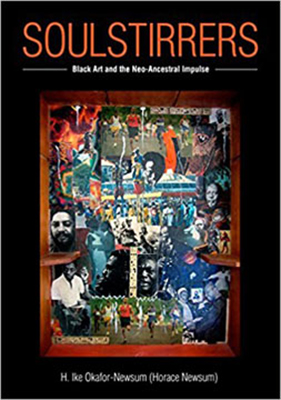
Megan Driscoll discusses SoulStirrers: Black Art and the Neo-Ancestral Impulse by H. Ike Okafor-Newsum (Horace Newsum). Read the full review on caa.reviews.
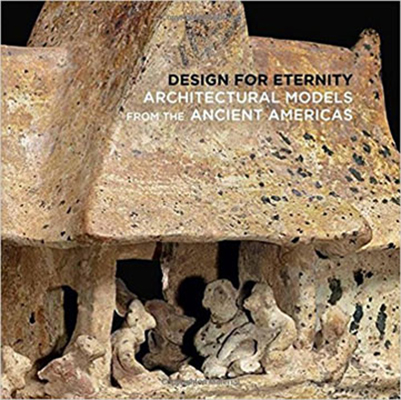
Andrew James Hamilton reviews Design for Eternity: Architectural Models from the Ancient Americas by Joanne Pillsbury, Patricia Joan Sarro, James Doyle, and Juliet Wiersema. Read the full review at caa.reviews.
Andy Campbell visits Come as You Are: Art of the 1990s, on view at the Blanton Museum of Art, Austin from February 21–May 15, 2016. Read the full review on caa.reviews.
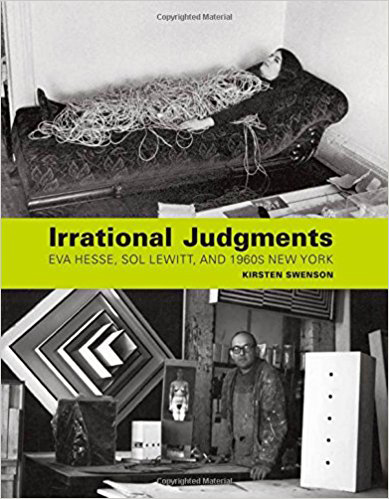
Victoria Reed reviews Irrational Judgments: Eva Hesse, Sol LeWitt, and 1960s New York by Kirsten Swenson. Read the full review at caa.reviews.
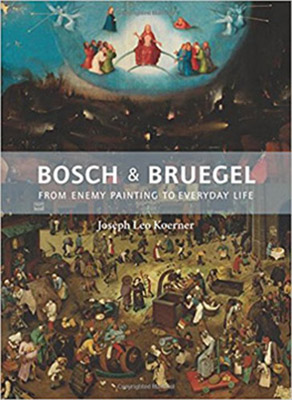
Matthijs Ilsink reads Bosch and Bruegel: From Enemy Painting to Everyday Life by Joseph Leo Koerner. Read the full review on caa.reviews.
News from the Art and Academic Worlds
posted by CAA — September 27, 2017
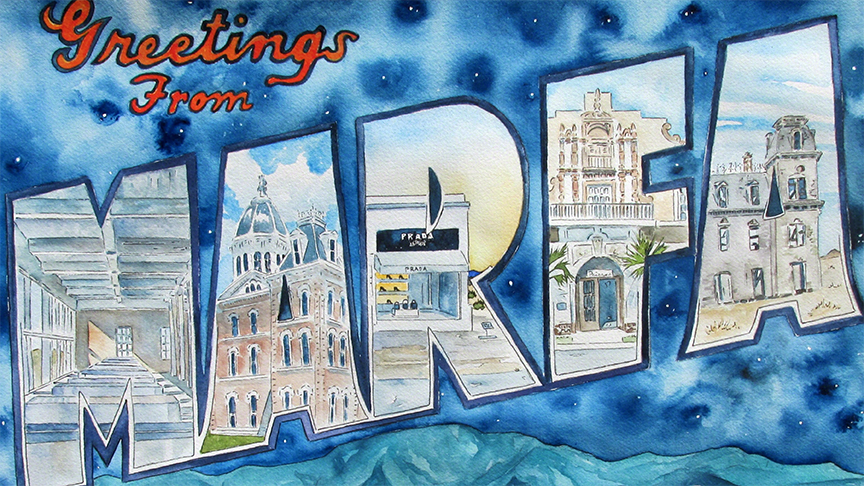
Scott Winterrowd
Greetings from Marfa, 2015
Ro2 Art
Each week CAA News summarizes articles, published around the web, that CAA members may find interesting and useful in their professional and creative lives.
Corrective curatorial practice? Sensationalizing sexuality to boost attendance figures? Can the most transgressive feminist art practices really be exhibited for reasons founded on the intrinsic value of the work alone?
Featuring feminist content previously held to be too graphic may raise more questions than anticipated. “Frieze Frame: Graphic Sex and Female Sexuality under Spotlight at Art Fair.” (Read more from The Guardian).
The New Age self-help movement meets art.
Proving again that our culture regards creativity as a path to the authentic self and a means to counteract the lack of inspiration provided by our daily life. Scott Indrisek, “Find Your Inner Donald Judd at Marfa’s New Art Camp for Adults.” (Read more from Artsy).
Civil Identity and Art
The exercise of cultural policy on a massive urban scale is being implemented and explored in cities besides Los Angeles with its mega-multi-exhibition Pacific Standard Time program. Consider the interviews conducted by Sophia Olivia Sanan in “A Tale of Cultural Policy in Four African Cities.” (Read more from This Is Africa).
Making art accessible to as many publics as possible.
The seeds of social practice and cultural policy in art education, related to the legacy of Jane Addams’s Hull House, are discussed by Lisa Lee, Director of the School of Art and Art History at the University of Illinois at Chicago, with the hosts of the Bad at Sports podcast. Episode 600: Lisa Lee. (Read more from Bad at Sports).
The world’s first painted feature film.
Receiving standing ovations at film festivals and with assistance from the Van Gogh Museum in Amsterdam, Loving Vincent incorporates almost 1,000 separate canvases to consider the artist’s last days. Eileen Kinsella, “How Two Directors, 125 Artists, and Some ‘Crazy-Rich’ Van Gogh Fans Made ‘Loving Vincent’ the World’s First Painted Feature Film.” (Read more from Artnet).
Pacific Standard Time Sampler.
The latest edition of Southern California’s multivenue exhibition project has debuted with plenty of press coverage. Here is an assessment of just one of the exhibitions comprising Pacific Standard Time LA/LA. Julian Kreimer, “Drastic Times.” (Read more from Art in America).
Why does art make you feel so much?
The answer resides in your brain as much as what is unfolding before your senses. The inquiry is increasingly a focus of neuroaestheticians now discovering answers about the fundamental attractions of creativity. Sarah L. Kaufman et al., “This Is Your Brain On Art.” (Read more from The Washington Post).
The birth of the art market.
An exhibition tracing the origins of the art market details how artists, dealers, and the buying public established the mechanisms that still characterize the contemporary system. “Exhibition Devoted to the Birth of the Art Market in the Dutch Golden Age Opens.” (Read more from artdaily).
Affiliated Society News for September 2017
posted by CAA — September 27, 2017
Leading subject association for art history in the UK announces new identity
Since July 2017, the leading subject association for art history in the United Kingdom, the Association of Art Historians, has been known as the Association for Art History. The change of name and new identity mark the beginning of a new era for the Association, following a review of its role in shaping the future for art history.
The Association’s mission since its foundation in 1974 has been to champion art history for all. Working in partnership with London-based agency Spencer du Bois to build upon this original ethos, the new identity restates their role as advocates for art history.
The new graphic identity feeds into their wider campaigning and audience development work to increase awareness, understanding, and engagement with art history, particularly in education. Highlights from their education campaign and 2018 program will be announced this autumn. Their ambition is to encourage people across the UK to recognize the ways in which learning about art history offers a unique insight into the world: to encourage people to think differently; to see differently.
Pontus Rosén, CEO of the Association for Art History, states, “Our strength as the national subject association for art history relies on how we express ourselves to new and existing audiences. The name change and rebrand demonstrates our commitment to be more visible and vocal for the subject.”
Christine Riding, Chair of the Association, said, “In 1974 we were radical in our approach. We wanted to change the way people perceived art history, we dared to do things differently. For over 40 years we have championed a broad and inclusive art history for the many not the few. Our ethos has always been one of inclusivity and our new identity reinforces that inclusivity.”
More details can be found on the new website.
Alliance for Arts in Research Universities (A2ru)
The Alliance for the Arts in Research Universities (a2ru) is pleased to announce the 2017 a2ru National Conference, hosted by Northeastern University with additional conference events throughout hosted by Boston University, Massachusetts Institute of Technology, and Tufts University, November 1-4, 2017.
Arts in the Public Sphere: Civility, Advocacy, and Engagement will use the city of Boston as a starting point for discussion and engagement. As a 21st century global city, Boston embodies many of the issues that drive diverse contemporary cultural contexts. It supports a rich and continually evolving sense of civic realms, and is home to leading arts, educational, medical, industrial and corporate entities invested in innovative modes of research, practice and civic participation. There is also clear recognition that the ‘public sphere’ is not confined to large metropolitan regions. Creating dynamic communities that engage and extend beyond traditional boundaries—in both virtual and material ways—remains a growing challenge and the work before us.
The 2017 conference will include working groups, panels, and presentations from representatives from over 50 institutions across the world. Keynotes and conversations will feature thought leaders including Jamie Bennett (ArtPlace America), Jeremy Liu (PolicyLink), Peter Galison (Harvard University), Rick Lowe (Project Row Houses and the University of Houston), and Maria Rosario Jackson (The Kresge Foundation). Plenary panels addressing issues related to funding, higher education, and arts as research will include Kent Devereaux (New Hampshire Institute of Art), Jason Schupbach (Arizona State University), Steven Tepper (Arizona State University), Elizabeth Hudson (Northeastern University), and Julia Smith (Association of American Universities), and E. San San Wong (Barr Foundation).
Registration is open now through October 25. To register and for more information, please visit the conference website.
Society for Photographic Education
Society for Photographic Education’s 55th Annual Conference, Uncertain Times: Borders, Refuge, Community, Nationhood, will take place March 14, 2018, in Philadelphia, PA. Connect with 1,600 artists, educators, and photographers from around the world for programming that will fuel your creativity – four days of presentations, industry seminars, and critiques to engage you! Explore an exhibits fair featuring the latest equipment, processes, publications, and photography/media schools. Participate in one-on-one portfolio critiques, and informal portfolio sharing. Other highlights include a print raffle, silent auction, mentoring sessions,
film screenings, exhibitions, receptions, a dance party, and more!
Registration will open on November 1, 2017.
The most recent number of SECAC’s annual journal, Art Inquiries (formerly the SECAC Review), has been published. The current issue includes book and exhibition reviews, feature articles on Gustave Caillebotte, Andy Warhol, Robert Irwin, and Greek vase painting, and an interview with sculptor Duane Paxson whose work is featured on the cover.
The 73rd Annual SECAC Conference, hosted by the Columbus College of Art & Design, will be held in Columbus, Ohio, October 25 through 28, 2017. Keynote speakers are Heidelberg Project founder Tyree Guyton and the project’s Executive Director Jenenne Whitfield. Off-site events during the conference will include a Thursday evening Open House at CCAD featuring the SECAC 2017 Juried Exhibition, a Friday evening reception at the Pizzuti Collection, and extended hours at the newly renovated Columbus Museum of Art.
TIAMSA – The International Art Market Studies Association
After a fantastic response to our call for papers, TIAMSA’s first international conference on ‘Art Fairs’ united 28 speakers from countries worldwide who explored this year’s theme in six sessions. Held at Sotheby’s Institute of Art in London on July 13-15, 2017, the conference featured two keynotes, one by Sophie Raux (Université Lumière – Lyon 2), who provided fascinating insights into the early history of art fairs in the 16th and 17th centuries, the other by Noah Horowitz (Director Americas / Member of the Executive Committee, Art Basel), who responded to questions from Olav Velthuis and the audience. The conference featured six sessions addressing subjects such as “Standards of Quality and Vetting,“ “Historical and Geographic Contexts” or “Biennales and Nascent Fairs.” Carried by many excellent papers, the event not only showed that the subject of the art fair still offers many facets that deserves further exploration; the conference was also marked by enthusiasm, lively debate, and intensive networking!
The conference was preceded by three memorable events open to TIAMSA members, namely an exploration of the Agnew’s Archive at the National Gallery, London with Alan Crookham (Head of NG Research Centre); a guided tour with Highlights of the National Gallery’s Collection History with Susanna Avery-Quash (Curator at the NG); and an inside tour of Thaddaeus Ropac’s new London gallery, with Polly Gaer, Gallery Director.
We were also happy that many of our members attended our second Annual General Meeting, held just before our conference. We looked back on our first year, fine-tuned our ‘modus operandi’, and elected and cordially welcomed four new board members: Kim Oosterlinck (University of Bruxelles), Iain Robertson (Sotheby’s Institute), Olav Velthuis (University of Amsterdam) and Filip Vermeylen (University of Rotterdam), and also made plans for next year’s conference.
The American Society for Aesthetics
The American Society for Aesthetics is pleased to announce several ASA meetings and co-sponsored conferences in 2018:
ASA MEETINGS:
ASA Pacific Meeting, Asilomar Conference Center, Pacific Grove, CA, April 4-6, 2018
DEADLINE: November 1, 2017
Travel support: The Division will have $1000 from the Irene H. Chayes Travel Fund to support persons with no other access to travel funds.
ASA Eastern Meeting, Philadelphia, April 20-21, 2018
DEADLINE: January 15, 2018
Travel support: The Division will have $1000 from the Irene H. Chayes Travel Fund to support persons with no other access to travel funds.
ASA Rocky Mountain Division Meeting, Santa Fe, NM, July 6-8, 2018
DEADLINE: March 1, 2018
Travel support: The Division will have $1000 from the Irene H. Chayes Travel Fund to support persons with no other access to travel funds.
ASA 76th Annual Meeting, Toronto, ON, Canada, October 10-13, 2018
DEADLINE: January 15, 2018
Travel support:
- All full-time students with papers or panel presentations accepted for the program receive a travel grant to attend the meeting.
- Three (3) Irene H. Chayes Travel Grants will be available for this meeting for presenters with no other access to travel funds.
ASA CO-SPONSORED CONFERENCES:
The Philosophy of Portraits, University of Maryland, April13-14, 2018
DEADLINE: November 30, 2017
Travel support: Two awards of $500 each for ASA student members with accepted papers
Summer Seminar: Beauty and Why It Matters, University of British Columbia, July 9-27, 2018
DEADLINE: January 2018 – CFP TBA
Travel support: $2700 stipend
For the most up-to-date information on all ASA meetings and co-sponsored conferences, look at the bottom of any page on our website and look for “Meetings.” Click “more” to see the complete list. There you will find schedules, CFPs, on-line registration, and other information.
PAD invites submissions for the Fall 2018 issue of the journal, Public Art Dialogue. The issue’s theme will be “Public Art as Political Action,” and the deadline for submissions is March 1, 2018. Though a resurgence in political art and protest brings contemporary art to the forefront, this issue also hopes to look at historic precedents for contemporary public protest art by revisiting the ephemera, public actions, and protest art of the past. Public Art Dialogue welcomes submissions from art historians, critics, artists, architects, landscape architects, curators, administrators, and other public art scholars and professionals, including those who are emerging as well as already established in the field. See the call for papers.
Public Art Dialogue hopes to see many CAA members at the Annual Conference in February. PAD’s sponsored session will be on the topic of “Teachable Monuments,” chaired by Sierra Rooney and Harriet Senie.
Association of Art Museum Curators & AAMC Foundation
AAMC & AAMC Foundation is pleased to announce new programming.
The Networked Curator workshop, held February 7 – 9, 2018 at the Getty Center in Los Angeles, is open for applications. Organized by the AAMC Foundation and the Roy Rosenzweig Center for History and New Media (RRCHNM) at George Mason University, this three-day workshop provides participants with an expanded digital vocabulary, and assists in cultivating resources available for organizing, sharing, and publishing research.
Applications are now open for the AAMC Foundation Engagement Program for International Curators for the 2017-2019 class. The Program awards three non-US based curators for a two-year period, paired with three US Liaisons for the first year, in an effort to foster international relationships among curators. Both International Awardees and US Liaisons are offered numerous benefits throughout the Program.
The Samuel H. Kress Foundation and AAMC Foundation Affiliated Fellowship at the American Academy in Rome is now open for 2018-2019 applications. The Fellowship provides one curator with essential funding to further develop projects requiring research in Italy. The Awardee will receive travel funding for a four-week stay at the American Academy in Rome during the one-year Fellowship.
Save the Date: AAMC & AAMC Foundation Annual Conference & Meeting, May 5 – 8, 2018 in Montréal, Canada.
Society of Architectural Historians (SAH)
The Society of Architectural Historians will present the SAH Awards for Architectural Excellence at its 8th Annual Awards Gala on Friday, November 17, at The Racquet Club of Chicago. SAH will honor architect Ralph Johnson, FAIA, Perkins + Will, with the Award for Design, Planning and Sustainability, architects Sharon Johnston, FAIA and Mark Lee, Johnston Marklee, with the Award for Public Engagement with the Built Environment, and Col. Jennifer N. Pritzker, IL ARNG (Ret), TAWANI Foundation, with the Award for Architectural Stewardship. Purchase tickets.
SAH seeks partners to organize tours of the built environment for our youth-oriented American Architecture and Landscape Field Trip Program. Created to provide opportunities for underserved students from the third grade through high school, SAH offers grants to not-for-profits to organize tours for young people on the history of architecture, parks, gardens, and town/city planning.
SAH is accepting applications for the H. Allen Brooks Travelling Fellowship. This award will allow a recent graduate or emerging scholar to study by travel for one year. The fellowship is not for the purpose of doing research for an advanced academic degree, but instead is intended for study by travel and contemplation while observing, reading, writing, or sketching. The deadline to apply is October 1, 2017.
Applications for the SAH Membership Grant for Emerging Professionals are open. This award provides emerging scholars with a one-year SAH membership and is intended for entry-level college and university professors and other new professionals engaged in the study of the built environment. The deadline to apply is October 1, 2017.
The Society is accepting applications from junior and senior scholars for the Edilia and François-Auguste de Montêquin Fellowship. This award provides support for travel related to research on Spanish, Portuguese, or Ibero-American architecture. The deadline to apply is October 1, 2017.
Association of Historians of American Art (AHAA)
AHAA invites you to save the date for its biennial symposium, October 4-6, 2018, to be held in Minneapolis-St. Paul, MN, and sponsored by the University of Minnesota, the Minneapolis Institute of Art, and the Minnesota Museum of American Art. Sessions and collaborations will be announced soon. To learn more about past symposia, please see the Symposia Archive under the Programs tab at ahaaonline.org.
Amidst the ongoing and very robust conversation on the American Art listserv (AmArt-L) regarding the public controversy surrounding monument and memorial culture, AHAA seeks to clarify its relationship to the listserv and its archives, given their shared constituencies. AHAA is not affiliated with the AmArt-L, which is moderated by Karen Bearor and the Florida State University (FSU) and is archived and searchable to subscribers. Please note that the AHAA refrains from making public statements on behalf of its membership, just as the viewpoints expressed on AmArt-L pertain to the individuals posting to the list.
The Midwest Art History Society is pleased to announce its new officers: President Heidi Hornik, Baylor University; Secretary Paula Wisotzki, Loyola University Chicago; Treasurer Valerie Hedquist, University of Montana; and Past President Henry Luttikhuizen, Calvin College.
The Society reports its 2017 Graduate Student Presentation Award went to Katherine Brunk Harnish, Ph.D. candidate, Washington University, St Louis, for her paper “Painting Ephemera in the Age of Mass-Production: American Trompe l’Oeil Painting and Visual Culture in the Late Nineteenth Century.”
And Rory O’Dea, Assistant Professor, Parsons School of Design, The New School University, received MAHS’s 2017 Emerging Scholar Distinguished Presentation Award for her paper, “Documentary Fictions: Robert Smithson and Pierre Huyghe’s Voyages into the Unknown.”
The MAHS 2018 Annual Conference will take place April 5-7, 2018 in Indianapolis, Indiana, hosted by the Indianapolis Museum of Art and the Eiteljorg Museum of American Indians and Western Art.
Art Historians of Southern California
Teaching and Writing the Art Histories of Latin American Los Angeles, October 6, 2017 at the Getty Center 10:00AM-3:00PM.
Inspired by the Getty’s region-wide art initiative Pacific Standard Time: LA/LA, this symposium considers the abundance of new knowledge generated by the PST LA/LA exhibitions, and how it will impact curricula, pedagogy, and future scholarship
Charlene Villaseñor Black, UCLA, Keynote Speaker
“Decolonizing Art History: Institutional Challenges and the Histories of Latinx and Latin American Art”
Erin Aldana, University of San Diego
Using the exhibition “Xerografia: Copyart in Brazil, 1970-1990” as a case study
Elizabeth Cerejido, University of Florida, Gainesville, FL
Félix González-Torres as a (Post)Latino Artist
Karen Mary Davalos, University of Minnesota, Twin Cities
Chicana/o Remix: Rethinking Art Histories and Endgames
Carolyn J. Schutten, University of California Riverside
“Voids of the Aggregate: Materializing Ethnic Mexicans in Mission Revival and Spanish Colonial Revival Architecture in Southern California”
Catherine Spencer, University of St Andrews, Scotland
Networked Histories: Systems Art in ‘Latin America’Teaching and Writing the Art Histories of Latin American Los Angeles
Gina McDaniel Tarver, School of Art & Design, Texas State University
Recollecting and Connecting Overlooked Art of Cali/Cali: Alicia Barney and Women Environmental Artists of California
Report on the 11th International IAWIS/IAERTI Conference in Lausanne, Switzerland (UNIL), 10-14 July 2017
After Amsterdam, Zurich, Ottawa, Dublin, Claremont, Hambourg, Philadelphia Paris, Montréal and Dundee, the Eleventh Triennial Conference on Word and Image Studies took place by the Leman Lake at the University of Lausanne in Switzerland in early July. Three hundred delegates convened to Lausanne for a very successful week devoted to the theme of Reproductions/reproducibility in Word and Image studies and in the humanities at large.
The conference was beautifully organized by Executive Board Member Philippe Kaenel and his local team and met with great success. Aside from parallel sessions and stimulating plenary lectures (by Bernard Vouilloux and Véronique Plesch), three exhibitions and one film showing (with an introductory speech by Alain Boillat) were coordinated by the host university. Following the IAWIS conference tradition, various excursions were proposed to the delegates half-way through the week allowing the delegates a full day’s rest and cultural exchanges.
IAWIS/IAERTI 30th Birthday
The conference in Lausanne was also the opportunity to celebrate the Association’s thirty years of existence and pay homage to its founding members as well as to its former and current presidents and vice-presidents. The general Assembly meeting and Banquet dinner were an opportunity to pay tribute to the achievement of eminent Word and Image scholars, Véronique Plesch (President), Professor of Art History at Colby College (Waterville, Maine, USA), and Catriona Macleod (vice-president), Professor in Germanic Studies, (University of Pennsylvania, Philadelphia) as they were both stepping down from their post after having dutifully and successfully served the association for nine years. Their commitment to the advancement of word and image studies and the development of the Association was highly praised by everyone present. No doubt their leadership will be sorely missed but they will remain actively involved in the association as members of the advisory board.
Announcement of new Board Members
The general Assembly Meeting in Lausanne allowed the attending members to elect a new president and a new vice-president/secretary for IAWIS, Liliane Louvel, Professor Emerita at the University of Poitiers (France) and Laurence Rousssillon-Constanty, Professor at the University of Pau et des Pays de l’Adour (France).
Professor Liliane Louvel is an outstanding scholar in Word and Image Studies and has widely contributed to the development of the field of Word and Image studies in France. Her most popular book, L’Oeil du Texte, published in 1998 (Toulouse, PUM) has for many years become standard reading for Word and Image scholars in France and the book has recently been published in English. She has extensively published on modern Literature and painting and edited many books. She has also served in several associations for the development of English Studies in France (SAES) and Europe (ESSE).
Professor Laurence Roussillon-Constanty works on the relation between text and image in the Victorian period and has published a monograph on Dante Gabriel Rossetti’s painting and poetry (2008). She has been a IAWIS enthusiast for many years and has chaired several sessions in previous IAWIS conferences. Her interest is interdisciplinary and her latest research focuses on science and art relations in John Ruskin’s writing.
Forthcoming Publication:
Riddles of Form: Exploration and Discovery in Word and Image, edited by Keith Williams, Sophies Aymes-Stokes, Jan Baetens, and Chris Murray (forthcoming at Brill, 2017)
This publication celebrates actual mutually enriching dialogues between science, literature, and art. The essays in this volume are based on papers presented at the Tenth Triennial Conference on Word and Image Studies, “Riddles of Form: Exploration and Discovery in Word and Image”, which was held from 11-15 August 2014 at the University of Dundee, Scotland, hosted by the Scottish Word and Image Group (SWIG).
Call for Proposals for Hosting the next triennial Conference
The IAWIS/AIERTI Executive Board is soliciting proposals from potential hosts for the 2020 and the 2023 versions of our international triennial conference.
Please submit a 1-page description of the conference theme, along with a few paragraphs providing information on the venue and its facilities for hosting ~250 participants, your organizing team, your strategy for maintaining English-French bilingualism, possible excursions, and possible sources of funding. Deadline: December 1 2017.
Email: Liliane Louvel liliane.louvel@wanadoo.fr and Laurence Roussillon-Constanty laurence.roussillon-constanty@univ-pau.fr
FATE (Foundations in Art: Theory and Education)
Episode 13 and 14 of Positive Space, FATE’s monthly podcast are now available.
[7.12.17] Victoria Hoyt, Instructor at Metropolitan Community College & FATE Shout Out Award Winner, discusses practical take aways from the FATE conference, strategies for encouraging the habit of observation, self reflection, the value of mid-term evaluations & responding to a wide range of diverse backgrounds in the community college classroom.
[8.09.17] Amy Reidel, faculty member at both St. Louis Community College and Saint Louis University & FATE Shout Out Award Winner, discusses happiness, community engagement, privilege & practical tips for projects that encourage critical thinking.
Upcoming for CAA 2018: An Inclusion and Empathy Roundtable discussion and podcasting session will be hosted during FATE’s Business Meeting at the conference: Feb 22, 12:30 – 1:30p, Rm 402A, LA Convention Center.
FATE’s CAA Affiliate representative, Naomi J. Falk, along with Richard Moninski, will co-chair FATE’s Affiliated Society session, entitled, “Let’s Dance, But Don’t Call Me Baby: Dialogue, Empathy, and Inclusion in the Classroom and Beyond.” Feeling welcome, acknowledged, and heard encourages learning. Fostering inclusiveness and empathy on behalf of minority students legitimizes perspectives. How do we build trust and empathy between faculty, students, peers, and others in our classrooms and communities? How do we create a welcoming and inclusive environment? What has worked? What has gone terribly wrong? Where do we go from here? Examples of readings, projects, tools, and exercises for building inclusive, encouraging, and productive dialogues are all of interest. More info? Please contact: Naomi J. Falk, naomijfalk@gmail.com
Society of Historians of Eastern European, Eurasian, and Russian Art and Architecture (SHERA)
SHERA is sponsoring a panel at the upcoming 49th Annual ASEEES Convention that will take place at Chicago Marriott Downtown Magnificent Mile on 9-12 November 2017. SHERA Membership meeting is scheduled for November 11, 12-1:30 pm, 4th, Armitage Room, followed by Membership dinner at 8 pm. SHERA is pleased to announce a call for submissions for the newly-established SHERA Emerging Scholar Prize. The award, to be bestowed at the SHERA meeting during ASEEES Convention, aims to recognize and encourage original and innovative scholarship in the field. For the 2017 prize, articles published between September 30, 2016 and September 30, 2017 would be eligible. Applicants must have published an article in a scholarly print or online journal or museum print or online publication within the preceding twelve-month period.
For the 2017 prize, articles published between September 30, 2016 and September 30, 2017 would be eligible. Additionally, applicants are required to have received his or her PhD within the last 5 years (2012 or thereafter for the 2017 prize) and be a member of SHERA in good standing at the time that the application is submitted. The winner will be awarded $500 and republication (where copyright allows) or citation of the article on H-SHERA. Applications should include a CV including contact information (email, mailing address, and telephone) and a copy of the English-language article with header/colophon of the journal or catalogue together with a brief abstract. Applications should be sent to shera.prizes@gmail.com no later than October 15, 2017.
A Seminar Introduces a New Design Program in Bangkok
posted by CAA — September 26, 2017
Since 2015, CAA’s International Committee has put out a call for papers on international topics in the visual arts to be published by CAA. Brian Curtain, an art historian and curator based in Bangkok, submitted the following article to Pearlie Rose S. Baluyut, a member of the International Committee. www.briancurtinbangkok.com
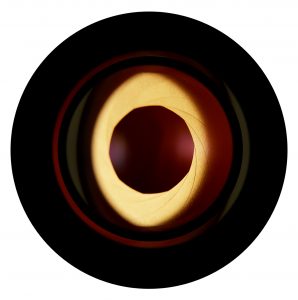
Piyatat Hemmatat, from the series 3rd Eye Trilogy: The New Dawn, 2013, C-print, artist proof, dimensions variable (artwork © Piyatat Hemmatat; photograph provided by the artist)
The Department of Communication Design (CommDe) of the Faculty of Architecture, Chulalongkorn University, Bangkok, will inaugurate a new MA program (CommMa) in 2018, to be led by Dr. Juthamas Tangsantikul, the current Deputy Director of CommDe. CommMa will be a practice-based research program with a focus on Southeast Asia. An introductory seminar and hands-on workshop, The Ghost in the Machine, was held on July 13, 2017, to present the program’s core methods and interests: the study of regional visual and material cultures as a means to explore questions of indigeneity and the critical potential of comparisons with other contexts. The seminar title evokes the relationship of animism and modernity—indeed, a colonial distinction. Participants conjured the local legacies of this relationship and also considered the metanarratives of politics, representation, and the fictive.
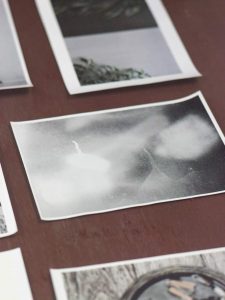
Participants’ works from Ghost in the Machine workshop (photograph by M. A. Trusler)
The featured speakers at the seminar, Dr. Clare Veal, MA Asian Art Histories lecturer at LaSalle College of the Arts in Singapore, and Thai photographer Piyatat Hemmatat share an interest in Walter Benjamin’s understanding of photography as an “optical unconscious,” which can capture and shape what can be thought but is normally beyond perception. Veal’s research on photographic histories and Hemmatat’s ethereal visions quite literally slow down our consumption of photography, the former by tracing varieties of meaning in what can be framed and the latter by providing expanses of detail.
Veal’s lecture moved beyond the paradigmatic examples of the infamous “Cottingley Fairies” photographs—early twentieth-century works displaying images of fairies that Sir Arthur Conan Doyle contended proved the existence of the supernatural—to an account of how desires and ideologies haunt colonial-era photography, including both landscape and figural representations. The context of Siam/Thailand allows for particular consideration of the performative aspects of photography. Photography was introduced in Siam by King Mongkut Rama IV (1851–1868), who thereby broke a longstanding taboo on visual representation of royalty outside idealized and conventionalized mural types. Veal deftly noted an exchange between the indexical and iconic with this introduction: in a word, a representation of something comes to stand for something. Here, the locating of a “Thai” tradition of cultural beliefs proves less compelling than the noting of shifting regulations of representation, ones that have become exceptionally aggressive in the recent years of military rule.
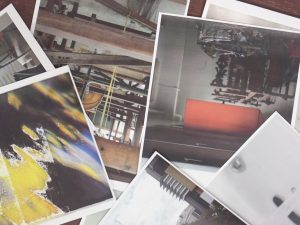
Participants’ works from Ghost in the Machine workshop (photograph by M. A. Trusler)
Participants’ works from Ghost in the Machine workshop (photograph by M. A. Trusler)
Hemmatat’s alchemical understanding of photography was complementary to Veal’s insights. His practice explores the deceptively illusionistic image in abstraction and representation as well as the suggestion that systems are at work within nature. While allowing for the captivating, seductive qualities of photography, his images are rooted in both the artist’s eye and experimental photographic techniques. The diversity of Hemmatat’s oeuvre suggests a restless inquisitiveness. He is currently making sculptures inspired by Hindu and Christian icons, dovetailing three-dimensional works with his longstanding engagement with photographs-as-objects.
Hemmatat presented objects for a mysterious cabinet of curiosities without telling the participants what they were: such things as volcanic Mayan glass, a camera lucida, and washi paper, a Japanese paper purported to last thousands of years. Inspired by the seemingly esoteric implications of these objects and Veal’s sharp critical guidance, participants then set out to take photographs in the immediate vicinity of the seminar. Images of graffiti, air vents, and architectural details were shaped with enigmatic auras, and subsequent group discussion debated the vagaries of perception and the relationship between the recognizable and the illegible as well as the concrete and the abstract.
Staff Accountant
posted by CAA — September 25, 2017
Please note: This position has been filled. Thank you.
College Art Association
50 Broadway, Fl 21
New York, NY 10004
Date posted: September 20, 2017
Position Title: Staff Accountant
Supervisor: Chief Financial Officer
Full-time, salaried with benefits.
Founded in 1911, the College Art Association (CAA) is the preeminent international leadership organization in the visual arts, promoting the field through intellectual engagement, advocacy, programs and a commitment to the diversity of practices and practitioners. Each year, CAA offers an Annual Conference, publishes two scholarly journals and offers a variety of other programs. Visit CollegeArt.org for a complete description of programs and offerings.
CAA has more than 9,000 members worldwide. The majority of members are curators, art historians, scholars, visual artists and designers.
Responsibilities include:
- Managing day-to-day accounting functions, including but not limited to, accounts payable, accounts receivable and cash needs. Prepare and post journal entries.
- Month end closing.
- Reconciling monthly bank statements and credit card statements.
- Working with CFO and others to ensure timely and accurate financial information.
- Preparation of submission of biweekly payroll and retirement plan contribution submission Record related journal entries.
- Reviewing invoices for accuracy, approvals and general ledger account allocation.
Process weekly check run.
- Assisting in annual audit schedule reconciliation. Provide auditors with supporting financial information for Form 990.
Program Support:
- Works with Membership and IT department to resolve financial discrepancies in data processing.
- Coordinates with Publications department annual grant awards and payment requests. Maintains related financial records.
- Updates budget document, advises CFO of budget variances.
- Ensures CAA departments have necessary financial information.
- Assists Grants Manager with financial reporting.
- Works one week at CAA Annual Conference
HR Support:
- Administer bi-weekly TIAA CREF contributions, Transit check enrollment and employee medical care enrollment and payroll related deductions.
Required Qualifications:
- 4 year degree with a minimum of 21 credits college level accounting course work.
- Knowledge of accounting software, Microsoft Office and advanced Excel functions.
- Minimum of three years accounting experience. Not for profit experience preferred.
- Audit preparation experience.
- Experience with budgeting and monitoring variances.
- Ability to organize work, follow through on details, and meet deadlines. Must be able to communicate clearly and regularly about goals.
- Must be able to reconcile reports from external sources to internal reports.
- Ability to multi-task, prioritize and work efficiently
- Flexibility and initiative.
- Excellent writing and oral skills.
Interested individuals should submit a cover letter, resume and salary requirements to Teresa Lopez, Chief Financial Director via email (with “Staff Accountant” and applicant’s last name in subject line) at tlopez@collegeart.org. No telephone inquiries will be accepted. Applications accepted until all positions are filled. Please include the names and contact information for three references who can speak to your ability to perform the tasks requested.
The College Art Association is an equal opportunity employer and considers all candidates for employment regardless of race, color, sex, age, national origin, creed, disability, marital status, sexual orientation, gender expression or political affiliation.
A Phone Call with Jon Parrish Peede, the New Chair of the NEH
posted by CAA — September 25, 2017
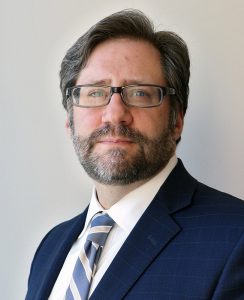 Last week, I had a chance to participate in a conference call with Jon Parrish Peede, the new acting chair of the National Endowment for the Humanities (NEH). He assumes the role after the resignation of William D. Adams in May of 2017, who stepped down concurrent with the release of the White House FY2018 budget that called for eliminating the NEH. The call with Peede was organized by the National Humanities Alliance (NHA), and included leaders of other humanities organizations.
Peede, who was appointed by President Trump in late July, is the brother of a senior member of Vice President Mike Pence’s staff.
During the call, Peede talked about his closeness to Dana Gioia, the George W. Bush-appointed head of the NEA, and proudly referred to himself “a product of rural America,” stressing the need for having people from all 50 states on NEH panels.
When asked about his vision for the NEH, he mentioned that humanities could be funded and supported by other organizations, such as colleges, foundations, and individuals. He offered support for grant selection being “grounded in rigor” and wanted grantees to talk about “outcomes and not activities.”
Peede was asked why the public should care about the NEH and stated that the agency’s role is to preserve records and to place them in context, an important position for a federal agency, but one which does not necessarily address the larger idea of the impact of humanities in society. He did state, “a life in the humanities is a life well lived.” In response to a question about what he would do if the NEH received an increase in funds, Peede was not sure, but opined that he might not offer more grants as it may “dilute the value” of other grants.
Unfortunately, he was not asked how he felt about the President’s desire to zero out funding for the NEH or NEA, and what he was planning to do about it. For many in the arts and humanities, this is the pressing issue. Currently, the NEH is approved by the House Appropriations Committee for $145 million in funding for FY 2018, a $4.8 million drop from FY 2017. But the funding is not secure and certain. Hopefully on our next call, Peede will be able to address this important question.
Hunter O’Hanian
Executive Director
New in caa.reviews
posted by CAA — September 22, 2017
Arden Decker visits Si tiene dudas . . . pregunte: Una exposición retrocolectiva de Mónica Mayer / When in Doubt . . . Ask: A Retrocollective of Mónica Mayer, which was on view at Museo Universitario Arte Contemporáneo, Universidad Nacional Autónoma de México, Mexico City, from February 6, 2015—July 31, 2016. Read the full review at caa.reviews.
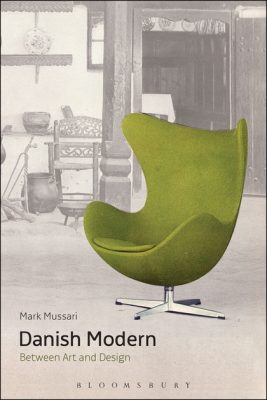
Maggie Taft discusses Danish Modern: Between Art and Design by Mark Mussari. Read the full review at caa.reviews.
Michael D. Carrasco reads Reconsidering Olmec Visual Culture: The Unborn, Women, and Creation by Carolyn E. Tate. Read the full review at caa.reviews.
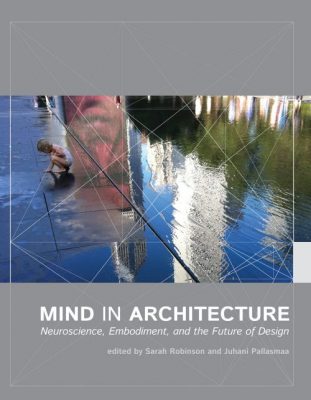
Mark Alan Hewitt reviews Mind in Architecture: Neuroscience, Embodiment, and the Future of Design, edited by Sarah Robinson and Juhani Pallasmaa. Read the full review at caa.reviews.