
CAA News Today
Committee on Diversity Practices highlights for March/April 2015
posted by CAA — March 09, 2015
The CAA Committee on Diversity Practices highlights exhibitions, events, and activities that support the development of global perspectives on art and visual culture and deepen our appreciation of political and cultural heterogeneity as educational and professional values. Current highlights are listed below; browse past highlights through links at the bottom of this page.
March/April 2015
Wael Shawky: Cabaret Crusades
MoMA PS1
Long Island City, New York
January 31, 2015–August 31, 2015
“For his first solo exhibition at a major American museum, Wael Shawky presents his epic video trilogy that recounts the history of The Crusades from an Arab perspective. Inspired by The Crusades Through Arab Eyes by Lebanese historian Amin Maalouf, Shawky’s videos chart the numerous European campaigns to the Holy Land, starting from the early Crusades from 1096–1099 A.D. that are depicted in CABARET CRUSADES: THE HORROR SHOW FILES (2010) and the First and Second Crusades from 1099–1145 A.D. in CABARET CRUSADES: THE PATH TO CAIRO (2012). The MoMA PS1 exhibition will feature both works and debut the third and final video from the series, CABARET CRUSADES: THE SECRETS of KARBALA.
Based on accounts from primary sources, Shawky complicates the traditional civilization clash narrative by describing scenes that refute common notions of the era. Shawky highlights both the secular motivations of the European fighters and the competition and violence among Arab leaders. Using 200-year-old marionettes from a collection in Italy for the first installment, and custom-made ceramic figures for the second, Shawky says the puppets help create a “surreal and mythical atmosphere that blends drama and cynicism, telling a story of remote events that could hardly be more topical today. The puppets’ strings clearly refer to the idea of control. The work also implies a criticism of the way history has been written and manipulated.” (http://momaps1.org/exhibitions/view/394)
More information: http://momaps1.org
After Midnight: Indian Modernism to Contemporary India 1947/1997
Queens Museum
Queens, New York
March 8, 2015–June 28, 2015
“After Midnight: Indian Modernism to Contemporary India 1947/1997 presents a comparative study of art created in the wake of two defining moments in Indian history. The first, Indian independence in 1947 was notable for the emergence of the Progressives Artists Group. The second was 1997, which marked 50 years of India’s independence, a period that coincided with economic liberalization, political instability, the growth of a religious right wing, as well as a newly globalizing art market and international biennial circuit, in which Indian artists had begun to participate. The year 1997 also prompted a host of several important international exhibitions of Indian art around the world including the first Indian exhibitions in the United States: Out of India, at the Queens Museum and Traditions/Tensions at The Asia Society 1996–1997. Telling Tales: 5 Women artists from India, held at the Victoria Gallery, Bath, UK was followed by Private Mythology: Contemporary Art from India, curated by The Japan Foundation in Tokyo, 1998.
After Midnight will be the first exhibition large-scale examination of Indian art in the United States prominently featuring the Modern masters, core members of the Progressives including M. F. Husain, S. H. Raza, F. N. Souza, and their extended circle of friends such as Ram Kumar, Krishen Khanna, V. S. Gaitonde, Tyeb Mehta, and Akbar Padamsee.
The contemporary section of the show brings to the fore pertinent issues that have taken place from 1997 to the present. These include a critique of globalization-at-large, affected by the changing economy that forever altered the nation. Not only did this prompt economic growth in India that created opportunities for growth and progress, but at the same time it brought several setbacks such as the exploitation of labor and rural migration to name a few. The contemporary artists in the exhibition are CAMP, Nikhil Chopra, Desire Machine Collective, Atul Dodiya, Anita Dube, Sheela Gowda, Shilpa Gupta, Subodh Gupta, Tushar Joag, Jitish Kallat, Tallur L. N., Prajakta Potnis, Sreshta Rit Premnath, Raqs Media Collective, Sharmila Samant, Mithu Sen, Dayanita Singh and Asim Waqif.
After Midnight, while a large-scale survey show itself, adopts a critical position against blockbuster exhibitions of Indian art that have undertaken tokenist representation of India, or have attempted to illustrate the nation through its art. Instead of capitulating to the market forces and the need of the West to “present” and “frame” Indian cultural practices, the intent of the exhibition is to dismantle the stereotypical nationalist presentations of India. The exhibition attempts to produce and present art practices, dialogues, and questions emerging from an Indian context to be embraced within the larger global framework of modernity. After Midnight resists being mapped or firmly placed with the boundaries of the nation. Instead, it looks to draw on a new critical body of knowledge that has arisen from a new globalism, in which everything seems to be in the process of being redefined, including individual freedom and rights and the idea of India itself. Most importantly the exhibition disbands positions that are no longer useful, to allow for an expanded, inclusive dialogue of art and culture to emerge. The exhibition includes work in a variety of media and consists of both existing works and new commissions.” (http://www.queensmuseum.org/exhibitions/2013/11/08/after-midnight/)
More information: http://www.queensmuseum.org
Jesse Howard: Thy Kingdom Come
Contemporary Art Museum St Louis.
St. Louis, Missouri
January 16, 2015–April 11, 2015
“Thy Kingdom Come is the first comprehensive museum survey of the work of Jesse Clyde Howard, a self-taught artist, evangelist, and keen advocate of “free thought and free speech” who lived and worked in Fulton, Missouri, from the 1940s through the early ’80s. Presenting more than 100 of Howard’s hand-painted signs comprising religious exhortations, political denunciations, and autobiographical details, the exhibition documents the profusion of creative energy reflected in the artist’s dogmatic faith in the First Amendment—rights that were, according to Howard, under threat from the dissemination of communism and progressivism.
In 1903, at the age of eighteen, Howard left home to pursue a variety of temporary occupations on the West Coast. These years of migrant labor exposed him to a system of vernacular signage that would later instruct his principal period of artistic production. In 1944 Howard and his wife, Maude Linton, moved with their five children to “Sorehead Hill,” a twenty-acre compound north of Fulton. Here he began crafting model airplanes, dog carts, and other curiosities before devoting himself to creating signs expounding personal dogmas and cultural perceptions. By the time of his death in 1983, Howard had constructed a landscape of sculptural and textual works surrounding his home and workshops.
Howard’s initial artistic projects of the 1940s were met with condemnation by Fulton, leading some in the community to steal and deface his works, which resulted in subsequent allegations in Howard’s later signage. For Howard, the biblical citations of “the confusion of language” and “the earth divided” found throughout his text are not simply cosmic consequences of human transgression but intimate biographical details that reflect his community’s misunderstanding and rejection. Howard projects the inequities present in Biblical literature onto his neighbors to legitimize the prophetic nature of his “signs and wonders,” and in the process reveals the problematic relationship between self-advertisement and recourse to scriptural authority.” (http://camstl.org/exhibitions/main-gallery/jesse-howard/)
More information: http://camstl.org
Wifredo Lam: Imagining New Worlds
High Museum of Art
Atlanta, Georgia
February 14, 2015–May 24, 2015
“The High Museum of Art presents a retrospective of work by Wifredo Lam, a preeminent artist of Latin American origin and one of the Surrealist movement’s most influential figures, from Feb. 14 through May 24, 2015. Wifredo Lam: Imagining New Worlds features more than 40 paintings and a selection of drawings, prints and ephemera by the internationally renowned, Cuban-born artist. Many of Lam’s masterworks—drawn from public and private collections across Europe, Latin America and the U.S.—are presented together for the first time in the exhibition, which offers a rare overview and reexamination of the artist’s career.
Wifredo Lam: Imagining New Words sheds light on Lam’s seminal periods of artistic development, tracing the global path of his career from its academic roots in Madrid to Lam’s pivotal stay in pre-war Paris and his return to Cuba in the early 1940s. The works reveal the many important influences on Lam’s career, from the European literary and artistic avant-garde to African art.
Born in Cuba to a Chinese father and a mother of African and Spanish descent, Lam (1902-82) gave expression to his multiracial and cultural ancestry while engaging with the major political, literary and artistic circles whose work came to define modernism in the 20th century. In 1938, Lam moved to Paris, where he absorbed the tenets of European modernism, became an important artist of the 1940s Surrealist group, and was introduced to such influential figures as Pablo Picasso and André Breton.
The impact of Lam’s interactions with artists, poets and philosophers on his work is a central theme of Imagining New Worlds, which examines the influence of such pioneering figures as Picasso, Breton, Federico García Lorca, Alejo Carpentier, Gabriel García Márquez and Aimé Césaire.
The exhibition will also consider how the Négritude movement shaped Lam’s work. Lam discovered the literary and ideological movement during his time in Haiti through his relationship with Césaire, the Francophone writer from Martinique whose book of poetry “The Native Land” was published in Spanish translation (“Retorno al pais natal”) in 1943 with illustrations by Lam. Césaire was one of the founders of the movement, which focuses on a black identity that rejects French colonialism.
Returning to Havana in 1941, Lam arrived at his signature hybrid style of painting: a blend of surrealism, magic realism, modernism and postmodernism characterized by a cross-cultural fusion of influences including Afro-Cuban symbolism and imagery related to the Santería religion practiced in the Caribbean.” (http://www.high.org/Press/Press-Releases/2015/February/Wifredo-Lam-Press-Release.aspx)
More information: http://www.high.org/
Lee Bul
National Museum of Contemporary Art
Seoul, Korea
September 30, 2014–March 1, 2015
“In the 1980s, Lee received a very traditional education in sculpture at Hongik University in Korea. From her earliest works, however, she has actively rebelled against the conventional academic art that tends to dominate the Korean art field. She officially launched her professional career in the late 1980s with a series of provocative performances, installations, and sculptures that scathingly criticized the social and political power structure of patriarchal culture. She hung upside down from a rope while naked, to the accompaniment of a pop song. The work was a powerful visualization of the pain of abortion as well as a public confession about her own experience. The same year, in her outdoor performance, she wore the makeup of a shaman and a soft costume of a monster with giant tentacles, and then ran through the fields of Jangheung. In another performance, she wore a similar monster outfit when she wandered Gimpo Airport in Korea, Narita Airport in Japan and the streets of downtown Tokyo for twelve days in costume, eliciting various responses from pedestrians. These performances represented her resistance to a number of binary oppositions: human vs. monster, reason vs. feeling, man vs. woman, logic vs. illogic. Furthermore, they were parodies of femininity, which has been identified with the seditious object of exclusion. As such, she raised compelling questions about existing values and conventions.
Lee’s Mon grand récit series, first shown in 2005, continued to explore the oppressive relationship between the human and society and the gloomy future of science and technology. At the same time, Lee harkened back to some of the central issues of early twentieth-century architecture, with its pursuit of utopia through design. For On Every New Shadow, Lee’s 2007 exhibition at the Fondation Cartier pour l’art contemporain in Paris, she made to unfold massive installation works, as if reconstituting these themes as landscapes unto themselves. The Mon grand récit series reflects Lee’s views on Jean-François Lyotard, who posited that the so-called “grand narrative,” or metanarrative, was impossible in the age of post-modernism. Recognizing the impossibility of grand narrative, Lee presented various “small narratives” that were fragmented and imperfect, and which continuously floated around with no resolution. Her works were designed to make viewers contemplate the traces of corruption disclosed in history, the failure of modernist idealism, and the specters of modernism that continue to haunt the daily life and consciousness of individuals.” (http://www.mmca.go.kr/eng/exhibitions/exhibitionsDetail.do?exhId=201409300000154&menuId=1010000000)
More information: http://www.mmca.go.kr/eng/
2015 Annual Conference Highlights
posted by CAA — March 03, 2015
CAA hosted its 103rd Annual Conference from February 11 to 14, 2015, at the New York Hilton Midtown in New York City. This year’s program included four days of presentations and panel discussions on art history and visual culture, Career Services for professionals at all stages of their careers, a Book and Trade Fair, and a host of special events throughout the region. Preceding the Annual Conference was CAA’s third THATCamp, an “unconference” on digital art and art history.
Attendance
Over 5,000 people from throughout the United States and abroad—including artists, art historians, students, educators, curators, critics, collectors, and museum staff—attended the conference. Visual-arts professionals from over 54 countries were represented.
Sessions
Conference sessions featured presentations by artists, scholars, graduate students, and curators who addressed a range of topics in art history and the visual arts. In total, the conference offered over 200 sessions, developed by CAA members, affiliated societies, and committees. Approximately 800 individuals presented their work.
Career Services
Career Services included four days of mentoring and portfolio-review sessions, professional-development workshops, and job interviews with colleges, universities, and other art institutions. Approximately 200 interviewees and 50 mentors participated in Career Services. During the week of the Annual Conference, there were over 150 active jobs posted on the Online Career Center and more than 50 employers participating onsite.
Book and Trade Fair
This year’s Book and Trade Fair presented 155 exhibitors—including participants from the United States, France, Turkey, China, Canada, Italy, Russia, and Ukraine—that displayed new publications, materials for artists, digital resources, and other innovative products of interest to artists, scholars, and arts enthusiasts. The Book and Trade Fair also featured book signings, lectures, and demonstrations, as well as three exhibitor-sponsored program sessions on art materials and publishing.
ARTspace
ARTspace, a “conference within the conference” tailored to the needs and interests of practicing artists, presented programming that was free and open to the public, including this year’s Annual Distinguished Artist Interviews with William Pope.L, who spoke to Jenny Schlenzka of MoMA PS1, and Ursula von Rydingsvard, who conversed with Mark Stevens. Over 200 people attended this lively event.
ARTspace also featured four days of panel discussions devoted to visual-arts practice, opportunities for professional development, and screenings of film and video.
ARTexchange, an open-portfolio event in which CAA artist members displayed drawings, prints, photographs, small paintings, and works on laptop computers, took place on Friday, February 13. Nearly 40 artists participated in ARTexchange this year.
The Media Lounge, a space for innovative new-media programming in conjunction with ARTspace, focused on the theme of “alternative economies.” These programs are considered models of social, cultural, and technological economies that transform changing conditions for critical discourse and art making. “Alternative economies” aimed to create a platform that brought together artists, art collectives, new-media practitioners, video artists, film curators, academics, creative thinkers, economists, writers, and activists, with the aspiration to create a space to reflect on intersections of art, culture, and new-media technologies.
Programmed by CAA’s Services to Artists Committee, ARTspace was made possible in part by a generous grant from the National Endowment for the Arts.
Student and Emerging Professionals Lounge
The Student and Emerging Professionals Lounge served as a hub for networking, information-sharing, collaboration, professional development, and much more. The Student and Emerging Professionals Committee hosted an incredibly informative session on “Teaching Professional Practices in the Arts” to a packed audience; five Brown Bag Sessions with attendance ranging from 25 to 80; a successful social night; and two days of Mock Interviews at full capacity.
Distinguished Scholar Session
Robert Farris Thompson, professor of the history of art at Yale University, was CAA’s 2015 Distinguished Scholar. Grey Gundaker of the College of William and Mary chaired the session, and five additional participants—Charles Daniel Dawson, Wyatt MacGaffey, Rowland Abiodun, Leslie King-Hammond, and Lowery Stokes Sims—joined her in exploring and celebrating Thompson’s many contributions.
Convocation and Awards
More than 500 people attended CAA’s Convocation and presentation of the annual Awards for Distinction, which honor the outstanding achievements and accomplishments of individual artists, art historians, authors, conservators, curators, and critics whose efforts transcend their individual disciplines and contribute to the profession as a whole and to the world at large. Tom Finkelpearl, commissioner of the New York City Department of Cultural Affairs, opened Convocation with a short talk, and Dave Hickey delivered the keynote address.
The recipients of the 2015 awards were:
Charles Rufus Morey Book Award
Megan Holmes
The Miraculous Image in Renaissance Florence
Yale University Press, 2013
Alfred H. Barr Jr. Award
Susan Weber, ed.
William Kent: Designing Georgian Britain
Bard Graduate Center and Yale University Press, 2013
Alfred H. Barr Jr. Award for Smaller Museums, Libraries, Collections, and Exhibitions
Lynn Boland, et al.
Cercle et Carré and the International Spirit of Abstract Art
Georgia Museum of Art, University of Georgia, 2013
Arthur Kingsley Porter Prize
Douglas Brine
“Jan van Eyck, Canon Joris van der Paele, and the Art of Commemoration”
The Art Bulletin, September 2014
Art Journal Award
Anna Chave
Art Journal, Winter 2014
Distinguished Feminist Award
Amelia Jones
University of Southern California
Distinguished Teaching of Art Award
Richard Brown
Massachusetts College of Art and Design
Distinguished Teaching of Art History Award
Petra Ten-Doesschate Chu
Seton Hall University
Artist Award for Distinguished Body of Work
Charles Gaines
Charles Gaines: Gridwork 1974–1989
Studio Museum in Harlem
Distinguished Artist Award for Lifetime Achievement
Keith Sonnier
CAA/Heritage Preservation Award for Distinction in Scholarship and Conservation
Melanie Gifford
National Gallery of Art
Distinguished Lifetime Achievement Award for Writing on Art
Lucy R. Lippard
Morey and Barr Award Finalists
CAA recognizes the 2015 finalists for the Charles Rufus Morey Book Award and the Alfred H. Barr Jr. Award for their distinctive achievements:
Charles Rufus Morey Book Award
Matthew C. Hunter, Wicked Intelligence: Visual Art and the Science of Experiment in Restoration London (Chicago: University of Chicago Press, 2013)
Karl Whittington, Body-Worlds: Opicinus de Canistris and the Medieval Cartographic Imagination (Toronto: Pontifical Institute of Medieval Studies, 2014)
Catherine Zuromskis, Snapshot Photography: The Lives of Images (Cambridge, MA: MIT Press, 2013)
Alfred H. Barr Jr. Award
Kimberly A. Jones, et al., Degas/Cassatt (Washington, DC: National Gallery of Art and DelMonico Books, 2014)
Special Events
Following Convocation, the Museum of Modern Art hosted CAA’s Opening Reception on Wednesday evening, February 11. Over 500 attendees gathered to celebrate the conference while enjoying a stroll through the museum’s permanent collections.
CAA Travel Grant in Memory of Archibald Cason Edwards, Senior, and Sarah Stanley Gordon Edwards
Established by Mary D. Edwards with the help of others, the CAA Travel Grant in Memory of Archibald Cason Edwards, Senior, and Sarah Stanley Gordon Edwards will support women who are emerging scholars at either an advanced stage of pursuing a doctoral degree (ABD) or who have received their PhD within the two years prior to the submission of the application. Julia Louise Langbein of Oxford University delivered her paper “Caricature and Comic Spectacle at the Paris Salon (1857–1880)” in the “Comic Modern” session. and Kristine Tanton of the University of California, Los Angeles, participated in a panel on “Biblical Archetypes in the Middle Ages,” presenting a talk called “Looking onto Galilee: The Narthex Tribune at Vézelay.”
CAA-Getty International Travel Grant Program
In an effort to promote greater interaction and exchange between American and international art historians, CAA brought 15 scholars from around the world to participate in the Annual Conference. This is the fourth year of the program, which has been generously funded by grants from the Getty Foundation since its inception.
The CAA-Getty International Program participants’ activities began with a one-day preconference colloquium on international issues in art history, during which they met with North American–based CAA members to discuss common interests and challenges. The participants were assisted throughout the conference by CAA member hosts, who recommended relevant panel sessions and introduced them to colleagues who share their interests. Members of CAA’s International Committee served as hosts, along with representatives from several CAA affiliated societies, including the American Council for Southern Asian Art, the Arts Council of the African Studies Association, the Association for Latin American Art, the Society of Contemporary Art Historians, and the Society of Historians of East European, Eurasia, and Russian Art and Architecture.
This program has increased international participation in CAA’s activities and expanded international networking and the exchange of ideas both during and after the conference.
The recipients were: Mokammal H. Bhuiyan, Dafne Cruz Porchini, Boureima Tiékoroni Diamitani, Ljerka Dulibić, Georgina Gluzman, Angelo Kakande, Nazar Kozak, Savita Kumari, Nomusa Makhubu, Ana Mannarino, Márton Orosz, Andrey Shabanov, Shao Yiyang, Lize van Robbroeck, and Nóra Veszprémi.
Other Exciting Highlights
CAA published the Code of Best Practices in Fair Use for the Visual Arts, a project funded by the Andrew W. Mellon Foundation with additional funding from the Samuel H. Kress Foundation. This Code of Best Practices provides visual-arts professionals with a set of principles addressing the fair use of copyrighted materials. It describes how fair use can be invoked and implemented when using copyrighted materials in scholarship, teaching, museums, and archives and in the creation of art. The Code’s authors, Patricia Aufderheide and Peter Jaszi of American University, presented the document to conference attendees as part of a panel discussion organized by CAA’s Committee on Intellectual Property.
Board of Directors Update
Results of the Board of Directors election were announced on February 13, 2015, during the Annual Members’ Business Meeting. The new directors are:
- Jawshing Arthur Liou, professor of digital art and the director of the Henry Radford Hope School of Fine Arts at Indiana University, Bloomington
- Chika Okeke-Agulu, associate professor of art history in the Department of Art and Archaeology and Center for African American Studies, Princeton University
- Rachel Weiss, professor of arts administration and policy at the School of the Art Institute of Chicago
- Andrés Mario Zervigón, associate professor of the history of photography and acting chair of the Art History Department at Rutgers, the State University of New Jersey
They will take office at the next board meeting in May 2015.
Jim Hopfensperger of Western Michigan University was voted onto the board for a one-year term.
The CAA board also approved:
- New guidelines developed by the Professional Practices Committee on Fine Art Print Publications for Artists
- A Task Force on Advocacy, which will be chaired by Jacqueline Francis, associate professor at California College of the Arts, to address part-time faculty, diversity, and the interaction of artists and art historians in the public sphere
- A Task Force on the Annual Conference, to be led by Suzanne Blier, Allen Whitehill Clowes Professor of Fine Art at Harvard University, to develop recommendations for changes that will adapt to the changing needs of the field
- The three-year reviews of the Services to Artists Committee, the International Committee, and the Committee on Women in the Arts
New board officers were elected:
- John Richardson, Vice President for External Affairs
- Charles Wright, Vice President for Committees
- Suzanne Blier, Vice President for Annual Conference
- Gail Feigenbaum, Vice President for Publications
- Doralynn Pines, Secretary
Affiliated Societies
CAA would like to welcome two new affiliated societies:
Thank You
Members of CAA’s Board of Directors and staff would like to extend their gratitude to all conference funders and sponsors, attendees, volunteers, and participants; the organization’s committees and award juries; the New York Hilton Midtown staff; the museums and galleries that opened their doors to conference attendees free of charge; and everyone else involved in helping to make the 103rd Annual Conference such a tremendous success!
A warm thanks to the following for their generous support of CAA:
- Alberta College of Art and Design
- Andrew W. Mellon Foundation
- Andy Warhol Foundation for the Visual Arts
- Art in America
- Artstor
- Blick Art Materials
- Bloomsbury
- Getty Foundation
- Institute for Doctoral Studies in Visual Arts
- Knoll
- Laurence King Publishing
- McVicker and Higginbotham
- Museum of Modern Art
- National Committee for the History of Art
- National Endowment for the Arts
- Pearson
- Prestel
- Richmond University
- Samuel H. Kress Foundation
- Terra Foundation for American Art
- Wyeth Foundation for American Art
- Yale University Press
Save the Date
CAA’s 104th Annual Conference will be held in Washington, DC, February 3–6, 2016.
About CAA
The College Art Association is dedicated to providing professional services and resources for artists, art historians, and students in the visual arts. CAA serves as an advocate and a resource for individuals and institutions nationally and internationally by offering forums to discuss the latest developments in the visual arts and art history through its Annual Conference, publications, exhibitions, websites, and other events. CAA focuses on a wide range of issues, including education in the arts, freedom of expression, intellectual-property rights, cultural heritage and preservation, workforce topics in universities and museums, and access to networked information technologies. Representing its members’ professional needs since 1911, CAA is committed to the highest professional and ethical standards of scholarship, creativity, criticism, and teaching.
Solo Exhibitions by Artist Members
posted by CAA — February 22, 2015
Solo Exhibitions by Artist Members
See when and where CAA members are exhibiting their art, and view images of their work.
Solo Exhibitions by Artist Members is published every two months: in February, April, June, August, October, and December. To learn more about submitting a listing, please follow the instructions on the main Member News page.
February 2015
Abroad

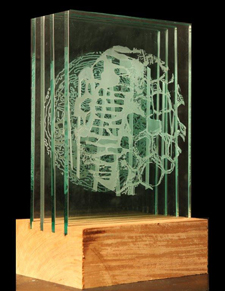 Lea Kannar-Lichtenberger, Glimpse Beyond, 2014, sandblasted glass panels in PNG Rosewood (artwork © Lea Kannar-Lichtenberger)
Lea Kannar-Lichtenberger. Community Gallery, Hazelhurst Regional Gallery and Arts Centre, Gymea, New South Wales, Australia, March 7–17, 2015. Colliding Worlds. Bio-art.
Mid-Atlantic

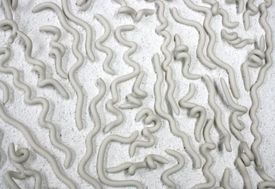 Lorrie Fredette, ceiling detail of Proper Limits, 2015, porcelain, 8 ft. 1 in. x 17 ft. 10½ in. x 18 ft. 3½ in. (artwork © Lorrie Fredette)
Lorrie Fredette. Visual Art Center of New Jersey, Summit, New Jersey, February 8–May 31, 2015. Proper Limits. Installation.
Midwest

Michael Aurbach. Main Galleries, Tarble Arts Center, Eastern Illinois University, Charleston, Illinois, January 16–February 18, 2015. Michael Aurbach Sculpture: Three Decades after Eastern. Sculpture.
Joan Marie Kelly. Richard D. Baron ’64 Art Gallery, Oberlin College, Oberlin, Ohio, November 21, 2014–January 2, 2015. Historical Indian Archetypes of Masculinity and Femininity: The Kotha and The Akhara.
Angela Piehl. North Gallery, Oklahoma State Capitol, Oklahoma City, Oklahoma, December 8, 2014–February 1, 2015. Stillwater. Drawing.

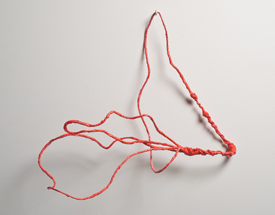 Robert Schatz, Lotus, 2014, jute twine, alphatic resin, kozo paper, and acrylic, 14 x 8 x 19½ in. (artwork © Robert Schatz)
Robert Schatz. Sheldon Museum of Art, University of Nebraska, Lincoln, Nebraska, January 16–April 26, 2015. A New Line of Thinking. Sculpture and work on paper.
Northeast

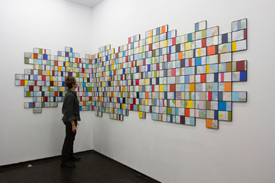 Nayda Collazo-Llorens, installation view of Geo Dis/connect, 2014, wall installation with found maps, 360 framed images (4 x 6 in. each), overall dimensions approximately 5 x 16 ft. (artwork © Nayda Collazo-Llorens)
Nayda Collazo-Llorens. LMAKprojects, New York, October 17–December 21, 2014. Dis/connect. Wall installation, drawing, and work on canvas.
Josette Urso. Main Window Project Space, One Main Street, Brooklyn, New York, February 5–March 29, 2015. High Five.

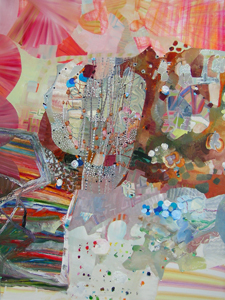 Josette Urso, Jujube, 2015, oil on canvas, 48 x 36 in. (artwork © Josette Urso)
Josette Urso. Market Fine Arts, New York, March 19–April 18, 2015. Treehouse. Painting.
West
Martin Gantman. Los Angeles Center for Digital Art, Los Angeles, California, January 8–February 28, 2015. Inconsequential Intersections.
People in the News
posted by CAA — February 17, 2015
People in the News lists new hires, positions, and promotions in three sections: Academe, Museums and Galleries, and Organizations and Publications.
The section is published every two months: in February, April, June, August, October, and December. To learn more about submitting a listing, please follow the instructions on the main Member News page.
February 2015
Academe

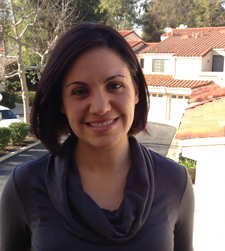 Hala Auji
Hala Auji has been appointed assistant professor of Islamic art in the Department of Fine Arts and Art History at the American University of Beirut in Lebanon.
Museums and Galleries
Denise Allen has left the Frick Collection in New York for the Metropolitan Museum of Art, also in New York, where she is curator of European sculpture and decorative arts.
Elissa Auther, associate professor of contemporary art and director of the art-history and museum-studies program at the University of Colorado in Colorado Springs, has joined the Museum of Arts and Design in New York as the inaugural Wingate Research Curator. She will hold a joint appointment at the Bard Graduate Center, in collaboration with the Center for Craft, Creativity, and Design.
Robert C. Hobbs, Rhoda Thalhimer Endowed Chair at Virginia Commonwealth University in Richmond and visiting professor at Yale University in New Haven, Connecticut, has been inducted as a trustee of the Wadsworth Atheneum Museum of Art in Hartford, Connecticut.
Organizations and Publications
Dena Muller has been appointed executive director of the Cue Art Foundation in New York. Previously she had served the New York Foundation for the Arts as director of new initiatives.
Institutional News
posted by CAA — February 17, 2015
Read about the latest news from institutional members.
Institutional News is published every two months: in February, April, June, August, October, and December. To learn more about submitting a listing, please follow the instructions on the main Member News page.
February 2015
The Sterling and Francine Clark Art Institute in Williamstown, Massachusetts, has won the 2014 Apollo Award for Museum Opening of the Year. The award is given annually by the art magazine Apollo.
The Minneapolis Institute of Arts in Minnesota has accepted an $8 million gift from the Duncan and Nivin MacMillan Foundation to endow the director and president’s position.
The Princeton University Art Museum in Princeton, New Jersey, has won the 2014 Frances Smyth-Ravenal Prize for Excellence in Publication Design from the American Alliance of Museums for its catalogue of the exhibition New Jersey as Non-Site.
Yale University Press in New Haven, Connecticut, has received an $840,000 grant from the Andrew W. Mellon Foundation to establish a new electronic portal on which curated and customizable art and architectural-history content will be made available to consumers and institutions.
Grants, Awards, and Honors
posted by CAA — February 15, 2015
CAA recognizes its members for their professional achievements, be it a grant, fellowship, residency, book prize, honorary degree, or related award.
Grants, Awards, and Honors is published every two months: in February, April, June, August, October, and December. To learn more about submitting a listing, please follow the instructions on the main Member News page.
February 2015
Kate Palmer Albers, assistant professor in the Art History Division of the School of Art at the University of Arizona in Tempe, has received a 2014 award from the Arts Writers Grants program, funded by Creative Capital and the Andy Warhol Foundation for the Visual Arts. The grant will fund a new blog, Project K: Photography and Art in the Age of Social Media.
Luke Armitstead, an artist based in Madison, Wisconsin, has received a Clowes Fund Fellowship to support a residency at the Vermont Studio Center in Johnson.

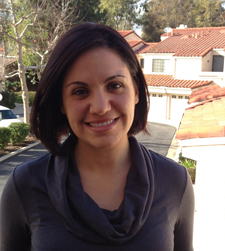 Hala Auji
Hala Auji, assistant professor at the American University of Beirut in Lebanon, received a 2014 Honorable Mention Malcolm H. Kerr Dissertation Award in the Humanities from the Middle East Studies Association for her dissertation, “Between Script and Print: Exploring Publications of the American Syria Mission and the Nascent Press in the Arab World, 1834–1860,” which completed under the direction of Nancy Um at Binghamton University, State University of New York.
Elissa Auther, Wingate Research Curator for the Museum of Arts and Design and the Bard Graduate Center in New York, has received a 2014 award from the Arts Writers Grants program, funded by Creative Capital and the Andy Warhol Foundation for the Visual Arts. The grant will support her article, “Senga Nengudi: The Performing Body.”
Rachelle Beaudoin, a video and performance artist based in Peterborough, New Hampshire, has earned a Clowes Fund Fellowship for a residency at the Vermont Studio Center in Johnson.
Maurice Berger, research professor and chief curator for the Center for Art, Design, and Visual Culture at the University of Maryland in Baltimore County, has received a 2014 award in short-form writing from the Arts Writers Grants program, funded by Creative Capital and the Andy Warhol Foundation for the Visual Arts.

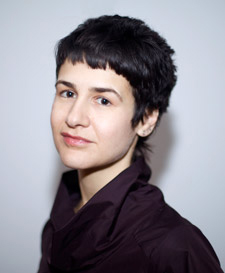 Kaira M. Cabañas
Kaira M. Cabañas, an art historian based in Rio de Janiero, Brazil, has won a 2014 award from the Arts Writers Grants program, funded by Creative Capital and the Andy Warhol Foundation for the Visual Arts. Her book project is called Expressive Restraint: Modern Art and Madness in Brazil and Beyond.
Abigail DeVille, an artist based in the Bronx, New York, has been awarded a 2015 grant in the visual-arts category from Creative Capital. DeVille will work on The Bronx: History of Now, a series of one hundred site-specific sculptural installations constructed from found objects, fragments of histories, and community narratives.

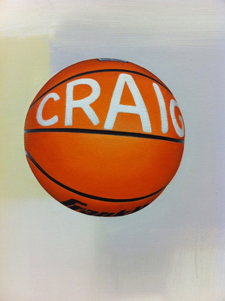 Craig Drennen, detail of HELLO CRAIG, 2014, oil and alkyd on canvas, 52 x 40 in. (artwork © Craig Drennen)
Craig Drennen, assistant professor of drawing and painting at Georgia State University in Atlanta, has received a 2014 grant from the foundation Art Matters.
Angela Ellsworth, an artist based in Phoenix, Arizona, who works in drawing, sculpture, installation, video, and performance, has won a 2014 Art Matters grant.
Ryan Gallant, a sculptor based in Grass Valley, California, has received fellowship for a residency at the Vermont Studio Center in Johnson, Vermont.

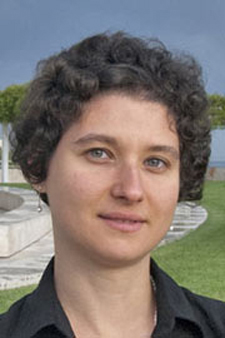 Ksenya Gurshtein
Ksenya Gurshtein, an art historian based in Washington, DC, has accepted a 2014 National Endowment for the Humanities Fellowship for her project, “Conceptual Art in Eastern Europe in the 1960s and 1970s.”
Jeffrey Hamburger, Kuno Francke Professor of German Art and Culture at Harvard University in Cambridge, Massachusetts, has accepted a 2014 National Endowment for the Humanities Fellowship for his project, “Berthold of Nuremberg’s 13th-Century Reconfiguration of Hrabanus Maurus’s 9th-Century Treatise on the Cross.”
Michelle Handelman, an artist based in Brooklyn, New York, who works in video, performance, and photography, has accepted a 2014 grant from the foundation Art Matters.

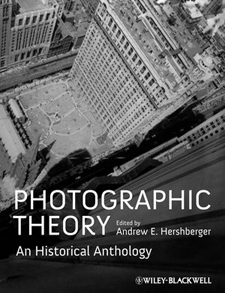
Andrew E. Hershberger, associate professor of contemporary art history and chair of the Division of Art History at Bowling Green State University in Bowling Green, Ohio, has won a 2015 Insight Award from the Society for Photographic Education for his book Photographic Theory: An Historical Anthology.
Suzanne Hudson, assistant professor of art history at the University of Southern California in Los Angeles, has received a 2014 award from the Arts Writers Grants program, funded by Creative Capital and the Andy Warhol Foundation for the Visual Arts. Her book project is titled Better for the Making: Art, Therapy, Process.

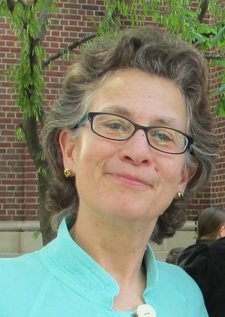 Sharon Irish
Sharon Irish, an art and architectural historian at the University of Illinois in Urbana-Champaign, has won a 2014 award from the Arts Writers Grants program, funded by Creative Capital and the Andy Warhol Foundation for the Visual Arts. The grant will support her book project, Stephen Willats in the Yew Kay.
Janet Koplos, an art critic and historian based in Saint Paul, Minnesota, has received a 2014 award from the Arts Writers Grants program, funded by Creative Capital and the Andy Warhol Foundation for the Visual Arts. The grant will help sustain her book project, The Loyal Opposition: The Life and Times of Chicago’s Controversial New Art Examiner.

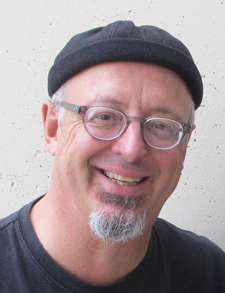 Beauvais Lyons
Beauvais Lyons, Chancellor’s Professor at the University of Tennessee in Knoxville, has been selected for a 2014 Individual Artist Award by the Santo Foundation, based in Saint Louis, Missouri. The award comes with a $5,000 prize.
Leah Montalto, an artist based in New York, has received a grant from the New York City Department of Cultural Affairs via the 2015 Queens Arts Fund, part of the Greater New York Arts Development Fund for Individual Artists. Montalto will work on a new series of paintings, titled The Arc of Triumph.
Lorraine O’Grady, a New York–based artist and writer, has been awarded a 2015 grant in the visual-arts category from Creative Capital. The funds will support MBN – 30 Years Later, in which the artist’s performance persona Mlle Bourgeoise Noire transforms into a new avatar who protests a money-driven art world to restore the cultural purpose it has lost.
John Pollini, professor of art history and history the University of Southern California in Los Angeles has accepted a 2014 National Endowment for the Humanities Fellowship for his project, “Destruction, Mutiliation, and Repurposing of Classical Images in Late Antiquity.”

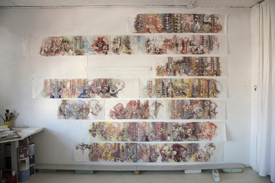 View of Elizabeth Riggle’s studio
Elizabeth Riggle, an artist based in Brooklyn, New York, has earned a residency at the Yaddo Foundation in Saratoga Springs, New York, for winter/spring 2015.
David Shannon-Lier, a photographer based in Phoenix, Arizona, has won a Vermont Studio Center Fellowship for a residency at the center in Johnson, Vermont.
Andrew Wasserman, assistant professor of art and architecture history at Louisiana Tech University in Ruston, has received a 2014 award from the Arts Writers Grants program, funded by Creative Capital and the Andy Warhol Foundation for the Visual Arts. The prize will support his book project, Bang! We’re All Dead! The Places of Nuclear Fear in 1980s America.
Yatta Zoker, an artist based in Houston, Texas, has accepted a $4,000 Catalyst Grant from the Idea Fund for The LDR Project, a series of three collaborative art-making workshops and a sponsorship for one expatriate or immigrant student at the University of Houston to reunite with their loved ones during summer break.
Exhibitions Curated by CAA Members
posted by CAA — February 15, 2015
Exhibitions Curated by CAA Members
Check out details on recent shows organized by CAA members who are also curators.
Exhibitions Curated by CAA Members is published every two months: in February, April, June, August, October, and December. To learn more about submitting a listing, please follow the instructions on the main Member News page.
February 2015

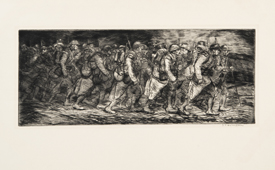 Theophile-Alexandre Steinlen, Marche de nuit (Night March), ca. 1917, etching with drypoint, 6 x 15 3/16 in. Collection Zimmerli Art Museum at Rutgers, Gift of Norma B. Bartman (artwork in the public domain; photograph by Peter Jacobs)
Christine Giviskos. Picturing War: Selections from the Zimmerli Art Museum Collection. Zimmerli Art Museum, Rutgers University, New Brunswick, New Jersey, February 7–July 5, 2015.

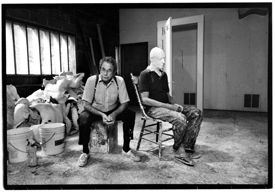 Donald Lokuta, Casting Miles Forst for “The Red Scaffold,” 1990, silver gelatin print, 11 x 14 in. (artwork © Donald Lokuta; photograph provided by the artist and hpgrp Gallery, New York)
Donna Gustafson. George Segal in Black and White: Photographs by Donald Lokuta. Zimmerli Art Museum, Rutgers University, New Brunswick, New Jersey, February 14–July 31, 2015.

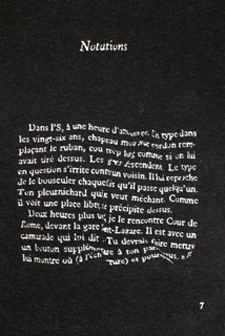 Monica Bengoa, Exercices de Style / Exercises in Style. Notations / Notation, 2014–15, natural wool felt and 493 hand-cut felt letters, 72 x 47 in. (artwork © Monica Bengoa)
Julia P. Herzberg. Monica Bengoa: Exercices de Style / Exercises in Style. Patricia and Phillip Frost Art Museum, Florida International University, Miami, Florida, February 14–April 26, 2015.

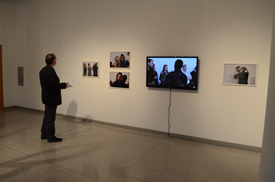 Clifford Owens, Anthology (Kara Walker), 2010, archival pigment prints and video (artwork © Clifford Owens; photograph provided by Martha Wilson, New York and Matthew McNutty)
Katie Grace McGowan and Jaime Marie Davis. Menagerie, or Artwork Not about Love. Elaine L. Jacob Gallery, Wayne State University, Detroit, Michigan, October 24–December 12, 2014.
Books Published by CAA Members
posted by CAA — February 15, 2015
Publishing a book is a major milestone for artists and scholars—browse a list of recent titles below.
Books Published by CAA Members appears every two months: in February, April, June, August, October, and December. To learn more about submitting a listing, please follow the instructions on the main Member News page.
February 2015

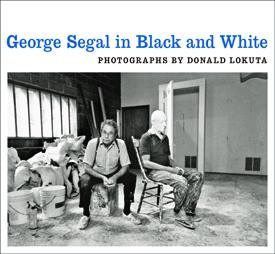
Donna Gustafson. George Segal in Black and White: Photographs by Donald Lokuta (New Brunswick, NJ: Zimmerli Art Museum, Rutgers University, 2015).


Andrew D. Hottle. Shirley Gorelick (1924–2000): Painter of Humanist Realism (Newcastle upon Tyne: Cambridge Scholars Publishing, 2014).

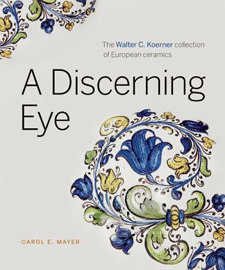
Carol E. Mayer. A Discerning Eye: The Walter C. Koerner Collection of European Ceramics (Vancouver: Figure 1, 2015).

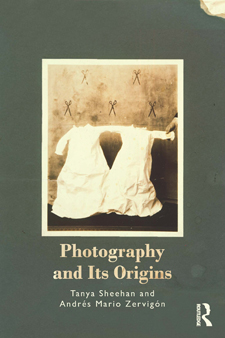
Tanya Sheehan and Andrés Mario Zervigón, eds. Photography and Its Origins (New York: Routledge, 2015).

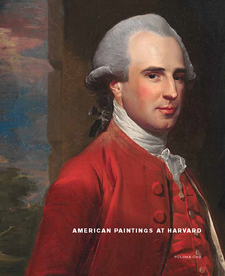
Theodore E. Stebbins Jr. and Melissa Renn. American Paintings at Harvard, Volume 1: Paintings, Watercolors, and Pastels by Artists Born before 1826 (Cambridge, MA: Harvard Art Museums, 2014).

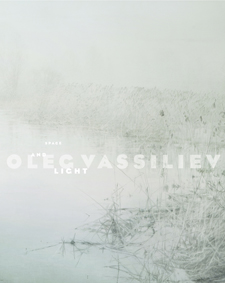
Julia Tulovsky. Oleg Vassiliev: Space and Light (New Brunswick, NJ: Zimmerli Art Museum, Rutgers University, 2014).

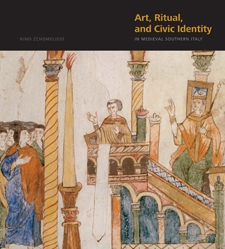
Nino Zchomelidse. Art, Ritual, and Civic Identity in Medieval Southern Italy (University Park: Pennsylvania State University Press, 2014).
Visit the CAA Book at the Annual Conference in New York
posted by CAA — February 12, 2015
Find discounts and special offers at CAA’s booth in the Book and Trade Fair at the 2015 Annual Conference in New York.
Don’t miss these opportunities:
- Speak with a representative of Cuba Educational Travel about the CAA trip to visit the Havana Bienal in May 2015. This tour is nearly full!
- Pick up a print copy of the newly published Code of Best Practices in Fair Use for the Visual Arts
- Purchase discounted copies of Graduate Programs in the Visual Arts and Graduate Programs in Art History, CAA’s comprehensive resources for prospective graduate students and arts professionals alike
- Buy signed artists’ projects by William Pope.L, one of this year’s Annual Distinguished Artists and Barbara Bloom ($35 members/$50 nonmembers)
- Meet representatives of the ACLS Humanities E-Book and discuss their online collection of 4,300 books in the humanities, accessible through institutional and individual subscriptions
Ticket Prices
Exhibit Hall tickets are available onsite in the Registration area on the Second Floor Promenade.
- Conference registrant: FREE Admission with your conference registration badge
- Member: $15, with credit card, check, or cash
- Nonmember: $25, with credit card, check, or cash
The Book and Trade Fair is open on Thursday and Friday, February 12 and 13, 9:00 AM–6:00 PM, and on Saturday, February 14, 9:00 AM–2:30 PM, in the Americas Exhibit Hall, Levels I and II, New York Hilton Midtown.
Committee on Women in the Arts Picks for the 2015 Annual Conference
posted by CAA — February 10, 2015
Each month, CAA’s Committee on Women in the Arts selects the best in feminist art and scholarship. The following exhibitions and events should not be missed. Check the archive of CWA Picks at the bottom of the page, as several museum and gallery shows listed in previous months may still be on view or touring.
2015 Annual Conference in New York
The CWA Picks for the New York conference are dedicated to Kalliopi Minioudaki for her tremendous efforts in working on the Picks during her tenure on the CWA (2012–15). You will be missed!

Cover of the catalogue for Judith Scott: Bound and Unbound
Judith Scott: Bound and Unbound
Brooklyn Museum
Elizabeth A. Sackler Center for Feminist Art, Fourth Floor, 200 Eastern Parkway, Brooklyn, NY 11238
October 24, 2014–March 29, 2015
Bringing together sculptures and works on paper that span the eighteen years of her career, this much awaited exhibition is the first survey of Judith Scott’s work that Matthew Higgs has described as “one of the most important bodies of work—‘insider’ or ‘outsider’—produced anywhere and under any circumstances in the past twenty years.”
Judith and her twin sister Joyce were born in Columbus, Ohio. Judith was diagnosed with Down syndrome, and considered retarded due to learning difficulties caused from undiagnosed deafness. At the age of eight she was tragically separated from her sister and spent the next thirty-five years of her life as ward in Dickensian institutions for the disabled and the discarded. Her art production begun after Joyce decided to become Judith’s legal guardian and introduced her to a visionary studio art program, the Creative Growth Art Center.
Judith Scott developed a unique and idiosyncratic method to produce a body of work of remarkable originality and visual complexity. Often working for weeks or months on individual pieces, she begun by pilfering and assembling together all sorts of objects; she then enveloped and intertwined them with miscellaneous threads, twines, strings, ropes, fibers, somewhat protecting and concealing their core. As the art historian Lucienne Peiry says, her unconventional textile sculptures “are endowed with an intens
e power of expression: they resemble giant multicolored cocoons and … are evocative of magical fetishes” holding a special connection to life and death. Moreover, although it does not appear that her work was directed by intention “these sculptures conceal a secret that their author always took great care to hide…. There is no doubt but that the sculptures themselves play an essential role in embodying the physical presence—that of ‘the other twin’—throughout the feverish act of creation. Judith Scott’s approach thus involved a process that may seem paradoxical because, on one hand, it consisted of dissimulating and concealing, and on the other hand, of growing and shaping…The emotional and physical reunion with her sister led Judith Scott to recover an identity, and then to develop an intimate experience at a fantasy level where she sublimated the tearing apart of which she was a victim.”
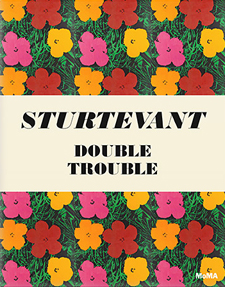
Cover of the catalogue for Sturtevant: Double Trouble
Sturtevant: Double Trouble
Museum of Modern Art
11 West 53rd Street, New York, NY 10009
November 9, 2014–February 22, 2015
Elaine Sturtevant (American, 1924–2014) began “repeating” the works of her contemporaries in 1964, using some of the most iconic artworks of her generation as a source and catalyst for the exploration of originality, authorship, and the interior structures of art and image culture. Beginning with her versions of works by Jasper Johns and Andy Warhol, she initially turned the visual logic of Pop art back on itself, probing uncomfortably at the workings of art history in real time. Yet her chameleonlike embrace of other artists’ art has also resulted in her being largely overlooked in the history of postwar American art. As a woman making versions of the work of better-known male artists, she has passed almost unnoticed through the hierarchies of midcentury modernism and postmodernism, at once absent from these histories while nevertheless articulating their structures.
Far more than copies, her versions, for instance, of Johns’s flags, Warhol’s flowers, and Joseph Beuys’s fat chairs are studies in the action of art that expose aspects of its making, circulation, and canonization. Working primarily in video since 2000, the artist remained deeply engaged with the politics of image production and reception, using stock footage from Hollywood films, television, and advertising to point to the exhaustion built into much of postwar cultural production.
This exhibition is the first comprehensive survey in America of Sturtevant’s fifty-year career and the only institutional presentation of her work organized in the United States since her solo show at the Everson Museum of Art in 1973. Rather than taking the form of a traditional retrospective, the exhibition offers a historical overview of her work from a contemporary vantage point, interspersing more recent video pieces among key artworks from all periods of her career.
Marisol: Self-Portrait Looking at The Last Supper
Metropolitan Museum of Art
Lila Acheson Wallace Wing for Modern and Contemporary Art, Design, and Architecture, Gallery 909, 1000 Fifth Avenue, New York, NY 10028
October 8, 2014–April 5, 2015
For the first time in nearly thirty years, Marisol’s monumental sculptural assemblage, Self-Portrait Looking at The Last Supper, has been on view at the Metropolitan Museum of Art, complementing the retrospective celebration of the renowned yet understudied sculptor by her recent retrospective that travelled to El Museo del Barrio this fall.
Inspired by Leonardo’s monumental fresco, Marisol (Maria Sol Escobar, b. 1930) faithfully rendered the painting’s composition into three dimensions to create this 30-foot-long installation. The biblical scene depicts Christ and his Apostles at the Passover meal, with each disciple reacting to the announcement by Jesus that one of them would betray him. The work is primarily carved from wood, with a rough, sketchy technique that includes painted and drawn elements. Marisol is particularly skillful at joining seemingly incompatible components. In fact, the seated figures are neither fully rounded nor consistently flat, oscillating between two and three dimensions. The artist chiseled the central figure of Christ from a block of salvaged New York City brownstone. Christ’s physical solidity and ashen, serene appearance contrast with the blackened, twisted figure of Judas to provide the composition’s emotional tension. In Marisol’s sculptural version of the Last Supper, a novel figure is added opposite the tableau. It portrays the artist contemplating the scene and with a hieratic presence that shares visual affinities with the stocky, solemn figures of Precolumbian sculpture.
Plastic Age: IN/OUT: Banners and Sculptures by Barbara Madsen
New York Public Library
Mid-Manhattan Library, Corner Room, 455 Fifth Avenue, New York, NY 10016
February 3–May 21, 2015
Barbara Madsen’s work is a hybrid practice between photography, print, and sculpture. Her banners, a series of photographs of inanimate plastic objects occupy the windows of the Corner Room on Fifth Avenue and 40th Street. Madsen’s sculptures facing Fifth Avenue are architectural plywood structures, jutting walls, boxed, minimal, acute—stacked on top of each other. The angled surfaces are covered with photographs of objects that have been consumed and discarded. Vibrant color plays a central tenant in her cast of objects: the child’s crimson fireman’s ladder; a lime-colored dome from a hair drier; and cobalt, yellow, scarlet plastic remnants of toys. Within the complex shadows and highlights of the images, dust and flaws are naked—the invisible becomes visible. Madsen is an artist and associate professor in the Mason Gross School of the Arts at Rutgers University known for her work in photography, prints, sculpture, and installation.
E. E. Smith: The Ballad of Delia
Kim Foster Gallery
529 West 20th Street, New York, NY 10011
January 8–February 14, 2015
The Ballad of Delia is an installation of new photo-based oil prints by E. E. Smith. This piece is part of a series in which Smith uses song forms as the point of departure for her work. The Ballad of Delia consists of ten panels of varying sizes that tell the story of Delia Greene’s murder, an account best known from covers by Johnny Cash and Bob Dylan. Like the singers, and especially the now-forgotten songwriters, Smith takes liberties with the telling of the tale, presenting various details and asking the viewer to fill in the story.
Each panel represents a clue to this murder mystery, yet stylistically they differ. The lush landscape harkens back to the evocative paintings of Albert Pinkham Ryder, drawing us into the location of the crime. Other images are shockingly explicit: the menacing axe and thick footprints allude to police photographic evidence, while the male silhouette suggests a mug shot. And the hand holding a teacup (the victim perhaps?) makes reference to film stills.
In contrast to the songs—and most likely any contemporaneous news accounts—Smith deliberately dispenses with a time-dependent linear narrative, opting instead to display several moments simultaneously. The effect is not so much “the truth” about a murder but “a truth” told without words. The trope of the murder-mystery in American culture is ubiquitous, and Smith’s iteration in The Ballad of Delia makes a compelling episode.
Louise Nevelson: Collage and Assemblage
Pace Gallery
534 West 25th Street, New York, NY 1001
January 24–February 28, 2015
Pace Gallery presents an exhibition of Louise Nevelson’s rarely seen collages, accompanied by a catalogue by Germano Celant. Nevelson began producing collages in the mid-1950s, inspired by her longstanding interest in Cubism and a correspondence with Jean Arp. Prompting her remark “the way I think is collage,” collage signifies an important aspect of her work.
The exhibition features the artist’s earliest collages, produced along her monochromatic black, gold, and white sculptures, by using scraps of wood and metal collected from the streets outside of her Little Italy studio. The show also includes examples of her later unpainted assemblages that manifest a departure from her monochromatic work, while continuing to prove the centrality of collage in her practice. Among the last works of her life, two large-scale, black wall reliefs, including Spring Street (1984), which was installed in Nevelson’s home from its completion until her death, are also part of this exhibition.
Nevelson (b. 1899 Kiev; d. 1988, New York) emigrated from czarist Russia as a child and grew up in Rockland, Maine. As an adult she returned to Europe, where she studied with Hans Hoffmann. Upon her return to the United States, she served as Diego Rivera’s assistant and later as an art instructor in the Works Progress Administration. In 1941, Nevelson had her first solo exhibition and, in 1946, was included for the first time in the Whitney Annual exhibition, which she would participate in eleven more times. The artist exhibited her first all-black sculptures in the mid-1950s. Although she worked in white and gold and later with painted steel, her developments in the 1950s sustained her work throughout the rest of her life. Considered today as one of America’s most significant artists, Nevelson has been the subject of one-artist exhibitions and retrospectives at numerous institutions in the US, and her work is found in many prominent museums and public collections worldwide.
Yael Bartana
Petzel Gallery
456 West 18th Street, New York, NY 10011
January 8–February 14, 2015
Petzel Gallery is pleased to announce a new exhibition by the Israeli artist Yael Bartana (b. 1970, Kfar-Yehezkel, Israel) that debuts her latest two films: Inferno and True Finn. This will be the gallery’s second solo show with the artist.
Bartana studied at the Bezalel Academy of Arts and Design in Jerusalem, the School of Visual Arts in New York, and the Rijksakademie in Amsterdam. She has had several solo exhibitions held at various international venues and in New York. Bartana was Poland’s choice for the 2011 Venice Biennale, where she was the first non-Polish citizen to represent the country. Bartana’s photography, film, and sound works investigate society, spirituality, and politics. Her films, film installations, and photographs challenge the national consciousness that is propagated by her native country of Israel. Homeland, return, and belonging are the central questions that she explores. Her investigation includes ceremonies, public rituals and social diversions that are intended to reaffirm the collective identity of countries. Working outside the country, Bartana observes it from a critical distance. Her early films were primarily registrations in which aesthetic interventions, including soundtracks, slowing the image, and specific camera perspectives, played a role.
In Inferno, Bartana films the inauguration of a grand temple, the destruction of it, and the worship of its debris. The starting point is the construction of a replica of Solomon’s Temple in São Paulo by an evangelical neo-Pentecostal church called the Universal Church of the Kingdom of God (UCKG). The temple is built with stones imported from Israel, as UCKG intends to bring part of the Holy Land to São Paulo, thus inverting the traditional path taken by pilgrims who would leave Brazil for the Holy Land. The film’s conflation of place, history, and belief allows Bartana to weave connections between the complex realities of São Paulo and Jerusalem. Shot and edited with stylistic references to Hollywood action epics, her film employs what she refers to as “historical pre-enactment,” a methodology that commingles fact and fiction, and prophesies and histories. Using this powerful cinematic language, Inferno combines histories of antiquity in the Middle East with Brazil’s contemporary hybrid culture.
True Finn is a documentary-style film asking eight people from Finland one simple question: who is a true Finn? Bartana’s objective with True Finn, produced in connection of Finland’s Pro Arte Foundation, was to create and record a utopian moment that would yield an answer to this question. As a result of an open call, eight Finnish residents of different ethnic, religious, and political background came to live together for seven days in a house in the countryside. Life, discussions, and specifically designed assignments were filmed, with the edited material forming the core of the artwork and allowing True Finn to probe questions about identity, nationhood, and belonging.
Diana Thater: Science, Fiction
David Zwirner
533 West 19th Street, New York, NY 10011
January 8–February 21, 2015
David Zwirner presents new work by Diana Thater in the form of a new type of installation that involves an enclosed video projection, ceiling screen, and light, as well as two new video walls. Thater is one of the most important video artists working today. Since the early 1990s, she has created a wide range of film, video, and installation-based works whose sculptural forms engage spatial perception in physical and conceptual terms. Her work pushes the boundaries of how new-media art is displayed. Through a combination of the temporal qualities of video and the architectural dimension of its installation, Thater’s work explores the artifice of its own production and its capacity to construct perception about the world through its image. Natural diversity, wildlife, and conservation have been persistent themes in the artist’s work. While her in-depth studies of ecosystems and animal behavior propose observation as a kind of understanding in itself, her ethical position is implicit in the work, providing subtly political views of the sublime.
In Science, Fiction, Thater focuses on the dung beetle and the intricate navigation system it deploys in disposing balls of animal excrement, its main source of nutrition. Recent studies have revealed that the species uses the Milky Way to orientate itself at night, currently the only insect known to do so. Thater’s video projection appears at once abstract and particular, juxtaposing the sophistication of the small insects’ navigation systems with the close-up views of their earthy setting in a meditative fusion of macro and micro realms. Deploying a new type of installation, Thater presents the footage on a screen attached to the ceiling, projected from within a closed-off, freestanding box. Mirroring the setup of the scientific experiment with the dung beetles, the white square further references the Light and Space movement in California in the 1960s. The exhibition is illuminated by soft blue lights, creating an environment that mimics the evening sky, while the walls of the box themselves are lit from below, which offers the illusion of levitation. Also on view are two video walls showing the Milky Way, respectively titled Sidereus Nuncius and The Starry Messenger.
Born in 1962 in San Francisco, Thater lives and works in Los Angeles. She studied art history at New York University before receiving her MFA from the Art Center College of Design in Pasadena, California. Over the past decade, her work has been the subject of solo exhibitions at prominent institutions worldwide, and she is the recipient of many awards. In fall 2015, the Los Angeles County Museum of Art will host a midcareer survey of her work, which will coincide with an installation at the Aspen Art Museum in Colorado.
Araya Rasdjarmrearnsook
SculptureCenter
44-19 Purves Street, Long Island City, NY 11101
January 25–March 30, 2015
SculptureCenter presents Araya Rasdjarmrearnsook, the Thai artist’s first retrospective in the United States. The exhibition, which brings together over twenty artworks spanning over a decade of the artist’s career, includes video, sculpture, and photography, presenting significant highlights as well as works that have rarely been viewed in the US. As such the show features The Class and Conversation series, for which Rasdjarmrearnsook conducts discussions with corpses, and the video Village and Elsewhere: Artemisia Gentileschi’s Judith Beheading Holofernes; Jeff Koons’ Untitled, and Thai Villagers (2011), in which a Buddhist monk leads a comical conversation about these two Western paintings in a temple. A more recent group of works featured focuses on the status of dogs in Thai culture and beyond. SculptureCenter will also include works produced specifically for this exhibition.
Rasdjarmrearnsook is one of the leading visual artists working in Southeast Asia. She is based in the northern city of Chiang Mai in Thailand, where she teaches in the Faculty of Fine Arts at Chiang Mai University. Rasdjarmrearnsook is internationally known for videos and installations that profoundly explore aspects of human experience and understanding, often touching on taboo topics such as death and insanity. In 2005 she represented Thailand in the Venice Biennale. Working with psychologically rich materials, she considers a wide range of subjects that have existed in marginal spaces, including women, the deceased, the insane, and animals. She creates complex narratives that confront societal structures of power and pedagogy. Concerned with systems of language and communication, Rasdjarmrearnsook attempts to converse with subjects who don’t speak in languages that are comprehended by or even acknowledged by mainstream society.
Looking Back: The 9th White Columns Annual
White Columns
320 West 13th Street, New York, NY 10014
January 13–February 21, 2015
Not an exhibition of women artists, this year’s White Columns Annual is curated by an all women’s curatorial collective, Cleopatra’s. Founded in 2008, Cleopatra’s works collaboratively with artists and cultural producers to create projects that forge new networks and dialogues among individuals, art practices, and institutions. These projects are realized in their flagship noncommercial storefront in Greenpoint, Brooklyn. From 2011 to 2012 the collective also operated a satellite art space in Berlin, Germany. Further investigations also occur in the form of offsite public programs, events, and printed publications, encompassing various fields and locales. The aim of Cleopatra’s is to present work and advance ideas informed by both individual and collective perspectives, and to disseminate that work and those ideas among a broad and diverse audience. Current and founding members of the Cleopatra’s are Erin Somerville, Colleen Grennan, Bridget Finn, and Bridget Donahue.
Samara Golden: The Flat Side of the Knife
MoMA PS1
22-25 Jackson Avenue, Long Island City, NY 11101
October 26, 2014–August 30, 2015
MoMA PS1 presents Samara Golden’s first solo museum exhibition and her largest installation to date: The Flat Side of the Knife. The Los Angeles–based Golden (American, b. 1973) creates immersive installations that explore what the artist calls the “sixth dimension,” where a multiple pasts, presents, and futures coexist. Golden’s multilayered installation fills the double-height of MoMA PS1’s Duplex Gallery with staircases, beds, couches, lamps, musical instruments, video, and sound. The Flat Side of the Knife combines physical with illusory spaces. Some appear only in mirrors, reflecting what the artist refers to as “layers of consciousness,” akin to psychological and hallucinatory spaces in the mind. Her use of mirrors in conjunction with sculptural elements made from a silvery insulation board allows the illusion of space to expand in multiple directions, suggesting imaginary spaces, such as adjacent rooms that do not exist in reality.
Golden received her MFA from Columbia University and has exhibited her work at the Museum of Contemporary Art, Los Angeles; SculptureCenter in New York; Night Gallery in Los Angeles; CANADA in New York; Cardi Black Box in Milan; Loyal Gallery in Stockholm; and Galerie Crevecoeur in Paris. Most recently, her work was featured in the Hammer Museum’s biennial, Made in L.A., in 2014.
Anne Imhof: DEAL
MoMA PS1
22-25 Jackson Avenue, Long Island City, NY 11101
January 31–March 9, 2015
MoMA PS1 presents DEAL, Anne Imhof’s inaugural solo project in the United States, which consists of a two-day performance followed by an exhibition. The project, conceived specifically for the museum, revolves around the structures of illegal street transactions that are underpinned by strict rules and codes while functioning beyond words and juridical regulations. Along the opening performances, nine performers will enact highly complex and abstract movements, evoking power relations, secret codes, and unspoken rules that underlie daily human interactions. Here, tasks and patterns are unceasingly repeated over an entire day and progressively shift as they push toward a point of collapse. The exhibition expands on the same formal interrogations and ideas through diverse media such as drawing, video, sculpture, painting, and a variation of the initial performance, SOTSB for DEAL, which repeats every Sunday during museum hours.
Imhof (German, b. 1978) was trained as a visual artist and considers the different media as integral to the process for creating images that gradually emerge in time. Live events, their documentation, objects, and props—Imhof believes that each component in a body of work is interrelated and of equal relevance, contributing to the creation of a visual image that is perpetually in process, highly precarious, and in a constant verge of dissolution.
Chitra Ganesh: Eyes of Time
Brooklyn Museum
Elizabeth A. Sackler Center for Feminist Art, Herstory Gallery, Fourth Floor, 200 Eastern Parkway, Brooklyn, NY 11238
December 12, 2014–July 12, 2015
The Herstory Gallery at the Brooklyn Museum is hosting Eyes of Time, an exhibition by the Brooklyn-based artist Chitra Ganesh that explores ideas of femininity, empowerment, and multiplicity. Her drawing, installation, text-based work, and collaborations suggest and excavate buried narratives typically absent from official canons of history, literature, and art. For more than a decade, Ganesh has used the iconography of mythology, literature, and popular culture to bring to light feminist and queer narratives.
For Eyes of Time, the artist draws inspiration from the museum’s encyclopedic collection to create a site-specific multimedia installation at the gallery. Eyes of Time focus on the portrayal of female power and plurality based on Kali—the Hindu goddess of destruction and rebirth—as well as other figures from Judy Chicago’s The Dinner Party as point of departure. Tales of Amnesia (2002)—a zine inspired by Indian comic books acquired by the museum—is also on view.
As stated about her creative practice, “by layering disparate materials and visual languages, Ganesh asks her viewers to ‘seek and consider new narratives of sexuality and power.’ In this process the body becomes a site of transgression and transformation, both social and psychic, doubled, dismembered and continually exceeding its limits.”
TENDREL – Interconnections
Tibet House
22 West 15th Street, New York, NY 10011
January 2–March 2, 2015
TENDREL – Interconnections is an exhibition by artists who are linked to and inspired by the life work of Jetsunma Tenzin Palmo, the first Western woman to become a Buddhist nun. Diverse yet interconnected, the themes investigated by the artists include Tibet and its culture, Buddhism, women, spiritual life, meditation, and activism. Works consist of photographs of nomads and nunneries in Tibet that provide profound insight and stark contrast to the social cultural changes of the Tibetan community, and art based on Buddhist and meditative iconography that explores the practice of visualization in painting, sculpture, drawing, and detailed stained-glass artistry. Among those presenting works are these artists: Diane Barker, Caterina De Re, Mary DeVincentis, Maxine Henryson, Heather Kessinger, Chrysanne Stathacos, Tsunma Jamyang Donma/Yulokod Studios, and Kate Temple.
Art in the First Person Lecture Series
School of Visual Arts
Various Locations in Manhattan
February 3–17, 2015
The School of Visual Arts presents the spring 2015 lineup of its Art in the First Person lecture series, jointly presented by the following departments: MA Curatorial Practice, MPS Digital Photography, BFA Fine Arts, MFA Fine Arts and BFA Visual and Critical Studies. All events are free and open to the public. The lecture series includes:
- Amy Smith-Stewart, independent curator and art advisor, on Tuesday, February 3, 6:00 PM
- Lumi Tan, curator at the Kitchen, on Tuesday, February 10, 6:00 PM
- Kira Pollack, director of photography at Time, on Tuesday, February 10, 7:00 PM
- Judith Page, artist, on Tuesday, February 17, 6:00 PM
Collective Creativity: Collaboration and Collectives in Feminist Art Practice
Feminist Art Project
Museum of Arts and Design, 2 Columbus Circle, New York, NY 10019
February 14, 2015