
CAA News Today
Wanda Ewing: In Memoriam
posted by CAA — December 20, 2013
Maria Elena Buszek is associate professor of art history in the College of Arts and Media at the University of Colorado Denver.

Wanda Ewing (photograph by Dana Damewood)
The artist and educator Wanda Ewing died in Omaha, Nebraska, on December 8, 2013, of complications from chemotherapy. She was 43 years old.
Born on January 4, 1970, Ewing received her BFA in printmaking from the San Francisco Art Institute, and later both an MA and MFA in printmaking from the University of Iowa. She was an associate professor of art at the University of Nebraska in Omaha, where she began teaching in 2005, leading courses in foundations and senior capstones for studio majors. She was a longtime member of the College Art Association, on whose Committee on Women in the Arts she served at the time of her death, as well as the Southern Graphics Council, where she was the International Board of Directors’ secretary.
Ewing’s work ranged from traditional print media to sculpture and, most recently, fiber arts. She was influenced by folk-art aesthetics and the depiction—and lack thereof—of African American women in popular culture, often with a biting, comical edge. Ewing’s best-known series included her pin-ups Black as Pitch, Hot as Hell, voluptuous clothing from The Summer I Wore Dresses,and faux magazine covers entitled Bougie. Her work has been included in exhibitions and purchased for collections throughout the world, and was reproduced in such publications as the Paris Review.
At the time of her passing, her series of brand-new, latch-hook works, Little Deaths, was on display at the RNG Gallery in Council Bluffs, Iowa—which will remain on exhibit, with additional works, through January 2014 as a memorial. She was, perhaps, proudest of her inclusion in the 2010 exhibition A Greater Spectrum: One Hundred Years of African American Artists in Nebraska at the Museum of Nebraska Arts, where her work was included alongside that of luminaries such as Aaron Douglas. Ewing was the recipient of grants and honors from the Women’s Caucus for Art, the Pollock-Krasner Foundation, and the Nebraska Arts Council, among other accolades.

Wanda Ewing, Girl #9, from the series Black as Pitch, Hot As Hell, 2006, acrylic and latex paint on carved plywood, 48 x 48 in. (artwork © Wanda Ewing)
Ewing was also an excellent educator, beloved and respected by both colleagues and students at the University of Nebraska for her rigorous curricula, her no-nonsense critiques, and her outreach to the regional arts community. Her legacy at the school will live on in the form of the Wanda Ewing Scholarship Fund.
Wanda Ewing will be remembered by all who knew her for her larger-than-life personality, tremendous warmth, and indomitable spirit. She is survived by her mother Elouise Ewing; her siblings Mona Yaeger, Clarence Ewing III, and Annette Ewing McCann; and her nephew and niece Devlin and Kayleigh McCann.
People in the News
posted by CAA — December 17, 2013
People in the News lists new hires, positions, and promotions in three sections: Academe, Museums and Galleries, and Organizations and Publications.
The section is published every two months: in February, April, June, August, October, and December. To learn more about submitting a listing, please follow the instructions on the main Member News page.
December 2013
Academe

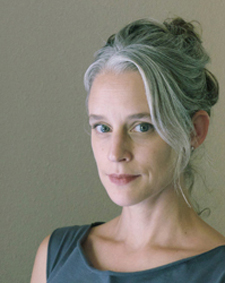 Anna Collette
Anna Collette has been appointed assistant professor in photography by the Department of Art and Art History in the College of Fine Arts at the University of Texas at Austin.

Luba Freedman, a specialist of Italian Renaissance art and professor in history of art at the Hebrew University of Jerusalem in Israel, has been named Jack Cotton Professor in Architecture and Fine Arts at her school.

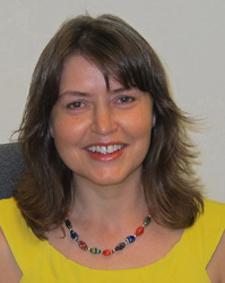 Carma Gorman
Carma Gorman has joined the Department of Art and Art History in the College of Fine Arts at the University of Texas at Austin as associate professor in design.
LaToya M. Hobbs has been appointed to teach foundations at Maryland Institute College of Art in Baltimore.
Museums and Galleries

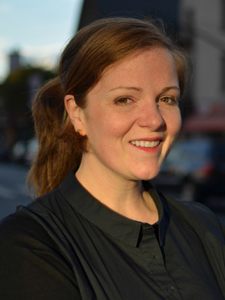 Cathleen Chaffee (photograph by James Sevigny)
Cathleen Chaffee, assistant curator of modern and contemporary art at the Yale University Art Gallery in New Haven, Connecticut, has joined the Albright-Knox Art Gallery in Buffalo, New York, as curator.
Amy Galpin, an associate curator for the San Diego Museum of Art in California, has become the new curator for the Cornell Fine Arts Museum at Rollins College in Winter Park, Florida.
Mazie McKenna Harris, a doctoral candidate in the history of photography at Brown University in Providence, Rhode Island, has been named Linda Wyatt Gruber ’66 Curatorial Fellow in Photography by the Davis Museum at Wellesley College in Wellesley, Massachusetts.
Ronda Kasl, formerly senior curator of painting and sculpture before 1800 at the Indianapolis Museum of Art in Indiana, has become a curator of colonial Latin American art at the Metropolitan Museum of Art in New York.

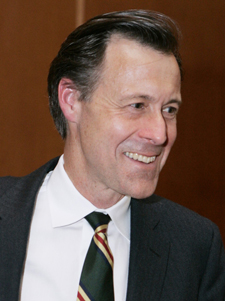 Karl Kusserow
Karl Kusserow, curator of American art at the Princeton University Art Museum in Princeton, New Jersey, has been named the inaugural John Wilmerding Curator of American Art at his institution.
Michael W. Maizels, most recently a research assistant and predoctoral fellow at the Smithsonian Institution’s National Portrait Gallery in Washington, DC, has been appointed Mellon New Media Curator and Lecturer by the Davis Museum at Wellesley College in Wellesley, Massachusetts.
Joanne Pillsbury, an associate director of the Getty Research Institute, has been named Andrall E. Pearson Curator in the Department of the Arts of Africa, Oceania, and the Americas at the Metropolitan Museum of Art in New York.

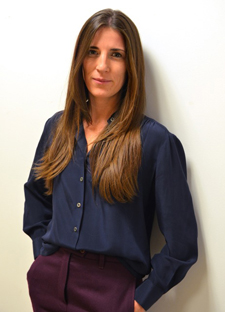 Kelly Taxter
Kelly Taxter, a cofounder of Taxter and Spengeman Gallery in New York and a curatorial consultant for the Aldrich Contemporary Art Museum in Ridgefield, Connecticut, has joined the Jewish Museum in New York as assistant curator.

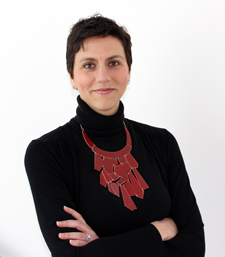 Mary M. Tinti
Mary M. Tinti, formerly a curatorial fellow for the deCordova Sculpture Park and Museum in Lincoln, Massachusetts, has been appointed associate curator of the Fitchburg Art Museum in Fitchburg, Massachusetts.
Institutional News
posted by CAA — December 17, 2013
Read about the latest news from institutional members.
Institutional News is published every two months: in February, April, June, August, October, and December. To learn more about submitting a listing, please follow the instructions on the main Member News page.
December 2013
The December 2013 listing of Institutional News will be published in spring 2014.
Grants, Awards, and Honors
posted by CAA — December 15, 2013
CAA recognizes its members for their professional achievements, be it a grant, fellowship, residency, book prize, honorary degree, or related award.
Grants, Awards, and Honors is published every two months: in February, April, June, August, October, and December. To learn more about submitting a listing, please follow the instructions on the main Member News page.
December 2013
Karen Barzman from Harvard University’s Center for Italian Renaissance Studies in Cambridge, Massachusetts, has been appointed visiting professor at Villa I Tatti in Florence, Italy, for the fall 2013 semester. She will work on a book project called “The Limits of Identity: Venice, Dalmatia, and the Representations of Difference.”
Elisabeth Agro, Nancy M. McNeil Associate Curator of American Modern and Contemporary Crafts and Decorative Arts for the Philadelphia Museum of Art in Pennsylvania, has accepted a 2013 award from the Craft Research Fund by the Center for Craft, Creativity, and Design, based in Asheville, North Carolina. The $7,000 in funds will help expand, envision, and prototype innovative structures for disseminating craft knowledge and fostering scholarly social networking through her project with Namita Gupta Wiggers, called Critical Craft Forum.
Sonya Clark, chair of craft/material studies in the School of the Arts at Virginia Commonwealth University in Richmond, has received a 2013 award from the Craft Research Fund by the Center for Craft, Creativity, and Design, based in Asheville, North Carolina. The $14,955 award will support Clark’s The Hair Craft Project, which investigates the relationship between textile arts and the craftsmanship of contemporary African American hair braiders within the localized intercultural context of Richmond.
Jessica Cochran, curator of exhibitions and acting assistant director of the Center for Book and Paper Arts at Columbia College Chicago in Illinois, and Melissa Potter, associate professor in the Interdisciplinary Arts Department at Columbia College Chicago, have been named 2013 Craft Research Fund recipients by the Center for Craft, Creativity, and Design, based in Asheville, North Carolina. Their $7,642 award will support research for Social Paper, an exhibition and its accompanying catalogue charting the evolution of the art of hand papermaking in relation to the discourse on socially engaged art, with special attention to craft, labor, community, and site-specificity.
William L. Coleman, a PhD candidate in the history of art at the University of California, Berkeley, has been awarded the second annual Sir Denis Mahon Essay Prize for unpublished work on an early modern topic by a scholar under 30. The award comes with a £1,000 prize and the invitation to present the winning project, “‘To live in accord with nature’: Rubens’s Houses and the Construction of Neostoic Leisure,” as a lecture at the Ashmolean Museum in Oxford, England.
Jane Fine has completed an artist’s residency at the Sam and Adele Golden Foundation for the Arts. She was at the foundation’s studio center in Berlin, New York, from September 15 to October 12, 2013.
Lindsay Henry, a doctoral student in the Institute of Fine Arts at New York University, has been accepted as a participant in the 2014 Art & Law Program, a semester-long seminar series to he held in New York that has a theoretical and philosophical focus on the effects of law and jurisprudence on cultural production and reception.
Michael Iauch, an artist based in Durham, North Carolina, has been named a 2013–14 recipient of the Franklin Furnace Fund. Since 1985 the fund has helped artists to prepare major works of performance art.
Sue Johnson, professor of art at St. Mary’s College of Maryland in St. Mary’s City, has been awarded two residency fellowships in 2014: one for the Frans Masereel Centrum in Kasterlee, Belgium, and the other for the Tyrone Guthrie Centre in Annaghmakerrig, Ireland.
Thomas DaCosta Kaufmann, Frederick Marquand Professor of Art and Archaeology at Princeton University in Princeton, New Jersey, has received a doctor honoris causa in art history from Masaryk University in Brno, Czech Republic.
Joyce Yu-Jean Lee, an artist who lives and works in Baltimore, Maryland, has received a 2013–14 award from the Franklin Furnace Fund. Since 1985 the fund has helped artists to prepare major works of performance art.
Elizabeth Perrill, assistant professor of art history at the University of North Carolina, Greensboro, has accepted a 2013 award from the Craft Research Fund, administered by the Center for Craft, Creativity, and Design, based in Asheville, North Carolina. She will work on “Burnished by History: The Legacies of Maria Martinez and Nesta Nala in Dialogue,” a scholarly article and companion artists’ interview focused on the legacies of two ceramists, Maria Marinez from the United States and Nasta Nala from South Africa.

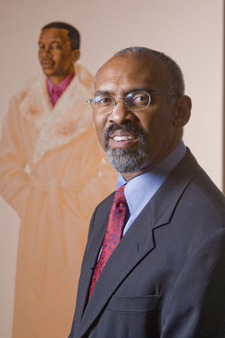 Richard J. Powell
Richard J. Powell, John Spencer Bassett Professor of Art and Art History at Duke University in Durham, North Carolina, has been awarded the Smithsonian Institution’s Lawrence A. Fleischman Award for Scholarly Excellence in the Field of American Art History.
Marion Wilson has completed an artist’s residency at the Sam and Adele Golden Foundation for the Arts. She was at the foundation’s studio center in Berlin, New York, from September 15 to October 12, 2013.
Alice Pixley Young has participated in a 2013 residency at the Jentel Artist Residency Program, located in Banner, Wyoming.
Exhibitions Curated by CAA Members
posted by CAA — December 15, 2013
Exhibitions Curated by CAA Members
Check out details on recent shows organized by CAA members who are also curators.
Exhibitions Curated by CAA Members is published every two months: in February, April, June, August, October, and December. To learn more about submitting a listing, please follow the instructions on the main Member News page.
December 2013

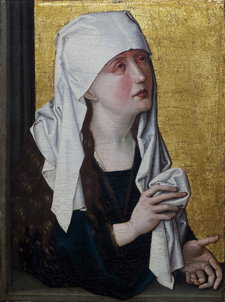 Master of the Stötteritz Altar, Mother of Sorrows, ca. 1480, oil on panel, 8¾ x 6½ in. Gift of Mrs. Clifford G. Schultz in memory of Mr. Clifford G. Schultz, AG.1984.1.1 (artwork in the public domain)
David S. Areford. The Art of Empathy: The Cummer “Mother of Sorrows” in Context. Cummer Museum of Art and Gardens, Jacksonville, Florida, November 26, 2013–February 16, 2014.

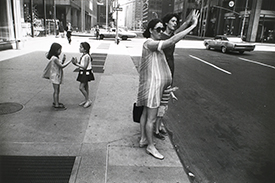 Rineke Dijkstra, Castricum aan Zee, The Netherlands, June 1992, 1992 (printed 2005), chromogenic print, 43¼ x 50 3/8 in. (artwork © Rineke Dijkstra; photograph provided by the artist and Marian Goodman Gallery, New York)
Donna Gustafson and Susan Sidlauskas. Striking Resemblance: The Changing Art of Portraiture. Zimmerli Art Museum, Rutgers University, New Brunswick, New Jersey, January 25–July 13, 2014.

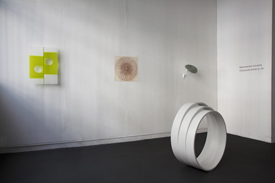 Installation view of Raisonnement circulaire. On wall from left: Mary Schiliro, Circuitous Dip, 2012, acrylic on Mylar, 25½ x 18 in. (artwork © Mary Schiliro); Mary Judge, Exotic Hex Series S10/1, 2005, powdered pigment on paper, 20 x 20 in. (artwork © Mary Judge); David Henderson, Glorieux, 2012, fiberglass and paint, 33 x 26 x 38 cm (artwork © David Henderson). On floor: Nathalie Delasalle, Force Majeure, 2011, marbre de synthèse, 90 x 90 x 40 cm (artwork © Nathalie Delasalle).
Daniel G. Hill. Raisonnement circulaire (Circular Reasoning). ParisCONCRET, Paris, France, June 16–July 7, 2012
Andrea Kantrowitz. Tracing Experience: Morgan O’Hara, Bill Sayles, Josette Urso, and Jen Wright. Macy Gallery, Teachers College, Columbia University, New York, October 7–November 1, 2013.

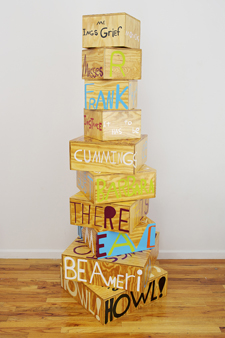 Samuel Jablon, Poet Sculpture, 2013, enamel on plywood, variable dimensions (artwork © Samuel Jablon)
 Katarina Lanfranco. Poetry Slam: damali abrams, Jessica Campbell, Samuel Jablon, and Mwamba-Salim Wilson. Rhombus Space, Brooklyn, New York, September 20–October 13, 2013.

 Jason Peters, Untitled, silver ink on black paper, 11 x 11 x 6½ in. (artwork © Jason Peters)
Katarina Lanfranco. Fine Lines: Helen Dennis, Nils Folke Anderson, Jason Peters, and Ann Stewart. Rhombus Space, Brooklyn, New York, October 18–November 17, 2013.
Katarina Lanfranco and MaDora Frey. A-Side/B-Side: Helen Dennis, Nils Folke Anderson, Jason Peters, and Ann Stewart. Rhombus Space, Brooklyn, New York, December 13, 2013–January 19, 2014.

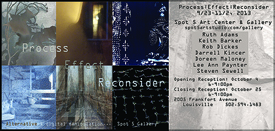 Invitation card for Process : Effect : Reconsider
Lee Ann Paynter. Process : Effect : Reconsider. Spot 5 Art Center and Gallery, Louisville, Kentucky, September 23–November 2, 2013.

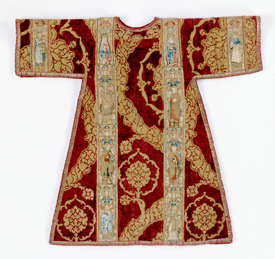 Dalmatic, Anonymous, Italian, ca. 1450–75, Orphreys, embroidery, silk, and metallic thread on linen plain weave, velvet, 104.1 x 111.8 cm. Detroit Institute of Arts, Gift of Mr. and Mrs. Edgar B. Whitcomb. Acc. no. 37.56 (artwork in the public domain)
Perri Lee Roberts. The Material of Culture: Medals and Textiles from the Ulrich A. Middeldorf Collection. Georgia Museum of Art, University of Georgia, Athens, Georgia, October 26, 2013–January 12, 2014.
Books Published by CAA Members
posted by CAA — December 15, 2013
Publishing a book is a major milestone for artists and scholars—browse a list of recent titles below.
Books Published by CAA Members appears every two months: in February, April, June, August, October, and December. To learn more about submitting a listing, please follow the instructions on the main Member News page.
December 2013

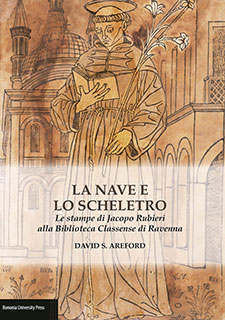
David S. Areford. The Art of Empathy: The Mother of Sorrows in Northern Renaissance Art and Devotion (London: D. Giles, 2013).

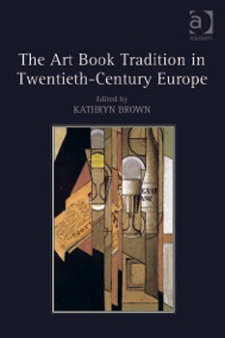
Kathryn Brown, ed. The Art Book Tradition in Twentieth-Century Europe (Burlington, VT: Ashgate, 2013).

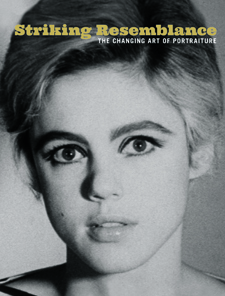
Donna Gustafson and Susan Sidlauskas. Striking Resemblance: The Changing Art of Portraiture (New York: DelMonico/Prestel; New Brunswick, NJ: Zimmerli Art Museum, Rutgers University, 2014).

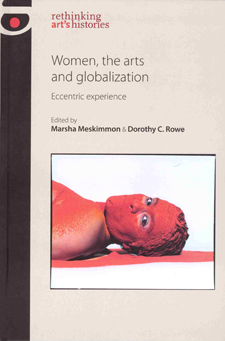
Marsha Meskimmon and Dorothy C. Rowe, eds. Women, the Arts, and Globalization: Eccentric Experience (Manchester, UK: Manchester University Press, 2013).

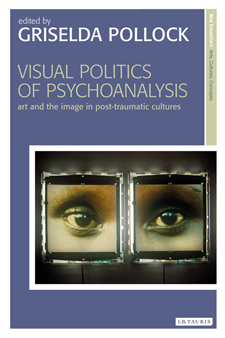
Griselda Pollock, ed. Visual Politics of Psychoanalysis: Art in Post-Traumatic Cultures (London: I. B. Tauris, 2013).

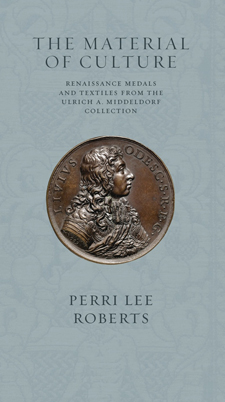
Perri Lee Roberts. The Material of Culture: Medals and Textiles from the Ulrich A. Middeldorf Collection (Athens: Georgia Museum of Art, University of Georgia, 2013).

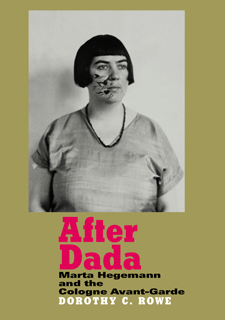
Dorothy C. Rowe. After Dada: Marta Hegemann and the Cologne Avant-Garde (Manchester, UK: Manchester University Press, 2013).

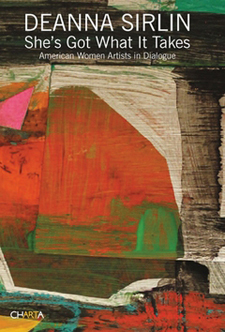
Deanna Sirlin. She’s Got What It Takes: American Women Artists in Dialogue (Milan, Italy: Charta, 2013).

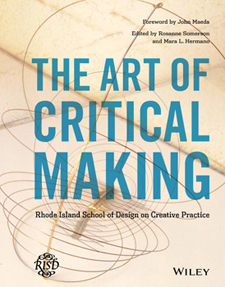
Rosanne Somerson and Mara Hermano, eds. The Art of Critical Making: Rhode Island School of Design on Creative Practice (Hoboken, NJ: Wiley, 2013).

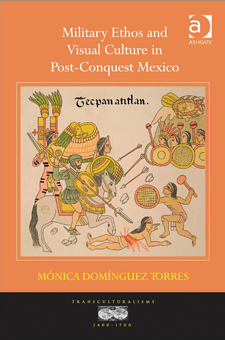
Mónica Domínguez Torres. Military Ethos and Visual Culture in Post-Conquest Mexico (Burlington, VT: Ashgate, 2013).

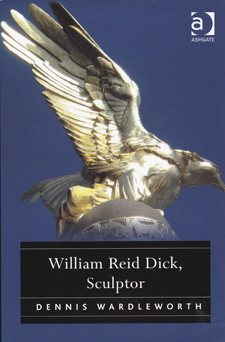
Dennis Wardleworth. William Reid Dick, Sculptor (Burlington, VT: Ashgate, 2013).
Letter Urging Secretary John Kerry to Restore Funding for Title VIII
posted by CAA — December 12, 2013
Anne Collins Goodyear, president of CAA’s Board of Directors, and Linda Downs, the organization’s executive director, signed the following letter. You may wish to view a list of programs that have been eliminated by the government that have been supported by Title VIII: http://aseees.org/new/title8-alert.php.
Letter Urging Secretary John Kerry to Restore Funding for Title VIII
December 11, 2013
The Honorable John Kerry
Secretary of State
United States Department of State
2201 C Street NW
Washington, DC 20520
Dear Secretary Kerry:
The undersigned individuals and organizations share with the Department of State the fundamental goal of creating a peaceful, secure, and prosperous global future. To achieve such an end in an increasingly complex world, the U.S. needs accurate analyses by well-trained specialists both in and outside the government.
For the region of Russia, Eastern Europe, and Central Asia, the Department of State has for thirty years trained future leaders and scholars through the Research and Training for Eastern Europe and the New Independent States of the Former Soviet Union Act (PL 90-164, Title VIII). Title VIII has played a significant part in the education of many prominent American policymakers and specialists in the region, including former Secretaries of State Madeleine Albright and Condoleezza Rice, and US Ambassador to Russia Michael McFaul. We are writing to you today to urge you to restore funding for the Title VIII program and to include funding for the Title VIII program as part of your fiscal year 2015 budget request.
Title VIII programs in fiscal year 2012 were administered by the Bureau of Intelligence and Research and supported by the Department of State at a level of $3.5 million. Despite its low cost, Title VIII is a program that continues to have a significant impact on the analytic and diplomatic capacities of the Department of State and on the research base in the academic sector.
At stake are programs that support policy-relevant research, advanced language training, and a specialized information clearing house and reference service related to countries in Central Asia and the Caucasus, Russia and Eastern Europe. A remarkably high percentage of US university faculty who teach about Eastern Europe and Eurasia, State Department specialists on the region, and think tank analysts who advise policymakers have conducted their field work and research and obtained advanced language proficiency thanks to programs funded by Title VIII.
Although the Department of State solicited applications for a fiscal year 2013 Title VIII program, the Department in September announced the cancellation of the program for fiscal year 2013 because it did not receive appropriations. We believe the discontinuation of this program is short-sighted and not in the national and public interest. We urge you to use existing authority to continue to fund this program under the administration of the Bureau of Intelligence and Research at least at the current funding level of $3.5 million for fiscal years 2013 and 2014. We also ask that you include at least that level of funding within the fiscal year 2015 budget request for the Title VIII program.
Title VIII is a small but impactful program that has directly supported several generations of policymakers, diplomats and scholars and indirectly supported their thousands of students and the people who depend on their analyses to make the right business, humanitarian, and foreign policy decisions about a crucial region of the world.
We respectfully draw your attention to this issue and strongly urge that the Department of State immediately take steps to restore funding for the Title VIII program.
Sincerely,
Diane P. Koenker
President, Association for Slavic, East European, and Eurasian Studies
Professor of History, University of Illinois, Urbana-Champaign
Stephen E. Hanson
Vice President, Association for Slavic, East European, and Eurasian Studies
Vice Provost for International Affairs, College of William and Mary
Lynda Park
Executive Director, Association for Slavic, East European, and Eurasian Studies
Ambassador John Beyrle (Ret.)
Former U.S. Ambassador to Russia and Bulgaria
Ambassador James F. Collins (Ret.)
Former U.S. Ambassador to Russia
Ambassador Jack Matlock (Ret.)
Former U.S. Ambassador to the Soviet Union
Ambassador Richard Miles (Ret.)
Former U.S. Ambassador to Azerbaijan, Bulgaria, and Georgia
Ambassador Thomas W. Simons, Jr. (Ret.)
Former U.S. Ambassador to Poland
Mary Thompson-Jones
Senior Foreign Service Officer (Ret.)
Michael M. Crow
President, Arizona State University
Robert A. Easter
President, University of Illinois, Urbana-Champaign
Michael McCarry
Executive Director, Alliance for International Educational and Cultural Exchange
John R. Fitzmier
Executive Director, American Academy of Religion
Edward Liebow
Executive Director, American Anthropological Association
Thomas Seifrid
President, American Association of Teachers of Slavic and East European Languages
Vitaly Chernetsky
President, American Association for Ukrainian Studies
Alexander J. Beecroft
Secretary-Treasurer, American Comparative Literature Association
Pauline Yu
President, American Council of Learned Societies
Dan Davidson
President, American Councils for International Education: ACTR/ACCELS
James Grossman
Executive Director, American Historical Association
Jonathan Rodgers
Secretary-Treasurer, American Oriental Society
Steven Rathgeb Smith
Executive Director, American Political Science Association
Douglas Richardson
Executive Director, Association for American Geographers
Cynthia Werner
President, Central Eurasian Studies Society
Anne Collins Goodyear
President, College Art Association
Linda Downs
Executive Director, College Art Association
David A. Berry
Executive Director, Community College Humanities Association
Melissa Feinberg
President, Czechoslovak Studies Association
Emese Ivan
President, Hungarian Studies Association
Ambassador W. Robert Pearson (Ret.)
President, IREX
William P. Rivers
Executive Director, Joint National Committee for Language-National Council on Language and International Studies; Chair, ASTM F43 Committee on Language Services and Products
Amy W. Newhall
Executive Director, Middle East Studies Association
David P. Patton
President, National Council for Eurasian and East European Research
Stephen Kidd
Executive Director, National Humanities Alliance
Ira Katznelson
President, Social Science Research Council
Pauline Saliga
Executive Director, Society of Architectural Historians
Kevork B. Bardakjian
President, Society for Armenian Studies
James Castonguay
Treasurer, Society for Cinema and Media Studies
Irina Livezeanu
President, Society for Romanian Studies
Olga M. Mladenova
President, South East European Studies Association
Laura Adams
Director of the Program on Central Asia and Caucasus, Harvard University
Stephen K. Batalden
Director, Melikian Center: Russian, Eurasian, & East European Studies, Arizona State University
David Cooper
Director of the Russian, East European, and Eurasian Center, University of Illinois, Urbana-Champaign
Victor Friedman
Director, Center for East European, Russian, and Eurasian Studies, University of Chicago
Robert M. Hayden
Director, Russian & East European Studies, University of Pittsburgh
Yoshiko M. Herrera
Director, Center for Russia, East Europe and Central Asia, and Co-Director, International Institute, University of Wisconsin-Madison
Gail Kligman
Director, Center for European and Eurasian Studies, UCLA
Terry Martin
Director, Davis Center for Russian and Eurasian Studies, Harvard University
Scott Radnitz
Director, Ellison Center for Russian, East European, and Central Asian Studies, University of Washington
Also Signed are ASEEES Board and Past Presidents
Mark R. Beissinger, Princeton University
Marianna Tax Choldin, University of Illinois at Urbana-Champaign
Katerina Clark, Yale University
Megan Dixon, College of Idaho
Zsuzsa Gille, University of Illinois, Urbana-Champaign
Bruce Grant, New York University
Beth Holmgren, Duke University
Adeeb Khalid, Carleton College
Judith Deutsch Kornblatt, University of Wisconsin
Gail Lapidus, Stanford University
Susan Linz, Michigan State University
Harriet L. Murav, University of Illinois, Urbana-Champaign
Mieke Meurs, American University
Norman Naimark, Stanford University
Joan Neuberger, University of Texas at Austin
Janice T. Pilch, Rutgers University Libraries
David L. Ransel, Indiana University
Irina Reyfman, Columbia University
Douglas Rogers, Yale University
William Rosenberg, University of Michigan
Jane Sharp, Rutgers, The State University of New Jersey
Olga Shevchenko, Williams College
Valeria Sobol, University of Illinois, Urbana-Champaign
Ronald Suny, University of Michigan
William Taubman, Amherst College
Katherine Verdery, CUNY Graduate Center
Mark L. von Hagen, Arizona State University
Leslie Waters, College of William and Mary
Robert Weinberg, Swarthmore College
cc: Ambassador William Burns, Deputy Secretary of State, Office of the Deputy Secretary Daniel Rubinstein, Acting Assistant Secretary for Bureau of Intelligence and Research (INR) Ambassador Victoria Nuland, Assistant Secretary for Bureau of European and Eurasian Affairs
(EUR/FO)
Committee on Women in the Arts Picks for December 2013
posted by CAA — December 10, 2013
Each month, CAA’s Committee on Women in the Arts selects the best in feminist art and scholarship. The following exhibitions and events should not be missed. Check the archive of CWA Picks at the bottom of the page, as several museum and gallery shows listed in previous months may still be on view or touring.
December 2013

Installation view of Harmony Hammond’s work at Alexander Gray Associates (artworks © Harmony Hammond)
Harmony Hammond
Alexander Gray Associates
508 West 26th Street, No. 215, New York, NY 10001
October 23–December 7, 2013
The first one-person exhibition of work by Harmony Hammond in New York since the 1990s at Alexander Gray Associates is a must-see minisurvey and a reminder that a retrospective of this feminist- and queer-art pioneer, activist, writer, and cofounder of A.I.R. Gallery and Heresies in the city where she began her career in the late 1960s, before moving to New Mexico in the 1980s, is still overdue.
In one of her statements Hammond reminisces that: “the post-modern focus on representation, contributed to an inaccurate reading of the creative climate in New York during the late 1960s and ’70s, a period of interdisciplinary experimentation that resulted in work both conceptual and abstract. Artists moved between the disciplines ignoring, crossing, dissolving boundaries. Abstract painting, especially that coming out of post-minimal concerns of materials and process, was central to the experimentation…. Feminism brought a gendered content to this way of working. I moved to New York’s Lower East Side, and then to the corner of Spring and West Broadway in early fall 1969. It was a period of civil rights and antiwar activism, the gay liberation movement, the second wave feminist movement, and the birth of feminist art. I was influenced by and contributed to early feminist art projects. I painted on blankets, curtains, and bedspreads recycled from women friends, literally putting my life in my art. Rag strips dipped in paint and attached to the painting surface hung down like three-dimensional brushstrokes, their weight altering the painting rectangle. Eventually the rags took over and activated the painting field…. This led to the series Bags, and the slightly larger than life-size Presences. These new pieces could be touched, retouched, repaired, and, like women’s lives, reconfigured. In 1973, I created a series of six floor paintings made out of knit fabric my daughter and I picked from dumpsters. Strips of fabric were braided according to traditional braided rug techniques, but slightly larger and thicker in scale, coiled, stitched to a heavy cloth backing, and partially painted with acrylic paint—the ‘braided rug’ literally and metaphorically becoming ‘the support’ for the painting. The Floorpieces occupied and negotiated a space between painting (off the wall) and sculpture (nearly flat). Placed directly on the floor they called into question assumptions about the ‘place’ of painting.”
Focusing on her longstanding commitment to process-based abstraction, the exhibition includes paintings and works on paper from the past five decades, with a focus on recent paintings and sculptures, allowing a fresh consideration of the way activist concerns and queer identity is inscribed in her work.
Martha Wilson: Staging the Self
Mary H. Dana Women Artist Series at the Douglass Library Galleries
Rutgers University, 8 Chapel Drive, New Brunswick, NJ 08901
October 21, 2013–January 31, 2014
Named the 2013–14 Estelle Lebowitz Visiting Artist in Residence for the Mary H. Dana Women Artist Series, Martha Wilson is the honorary subject of the exhibition Martha Wilson: Staging the Self, organized by the founding directors of the Institute for Women and Art at Rutgers University, Judith K. Brodsky and Ferris Olin, and featuring primarily early work, namely Wilson’s famed photo-text series A portfolio of models.
Born in 1947, Wilson is a pioneering feminist artist and gallery director, belatedly recognized for her innovative photographic and video works that explore her female subjectivity through roleplaying, costume transformations, “invasions” of other people’s personae and the “camera’s presence.” She began making these works in the early 1970s while in Halifax, Nova Scotia, and further developed her practice after moving to New York in 1974. Two years later Wilson founded and continues to direct Franklin Furnace, an artist-run space that champions the exploration, promotion, and preservation of artist’s books, video, and installation, online, and performance art, “challenging institutional norms, the roles artists play within society, and expectations about what constitutes acceptable art mediums.” As a performance artist she founded and collaborated with Disband, the all-girl conceptual punk band of women artists who couldn’t play any instruments; she also impersonated political figures such as Alexander M. Haig Jr., Nancy Reagan, Barbara Bush, and Tipper Gore.
Wilson has been described by the New York Times critic Holland Cotter as one of “the half-dozen most important people for art in downtown Manhattan in the 1970s” and was championed early in her career by pioneering critics such Lucy R. Lippard. Yet while prefiguring notions of gender performativity as theorized by Judith Butler and explored by Cindy Sherman, Wilson’s prefeminist strategies of masquerade were marginalized, and her use of her own body often caused her to be written out of the history of Conceptual art, an area in which she radically intervened during the 1970s from the perspective of a woman. Tellingly, Wilson had her first solo exhibition in New York at Mitchell Algus Gallery, Martha Wilson: Photo/Text Works, 1971–74, only in 2008.

Isa Genzken. Disco Soon (Ground Zero), 2008, synthetic polymer paint on plastic, cardboard, mirror, spray paint, metal, fabric, hose lights, mirror foil, printed sticker, wood blocks, fiberboard, and casters, 86 1/4 x 80 11/16 x 64 15/16 in. Carlos and Rosa de la Cruz Collection (artwork © Isa Genzken; photograph provided by the artist and Galerie Buchholz, Cologne/Berlin)
Isa Genzken: Retrospective
Museum of Modern Art
11 West 53rd Street, New York, NY 10019
November 23, 2013–March 10, 2014
Isa Genzken: Retrospective is the first comprehensive retrospective of the German multimedia artist in an American museum and the largest survey of her work to date. Surprisingly embraced by MoMA, Genzken has been both a controversial and an influential figure in German art of the past thirty years, appreciated mostly outside her country and known as much for her work as for her marriage with Gerhardt Richter, her Nazi family background, and her self-destructive lifestyle (due to mental illness and alcoholism). Capitalizing idiosyncratically on found objects and collage, this exhibition features Genzken’s small- and installation- scale works that have helped to redefine contemporary assemblage. The artist, however, has worked in many media over the past forty years, including painting, photography, collage, drawing, artist’s books, film, and public sculpture. She begun in the 1970s with geometric curved sculptures from wood whose often-ellipsoid shape could reference the theosophic investigations of her grandfather. The cement sculptures she initiated in the 1980s remain an incredibly powerful chapter of her work and interweave her constant interest in architecture with the “metaphors of vulnerability” that play a central role in her art making, according to the Der Spiegel critic Ulrike Knöfel. Bringing almost 150 objects shown in the United States for the first time, this retrospective offers a thorough introduction to the artist’s work, as well as to the role of “minimalism and trash, neon and despair” in it, as the same critic observes. After its run at MoMA, the show will travel to museums in Dallas and Chicago.
KIMSOOJA: Unfolding
Vancouver Art Gallery
750 Hornby Street, Vancouver, British Columbia,
Canada V6Z 2H7
October 11, 2013–January 26, 2014
Constantly addressing issues of the displaced self and conditions of humanity, Kimsooja “experiments with various media through immobility and non-doing that inverts the notion of the artist as the predominant actor and maker.”
Born in Daegu, Korea, Kimsooja is based in New York, Paris, and Seoul and came to international fame in the 1990s following a P.S.1 residency in New York. This period paved the way for some of her most signature pieces: Bottari, Cities on the Move—2727km Bottari Truck, and A Needle Woman, shown in numerous exhibitions and biennales around the world. Bottari Truck consisted of a truck loaded with bottari, the Korean word for bundle, which traveled throughout Korea for eleven days. Replaced by bags in modern society, as the artist has recently said, “Bottari is the most flexible container in which we carry the minimized valuable things and its use is universal through history. We keep precious things, mostly in dangerous zones of our life, such as war, migration, exile, separation or a move where urgency take places. Anyone can make Bottari…. however, I’ve been intentionally wrapping it with used or abandoned Korean bedcovers that were made for newly married couples with symbols and embroideries and mostly wrapping used clothing inside—that has significant meanings and questions on life. In other words, the Bottari I wrap is an object that contains husks of our body wrapped with a fabric that is the place of birth, love, dream, suffering and death—a frame of life. While Bottari wraps bodies and souls, containing past, present, and future, a Bottari truck is rather a process than a product, or rather oscillating between the process and the object that is a social sculpture. It represents an abstraction of personage, an abstraction of society and history, and that of time and memory. It is a loaded self, a loaded others, a loaded history, a loaded in-between. Bottari Truck is a processing object throughout space and time, locating and dislocating ourselves to the place where we came from, and where we are going. I find Bottari as a womb and a tomb, globe and universe, and Bottari Truck is a bundle of bundle of bundle folding and unfolding our mind and geography, time and space.”
Following the Bottari Truck project, Kimsooja started a video performance called A Needle Woman, showing the artist from the back standing in the middle of main thoroughfares in various cities throughout the world. This work further developed the concept of sewing toward abstraction, bringing together people, nature, cultures, and civilizations.
As a broad survey that includes early textile-based pieces from the 1980s to large site-specific installations as Bottari Truck and videos, this exhibition highlights works that address notions of time, memory, and displacement in the face of change and social flux, and of the relationship between the human body and the material world.
Letter Urging Secretary John Kerry to Restore Funding for Title VIII by December 6
posted by CAA — December 04, 2013
Anne Collins Goodyear, president of CAA’s Board of Directors, and Linda Downs, the organization’s executive director, signed the following letter.
Letter Urging Secretary John Kerry to Restore Funding for Title VIII by December 6
December 4, 2013
The Honorable John Kerry
Secretary of State
United States Department of State
2201 C Street NW
Washington, DC 20520
Dear Secretary Kerry:
The undersigned individuals and organizations share with the Department of State the fundamental goal of creating a peaceful, secure, and prosperous global future. To achieve such an end in an increasingly complex world, the U.S. needs accurate analyses by well-trained specialists both in and outside the government.
For the region of Russia, Eastern Europe, and Central Asia, the Department of State has for thirty years trained future leaders and scholars through the Research and Training for Eastern Europe and the New Independent States of the Former Soviet Union Act (PL 90-164, Title VIII). Title VIII has played a significant part in the education of many prominent American policymakers and specialists in the region, including former Secretaries of State Madeleine Albright and Condoleezza Rice, and US Ambassador to Russia Michael McFaul. We are writing to you today to urge you to restore funding for the Title VIII program and to include funding for the Title VIII program as part of your fiscal year 2015 budget request.
Title VIII programs in fiscal year 2012 were administrated by the Bureau of Intelligence and Research and supported by the Department of State at a level of $3.5 million. Despite its low cost, Title VIII is a program that continues to have a significant impact on the analytic and diplomatic capacities of the Department of State and on the research base in the academic sector.
At stake are programs that support policy-relevant research, advanced language training, and a specialized information clearing house and reference service related to countries in Central Asia and the Caucasus, Russia and Eastern Europe. A remarkably high percentage of US university faculty who teach about Eastern Europe and Eurasia, State Department specialists on the region, and think tank analysts who advise policymakers have conducted their field work and research and obtained advanced language proficiency thanks to programs funded by Title VIII.
Although the Department of State solicited applications for a fiscal year 2013 Title VIII program, the Department in September announced the cancellation of the program for fiscal year 2013. We believe the discontinuation of this program is short-sighted and not in the national interest. We urge you to use existing authority to continue to fund this program under the administration of the Bureau of Intelligence and Research at least at the current funding level of $3.5 million for fiscal years 2013 and 2014. We also ask that you include at least that level of funding within the fiscal year 2015 budget request for the Title VIII program.
Title VIII is a small but impactful program that has directly supported several generations of policymakers, diplomats and scholars and indirectly supported their thousands of students and the people who depend on their analyses to make the right business, humanitarian, and foreign policy decisions about a crucial region of the world.
We respectfully draw your attention to this issue and strongly urge that the Department of State immediately take steps to restore funding for the Title VIII program.
Sincerely,
Diane Koenker
President, Association for Slavic, East European, and Eurasian Studies
Professor of History, University of Illinois, Urbana-Champaign
Stephen Hanson
Vice President, Association for Slavic, East European, and Eurasian Studies
Vice Provost of International Affairs, College of William and Mary
Judith Deutsch Kornblatt
Immediate Past President, Association for Slavic, East European, and Eurasian Studies
Professor Emerita of Slavic Languages and Literatures, University of Wisconsin
Lynda Park
Executive Director, Association for Slavic, East European, and Eurasian Studies
Dan Davidson
President, American Councils of International Education
William Rivers
Executive Director, National Council for Languages and International Studies
Laura Adams
Director of the Program on Central Asia and Caucasus, Harvard University
Anne Collins Goodyear
President, College Art Association
Codirector, Bowdoin College Museum of Art
Linda Downs
Executive Director, College Art Association
2014 RECIPIENTS OF CAA’S INTERNATIONAL TRAVEL GRANTS
posted by CAA — December 04, 2013
In an effort to promote greater interaction and exchange between American and international art historians and artists, CAA offers twenty International Travel Grants to bring colleagues from around the world to its Annual Conference, to be held next year in Chicago from February 12 to 15, 2014. This is the third year of the program, which has been generously funded by the Getty Foundation since its inception. CAA is pleased to announce this year’s recipients—professors of art history, curators, and artists who teach art history—who were selected by a jury of CAA members from a highly competitive group of applicants. Their biographies are listed below.
In addition to covering travel expenses, hotel accommodations, and per diems, the CAA International Travel Grants include conference registration and a one-year CAA membership. At the conference, the twenty recipients will be paired with hosts, who will introduce them to CAA and to specific colleagues who share their interests. Members of CAA’s International Committee have agreed to serve as hosts, along with representatives from the National Committee for the History of Art (NCHA). CAA is grateful to NCHA for renewing its generous underwriting of the hosts’ expenses. The program will begin on February 11 with an introductory preconference for grant recipients and their hosts.
Grant recipients from previous years have found the experience enormously beneficial. Didier Houenoude, a 2012 grantee from Benin, reflected that “Meeting different colleagues from all over the world was a great experience…. I learned how possible and great it is to work with others although we have different research fields. I am convinced that it is very important to work in collaboration with other researchers.” Marina Vicelja-Matijašić, a 2013 grantee from Croatia, stated: “The possibility to talk about ‘general problems and issues’ such as global art history or crisis in art history in an international audience and sharing ideas from different perspectives was of great value.” Musarrat Hasan, a 2013 grantee from Pakistan, described the personal impact of the program, saying: “A whole new range and scope of possibilities have entered my horizon…. On a personal and human level it was a great gathering for creating global understanding.”
CAA hopes that the travel-grant program will not only increase international participation in the organization’s activities, but also expand international networking and the exchange of ideas both during and after the conference. The Getty-funded International Travel Grant Program supplements CAA’s regular program of Annual Conference Travel Grants for graduate students and international artists and scholars. We look forward to welcoming the grant recipients in Chicago at the next Annual Conference. To learn more about the CAA International Travel Grant Program, visit www.collegeart.org/travelgrants/gettyor contact project director Janet Landay at jlanday@collegeart.org.
Rael Artel
Rael Artel
Rael Artel is a curator of contemporary art and, since April 2013, director of the Tartu Art Museum in Estonia. She graduated from the Institute of Art History at the Estonian Academy of Arts in 2003 and participated in the De Appel Curatorial Training Programme in Amsterdam in 2004–5. Since 2000 she has curated projects in Estonia, Warsaw, Lisbon, Amsterdam, and New York. Artel is the artistic director of the festival of contemporary art in Tartu called ART IST KUKU NU UT. She is also the initiator and moderator of Public Preparation, an international platform for network-based communication and collective research.
Recent exhibitions include Let’s Talk about Nationalism! Between Ideology and Identity (Kumu Art Museum, Tallinn, Estonia, 2010); Lost in Transition (Contemporary Art Museum of Estonia, Tallinn, 2011); Art Must Be Beautiful: Selected Works by Marina Abramović (Tartu Art Museum, 2011); Life in the Forest (Arsenal Gallery, Bialystok, Poland, 2011); After Socialist Statues, KIM? (Contemporary Art Centre, Riga, Latvia, 2011); Explosion in Pärnu (Kumu Art Museum, 2012); and Marge Monko: How to Wear Red? (Tartu Art Museum, 2013).
Eric Appau Asante
Eric Appau Asante
Eric Appau Asante is a senior member and lecturer of art history at the Kwame Nkrumah University of Science and Technology (KNUST), Kumasi, Ghana. He earned a PhD in art history (African art and culture) from the same university, where he currently teaches courses in the history of African art and culture, philosophy of African art and culture, research methodology, and history of global art.
For the past seven years Asante has concentrated his efforts on research and teaching people about history and symbolism in African art as well as art and memorial culture. In addition to these subjects he is interested in gender and art production, philosophies and educational connotations of African art, and wood culture and art production. In January 2013 he became Ghana’s coordinator for the International Wood Culture Society.
Cezar Bartholomeu
Cezar Bartholomeu
Cezar Bartholomeu is a photographer and professor of art history at the School of Fine Arts, Department of Art History, Universidade Federal do Rio de Janeiro (UFRJ), in Brazil. He received a PhD in Visual Languages from both the UFRJ and the École de Hautes Études in Paris. Since 2010 he has been the editor-in-chief of Arte & Ensaios, one of Brazil’s major art journals. His areas of research include photography as art, photography’s history and theory, and contemporary art and photography in Brazil and worldwide.
As a photographer, Bartholomeu exhibits widely in Brazil and Europe. His publications include “Três pequenos instantâneos: Benjamin, Barthes, Derrida” in Artefoto (Rio de Janeiro: CCBB, 2002), Celebrações/Negociações – Fotografia Africana na coleção Gilberto Chateaubriand (African Photography in the Gilberto Chateaubriand Collection, Museum of Modern Art, Rio de Janeiro, 2011), and “Emanation/Abjection” in Laboratório Público de Históra da Arte Mundial (Public World Art History Lab, Rio de Janeiro: UERJ, to be published in 2014).
Laris Borić
Laris Borić
Laris Borić studied art history at the University of Zadar (MA) and Zagreb (MSc) before receiving his PhD from the University of Zadar in 2010. His thesis, “Renaissance Sculpture and Architectural Decoration in Zadar,” indicates his ongoing interest in artistic and architectural production in Adriatic rim cultures between the fifteenth and seventeenth centuries. He is especially interested in problems related to the permeation of heterogeneous influences in art (particularly sculpture and architecture) of towns in the northern part of the Adriatic (Venice, Veneto, Istria, Dalmatia, and Marche) and particularly the dominant role of Venice and Padua, and to a lesser degree, Marche, Lombardy, and Tuscany.
Borić is an assistant professor in the Department of the History of Art at the University of Zadar, where he teaches courses in European and Croatian Renaissance and Baroque art. In October 2013 he became chair of the department.
Eddie Butindo-Mbaalya
Eddie Butindo-Mbaalya
Eddie Butindo-Mbaalya teaches art history, theory, criticism, and education in the Department of Art and Industrial Design at Kyambogo University in Kampala, Uganda. With degrees in art history, art education, and fine arts, he is currently completing his PhD at Makerere University with a dissertation on contemporary public art in Uganda. Butindo-Mbaalya is especially interested in the complexity behind commemorative monuments and the debate about their role in constructing national collective memories.
As an artist, Butindo-Mbaalya is represented in the collection of the Weltkulturen Museum (World Cultures Museum) in Frankfurt, Germany. He has written about the art and architecture of recreational facilities in Uganda and also designed a logo for his country’s National Agricultural Advisory Services (NAADS) as a World Bank–funded project.
Josefina de la Maza Chevesich
Josefina de la Maza Chevesich
Josefina de la Maza Chevesich studied art history and theory at Universidad de Chile before receiving her PhD in art history and criticism from Stony Brook University (New York) in 2013. Her academic interests revolve around the development of Chilean and Latin American art of the long nineteenth century, the definition of pictorial genres, the emergence of fine-art academies and museums, and the impact of authoritarian regimes on art history.
De la Maza’s dissertation, “Contesting Nationalism: Mamarrachos, Slave-Pieces, and ‘Masterpieces’ in Chilean Nineteenth-Century Painting,” explores the development of Chilean painting in the 1880s. Using the notion of mamarracho (bad or passé art) her work explores the emergence of official and unofficial discourses organized around Chilean painting in the midst of the War of the Pacific (1879–83), the constitution of the Museo Nacional de Bellas Artes, and the official actions developed to preserve and promote “national art” in Europe. She is currently an assistant professor in the Department of Art at Universidad Alberto Hurtado in Santiago, Chile.
Katerina Gadjeva
Katerina Gadjeva
Katerina Gadjeva received a PhD in art history from the National Academy of Arts in Sofia, Bulgaria. She studies the history and theory of photography, in particular, the concept of “visual propaganda” and the role of photography in Socialist ideology in the USSR and Bulgaria. In 2012, she published a monograph on the subject, entitled Between Desire and Reality: Photographic Illustrations in Bulgarian Periodicals 1948–1956.
Gadjeva is an assistant professor in the Institute of Art Studies, Bulgarian Academy of Science, Sofia, and a lecturer in the New Bulgarian University and St. Kliment Ohridski University, Sofia. She also works with young Bulgarian artists who are interested in alternative photographic processes.
Heba Nayel Barakat Hassanein
Heba Nayel Barakat Hassanein
Heba Nayel Barakat Hassanein is the head of the Curatorial Affairs Department at the Islamic Arts Museum Malaysia (IAMM). A graduate of the American University in Cairo, she is a specialist in Islamic art and architecture. She holds an MA in the history of architecture from Middle East Technical University in Ankara, Turkey, and a PhD from the Oriental Institute in Moscow, Russia. As project manager at the Center for Documentation of Cultural and Natural Heritage in Cairo, Egypt, she researched and documented Cairo’s nineteenth- and early-twentieth-century presidential palaces.
Hassanein has also documented the early Islamic papyrus collection and the Persian illuminated manuscript collection at the Egyptian National Library in Dar el-Kotob, Egypt, and worked on the pigment analysis of early miniatures. Currently she is overseeing the refurbishment of IAMM’s permanent galleries, researching artifacts, and supervising exhibitions and accompanying catalogues for the museum’s special-exhibition galleries.
Lilianne Lugo Herrera
Lilianne Lugo Herrera
Lilianne Lugo Herrera holds a degree in theater arts with a specialization in playwriting from the Universidad de las Artes in Havana, Cuba. Since 2010 she has been a professor at that university and vice dean of research and postgraduate studies at its Faculty of Theater.
Herrera is also the editor of Tablas, a magazine of Cuban theater. Herrera researches the relationships between the history of art and the history of theater and their interrelationships in the contemporary practice of art and the performing arts. Three of her plays have been published, one of them in the United States, and she has won several awards in playwriting. Herrera is an active participant in festivals, conferences, and residencies both in Cuba and internationally.
Hugues Heumen Tchana
Hugues Heumen Tchana
Hugues Heumen Tchana is a junior lecturer in the Department of Fine Arts and Heritage Sciences at the Higher Institute of the Sahel, University of Maroua, Cameroon. He is currently completing his PhD in museology with a dissertation on “Museums in the Cultural Sphere of the Grassfields of Cameroon: History, Management, and Current Stake.” The Higher Institute of the Sahel opened in 2010.
Heumen Tchana teaches courses on cultural heritage and museum management and supervises student internships in a number of museums in Cameroon. In 2007, he was awarded the international competitive examination scholarship for a master’s degree (2007–9) from the University of Senghor in Alexandria, Egypt. In 2009, Heumen Tchana completed an MA in development specializing in the management of cultural heritage, also from the University of Senghor.
Kanwal Khalid
Kanwal Khalid
Kanwal Khalid holds a BFA and MFA in graphic design, an MPhil in art history, and a PhD in fine arts, all from Punjab University in Lahore, Pakistan. She specializes in the history of South Asian art and design, with a particular focus on miniature painting in nineteenth-century Lahore. A practicing miniaturist, she is currently an assistant professor at the Institute of Design and Visual Arts, Lahore College for Women University. Previously she was the curator of paintings at the Lahore Museum.
Khalid serves on the editorial board of the Trust for History, Art and Architecture of Pakistan (THAAP), a forum for publications and research journal. She is also a board member of several organizations, including the Rotary Club Lahore Mozang and the Delaware Lahore Delhi Partnership for Peace, a nonprofit NGO of private citizens in the United States, Pakistan, and India dedicated to the creation of mutual understanding and goodwill.
Mahmuda Khnam
Mahmuda Khnam
Mahmuda Khnam is an assistant professor in the Department of Islamic History and Culture, Jagannath University, Dhaka, Bangladesh. She has been teaching and researching Islamic art, especially that of the Indian subcontinent, for more than a decade. Before joining the newly established university in 2012, she taught at Eden College in Dhaka.
Having earned her MPhil with a dissertation on Mughal architecture in the Comilla region of Bangladesh, Khnam is currently completing her PhD, researching the development of painting in Bengal during the eighteenth and nineteenth centuries. In addition to a monograph based on her MPhil thesis, Khnam has published a number of articles on Islamic art and the art of Bengal, mostly in her native language, Bangla.
Daria Kostina
Daria Kostina
Daria Kostina is an assistant professor in the Department of Art History and Cultural Studies at the Ural Federal University in Yekaterinburg, Russia. She is also a curator at the B.U.Kashkin Museum, an experimental exhibition space and collection of underground and alternative art, housed within the same department and university. In addition to Yekaterinburg, Kostina has curated exhibitions in Saint Petersburg and New York.
Kostina studies Russian émigré art of the 1920s and 1930s, in particular artists who lived in the Czech Republic, and regional Russian underground and alternative art from the 1960 to the 1980s. Her PhD dissertation (in progress) is devoted to the work of Grigory Musatov, a Russian artist who emigrated to Prague in 1920. She is also interested in urban studies and in 2012 organized interdisciplinary workshop for emerging scholars, Contemporary Art as a Humanization Instrument for Public Spaces (Yekaterinburg).
Portia Malatjie
Portia Malatjie
Portia Malatjie is a South African curator and art historian based in Grahamstown and Johannesburg. She completed an MA in the history of art at the University of the Witwatersrand in 2011, following a fine-art degree at the same institution in 2008. She has curated numerous exhibitions of contemporary art, including CityTales and CountryScapes at Museum Africa (2011), Transference at the Johannesburg Art Gallery (2012), and the 2012 MTN New Contemporaries Award, an exhibition held at the historic Castle of Goodhope’s B Block in Cape Town. She has published widely in the Mail & Guardian, Artthrob, and Third Text and in numerous exhibition catalogues.
In 2011, Malatjie participated in the 24 Hour Suburban Residency at the Sober and Lonely Institute for Contemporary Art, where she organized a one-day workshop for emerging curators. A lecturer at Rhodes University in Grahamstown, she is currently researching the subject of black feminism in the context of South African art history and contemporary curatorial practices in her country and in other parts of Africa.
Fernando Martínez Nespral
Fernando Martínez Nespral
Fernando Martínez Nespral was trained as an architect at the University of Buenos Aires in Argentina and holds a PhD in history from Torcuato Di Tella University in Buenos Aires. He studies connections between the Islamic world and Hispanic American culture in the fields of architecture and art history. Approaching this subject from diverse starting points—a dictionary of Spanish words with Arabic origins, foreign accounts of domestic architecture in sixteenth- and seventeenth-century Spain, transcultural use of Spanish tiles—he is currently working on Islamic mashrabiya (balconies closed with lattice) and their frequent use in Latin American countries, especially Peru.
Martínez Nespral teaches courses on the history of architecture and is also a main researcher at the American Art and Aesthetics Research Institute, both positions at the School of Architecture, Design and Urbanism at the University of Buenos Aires.
Susana S. Martins
Susana S. Martins
Susana S. Martins is currently an FCT-Portugal Research Fellow both at the Institute for Art History, Universidade Nova de Lisboa, Portugal, and at the Institute for Cultural Studies, Universiteit Leuven, Belgium. Initially trained as an art historian in Lisbon, she was awarded a PhD in photography and cultural studies from the arts faculty of the Katholieke Universiteit Leuven, with the work “Portugal as Seen through Foreign Eyes: Photography and Visual Culture in the 1950s.”
Martins studies the history and theory of photography, with a particular focus on travel books, tourism, exhibitions, cinema, visual arts, surveillance, national identities, and postcolonial studies. She is interested in the different roles photography has played in international and universal exhibitions since the nineteenth century and also studies contemporary art, film, and politics. Since 2008 Martins has served as an art-history professor in the fields of photography, visual arts, communication semiotics, Impressionism, and modernity.
Magdalena Anna Nowak
Magdalena Anna Nowak
Magdalena Anna Nowak is an assistant curator in the Department of Modern and Contemporary Art at the National Museum in Warsaw. She received an MA from the Institute of Art History at the University of Warsaw in 2010, having spent the previous year at the Ecole des Hautes Etudes en Sciences Sociales in Paris in the Department of Theories et Pratiques du Langage et des Arts. Her research then concentrated mainly on contemporary video art. In her current position she is in charge of the film and new-media collections at the museum and also curates temporary exhibitions.
Nowak is currently writing a PhD dissertation on repetition and reenactment of old-master paintings in video art. Her research concerns the interactions between old and contemporary art, the empathy theory, Aby Warburg’s legacy, the representation of emotions in art, and viewers’ reactions toward depicted passions and neuro art history. She is also interested in Polish art from the 1970s.
Freeborn Odiboh
Freeborn Odiboh
Freeborn Odiboh is a Nigerian artist, art historian, and critic. He holds a BFA in sculpture from the University of Benin, Benin City (1984), an MA in African visual arts history from the University of Ibadan (1987), and a PhD in art history from the University of Nigeria, Nsukka (2004). He is an associate professor of art history and art criticism, Department of Fine and Applied Arts, University of Benin. Odiboh has received a number of international awards, including the Leventis postdoctoral fellowship at the University of London (2006) and a fellowship from the American Council of Learned Societies’ African Humanities Postdoctoral Program (2010–11).
In addition to publishing over twenty-seven articles in international and national journals, Odiboh published his first book, entitled Creative Reformation of Existing African tradition: The Abayomi Barber Art School and Modern Nigerian Art, in 2012. He is currently writing his second book, Africanizing a Modern African Art History Curriculum from Nigerian Experience. Odiboh’s art has been presented in several solo and group exhibitions in his country.
Adriana Oprea
Adriana Oprea
Adriana Oprea is a Romanian critic and art historian. She received her MA in art history at the National University of Arts in Bucharest with a study of feminism in recent Romanian art. She is currently pursuing a PhD, focusing on the discourse of art criticism and the status of the art critic during and after the Communist regime in Romania. Since 2006, Oprea has been a researcher and archivist at the National Museum of Contemporary Art in Bucharest, where she organizes data regarding the activity of Romanian artists.
Oprea frequently collaborates with art spaces and writes essays for exhibition catalogues and reviews for Romanian magazines. She is associate editor for ARTA magazine, the main Romanian art publication during the Communist era and one of the few concerned with the present state of Romanian art. She sometimes curates exhibitions and on rare occasions poses as an artist. Oprea lives and works in Bucharest.
Ahmed Wahby
Ahmed Wahby
Ahmed Wahby is an Egyptian architect, art historian, and lover of Islamic art and architecture. Born in Nigeria, he grew up in the United Kingdom and the United Arab Emirates and moved to Cairo in the late 1980s. As a child, due to his many travels with his parents, he developed an interest in different cultures. While pursuing an MA in Islamic art from the American University in Cairo, he traveled to eastern China to explore historical Chinese mosques.
Wahby further developed his understanding of Islamic art, architecture, and culture by completing a PhD in the Oriental Department of the Otto-Friedrich University, School of Human Sciences, Art and Culture, in Bamberg, Germany. His dissertation research investigated the influences of Arab merchants on the shrines and mosques of the Indonesian island of Java in the fifteen and sixteenth centuries. Wahby is currently an assistant professor of design theory in the Faculty of Applied Sciences and Arts at the German University in Cairo.
Support
Major support for CAA’s International Travel Grant Program has been provided by: Getty Foundation